Any trip to Normandy would not be complete without a visit to the amazing white cliffs of France at Étretat, and a stop in nearby Rouen to take in two spots made popular by the great Claude Monet. Located in the north western section of France, Rouen is about two hours from Paris, and Étretat is one hour further.
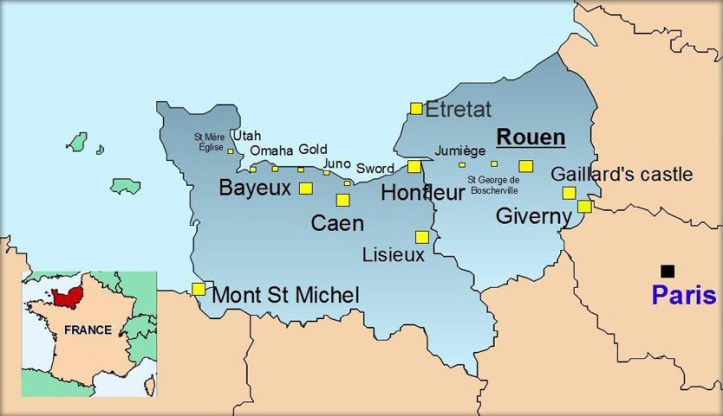
TRIP PLANNING I recommend staying in Rouen and making a day trip to Étretat. It is also possible to stay in Paris and leave very early for the cliffs, visit in the morning (always best) and stop in Rouen on the way back to Paris. It would be a very long day but doable. Another great option is to visit Rouen from Paris, then go to Étretat for a late afternoon stroll (you’re risking tricky parking later in the day though) and hike along the cliffs, then stay in nearby Honfleur which is about 45 minutes from Étretat. However you choose to visit, plan about a half day minimum for each spot. We have stayed in Honfleur and Étretat, and both times had good luck with Air BnB (through booking.com) apartments. Parking can be tricky in all three places, so check out my links for the best spots.
TIPS
- No trip to Normandy is complete without trying the famous foods: Camembert (cheese), Calvados (liqueur made from apple), and salted caramels.
- I recommend driving through this region of France because the roads are decent and it allows you the freedom to make quick stops or change things up due to weather (weather can change quickly in Normandy). Just keep an eye on gas as stations aren’t plentiful.
- Much of this region is quite rural, and of course the local language is French. However, we found most people also spoke some English.
- Like many places in Europe, restaurants in Normandy often don’t open until 7PM. That is tricky for us with kids, so we sometimes had to get creative about meals. Plan accordingly, and don’t be surprised if you can’t dine without a reservation.
- As with most places in Europe, be sure to have euro coins with you if you need to use a public restroom. Usually there is a fee!
Étretat
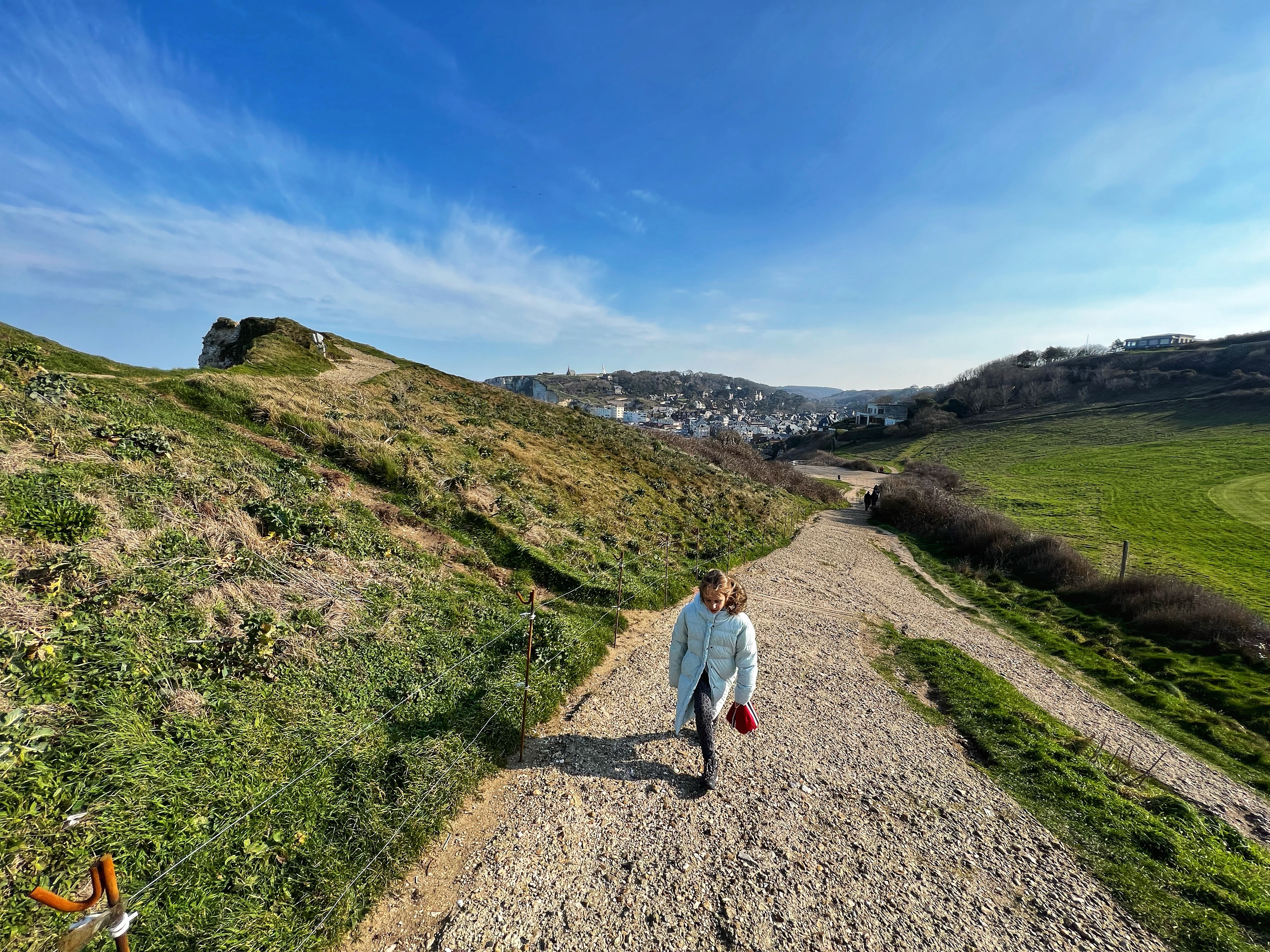
When we visited from Belgium, we decided to leave early and drove about three hours straight to the cliffs. This was my third visit to Étretat, and this time I was determined to see all three of the cliff points. We found parking easily (which is possible here as long as you arrive before 10AM) and began wandering up the cliffs on the south side (left) of the beach.

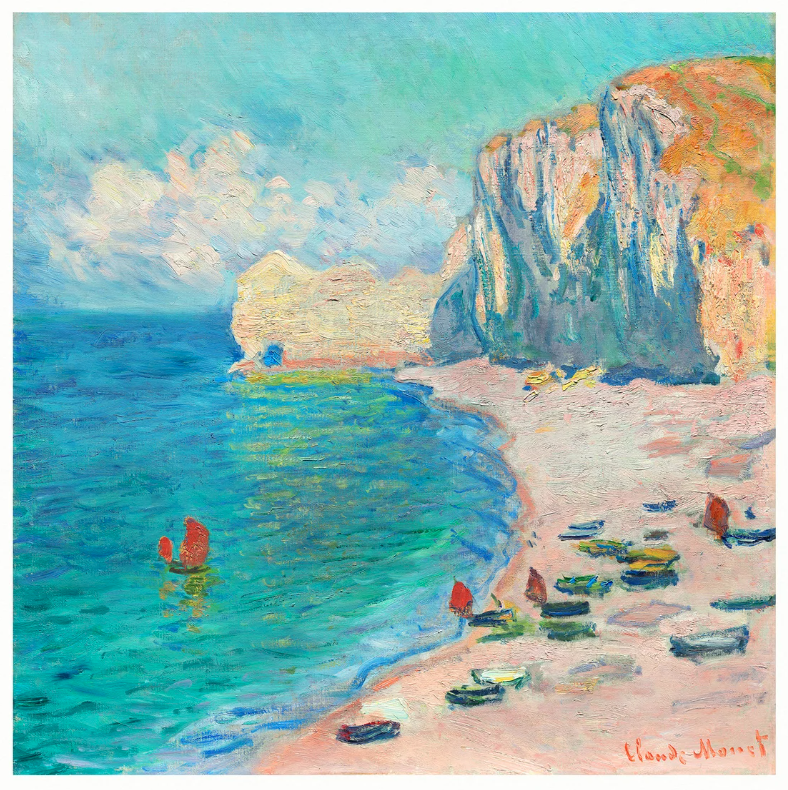
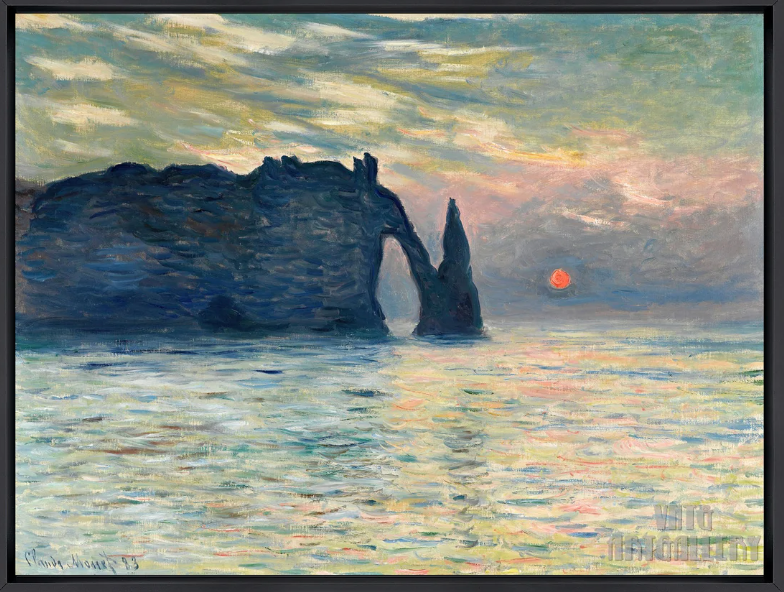
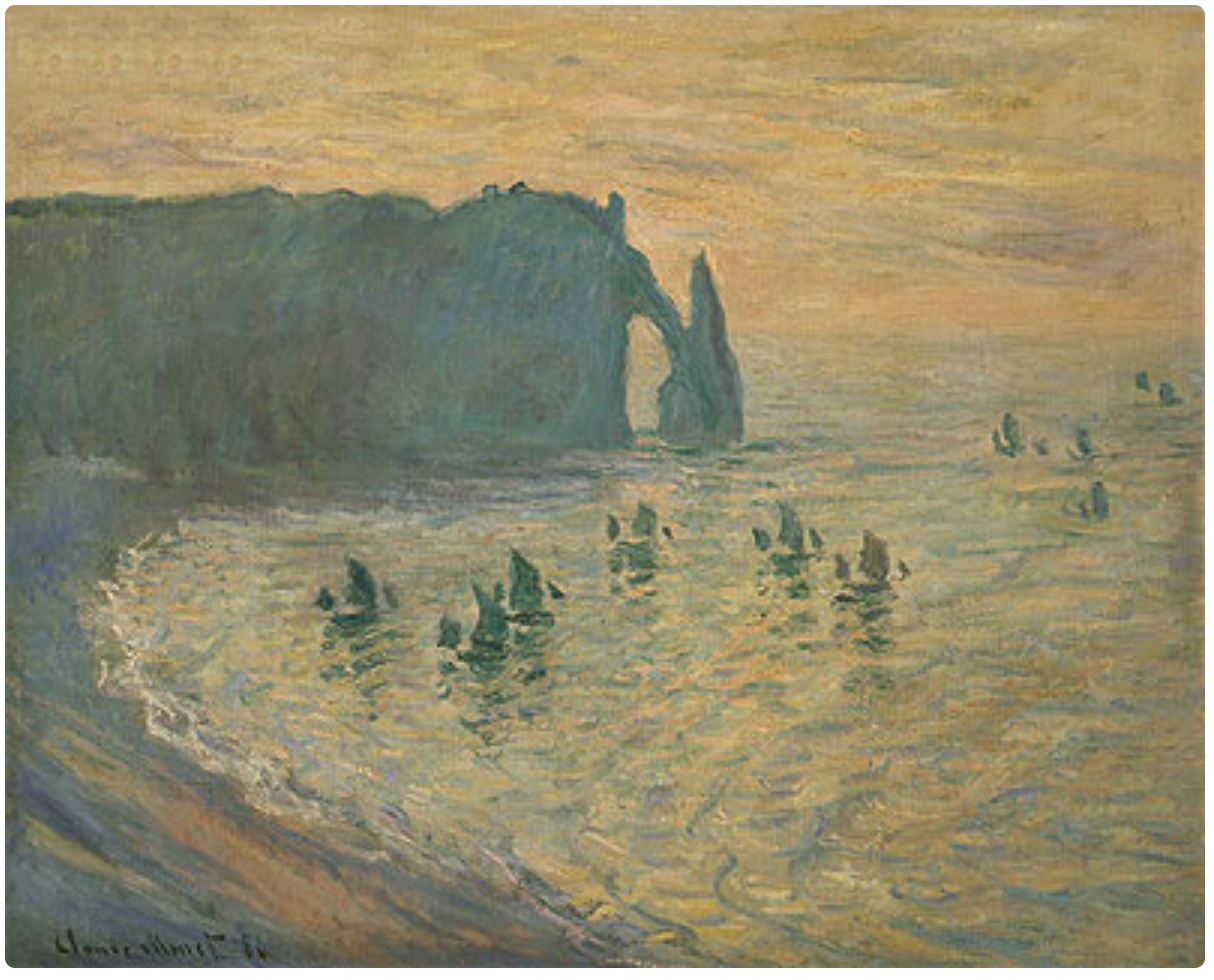
The picturesque little coastal town of Étretat is a must-see for cliff-loving tourists. These “white cliffs” boast several archways and have long paths to hike on both ends of the pebble beach. The beach and cliffs are very popular – they’re also portrayed in Monet’s paintings. The two times we visited in November, it called for rain – but we got lucky! In March it was gorgeous – chilly but clear blue skies. No matter what, it is always windy on the cliffs. Be prepared for unpredictable skies in this whole region; it can open up and downpour without notice. If you’re like my adrenaline junkie sister, you can jump in the ocean in your swimsuit for a polar dip! We saw someone doing this the second time we went too – I guess it’s a thing? Something to note in Étretat: parking is a nightmare. We got very lucky the second time we visited and drove right up to a spot in the main lot near the beach at around 10AM, but it was already packed. The first time we visited, we drove around for an hour looking for parking – but it was 3PM. The best bet is to arrive super early (or even stay in the village) to avoid the crowds. Plan to walk A LOT here and dress for wind or rain. If you can’t find parking near the beach, head up D940 as there is a lot up the road called Parking du Valaine, then you can walk back down into town.
Before you hike up, maybe grab water and be sure you use the free bathroom at the bottom of the hill next to the beach. We love to grab bakery items (hand pies, sandwiches, pizzas, pastries) for lunches as they’re portable and it saves money. Our favorite bakeries are Boulangerie Patisserie “Le Petit Accent” and Le Fournil D Etretat. Étretat has nice restaurants as well (many seafood places), but they can be quite busy and expensive, and you may need a reservation. Instead, pack food! This is a perfect place for a picnic lunch.
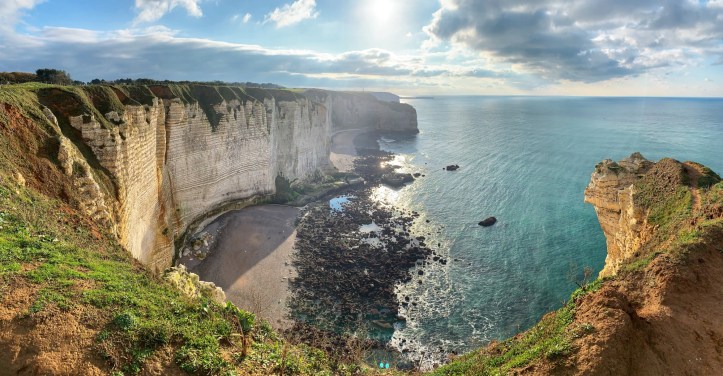
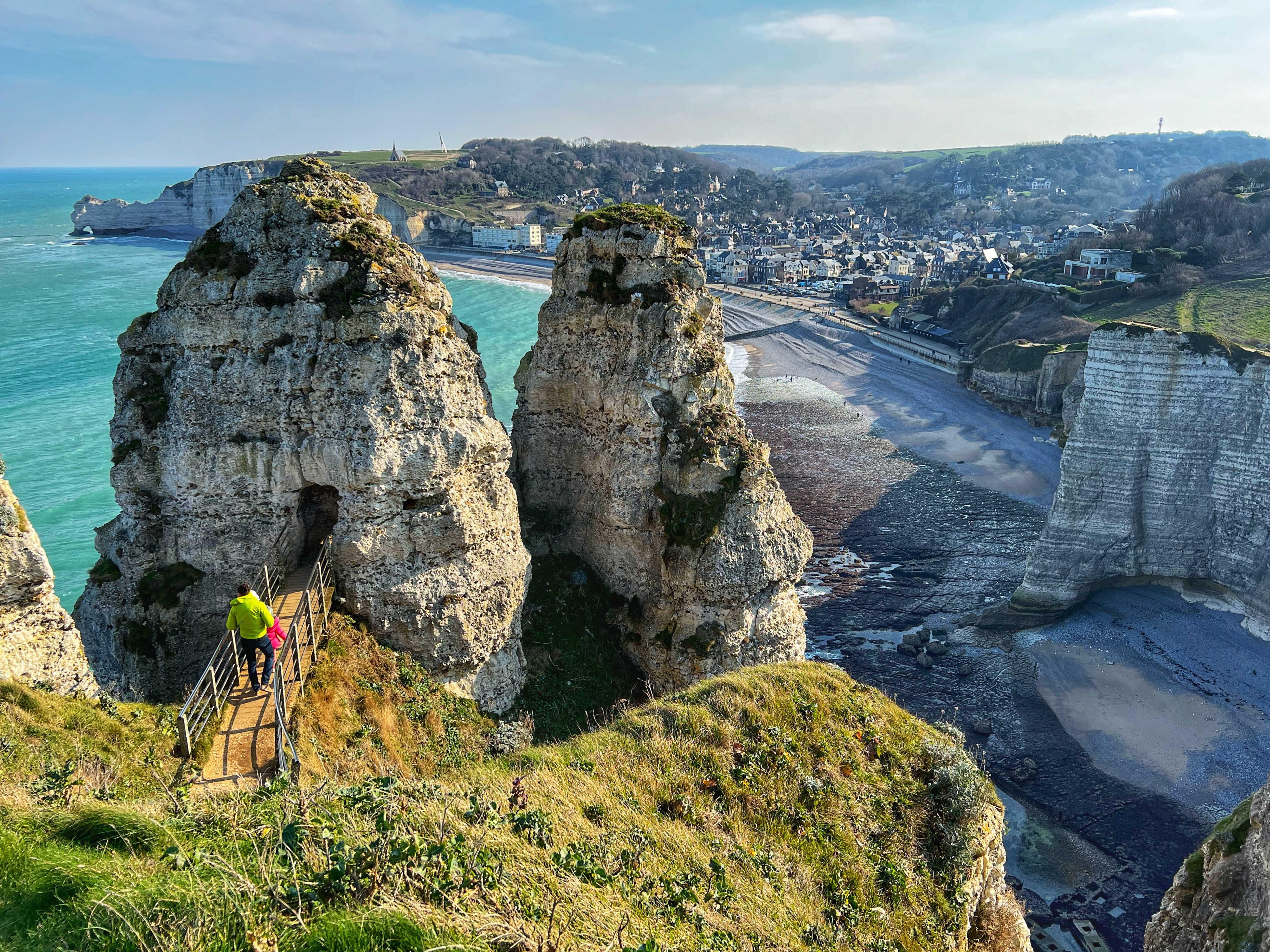
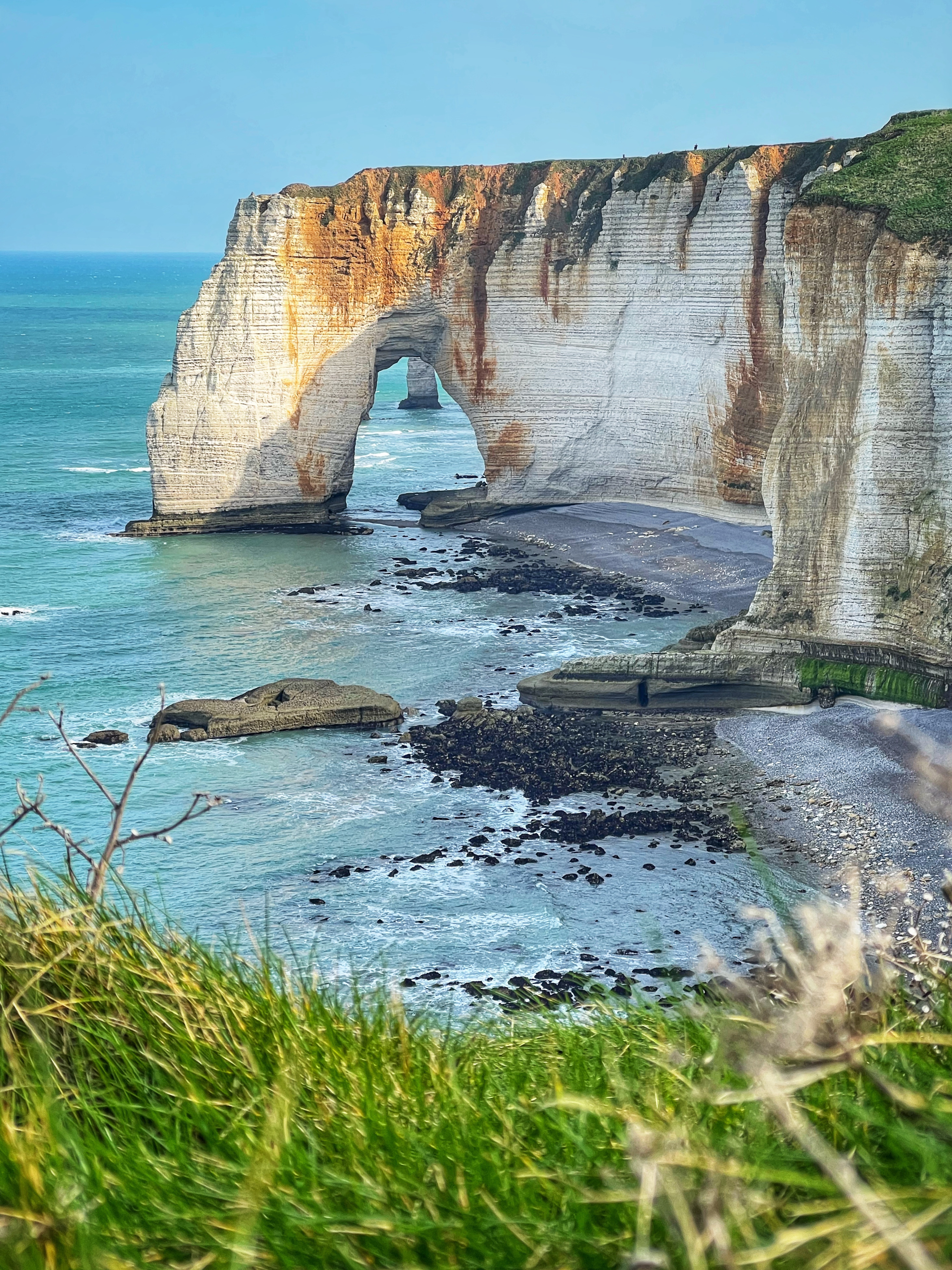
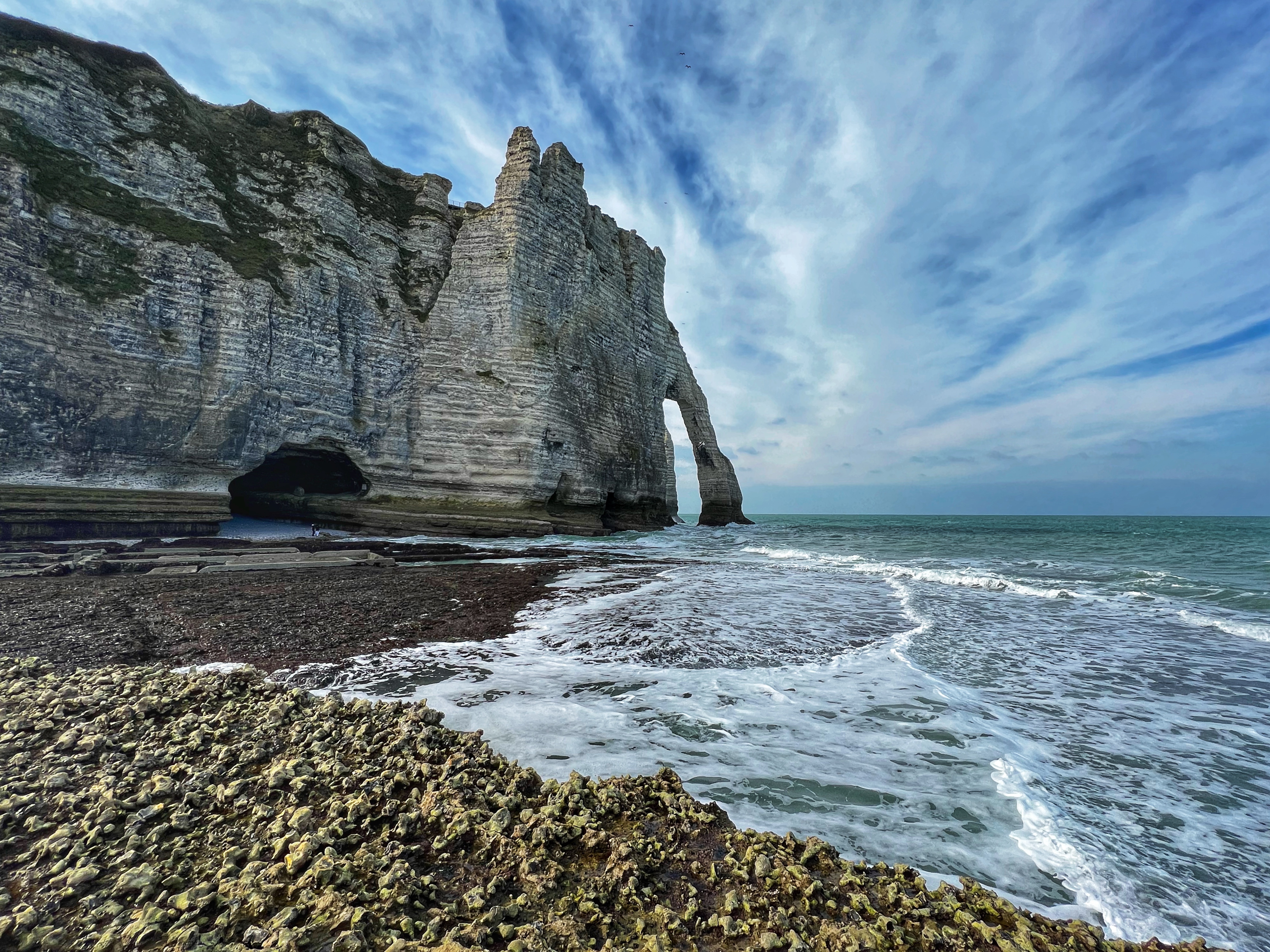
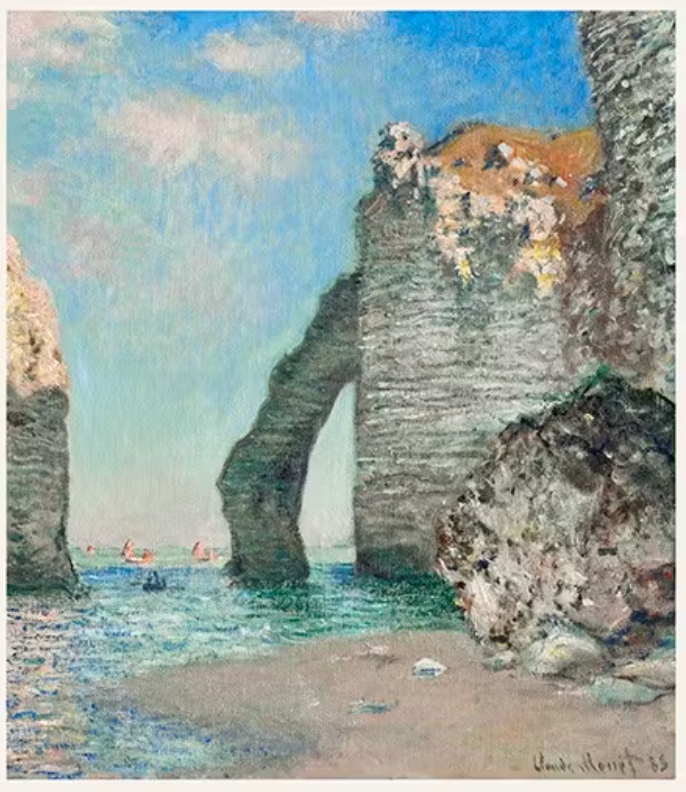
This left side of the beach is more popular as it has three major cliffs (“falaise”) that point out into the ocean for great views of the white archways. The first cliff, Falaise d’Aval, is best known for the small bridge that leads to tall hoodoos overlooking the beach, cliffs, and town.

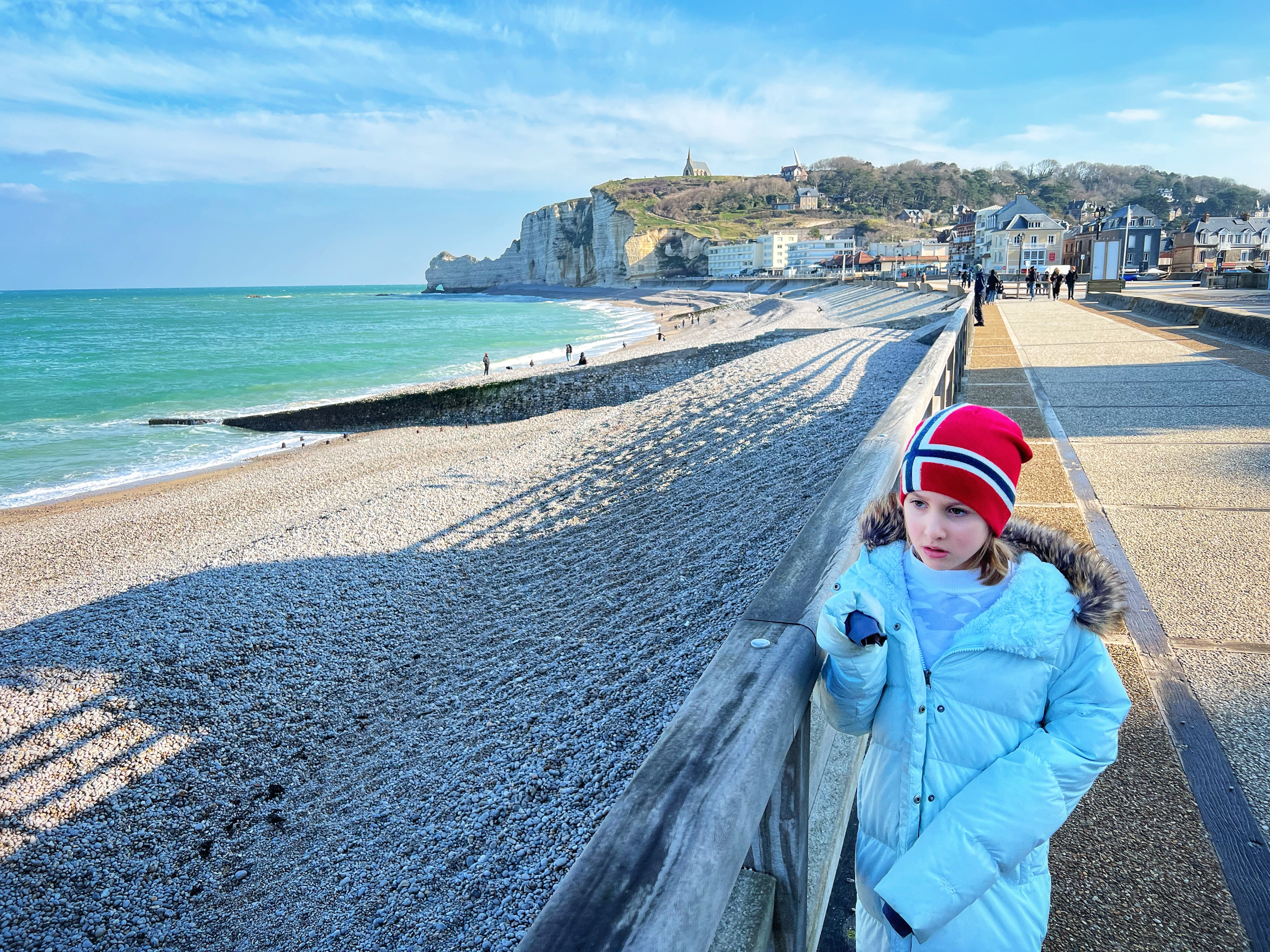
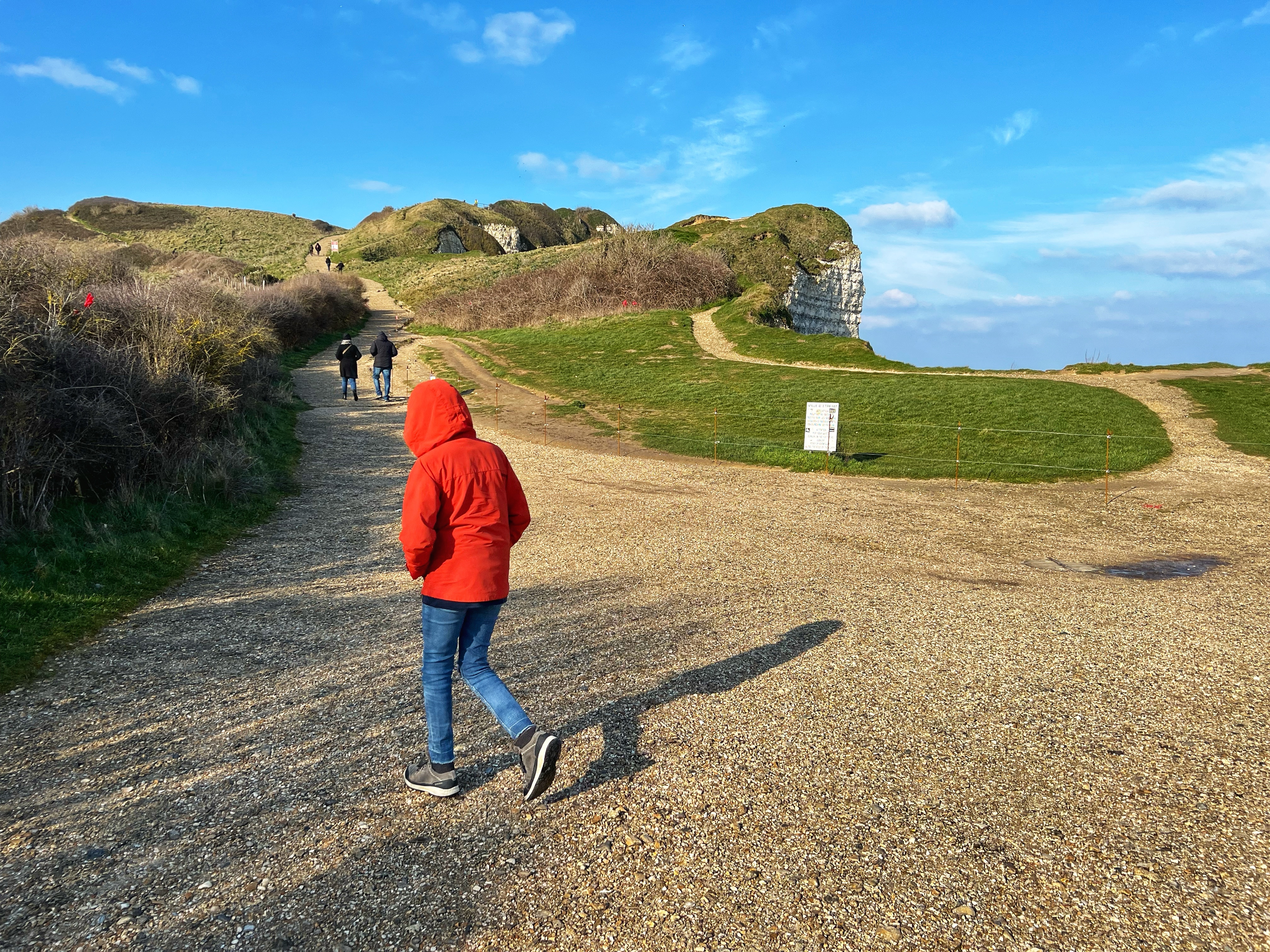
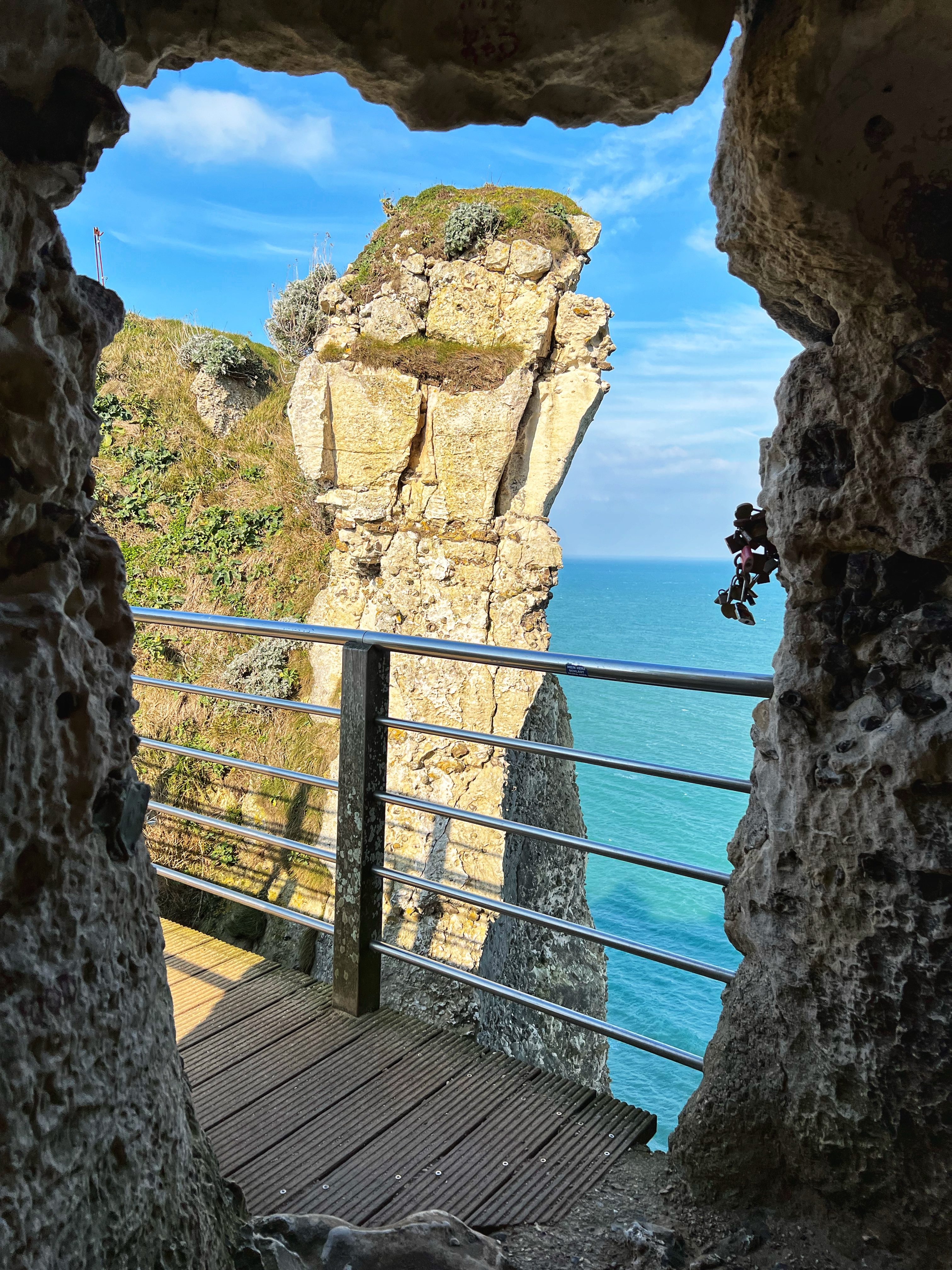
Windows in the rocks allow you to peek through and see way down the cliff face to the rocky shore. They have improved the paths and blocked off the sides for safety and preservation of the site, so be sure to stay off the grass. Definitely check out the bridge! Most people walk up to this point and are satisfied, looking out over the famous archway that was painted many times by Monet. Instead of stopping there, continue on and do at least one more cliff…
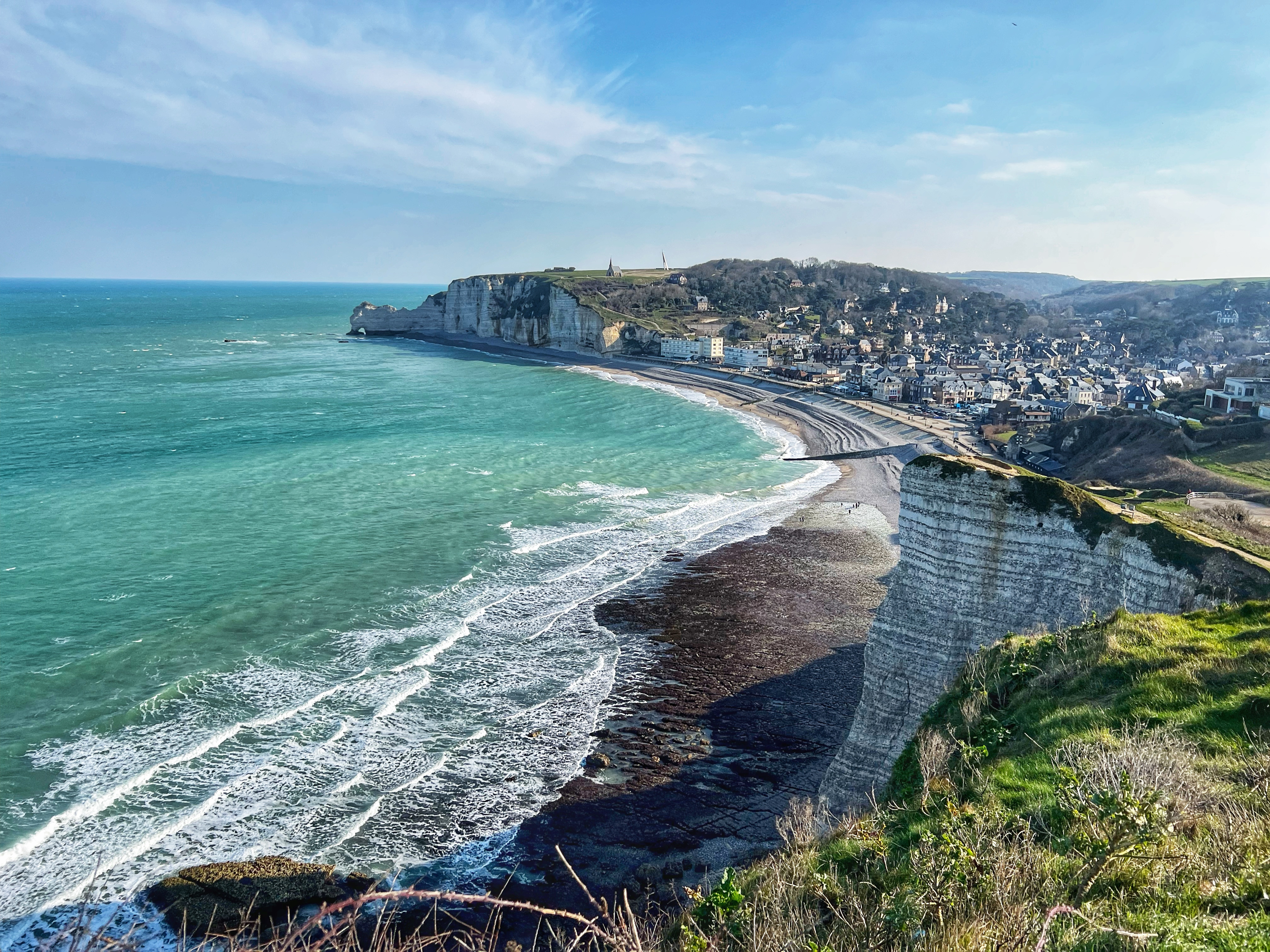




The next cliff is a must – Falaises d’Étretat. The walk is fairly easy to reach this second set of cliffs, and it allows you to look back at the huge archway you were just standing on with the first set of cliffs. Always be careful with small children and stay on the paths – these are extremely high up at about 230 feet (70 meters) above the sea.
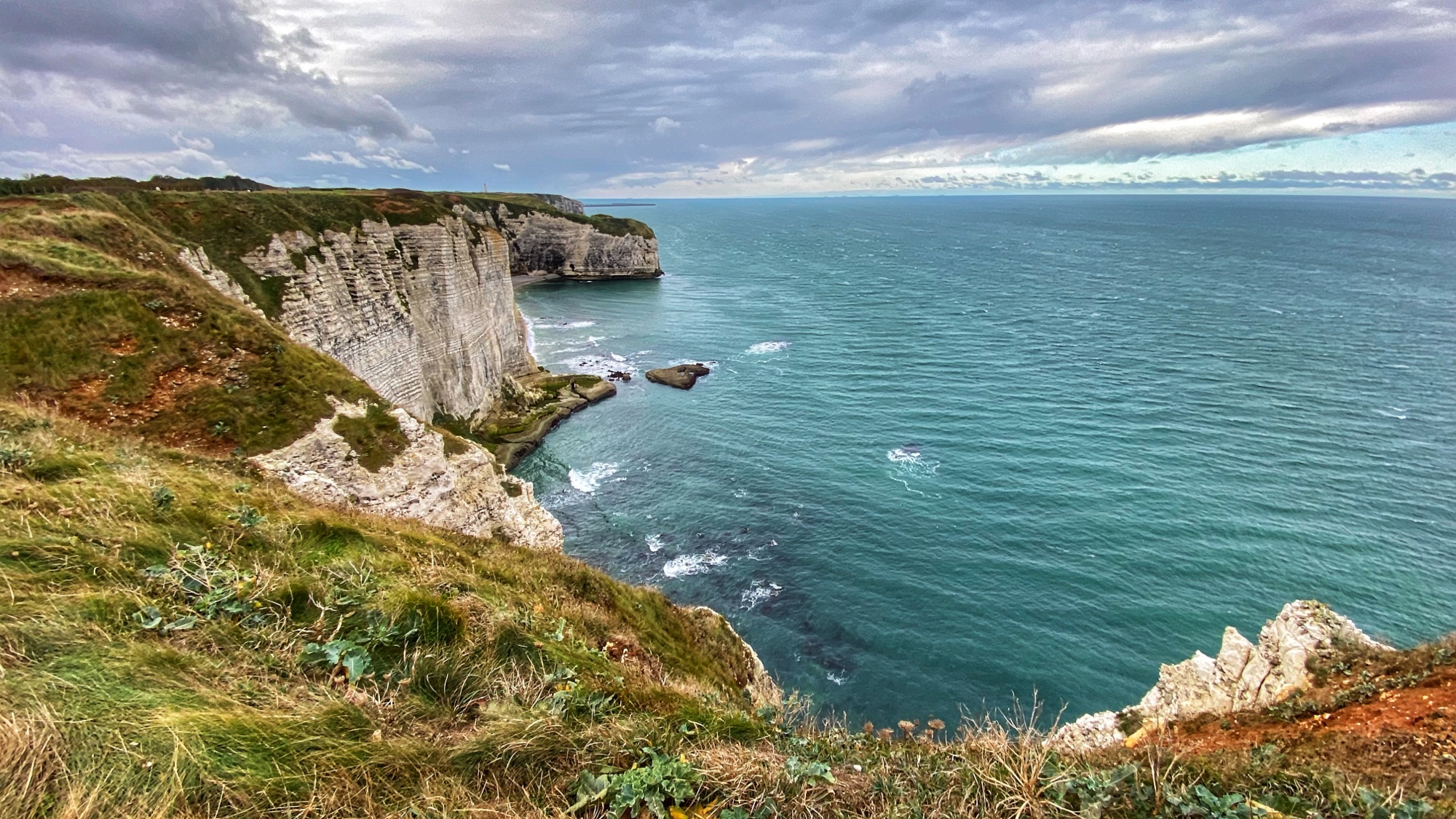

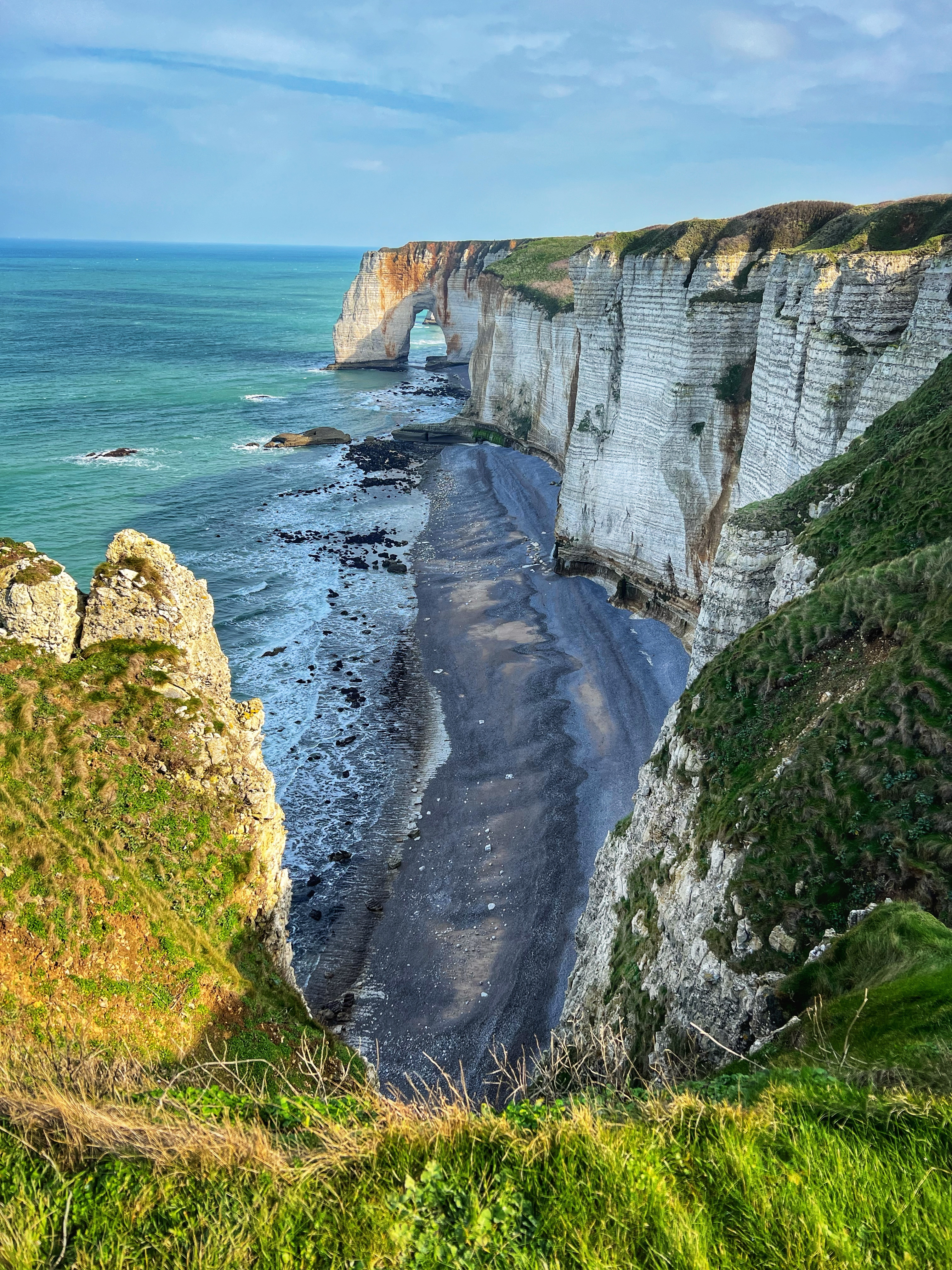
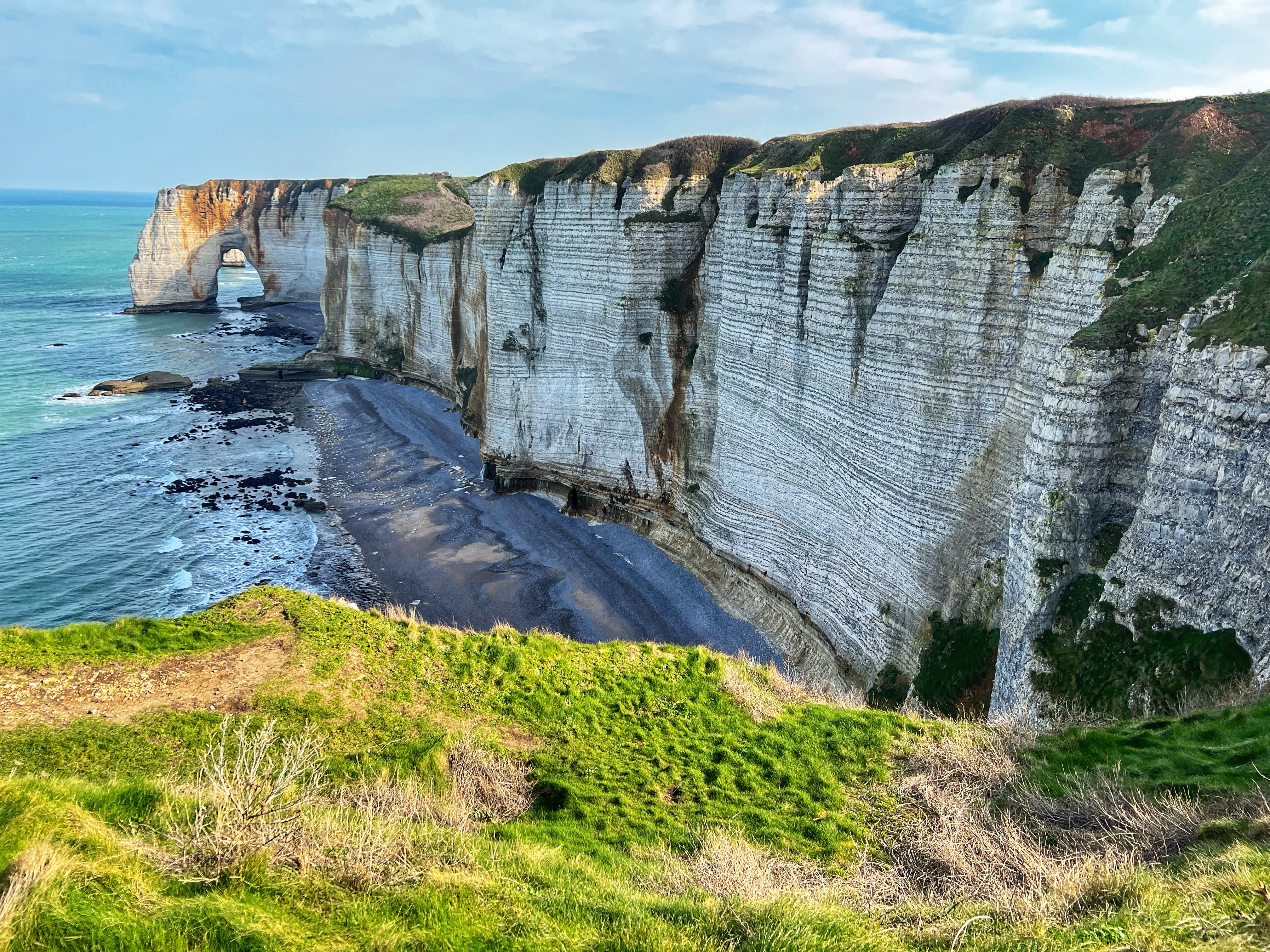
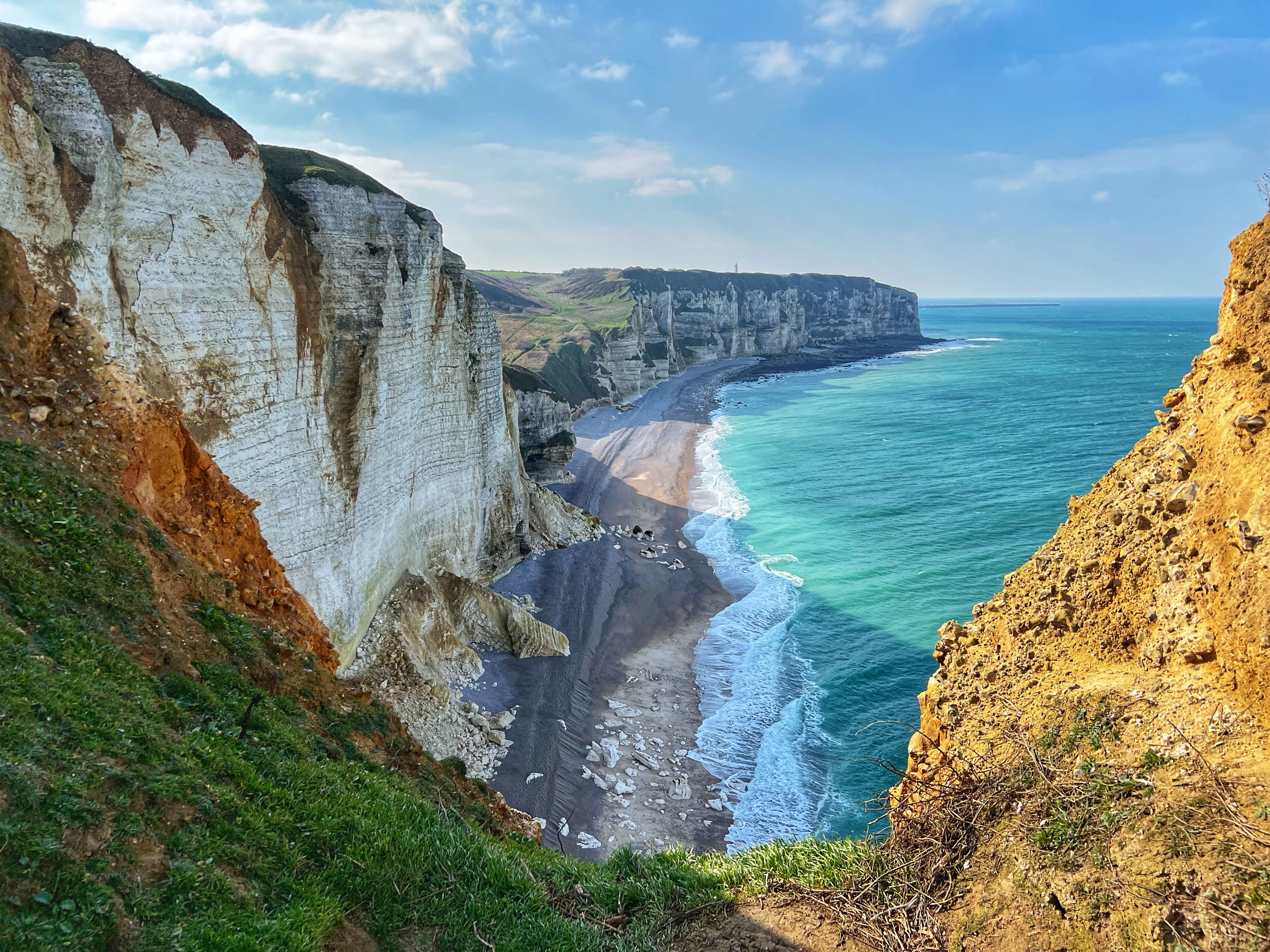
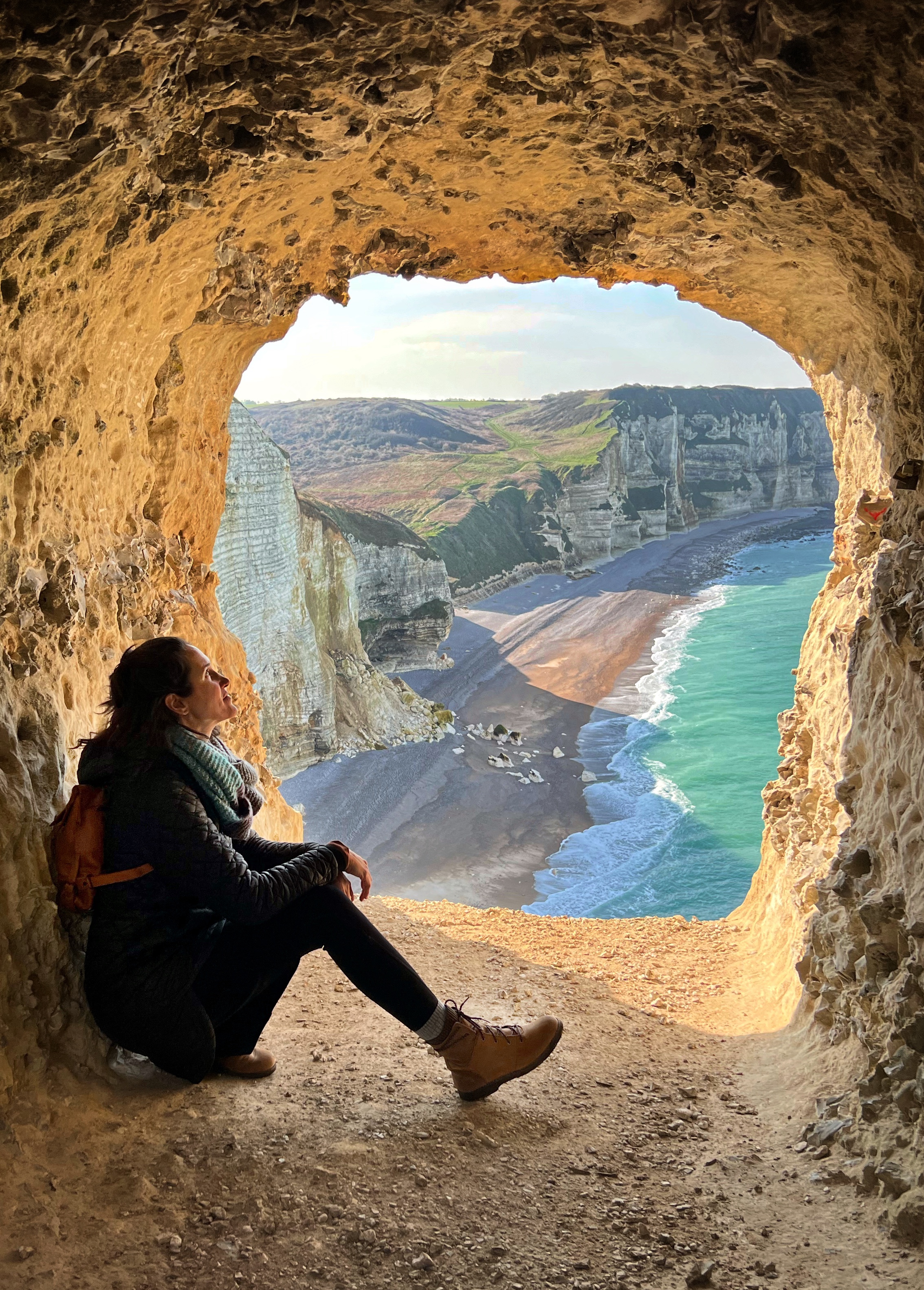
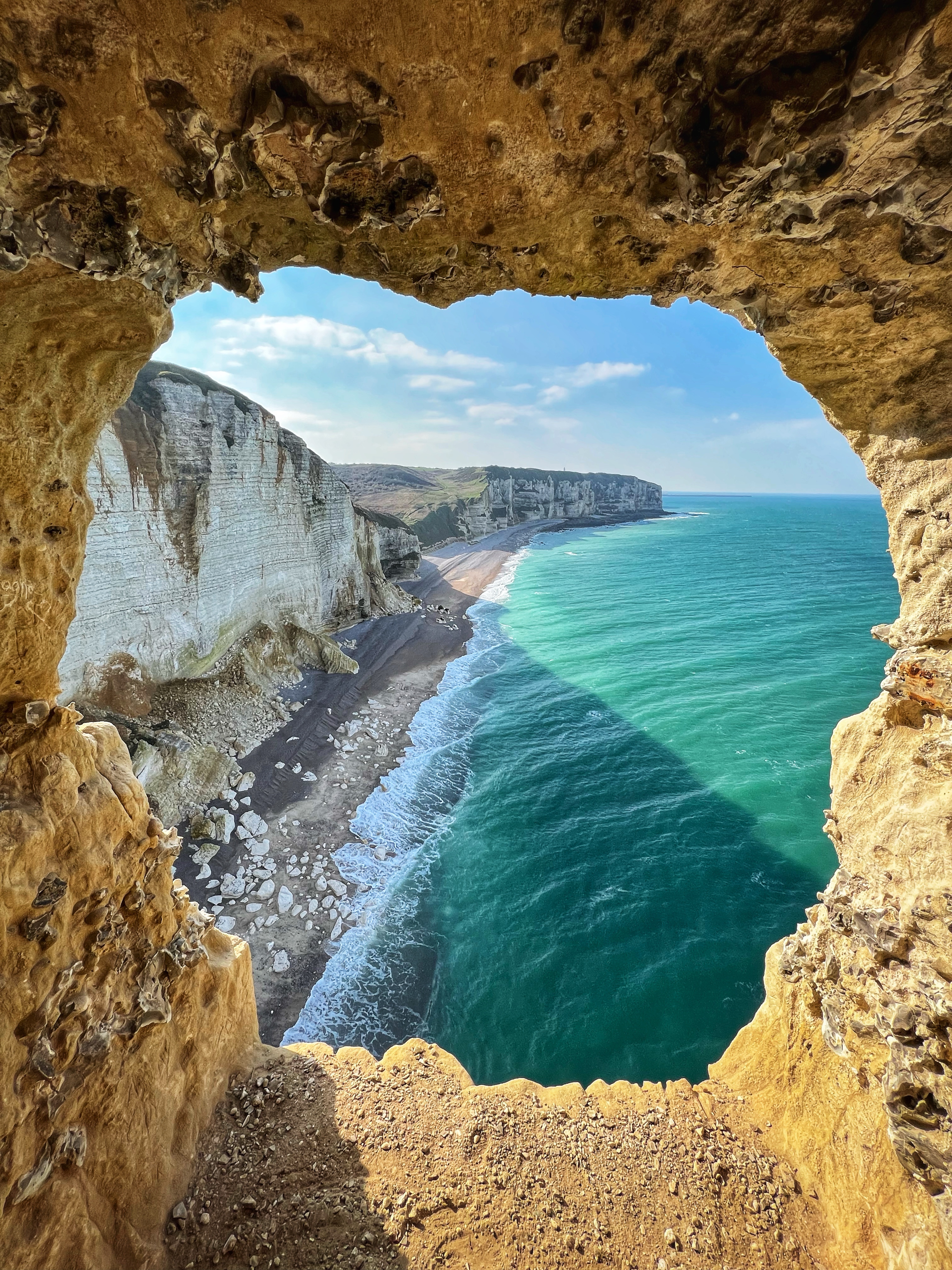
The final falaise is called Pointe de la Courtine and ends at the L’Oeil du Panda (Eye of the Panda). This is such a unique place, and although the hike is about 15-20 minutes to reach and can be muddy depending on weather and trail conditions, it is totally worth it. There is nothing quite like looking out through this giant hole in the cliff to see the turquoise beach below. From here it will take about one hour to walk all the way back to the beach from here at a leisurely pace, and the whole trail is beautiful. There is even a golf course adjacent to the trail! Imagine playing there…


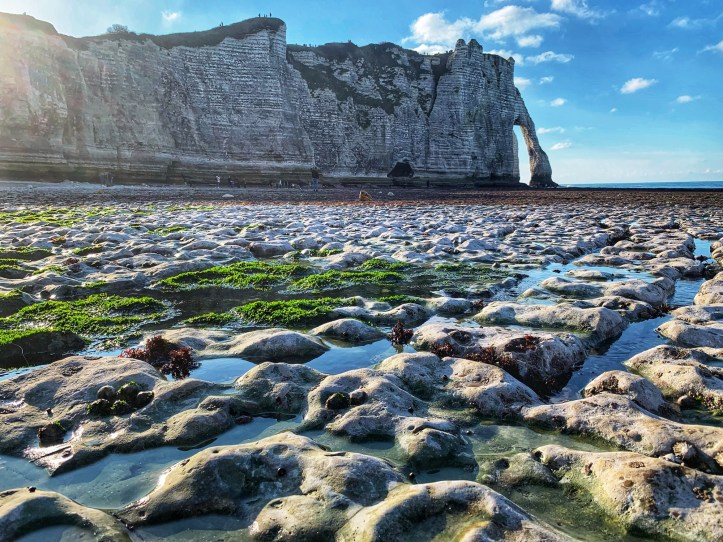
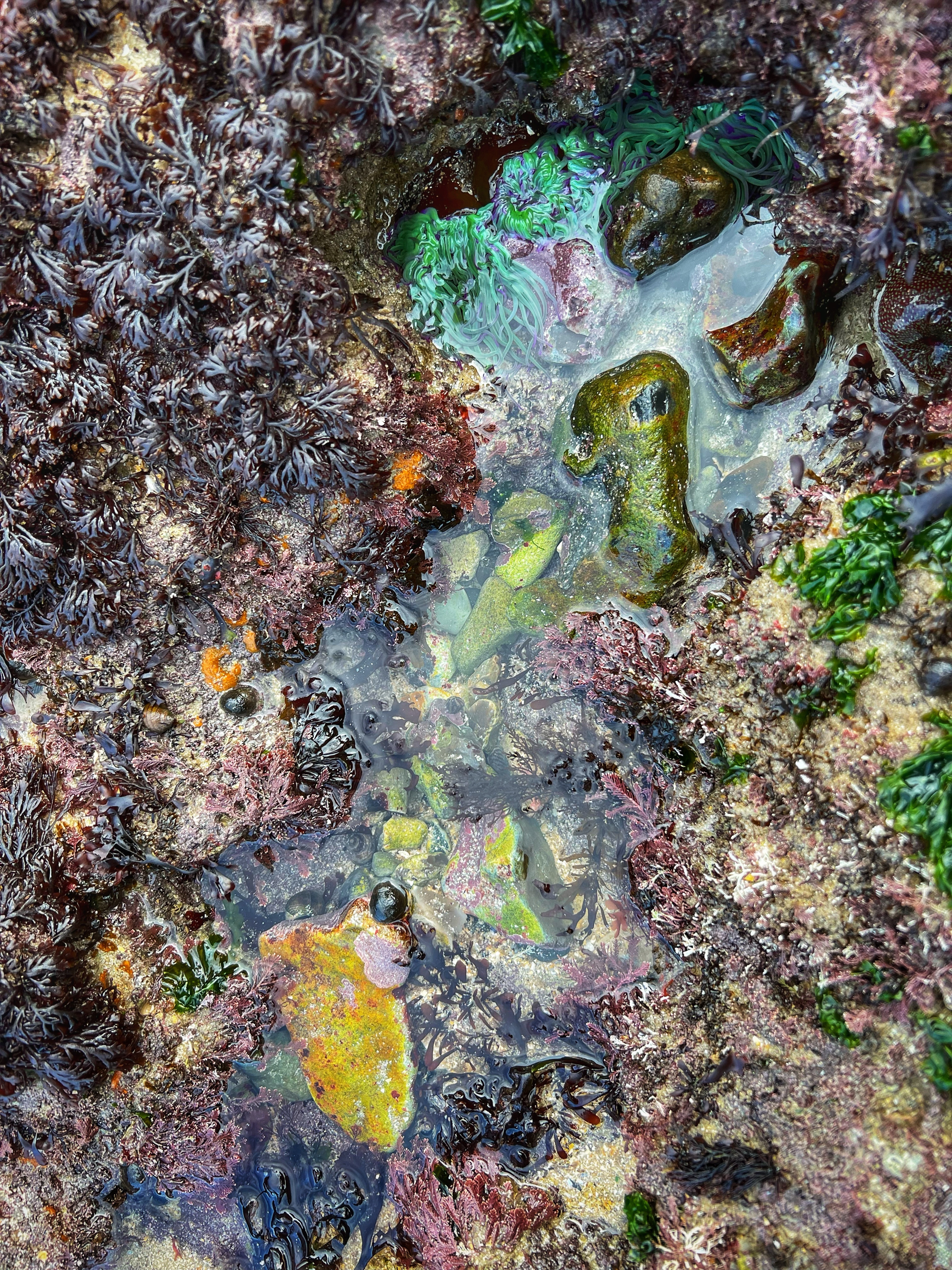
Back down at the beach, keep an eye on the tide chart. It is so fun to wander the bumpy white rocks of the shore and explore in and around the caves. There are plenty of tide pools and lots of fun little creatures to discover! It is possible some times of the year to walk through the arch, but be very careful not to get stuck on the other side, as the tide comes all the way up to the cliffs in many places and you could get trapped. It’s safest to stay adjacent to the beach and within site of the boardwalk. Speaking of boardwalk, this place was also featured in a scene in the Netflix show Lupin!
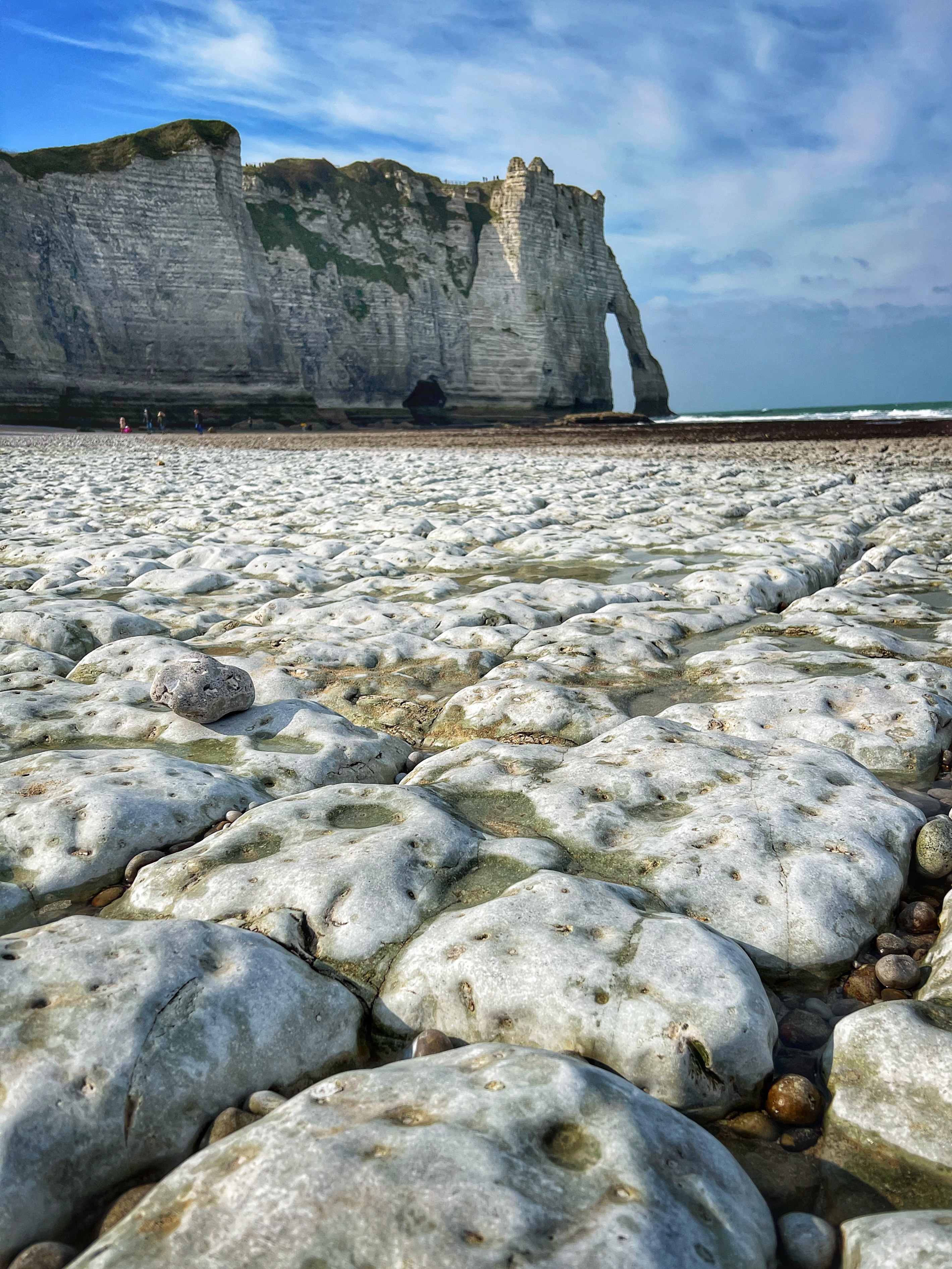
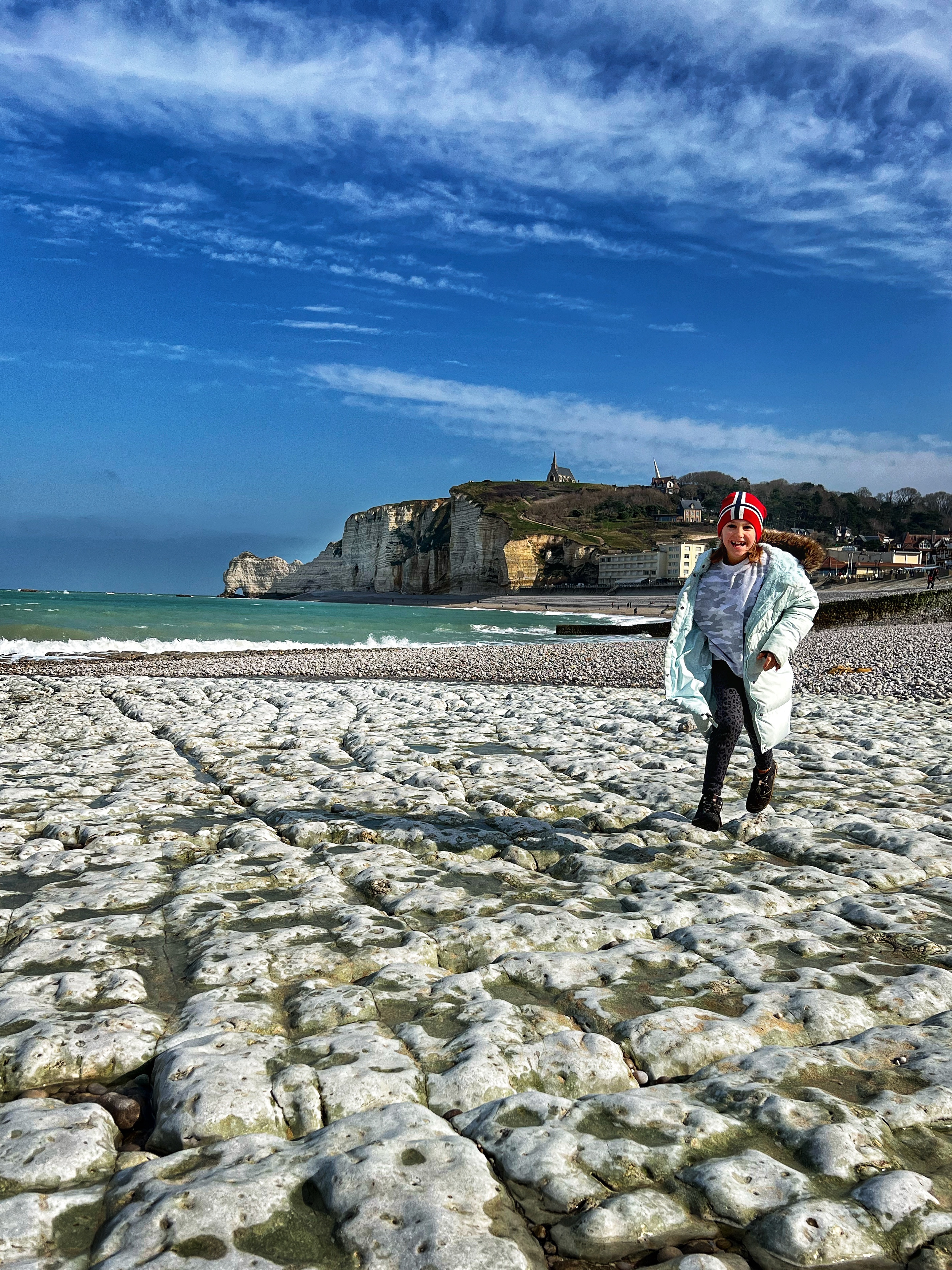
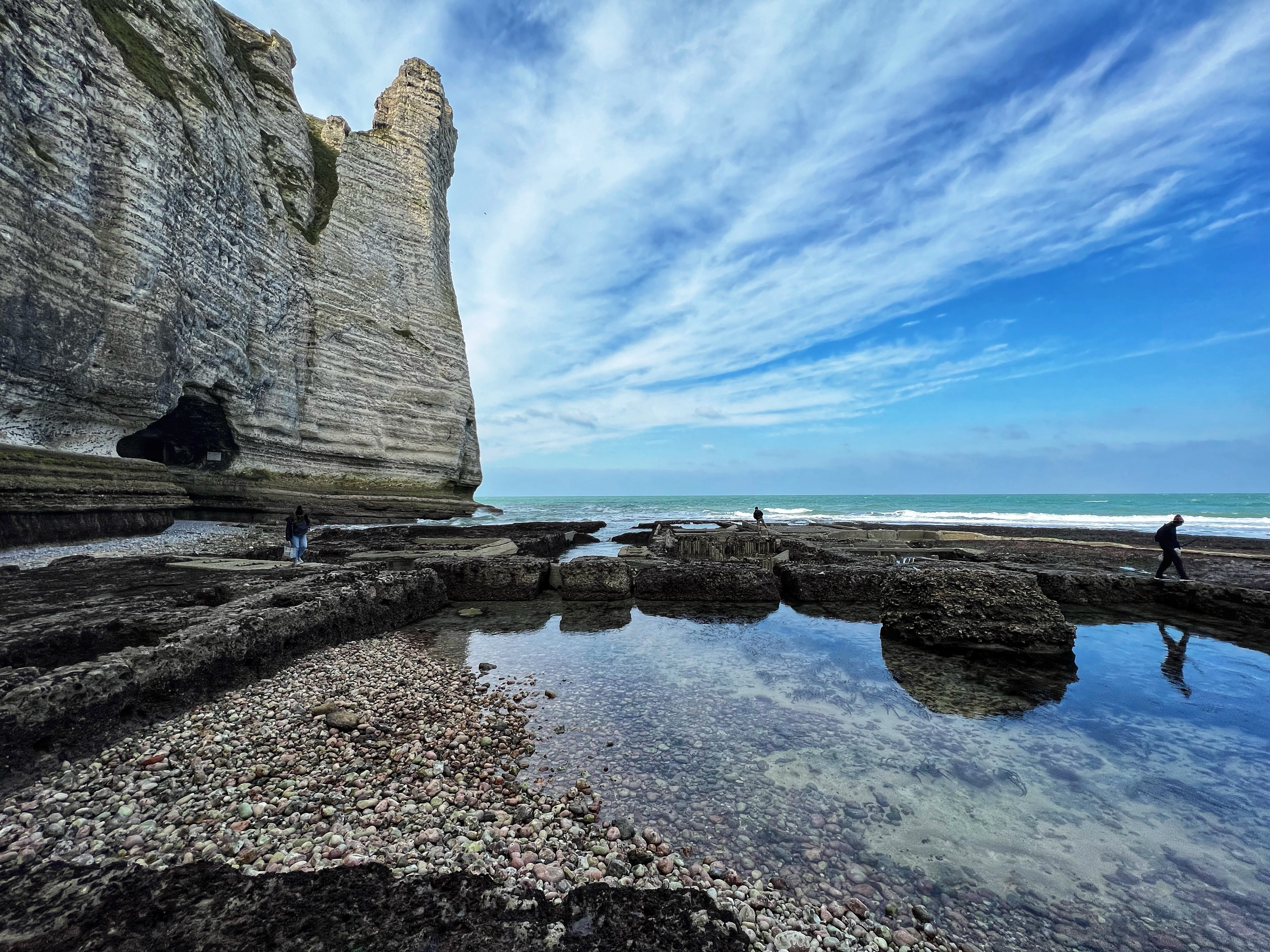
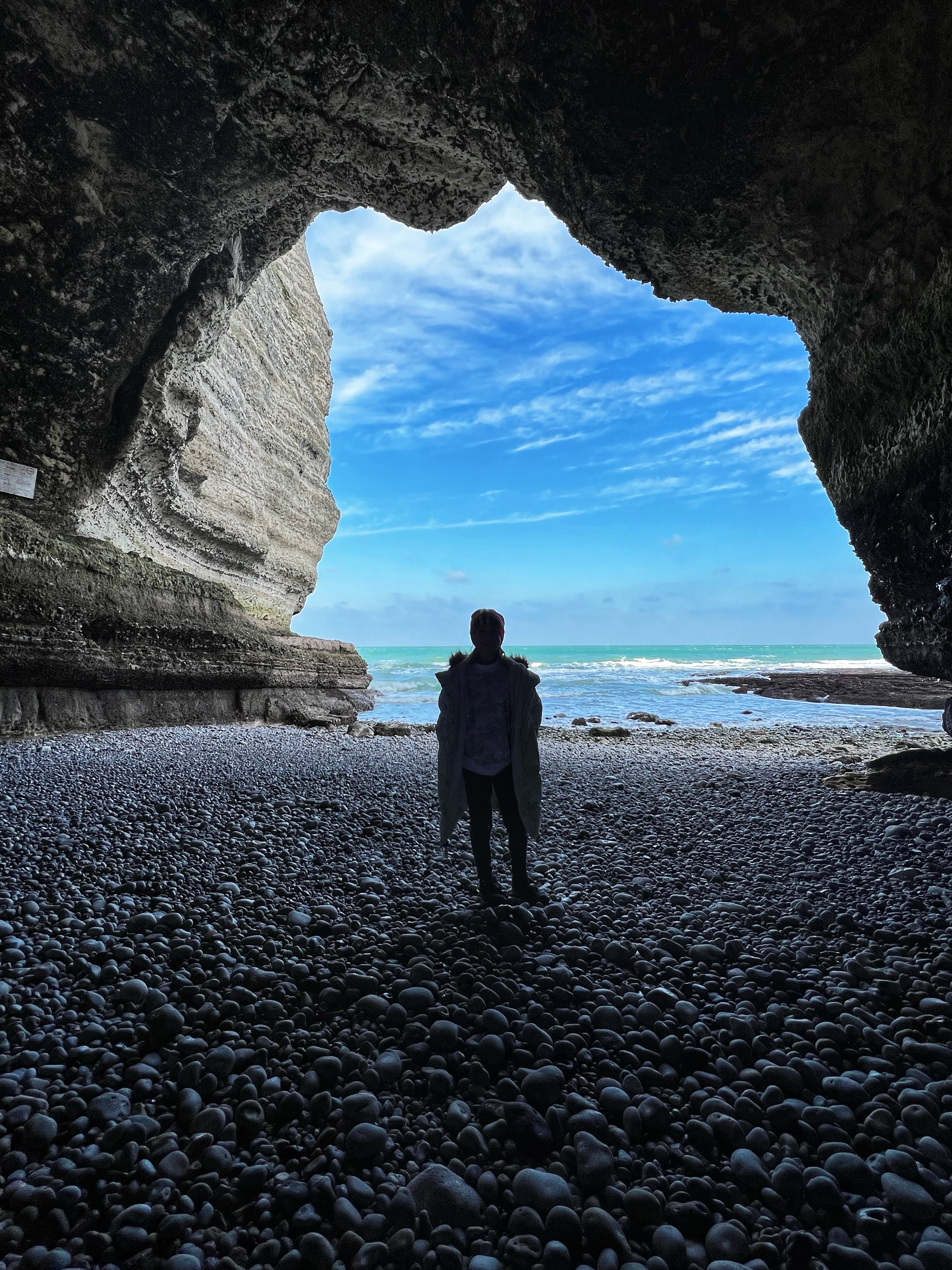

The more popular side of the beach is to the left if you’re looking at the water. However, on the other side of the beach off to the right, climb up the path to La Falaise d’Amont. The cliffs are beautiful to climb, and have an uparalell view back towards the town and the archways beyond the beach. Walk past Chapelle Notre-Dame-de-la-Garde, the small stone chapel visible on the cliff side. It is here that the “Jardins d’Étretat” are located, and they’re a worthwhile attraction as well.
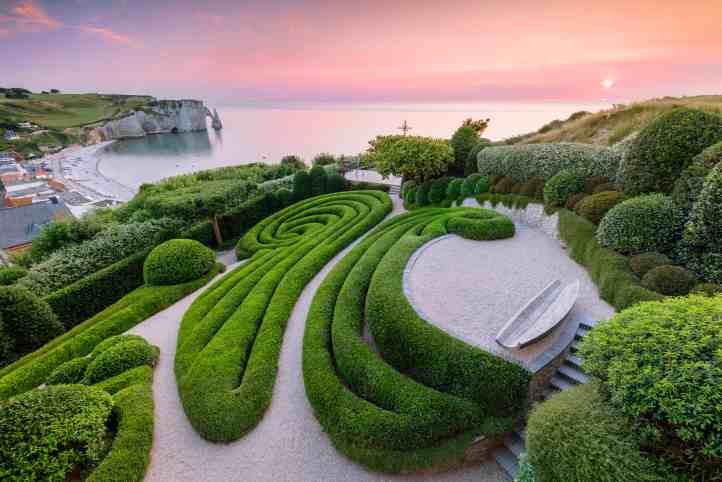
Étretat would be a very charming, romantic place to stay – but remember it is extremely popular for tourists, is more expensive than surrounding areas, and can get quite busy. If you want to avoid the crowds, plan to visit early – sunrise would be perfect here – and come in the off season. We have only visited in the off season, and it has still always been fairly busy!
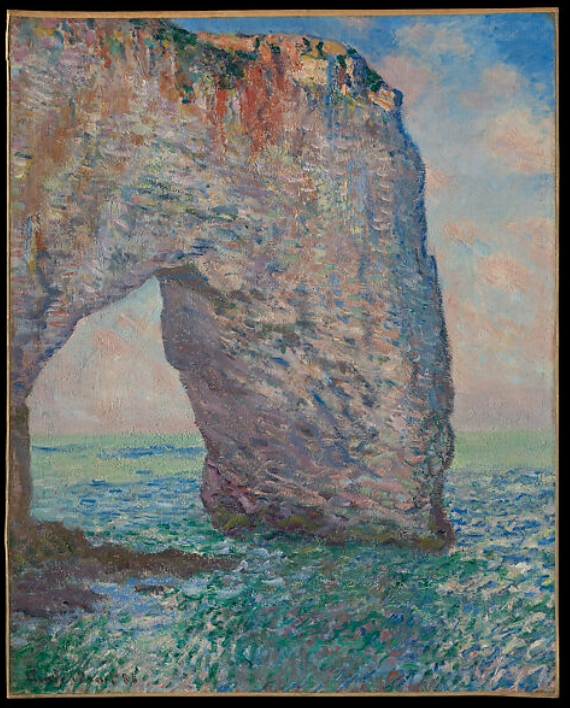
Final Thoughts: Although I don’t recommend staying in Rouen, if you do decide to, there are some really lovely places with beautiful views, good eats, and even golf! In the summer the prices will go through the roof, and it will be mobbed with people, but staying would allow you to not worry about parking or needing to rush. Étretat is famous for a reason … its cliff views and charming town are tough to beat. Go see why Monet visited every year from 1883-1886 and ended up painting twenty completed works of the cliffs and beaches here. The Manneport (bottom left) can be viewed at the Met in New York City, and others are in the Musée D’Orsay or making the rounds about the globe at various exhibits!
Rouen
Long before France became a country, Rouen was the second most important city in Gaul. It remained an central town for commerce and was still a hotspot when Joan of Arc arrived in the early 1400’s. During WWII, almost half of the city was destroyed. Rouen is situated on the Seine river and has approximately 110,000 inhabitants. Today Rouen is known for its amazing churches, famous clock, and of course, THE Joan of Arc city.


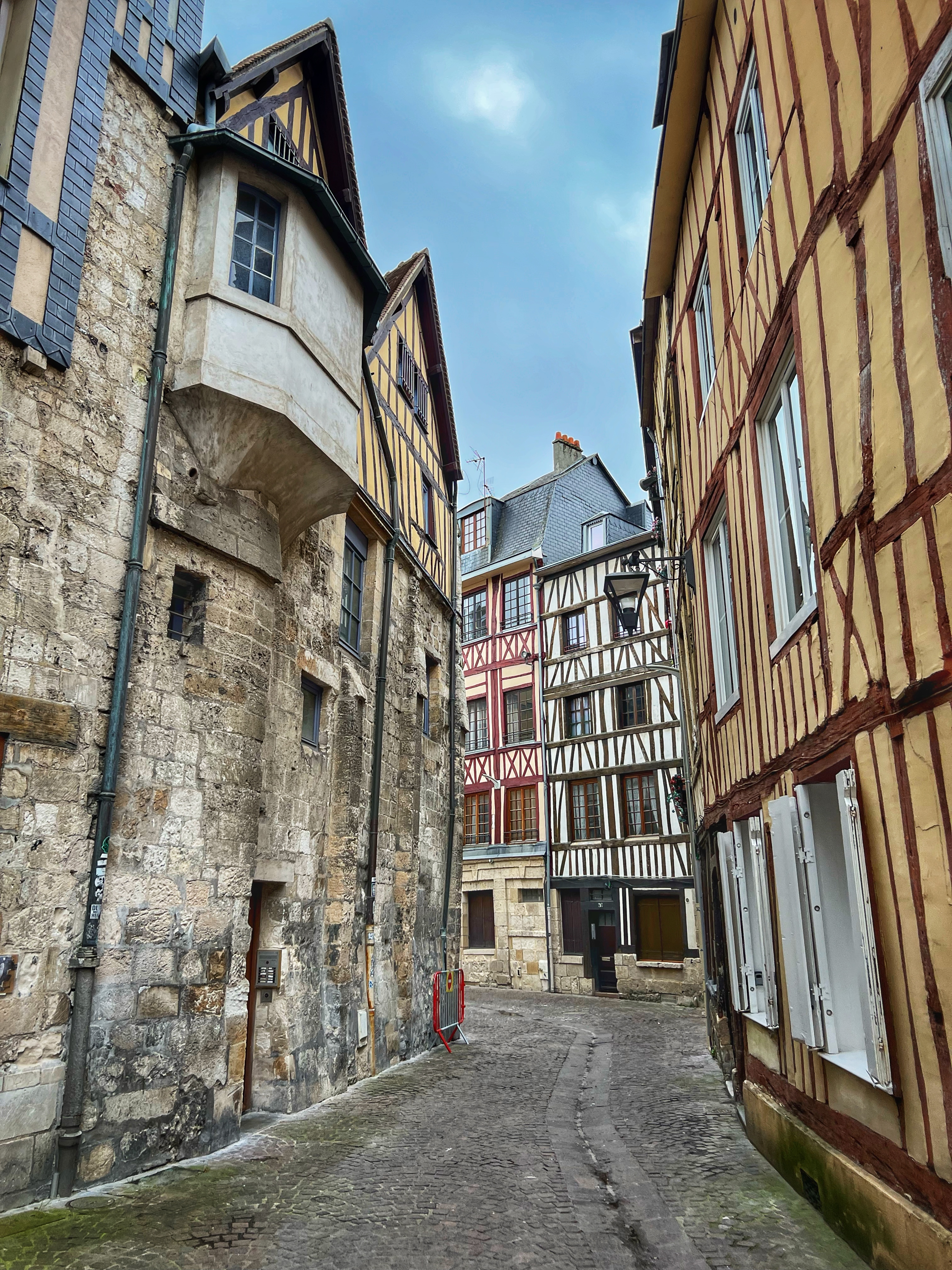

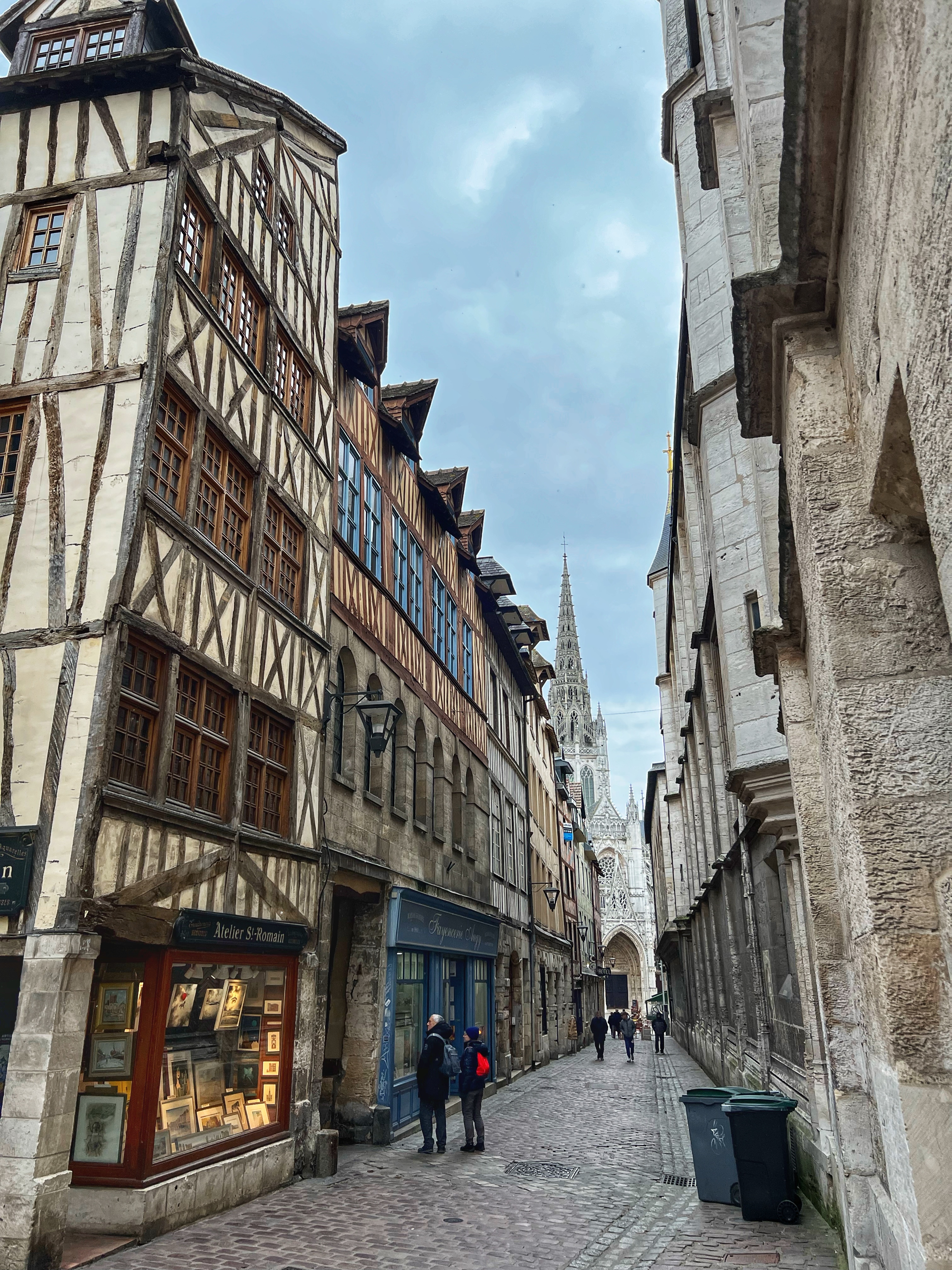
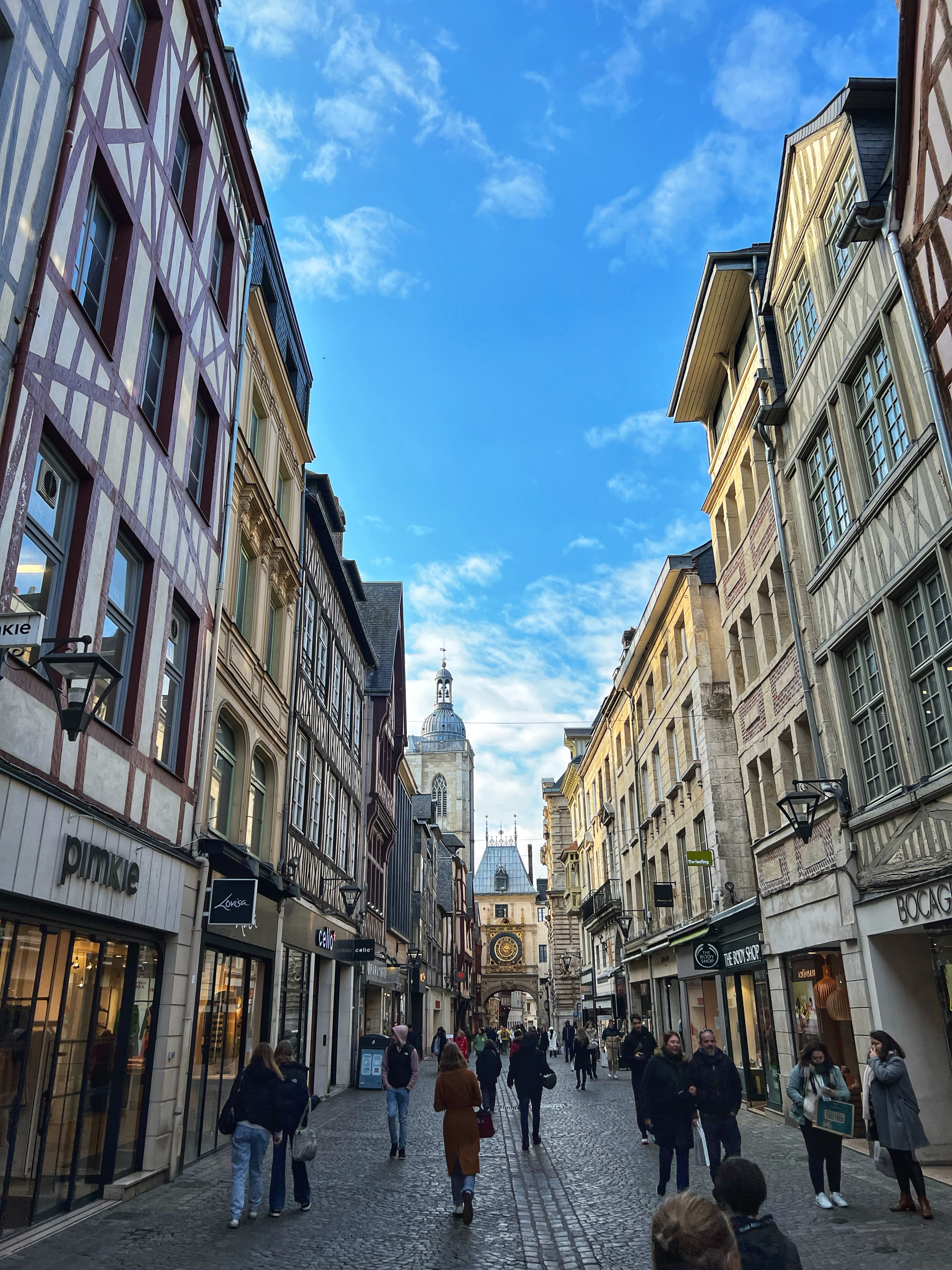

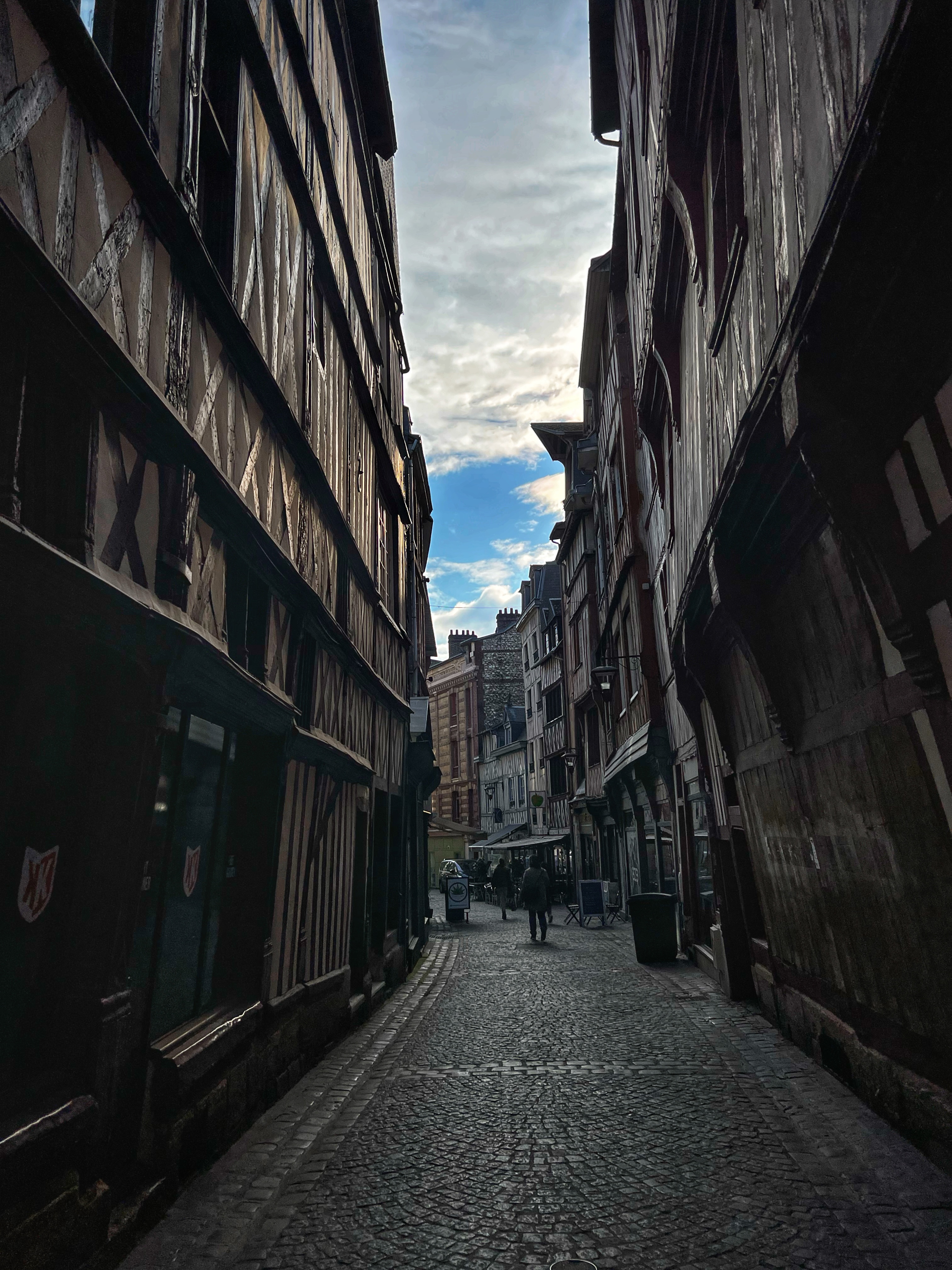
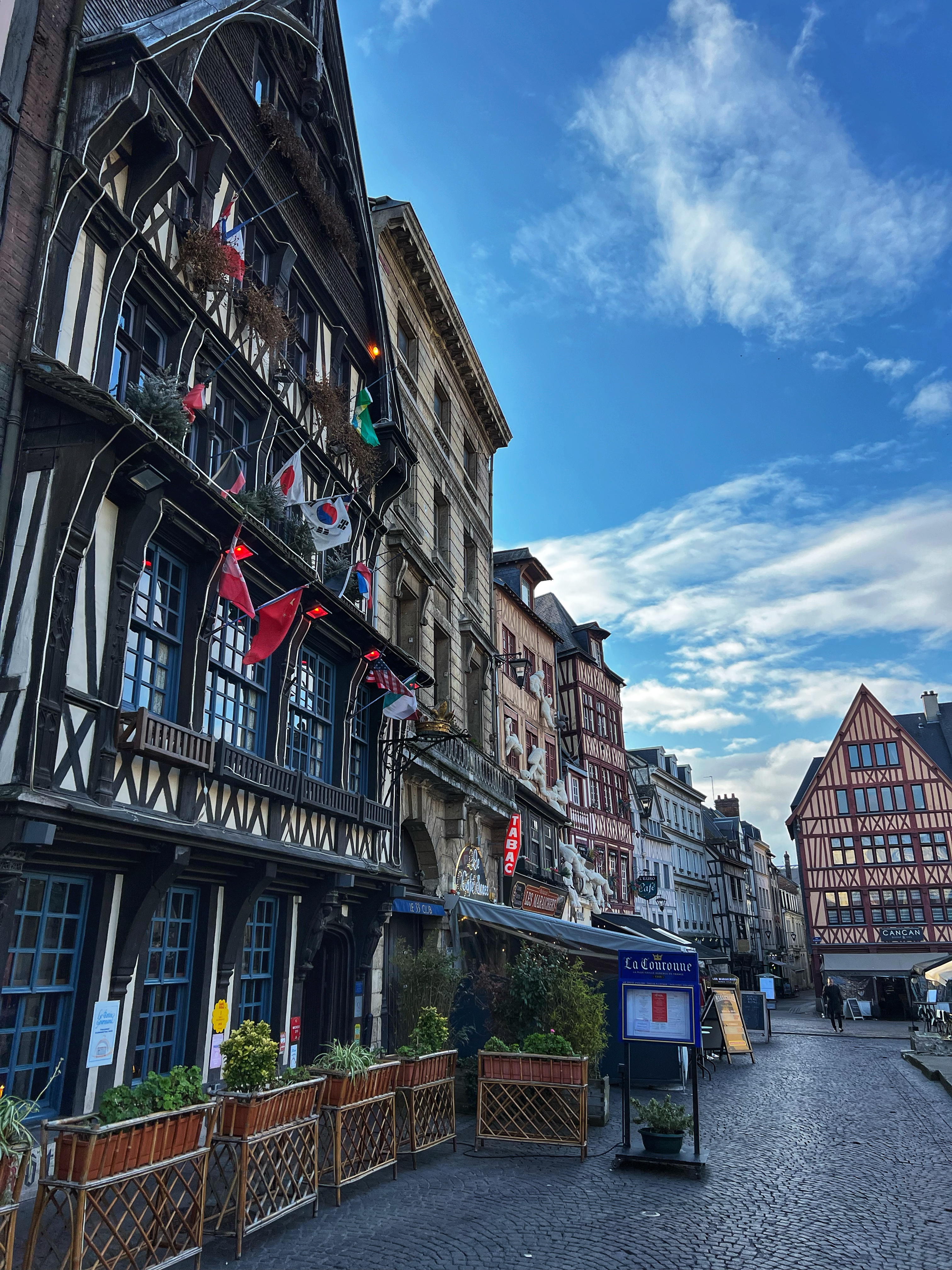

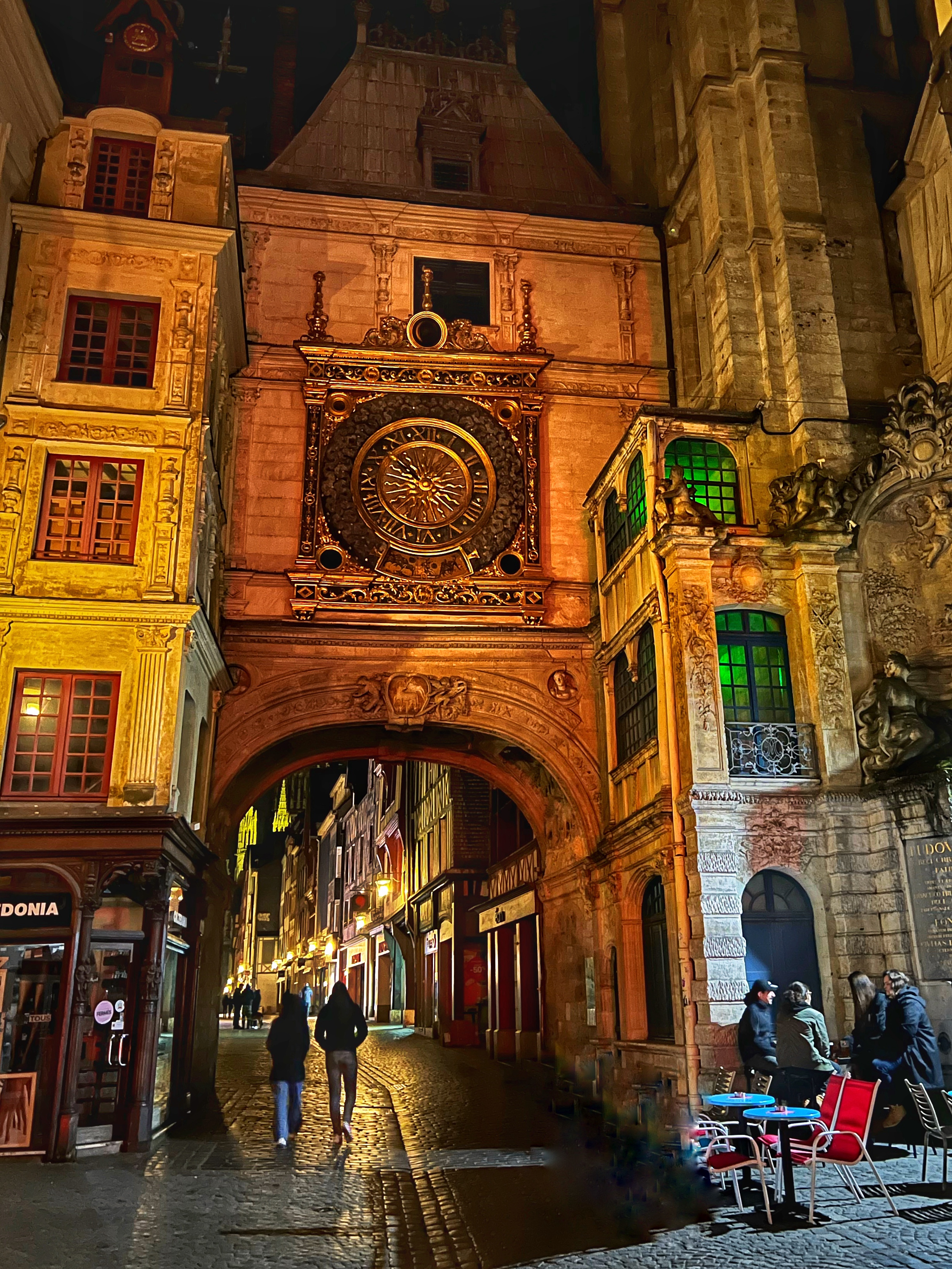
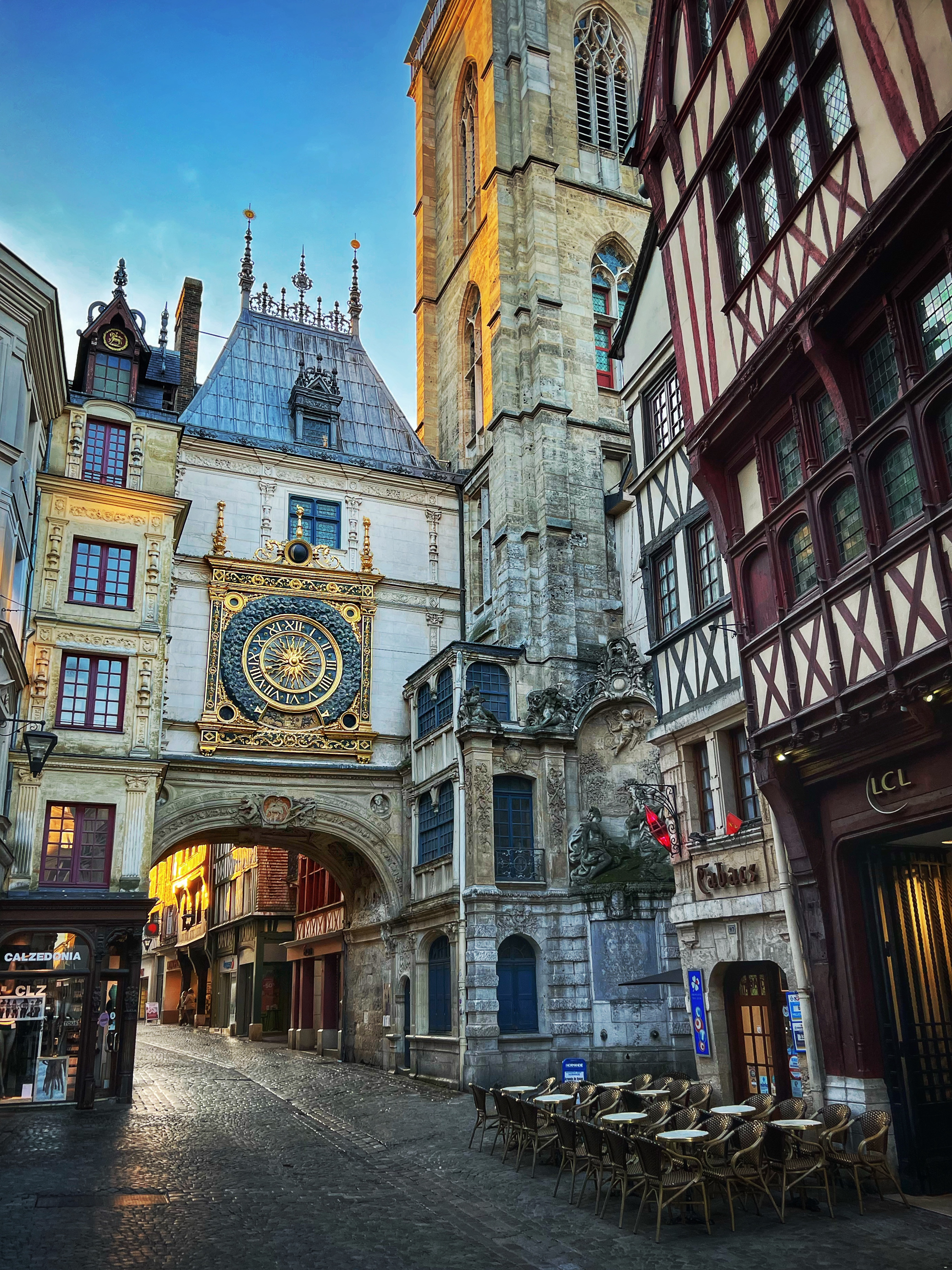
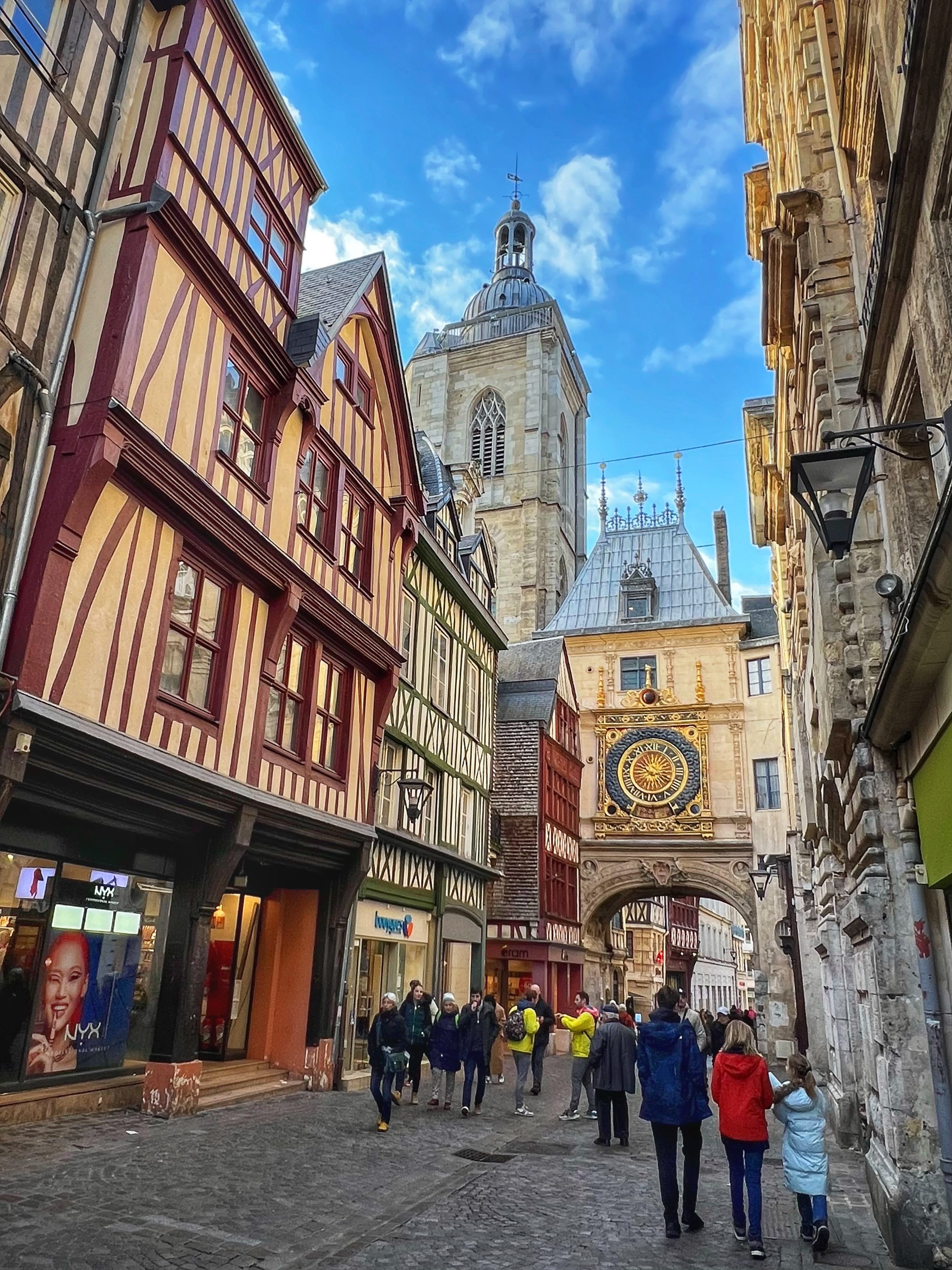
One of my favorite things to do in Rouen is just wander the streets. It has a real Bavarian feel that is echoed in many towns in Normandy. There is so much good food, many cute shops, and plenty to do and see. Rouen is a great place to stay as watching the sunrise and sunset here are glorious against the main attractions. Keep an eye out for lovely parks and squares with unique art and sculptures. Rouen is a lively place, and it’s so lovely at night!
We had ramen at MOK WOK and got takeout Vietnamese food at this cute little hole in the wall called NGOC Kitchen. We also had Hygge on our list and Markette as well for next time.
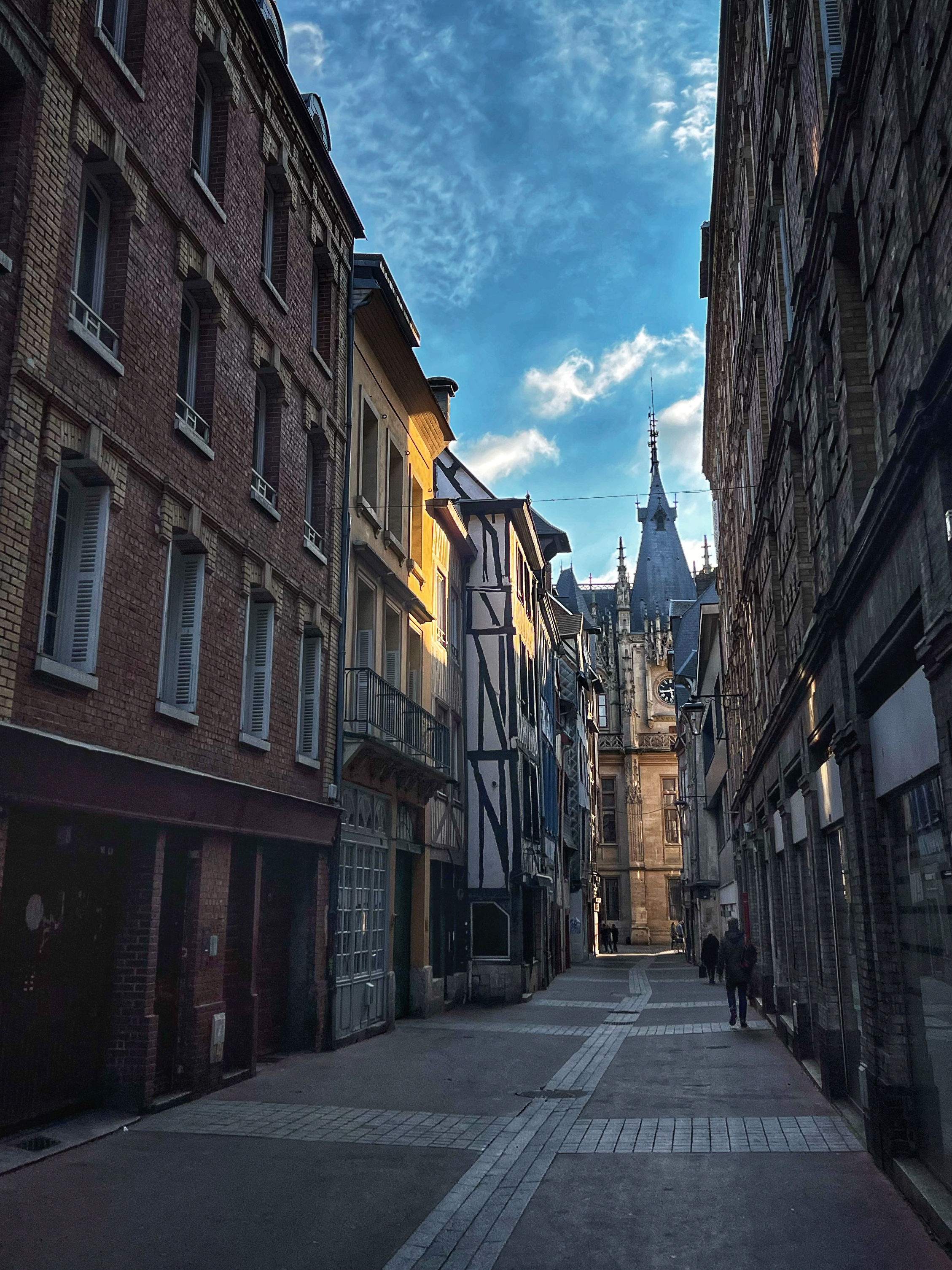

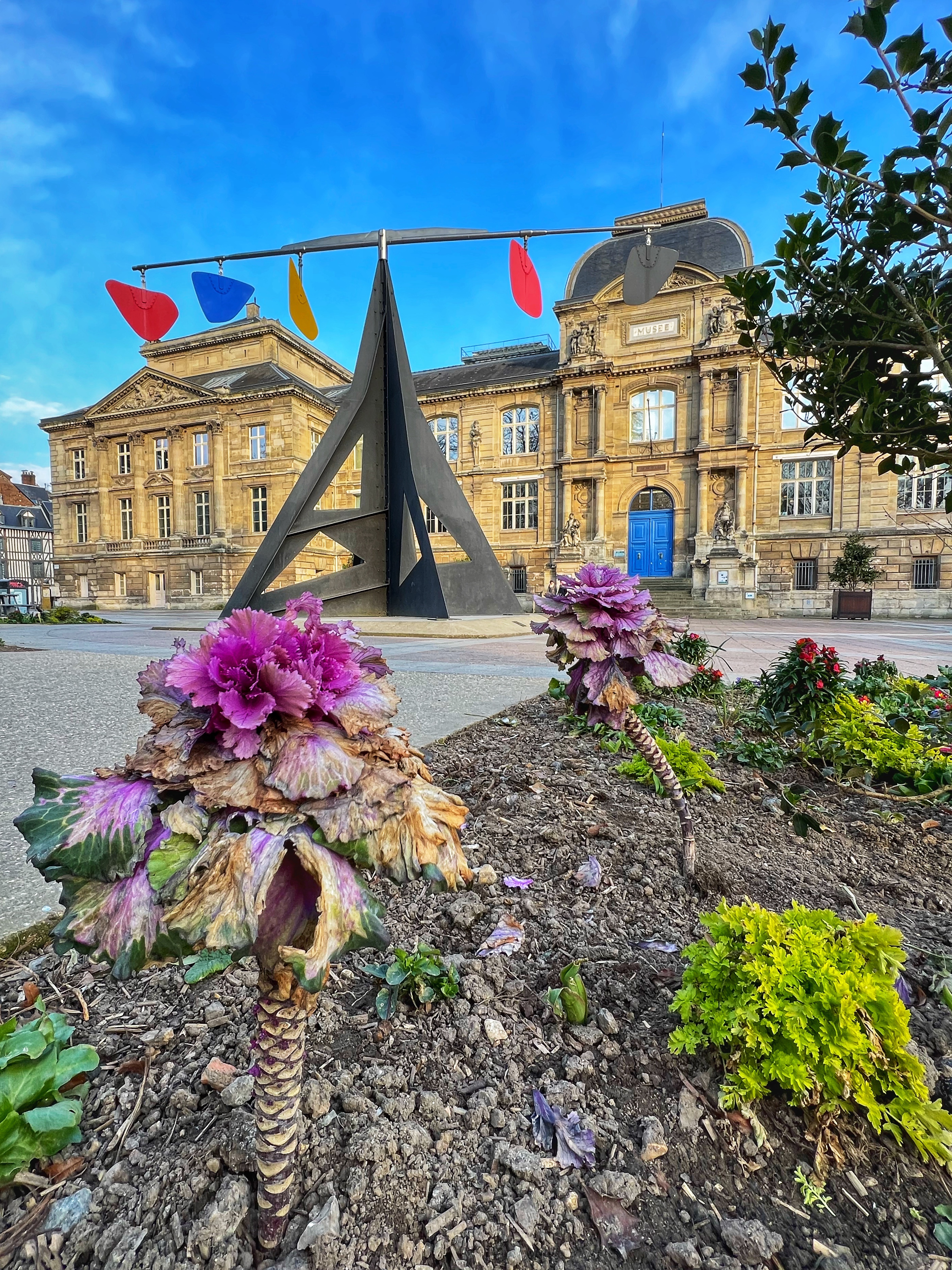
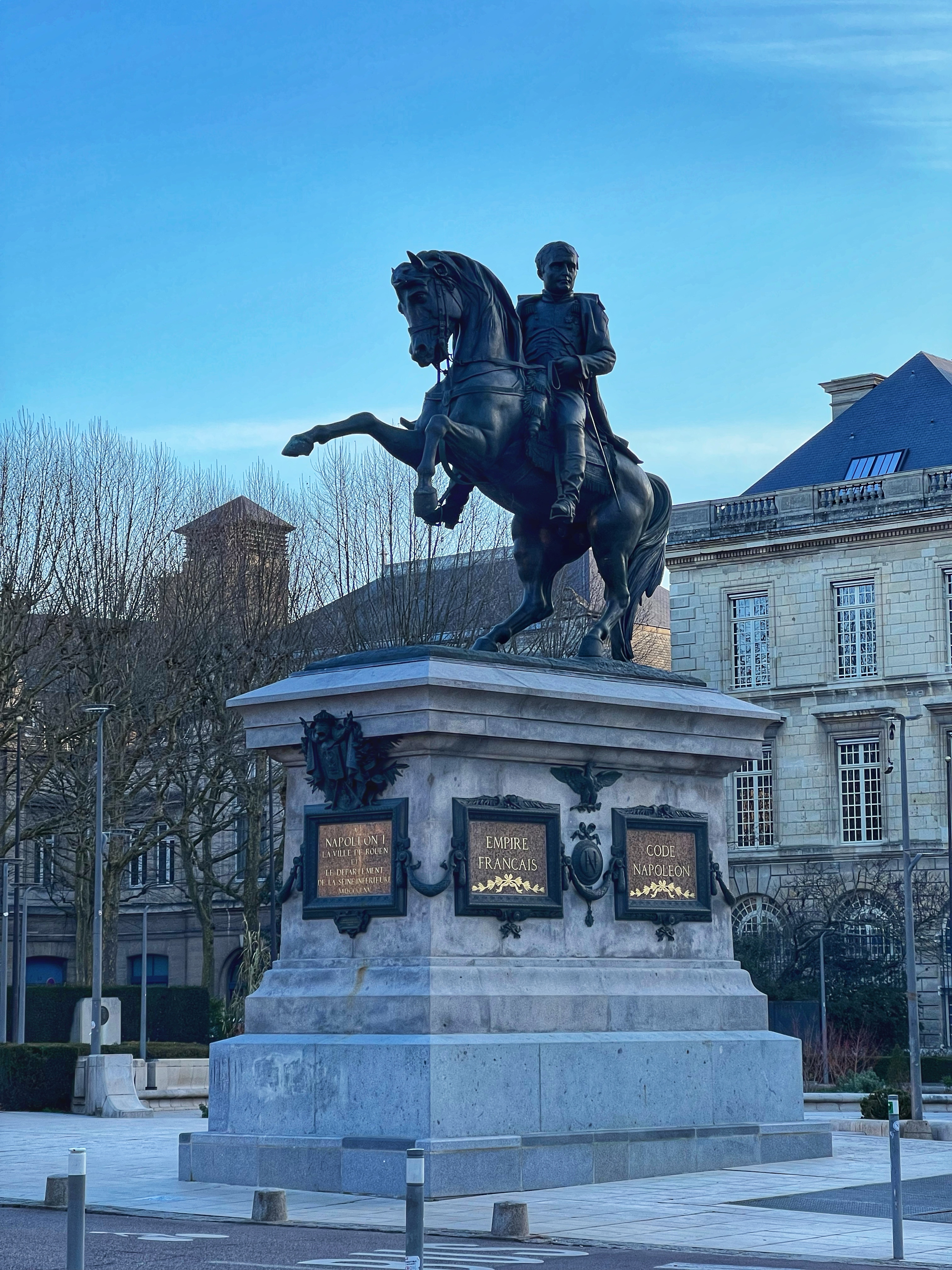
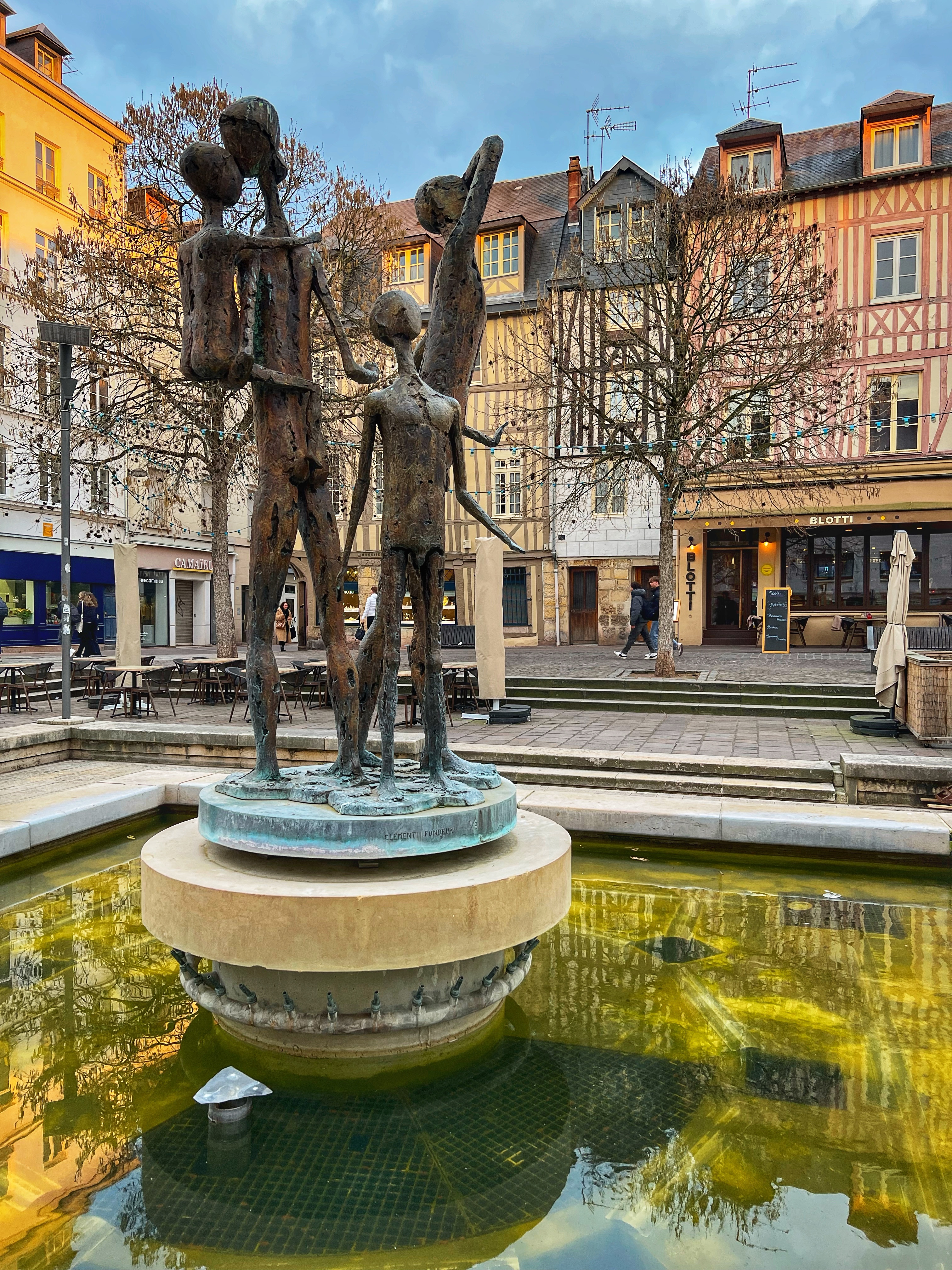
PARKING: Check out Q-Park Palais de Justice Musée des Beaux-Arts or Parking de l’Hôtel de Ville for the best parking spots.
WHAT TO SEE:
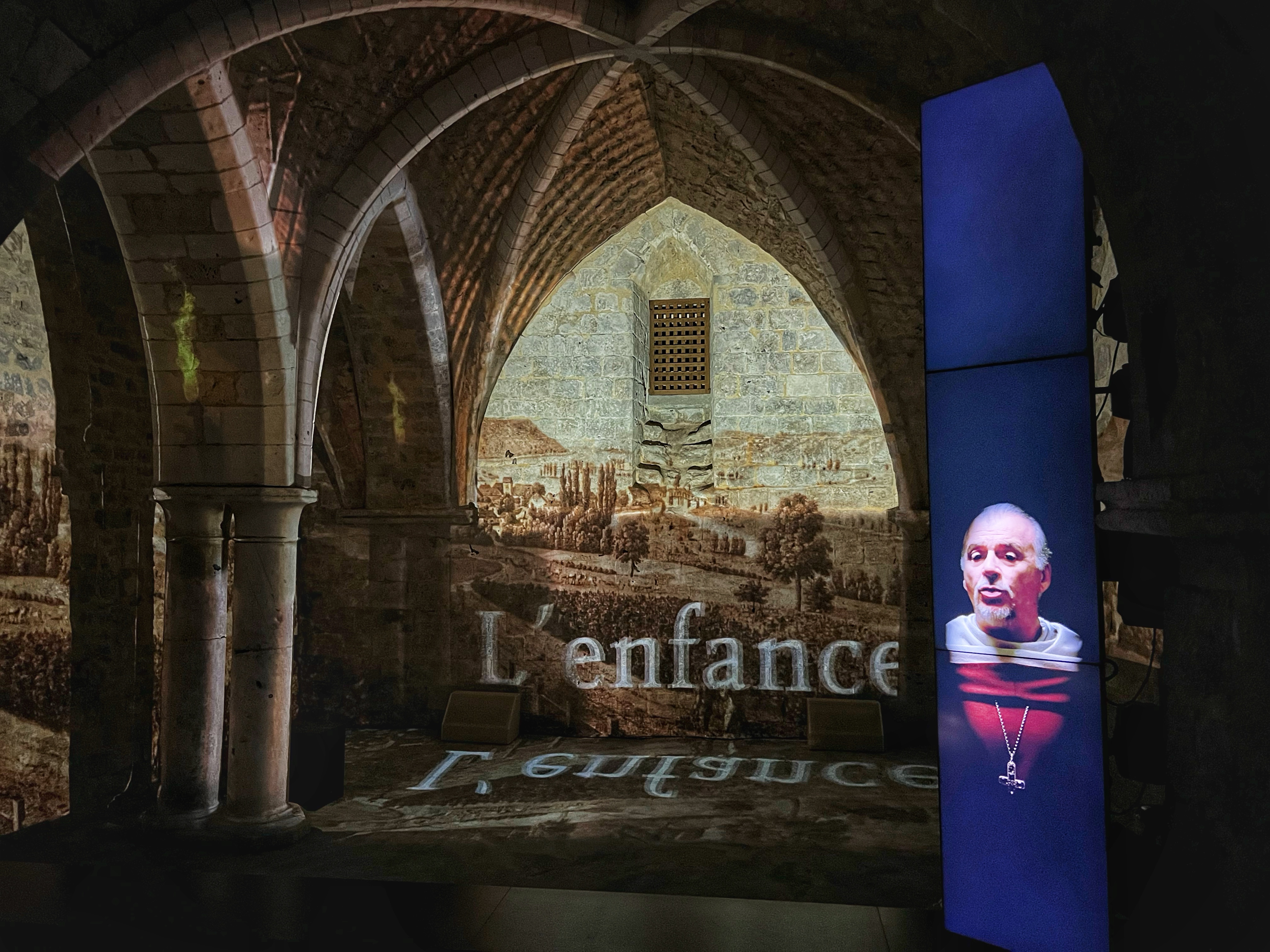
One of our favorite stops on this visit was the Historial Jeanne d’Arc, or Joan of Arc Museum. This is the best attraction in the city for anyone who wants to learn more about the story of Joan of Arc. After all, it is here in this city that she was kept, tried, and eventually burned at the stake! To learn about times and ticketing, click here. We spent about two hours inside going through the exhibits, listening to the audio guide and following along with the presentation. Regardless of what you believe about Joan of Arc’s claims, what she accomplished was remarkable in her young life!
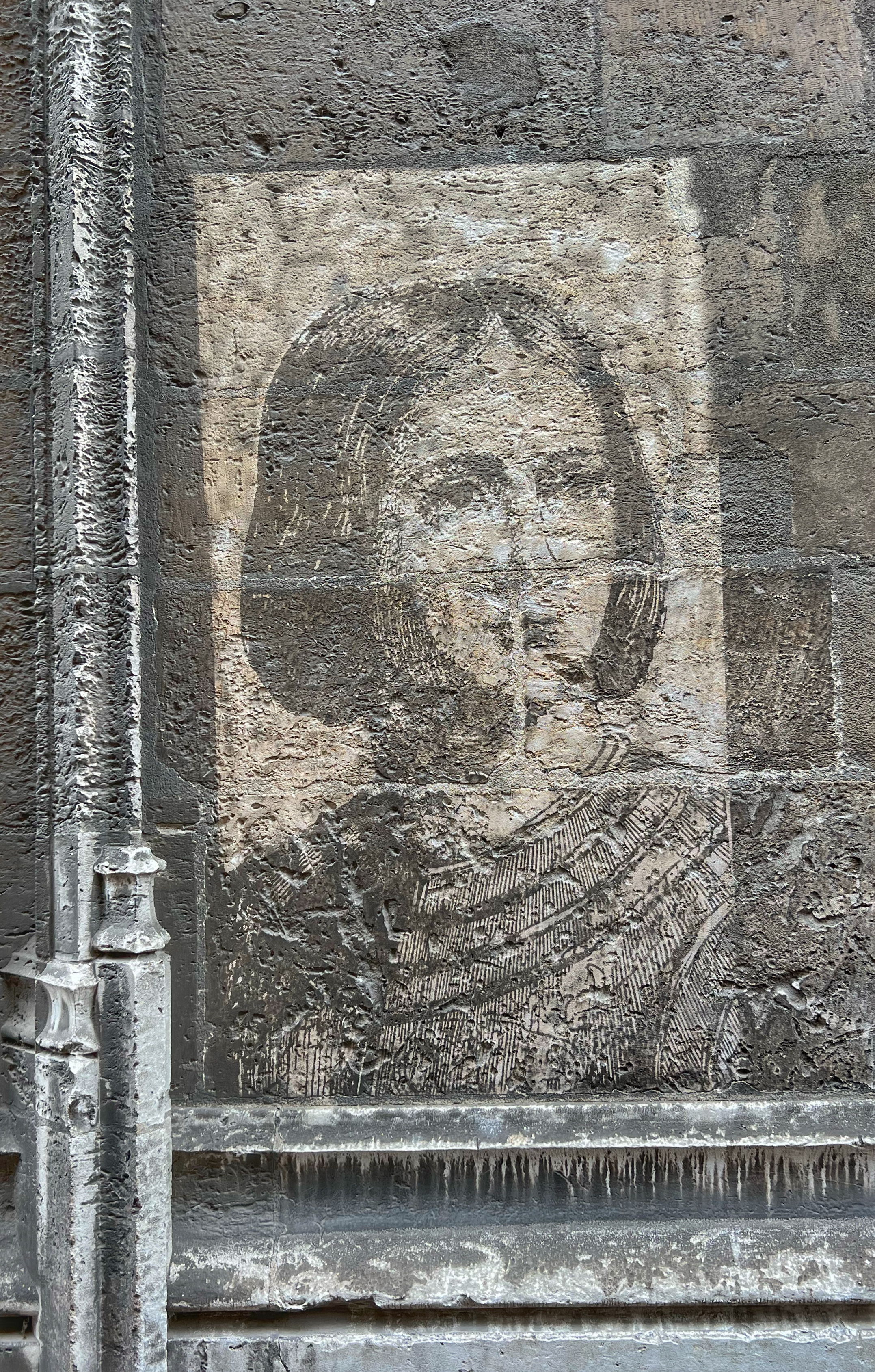
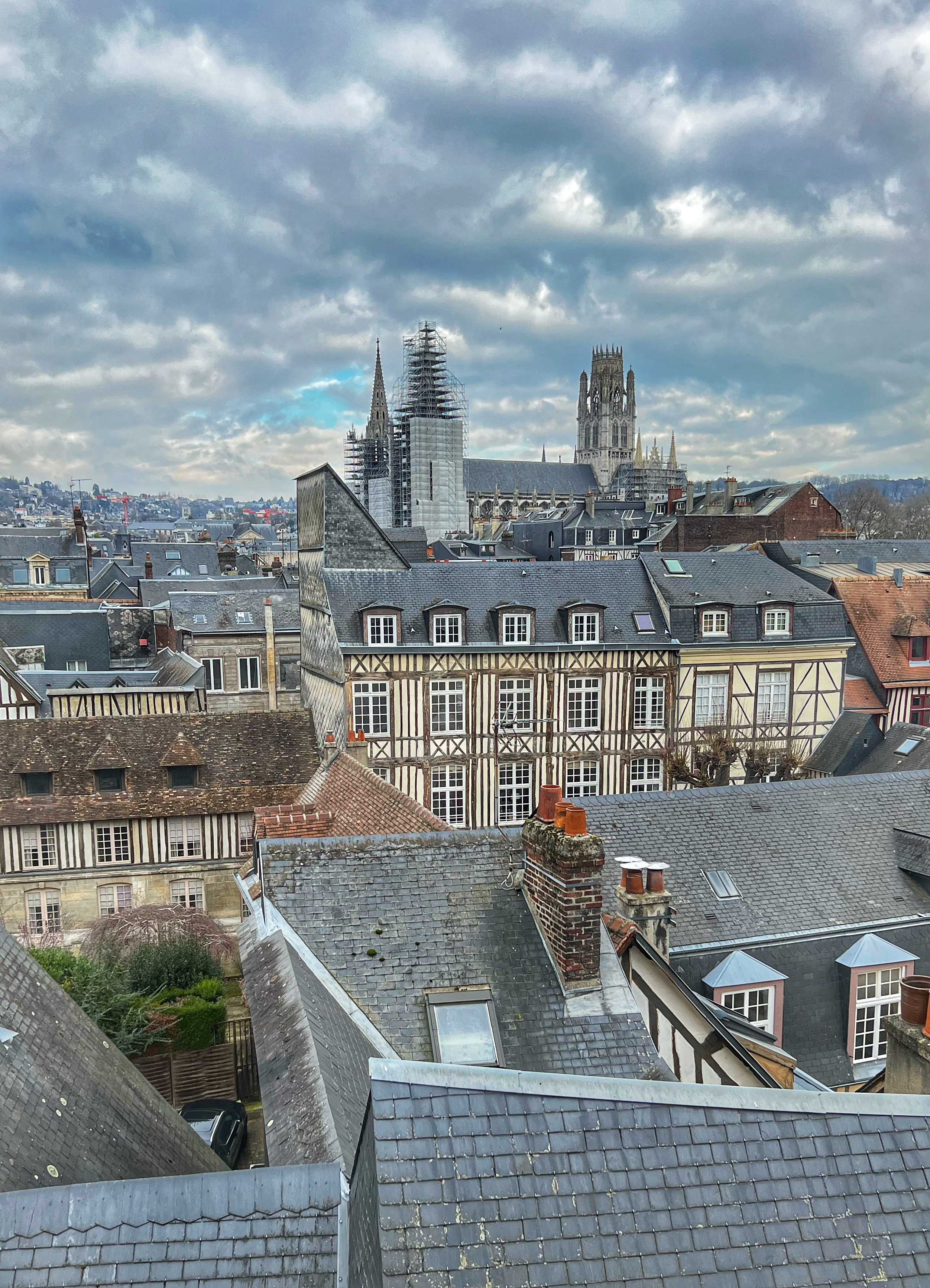

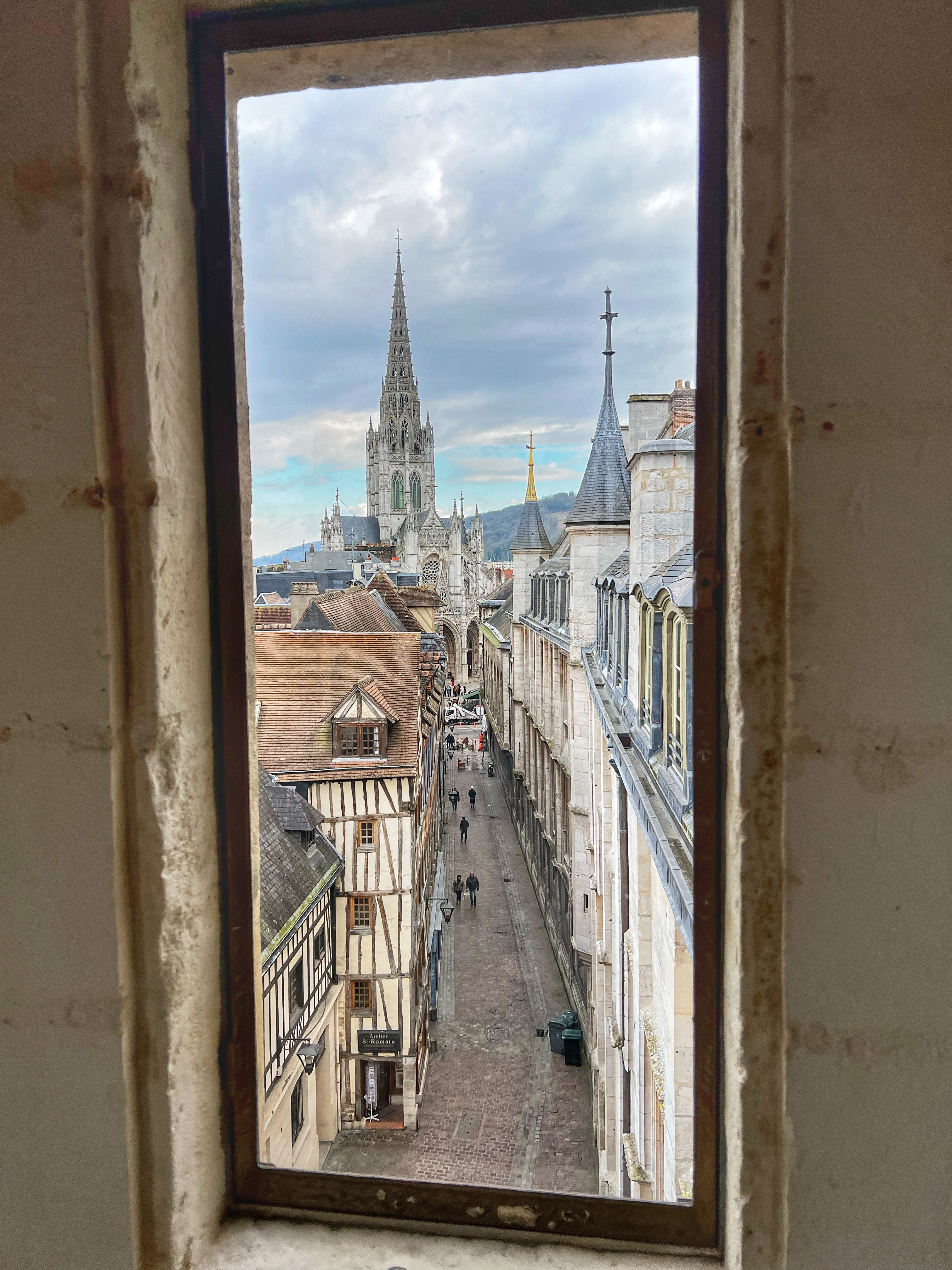




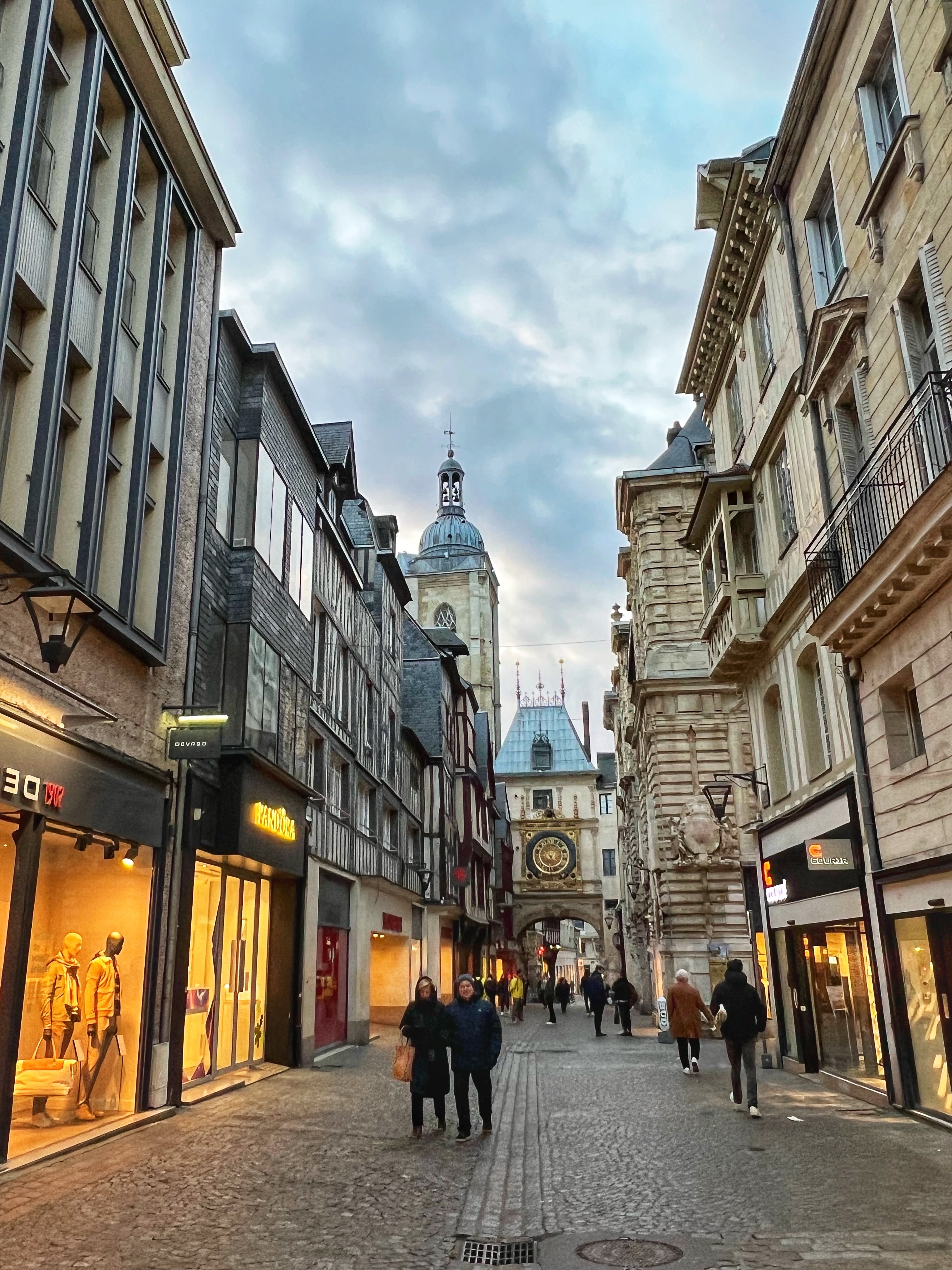
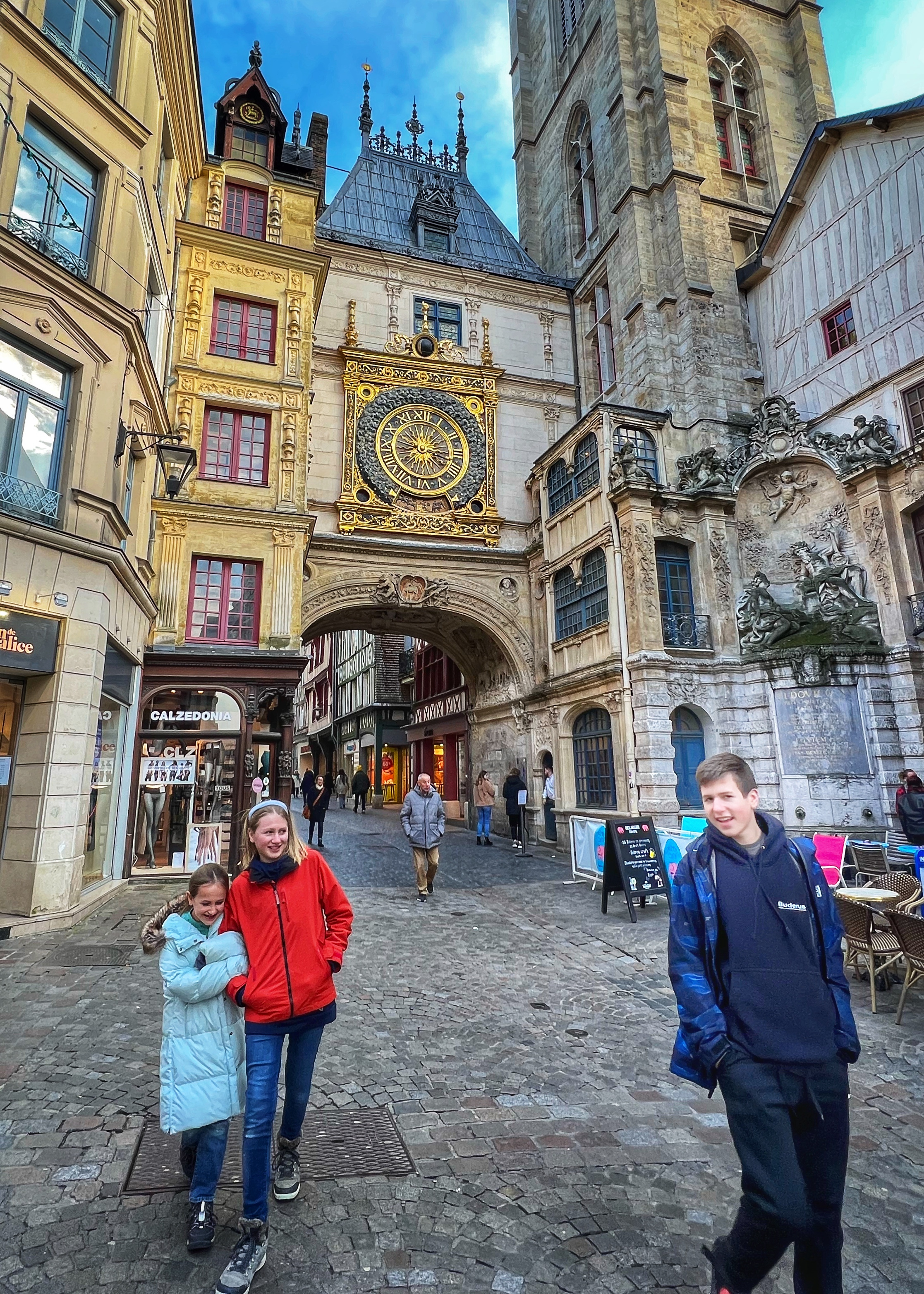
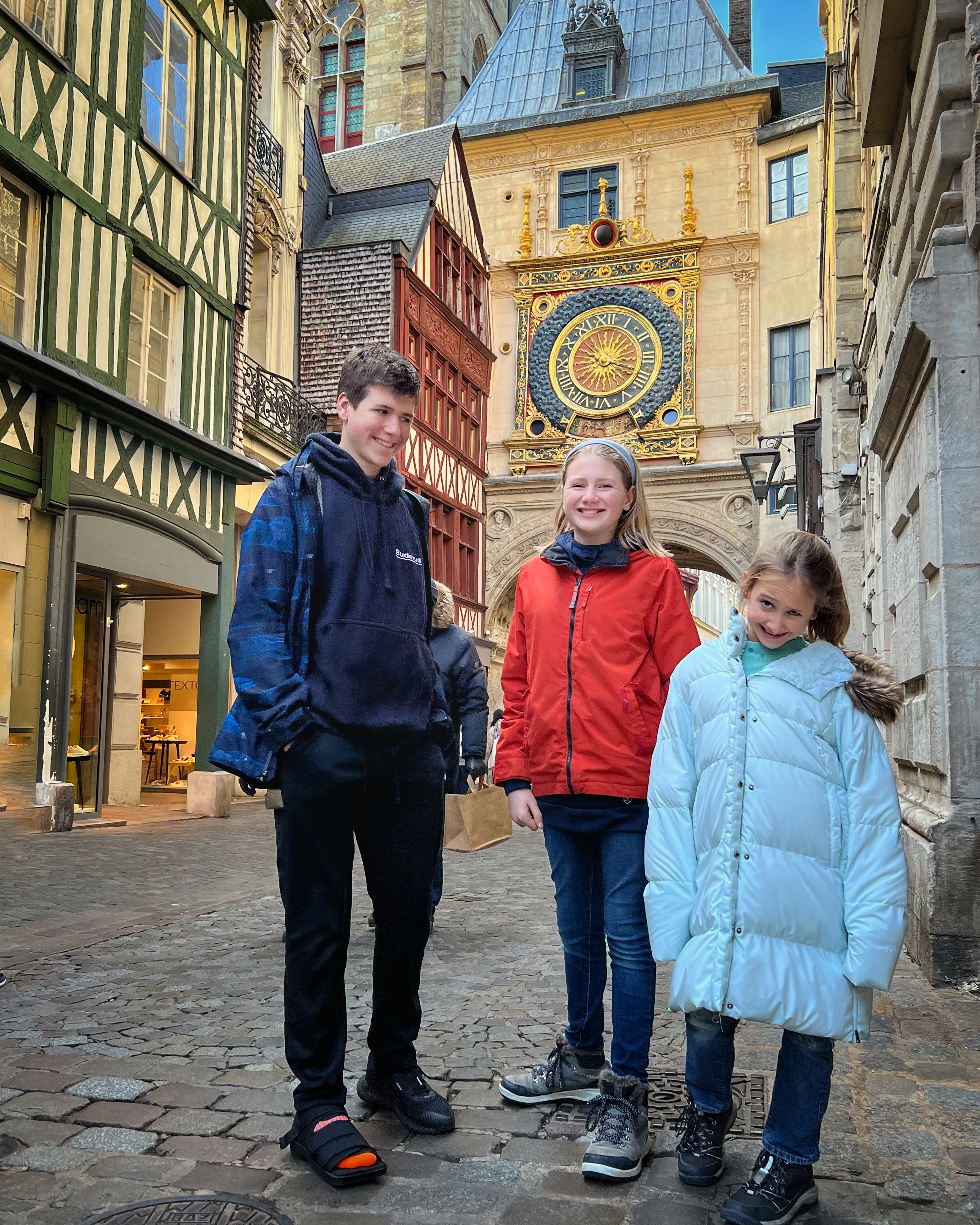
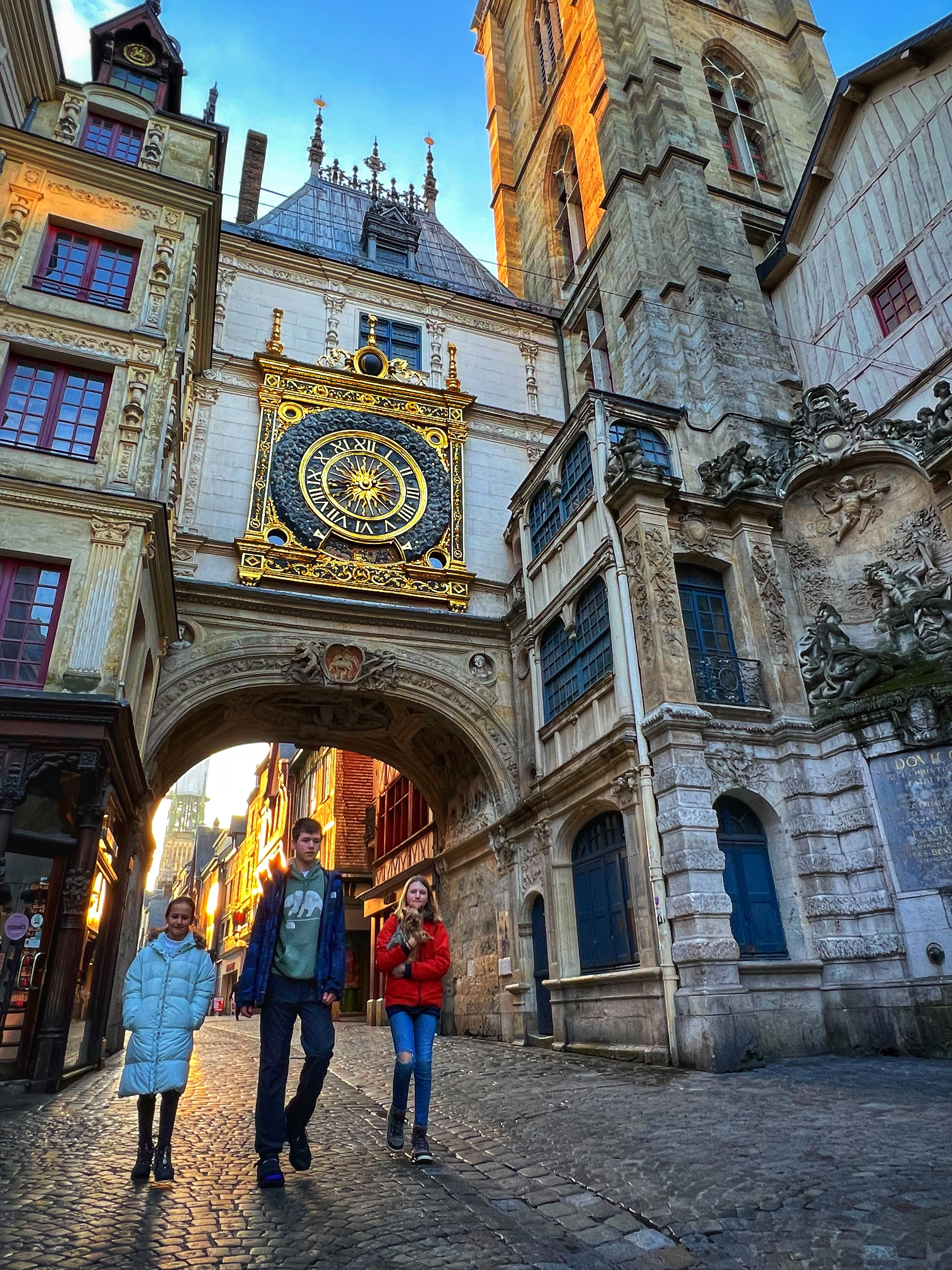
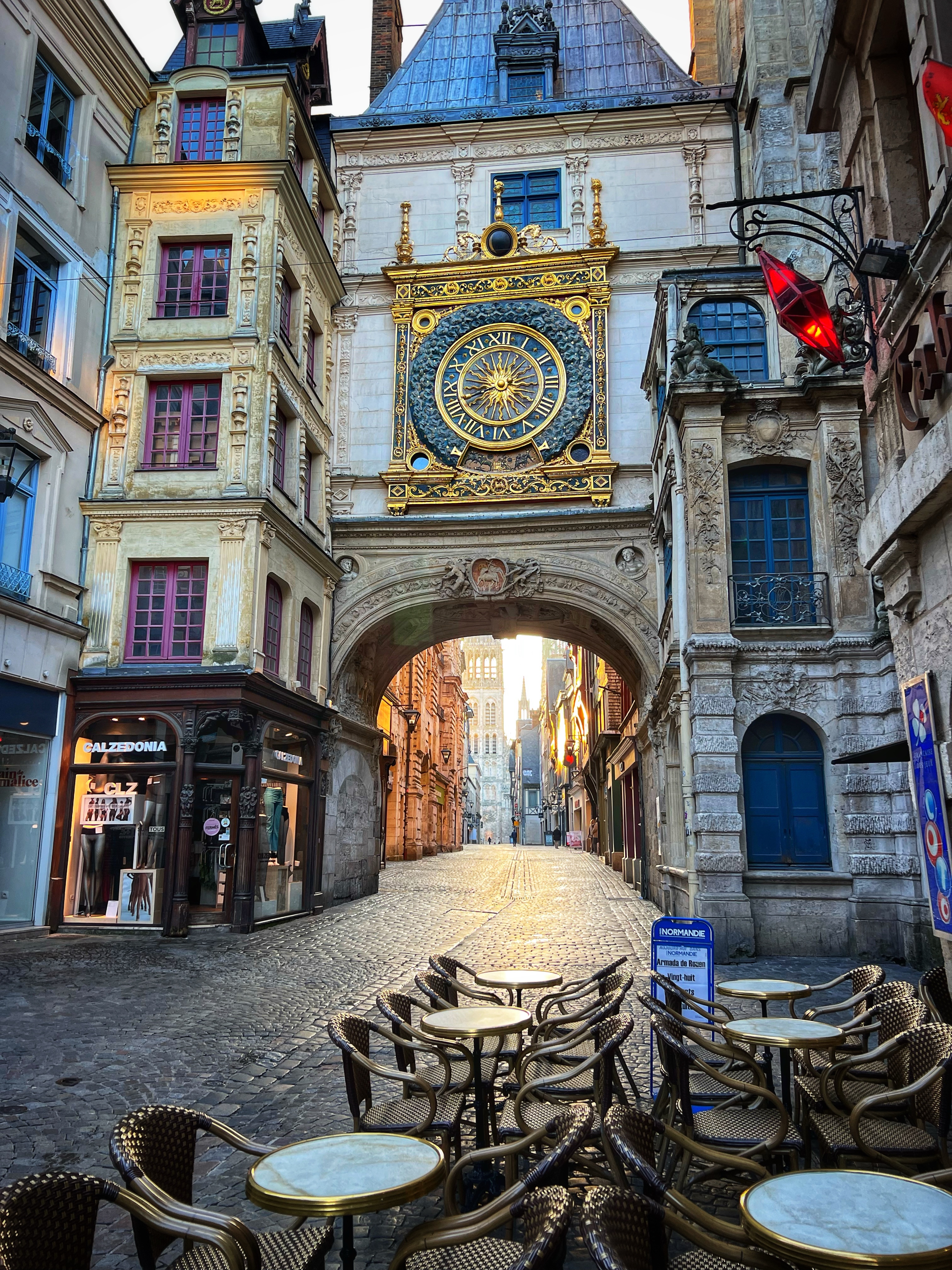
The Gros Horloge (big clock) is a highlight and is one of the most photographed spots in town, framing the charming streets beneath the moody skies. It was built in the 14th century and is one of the oldest clocks in France! It’s truly beautiful from every angle, and in every light.



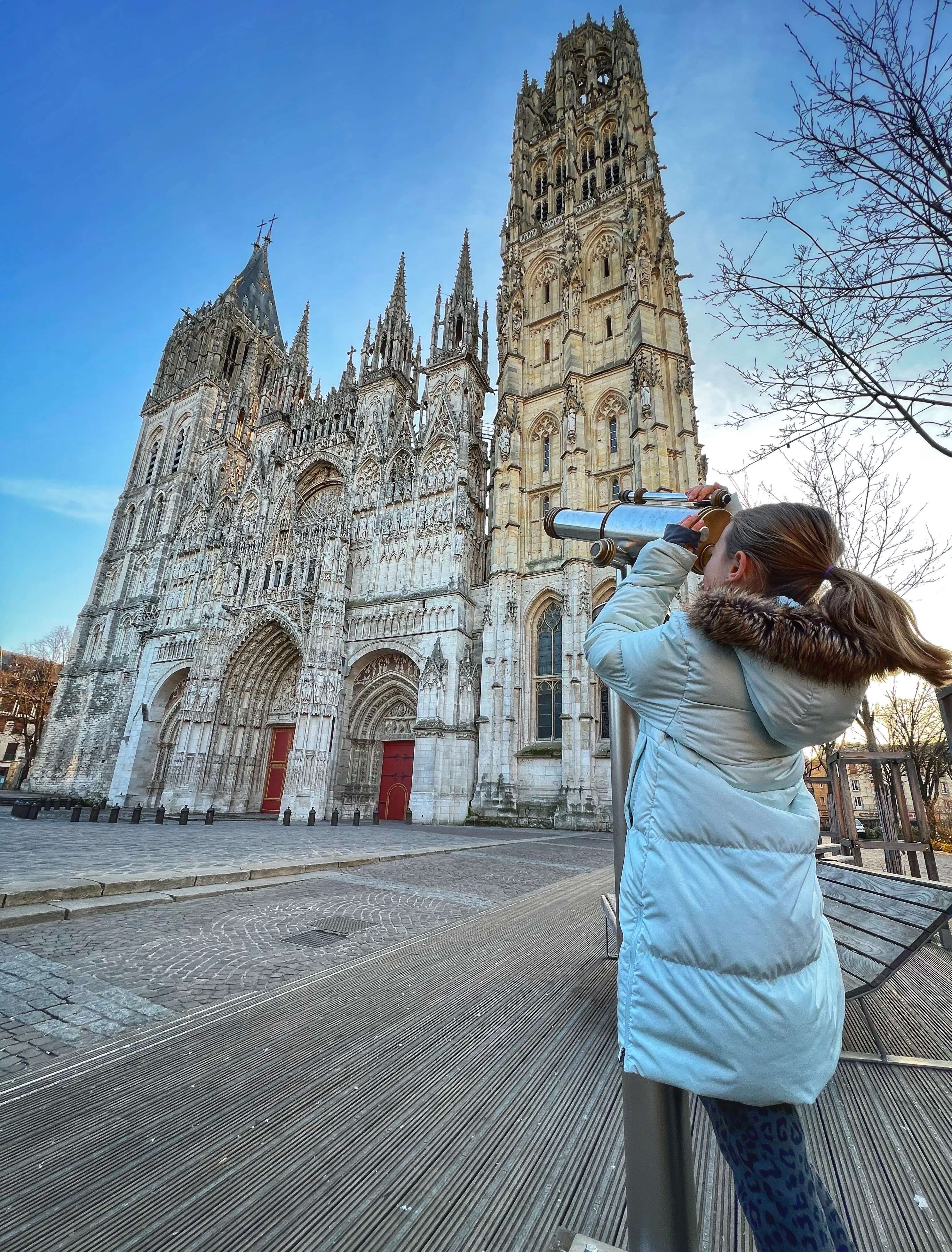
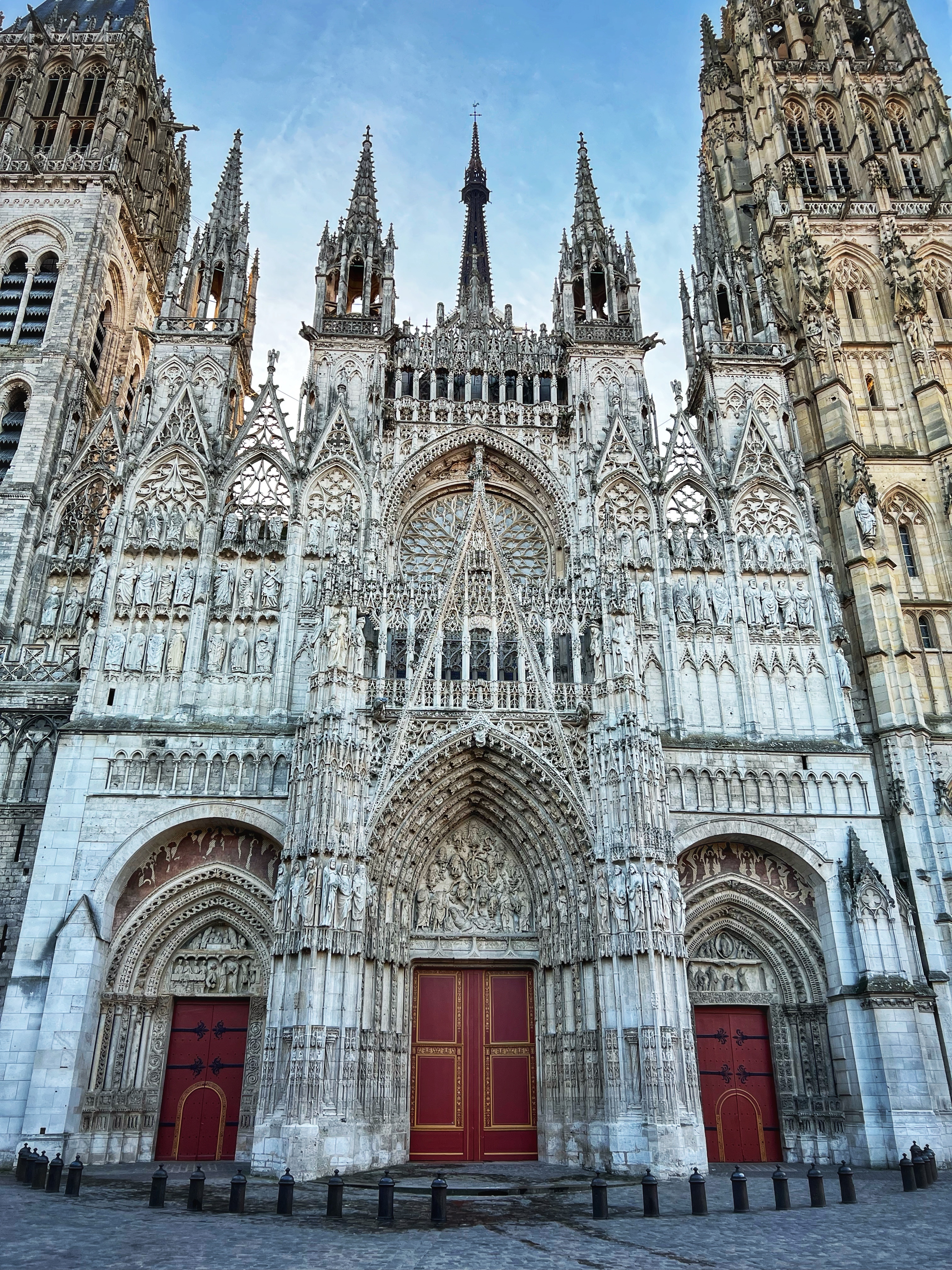
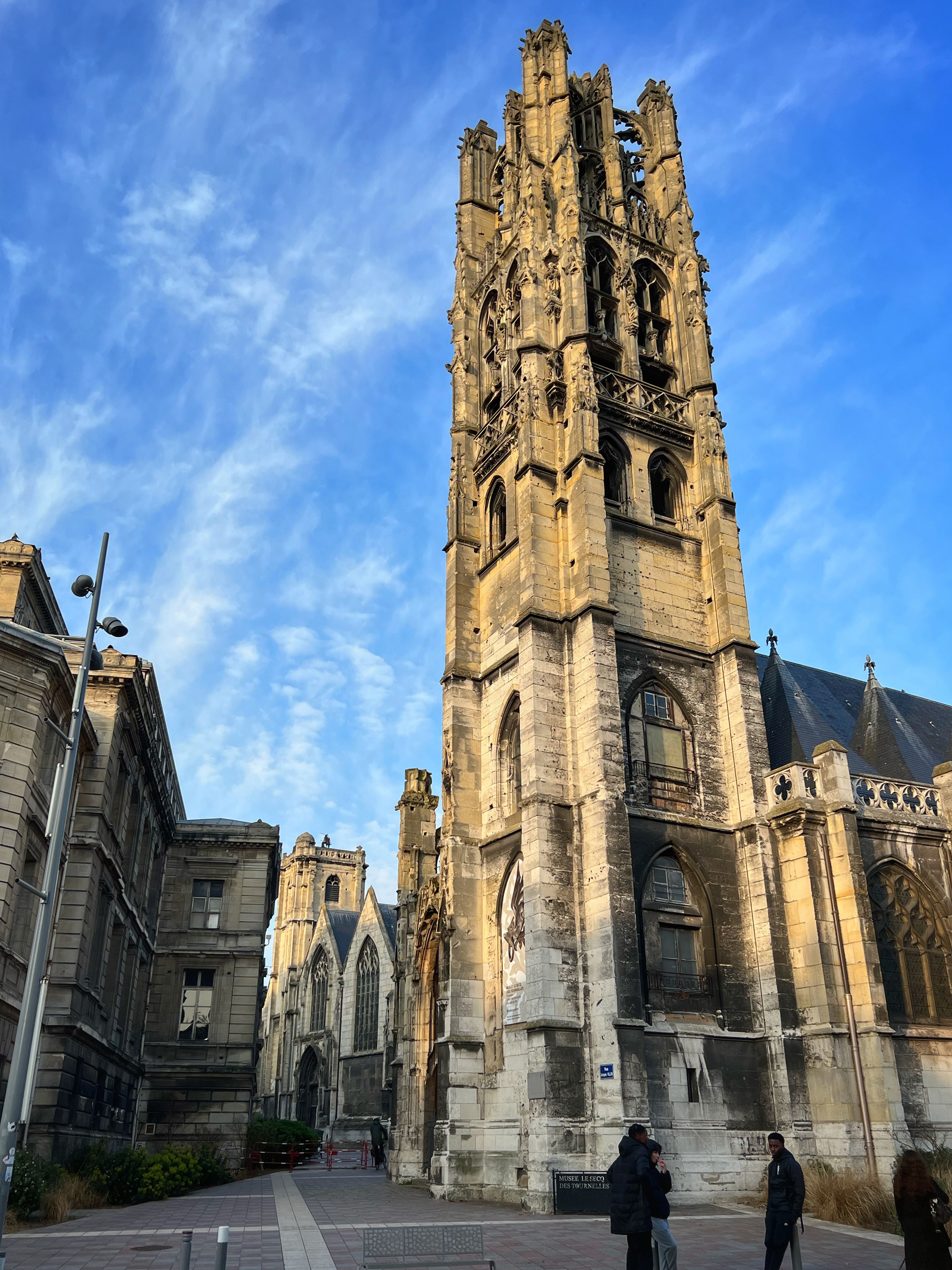
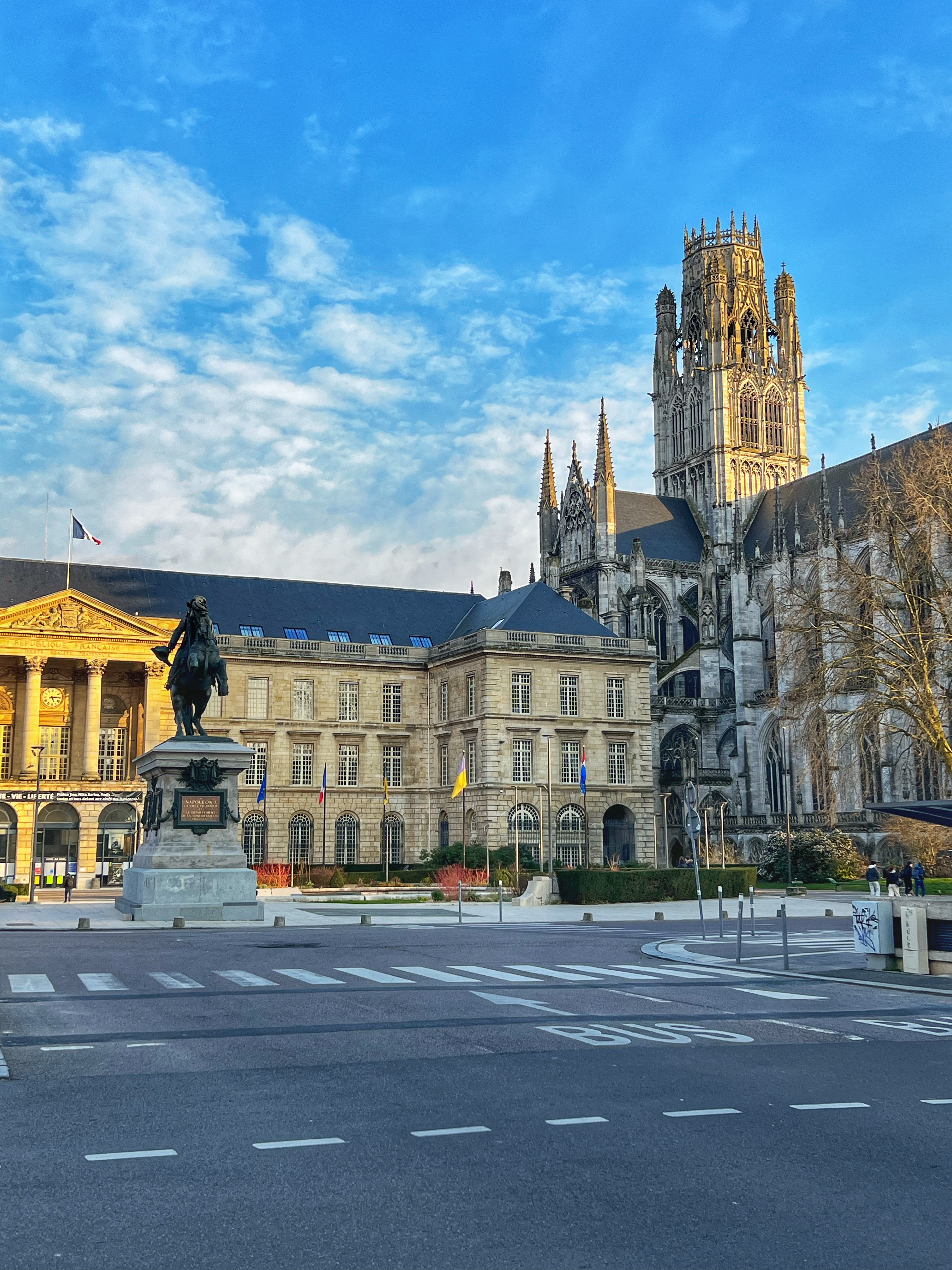
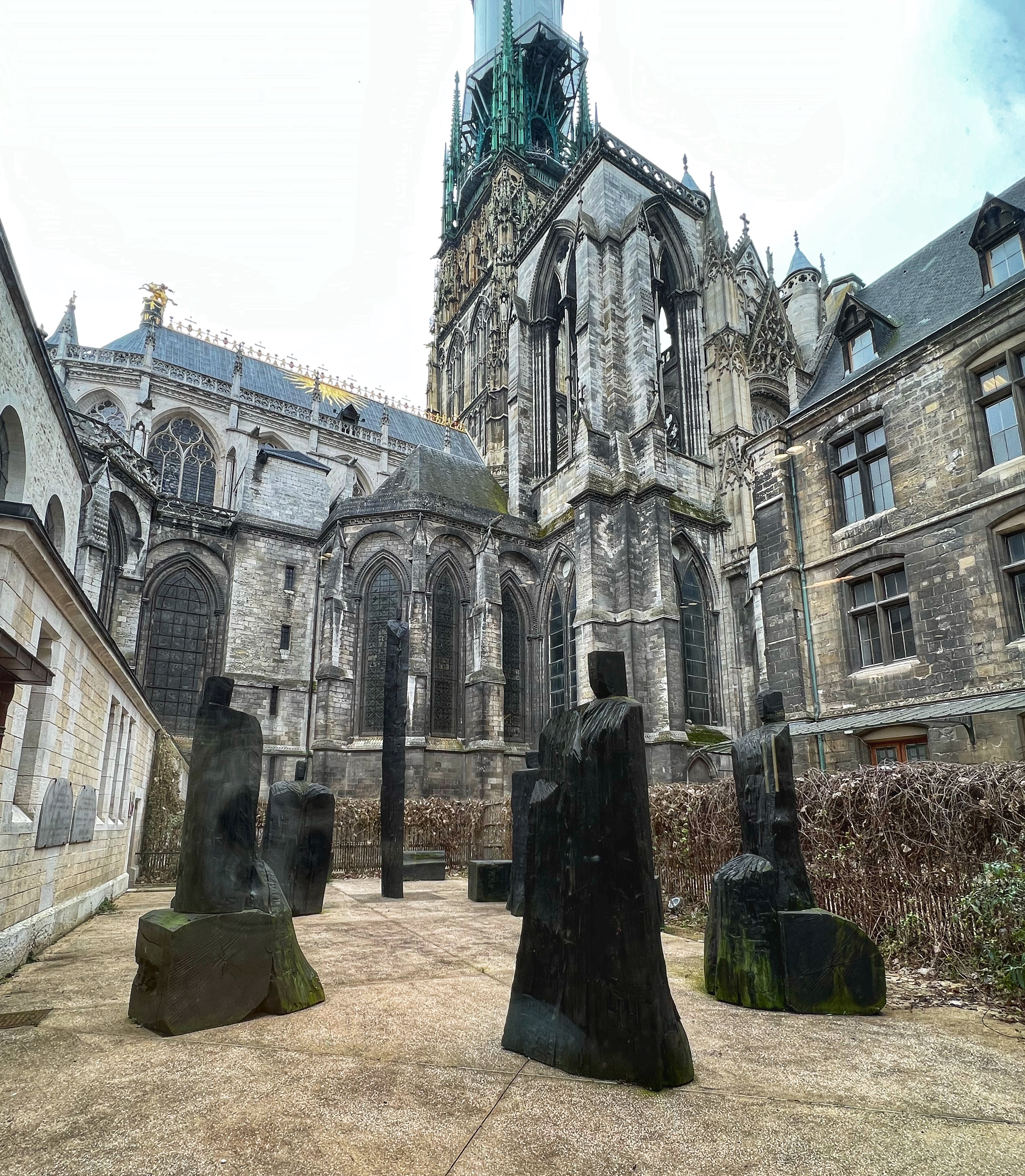
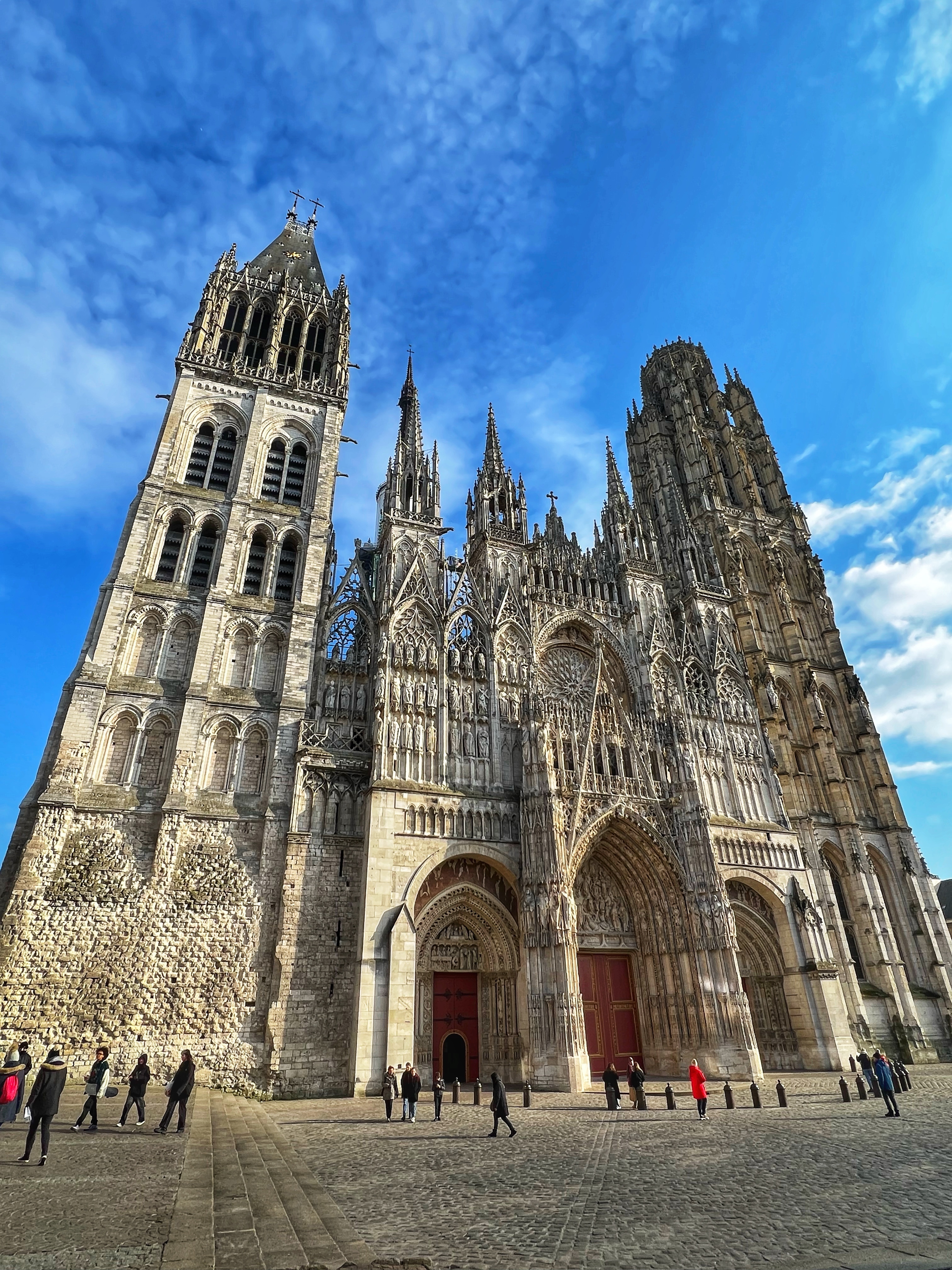
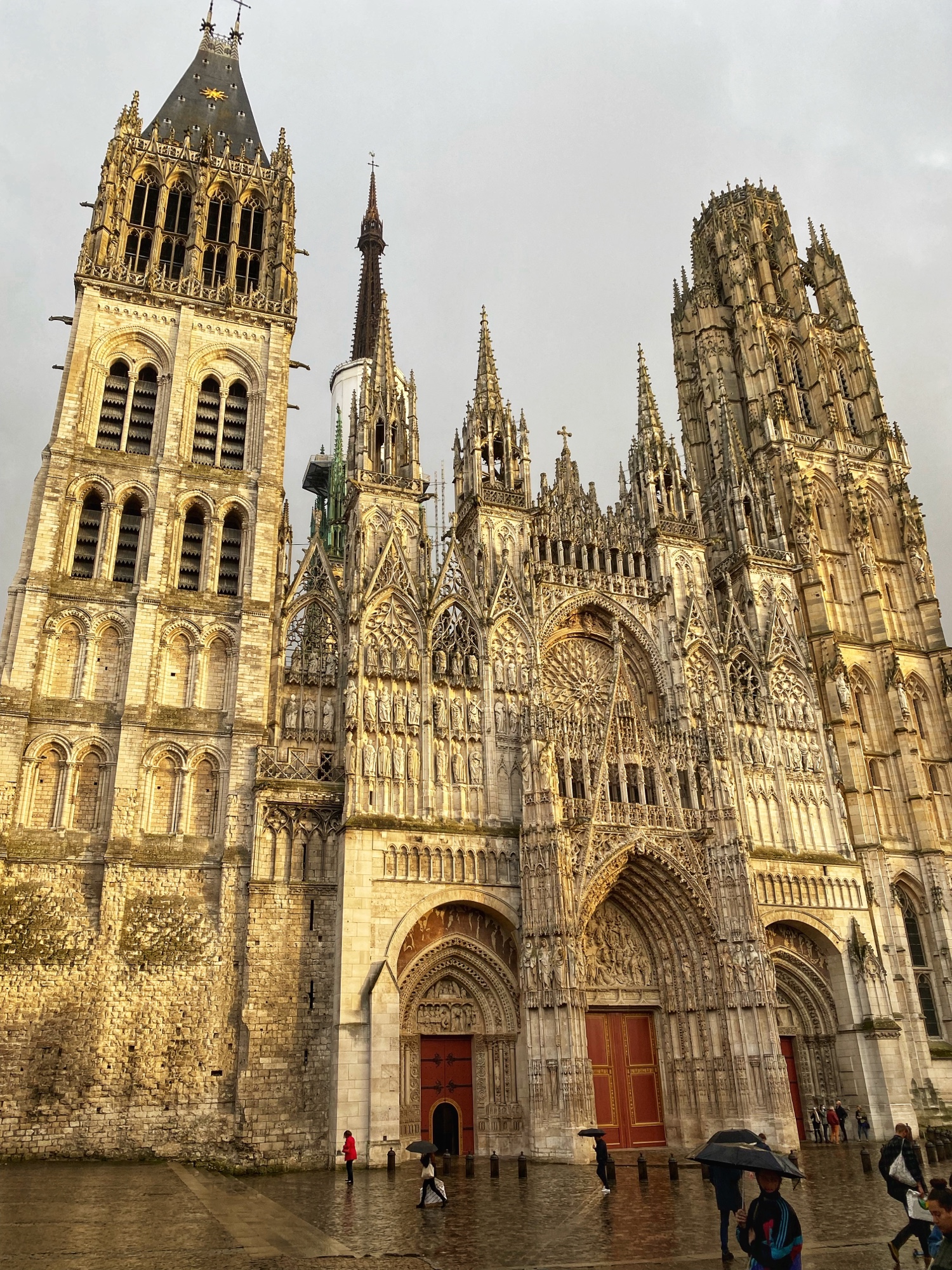
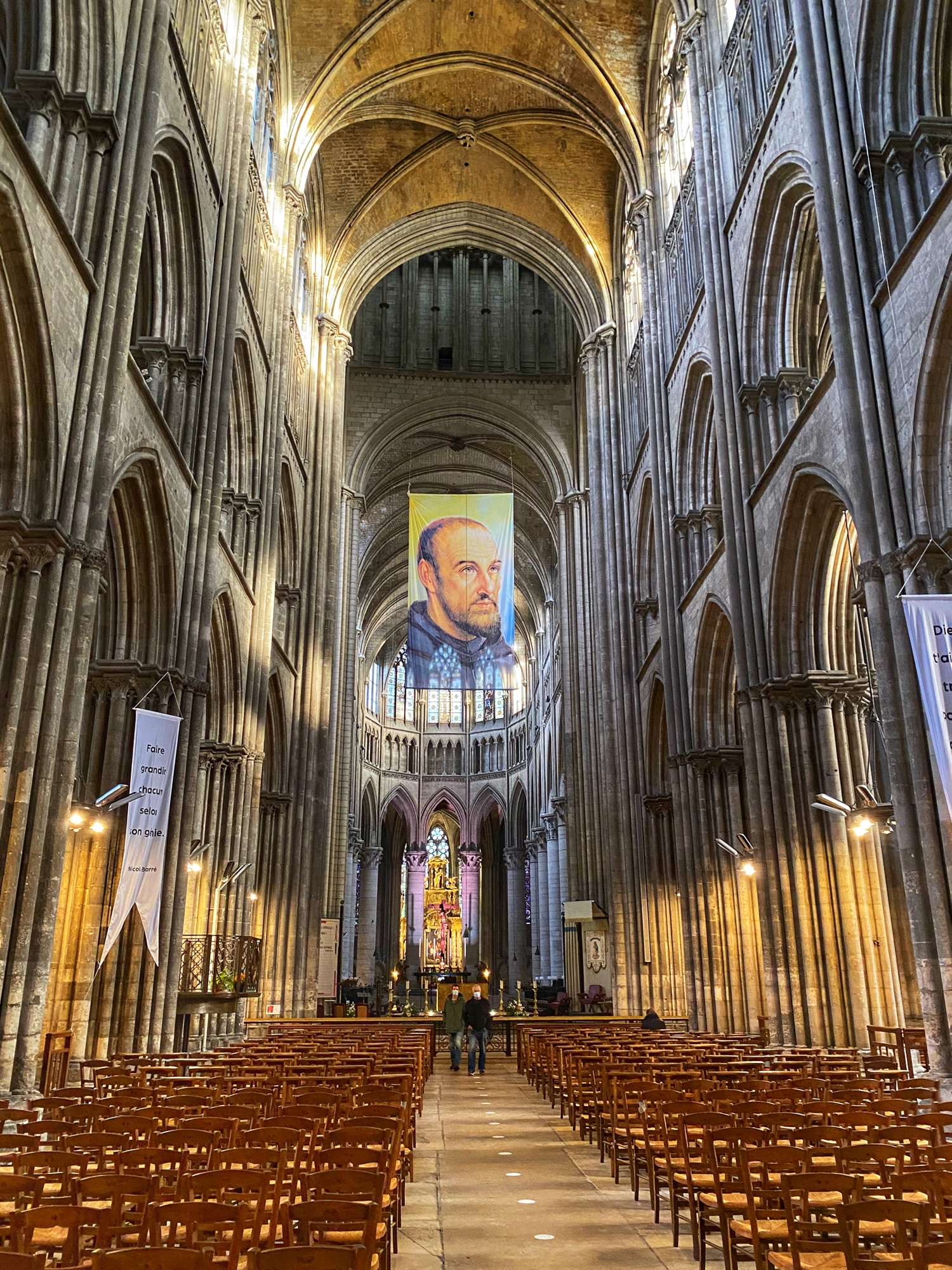
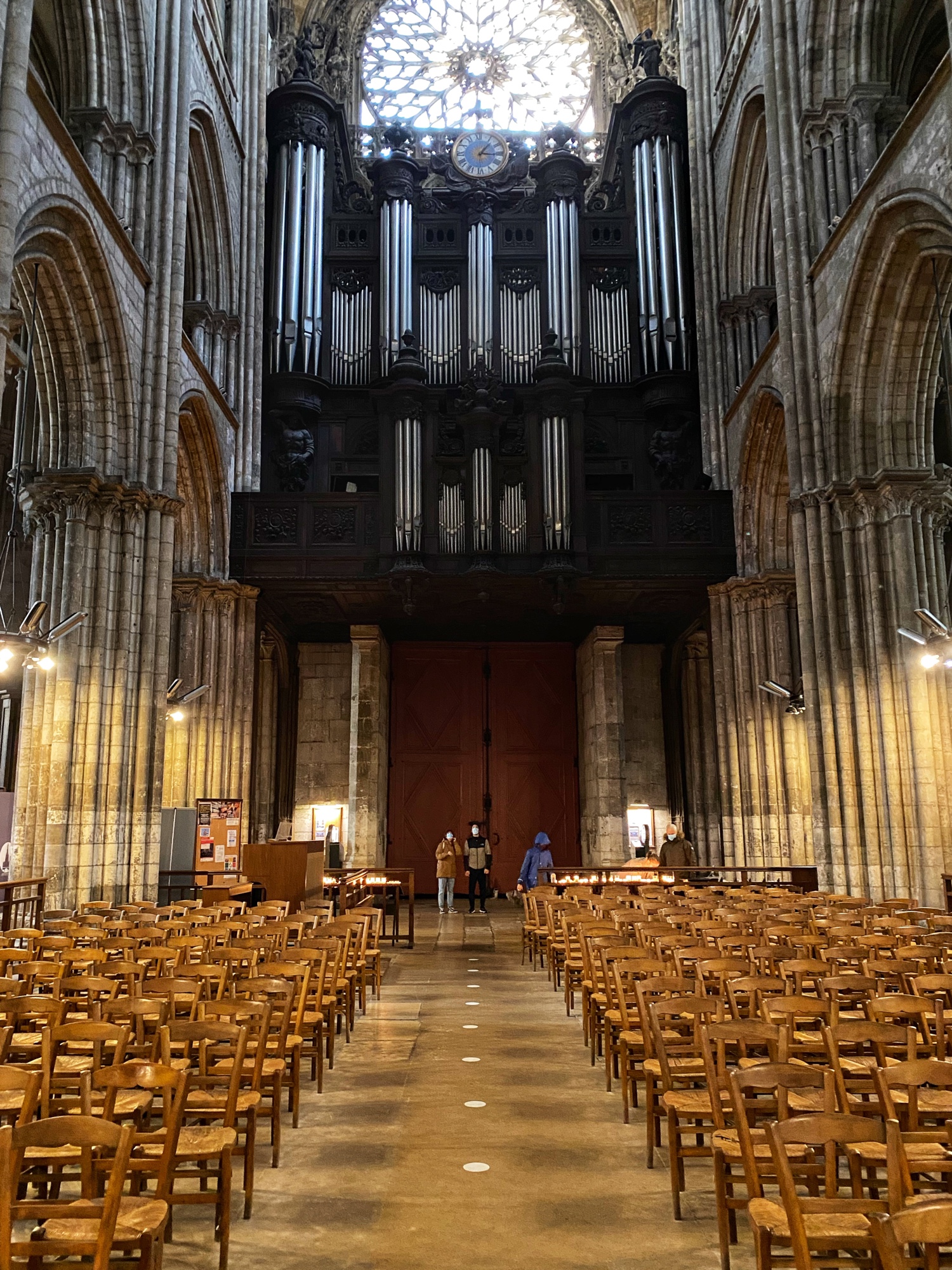
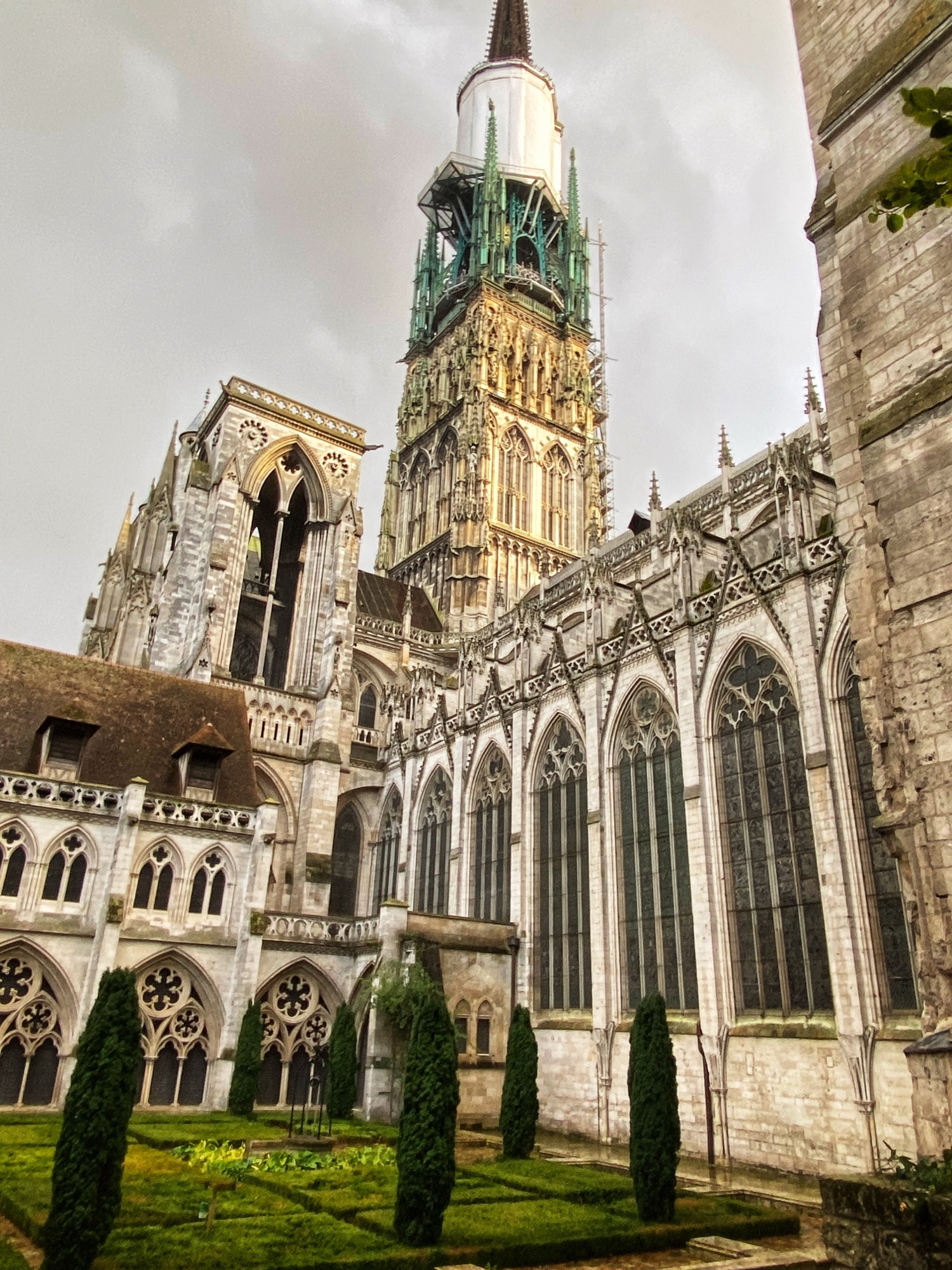
Rouen is known for its churches. Cathedral Notre Dame de Rouen was built in the 1100’s and is the centerpiece of the city. This amazing cathedral was painted often by Monet and is one of the most intricately detailed facades in France. At one time (1870’s) it was even the tallest building in the world! During the summer there is often a light show on the front of the church after sunset. The facade changes so much with the light – something Monet really appreciated too.


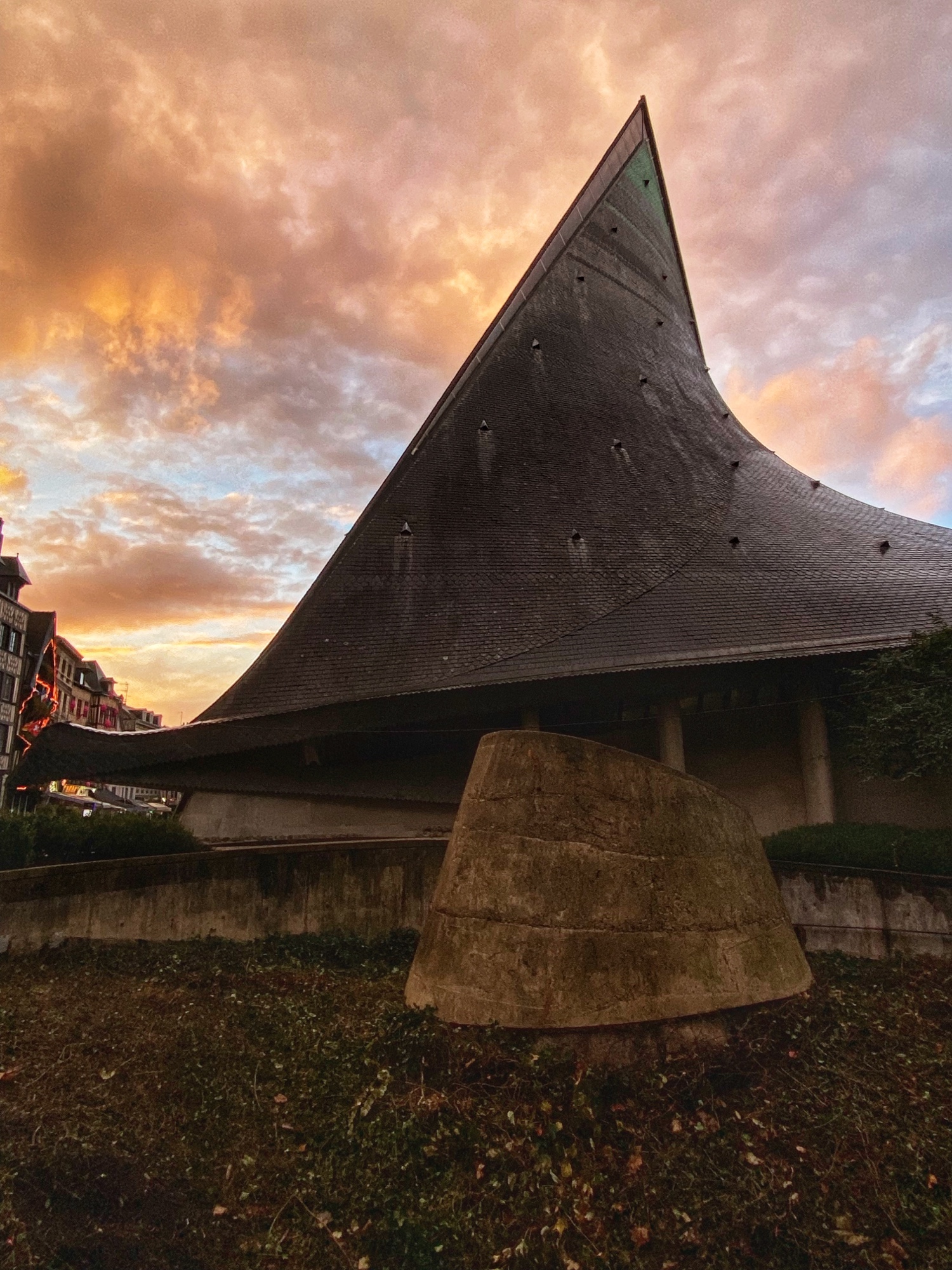
Also, don’t miss the unique and modern St Joan of Arc’s Church (built in 1979) with its distinct shape resembling a pyre. It has an artistic, medieval vibe. We appreciated the statues we found of Jeanne d’Arc around France (including in Paris!) but this one in Rouen had special meaning knowing this is where she was put to death as a martyr in 1431 in the place du Vieux-Marché (below). The church was also built to resemble an overturned ship.

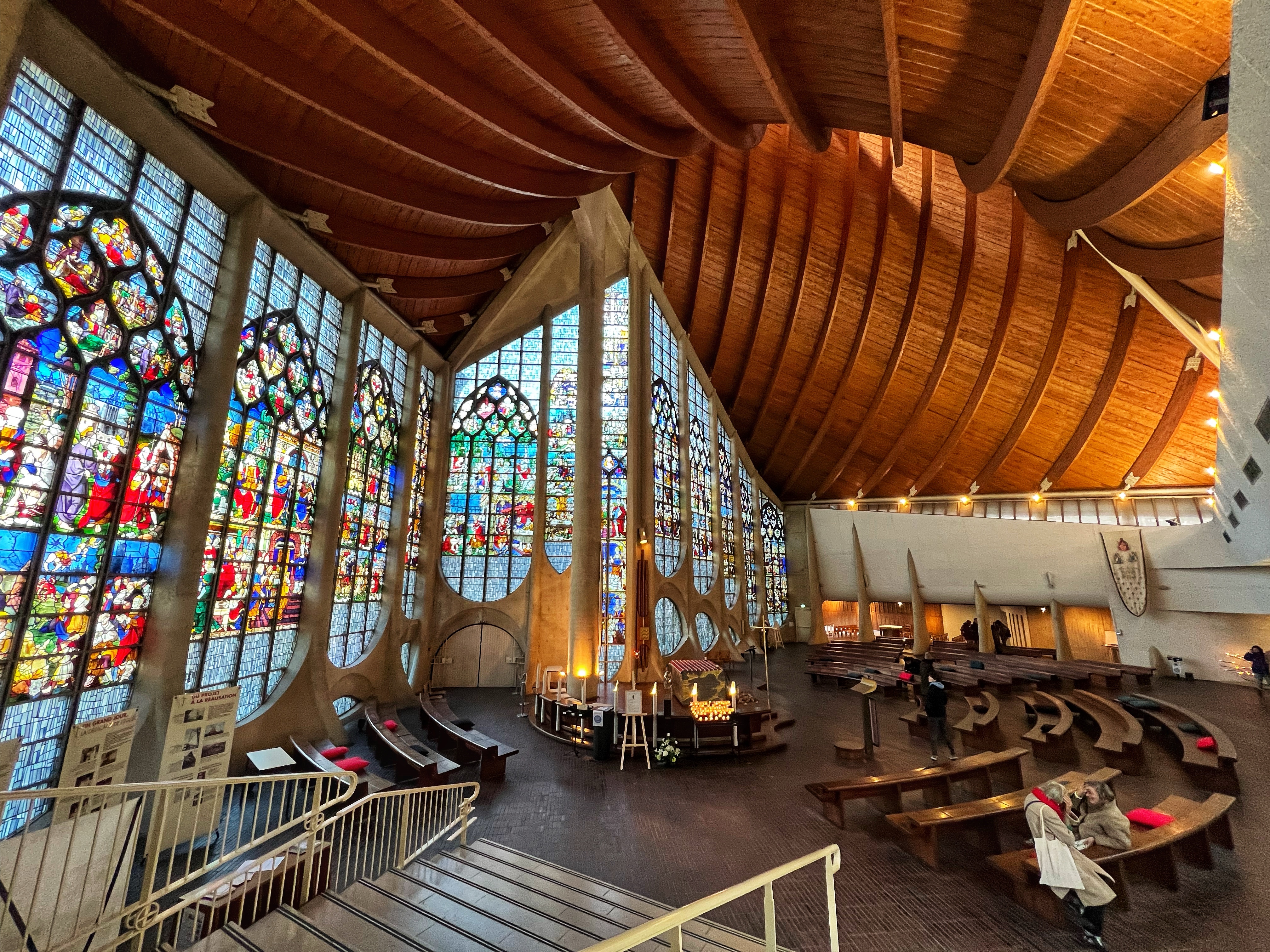
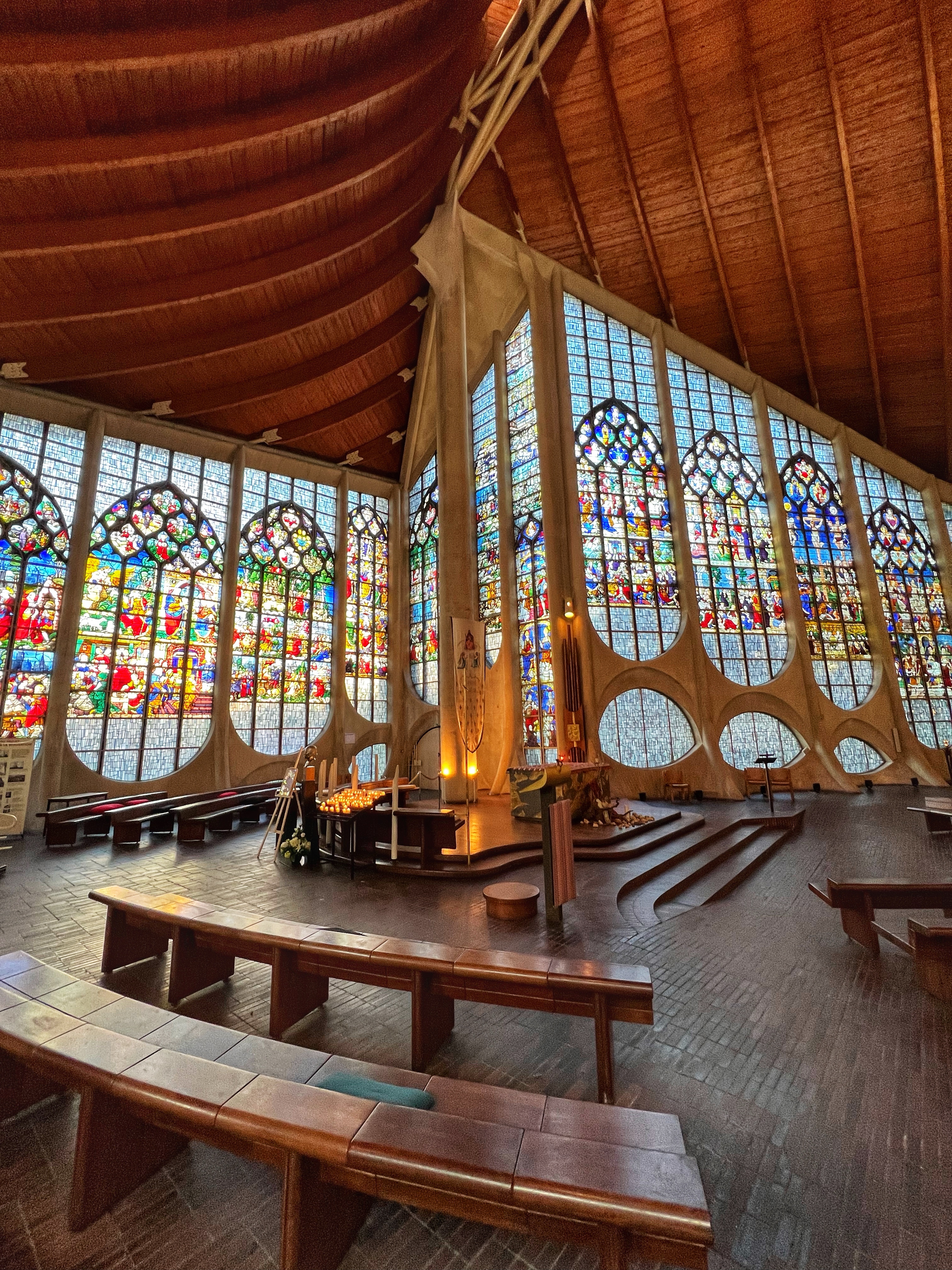
Inside the ship inspiration is evident in the wooden whalebone design of the ceiling. The stained glass windows are spectacular and tell her story in pictures. It is free to enter when it is open, 10-12 and 2-6pm most days. Definitely go inside if you have a chance!
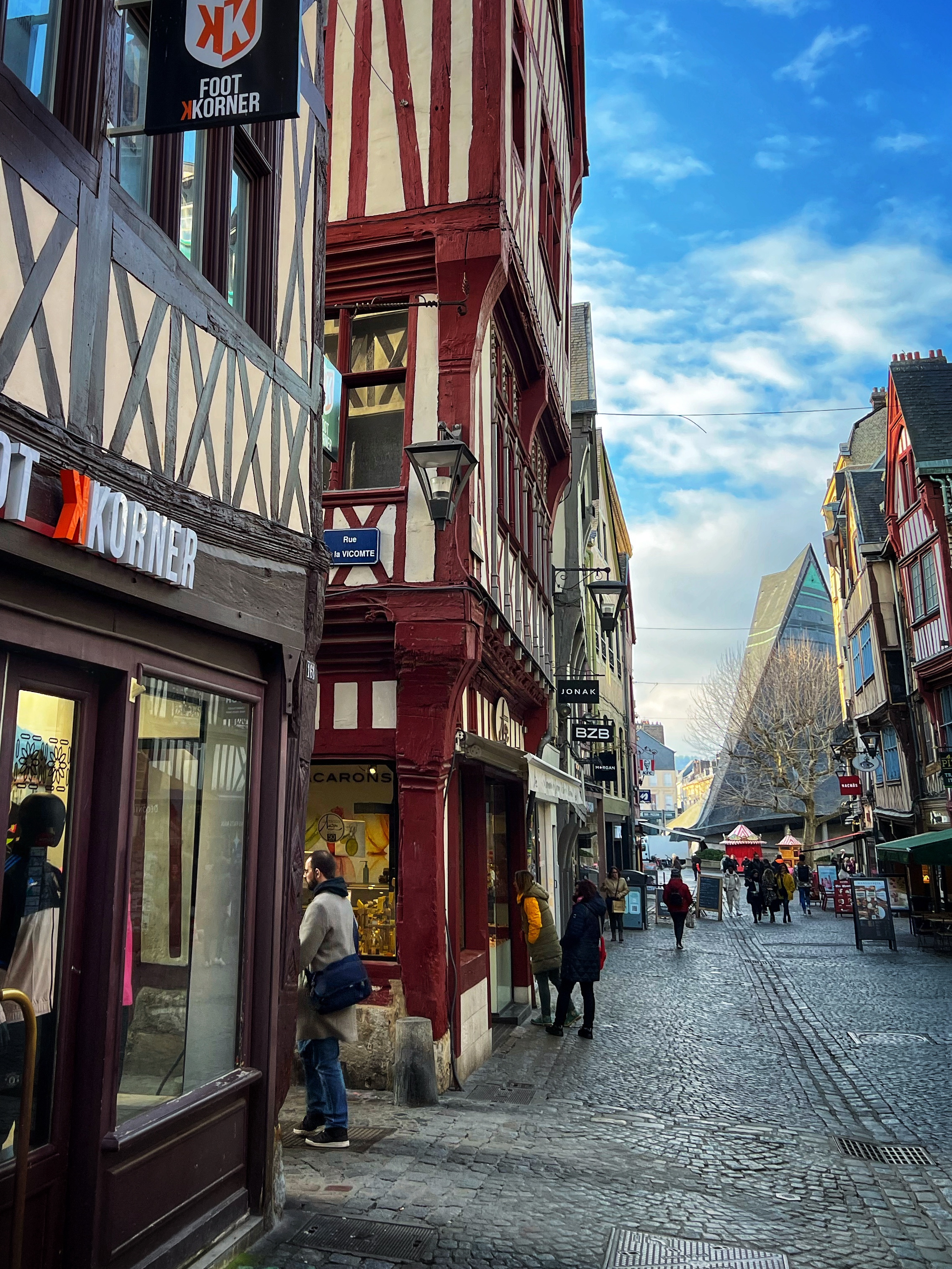
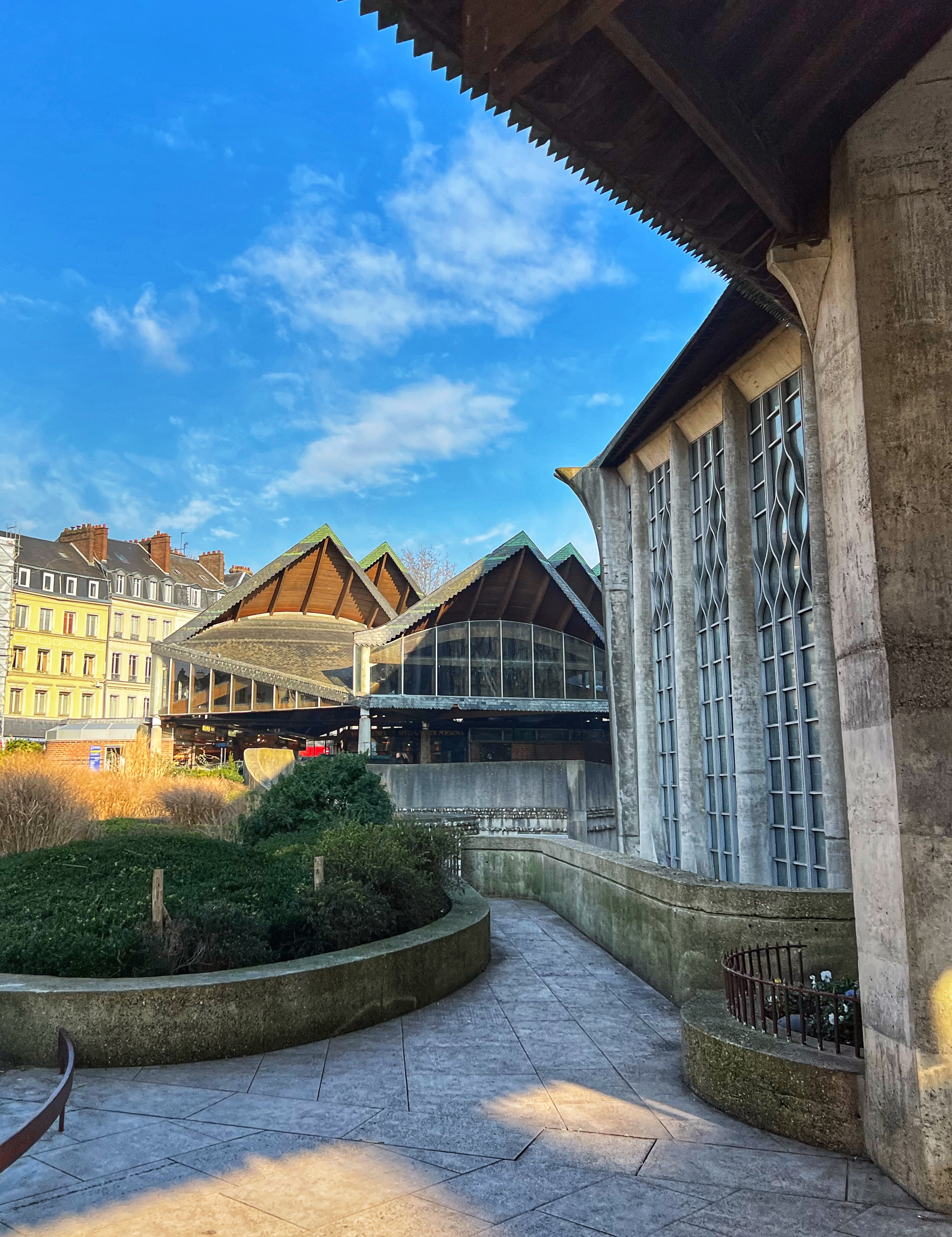
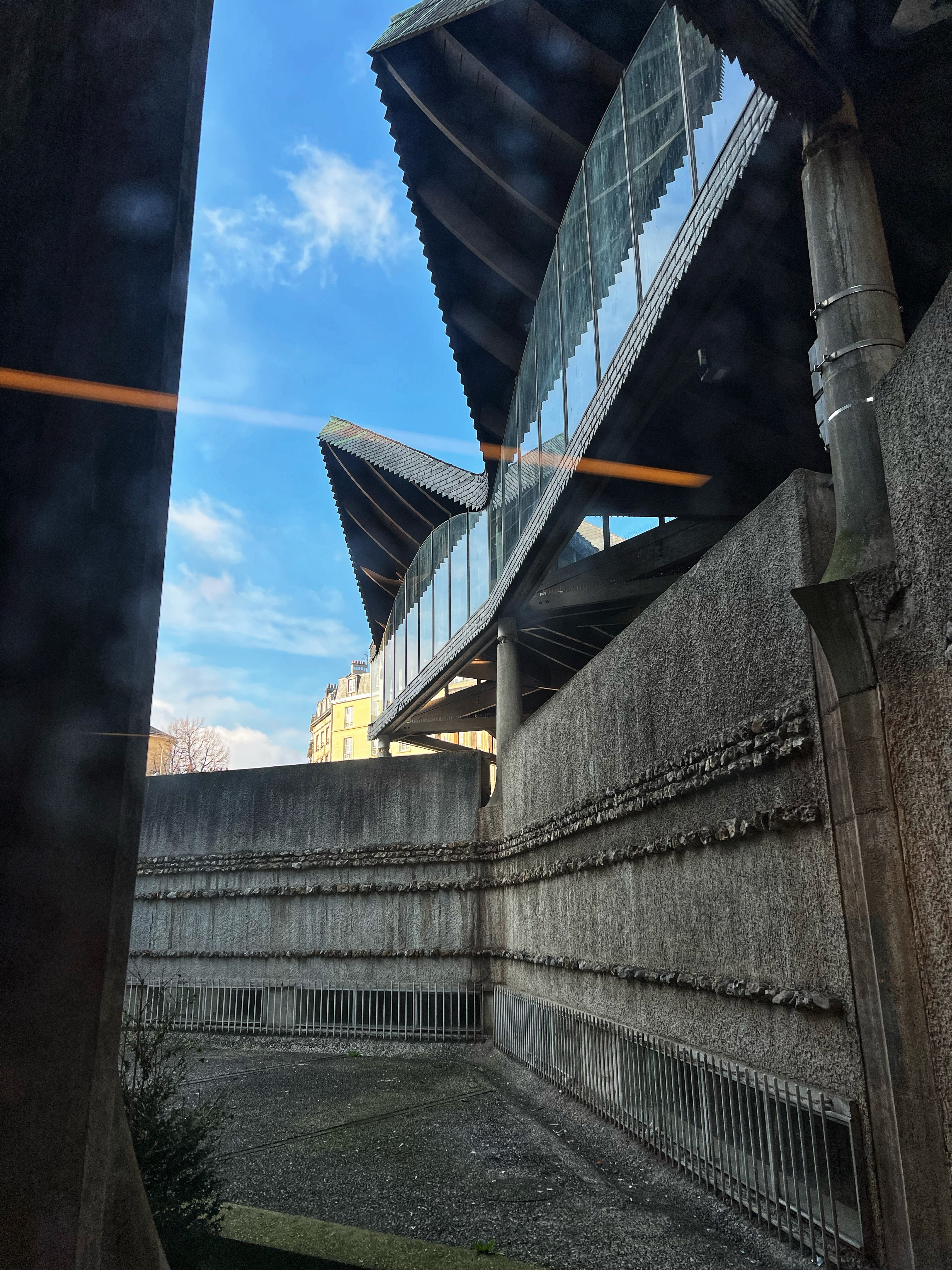
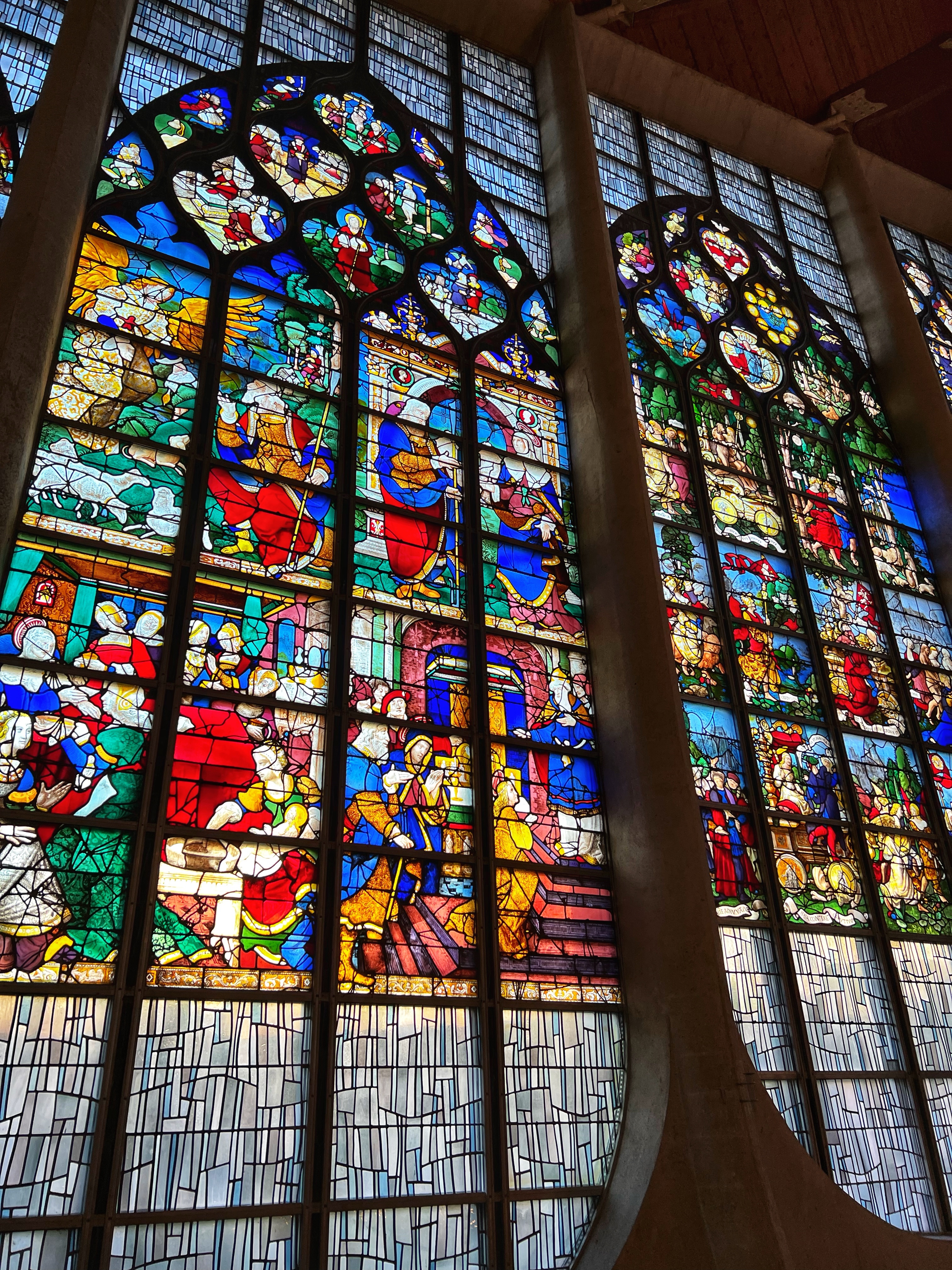
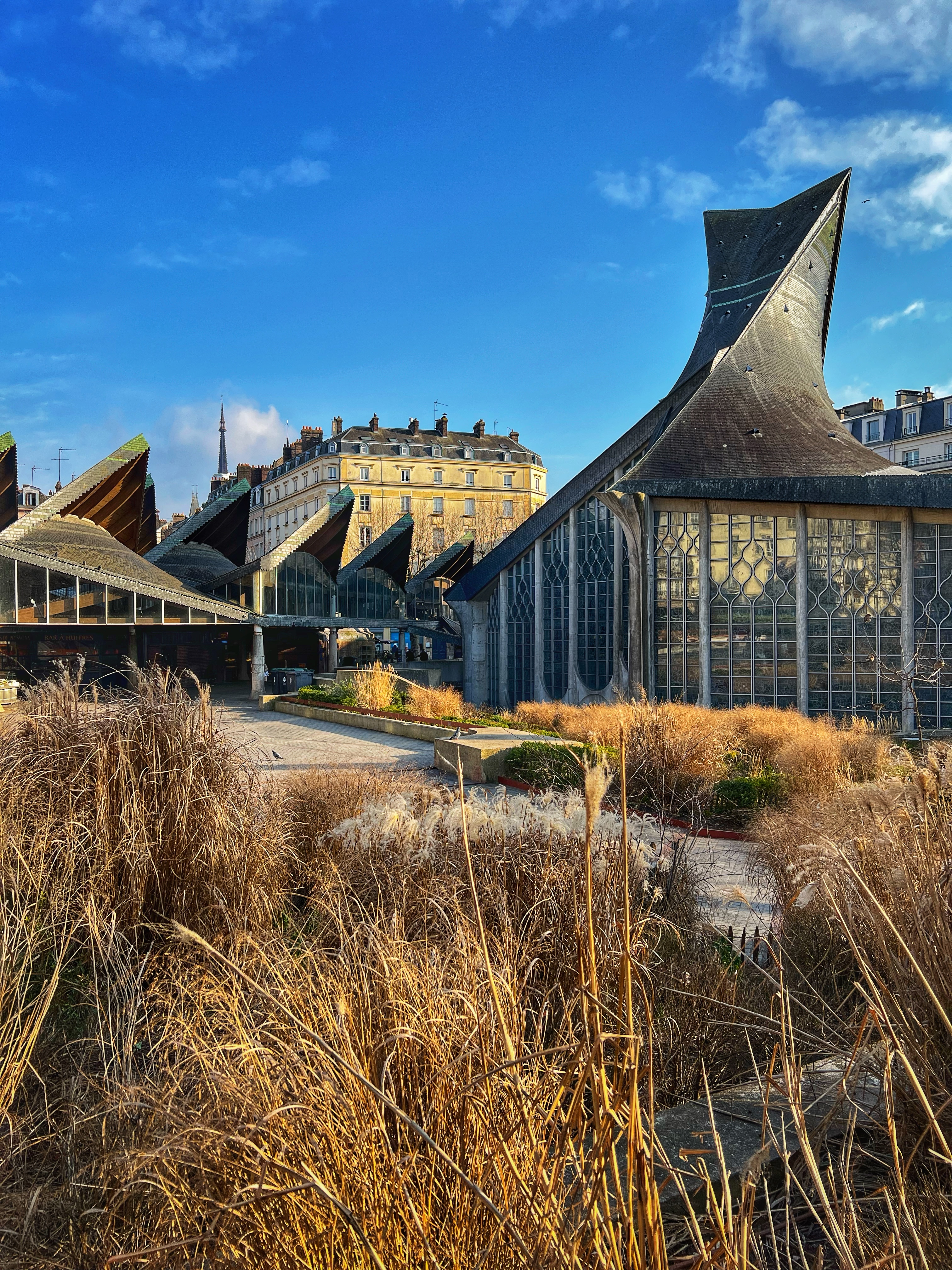

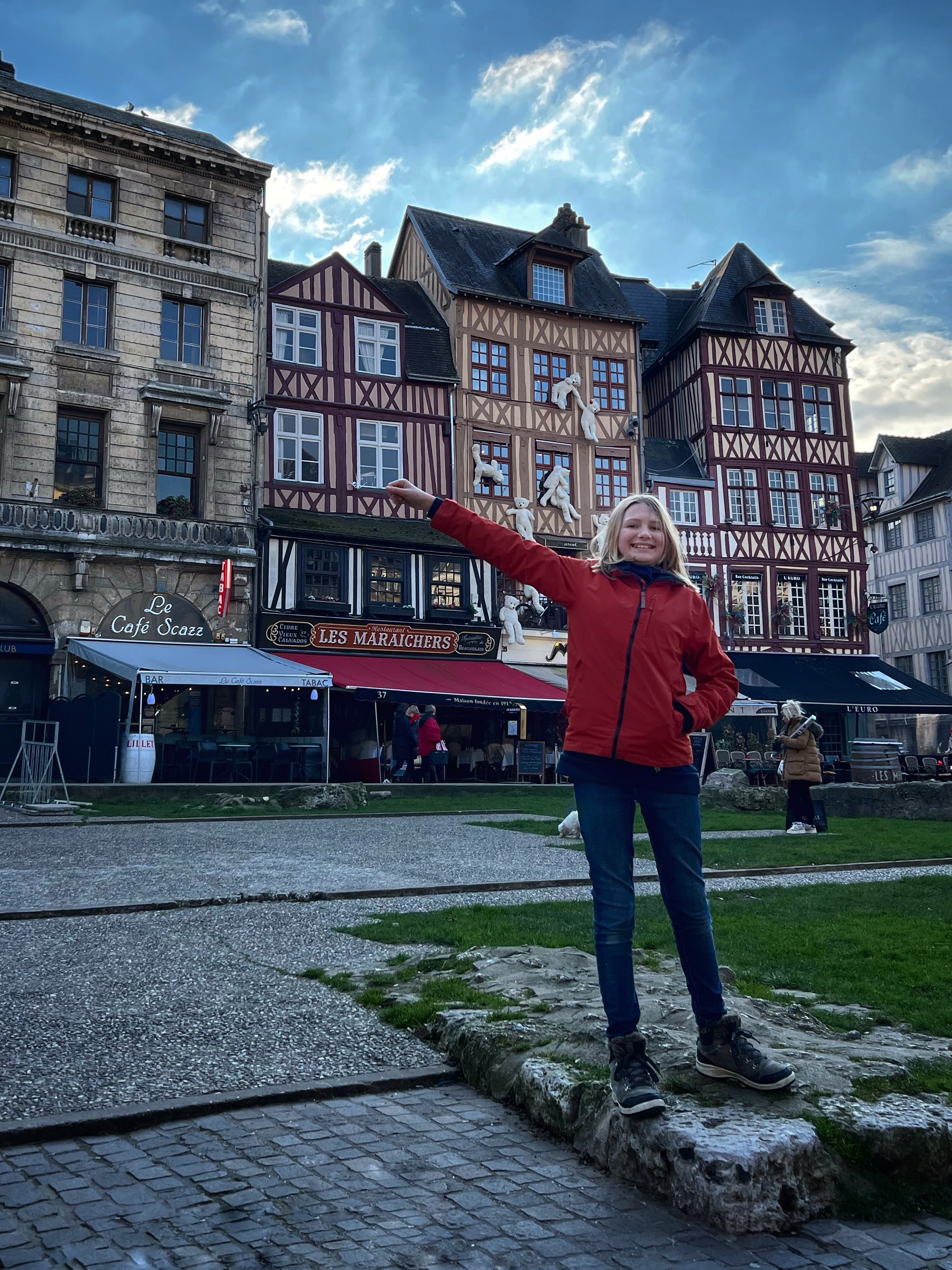
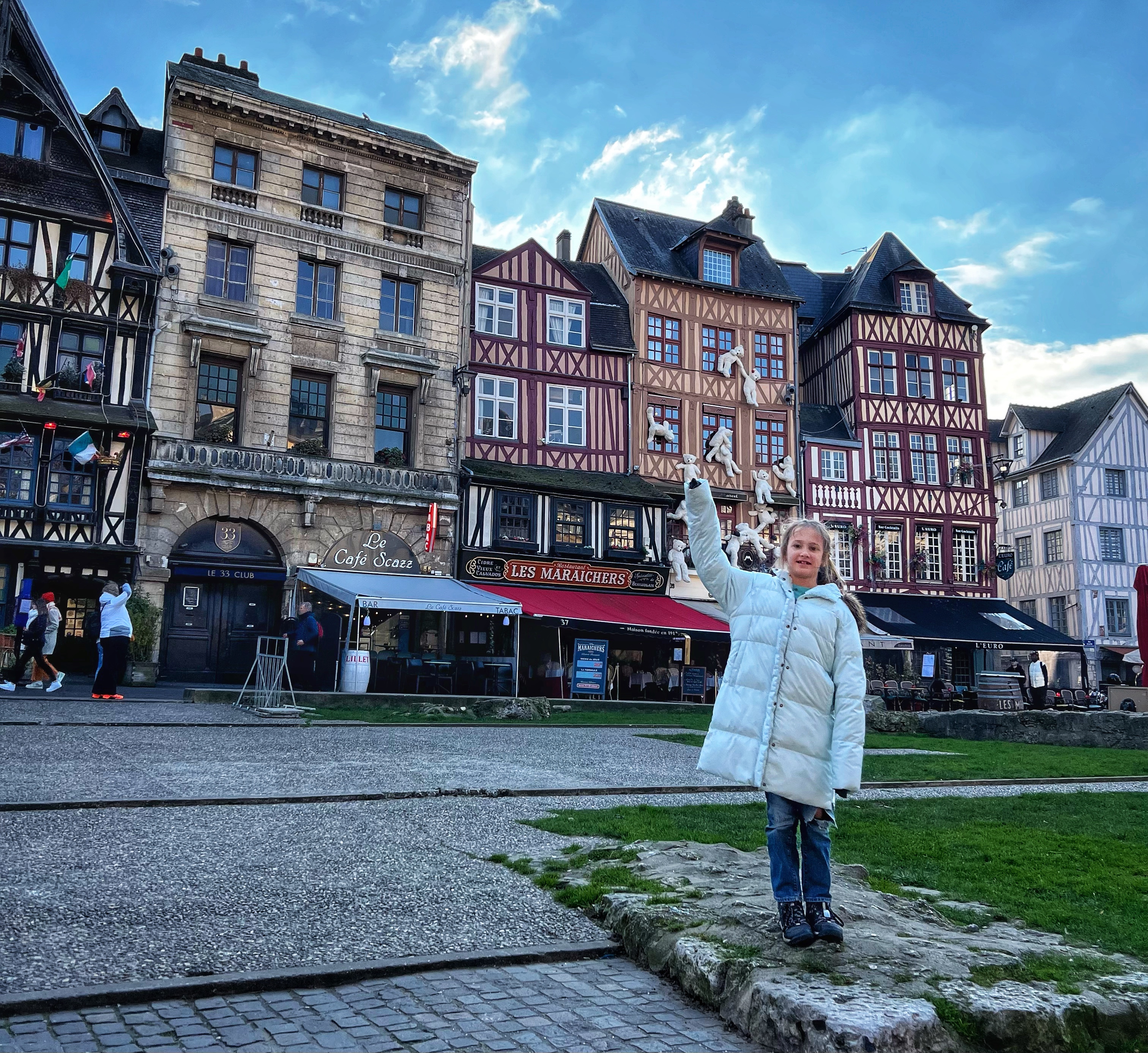

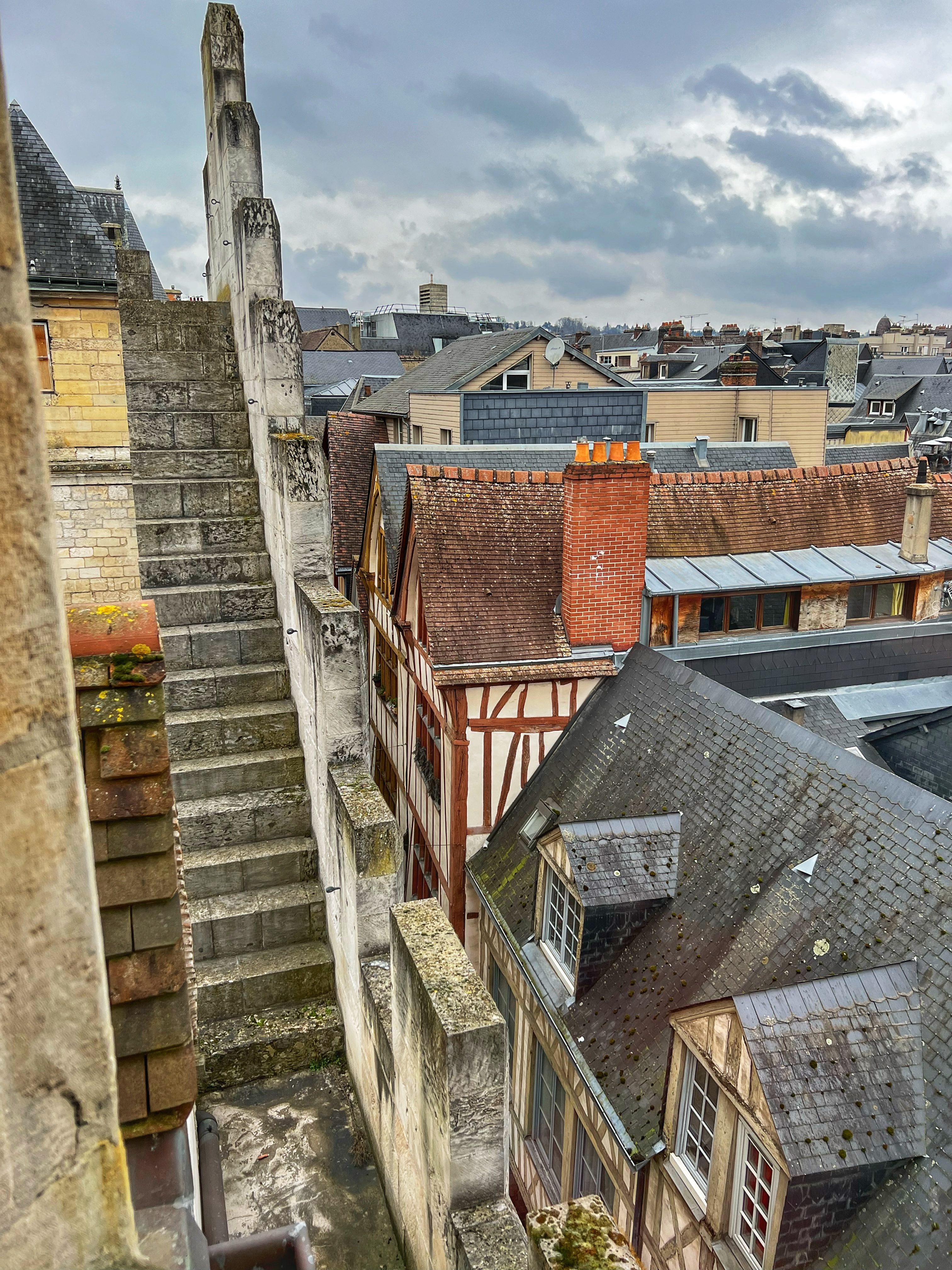
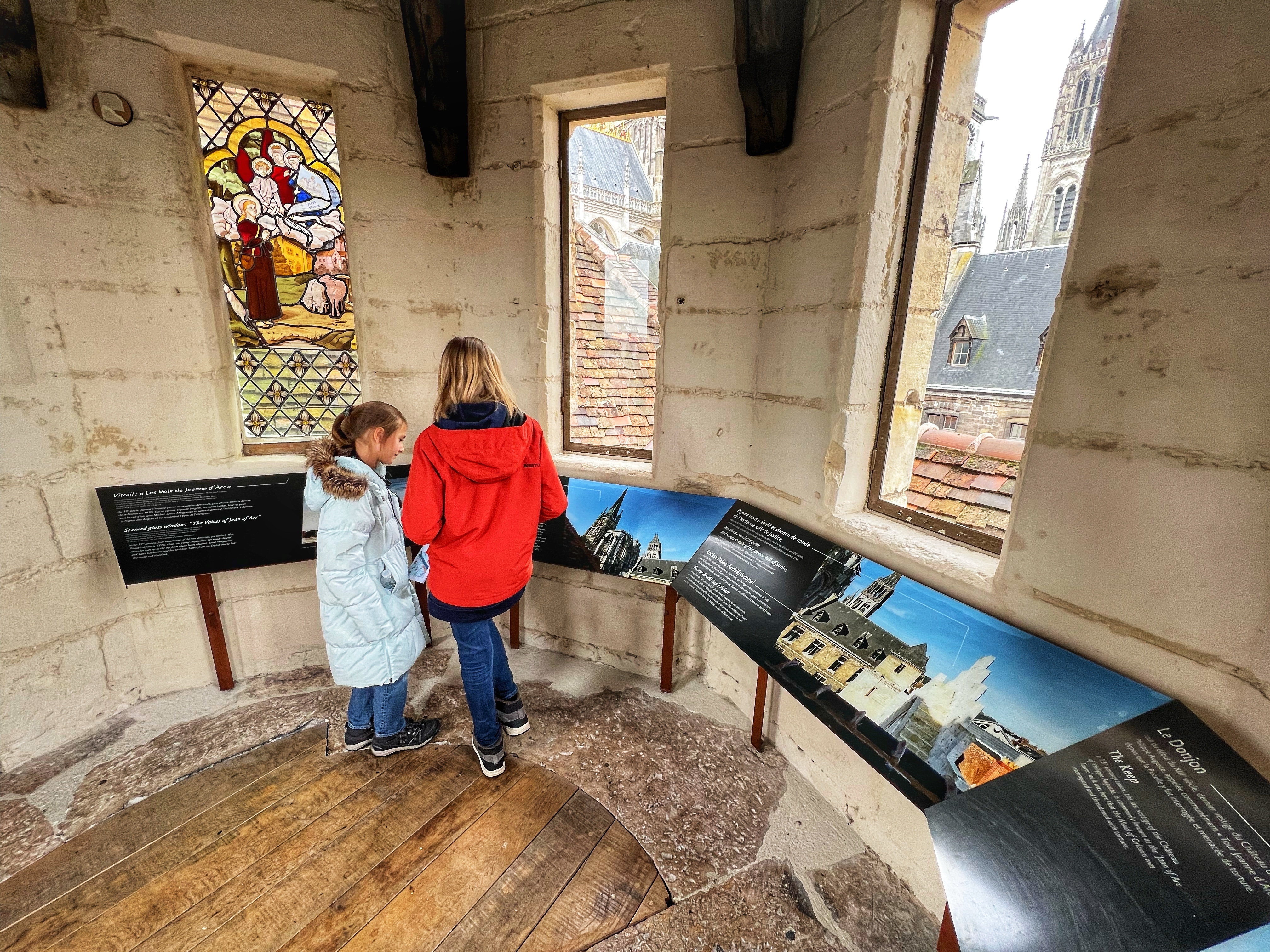
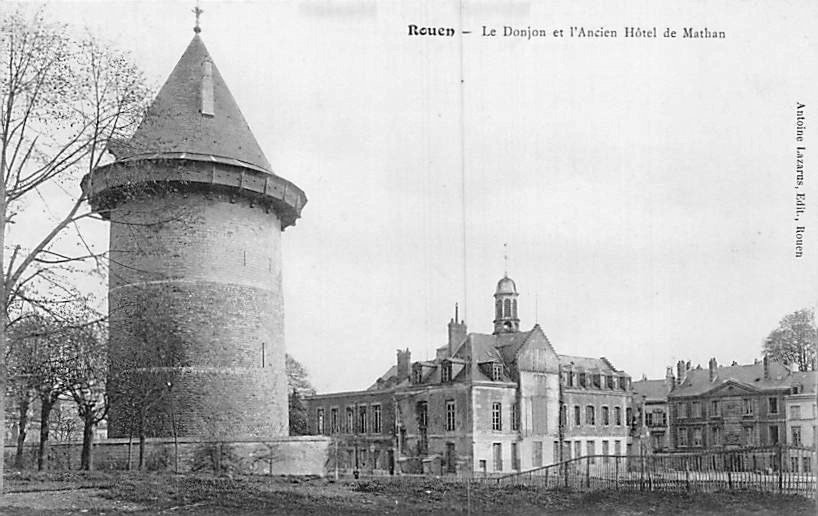
The Place de Vieux Marché is a destination of itself, with its colorful buildings and remnants in the ground from centuries past. There is also a market here, which is a nice stop for food or flowers. A few blocks away is the Donjon de Rouen, a tower that serves as the only remnant of the castle where Joan of Arc was held before execution. Learn more about this tower here.
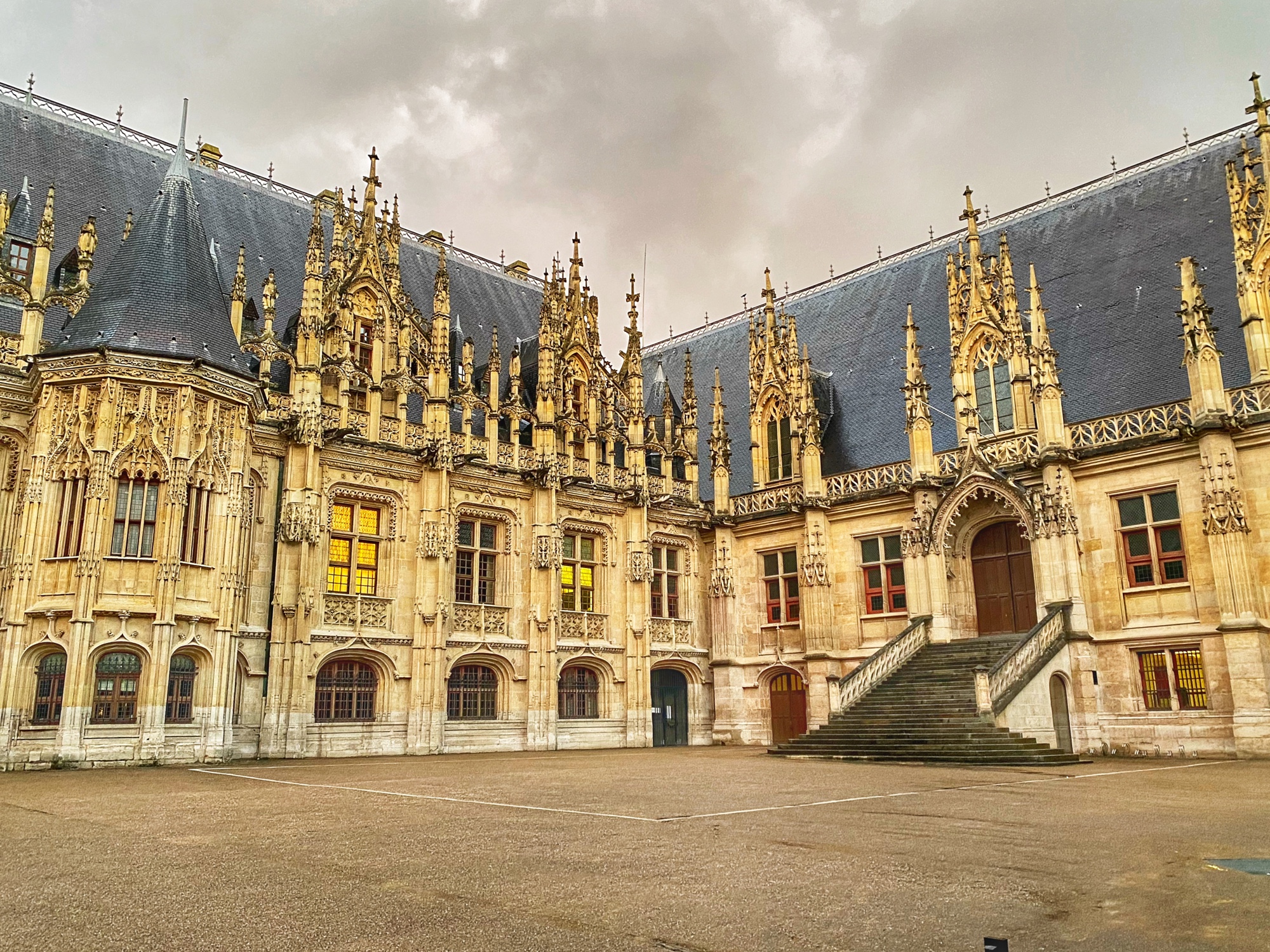
As you walk around the city you may also notice evidence of the war with bullet holes and shell damage in some of the buildings. Here at the Rouen Court of Appeals, you can view Dispatchwork Rouen, a collection of tiny “refurbishments” made with legos by the artist Jan Vormann. This is controversial to some, as they see it as littering or defacing important history. To me it is beautiful and draws attention to what happened here.


Outside of the city there is another noteworthy stop at the top of the hill (technically outisde of Rouen in the town of Bonsecours) called Basilique Notre-Dame de Bonsecours. Outside there is yet another monument to the great Joan of Arc; it was closed when we visited so we couldn’t climb up and see the hilltop views overlooking Rouen, but we were still able to appreciate the monument.
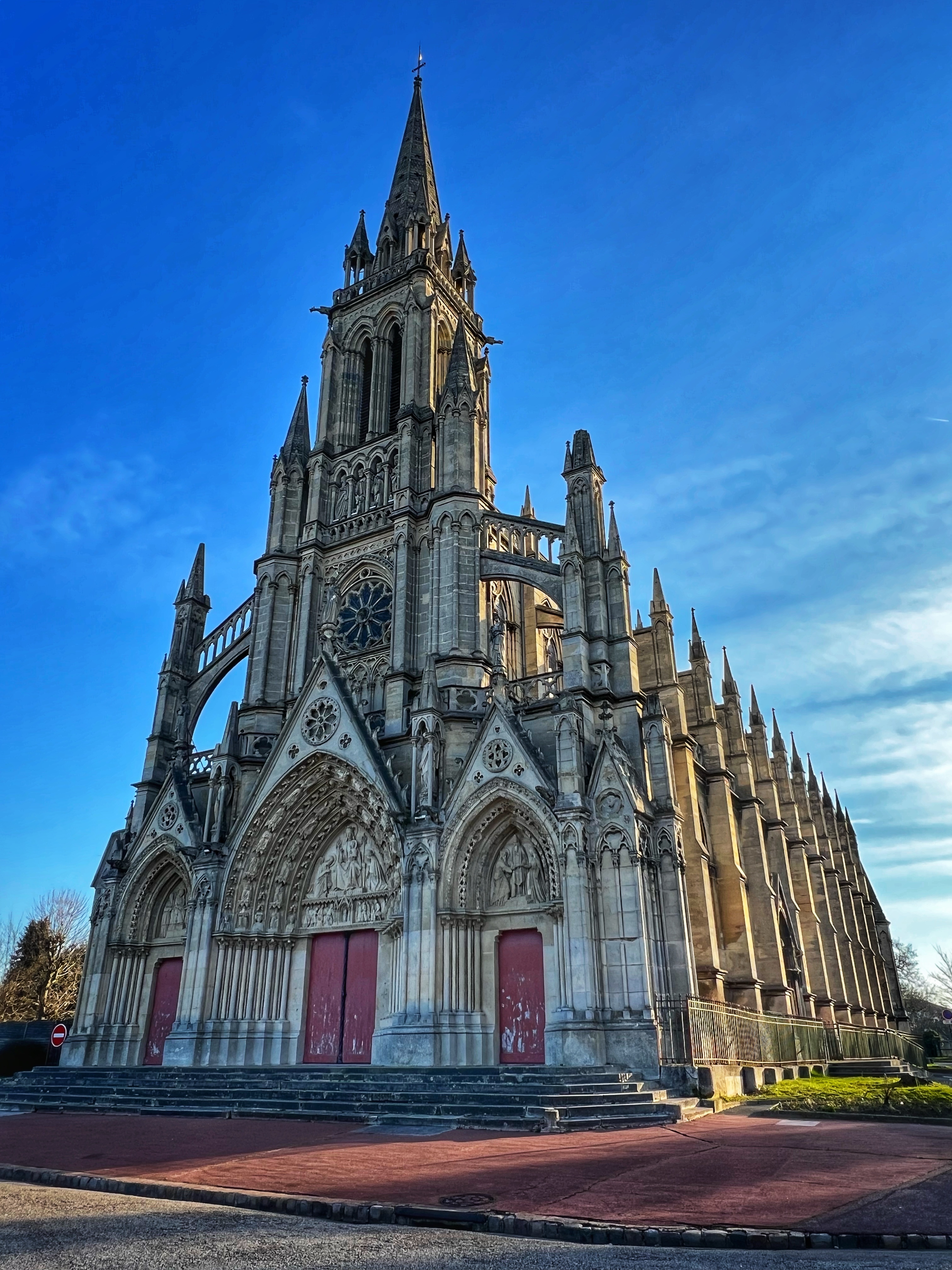
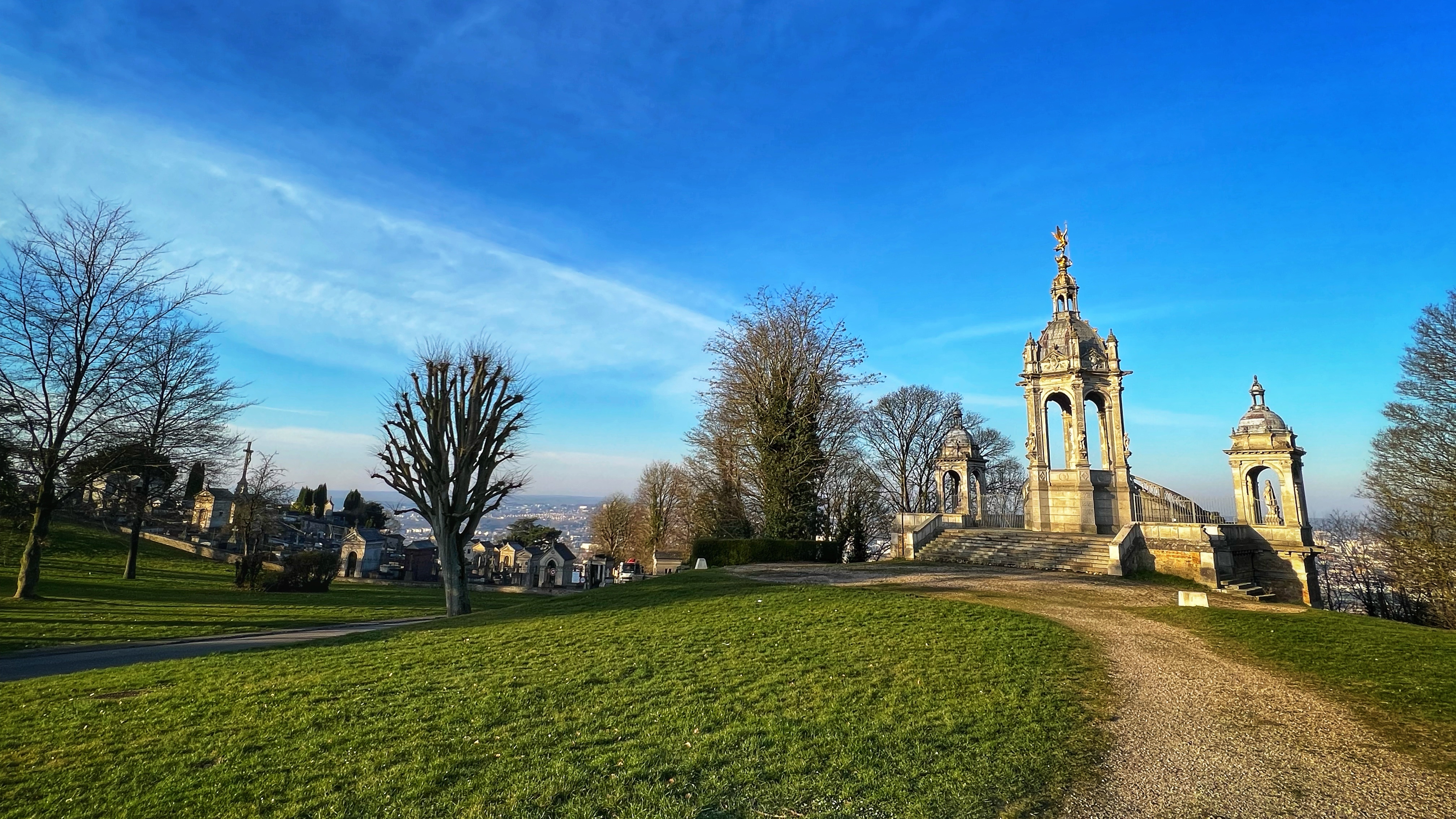

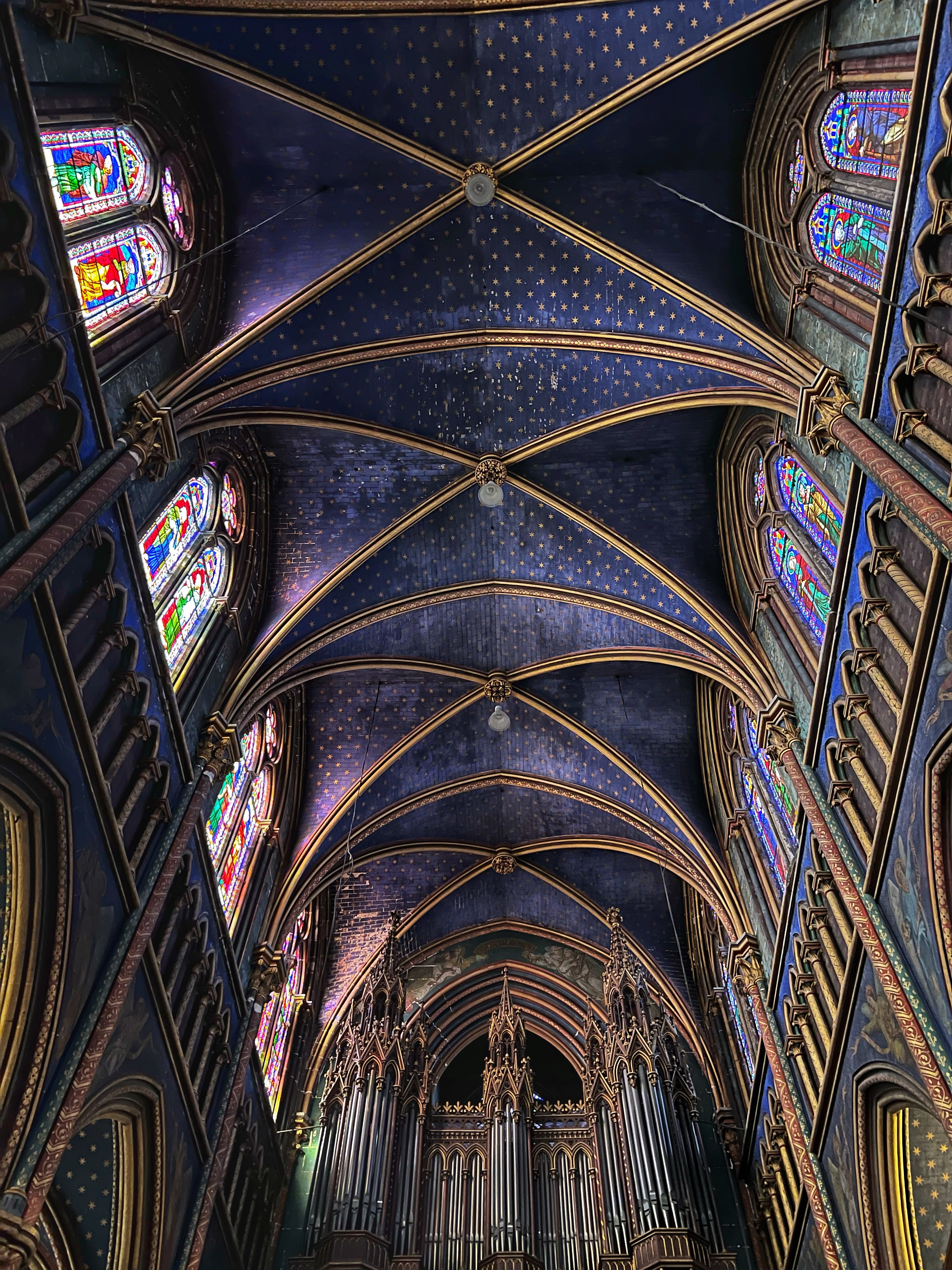
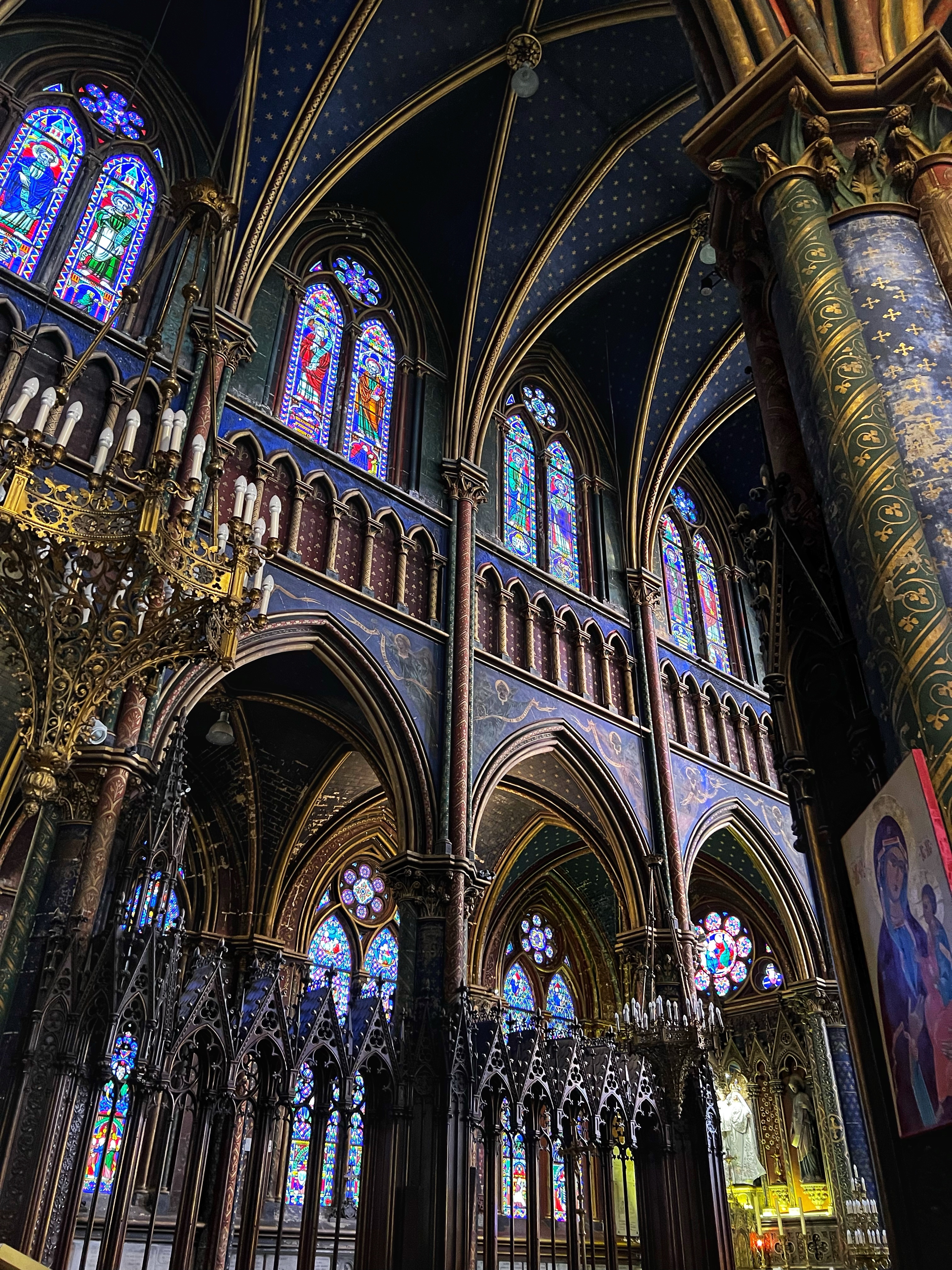
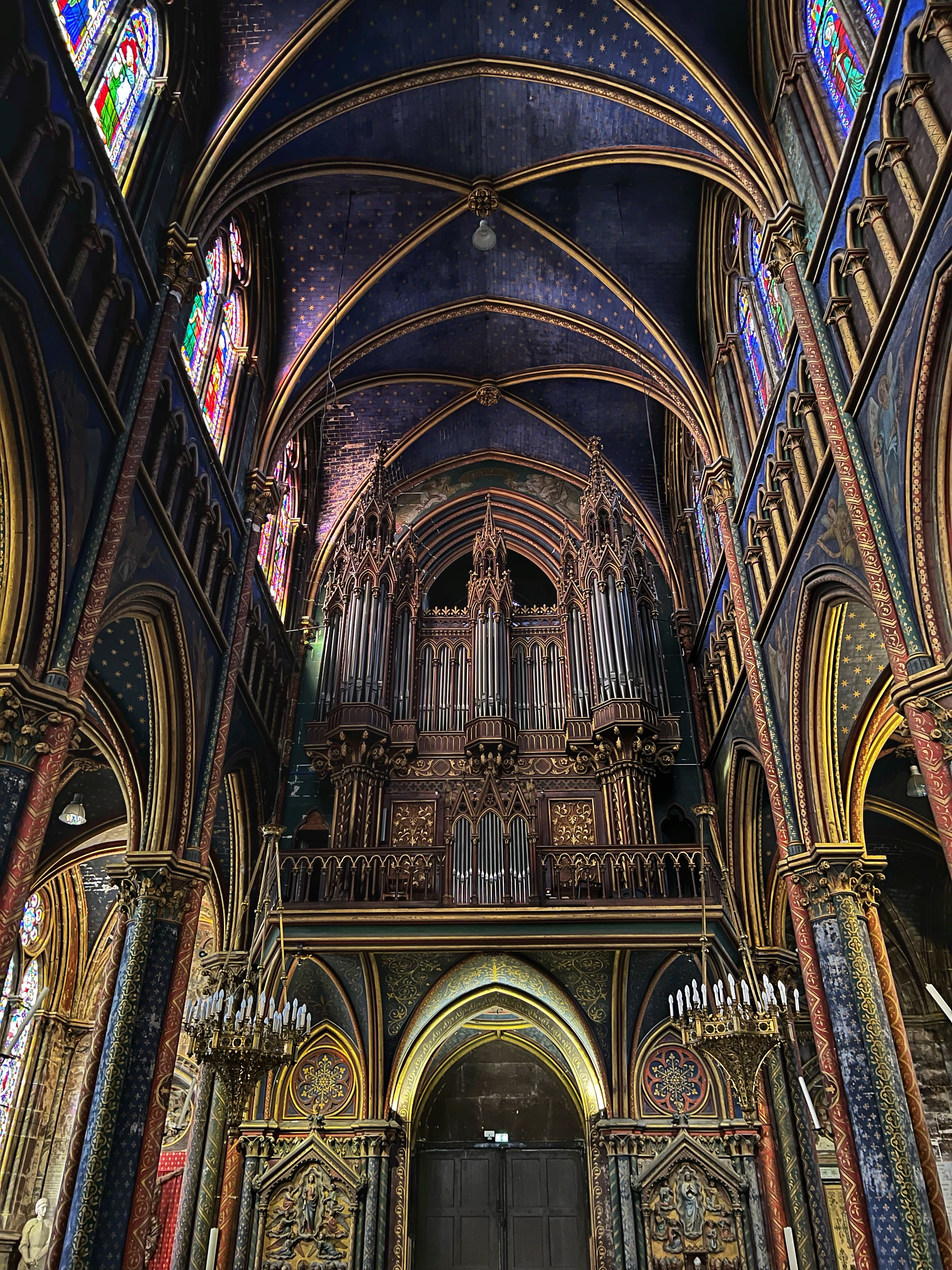
Inside the basilica we found the most amazing colorful gothic features including vaulted and painted ceilings, ornate wooden pulpits and a drool worthy organ. We were the only people inside (it is free to enter) and found it so incredibly peaceful. I love a church on top of a hill! The minor basilica we see today is over 200 yeras old. I would love to hear the organ play!
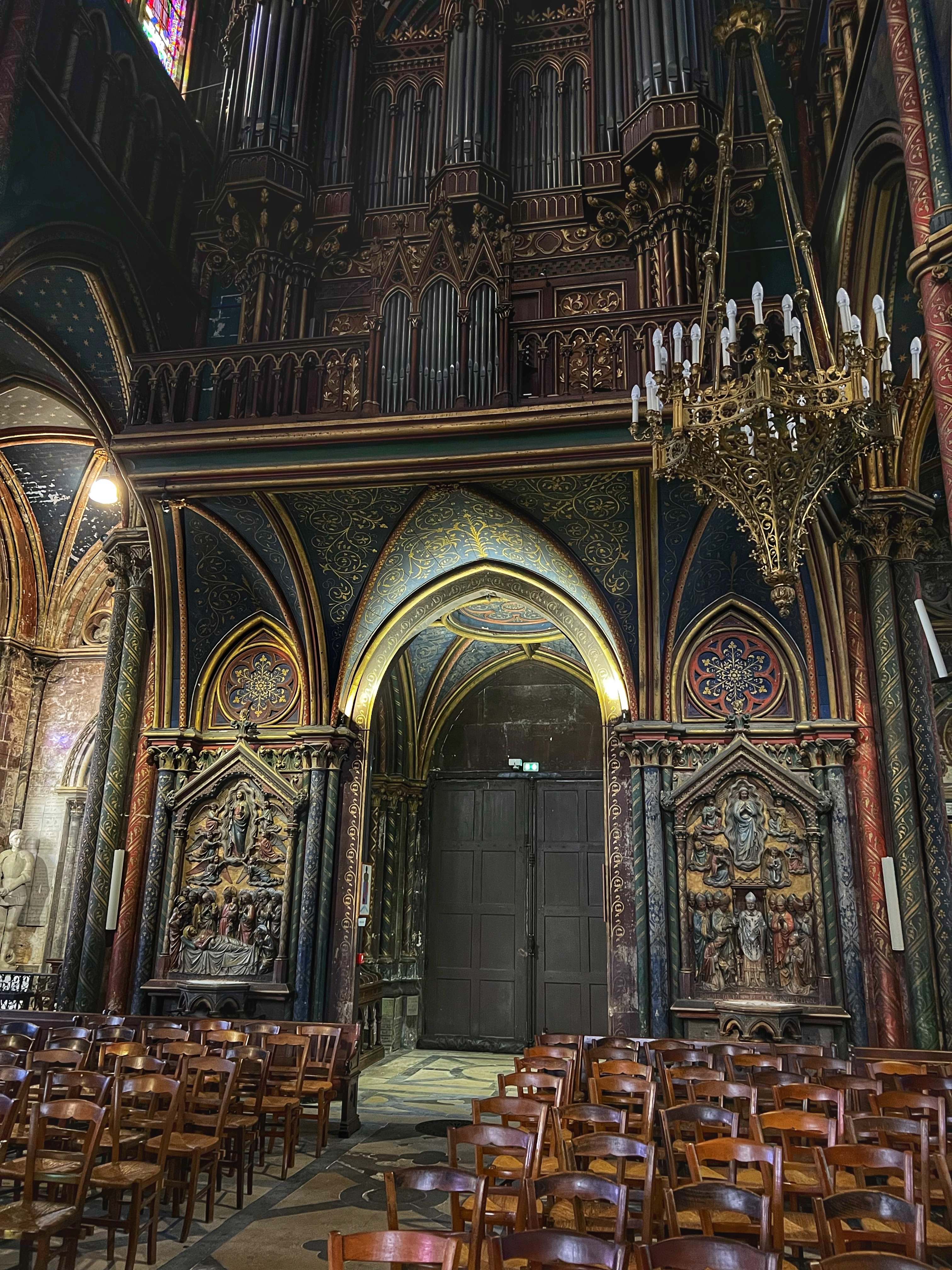
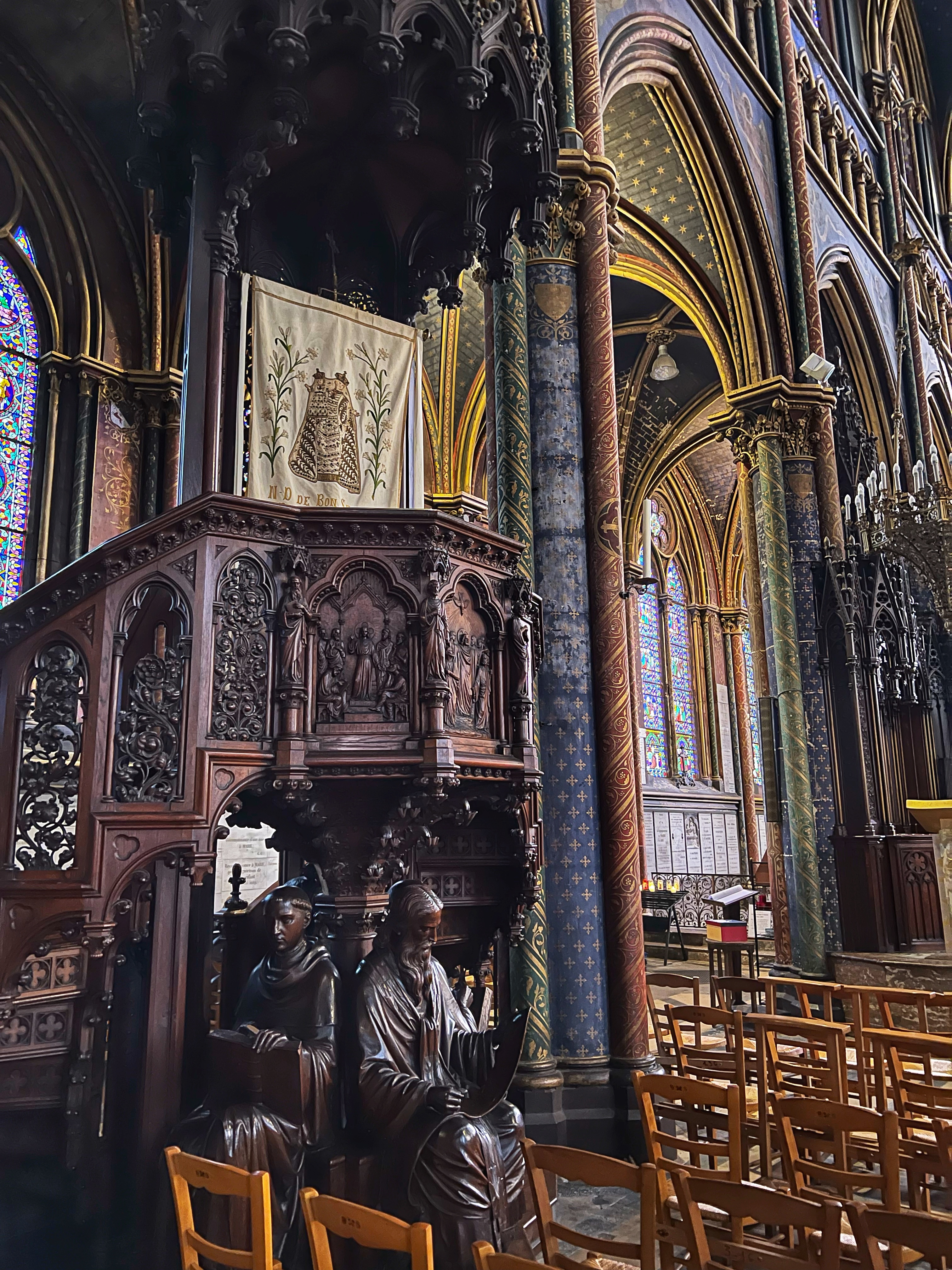

Final thoughts: Rouen is one of those places that is easily overlooked in the region if you don’t know what to look for. Take a hint from Monet and give yourself plenty of time to explore, wander the streets and just get lost! Ponder the life of Joan of Arc and appreciate how a bustling city of yesteryear has survived the millennia.


Ahhh those cliffs are stunning!
LikeLiked by 1 person
I’ve always wanted to go to Etretat–what a marvelous description. I’ve spent a day in Rouen–clearly not enough. I was thinking there was a museum in Etretat–will have to check that. Thank you so much!
LikeLiked by 1 person
Thank you for the kind words! These places are hidden gems for most people – I found them to be such treasure troves! Spend an afternoon or a long weekend, there’s plenty to do, see, and explore!
LikeLike