A complete guide to planning a road trip through the country of Jordan.
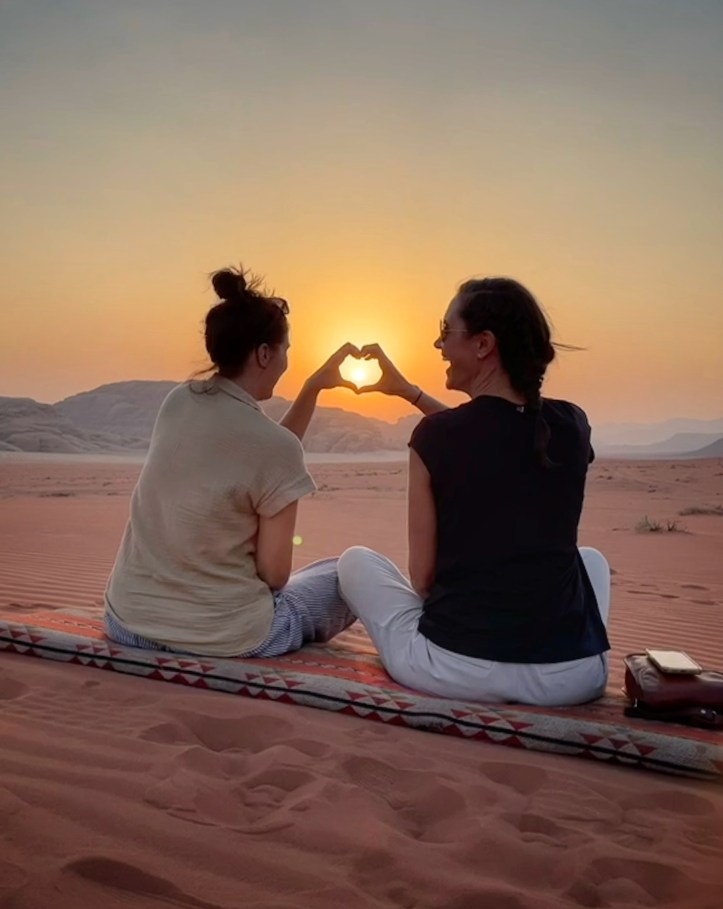
JORDAN! This colorful middle eastern country has been on my radar for years, and turning 40 this year was just the nudge I needed to finally book flights and GO. My friend Jessie also celebrated her 40th birthday this year and we didn’t think twice about making this our epic “Two Forties in Jordy” celebration – and it was certainly one for the books.
We had 8 full days in Jordan that we packed full of historic, out-of-our-comfort-zone adventure. We got a hearty taste of what the country has to offer from top to bottom, and learned a whole lot in the process. We stayed at a range of places from fancy resorts to on a cushion in the desert under the stars, and racked up an average of 8 miles of walking and hiking per day. We ate delicious (vegetarian) food and met people (mostly men) from all walks of life. We laughed, we cried, we sweat our butts off, and we learned that Jordan is a truly wonderful place.
As two women traveling, we had heightened focus on safety, approaching all situations with awareness and caution. However, we felt safe and welcomed the entire time – something it seems the Jordanian people take great pride in. Here are all the details about our road trip through Jordan.
ABOUT JORDAN
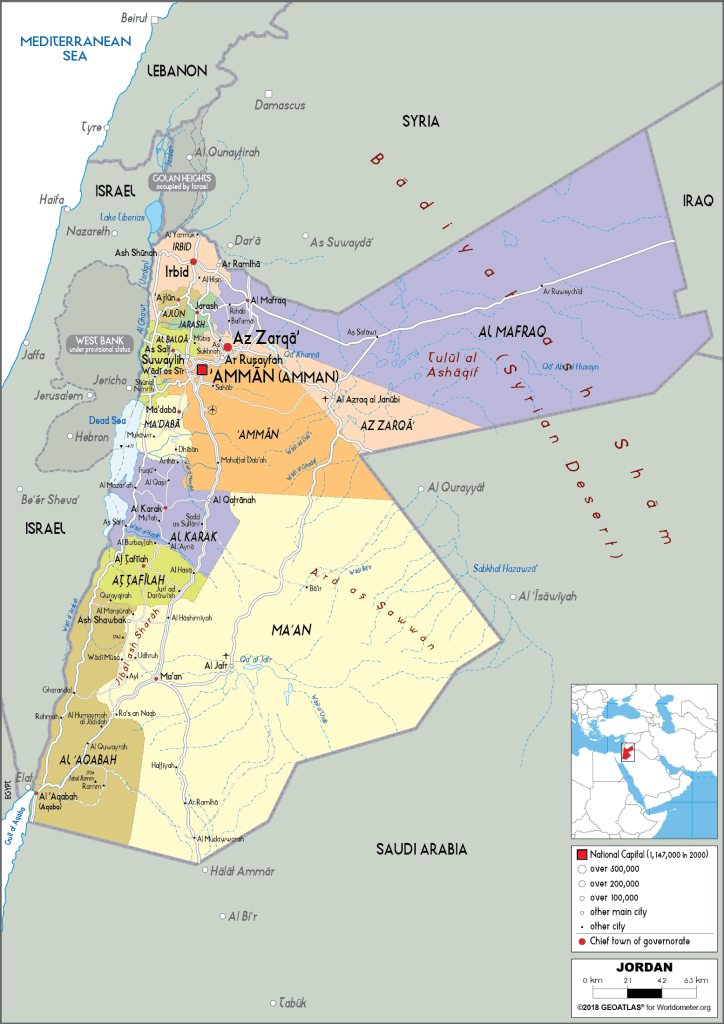
Located on the west side of the historic Fertile Crescent, Jordan was once a lush, bountiful crossroads for ancient humanity that dates back 200,000 years. Jordan is rich in Paleolithic (20,000 year old) and Neolithic (10,000 year old) remains and the area had well documented inhabitants during the Bronze (3600 BC) and Iron (1200 BC) ages as well. The region has overlapping Babylonian, Persian and Hellenic histories from 600 BC until the first century AD when Nabataeans created the city we now know as Petra (more on this later) which was later conquered and controlled for another 600 years by Romans and the Byzantine empire. This is an archaeologist’s dream location! Today Jordan is nestled between many countries struggling with conflict including Saudi Arabia, Iraq, Syria, Lebanon, the West Bank and Israel. With a population of 11 million people, about 70% of those are native Jordanians, and the rest are immigrants from Syria, Palestine, Egypt, Iraq and other countries nearby. There are parts of Jordan not advisable for western tourists, including most of the east. Jordan is a kingdom, and King Abdullah II has reigned for over 20 years after his father, the beloved King Hussein, ruled for almost 50 before him. King Abdullah’s wife, Queen Rania, is a prominent figure in Jordanian society, and has been named one of Forbes’ top 100 most influential women in the world. Abdullah II and his family have one of the highest approval ratings of any leader in the middle east thanks to his management of difficult decisions during the Arab Spring and his peace treaty with Israel. For a majority Islamic nation, Jordanians live side by side with Jews and Christians in peace, and the culture is fairly relaxed and open compared to more strict Islamic states. Jordan is a hot, arid country with low rainfall and limited water supply. The economy is driven by salt-mined exports and tourism, but the Dead Sea is receding at a rate of about one meter per year for the last 20 years. This is why tourism is so important to Jordanians, and it is evident in their universal welcome: “Where are you from? Welcome to Jordan!”

Before you go
There are several important steps you need to take before your visit to Jordan and a few things to keep in mind. Islamic traditions are important to Jordanians, but they are not strict in enforcing customs. Still, it is important to learn about, understand and respect the culture you are visiting. Here is what you need to know before you go:
- CLOTHING: Pack clothing that is weather-appropriate (it will likely be hot) and respectful. We saw people wearing all manner of clothing at the Petra sites, but everywhere else people dressed modestly in long dresses or skirts, pants or capris, t-shirts or billowy long sleeved attire. Cotton, linen, gauze, or anything breathable is best. Head coverings are not necessary unless you enter a mosque, but scarves are popular in the desert to protect the face from sand. Wear comfortable footwear and expect to walk – a lot.
- FOOD: DO NOT drink the tap water in Jordan. Bring a reusable water bottle (especially if you want to keep it cold) and fill up with bottled water that is readily available everywhere. The food is delicious in Jordan! Vegetarians will have no problem finding good options, but sometimes you may need to ask ahead to make sure you are accommodated on private tours, etc. Our favorite meals included za’atar, yogurt, flat bread, felafel, hummus, lentil soup, rice and vegetables with lots of yummy spices.
- DOCUMENTS: You must obtain a visa online before you go, which can be done easily by buying a Jordan Pass (within 12 days of arrival), which includes entrance to many tourist sites as well. Check your passport to make sure the expiration date is beyond 6 months from the time of travel. At the time we traveled, a Covid-19 declaration form was also required; you can double check with your airline confirmations for all expectations.
- CELL PHONES: Some cell phone providers don’t offer service in Jordan. Don’t worry! The airport has several options for purchasing SIM cards that will be more than sufficient during your visit. Just make sure your phone is “unlocked” (call your provider if you’re unsure) and you have a passport. I purchased a 20G SIM card from ZAIN for less than $25, they installed it for me, and it was more than sufficient for my 9 days in Jordan. Keep in mind most lodging has wifi, but not all areas (including Wadi Rum in the south) have cell service. Consider where you’re going and for how long when purchasing a pre-paid SIM card. Tip: Download the map of Jordan in google maps before you leave so you don’t have to worry about navigating if you lose cell service at some point.
- CURRENCY: Although most establishments accept credit cards, be sure to have LOTS of local currency (JD/Jordanian Dinar) on hand for tips. We needed more cash than we expected. Grab cash when you can (first at the airport) as ATMs are not everywhere. Petra has a good ATM as well. The current exchange rate in 2022 is 1JD/1.4$.
- WHAT TO AVOID: Avoid discussing the Israel/Palestine conflict. Although homosexuality has been legalized since the 50’s, it is still a taboo subject. Try not to go out in public with wet hair. Don’t show PDA with your partner. Shaking hands and greetings with kisses on the cheek are acceptable, but putting your arm around a member of the opposite sex is frowned upon.
Driving Tips
Renting a car like we did? Great! Driving in Jordan is fun! Here’s what you need to know:

- The airport has many options for rental car companies including Avis, Dollar, Thrifty and Europcar. We used Dollar and spent $297 for 7 day of driving ($147/pp) for a peppy little economy car and it was great – we spent only $87 on gas the entire week and drove all over Jordan. The customer service at Dollar was outstanding and super friendly – they even retrieved my charger for me and I didn’t realized I forgot it in the car! Tip: pack a car charger, and don’t forget it in the car.
- You do not need an international driver’s license when driving in Jordan. A passport and local driver’s license is sufficient. You DO need to be 25 or older, like most rental car companies.
- The rules are similar to other countries – drive on the right side of the road, follow speed limit signs, etc. The only area that would be trickier to navigate and a bit chaotic is downtown Amman, so I recommend avoiding renting a car until you plan to leave the city. In that same vein, don’t expect to drive in the Wadi Rum desert. You will have transport from Wadi Rum village from whatever tour operator or lodging you have booked with.
- Lanes are guidelines, not rules. Pass when you feel it is safe.
- People don’t always use a blinker when changing lanes or turning, and sometimes honk their horn to indicate their presence, so keep that in mind.
- The hardest thing for me was speed bumps. Throughout the country there are many speed bumps and they blend in with the road; the signs are AT the speed bump, so you only need to hit one going too fast once to learn what those signs mean.
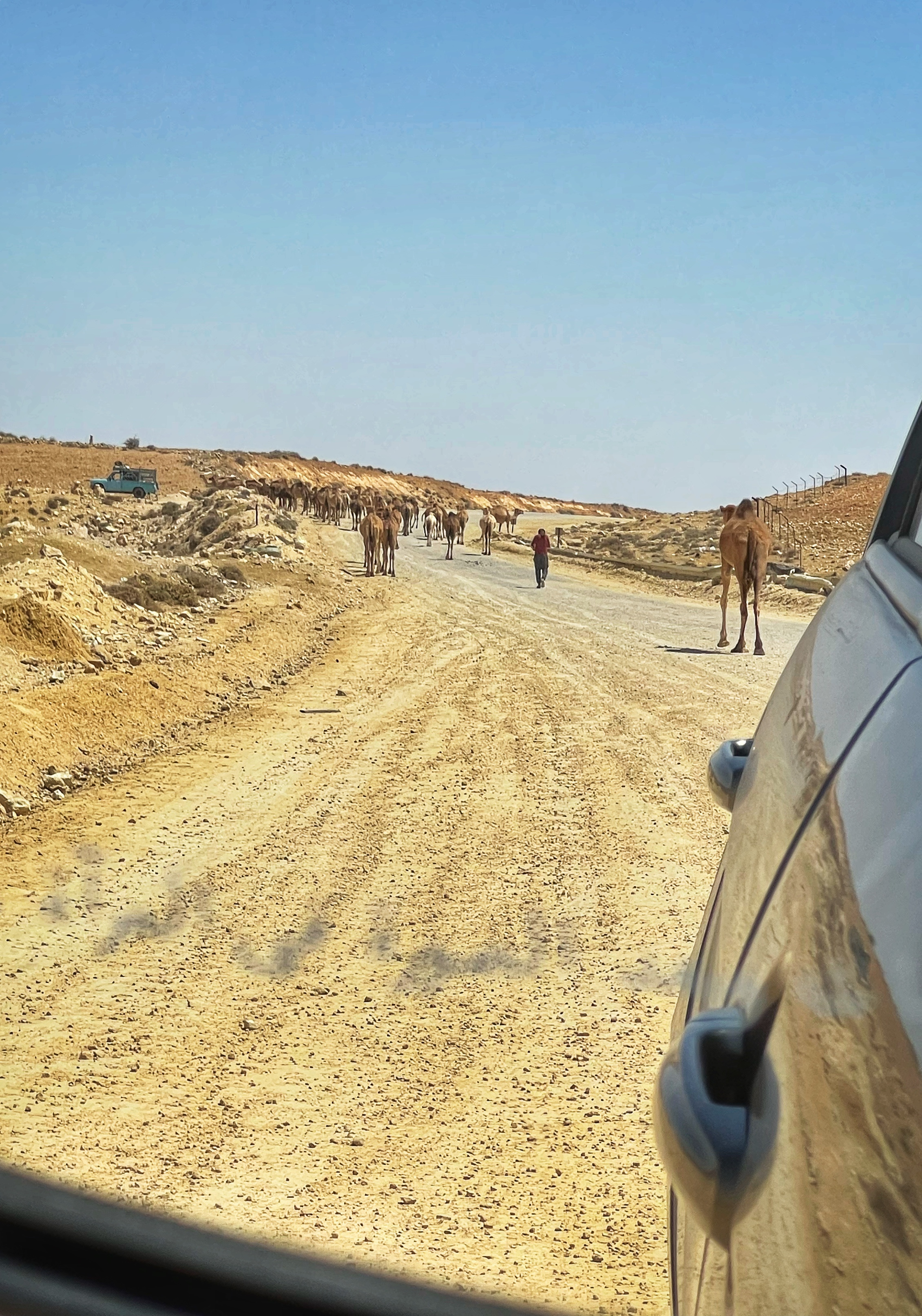
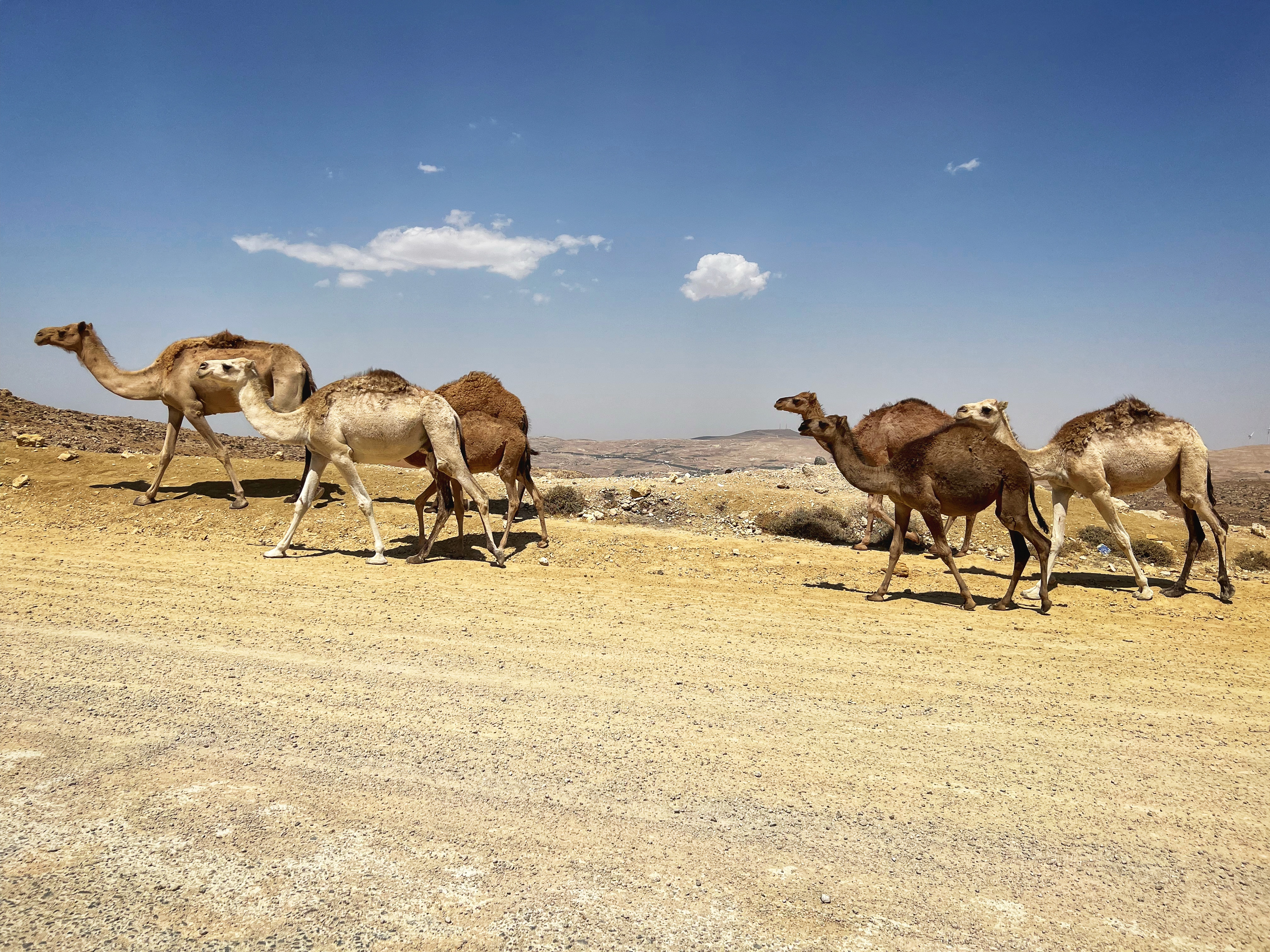
- People sometimes stop on the side of the road – this means you can, too. We pulled over all the time when we saw beautiful things and wanted to hop out for a better view or a photo. We even ran smack dab into a huge herd of camel! You never know what you’re going to see on the Jordanian highways…
- There are occasional police checkpoints. We ran into this only once, but they were very friendly and just waved us through.
- Gas/Petrol stations are plentiful, and they pump your gas for you. Sometimes they will ask for a tip, but it is not required.
- It is recommended to drive during the day, as any sketchy activity you could encounter will likely happen at night.
- Hot tip: Download a map of Jordan on google maps before you drive so you never have to worry about losing service. GPS is key in Jordan!
ITINERARY
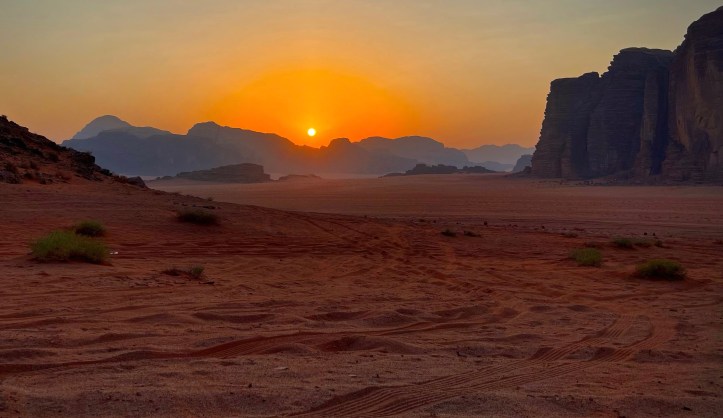
Click on a day to skip to that section of the blog.
- Day 1: Arrive in Amman at Queen Alia International Airport, check into Royal Villa Mira Lux apartment, walk downtown to Roman Theater and Amman Citadel. Taxi to King Abdullah II Mosque and dinner at Hashem.
- Day 2: Taxi to airport, pick up rental car, drive to Jerash to tour ruins. Drive to Dead Sea and enjoy Hilton Dead Sea Resort & Spa (swim in Dead Sea, salt scrub in Spa, dinner and fire dancer show).
- Day 3: Drive to Wadi Mujib and hike the wet narrows. Then drive to Dana Biosphere with many stops along the way (Lowest Place on Earth museum, beautiful lookout points), stay at Ein Lahda tent camp in Dana Biosphere, dinner at campsite.
- Day 4: Hike Dana Biosphere until noon, then drive to Shobak Castle, then to “Little Petra” Triclinium, ending at Petra Moon Hotel to check in and have dinner.
- Day 5: 6:30-9:30 AM Tour with Ahmad ending at Petra Treasury, then wander Petra ruins until noon, walk back to hotel for pool/rest/lunch, then back to Petra by 4:30 for sunset tour of Monastery, late dinner at hotel.
- Day 6: Sunrise walk through Siq to Treasury, then tour Petra Museum and by 1PM drive to Wadi Rum for evening jeep tour, sunset, dinner and campfire. Stay Wadi Rum Bedouin Camp (booked through Wadi Rum Desert Camp Tours).
- Day 7: Full day Wadi Rum. Sunrise camel tour, breakfast at camp, hike to highest point overlooking Saudi Arabia, lunch in the desert, jeep tour to various spots, return to camp to clean up, then back out into the desert for sunset, dinner in the desert and sleeping under the stars.
- Day 8: Sunrise in the desert, return to camp for breakfast, then check out of Wadi Rum Desert Camp. Morning drive 4+ hours back to Amman and return rental car. Taxi into Amman for amazing 4+ hour spa package at Gaia’s Cocoon including dinner, sleep at Faraseen Apartments near airport.
- Day 9: Early wakeup call and flight home.
Click here to skip to the end of this blog for information on our budget for this 8 night trip.
DAY 1
We arrived in Jordan around 1PM and were able to check into our lodging by 2:30. It takes some time to make it through the various customs lines, pick up snacks, cash and a SIM card, and then take a taxi into the city. There are airport taxis and Uber available, each at about 35JD/$50 for the 30 minute trip to and from Amman. I was thankful to be able to split all the transportation expenses, as they add up! (See bottom of blog for budget info.) It was very hot – about 37ºC/100ºF in the city and we were ready to clean up a bit. Our kind host Mohammad welcomed us to our apartment Royal Villa Mira Luxe and we paid him in cash 61JD/$86 for one night. It had a lovely balcony, kitchenette, was located in a great spot, was clean and comfortable, and the best part – a water cooler right in the room. This is rare and a welcome amenity in a sweltering city.
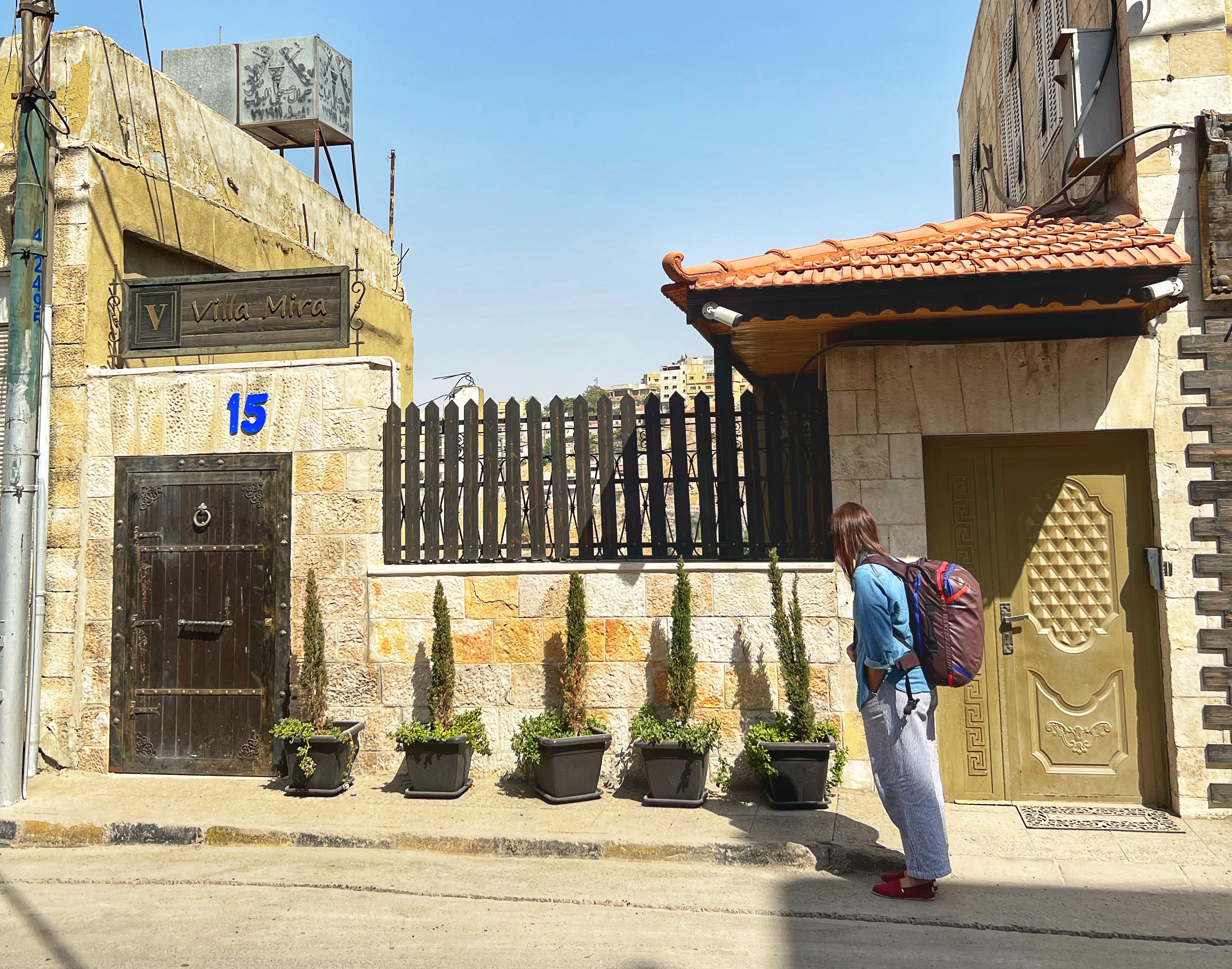
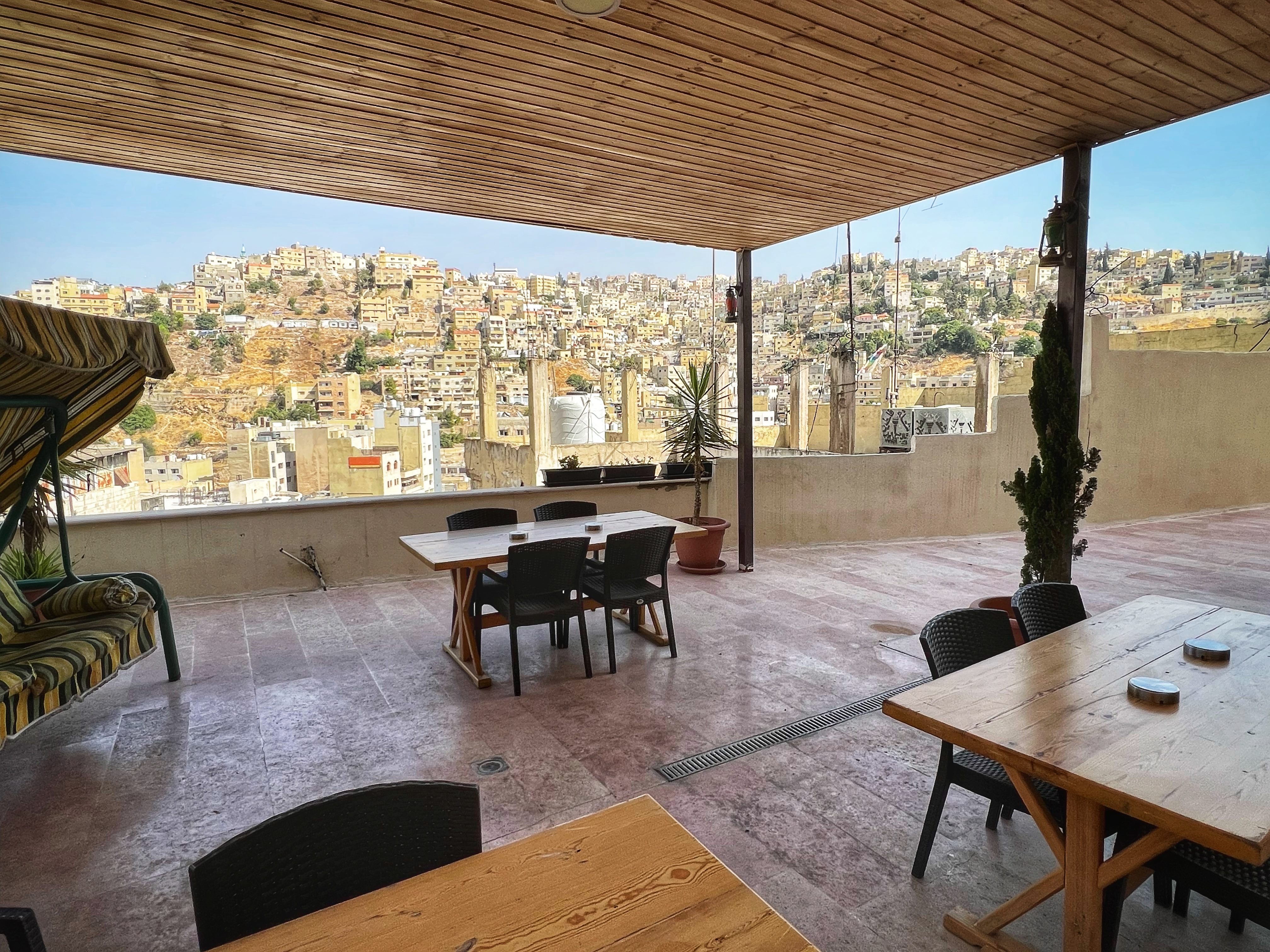
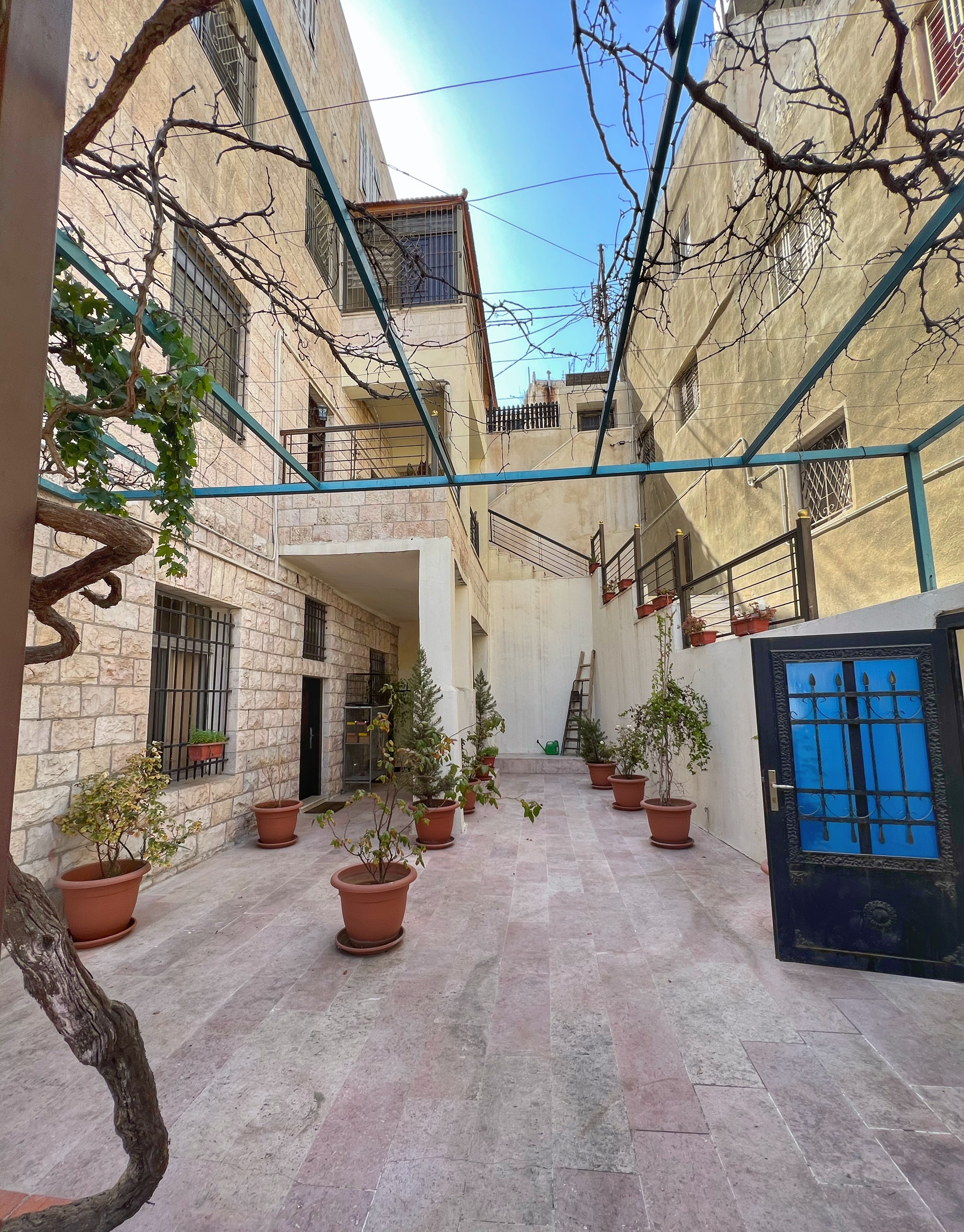
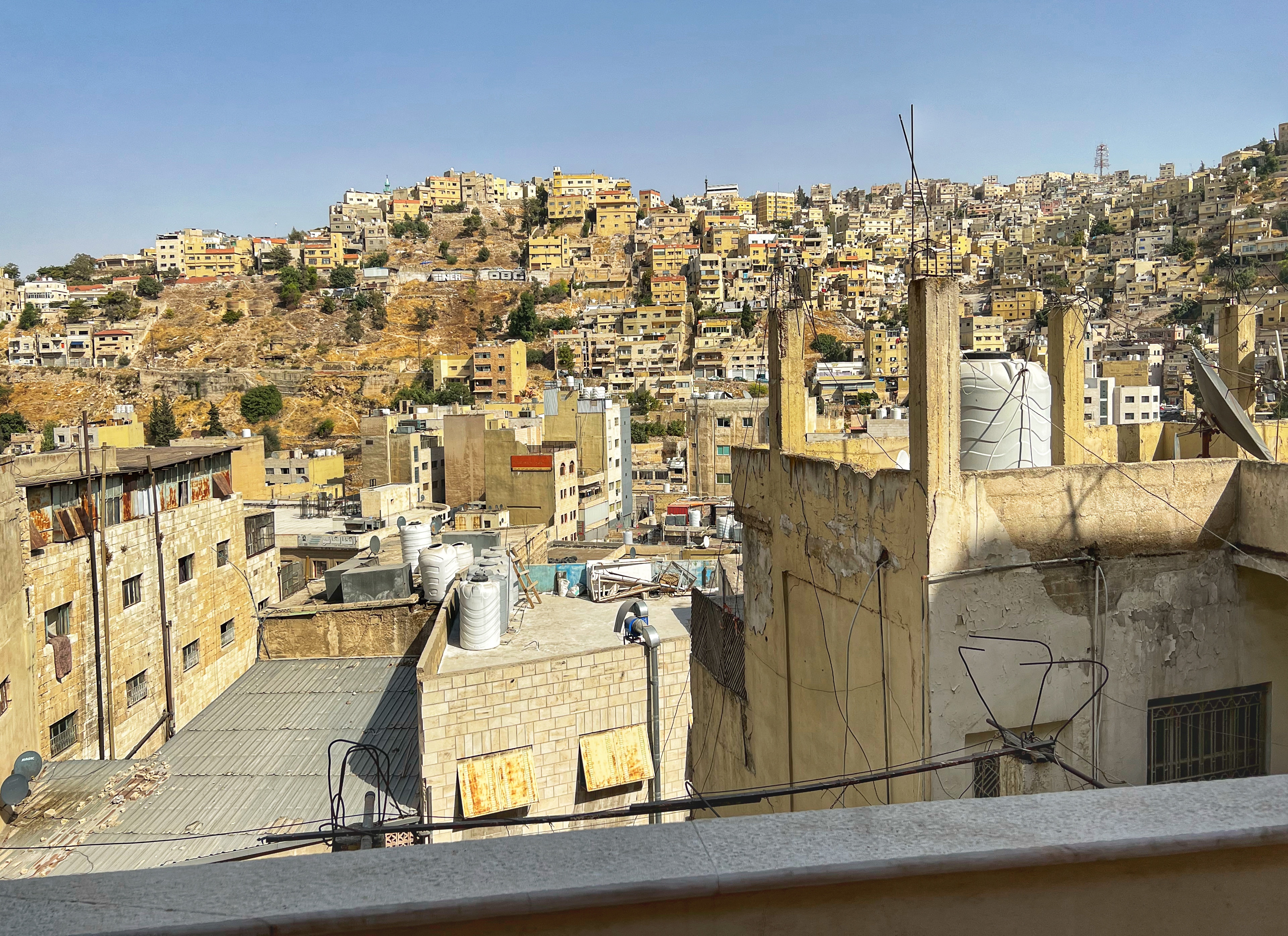

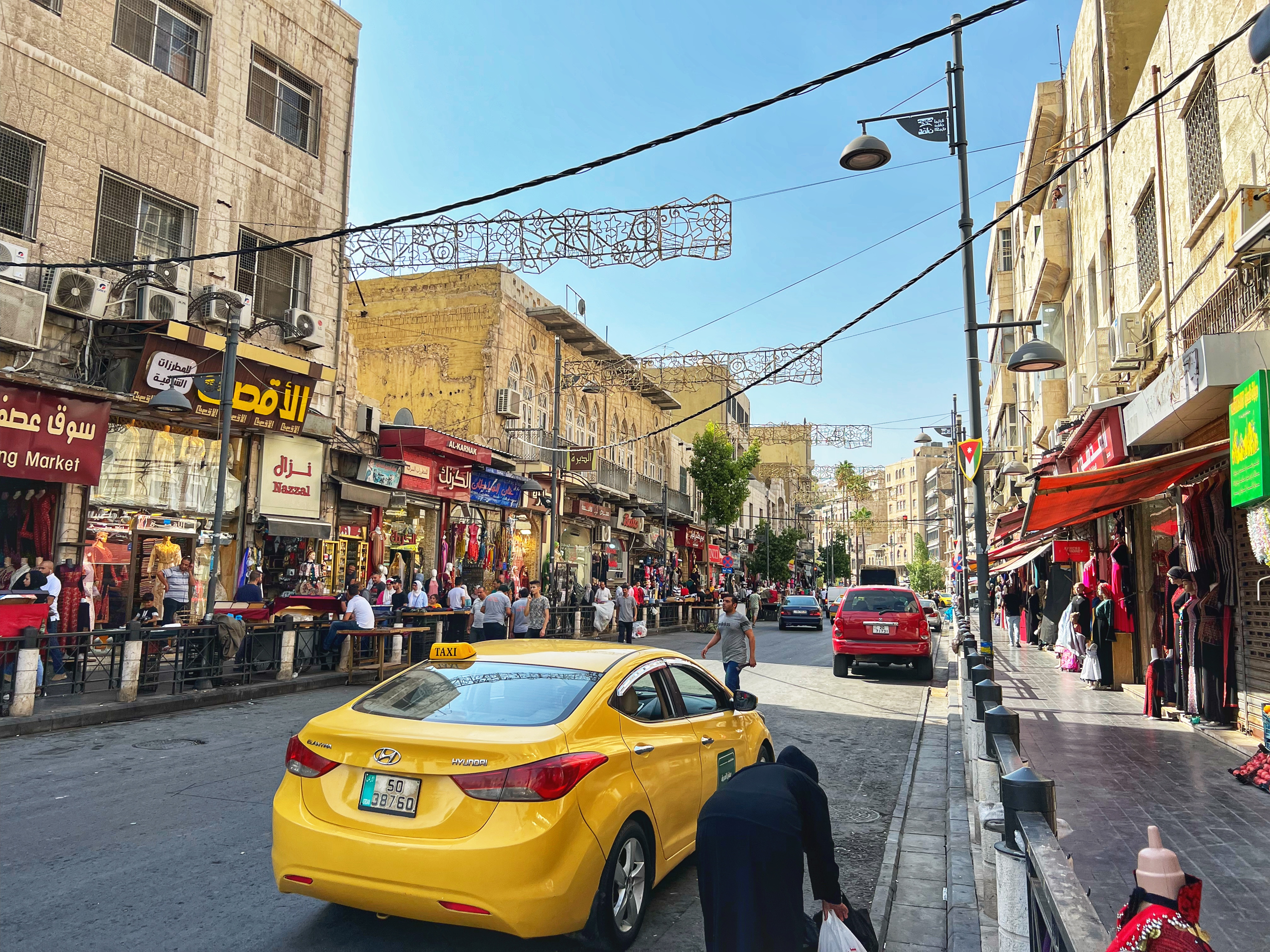
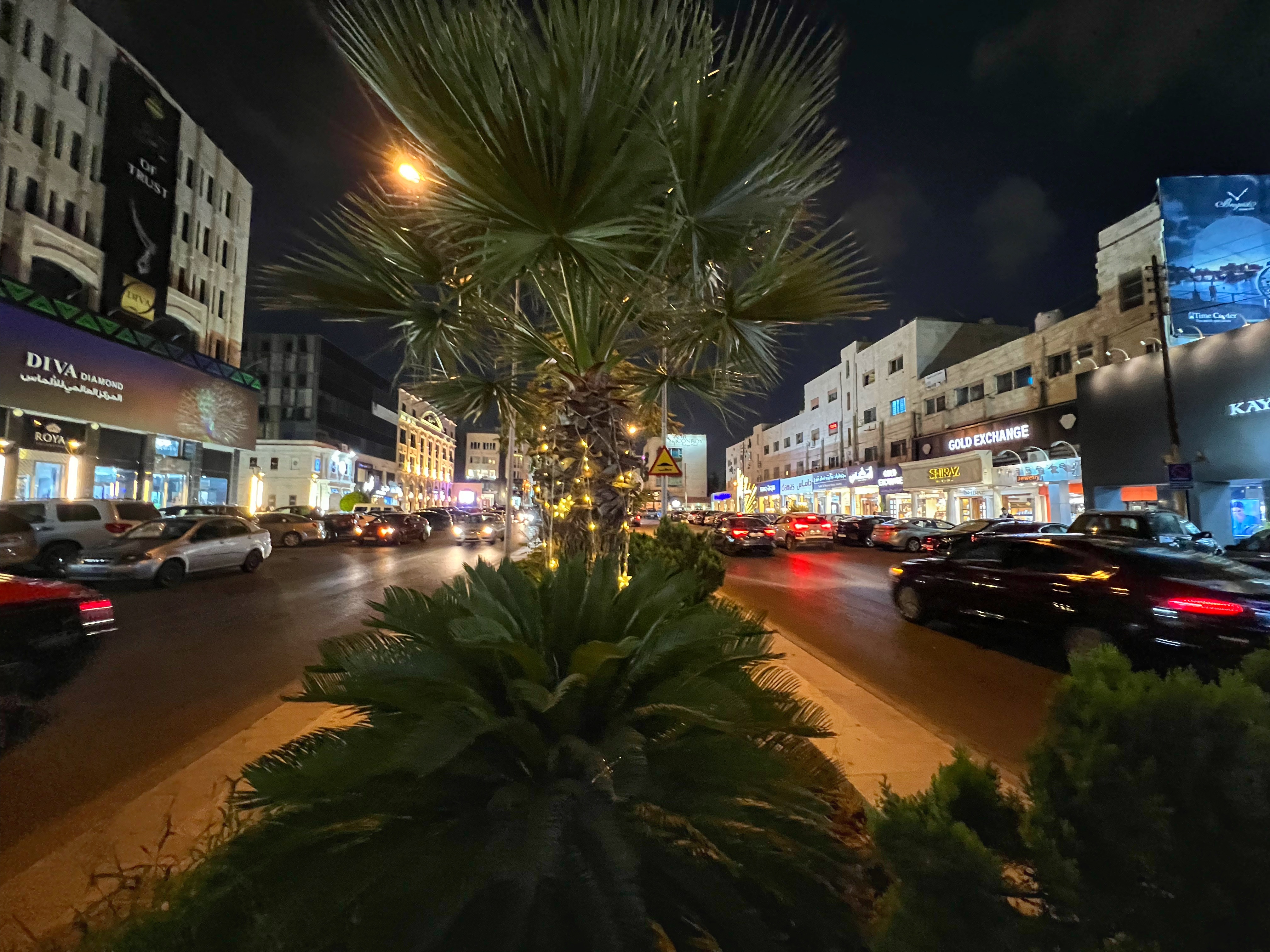
We got our bearings and cleaned up a bit, then walked downtown towards the Roman Theater. The cities were bustling with lots of shops, and we noticed men – shop owners perhaps? – sitting on the street everywhere. It seemed like everyone was just hanging out. I remember it smelled spicy too – good, like food – but we weren’t very hungry with the heat. We walked with purpose, and had occasional solicitations or “where are you from?” but it felt more lively and friendly than anything else.
ROMAN THEATER
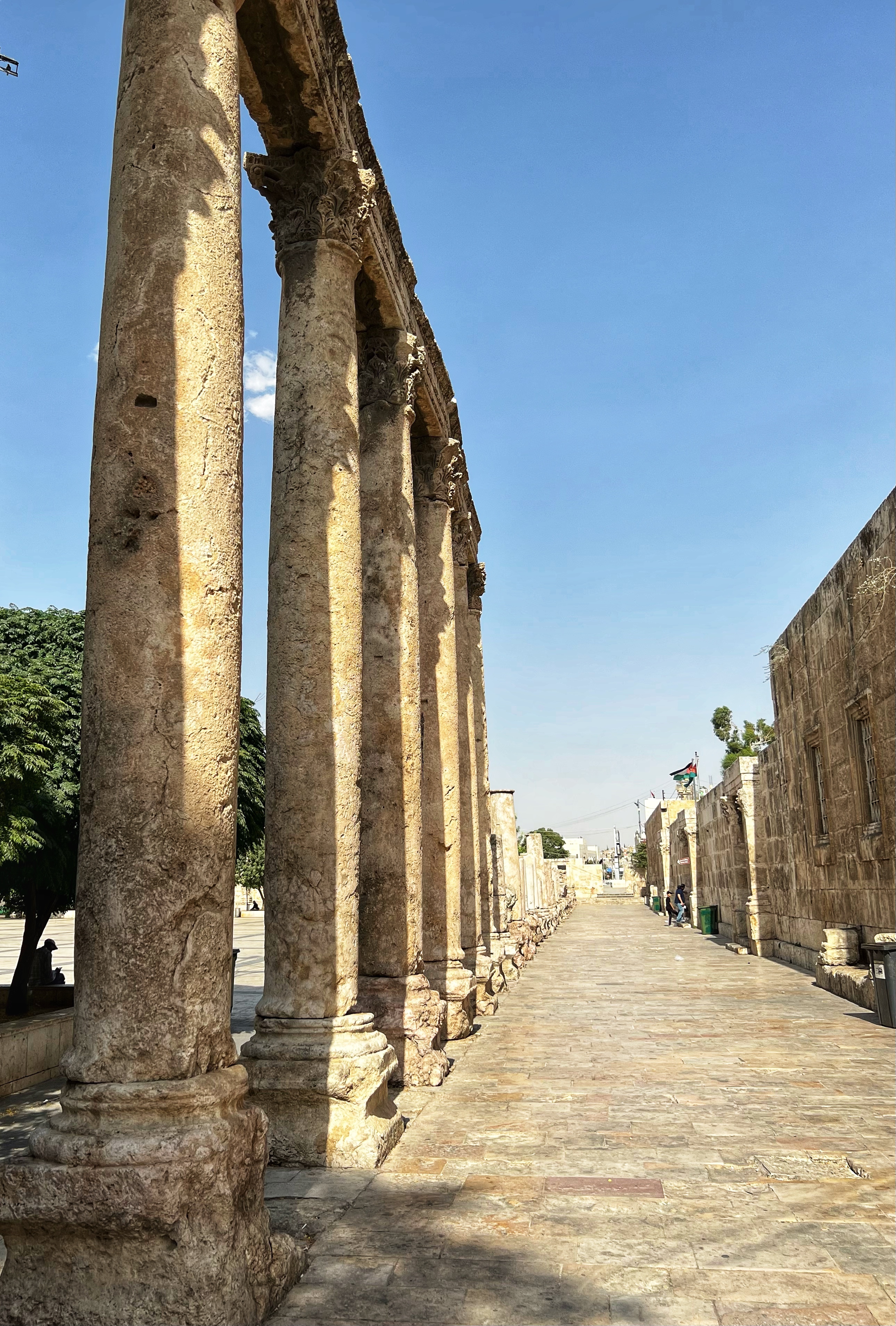
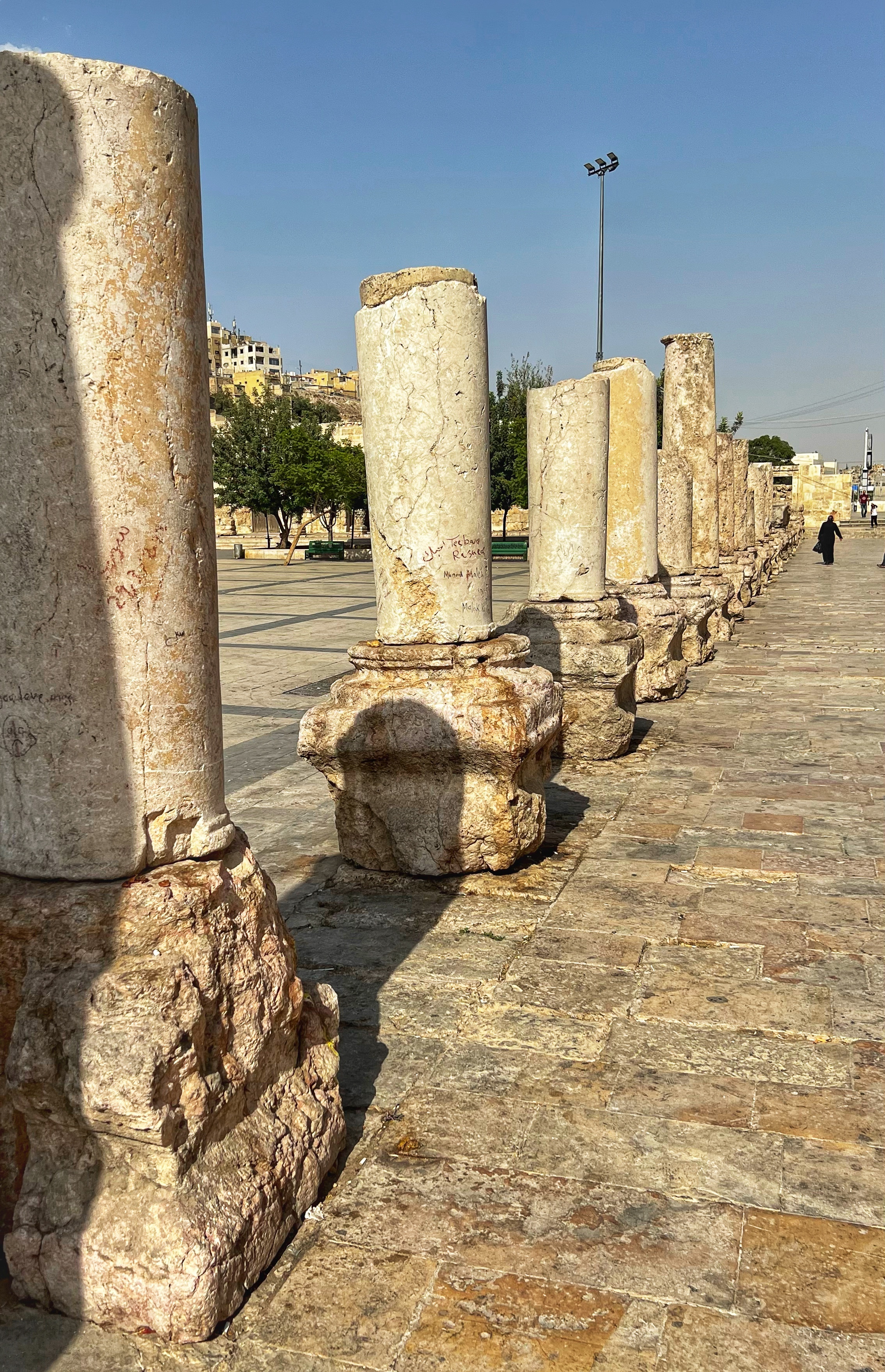
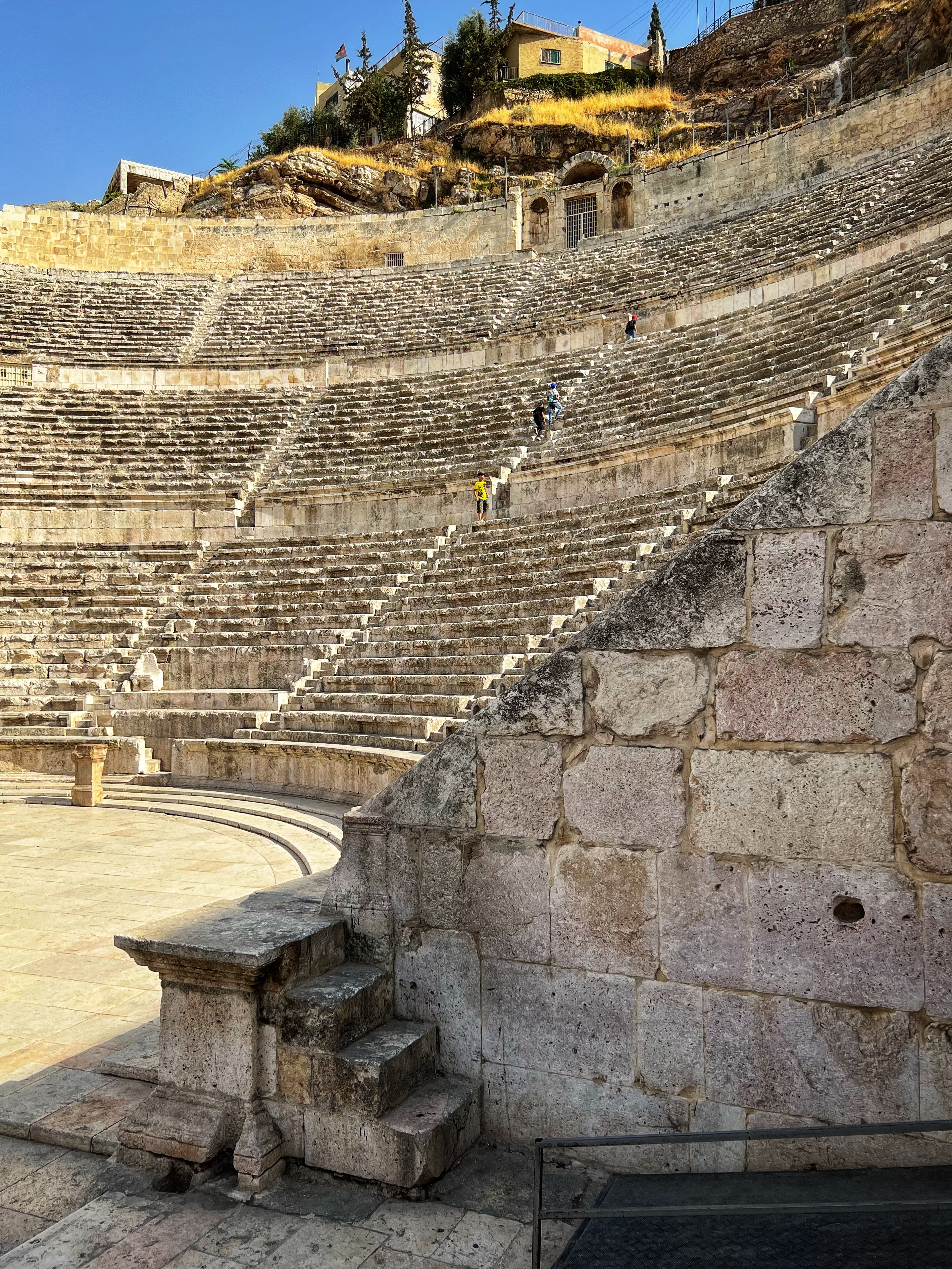
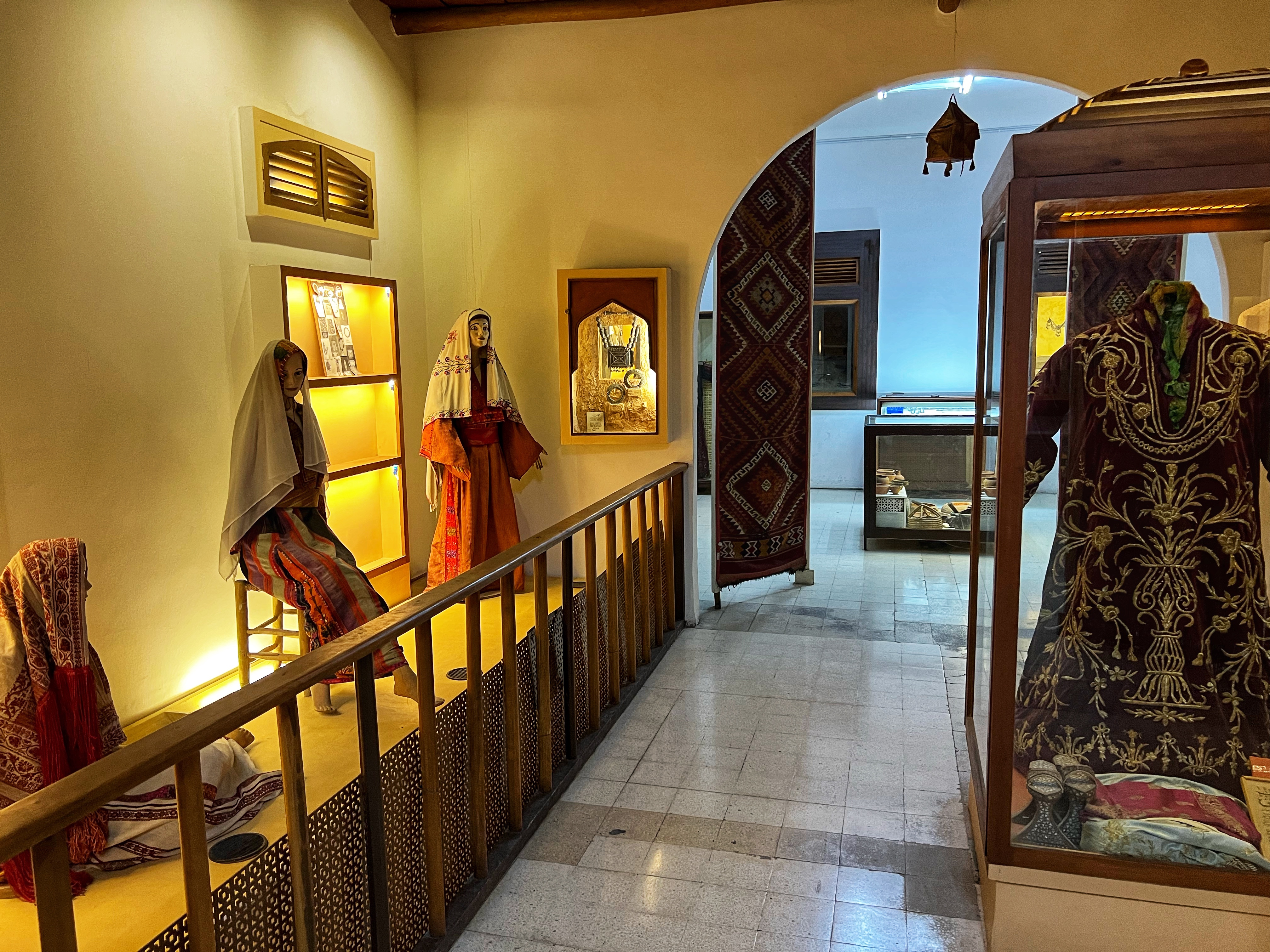
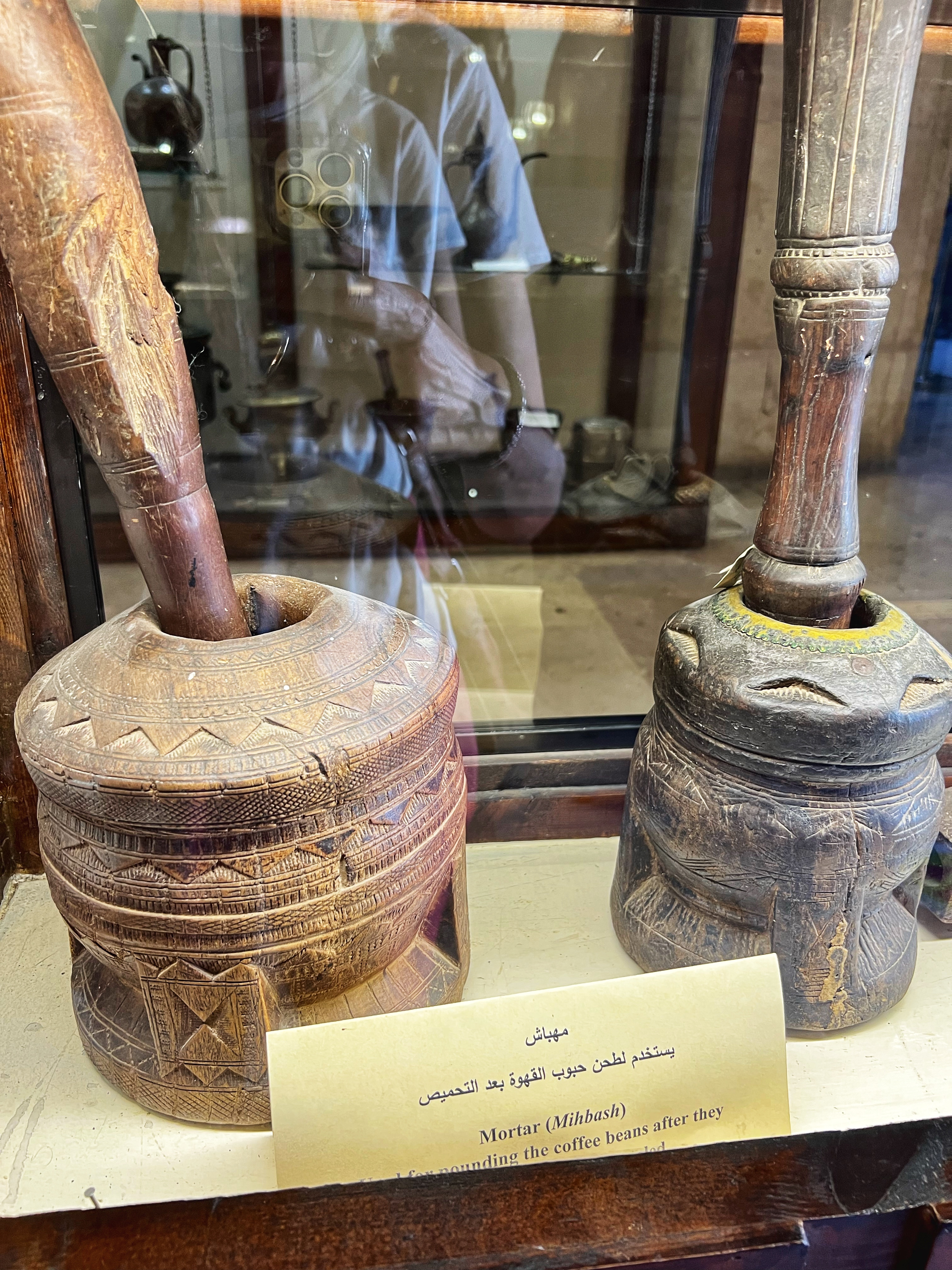
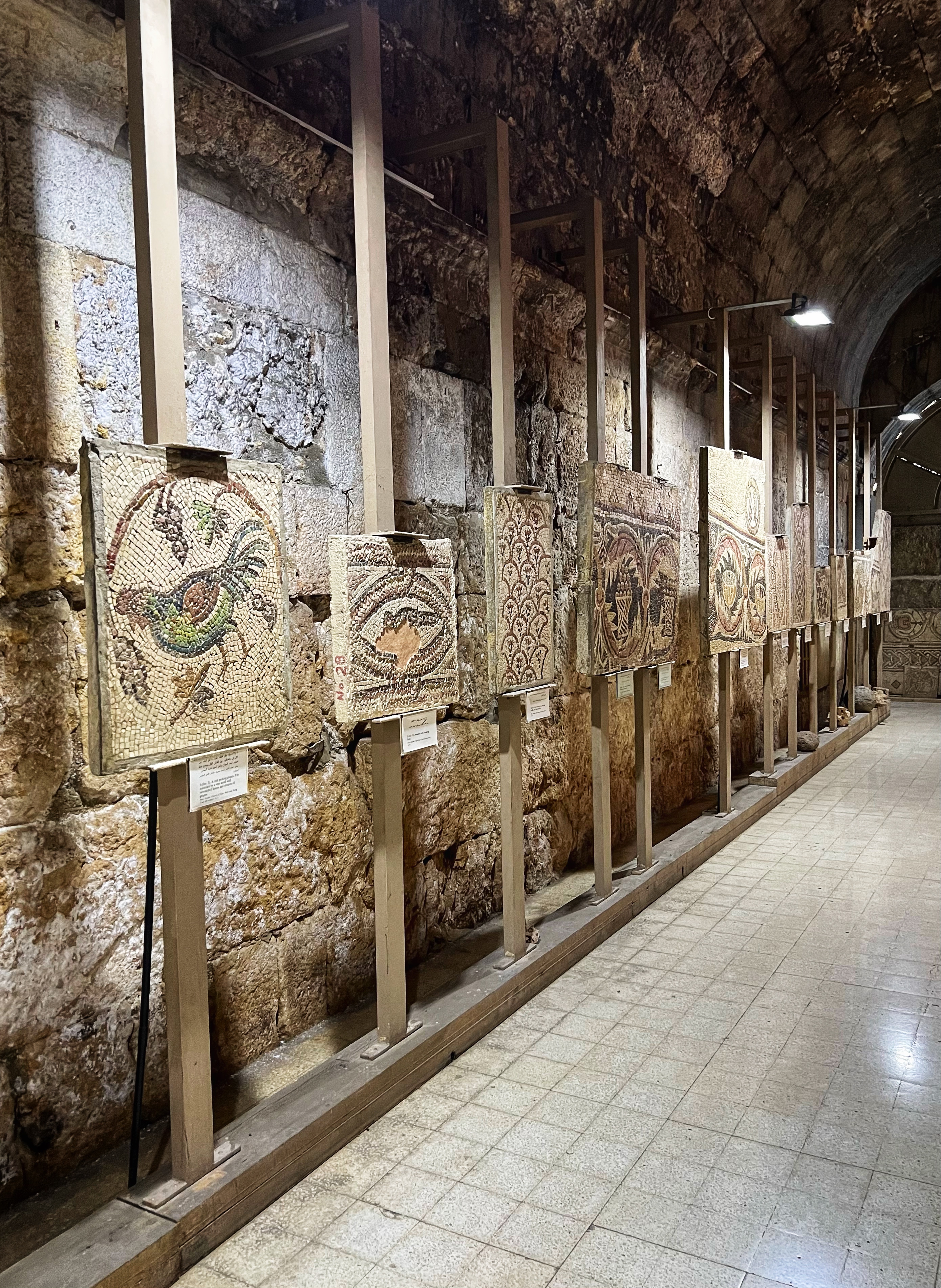
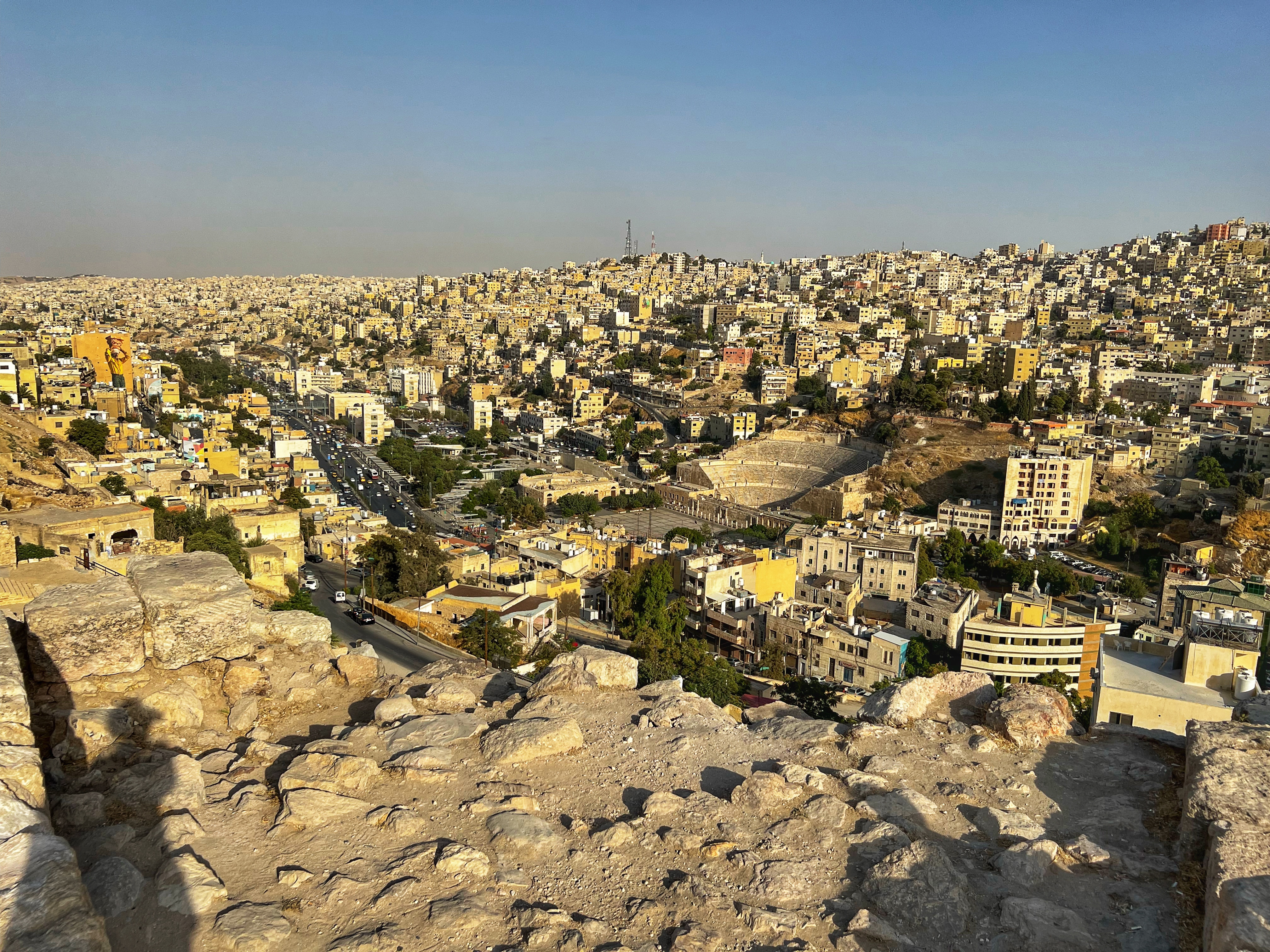
At the Roman Theater we showed our Jordan Passes to enter and wandered around. An audioguide here would have been helpful as I love to learn about the history. Instead we popped down into the two small museums on either side of the arena – one of folklore, the other of popular traditions. We enjoyed them as it gave us our first look into the rich history and culture of this “white city.” Apparently it is called the White City because most of the buildings are made with white stone. This massive 6,000 seat theater was built by the Romans in the 2nd century. Built during a period of time when the city was known as Philadelphia, the arena was mostly used for musical performances. Today it is used for local events and even American rapper Russ had a concert here.

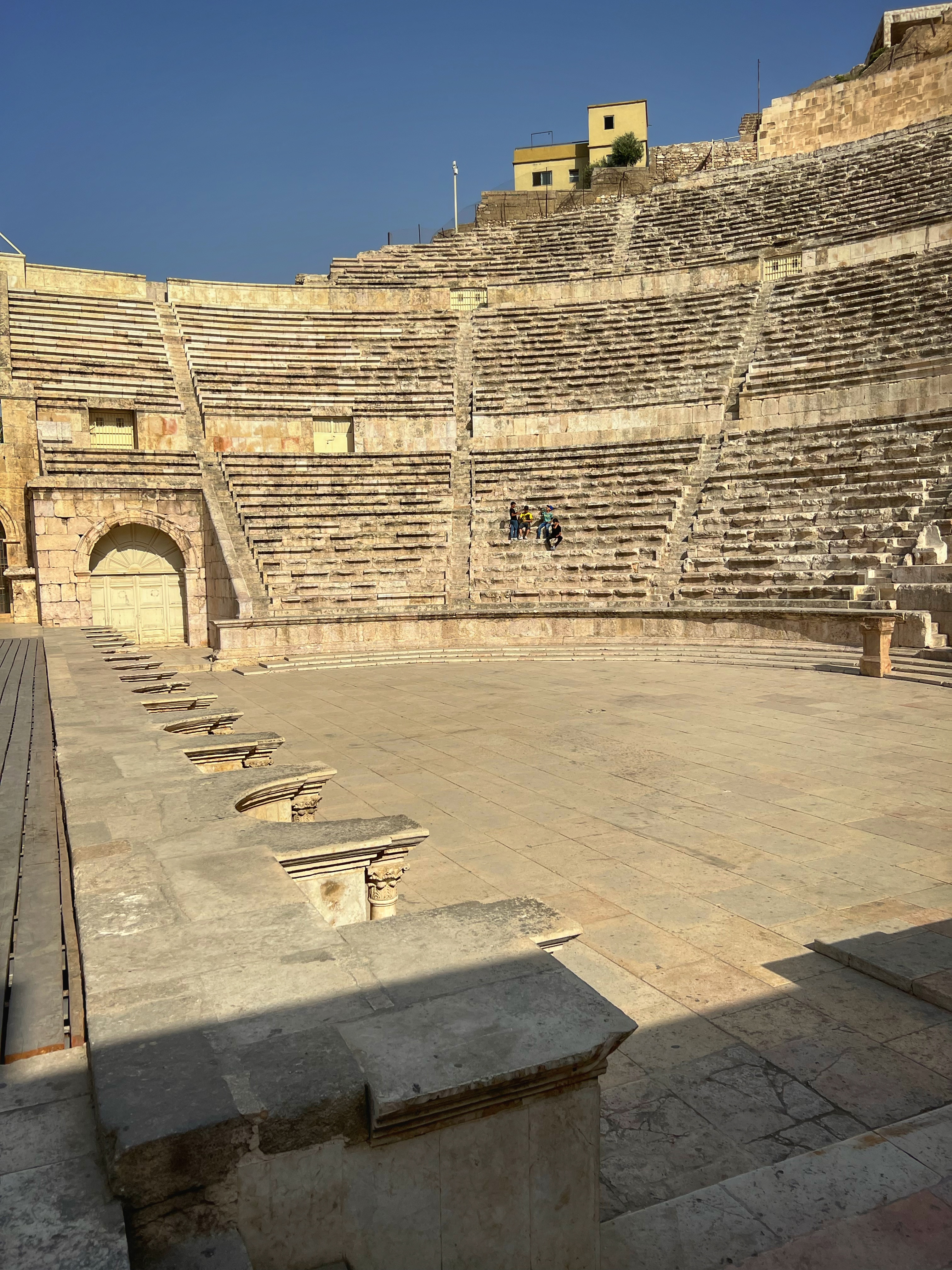

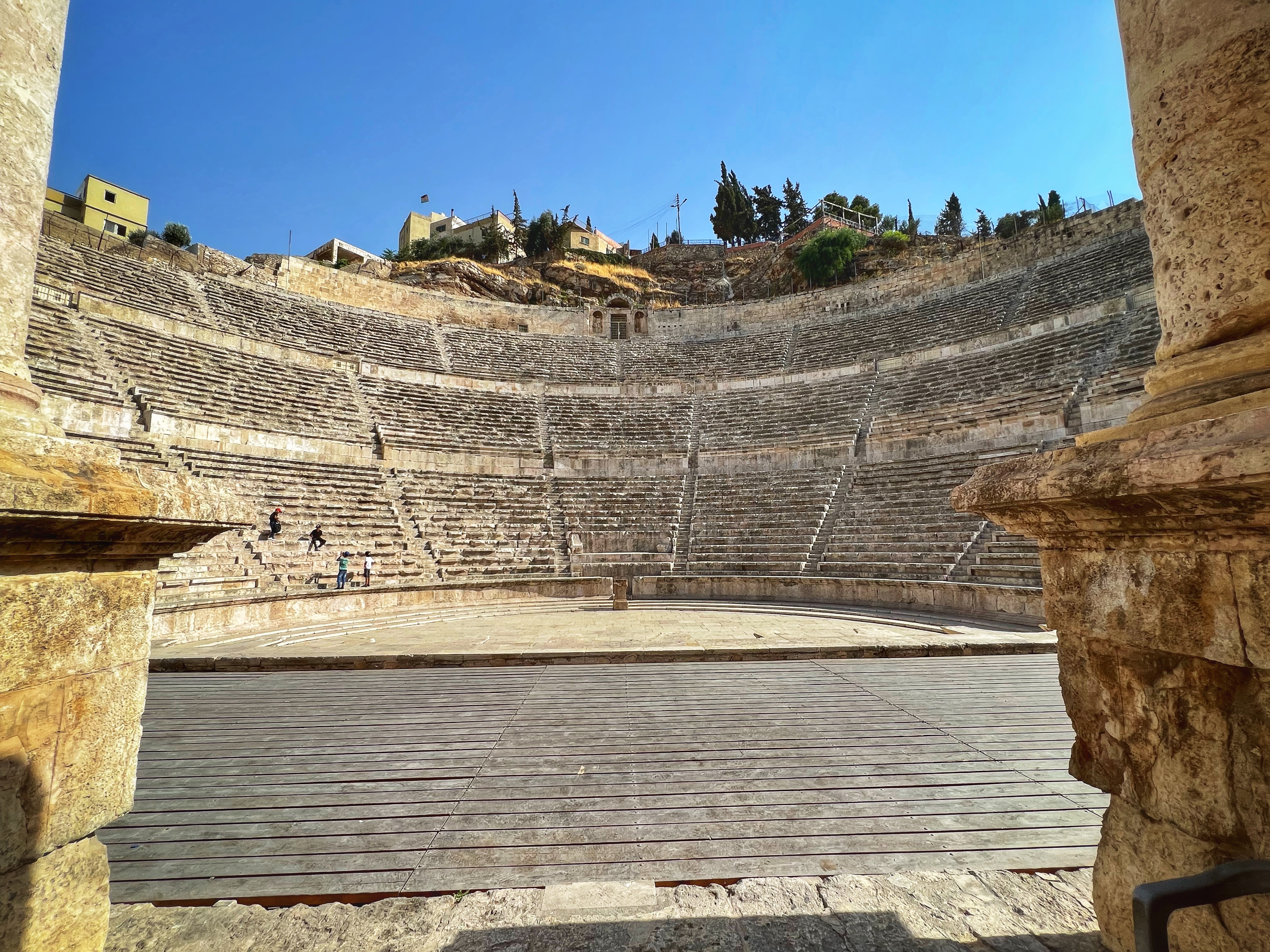
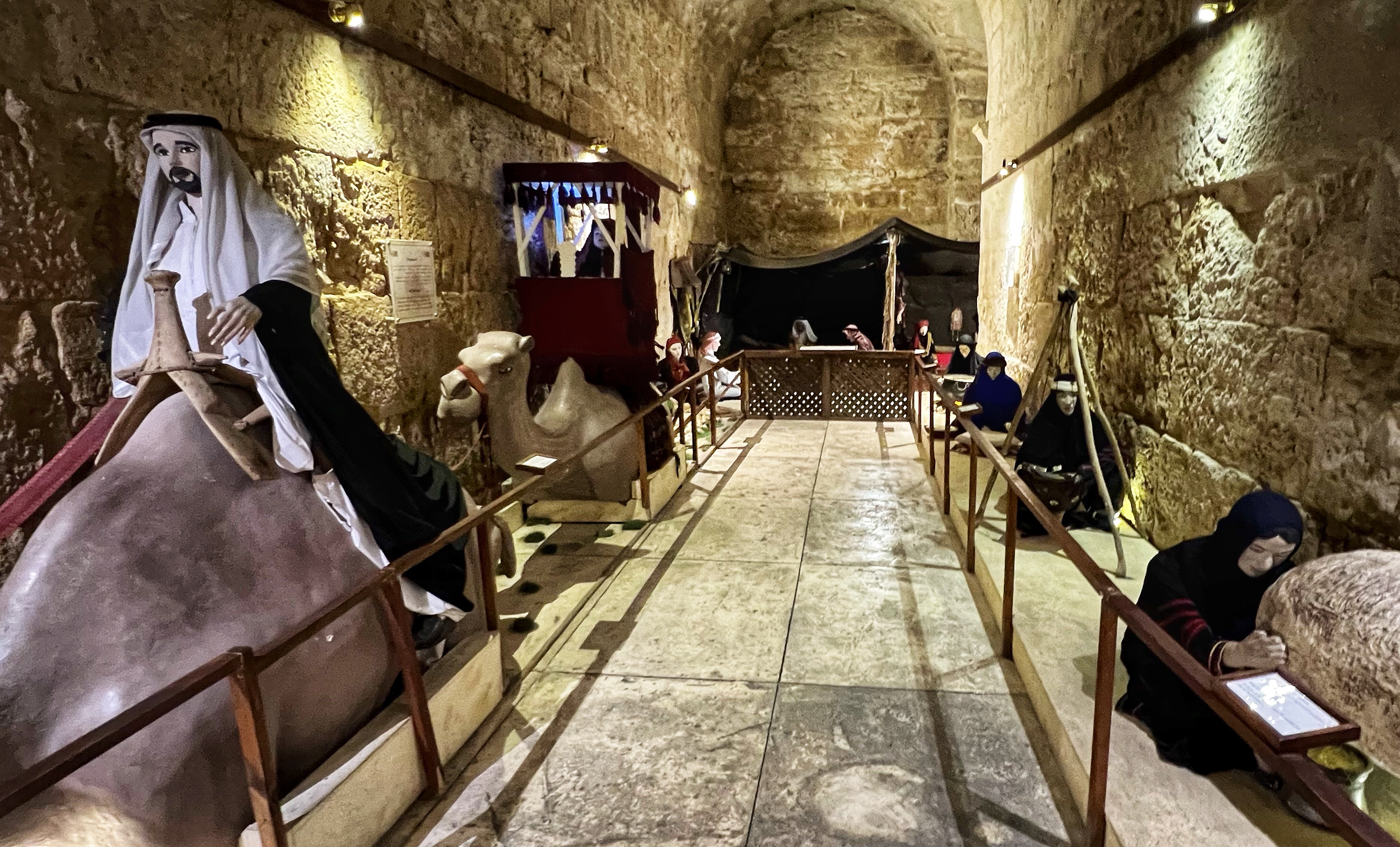
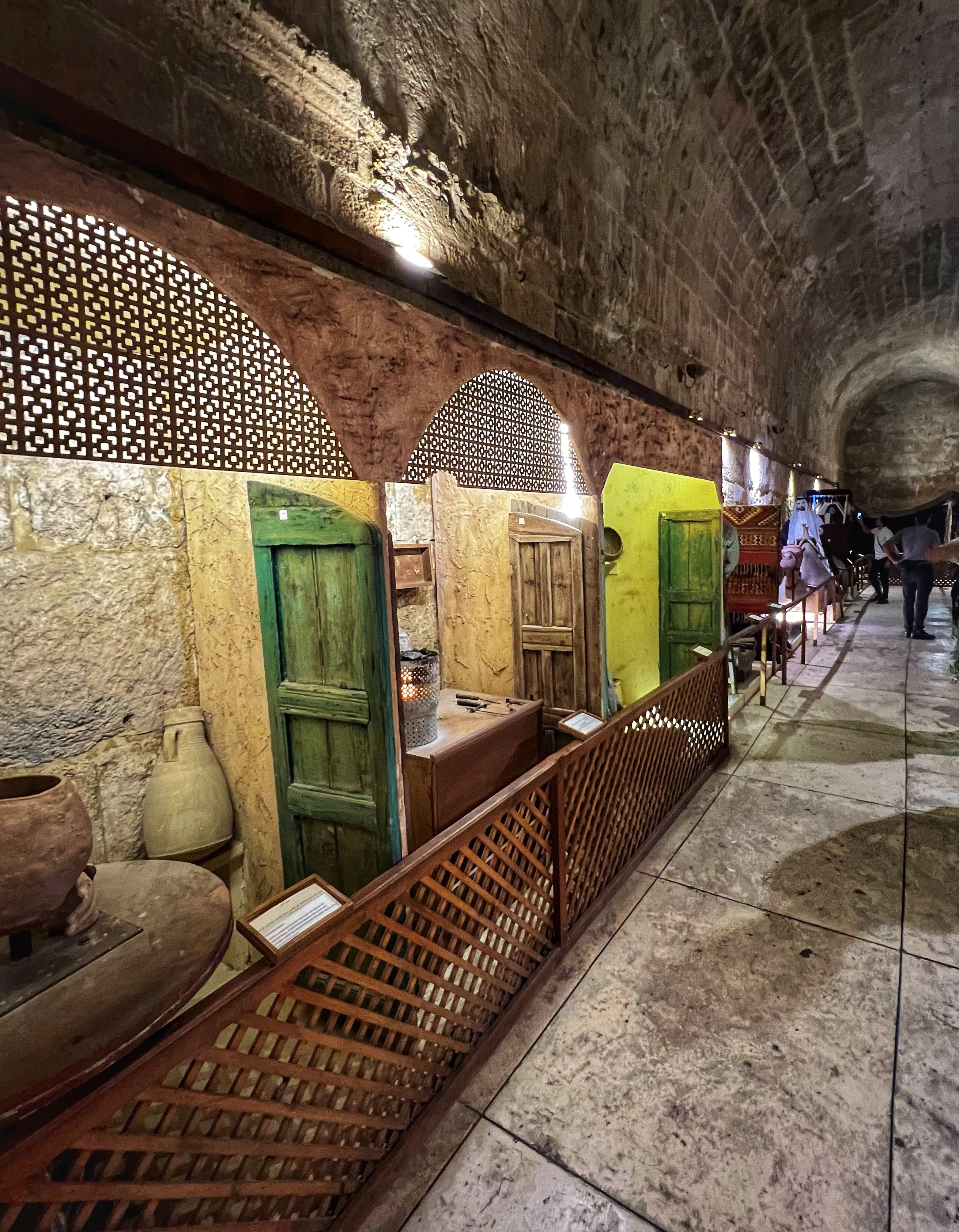
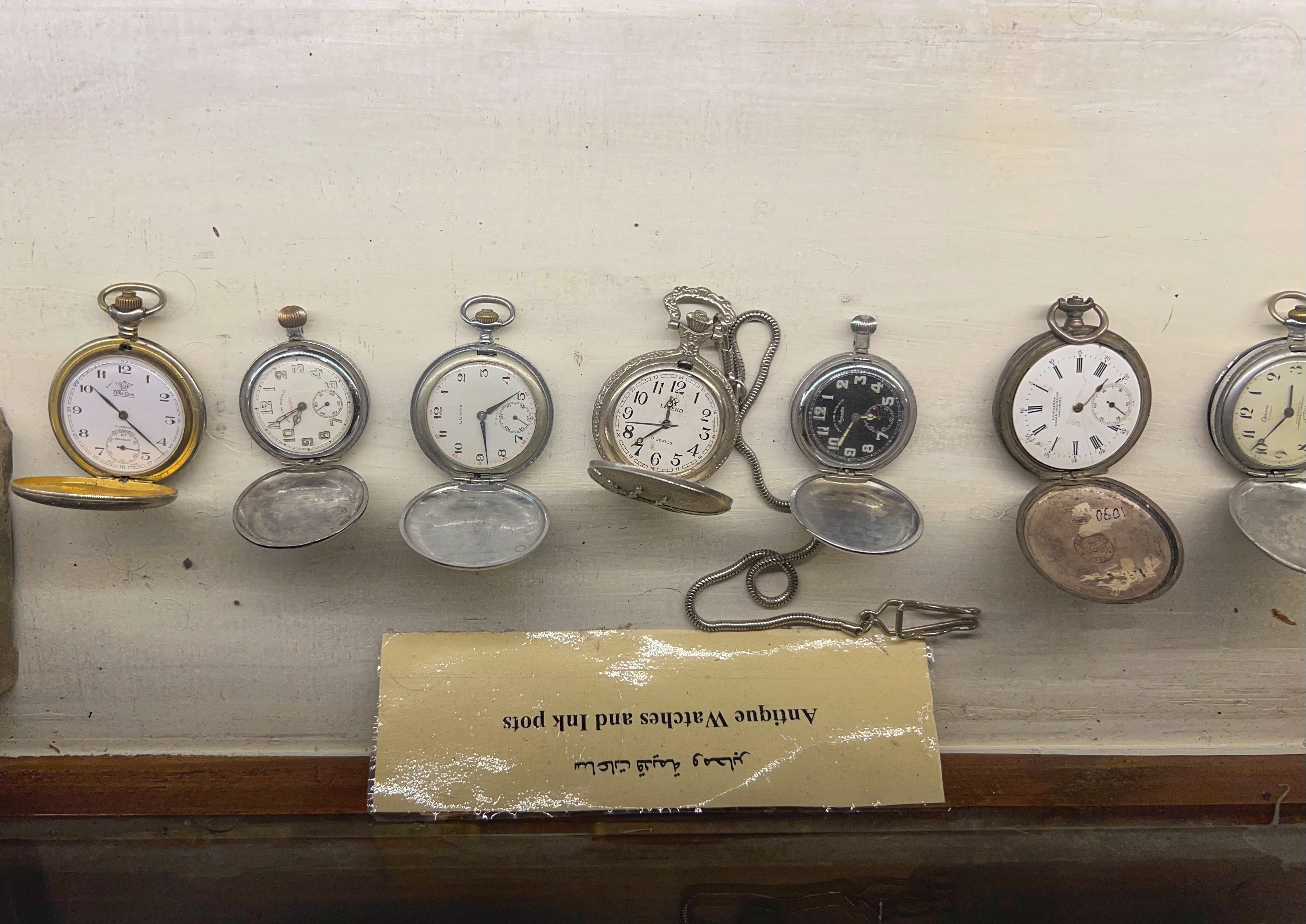
Inside the museums of folklore and popular traditions we viewed exhibits on customs, clothing, artwork, jewelry, weapons and other memorabilia. It’s just a quick stop, and worth peeking in when you’re at the Roman Theater. It also gives you a good idea of where the ancient performers prepared for their concerts “backstage.”
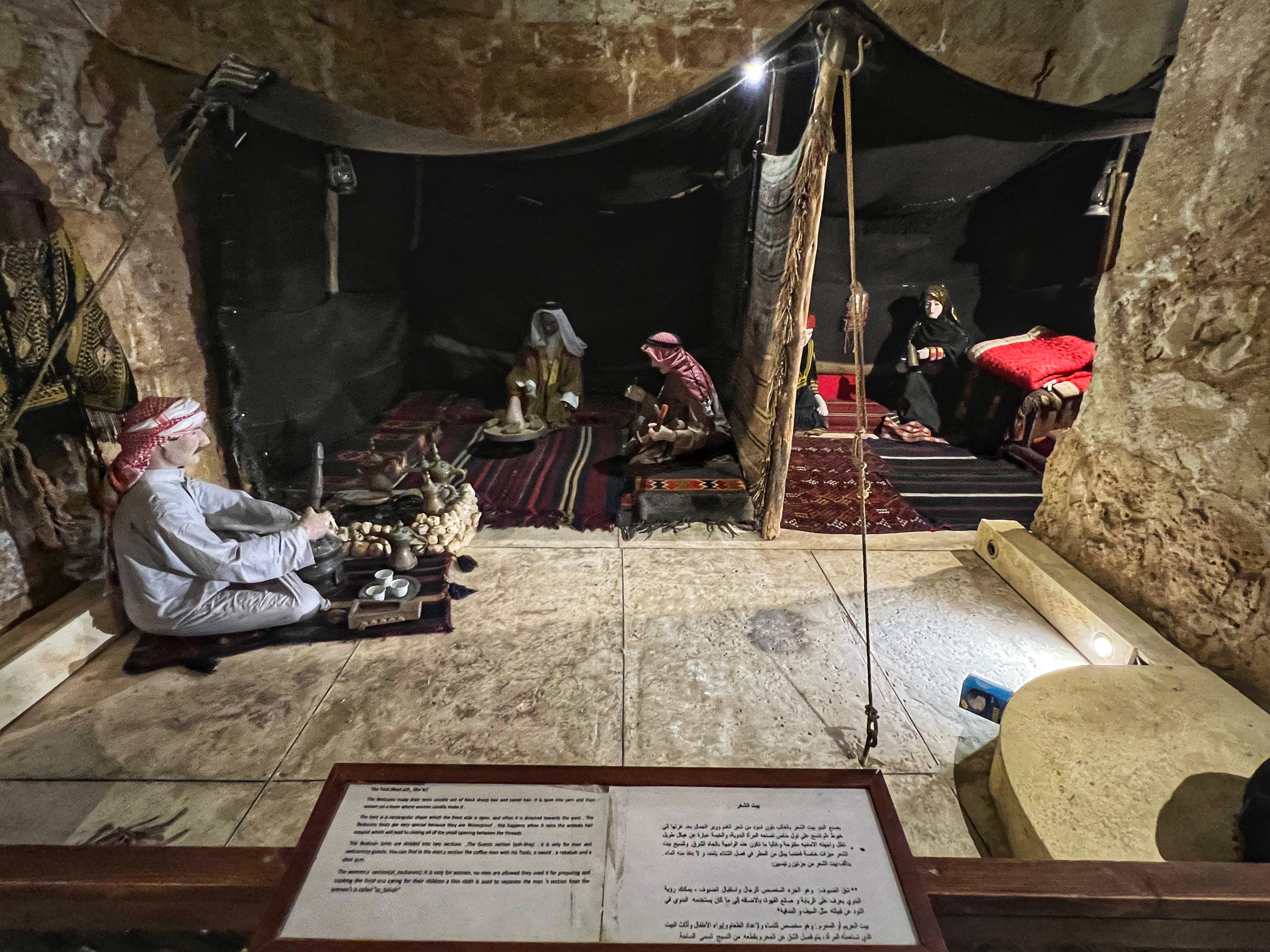

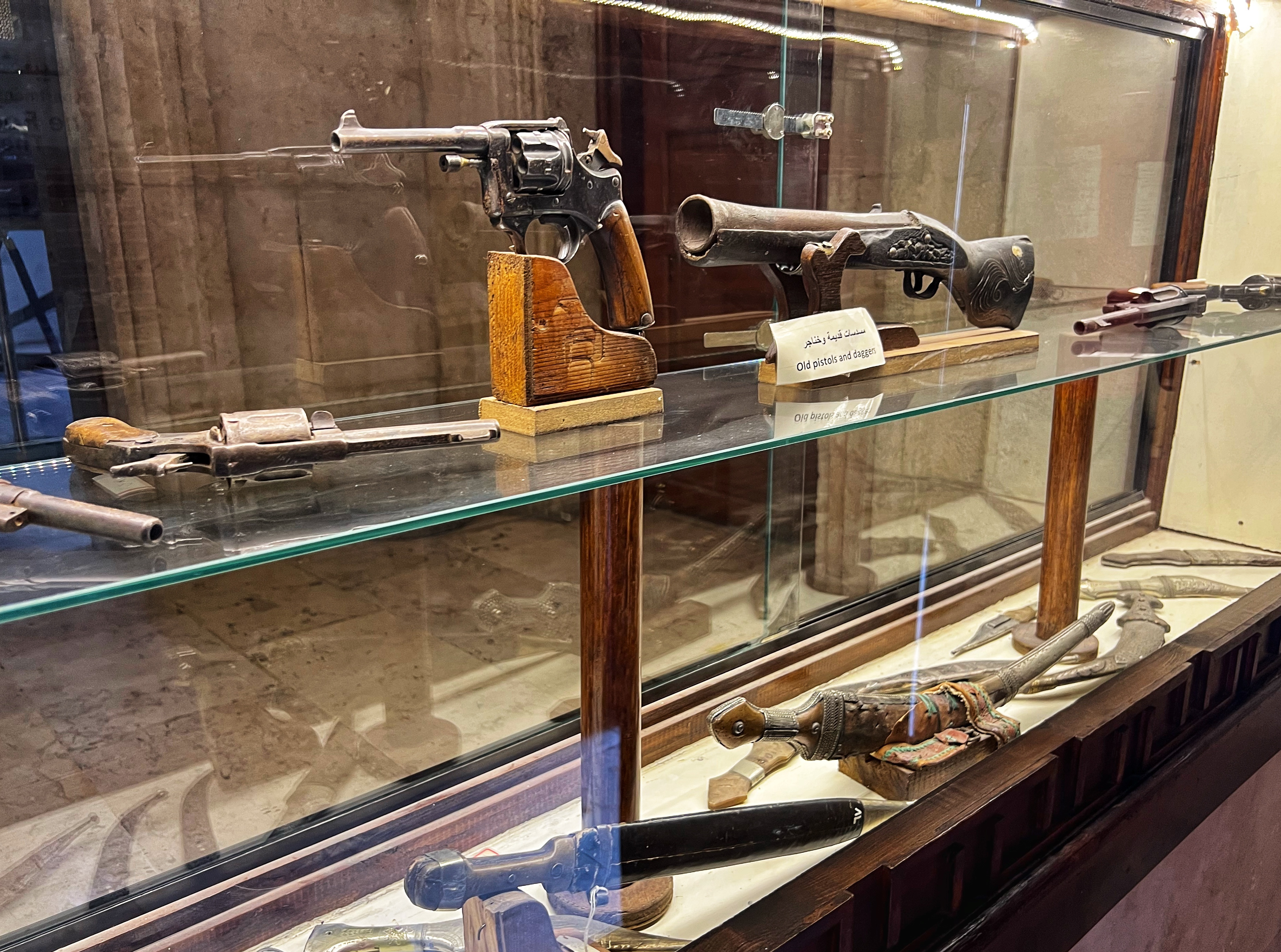
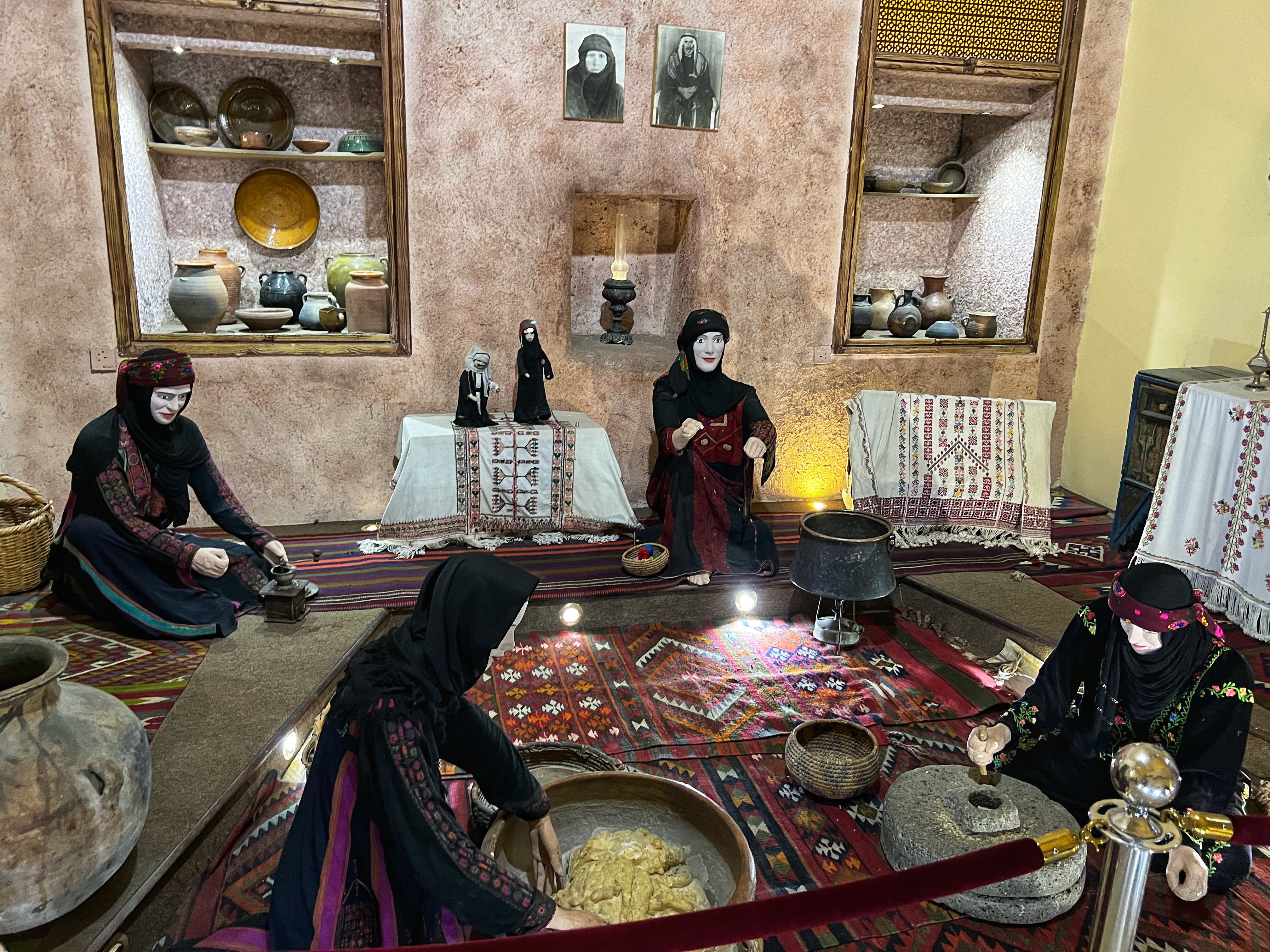
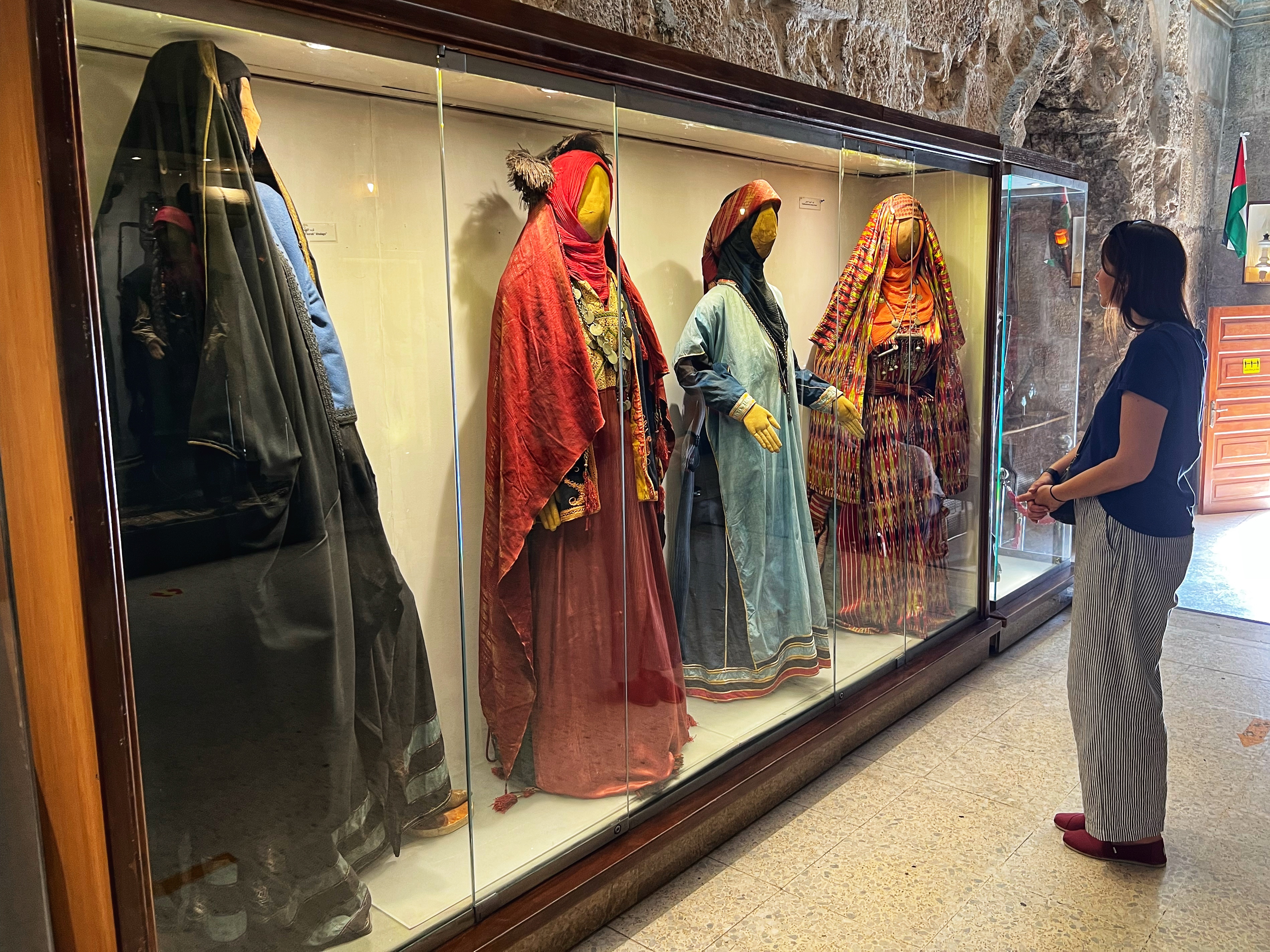
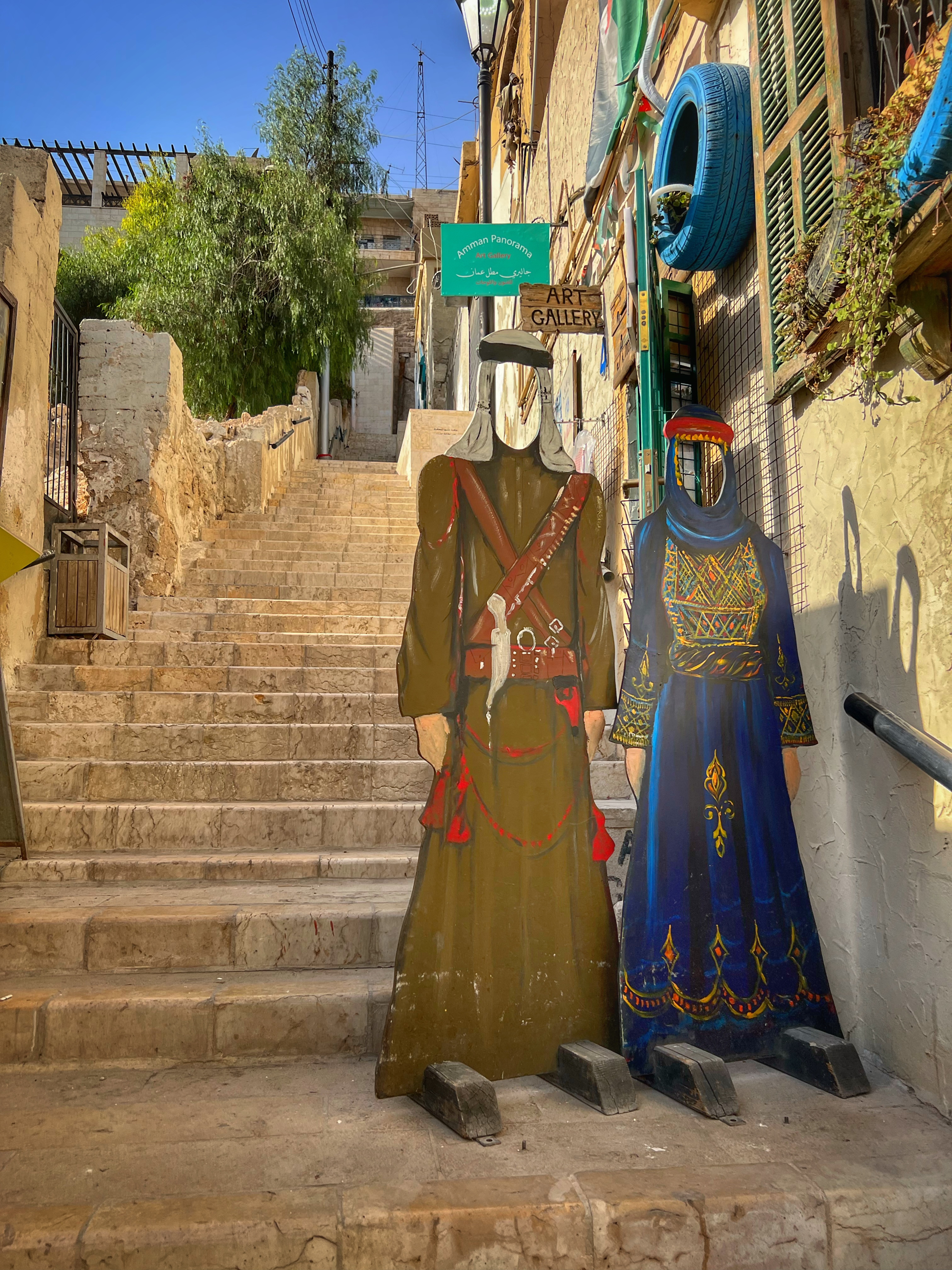
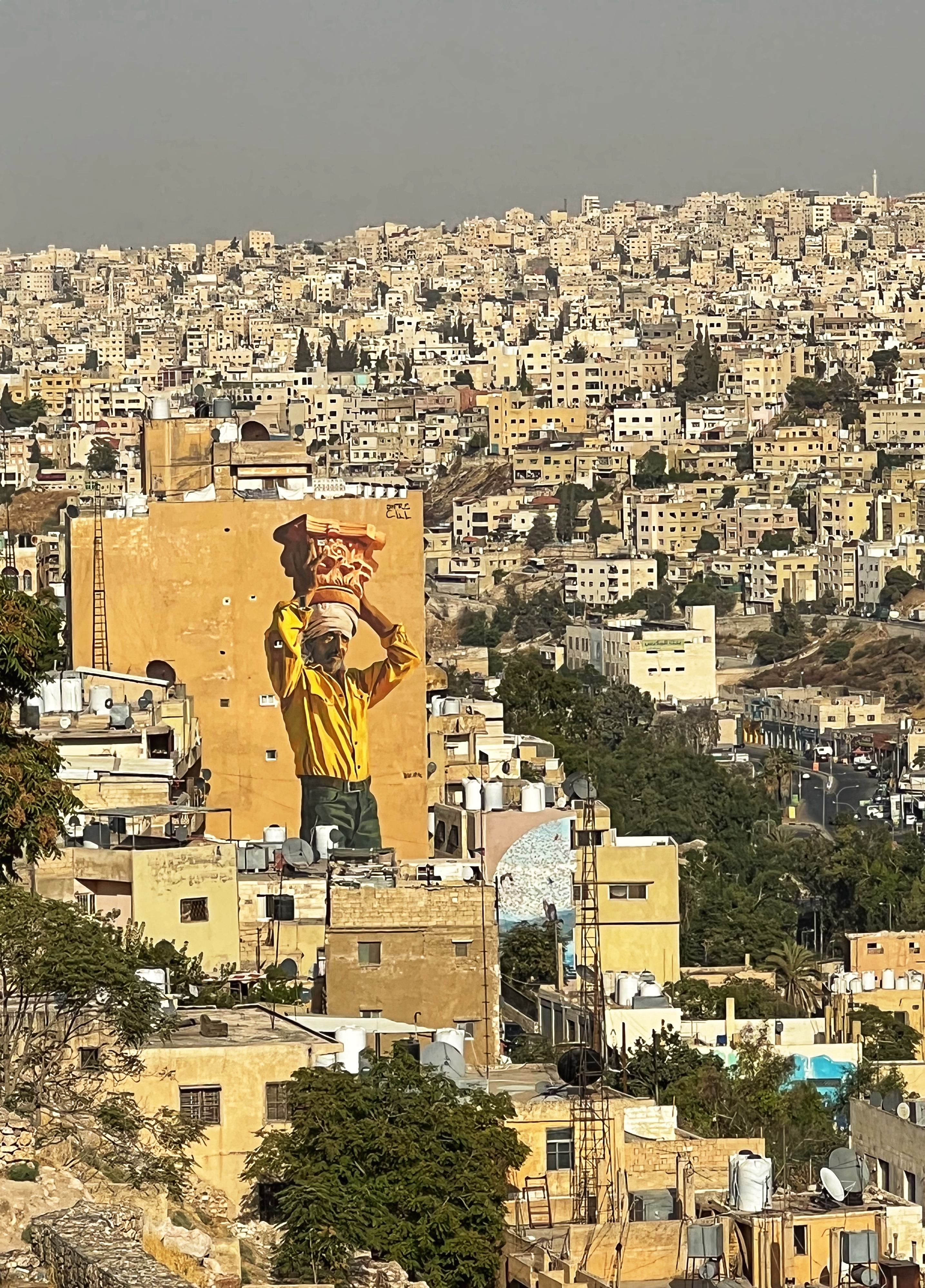
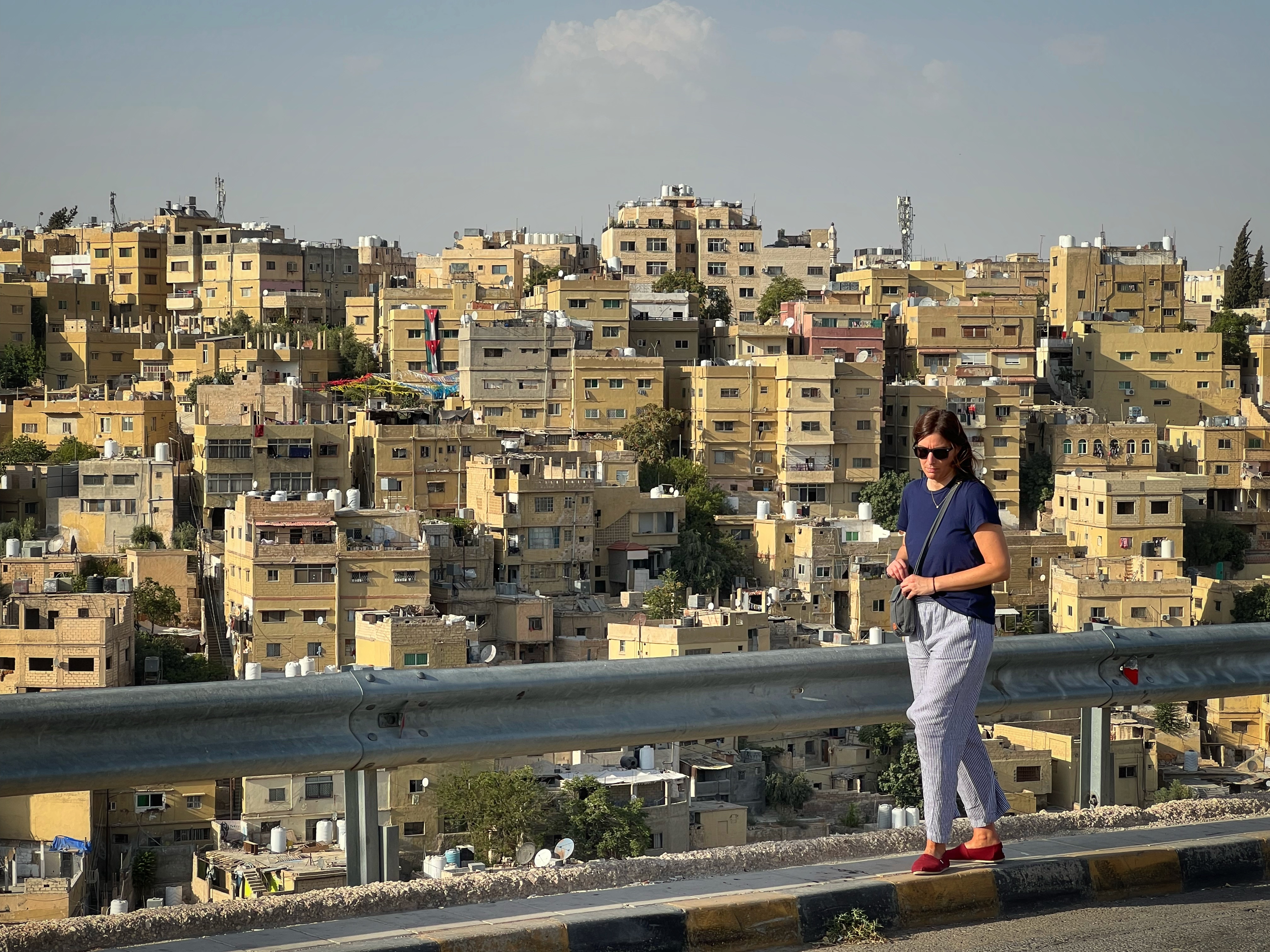
From there we attempted to GPS our way up to the Citadel but google was telling us it would take 25 minutes, and we had better luck just guessing. We noticed a set of stairs that led almost directly up the hill (look up Amman Panorama Art Gallery and keep walking up) and decided to give it a shot. Sure enough, we made it to the top in less than 10 minutes – after a quick stop at the art gallery of course…


Amman Citadel
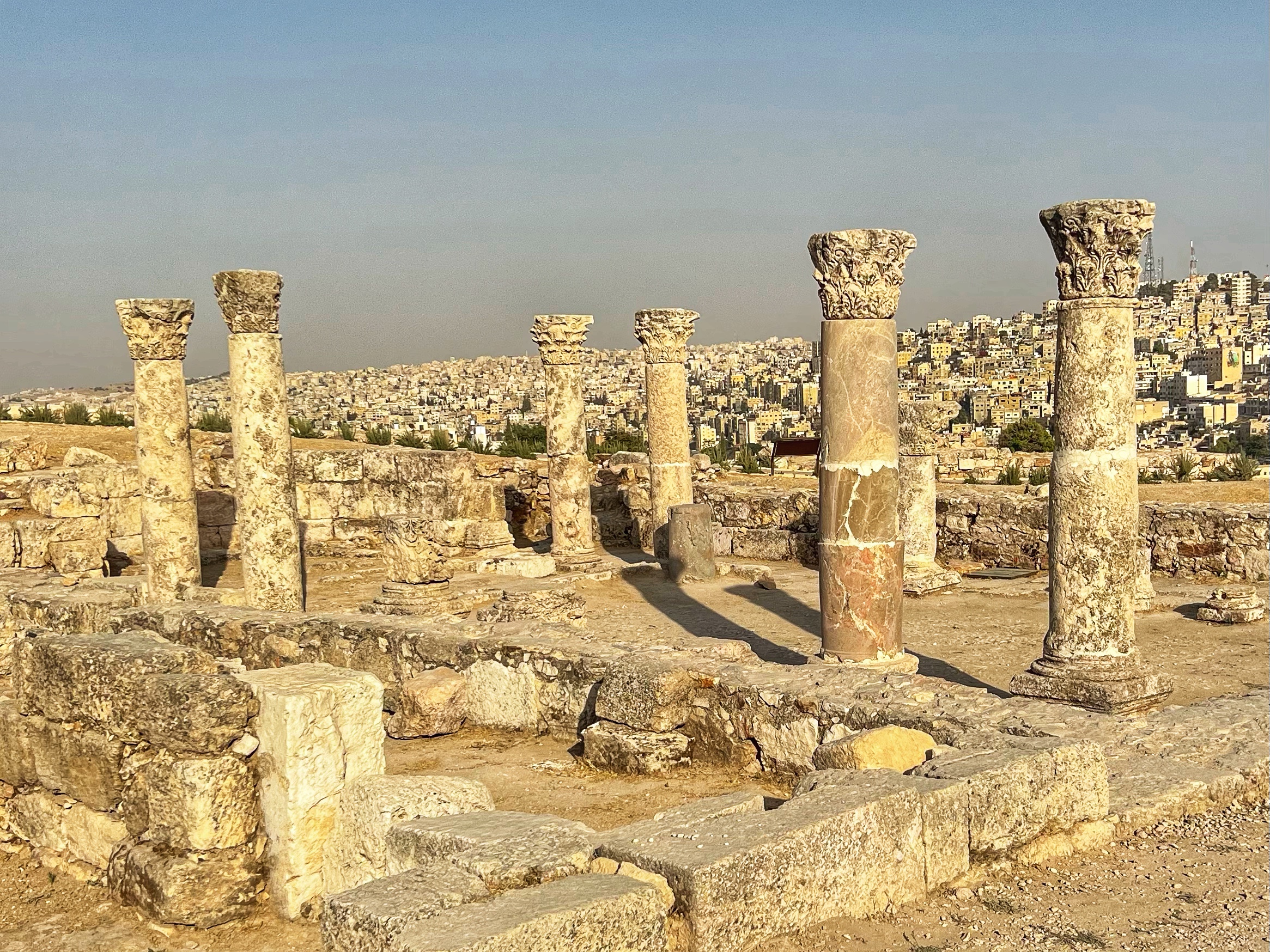
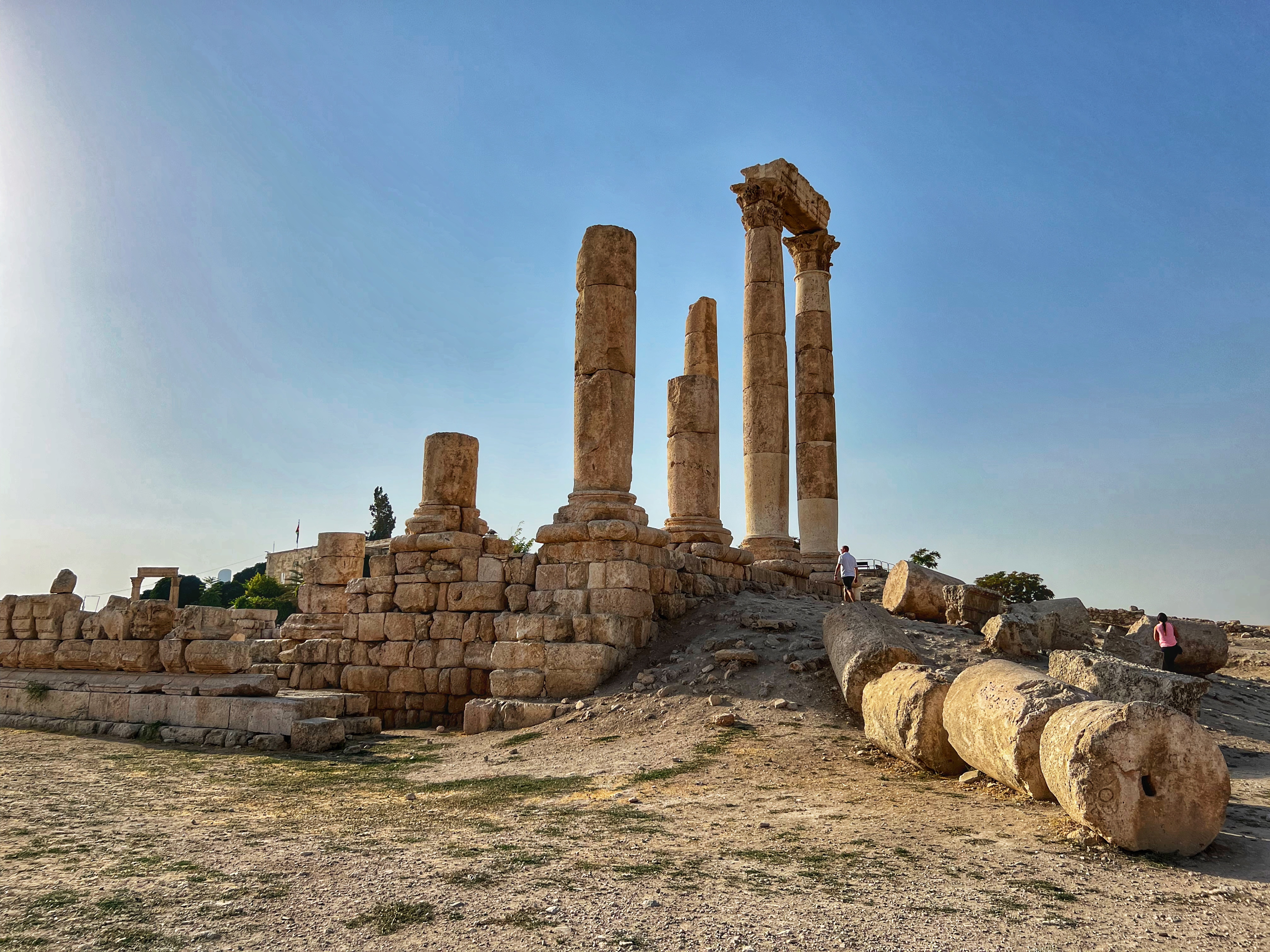
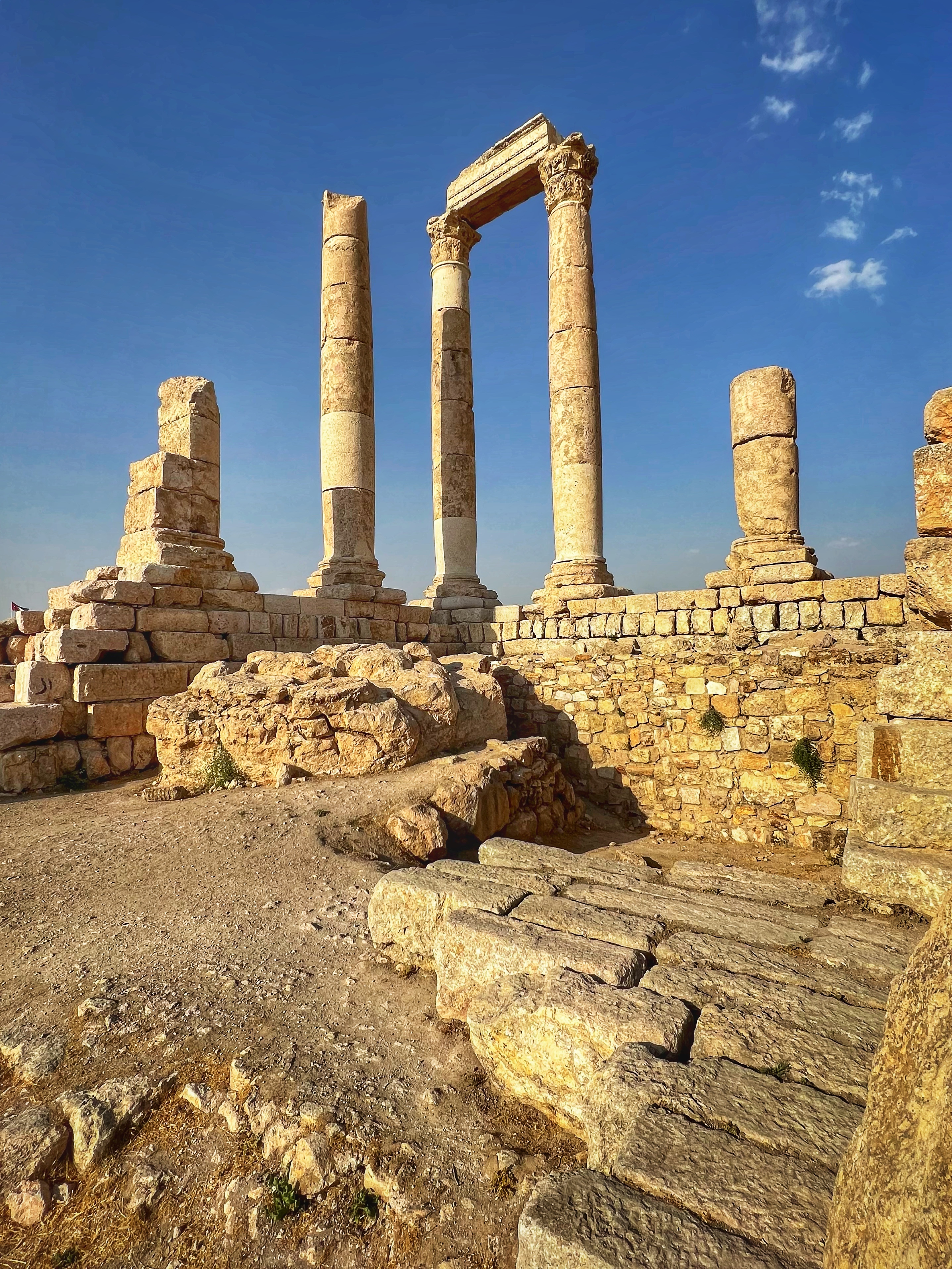
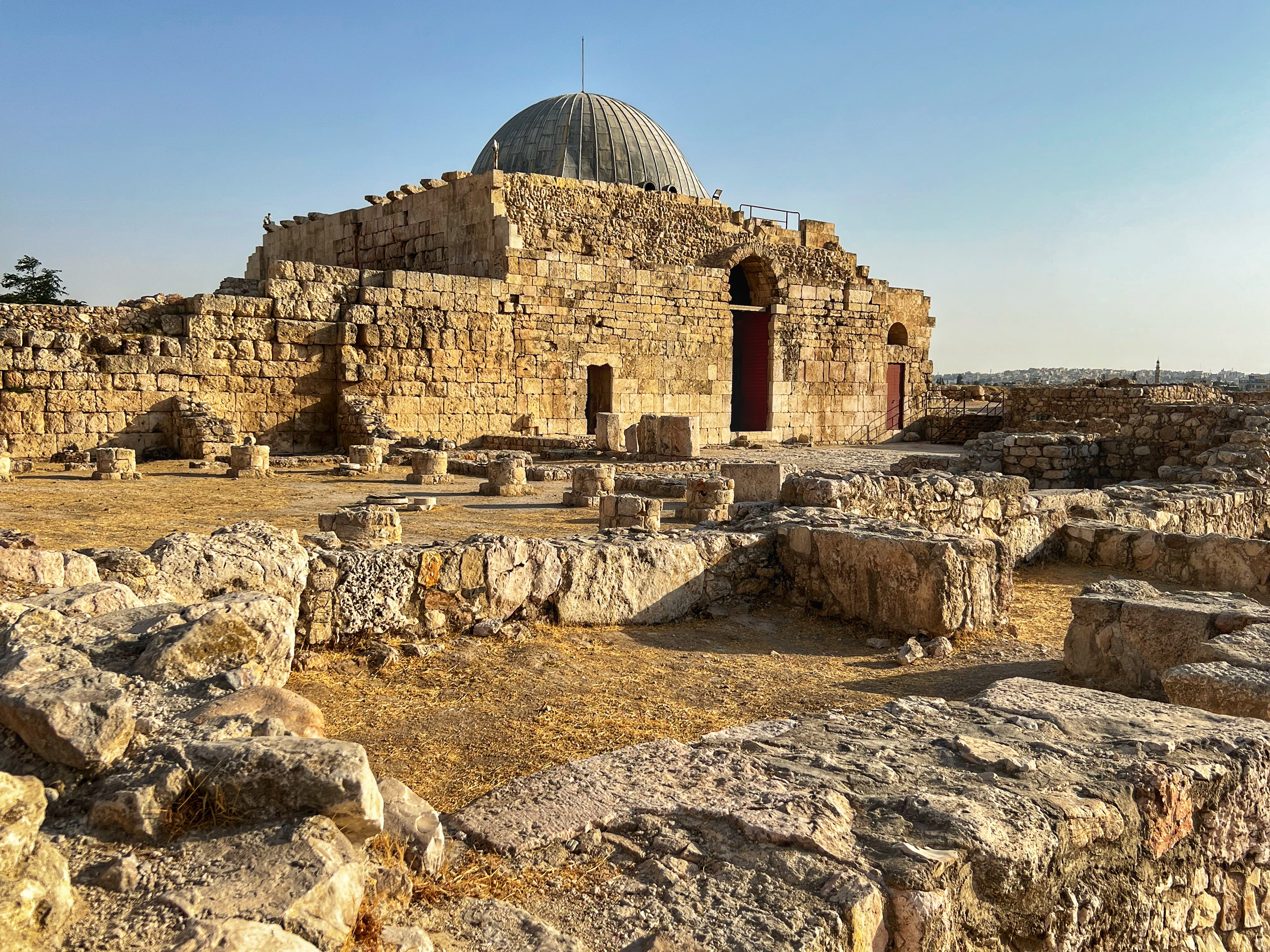
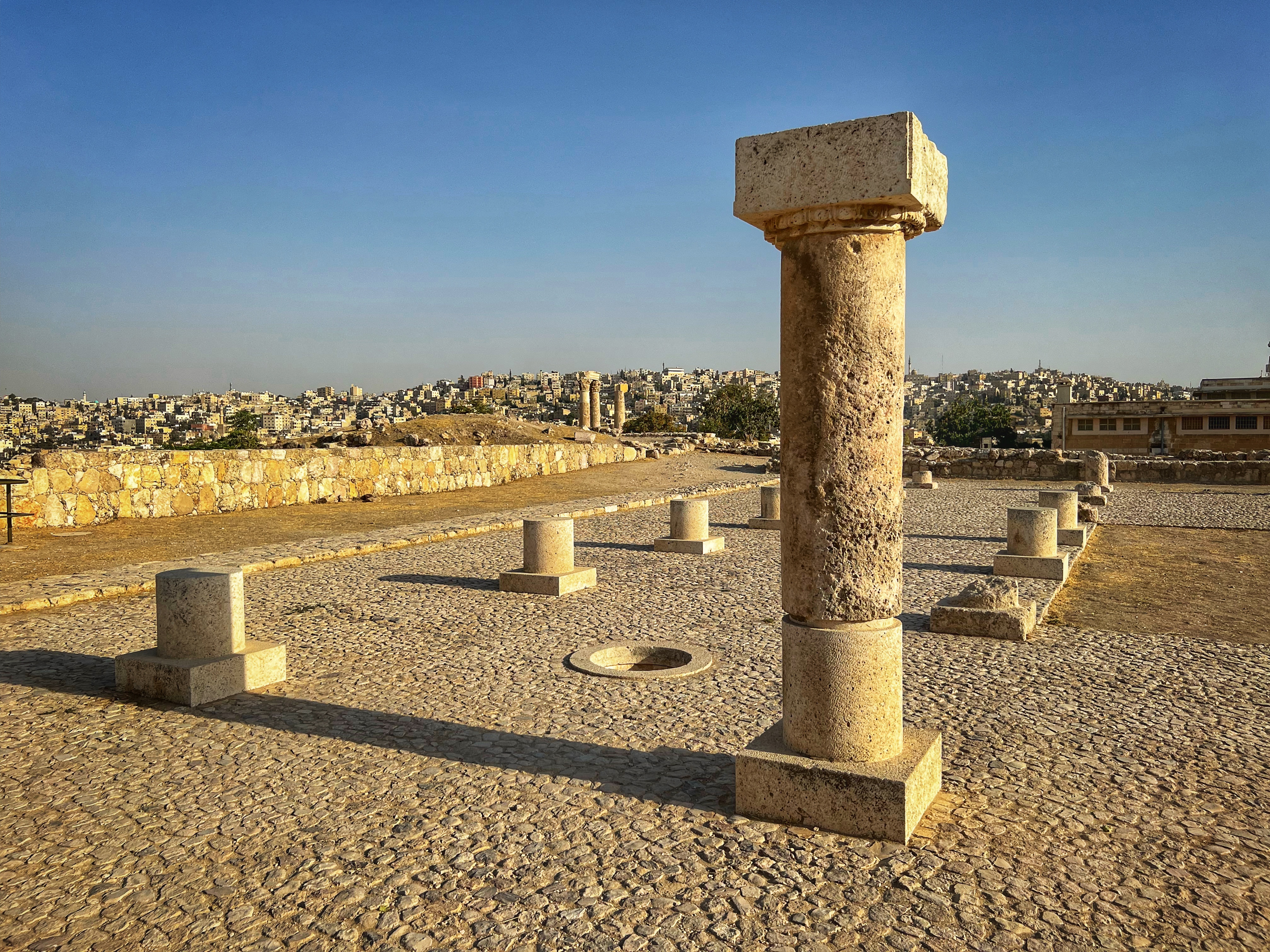
The views from the Amman Citadel are beautiful. We were there around 5PM so we weren’t able to visit the Jordan Archaeological Museum (closes 4PM) but we would’ve loved to. Again we showed our Jordan Pass to enter the complex and were free to wander around and even climb on the ruins. We saw plenty of people doing this for photo ops (we did not do this). The city of Amman was originally made up of seven hills. Similar to Rome, the temples and fortresses were typically built on these hills, and the Citadel sits atop one of those seven hills.
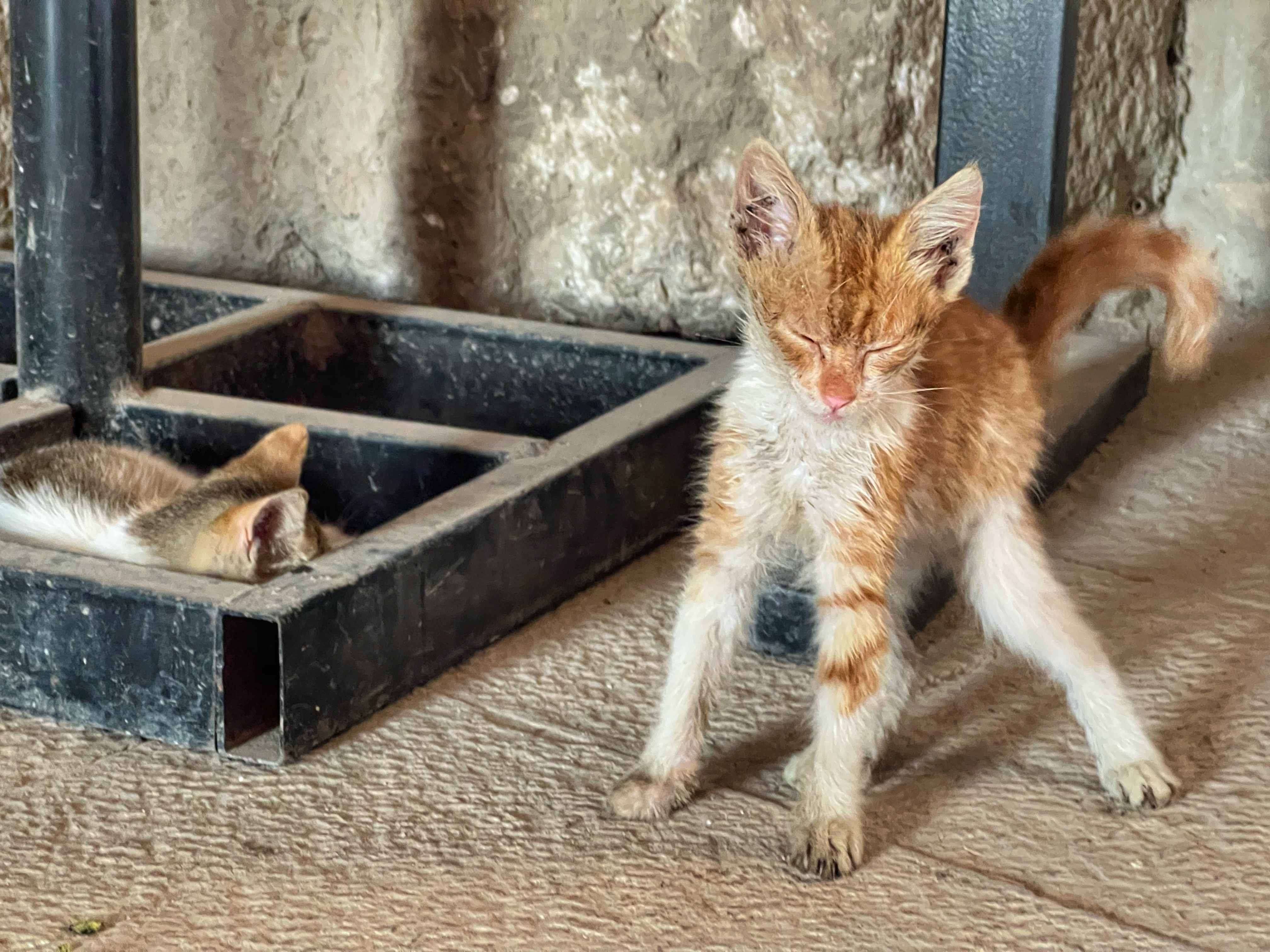
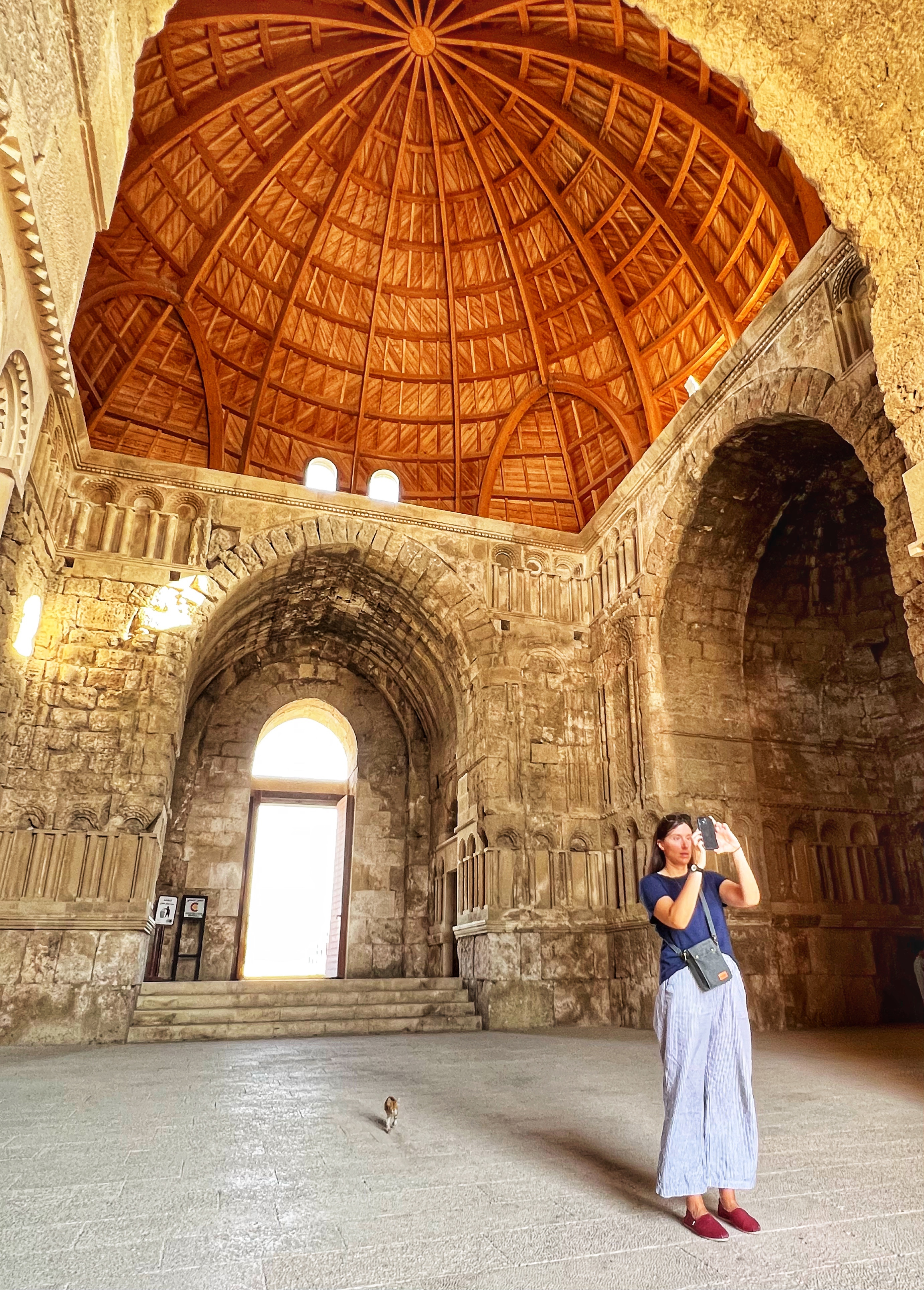
There is evidence of inhabitants in Amman from the Neolithic (10,000 yrs ago) and Bronze (1800 yrs ago) ages but ruins visible today are from the Roman (30 BC), Byzantine (200 AD) and Umayyad (661 AD) periods. In the stone above you can see the timeline of civilizations from Umayyad to Ottoman, after which the city went into a period of decline for 300 years. The most important sites to view (below) are the Temple of Hercules, Byzantine Church, and Umayyad Palace. We noticed a few cats here and there throughout the city, but here at the Citadel there were two kittens that made our hearts melt. You can spot lots of little lizards scurrying around the ruins as well!


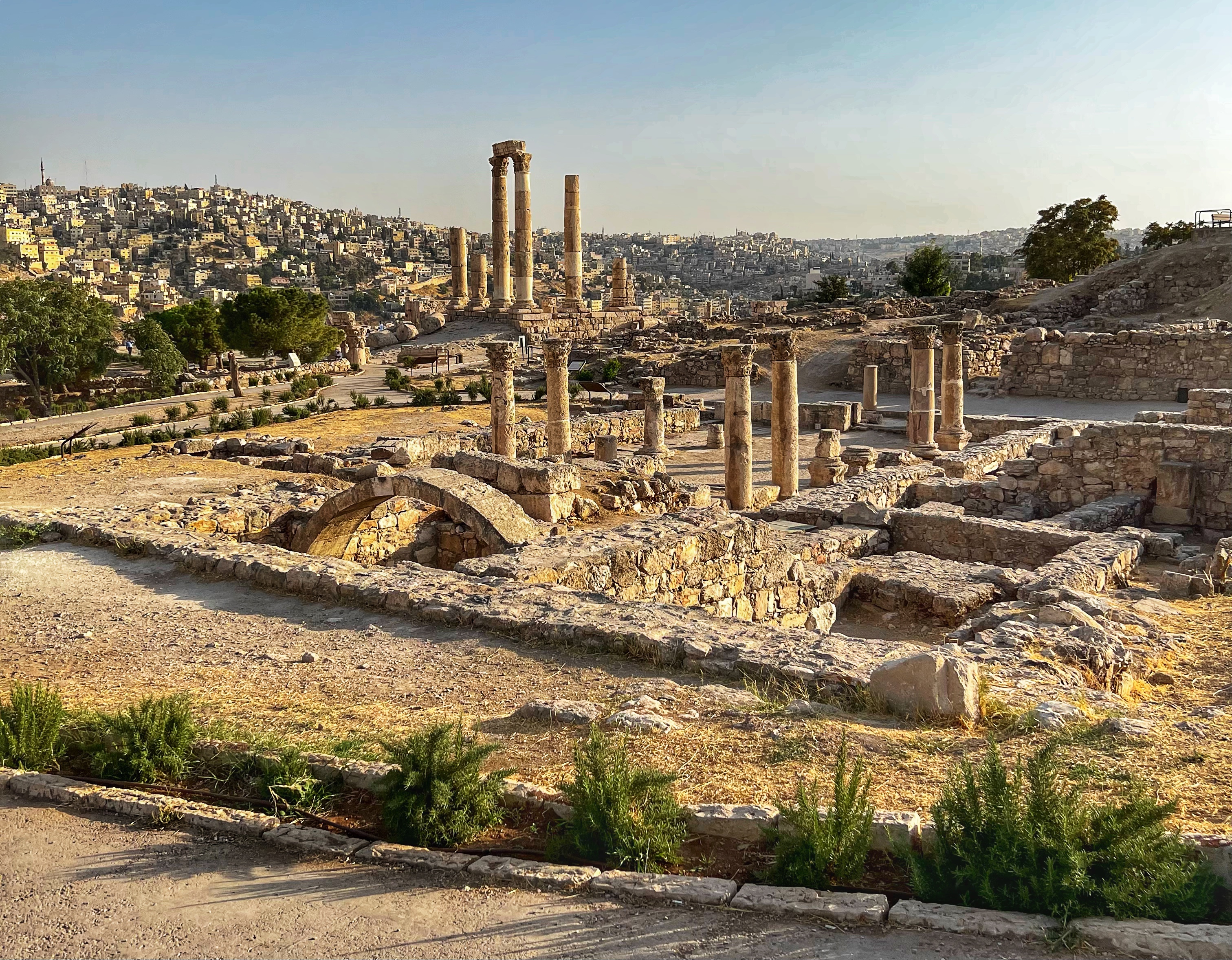
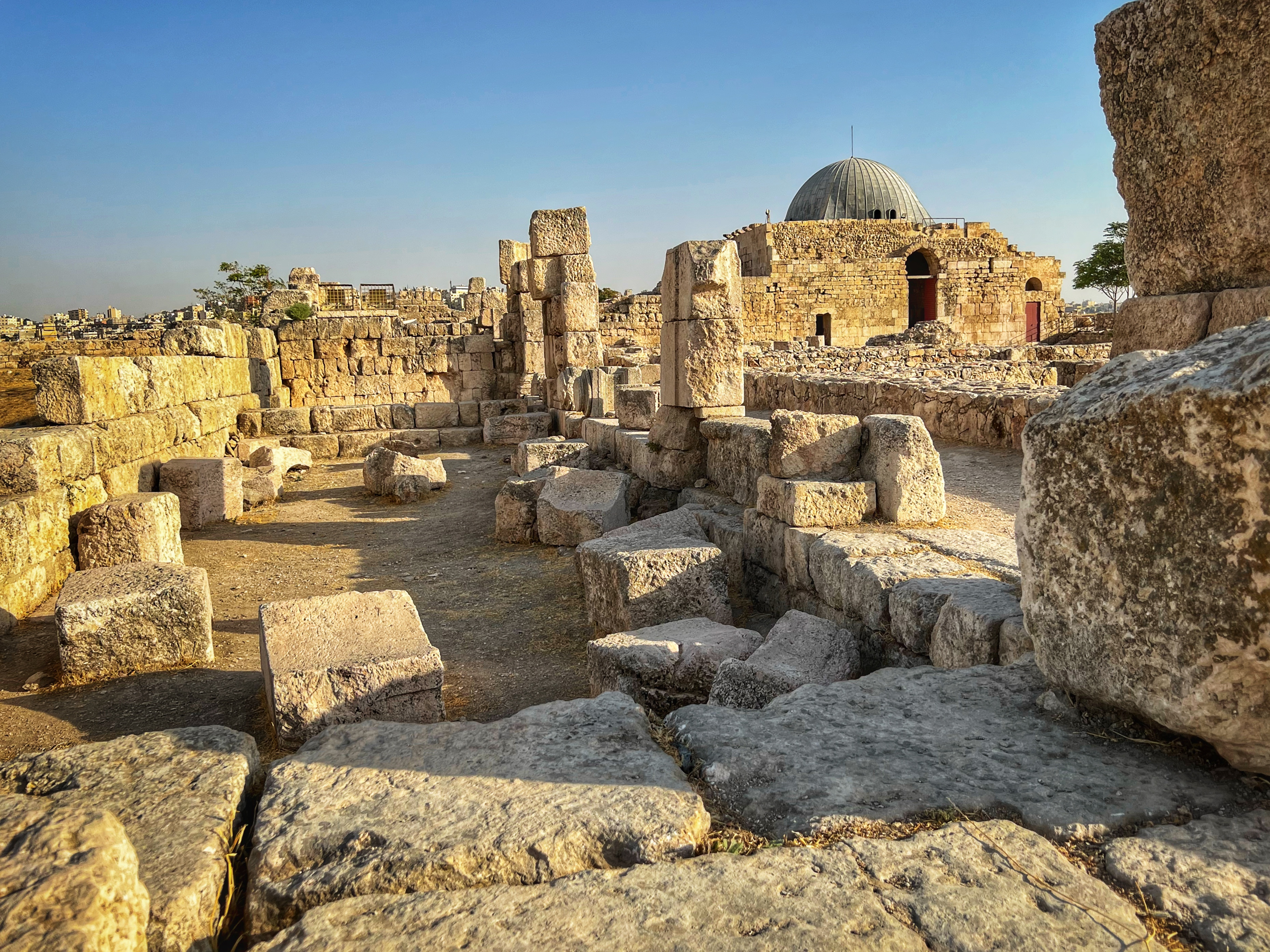


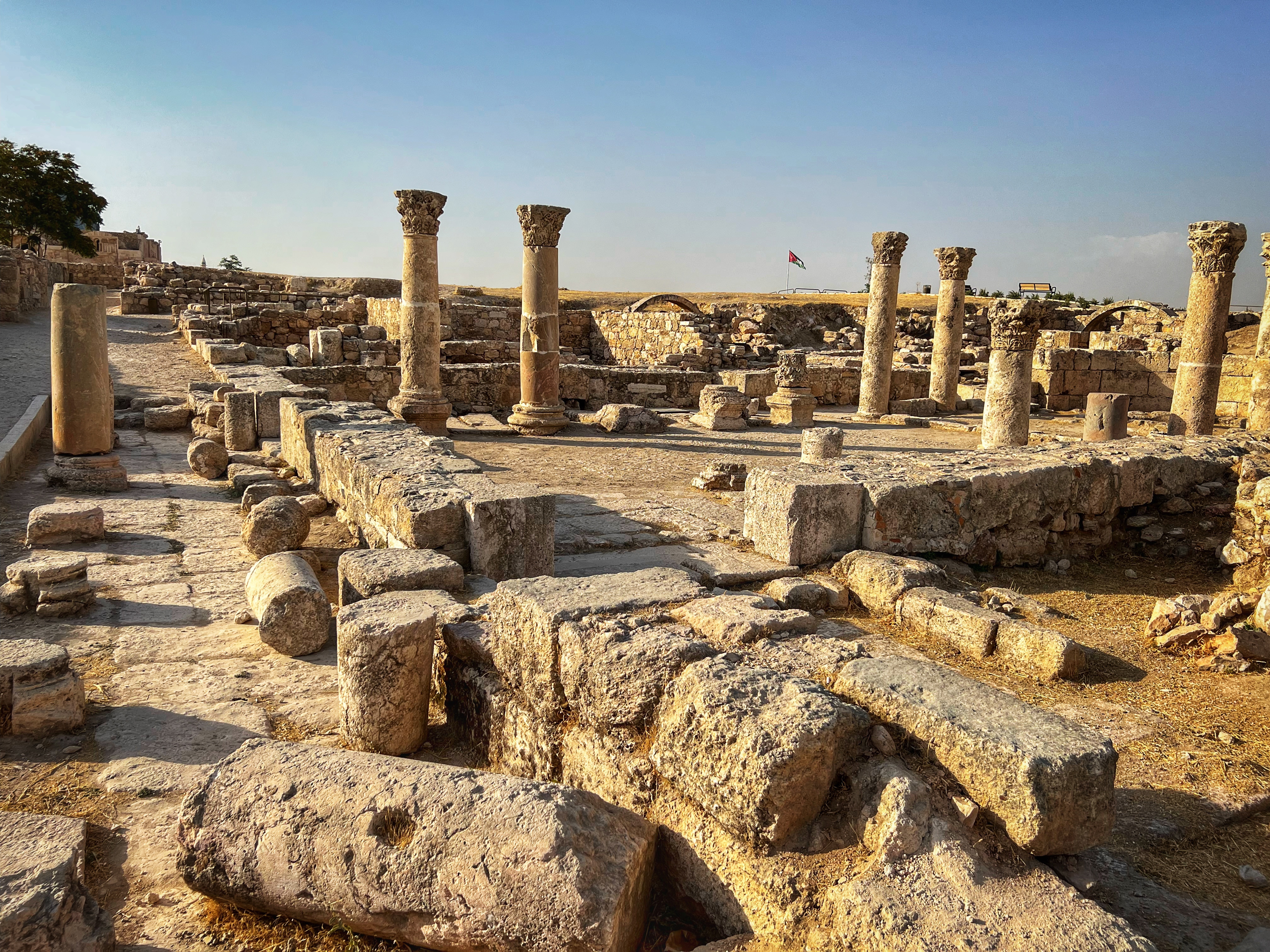
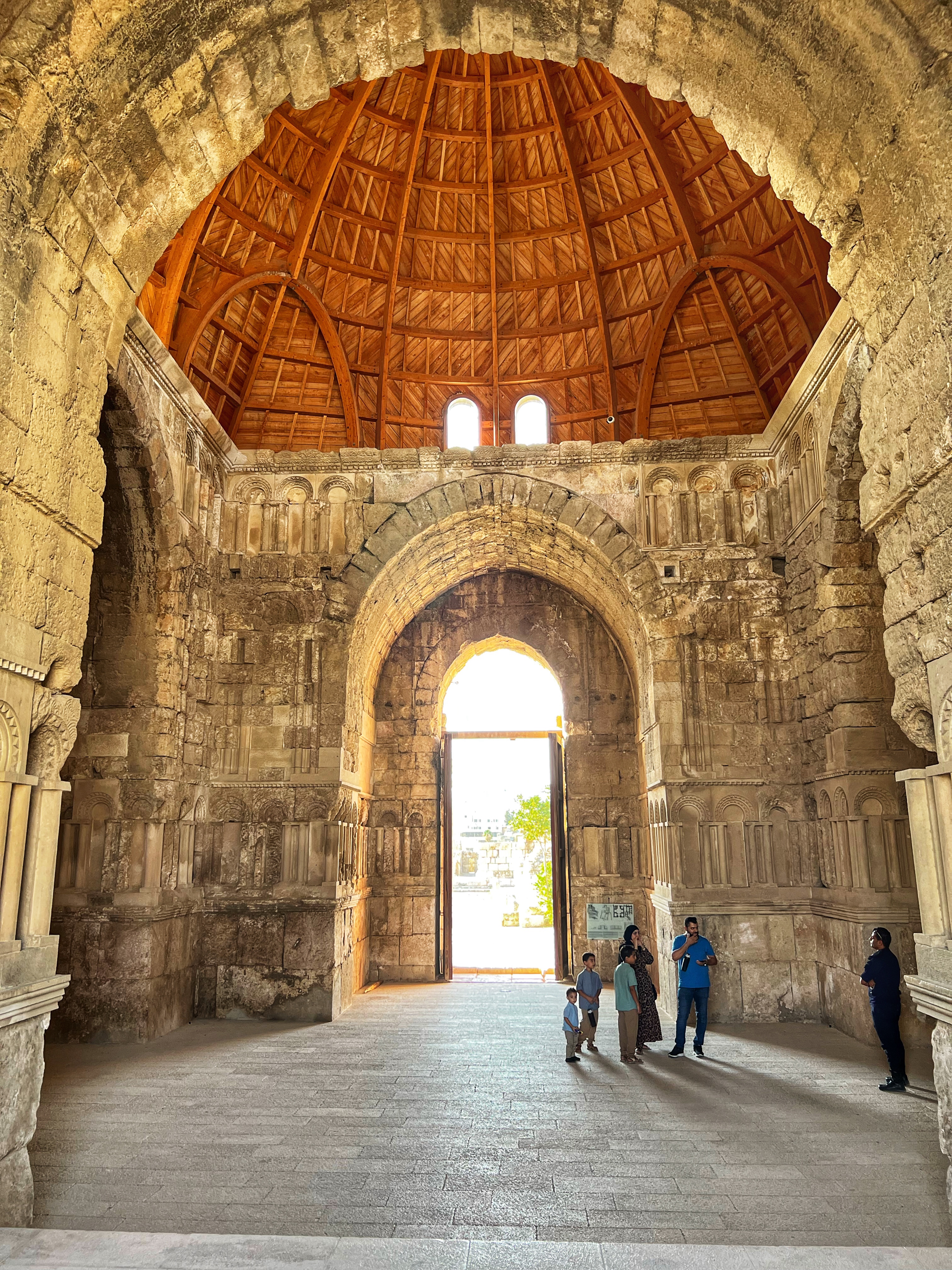
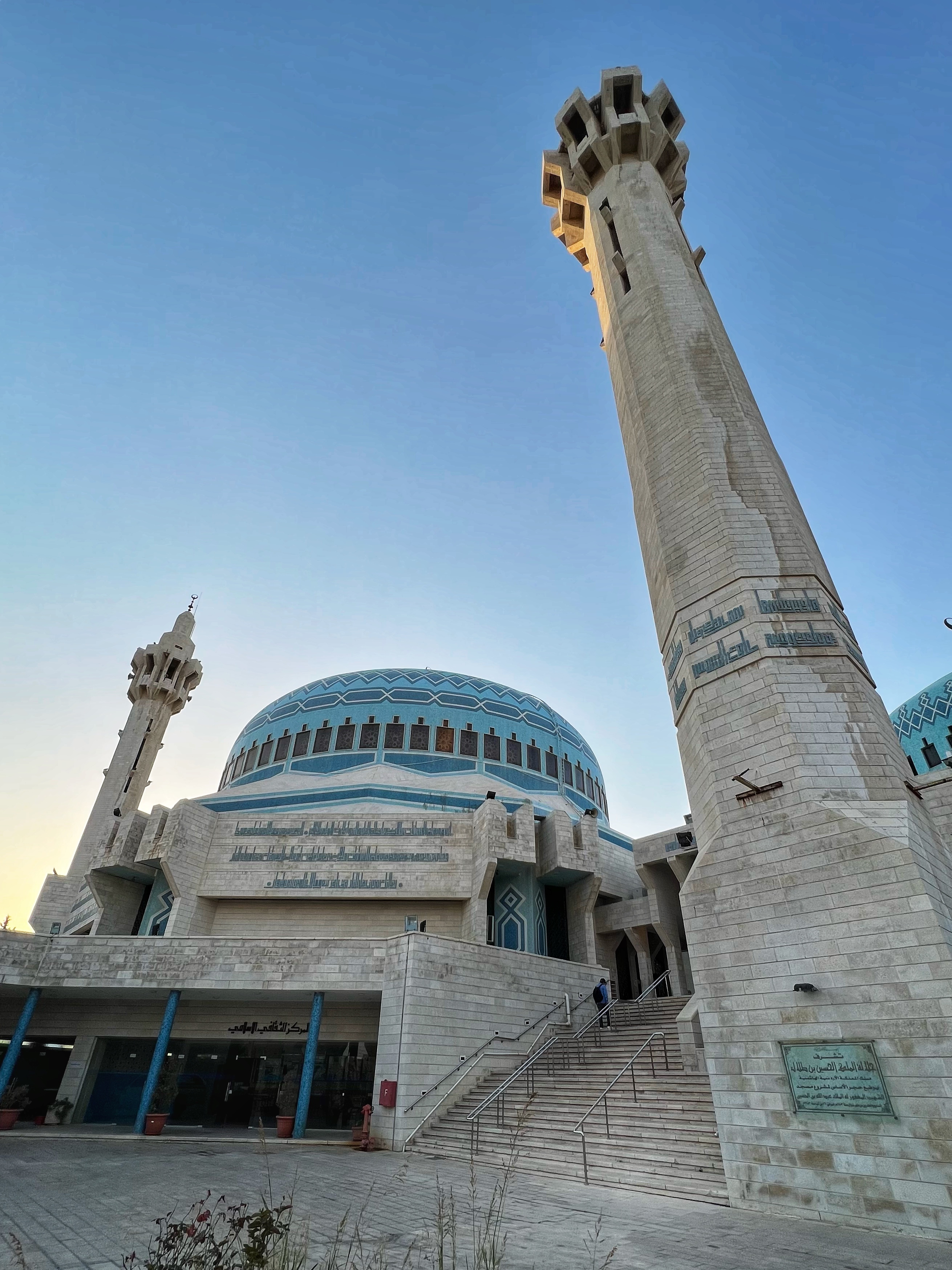
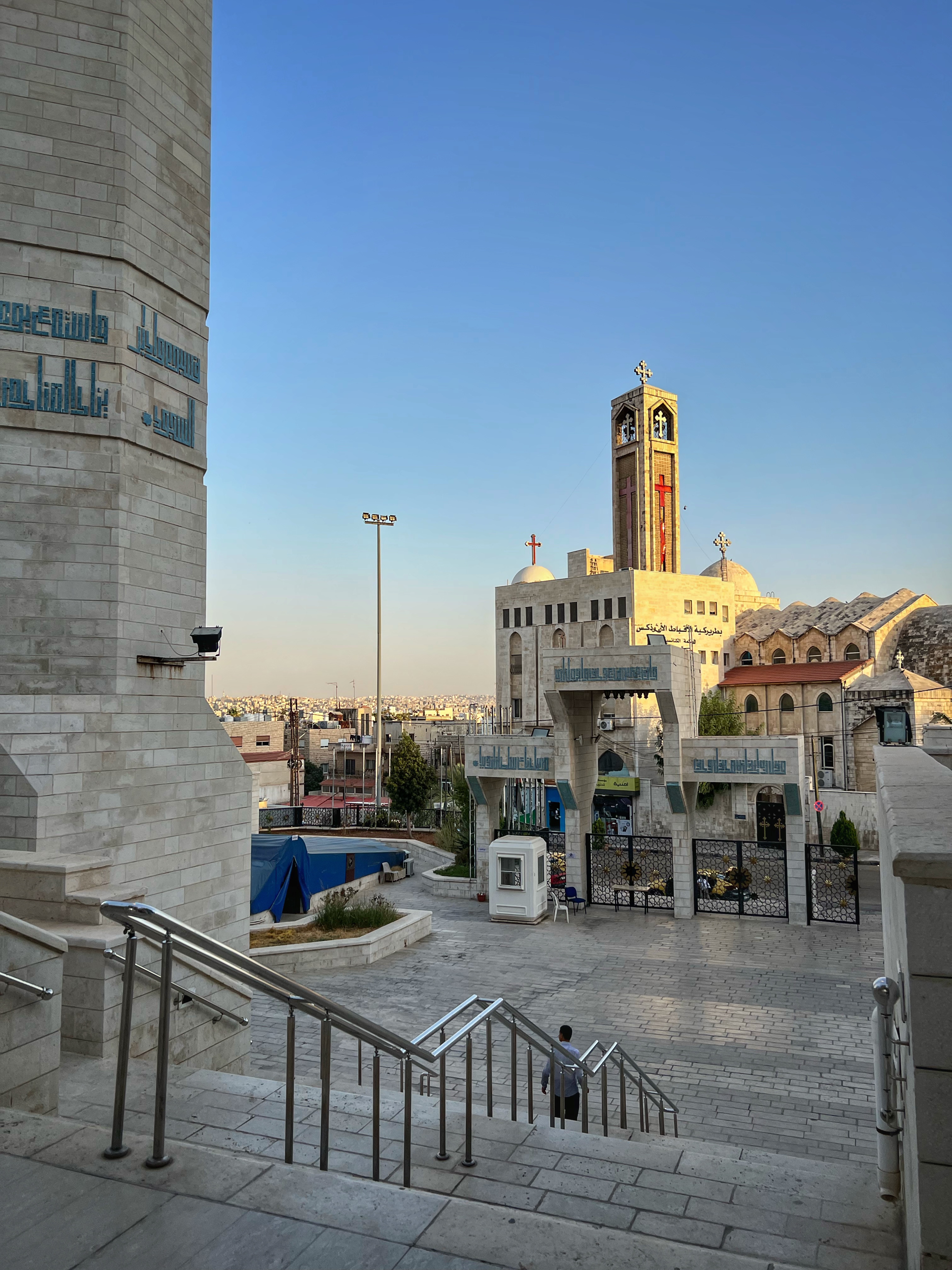
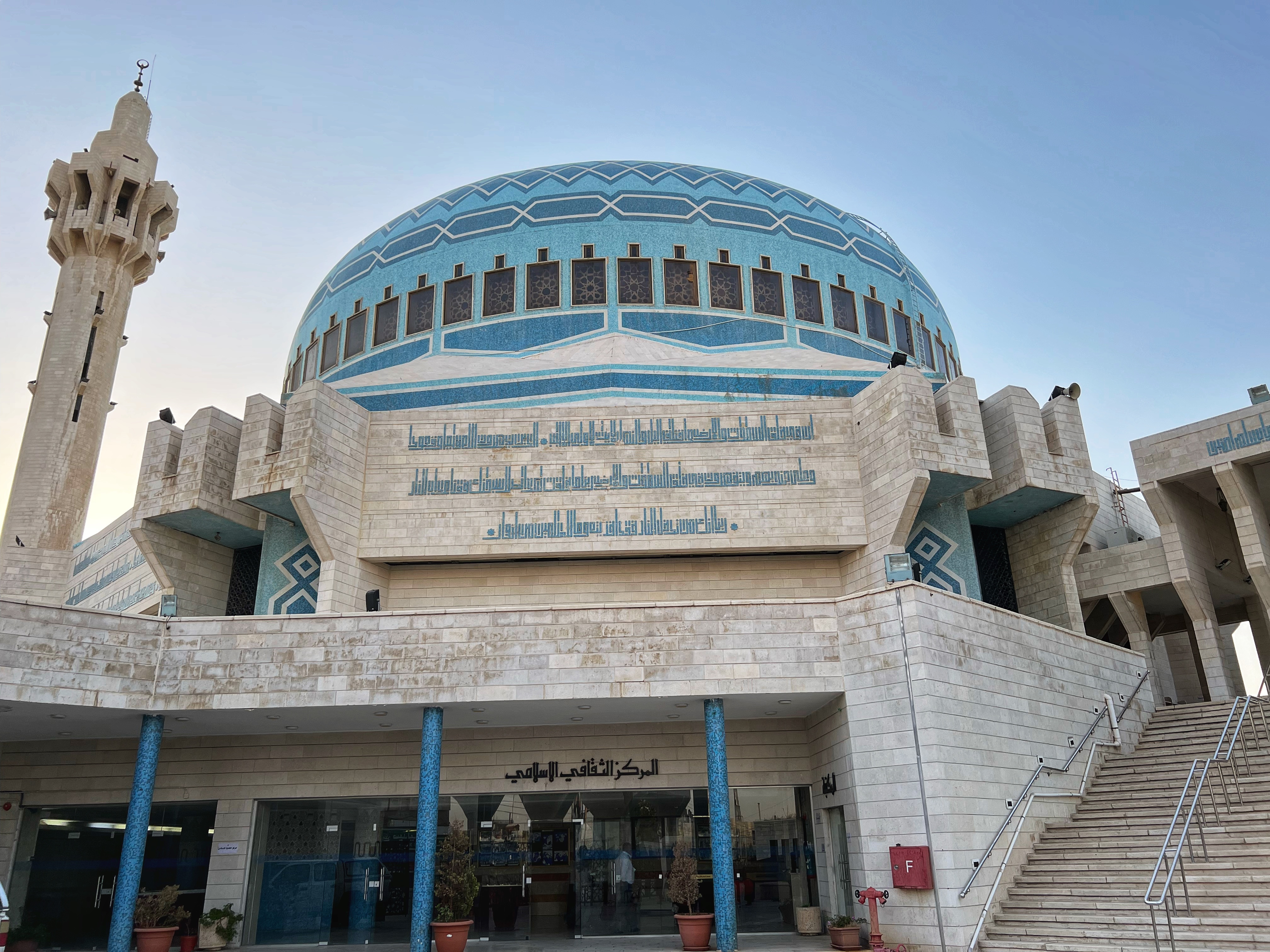
We were both pretty spent after a long travel day and we could feel our pace slowing with the heat even as the sun sank lower, so we decided to get a taxi to dinner. One of the first lessons we learned here in Amman is to know you’re being solicited when you’re being solicited. Right away the taxi driver tried to “sell” us a quick stop at the “blue mosque” and we were frankly too tired to bargain or decline. So, for another 35JD/$50 (way, way too much folks) he whisked us away to the King Abdullah II Mosque downtown. To be clear, we did want to see the mosque and were grateful to have had the opportunity, but right away we saw this was a THING the taxi driver did to tourists, and the little bazaar at the mosque was all part of it.
King Abdullah II Mosque
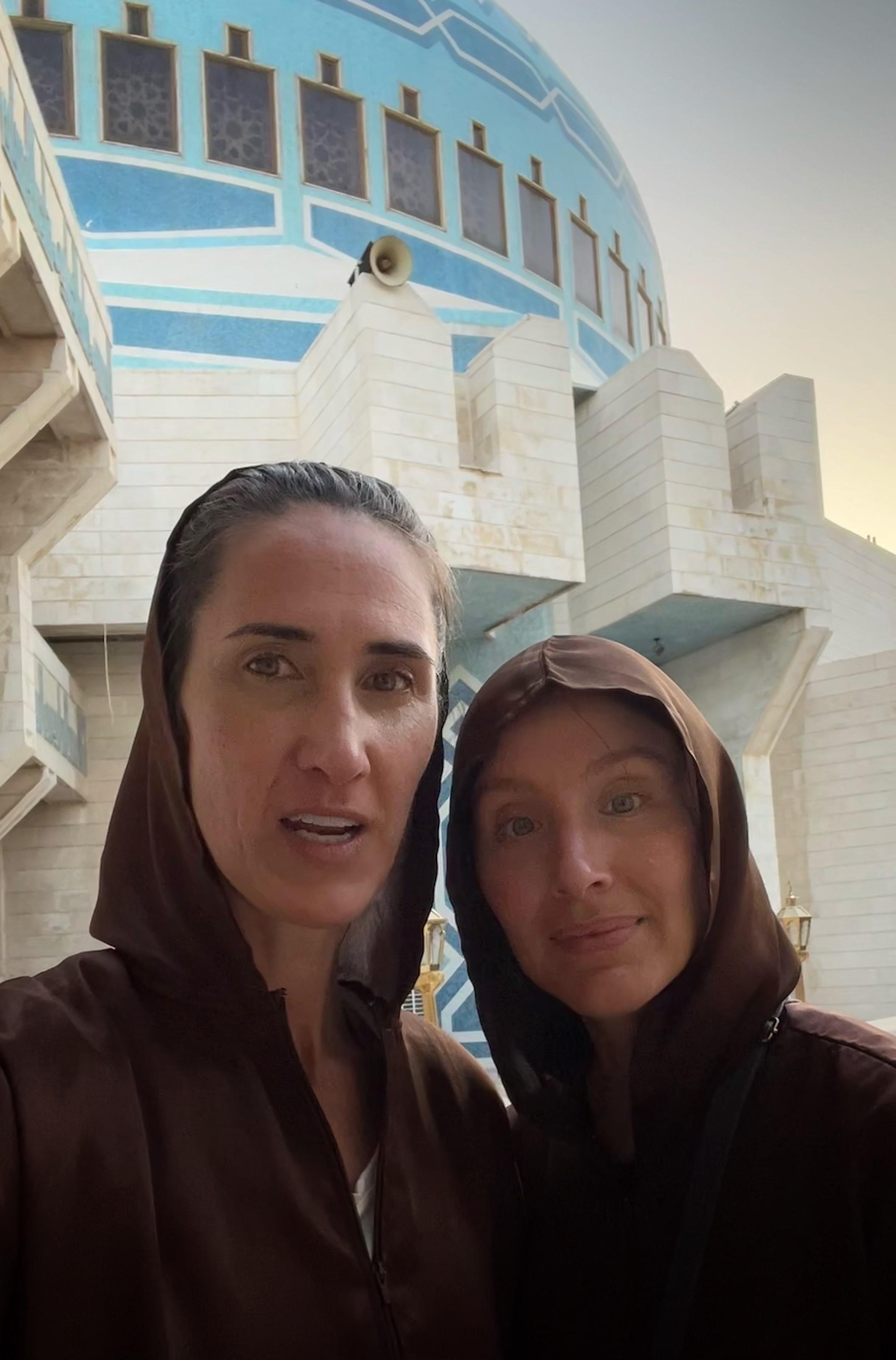
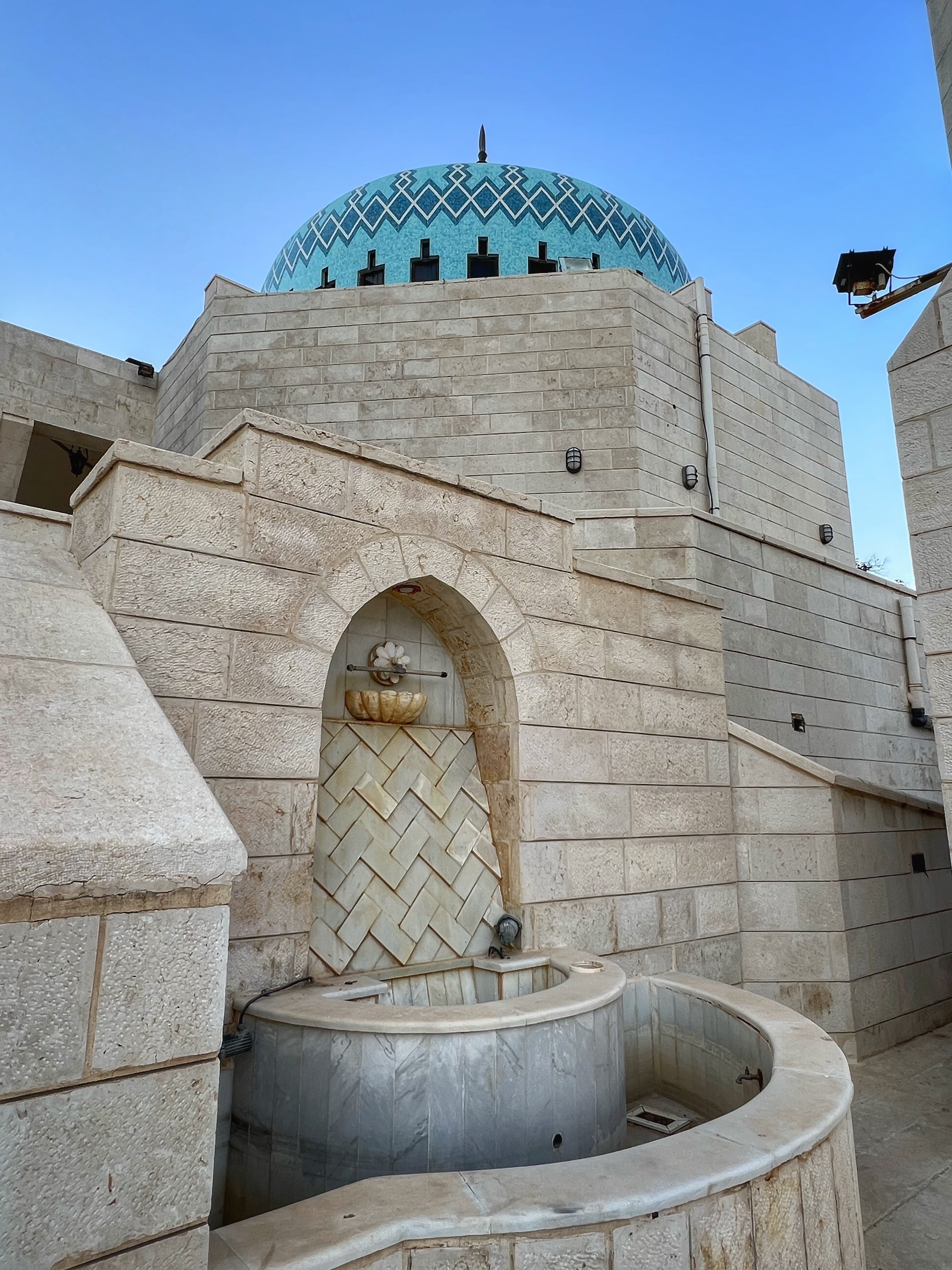
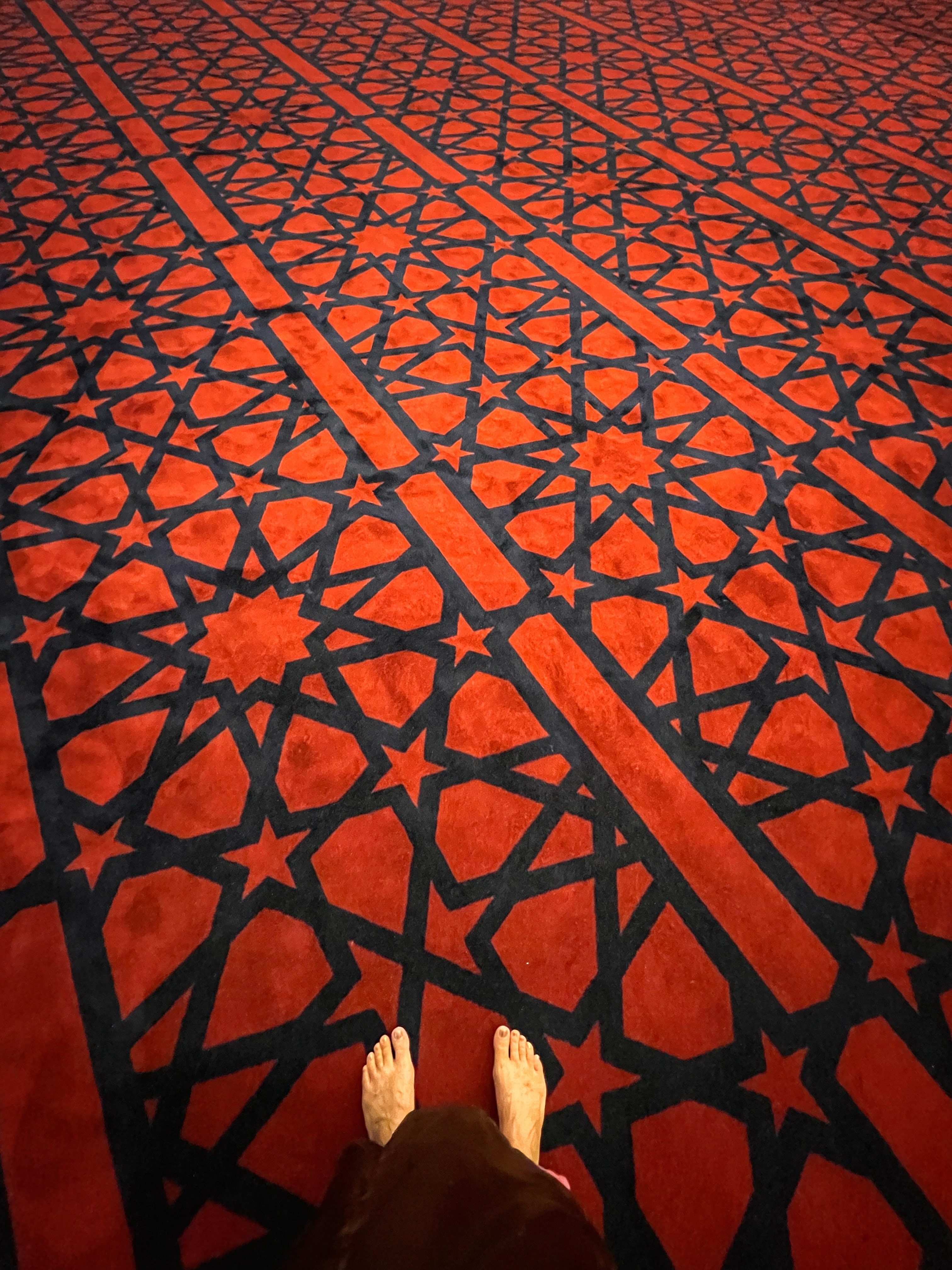
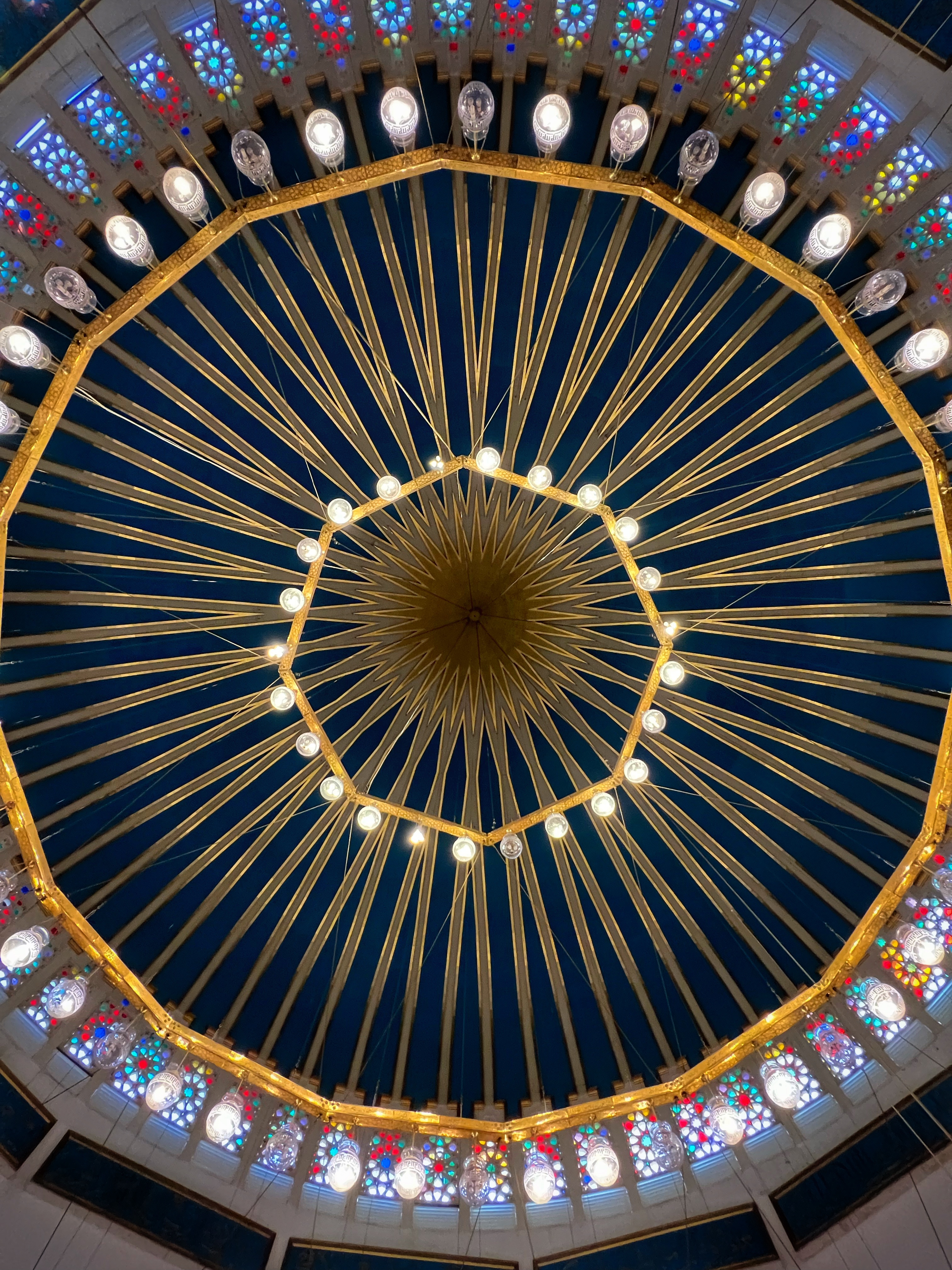
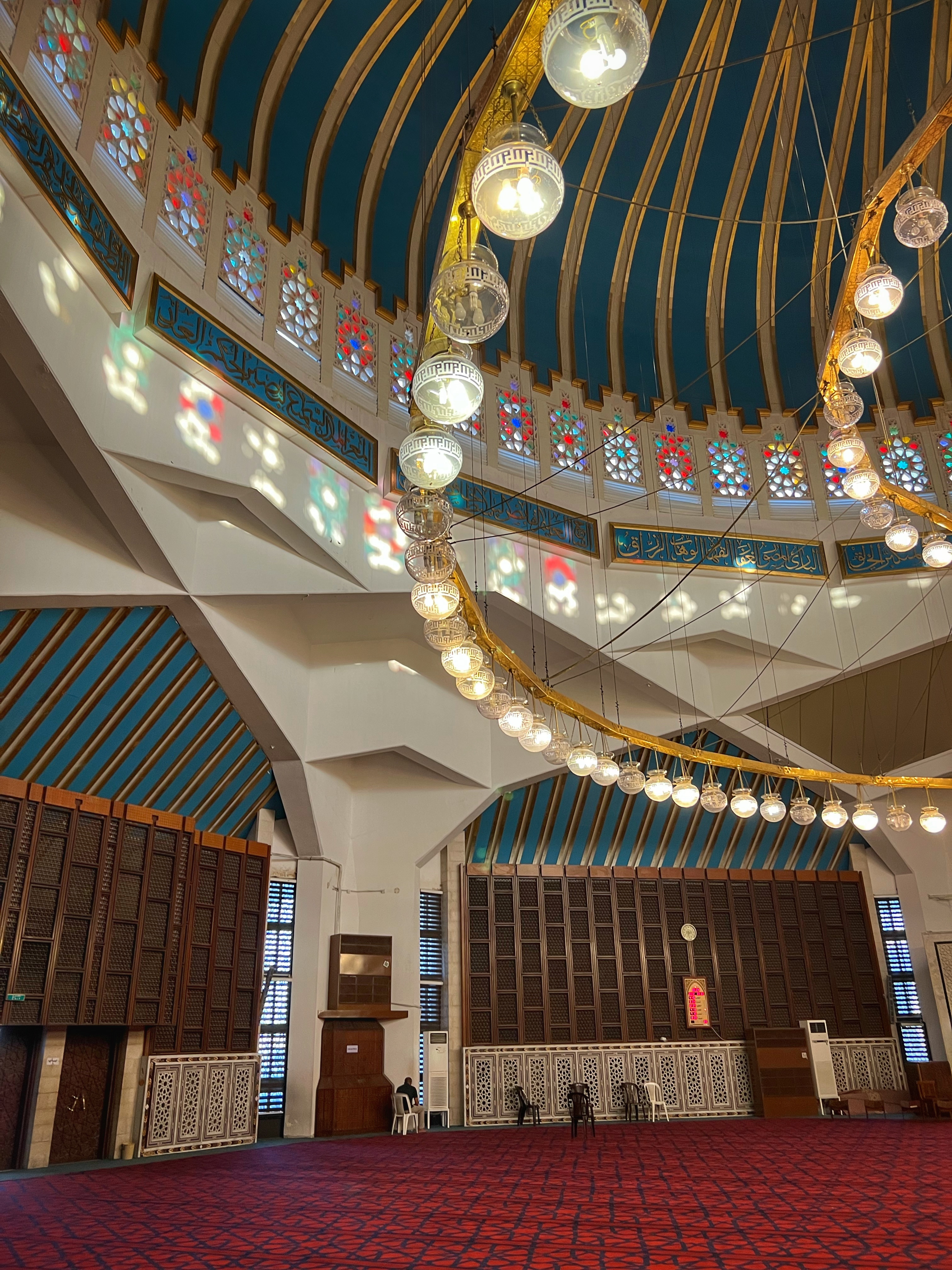
We were ushered into a bazaar below the mosque where we were given free coverings (basically Jedi robes) and led to the interior of the mosque. Of course we removed our shoes – the rug was very cushy! The interior was beautiful. We didn’t have a guide, but other visitors did and we overheard that this mosque was built during the 1980’s and can hold nearly 3,000 worshipers. The giant blue mosaic dome is certainly striking, especially at sunset.
After our quick visit we went back down into the bazaar to return our [Jedi] robes and it was then we were offered tea and told of the “hand made” items in the bazaar. This was probably the hardest sales pitch of our entire trip, and we weren’t exactly in the mood for it, being tired and hungry. I felt bad being dismissive of the “hospitality,” but I could also tell that they were training youngsters on how to solicit tourists and we were the guinea pigs. We also realized our taxi driver was hanging out with the guys having tea – and he ended up charging us more for the trip as well. Just be aware of this and for the most reliable and professional taxi experience, stick to Uber. We didn’t buy anything (we noticed the prices were outrageous there) but the whole situation left us feeling kinda bummed. Do you know what cheered us up? Awesome felafel!



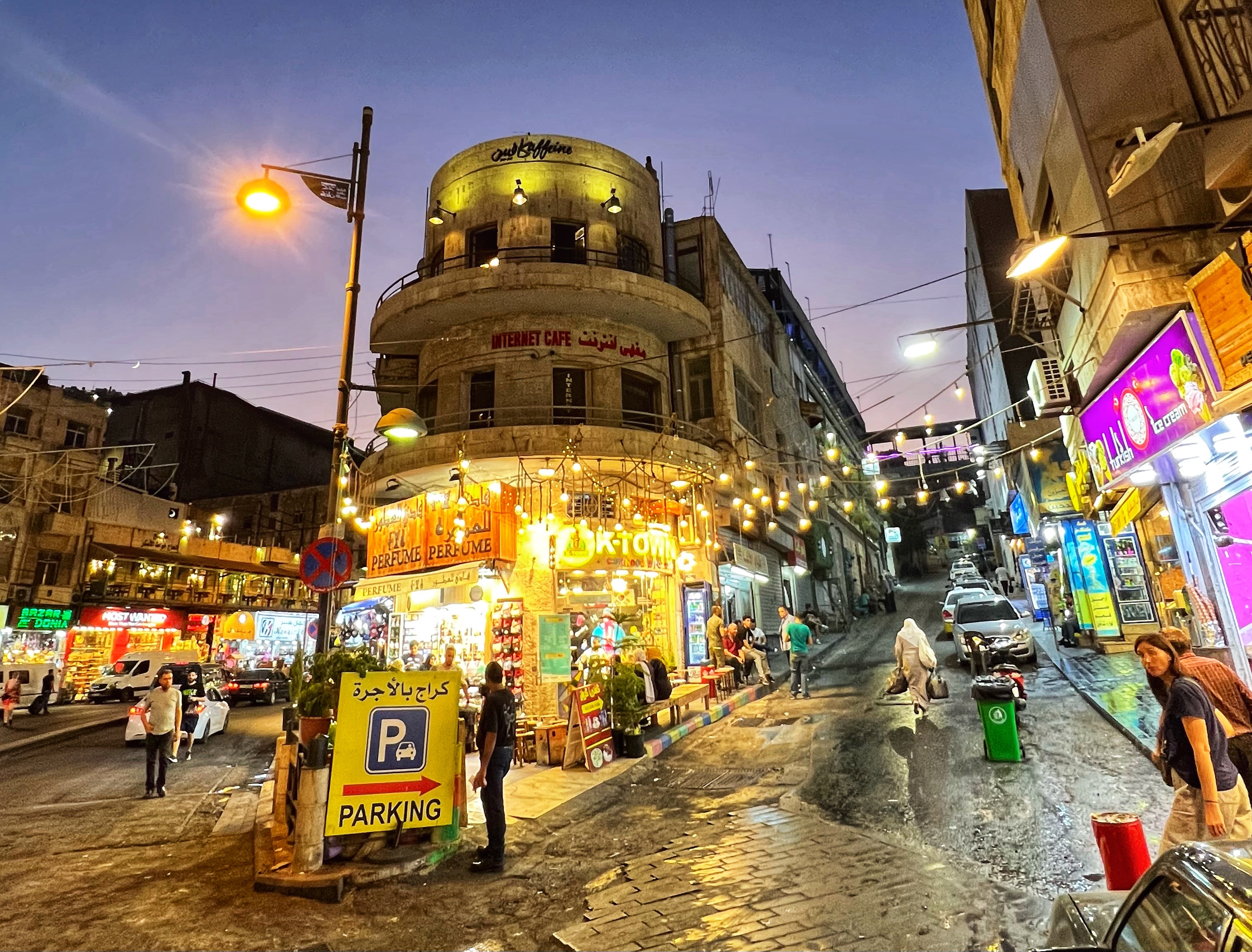
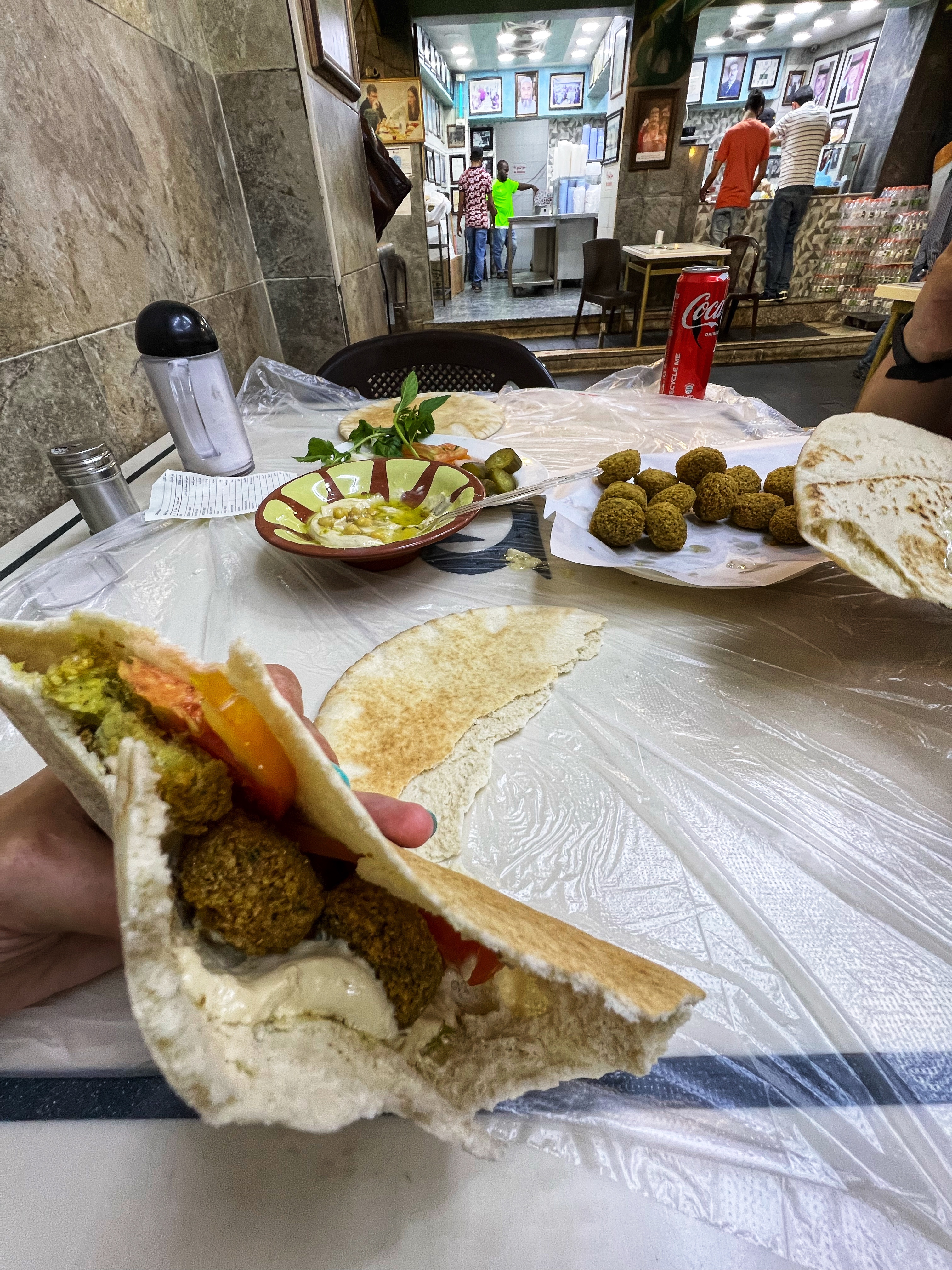
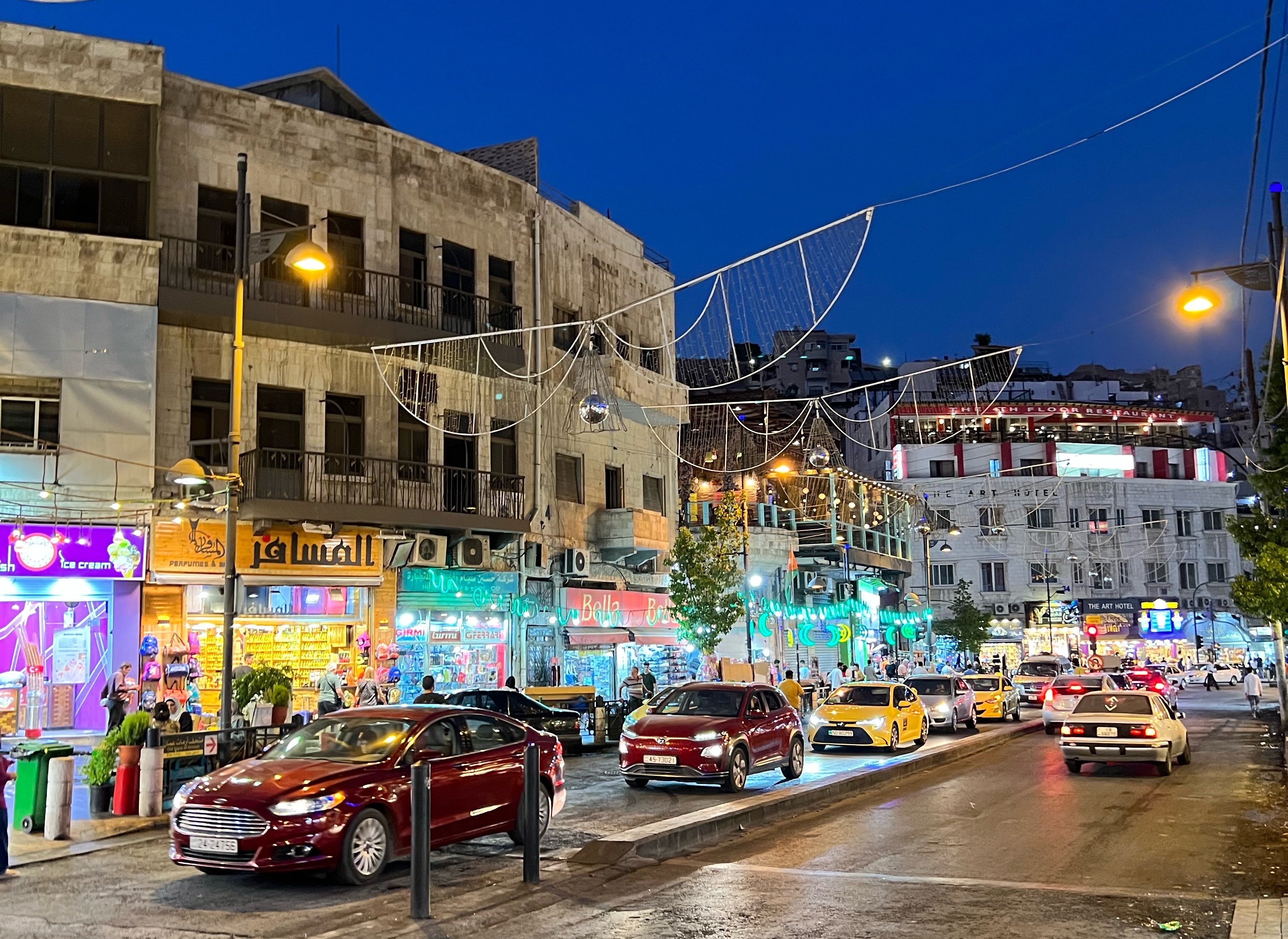
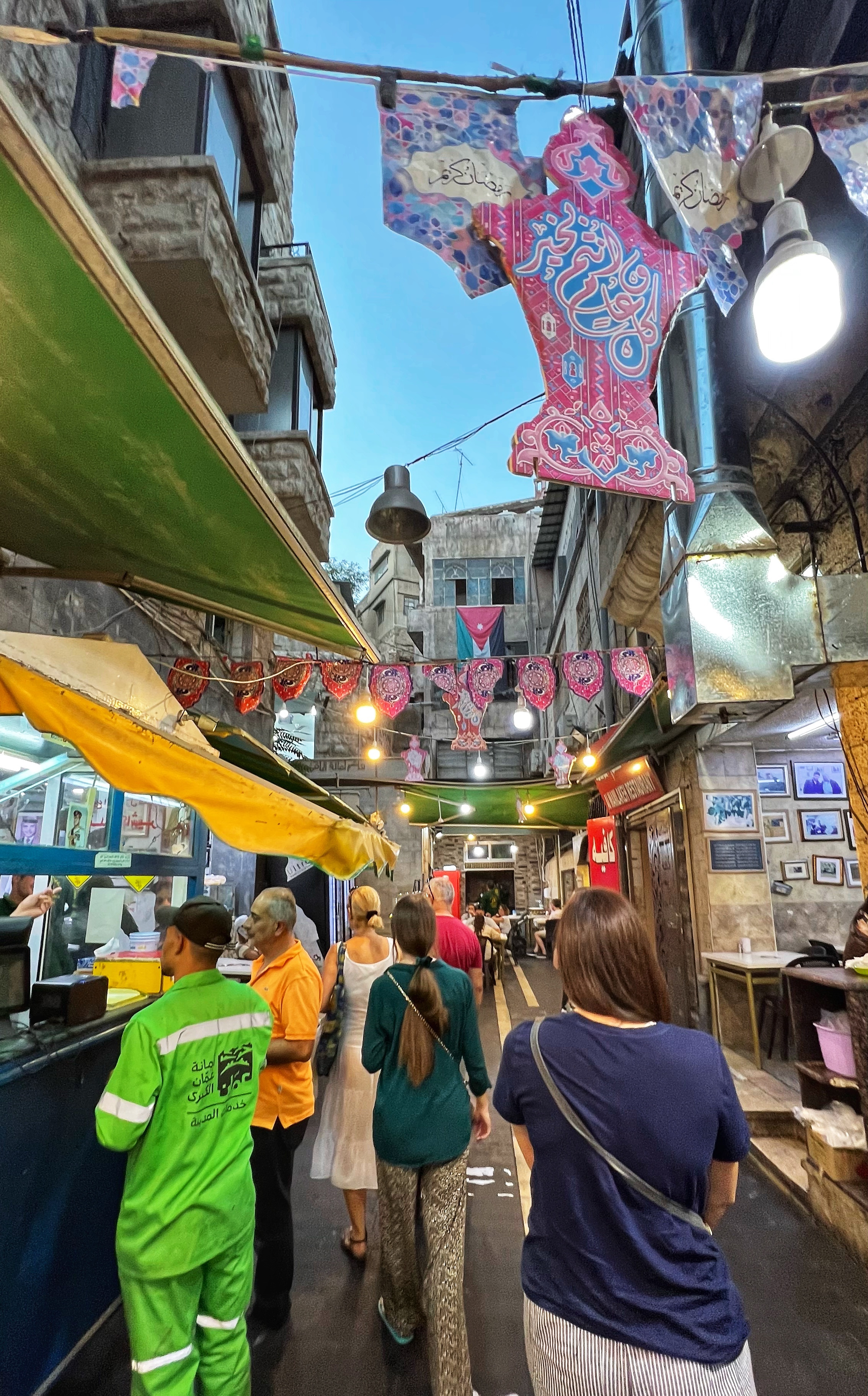
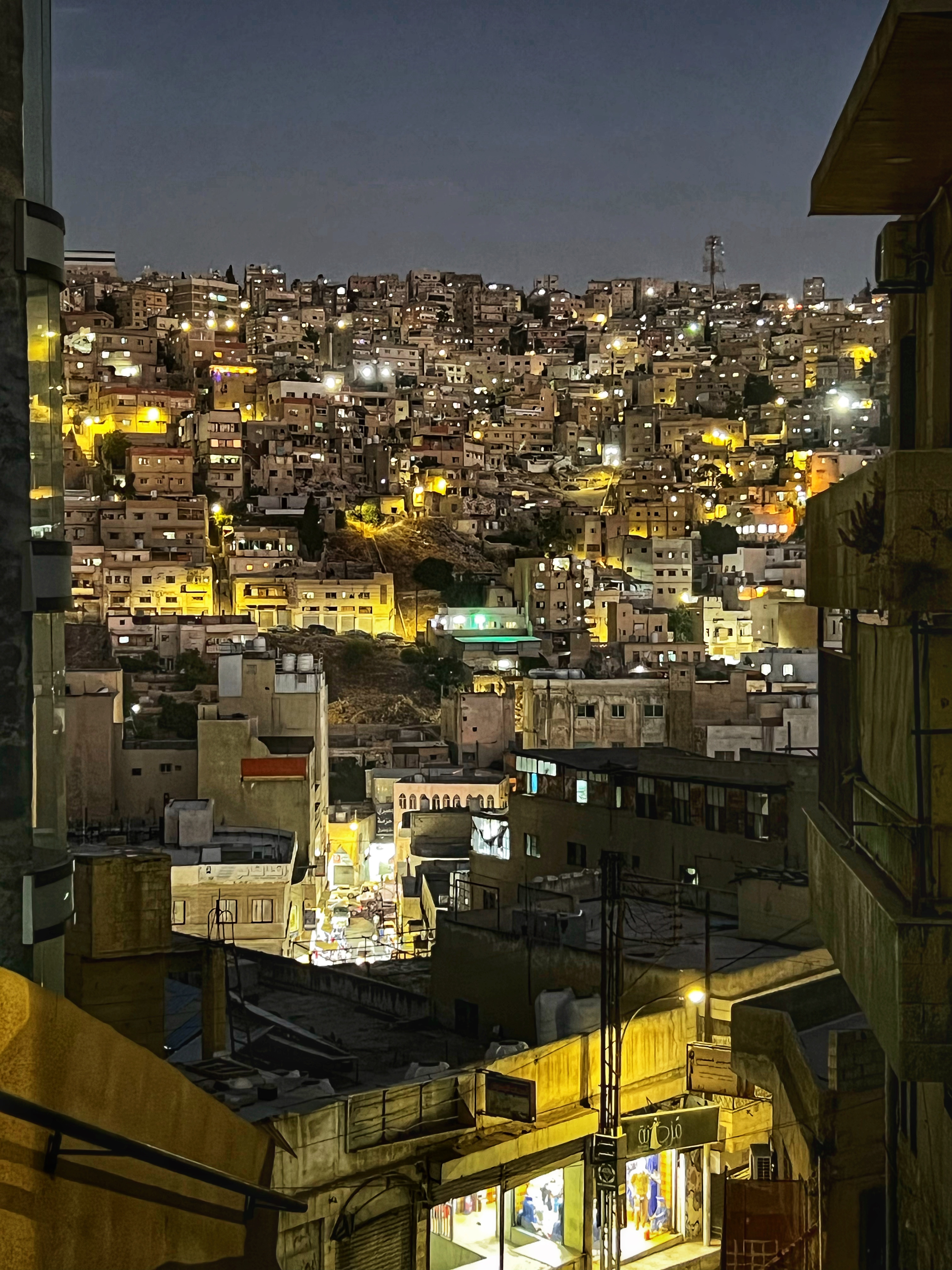
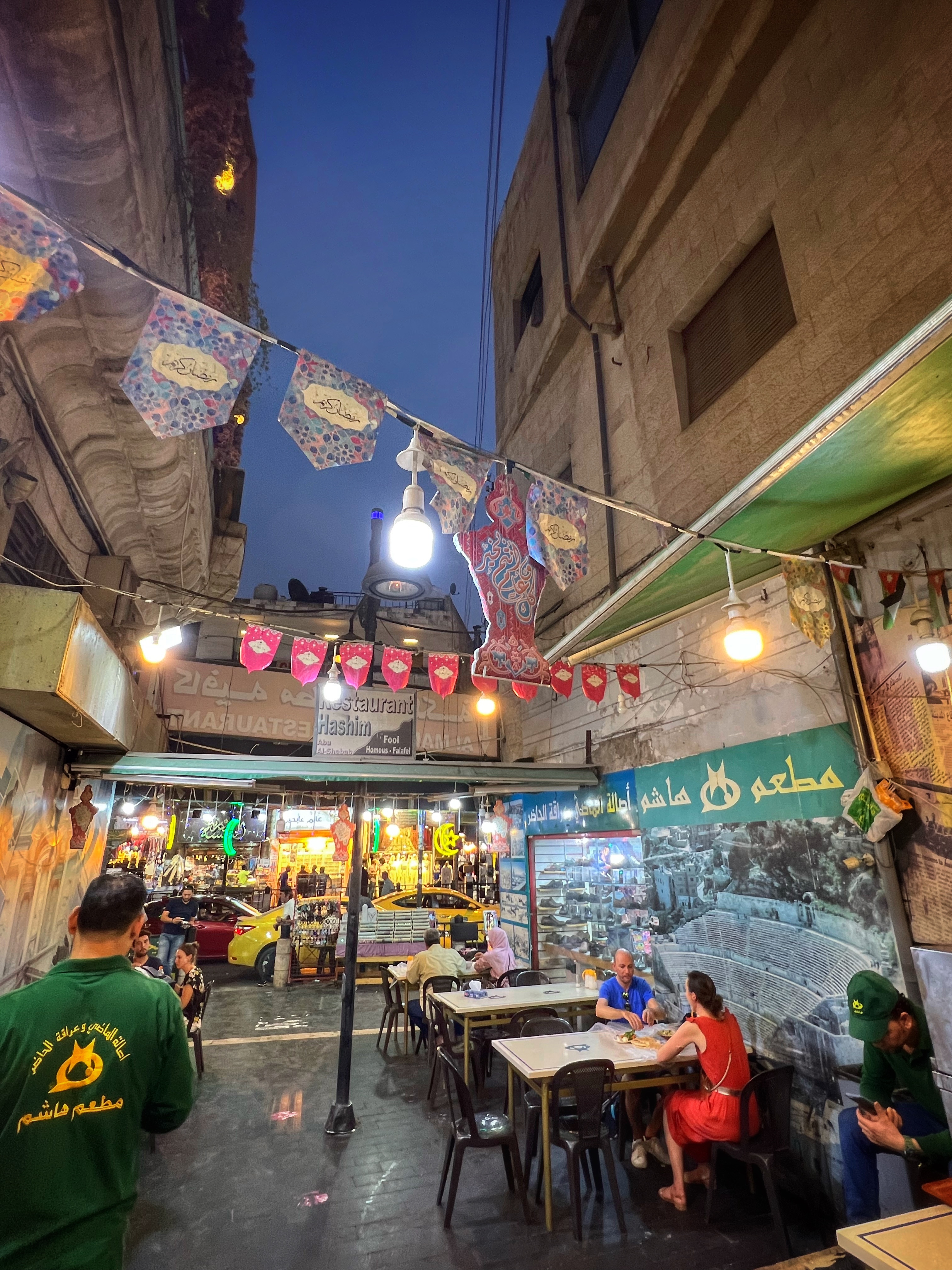
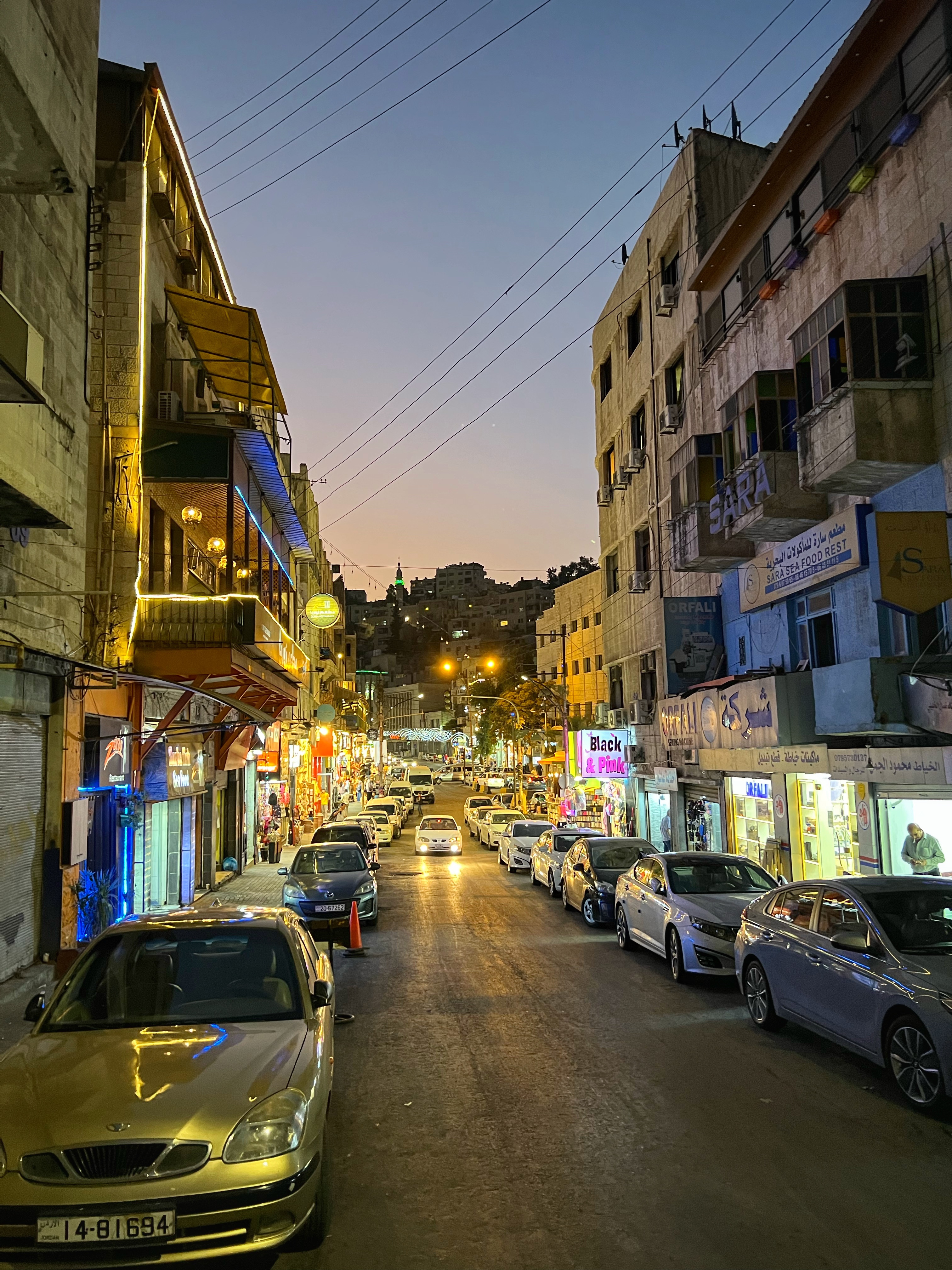
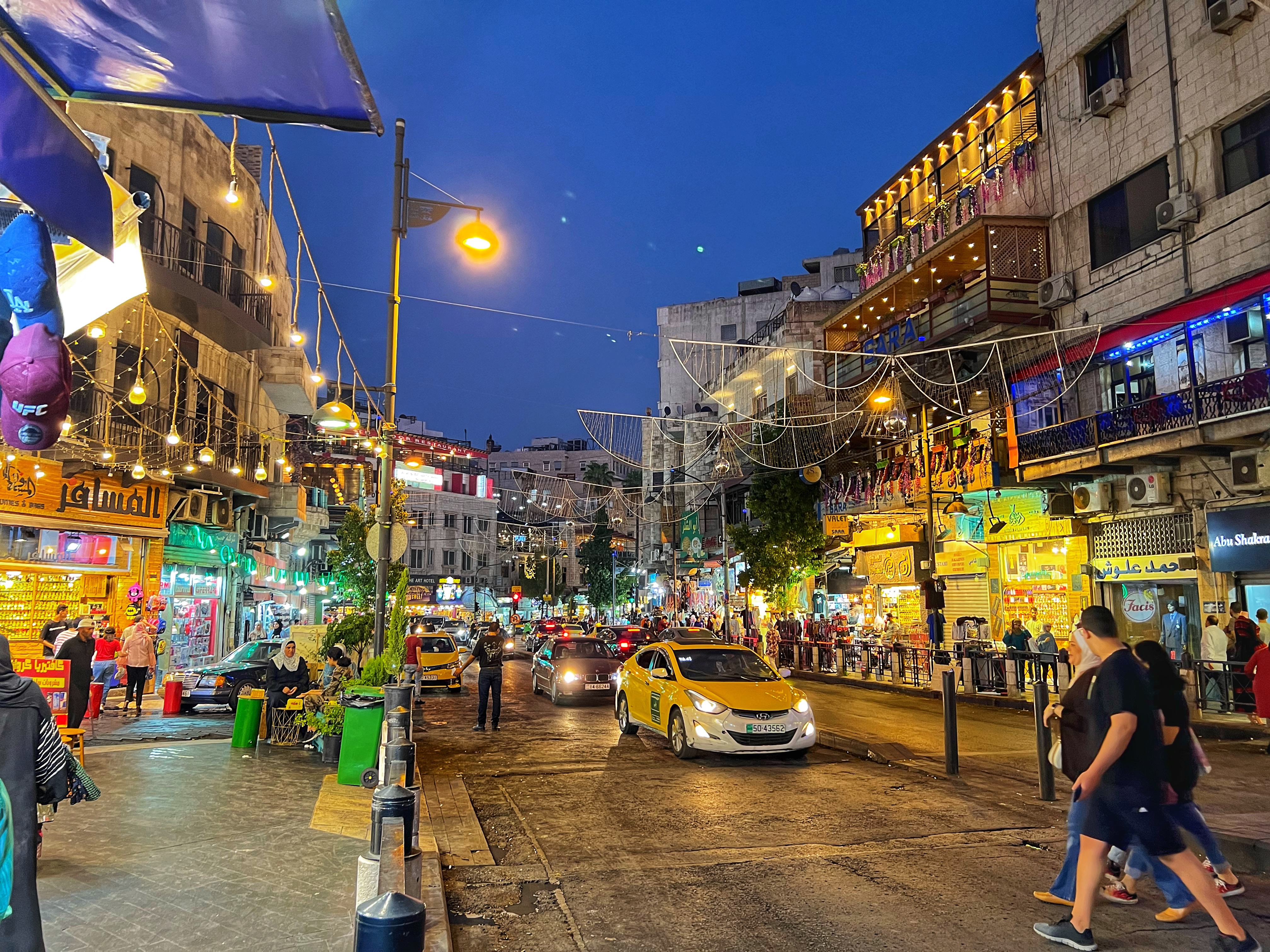
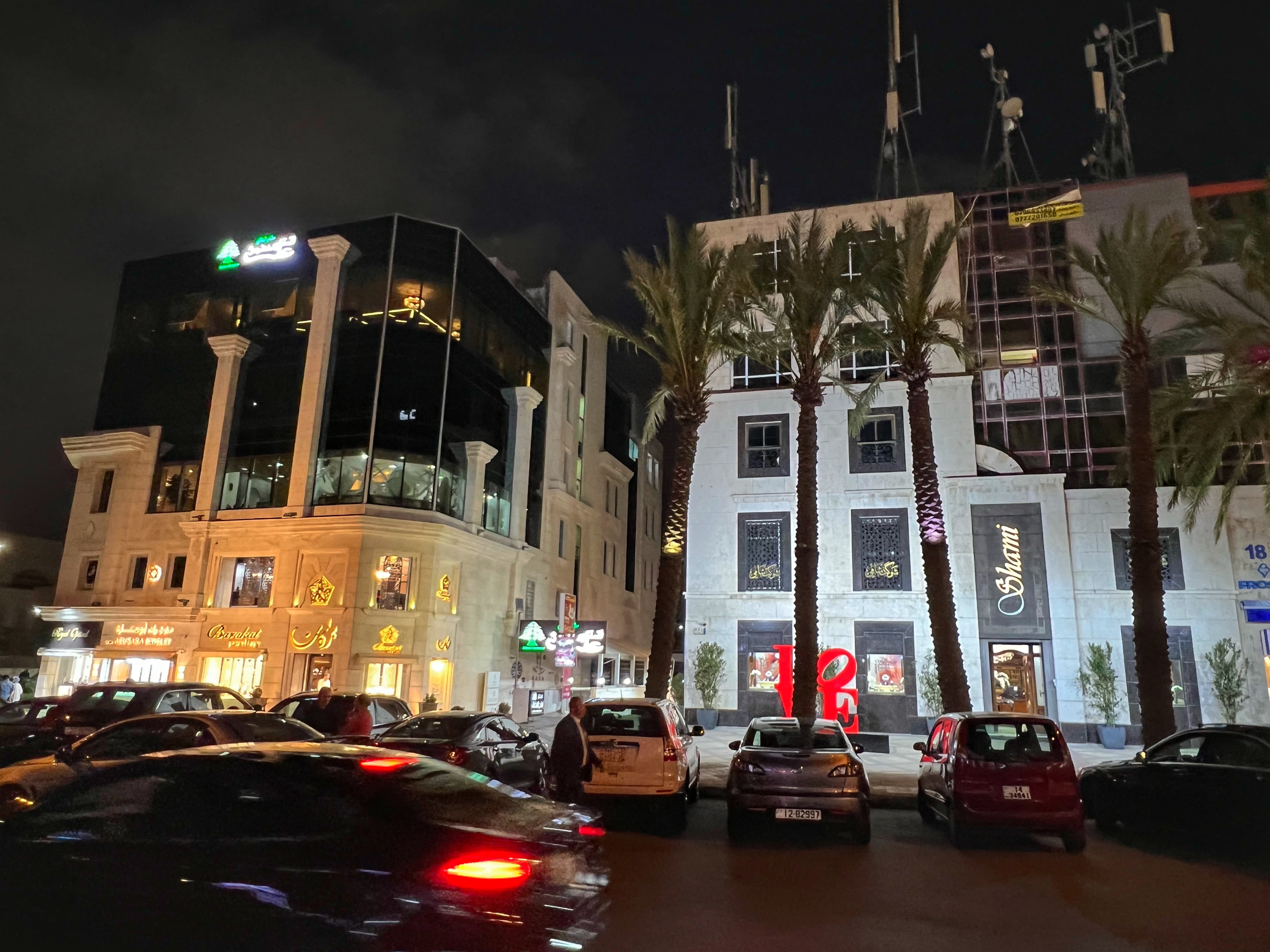
We were dropped off at Hashem, a restaurant we had heard good things about. Apparently it was the “best felafel in town” and had great prices. We learned first hand that Hashem hits the spot. We loved our dish of felafel, pita bread, hummus and veggies. With drinks, all of this cost us about $6 total – including tip! Such a great way to end the day. I have heard this restaurant can have lots of flies during the day, so maybe time your visit with sunset to avoid that issue. We walked back to our apartment and hit the hay early so we could wake refreshed and recovered for our first road trip day. The lights of the city were dazzling…

DAY 2
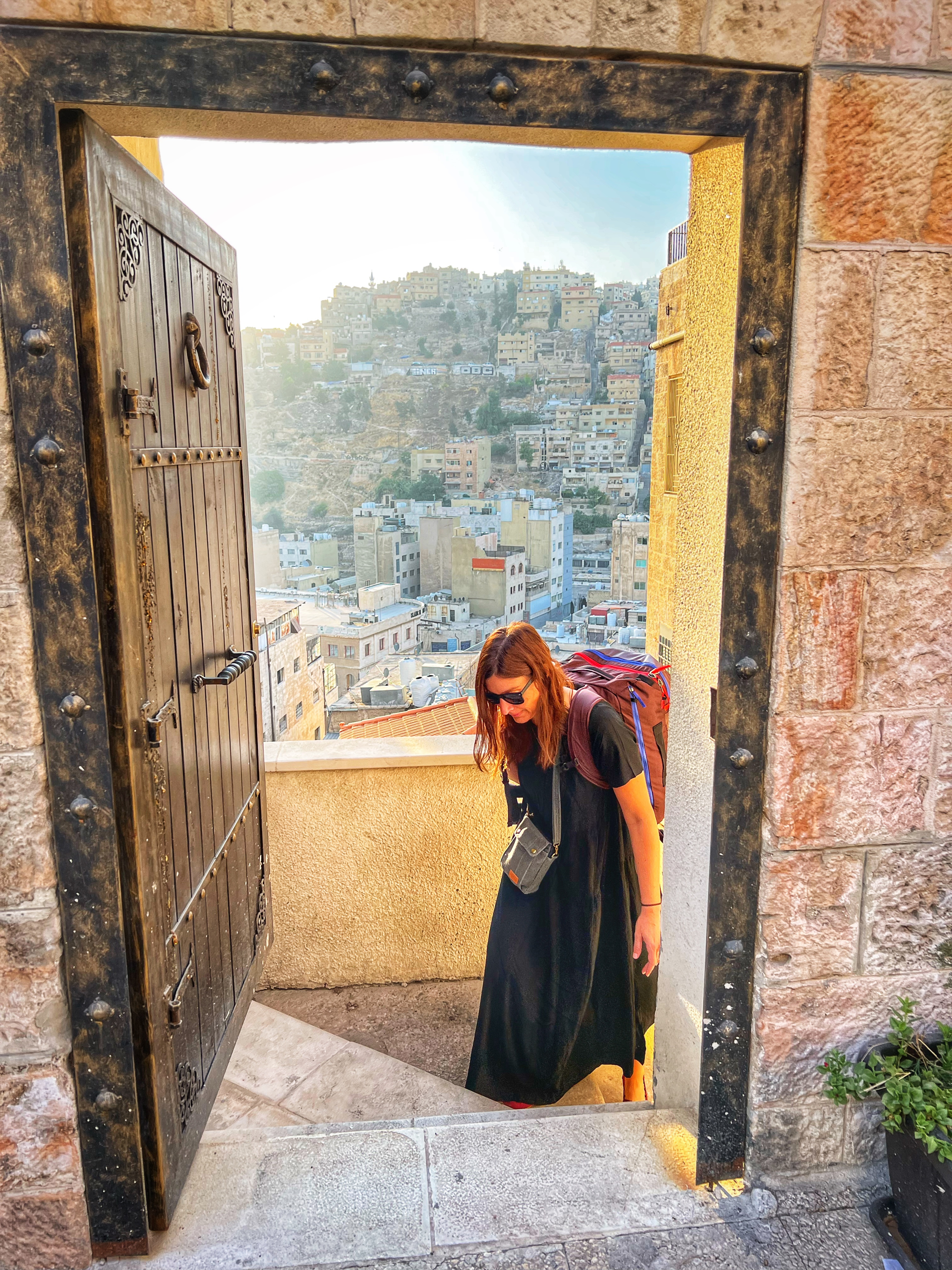
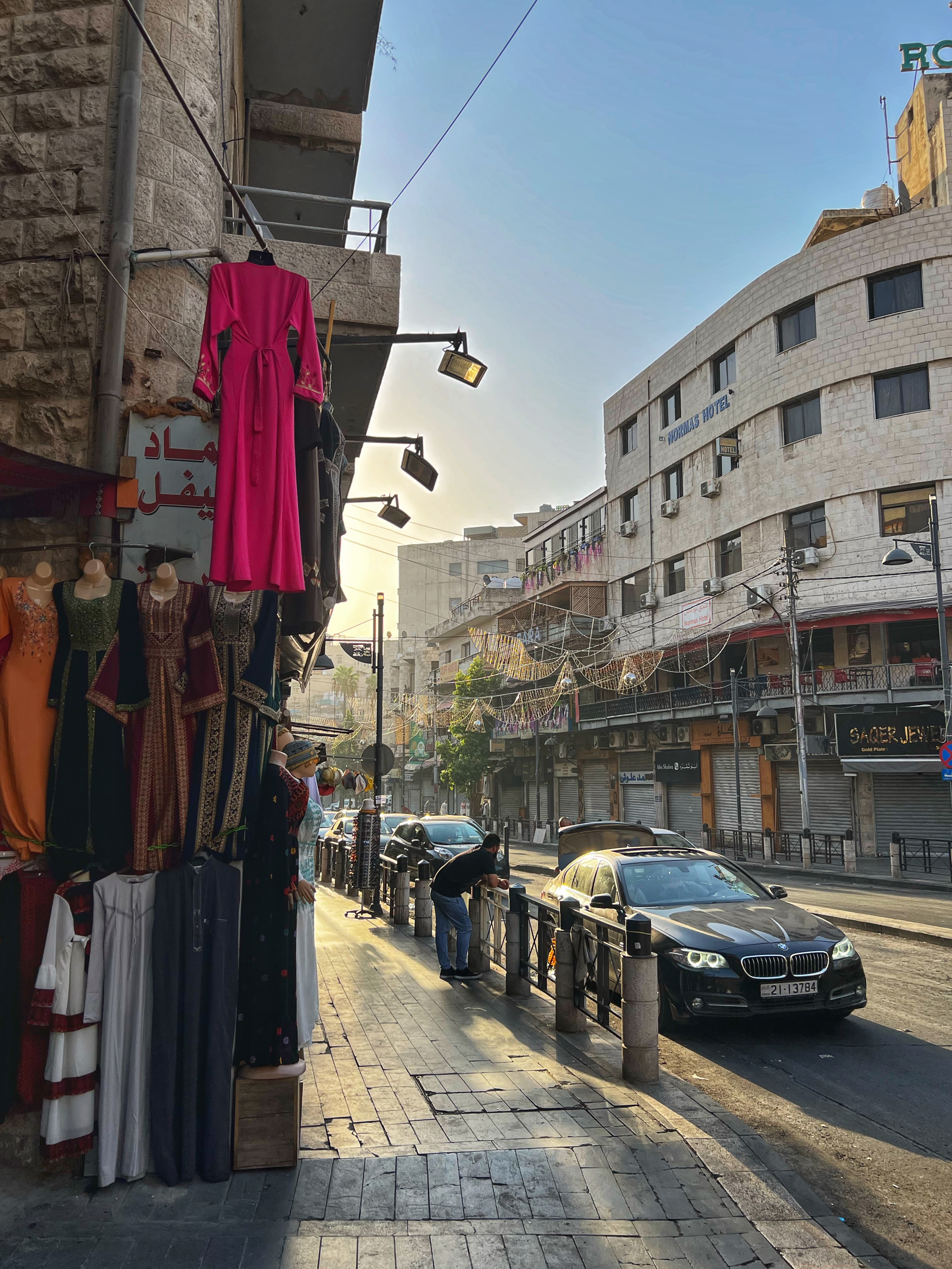
We awoke to the sunrise and little birds chirping outside our window. The balcony at our apartment had a beautiful view over the sea of white buildings in Amman, covered in a glowy yellow hue. We walked down to the street level to request an Uber (learning our lesson from last night) and it was only 19JD/$27 to return to the airport from downtown. I guess the time of day and direction of travel really matters…



At the airport we grabbed a quick breakfast bite and picked up our Budget rental car – easy peasy. The agent was super friendly and helpful and we ended up with a brand new Suzuki economy sized car for the next 7 days. It was clean, a smooth ride, had A/C, and wasn’t super powerful but it was just right for us. In just over an hour we arrived at the city of Jerash.
Jerash
We parked at the Jerash free parking lot but noticed we could’ve driven to the Visitor Free Car Park as well. Either way was just a quick walk, so it didn’t matter. The Visitor Center was very nice and had shops, eateries and rest rooms. We went to the (paid) restrooms before walking through the ruins and I grabbed a 5JD hat to help with the heat. It was another scorcher at 38ºC/101ºF and the site doesn’t have much natural shade. Be sure to bring water with you and wear sunscreen. The vibe here was very laid back and relaxed. Very little solicitation happened here, which was nice.

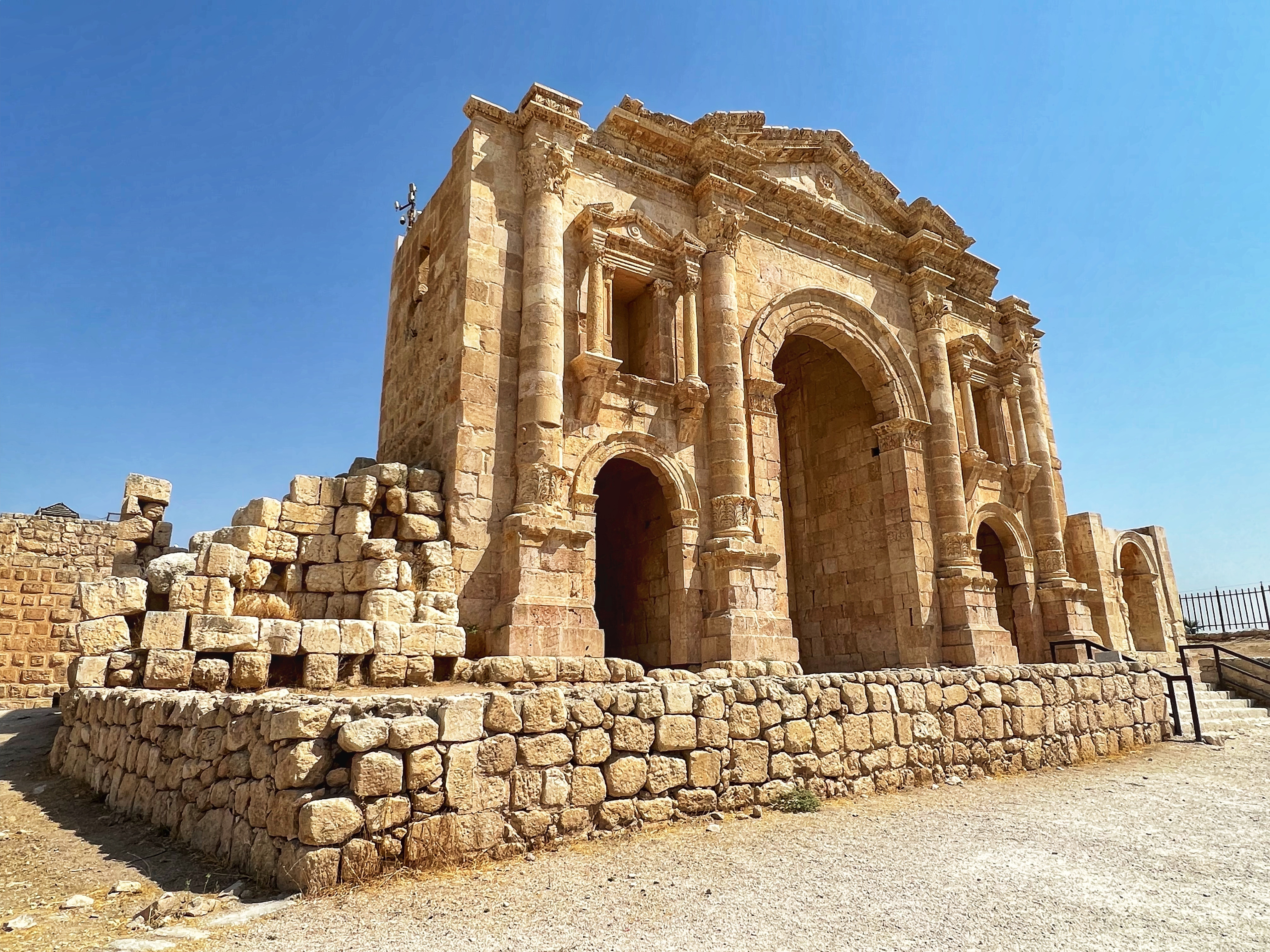
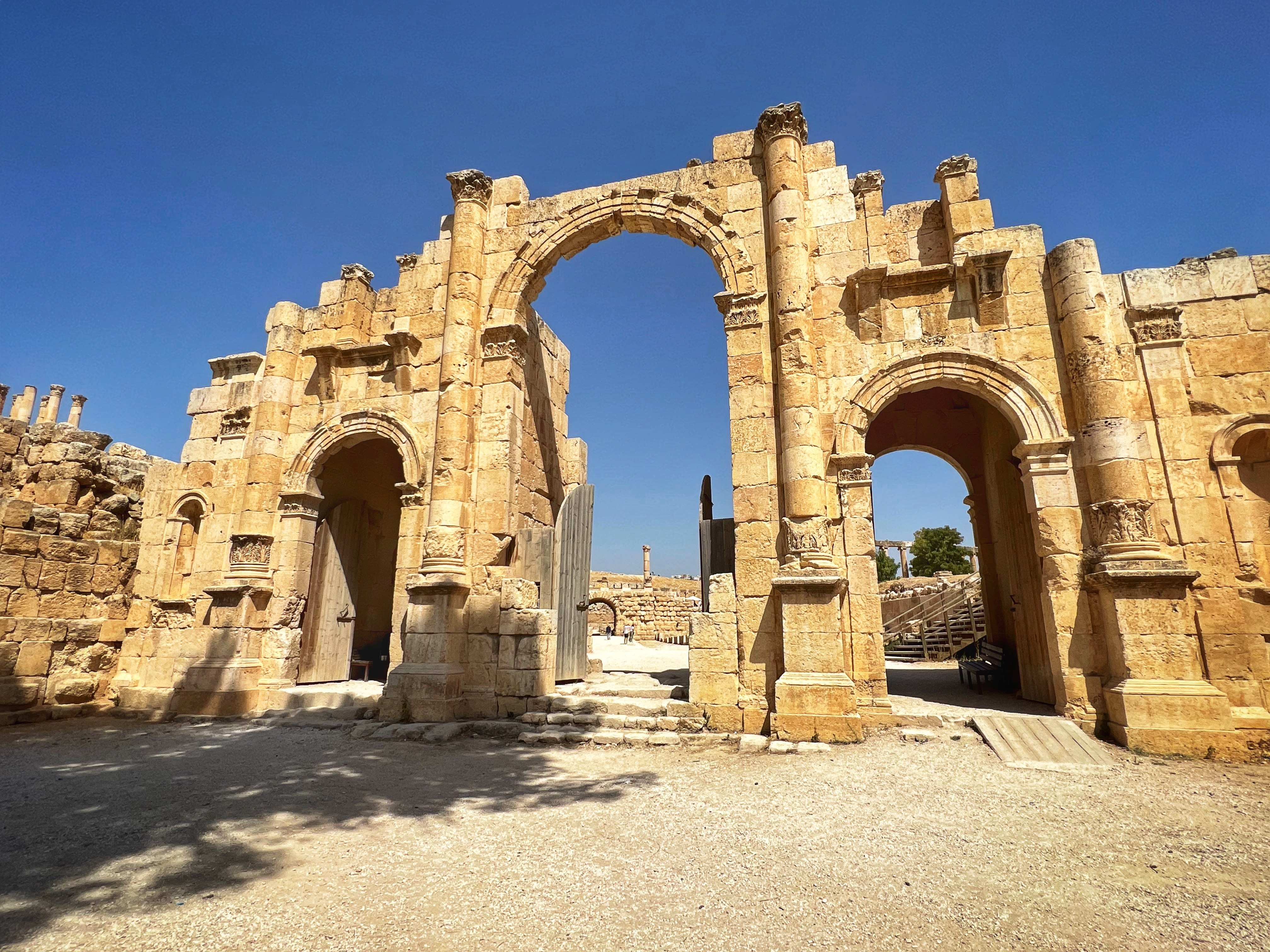
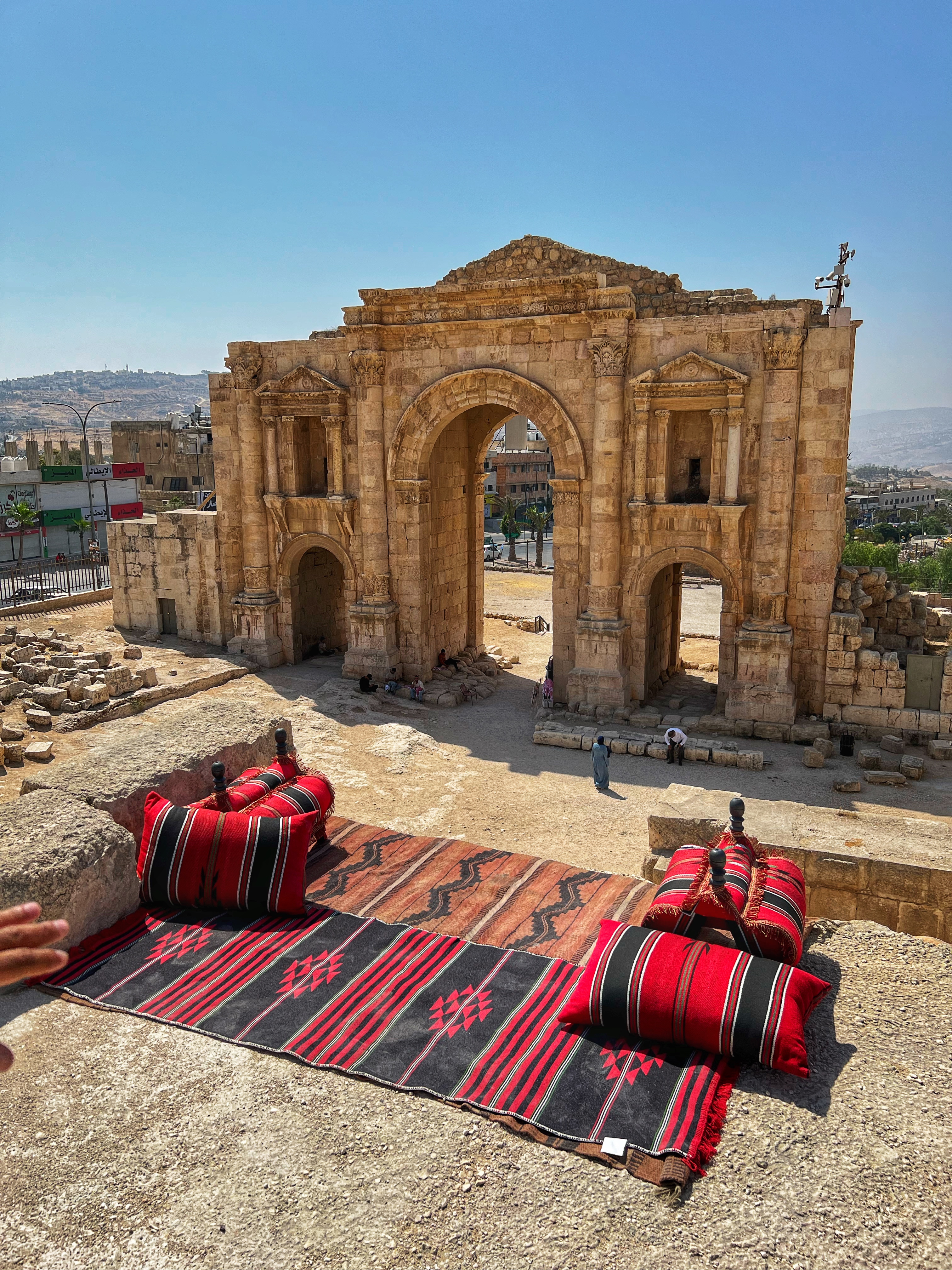
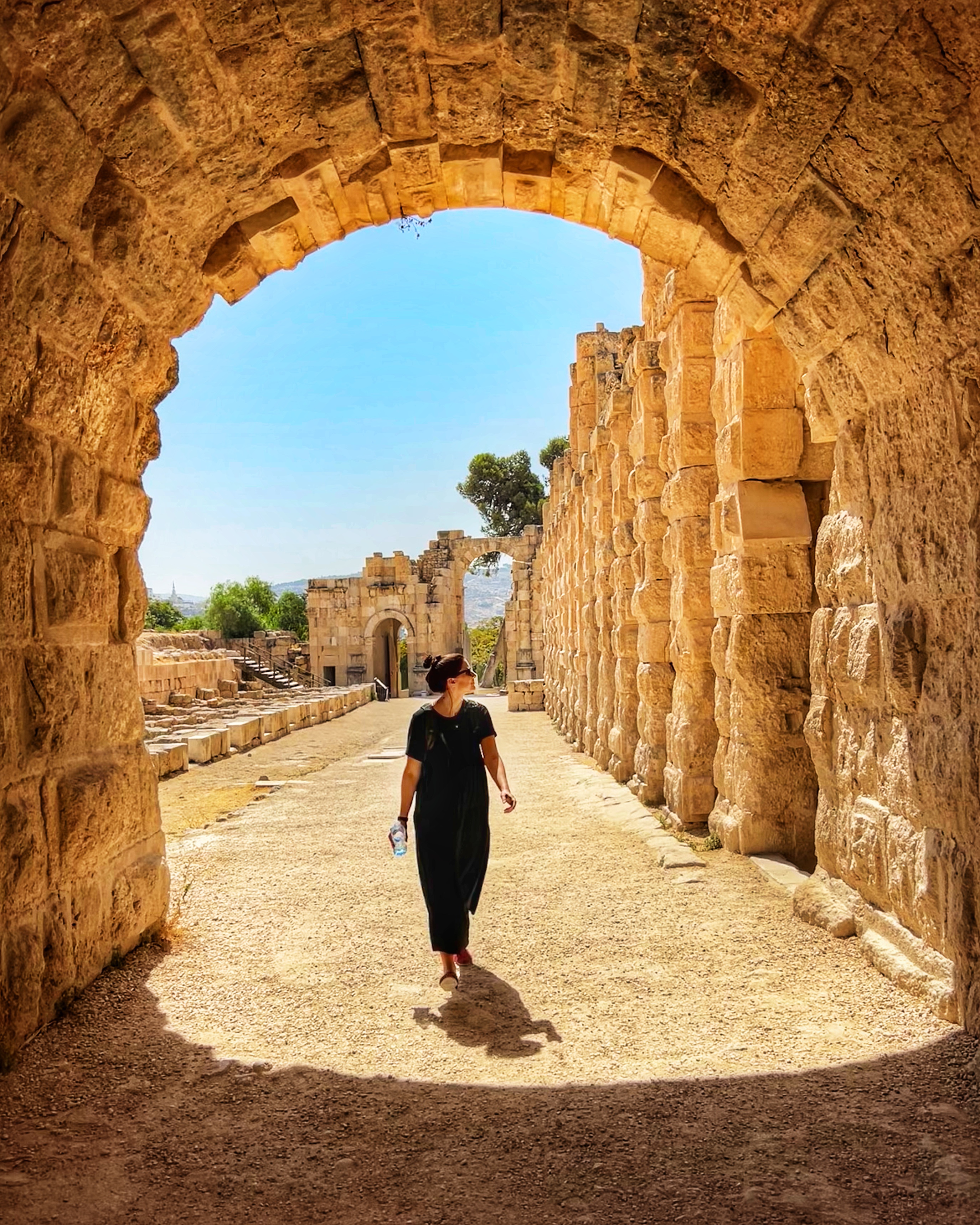
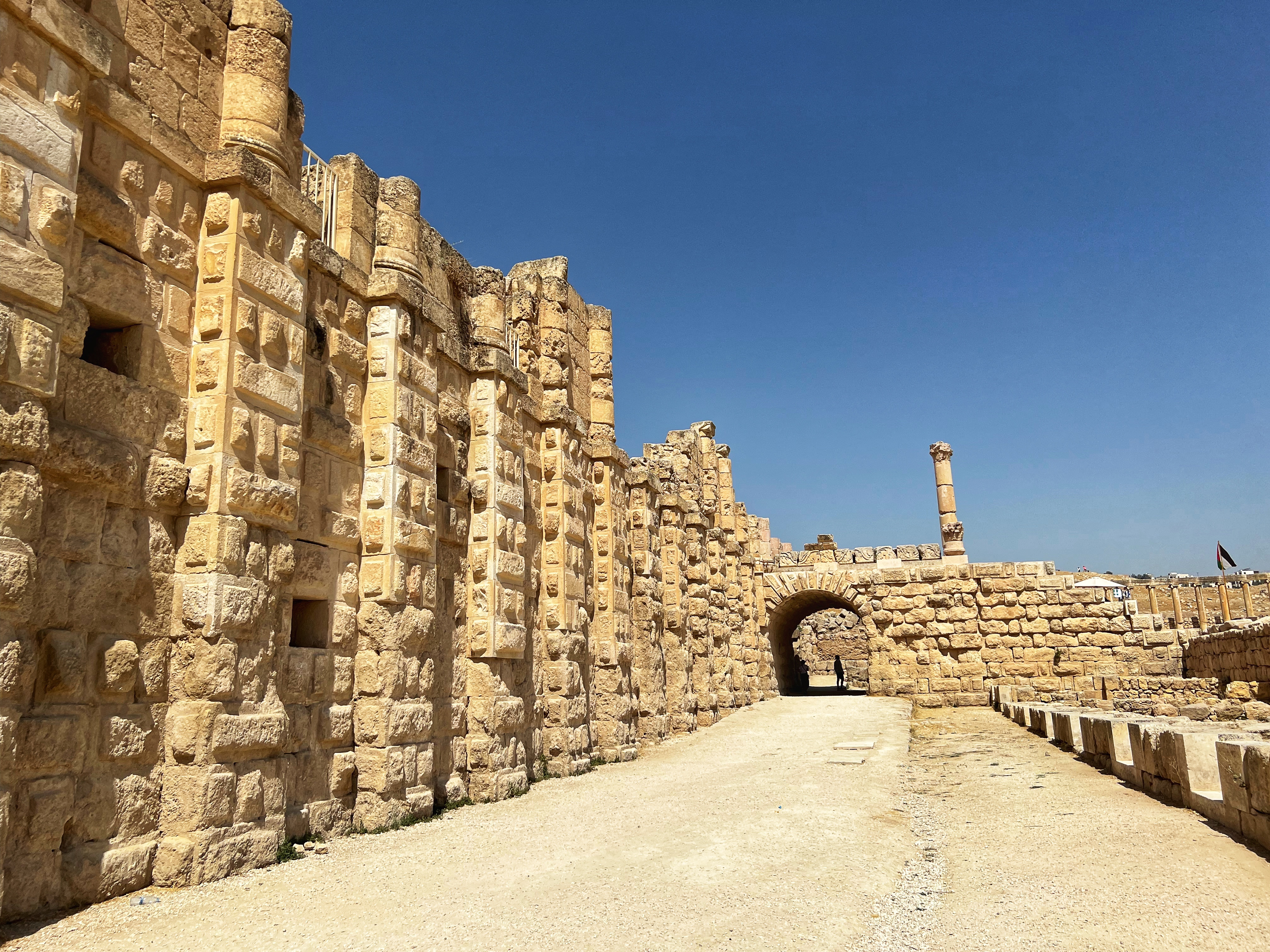

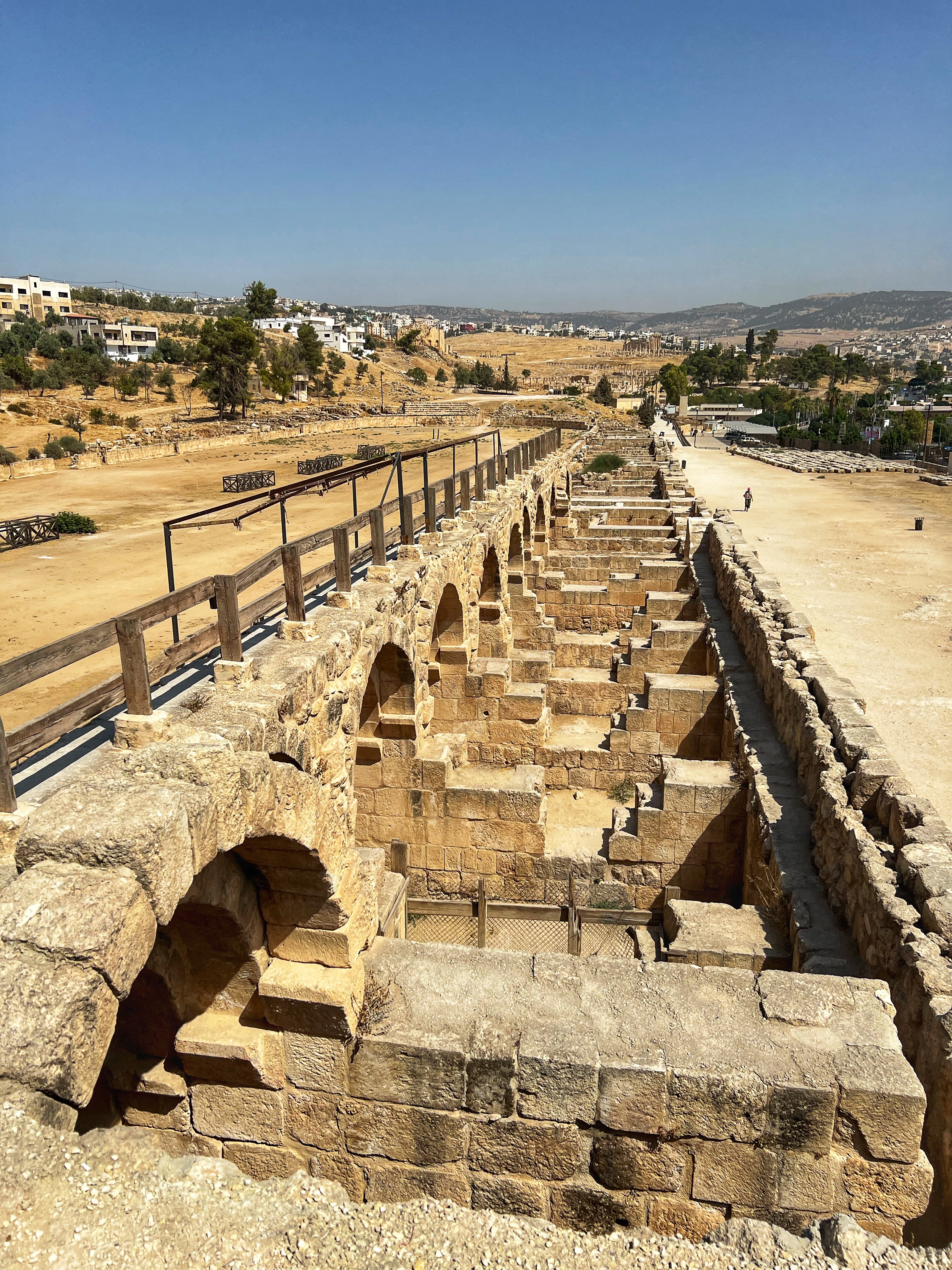
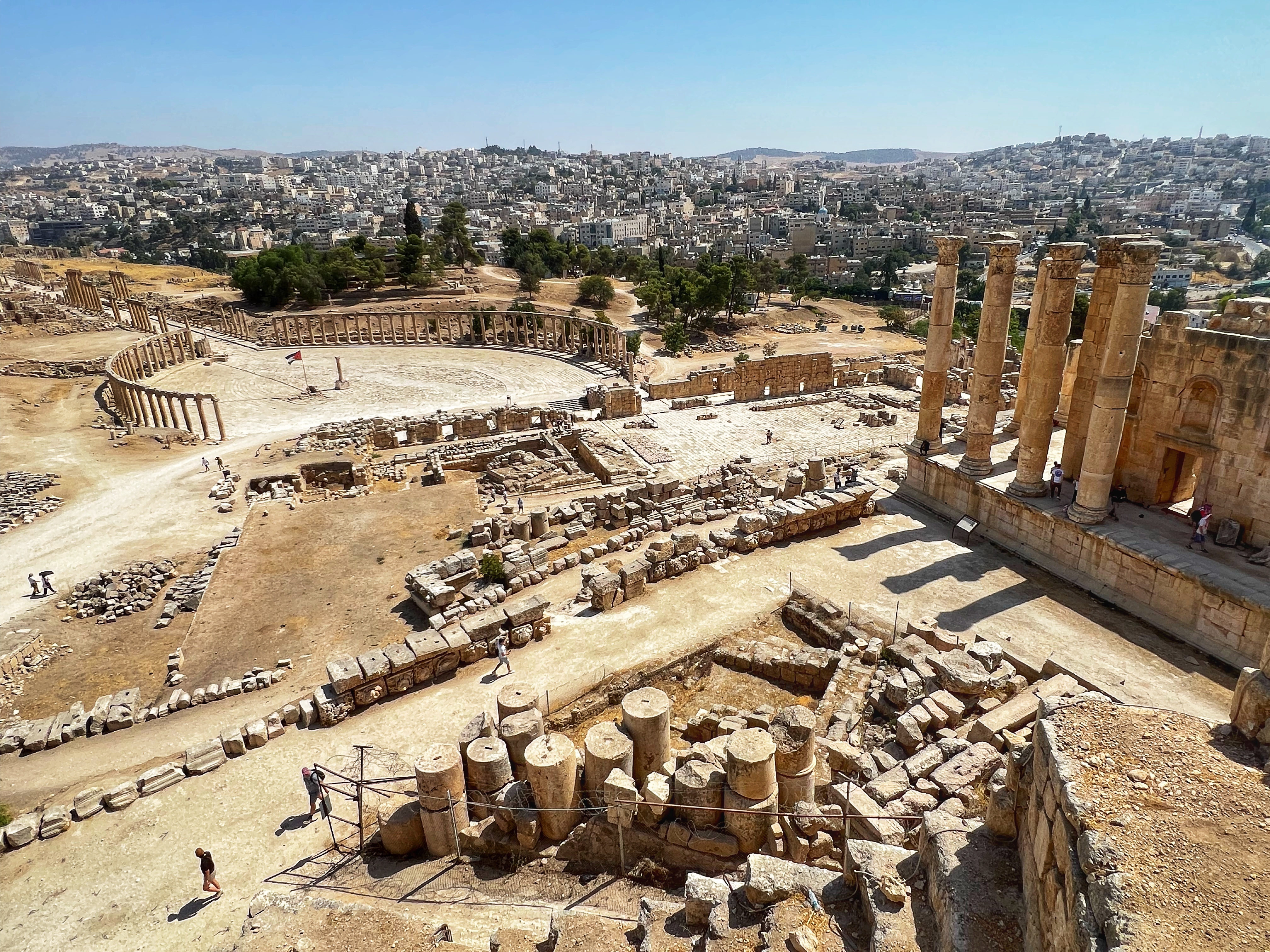
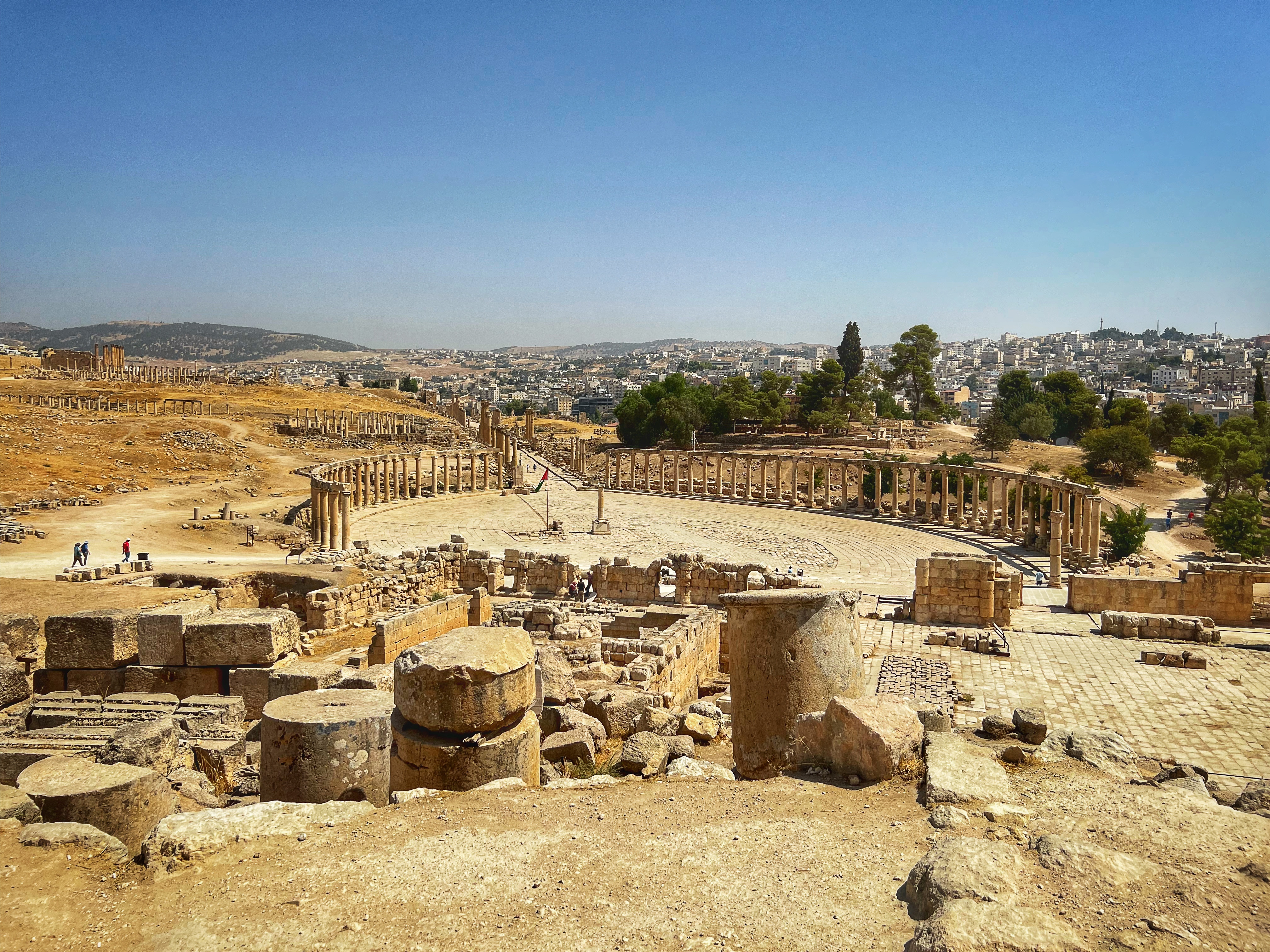
We walked through the Arch of Hadrian and past the Hippodrome, and right away I felt like I was in Pompeii again. Jerash ruins are from the same time period, only they were damaged by the great earthquake of 749 AD – not buried in meters and meters of volcanic lava and ash. After the Hippodrome we entered the complex through the south gate and here we showed our Jordan Pass again. We entered the Oval Plaza, but were redirected by locals to walk back through the Temples of Zeus and Southern Theater first, then circle around the complex and end at the Oval Plaza. It was good advice.

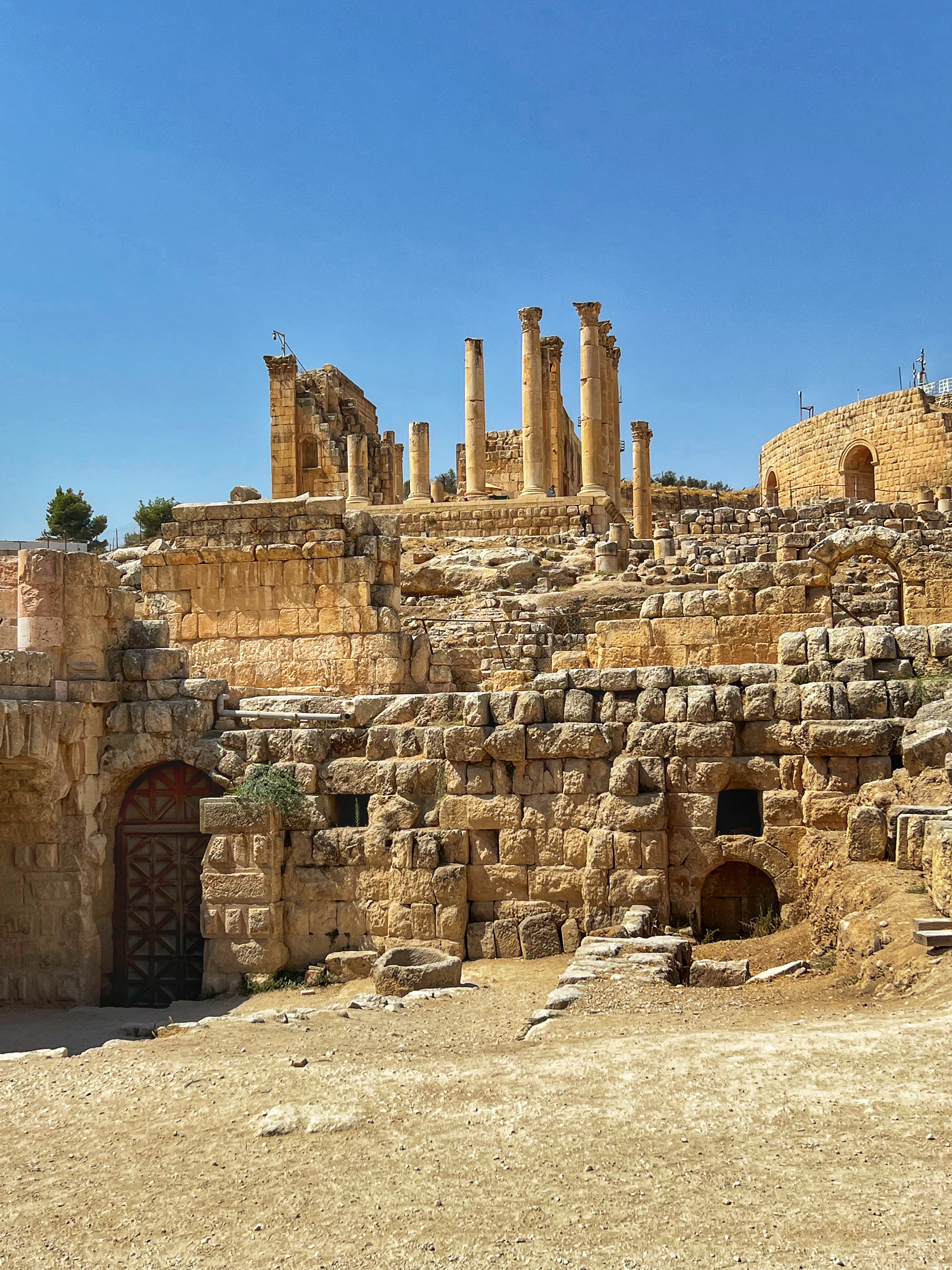
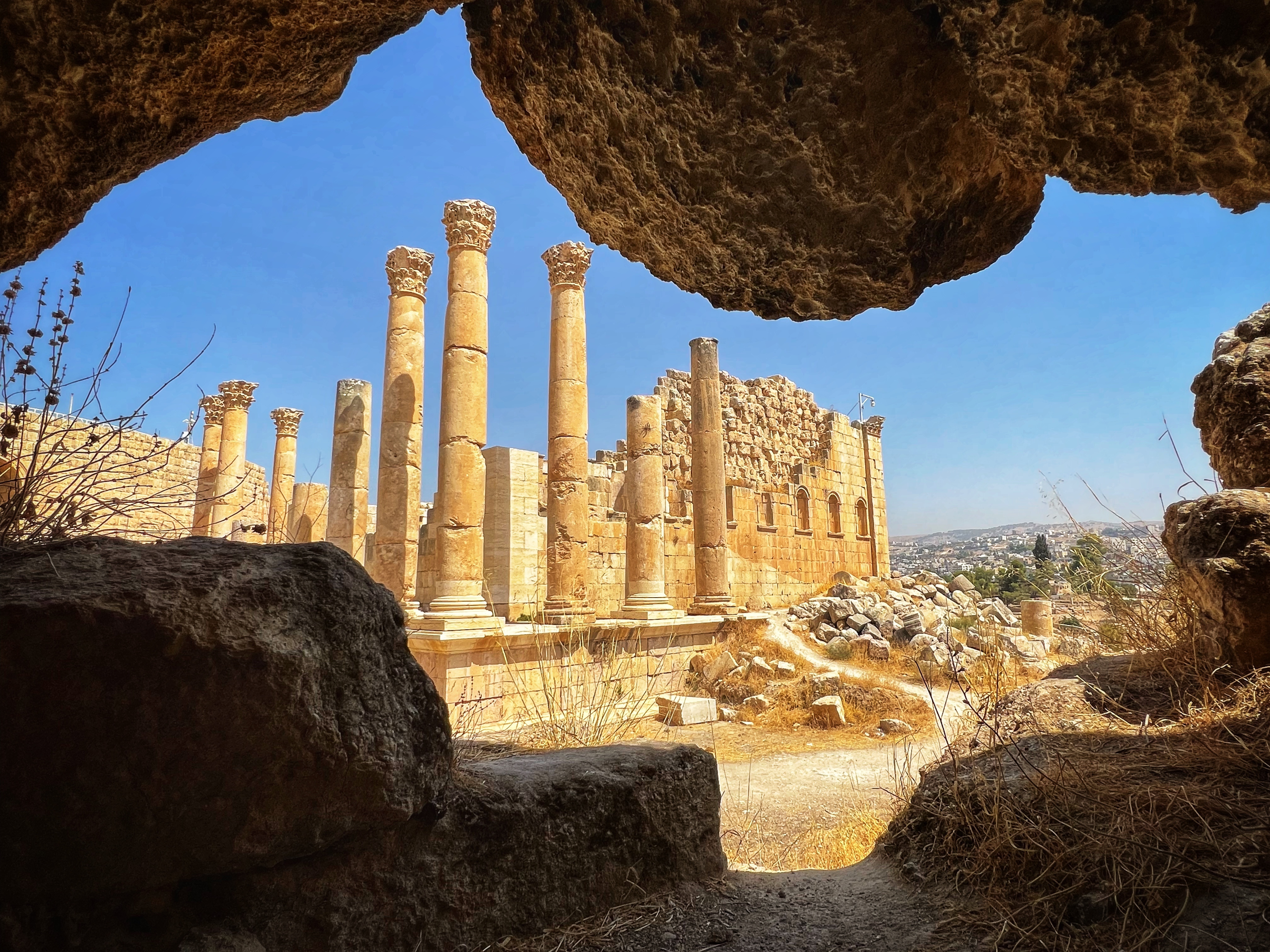
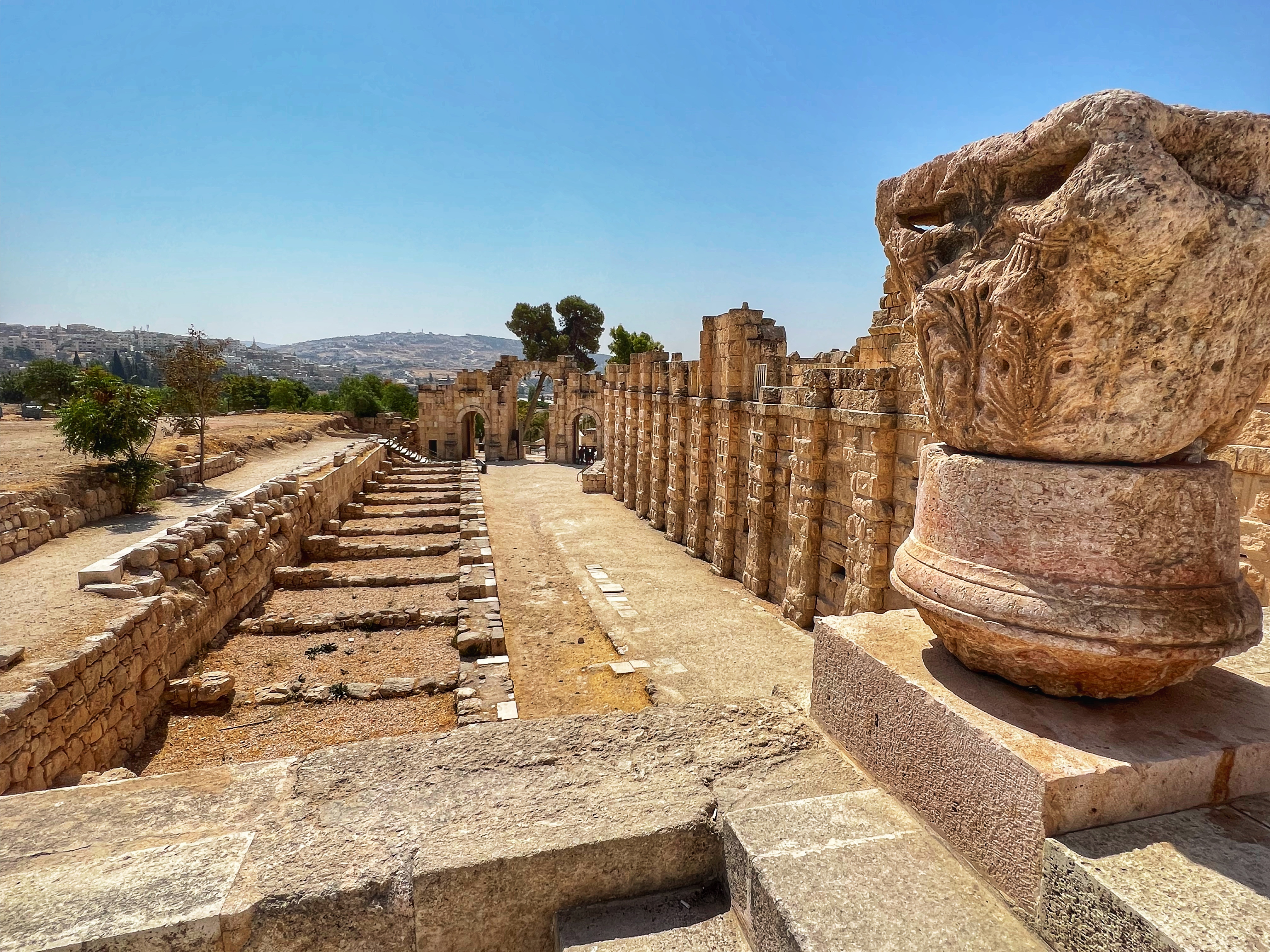
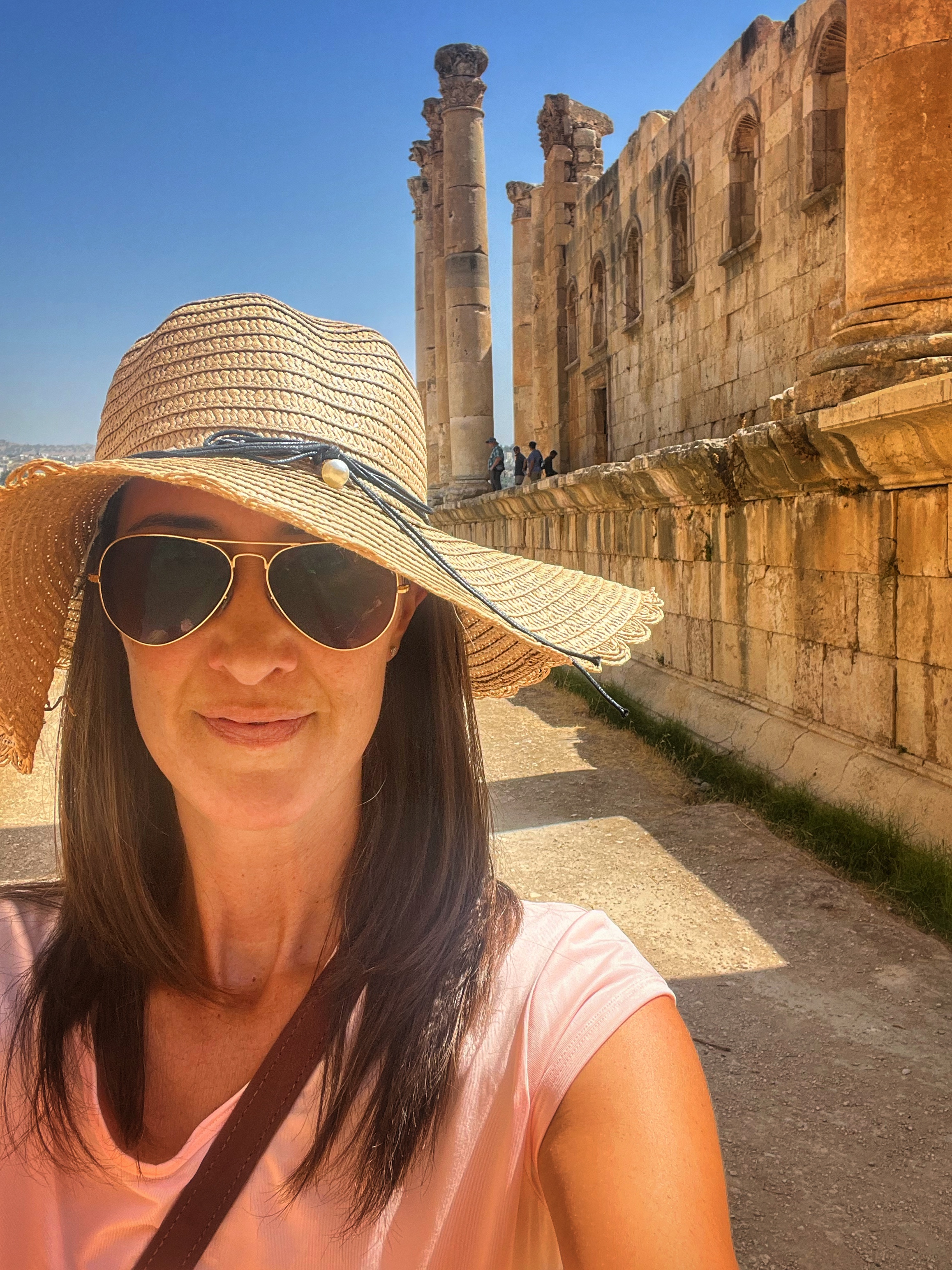
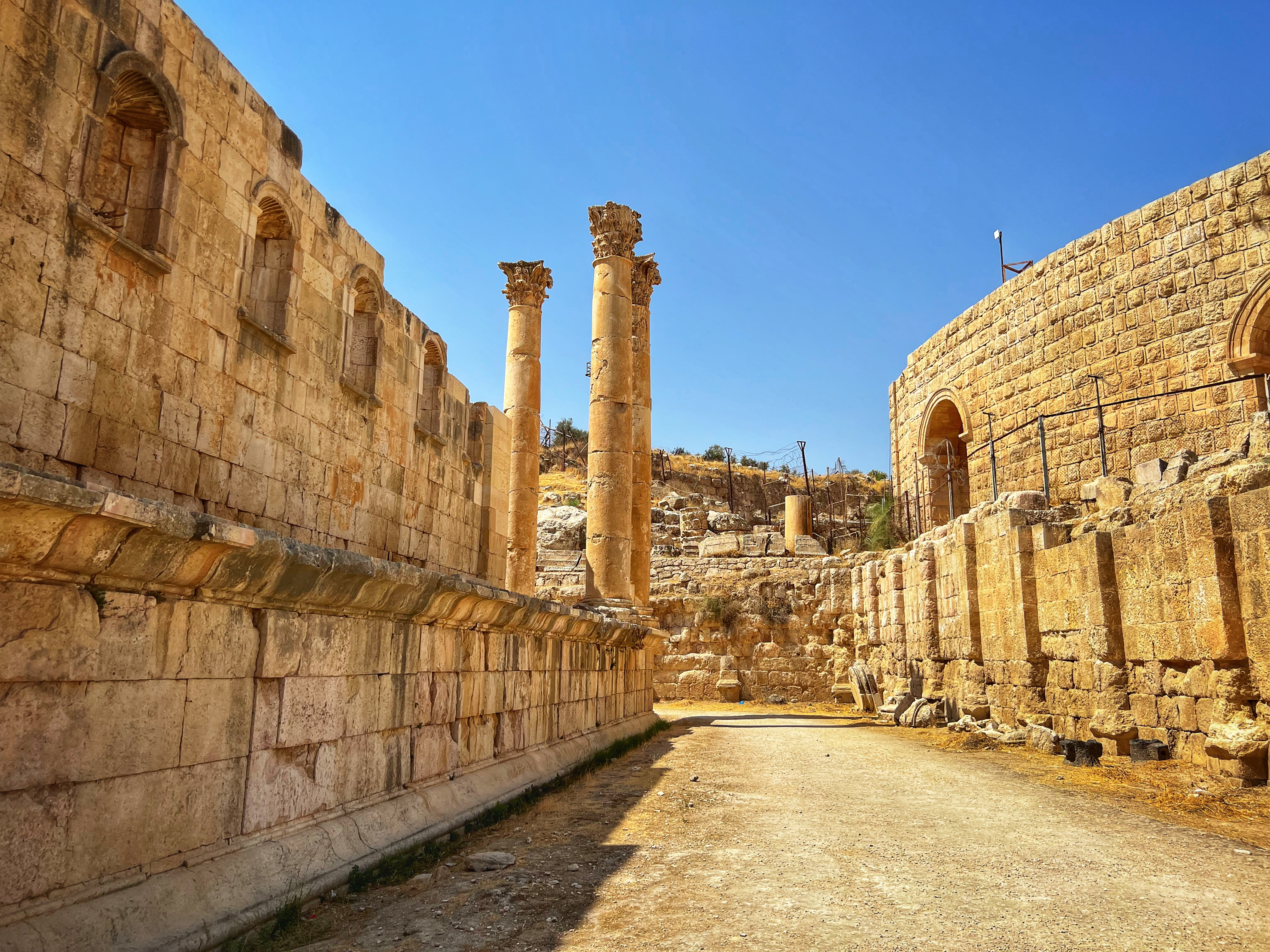
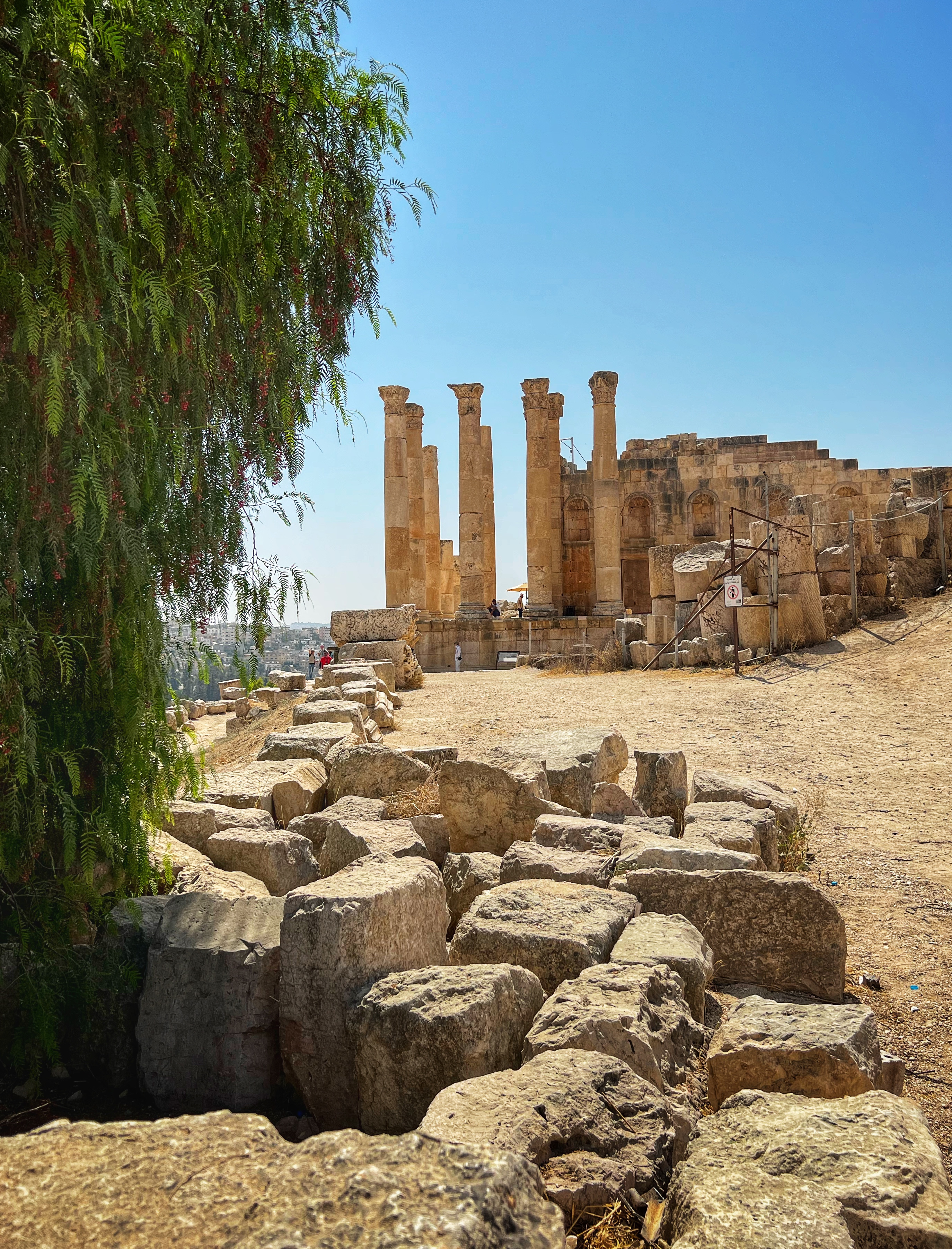
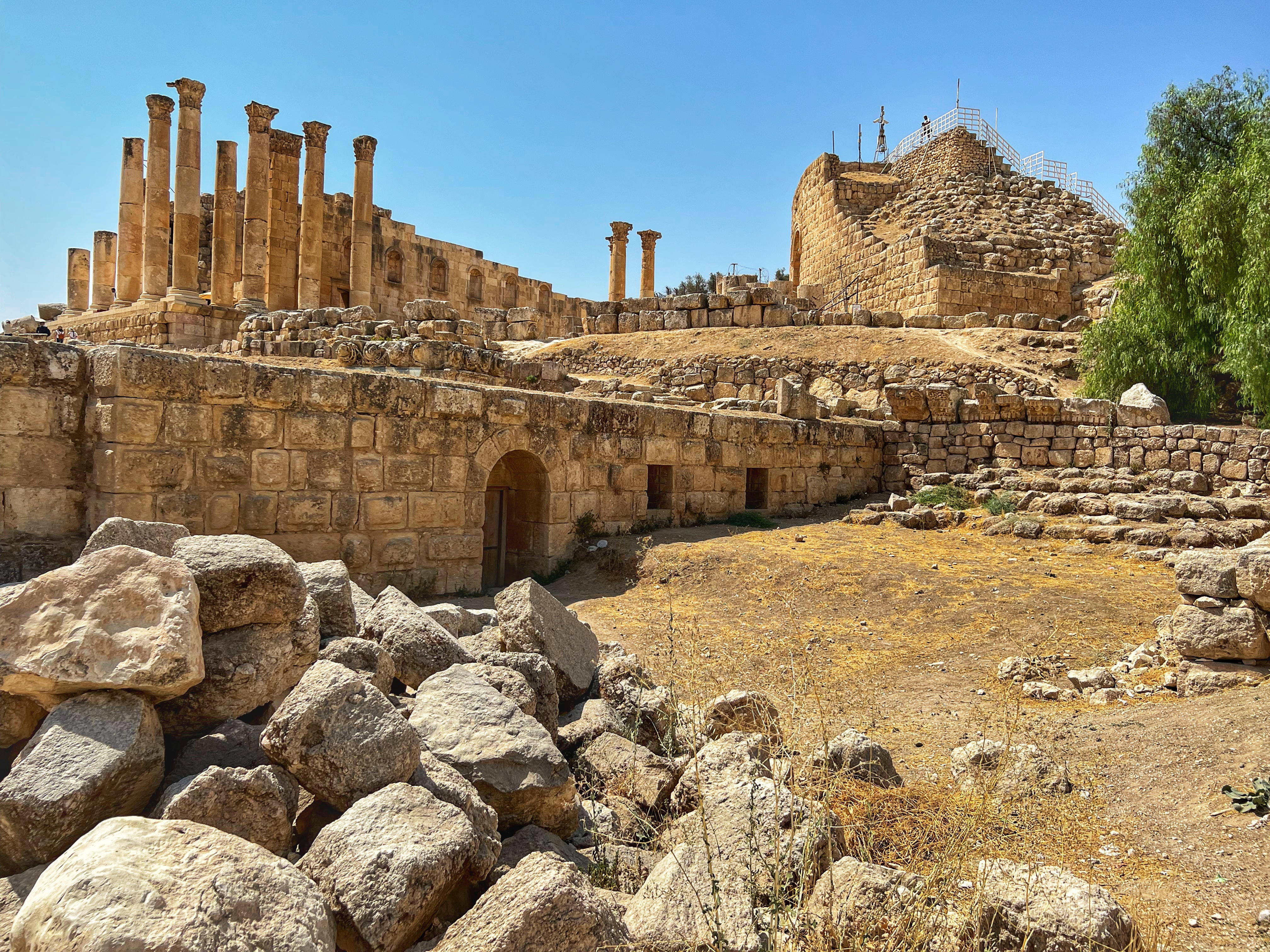
The Temples of Zeus (above) were very interesting with their giant looming columns. You could walk completely around the temple and naos. The temple and naos were built in the early Roman period and gradually modified in the nearly 600 years of Roman occupation. Most impressive to me, though, was the Southern Theater. We entered the theater and two men began playing music – a bagpipe and drum – and the sound echoed through the stadium as we climbed up the steps to look out over the Jerash ruins. Such a cool experience!
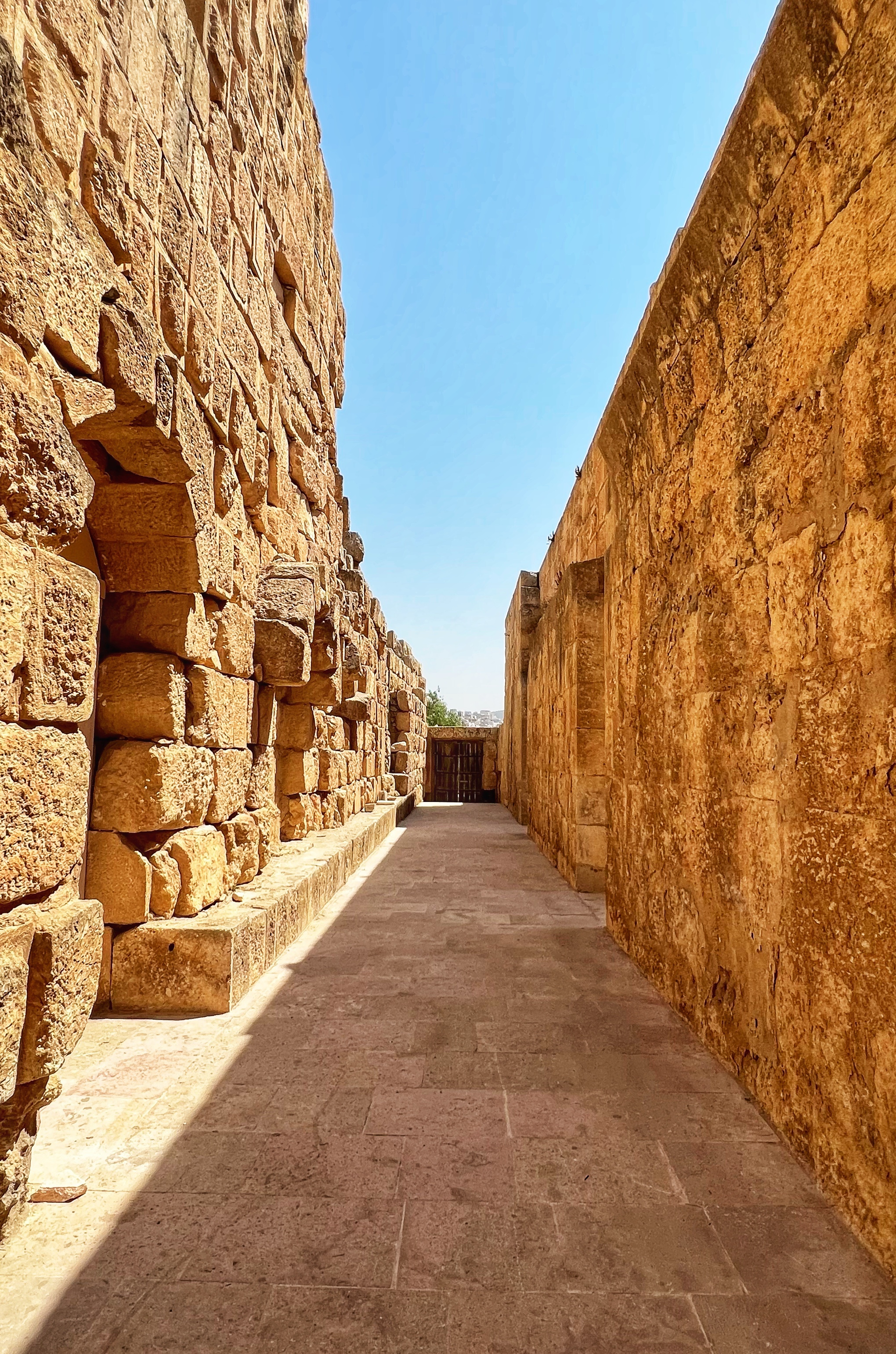
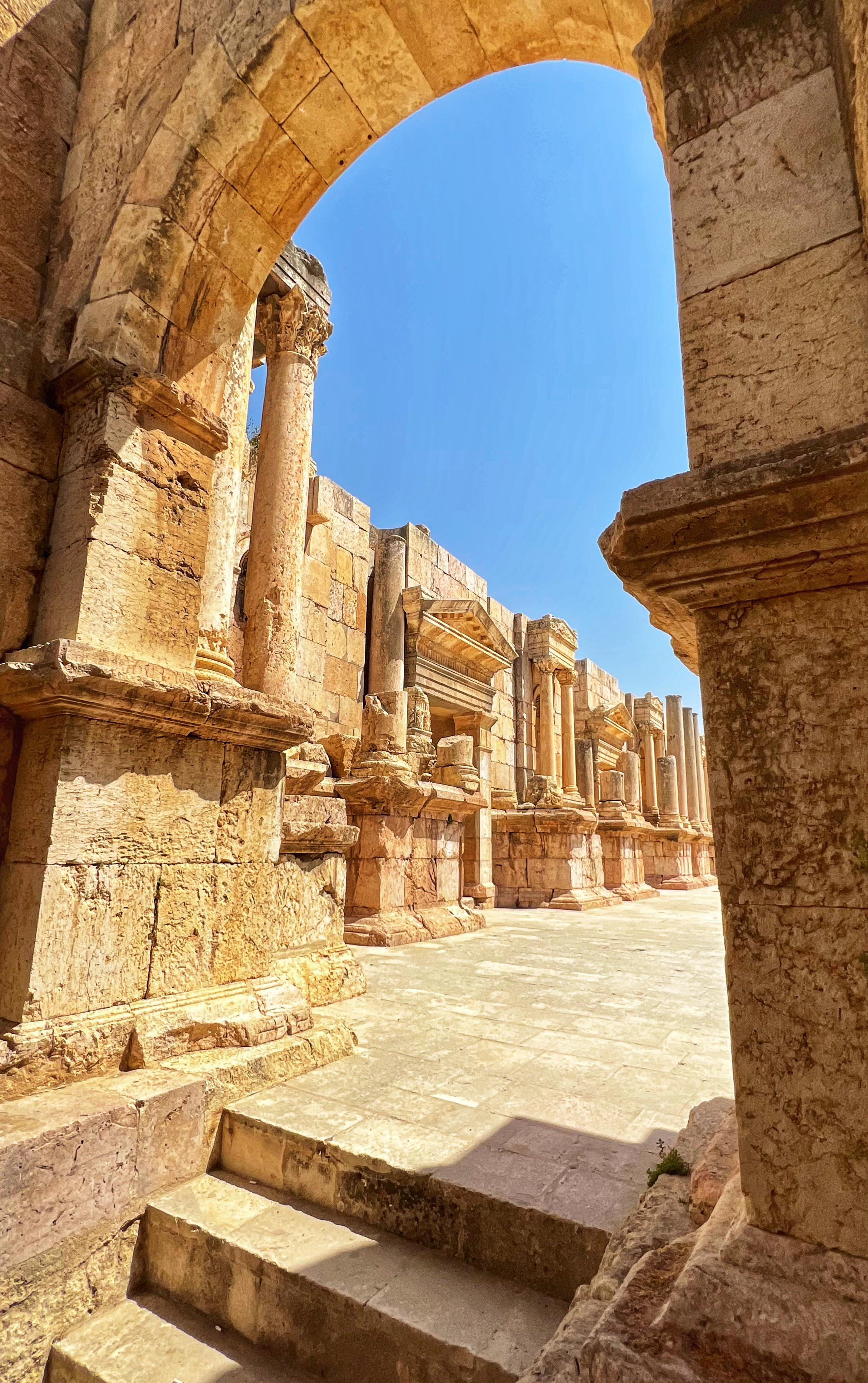
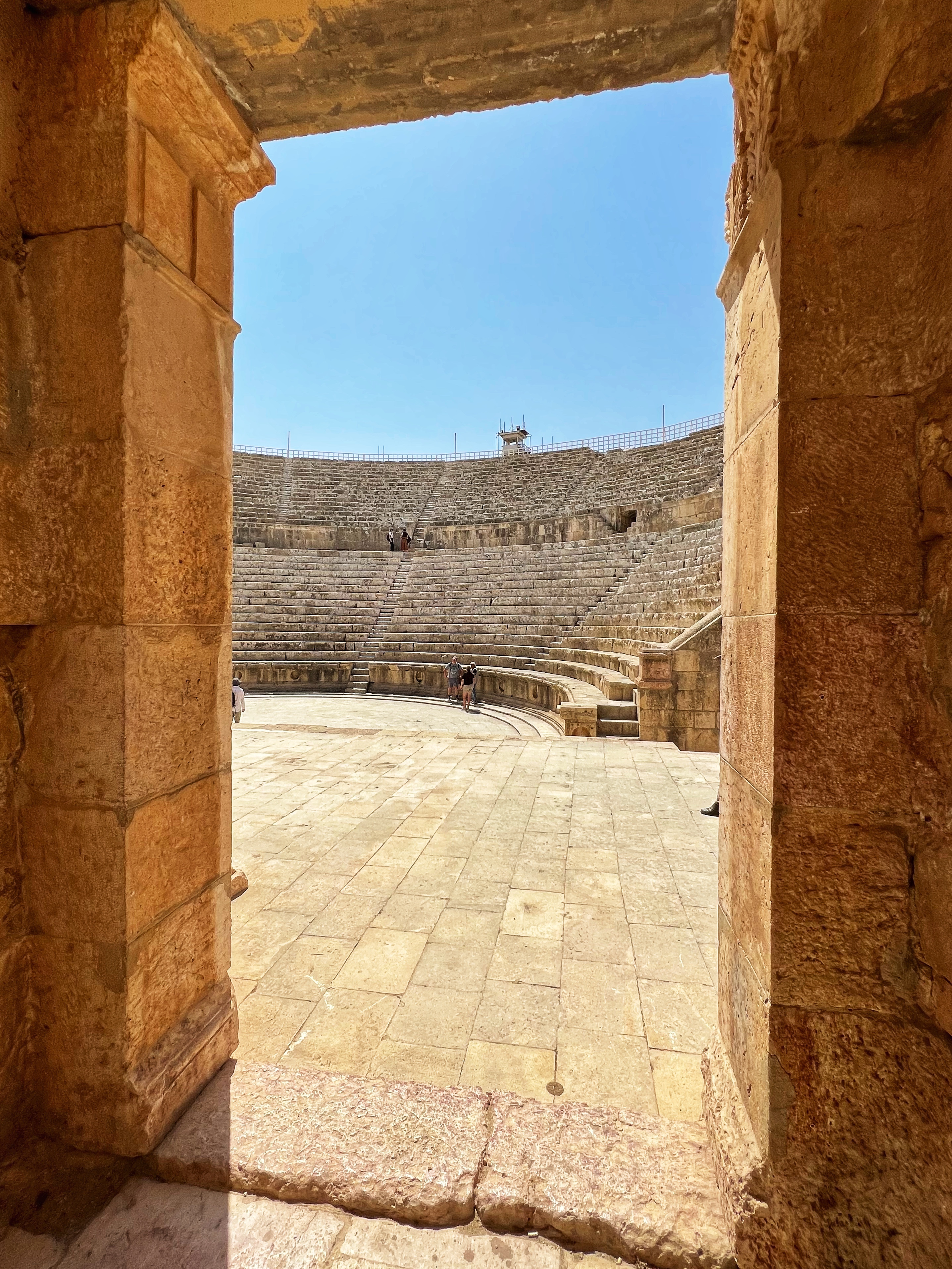

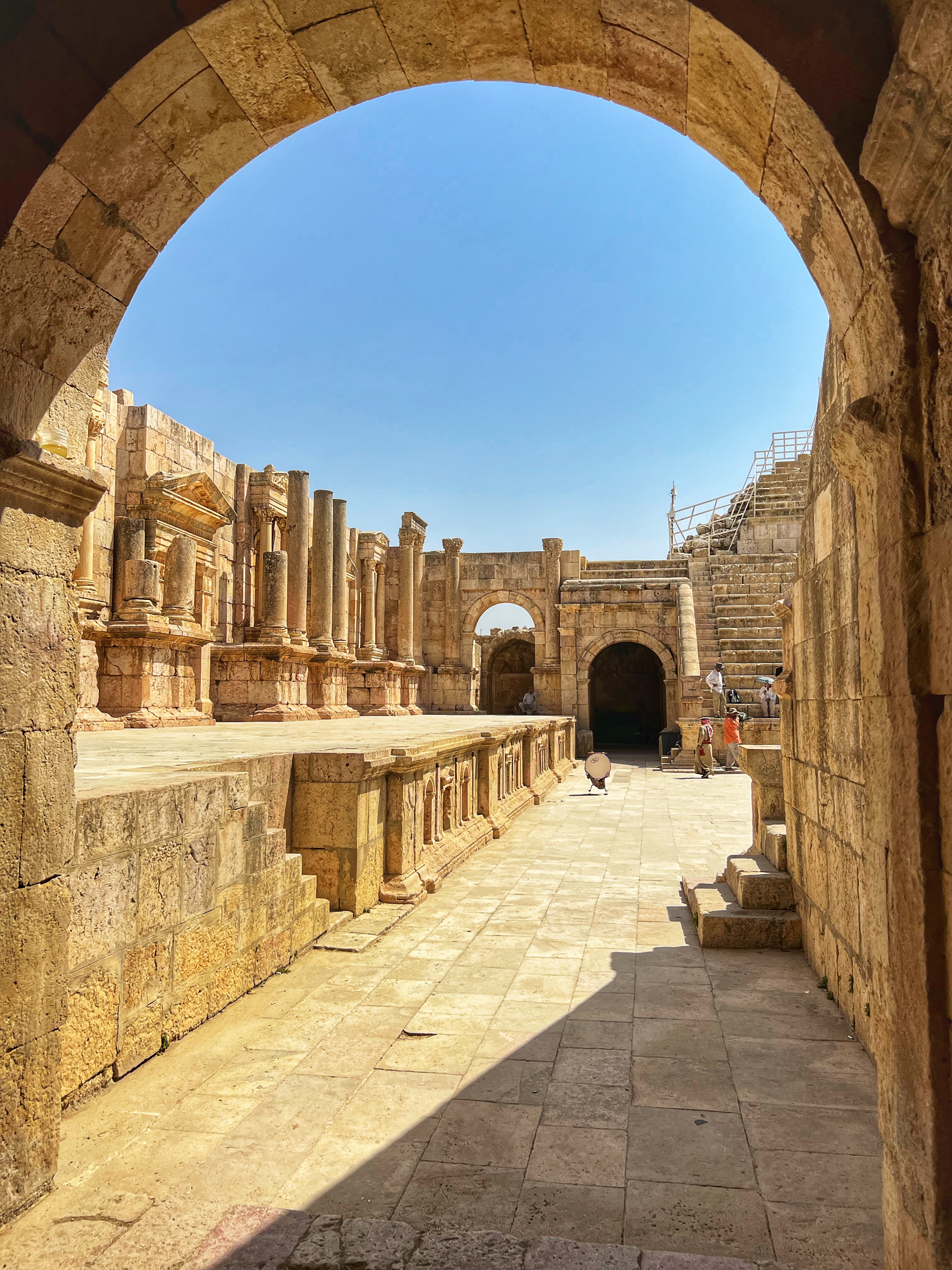
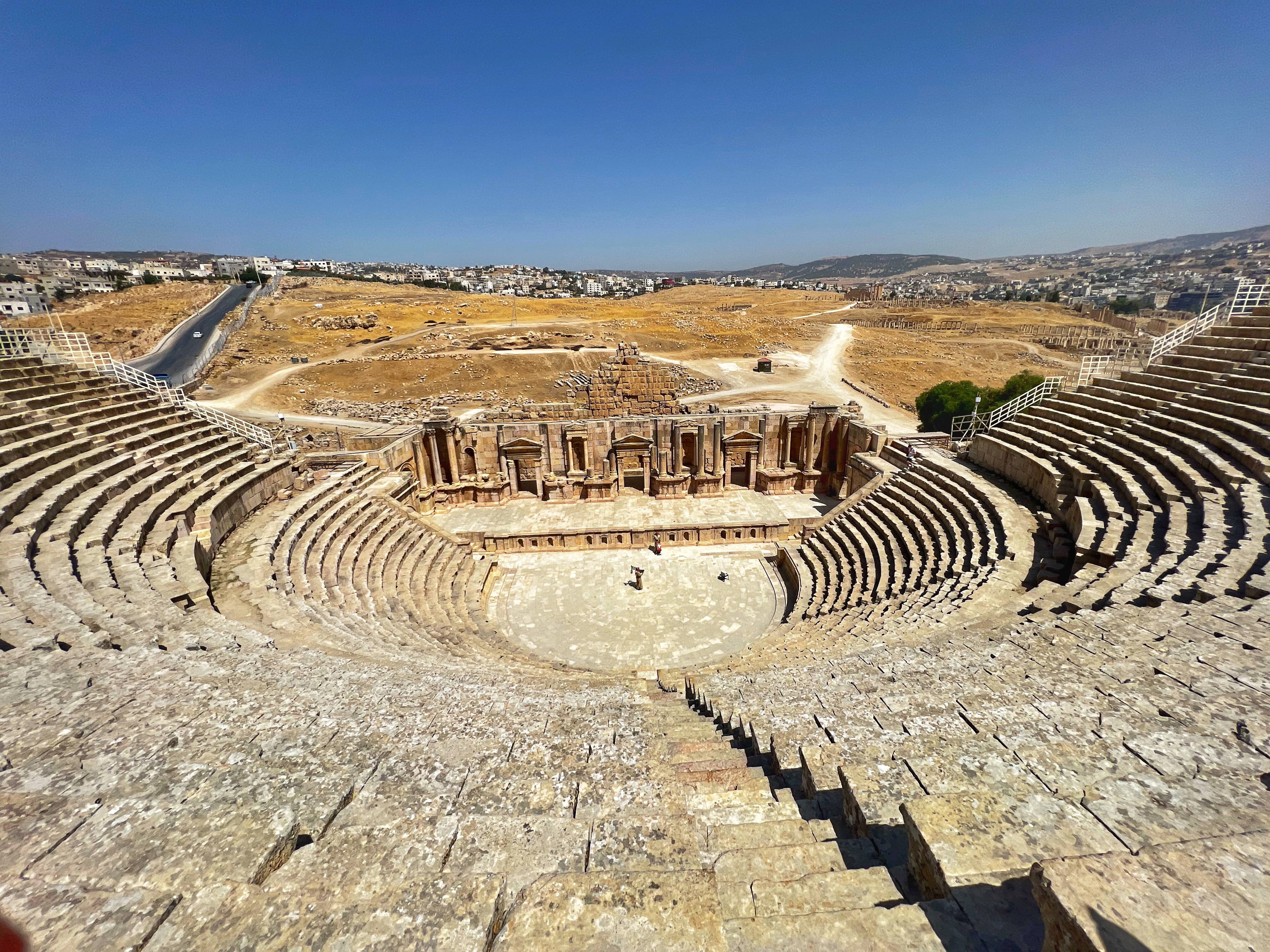
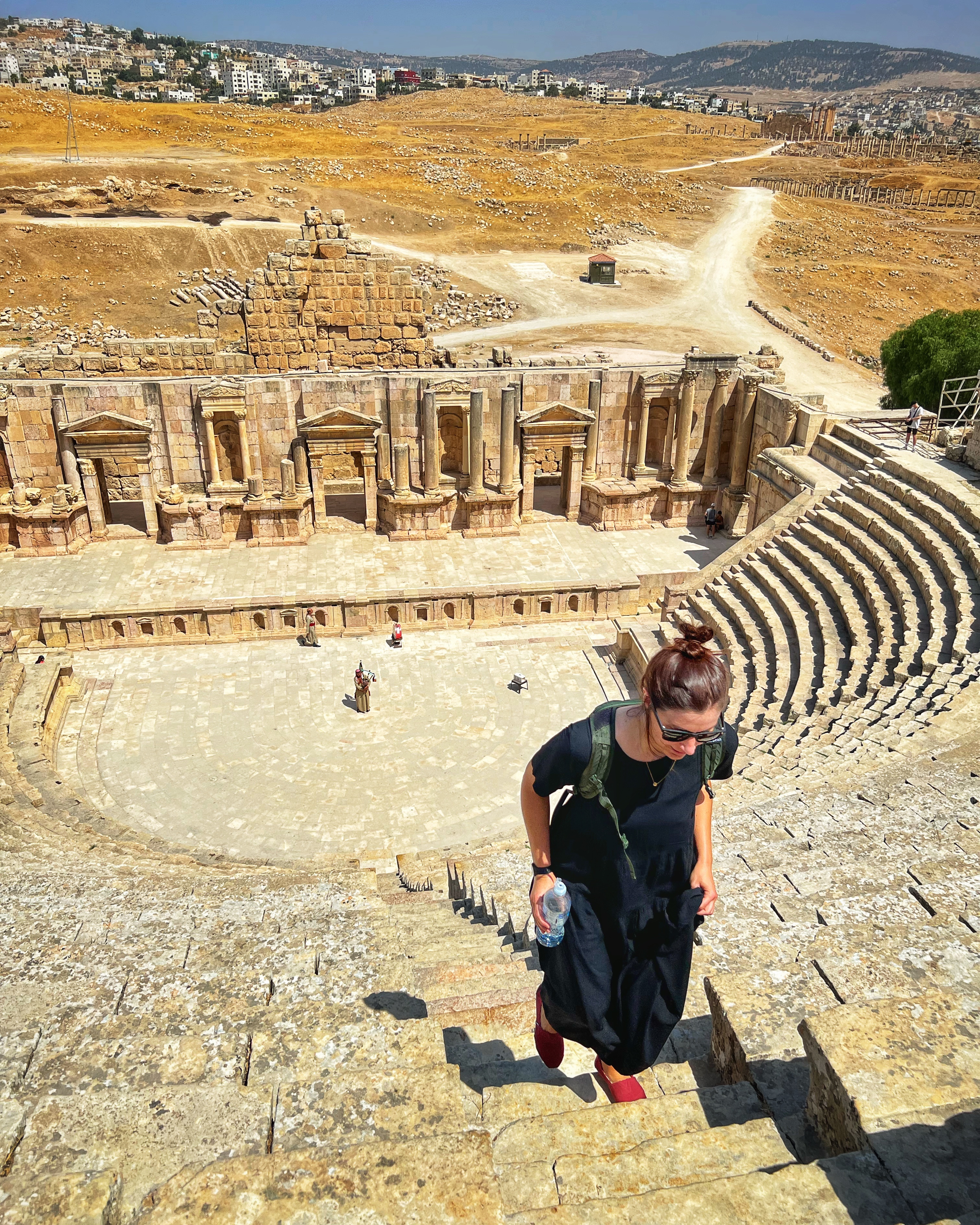
This theater was built between 80 and 96 AD and could seat an estimated 3,000 people. The stage at this South Theater is richly decorated – much more ornate than other theaters in the region. Today it is still used for concerts during local festivals.
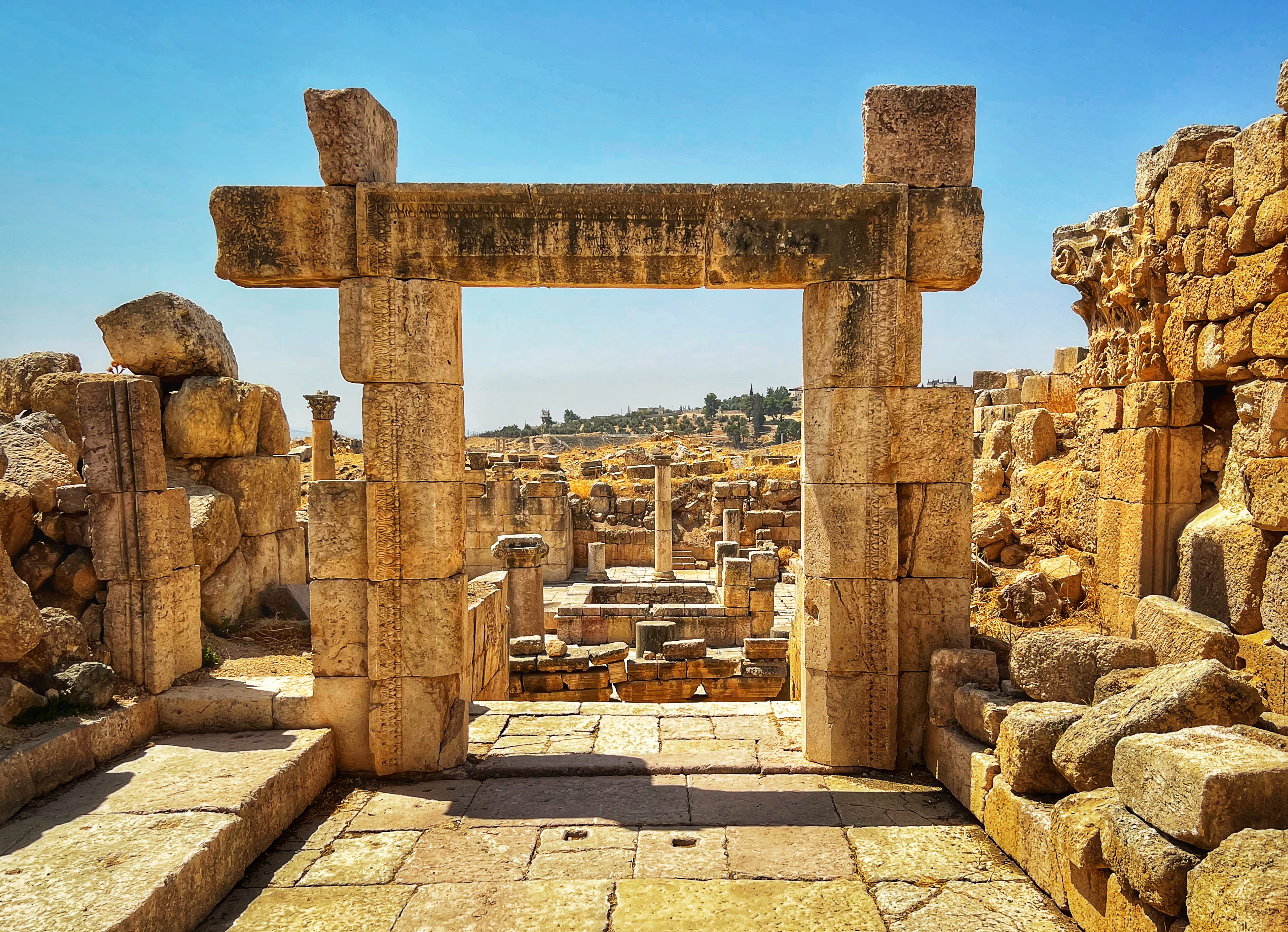
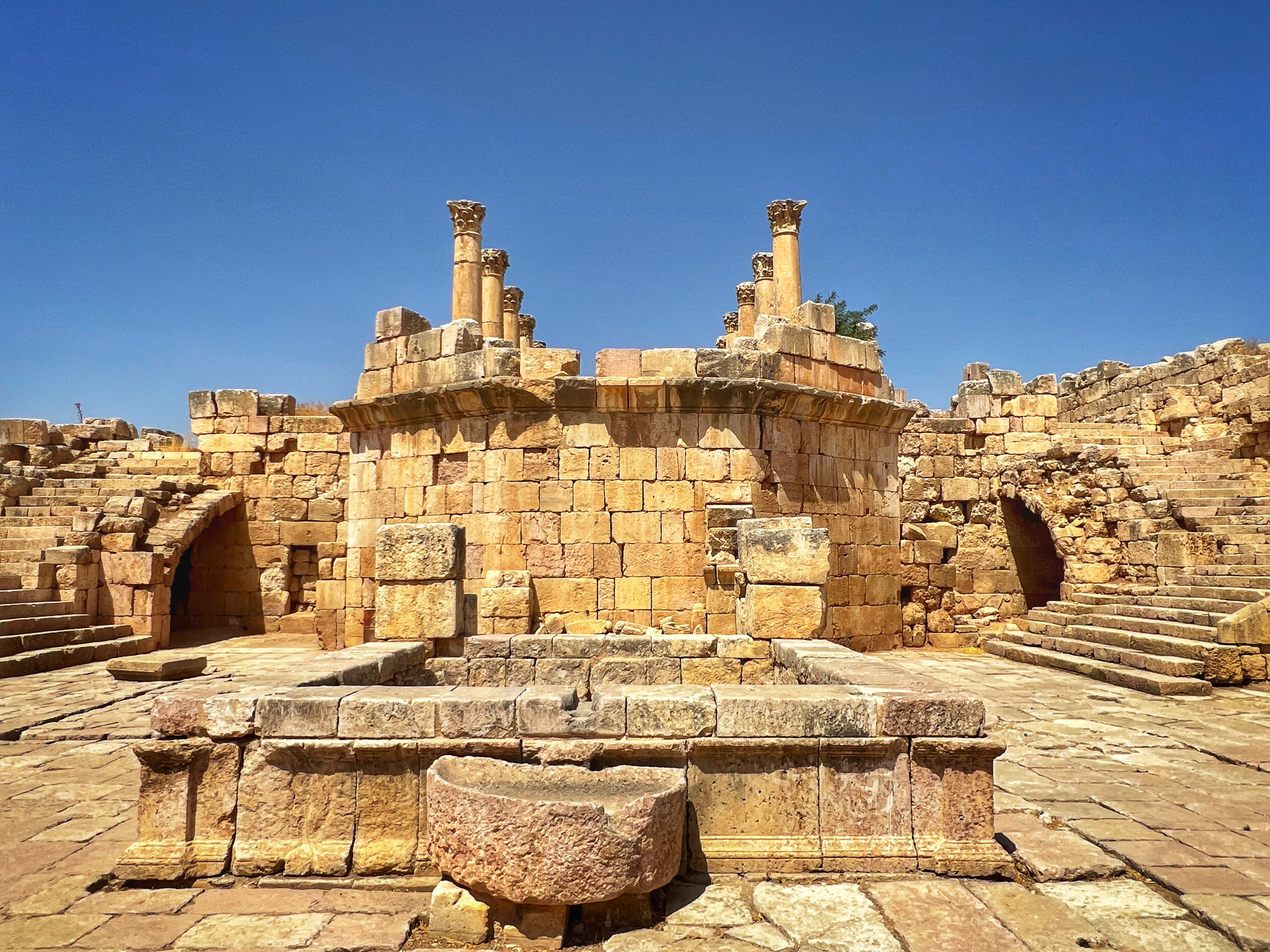
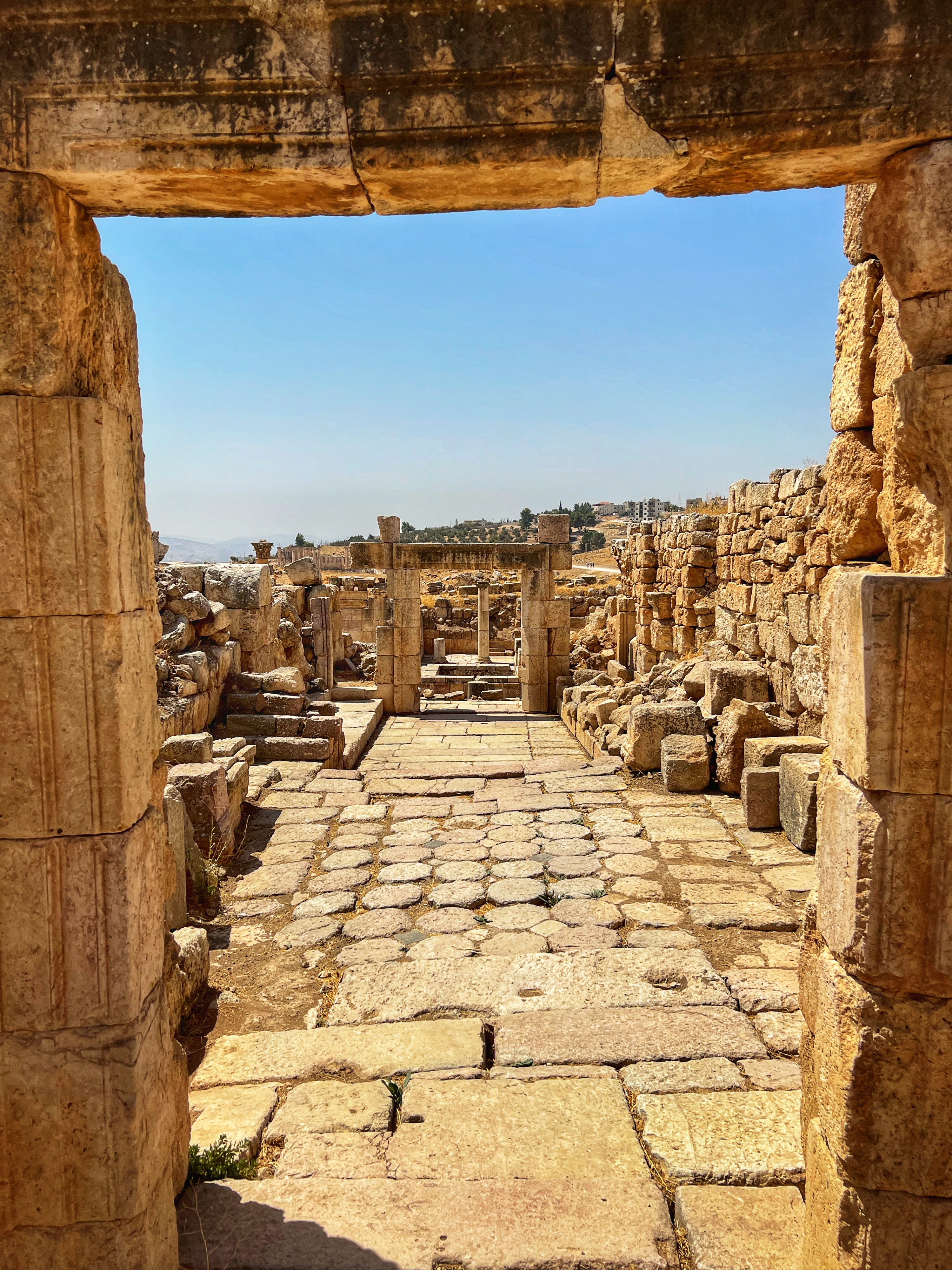
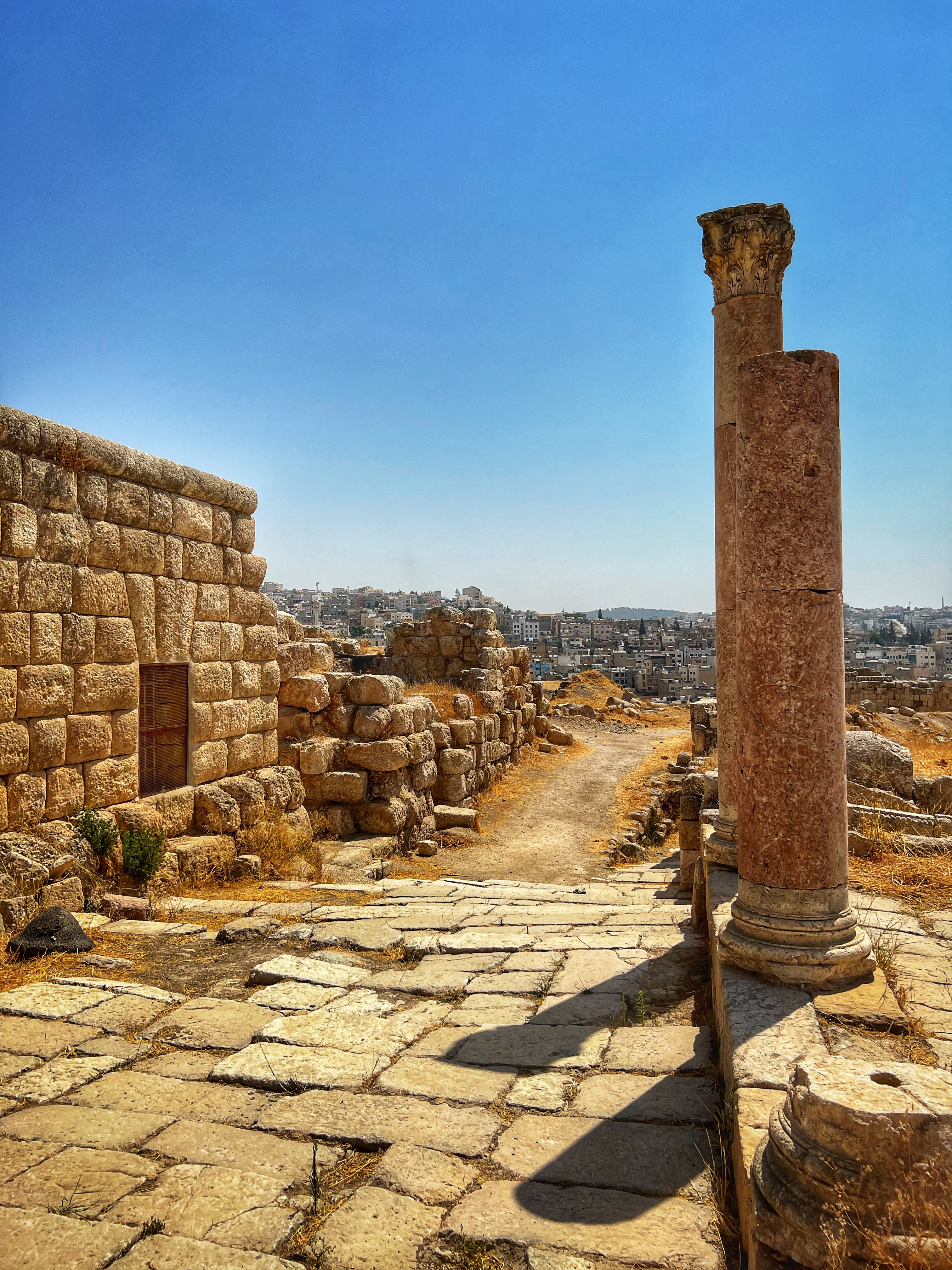

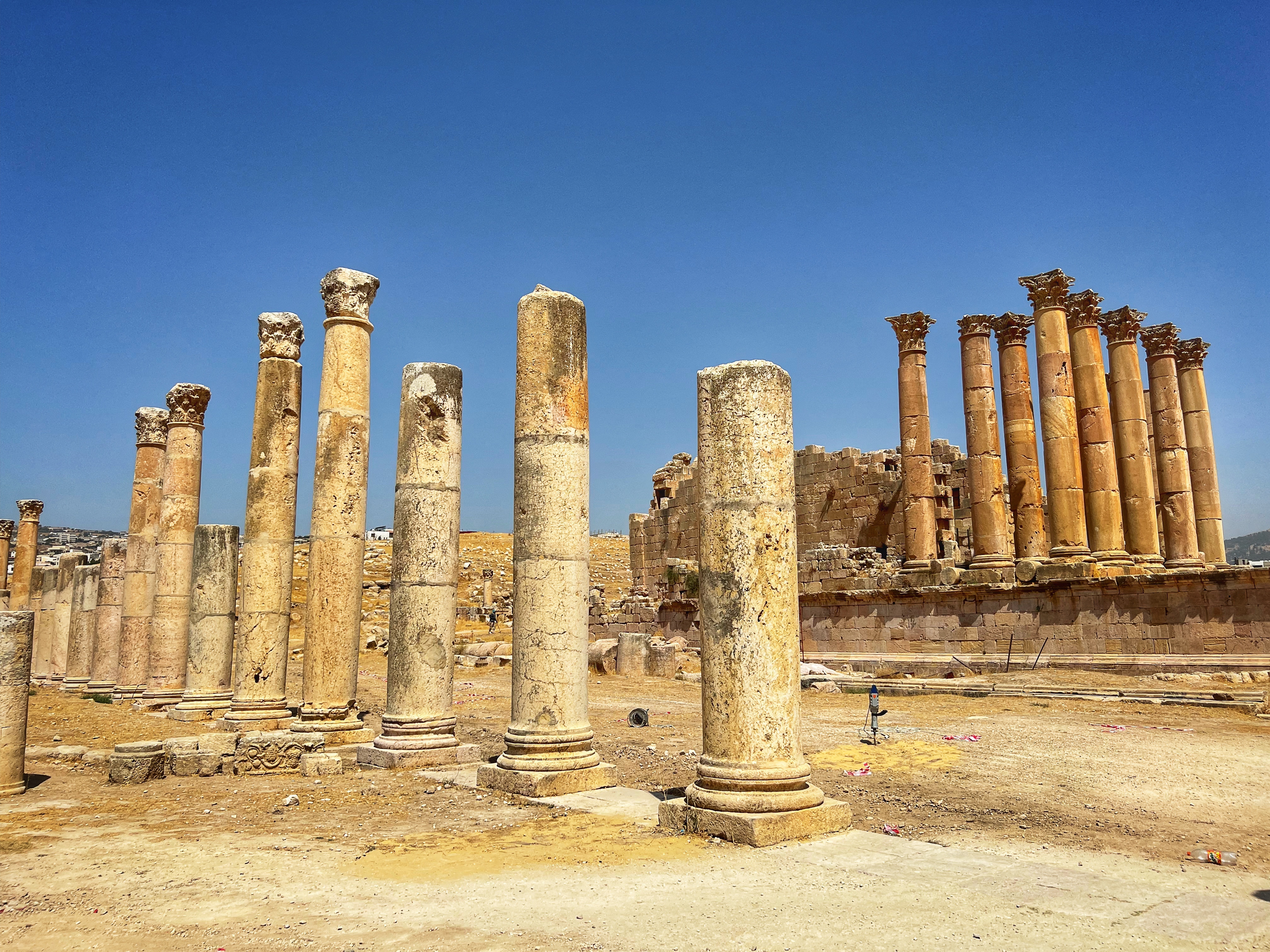
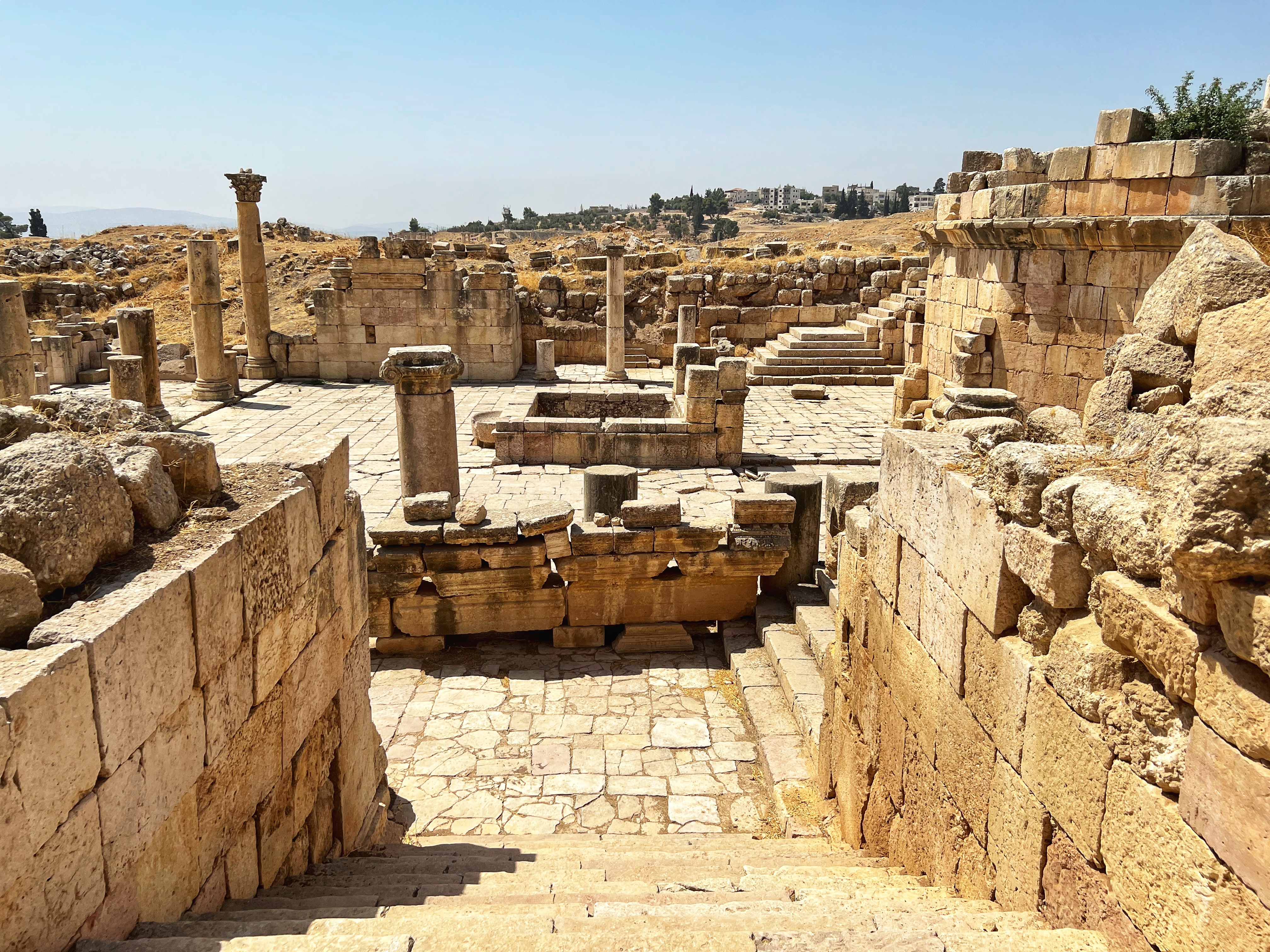


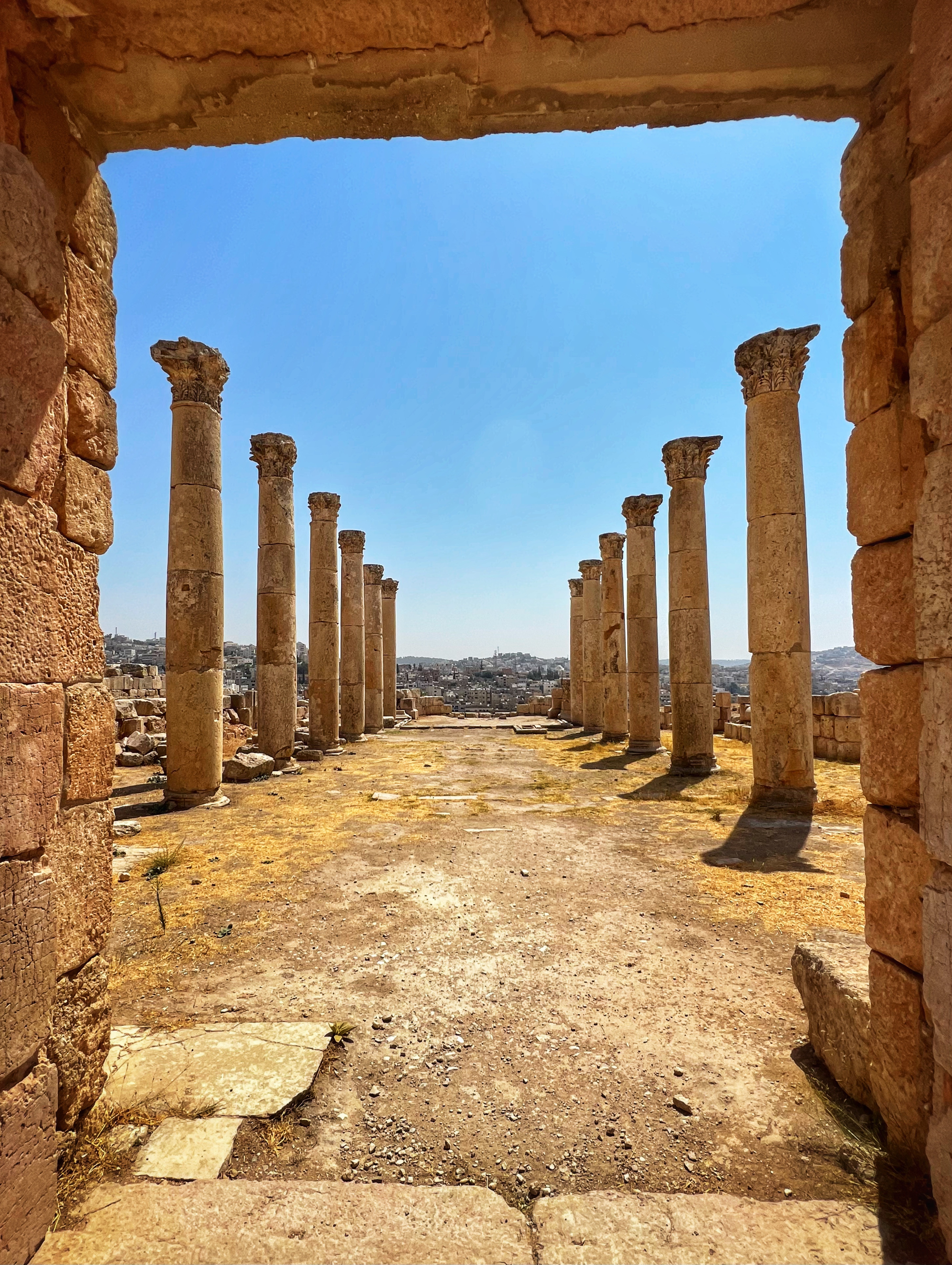

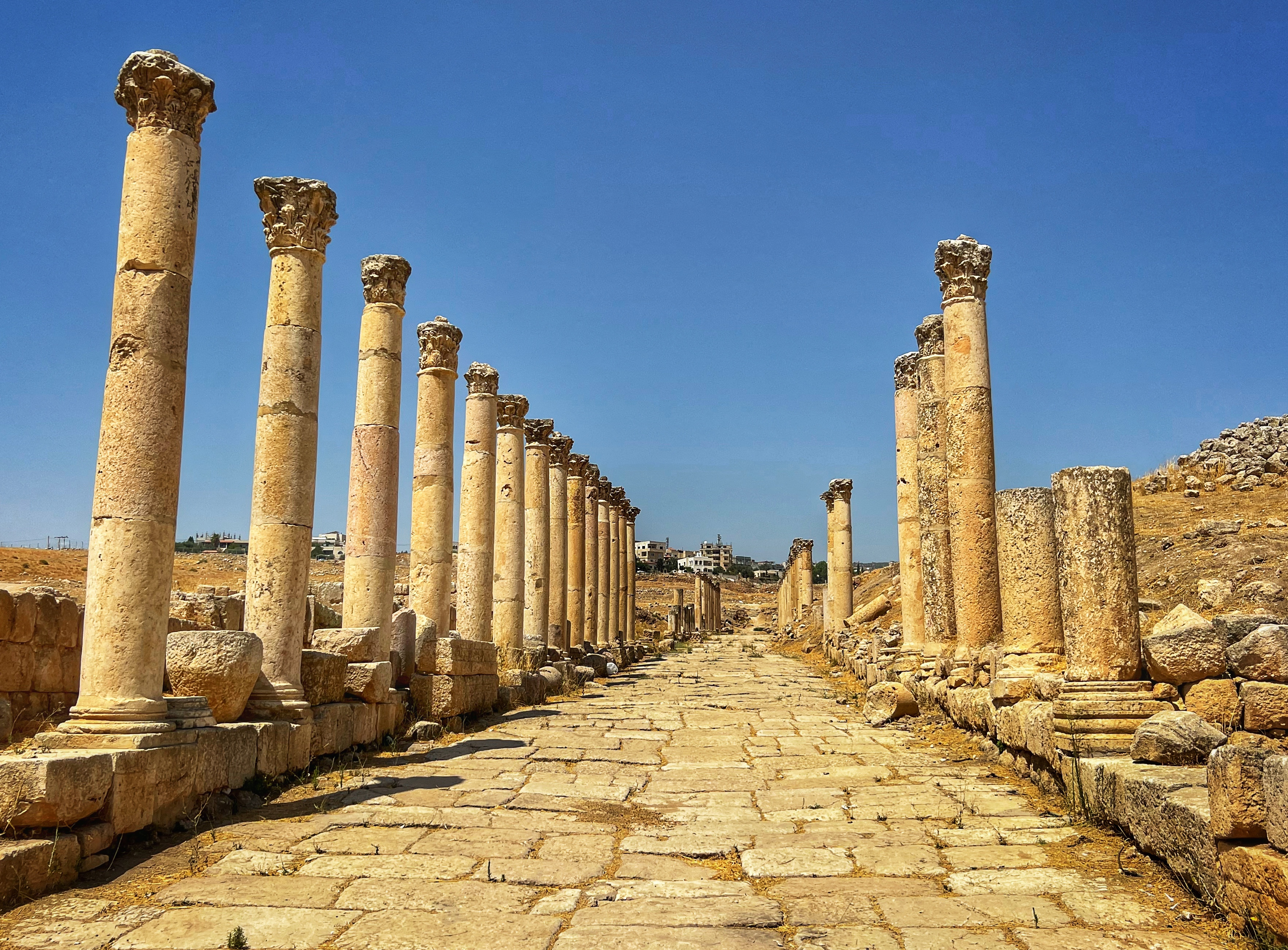
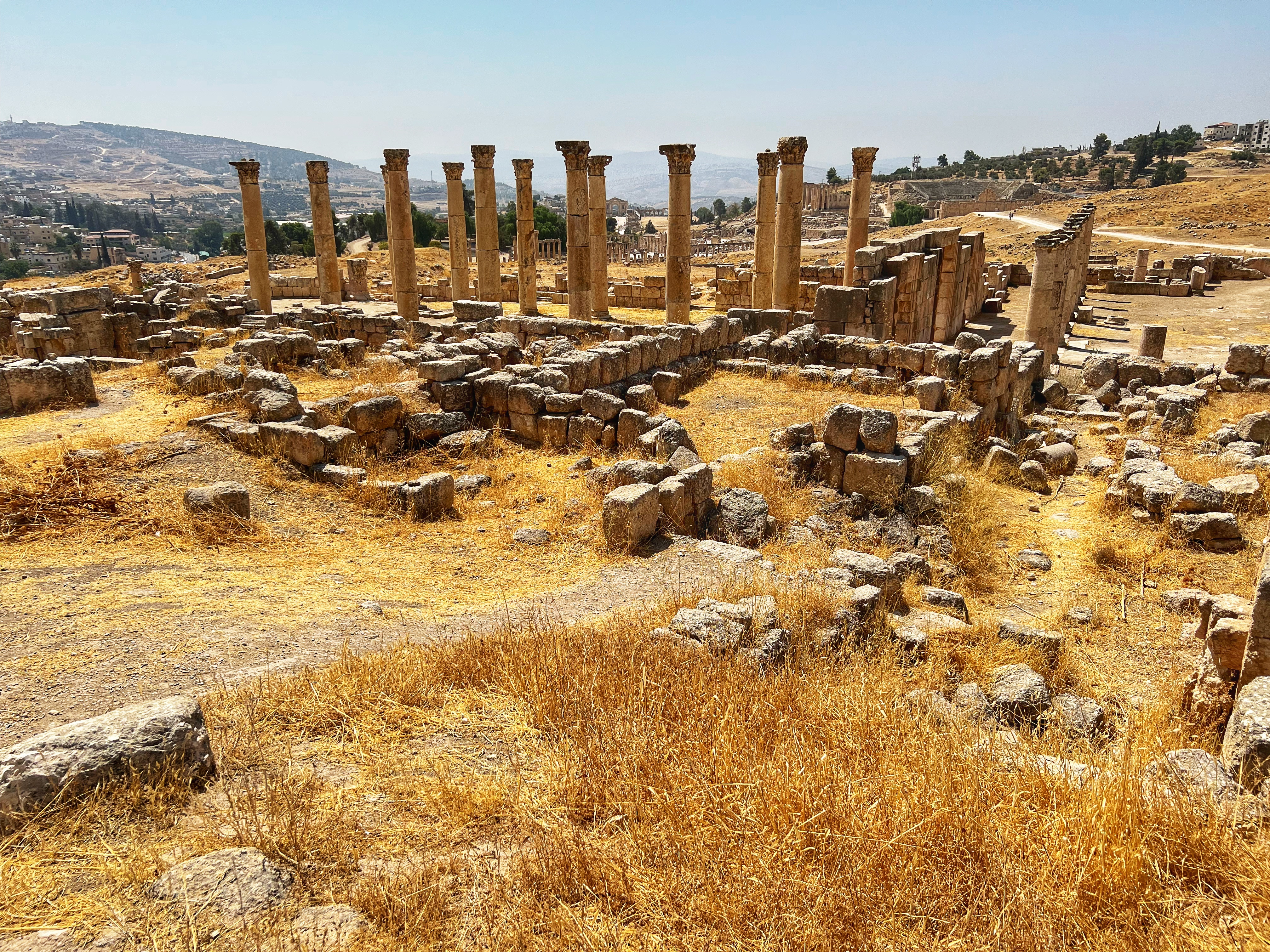

Continuing on we discovered the Temple of Artemis, Baths of Placcus, Fountain Court, Church of St. Theodore and the Nymphaeum. This area was probably my favorite as it was fun to walk through and imagine what it was like 1500-2000 years ago. It’s so impressive to find remnants of the Roman water systems, too – such a sophisticated culture. Finally we walked along the Cardo Maximus, like a main street lined with columns. Here is where there used to be many markets, and it led to the Oval Plaza. The Oval Plaza was once a Roman Forum, the center of daily life in ancient Roman times.
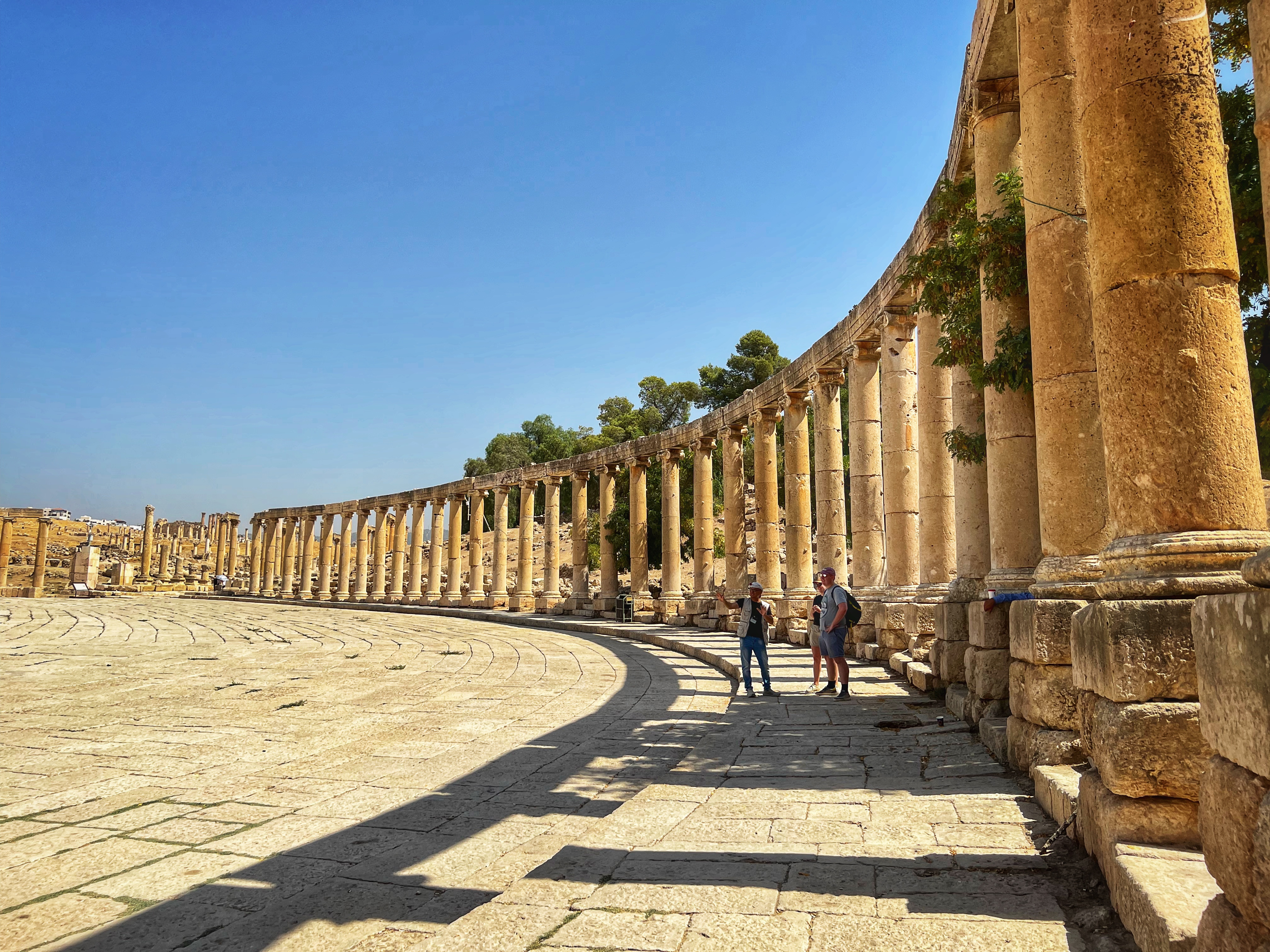
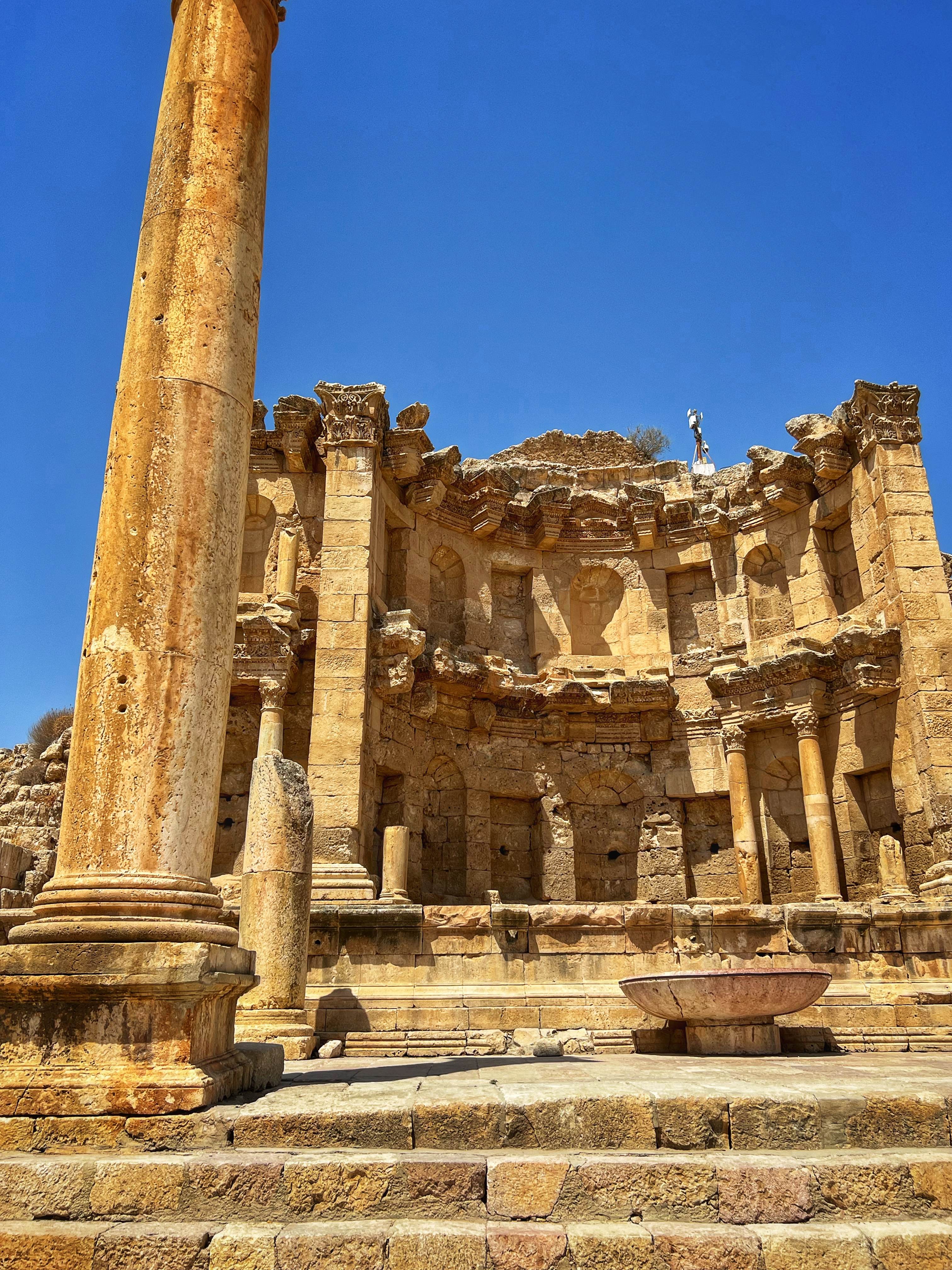

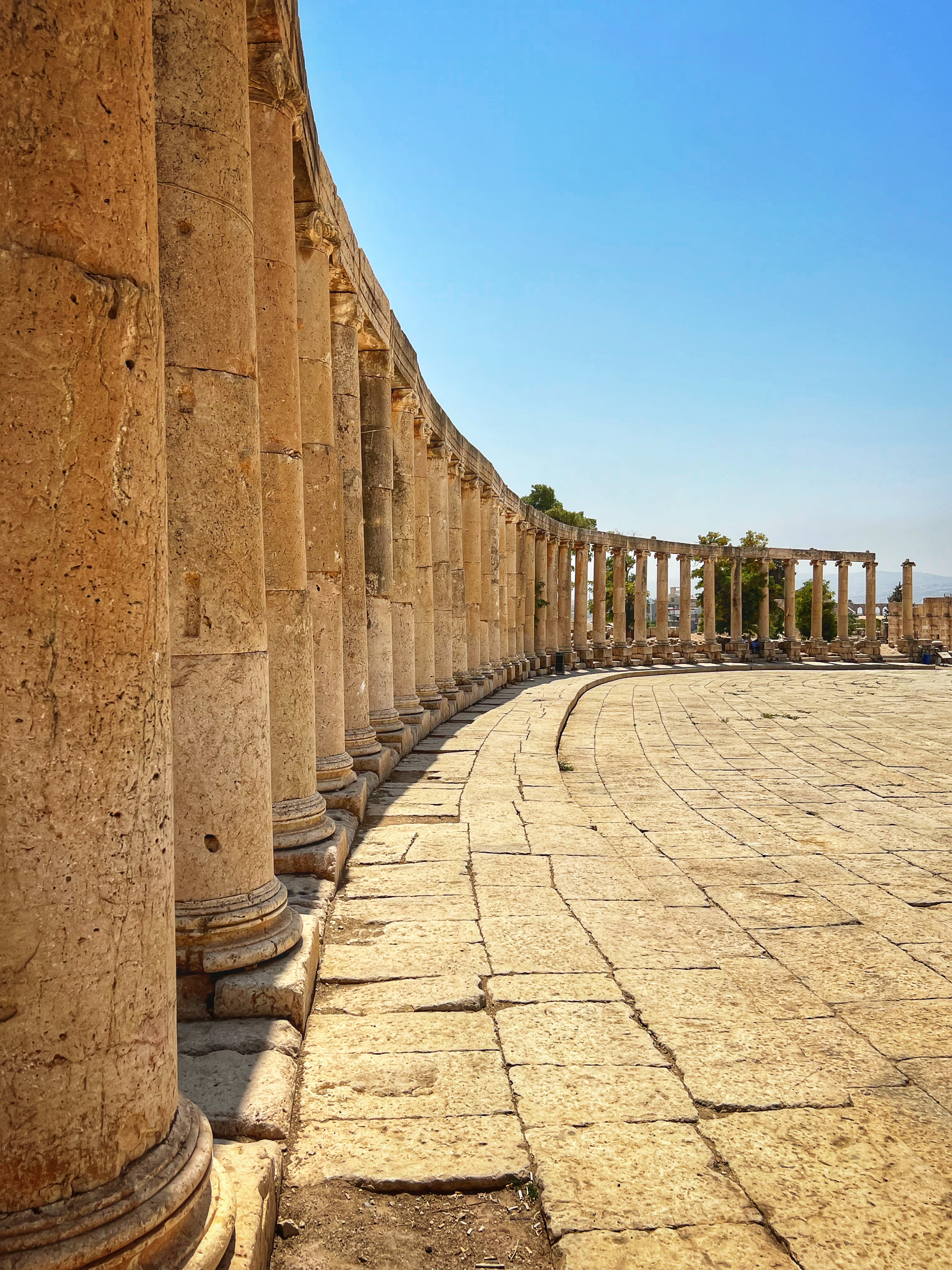
The heat was starting to have an affect on us after about 90 minutes, so we wrapped up our tour at the visitor center with a refreshing glass of slushy mint lemonade. We concurred that Jerash is well worth the stop even if it is about 1 hour out of the way from Amman – and we preferred it to the ruins in Amman! Everything is so well preserved…it’s like a Roman ghost town.
Dead Sea
At mid day, when it was the hottest, we drove 90 minutes from Jerash to the Hilton Dead Sea Resort & Spa. I was excited to stay at a nice place right on the water, and it was even better that we stayed for FREE with Hilton Honors points. The best part? All of our food and drinks and even spa treatments were paid for by our Hilton Aspire annual resort credits ($250/yr). We don’t get to stay at resorts very often, so we were excited to cash in on those bennies!
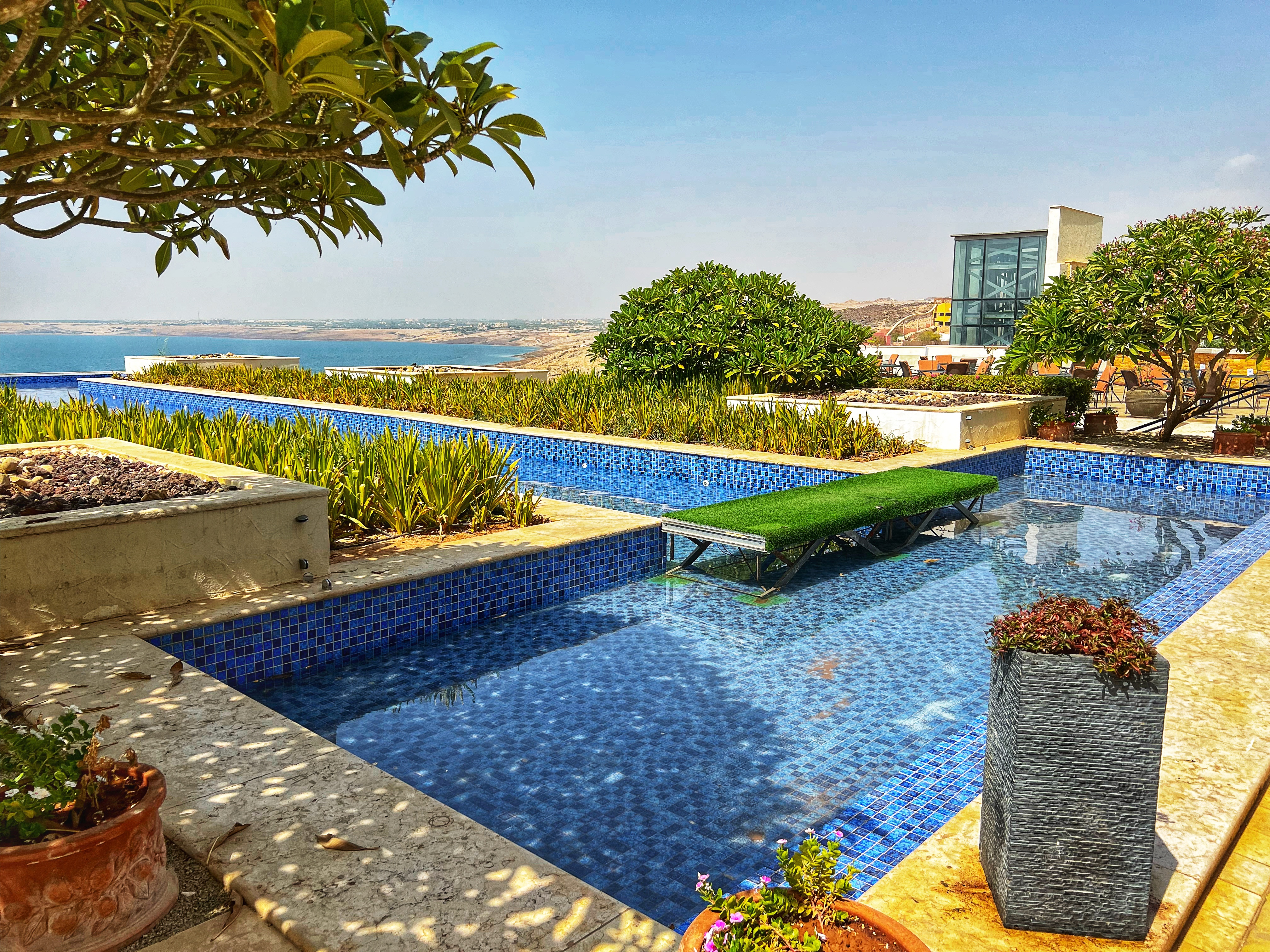
There are many resorts to stay at along the Dead Sea, and I do recommend taking advantage of this if you are interested in that bucketlist float in the sea without feeling gross afterwards. It is difficult to find good spots otherwise, and when you have a hotel or resort to clean up at after, it makes all the difference. Although this Hilton resort is a bit weathered, it had all the familiar amenities and excellent service we have grown to appreciate in Hilton family hotels (no affiliation). I definitely recommend this spot!
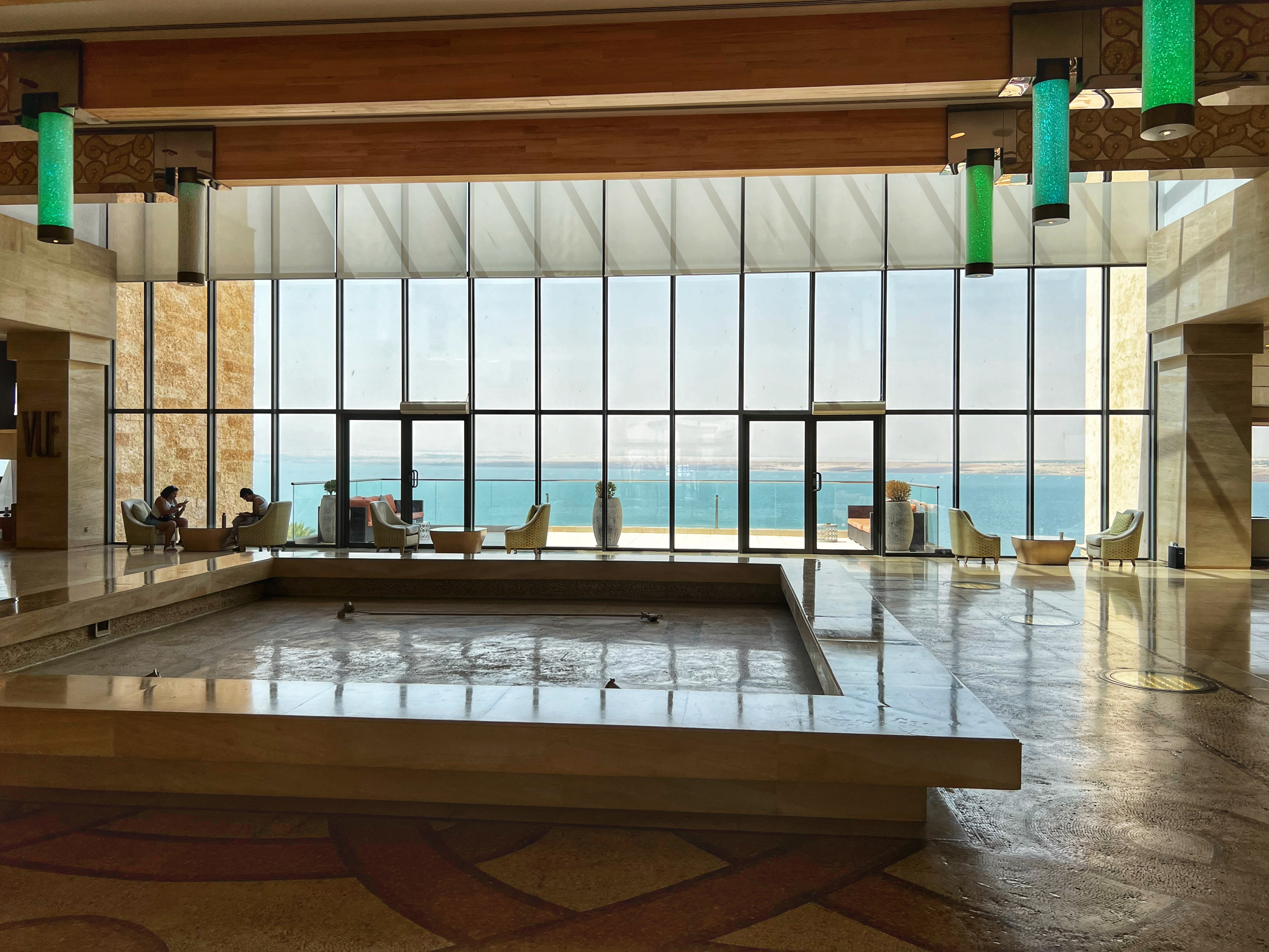
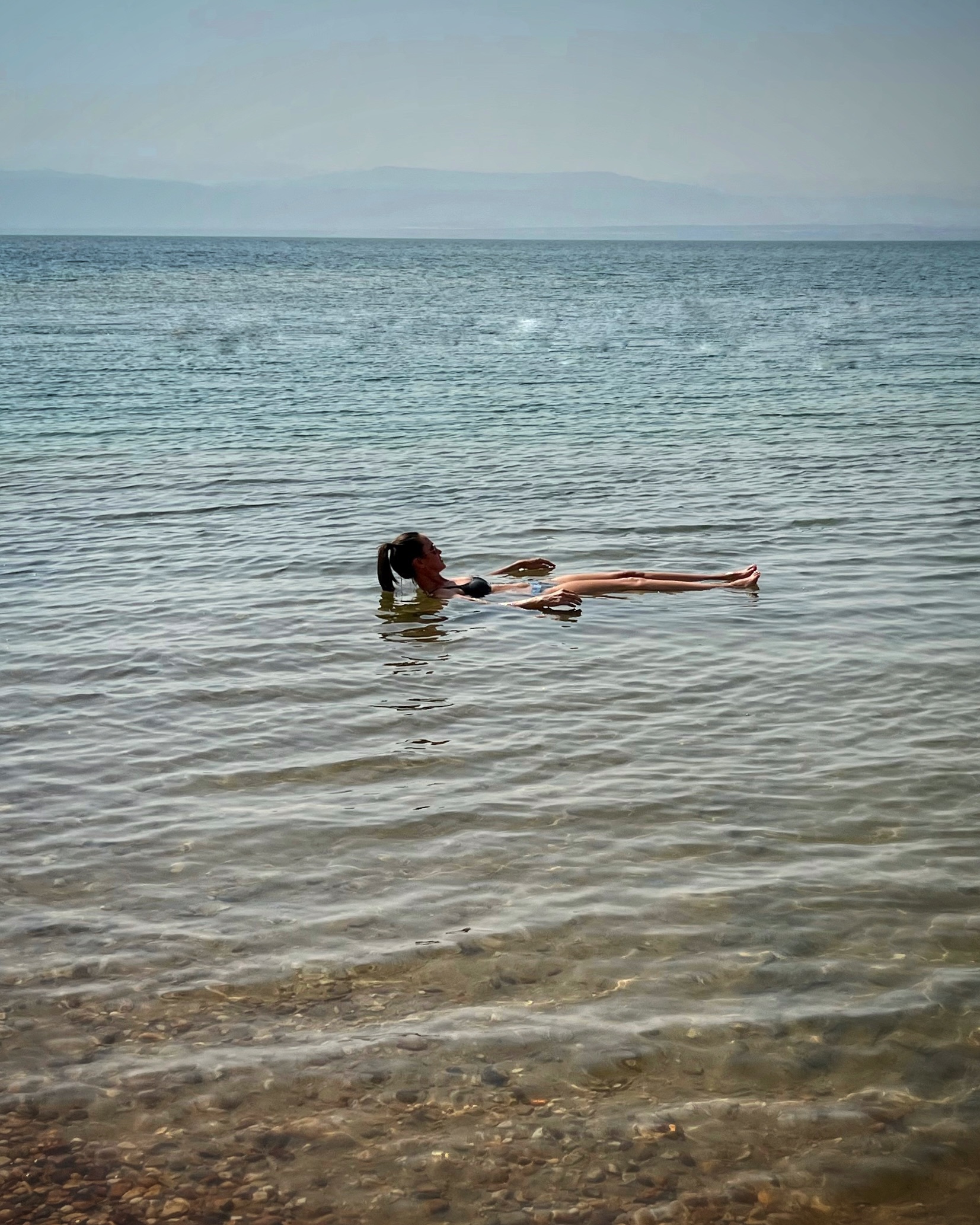
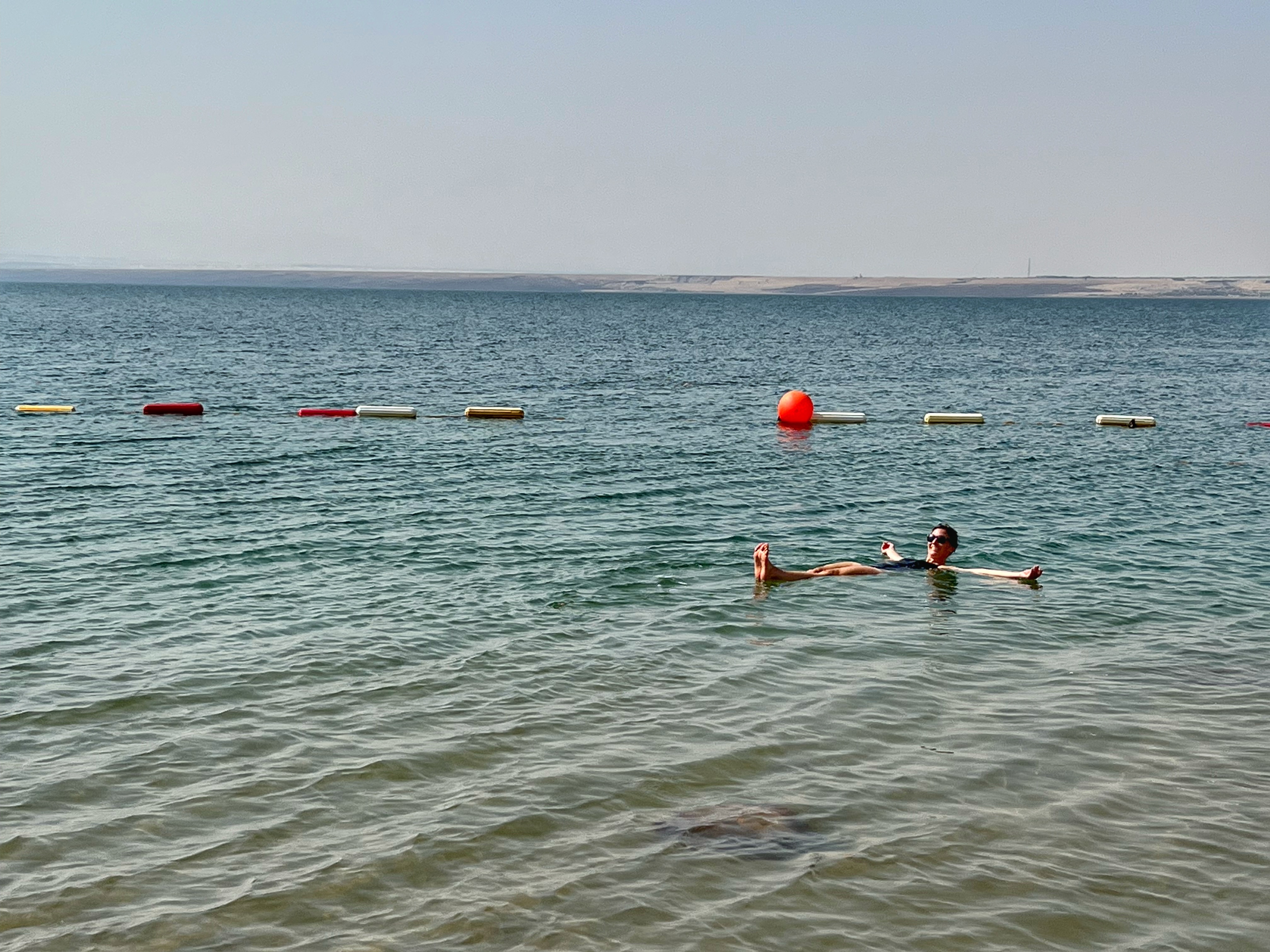
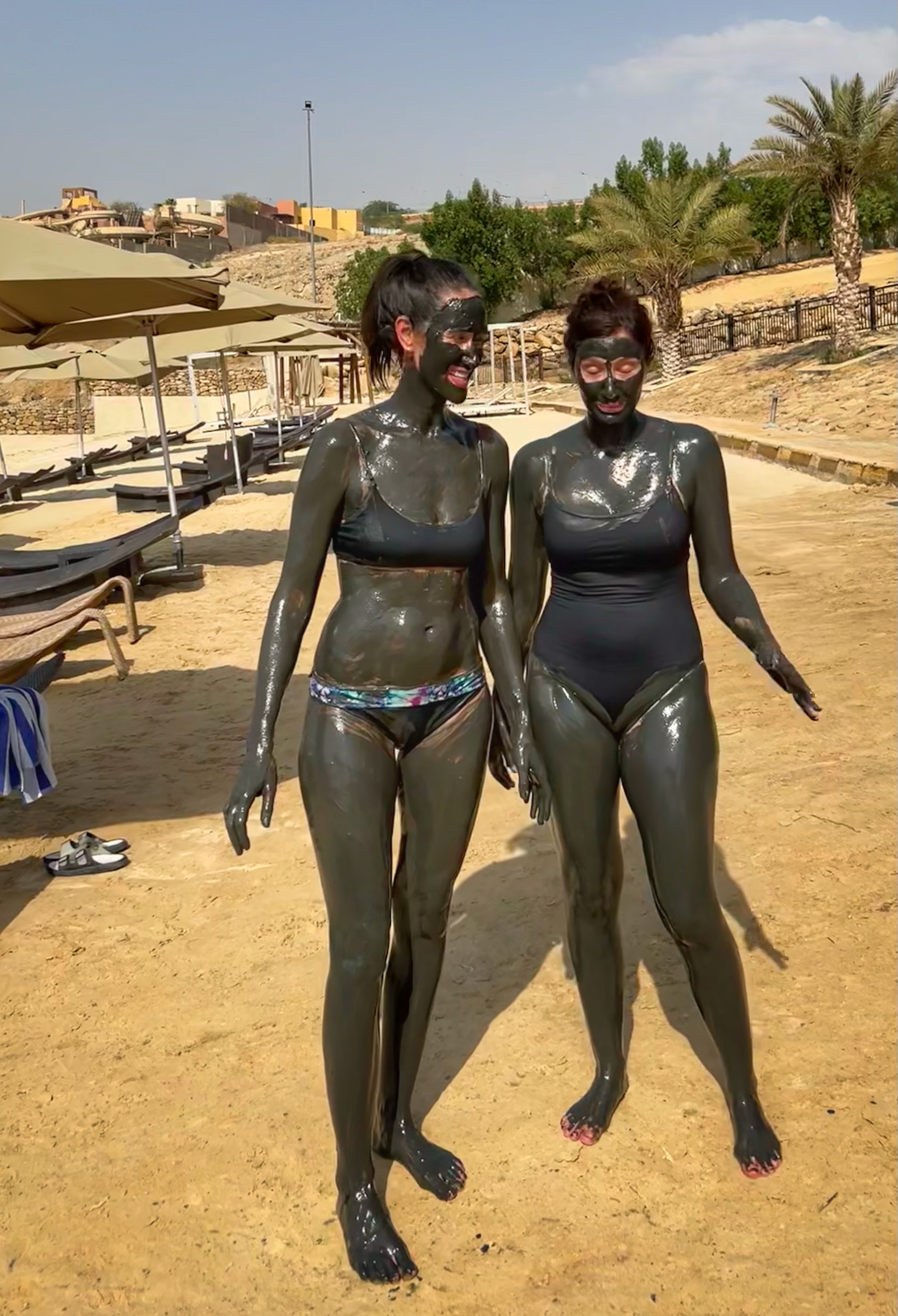
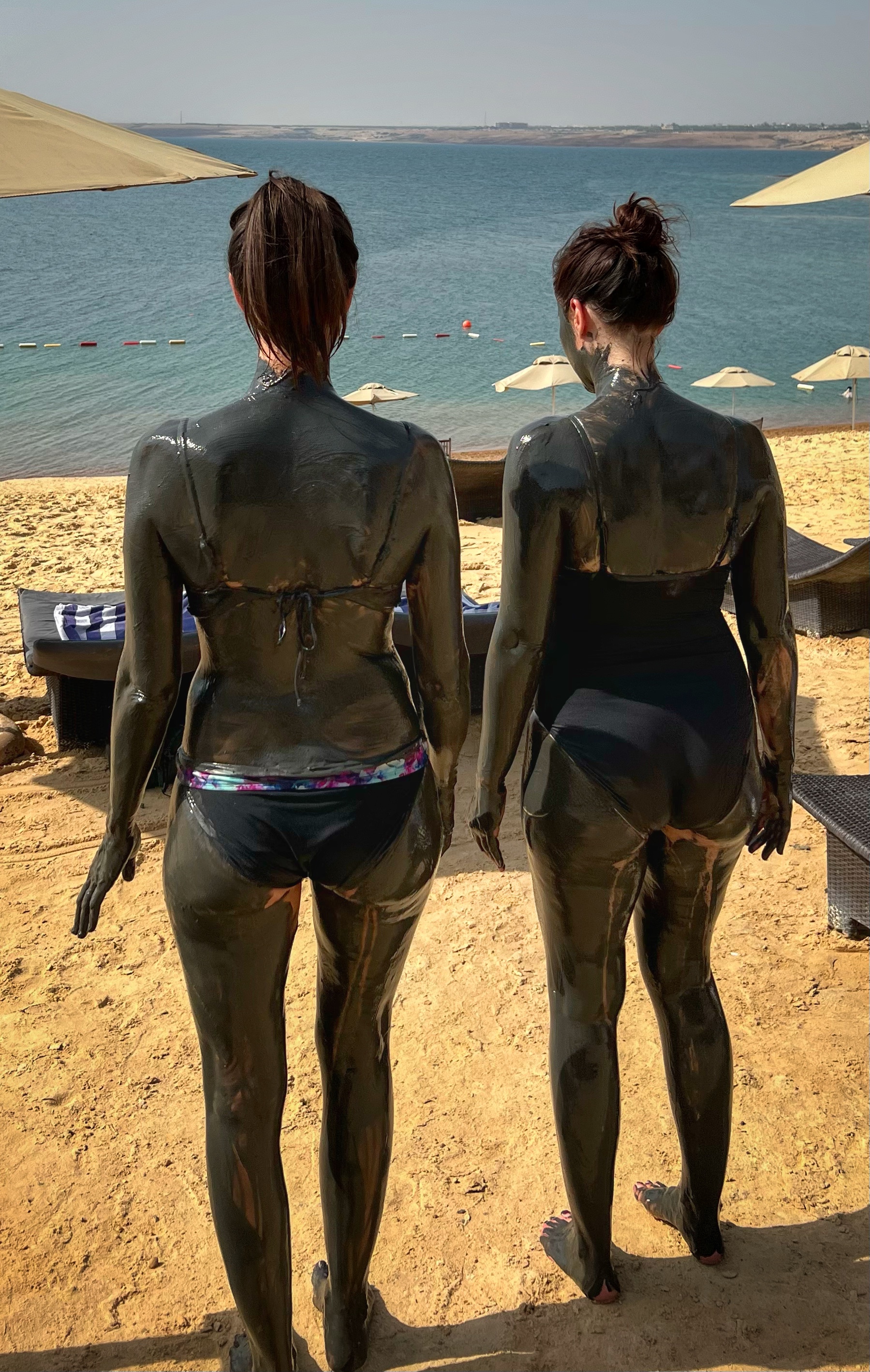
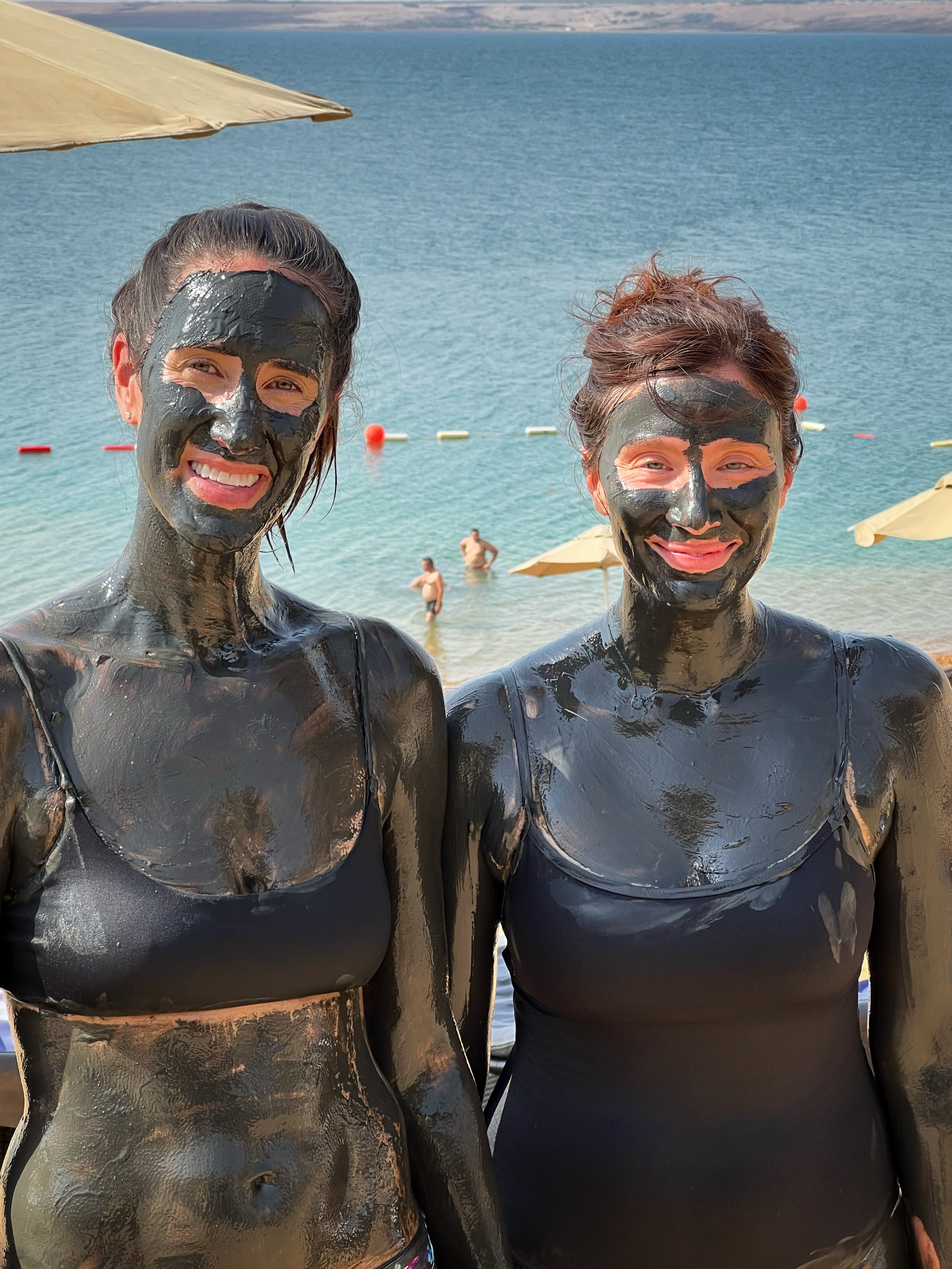
Hilton Dead Sea Resort & Spa From the moment we arrived we were welcomed and pampered. We enjoyed drinks at the infinity pool and then headed down 3 elevators to the private beach. There were two attendants at the beach helping people and making sure everyone was safe; even if you can’t sink, you can still hurt yourself. We were instructed to spend no more than 10 minutes floating, then come up the beach to be covered in mud. What we didn’t realize is that this meant we were going to get complimentary full body massages as they applied the mud for us! It was actually quite nice. We let the mud soak in for 10 minutes or so, and then head back into the water to rinse off. Our faces were rinsed off with fresh water hoses so as not to get the salt water in our eyes.
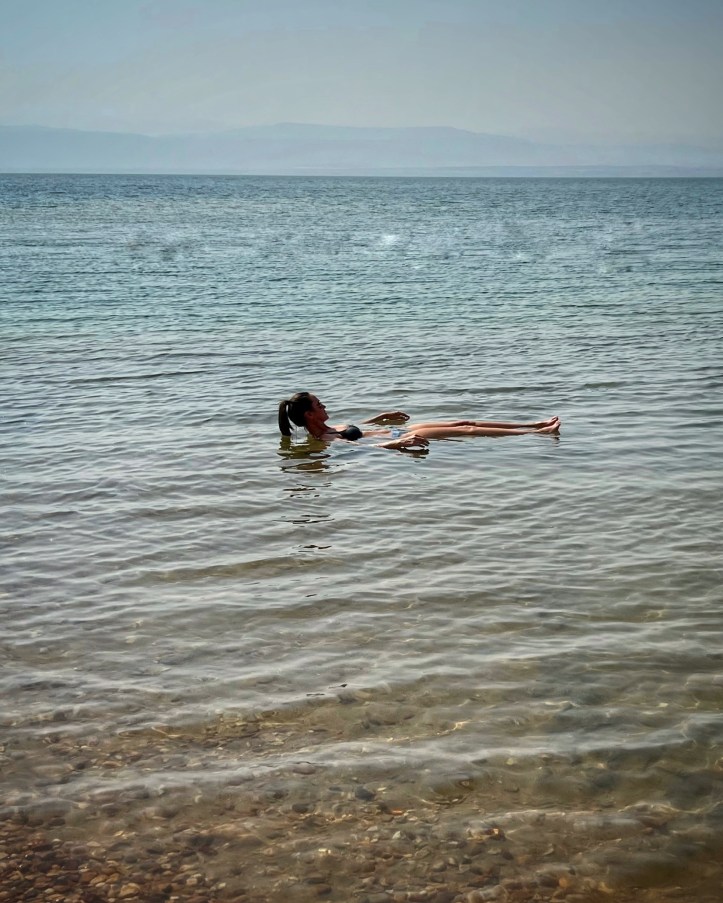
Other resorts have big vats of black mud you can apply yourself, and it is possible to apply the mud yourself here too, but also nice to know that a free application by the attendants can be expected. Overall the experience was underwhelming and frankly, kind of gross. I loved the black mud mask, but the sea itself was very warm and it felt like I was being hugged a little too tightly by a wet blanket. After we laughed about it and began calling the Dead Sea “hot poison.” It seems fitting, as nothing can live in these waters that are 10x more salinated than the ocean…
Dead Sea Tips: 1) Do not shave for 24 hours before entering the sea and make sure you have no open cuts or you will sting – a lot. 2) Don’t wear a swimsuit that you care too much about, as it will be very difficult to get ALL the salt out afterwards. Black is recommended as the mud can also stain. 3) Do not stay in the water for more than 10 minutes at a time or you will begin to dehydrate. 4) Do not get the water in your eyes or mouth. 5) Rinse off right away when you get out of the water – the salt is sticky and will start to irritate you if you don’t.
Although the float was probably our least favorite “highlight” of the trip, we feel so lucky to have been able to do it as scientists believe the sea may not exist in the next 50-100 years.
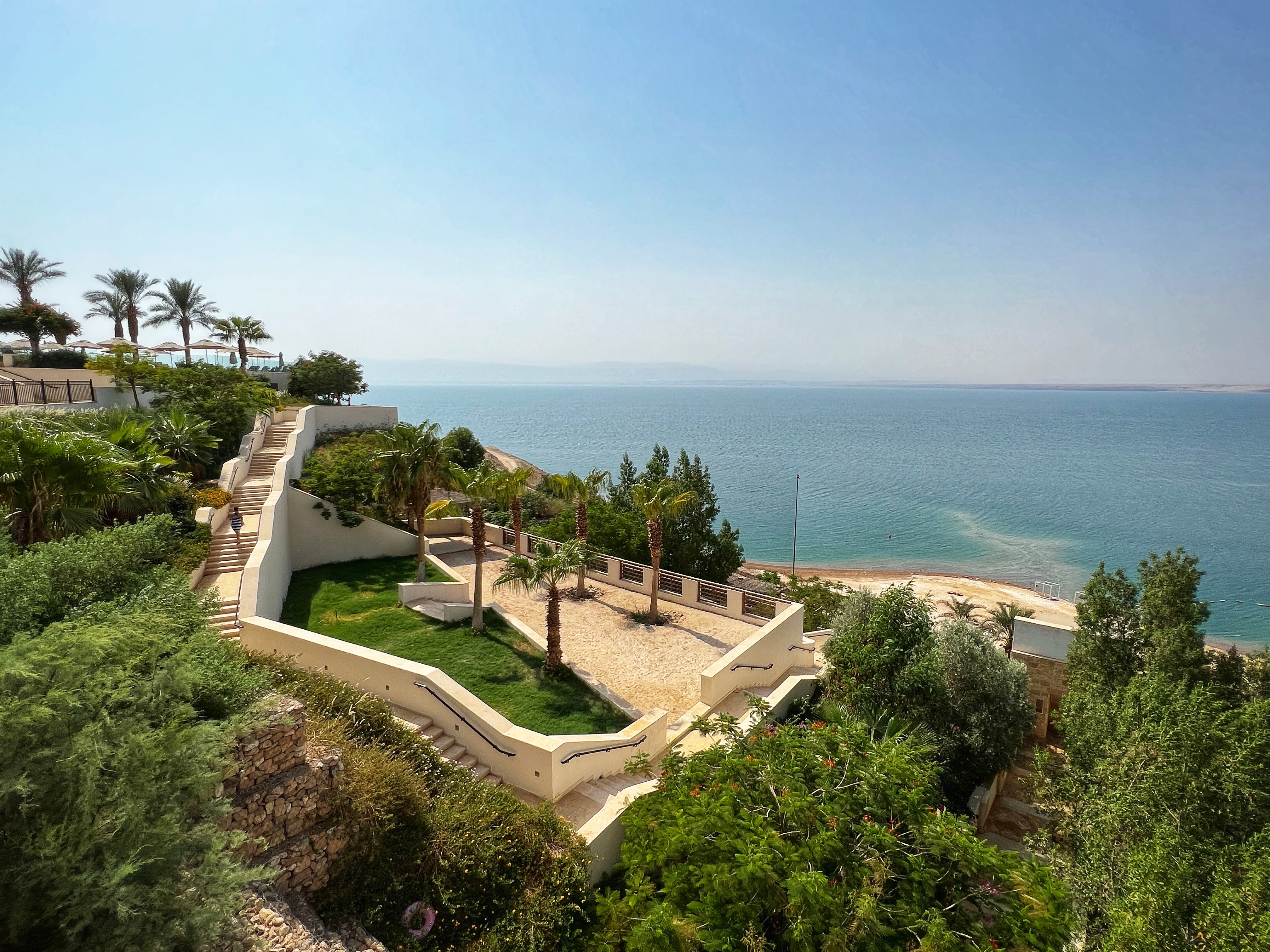
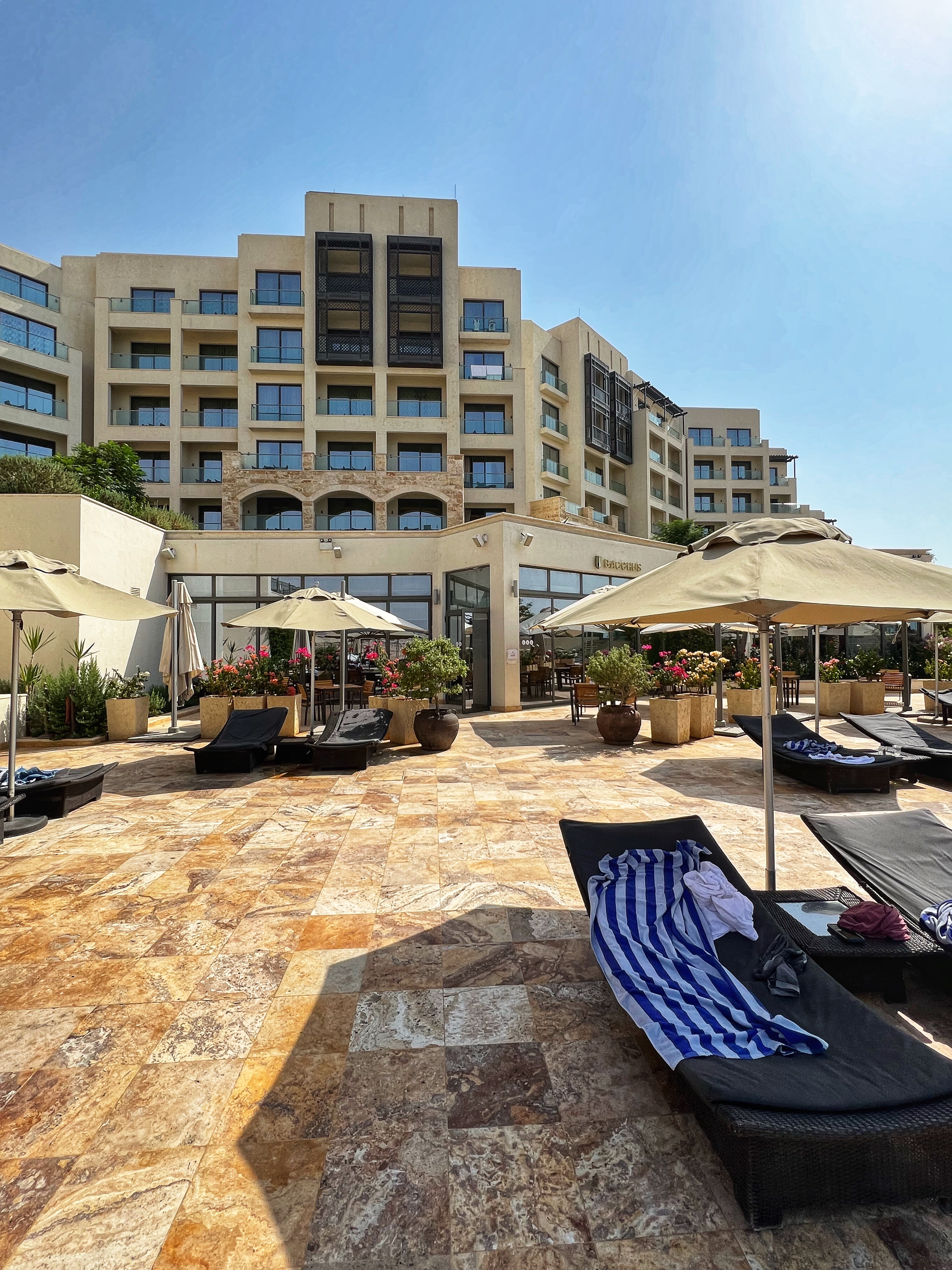
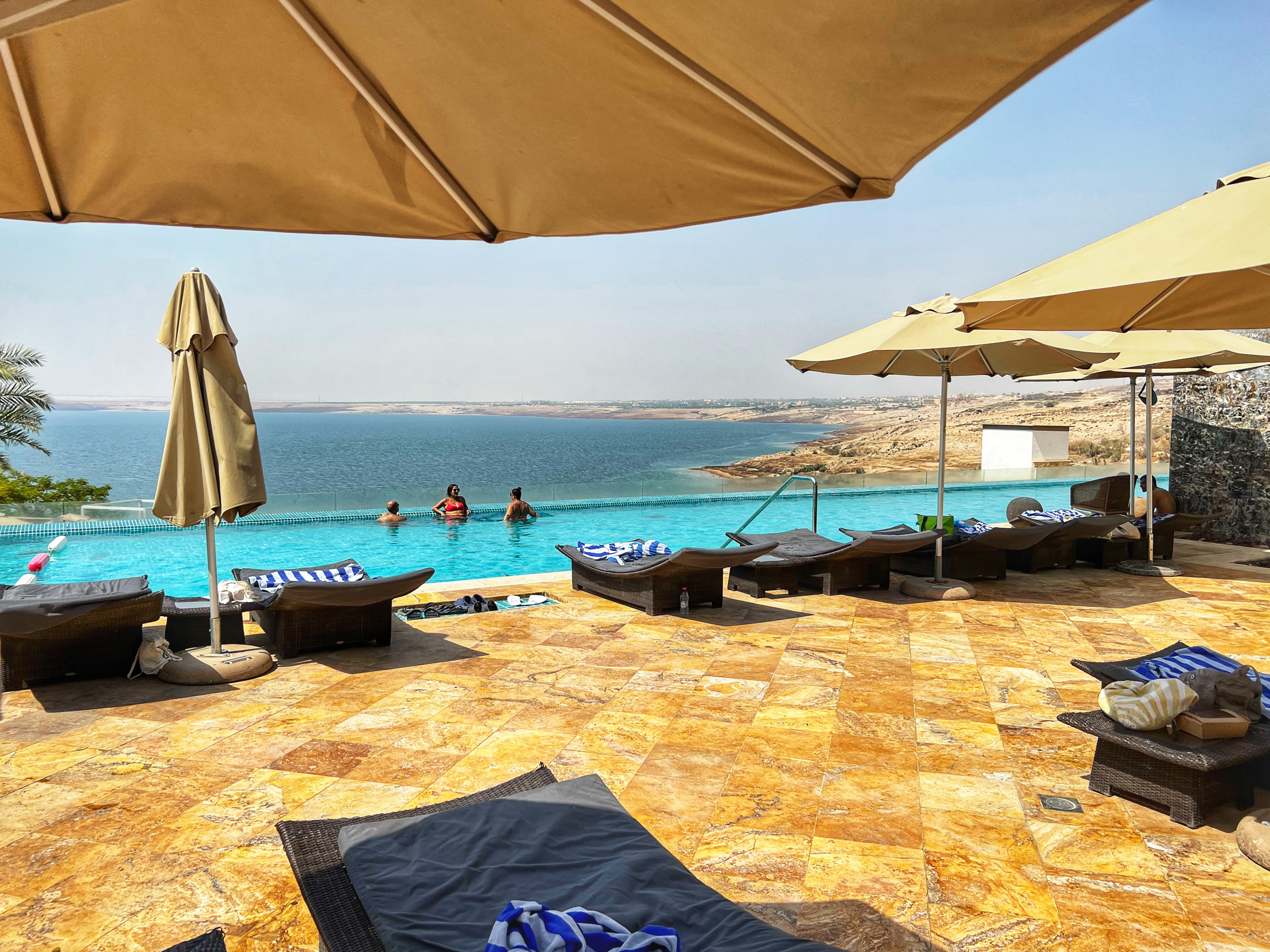
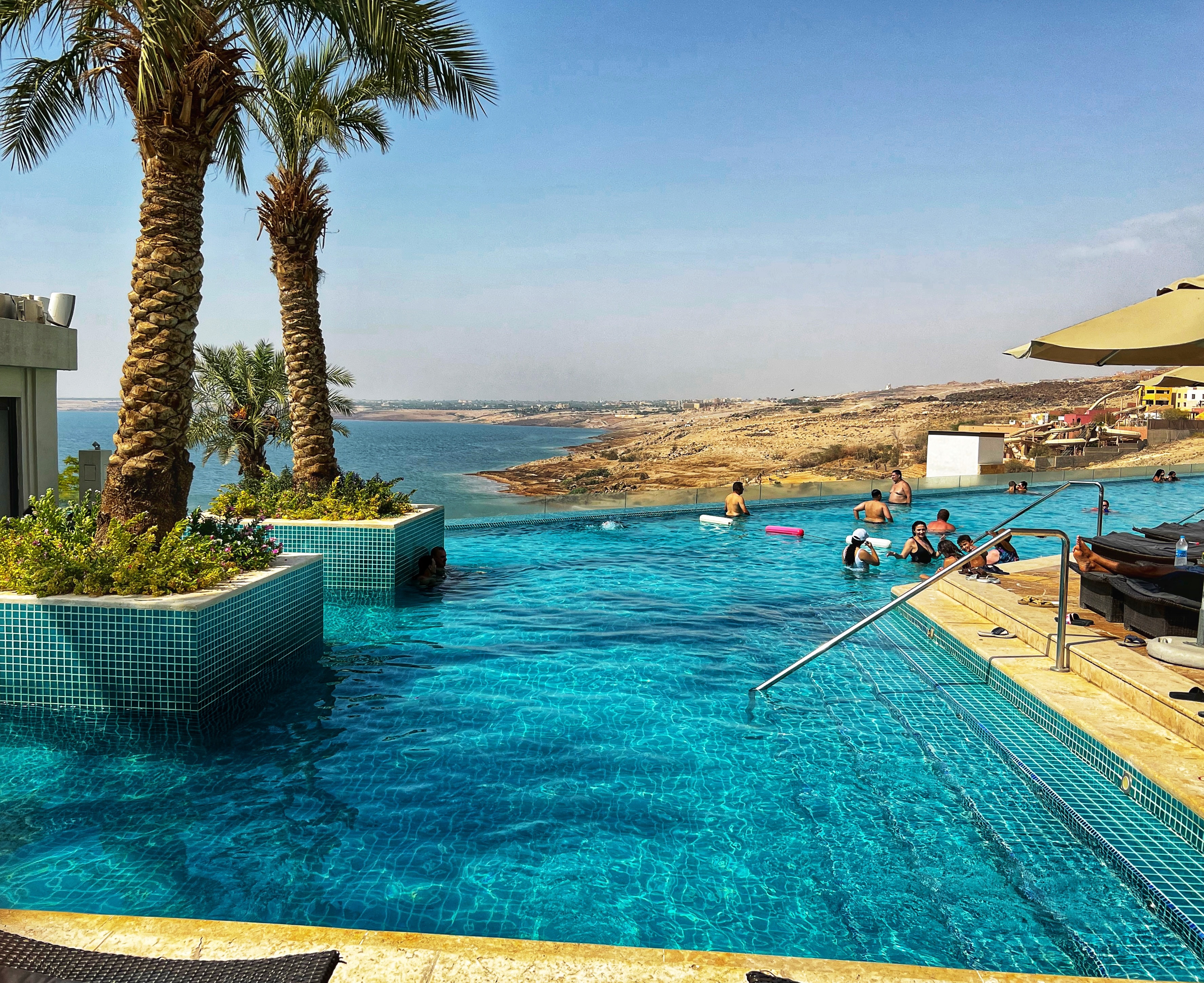

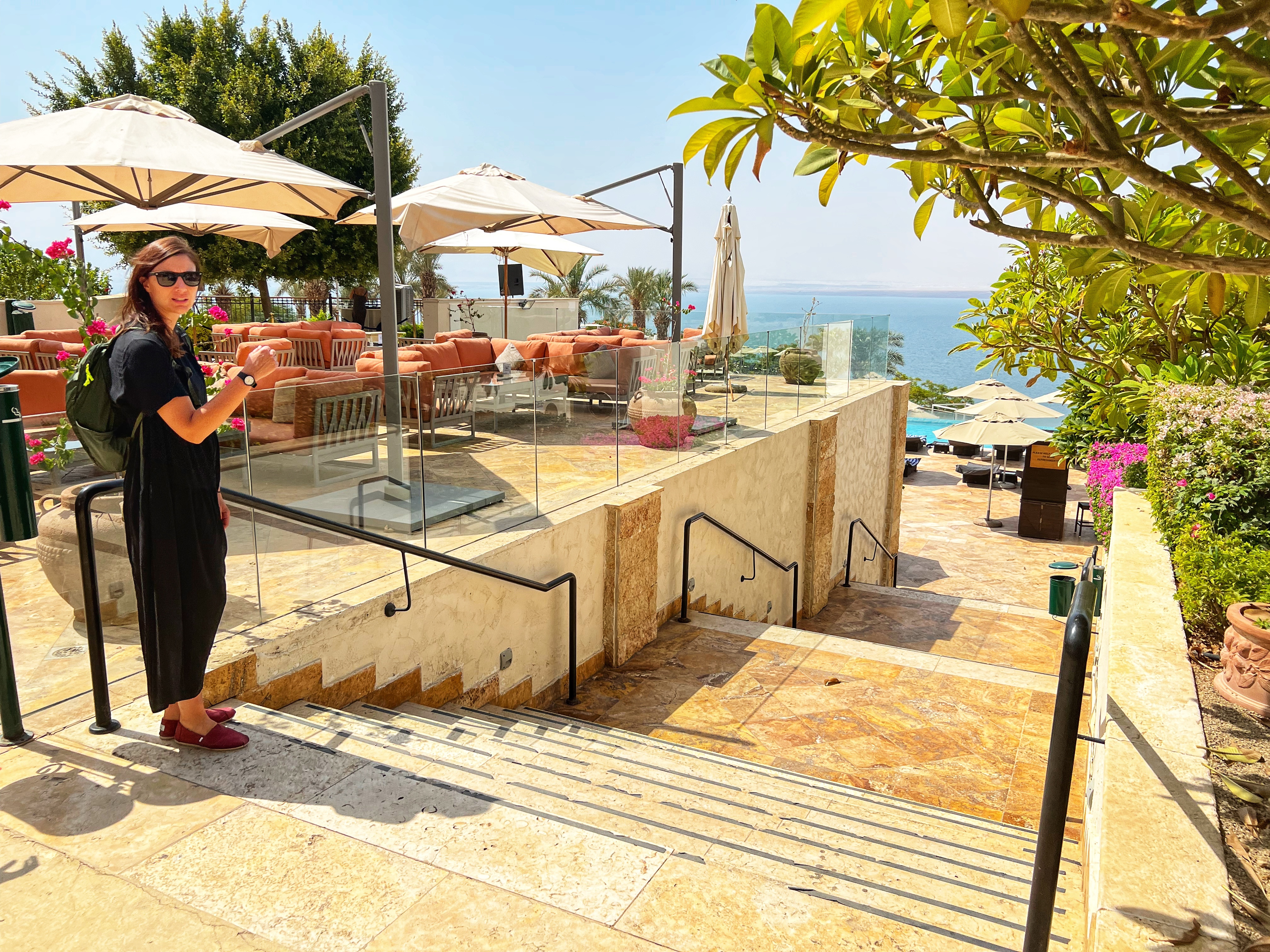

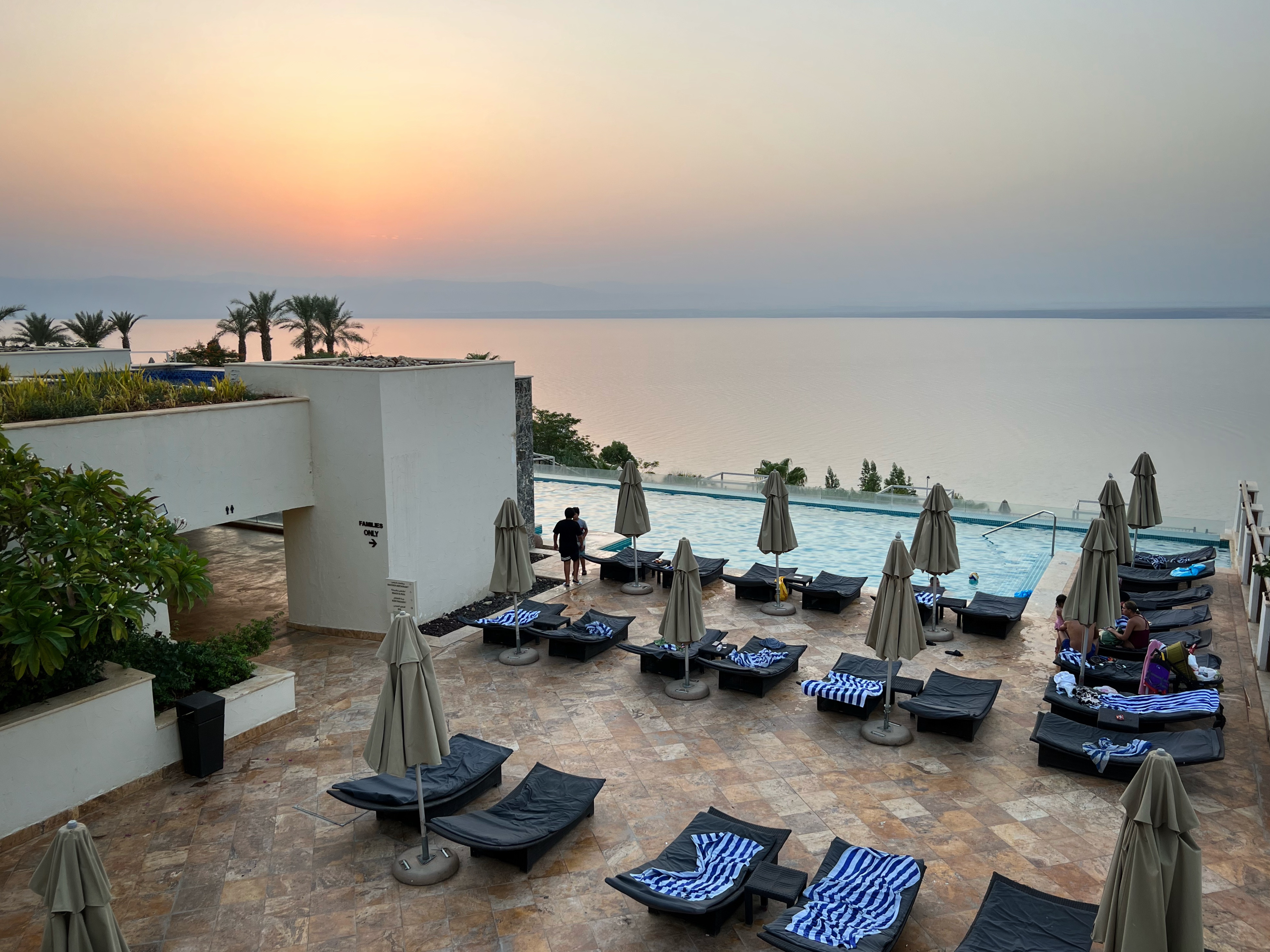
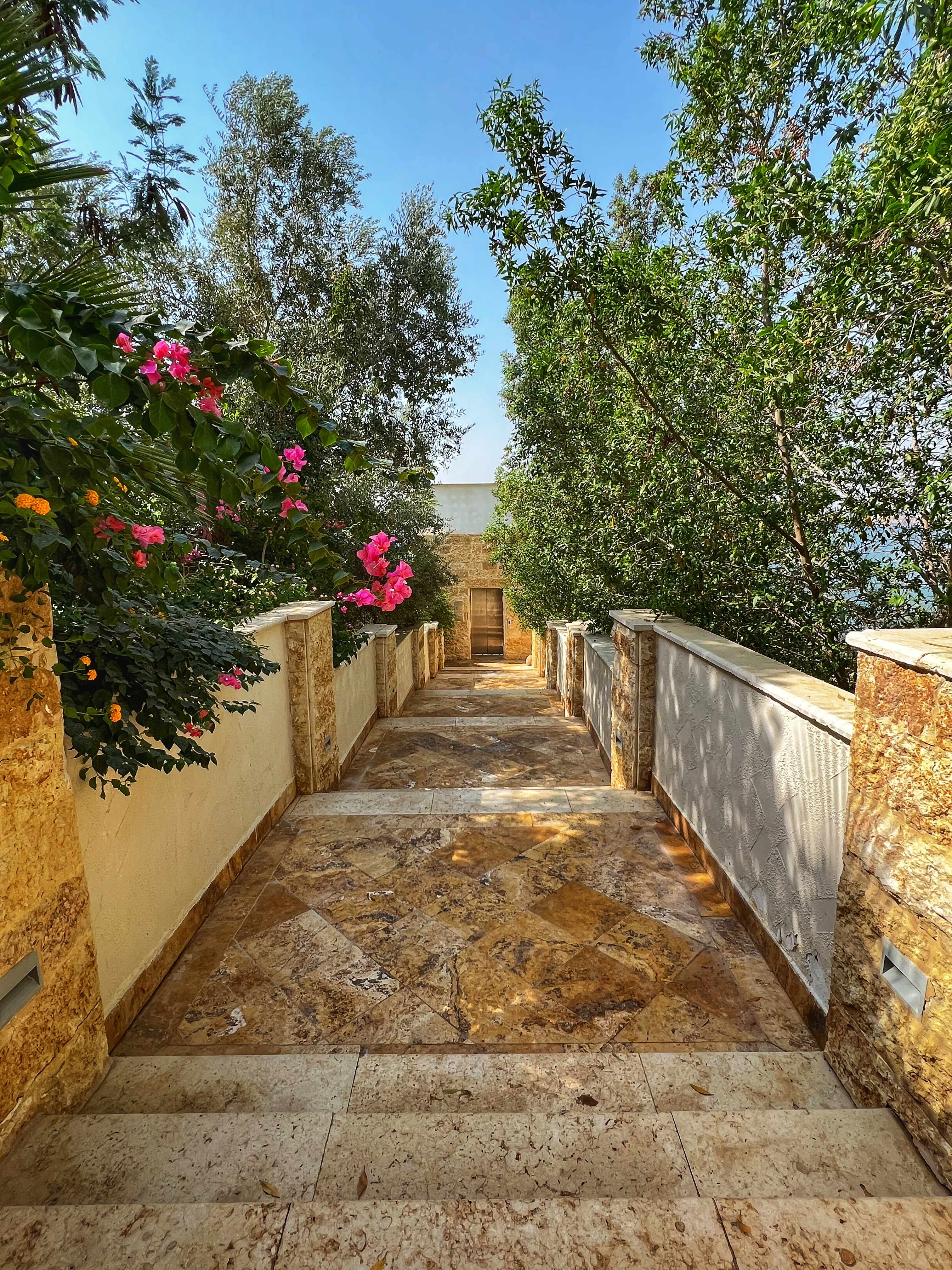
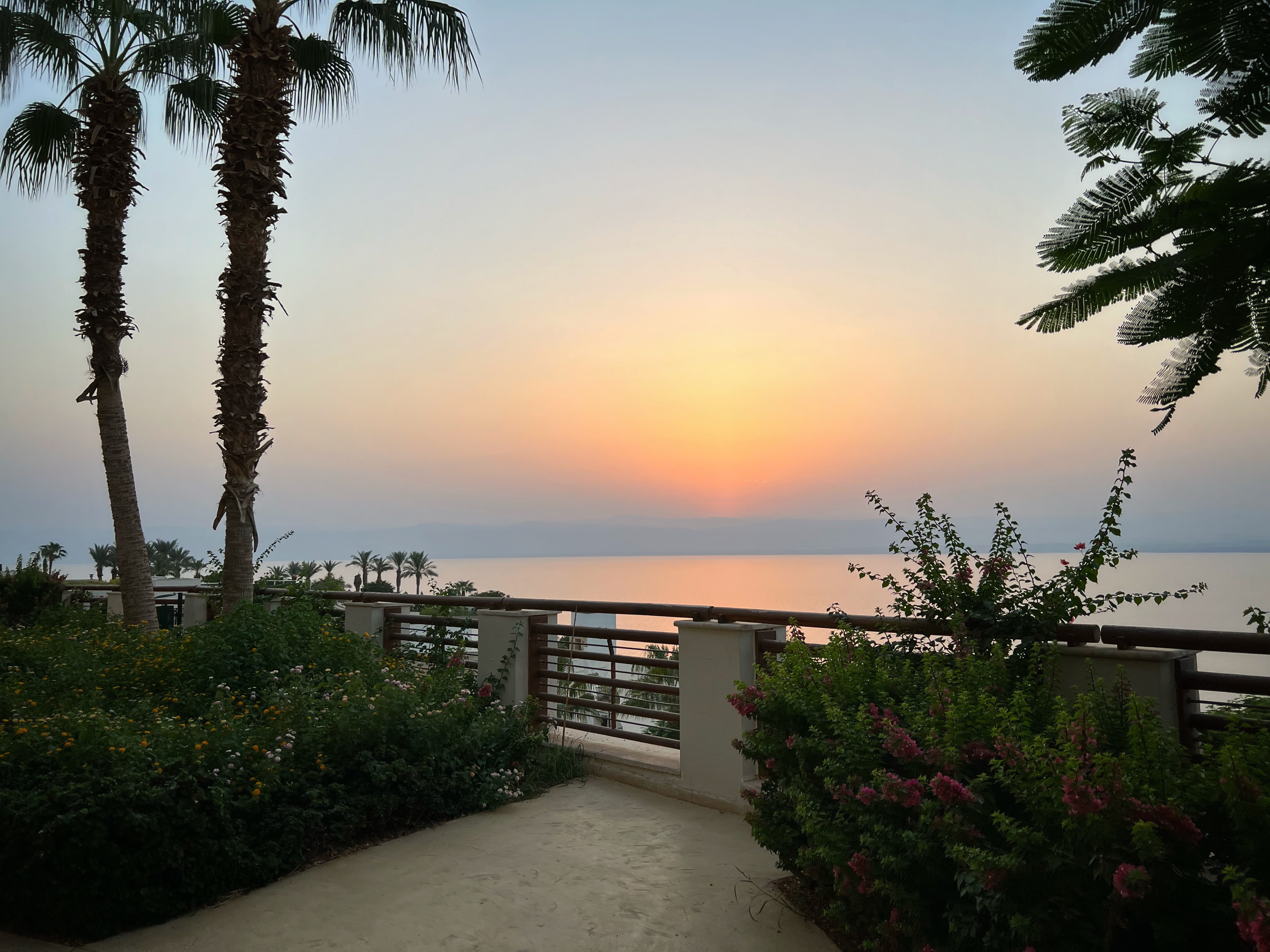


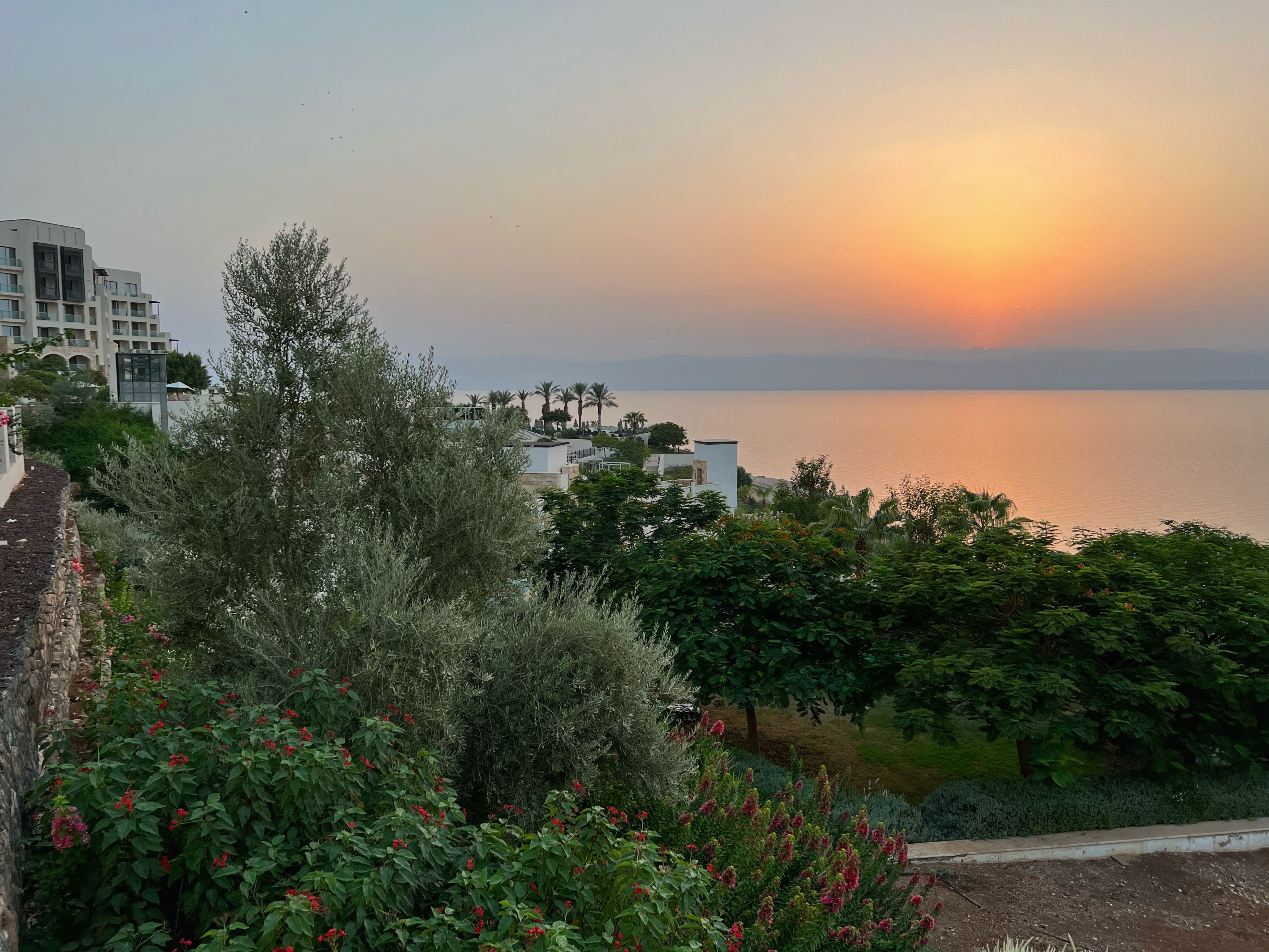
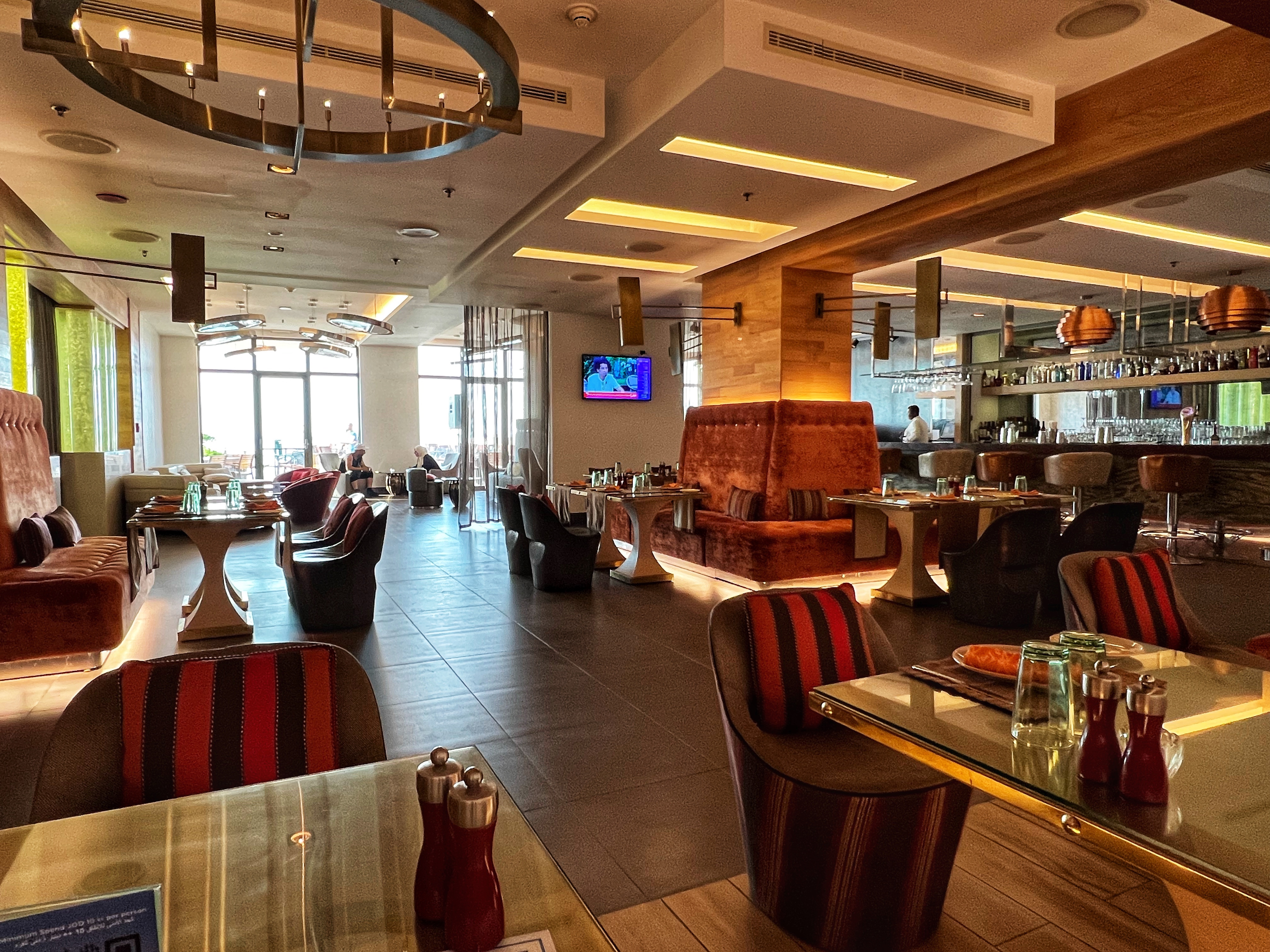
After our “beach” experience we cleaned up and had drinks and a light bite before heading over to the spa for a proper sea salt scrub treatment. The spa attendants were so friendly and took good care of us. After the mud mask and salt scrub, we felt soooooo smooth. We walked back to the main resort and restaurant area just as the sun was setting – and it was the fastest sunset we have ever seen in our lives! I wonder if it seemed that way because we were 427m/1400ft below sea level? We went to dinner at the Lebanese restaurant 1312 and enjoyed delicious vegetarian dishes.

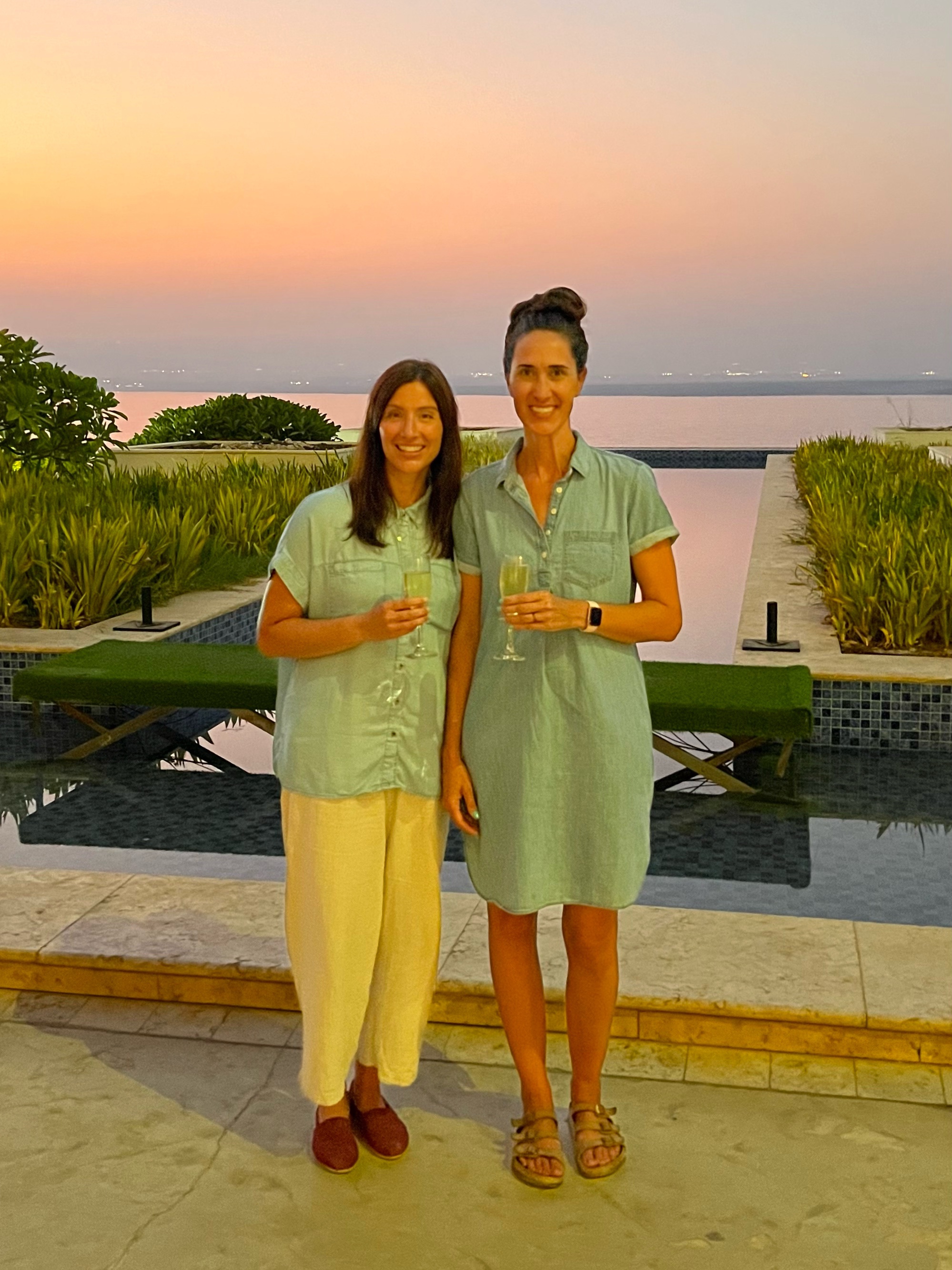
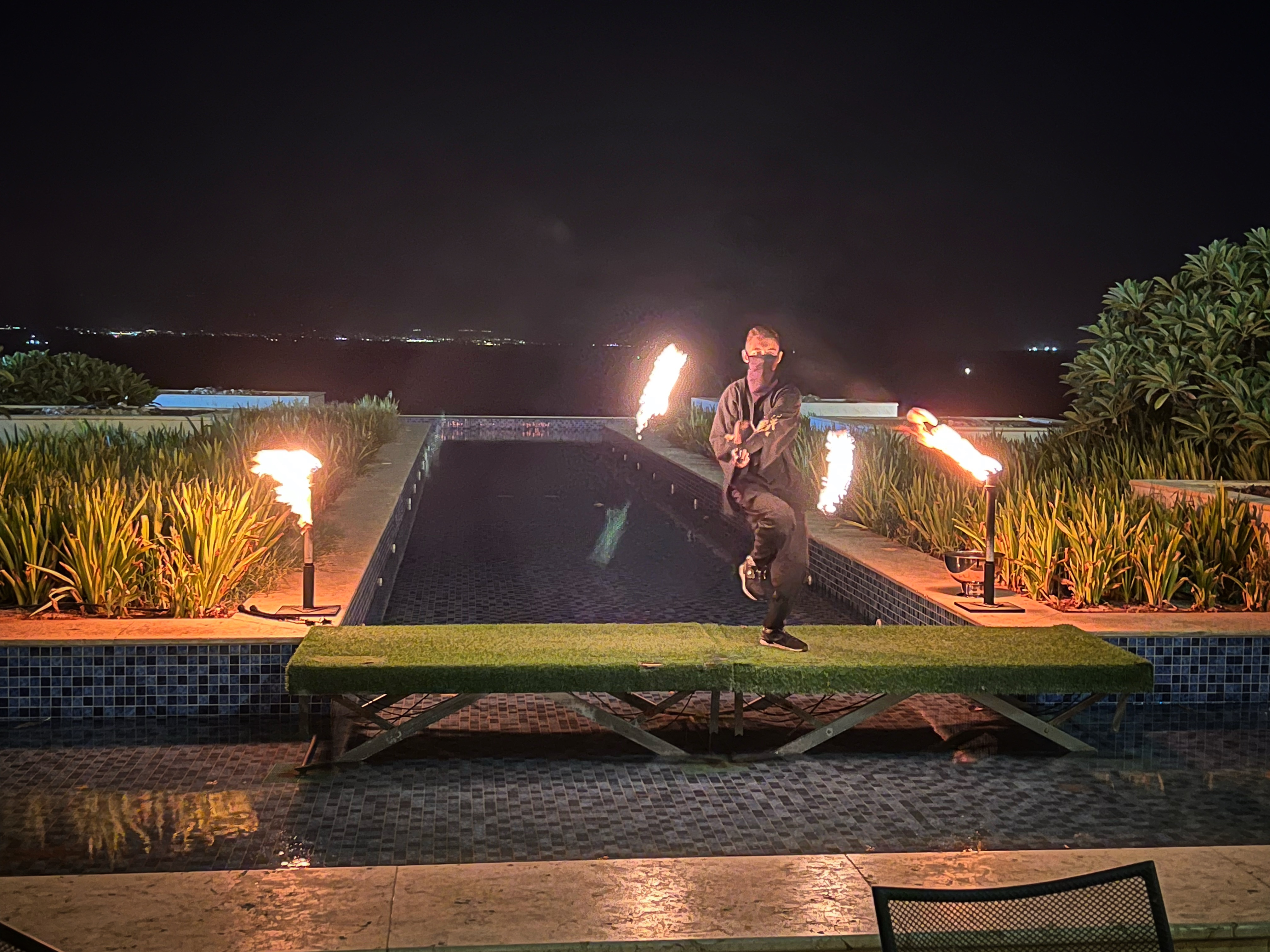
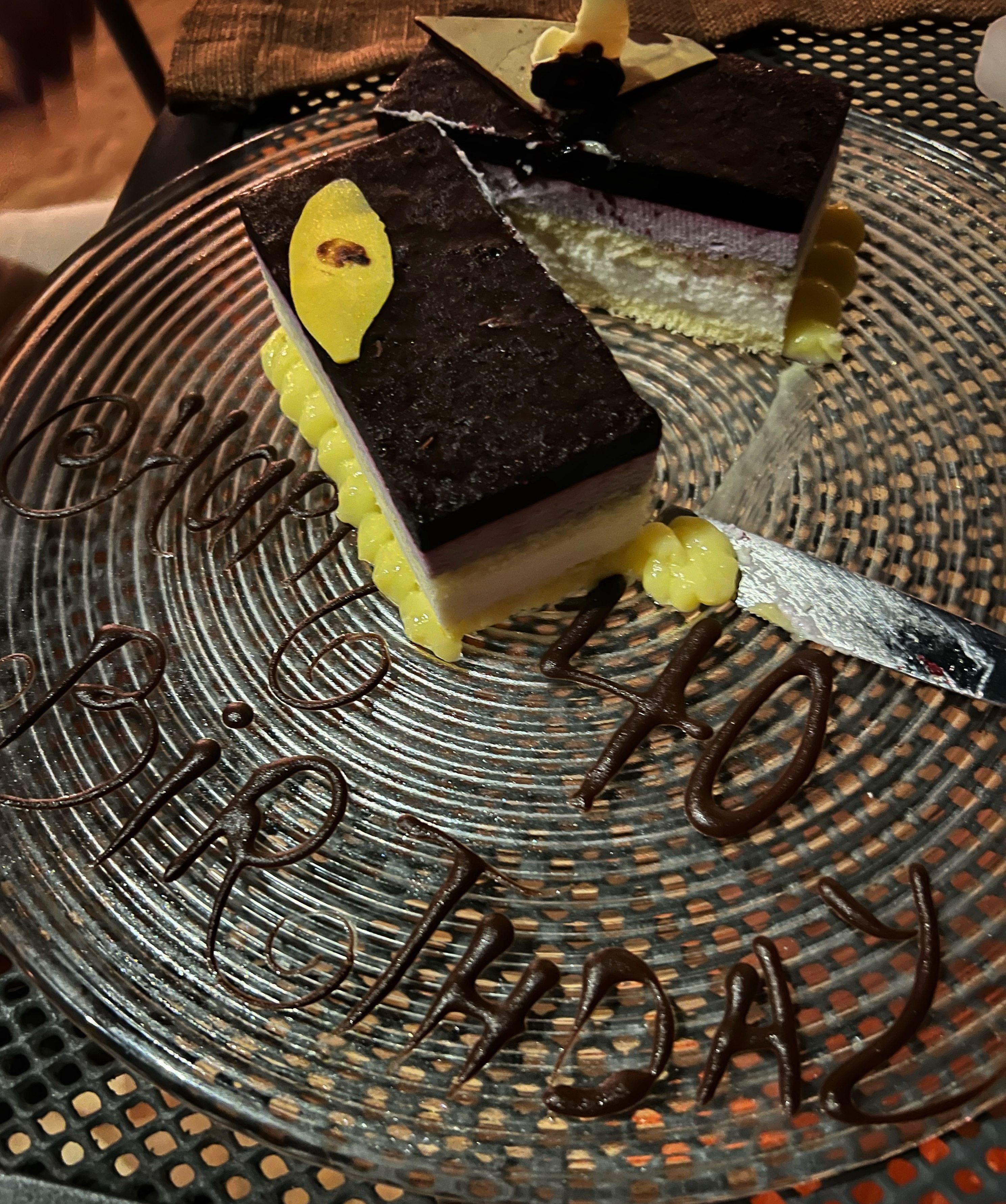
After dinner we went outside to the terrace to listen to the band and watch the fire dancer performance. We were then served a delicious cake with “Happy 40th Birthdays” written on it, a little reminder of the reason for our epic trip to Jordan (all arranged by my sweet hubby). We noted that this was one of the few places we saw women working in Jordan – most of them were leaders at the resort. A special shout out to Honida (restaurant manager) who came in clutch with a bottle of complimentary baby powder for our feet when we needed it most! It was handy the entire trip.
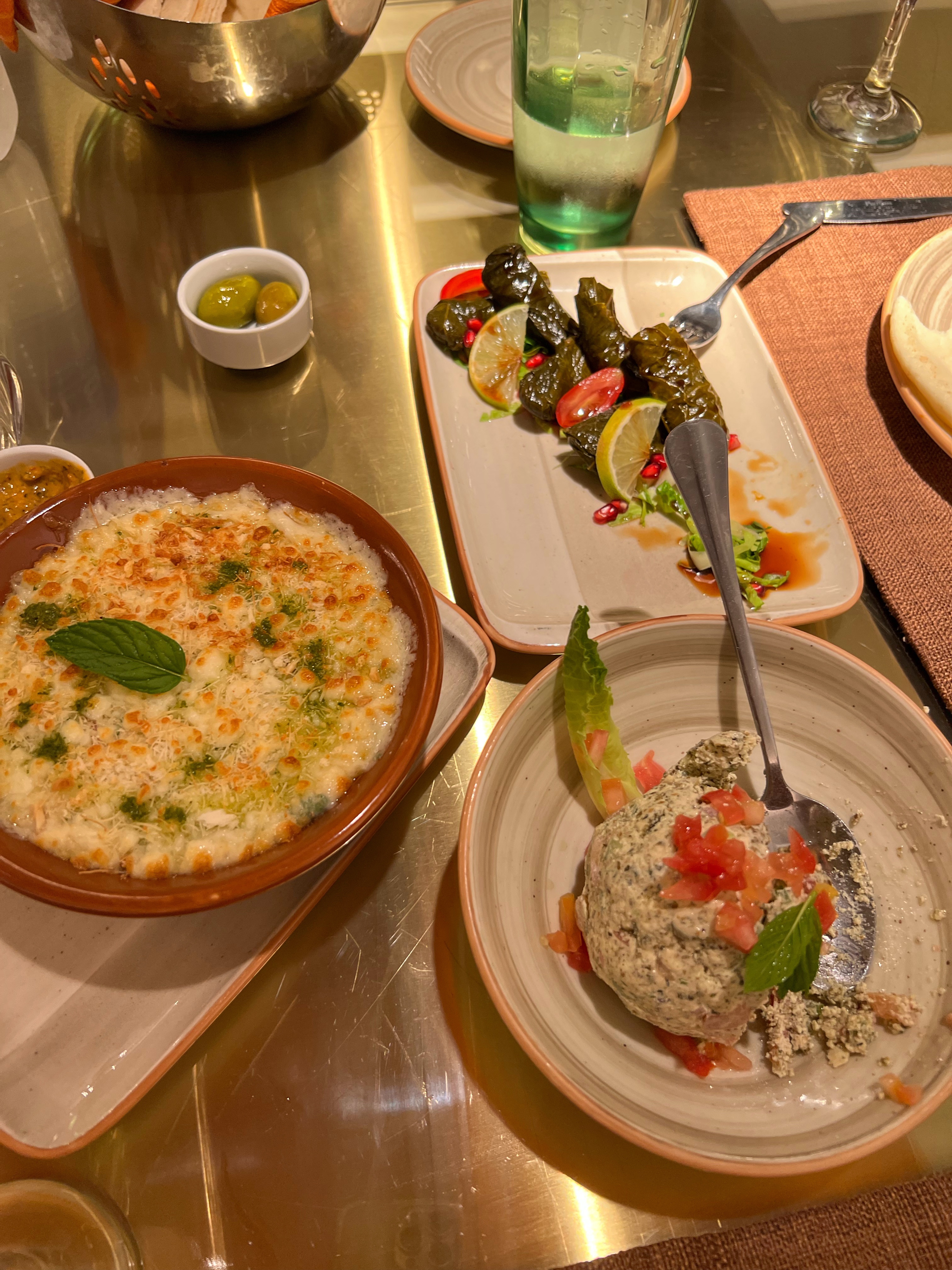


DAY 3
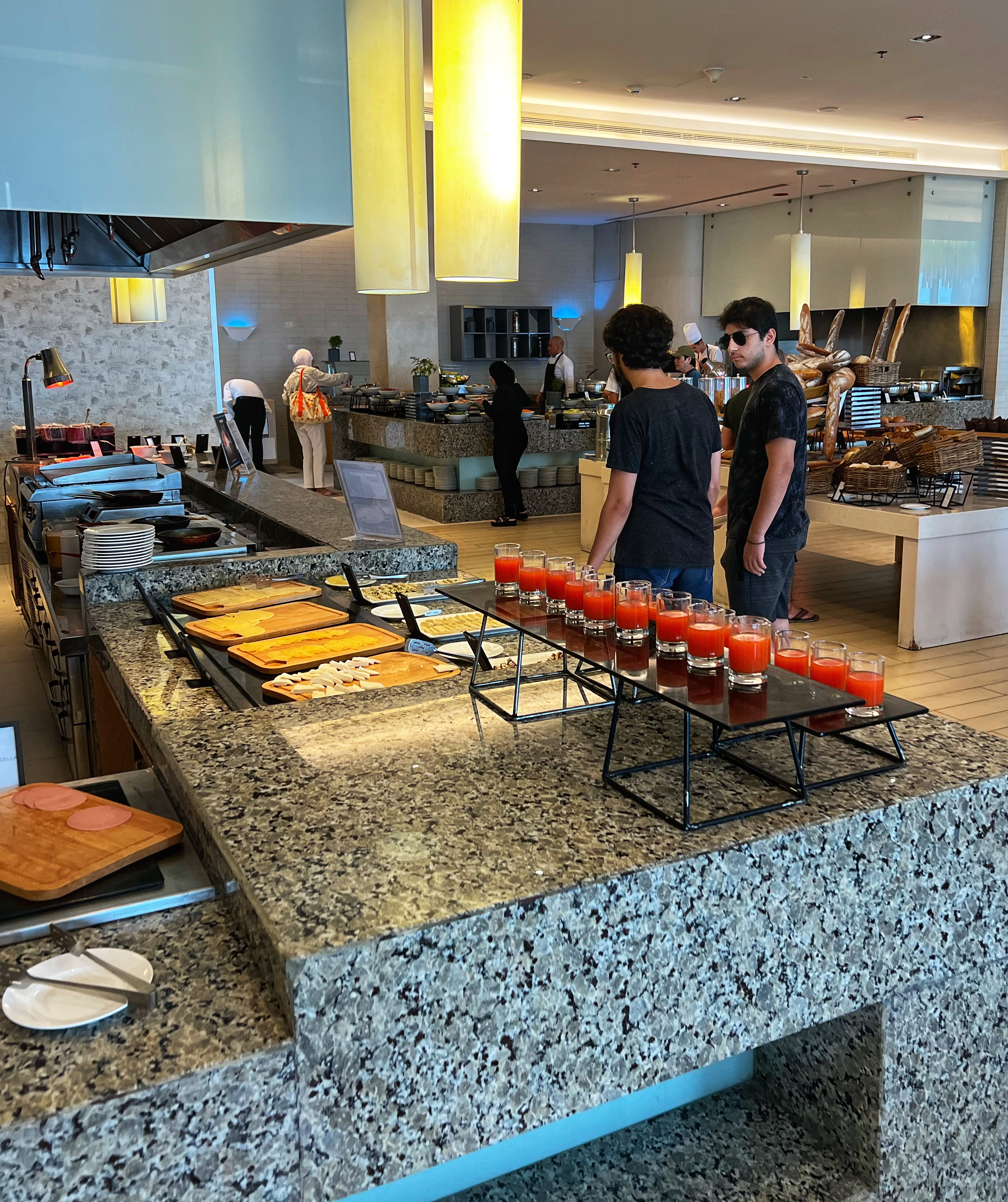
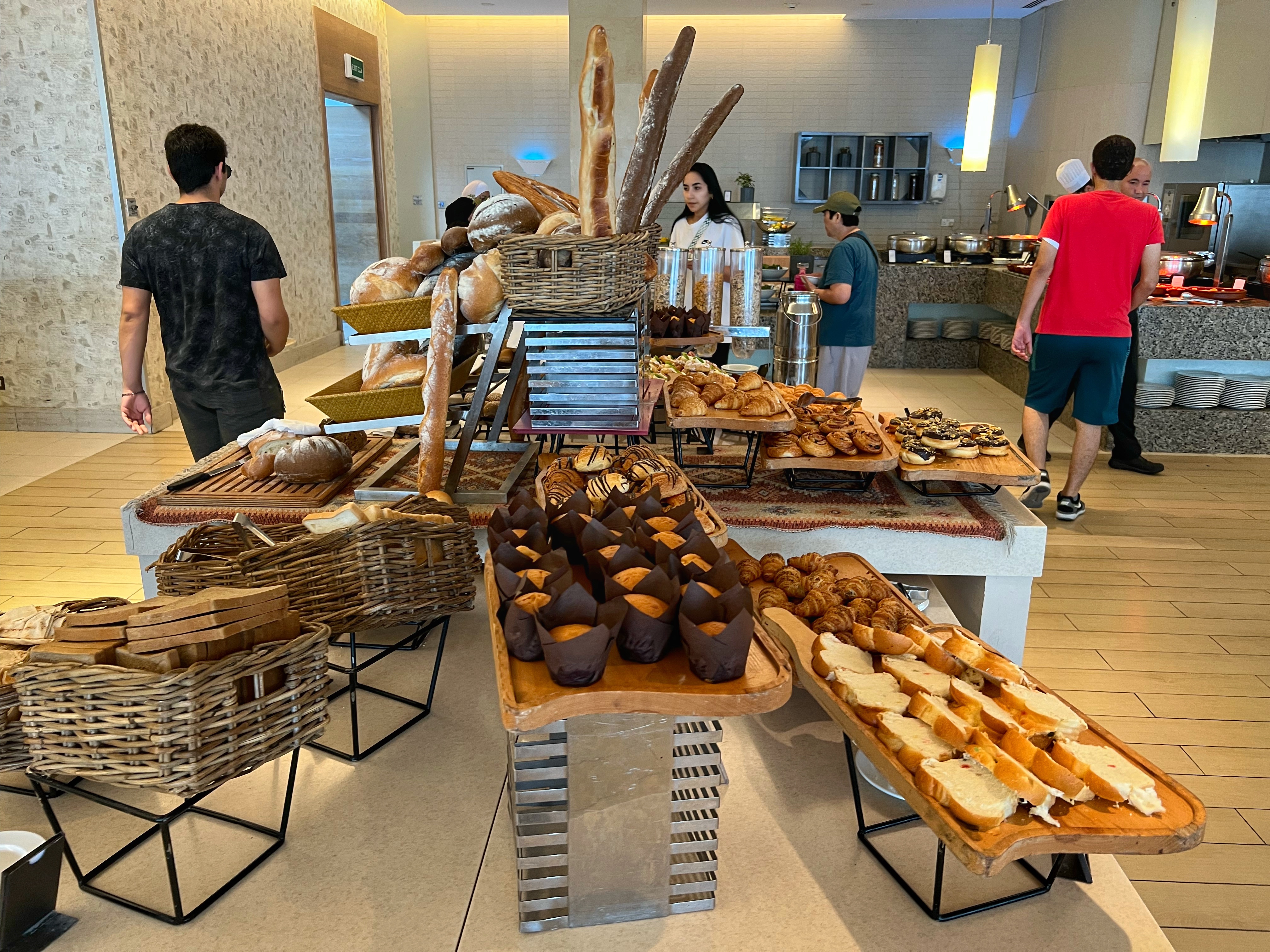
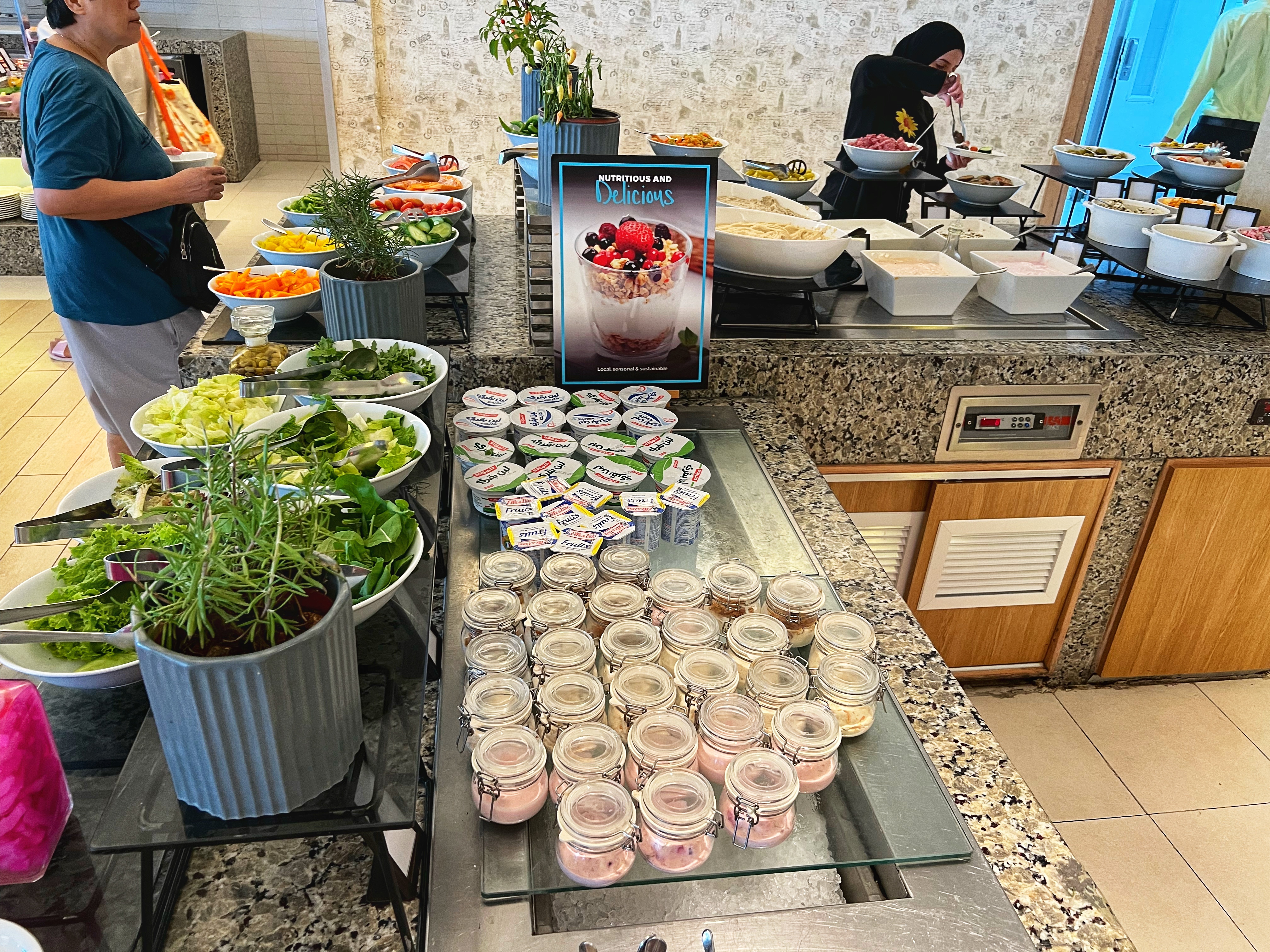
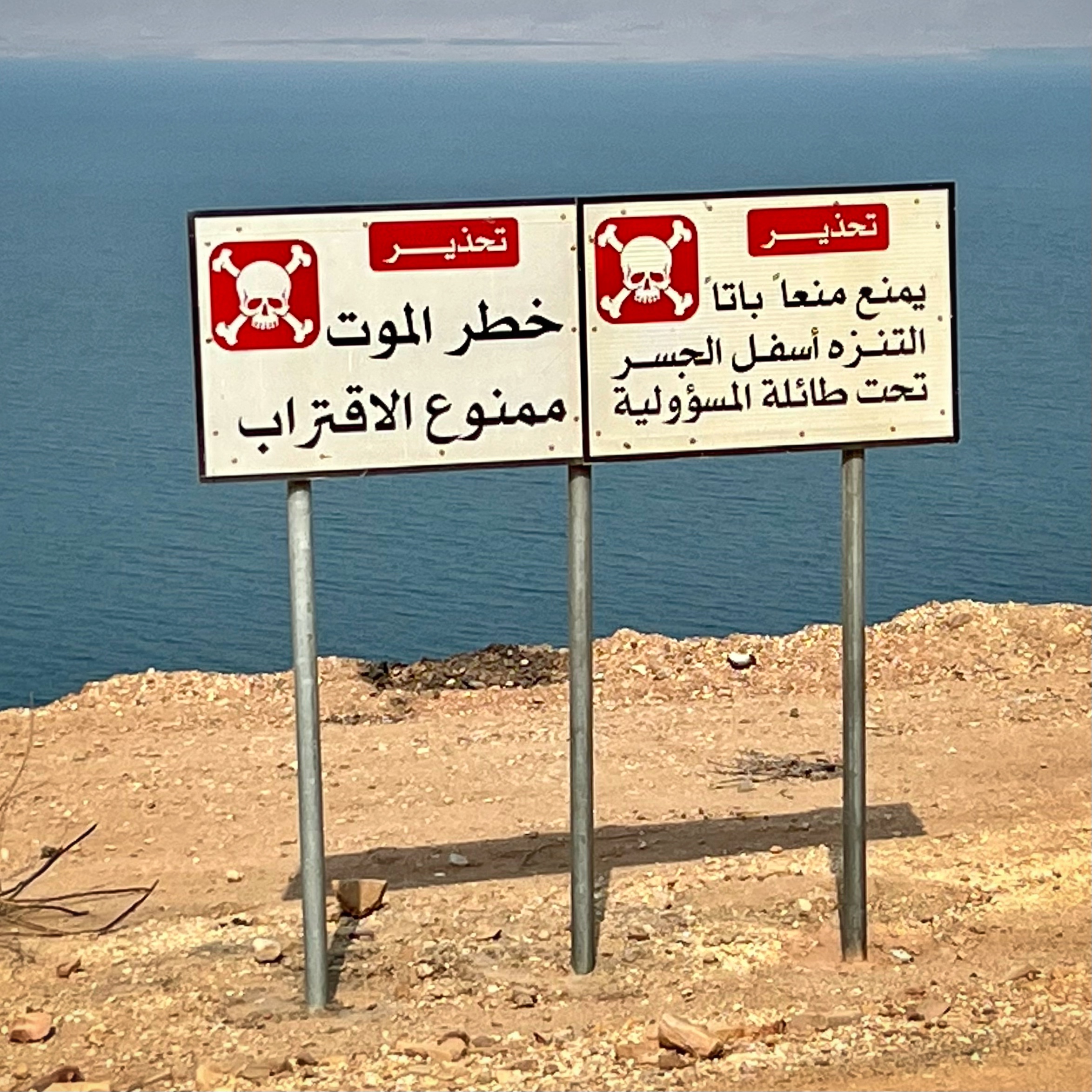
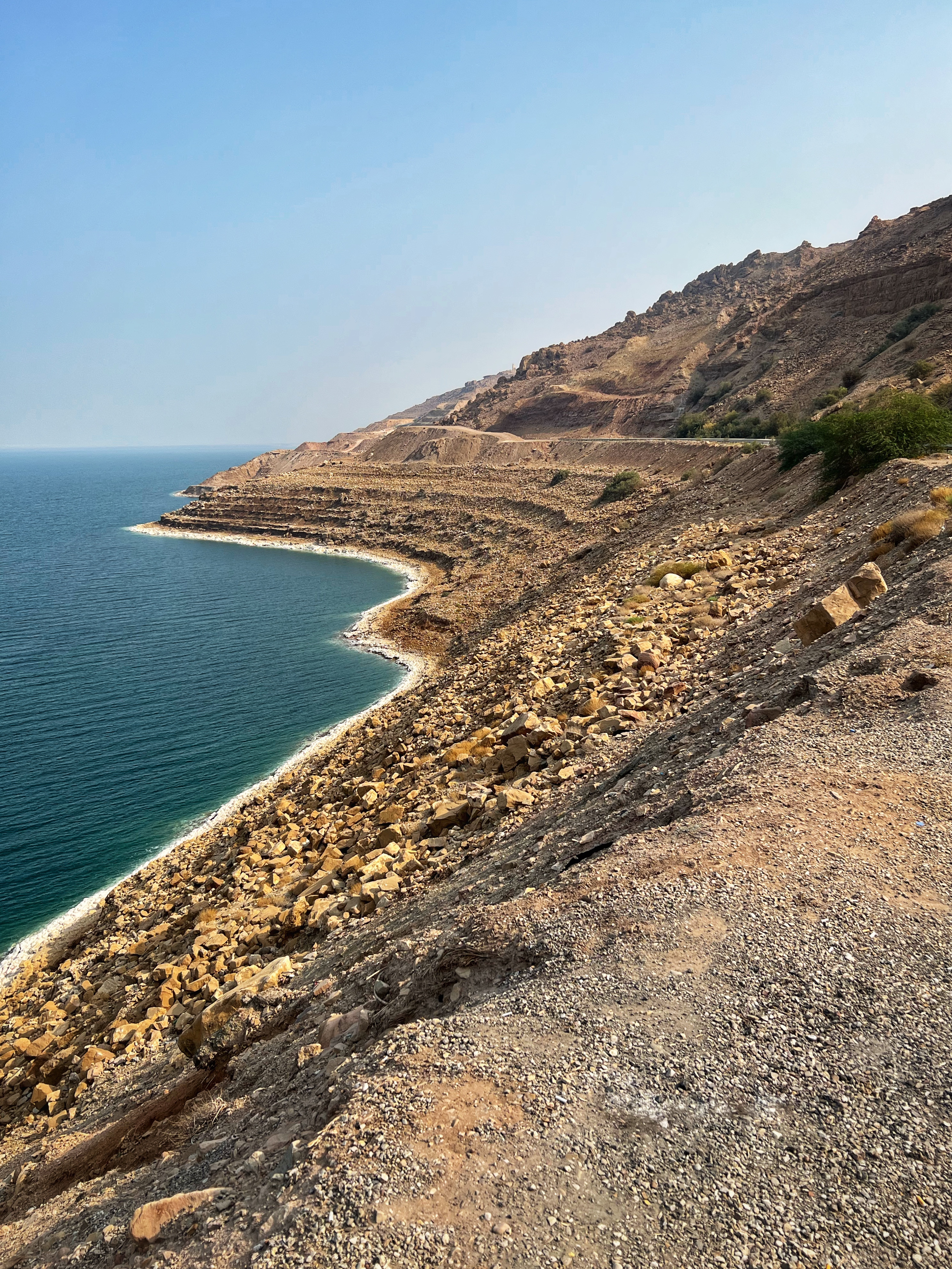
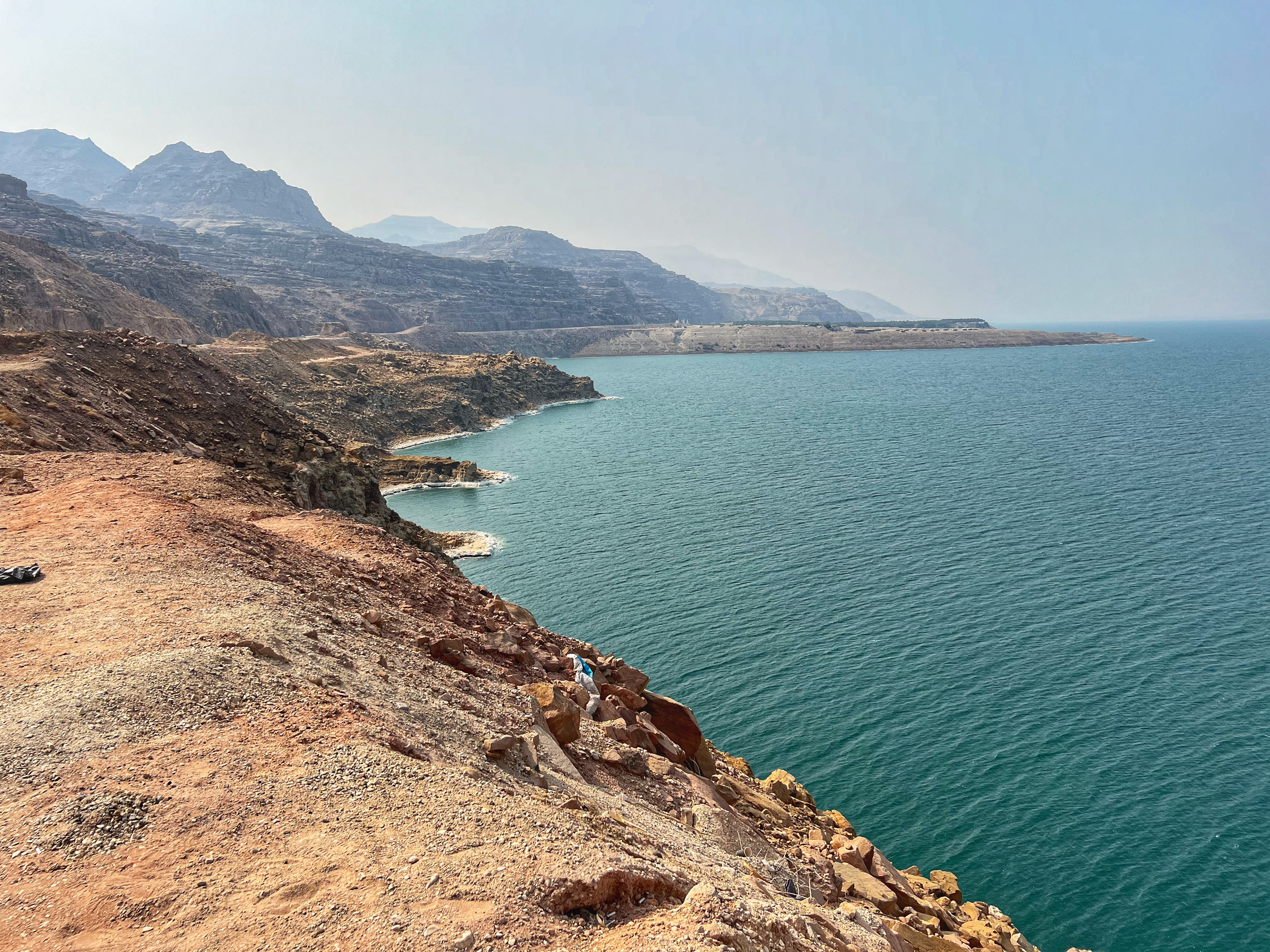
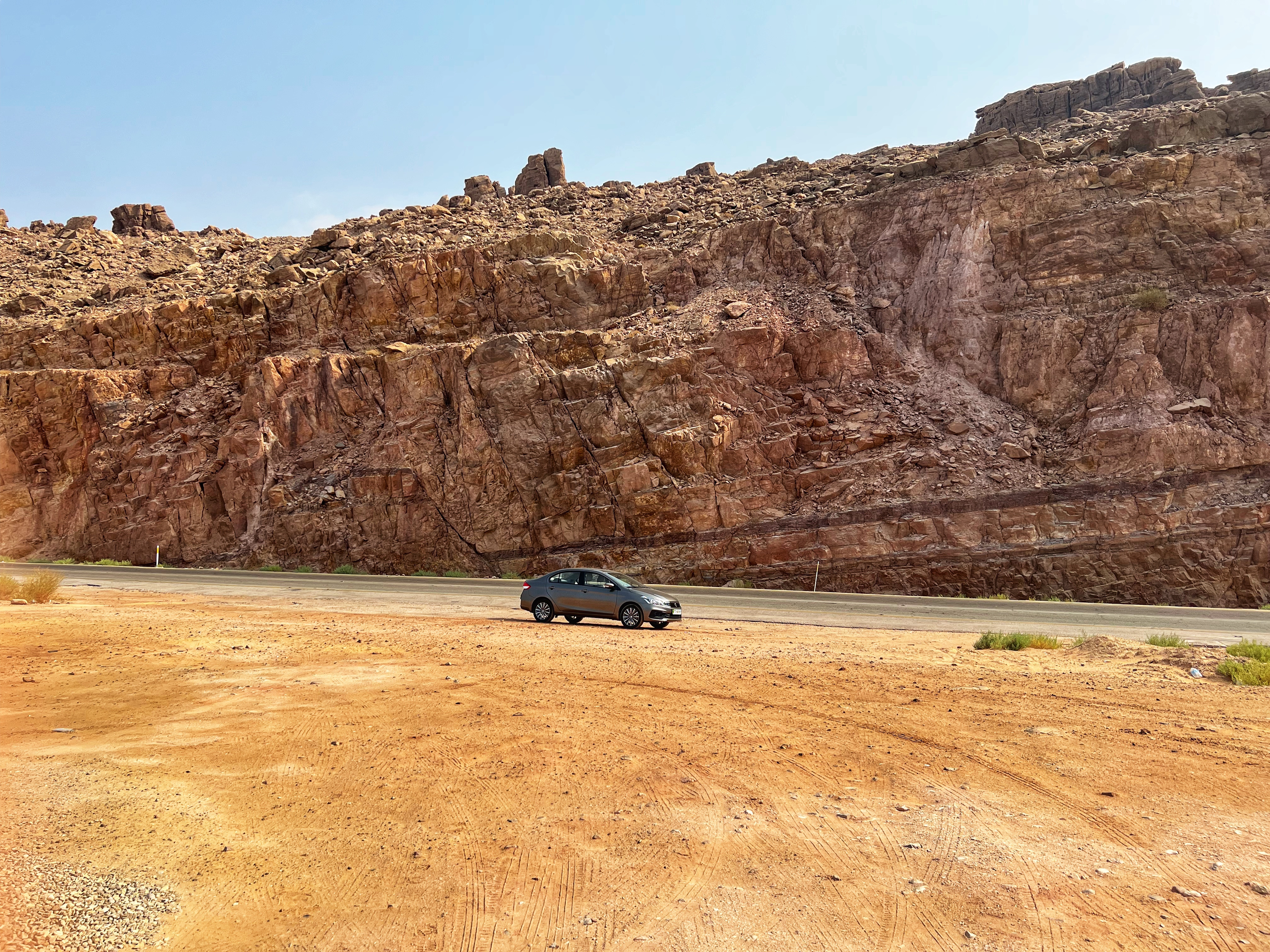
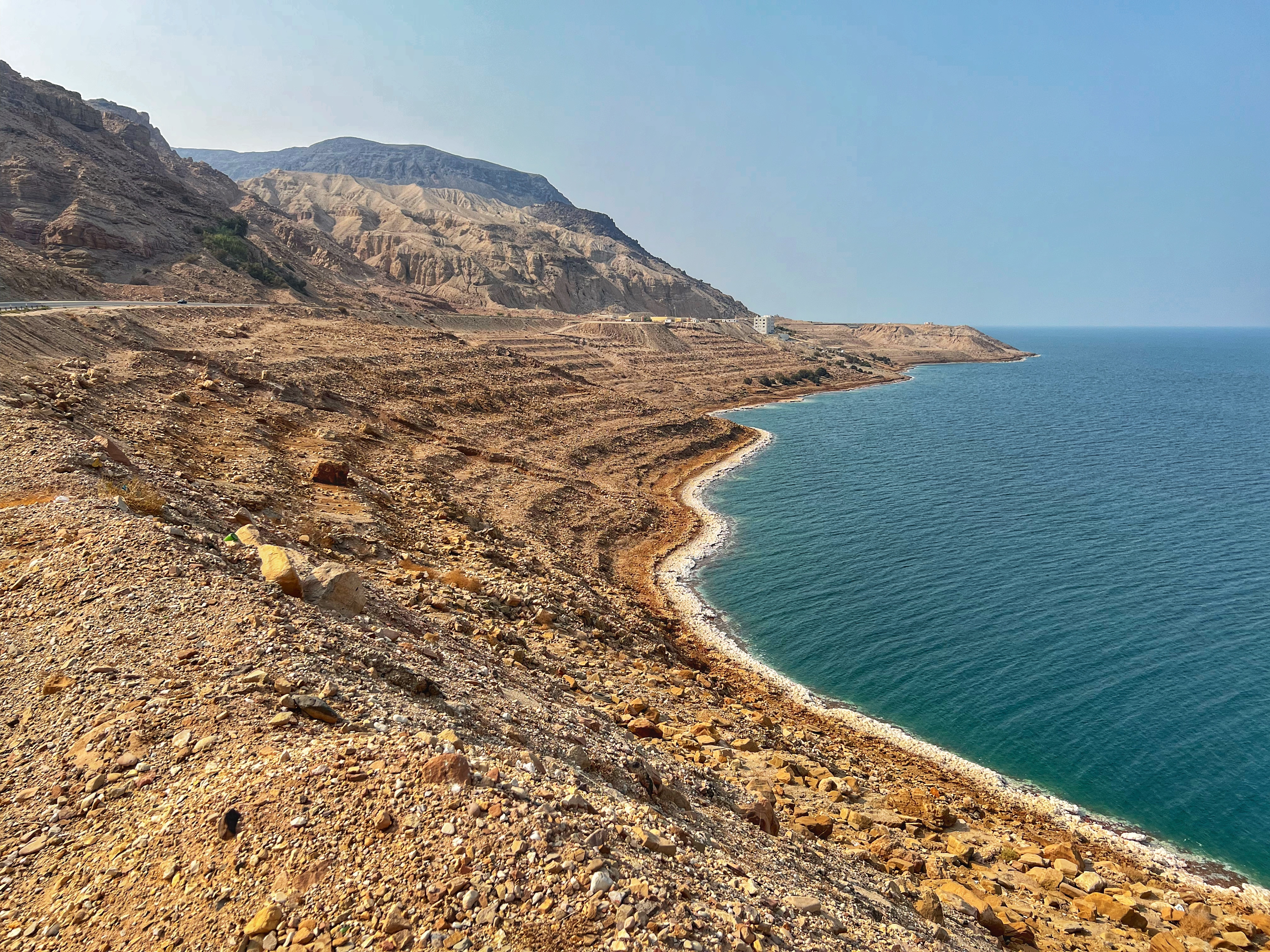
The next morning was September 1st. We enjoyed a massive, delicious breakfast buffet at the resort (above) and then headed south about 30 minutes along the Dead Sea to Wadi Mujib, stopping a few times to take photos. It’s pretty mind boggling to see a huge body of water and know it’s completely dead – no life, no transport, nothing. It’s only used for collecting salt products – and its days are numbered.
wADI MUJIB
We arrived at Wadi Mujib to hike the wet narrows at about 10 AM and although it wasn’t busy, the small parking lot was almost full. We came prepared with water appropriate clothing and footwear, a change of clothes, towels and dry bags knowing we would get wet. BUT WE HAD NO IDEA how incredibly awesome this slot canyon was. Most blogs don’t show much about Wadi Mujib Siq trail past the entrance, so I was blown away by the sandstone rock formations and river that reminded me very much of the Narrows hike in Zion (although I have never done it) – only even more epic!
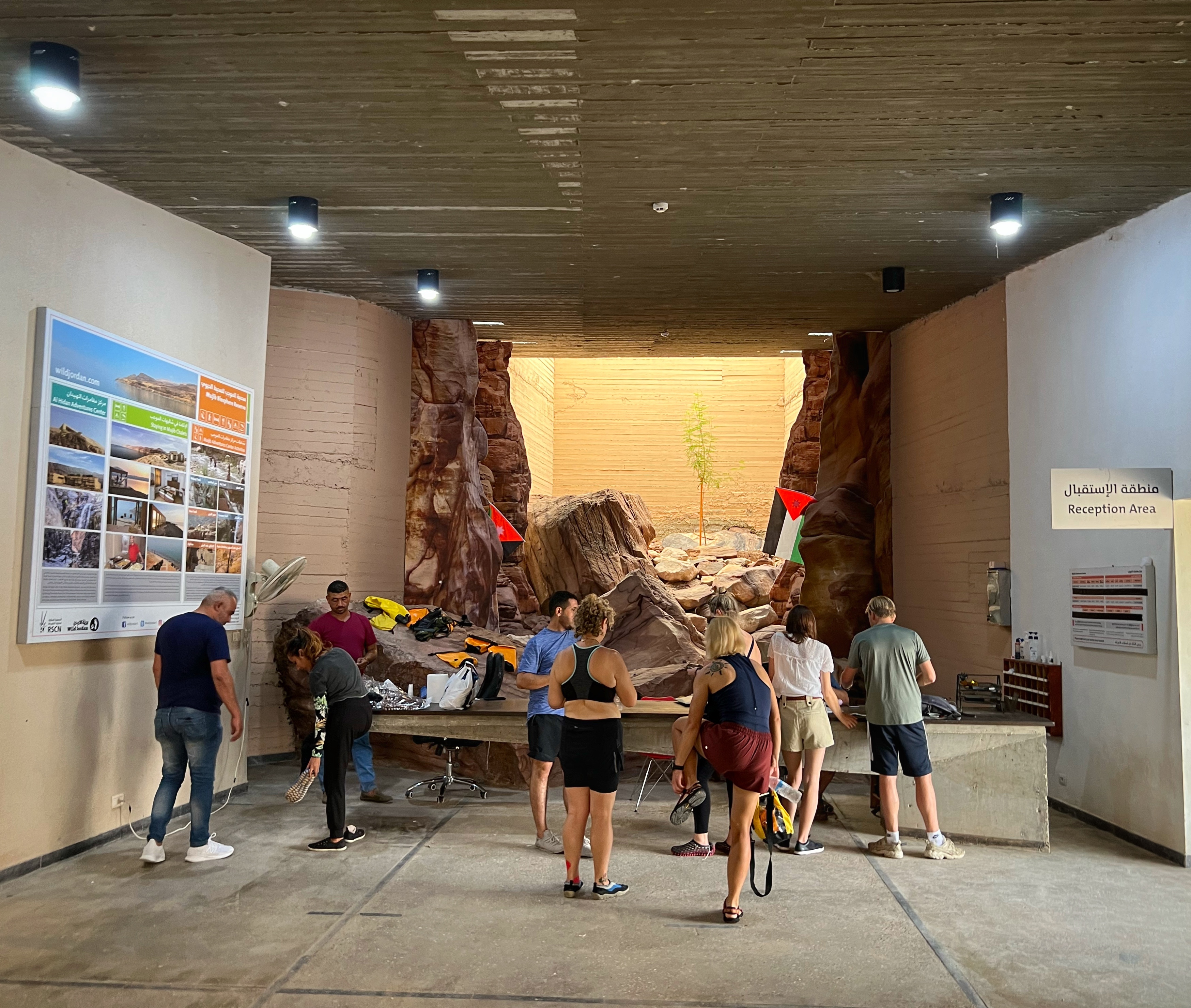
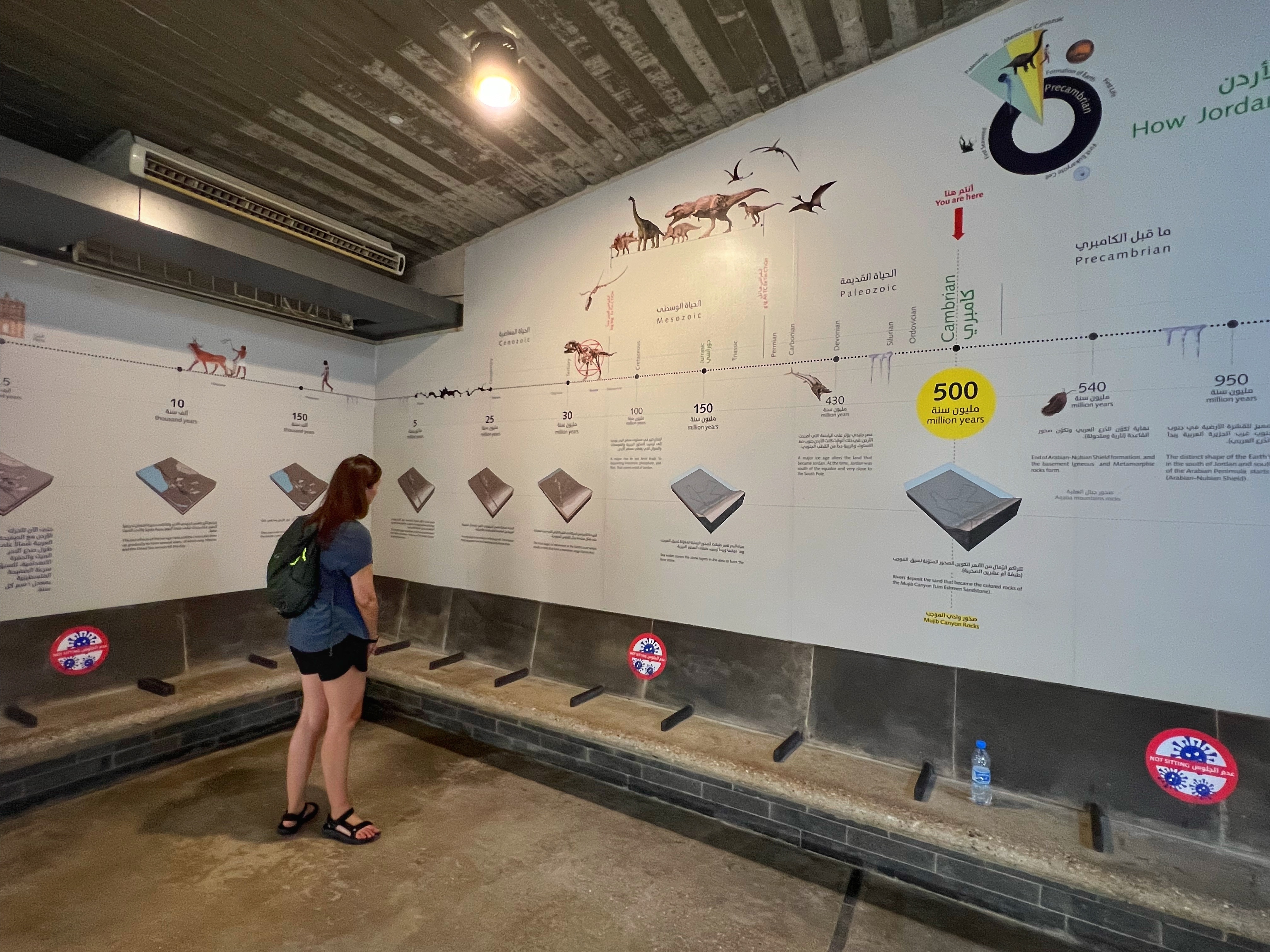

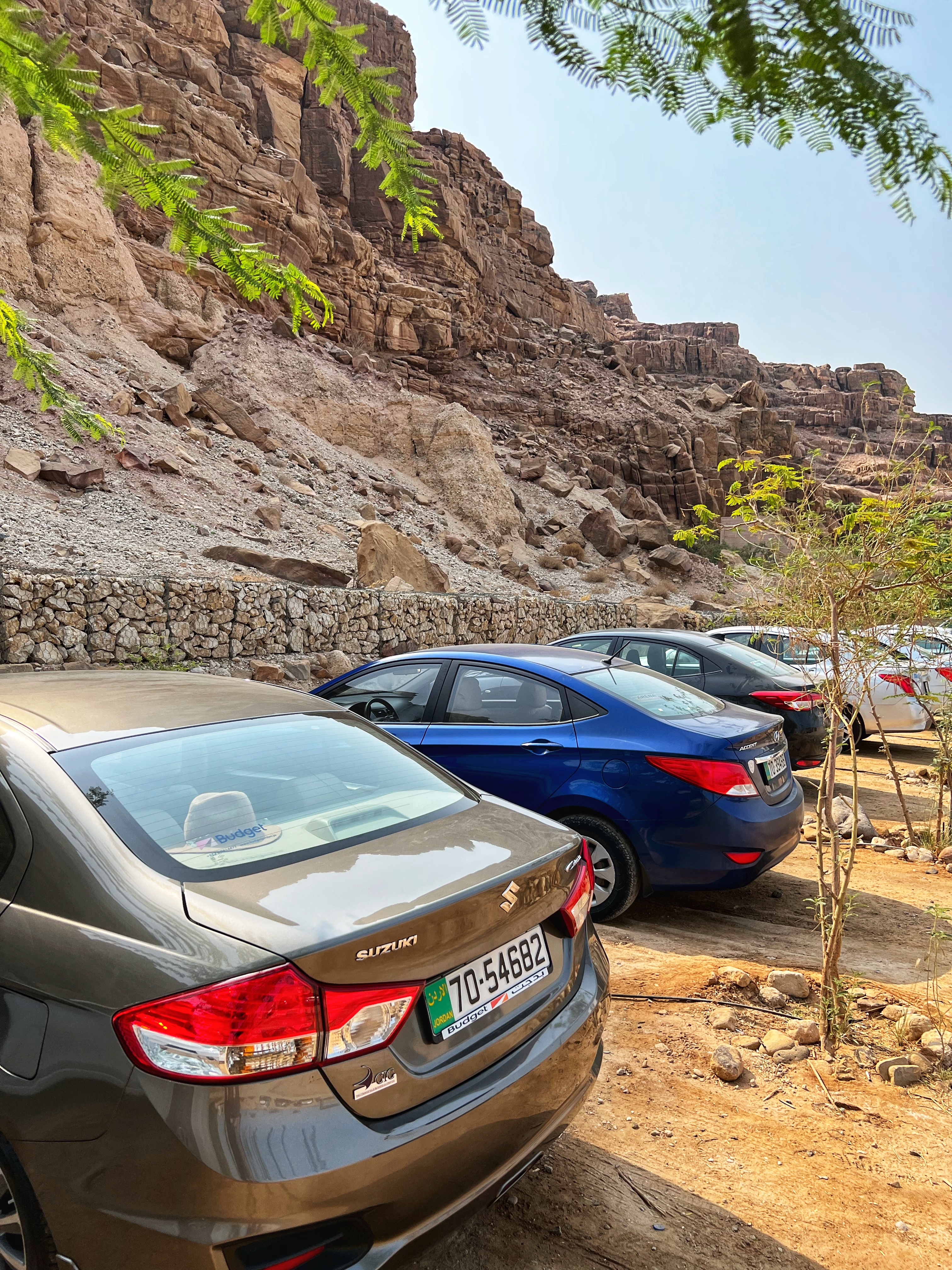
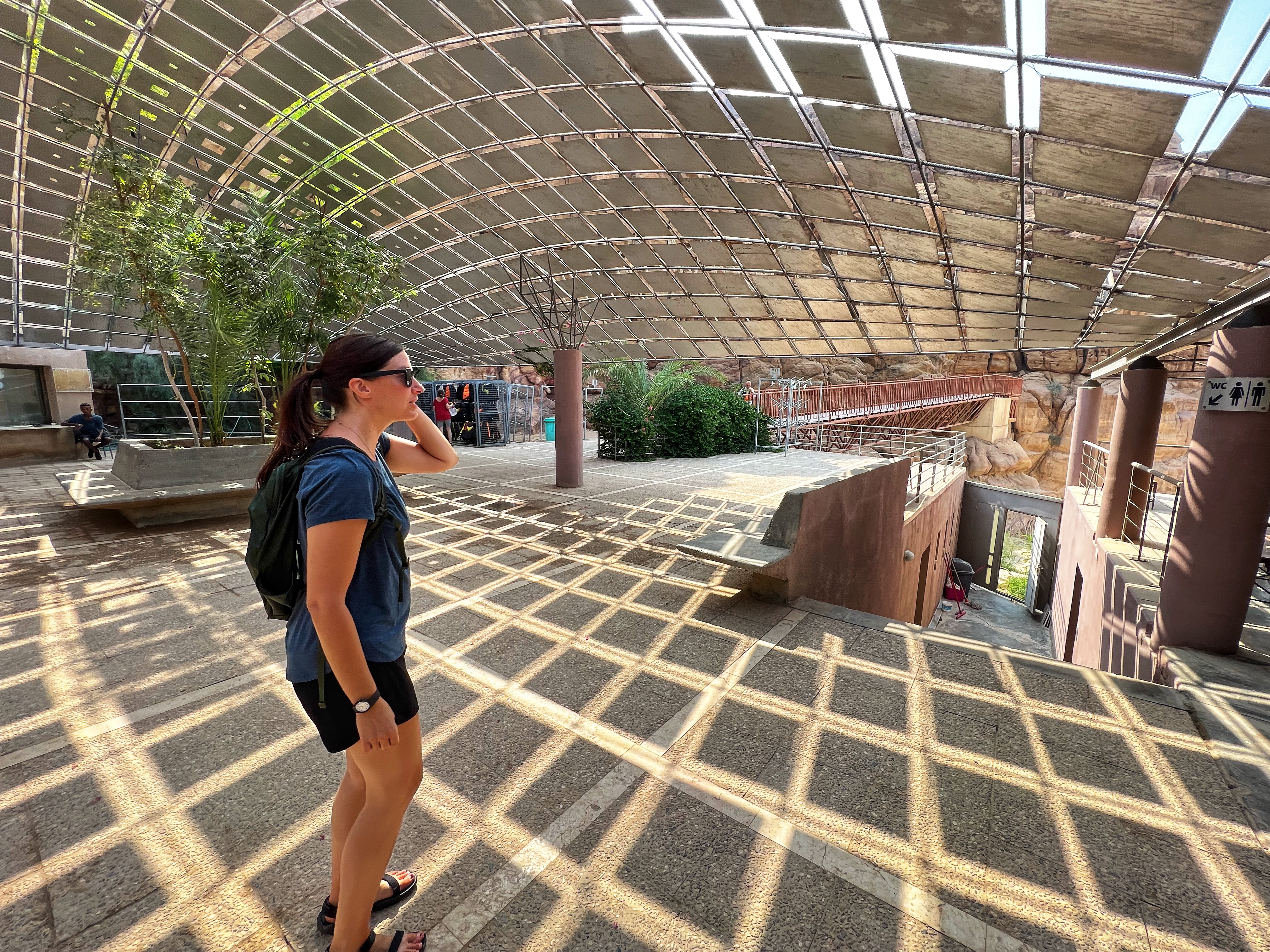
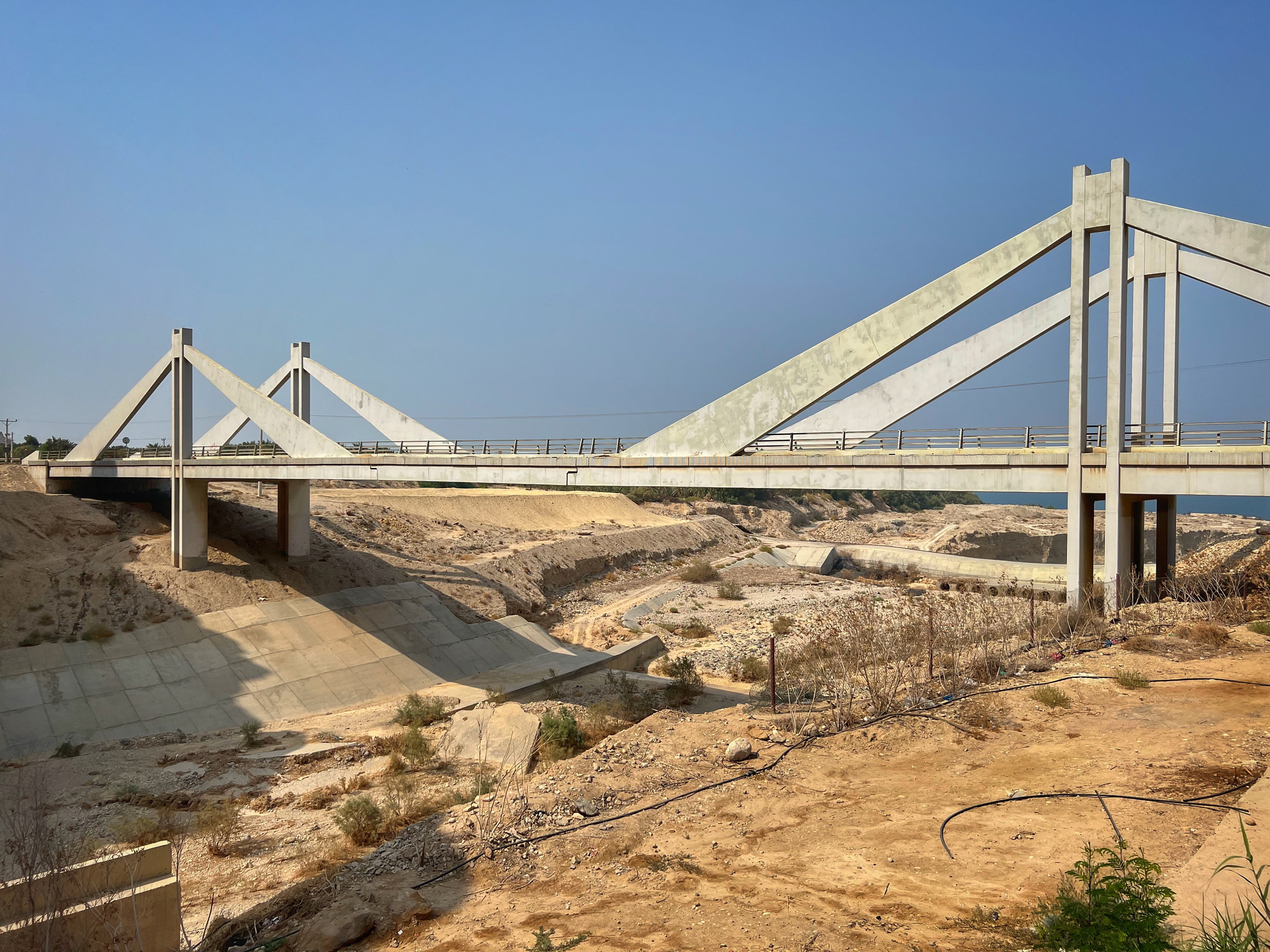
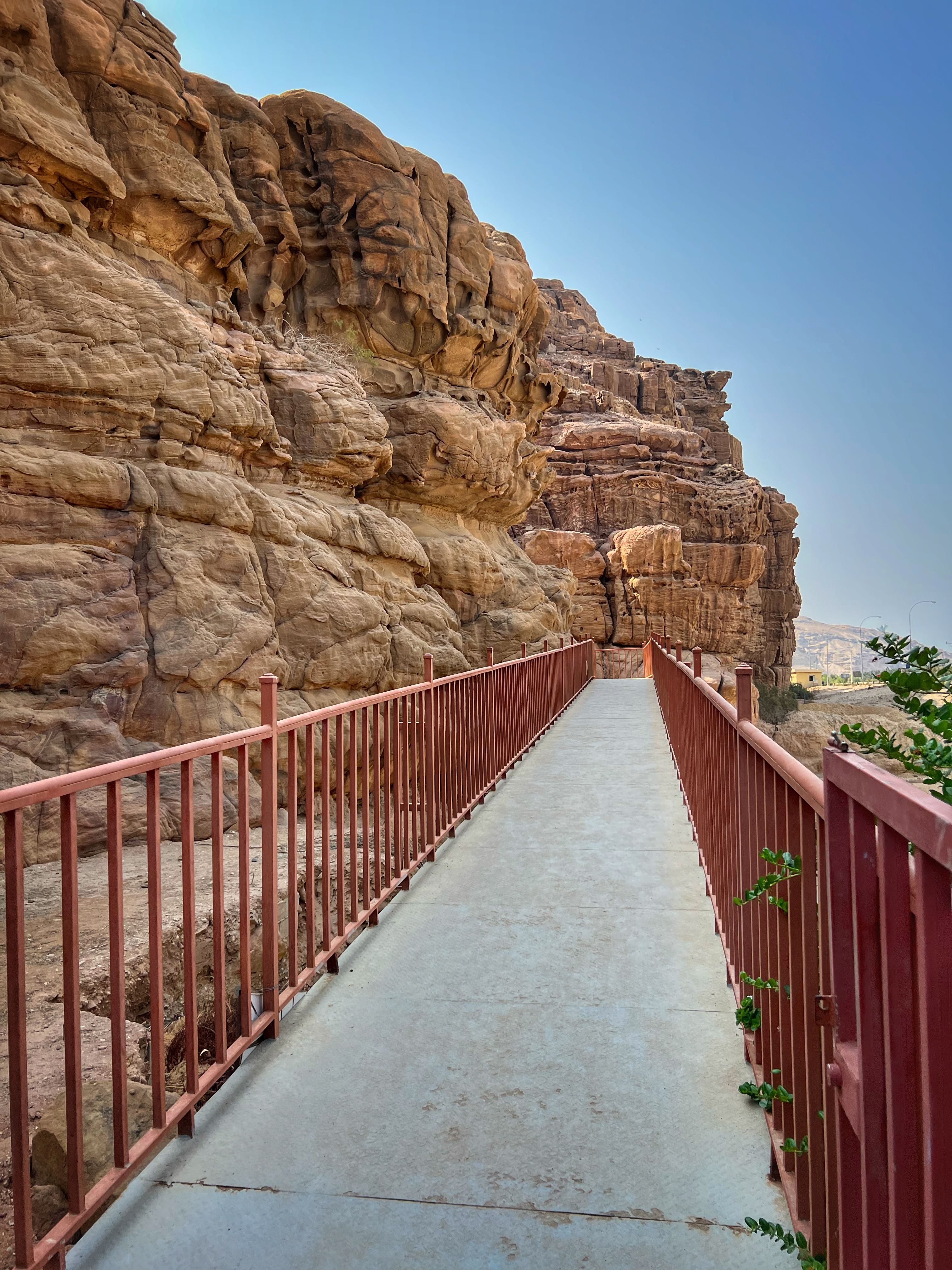
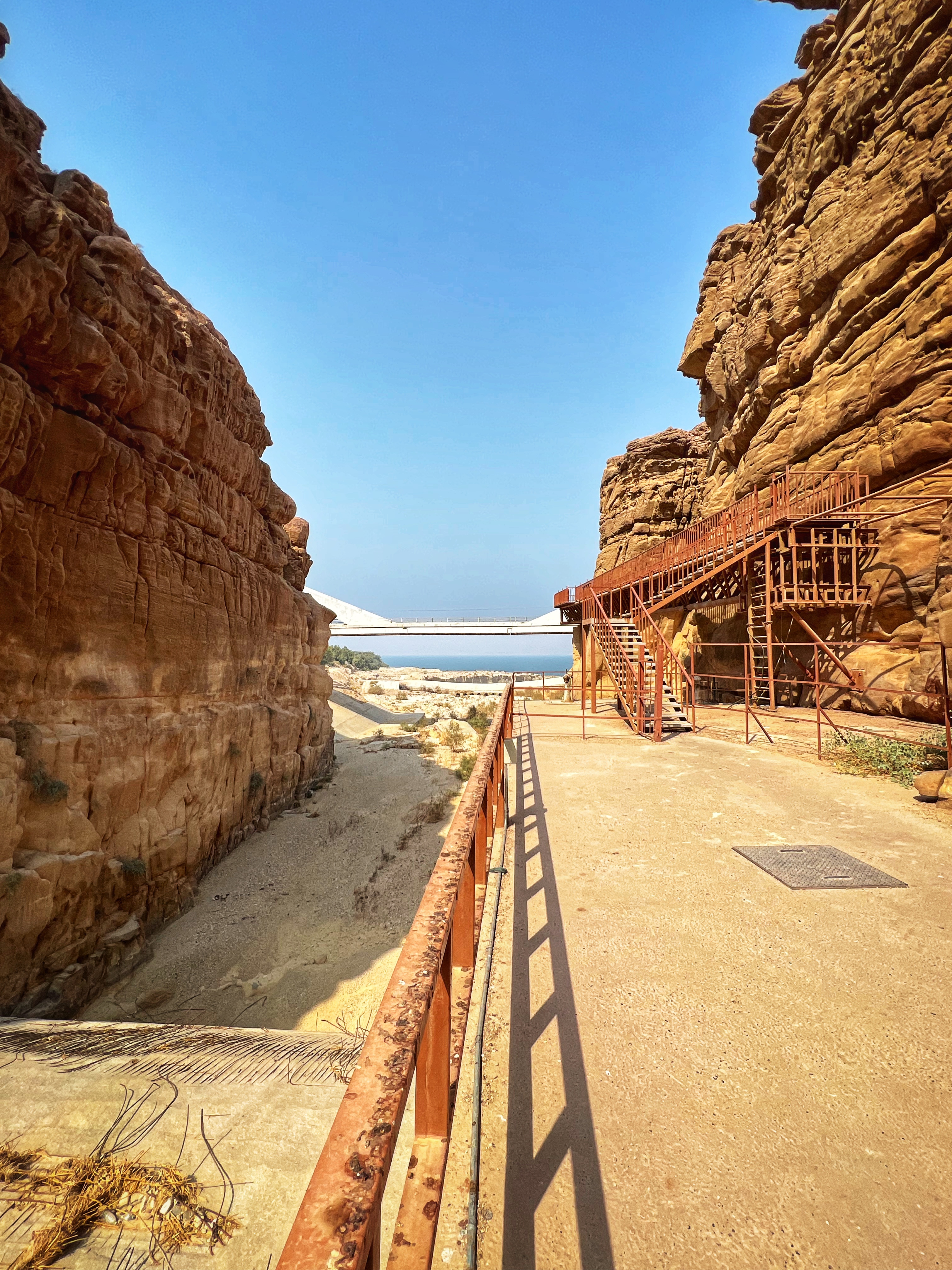
When you arrive you park for free and then pay the fee 21JD/$30 per person to enter. Everyone is required to wear a life jacket that is provided, and if you need a dry bag or water shoes you can rent them there. It takes about 90 minutes to hike up and back – there is only one way and you can’t get lost. You do not need a guide! This hike is not for small children as the life jackets are for teens and up, and the water can be deep in spots. Also, there are places on the trail where you need to pull yourself along or up on ropes, climb ladders, and jump or slide down rocks. It’s sooooo much fun, but not for people who aren’t comfortable in water. I think it’s fair to say both of us were speechless and blown away by this beautiful hike. It became one of my favorite memories in Jordan. Note: Wadi Mujib is open seasonally, usually from the beginning of April to the end of October. In the winter it is too flooded to hike any trails there safely. There are other trails available that require a guide. Learn about it here.
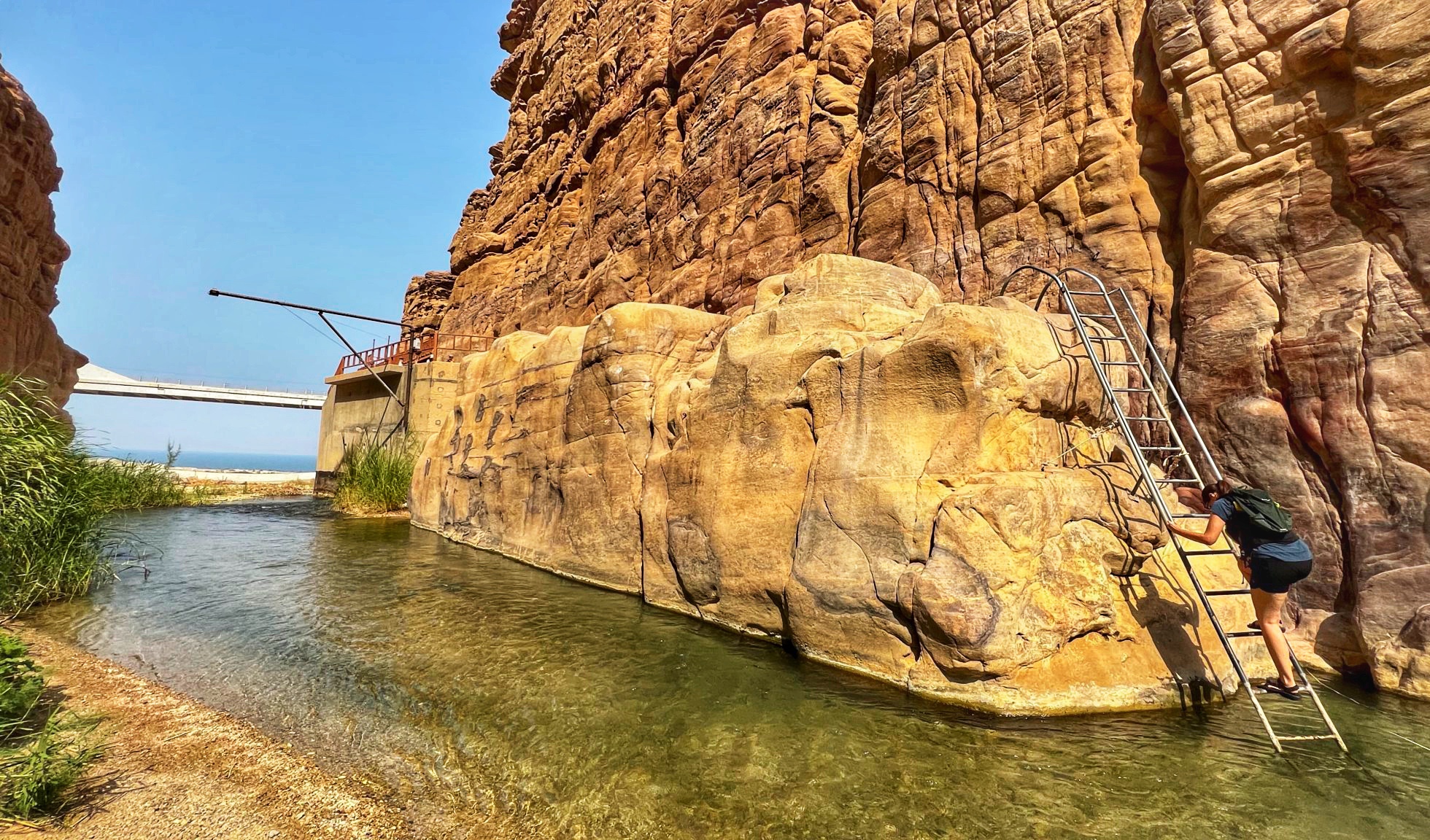
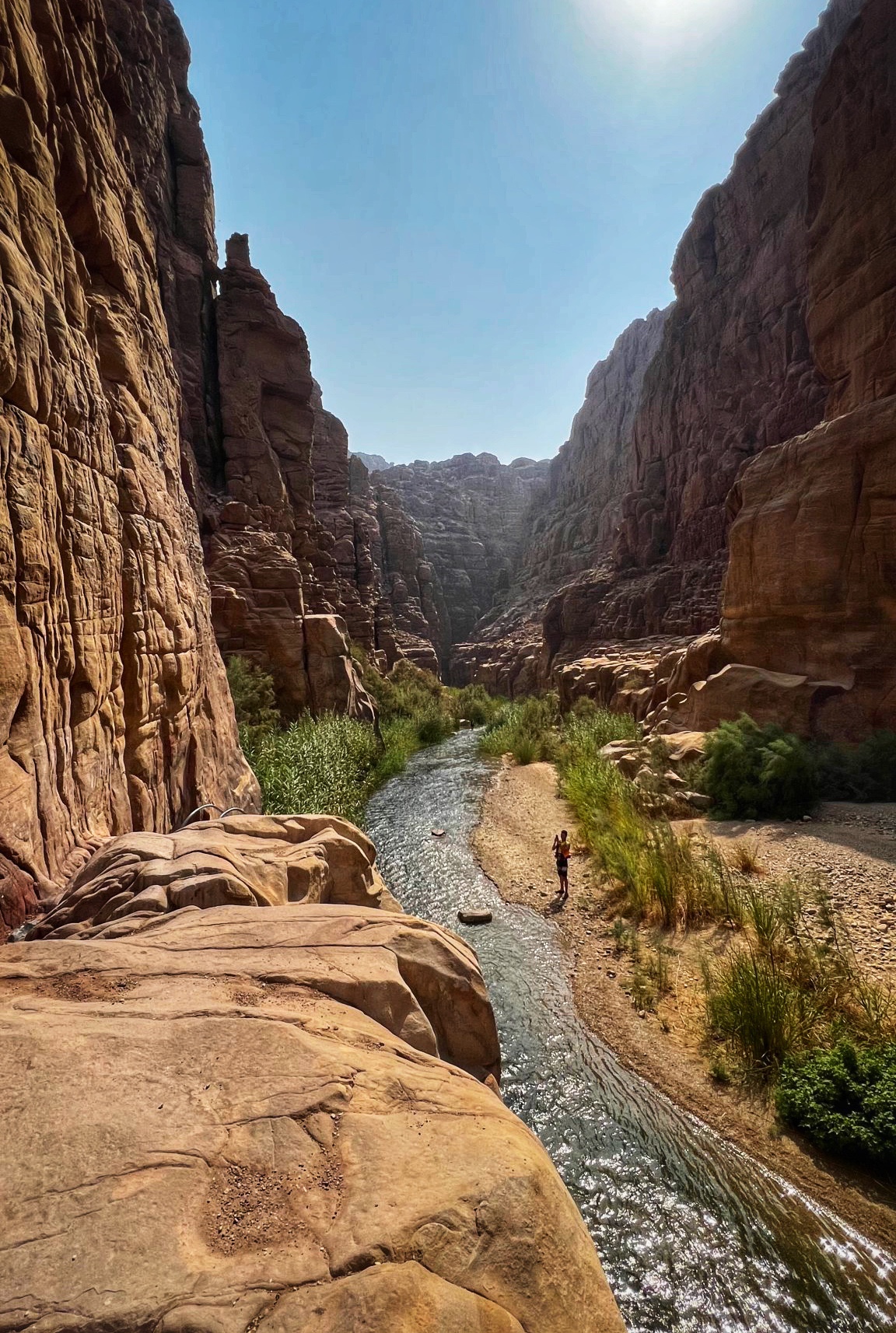


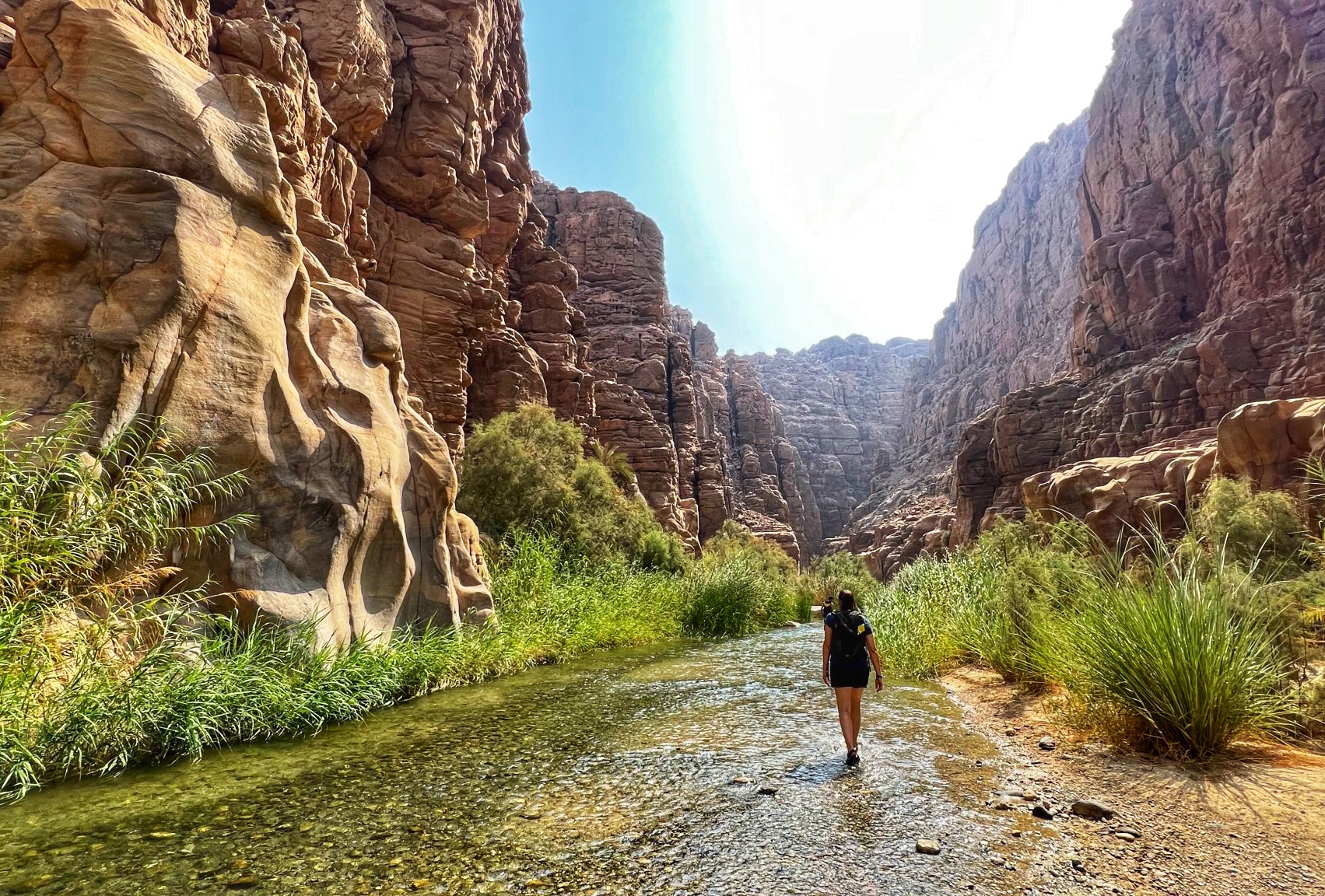
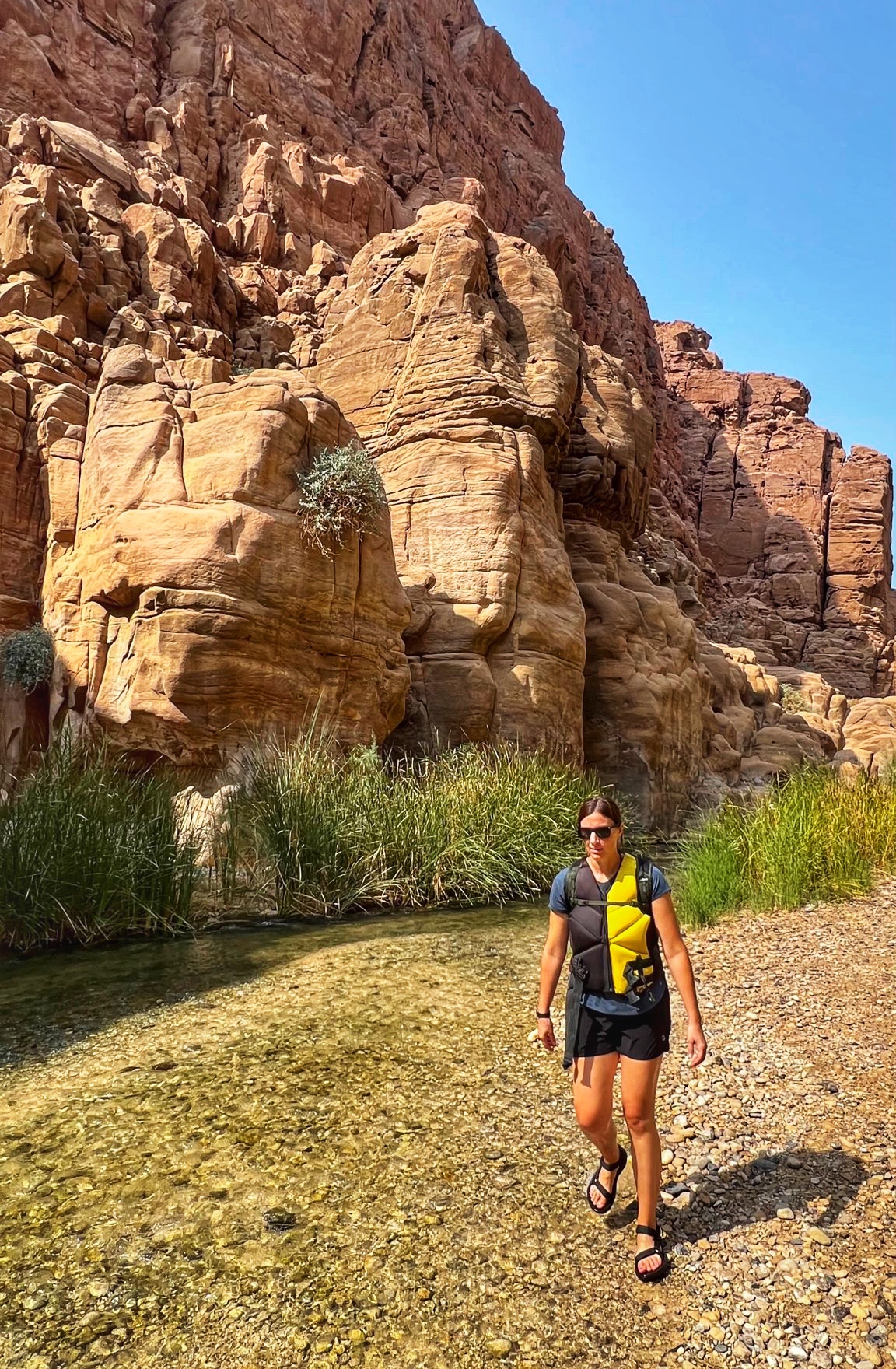
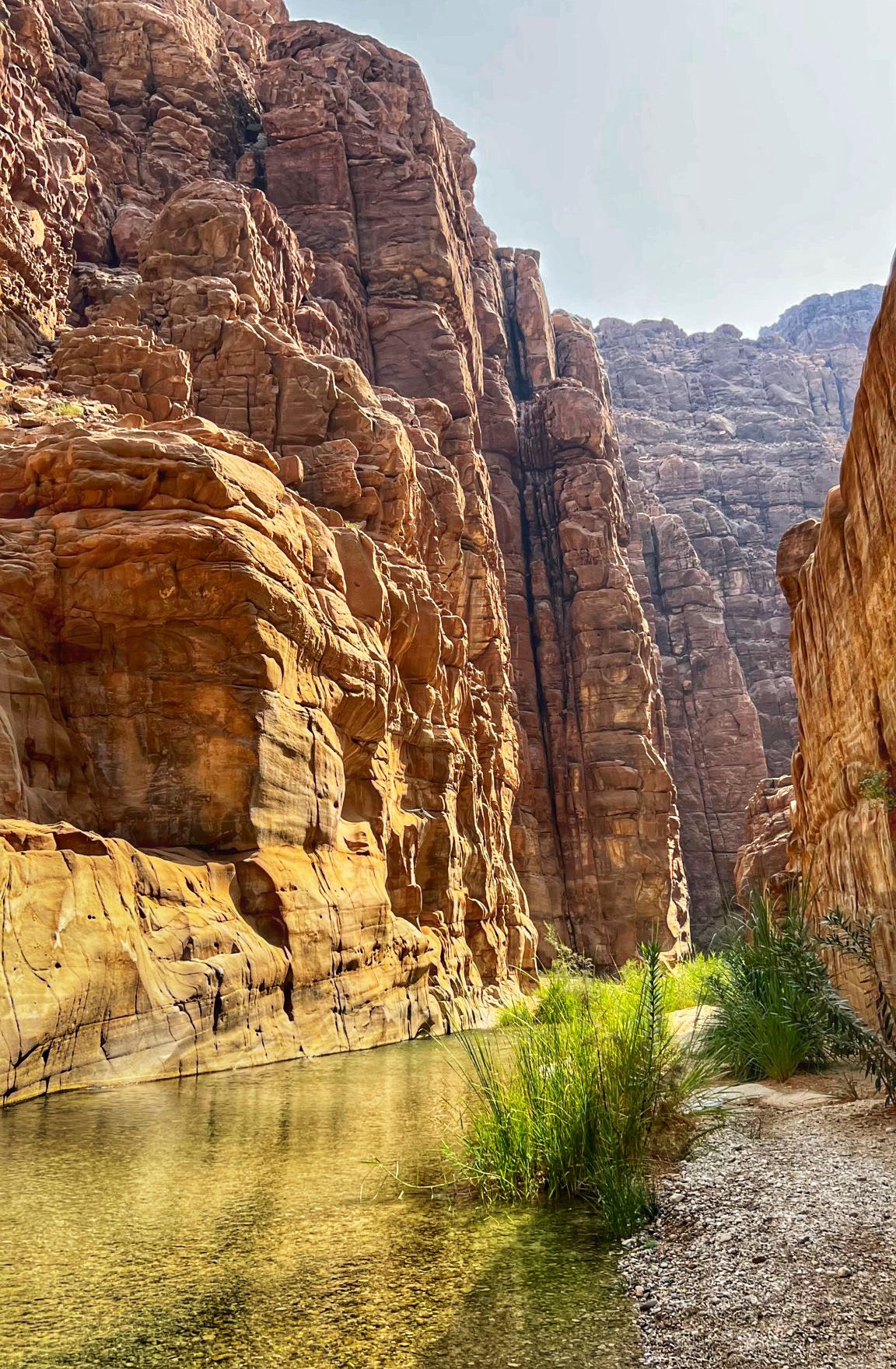
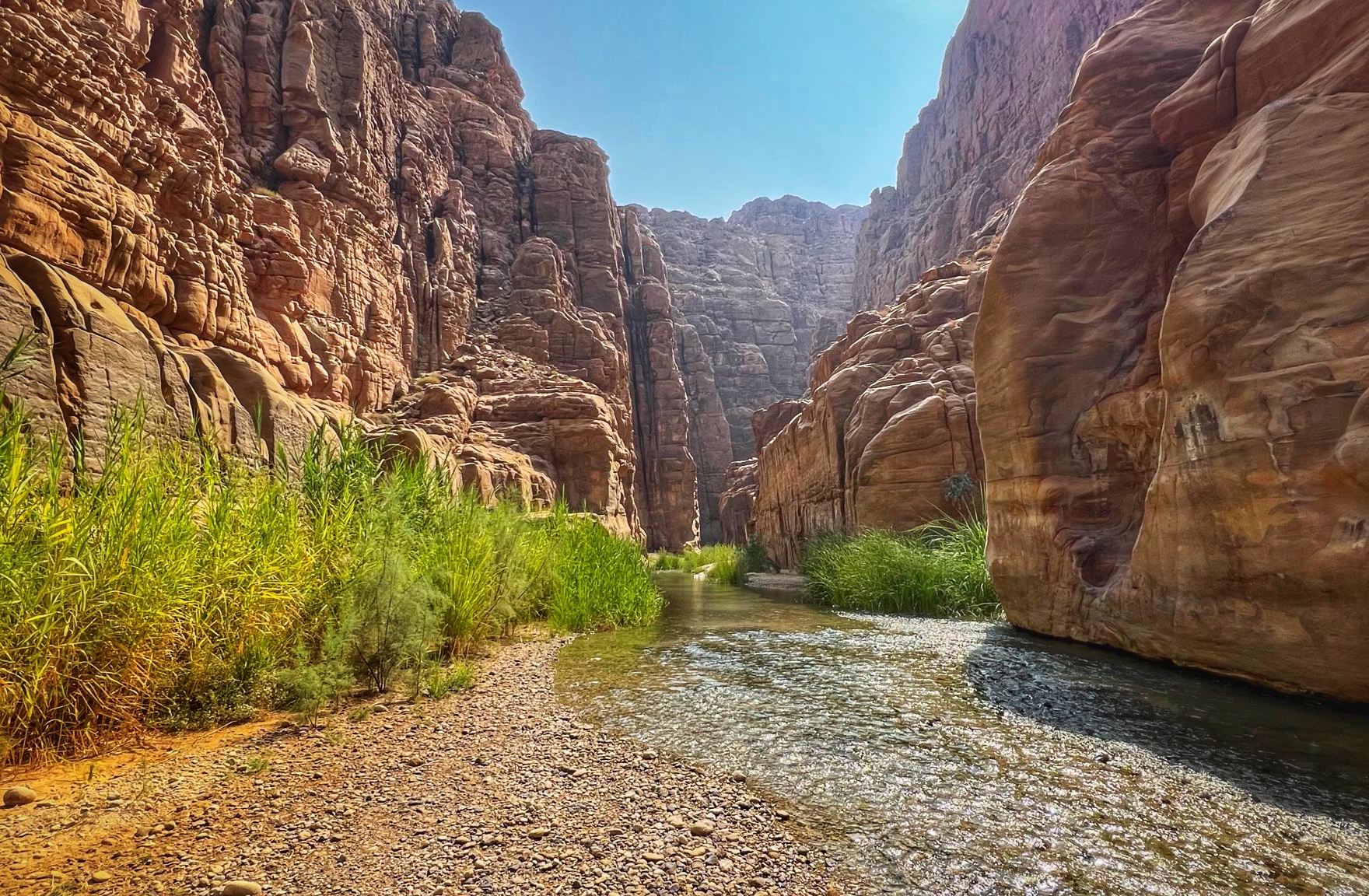
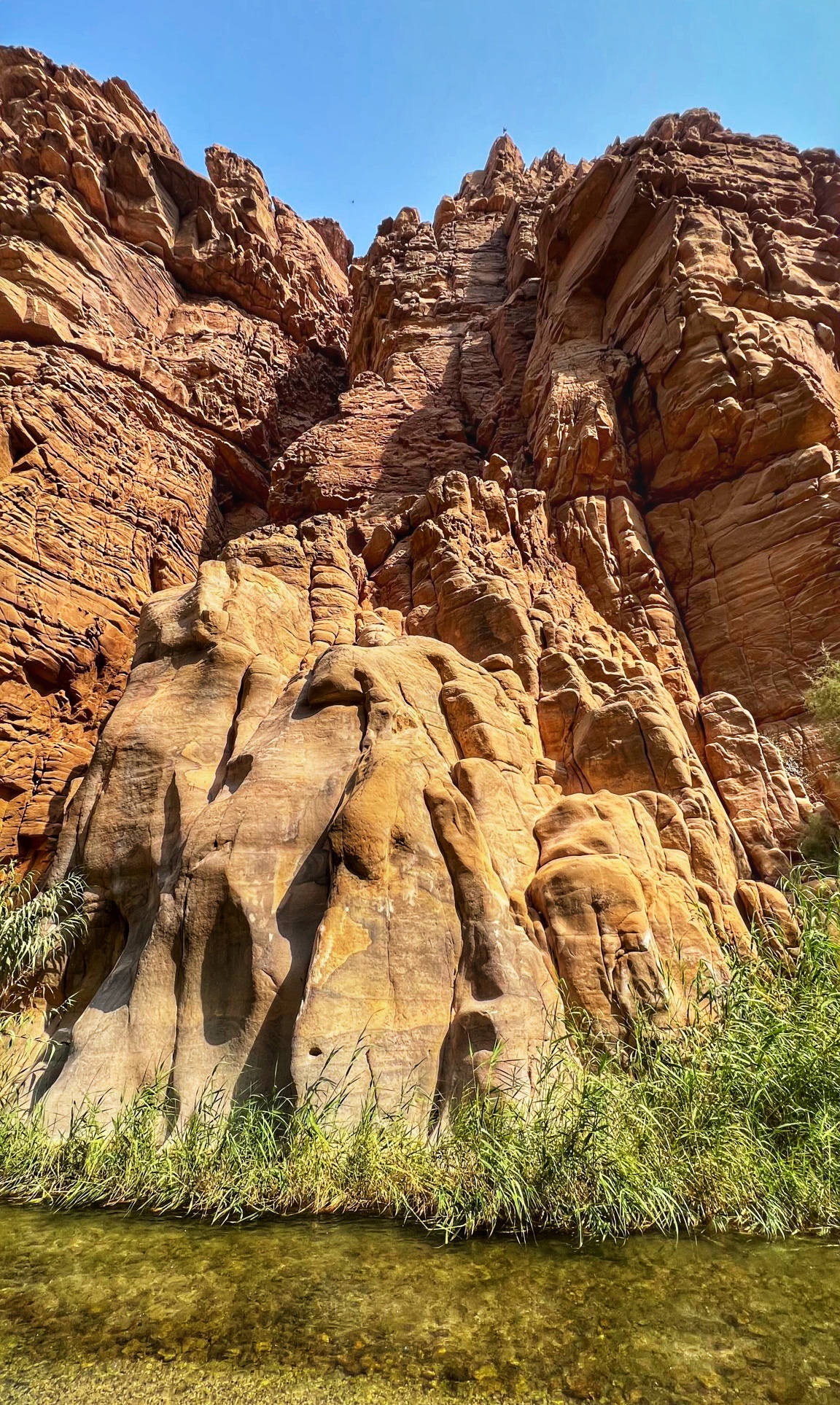
It just kept getting more and more beautiful and more and more adventurous as we went, eventually ending at the waterfall about 45 minutes to 1 hour into the hike. We were glad the walls of the siq protected us from the sun as it was another very hot day, but it didn’t feel that way at all in the nice cool flowing fresh water. About 10 minutes into the walk we noticed little fish in the water…and then suddenly felt them nibbling on our ankles! This is a thing here, apparently, that you get a pseudo-fish pedicure on your hike. It was very weird at first and made everyone on the trail squeal and giggle, but we got used to it after a bit.
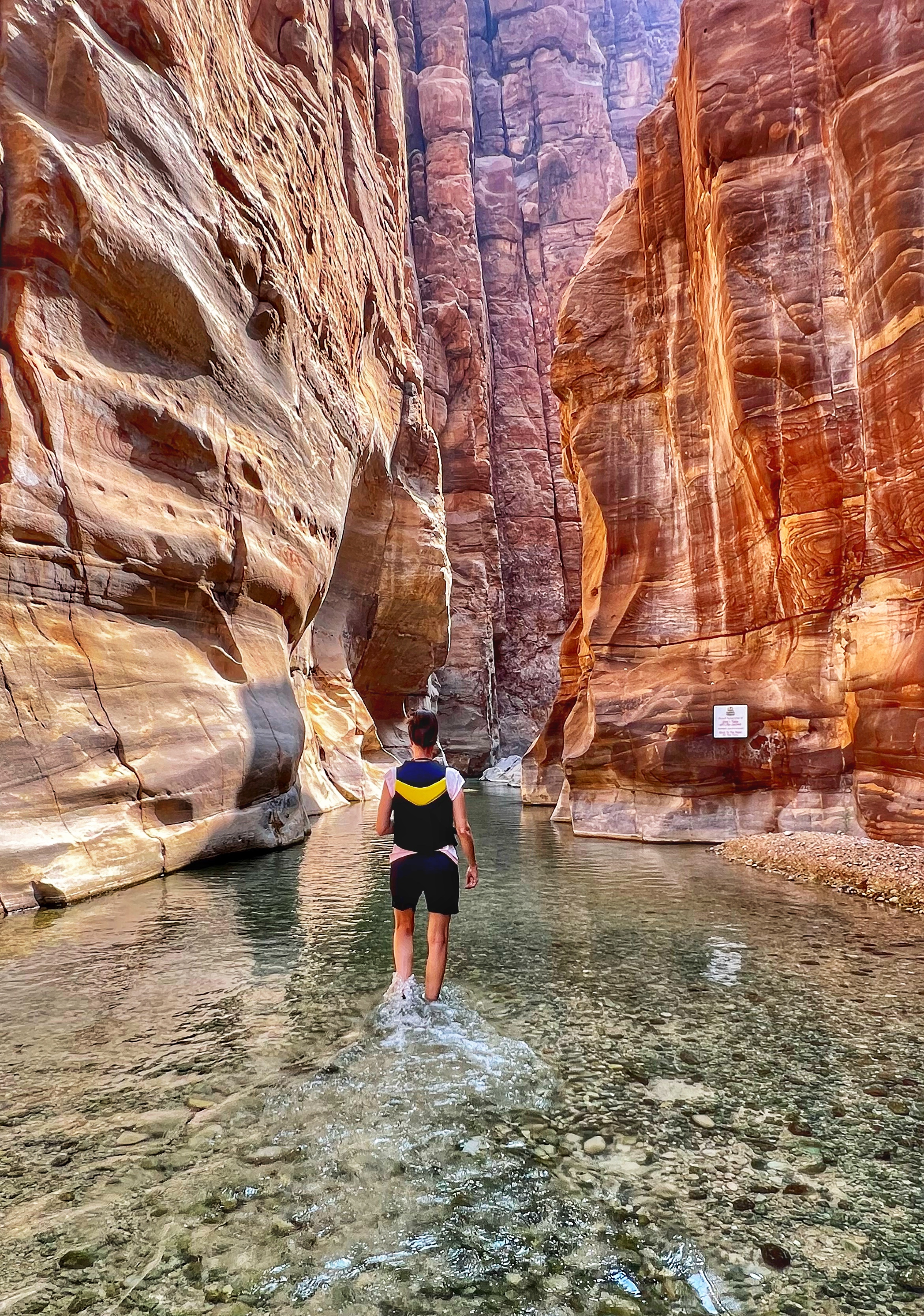
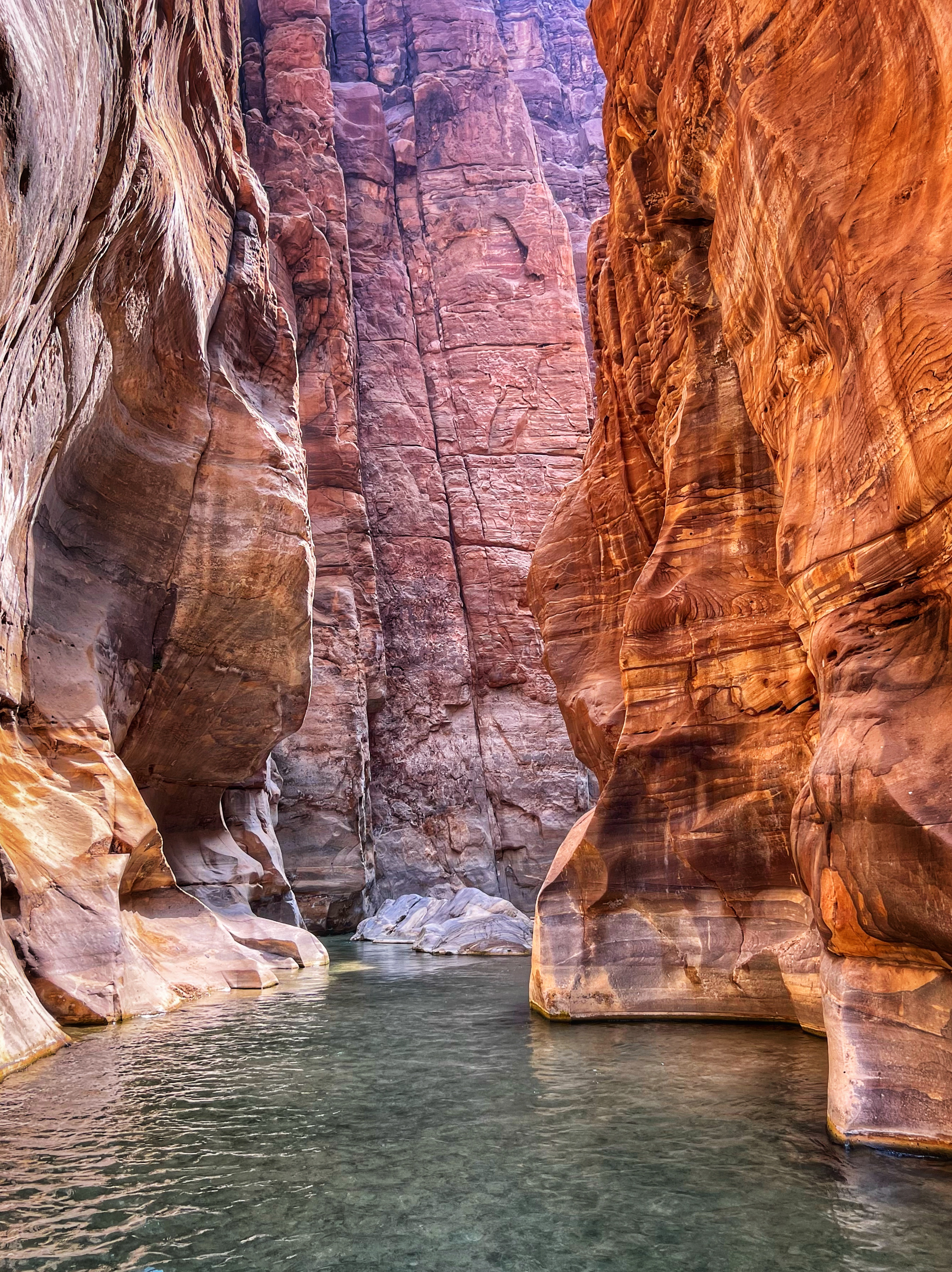
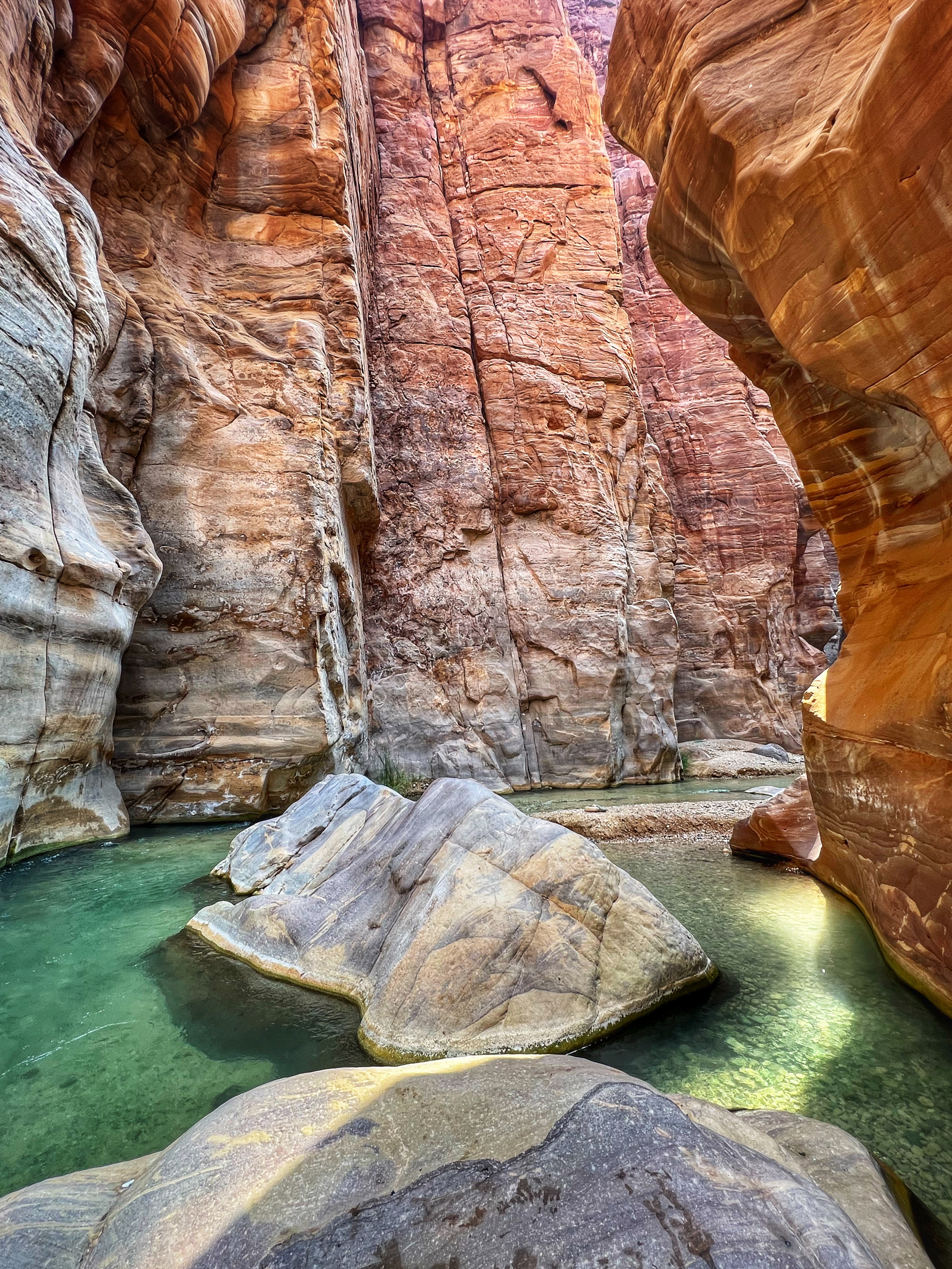
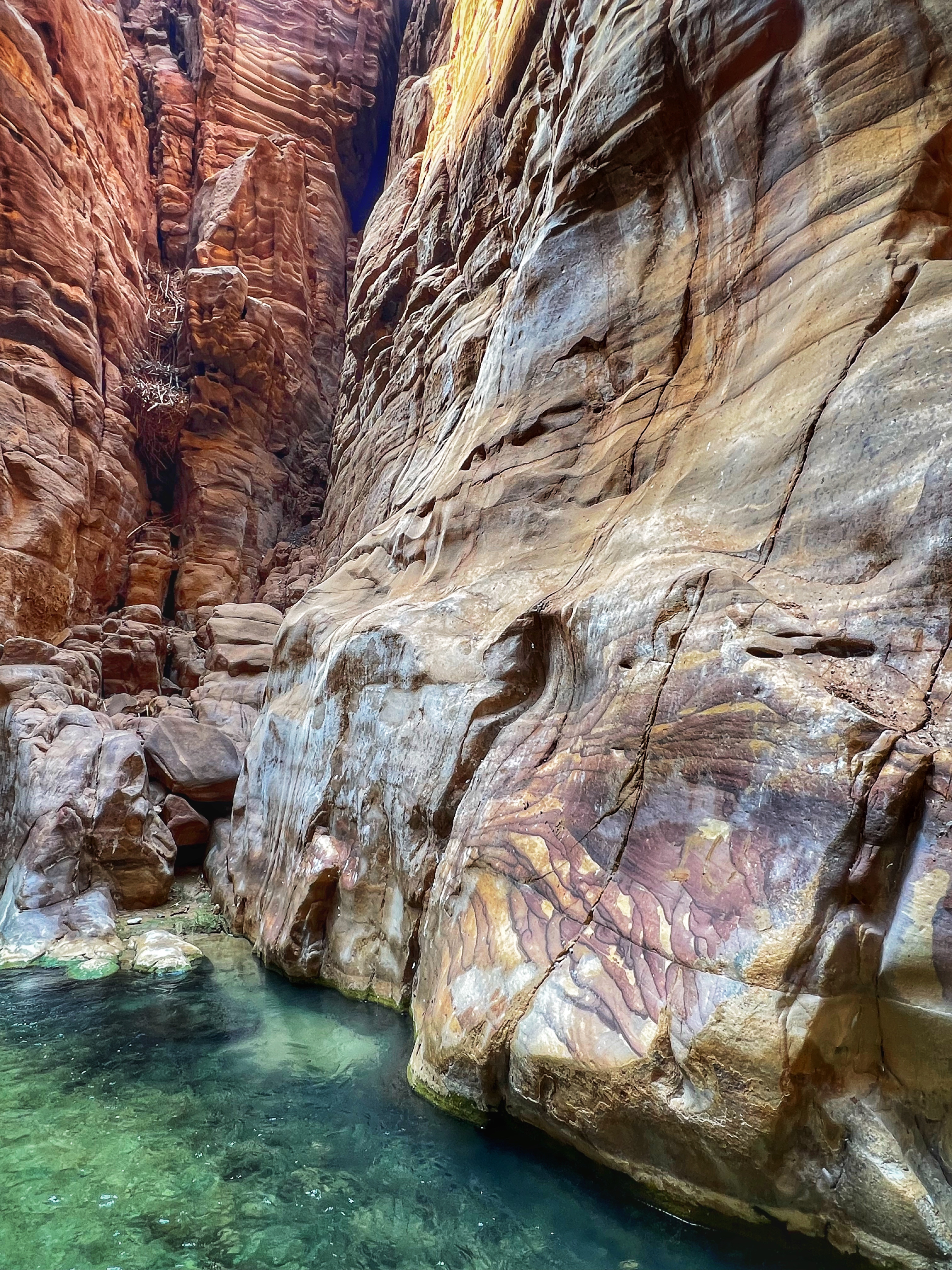
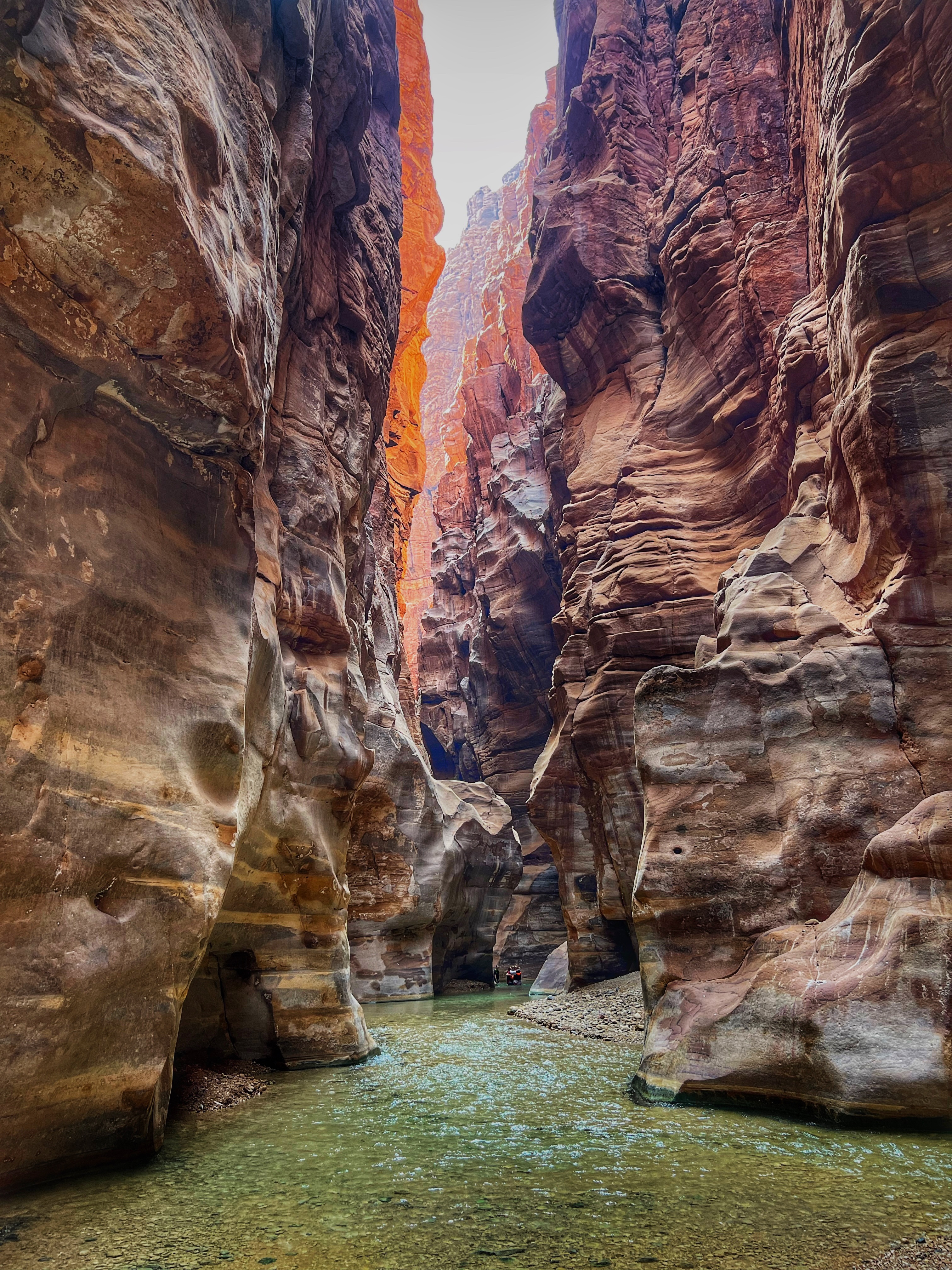
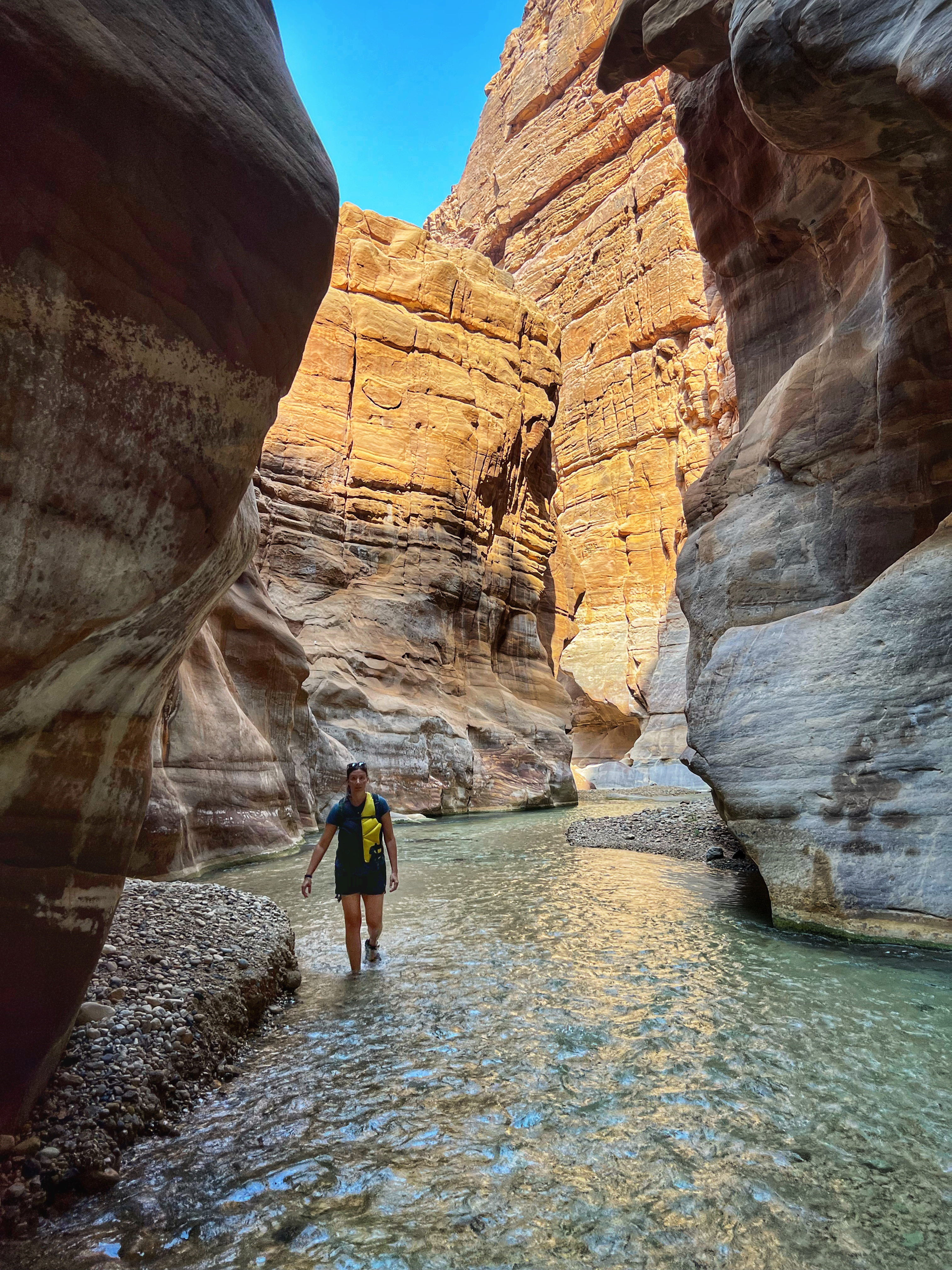
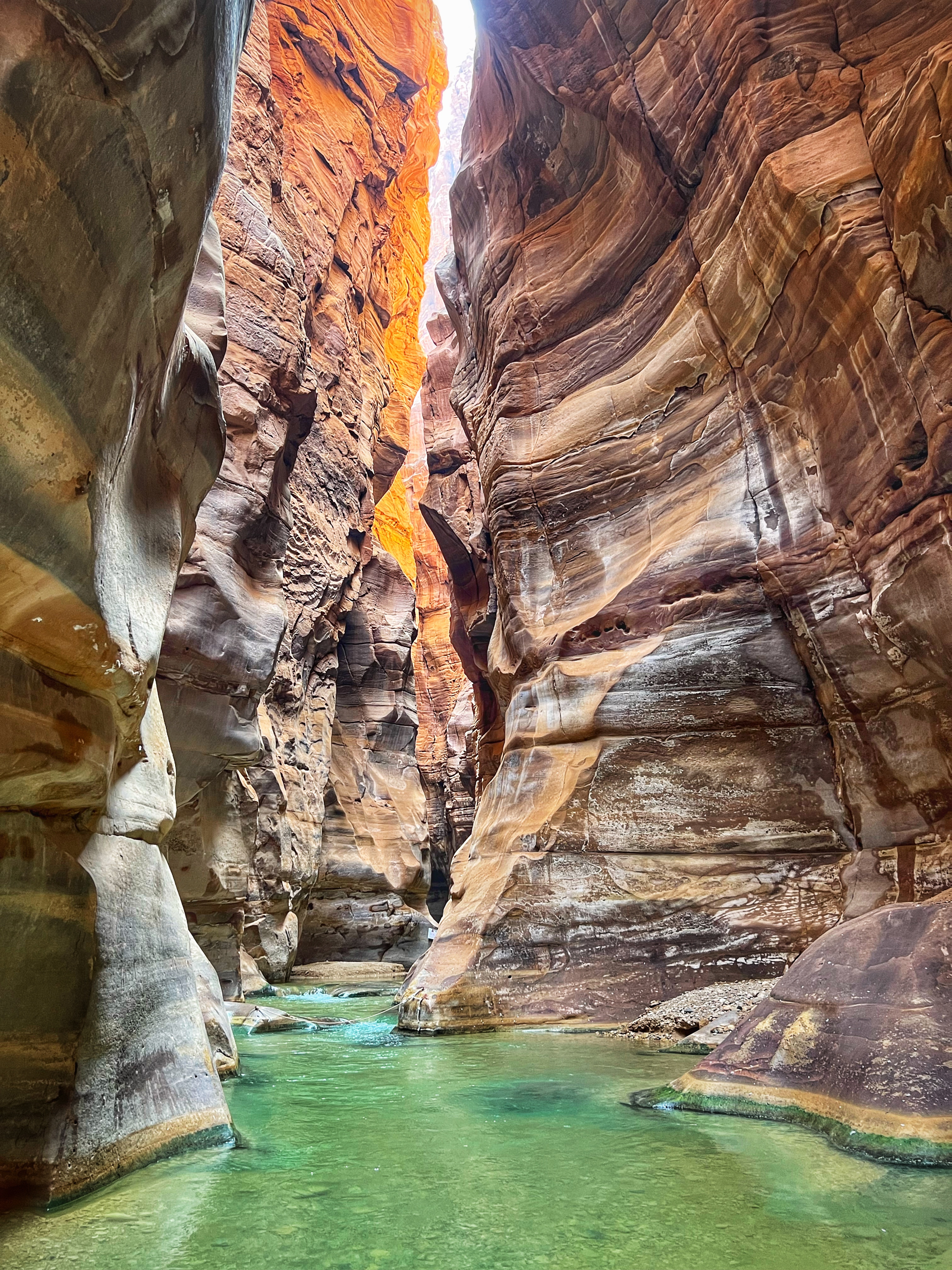
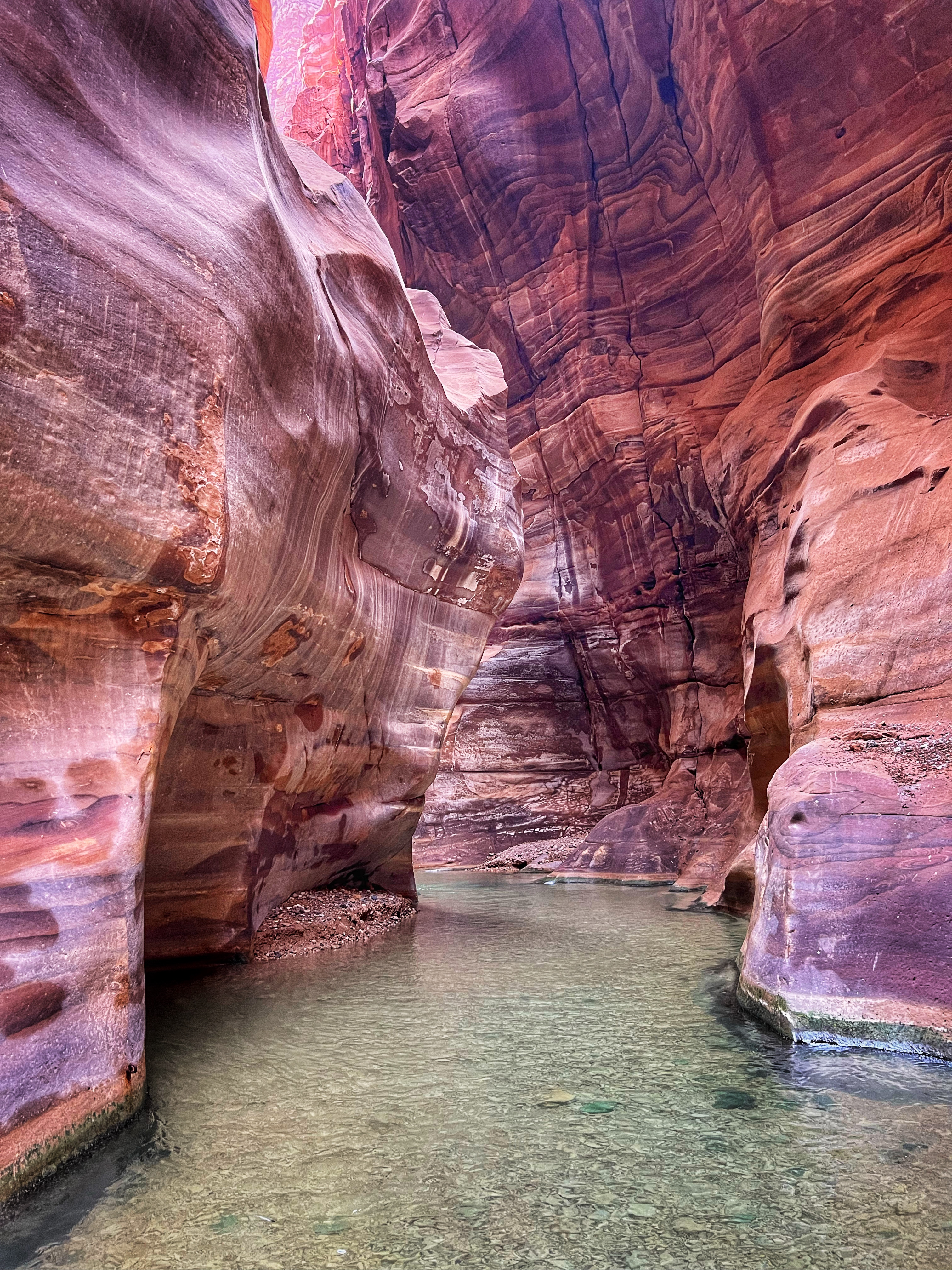
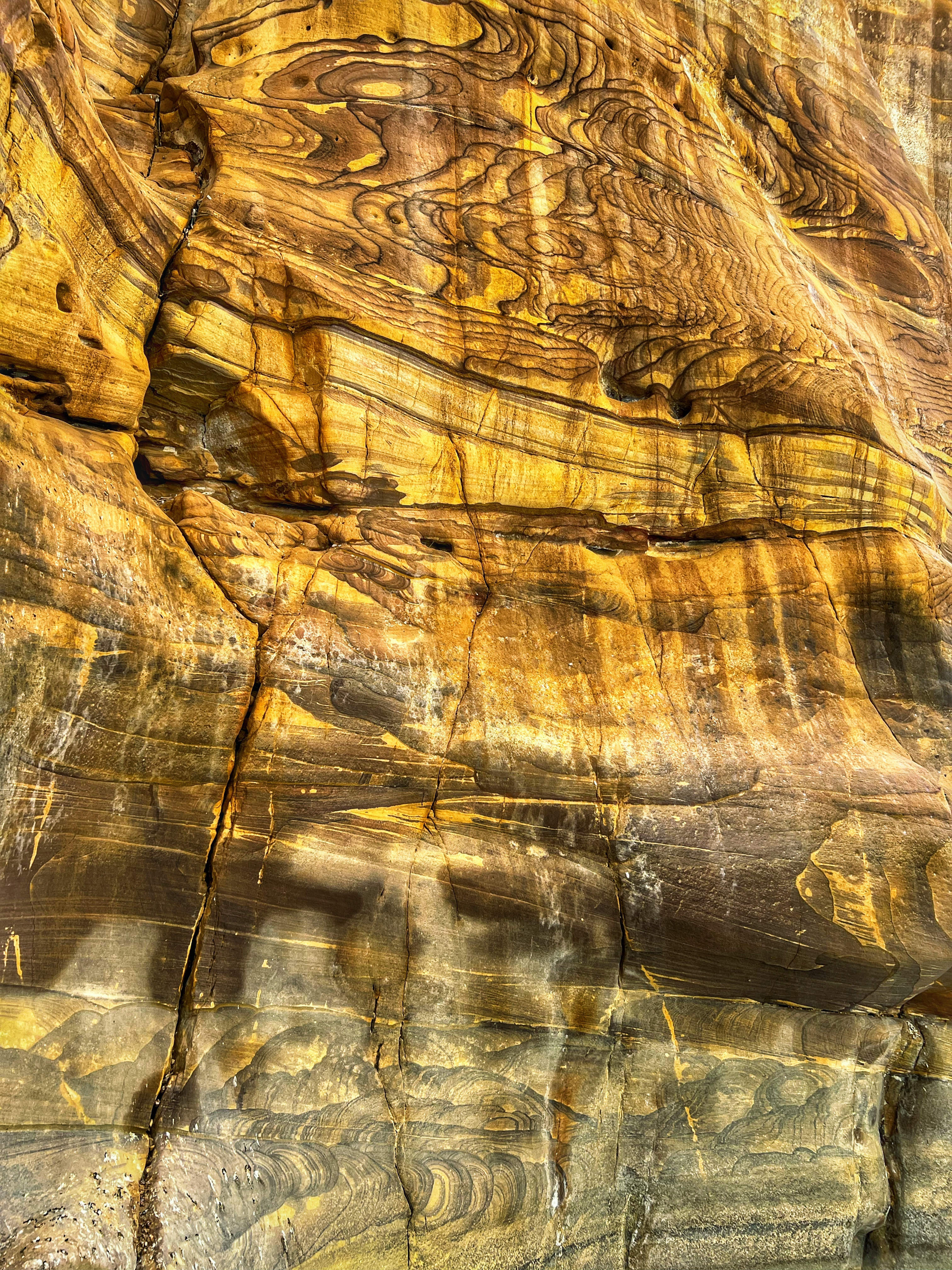
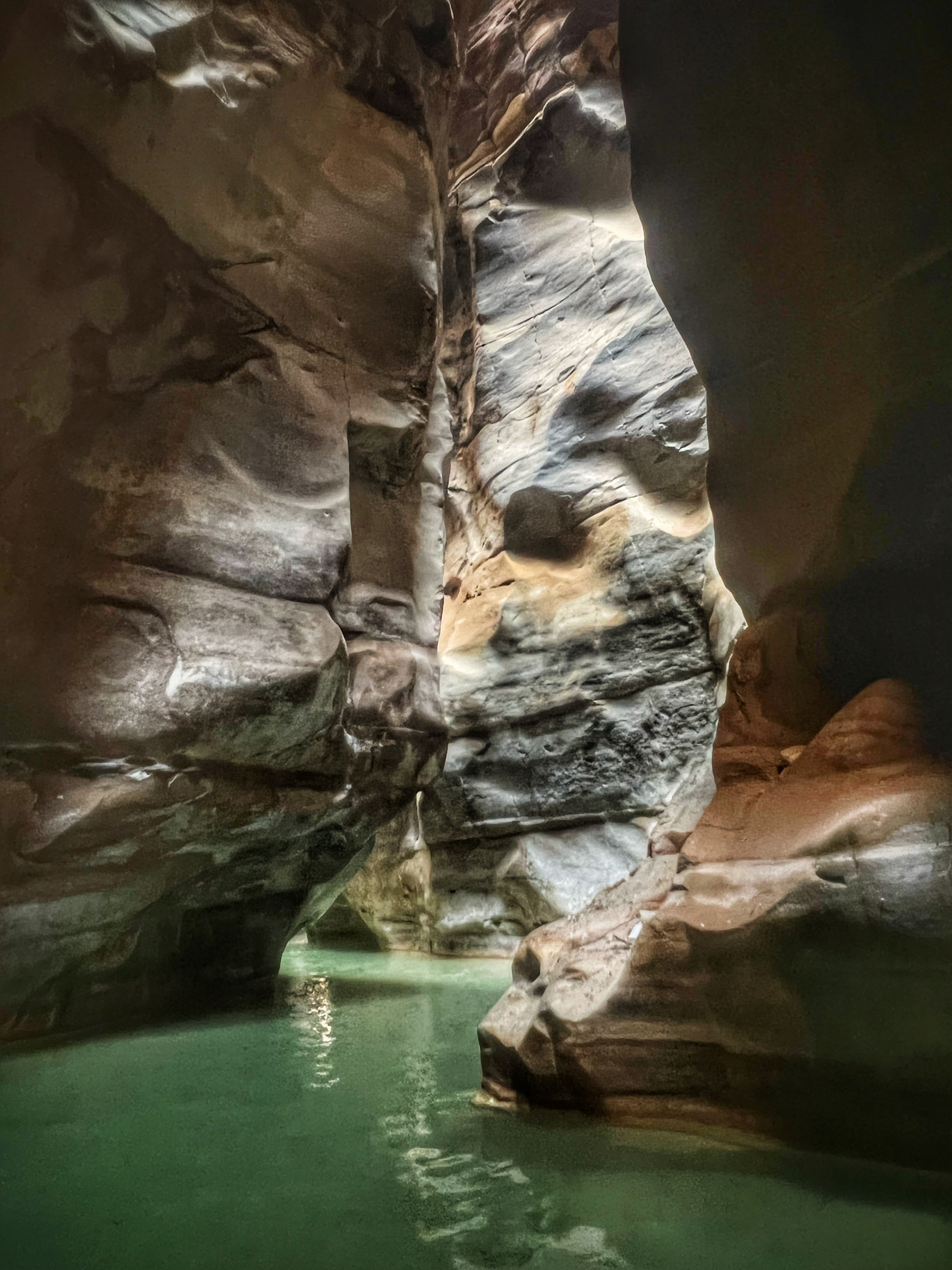

There were attendants at every risky location and plenty of ropes and signage to make sure you stayed safely on the trail, so we felt totally safe the whole time. It was like an adult playground with impossibly beautiful scenery and just enough challenge to feel an adrenaline rush. Note: although this is fresh water, who knows how clean it is. It’s likely you will get water in your eyes from splashes but try not to get it up your nose or swallow any to be safe and avoid possible ailments.
Look at this amazing waterfall! I especially loved the cube shaped rock that was suspended there between the sandstone cliffs. The colors kept changing with the light and it was truly breathtaking. At the waterfall you can take off your life jacket and rest a bit, and even swim behind the waterfall! The most surreal part of the hike was allowing ourselves to float all the way back down with the current (except for the rapids and water fall spots) and just gaze up at the swirling rock patterns on the walls reaching hundreds of feet up. What a treasure.


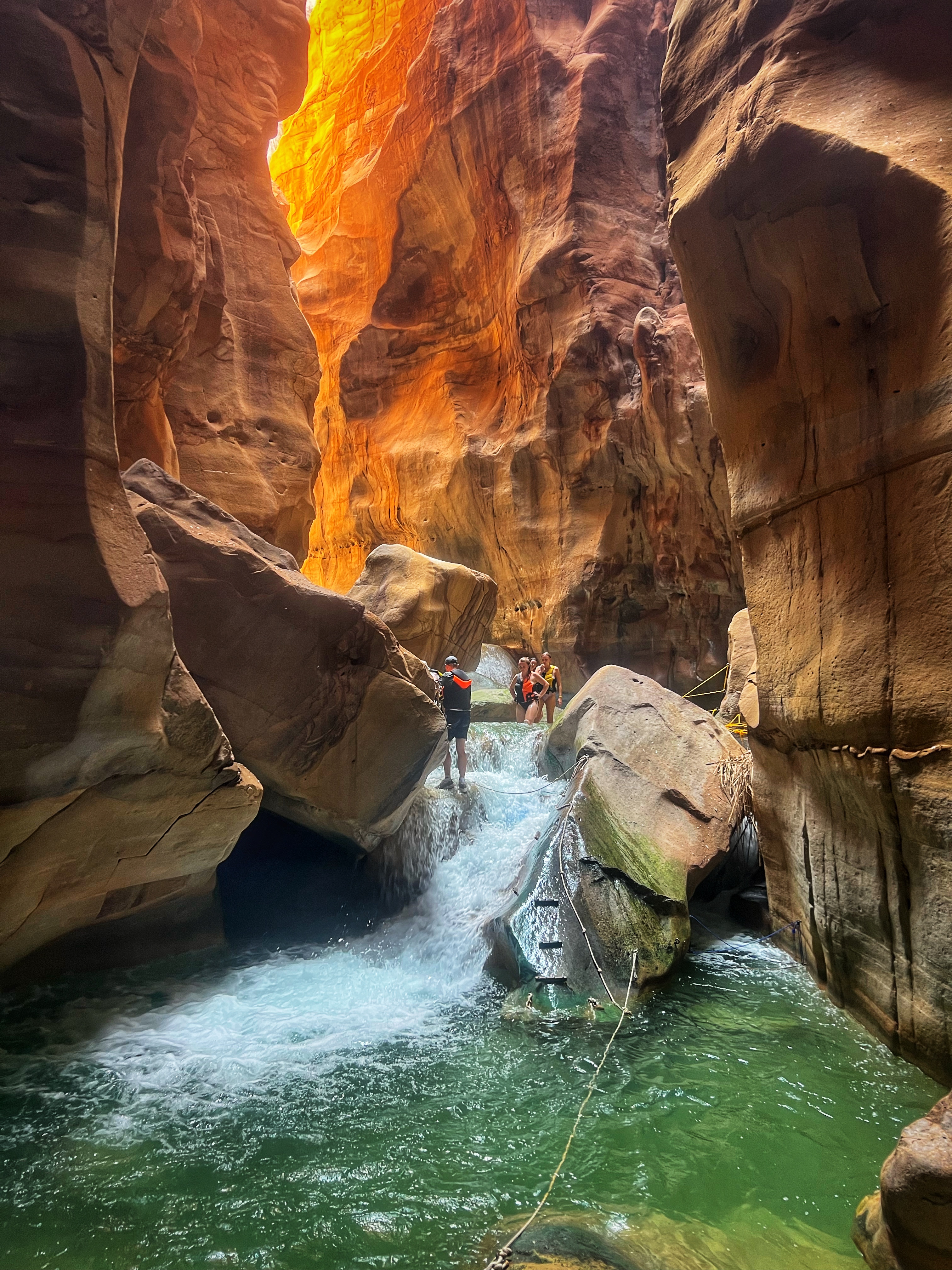

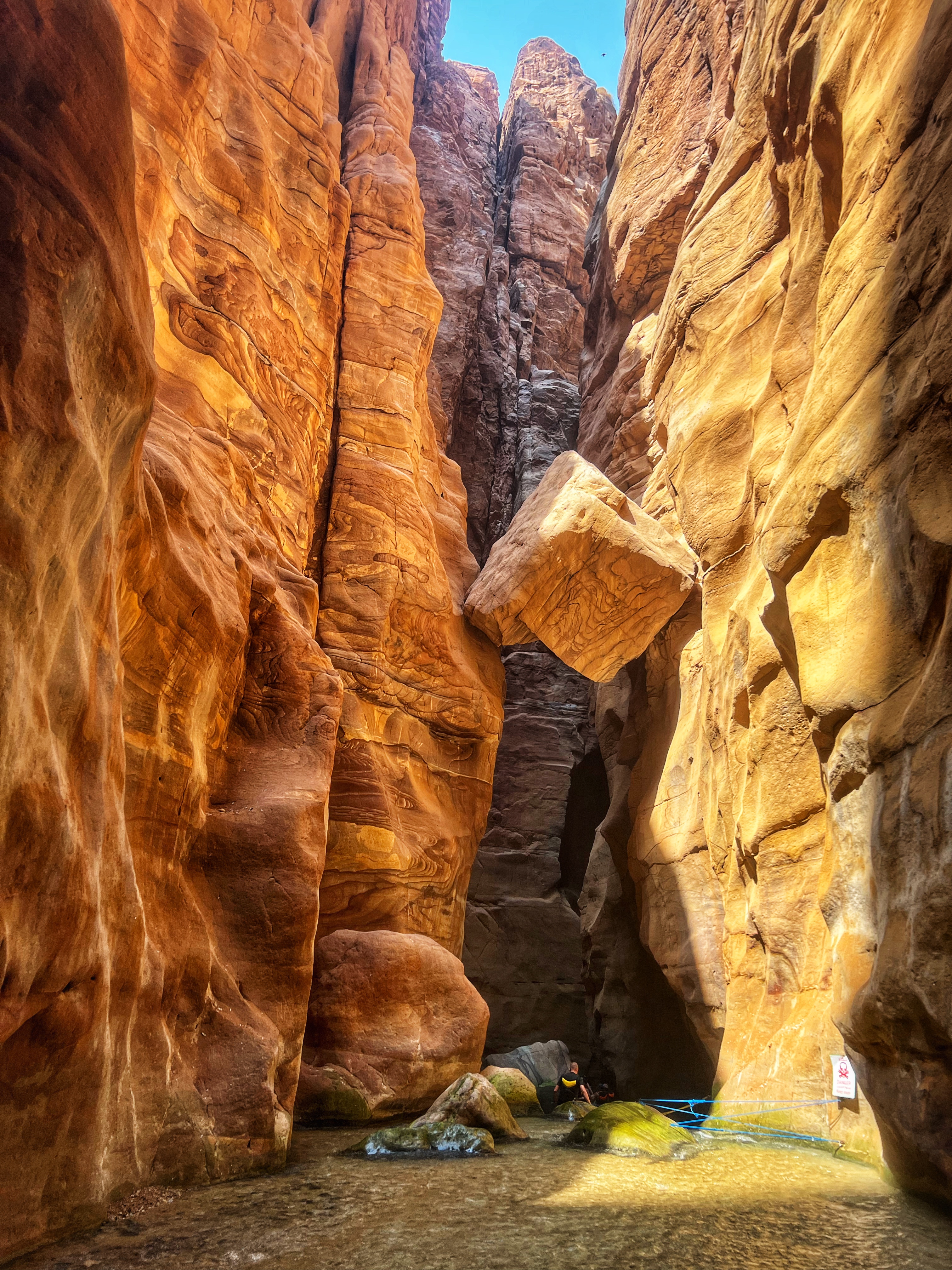


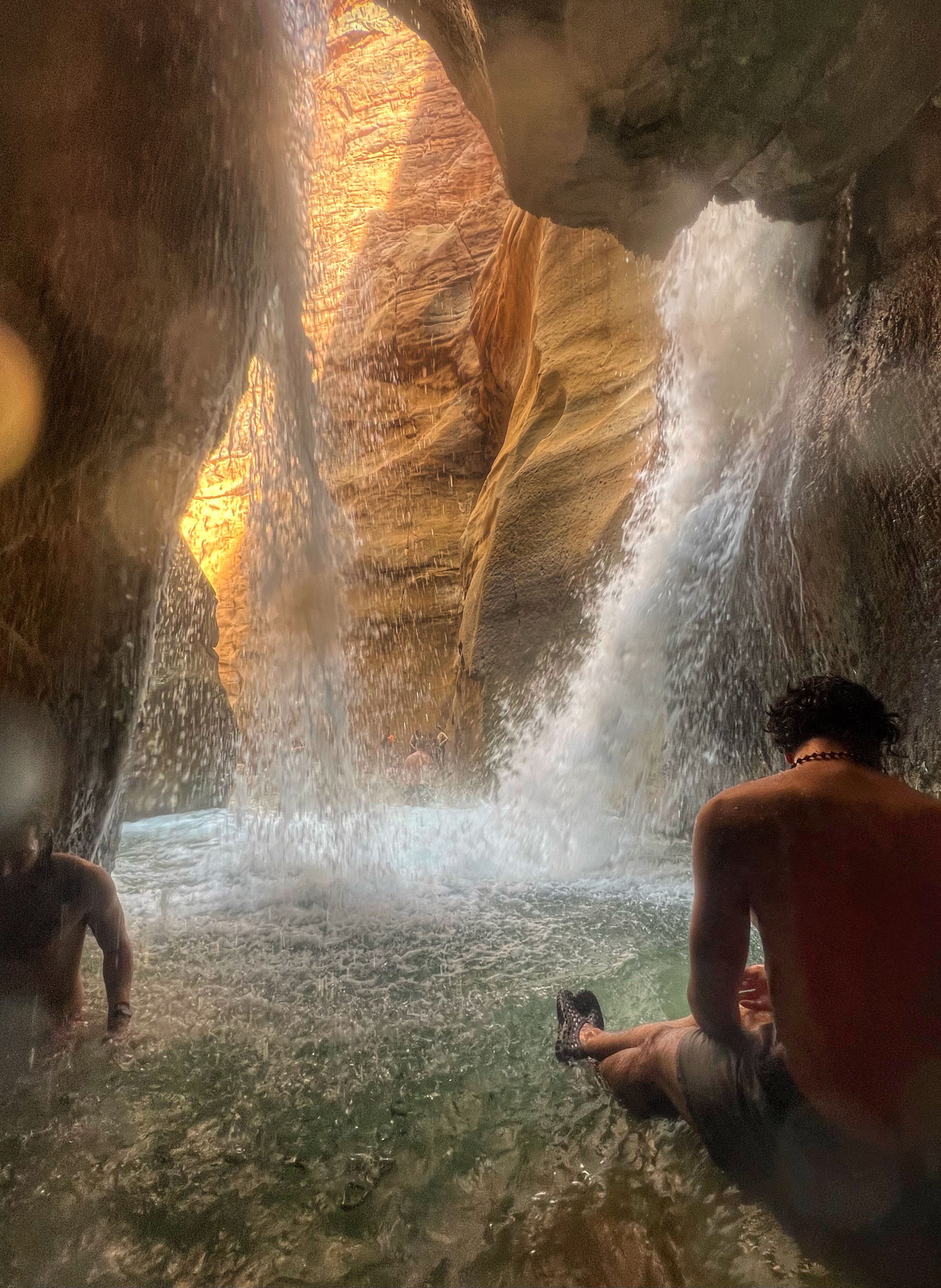
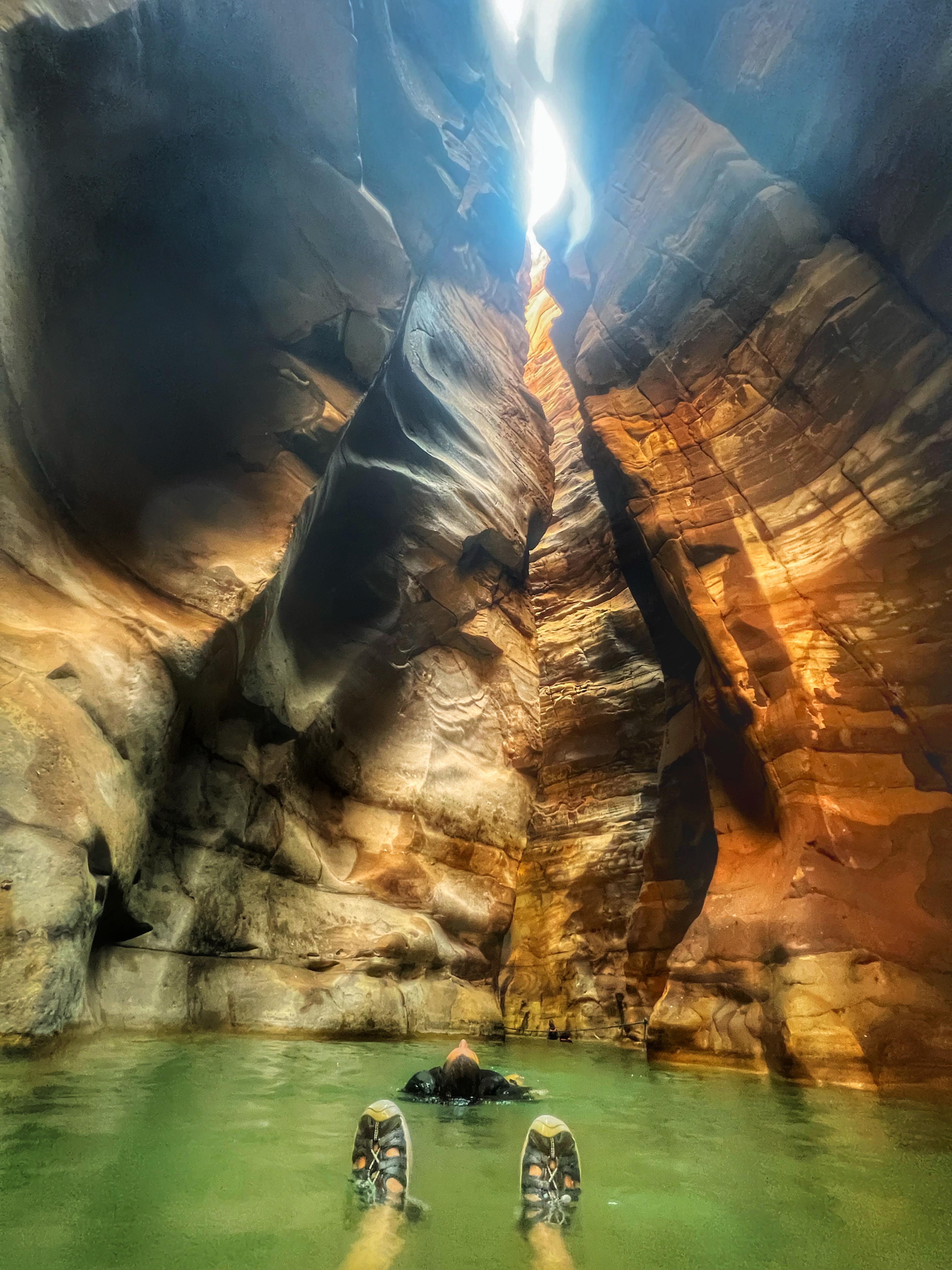
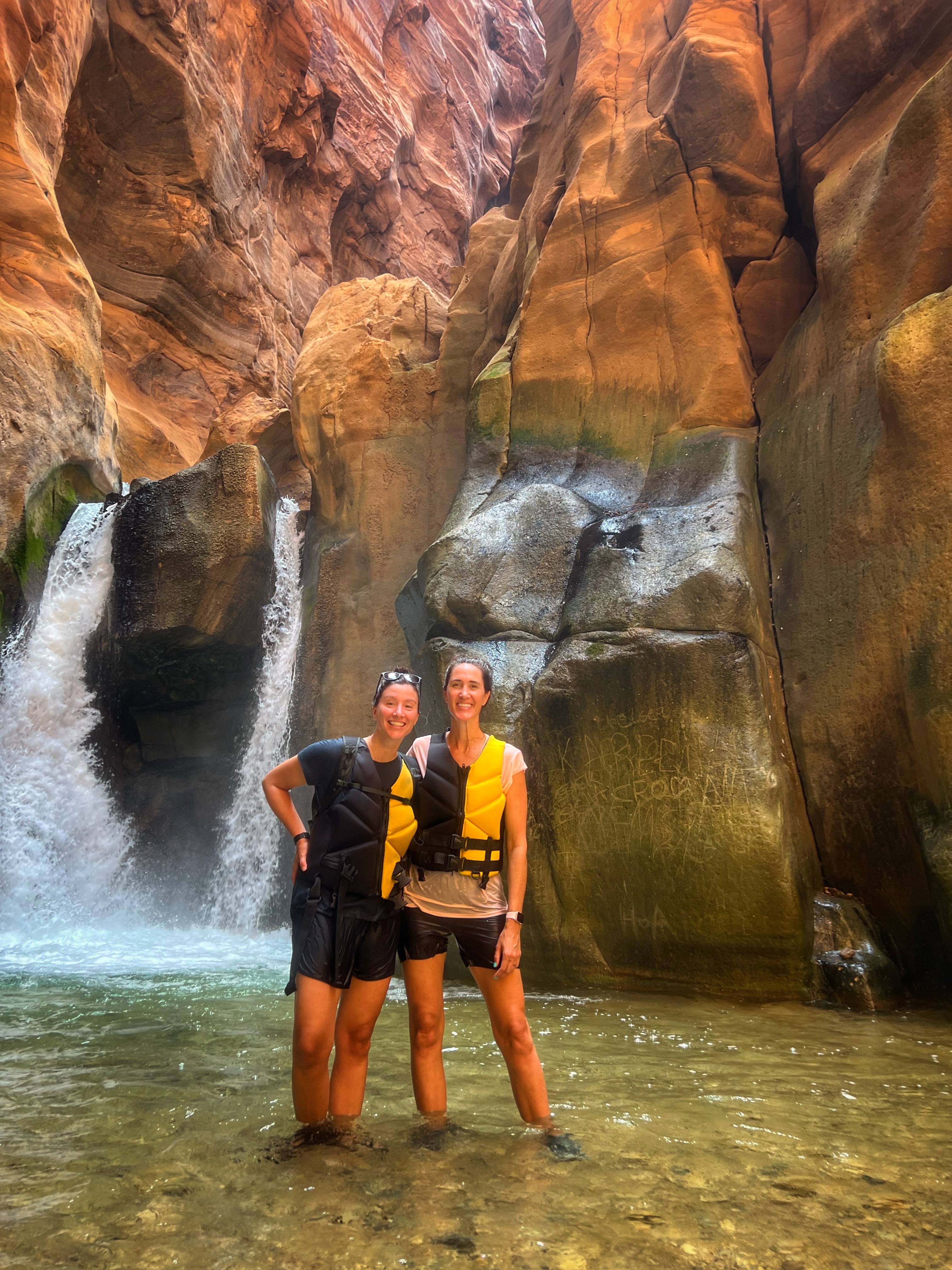

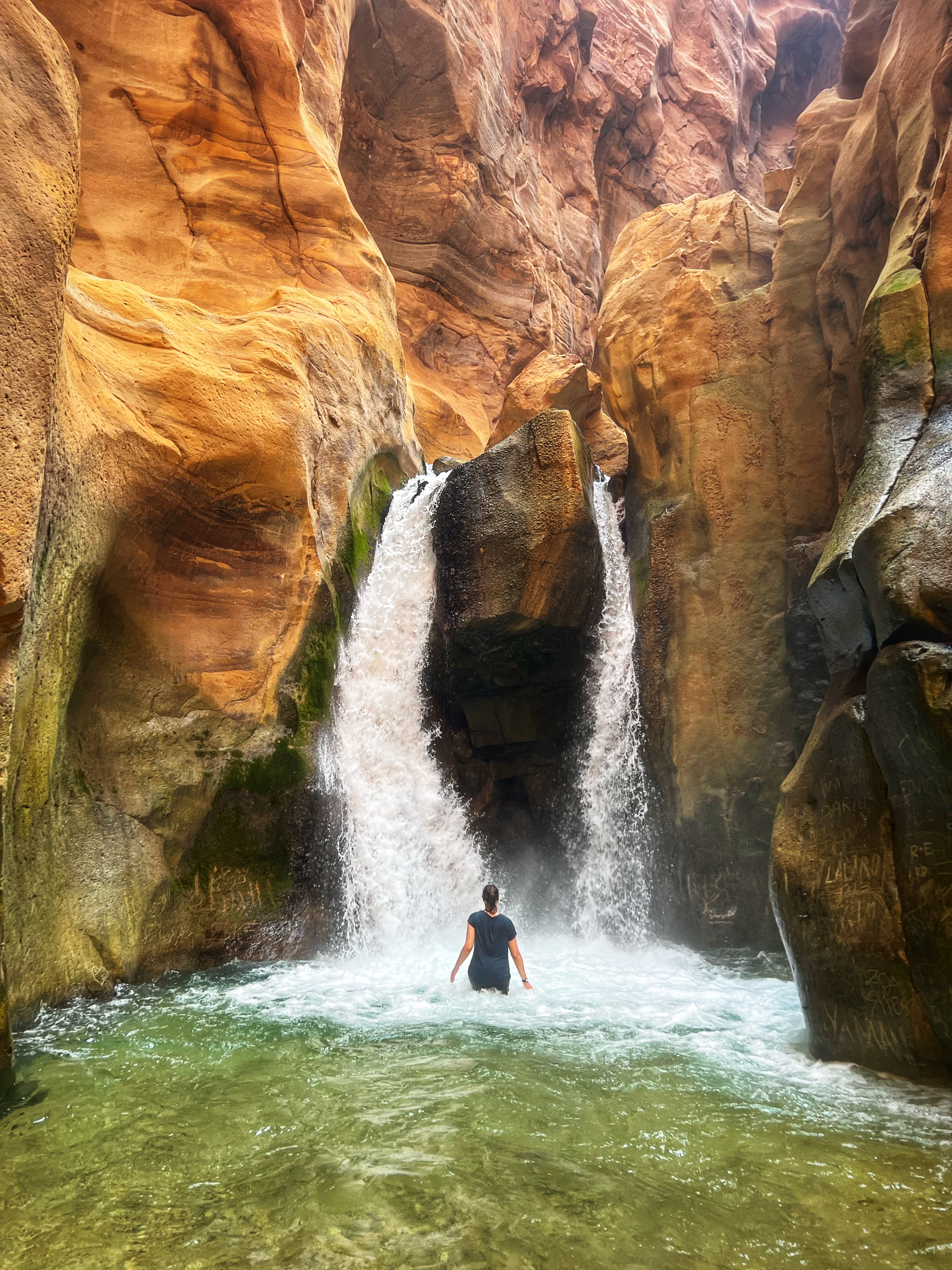

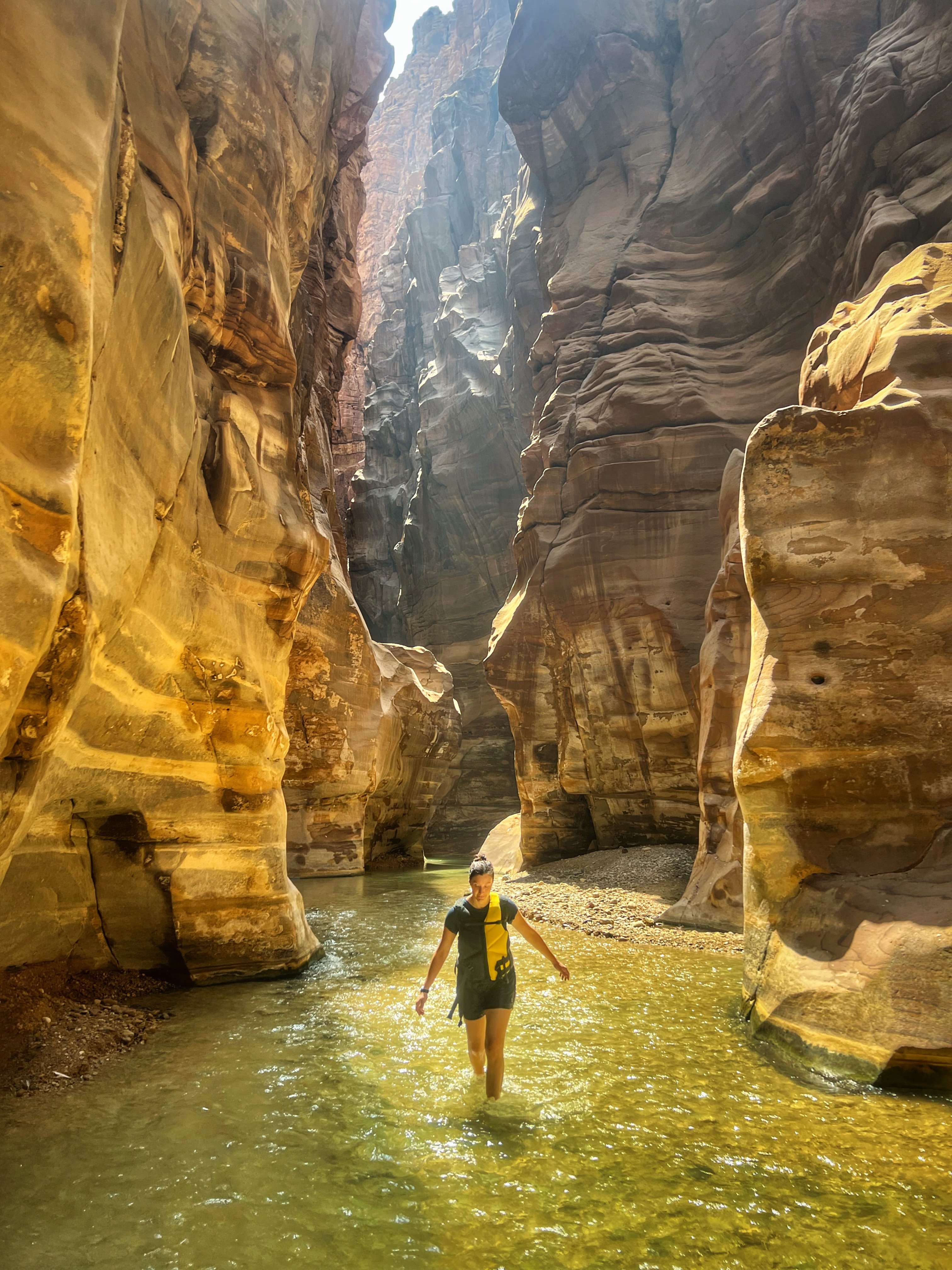

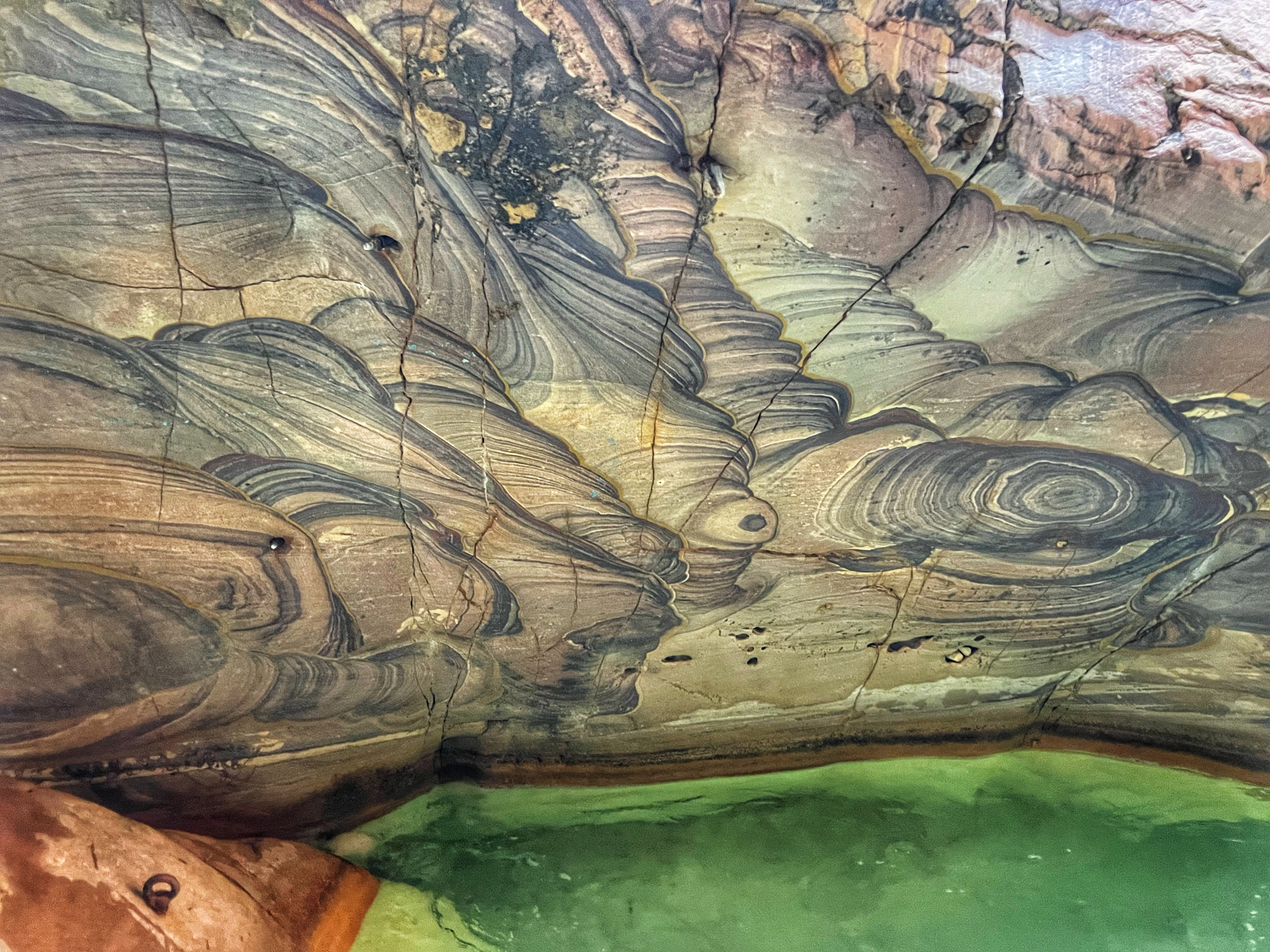
From the time we arrived to the time we finished the hike it took about 2 hours. We returned our life jackets, filled our water bottles, then cleaned up, changed clothes and hit the road by 12:30 to head south along the Dead Sea to Dana Biosphere. A quick shoutout to the cheap dry bag for my iPhone that did the trick for these photos above (even though I had to rip it off and ruin it when we were done) and my trusty Keens that were so comfortable to hike in.
We made several stops along the Dead Sea for photo ops, including this one below at about here. We parked and walked down to the swirling salty coastline and appreciated the gradient of colors in the water – much different than what you see resort-side way up north. We saw a few people swimming here, but there are no facilities…only a small hut selling soft drinks. We were not eager to dip back into the hot poison, especially after our refreshing morning hike.
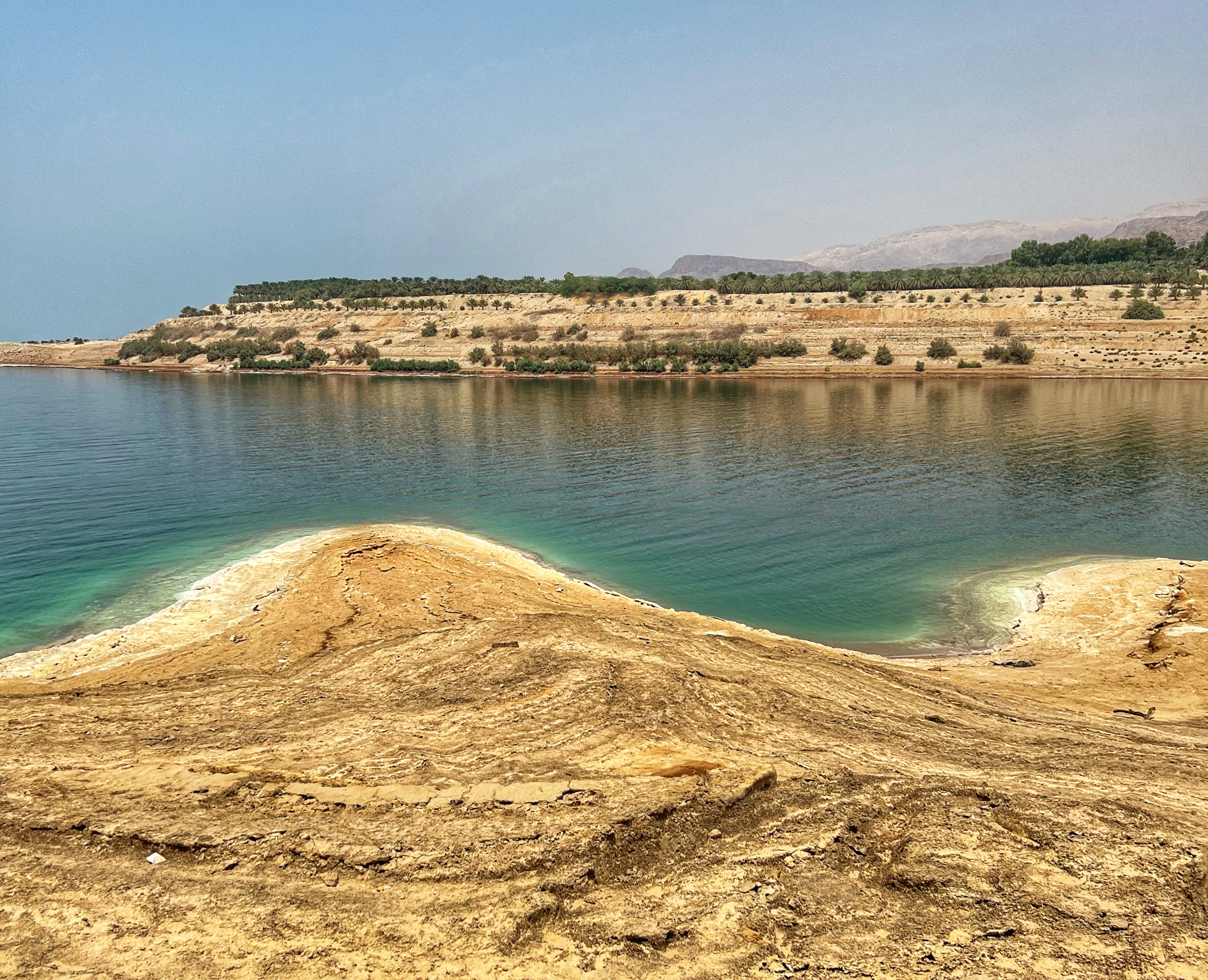


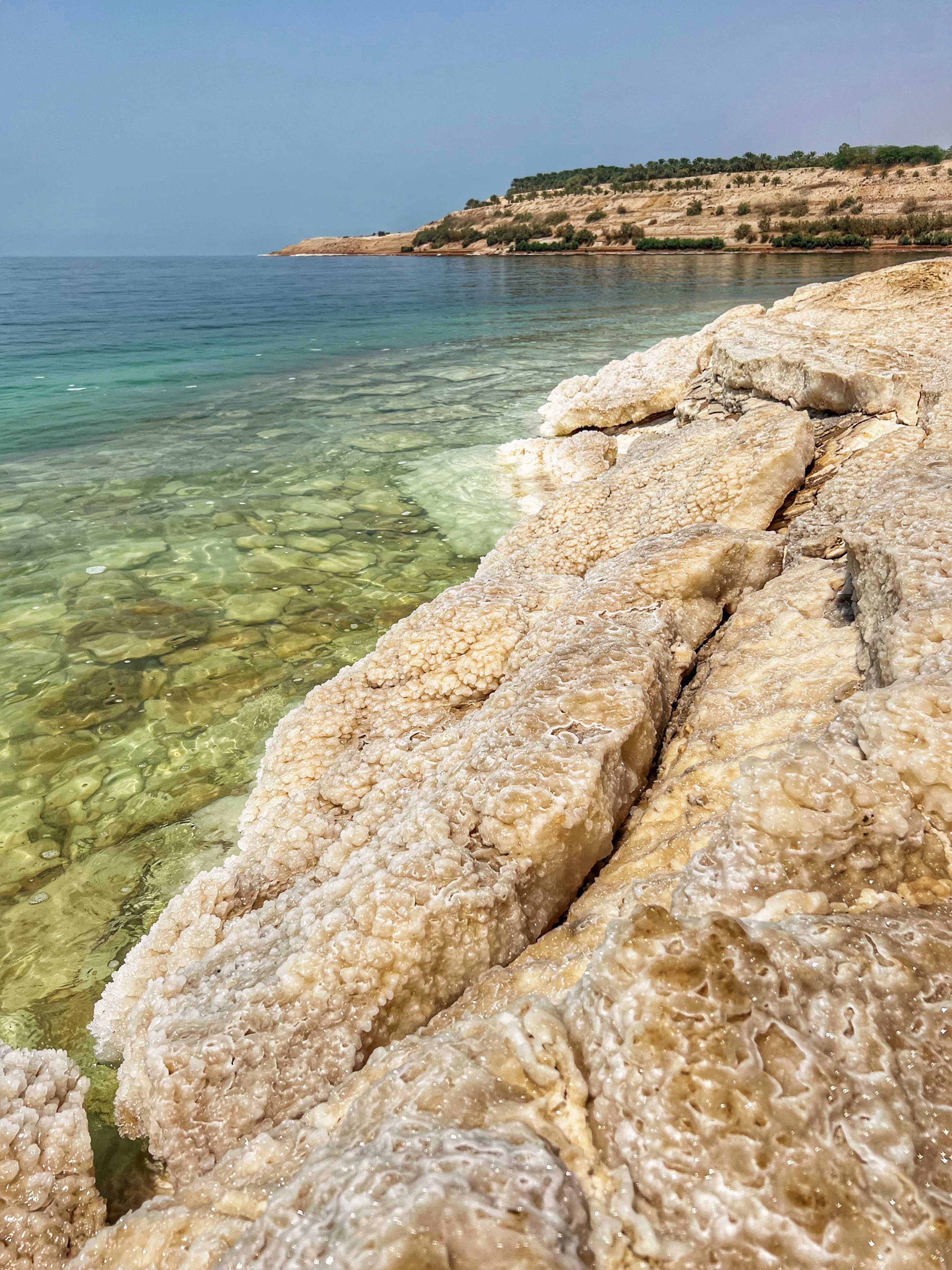
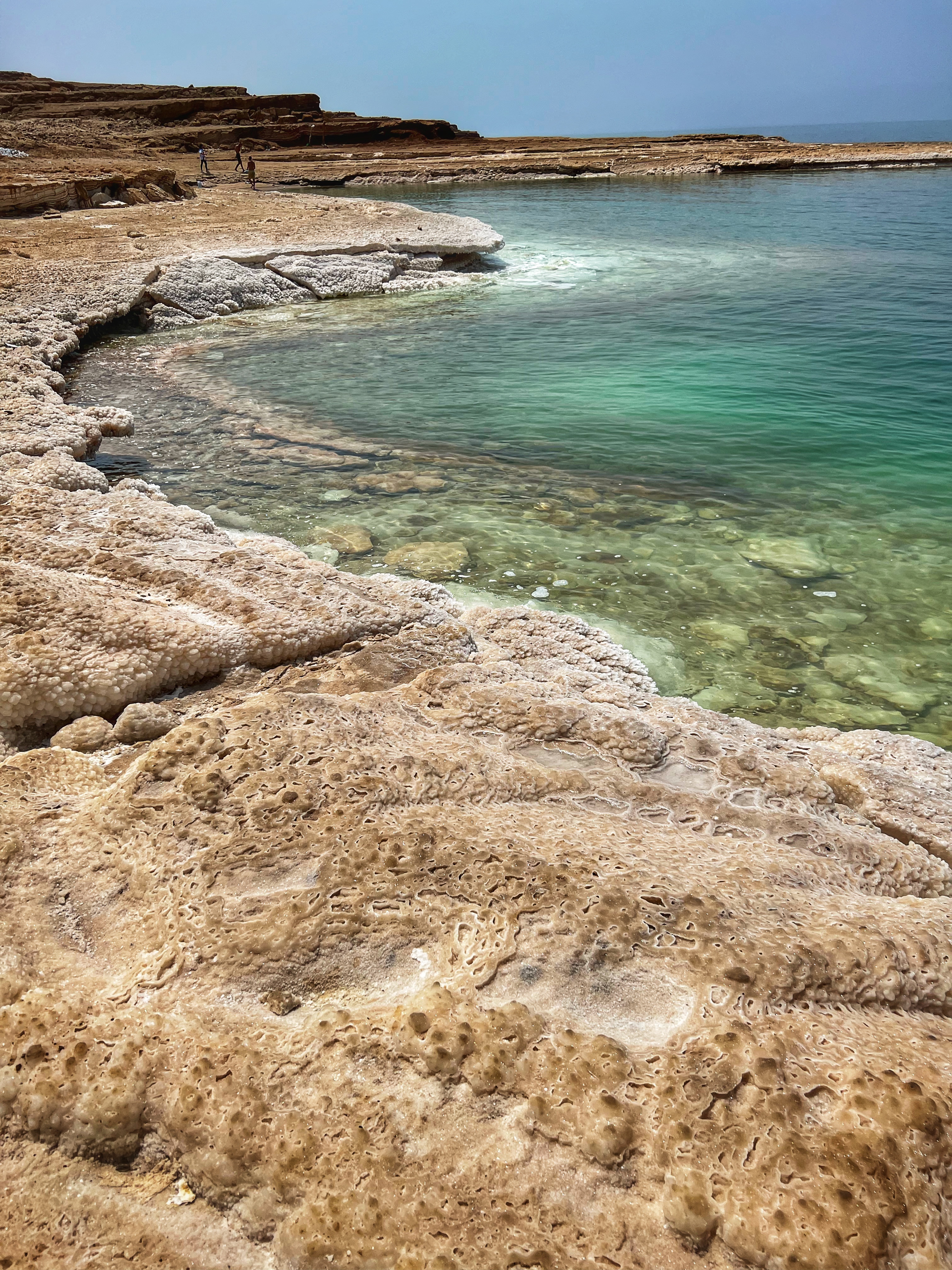
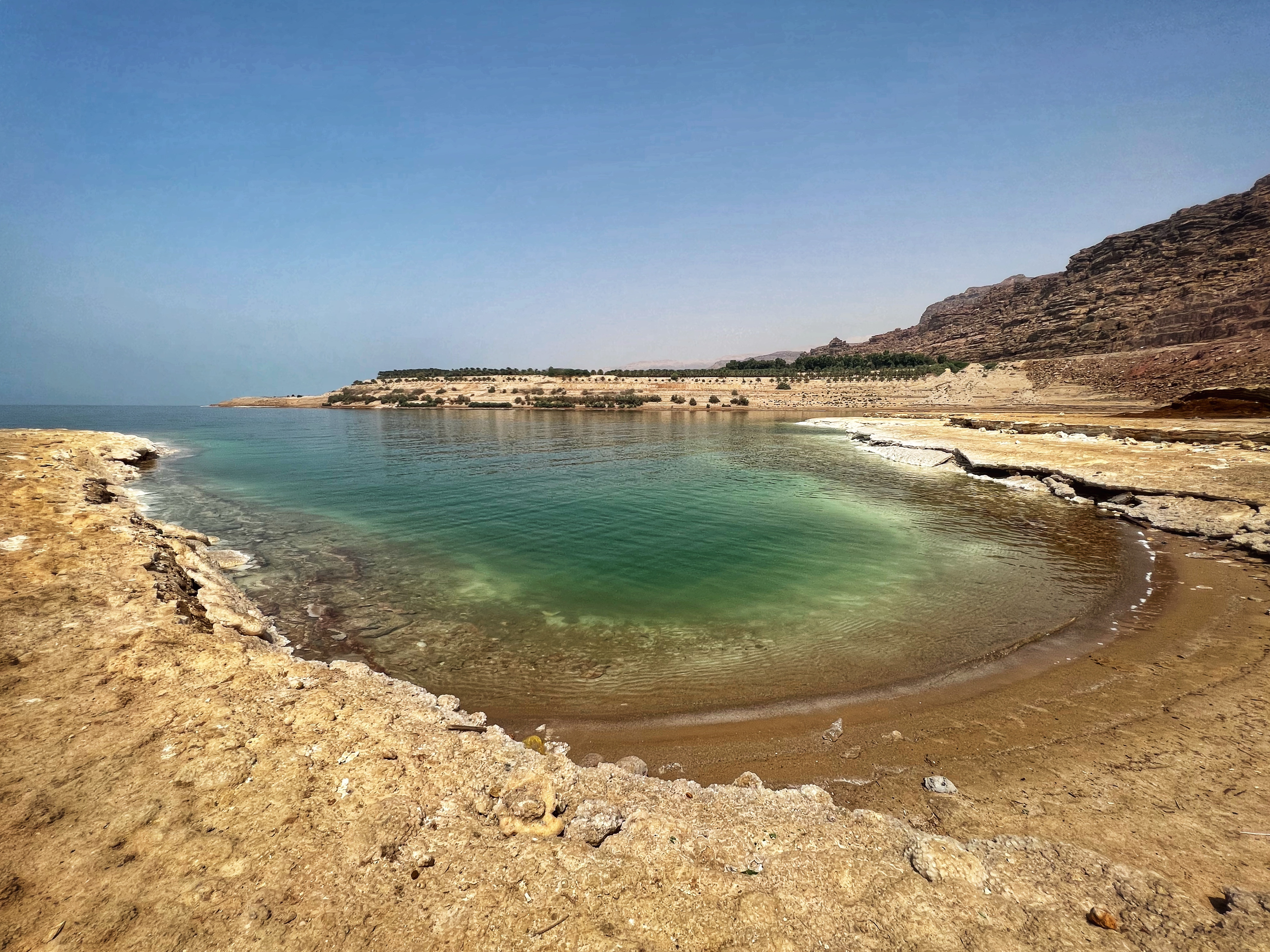
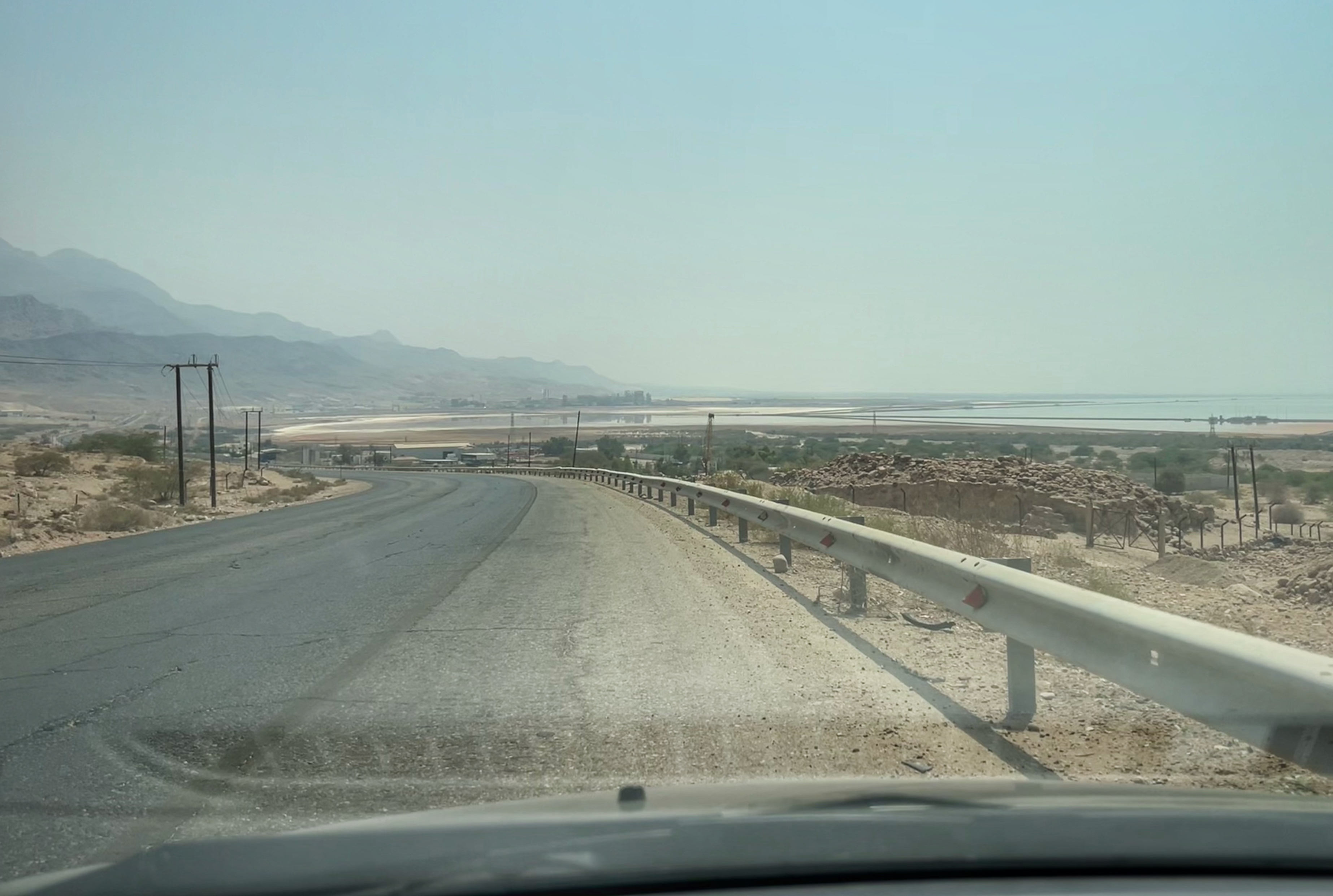

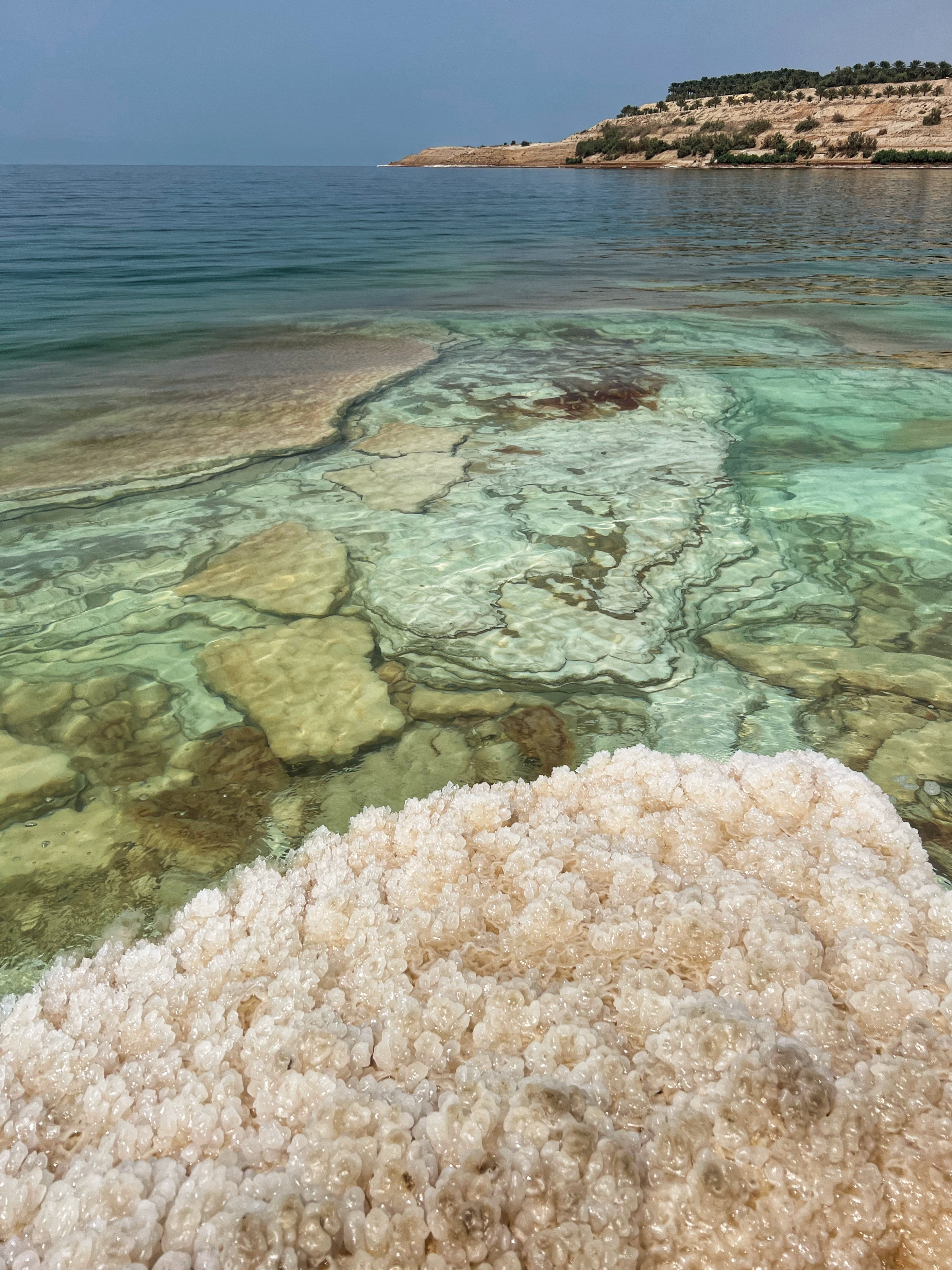
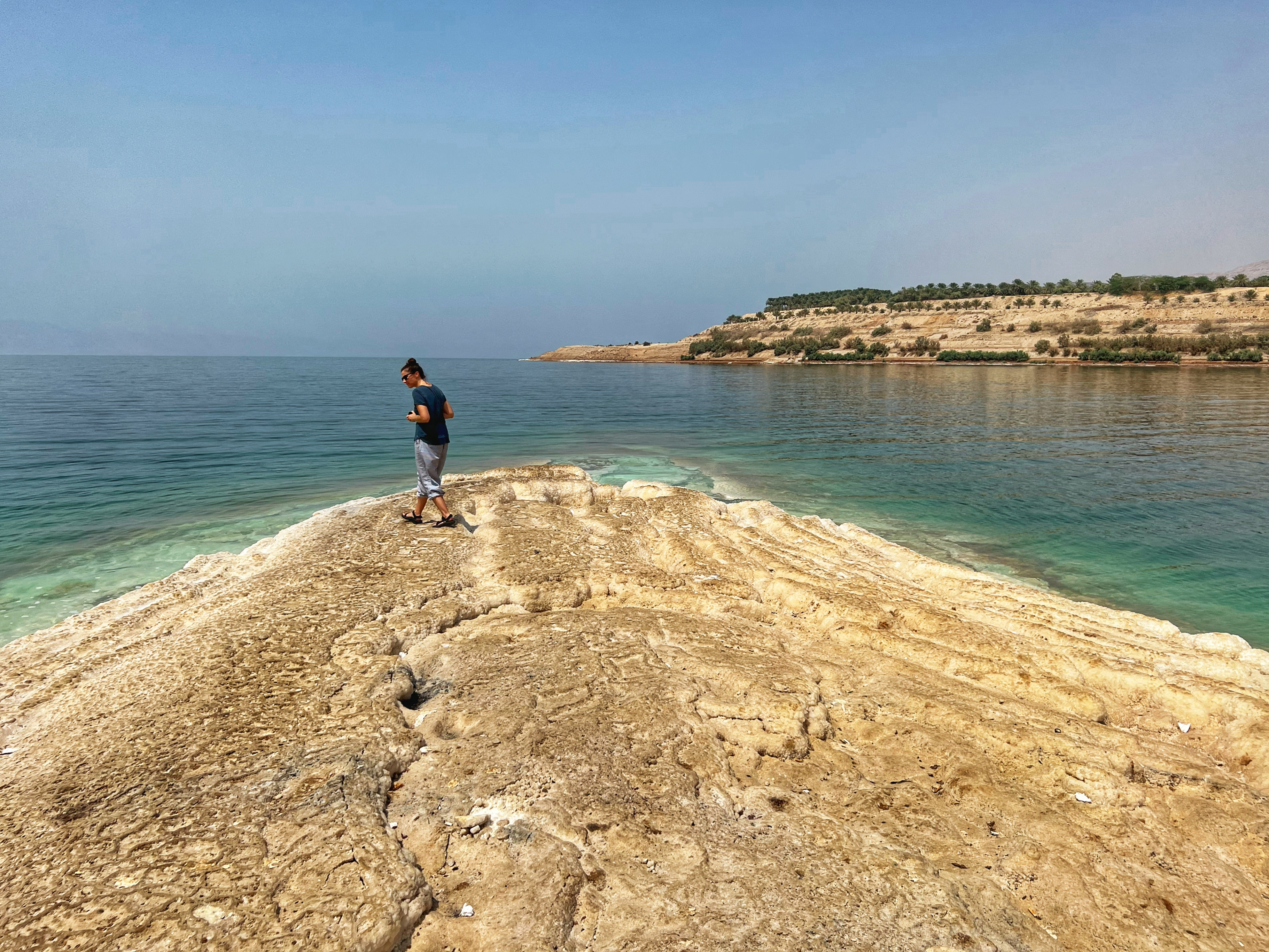
On this route south to Dana Biosphere you can choose one of two ways – one that takes you inland towards Karak Castle, and one that takes you south to the Lowest Place on Earth Museum. Both roads converge at Dana Biosphere, so we decided to take the southern route as we were planning to visit another castle ruin (Shobak Castle) the next day and we were in more of a museum mood. We learned this was an incredibly beautiful scenic route (route 60) and we were so glad to have chosen it! I highly recommend it. Whichever direction you choose, all of these castles and museums are covered with the Jordan Pass.
When we had nearly reached the museum, a truck started honking at us from behind and flashing its lights. We were admittedly spooked, and didn’t want to pull over even though that’s what they were telling us to do. Suddenly, the truck pulled up next to us as we were driving and with our window down we could hear him say “do you want water!?” as he held up bottles of water. HA! It seemed like a very strange and aggressive way to sell water, and we weren’t interested, so he pulled a U turn and drove off. I guess you never know what’s going to happen…
museum at the Lowest Place on Earth
Our next stop was the Lowest Place on Earth Museum. We were the only ones there! This little hidden gem did a beautiful job depicting the history of the entire region and was one of Jessie’s favorite spots. The museum is only about 12 years old but it is chock full of artifacts found in the region depicting life from the Bronze age and beyond. There are impressive floor tile mosaics, pottery, jewelry, tons of infographics, fabric and even human remains. Oh, and a really cute kitty. Entrance is free with the Jordan Pass, and we spent a little over an hour here, but you can spend 1-2 hours depending on how thoroughly you read all the information. It’s fairly small but really well done.
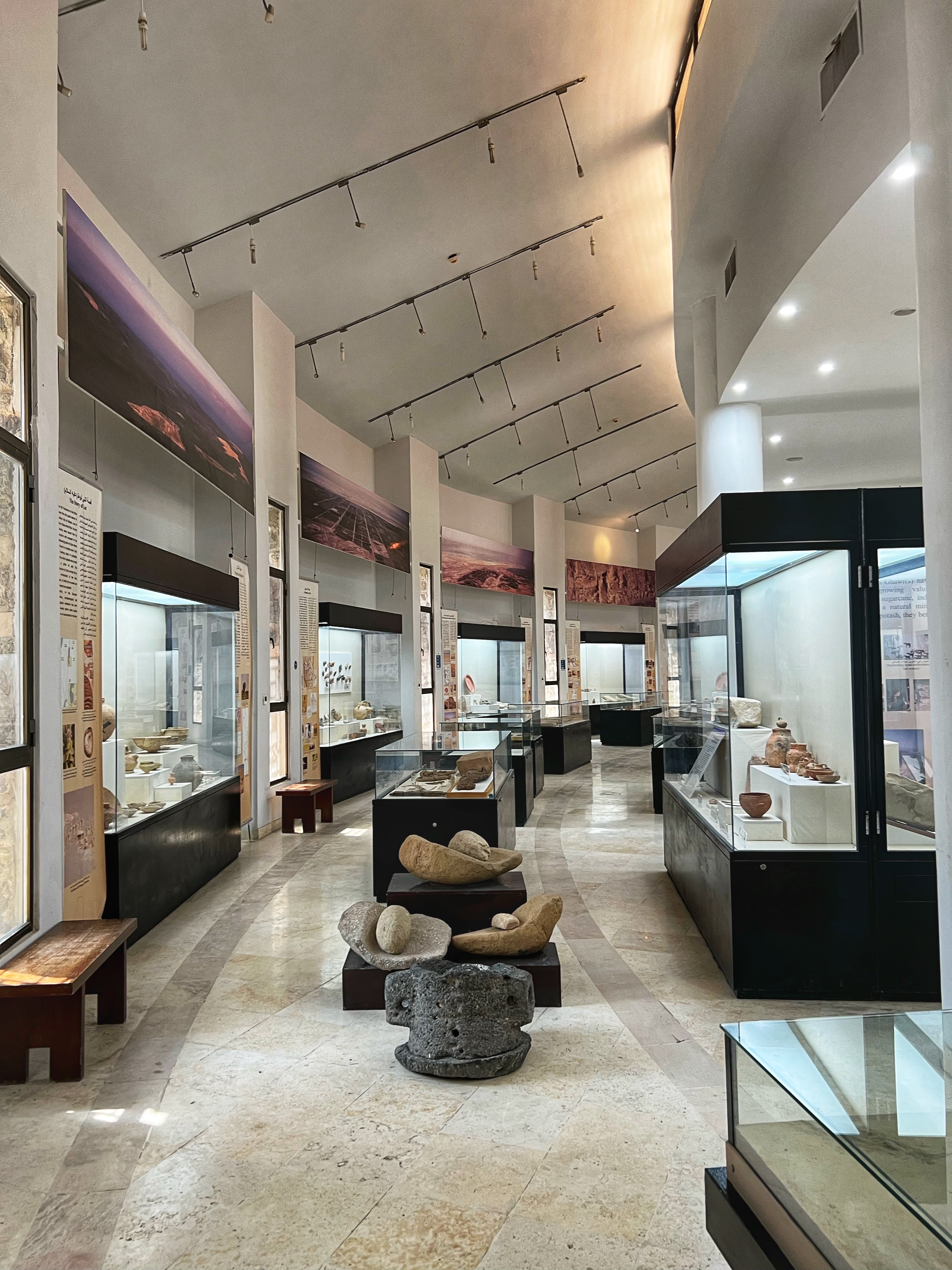
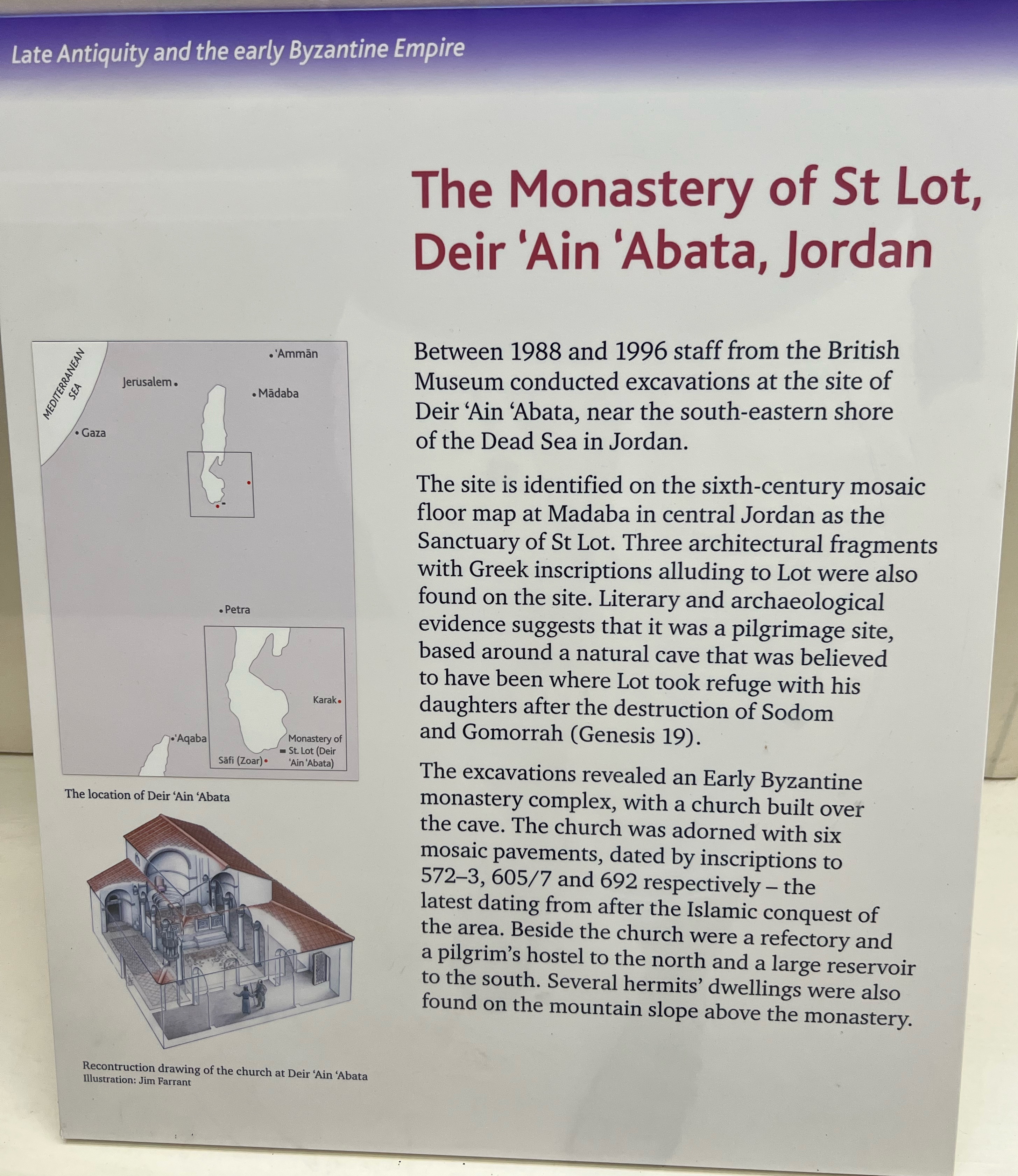
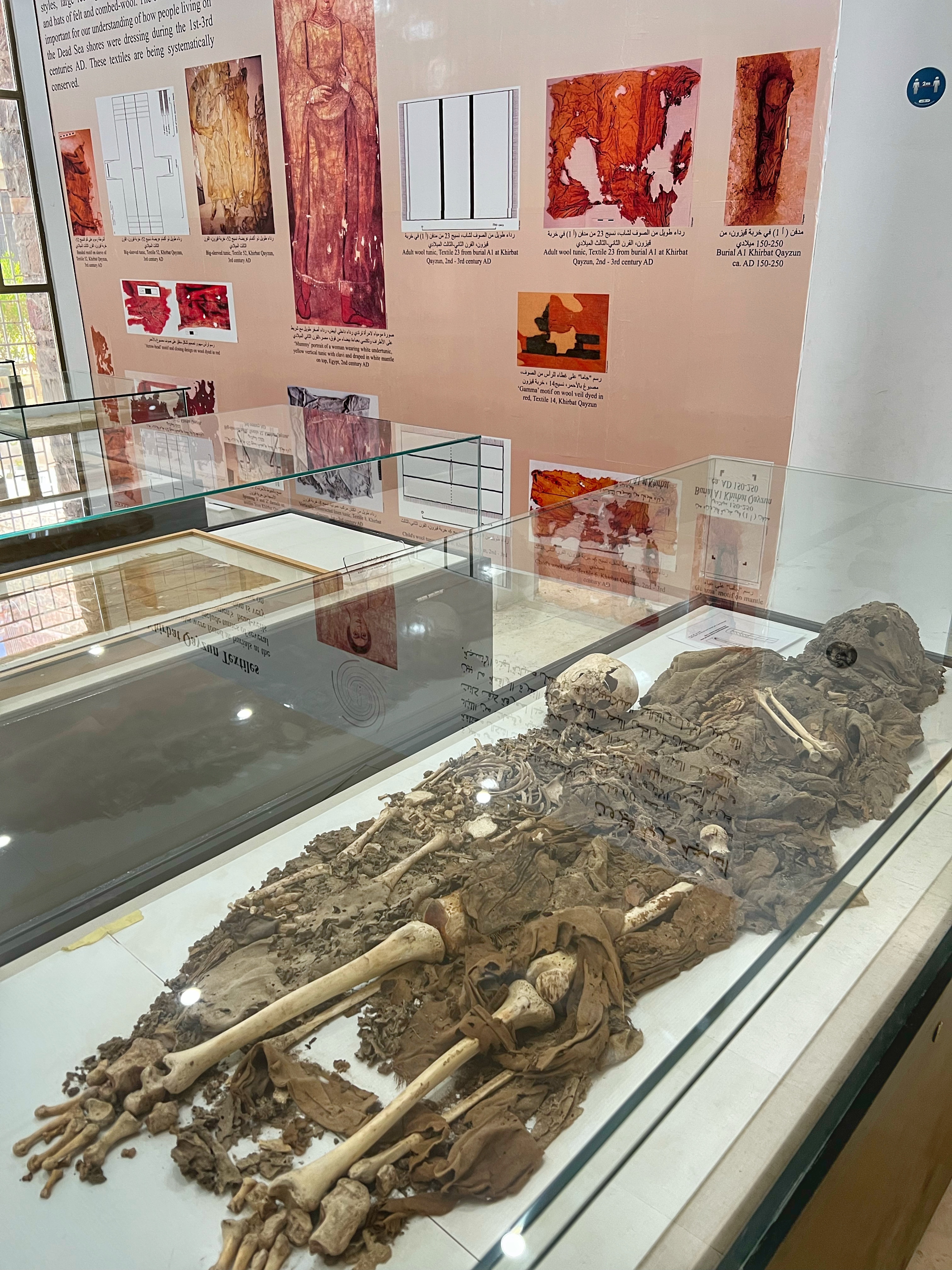

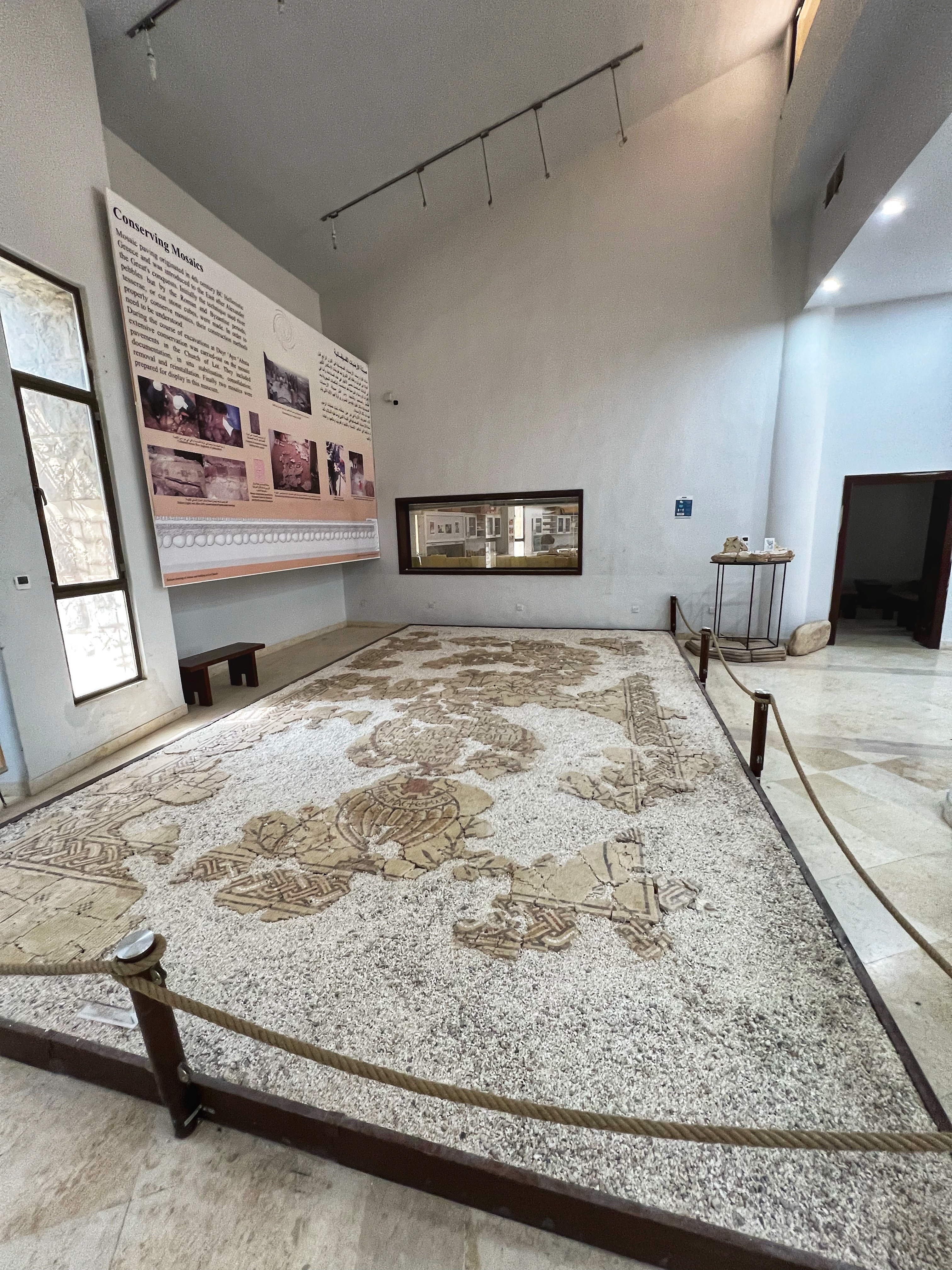

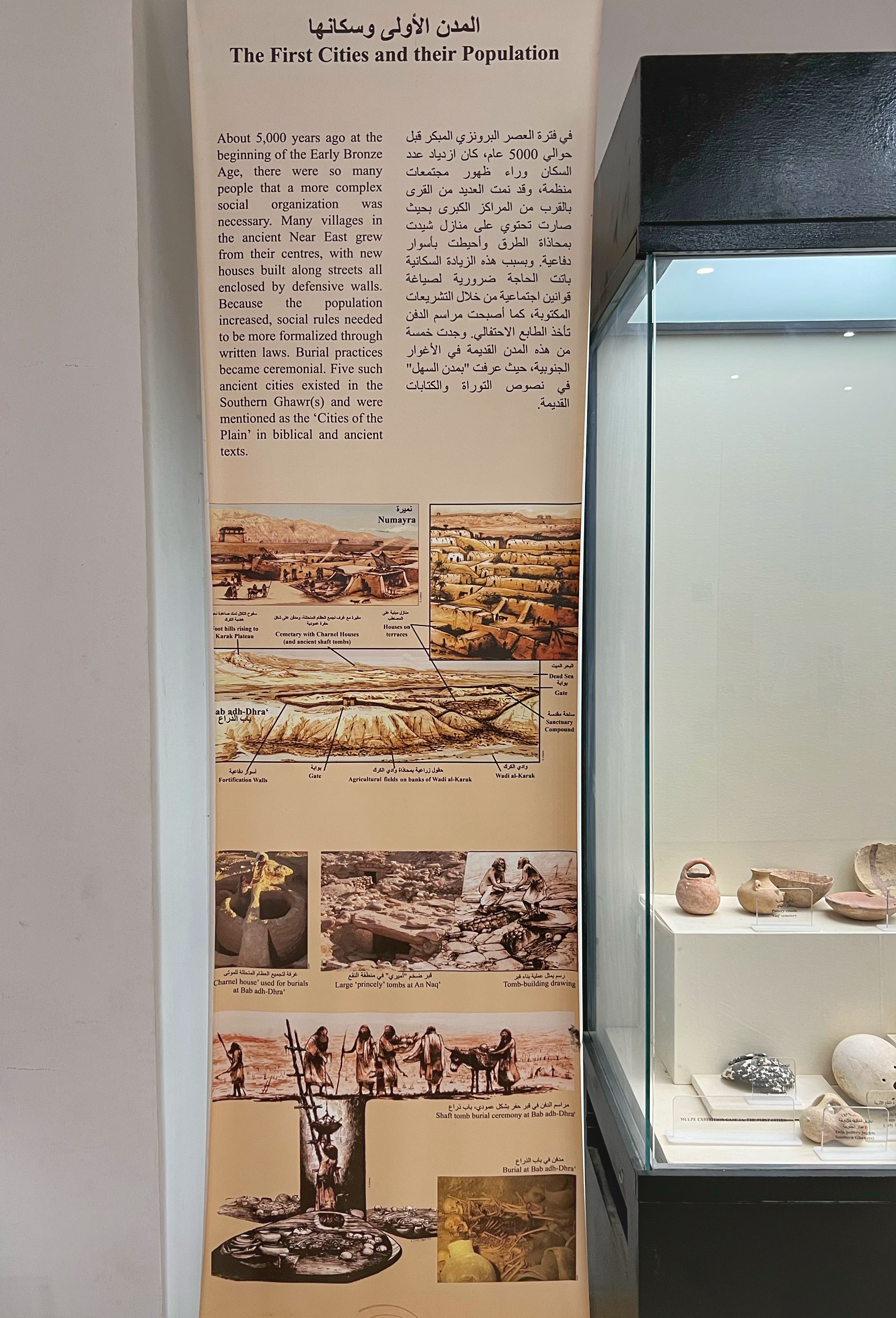

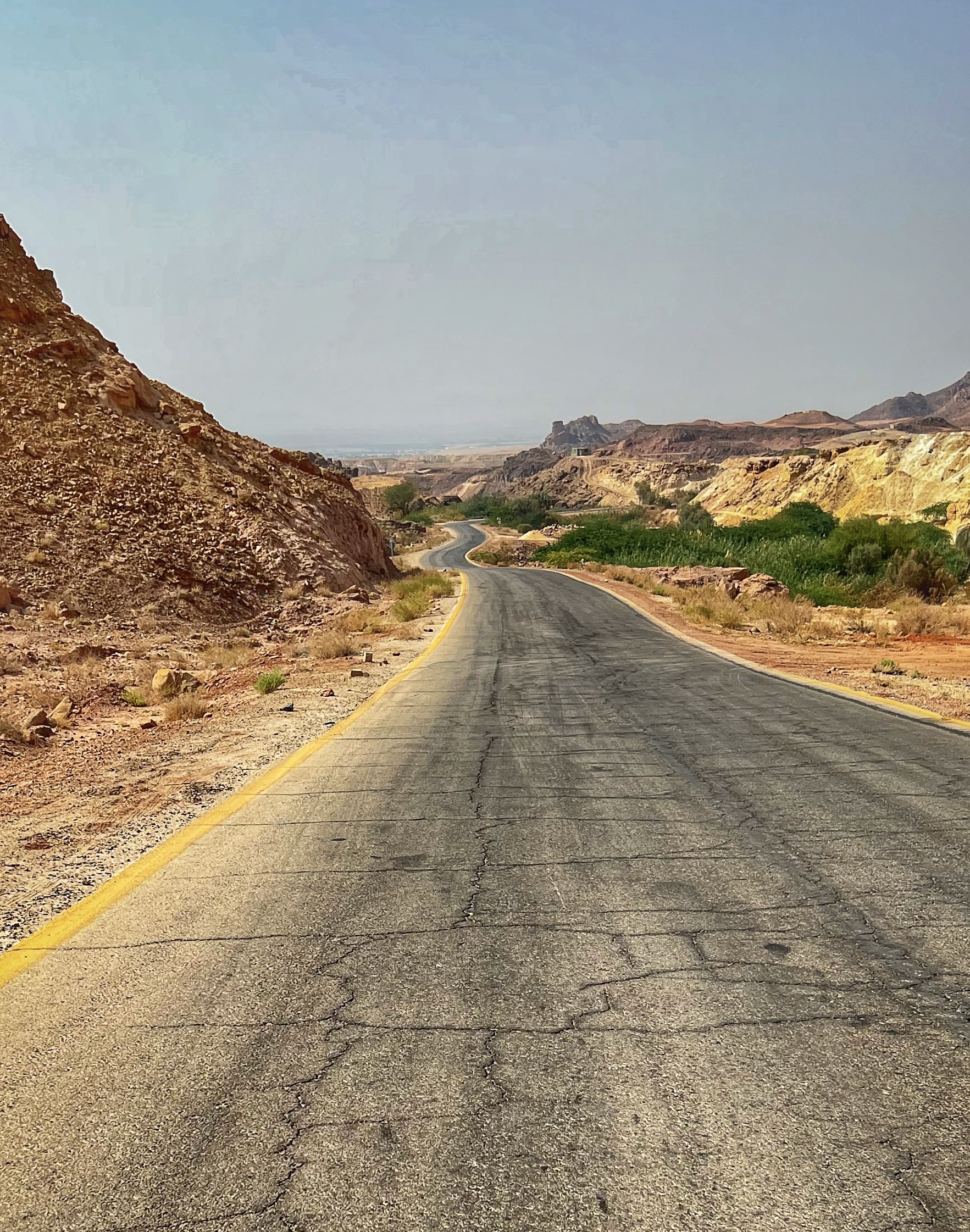
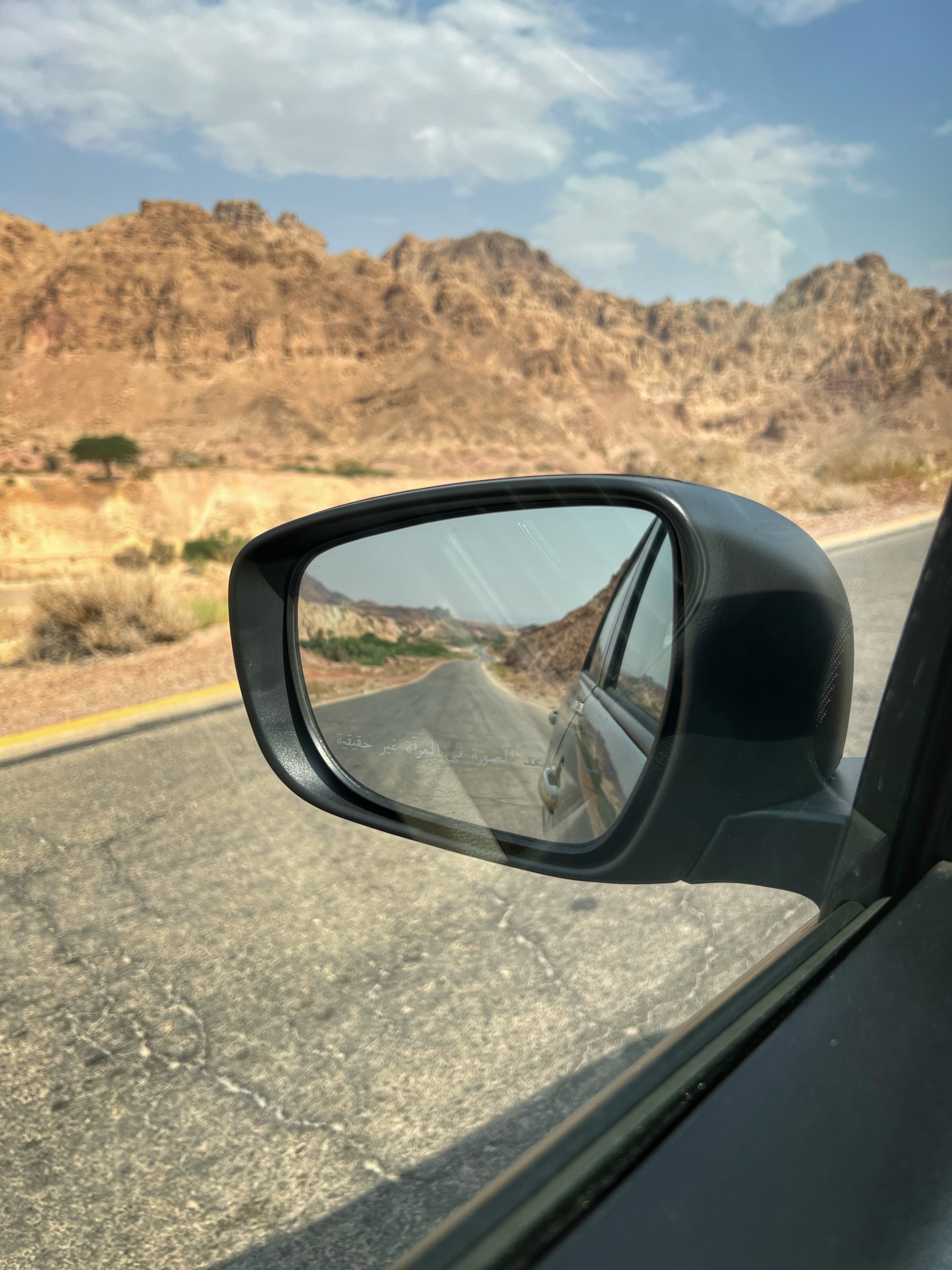
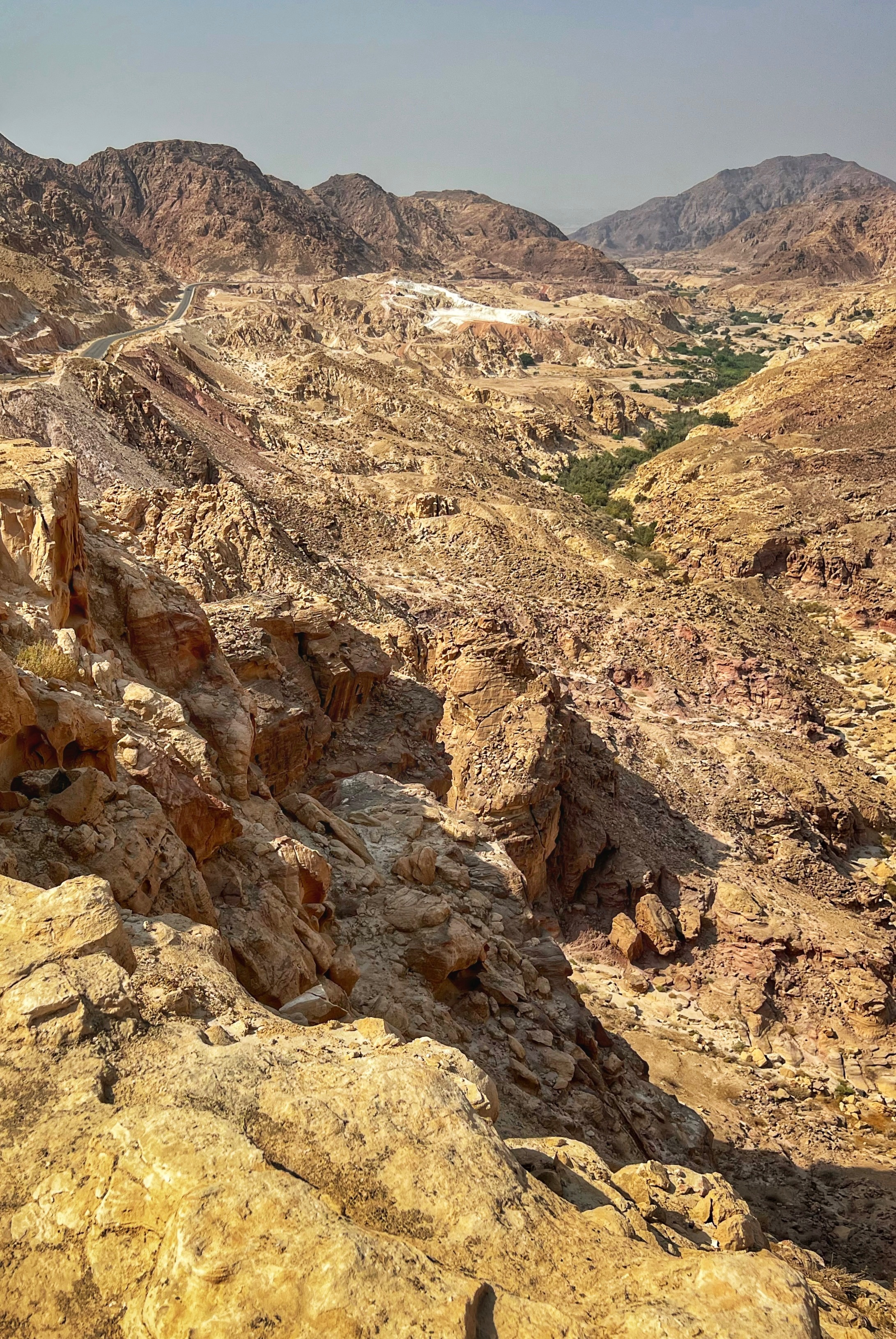
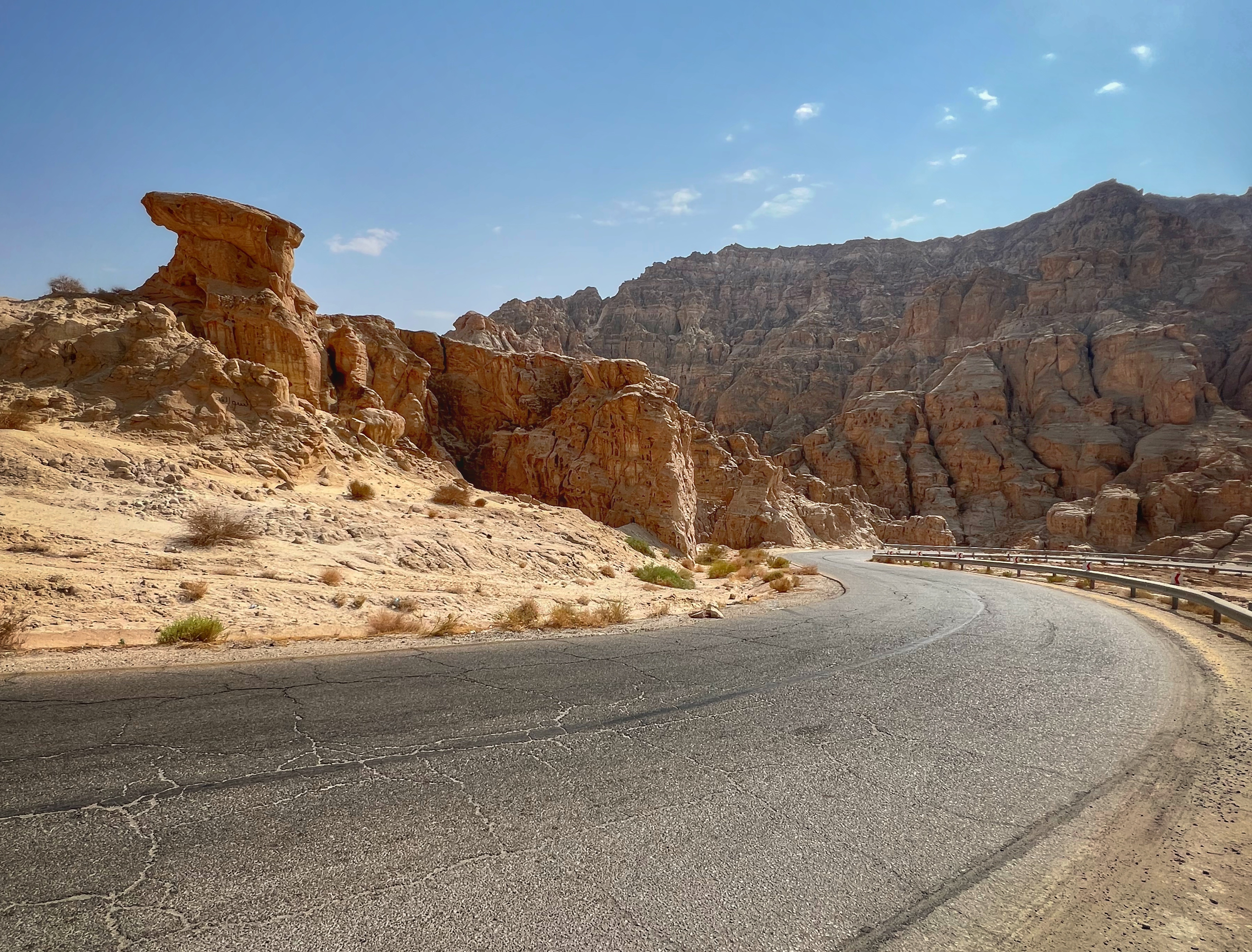
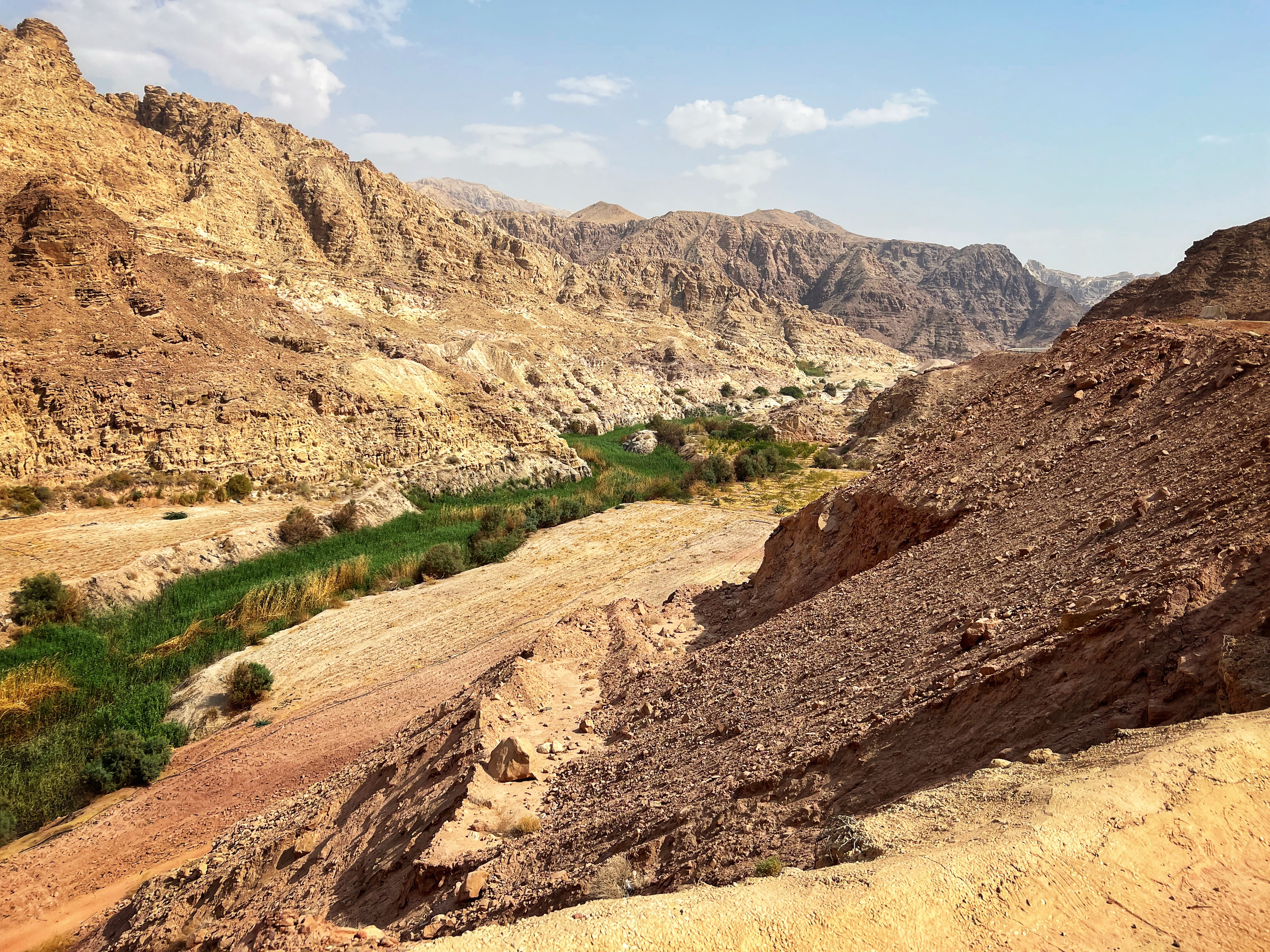
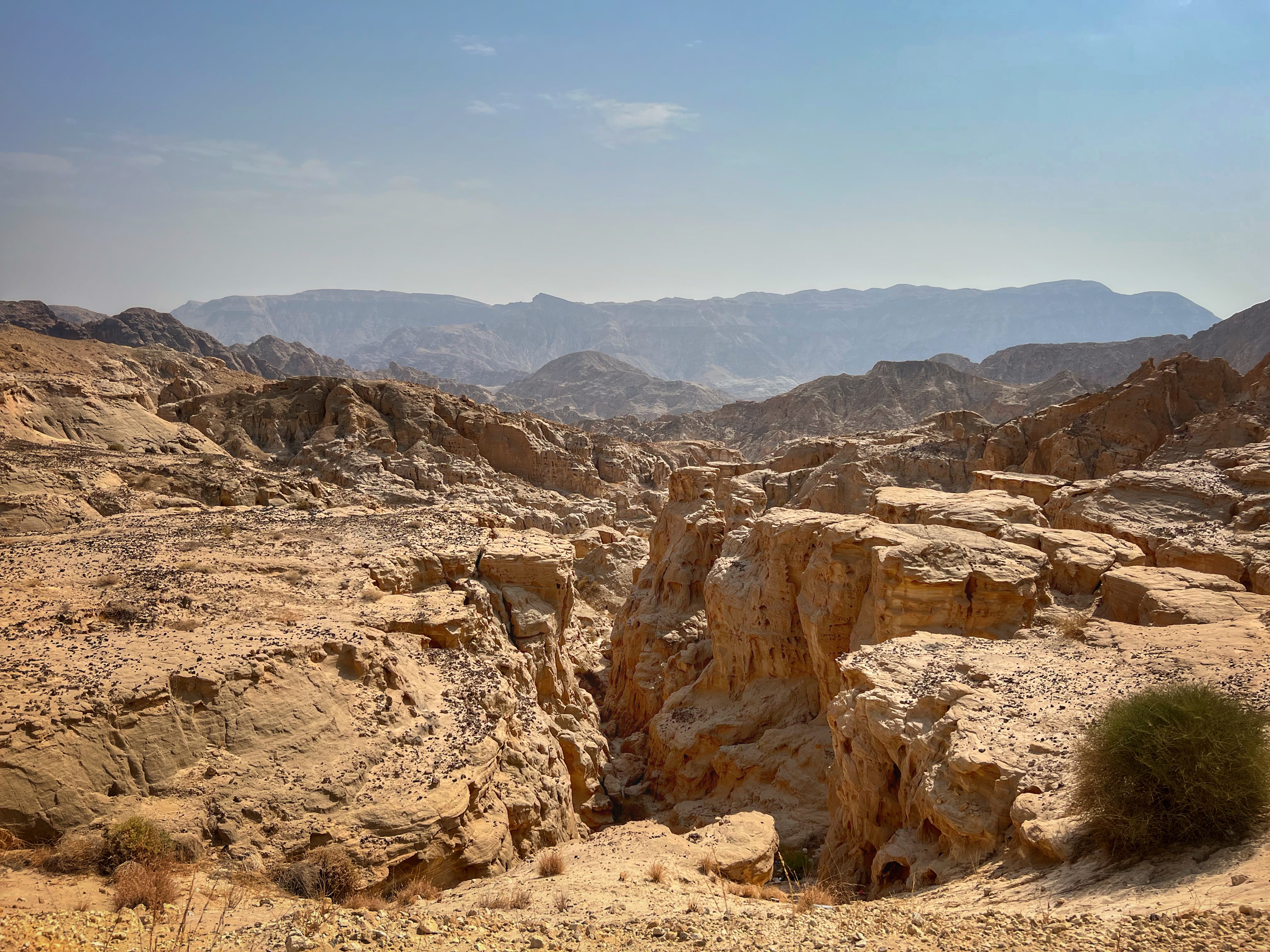
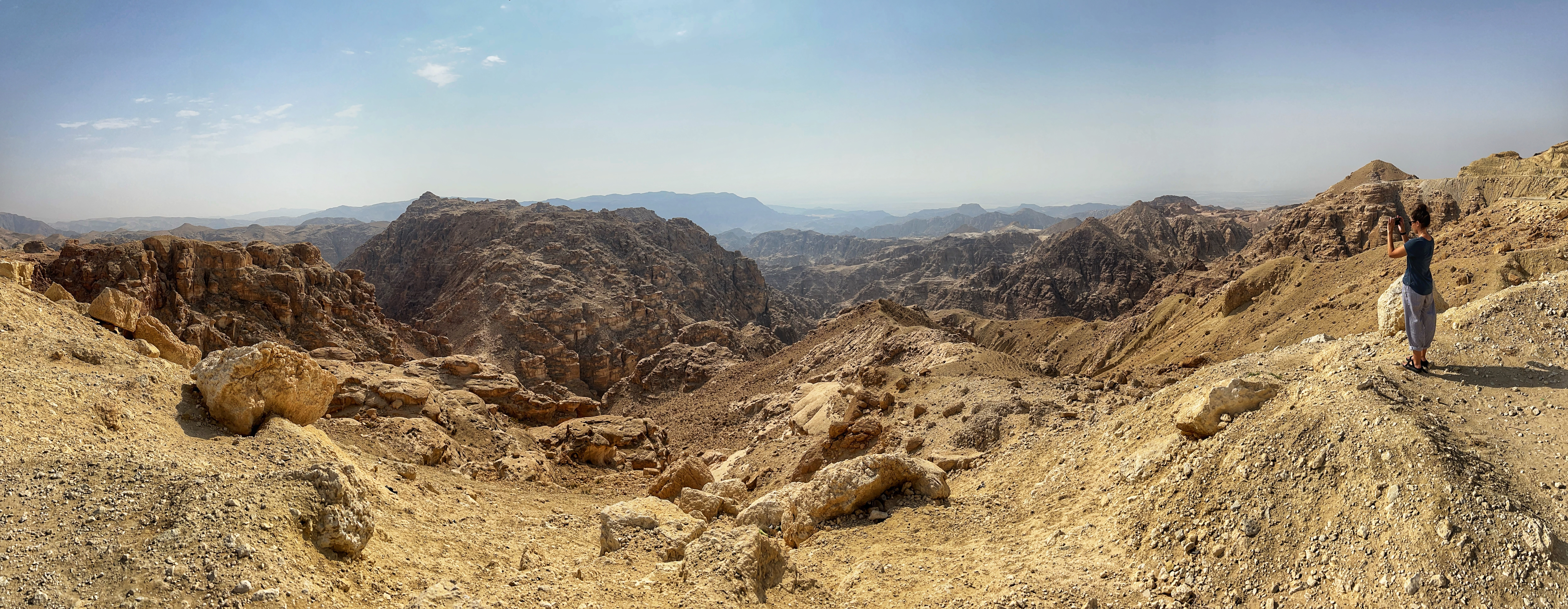
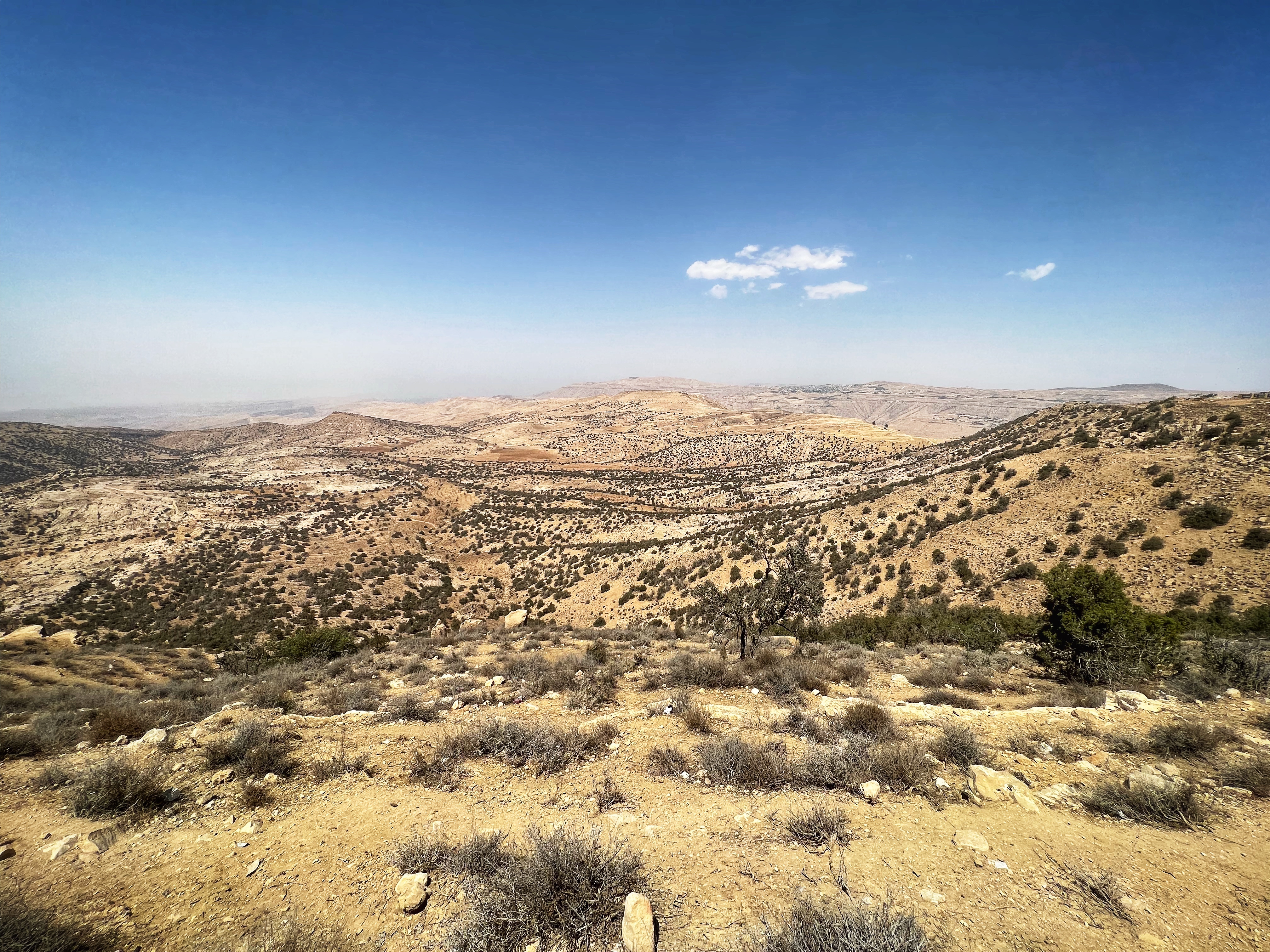
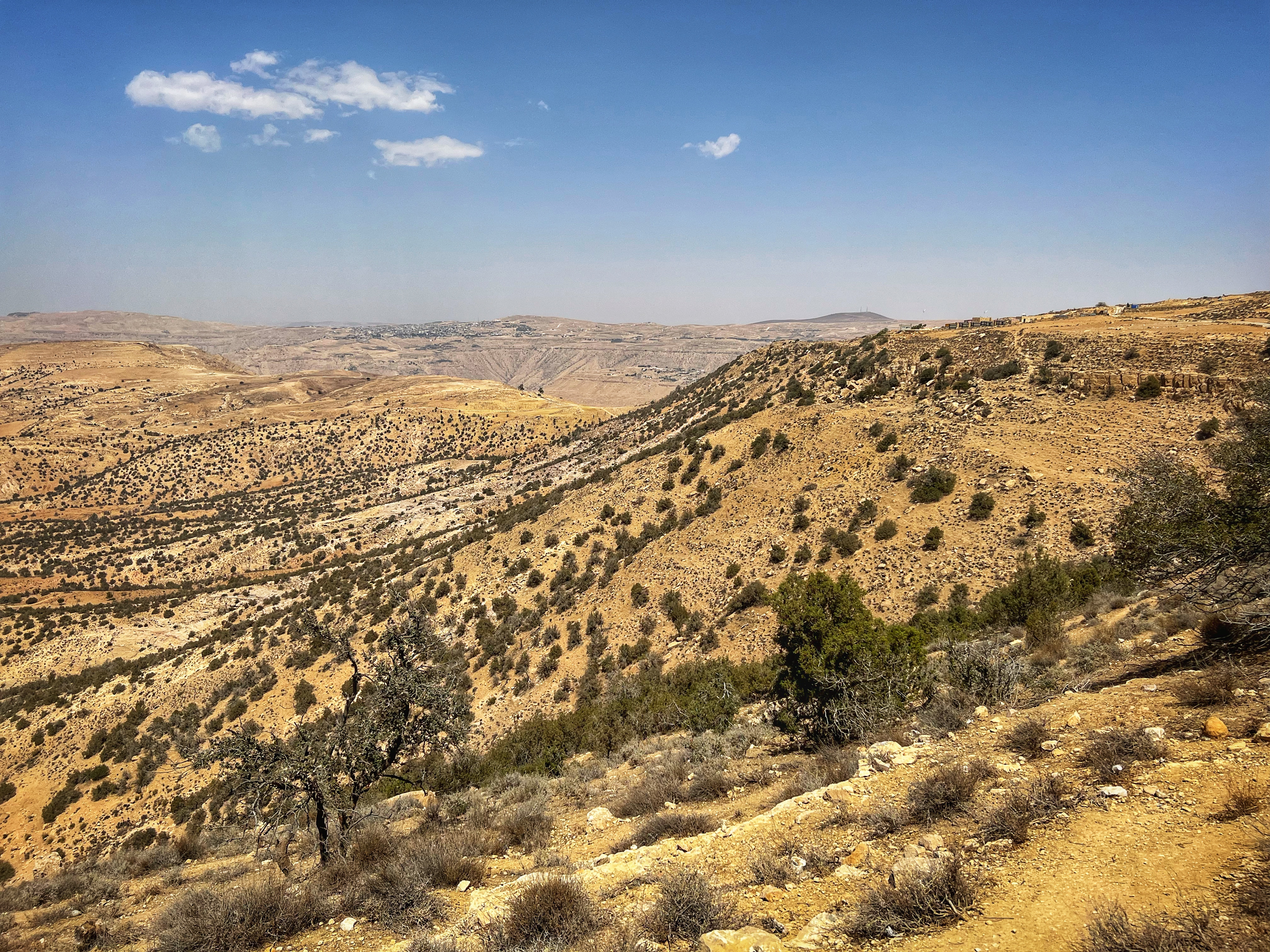
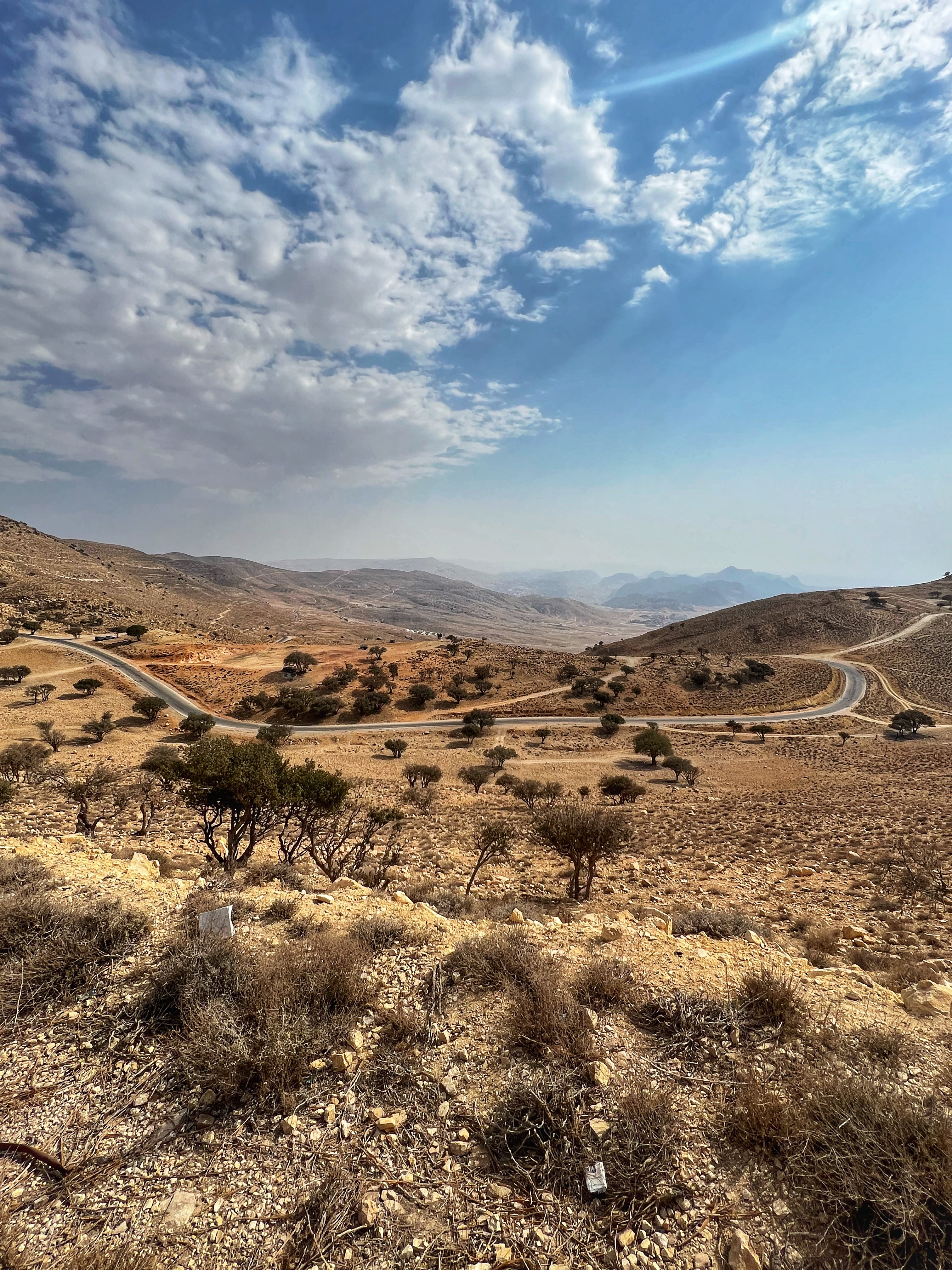
From there we took route 60 straight through the mountains and it was a most glorious drive! There were a few times our little car struggled up steep terrain but the roads were all well maintained. We probably stopped 10 times to get out and look at the views. One area reminded me of an oasis and I could imagine what it looked like thousands of years ago when it earned the nickname “the fertile crescent.” Photos really do not do this landscape justice. It was here that I began to talk about “Star Wars vibes” everywhere we looked. It was amazing and otherworldly.

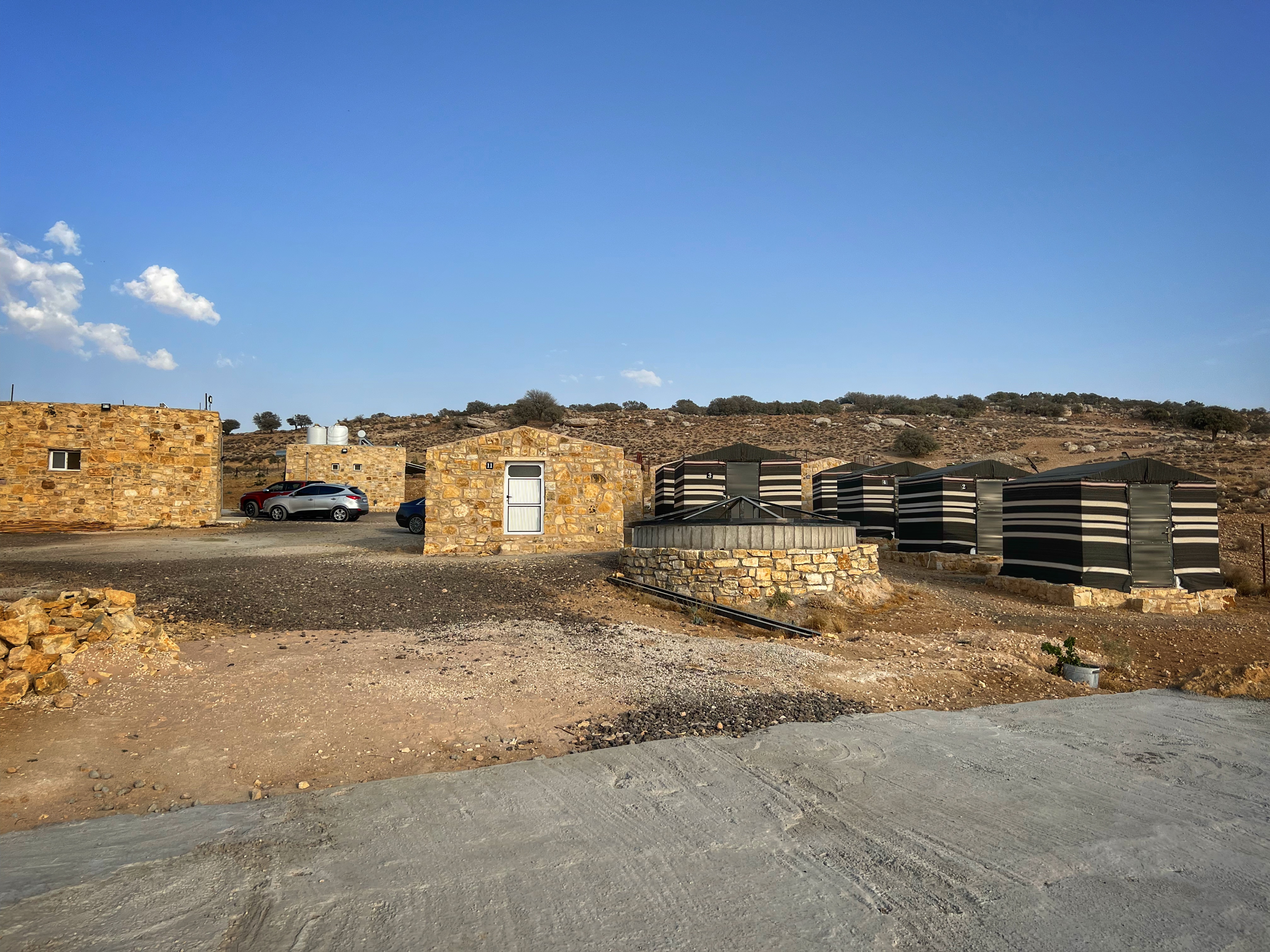
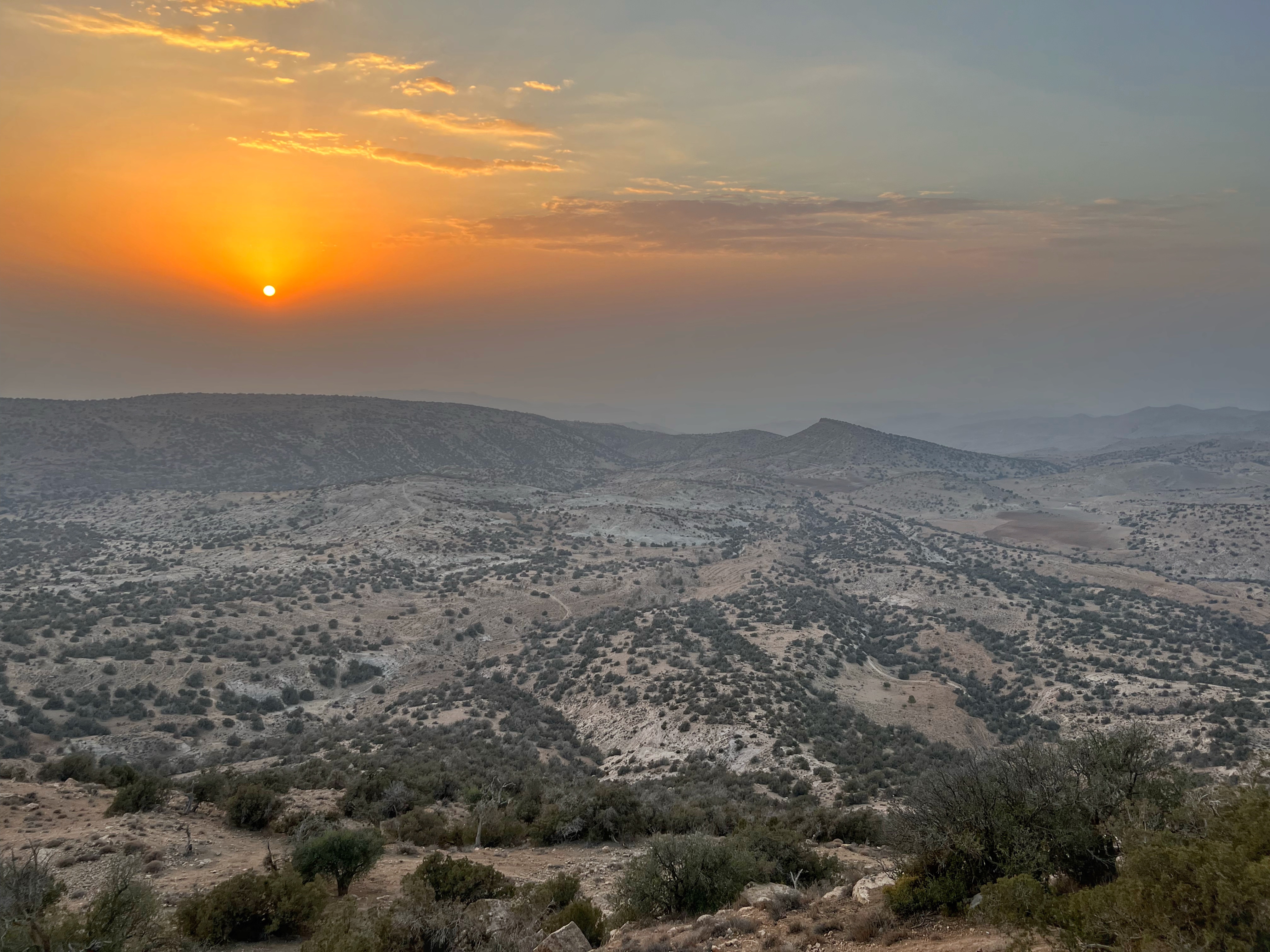
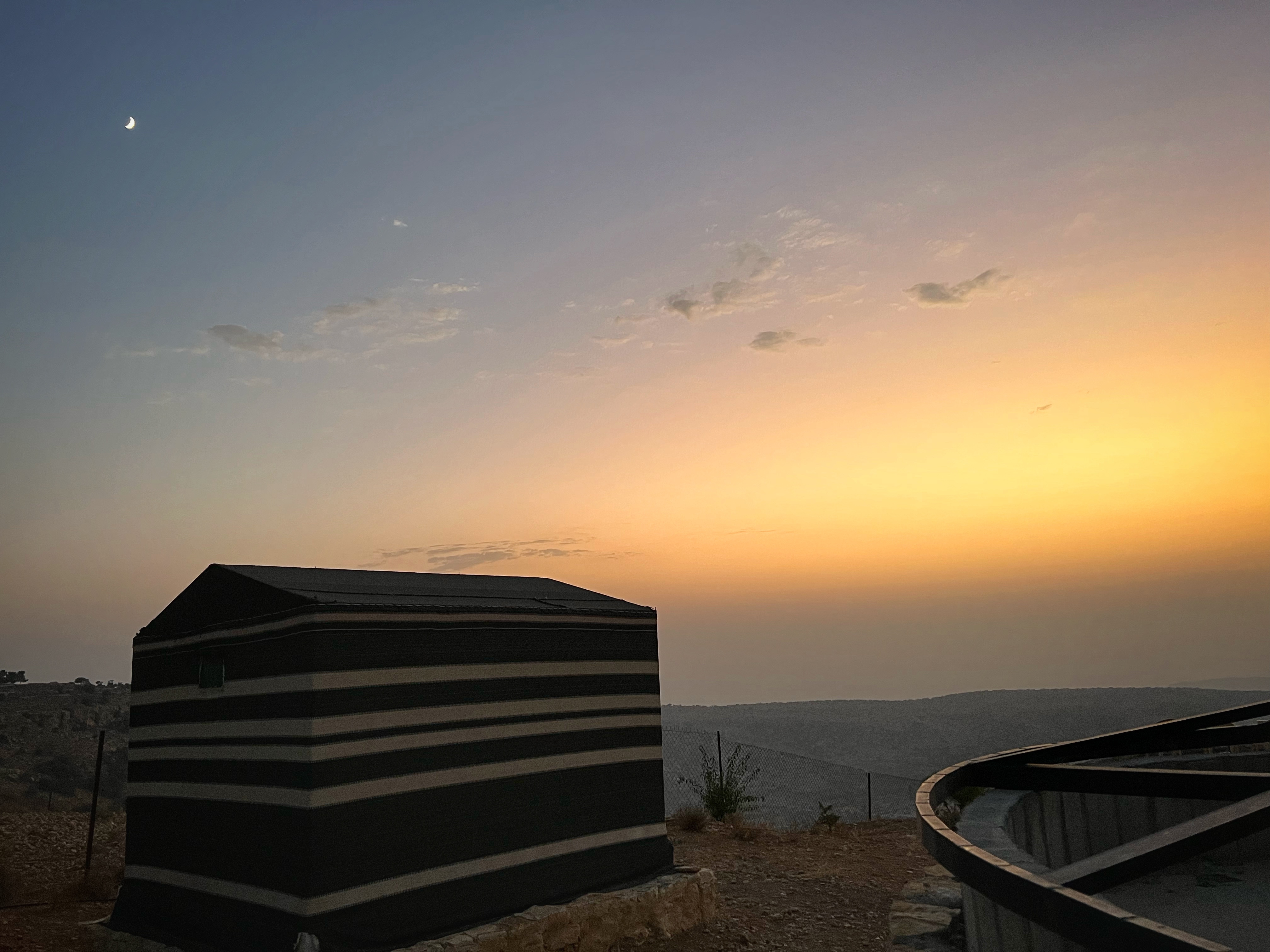
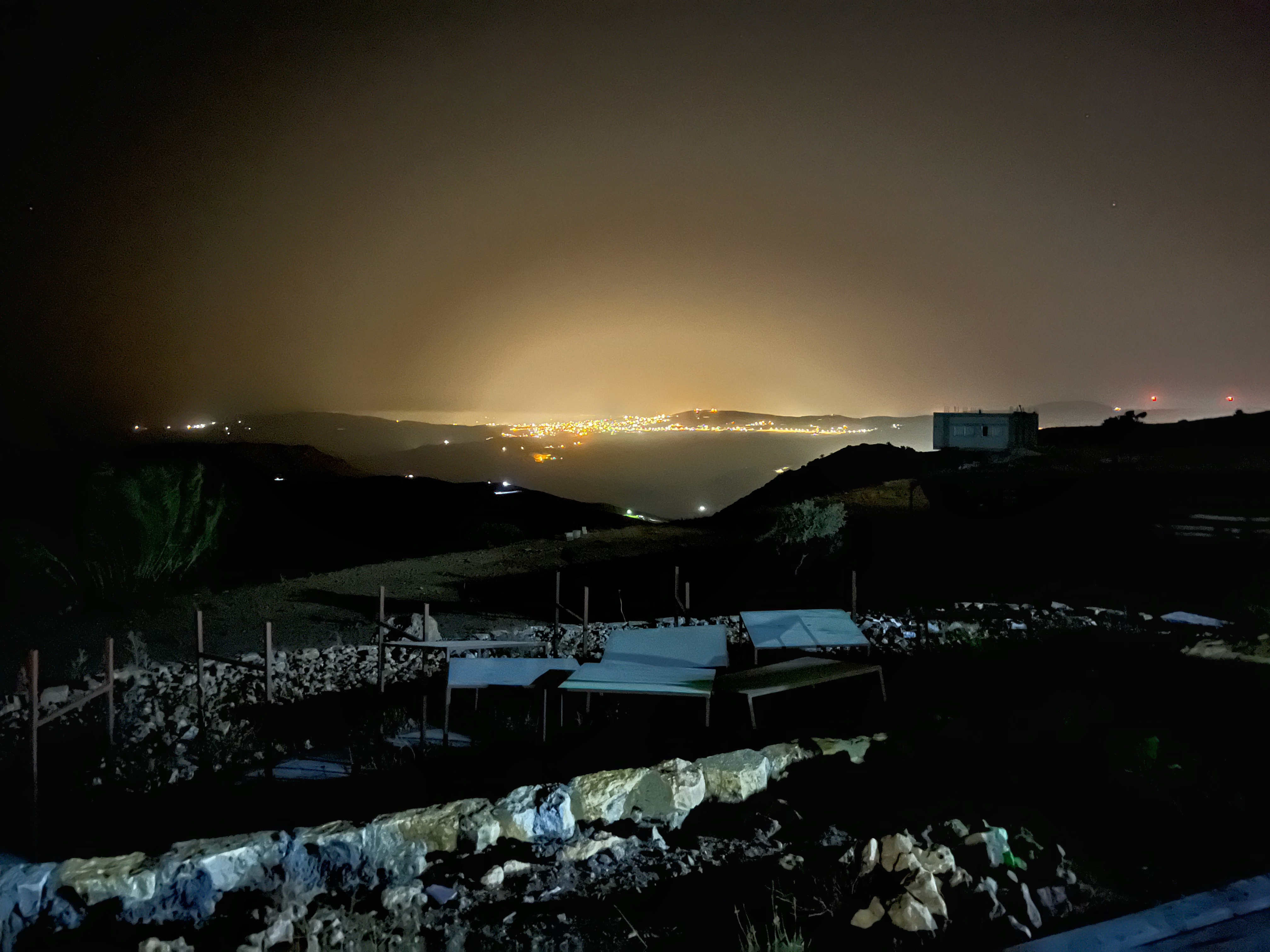
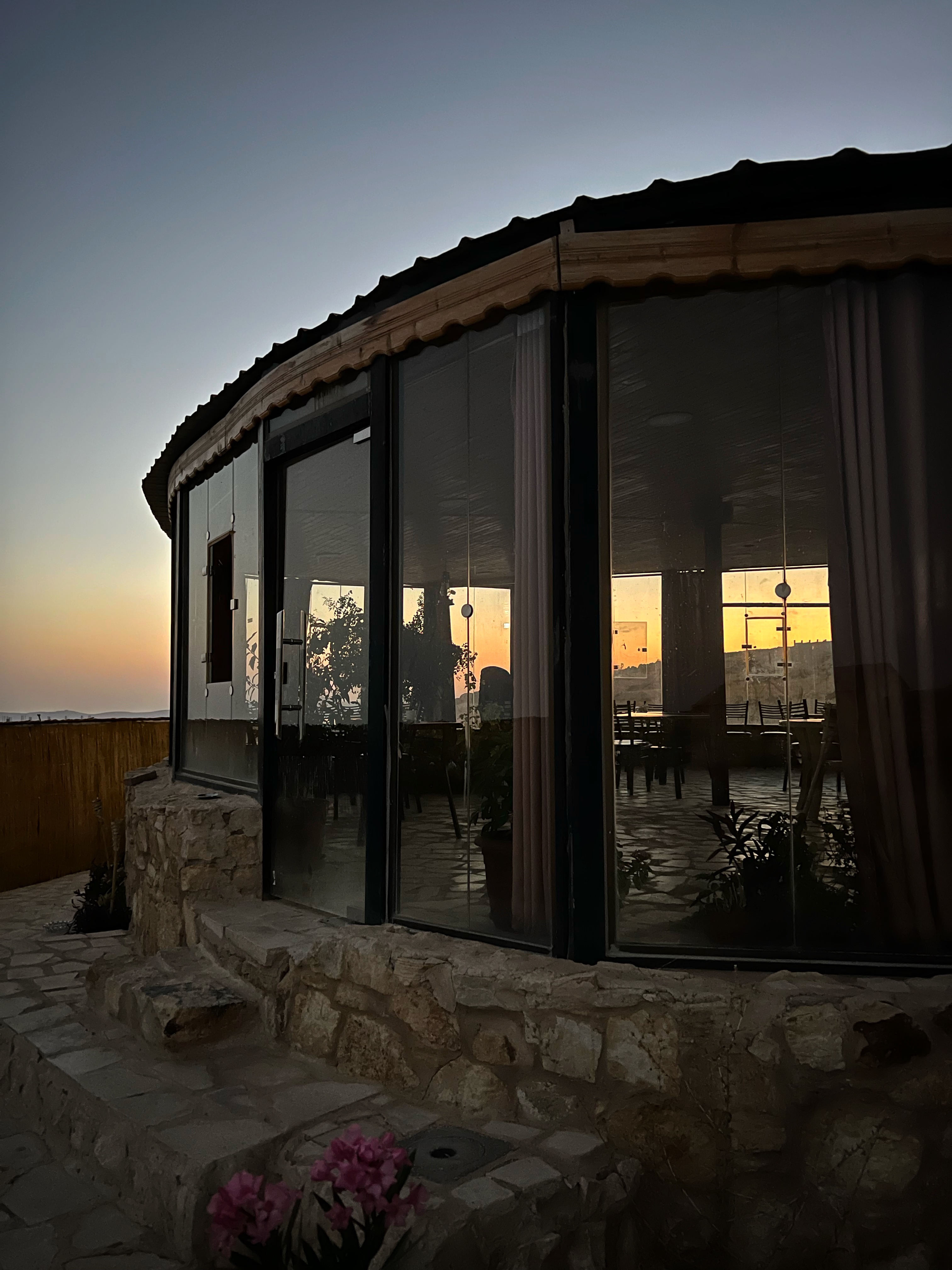
It was about 4PM when we arrived at Ein Lahda camp site and were welcomed as their only guests. This traditional campsite is situated on top of the hills looking west at the edge of Dana Biosphere. The humble box tents had floor mats for sleeping, a window, an outlet, and that’s it! We had shared bathrooms (separate genders) and generous meals from our hosts, all for 40JD/$56. It was humble, but sufficient. We weren’t quite sure what we were supposed to do when we arrived, but we were tired and pretty hungry, so our hosts served us tea, yogurt and olive oil with za’atar and flatbread. It hit the spot. After that we just relaxed for a while until they served us dinner at 7PM. As we were the only guests – and two females at that – it was a little bit awkward at times. By the evening, though, our hosts had a group of family and friends they hosted inside (all men) and we had our own private dinner table outside as the sun set. We had a very delicious meal of “upside down” (chicken with vegetables and rice), lentil soup, salad, bread, and fruit and sweets for dessert. We also shared the company of several of the guests who came out to chat with us in English – it was so nice to learn about their lives as teachers, former military members and diplomats and share about our experience in Jordan so far. We went to bed (in the hot tent – it eventually cooled down though) with full bellies, eager to see what Dana Biosphere was like the next day.



DAY 4
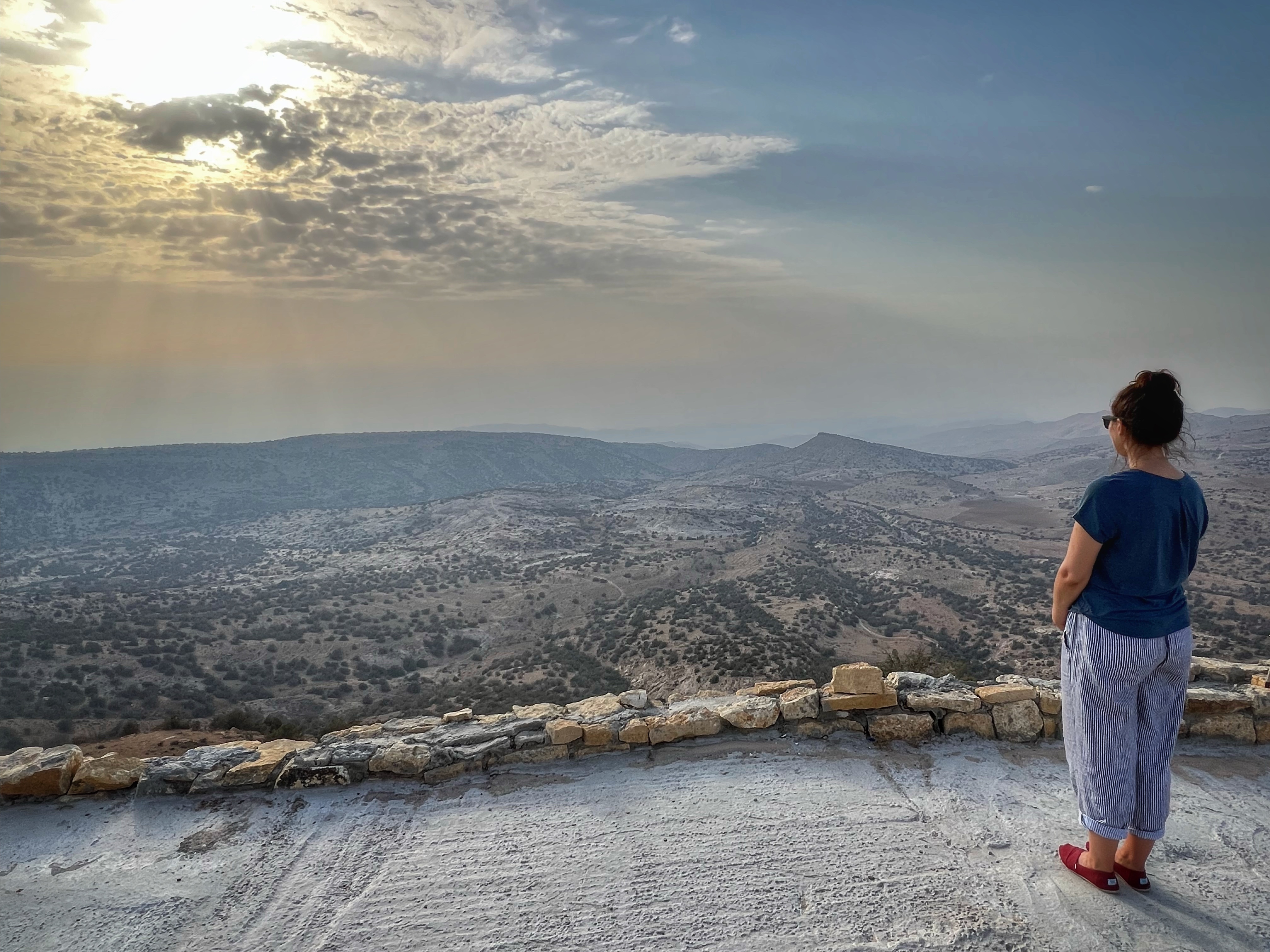
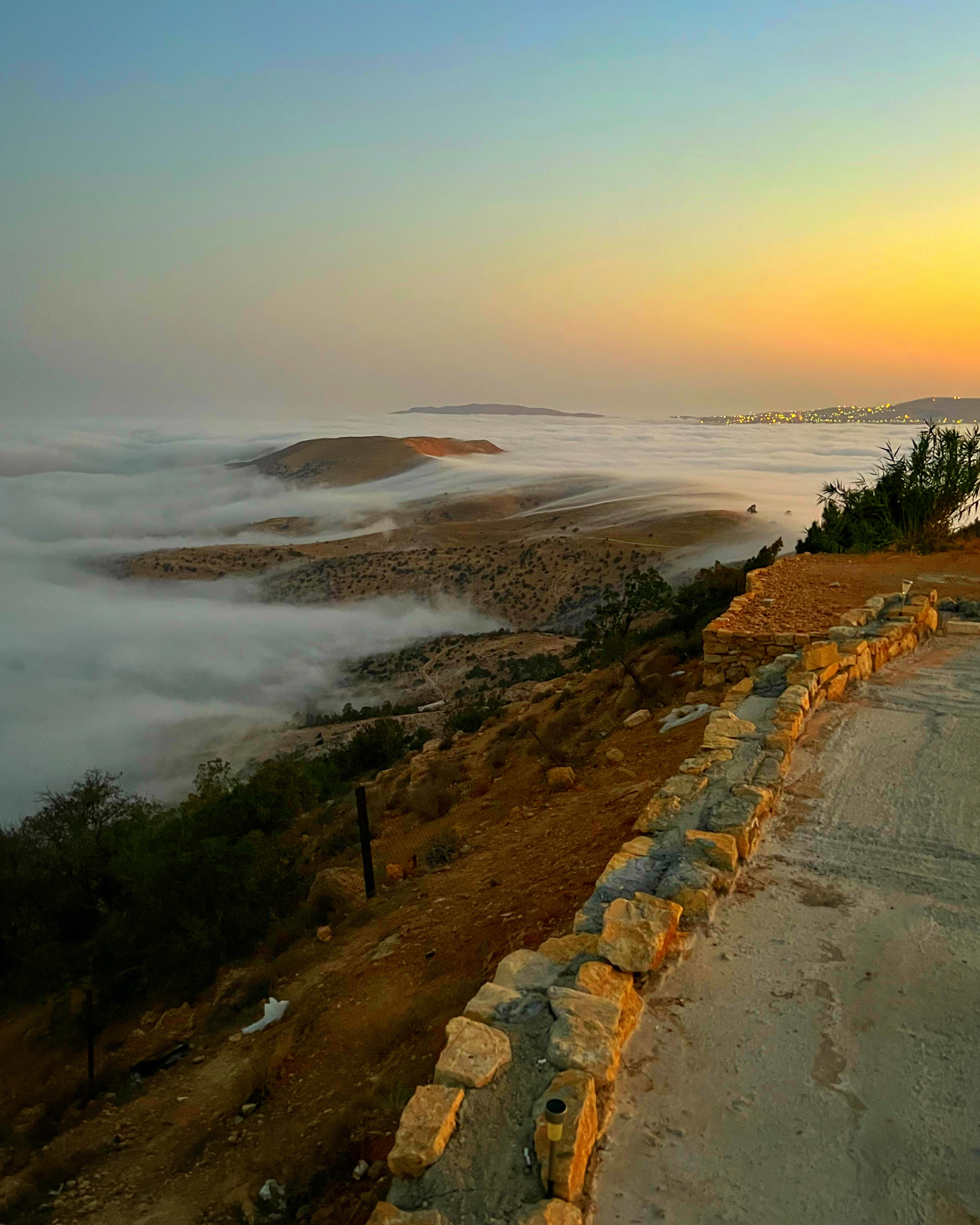
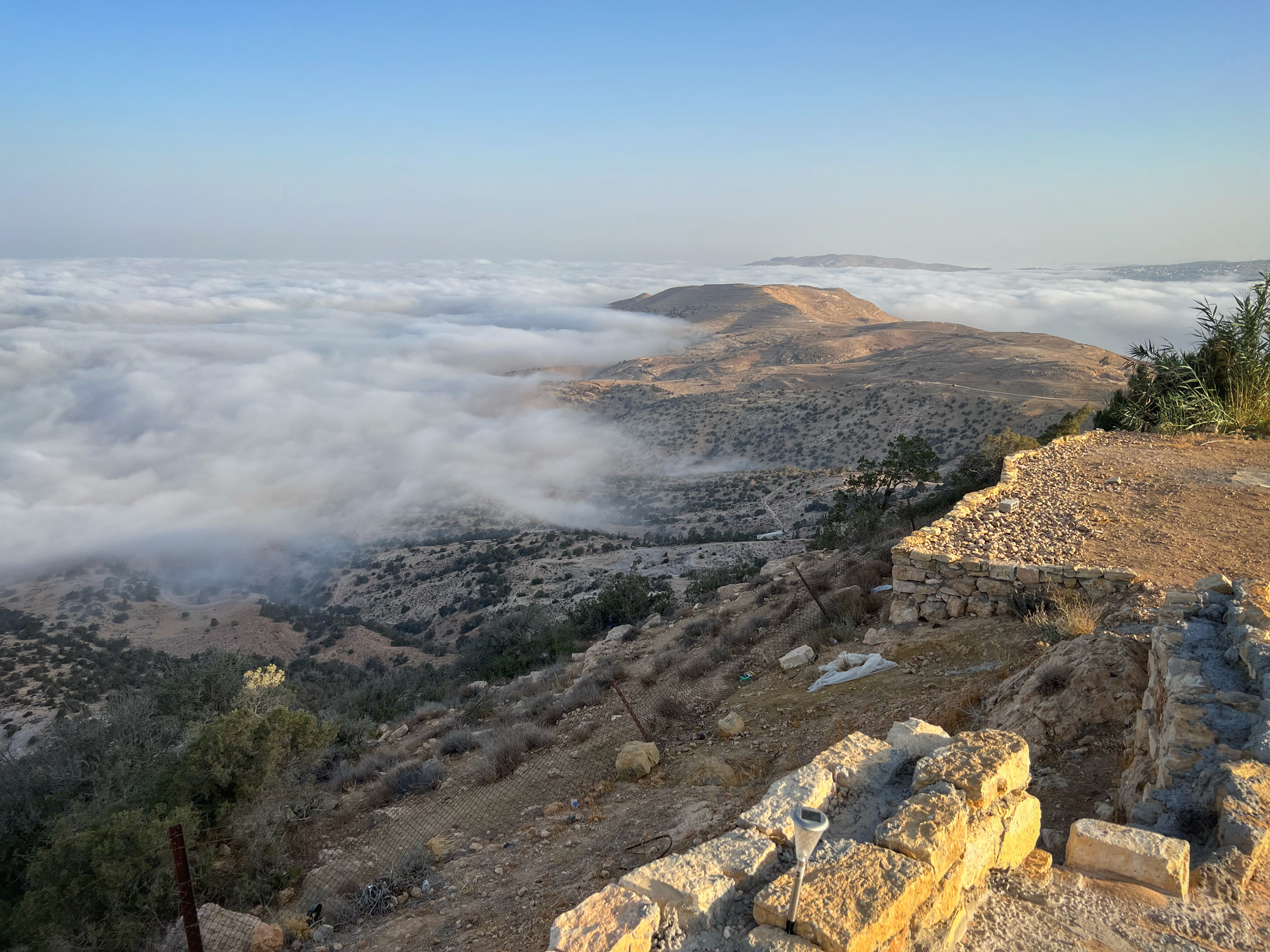
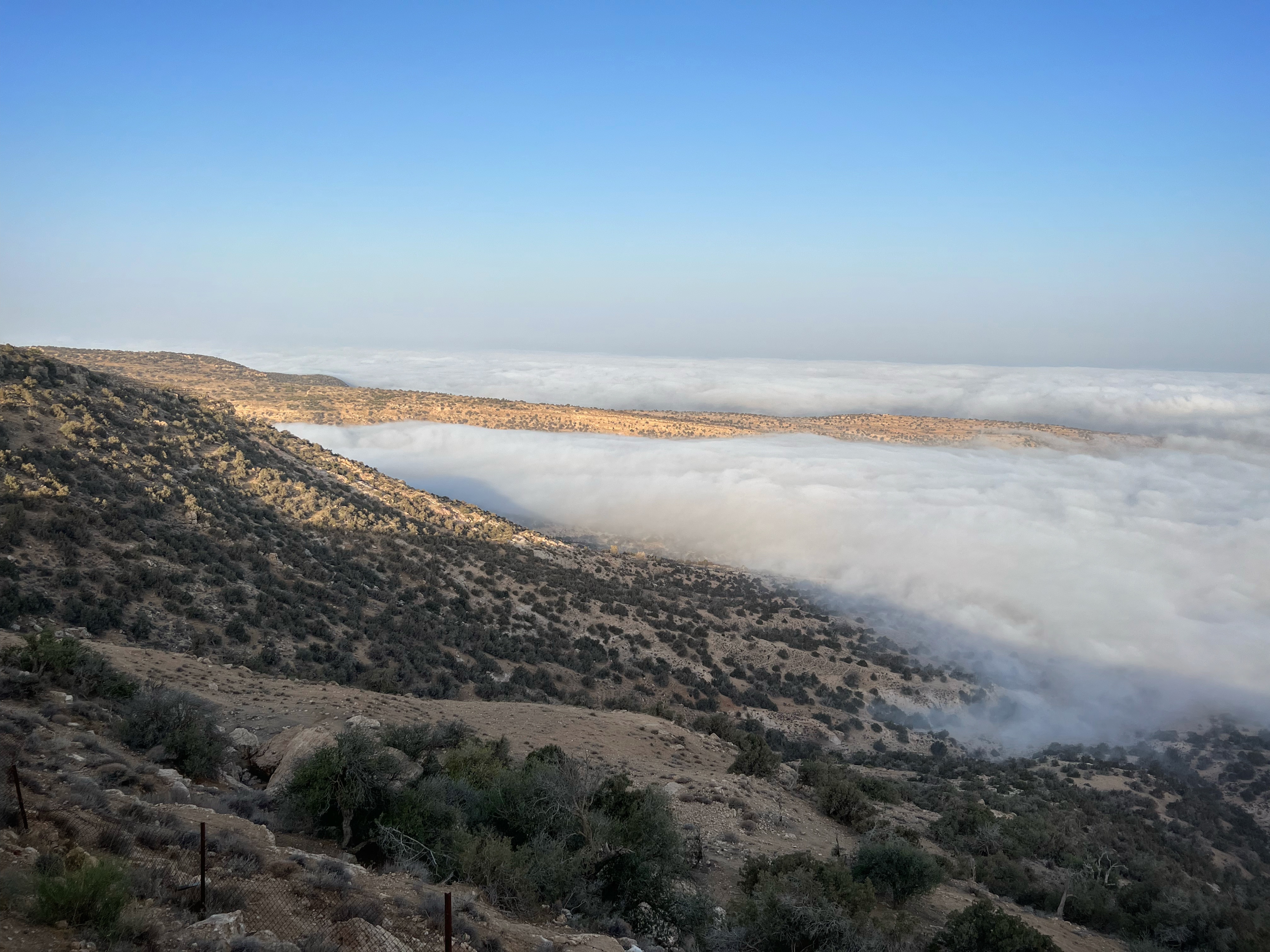
We awoke the next day above the clouds. I peeked out at sunrise to take a few photos and couldn’t believe my eyes (see above). It certainly was a beautiful way to wake up! We were served a delicious breakfast of tea, eggs, yogurt, za’atar, hummus, halva, fruit and vegetables before saying goodbye to our new friends and driving about 5 minutes up the road to the northern entrance of Dana Biosphere at Rumana Camp.
Dana Biosphere
We originally planned to hike a long, popular trail called Wadi Ghuweir, but that plan required long transport times to and from the trail, guides, and 6 hours of hiking in middle of the day heat. That hike is supposed to be amazing, and I’m sure it’s worth the $85/pp or so to do it, so we will keep it in mind for another time. Given our 2-3 hour threshold for 100ºF days, we opted instead to check out the trails that start at Rumana Camp where there are several very nice hikes. There is an entrance fee of 10JD/$14 to enter Dana Biosphere and that can be paid at the Dana Biosphere Reserve entrance here, where you park. Once you pay, you can hop on a truck shuttle that takes you down to Rumana Camp. This is also a place to stay, and it looks like it would be a lot of fun. Another good option for staying in this area is at Dana Guest House. The views from there are incredible.
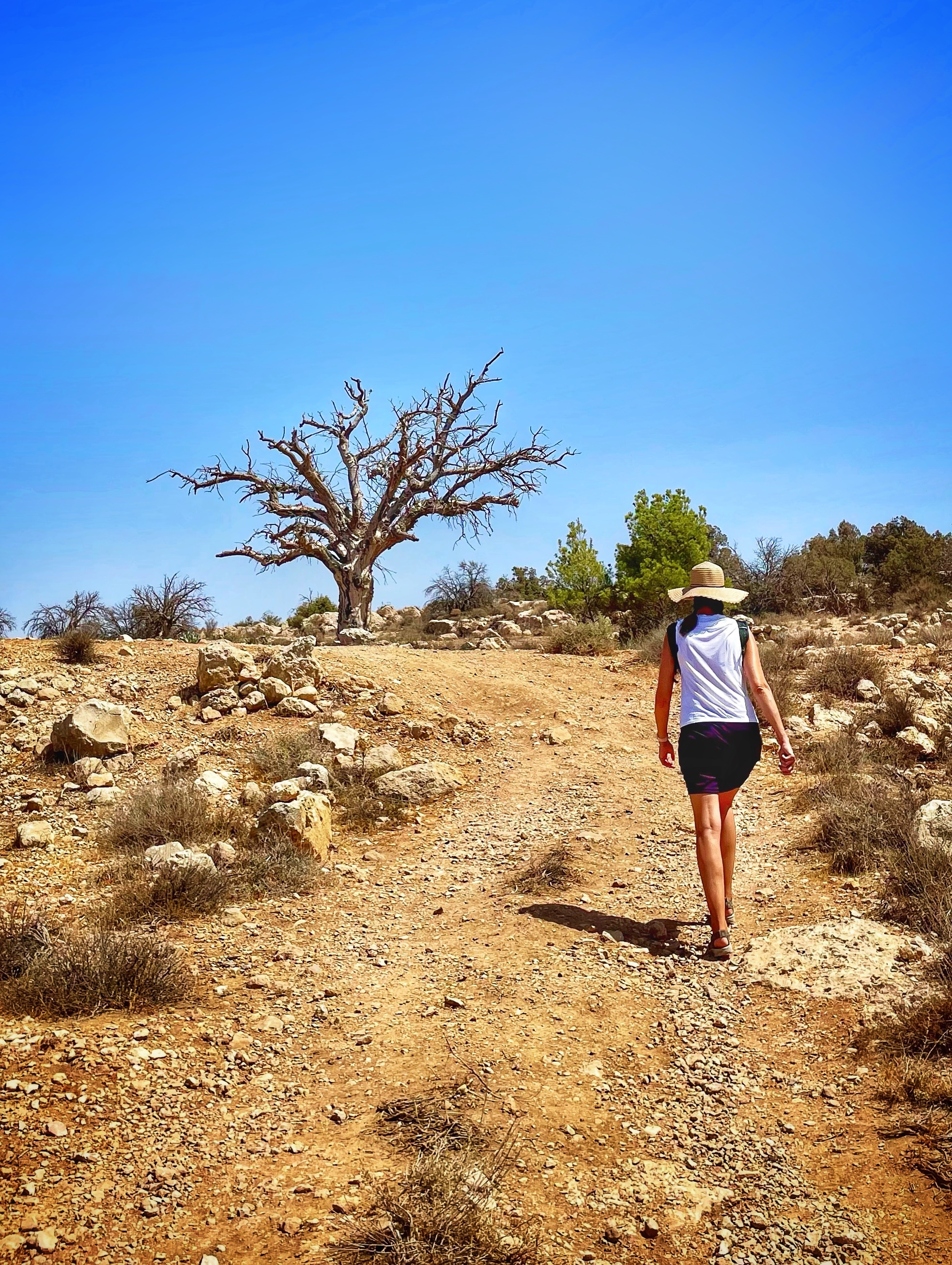
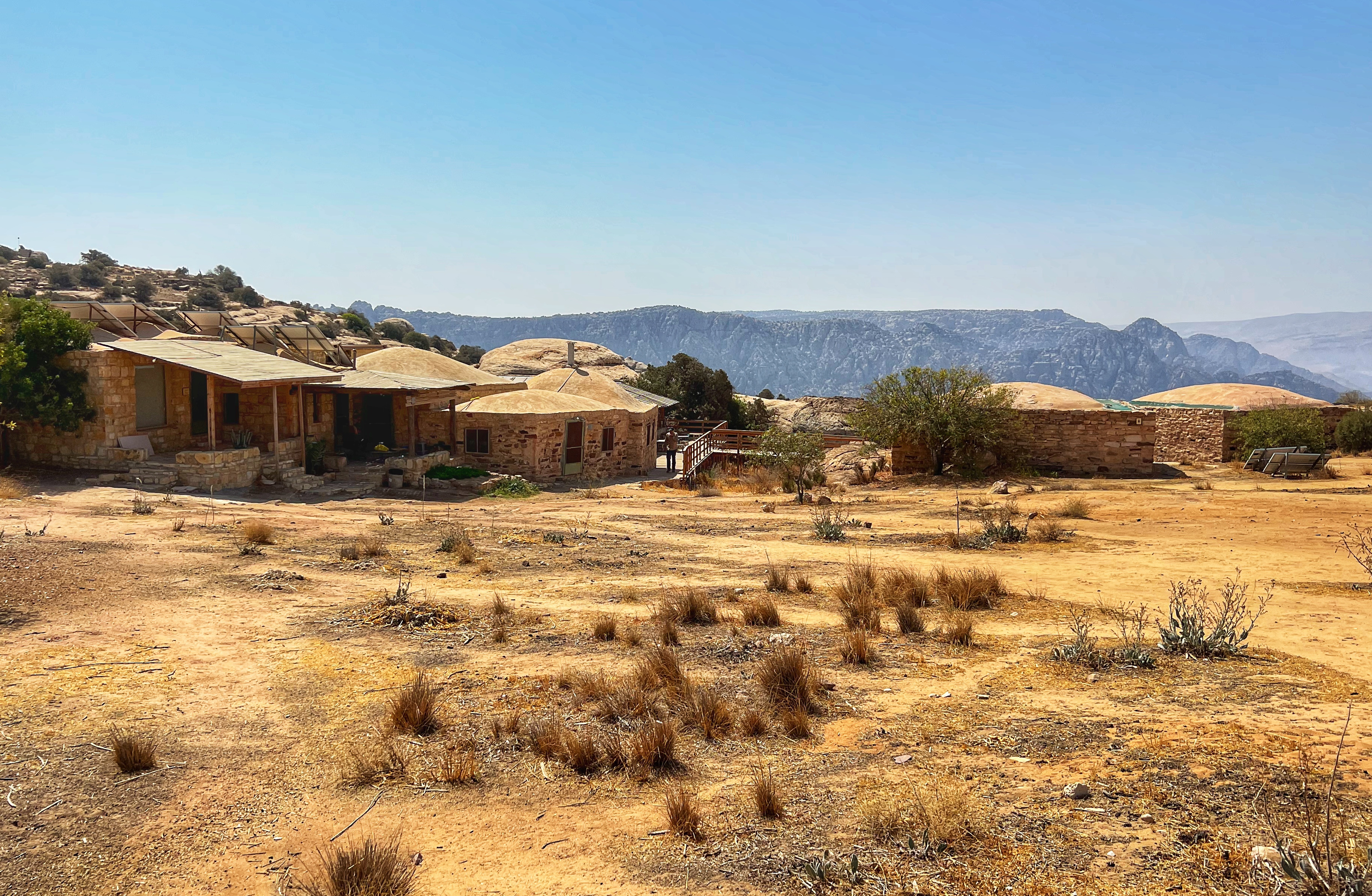
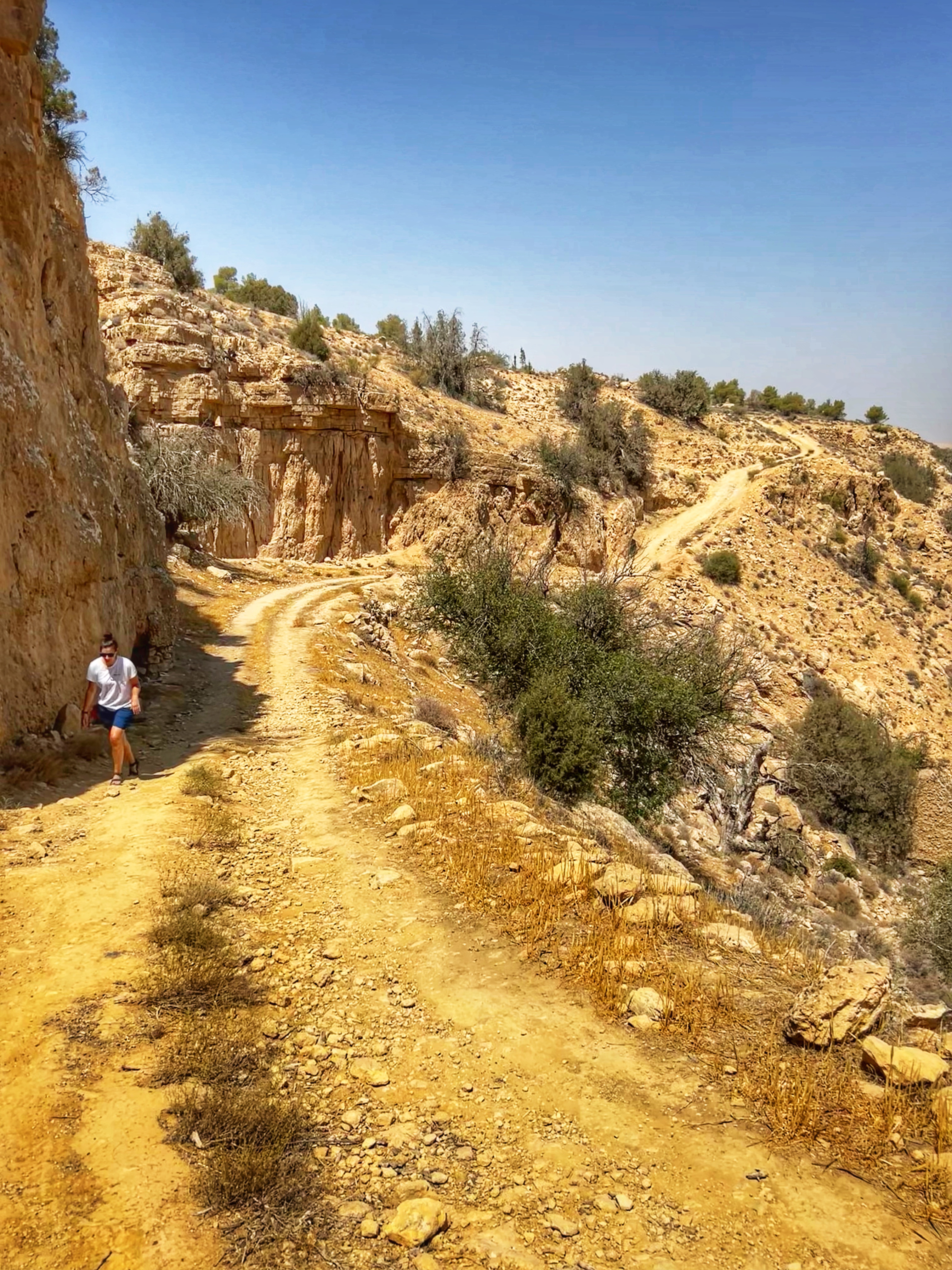
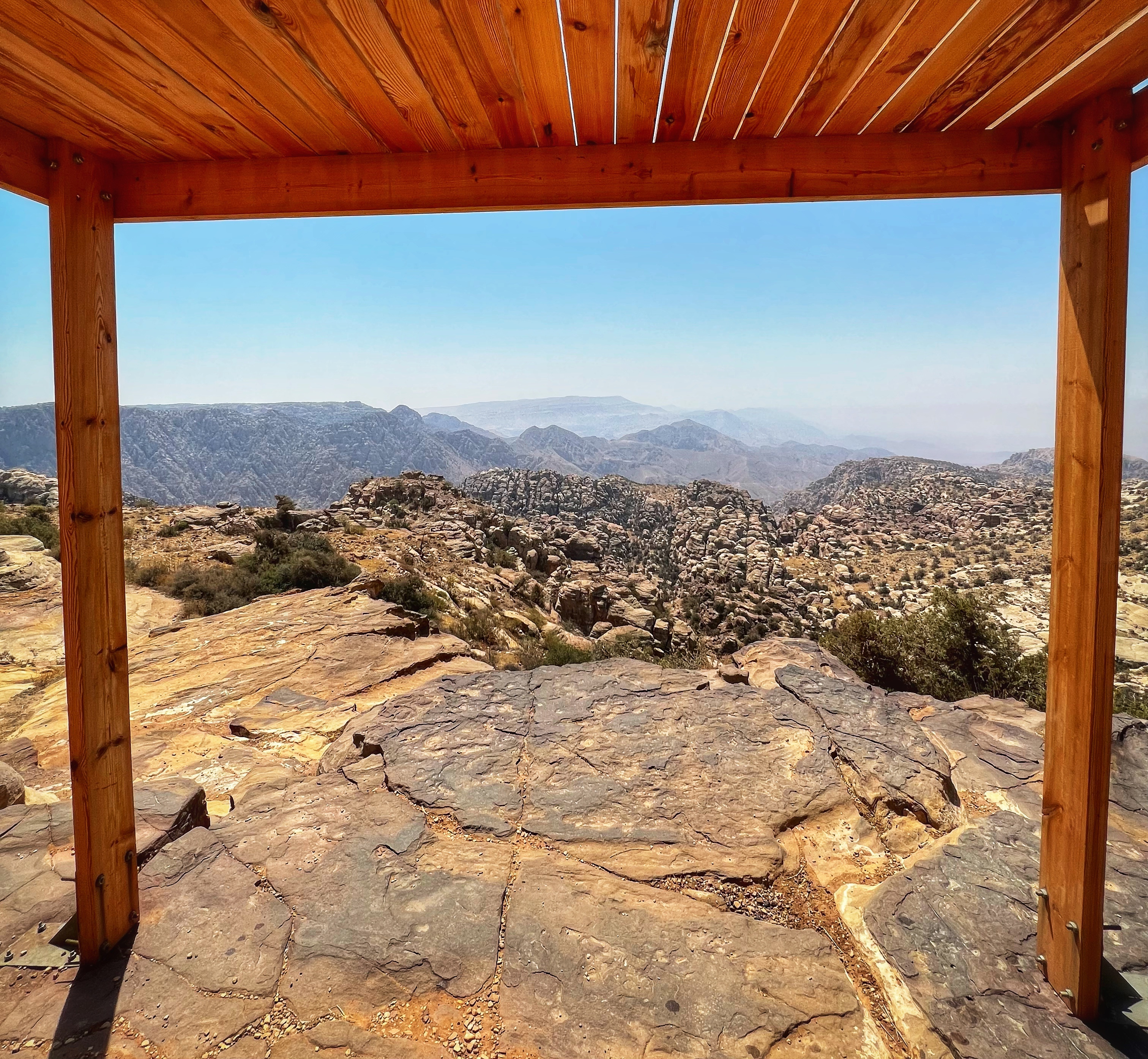

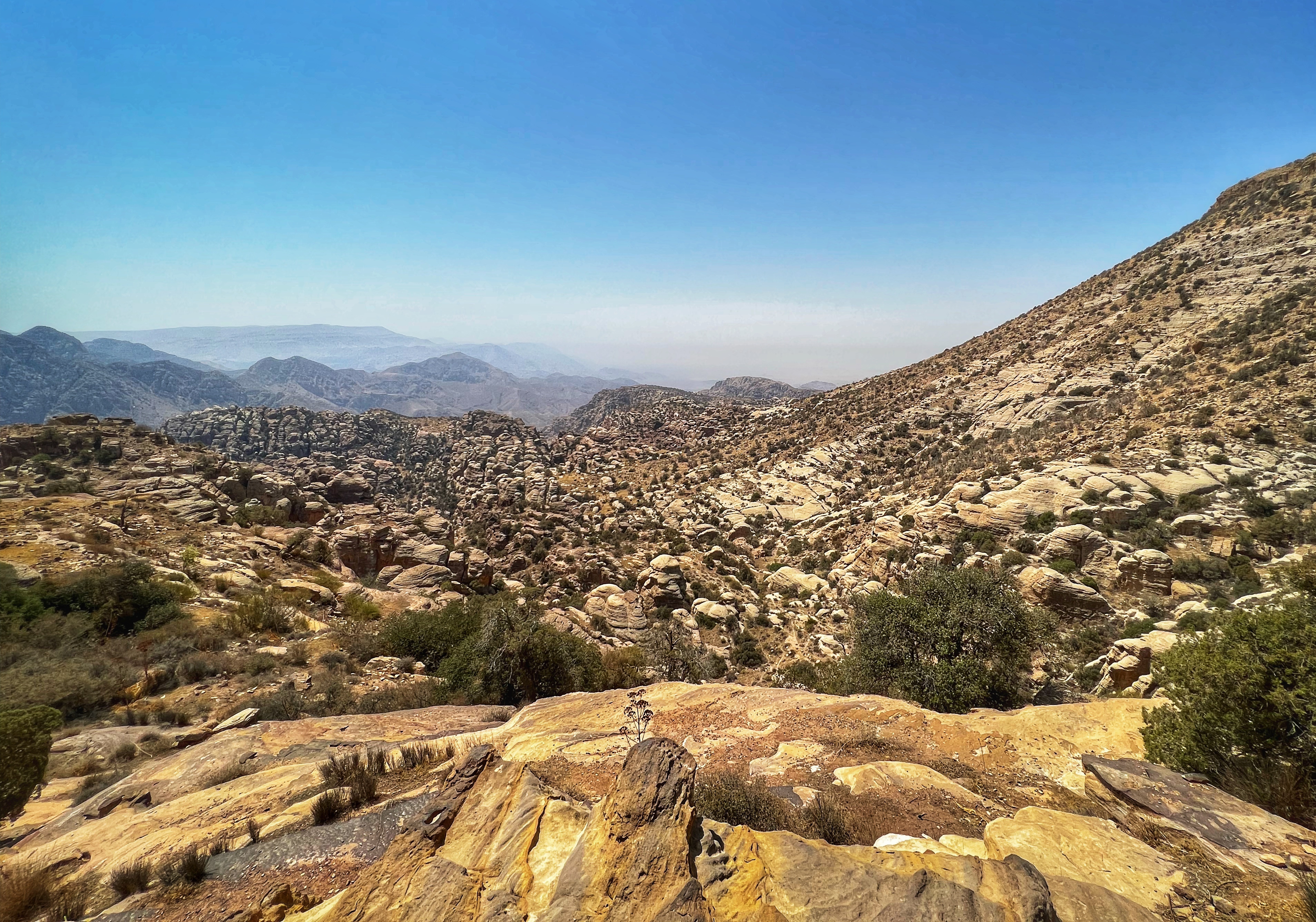

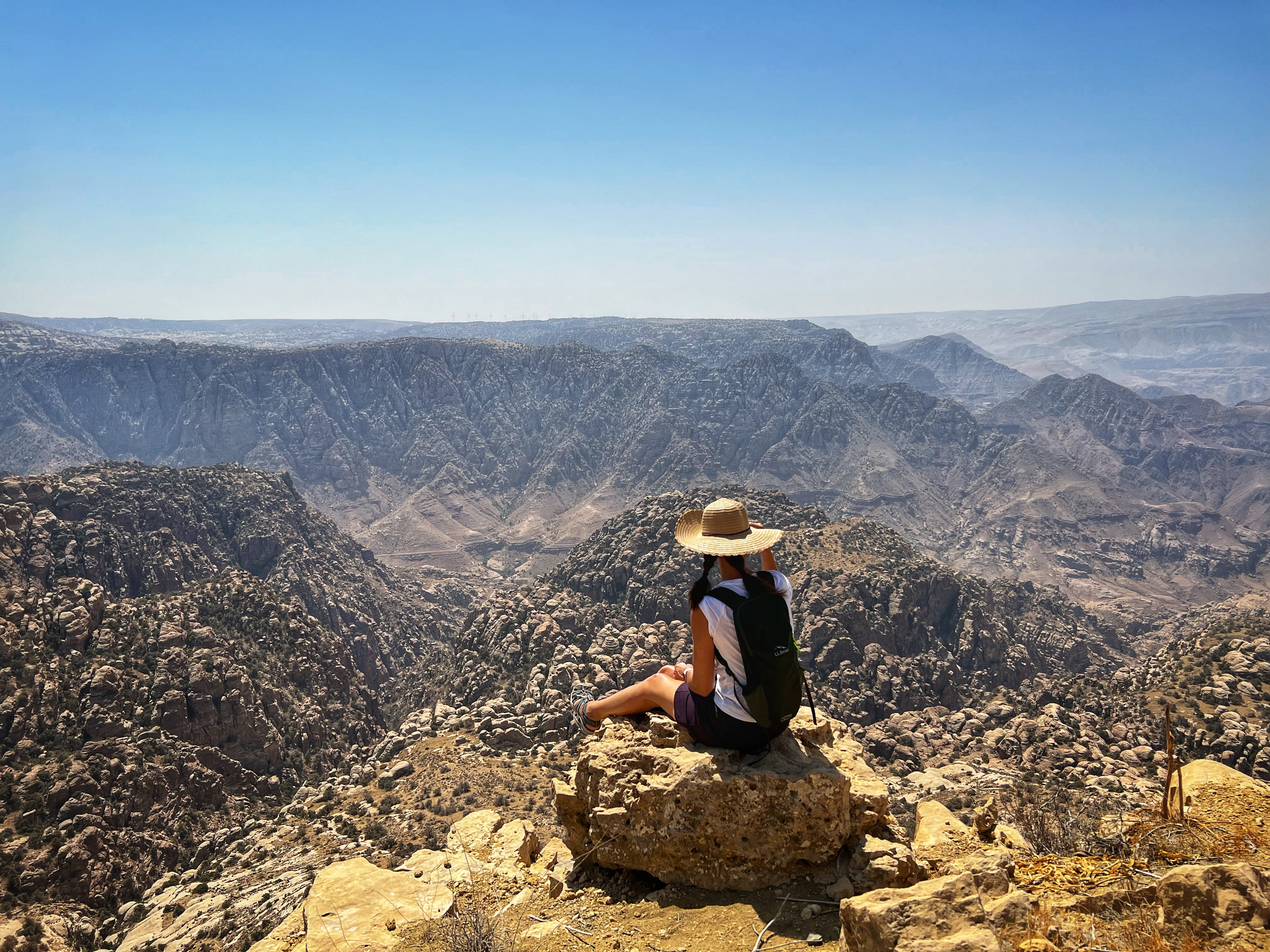


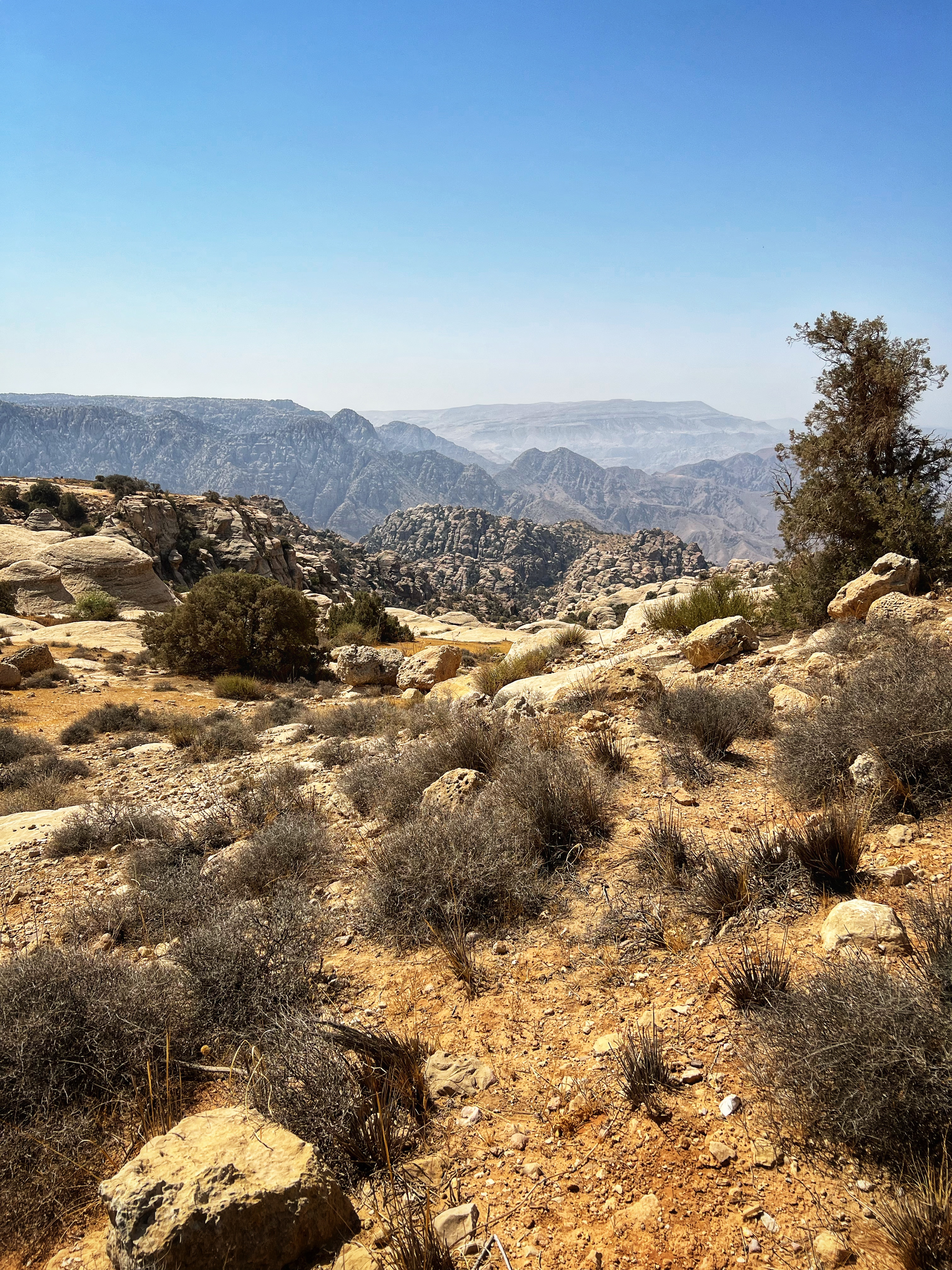
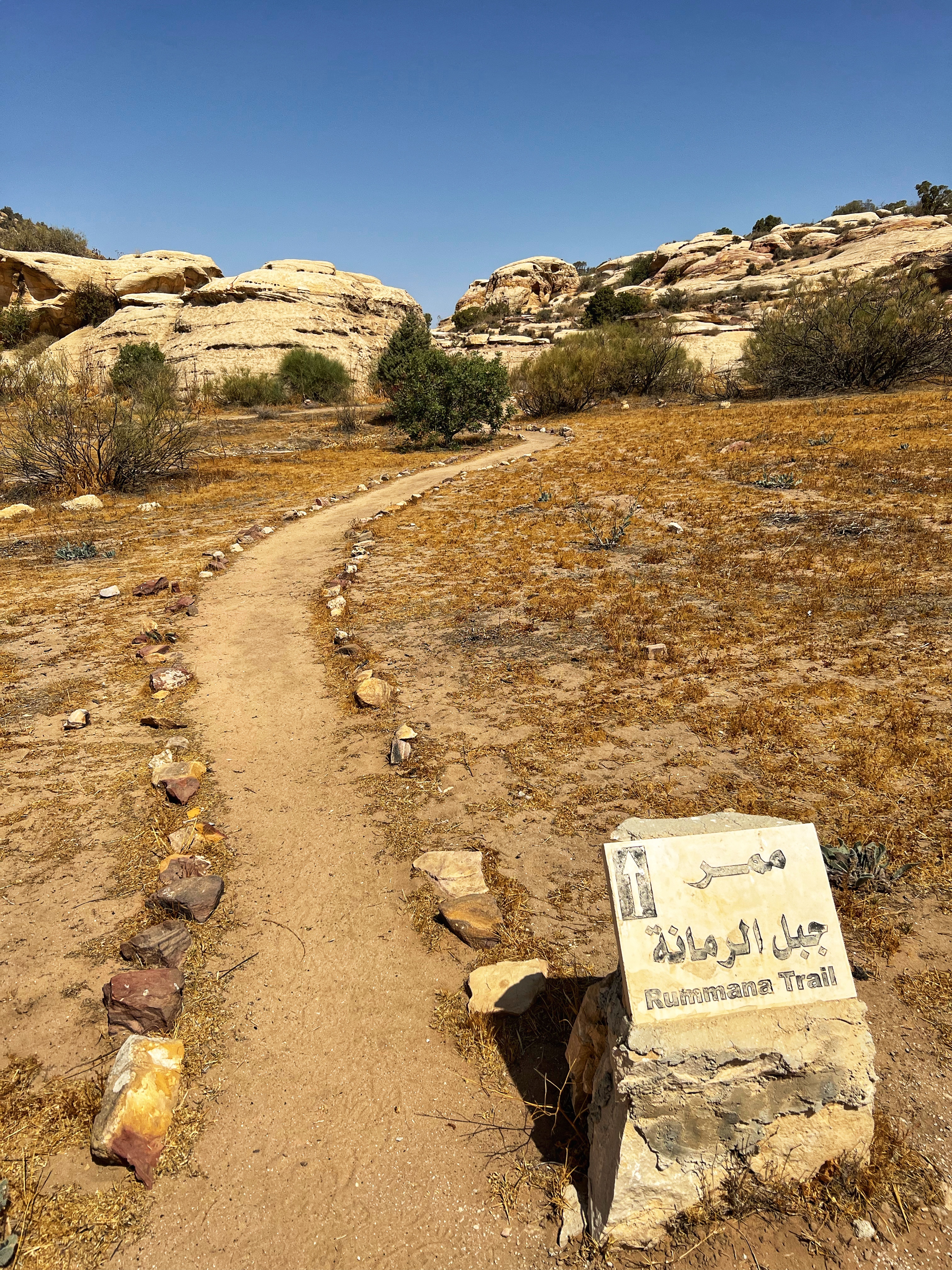
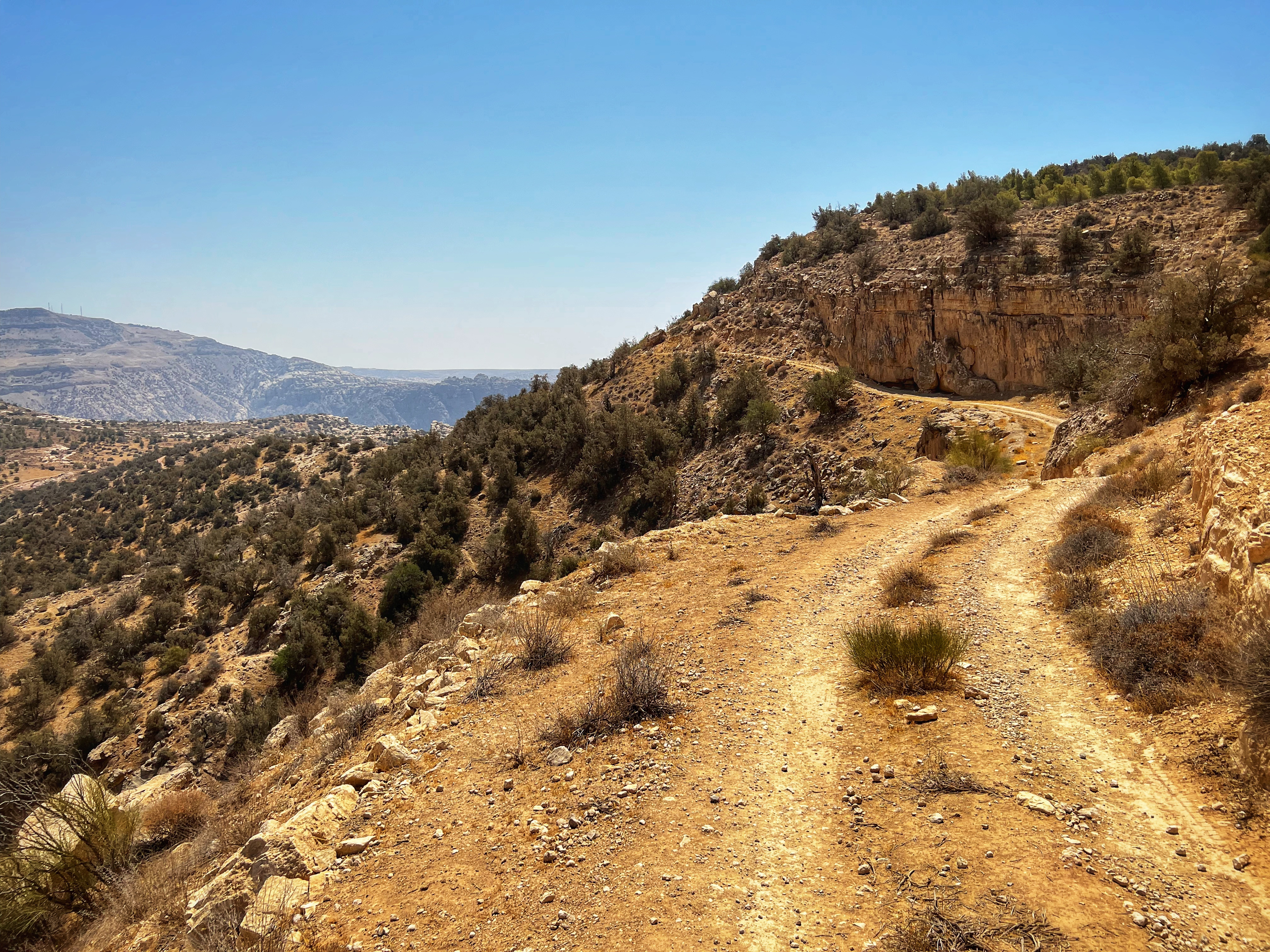


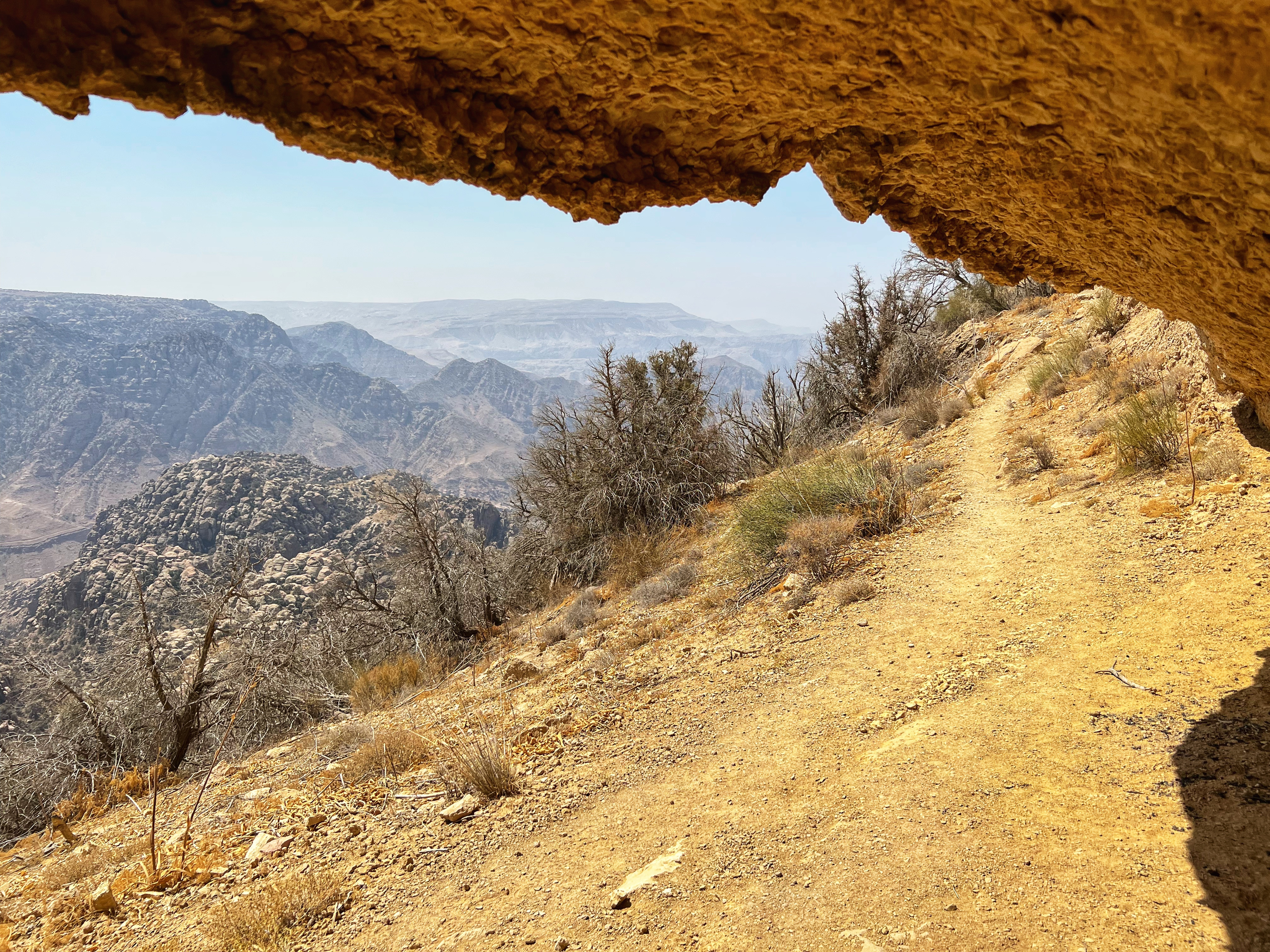
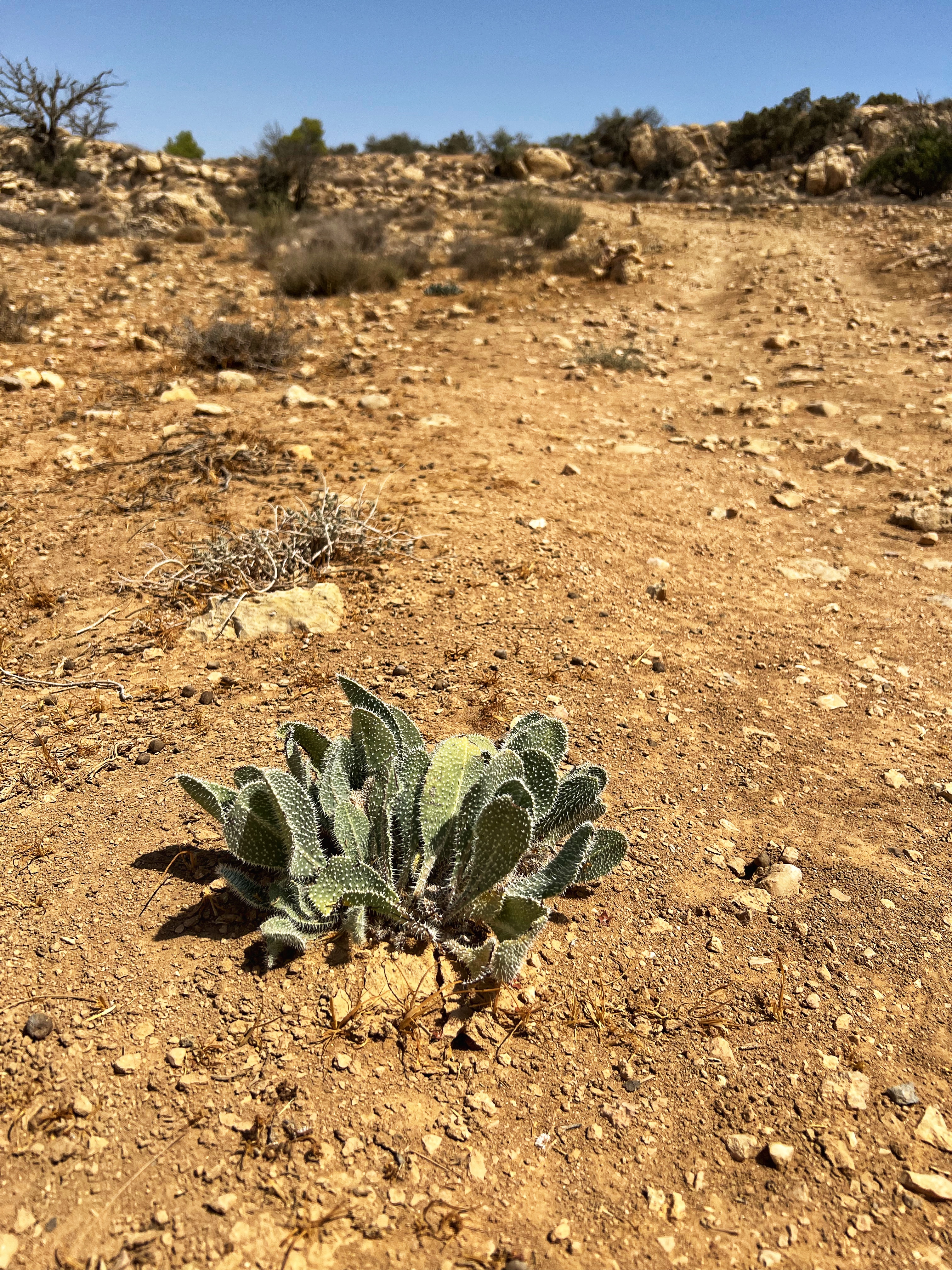

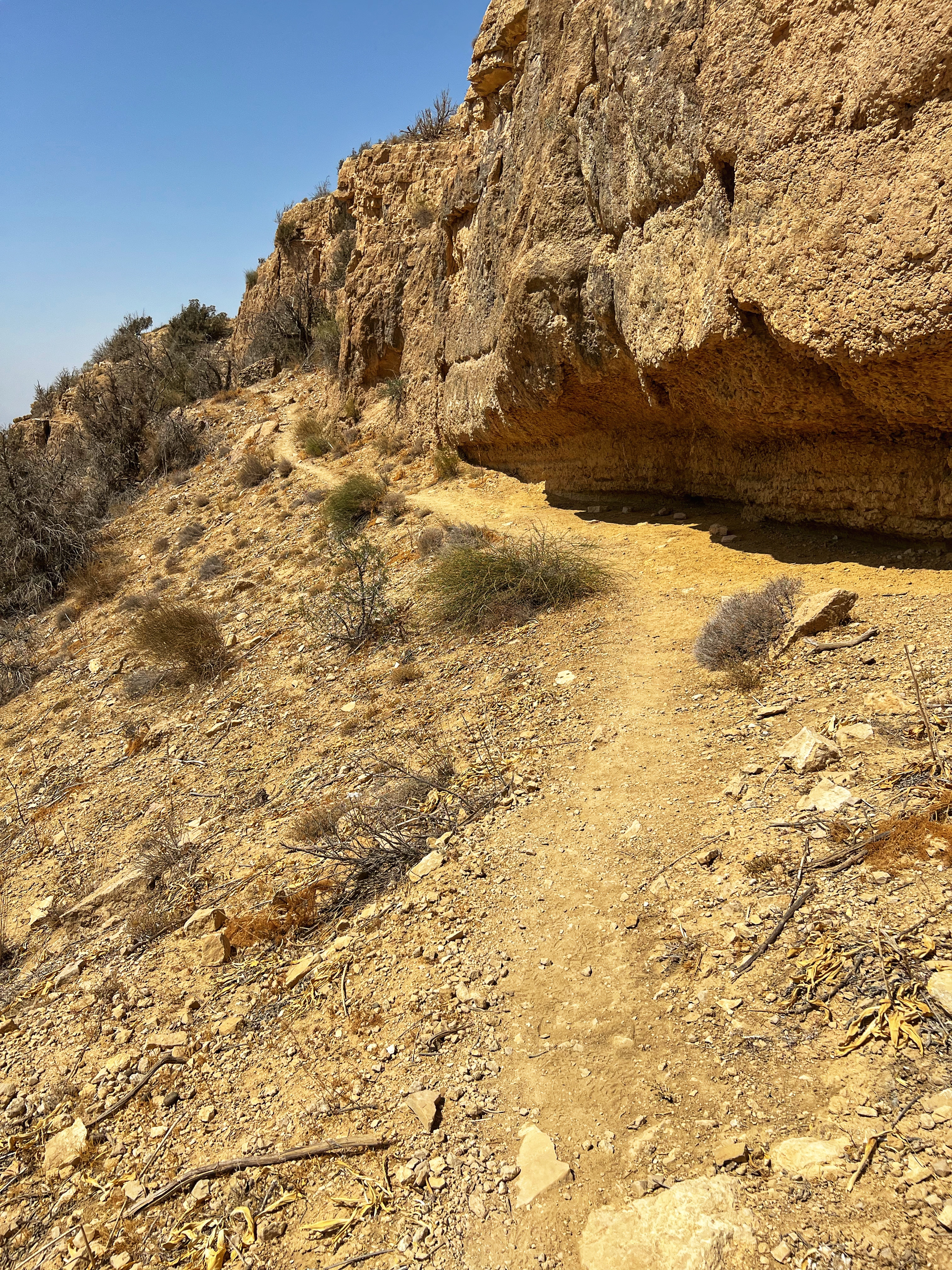
We opted to hike the Mountain Trail and it took us 90 minutes to complete. There are several other trails from Rumana including the Campsite Trail and King Hussein Lookout (both one hour), but this one was recommended to us by the guide based on our time frame. The trail began behind the teepees, was well marked and had plenty of wonderful look-out points. Everything in Dana is out in the elements with almost no shade, so keep that in mind when you plan to hike there, and bring tons of water. When the hike was done, we rested at Rumana Camp and used their clean restrooms before heading back up in a shuttle to the entrance where we parked. Funny story – the driver of our shuttle said he recognized us from dinner the night before at the Ein Lahda camp! Small world. For more information on hiking in Dana, check out WalkMyWorld.
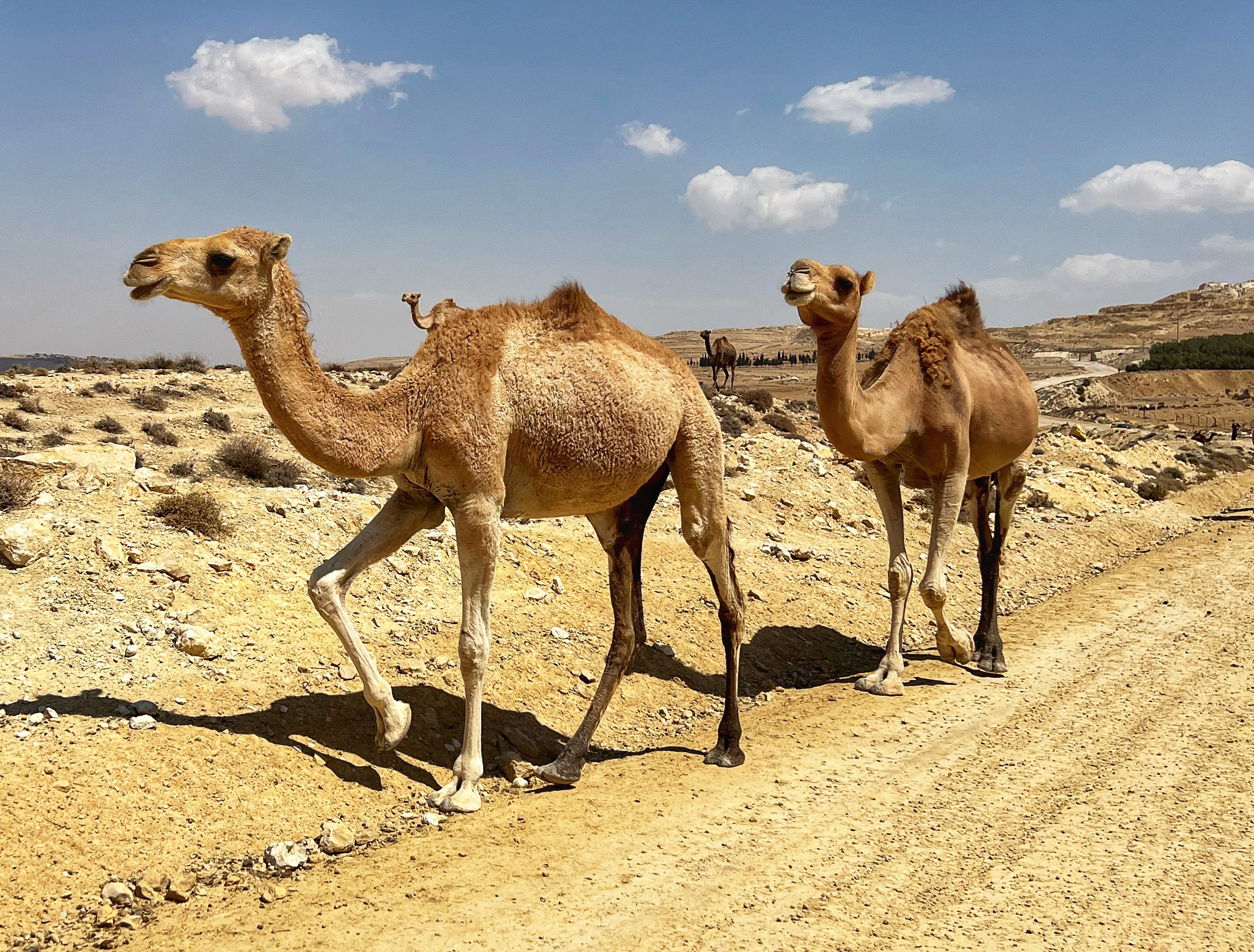
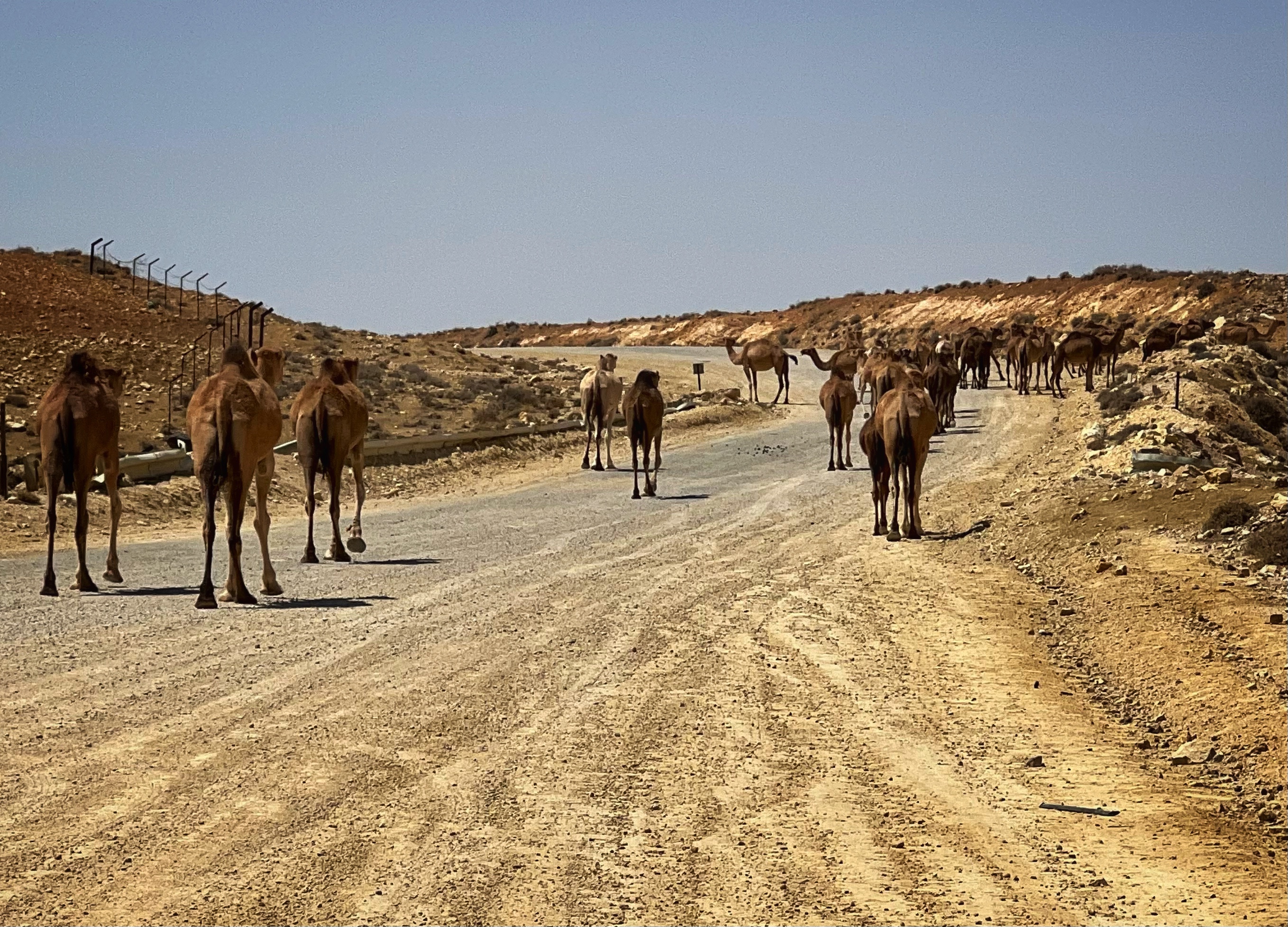
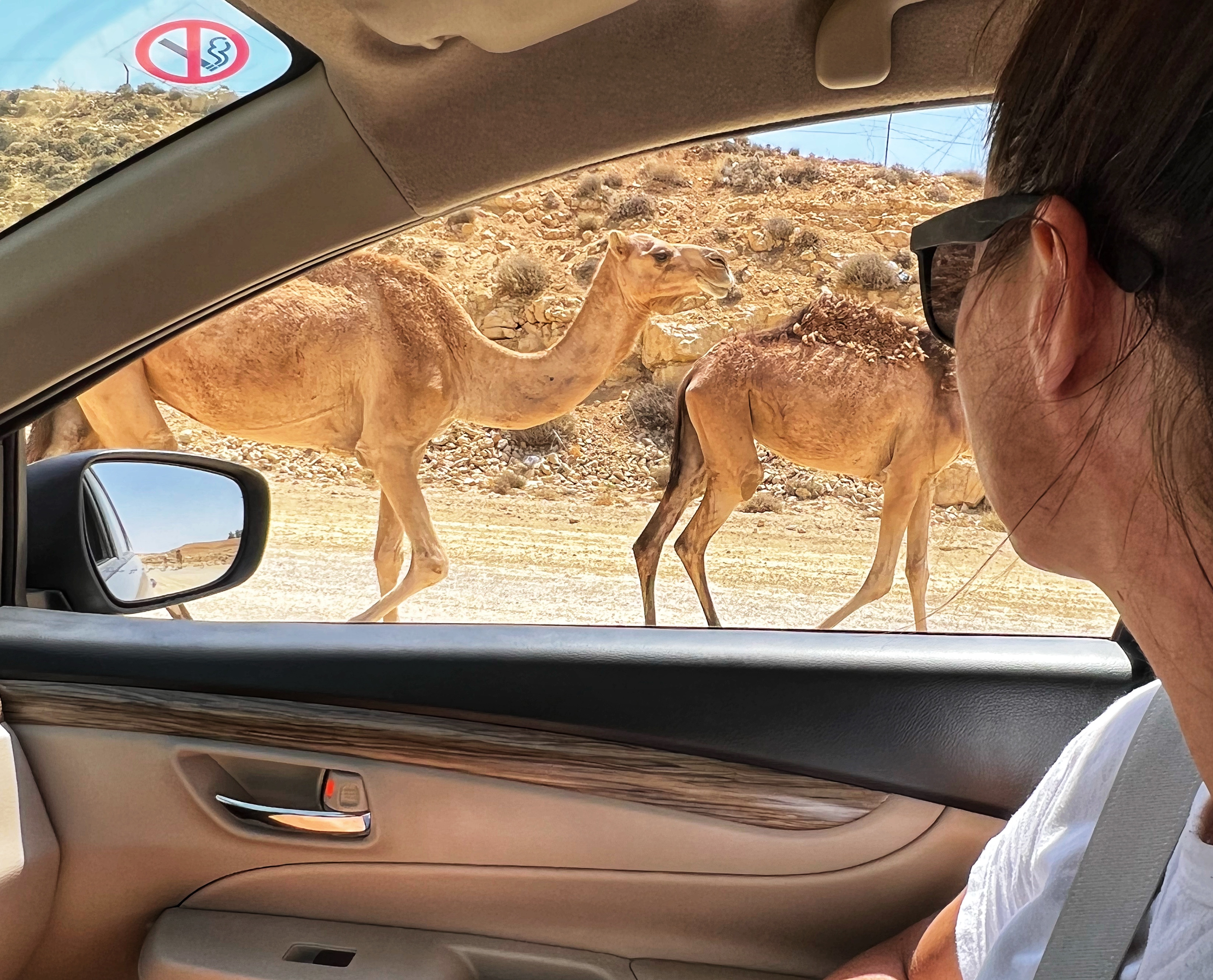
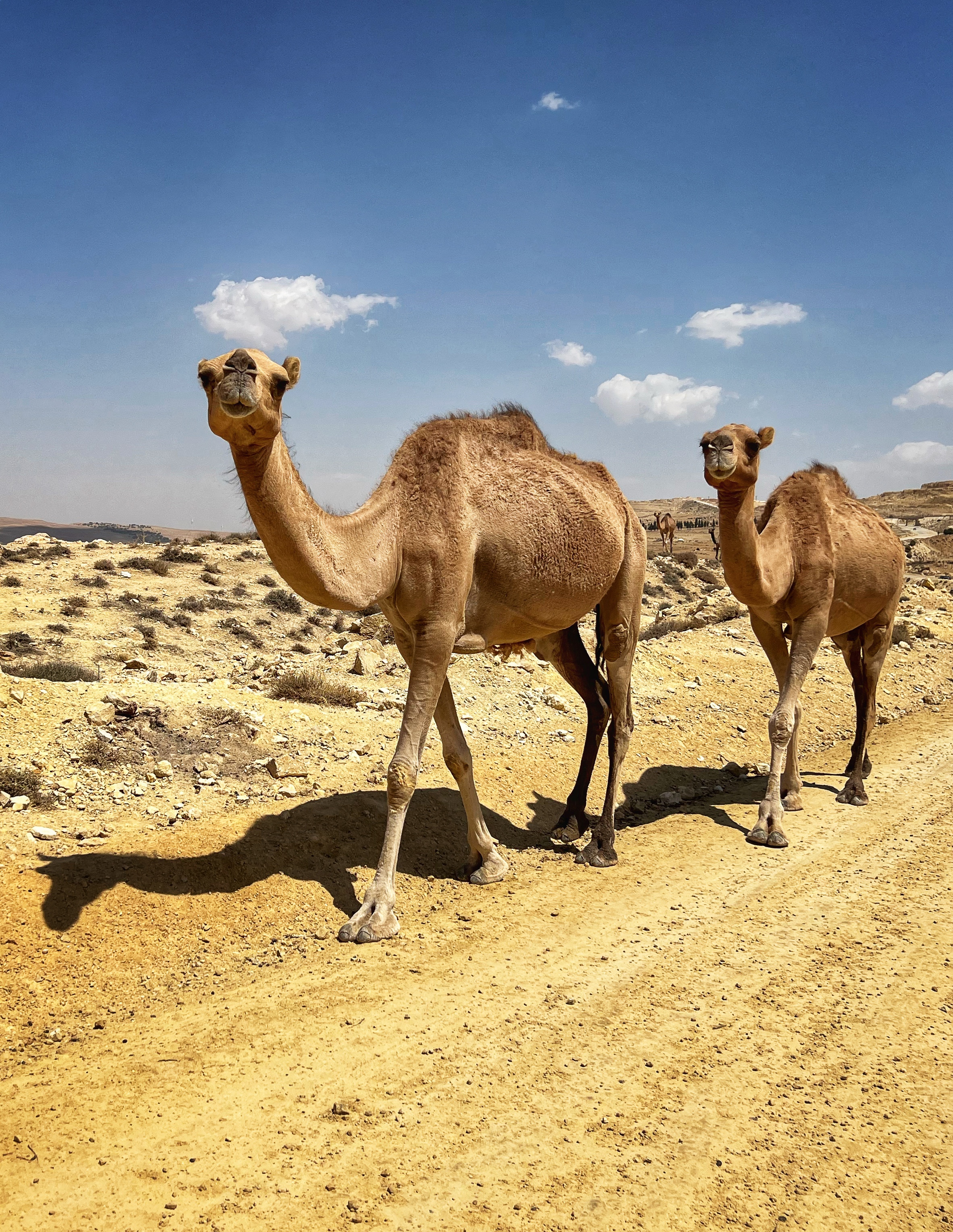
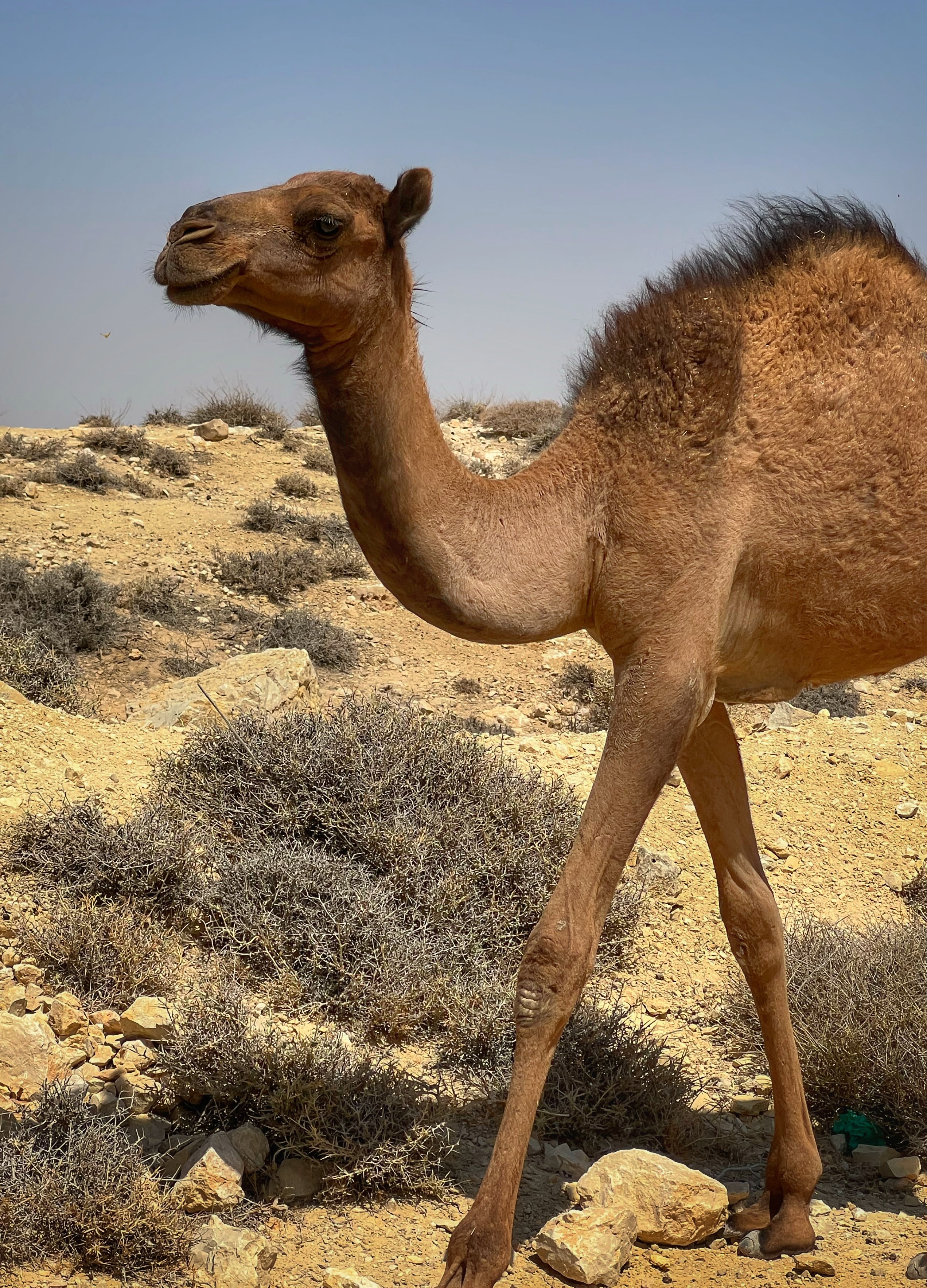
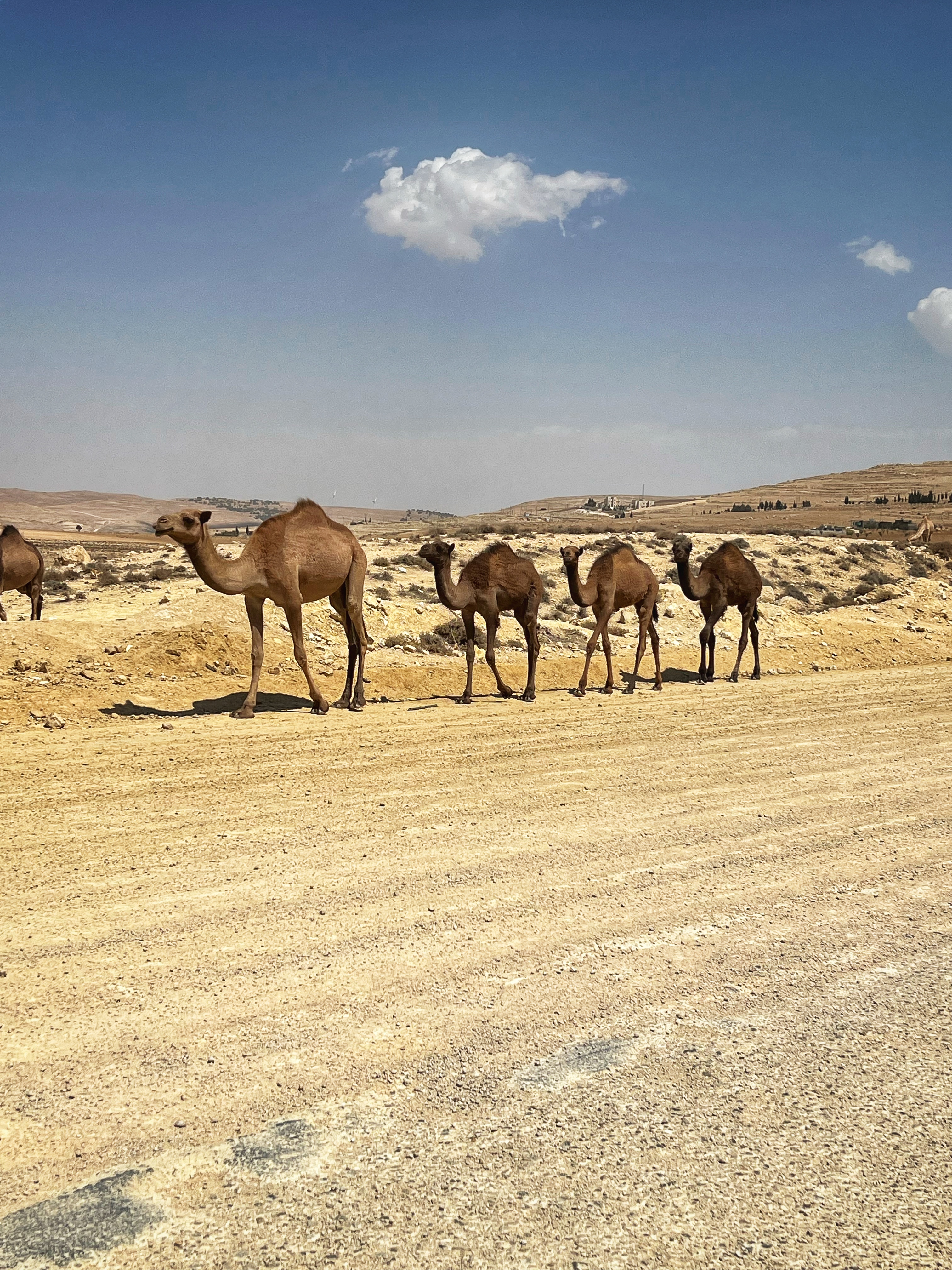
CAMELS! We left Dana around 1:15 and continued south towards Shobak Castle. We hadn’t gone far on Route 35 when we spotted something peculiar in the distance – a massive herd of camels! I can’t even begin to tell you how awestruck I was by this sight. I was giddy and wouldn’t shut up about it for the rest of the day. It was a dream come true for a dream I didn’t even know I had. There had to be over fifty camels that passed right by our car with their adorable little smirks and giant eyelashes and clodhopper camel toed feet. I wasn’t sure I’d be able to drive after that…I needed a minute.
SHOBAK CASTLE
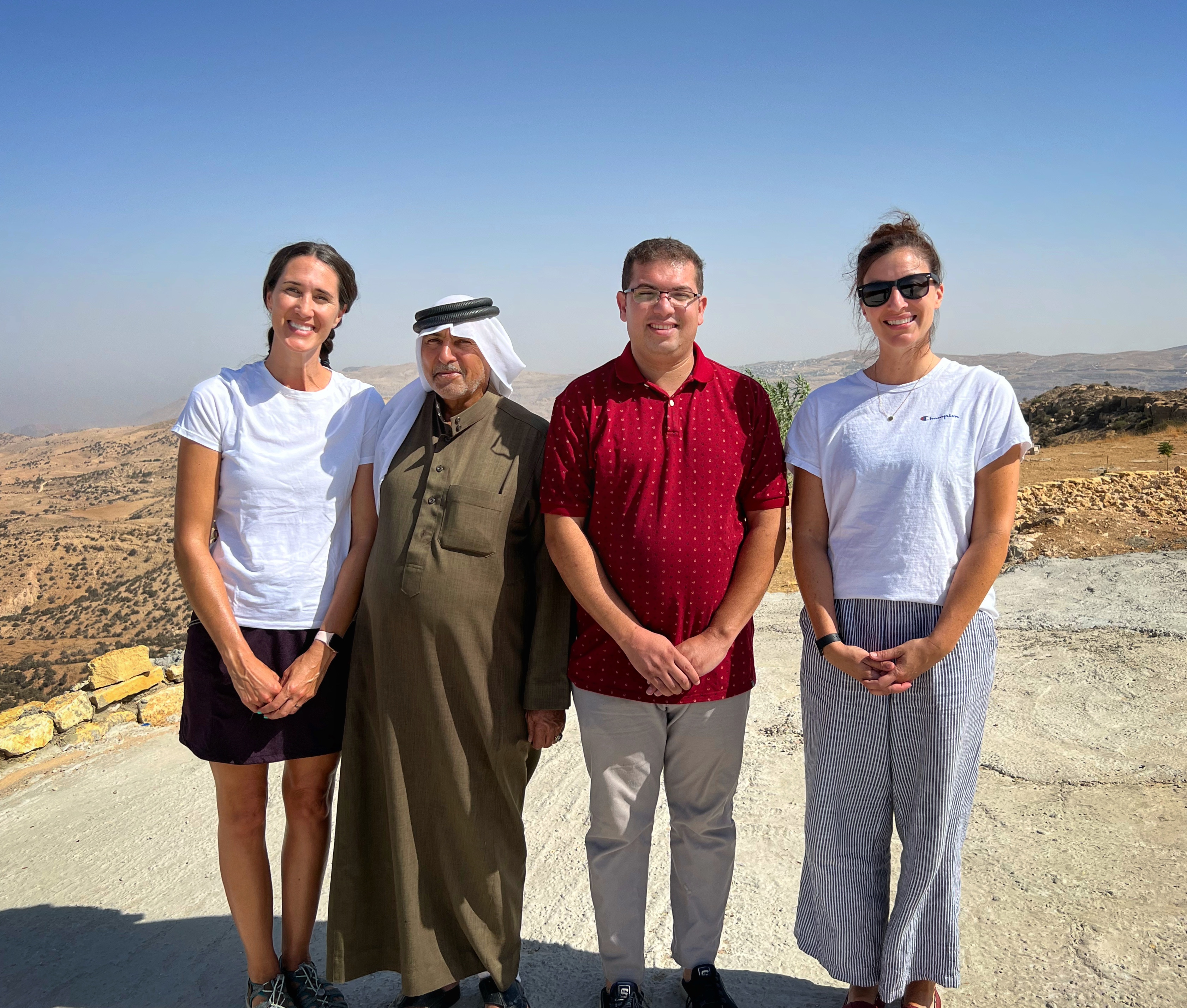
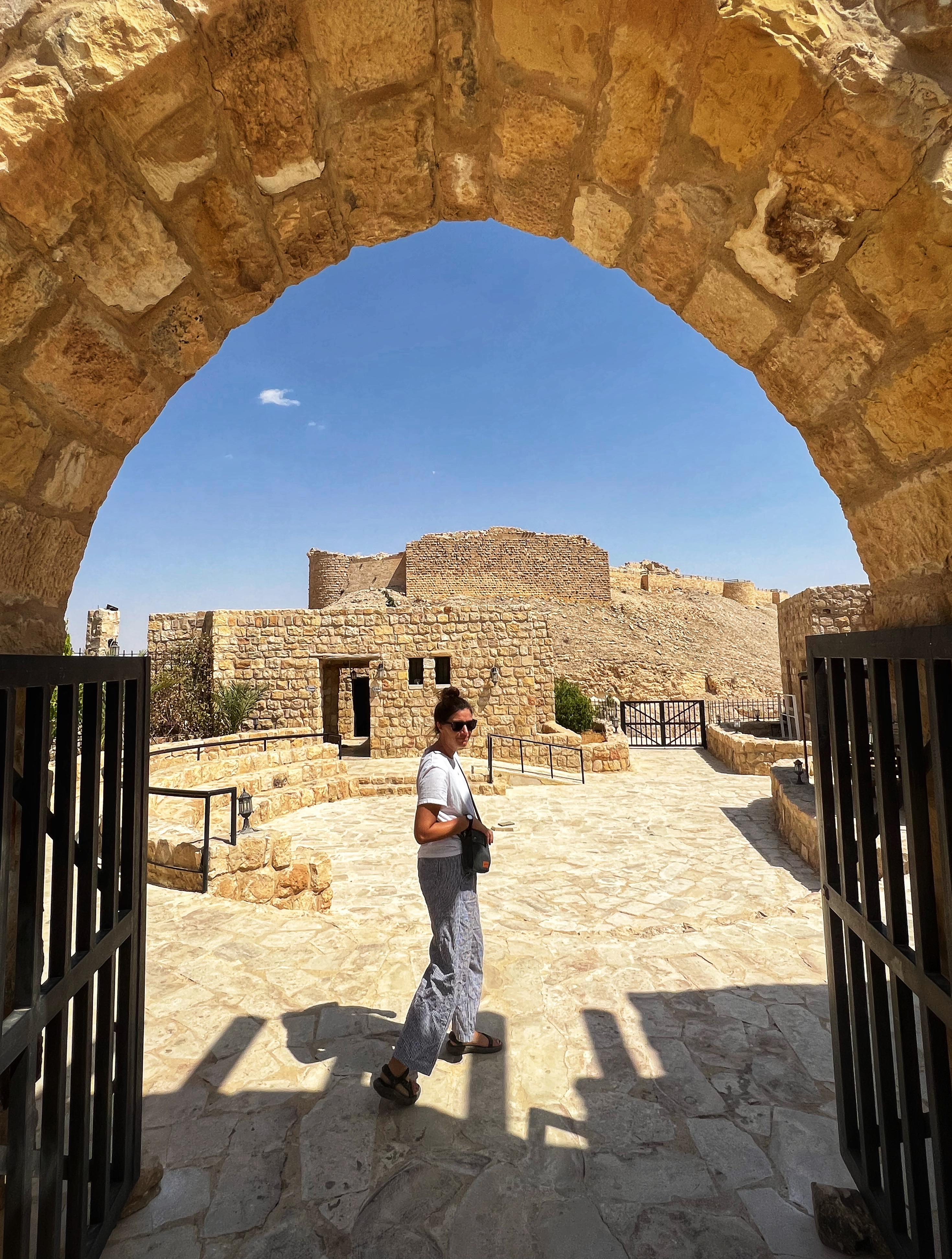
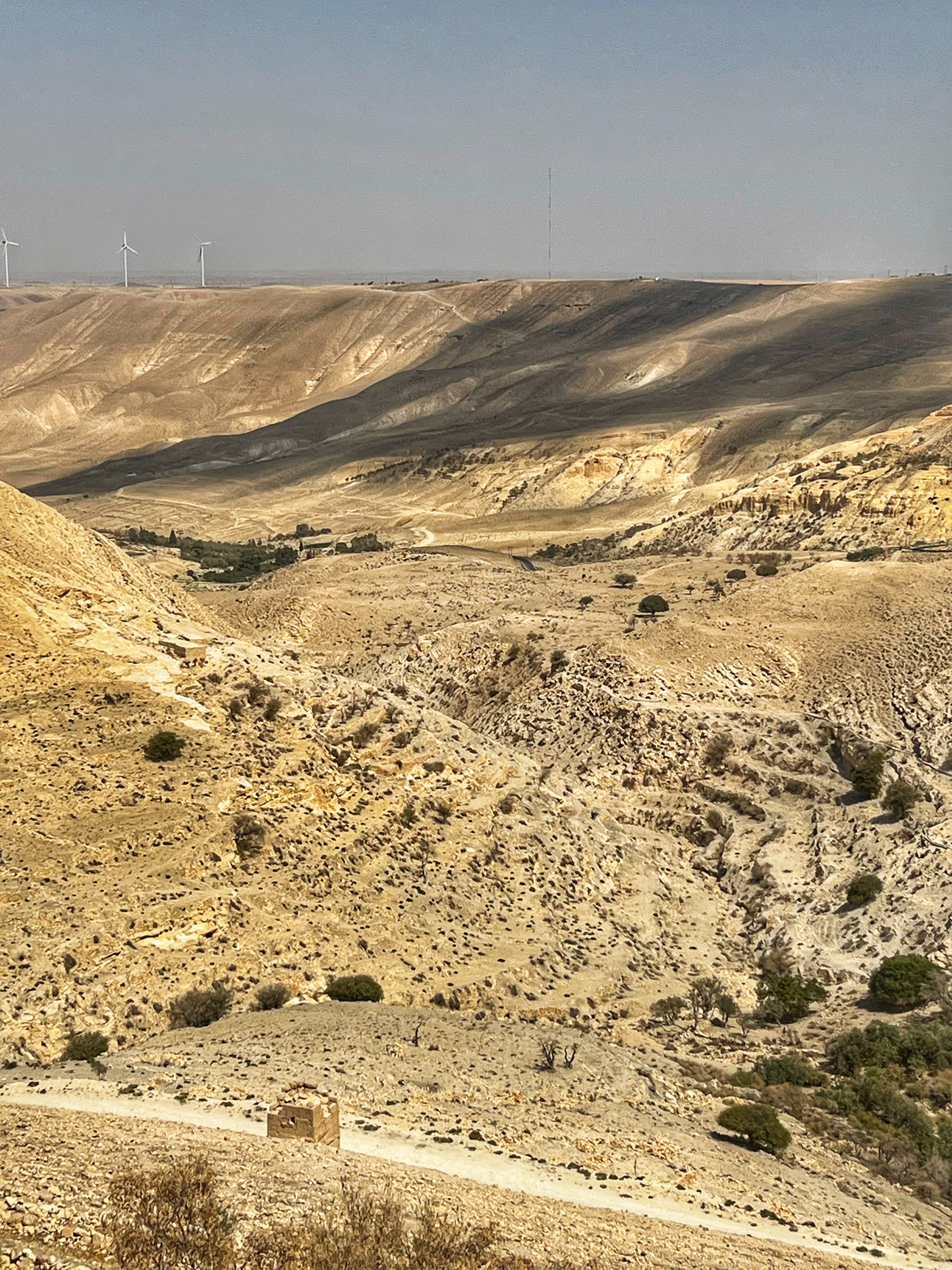
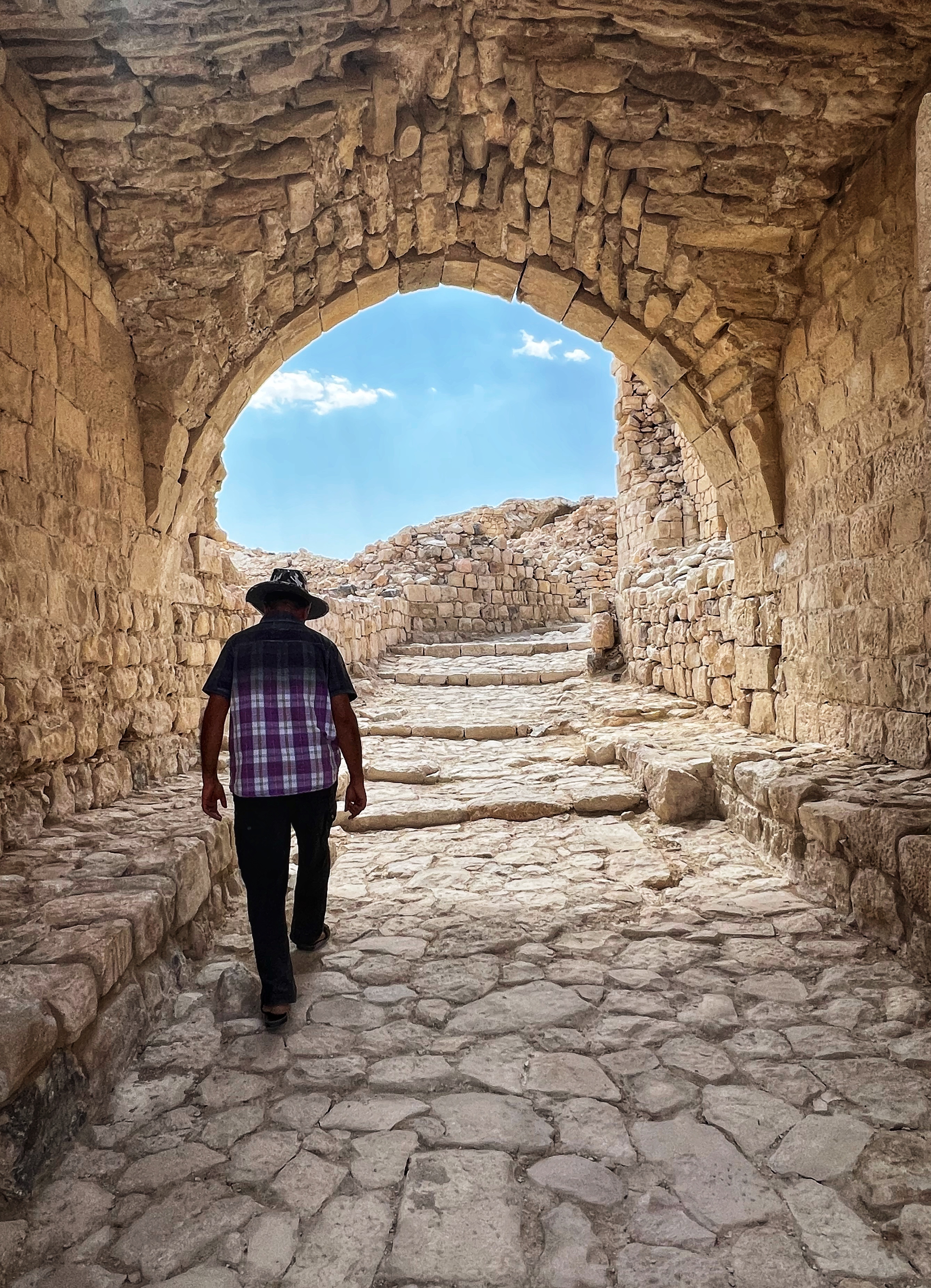
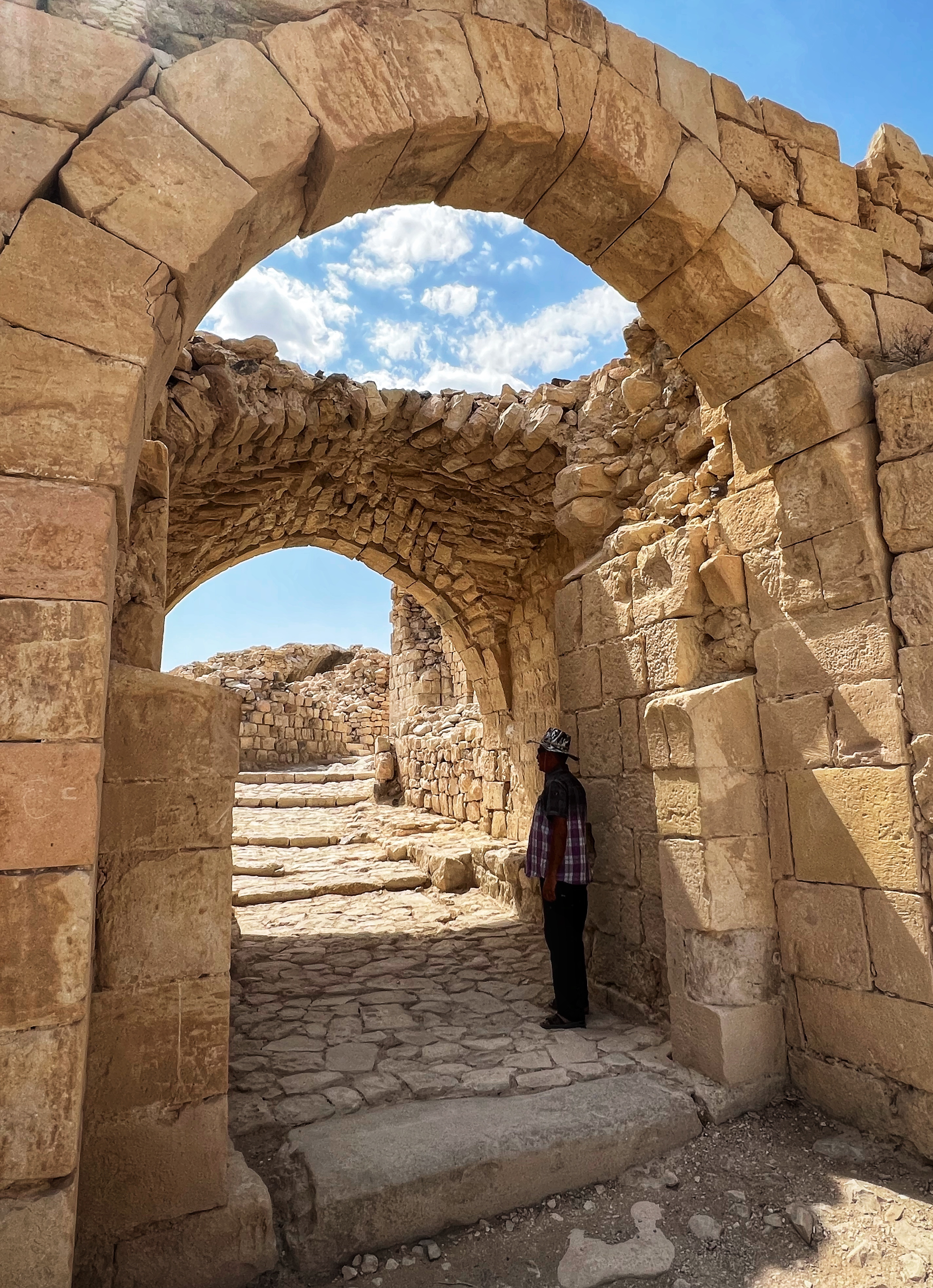
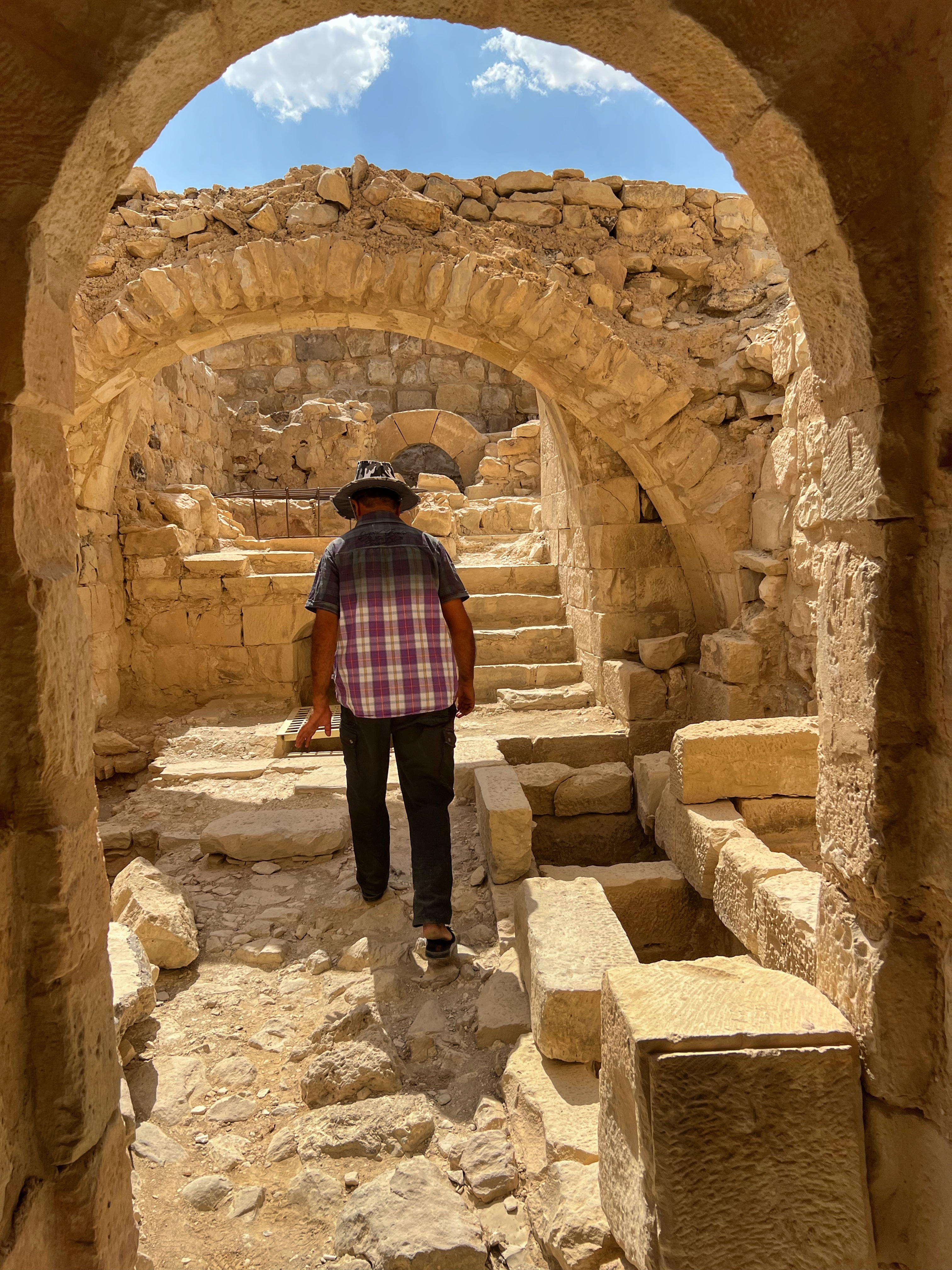
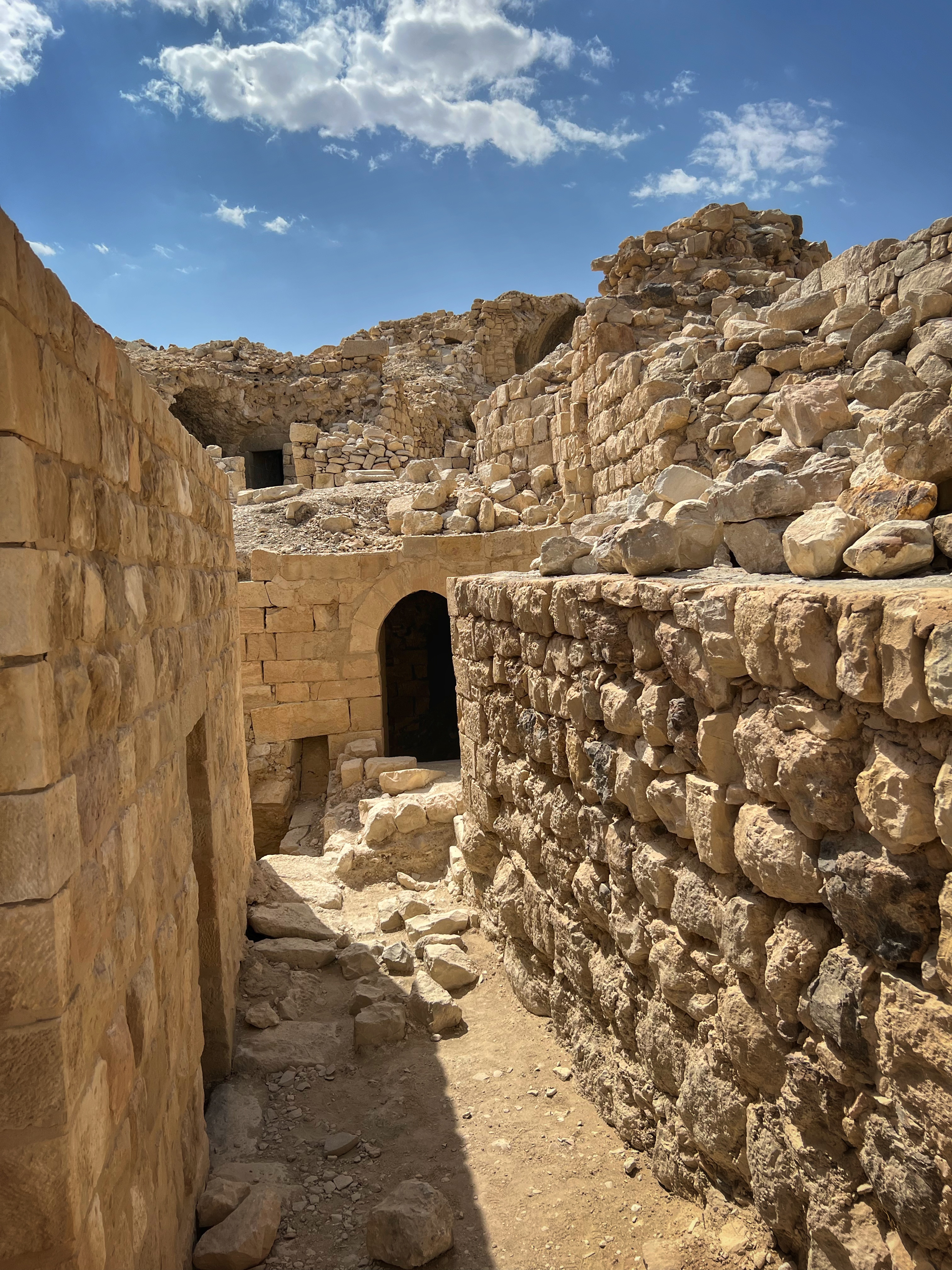
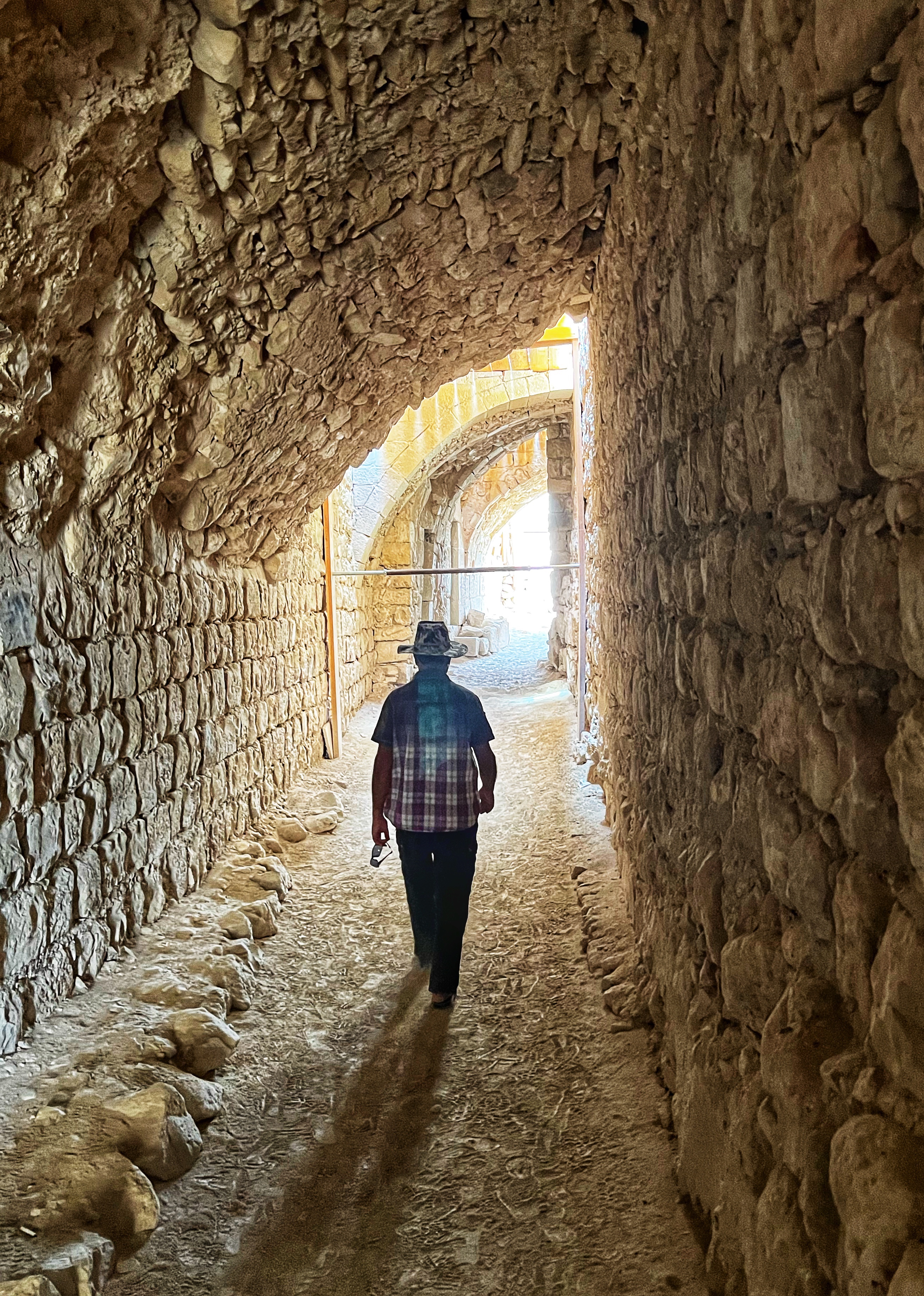
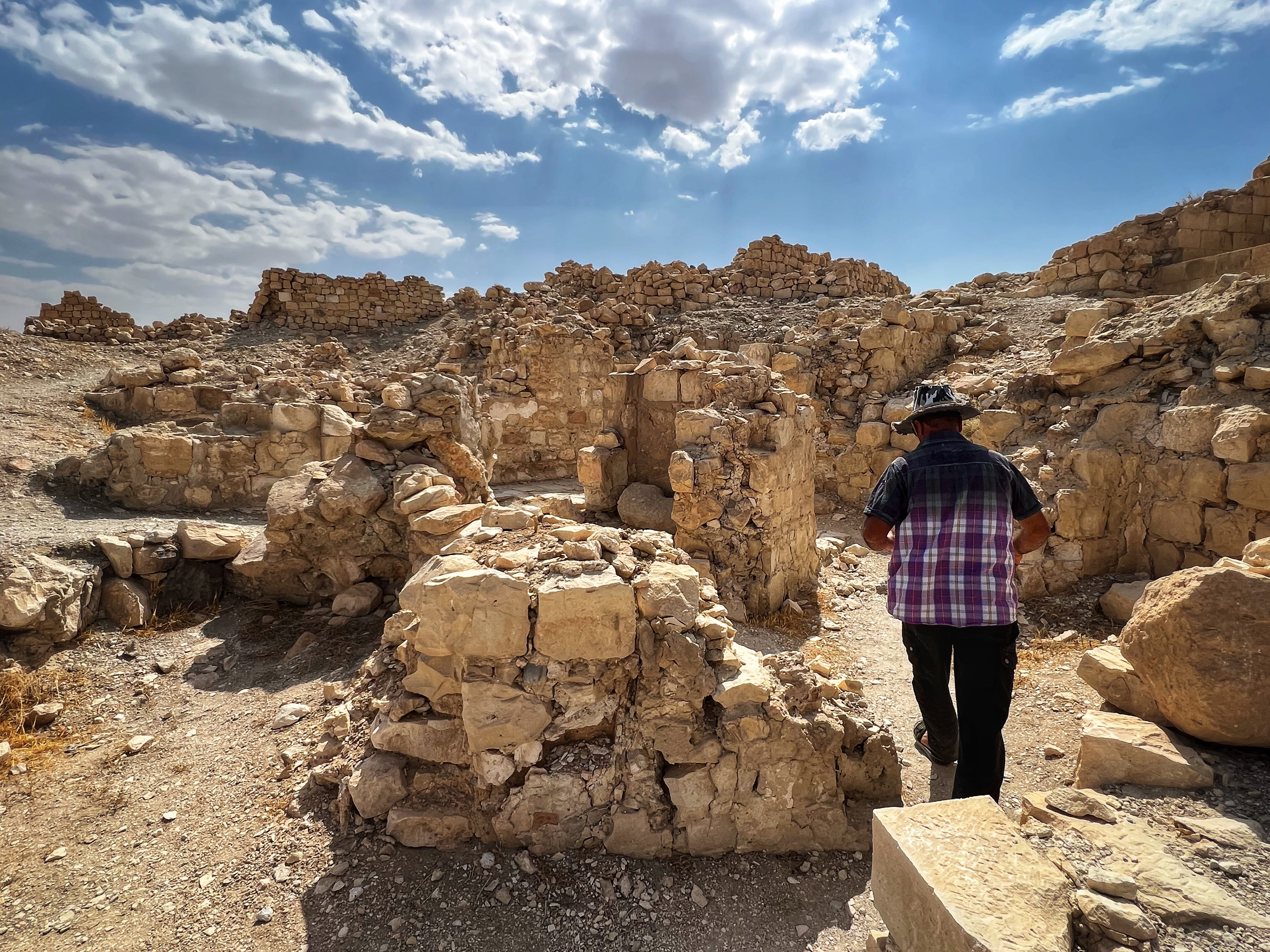
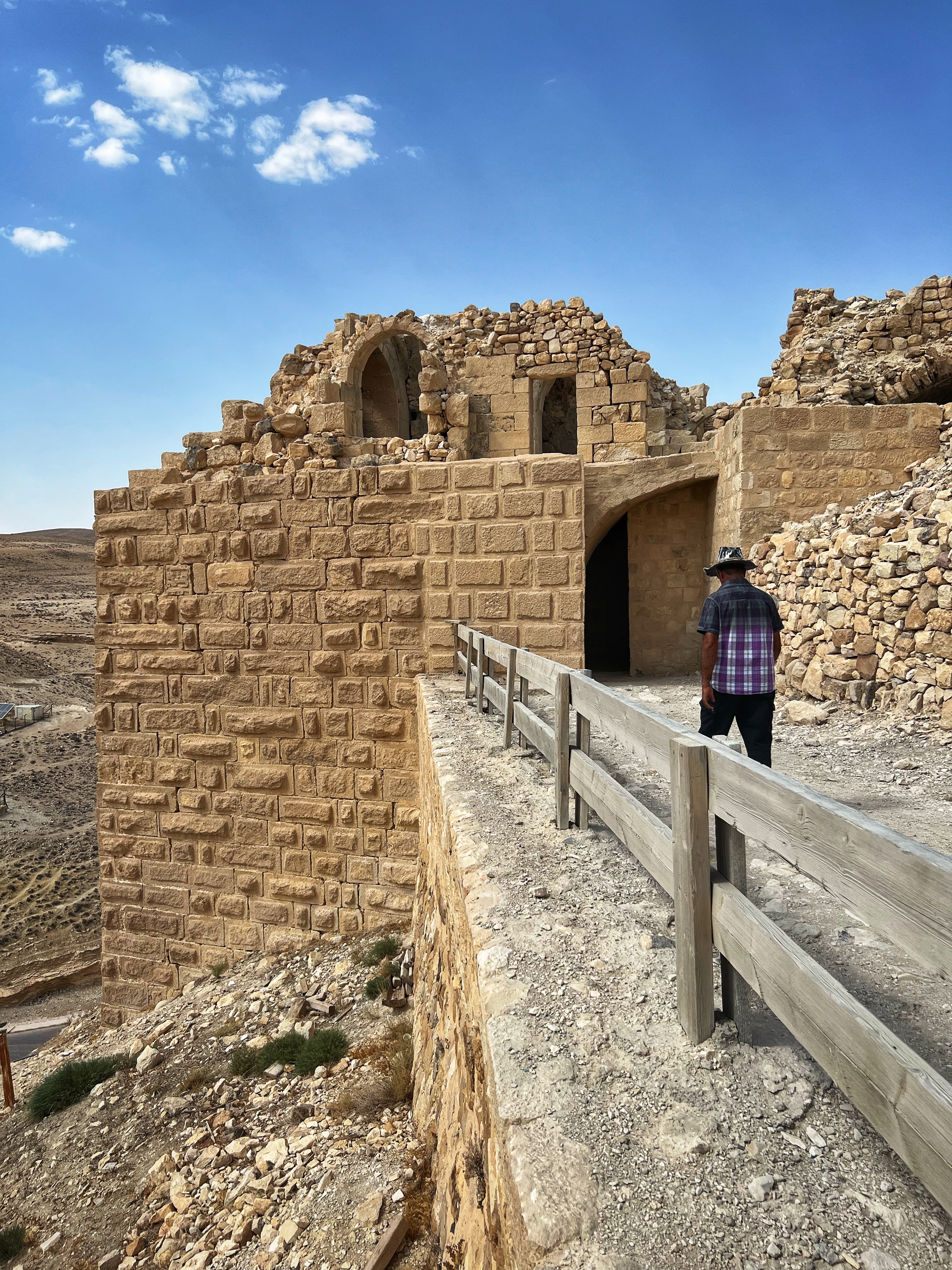
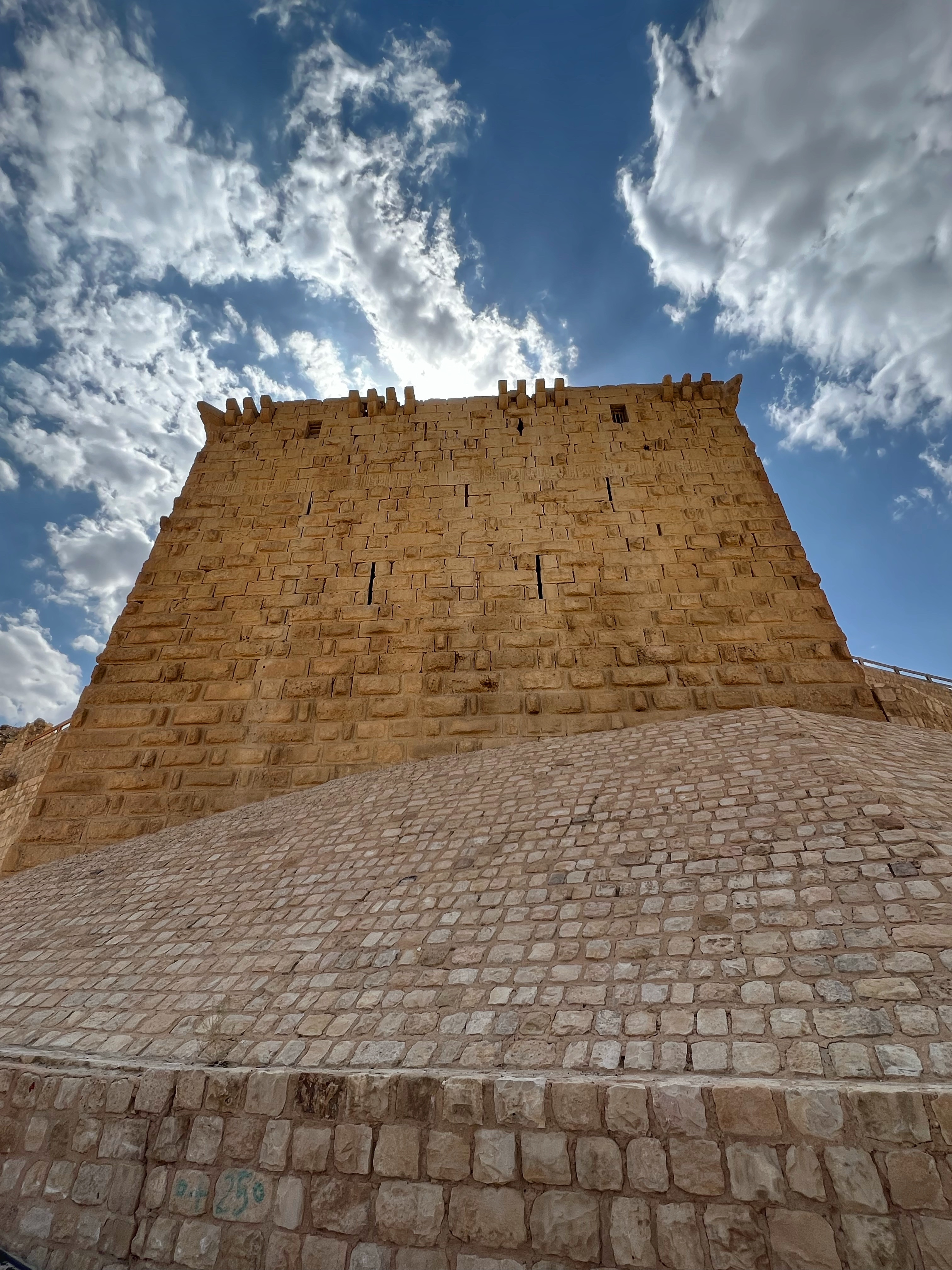
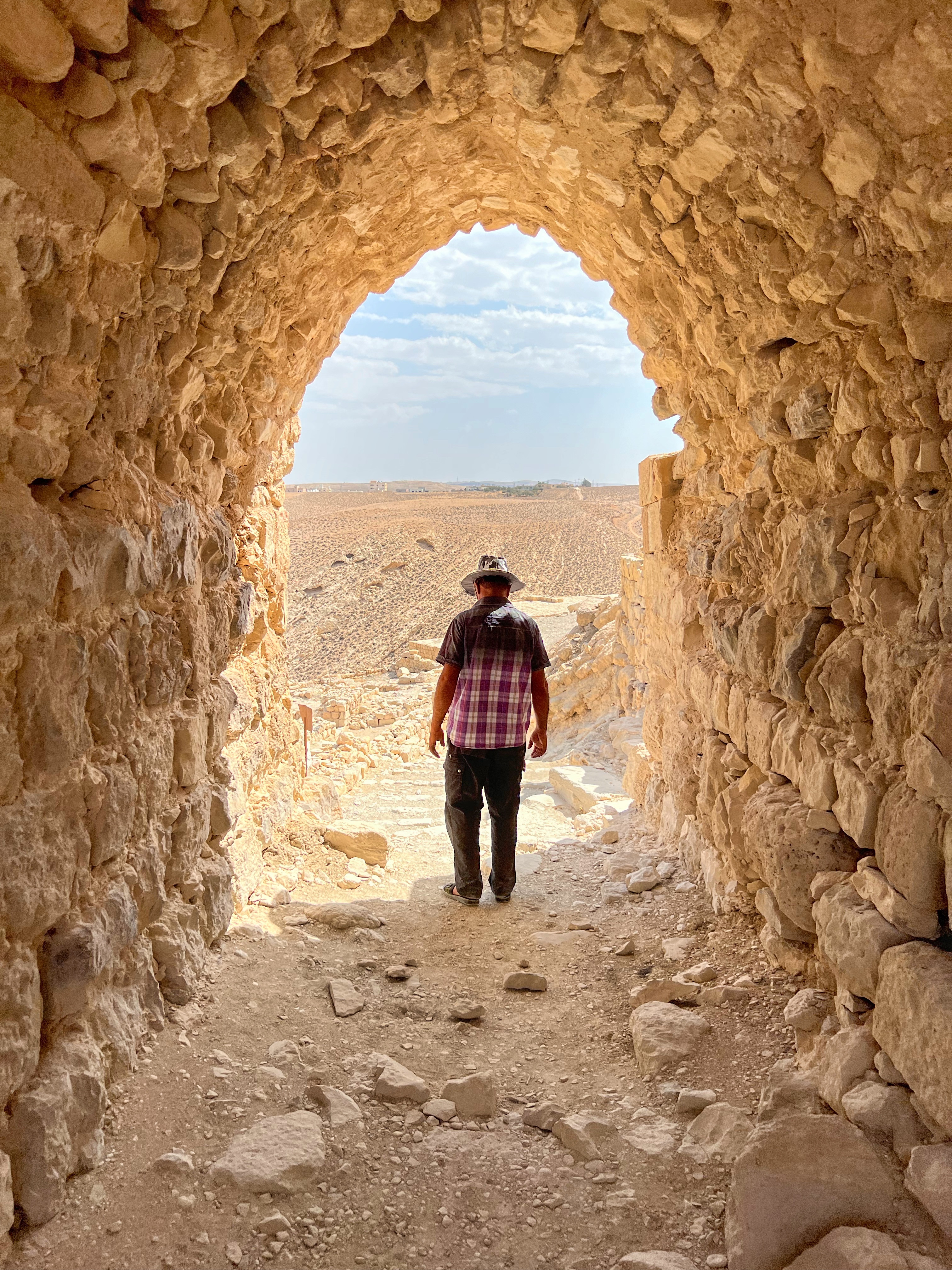
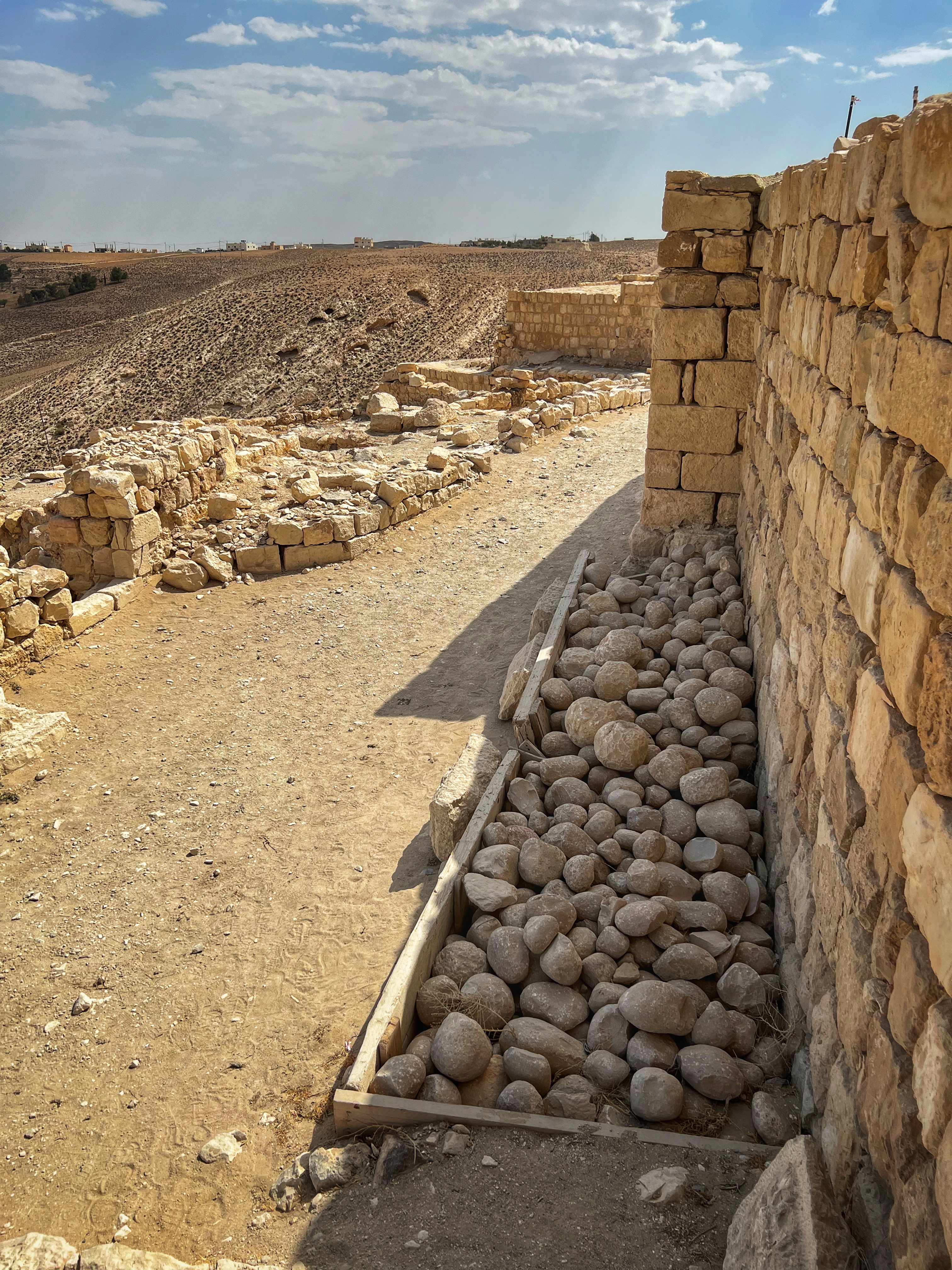
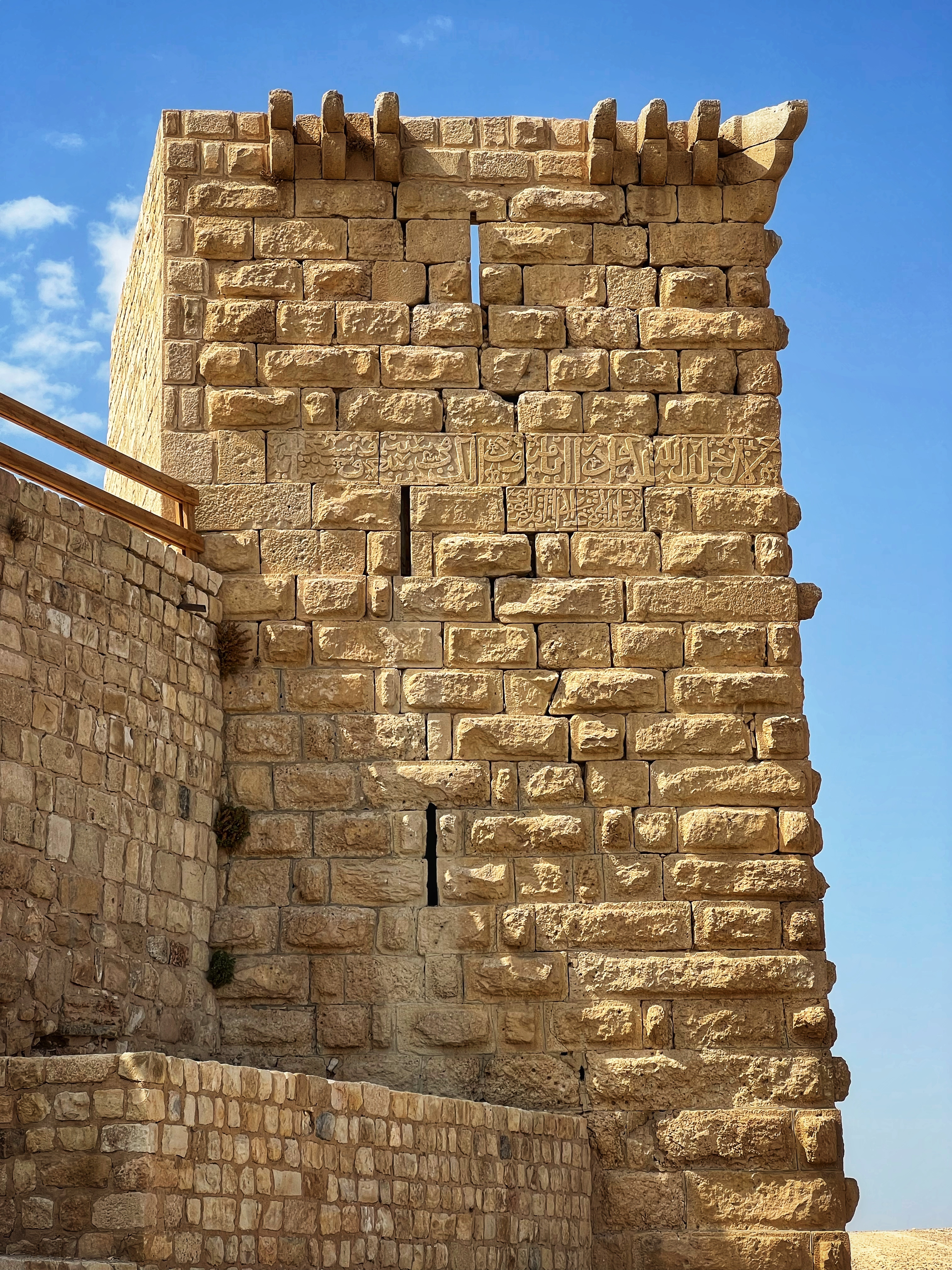
We pulled into Shobak Castle just after 2, changed out of our hiking clothes, refreshed our waters and grabbed a little bite to eat at the visitor center. There wasn’t much here – just a tiny little shop with the sweetest man who was a former teacher keeping an eye on the place. There wasn’t anyone checking anything, but the entrance is free with the Jordan Pass. (Even if we had to pay, it was only 1JD to enter.) From the parking lot and visitor center it is a 10 minute walk up the hill to the castle. You can also pay the golfcart men to take you to and from the castle if you prefer not to walk. At the castle entrance we encountered Taha, a jolly local who grew up in Shobak and gave us a complementary tour of the castle ruins. The most interesting thing about this place were his stories about the land. He told us that a river used to flow down in the valley, and it only dried up in the 1980’s. This used to be a very lush area and families had lived there for generations – but after the river ran dry, they moved away. He and his family stayed.
The castle was originally called Montreal (royal mountain) as it was built almost 1,000 years ago by the Crusaders, then later expanded by the Mamluks. Taha talked repeatedly about the schools and pointed out where they would have been in the castle. He also showed us the round stones used to launch over the castle walls with catapults, ancient marine life fossilized in the stones that make up the castle, various tunnels and infrastructure, and finally his savvy pebble tossing skills. He managed to throw a “hole in one” out a narrow window – good thing we were the only visitors that day so no one below got pegged with a pebble! We gave Taha a tip and thanked him, and he plunked right back down at his spot near the entrance, all alone. He probably sits here every day.




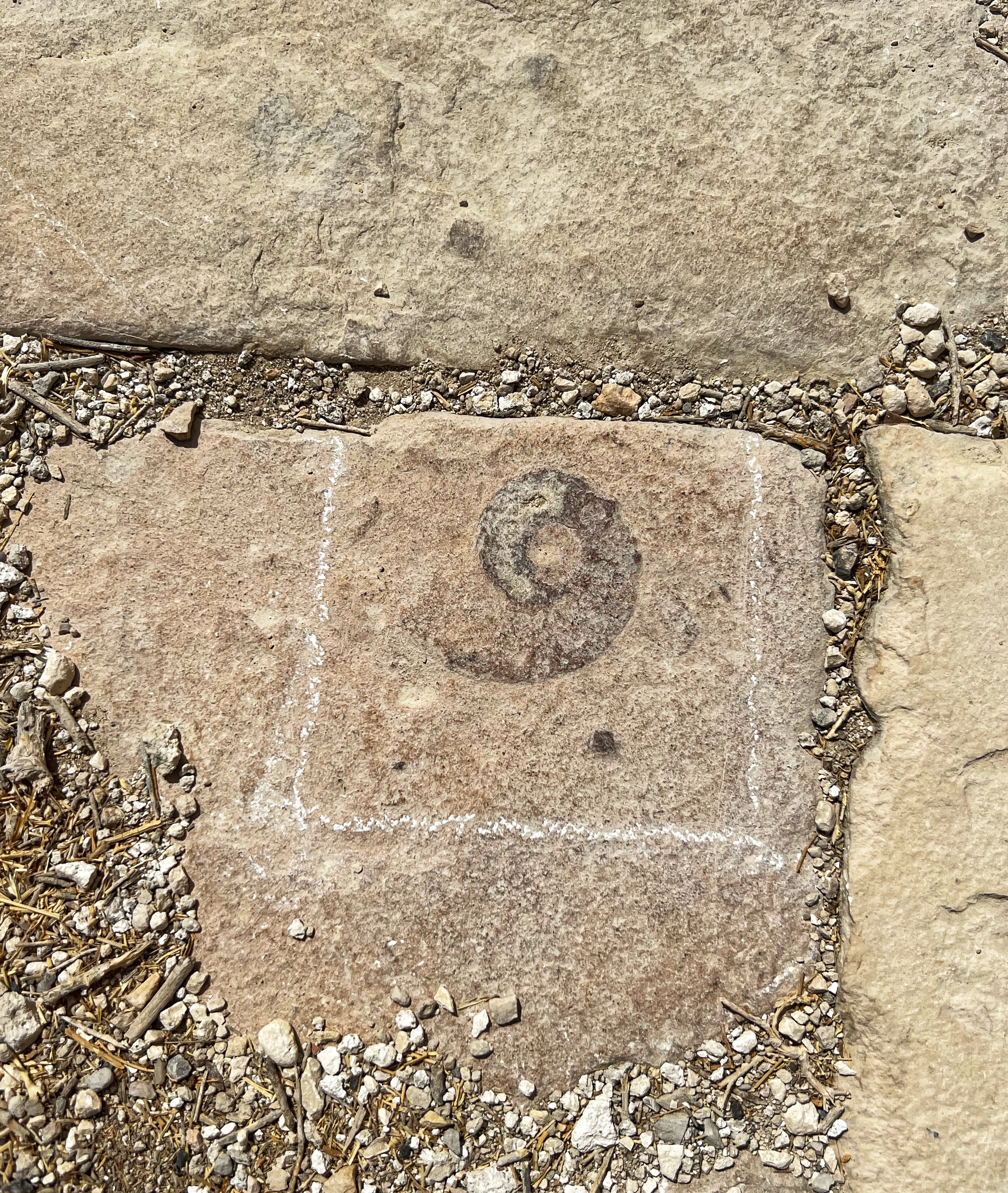
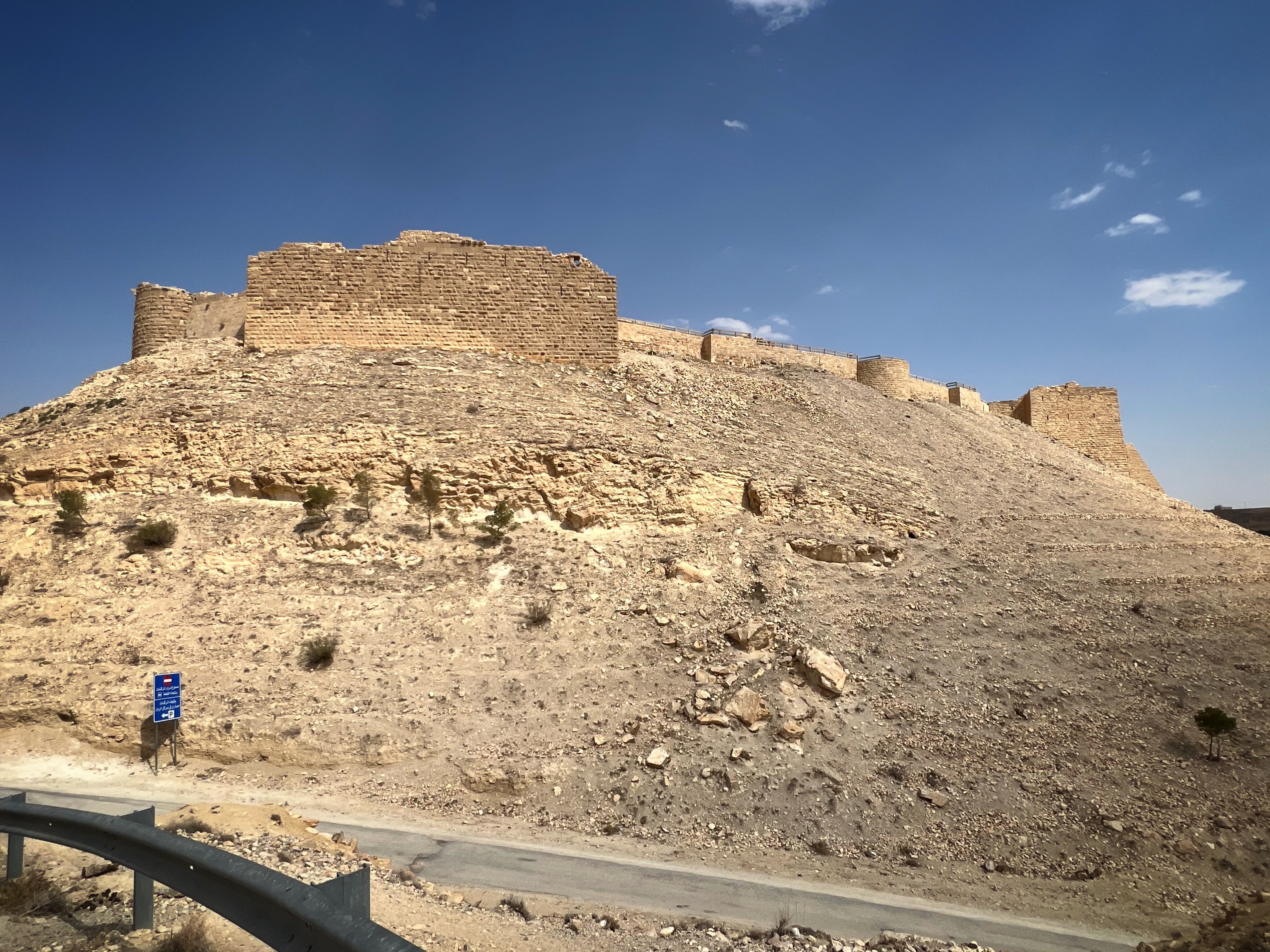
We left Shobak by 3:30 to head south towards Triclinium, or “Little Petra.”
Little Petra
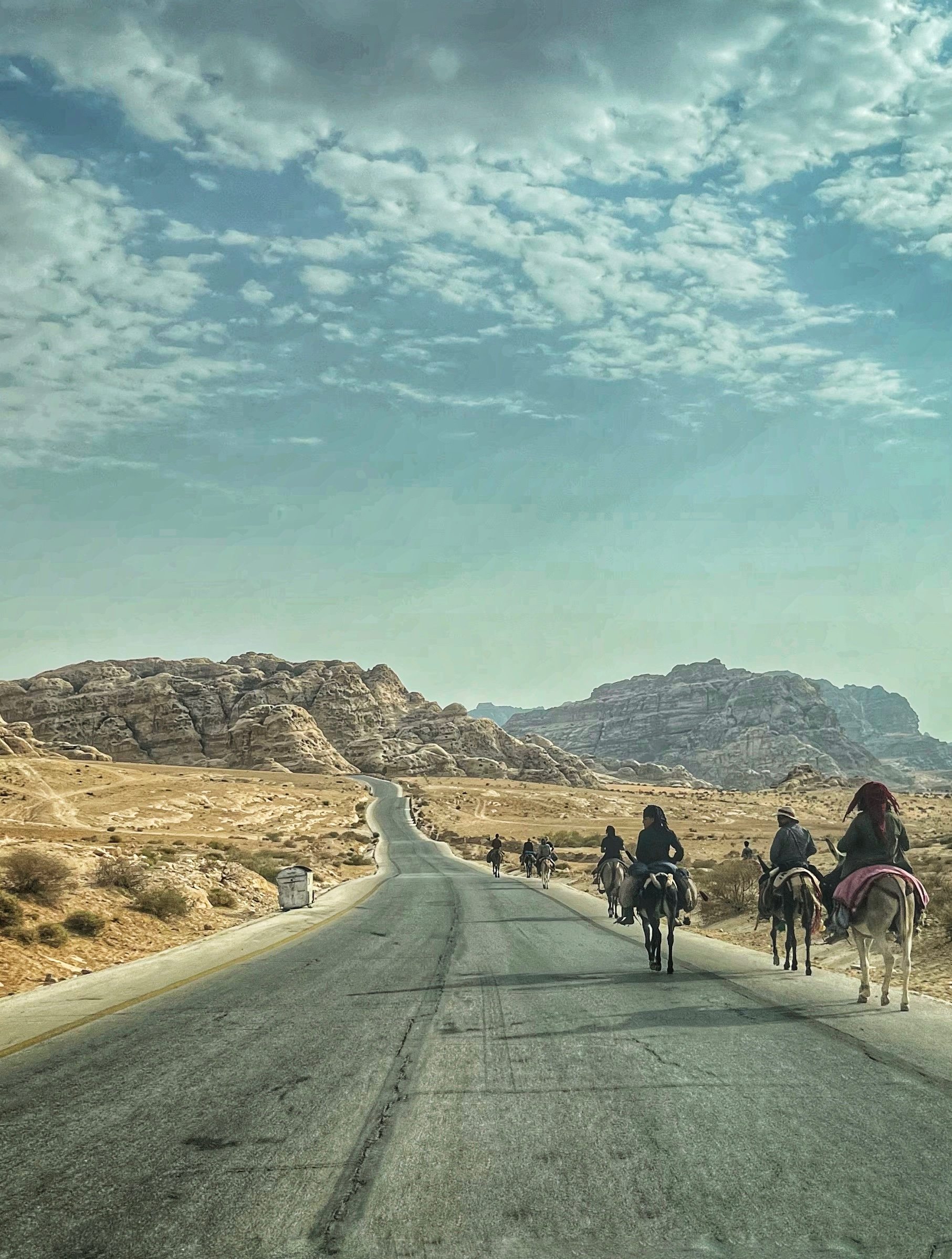
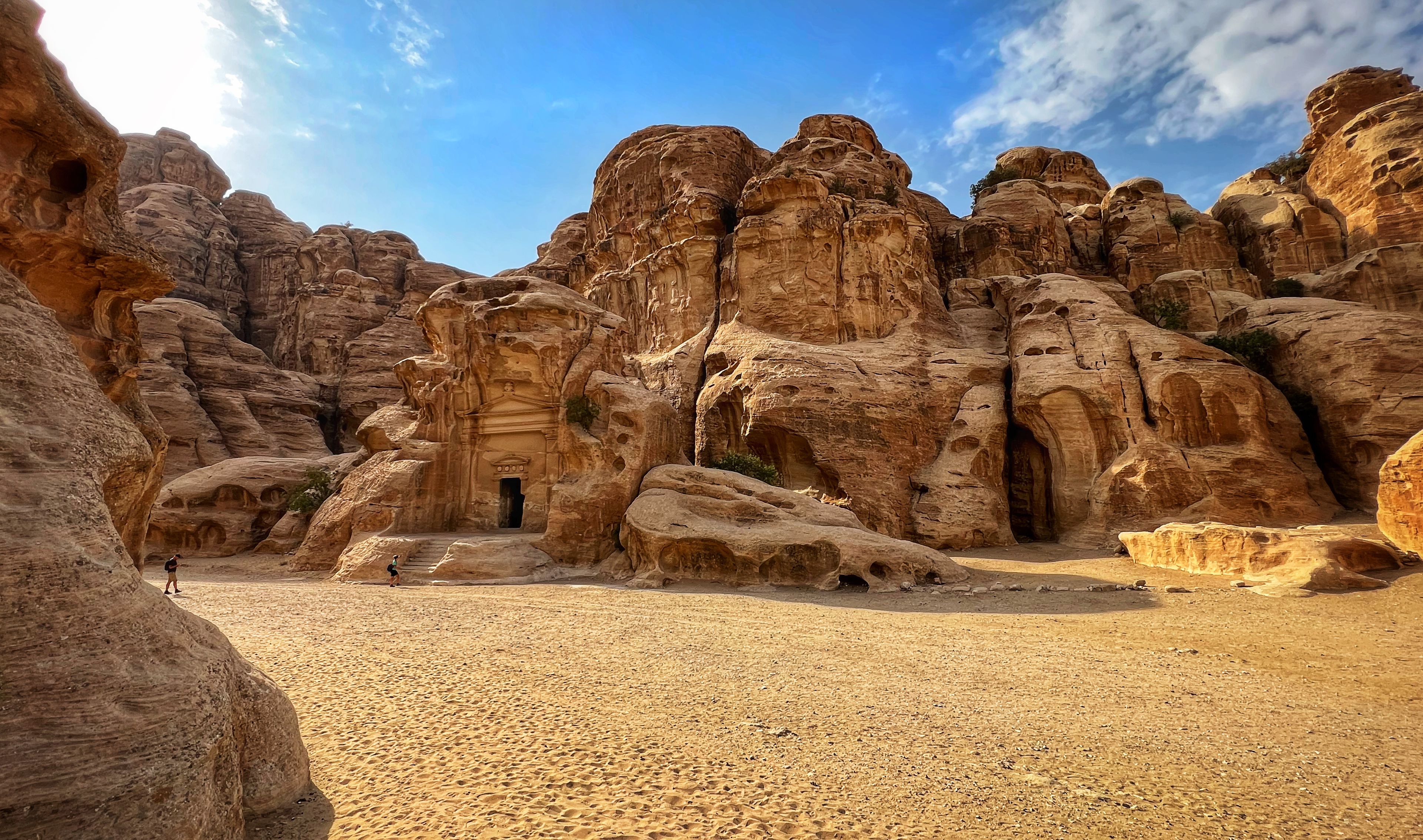
The entrance to the park that leads to Little Petra is stunning. There were people here picnicking and they had the most spectacular views. We started to see the unusual rock formations Petra is known for and realized right away why this place was so special. We passed the Petra Bubble Luxotel with their views overlooking Triclinium, then followed a tour bus to the parking area by Little Petra. Everything here is free – and it was a wonderful introduction to what we could expect over at the main Petra archaeological site.
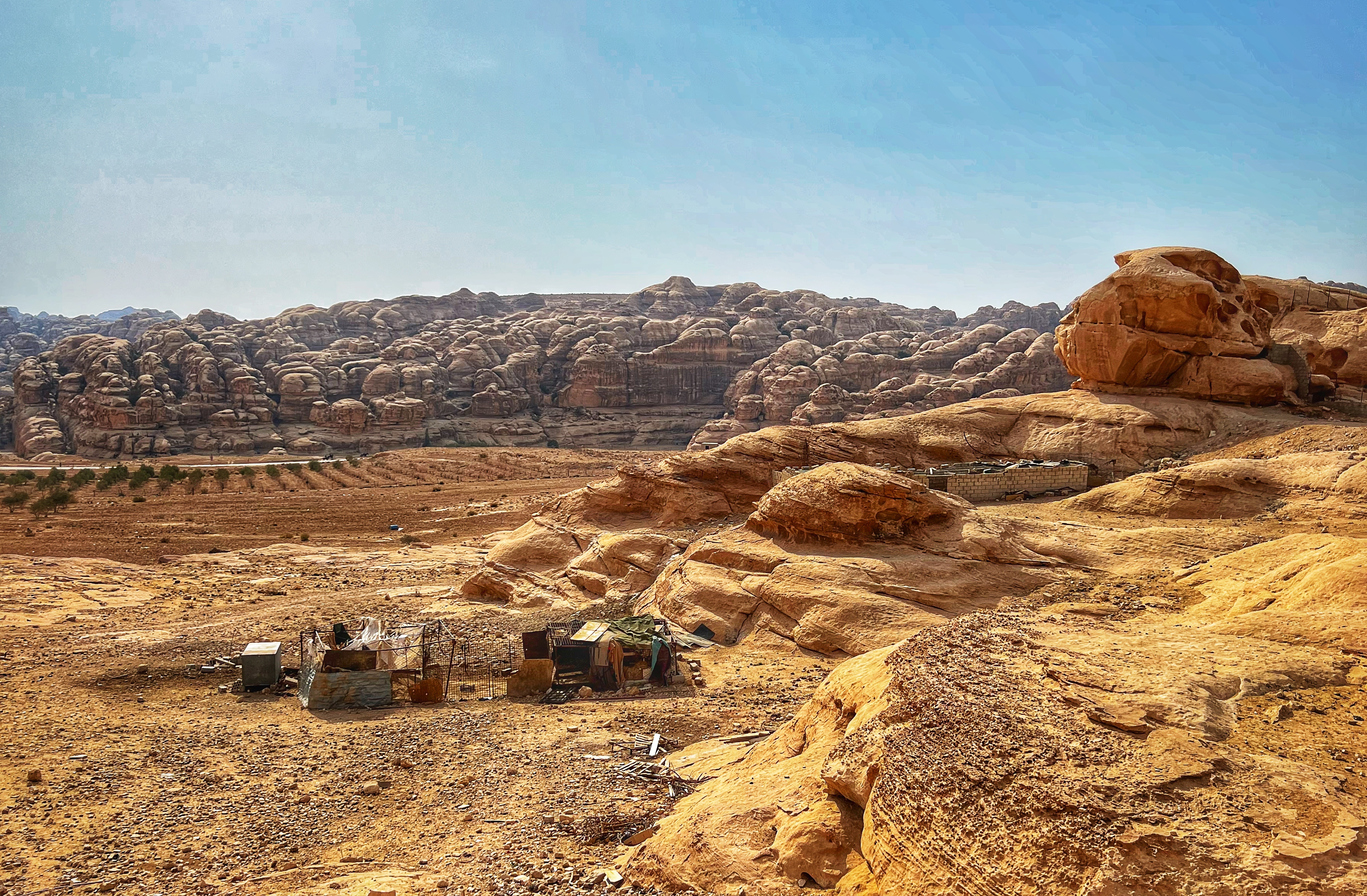
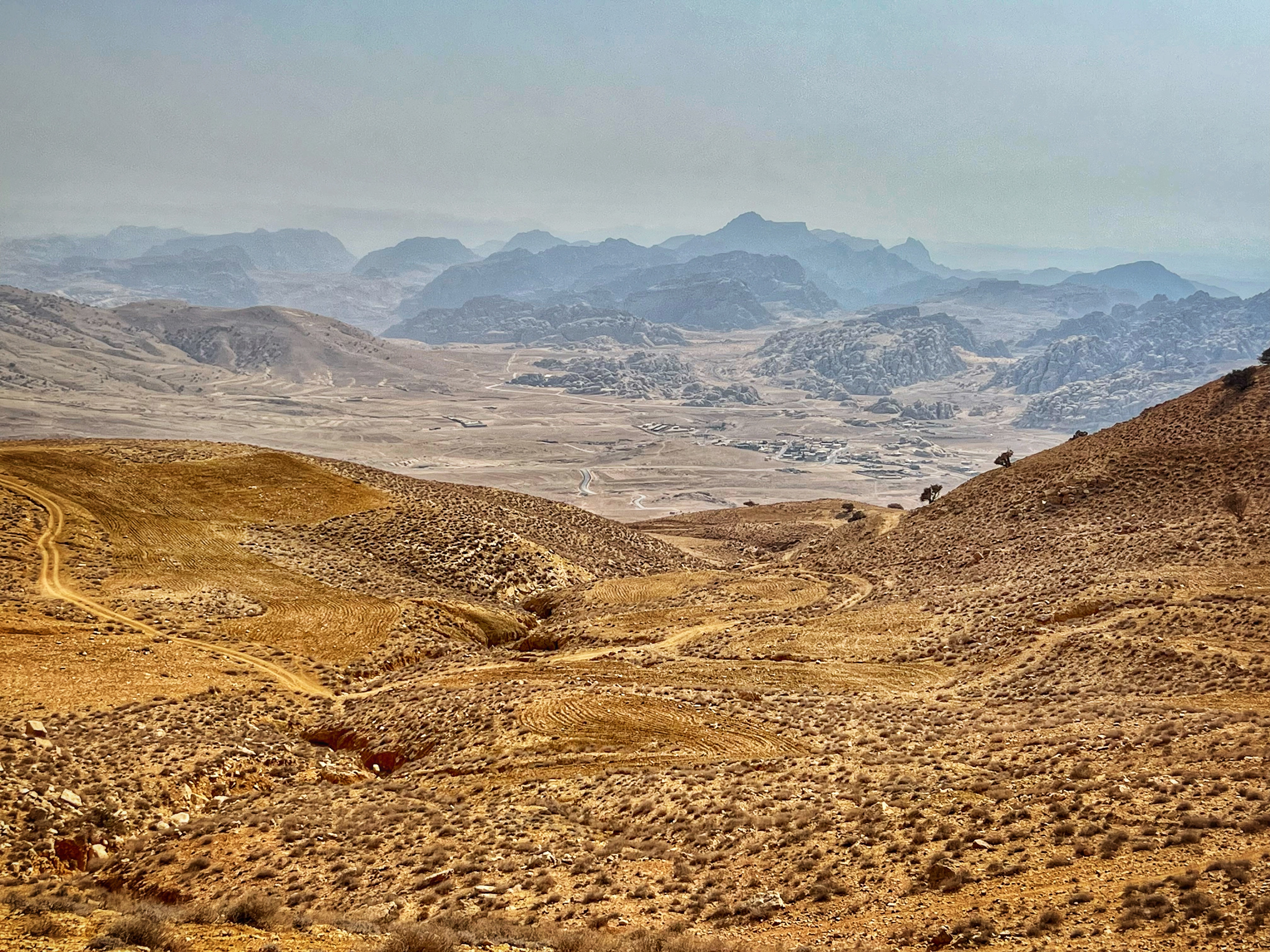
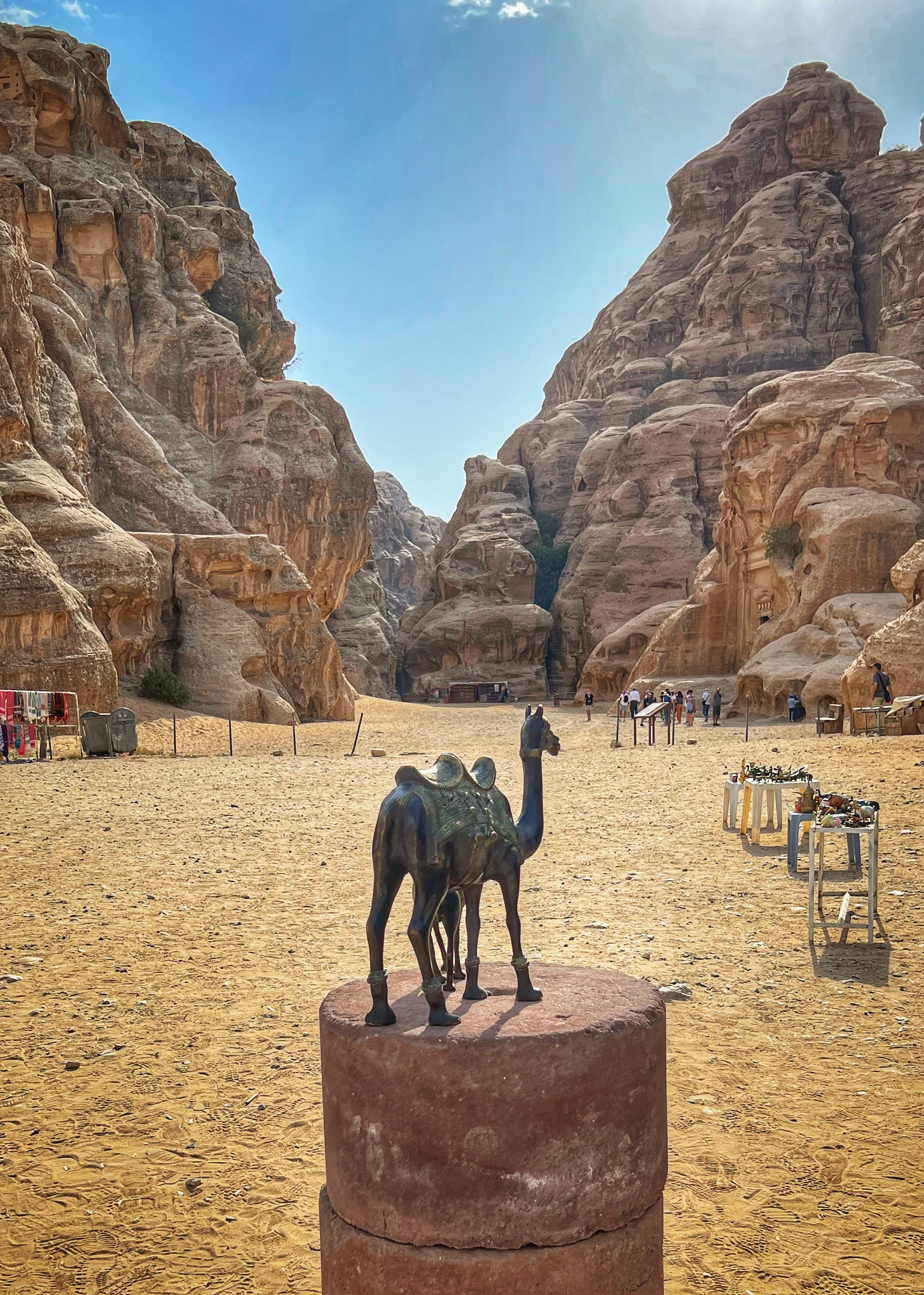
This area is much less busy and in my opinion, a must-see when visiting Petra. There are souvenir huts set up here, but very little solicitation. We wandered around the various temples and caves and admired their ceilings – pitch black due to years and years of smoke from fires inside. We climbed into the caves and up some of the walls – everything is just open for visitors. We learned that this area is where Bedouins live as well, and therefore it is very popular for there to be parties at night (we were invited!). Oh, and there are camels. Boy, do I love the camels.

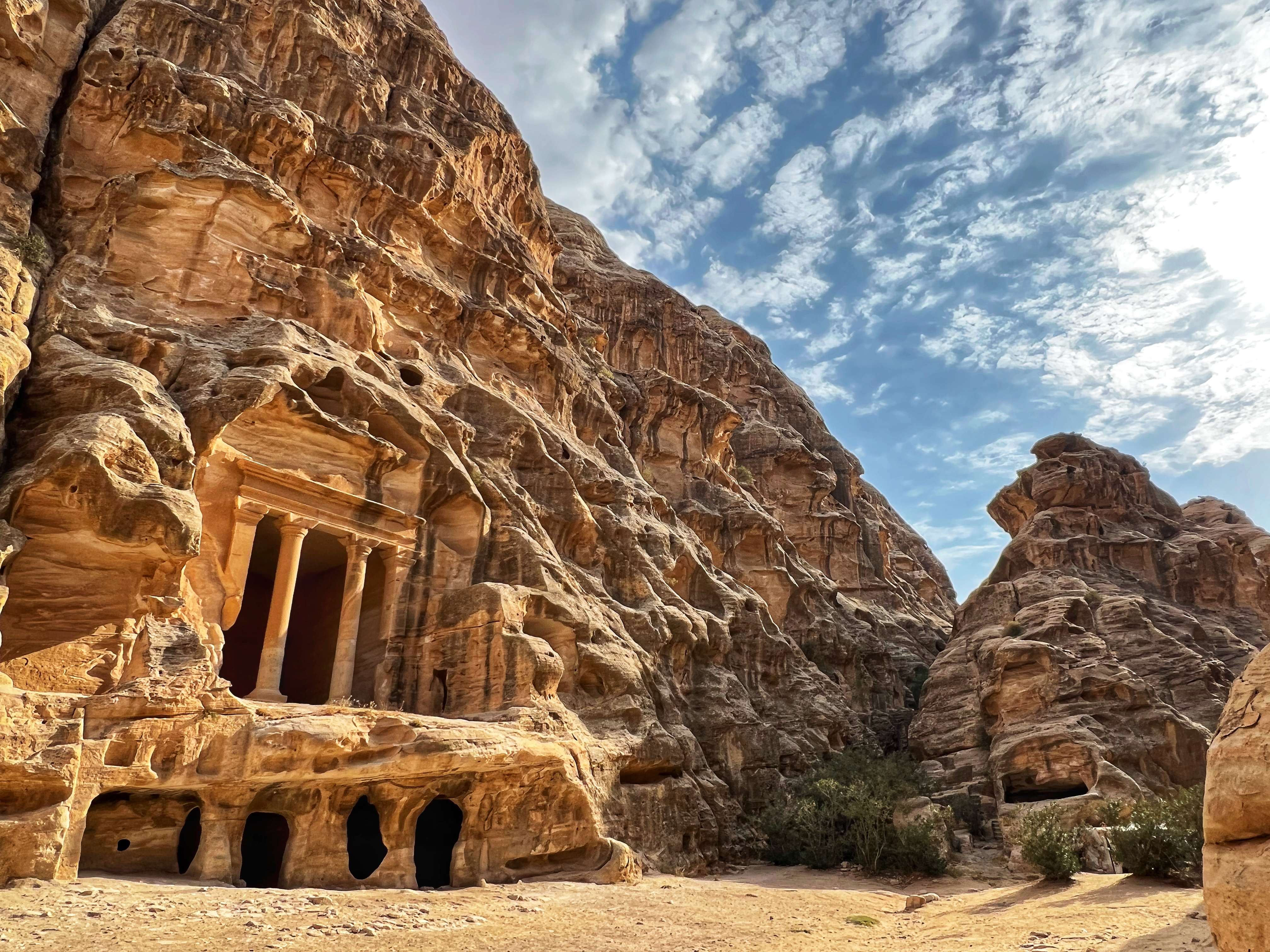

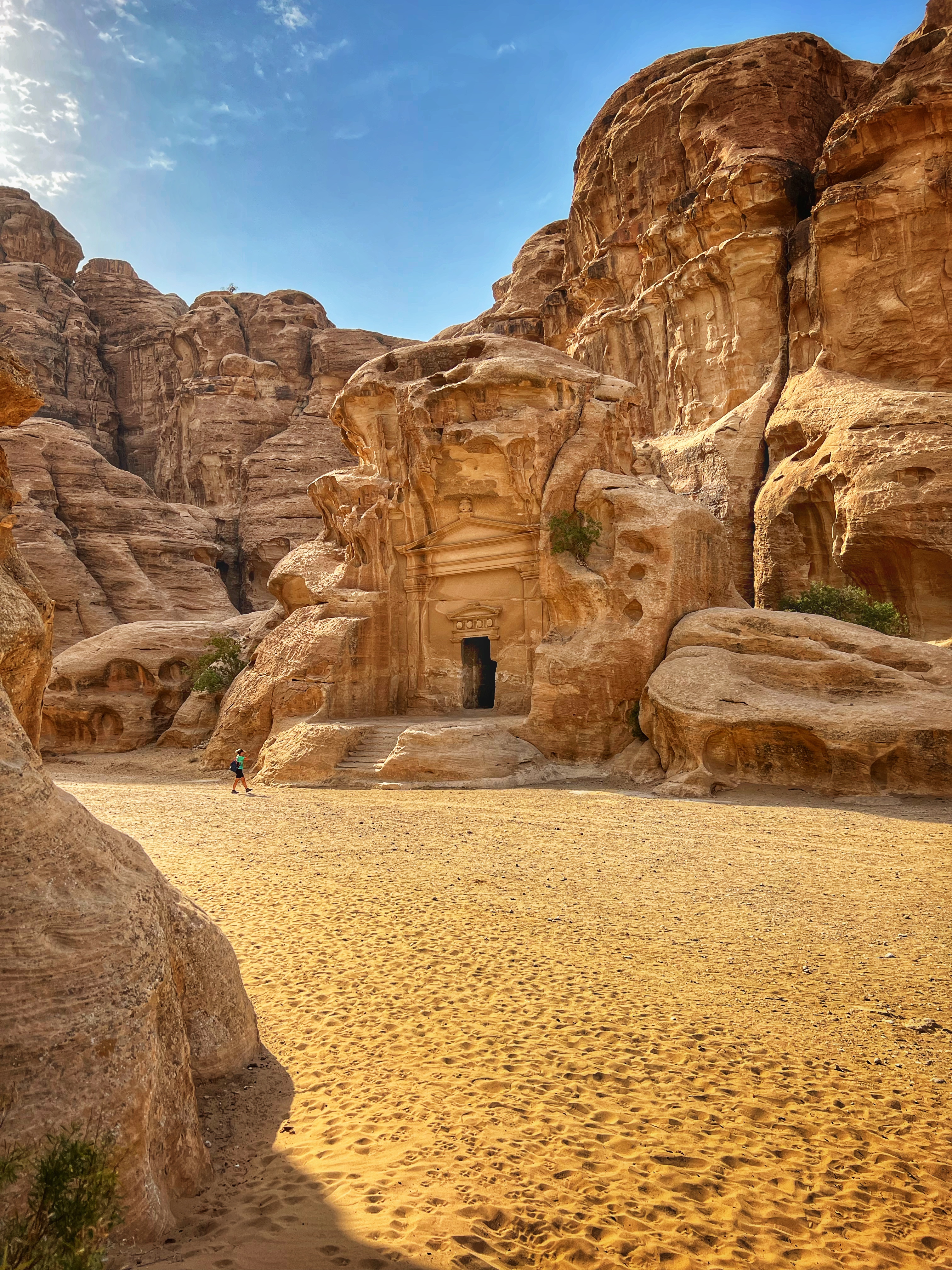

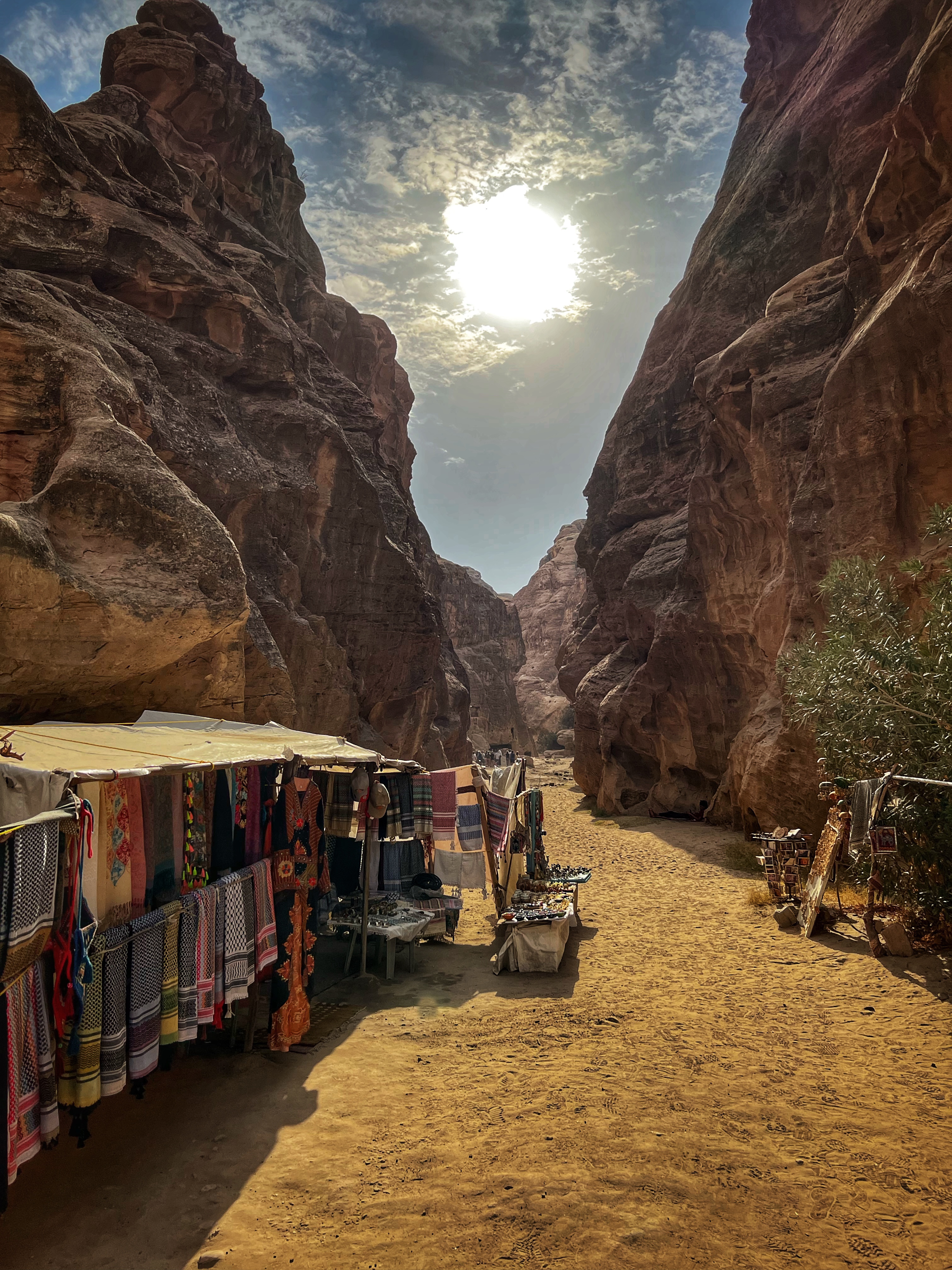
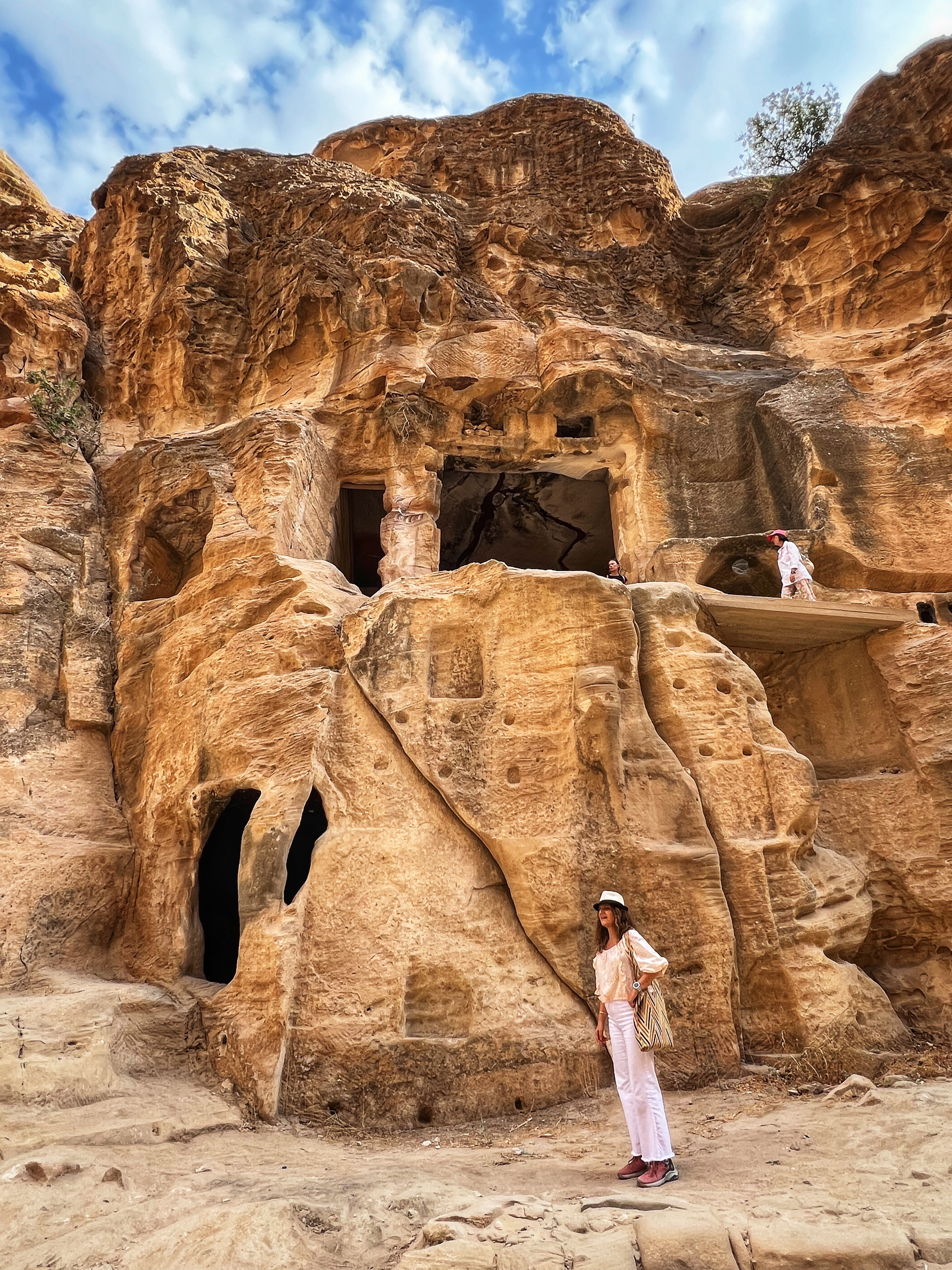
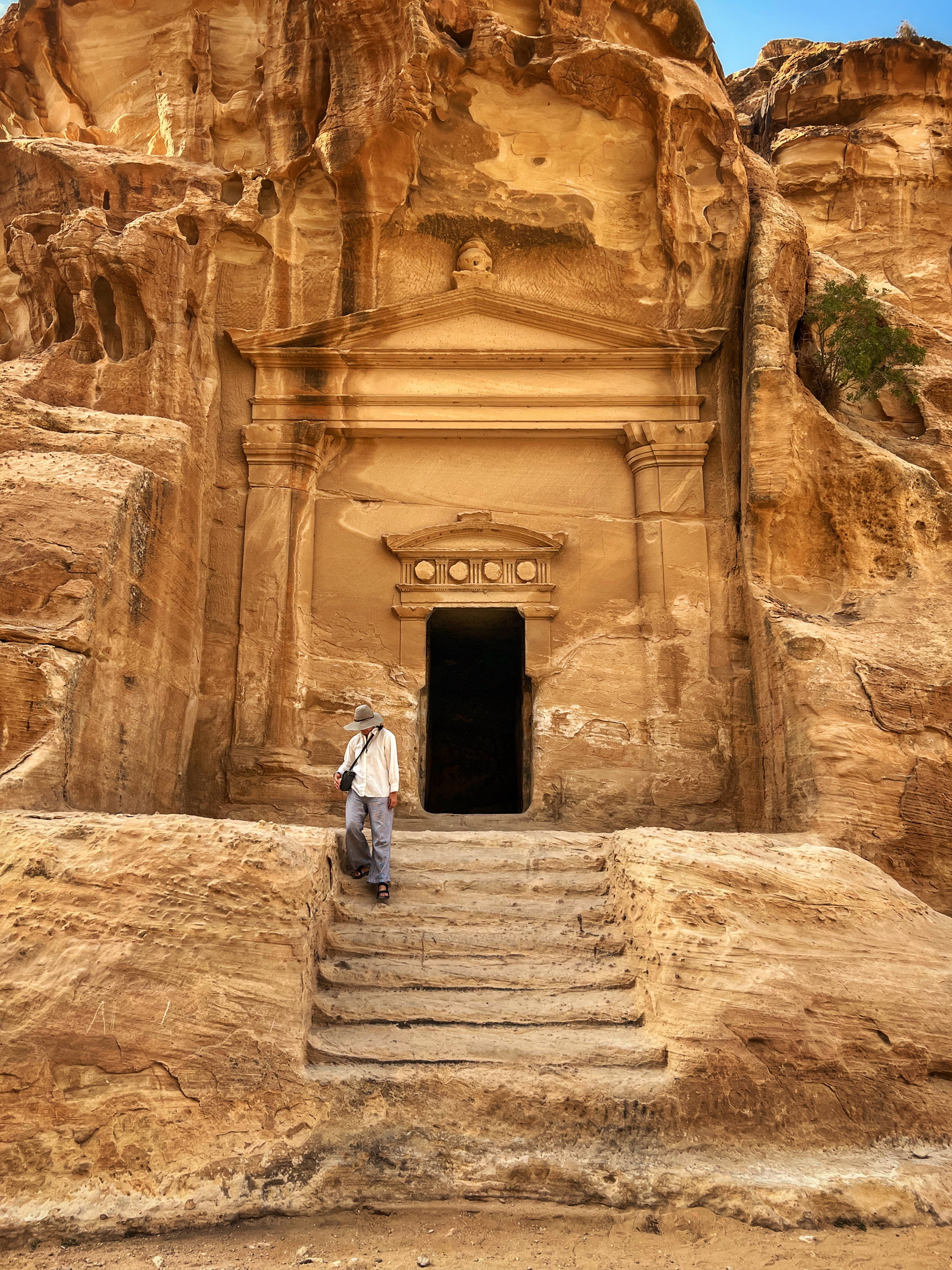
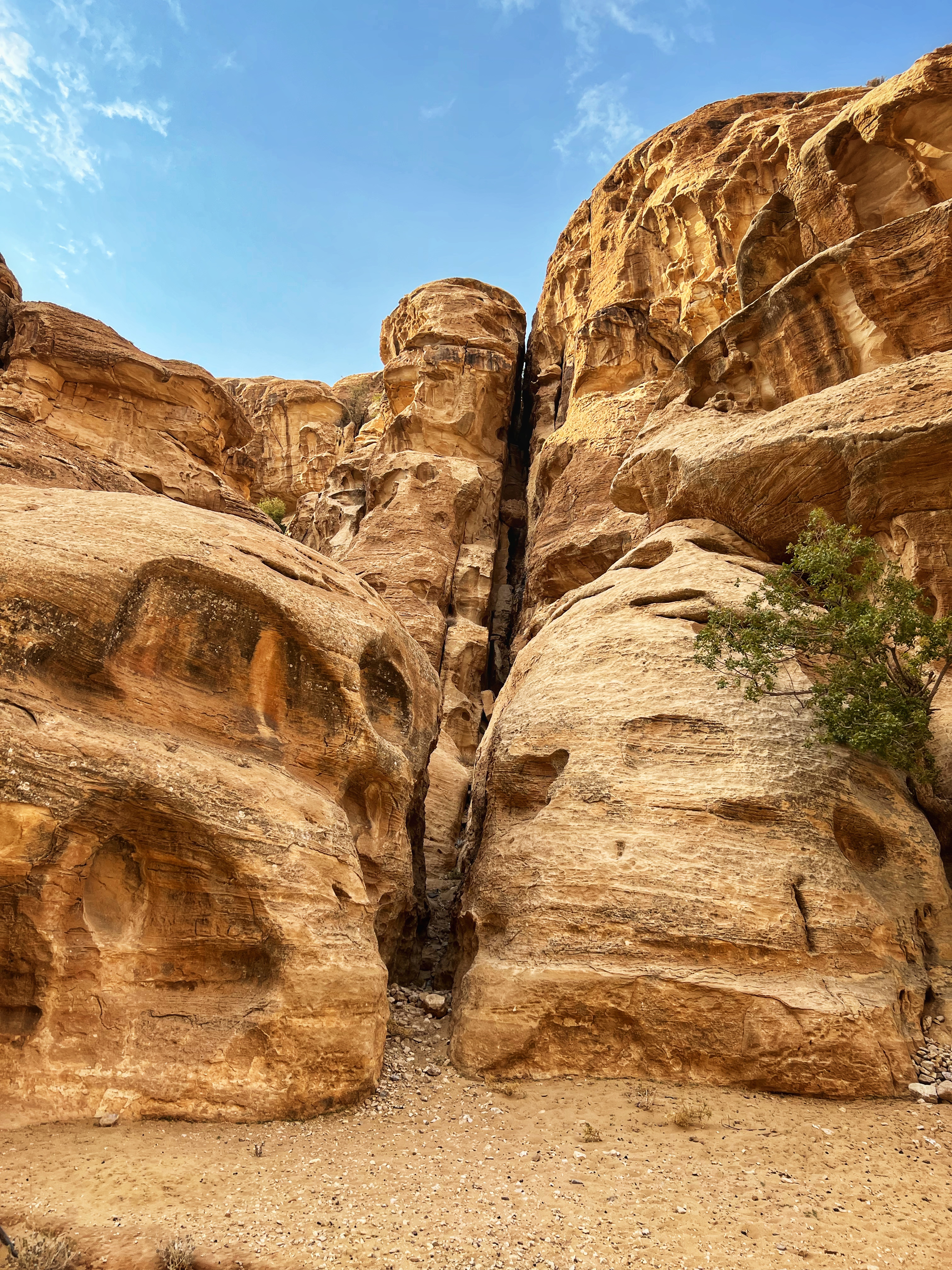
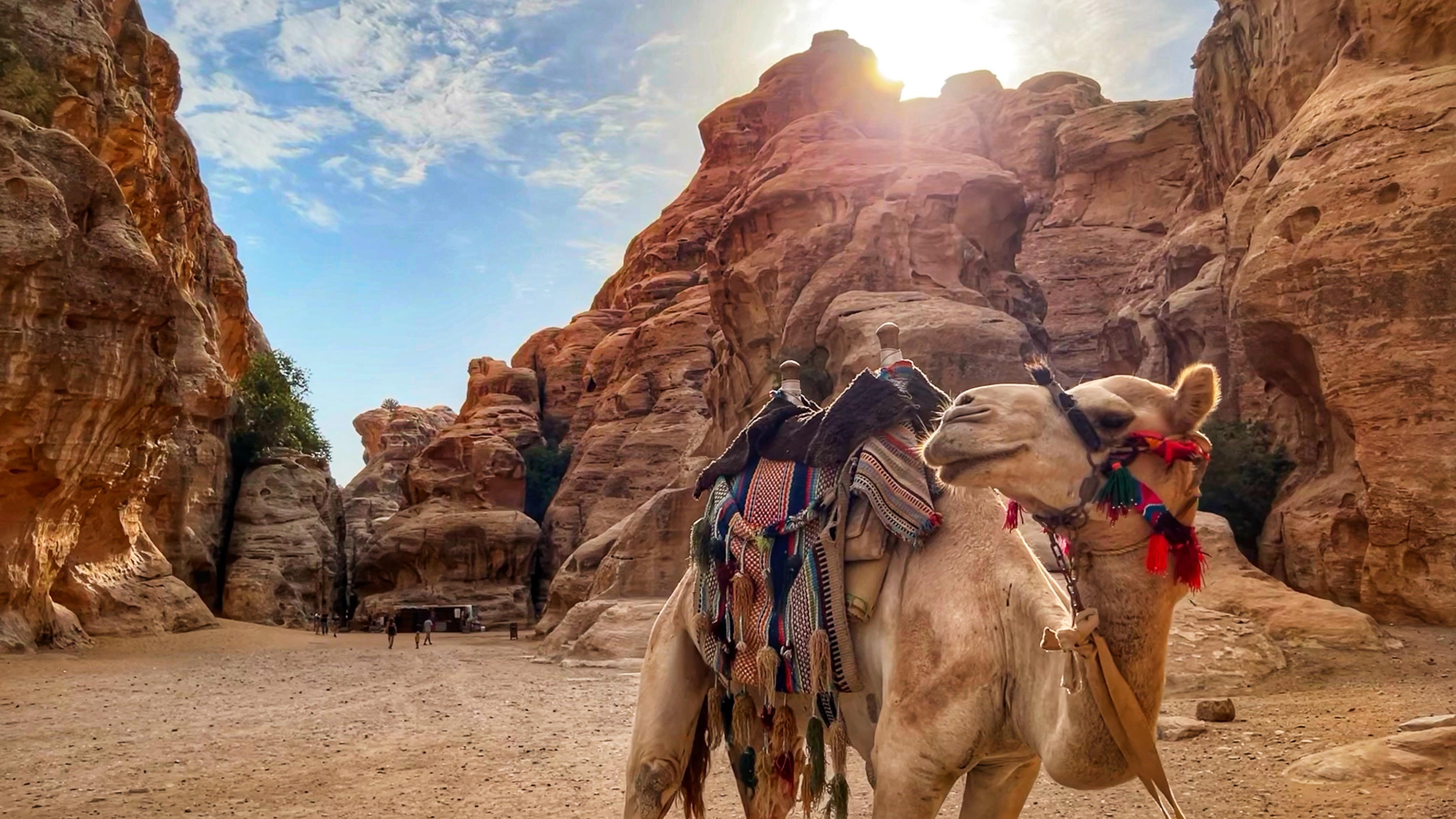
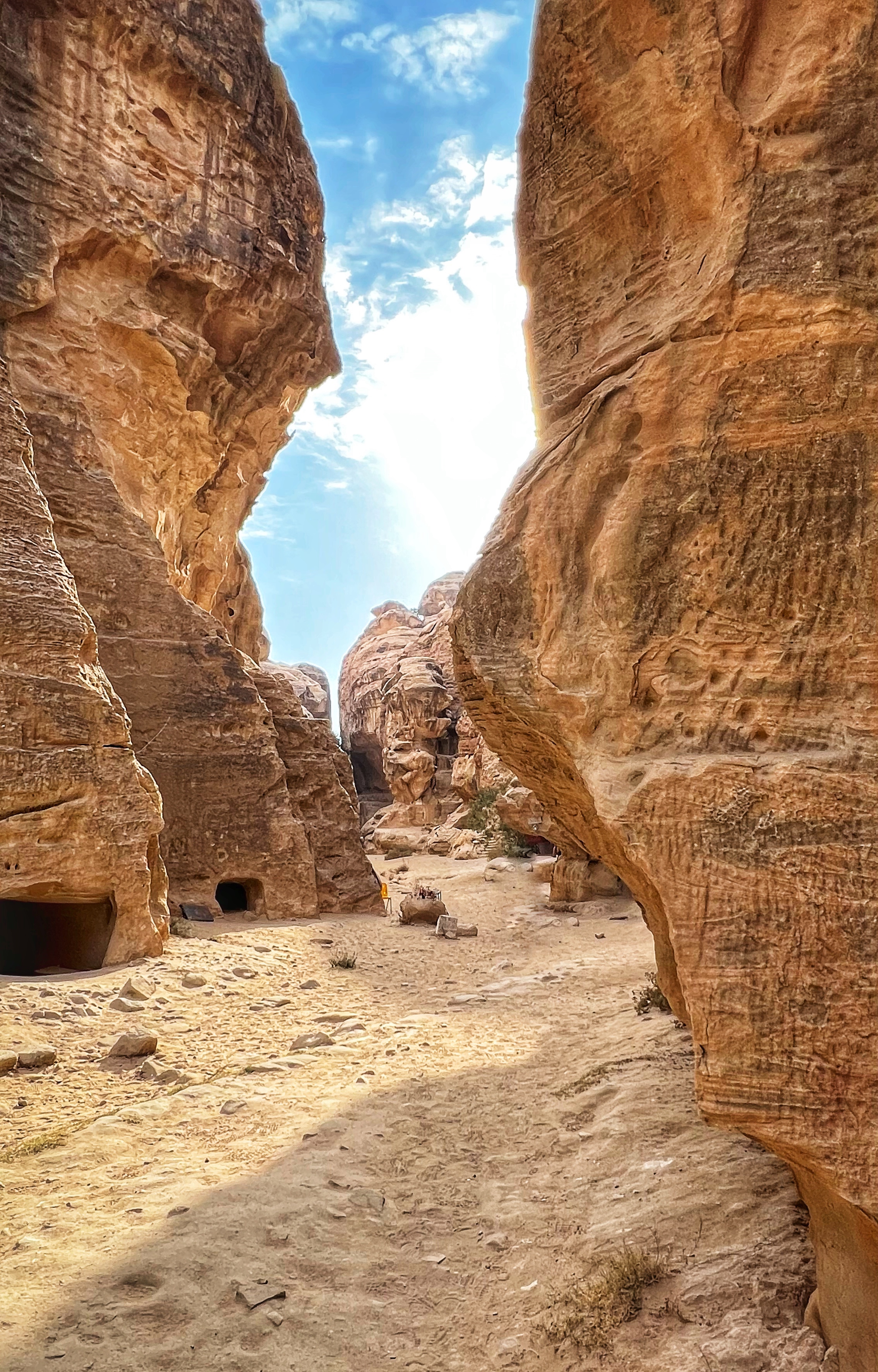
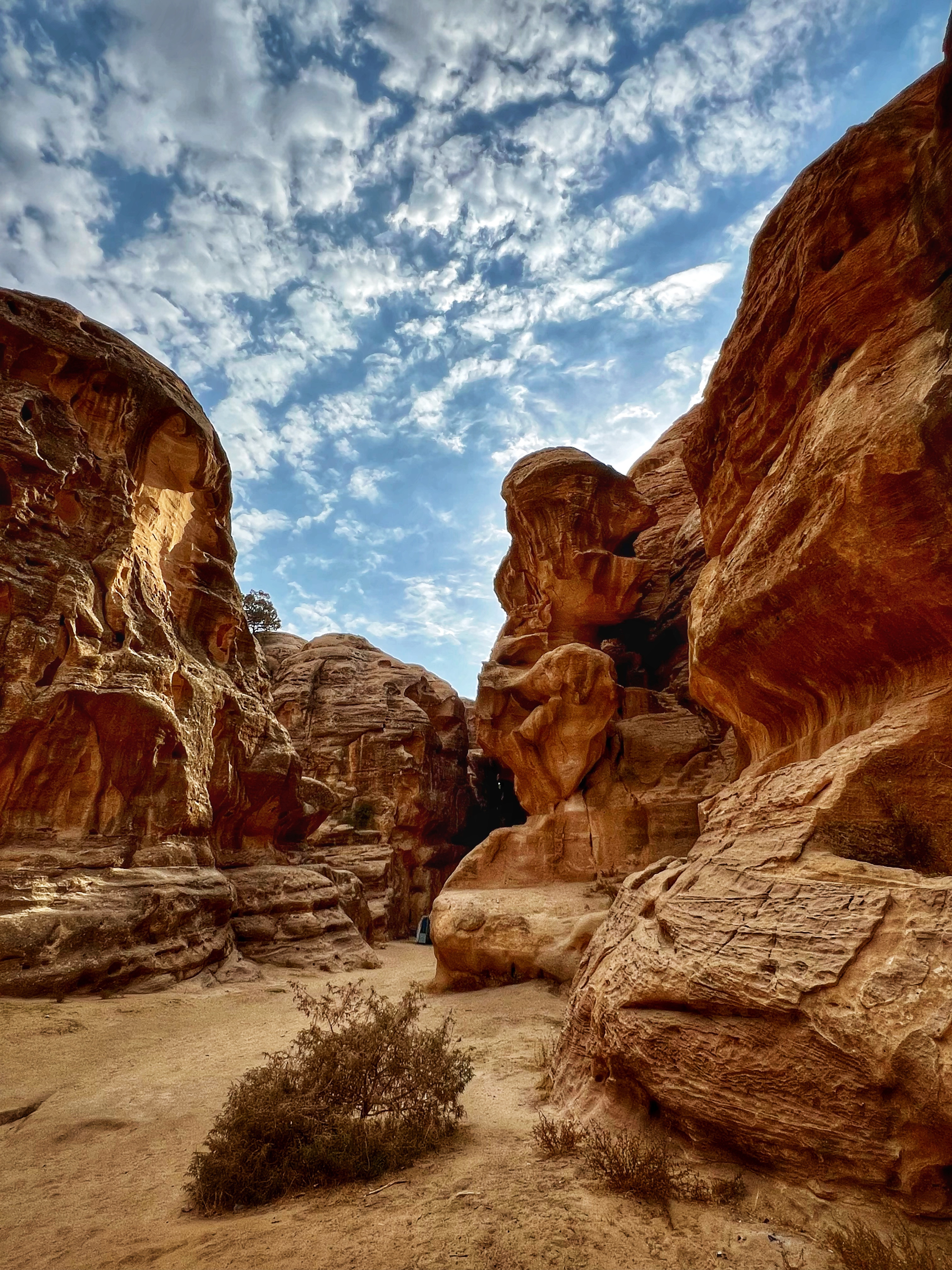
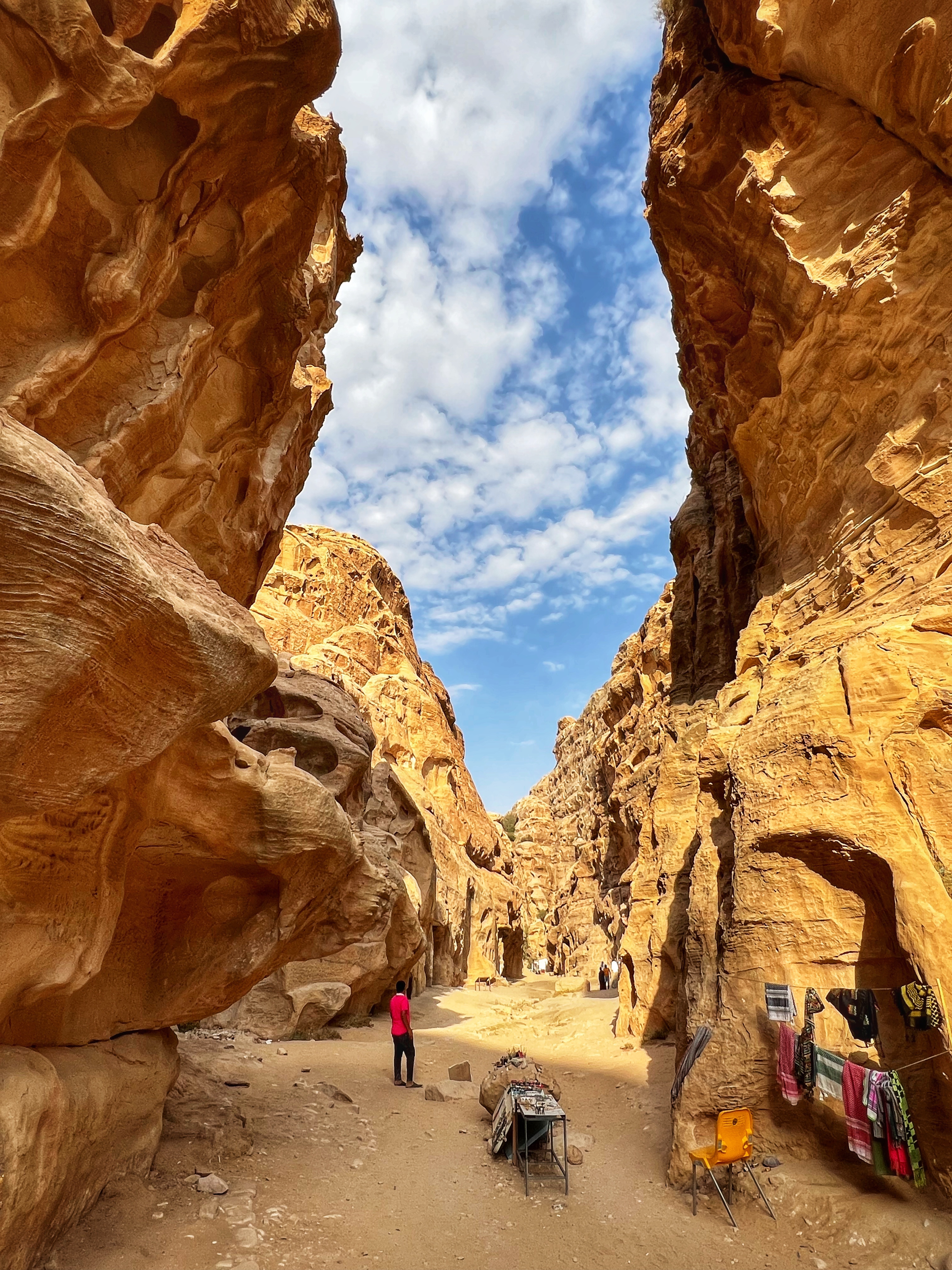
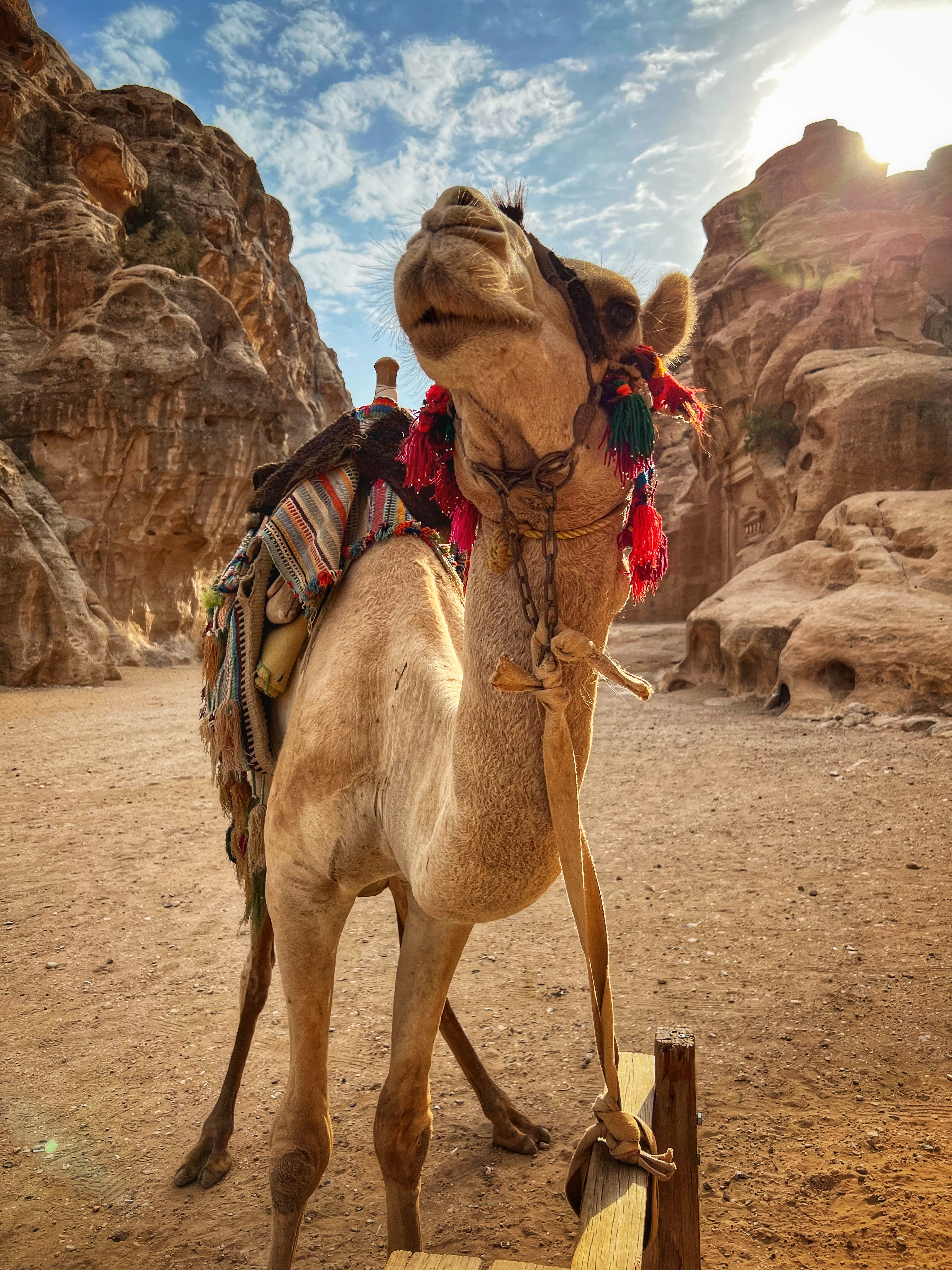
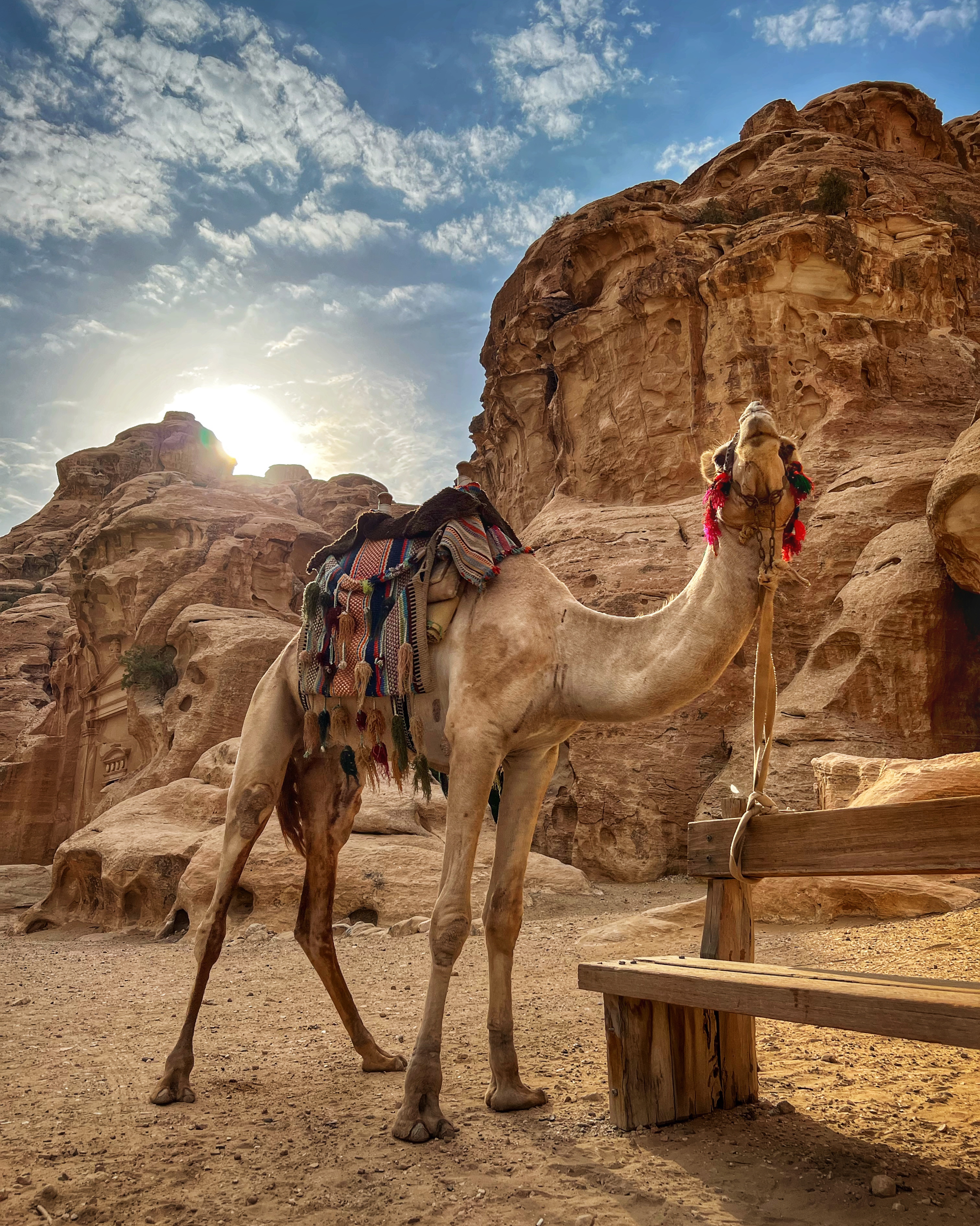
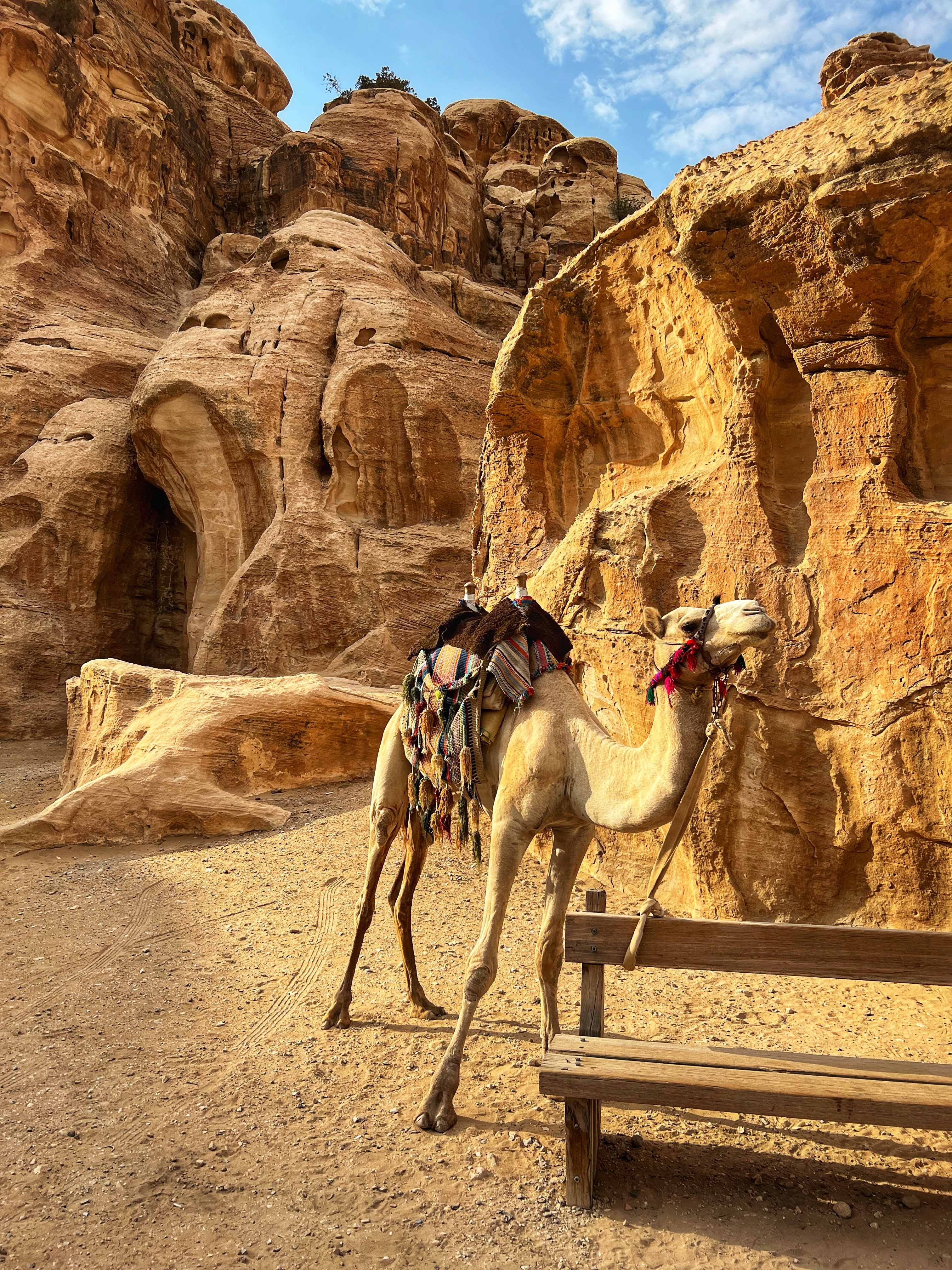
It is possible to hike from here to the back door trail to the Monastery at Petra in around hours, which would be fun for another time. It doesn’t require a guide but it’s a good idea at 8km (read about it here). Instead, we drove from Little Petra to Wadi Musa, the town at the entrance to Petra, and checked into our lodging at the Petra Moon Hotel.
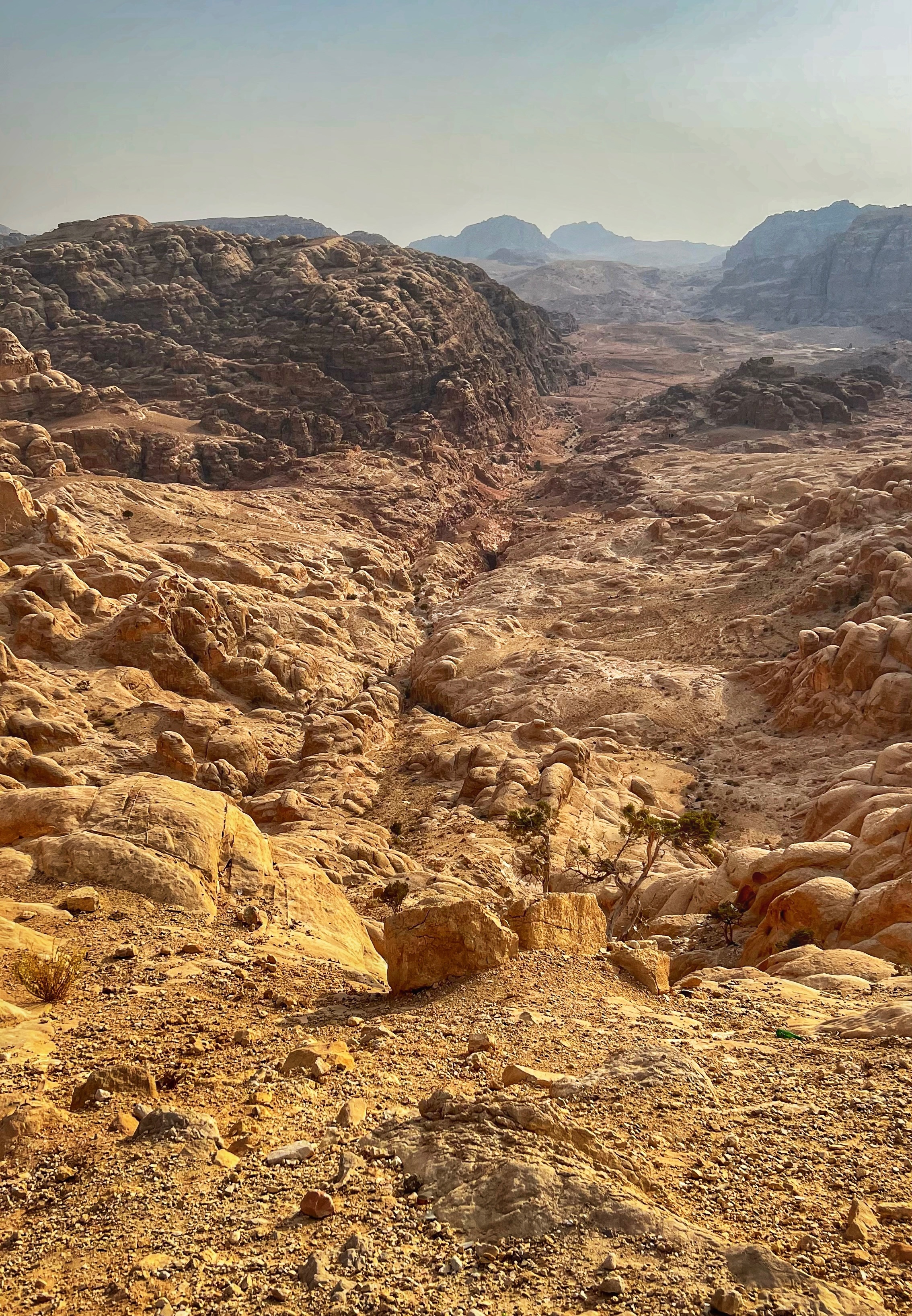

Wadi Musa
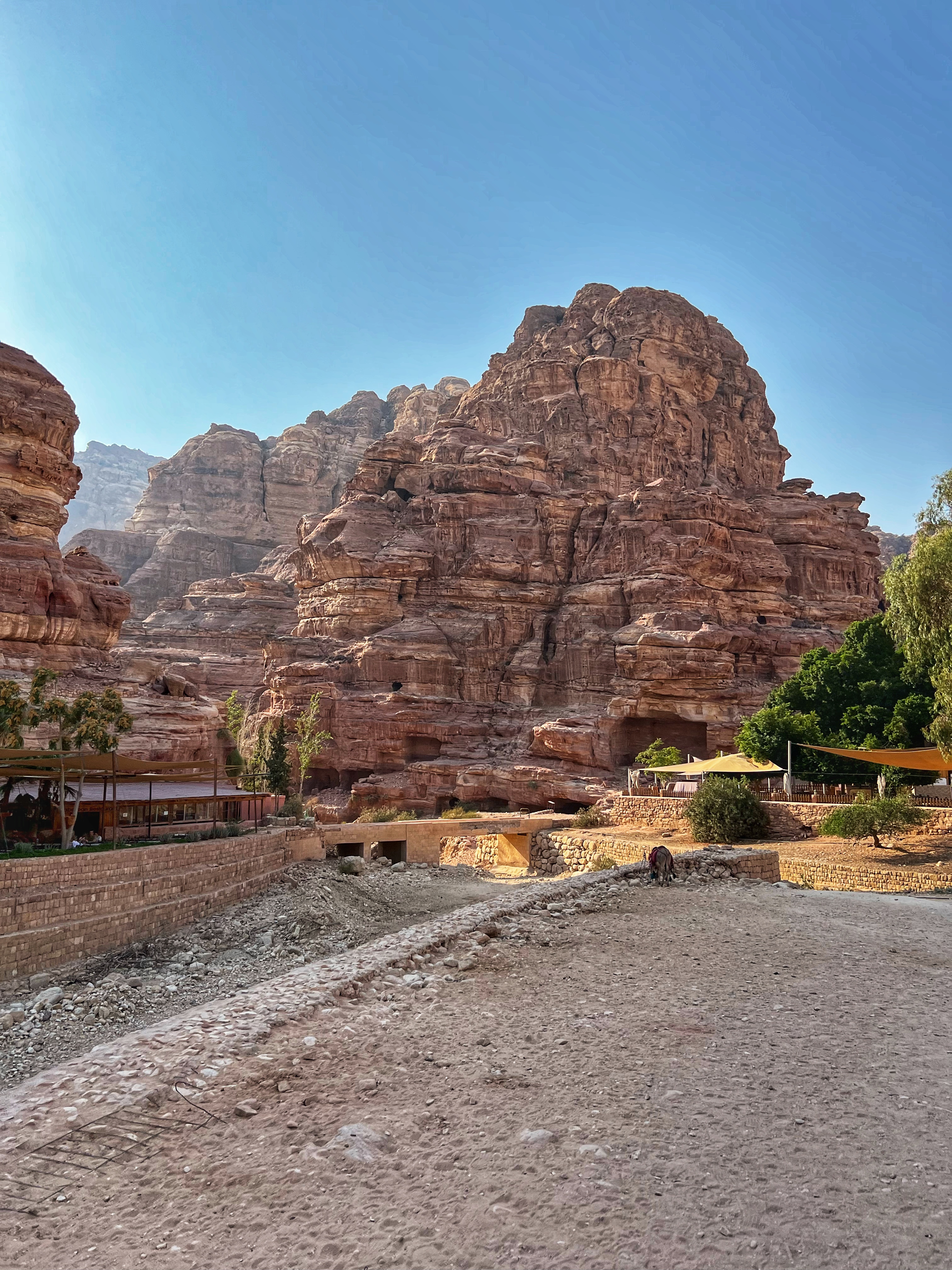
Wadi Musa, the “Valley of Moses,” is the city on a hill that welcomes you to Petra. There are many places to stay here in the city, but we loved our experience at the Petra Moon Hotel. It offered a beautiful breakfast buffet included in the very reasonable cost, and at night it boasted the “largest dinner buffet in Wadi Musa” on the rooftop that we took advantage of both evenings for an additional cost. We were glad to see an ATM at the entrance to Petra because we were using up our cash fast. Tipping is common here – be prepared.
We checked and were so pleased with our large, comfortable room with a view. We were especially impressed with the complementary toiletries and mini bar. There is a spa and pool on the rooftop as well, and we planned to use that the next day. We sat on the rooftop with our (several) plates of dinner and watched the sun go down. It was surreal to be here, as it was every bit as beautiful as I had imagined.
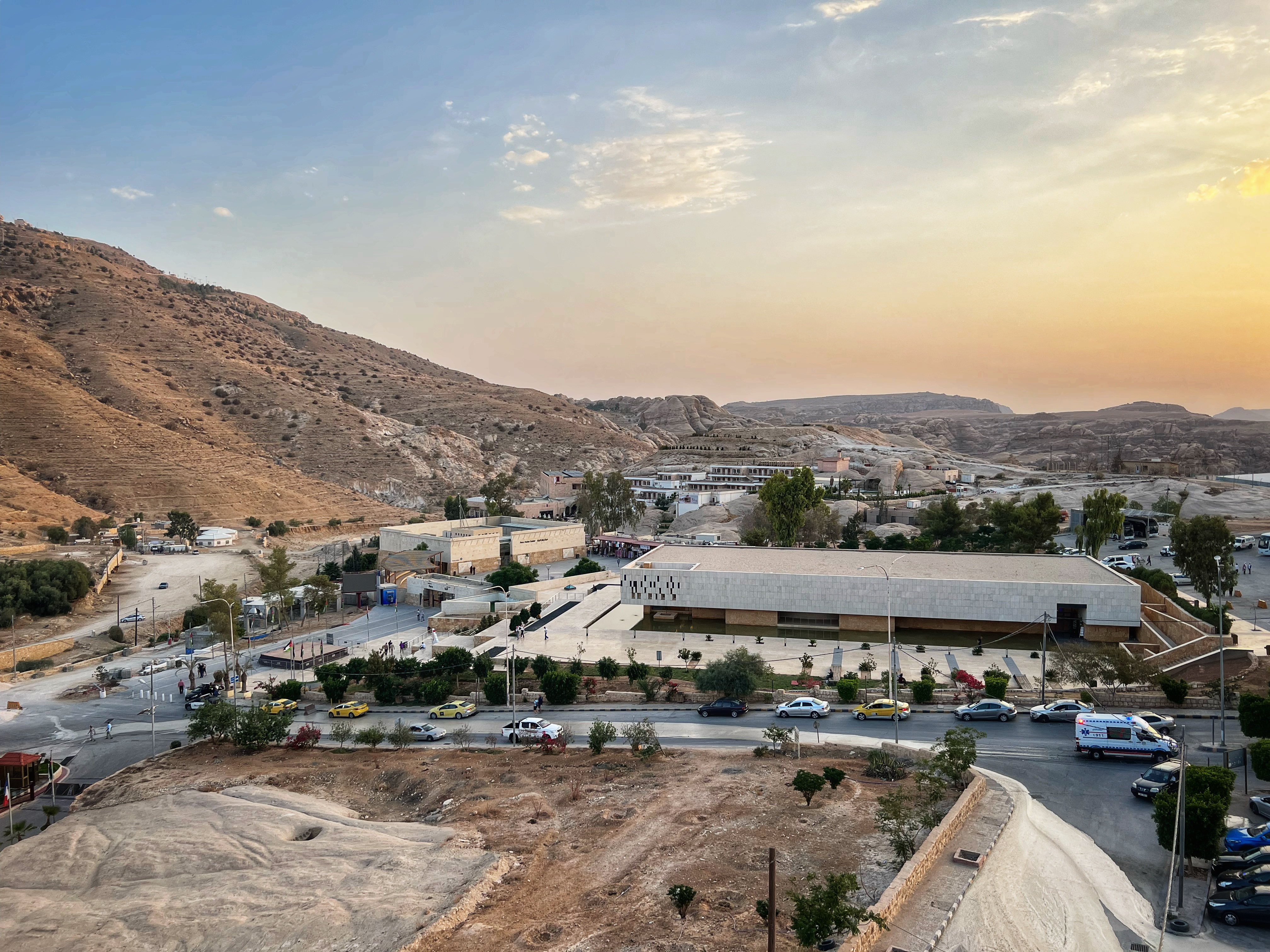
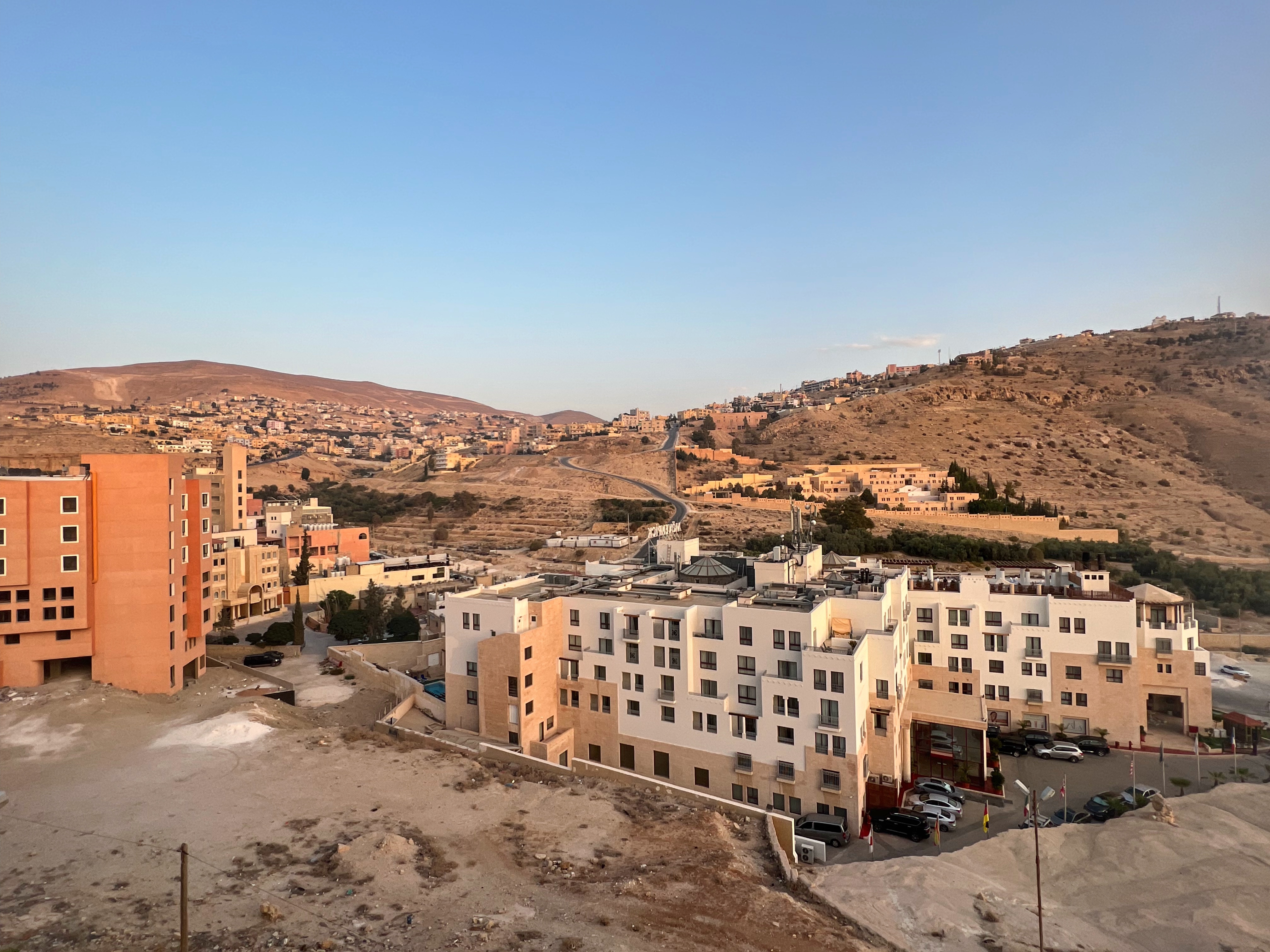
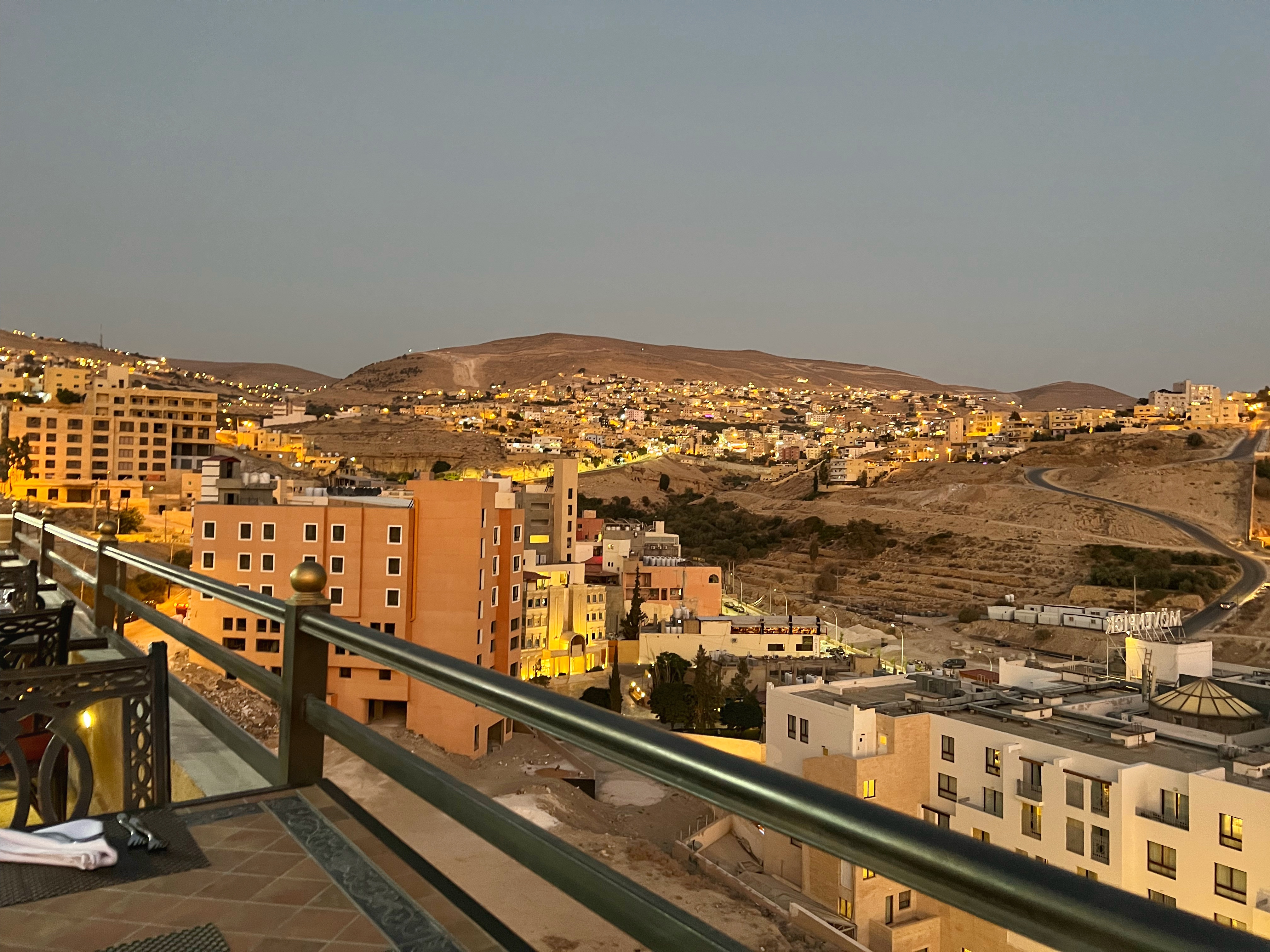
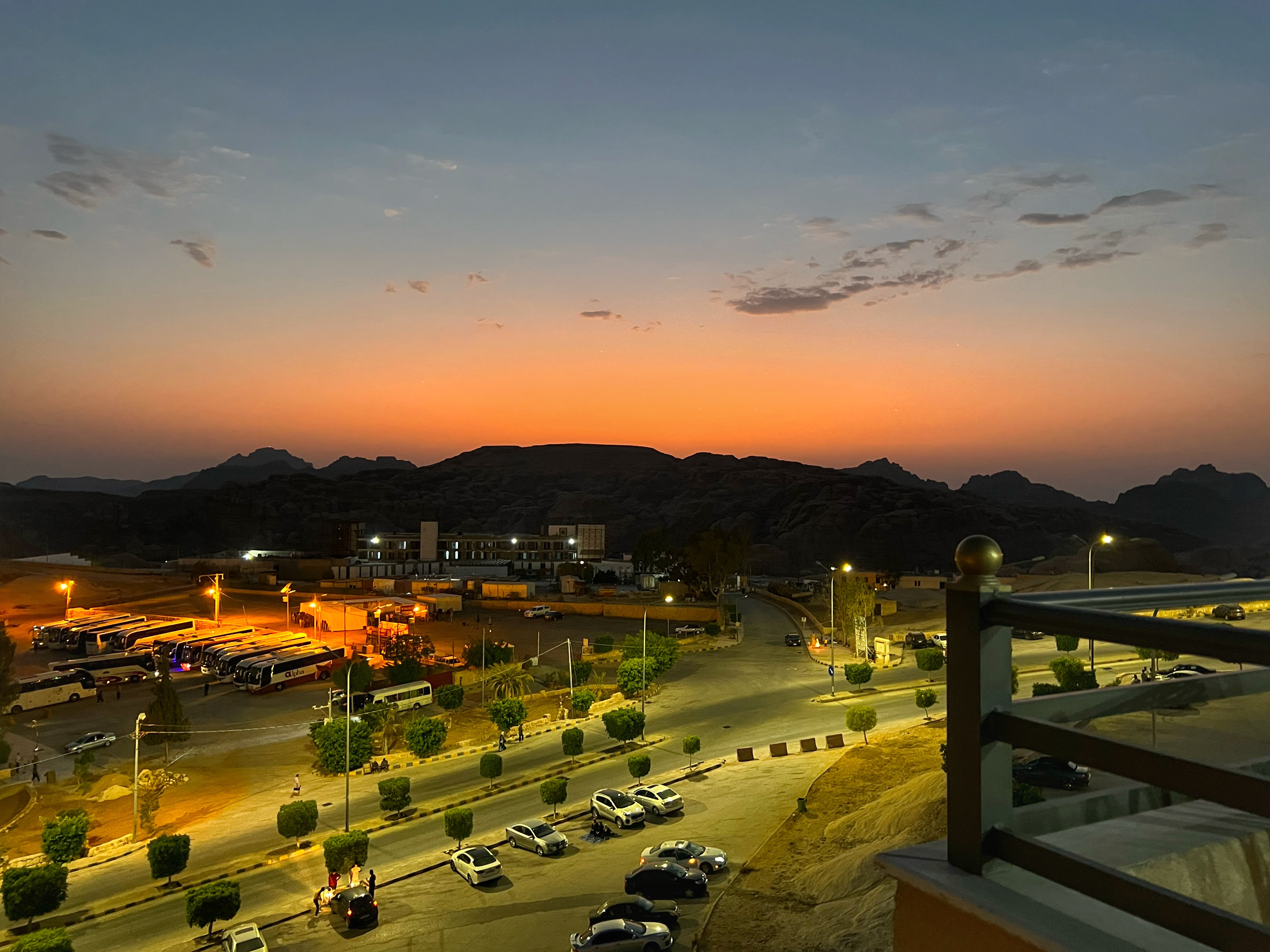
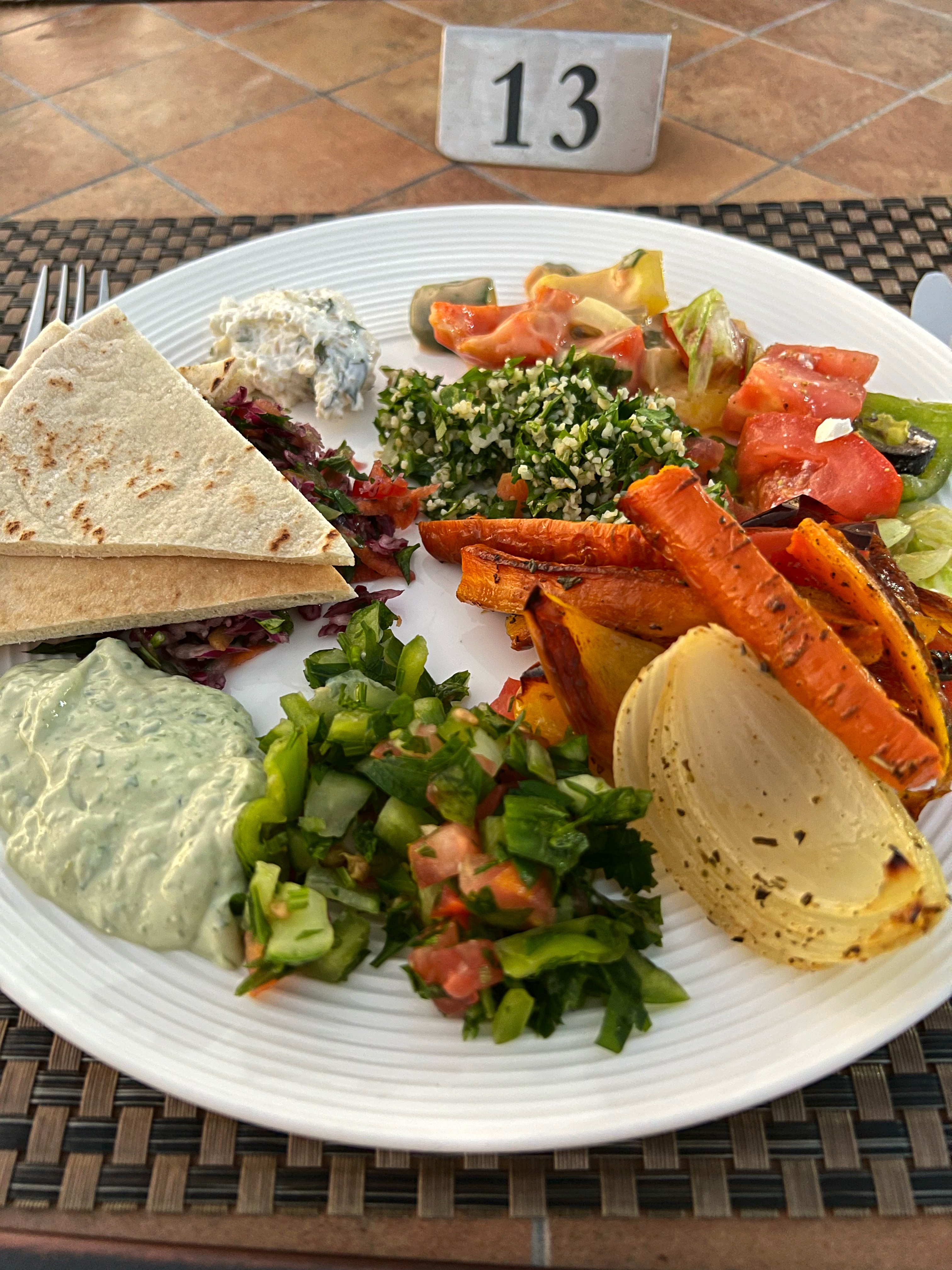
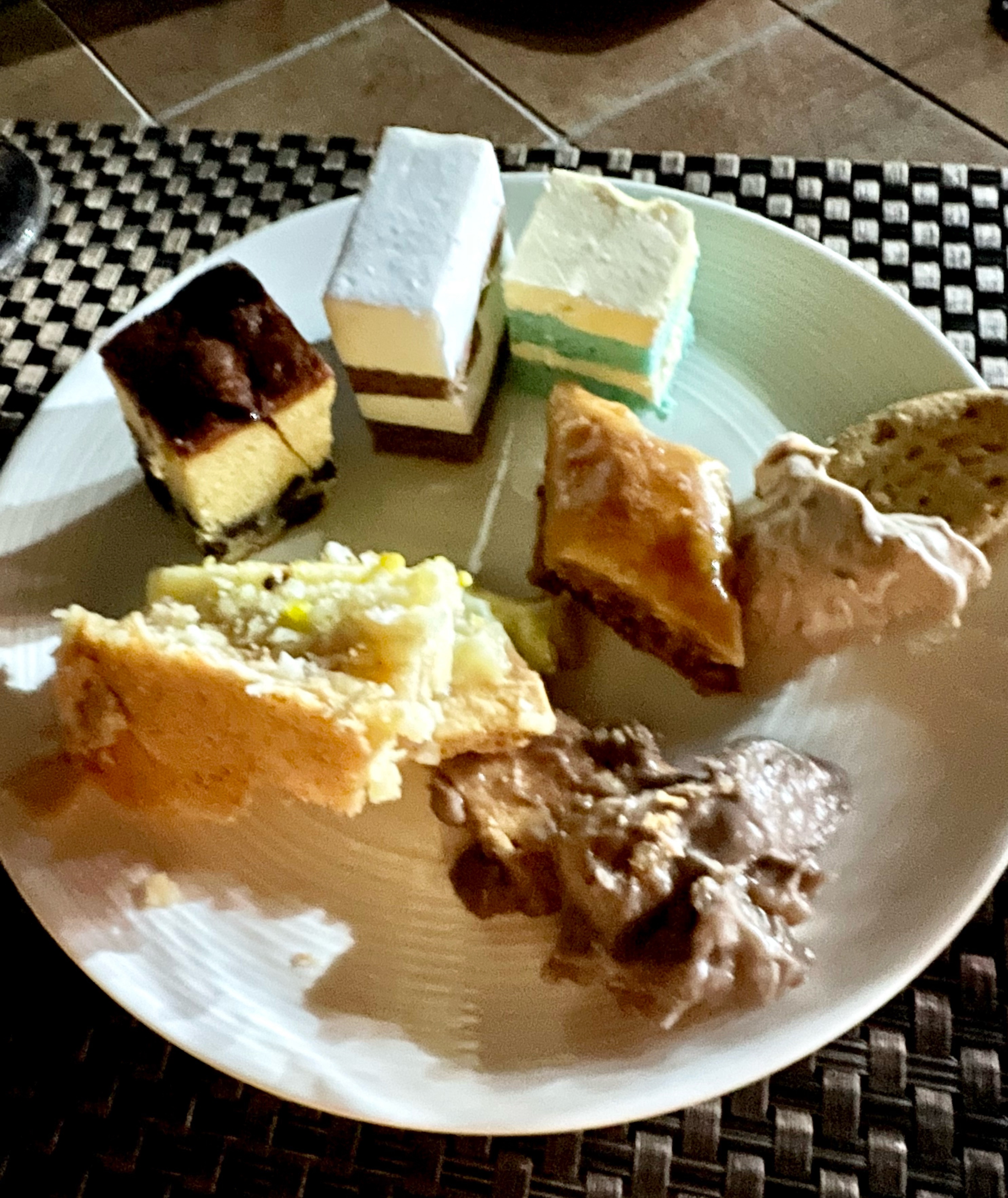

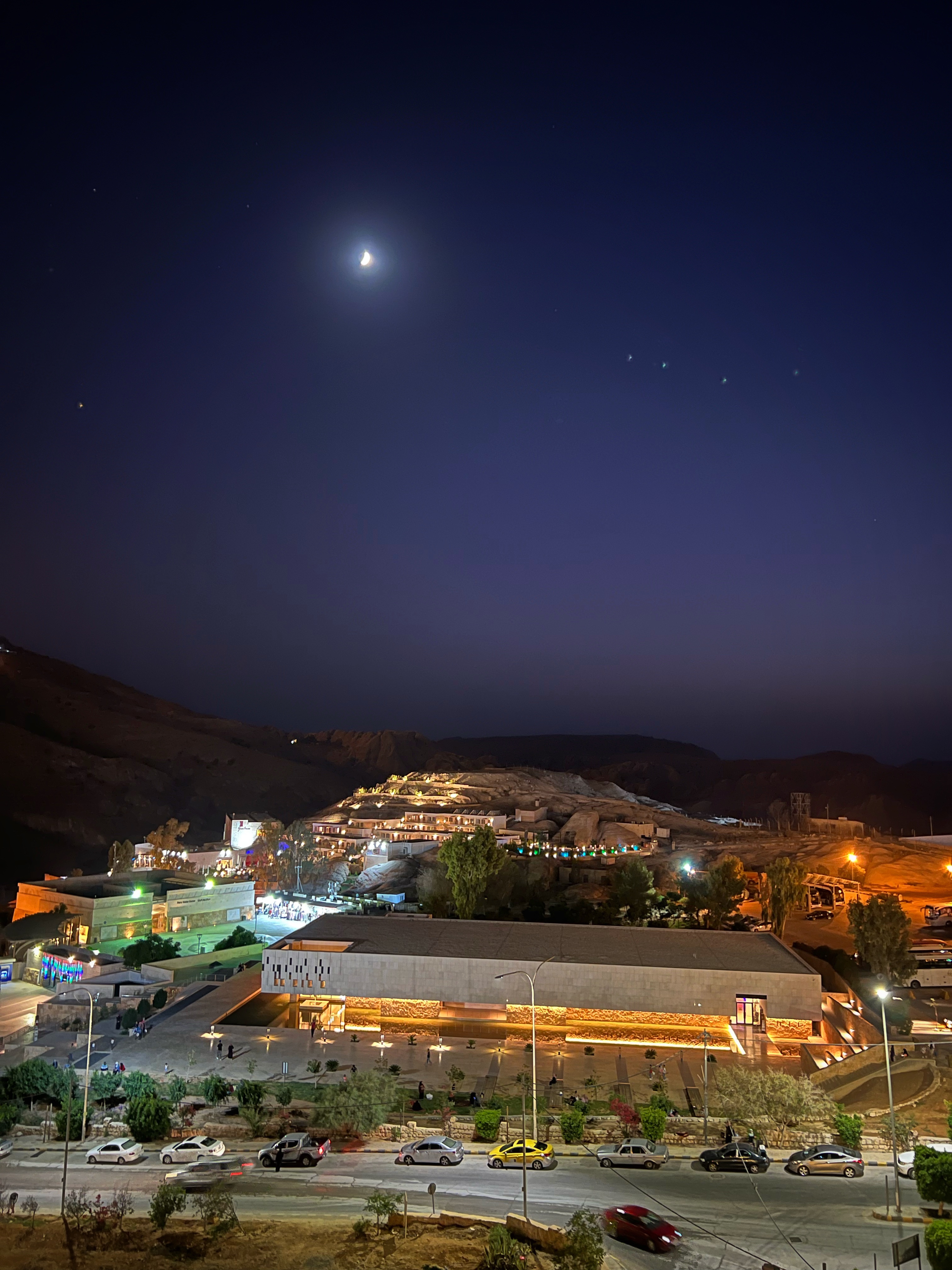
A giant plate of dessert as we enjoy the lights of the city in one direction and the moon over Petra in the other? Yes please!
DAY 5
We were so grateful to be a zippy 5 minute walk to the entrance of Petra from our hotel. The Visitor Center and site opens at 6AM and we planned to meet Ahmad (Lost in Petra tours) at 6:30AM after our hotel buffet breakfast.
Petra
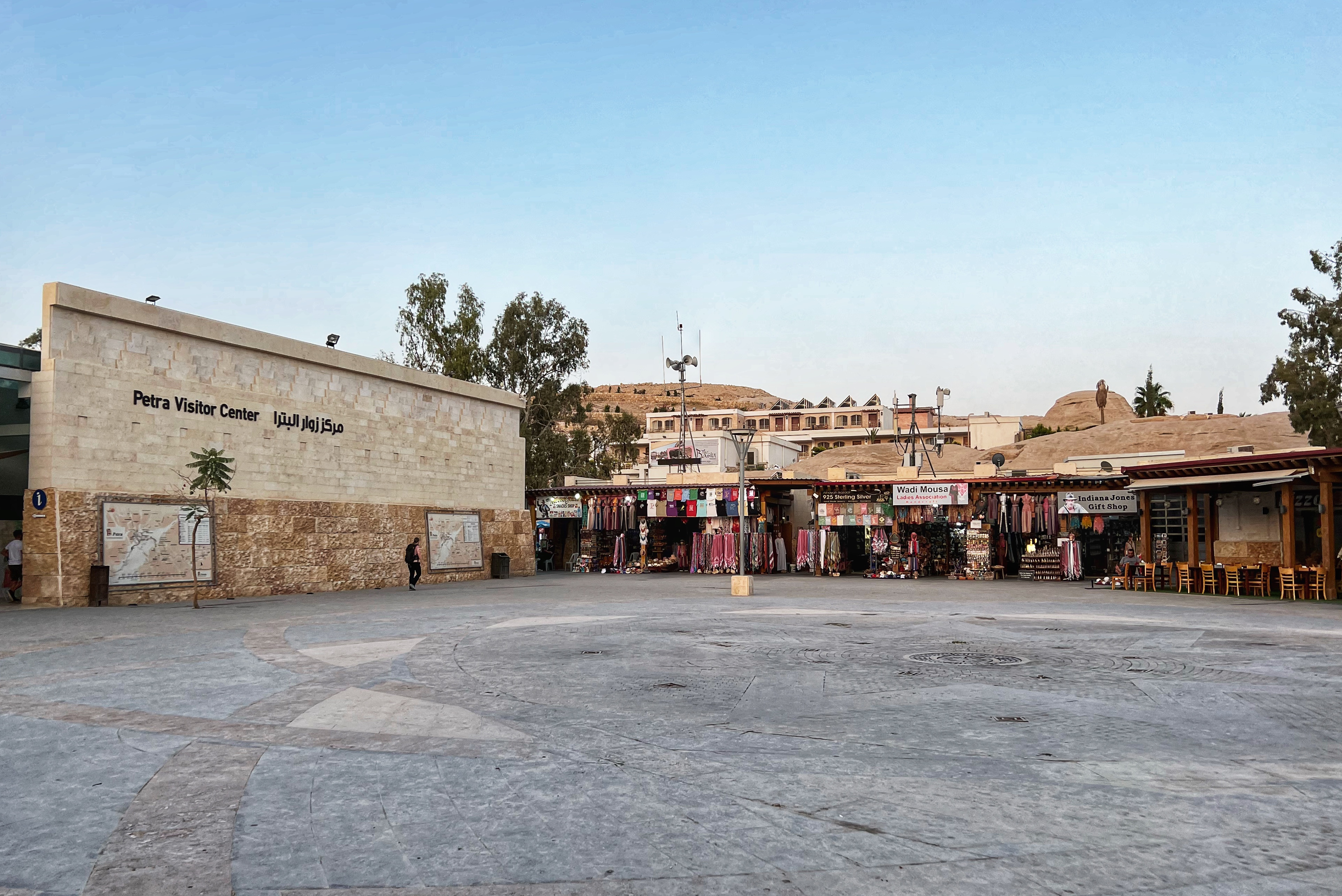
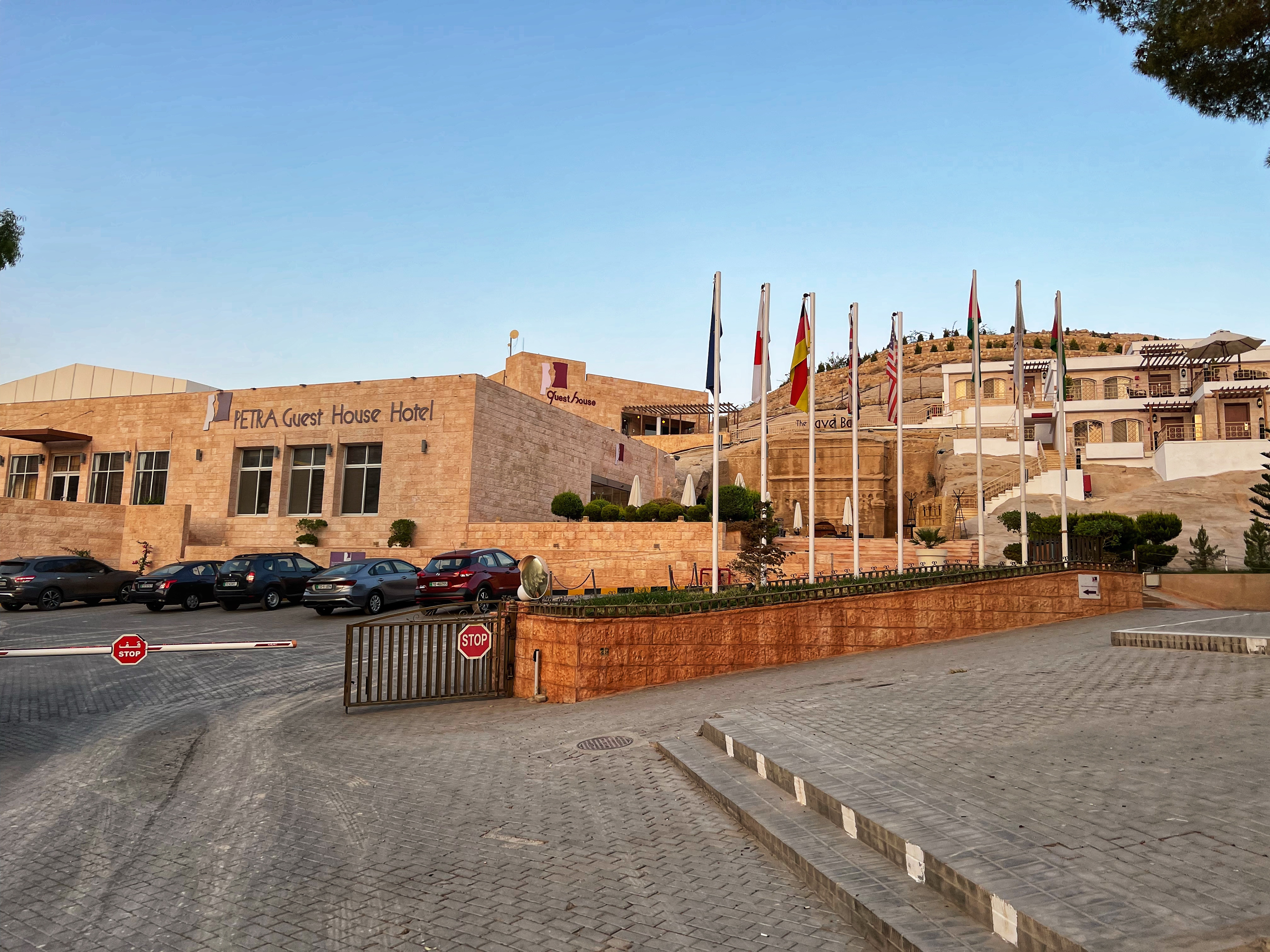
We grabbed cash at the ATM, passed the Petra Museum (more on that tomorrow) then walked through the Visitor Center to show our Jordan Passes and get our two day tickets (1, 2 or 3 days depending on what you purchased). Your ticket actually has your name printed on it and you need to show your ID at the entrance so it is non-transferrable. Don’t lose it! There are bathrooms, shops and eateries in the plaza at the visitor center, so this is a good place to grab a drink to bring with you. It’s pretty quiet between 6-7 AM, but things are open if you need them, so this is the ideal time to enter. Keep an eye out for the Petra Guest House Hotel right at the gate of Petra – it’s a fancy place to stay, but has a really cool Cave Bar that’s worth a visit at some point.

TOUR
You definitely don’t need to have a tour guide in Petra, but we opted to do this as we were getting alerts and warnings about unrest between local tribe and police and wanted to play it on the safe side until we could get a feel for things (more on this later). We met up with Ahmad and he took us on a 3 hour walking tour off the beaten path (25JD/$44pp). As a local Bedouin who was born in one of the caves, he had many stories to share. He showed us the sophisticated Nabataean water systems and we enjoyed beautiful views of the surrounding landscape that we never would’ve seen without his help. He also had a great sense of humor and answered all our many questions.
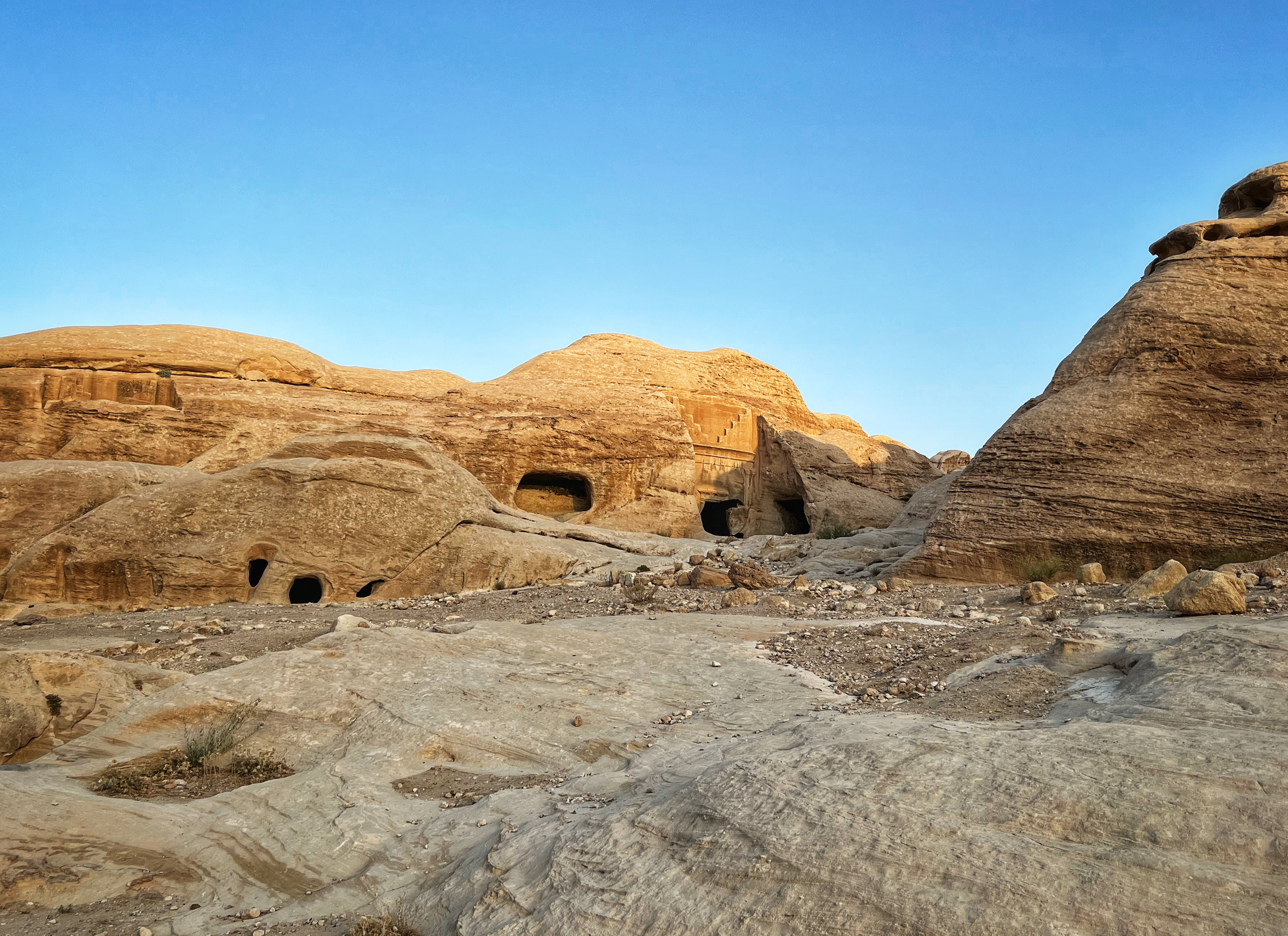
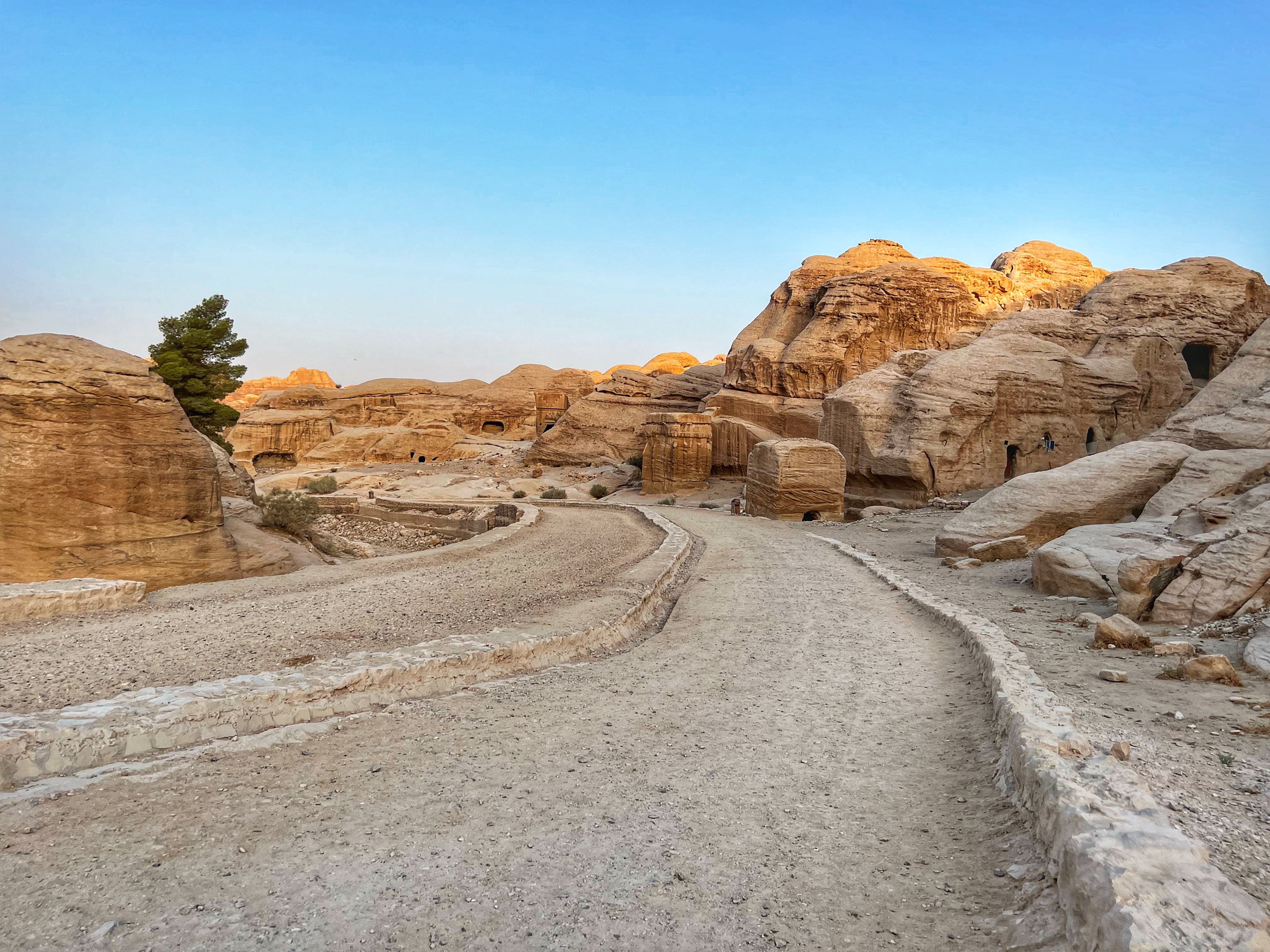

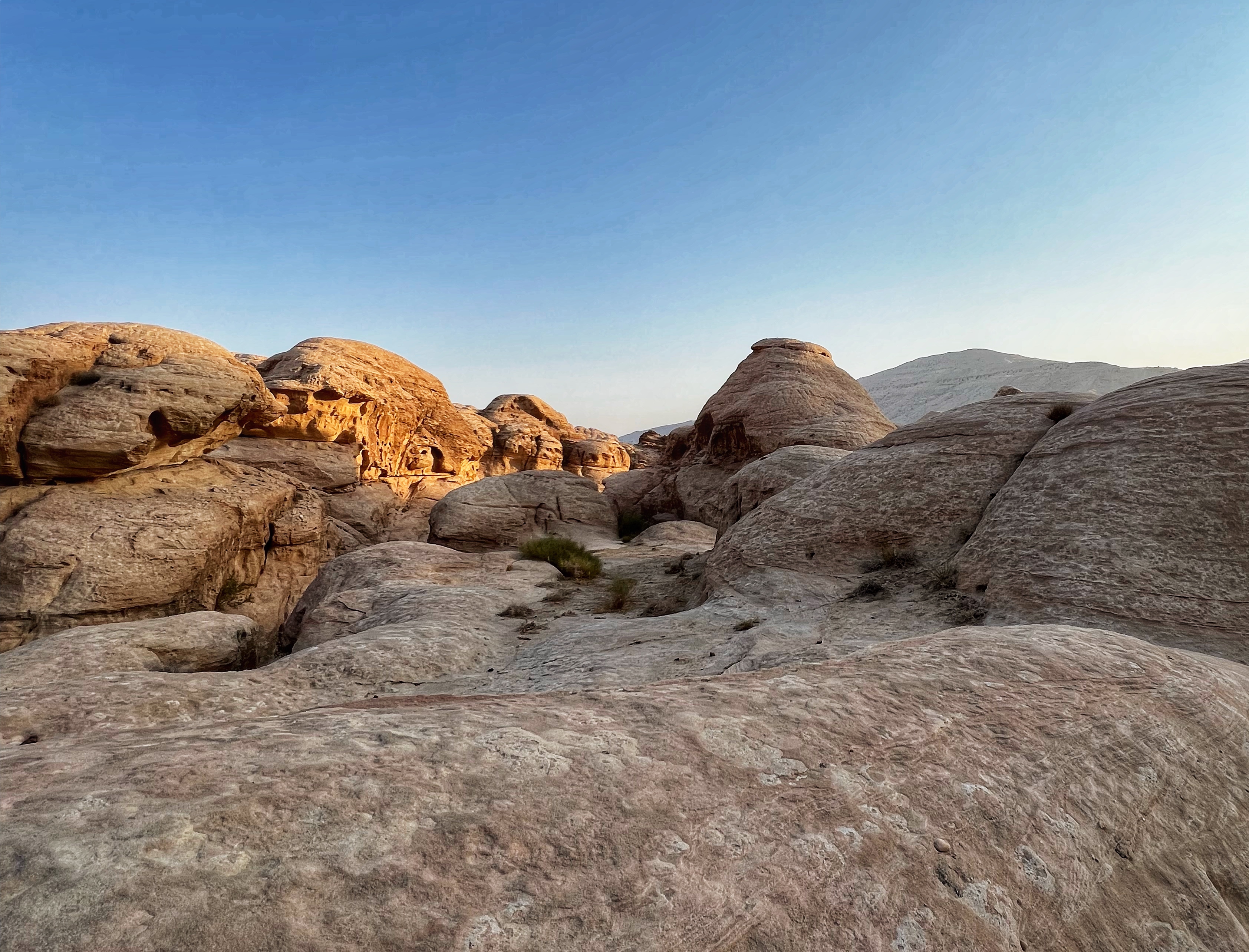
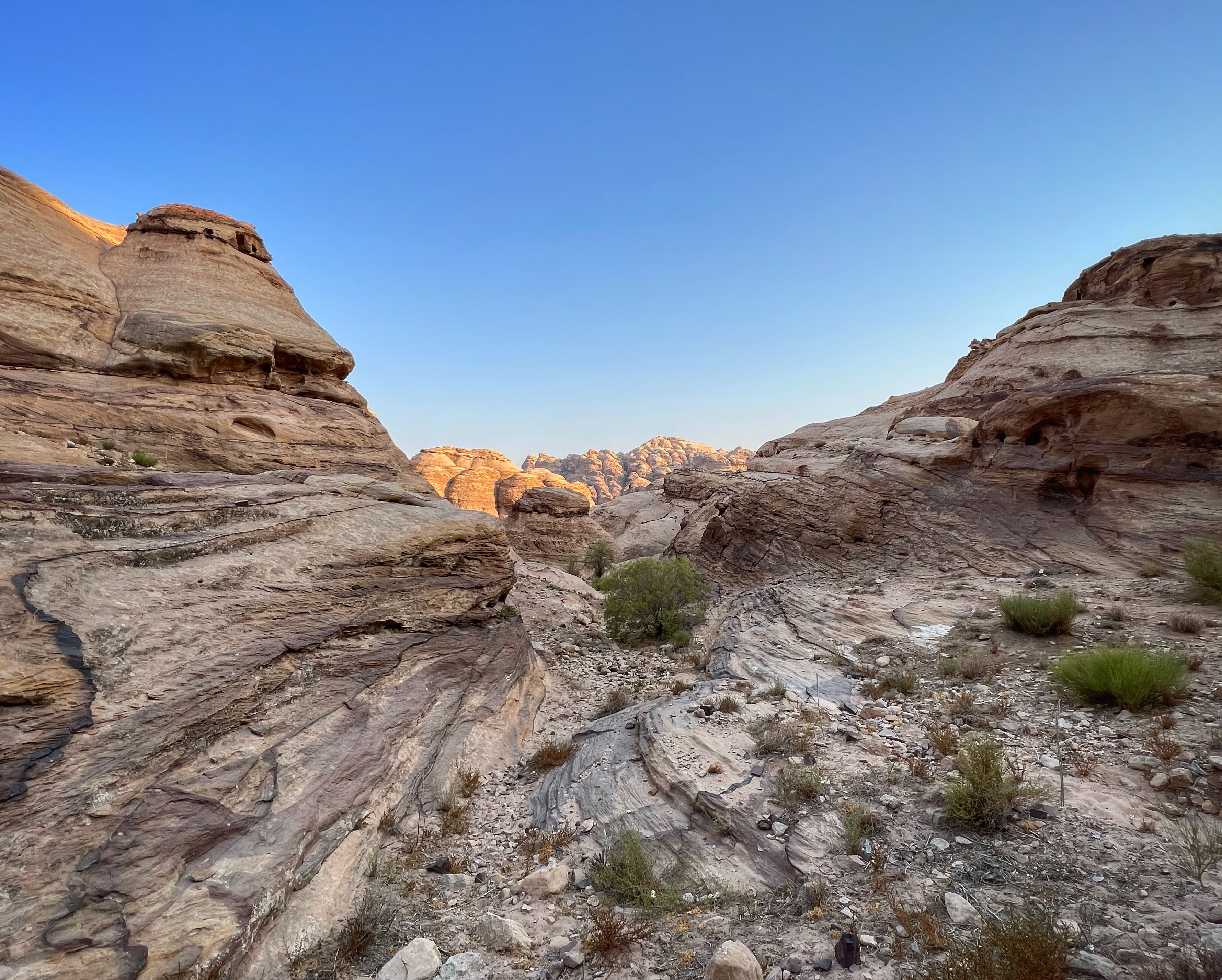


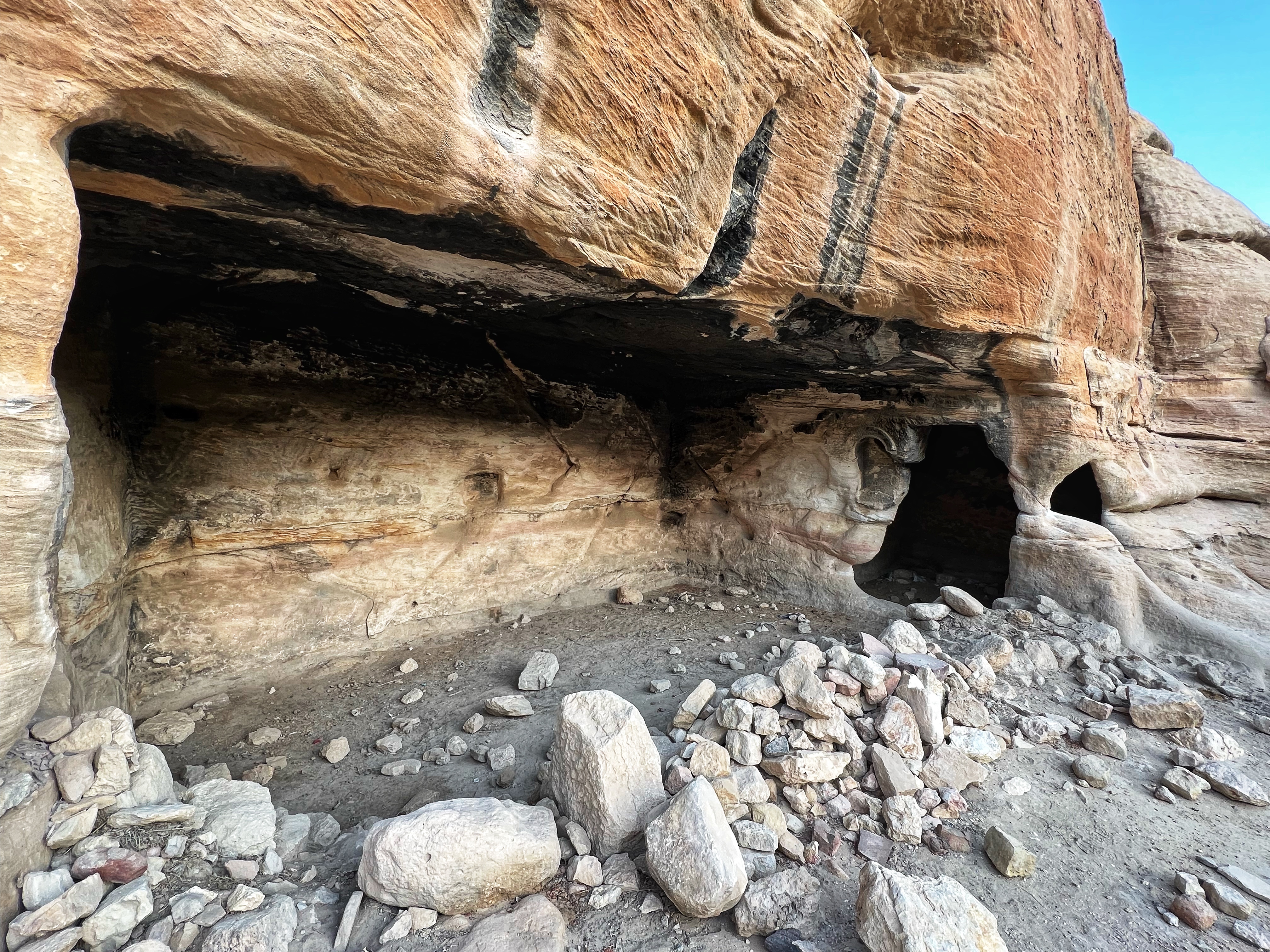
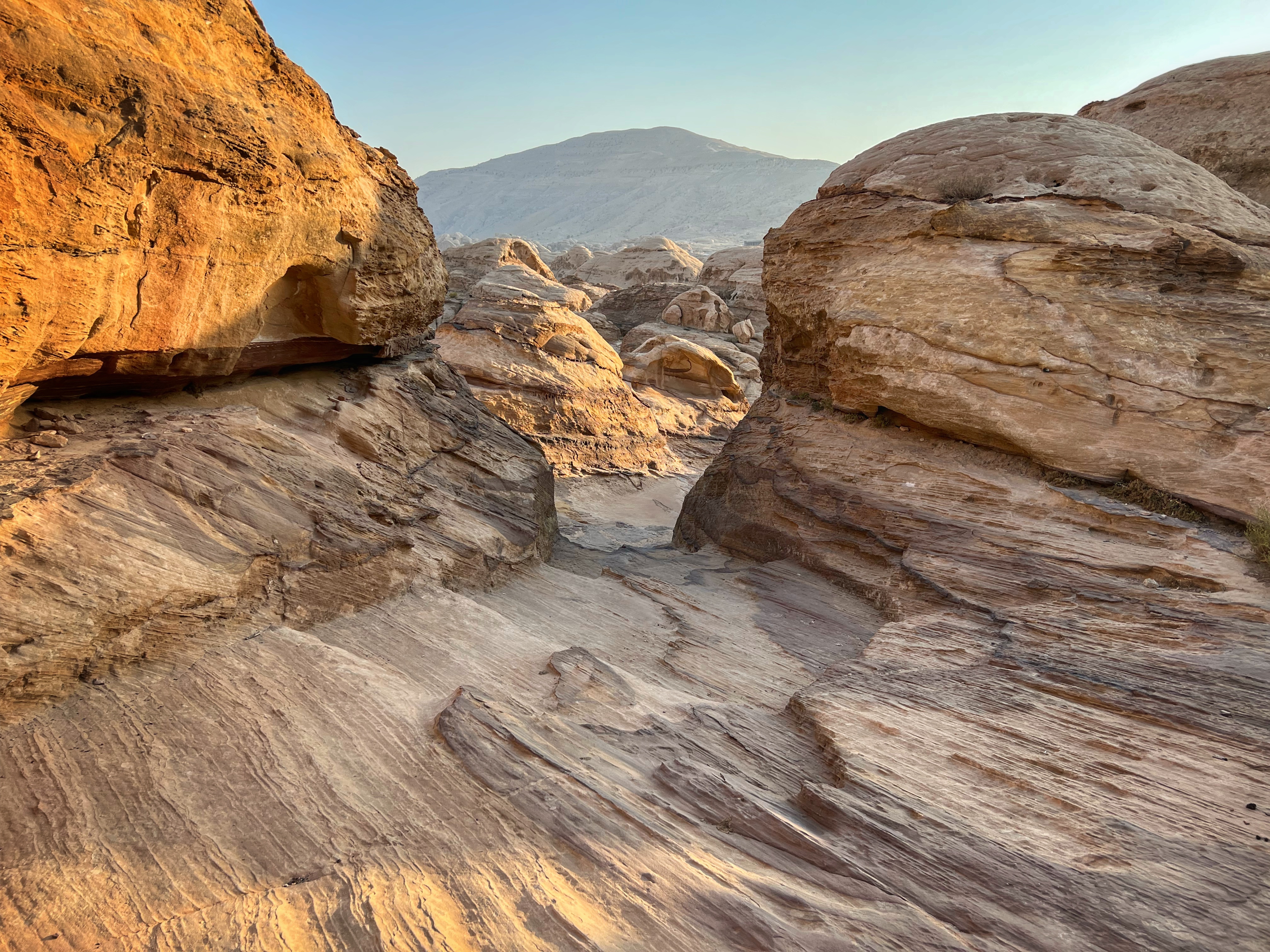


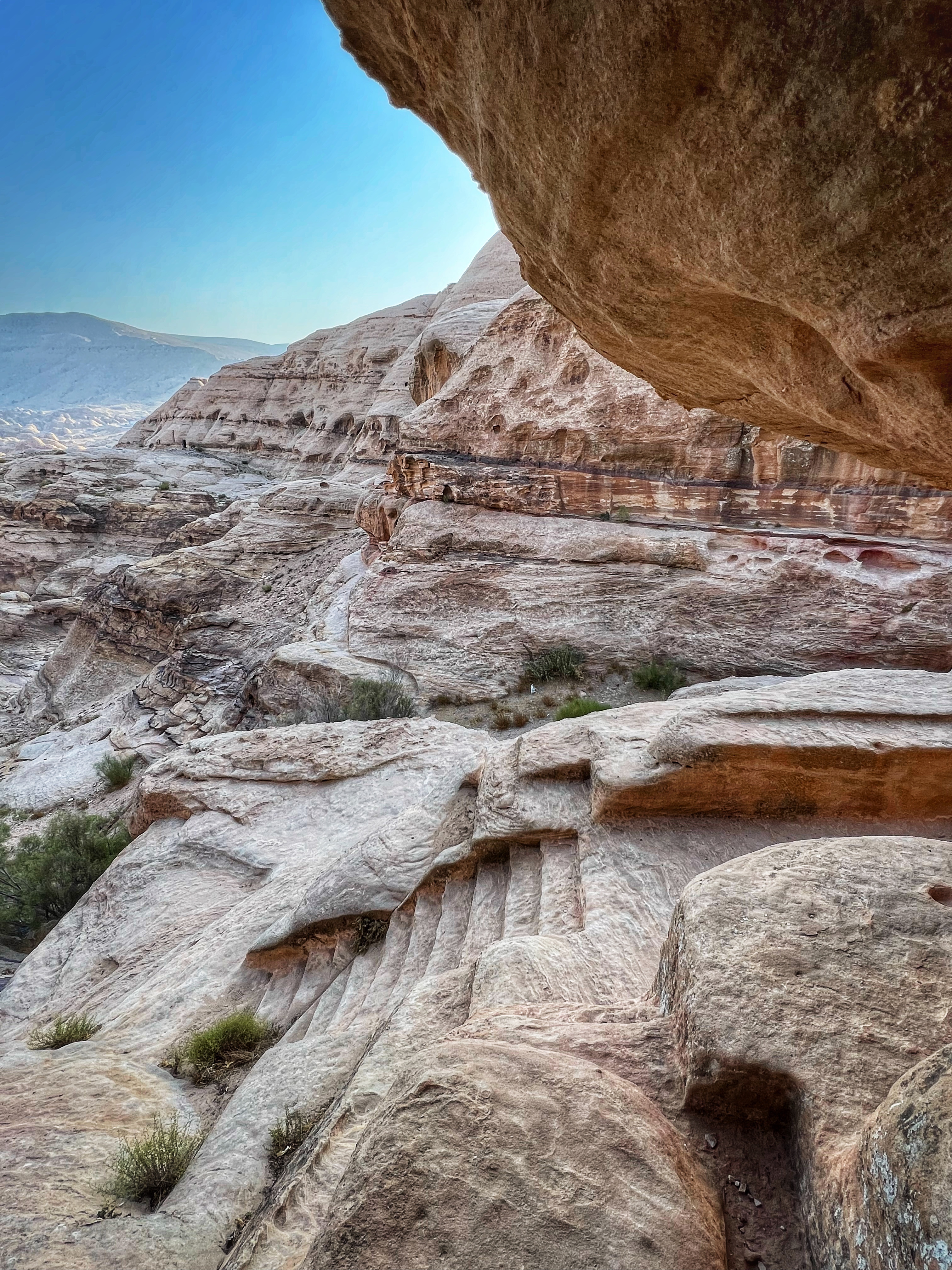
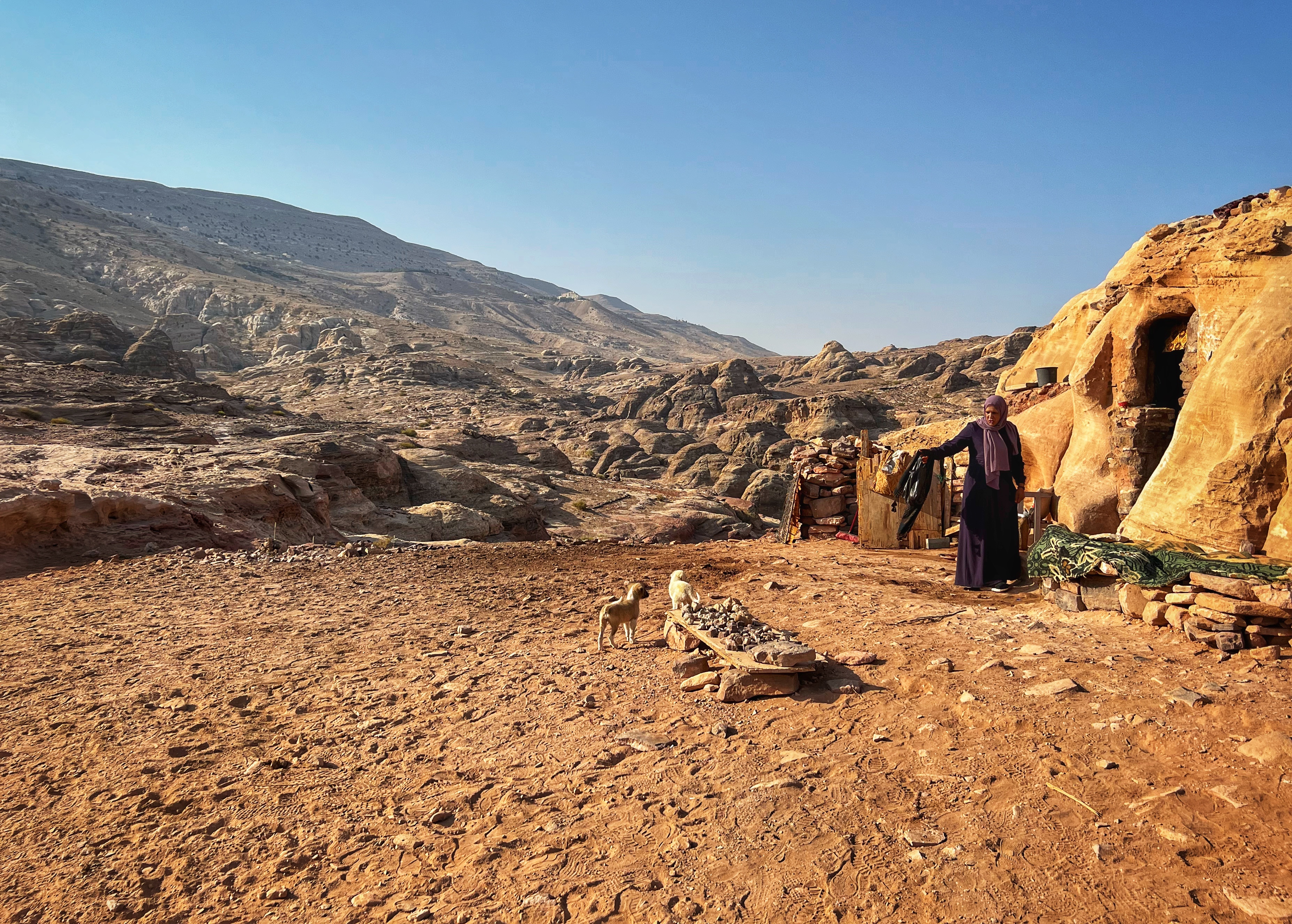
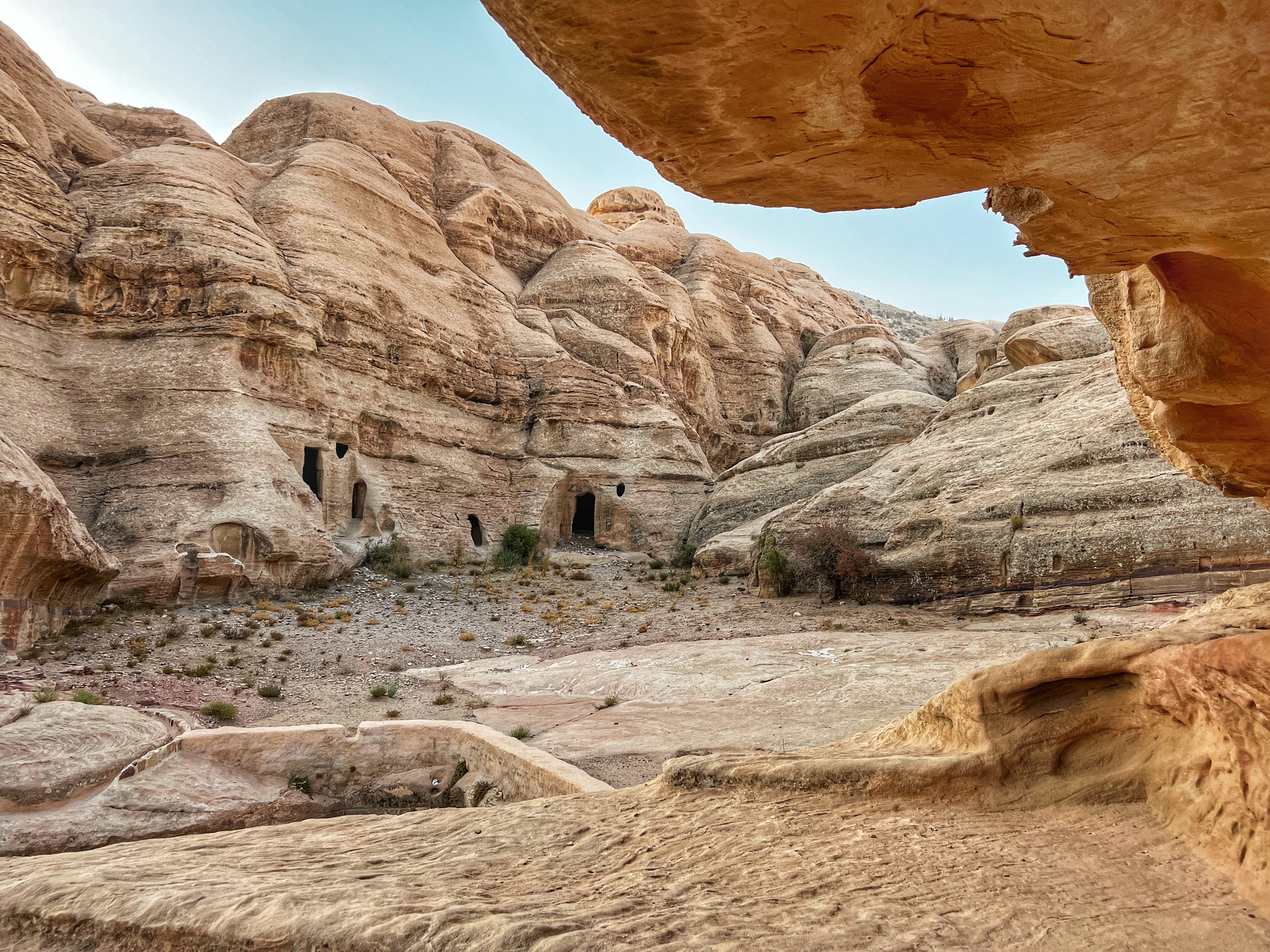
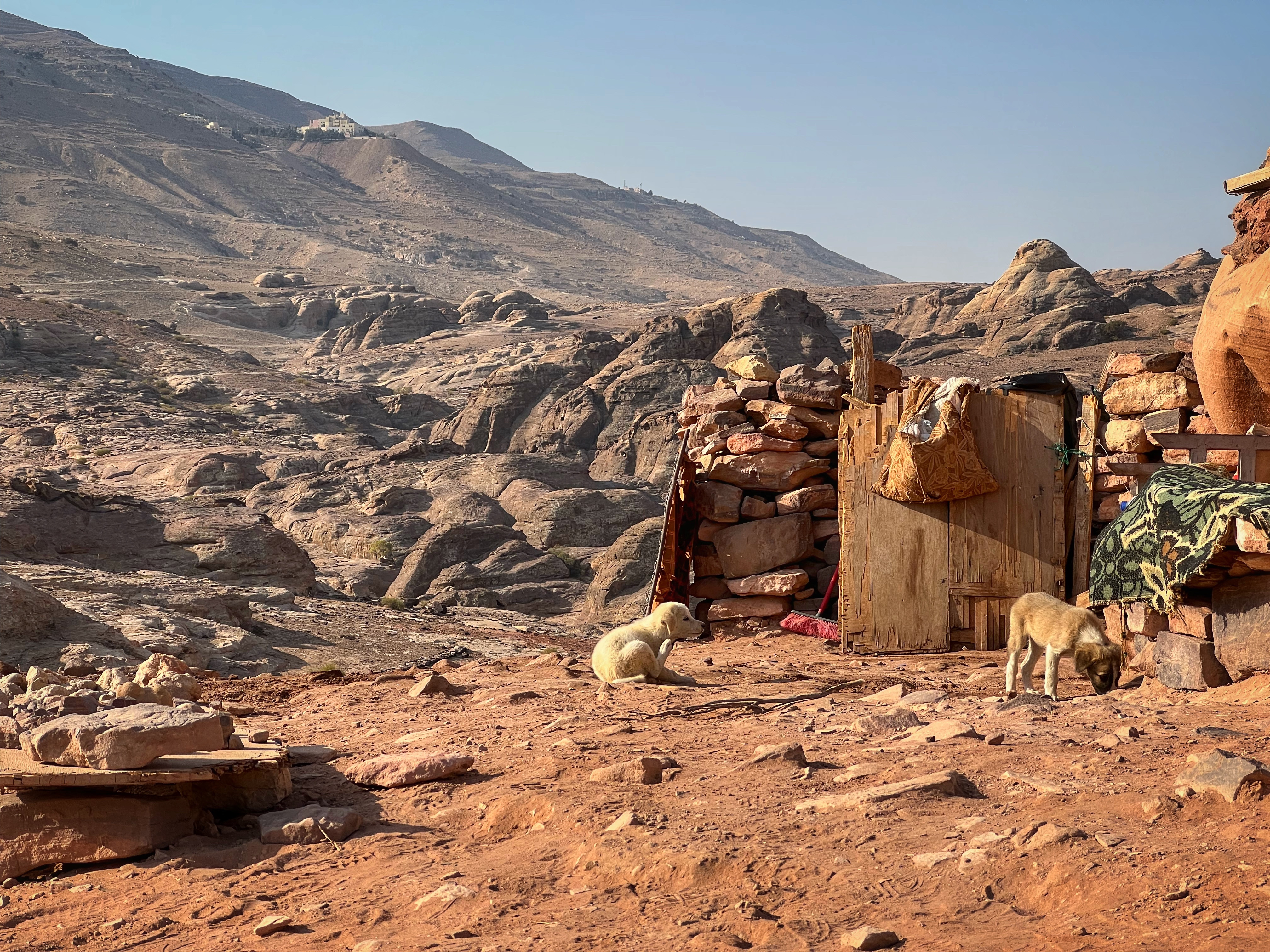

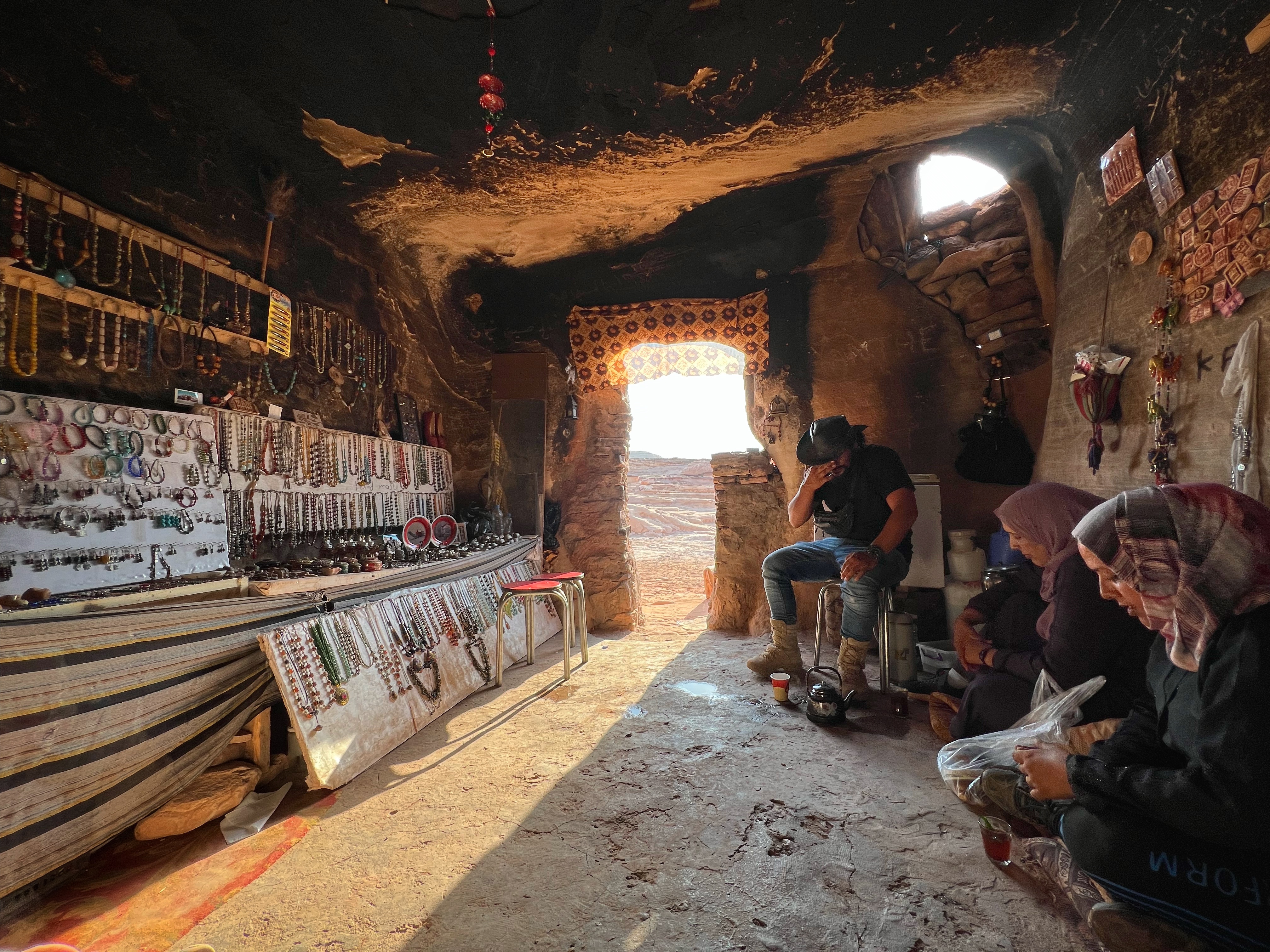
At one point we stopped at a cave to visit with his friends and share tea. They also showed us jewelry (they said they hand made it but its doubtful. We bought some anyway) and we saw the cutest puppies outside. They always flock to Jessie! It was so cool to be walking on steps and on paths that were forged 2,000 years ago.
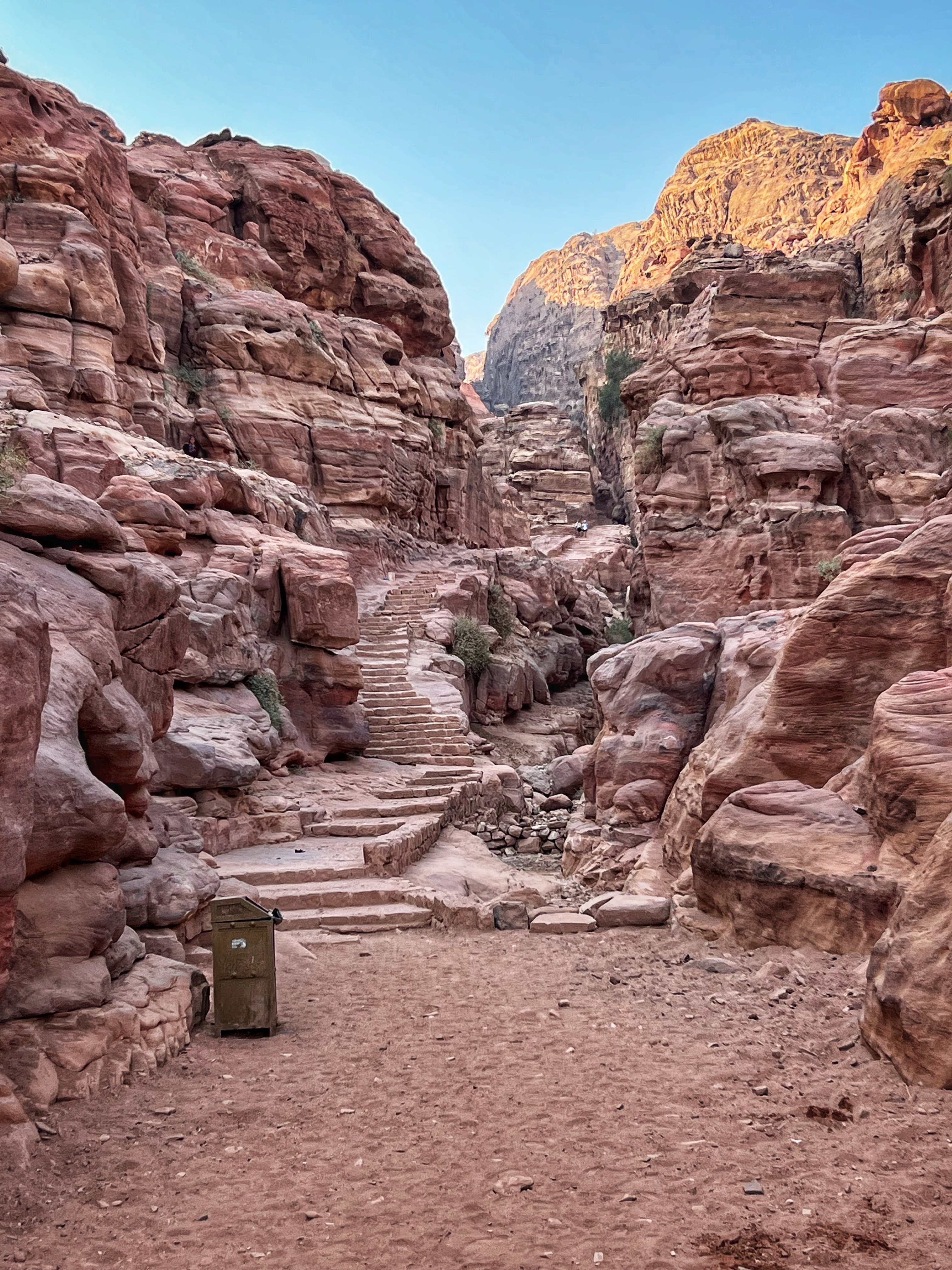
The trail abruptly ended right at the top of an incredibly steep lookout over the Treasury. It was SO high my legs were shaking the entire time. Ahmad took beautiful photos and hilarious videos of us overlooking the temple below. It was one of those moments I’ll always remember – a dream come true to finally see this wonder of the world. I knew I wanted to see it first thing in the morning, so right then and there I planned to return the next day at dawn. Don’t let these photos below fool you – I may be smiling but I was also terrified!
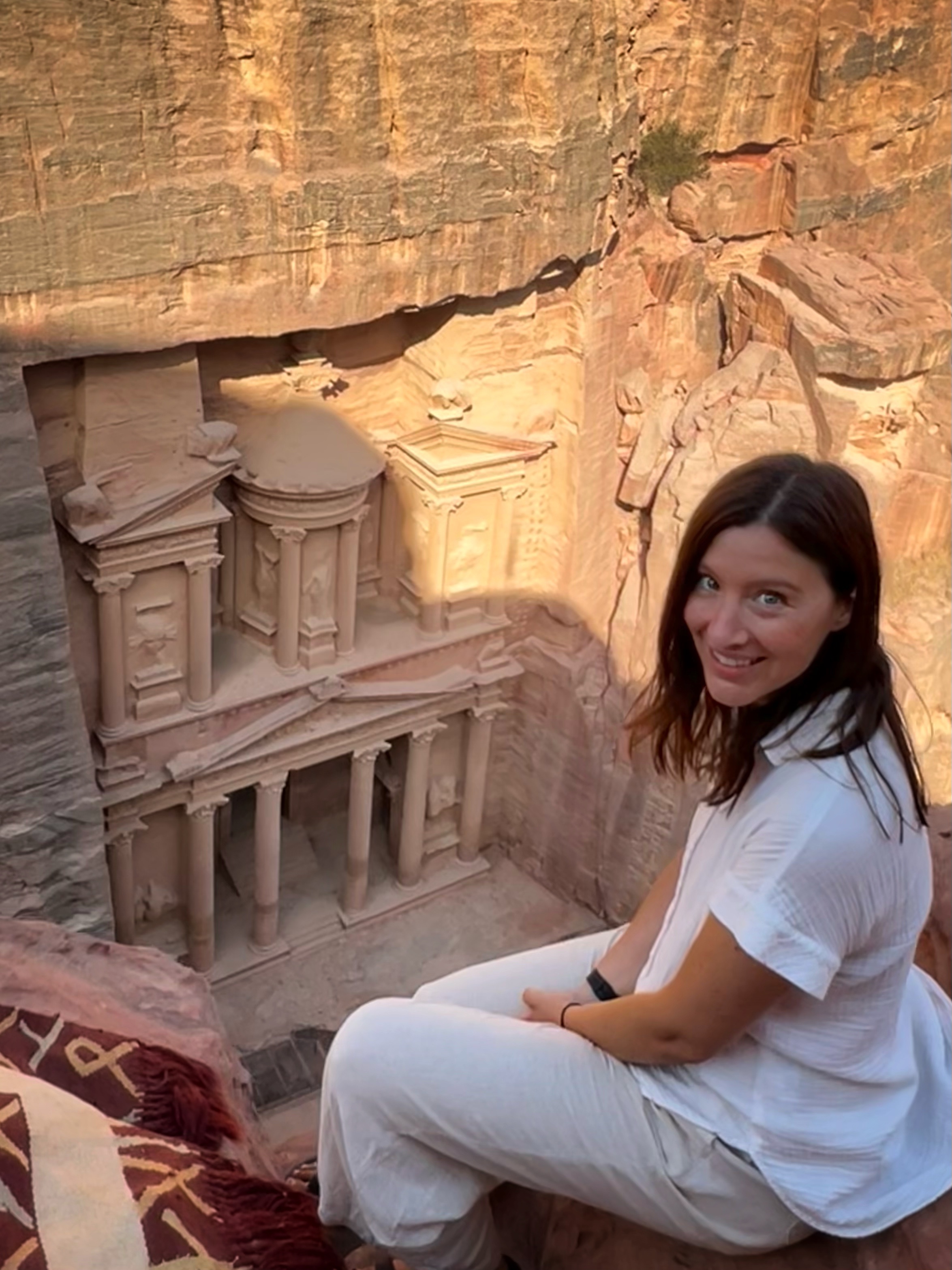
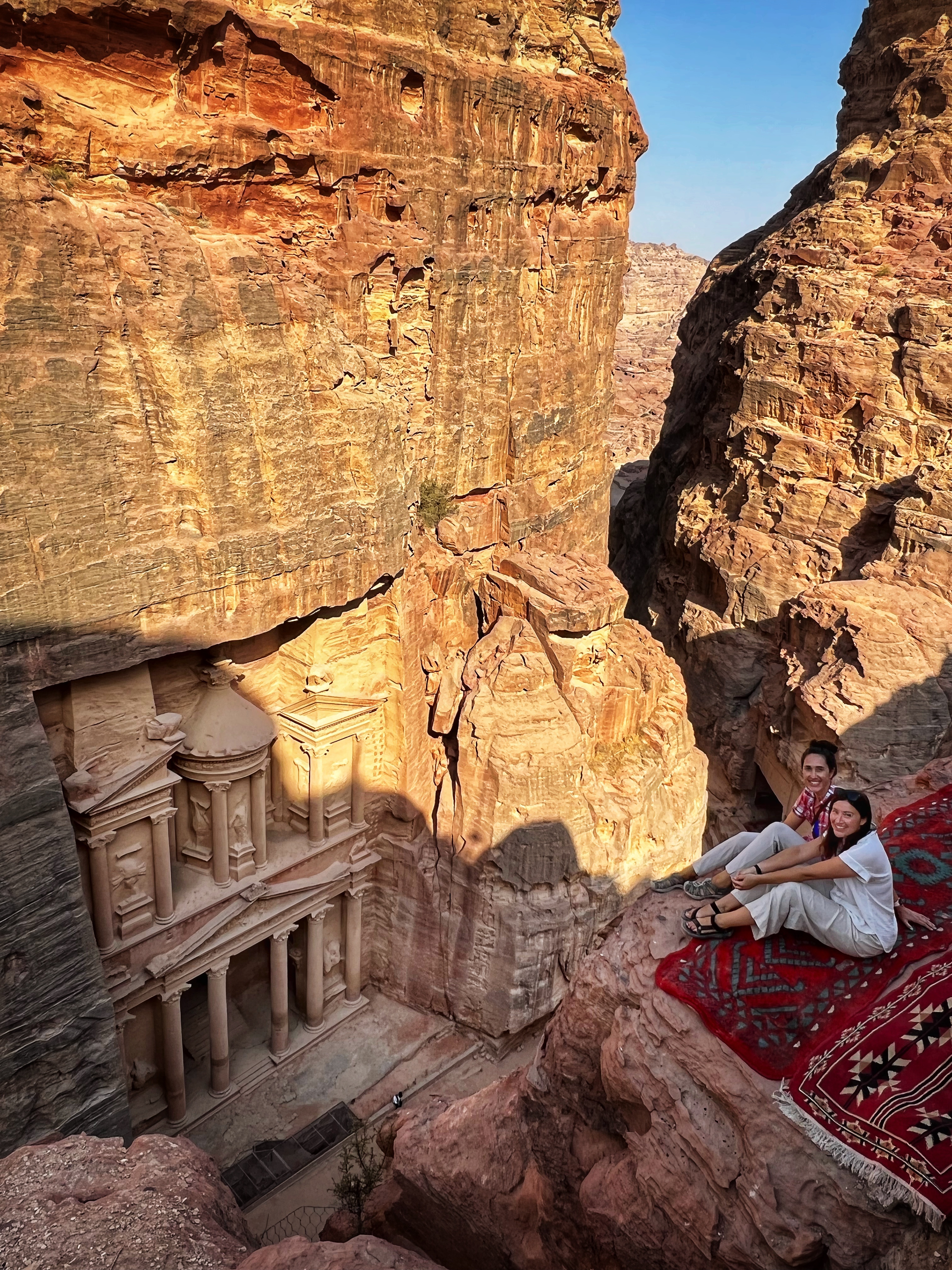

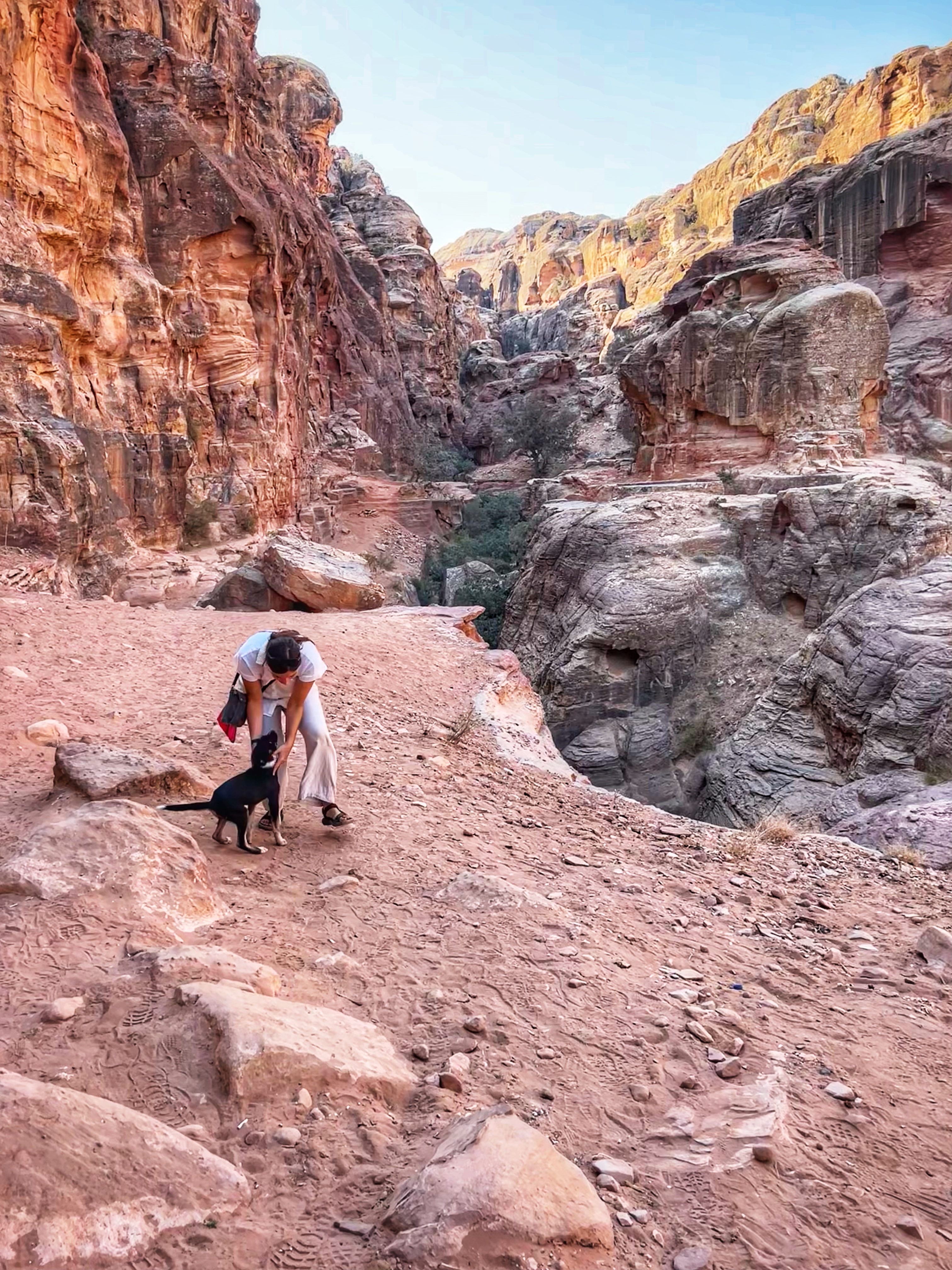
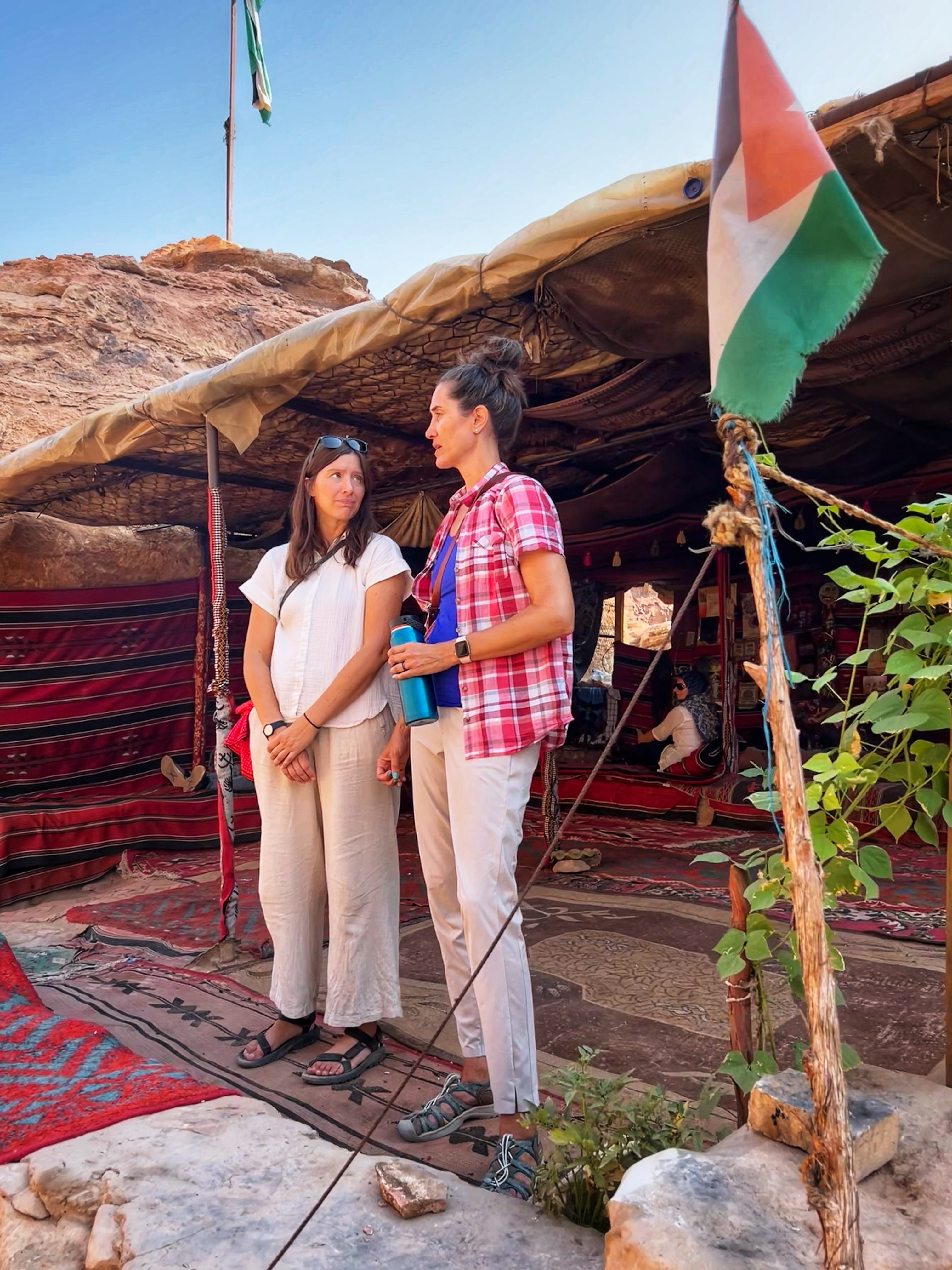
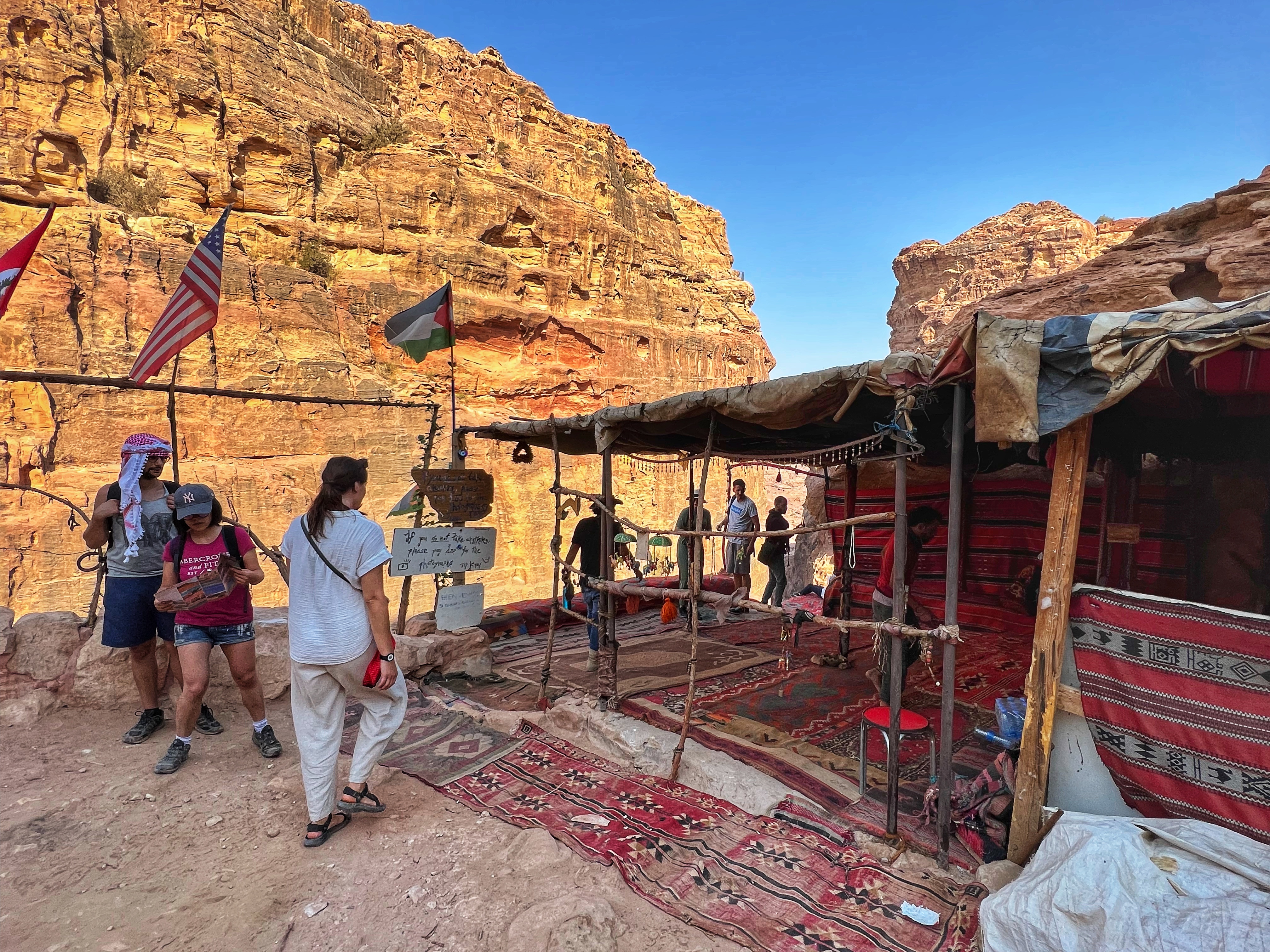
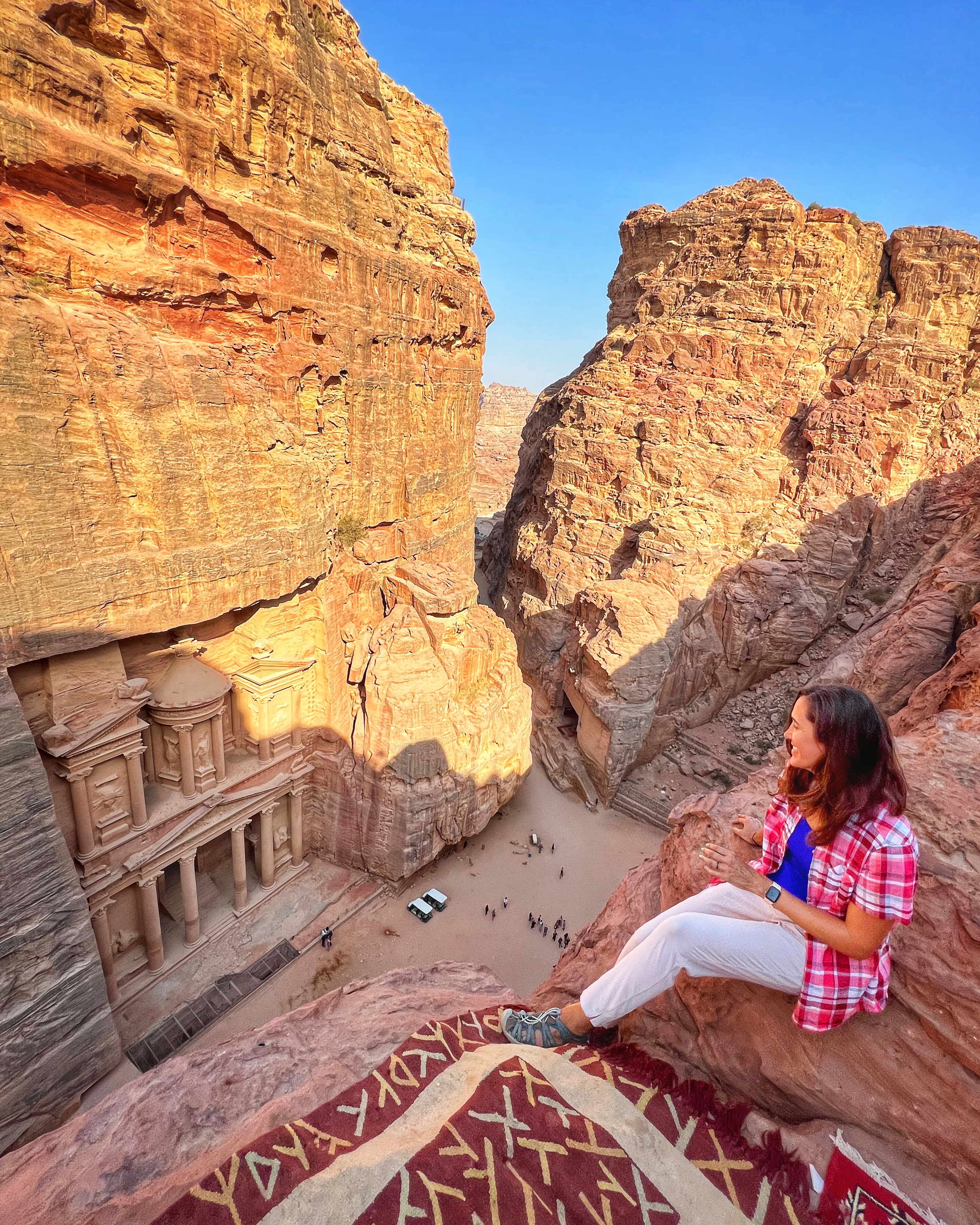

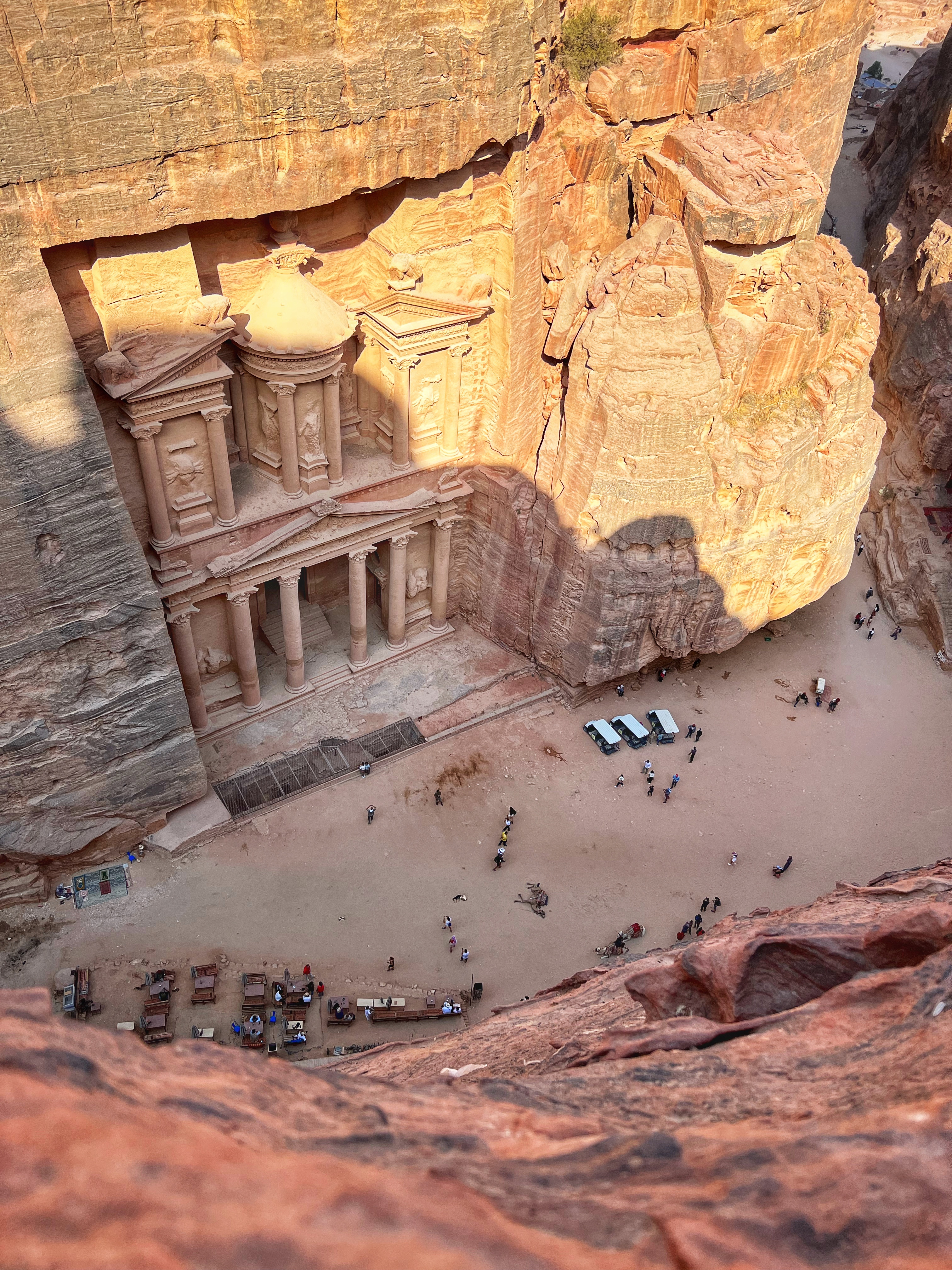
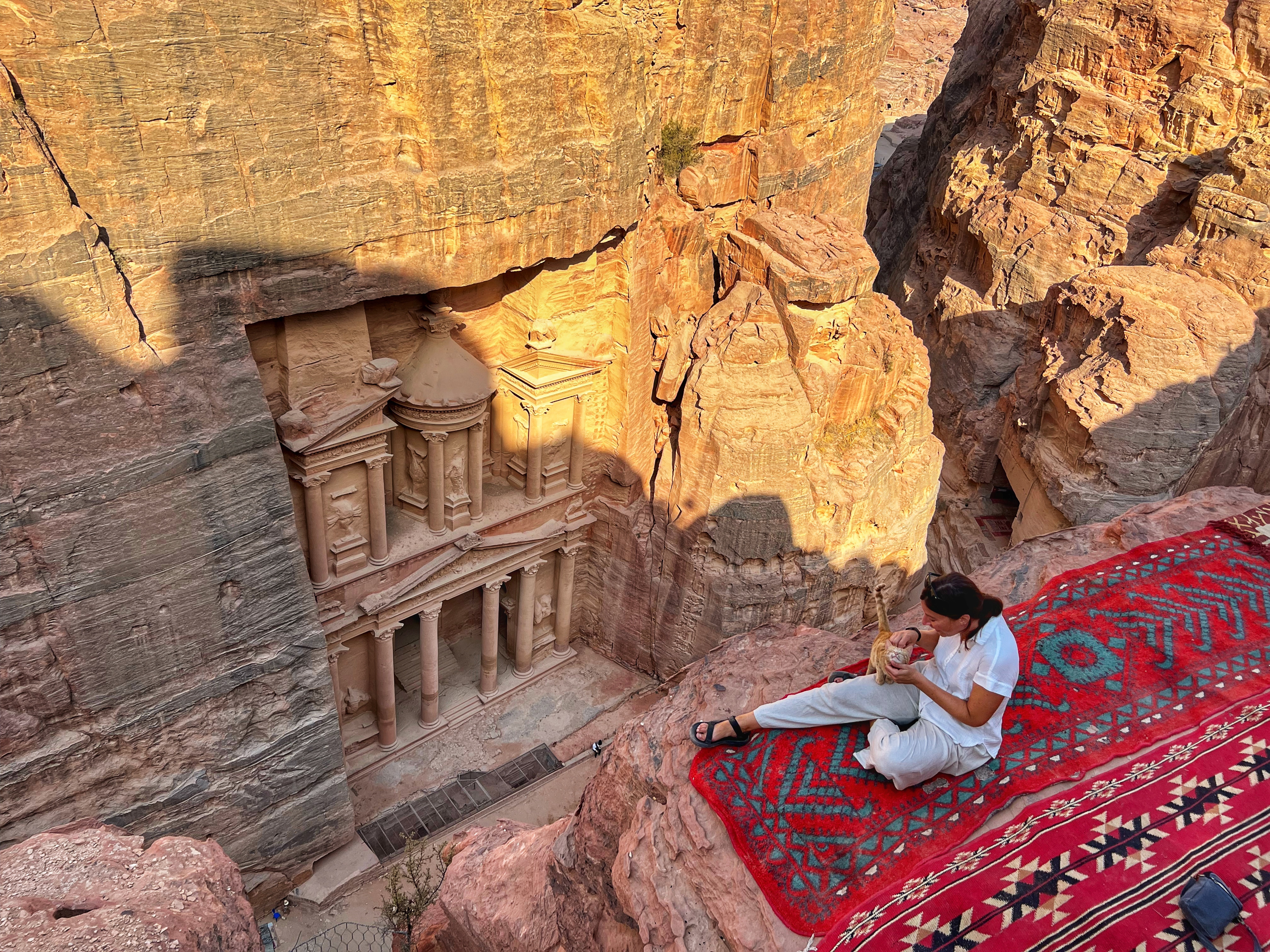
Ahmad took us down the narrow steps to the treasury by about 9:30, so it wasn’t too crowded but things were picking up. We thanked Ahmad and paid him in cash (with a hefty tip) and continued on our way to explore as much of Petra as possible by lunch time.

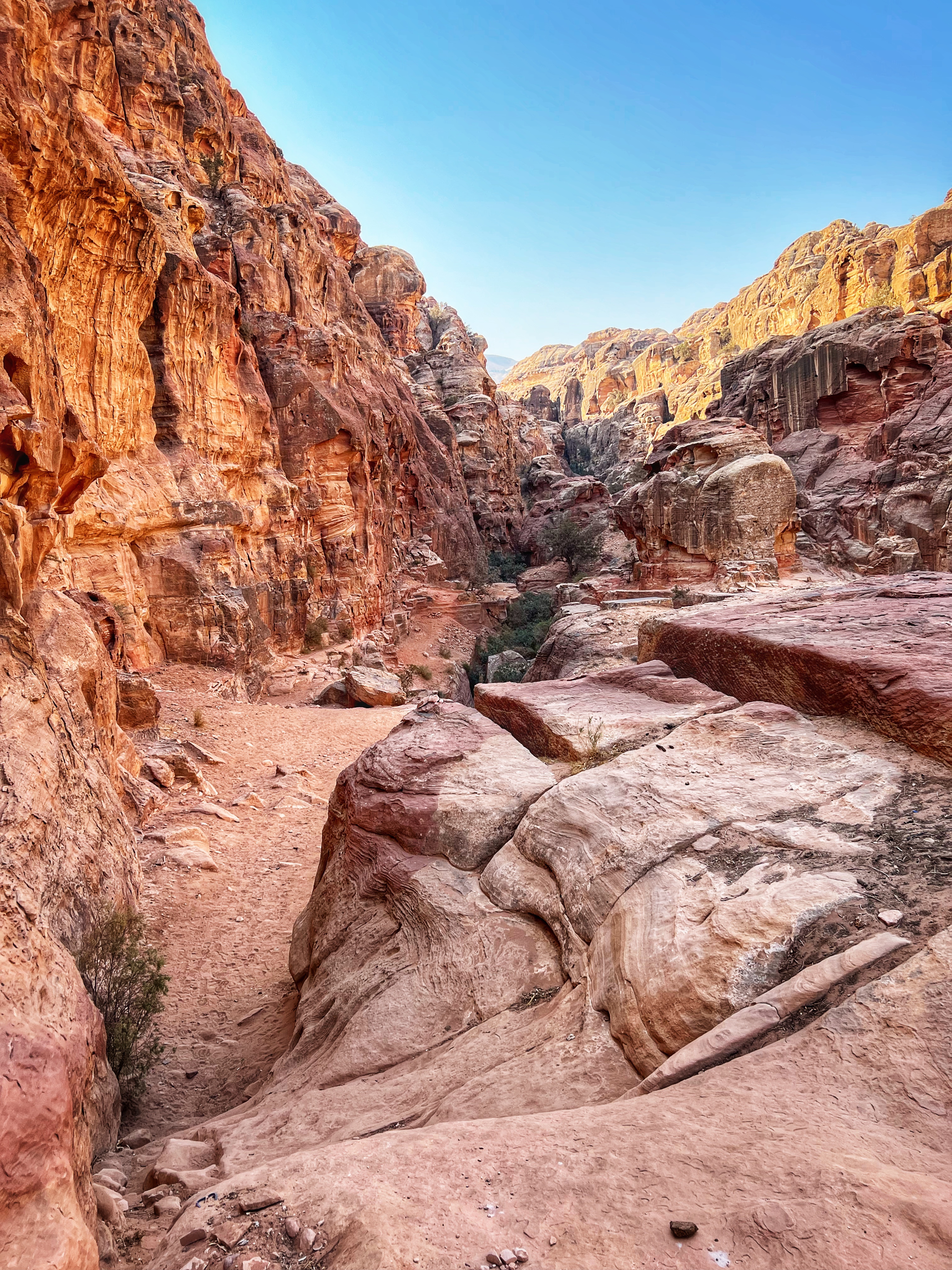


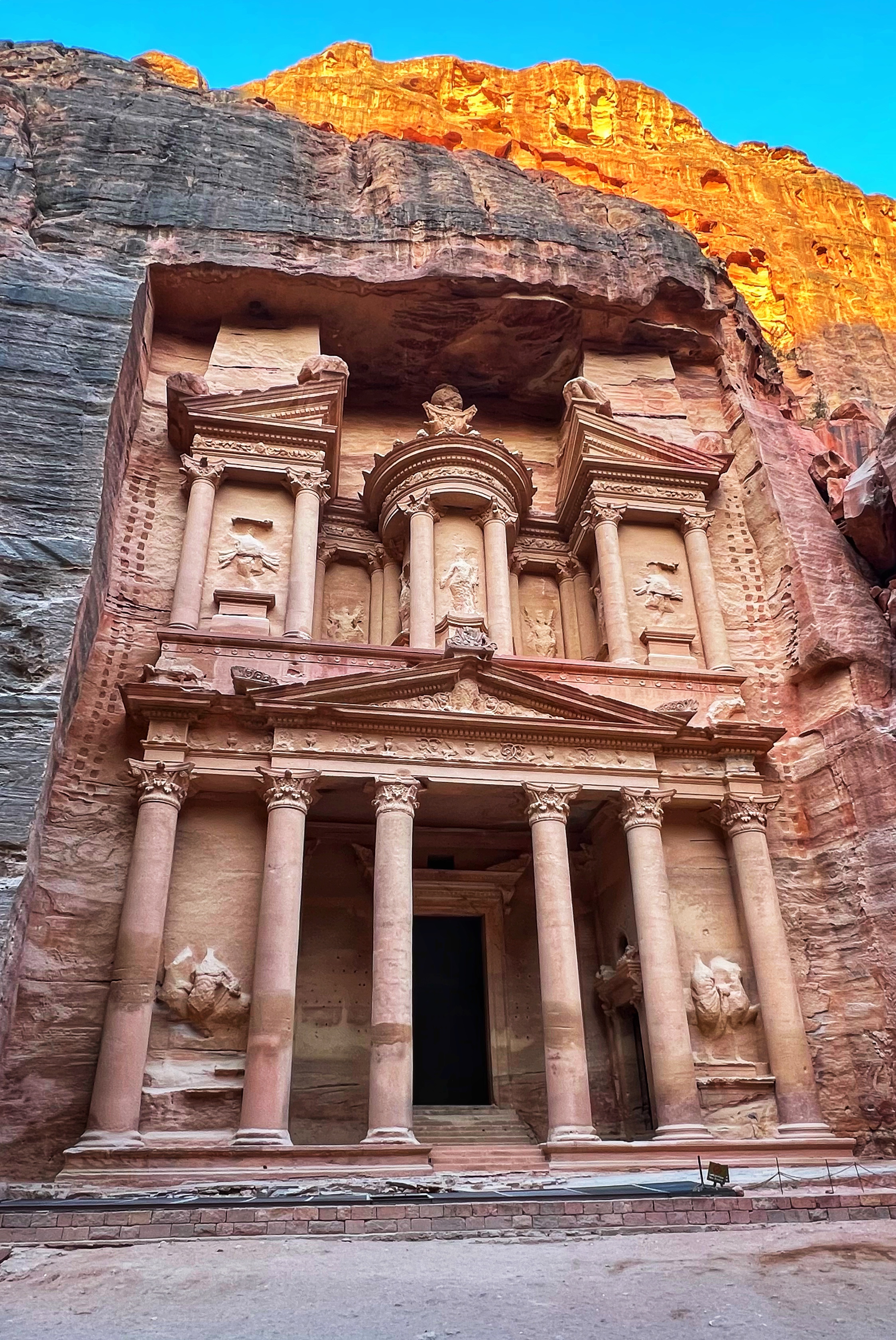
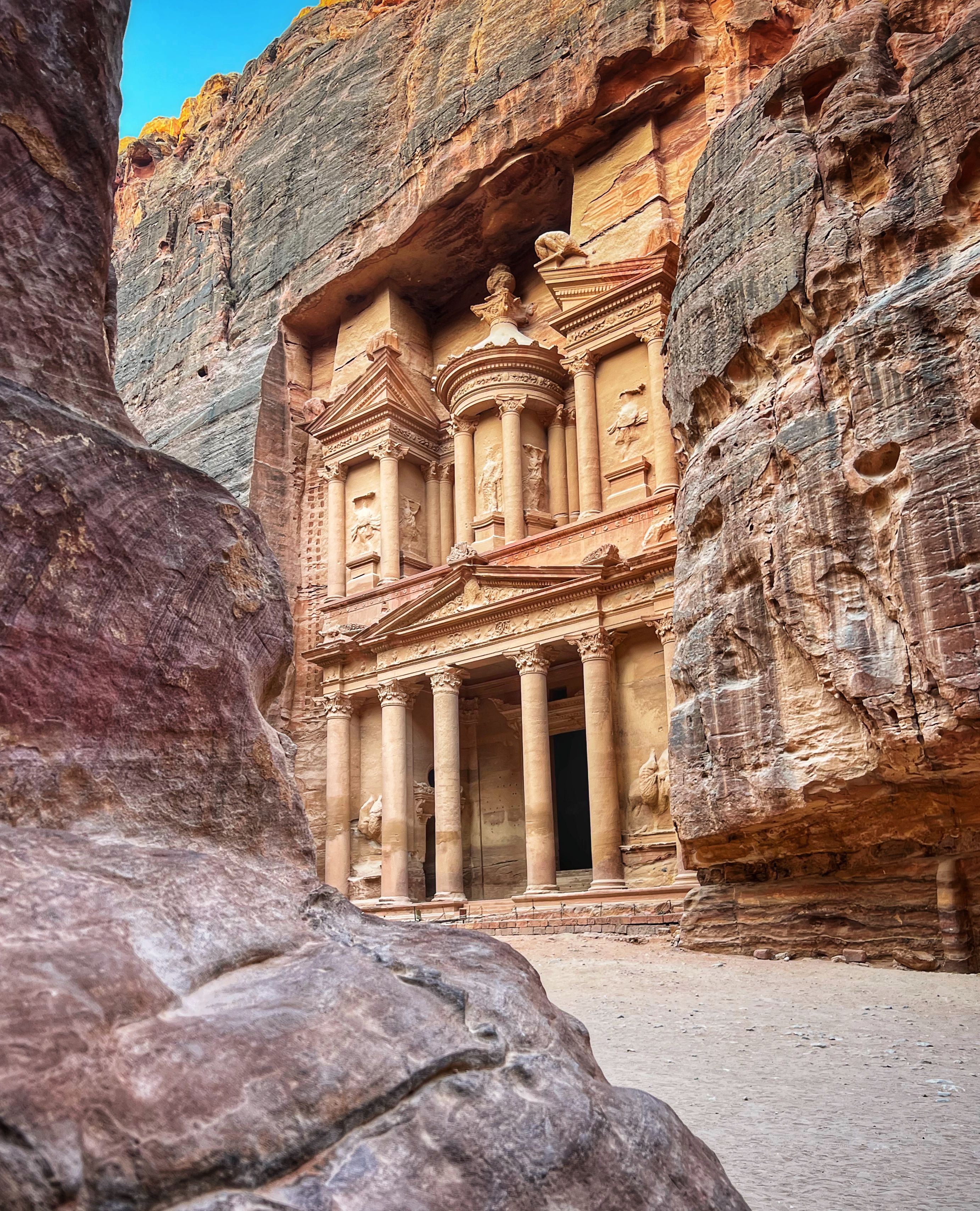
Here she is – an incredible sight. One I had been dreaming about since I was a child.
PETRA
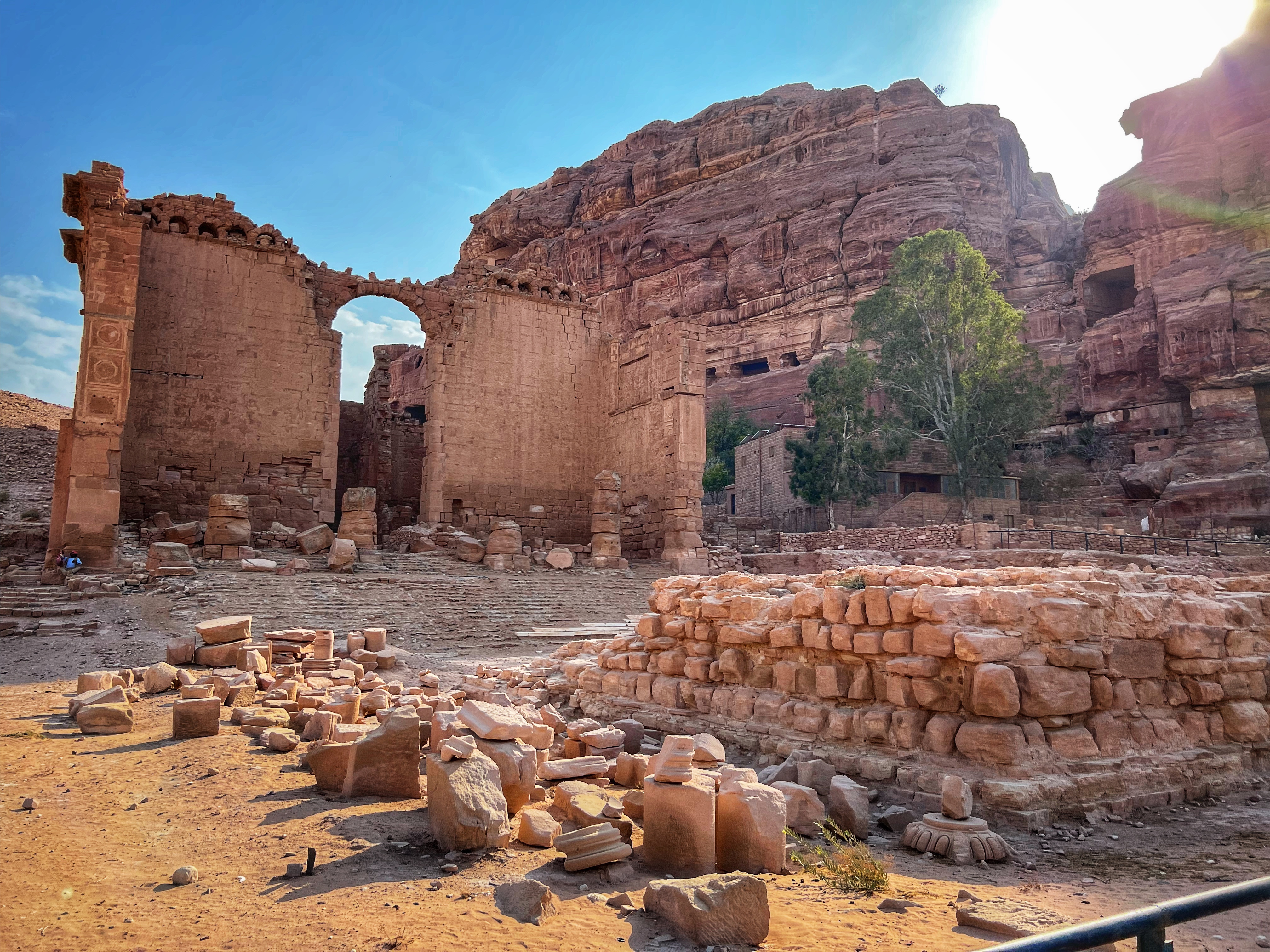
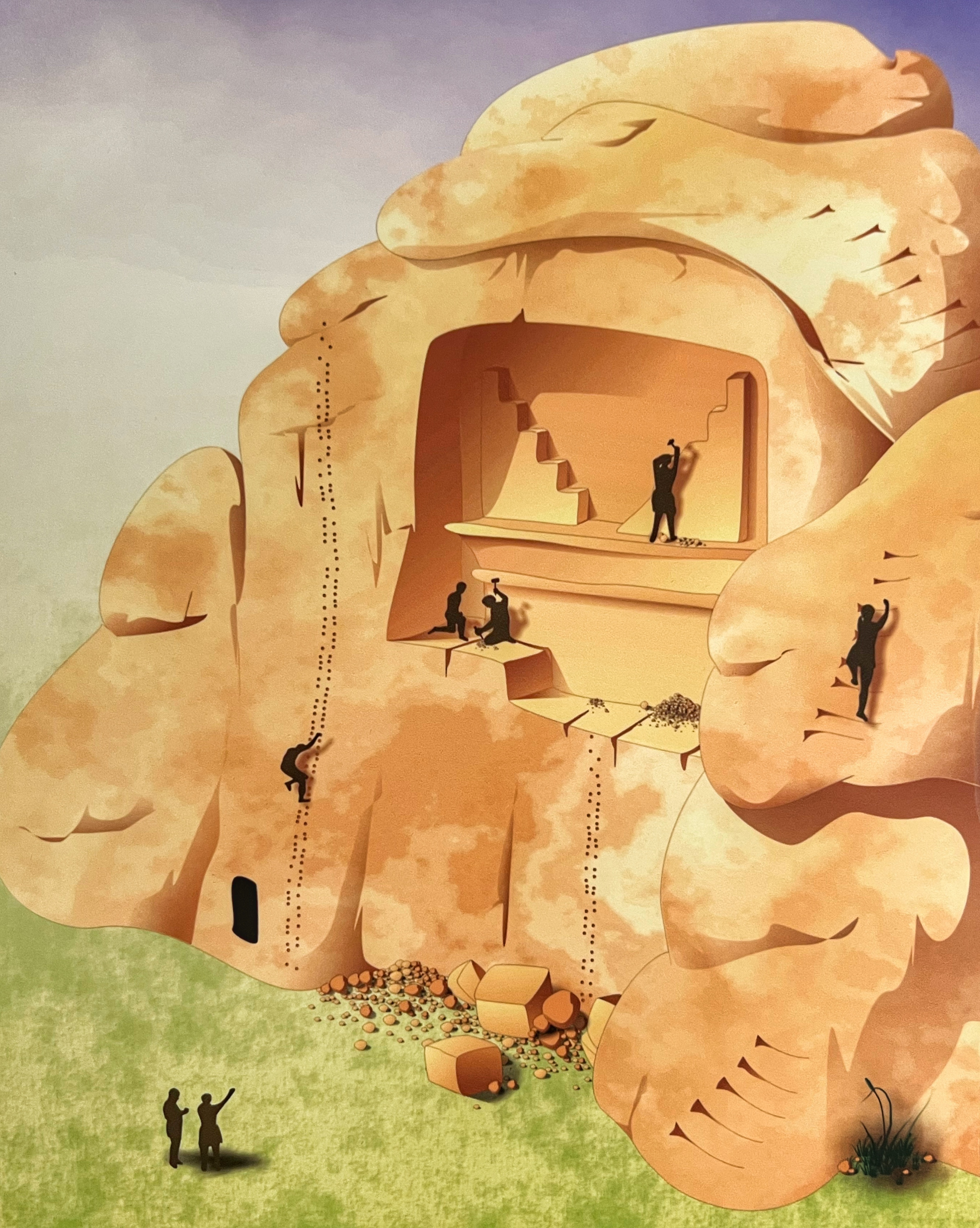
Petra (the Greek word for “rock”) is the name for the entire archaeological site that includes many intricate stone temples and caves carved into the rocks, including the famous Treasury (below) and Monastery. The area has been inhabited for over 7,000 years – but the works of perfect carved stone architecture were built by the Nabataeans around 2,100 years ago. This group of people became wealthy by controlling the trade routes – at the time this area was part of a popular spice trade route that became quite lucrative. The Nabataeans were skilled at collecting rainwater by carving stone waterways. It is suspected that the elaborate temples and tombs at Petra and Little Petra were constructed from the top down. The Nabataeans were an impressive people, but they controlled Petra for less than 200 years before the Romans came and took over the city. Today many Roman ruins are also viewable at Petra including the Byzantine Church, Hadrian’s Door, and Nymphaeum.
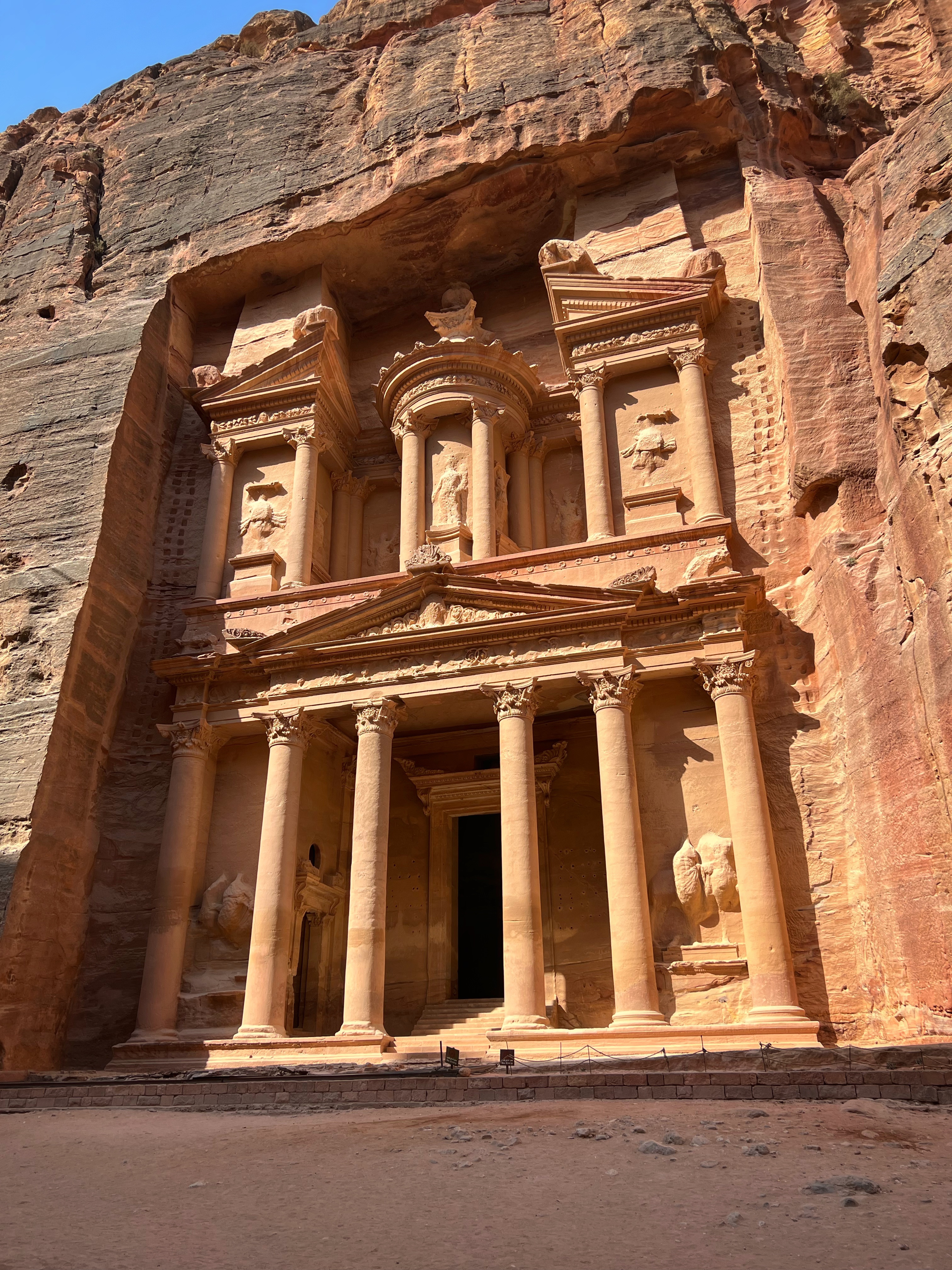
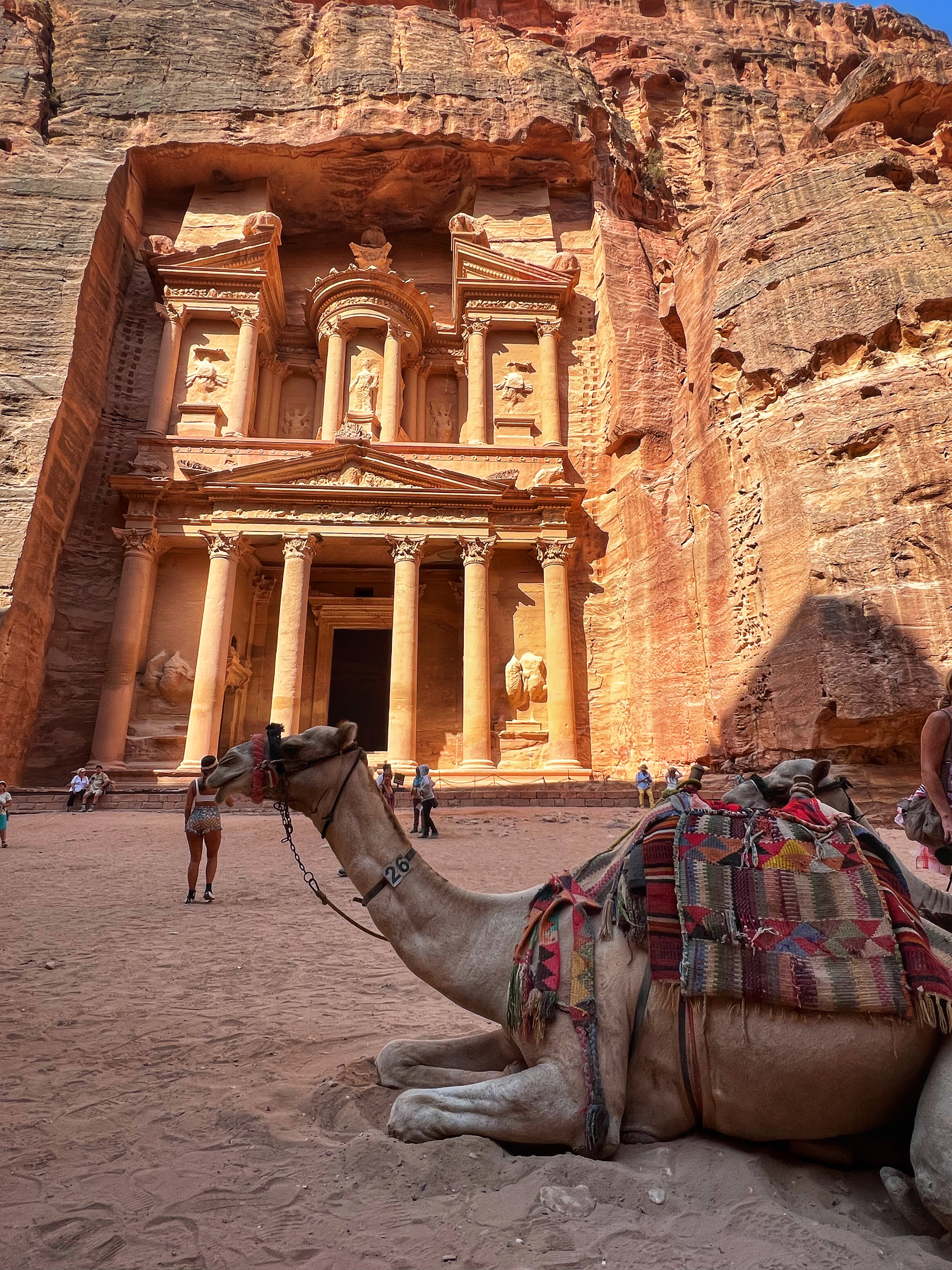
At the Treasury there are many Bedouins ready to pitch you ideas – “5JD for a quick ride with photos on the camel?” “5JD to go up for a photo from above?” “Would you like to ride a donkey to the monastery?” – so be prepared for solicitations. I actually recommend taking them up on the “photo from above” offer as there are several really beautiful spots and they’re skilled at taking photos for those interested. There are also many shops and just about anywhere you can find souvenirs or refreshments. There are also a few restrooms inside Petra, but I recommend bringing your own toilet paper (BYOTP).
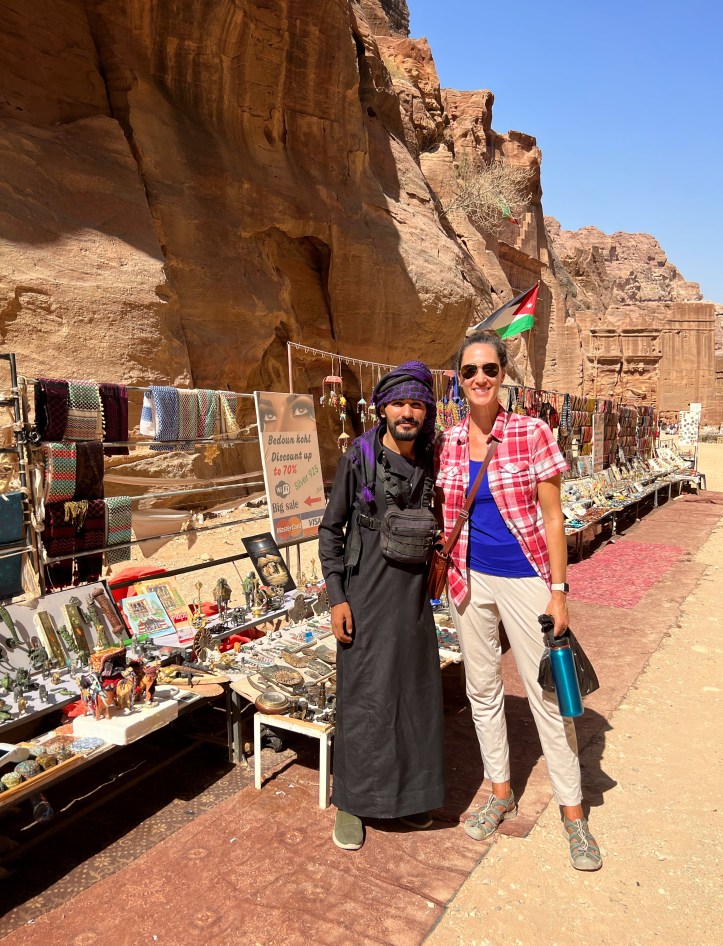
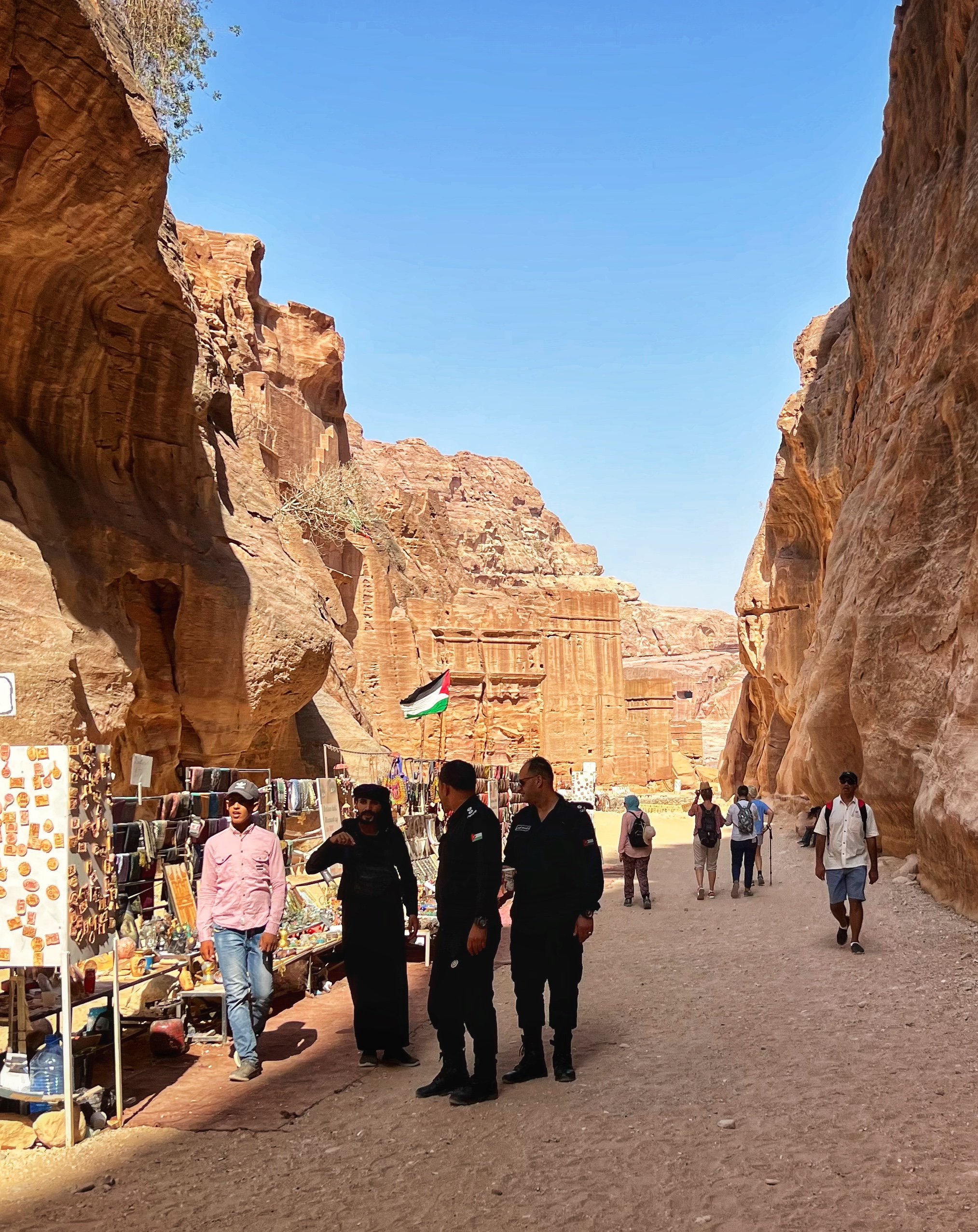
While we explored, I enjoyed talking with the locals to see how they would open up about their lives outside of the typical script they usually say to tourists. I asked about “tension” between Bedouins and the police. Hassan, seen here with me and talking to police, was candid in sharing about the Bedouin lives. He told us most Bedouins he knows would love to still live here with freedom at Petra, but almost everyone has been kicked out and they’re now living in a village nearby. “We don’t like it,” he said, “the police don’t even want us to be here selling things.” Every Bedouin we spoke with wishes they could still live in their caves, but they are no longer allowed. There are many reasons for this, including efforts by the government (with the support of many big tourist nations like the US and Japan) to make this a “cleaned up” tourist site. Still, I felt bad that many of these free spirited people couldn’t live according to their traditions. To me, as a tourist, I want to see and learn exactly what it is like for people here – I want to see real life – not some manufactured production version or movie set. We learned quickly that the alerts we were getting from our state department were overly exaggerated at best, and misguided at worst. Some even said “do not go to Petra.” Seriously? It was very relaxed and peaceful there – no issues or risk whatsoever. We came to understand that the police/government and local Bedouins have differing perspectives on how the site should be run, and that’s the extent of the conflict. Obviously it is better to be safe than sorry, but when we saw for ourselves, we felt very safe.
We loved how every Bedouin seemed to know every other Bedouin and call each other “brothers and sisters.” We learned people’s names and said things like “Yes we just bought a scarf from Merian at the Royal Tombs” or “We just spoke to Kaseb about that, too,” and with recognition in their eyes, we were treated like family, too.
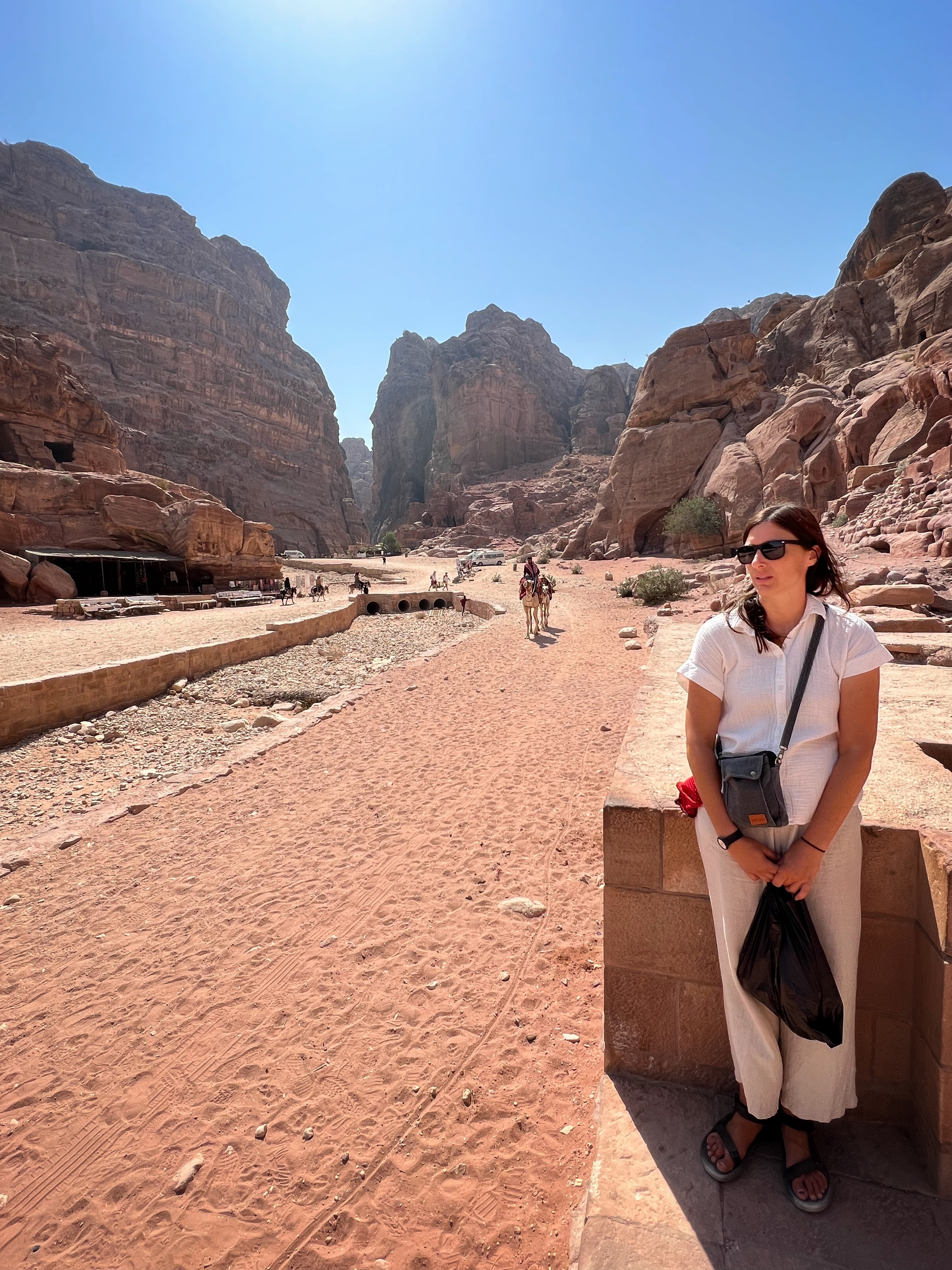
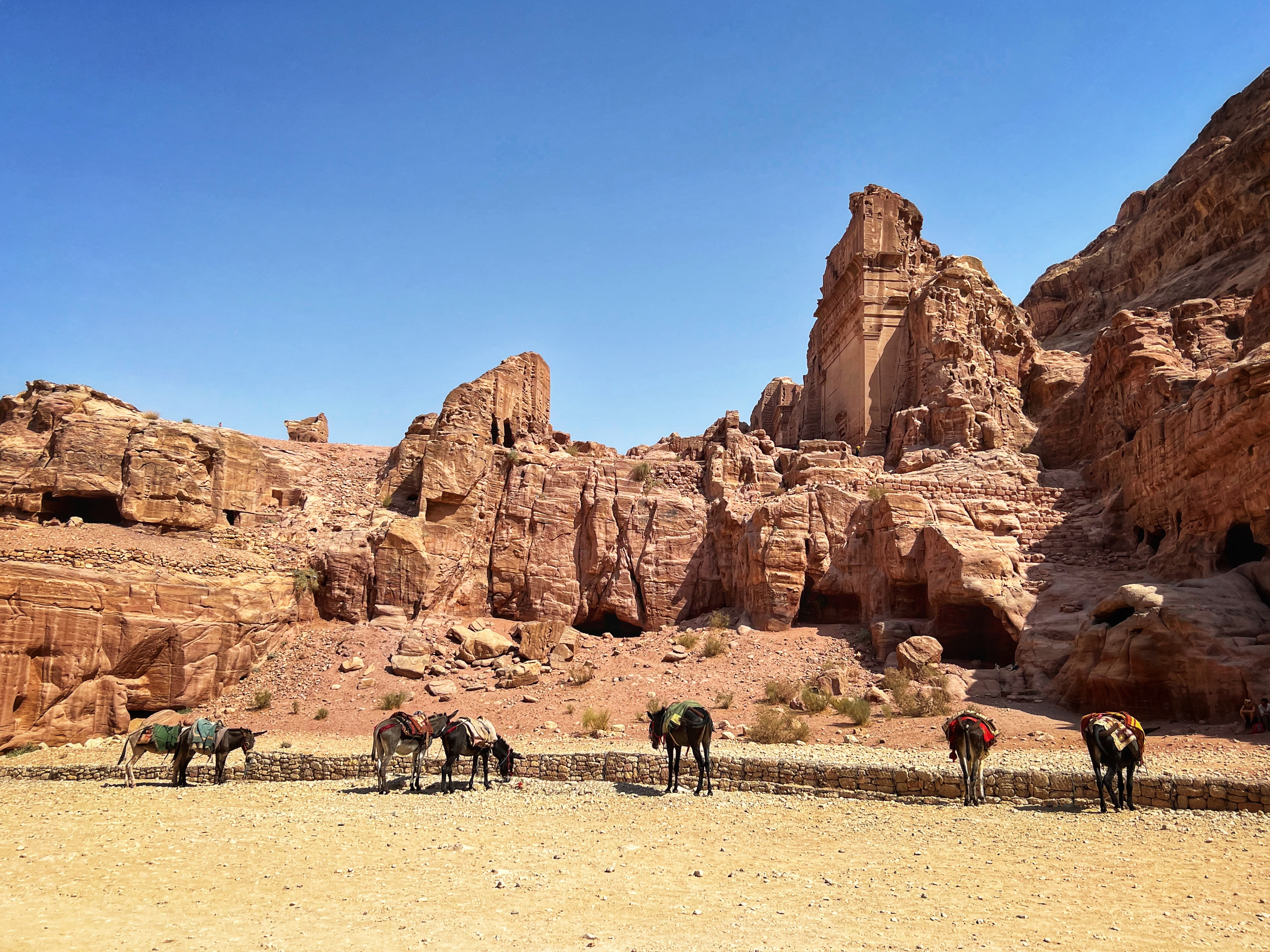
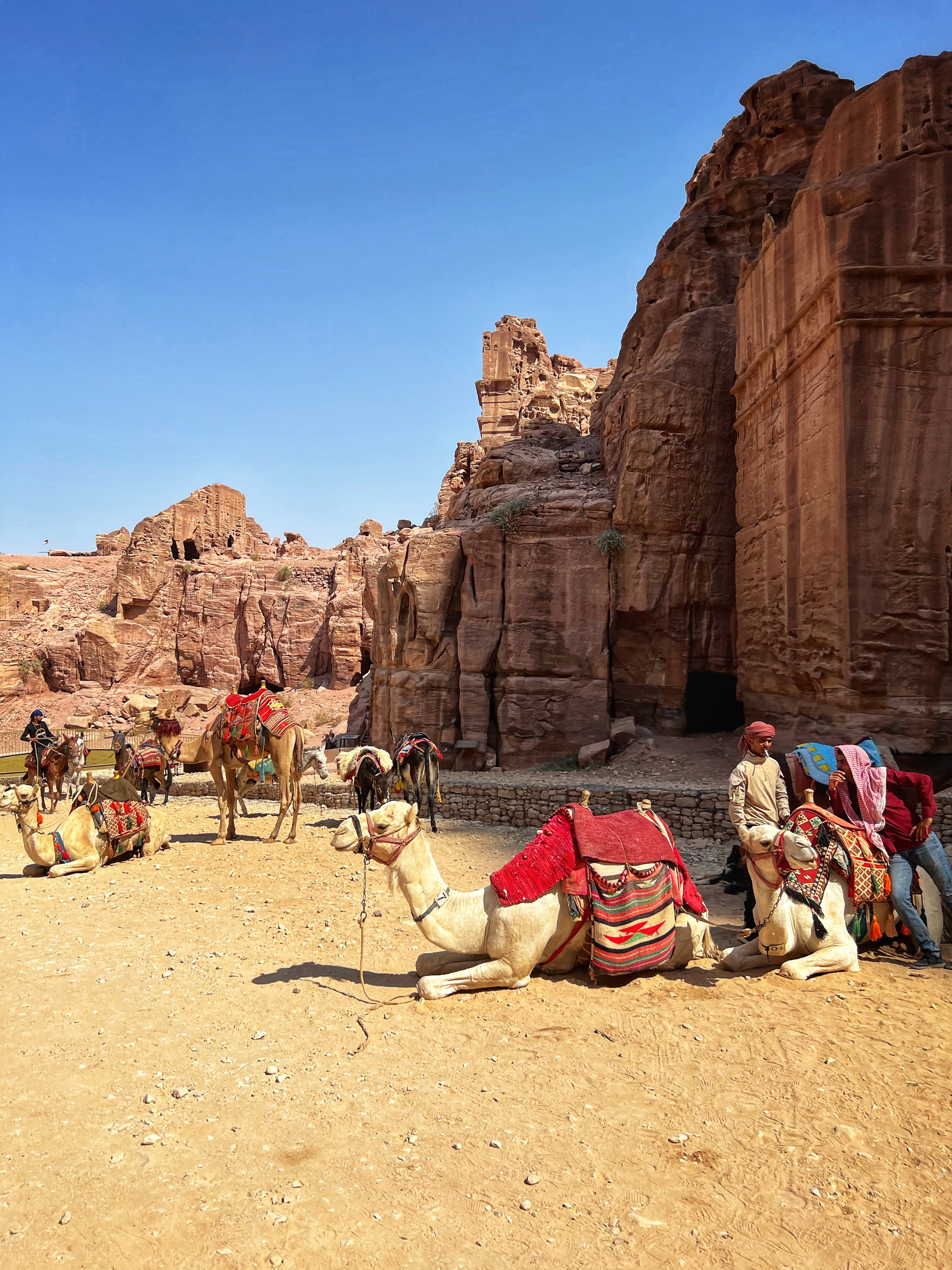

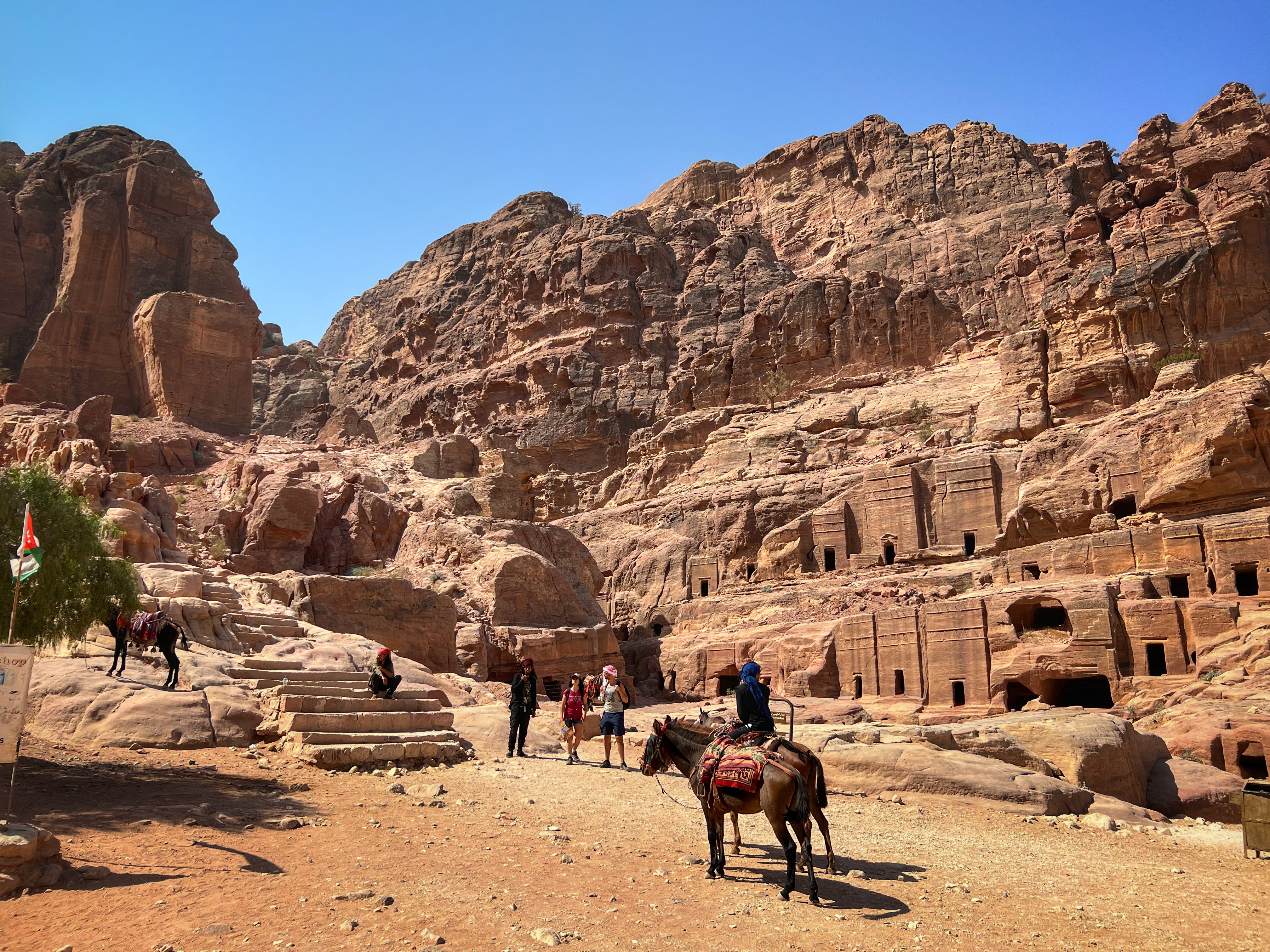
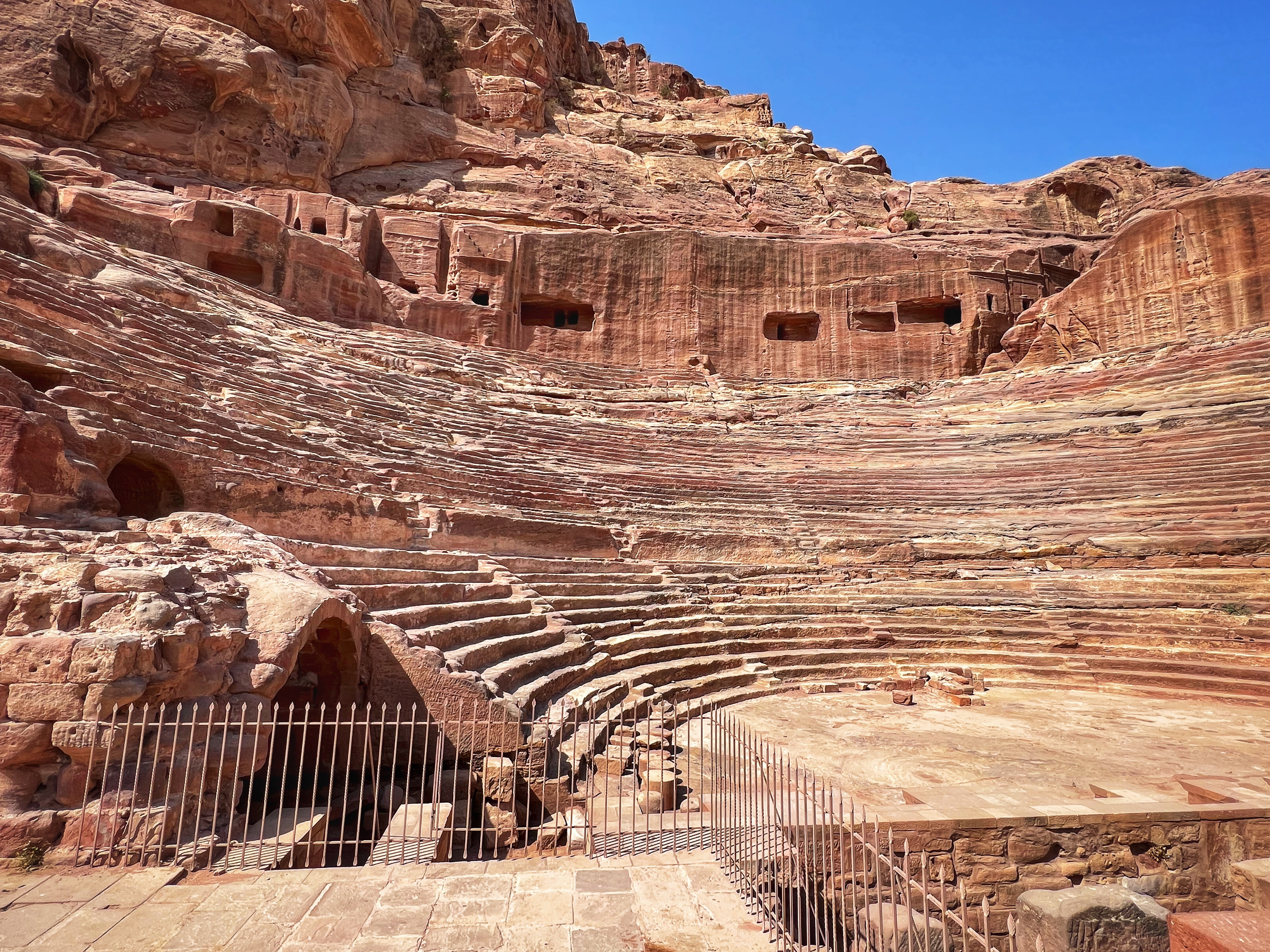
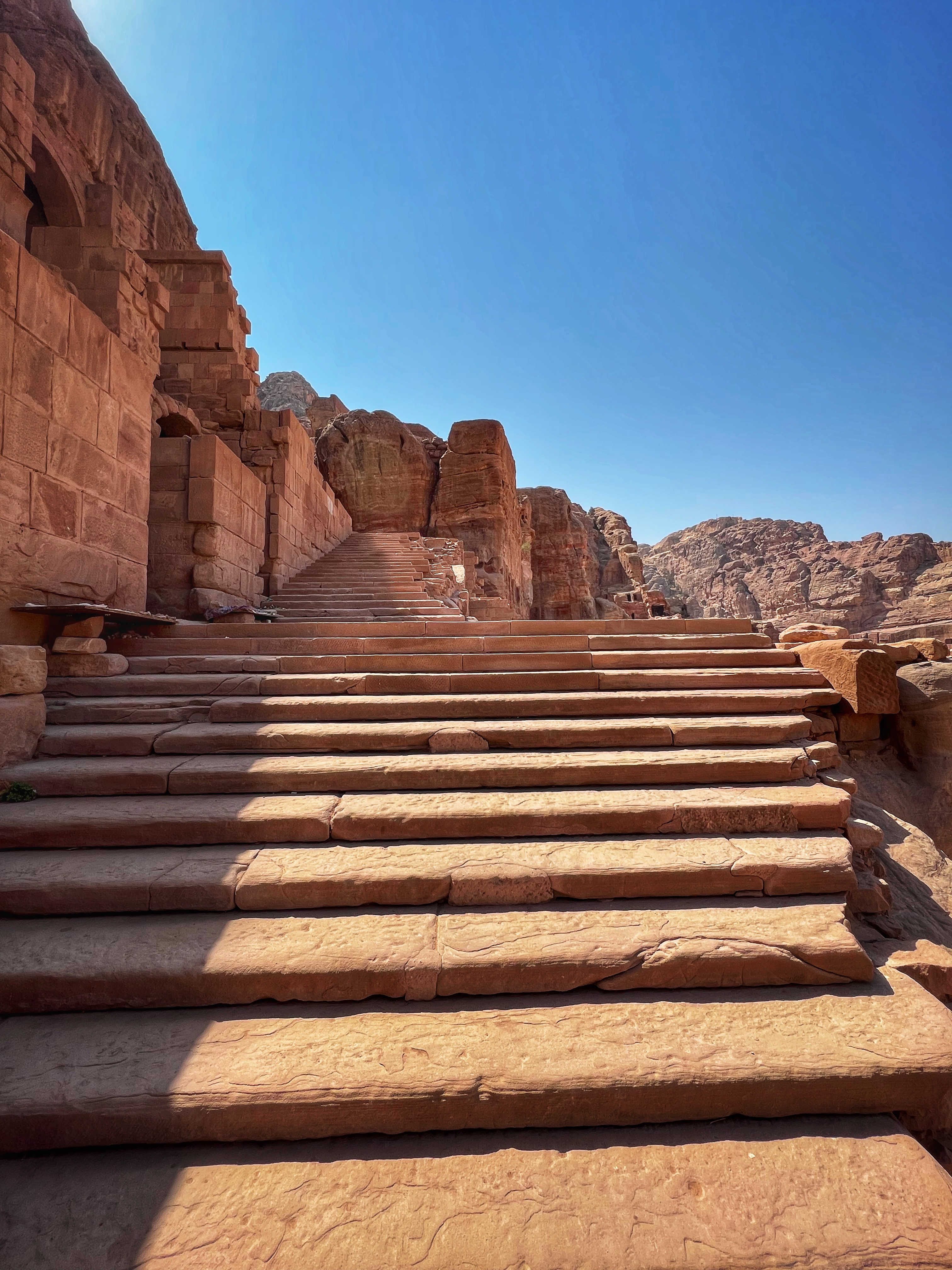
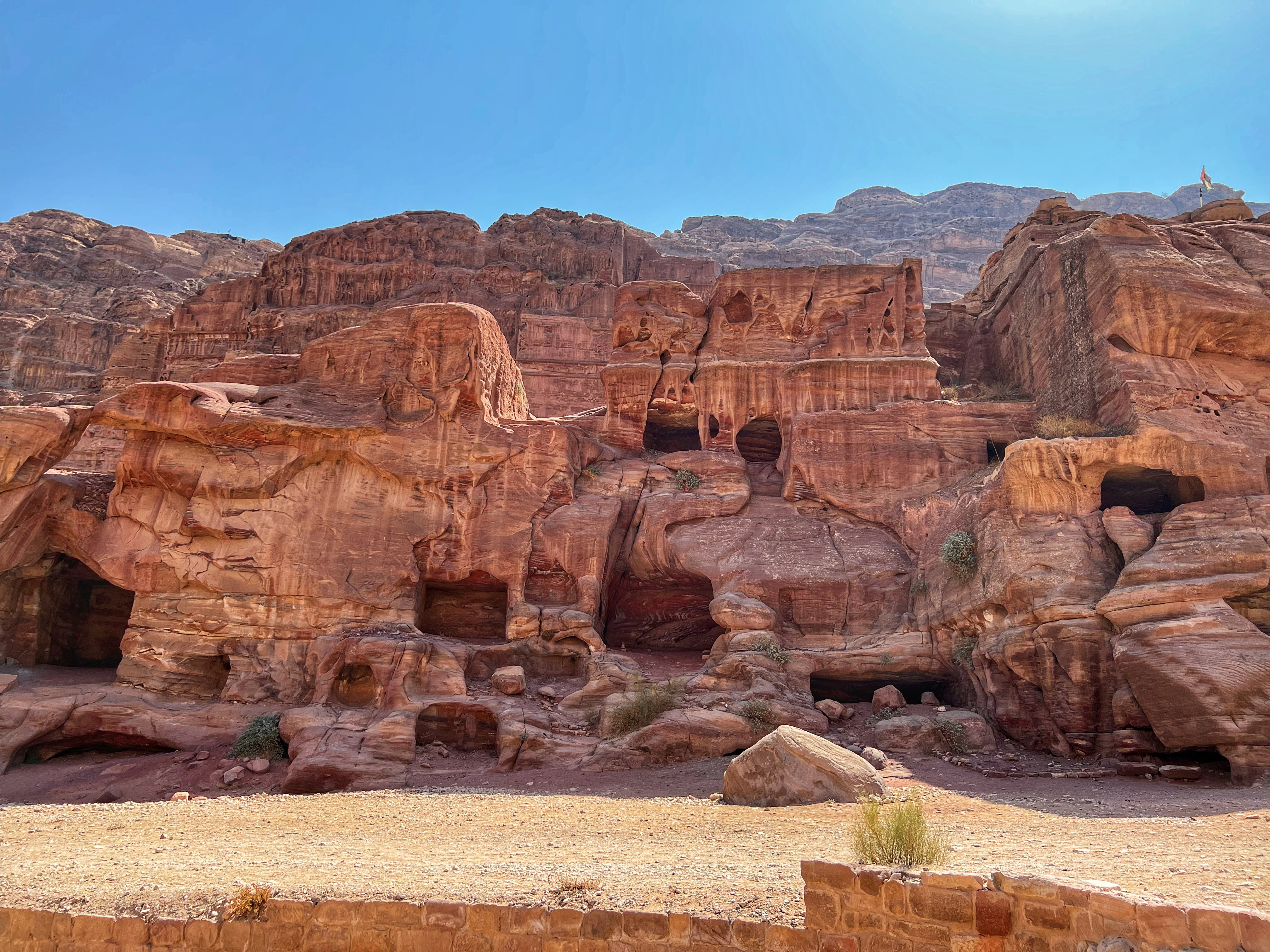

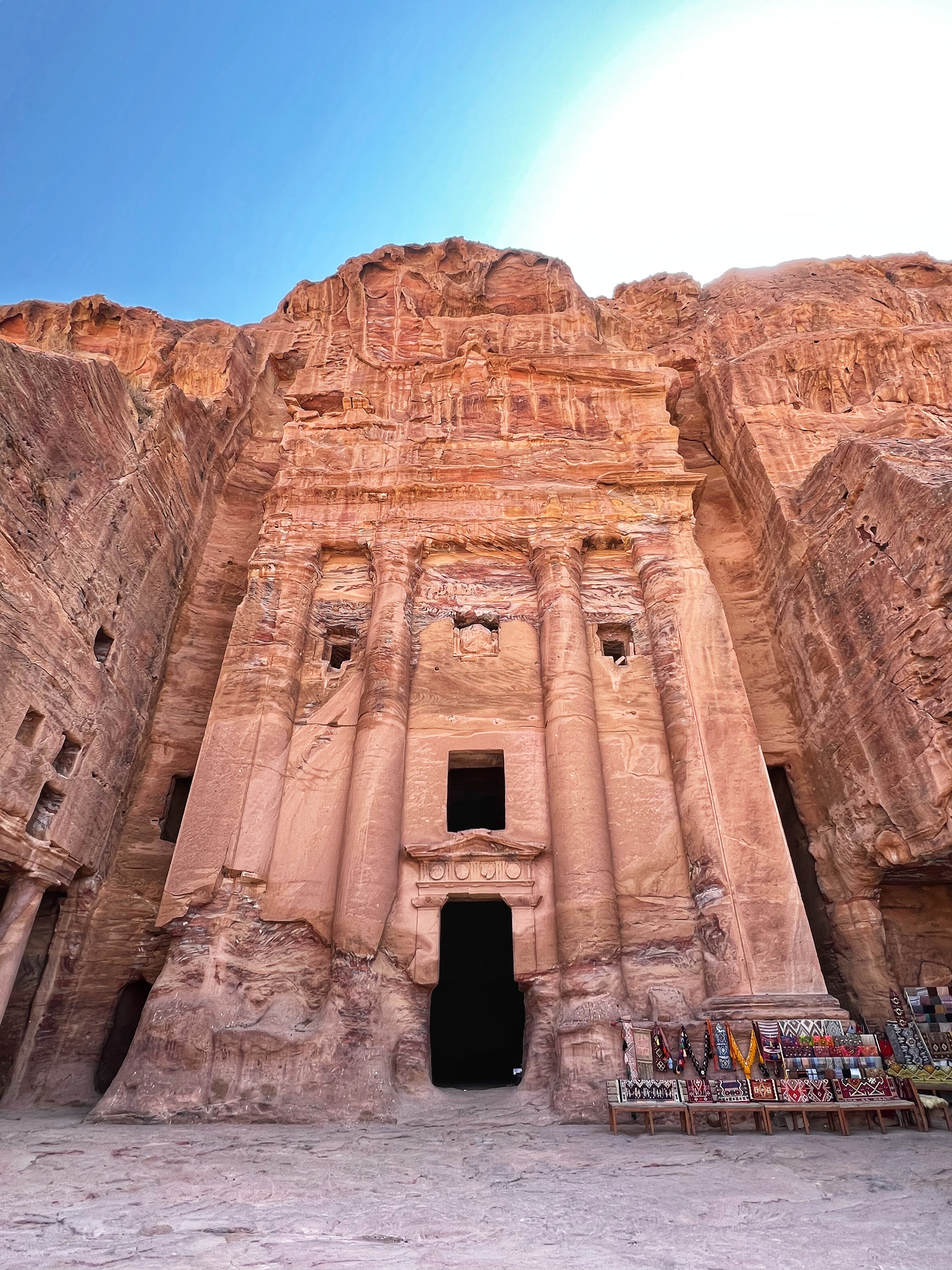
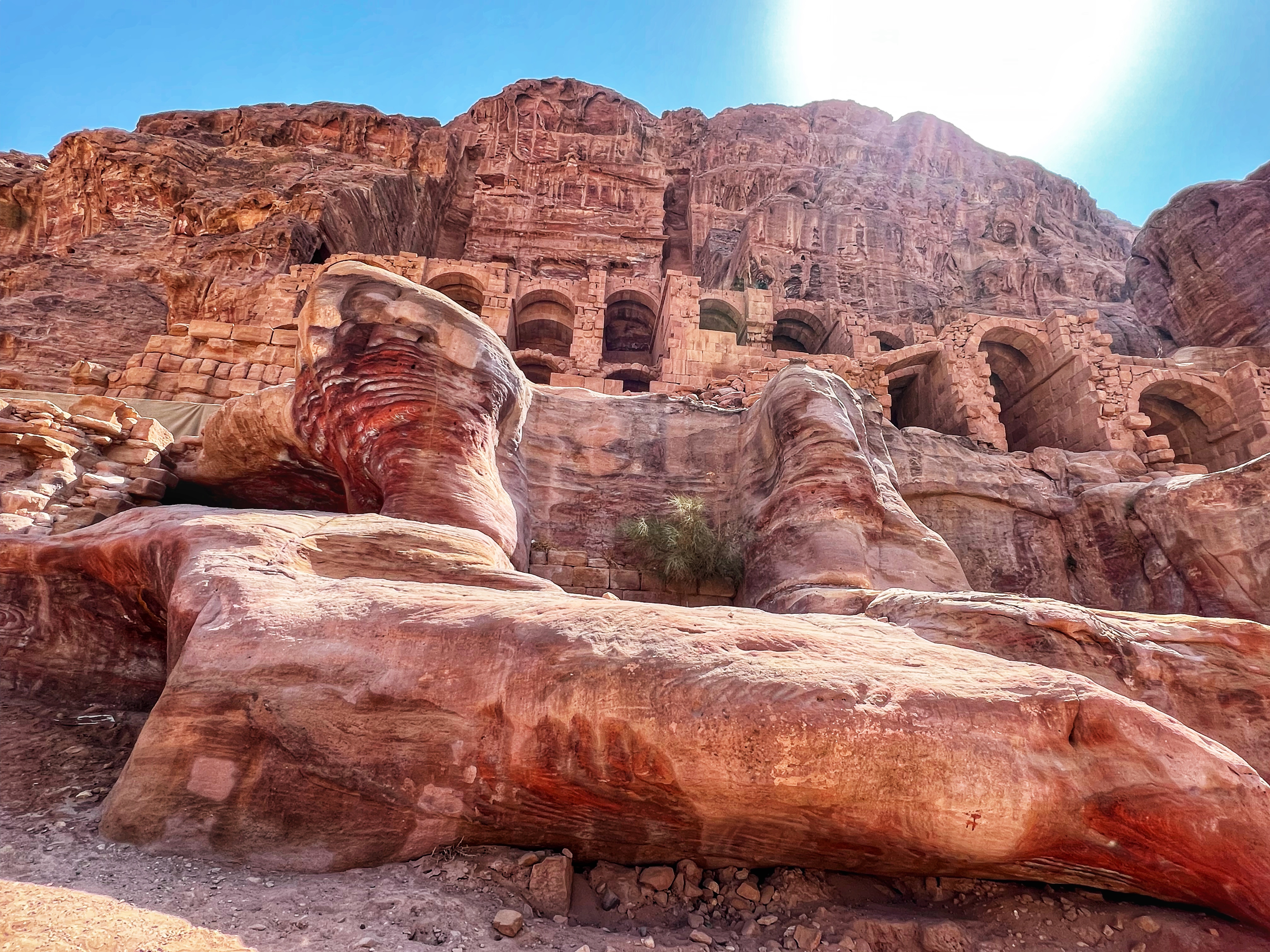

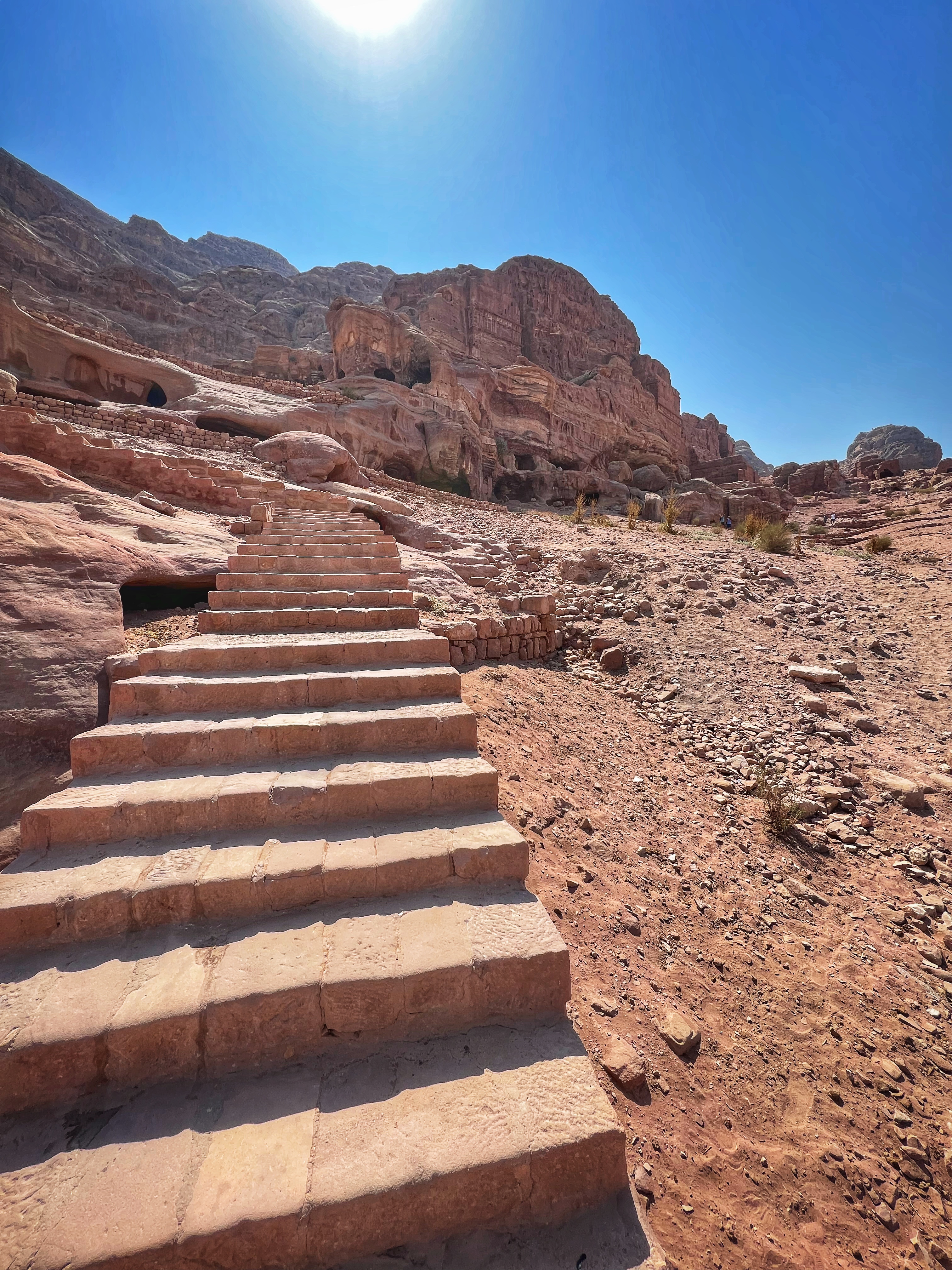
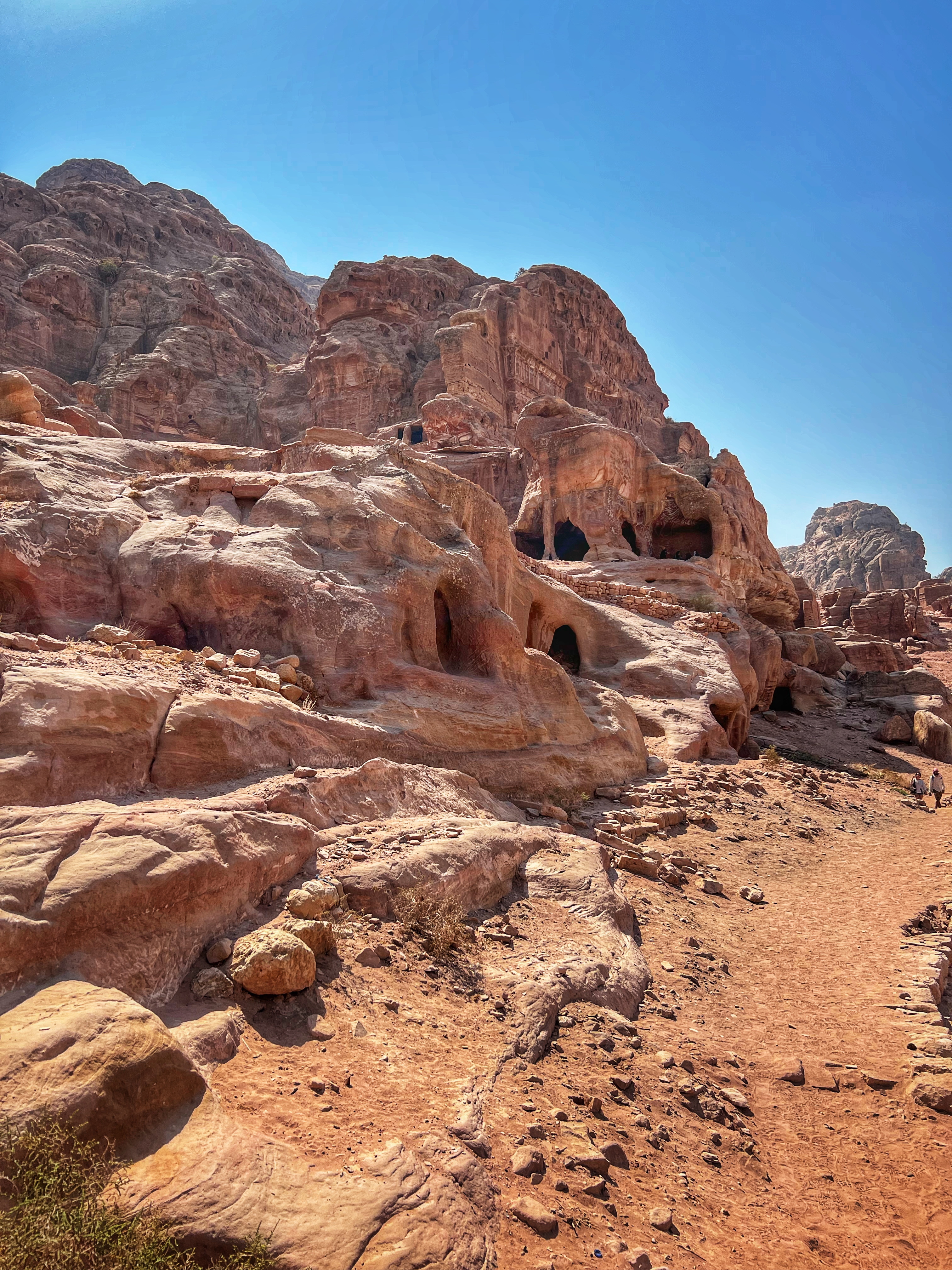
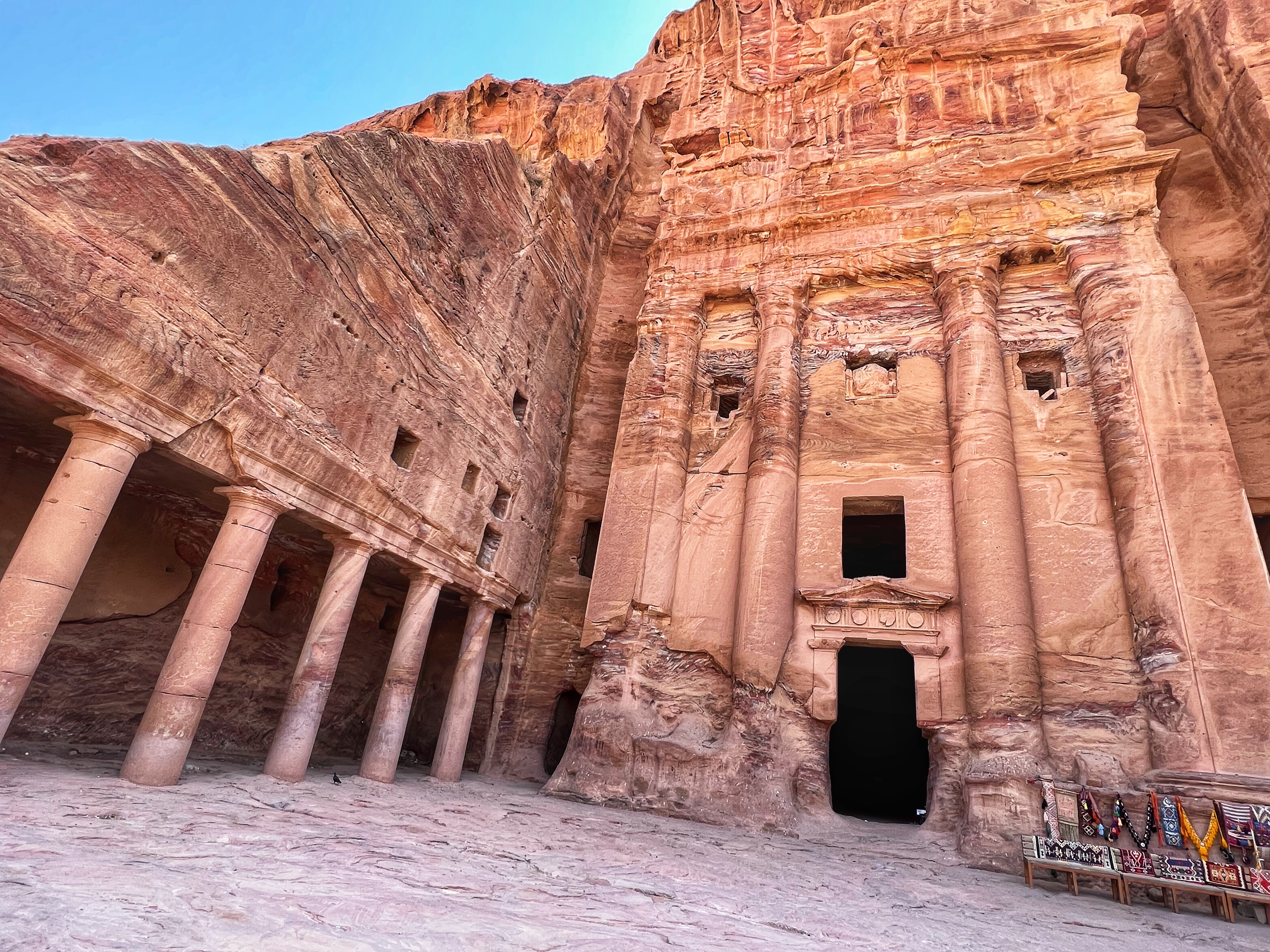

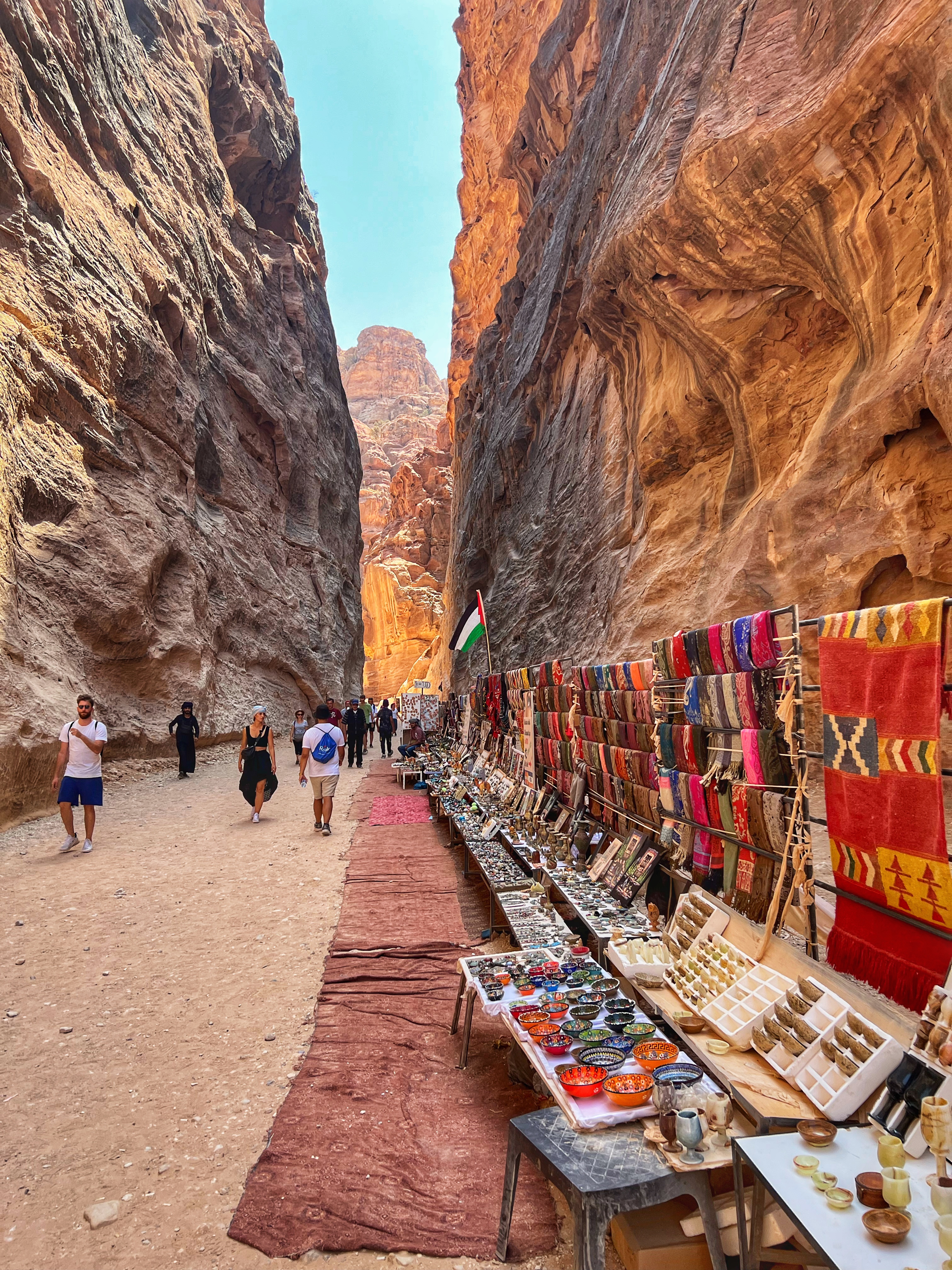
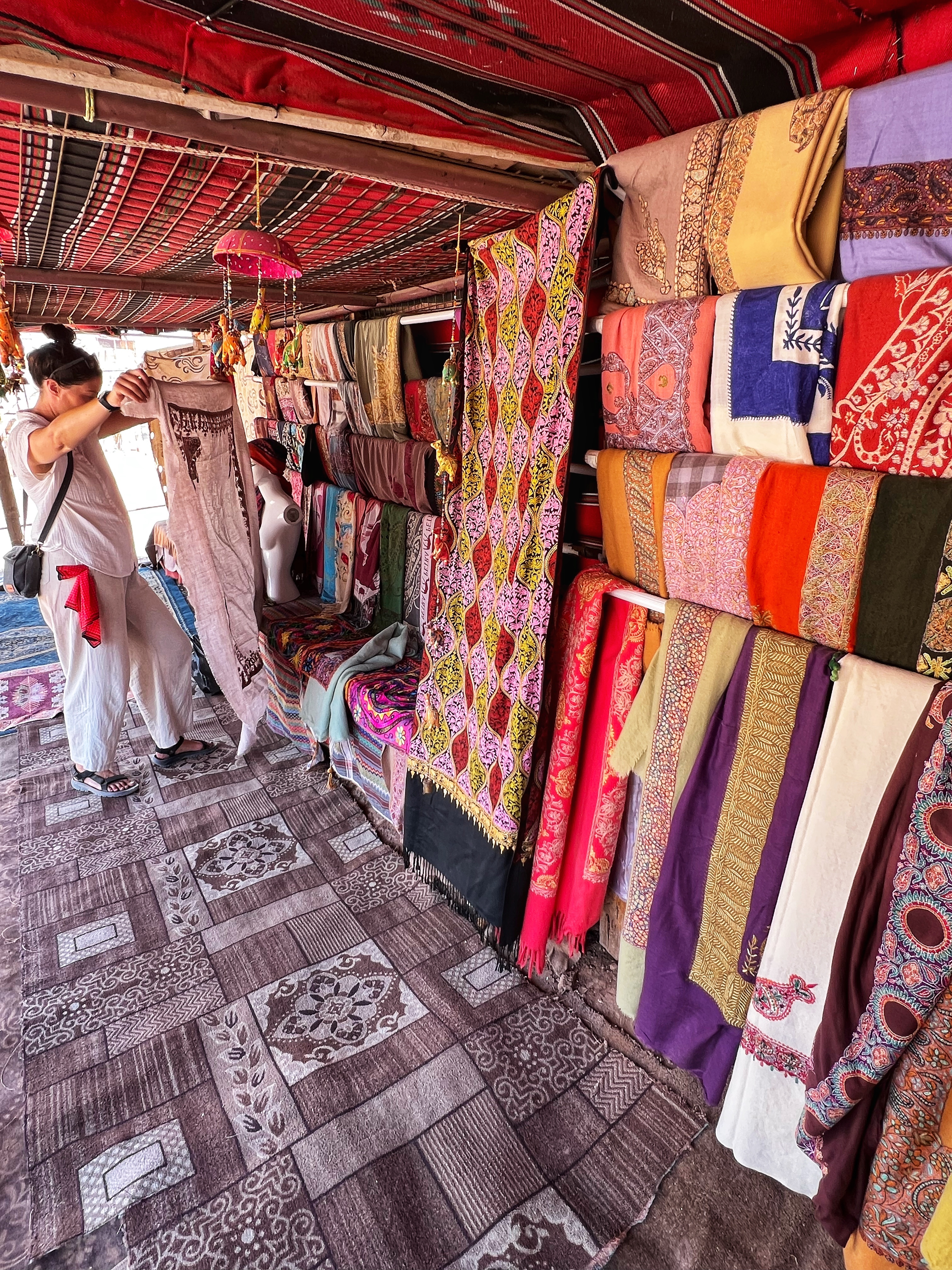
We wandered as far as the Royal Tombs, past the amphitheater. These tombs were my 3rd favorite spot at Petra (the Monastery was 1st, and the Treasury was my 2nd favorite). Here we bought beautiful scarves from Miriam. Or was it Merian? I’m terrible at remembering names, but I’ll never forget the names of the mules we met along the way – Pepsi and Shakira. HA! After several hours of repeated sales pitches, I had what I began to describe as “solicitation fatigue.” It’s very hard to say “no thank you” all the time. People are polite about it, but it’s still exhausting…be prepared for this.

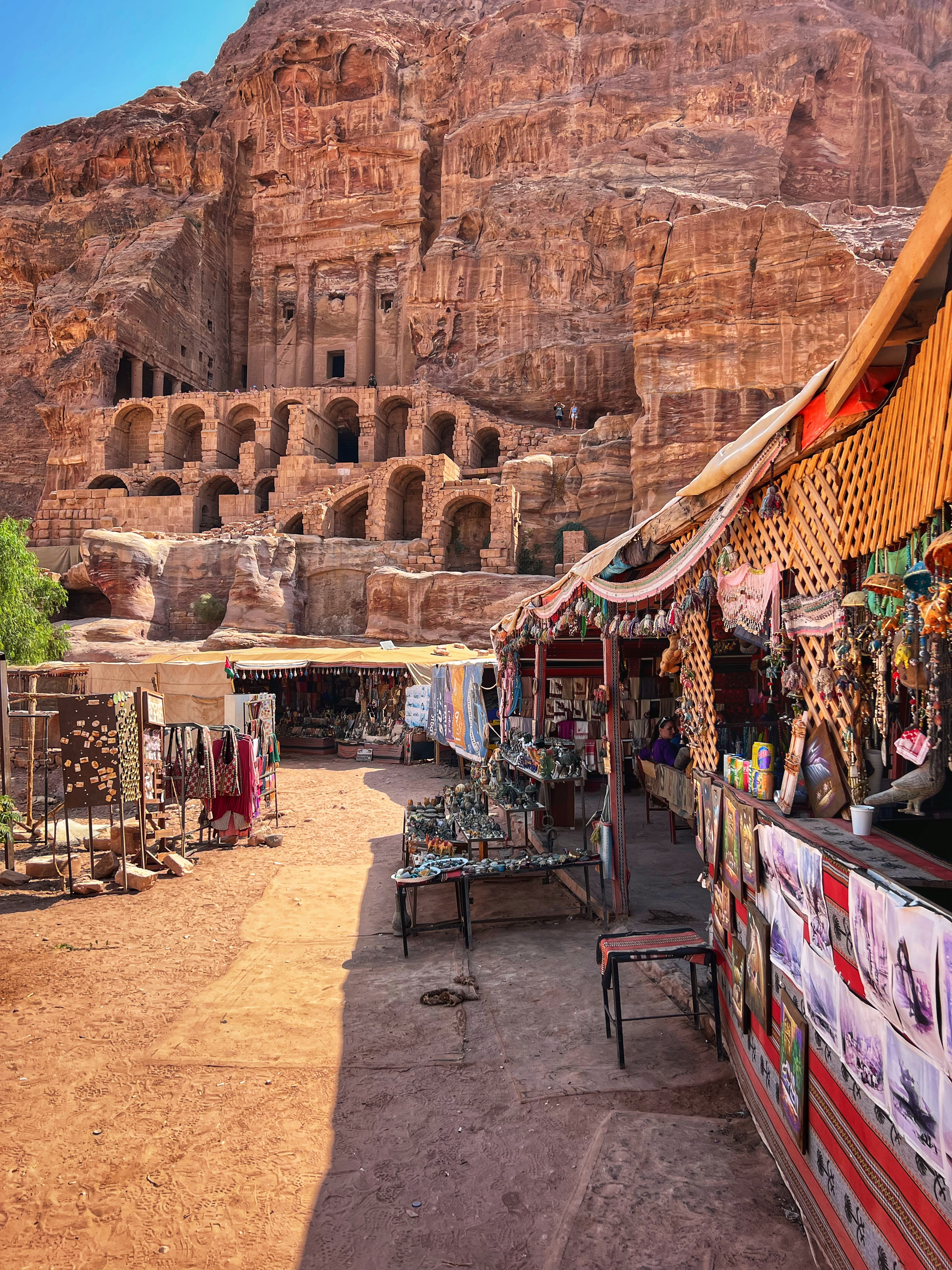
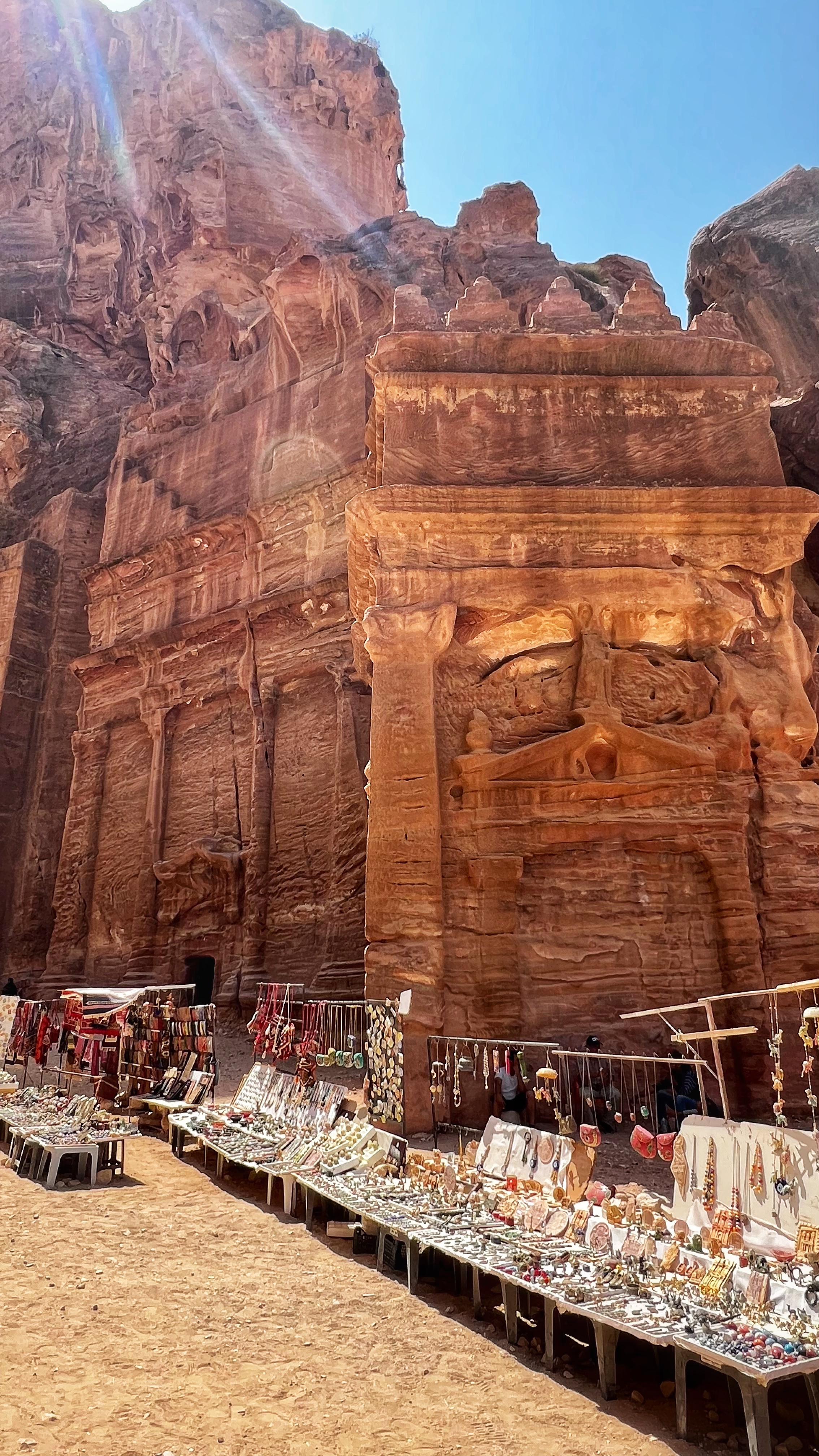
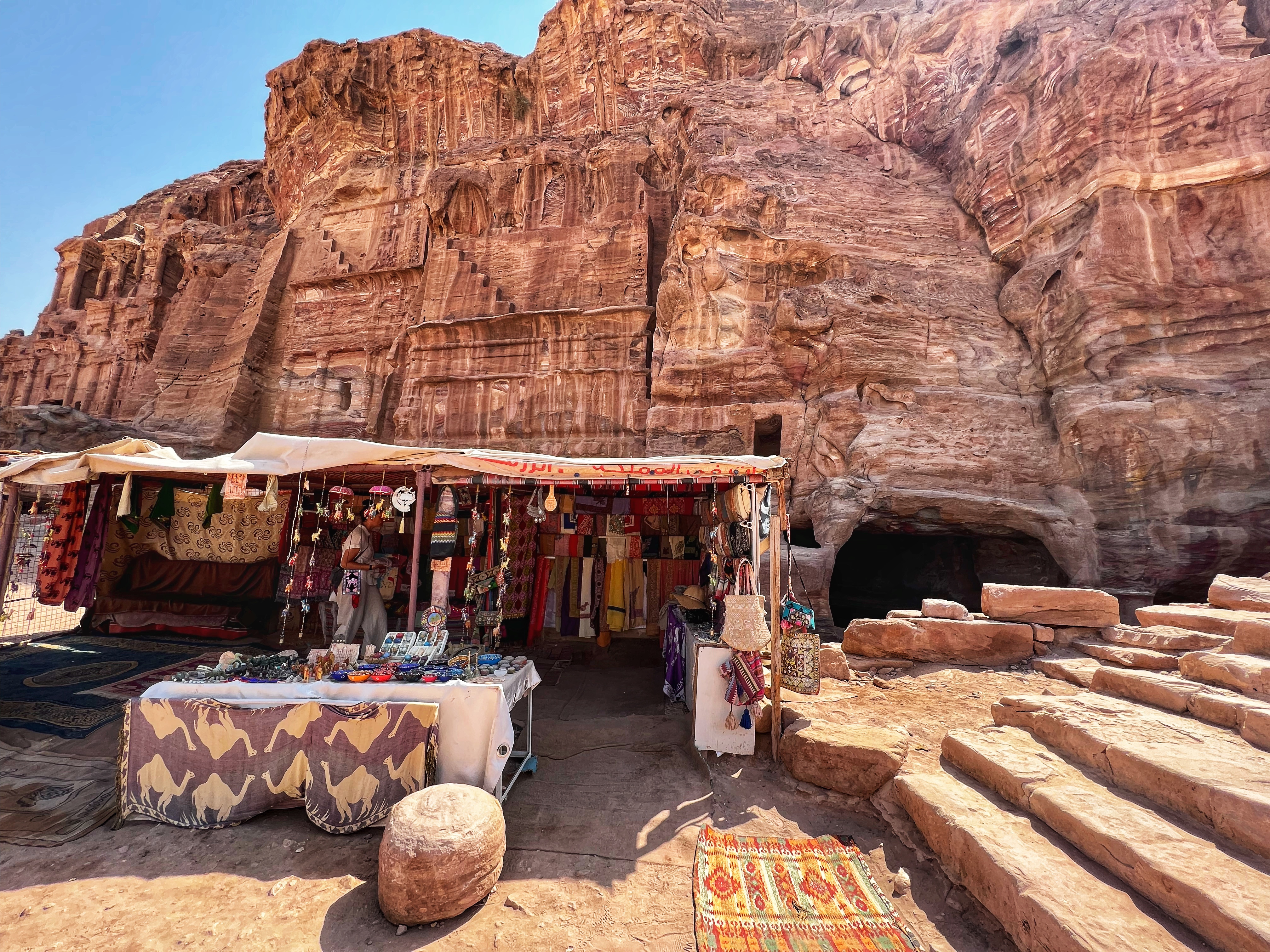
The walk back from the Royal Tombs to the entrance of Petra takes about 45 minutes. You pass the Treasury, then walk 15 minutes through the Siq and another 15 minutes to the Visitor Center from there. Wear comfortable shoes and expect to rack up the steps at Petra. Even the walk through the Siq is stunning! In general, Petra is not a great place for the mobility impaired, but they do seem to have golf carts that go to and from places with what appeared to be dignitaries, so perhaps its possible to hire something like this for someone looking to make their dreams come true but can’t go on foot.

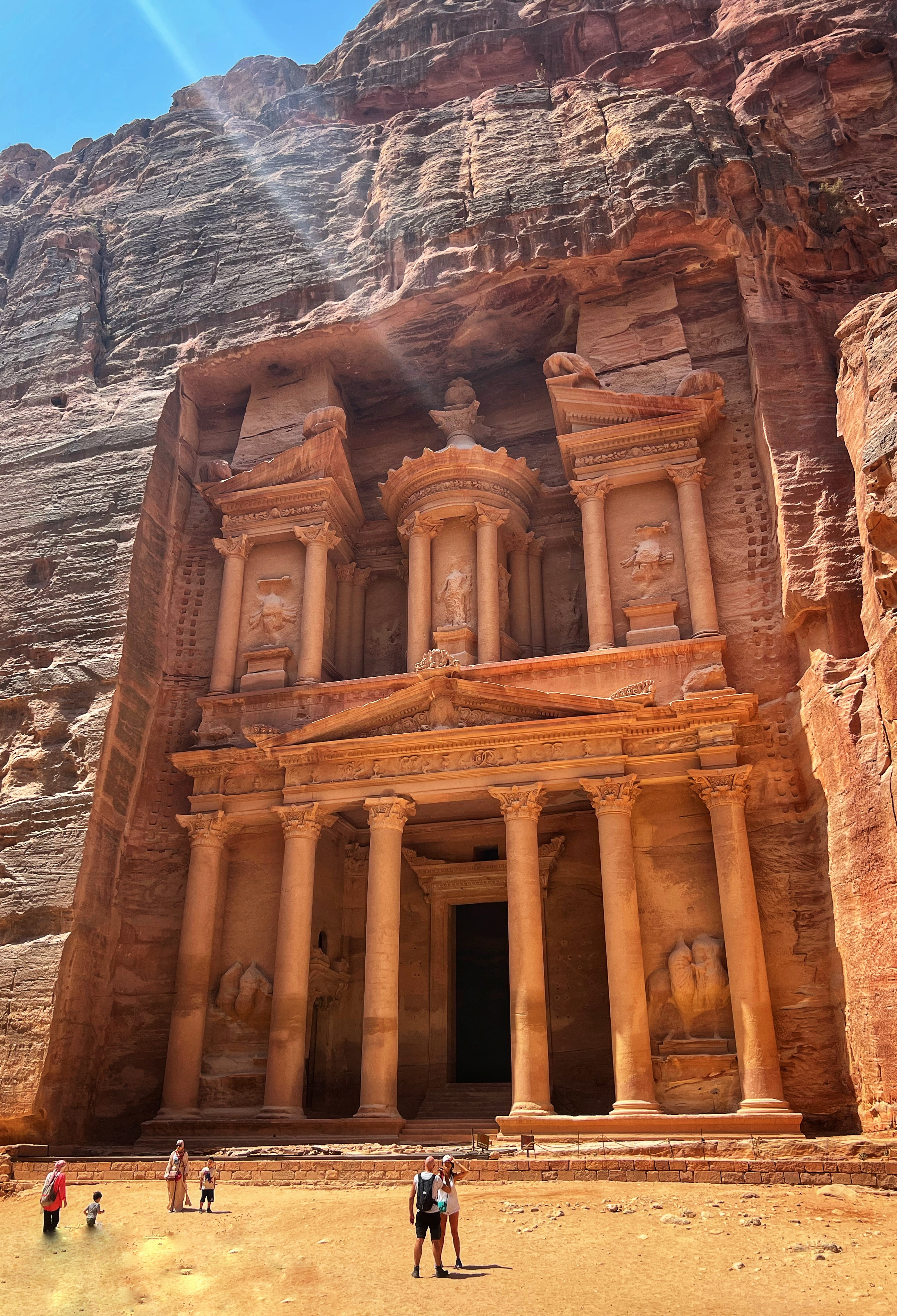

That afternoon we returned to the hotel to cool off in the pool and grab a drink at Cave Bar for a couple of hours before heading back down to Petra for a trek to the Monastery. You can enter as many times as you want within your 1, 2 or 3 day window.
PETRA TIPS
- FIRST TIME: I recommend walking down the Siq first thing in the morning for the best views of the Treasury, especially on your first visit.
- GUIDES: A guide isn’t necessary, but it’s fun to explore off the beaten path. You can find tours for the Indiana Jones trail, Back Door to Monastery, and to the High Place of Sacrifice. Some of these you can do on horseback as well.
- HORSES: When you first enter the Petra gates you will be approached by horse handlers asking for your ticket. They will point out that your ticket “includes a horseback ride to the Siq.” It is a 10-15 minute walk to the Siq, so you don’t need to ride a horse, but understand that they will tell you it is free but then expect a hefty tip. We decided to do this on the 2nd entrance of the day and it was fun, but our 5JD/$7 tip was scoffed at, and they asked for 15JD/$21 instead for a 10 minute ride (which I didn’t have to spare). They will also try to sell you tours while you ride; if you want one, great, but if you don’t, it’s more tiring solicitation. Know what you’re getting into.
- DONKEYS: We learned the hard way so you don’t have to. We were convinced to take an evening tour to the Monastery to watch the sunset by donkey, and although our guides were very nice and handled the donkeys gently (no whipping, and they appeared healthy), it really isn’t necessary to ride a donkey up 800 steps – and then down again – to the Monastery. We didn’t know what we were getting into, but we realized it pretty quickly. Not only that, it’s not comfortable for the rider. We were embarrassed to be riding donkeys while our guides walked the whole way, and other people were walking, too. We were perfectly capable of the walk on our own, so we did just that on the way back and gave those donks a break. Just know it is an option, but I do not recommend it. Instead, wear good shoes and just walk. It will take about 90 minutes to hike all the way up to the Monastery from Petra entrance and a little less than that on the way back down. It’s a beautiful spot to watch the sunset, and if you enter around 4-4:30 you can enjoy it before things close and with less crowds.
- CAMELS: I saw camels, but didn’t see anyone riding them except Bedouins. They’re available for photo ops in front of the Treasury for 5JD. This is probably the better bet if you want a quick experience on a camel but not a ride.
- SOUVENIRS: You absolutely can negotiate prices. We noticed prices were different everywhere for the same items, so don’t hesitate to respectfully discuss what you buy.
- TOP SITES: Do not miss the Treasury, Royal Tombs and Monastery. There are Roman ruins along the path as well, but the real gems are the carved Nabataean tombs and temples. There are excellent maps at the visitor center – be sure to grab one on your way in as they’re not available once on site.
- PETRA AT NIGHT: We didn’t get to do this as we were visiting on the wrong days. Just know it is an additional expense not included in your Jordan Pass. Is it worth it? Some say yes, others say no. I would love to try it someday!
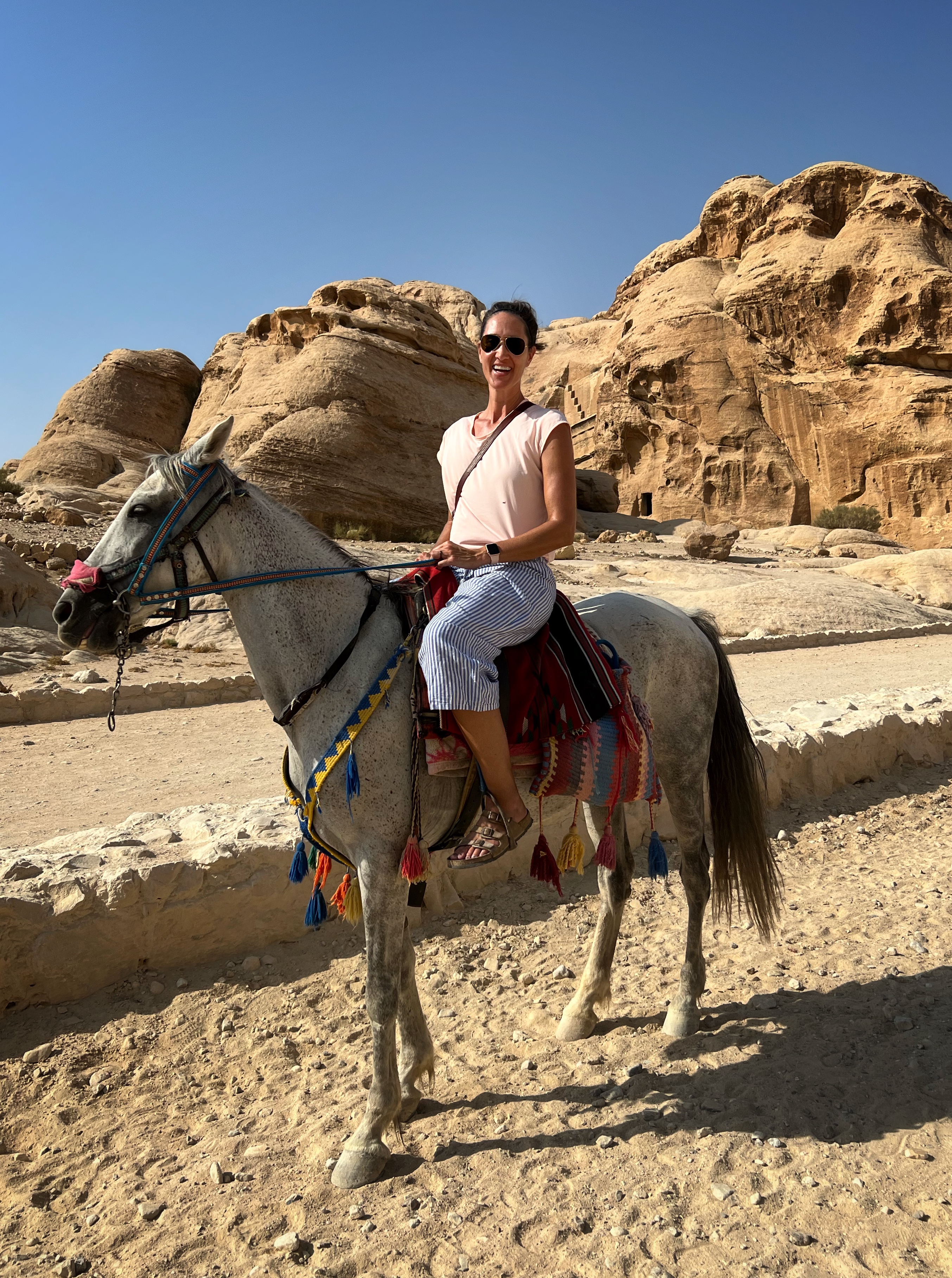
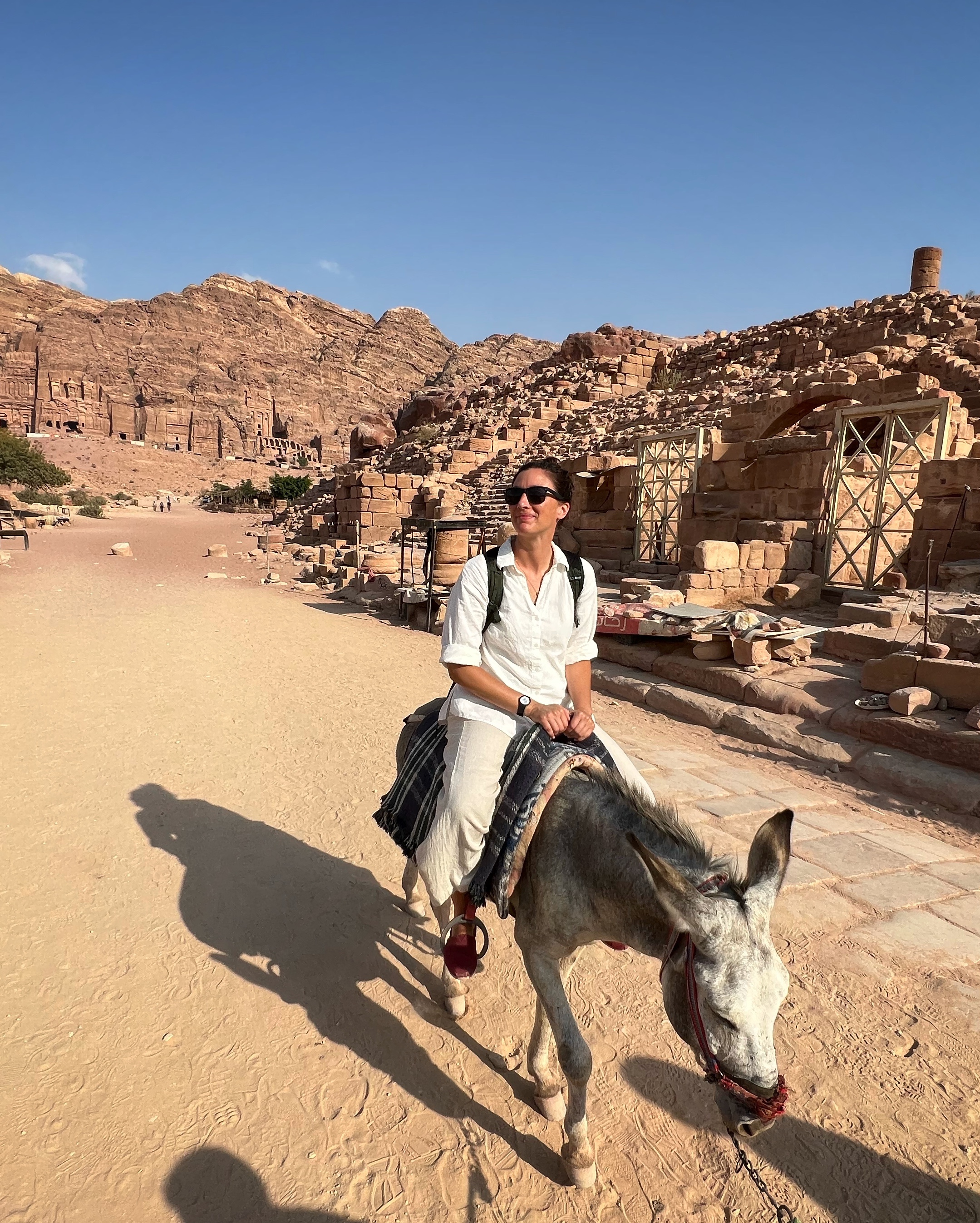



I’m going to try to forget that we rode donkeys up to the Monastery and instead be grateful for the experience and that we chose NOT to ride them back down. Lesson learned. I think Kaseb asked for 25JD/$35pp for the trip and we tipped them well. The entire Monastery site in the golden light of the evening was pure magic! We even saw a Bedouin who looked exactly like Captain Jack Sparrow sitting ON TOP OF THE SPIRE of the Monastery. Like, right on the tippy top of the ball! It made me catch my breath…

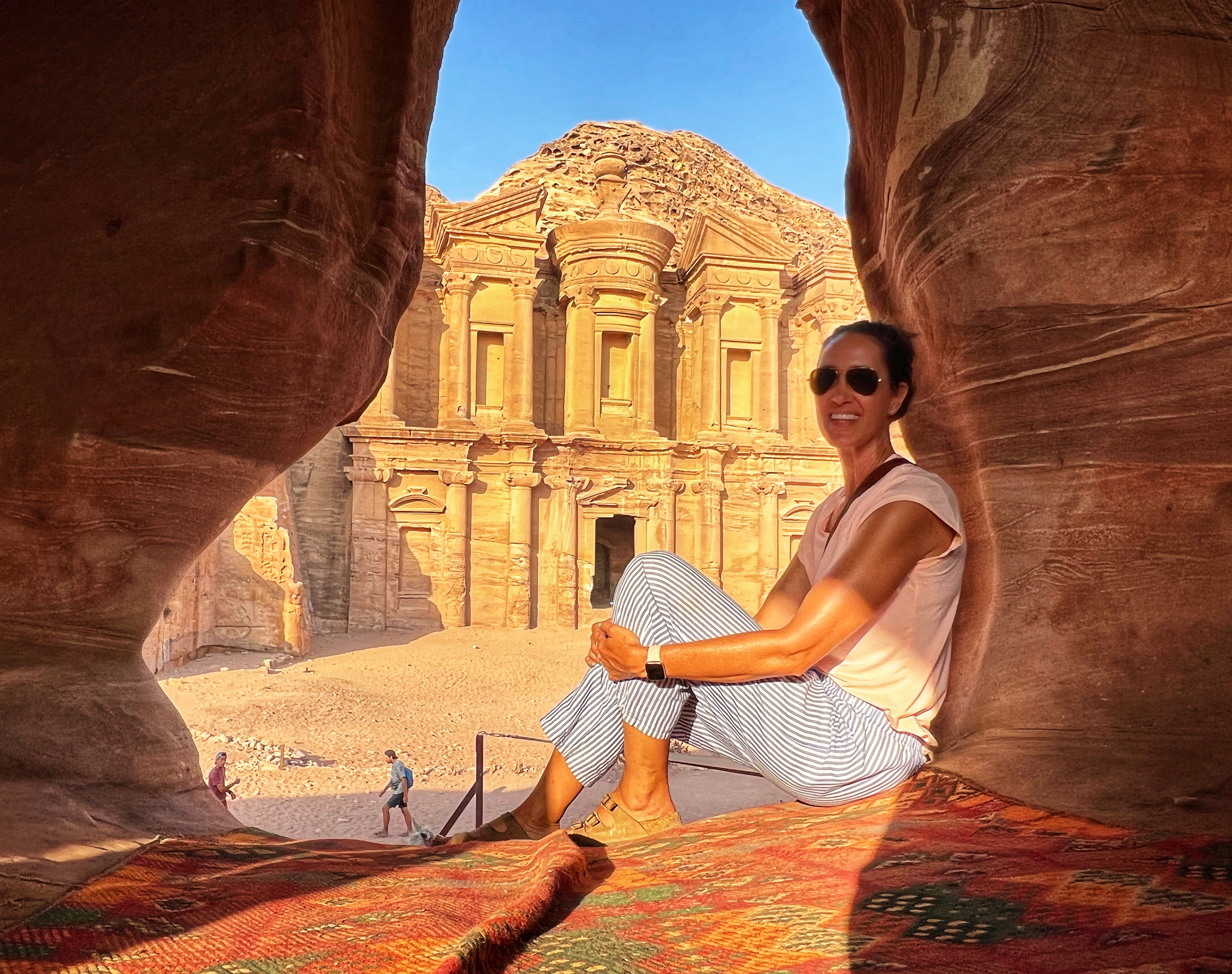
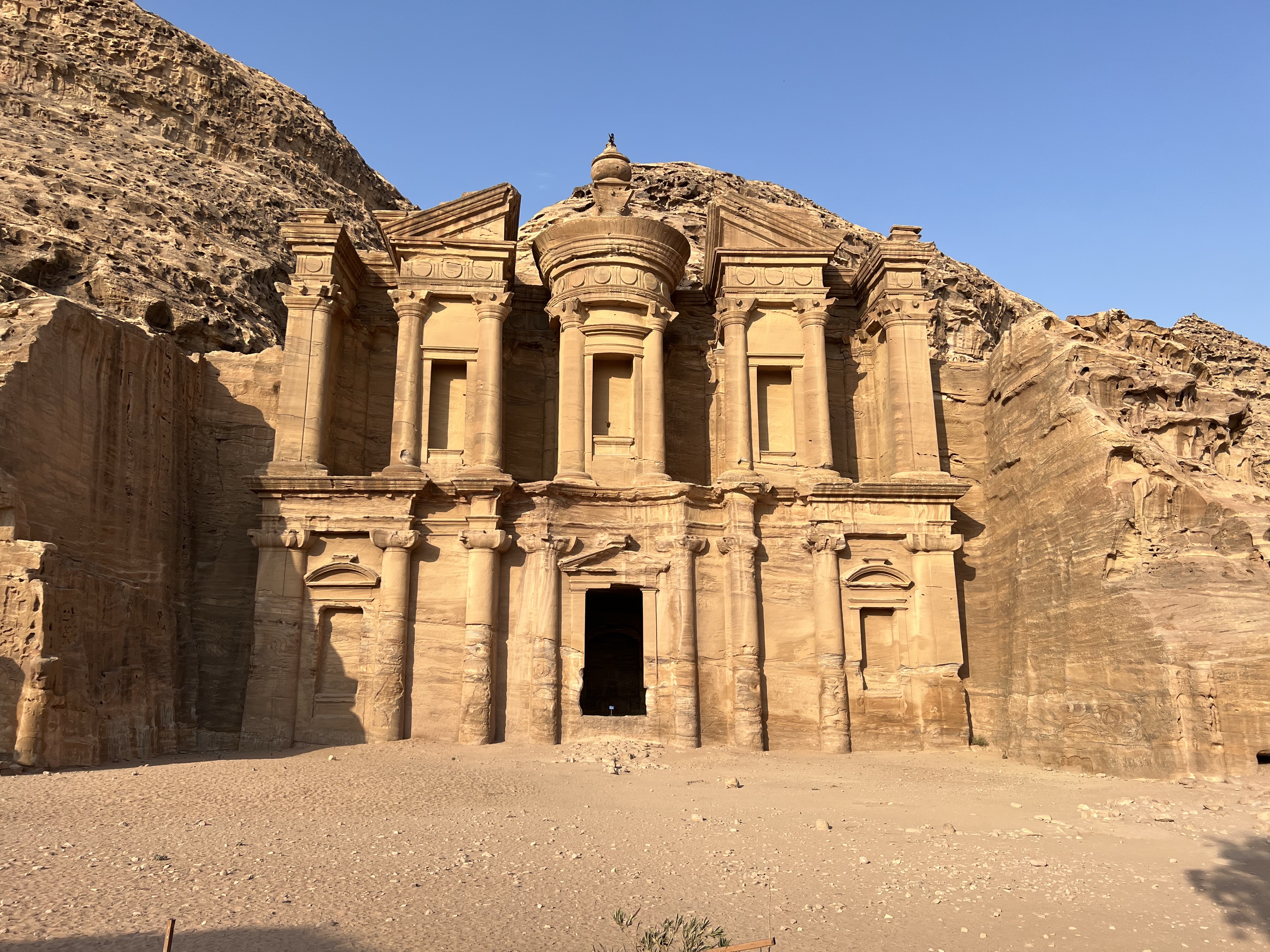
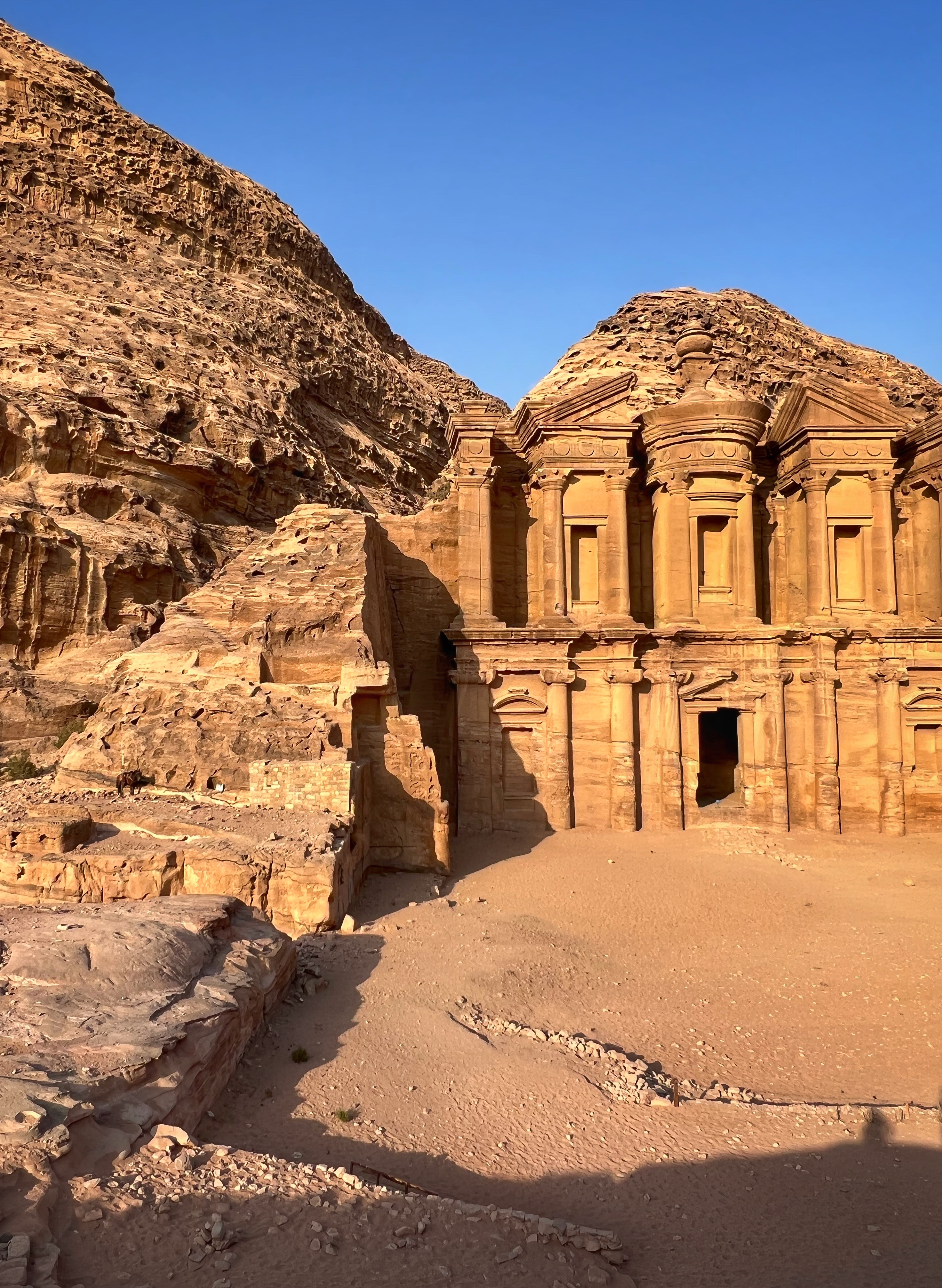
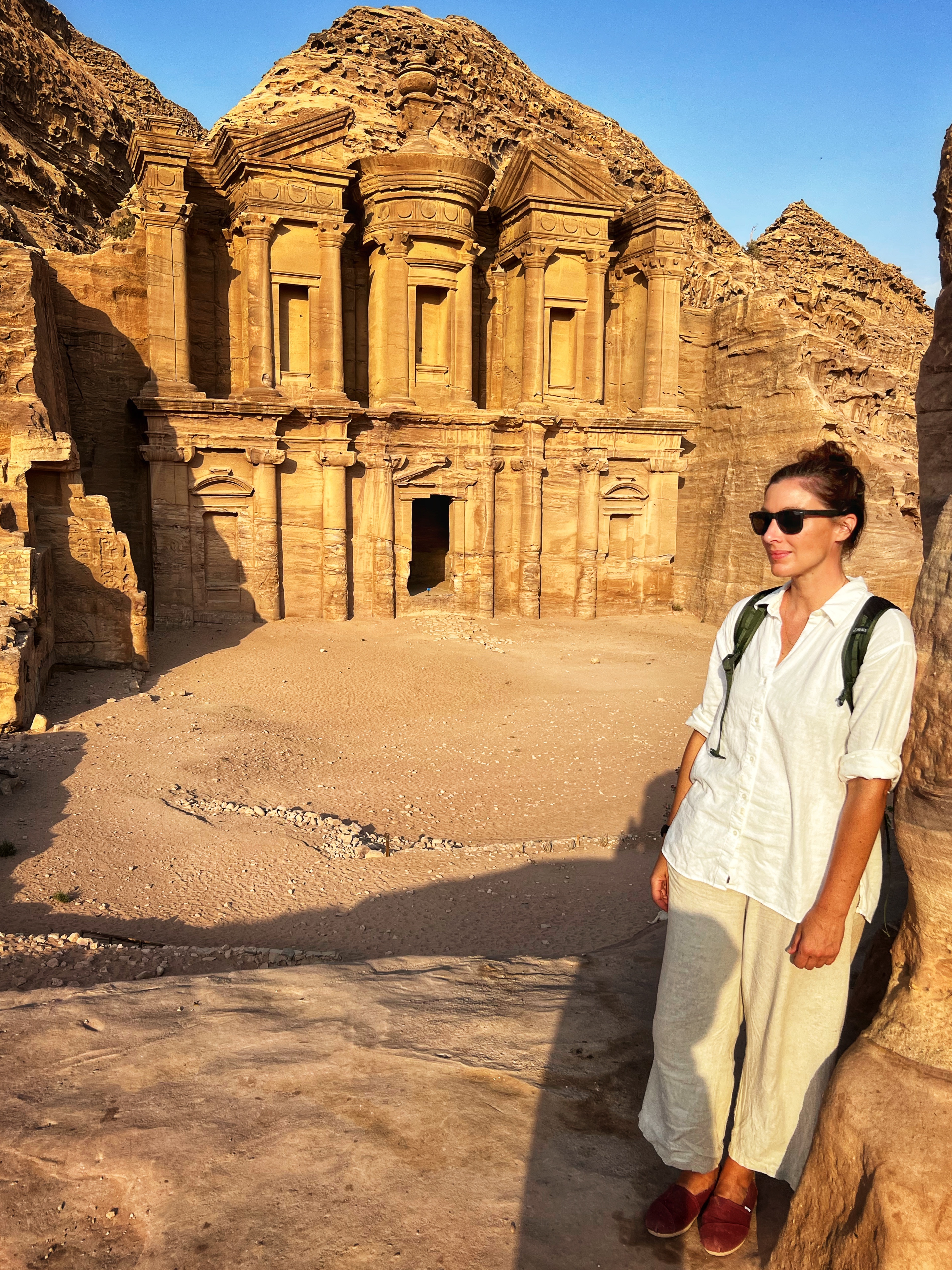
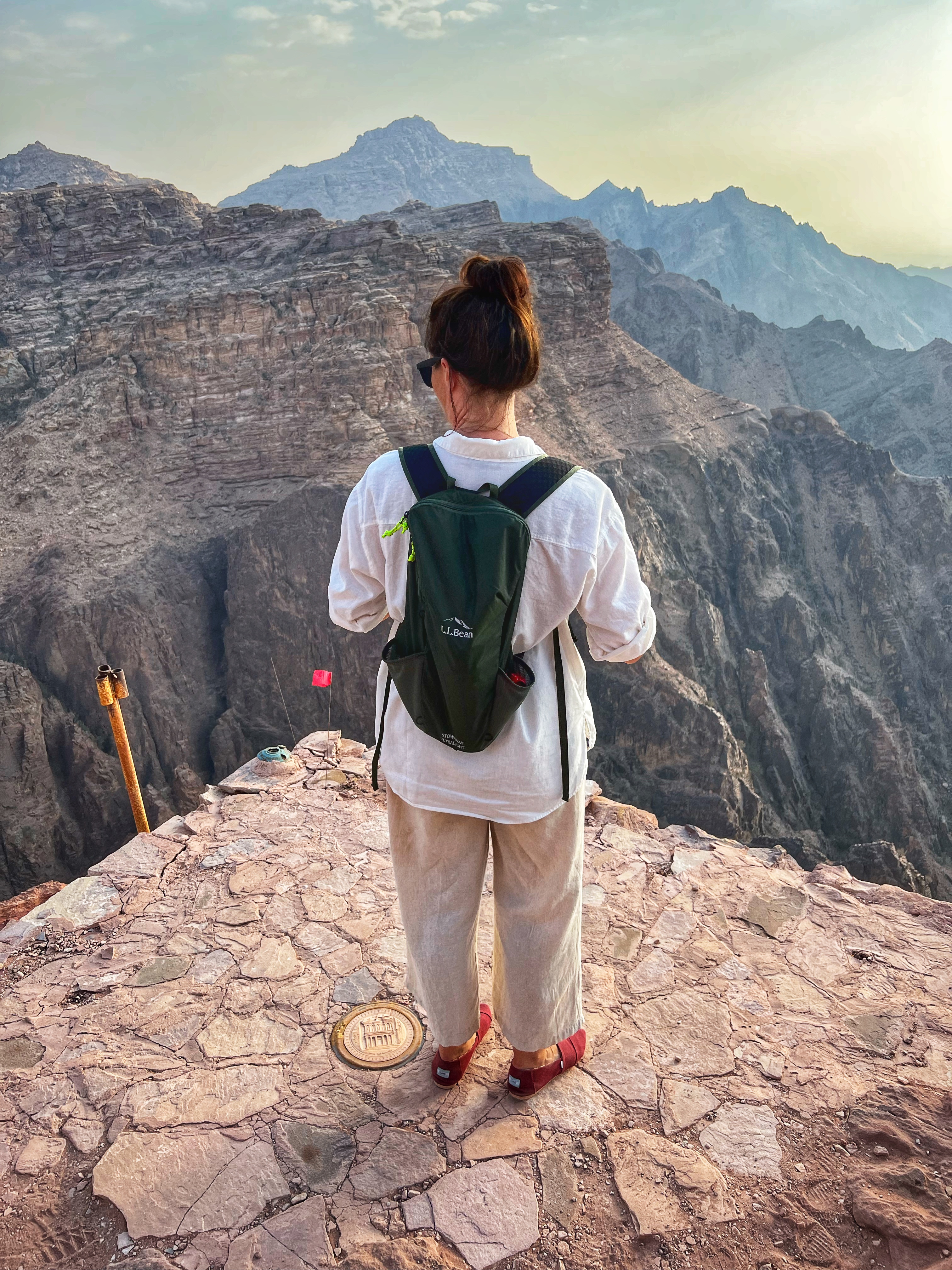
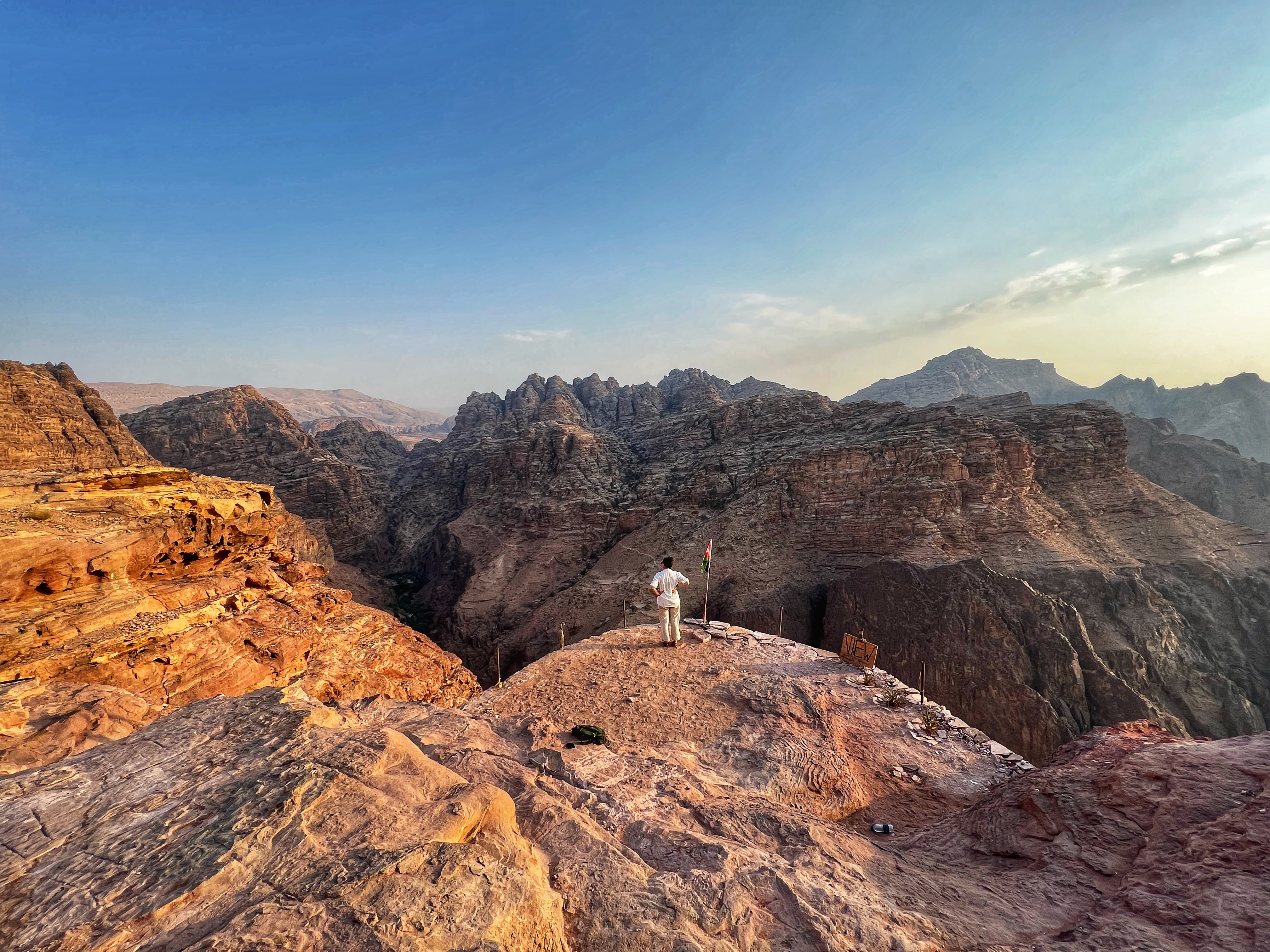
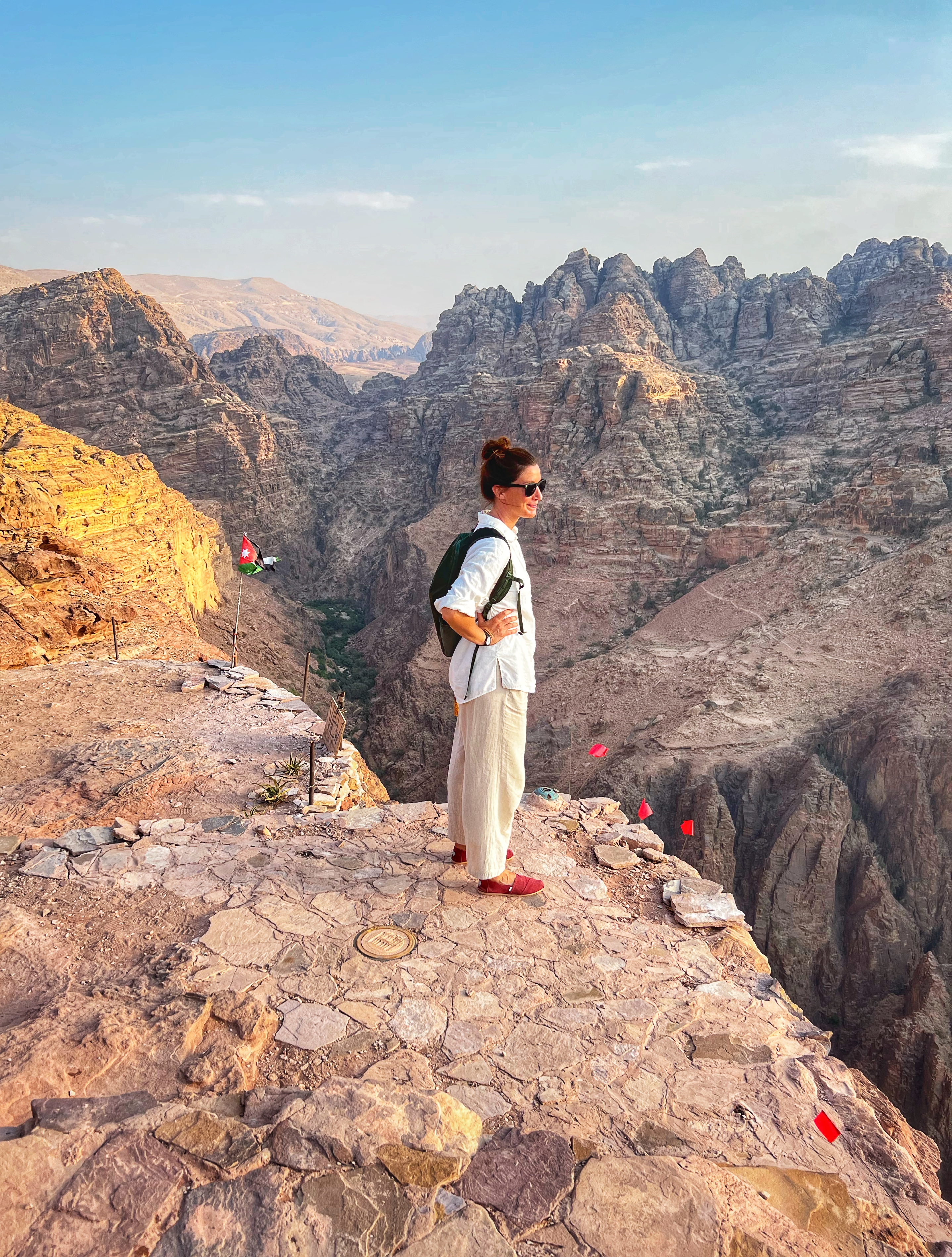
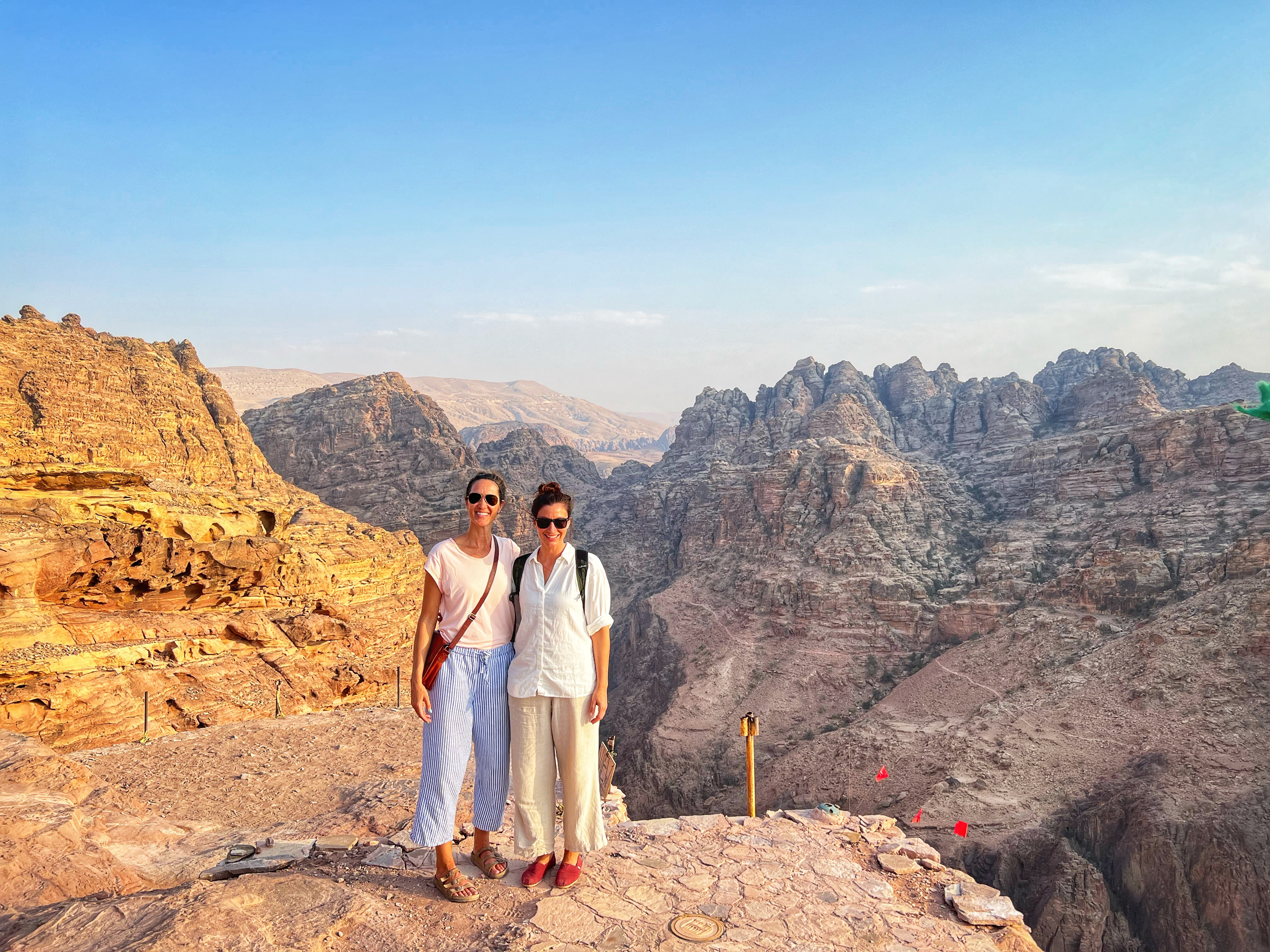
If you’re looking at the Monastery, behind you are signs that say “best view” and “end of the world.” Follow those for an amazing view out over a canyon that feels like the best kept secret in Petra. We were planning to watch the sunset from there, at the top of the canyon adjacent to the Monastery, but the light was better on the trail back before sunset, so we stayed there enjoying the vista for about an hour before heading down.


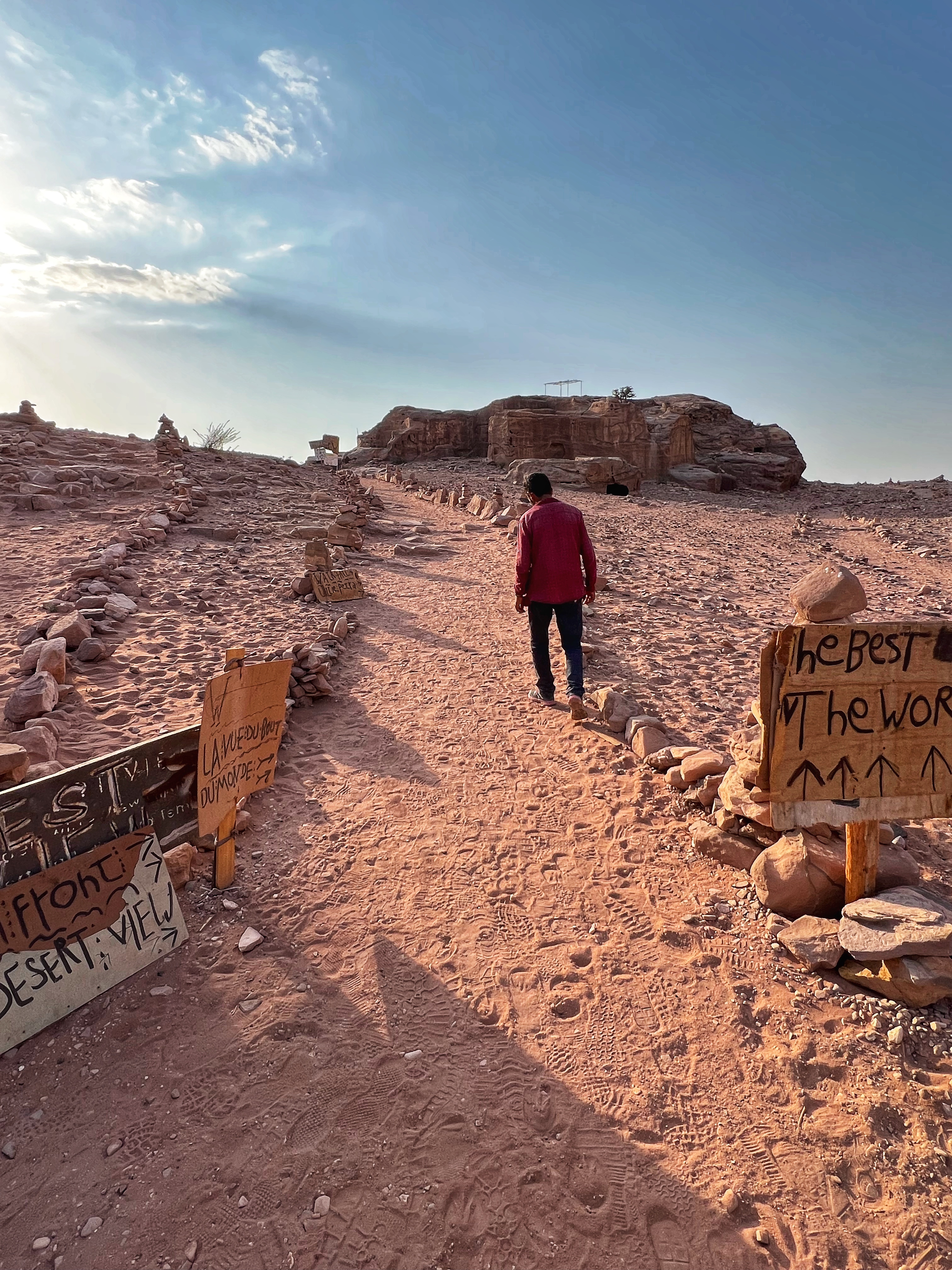

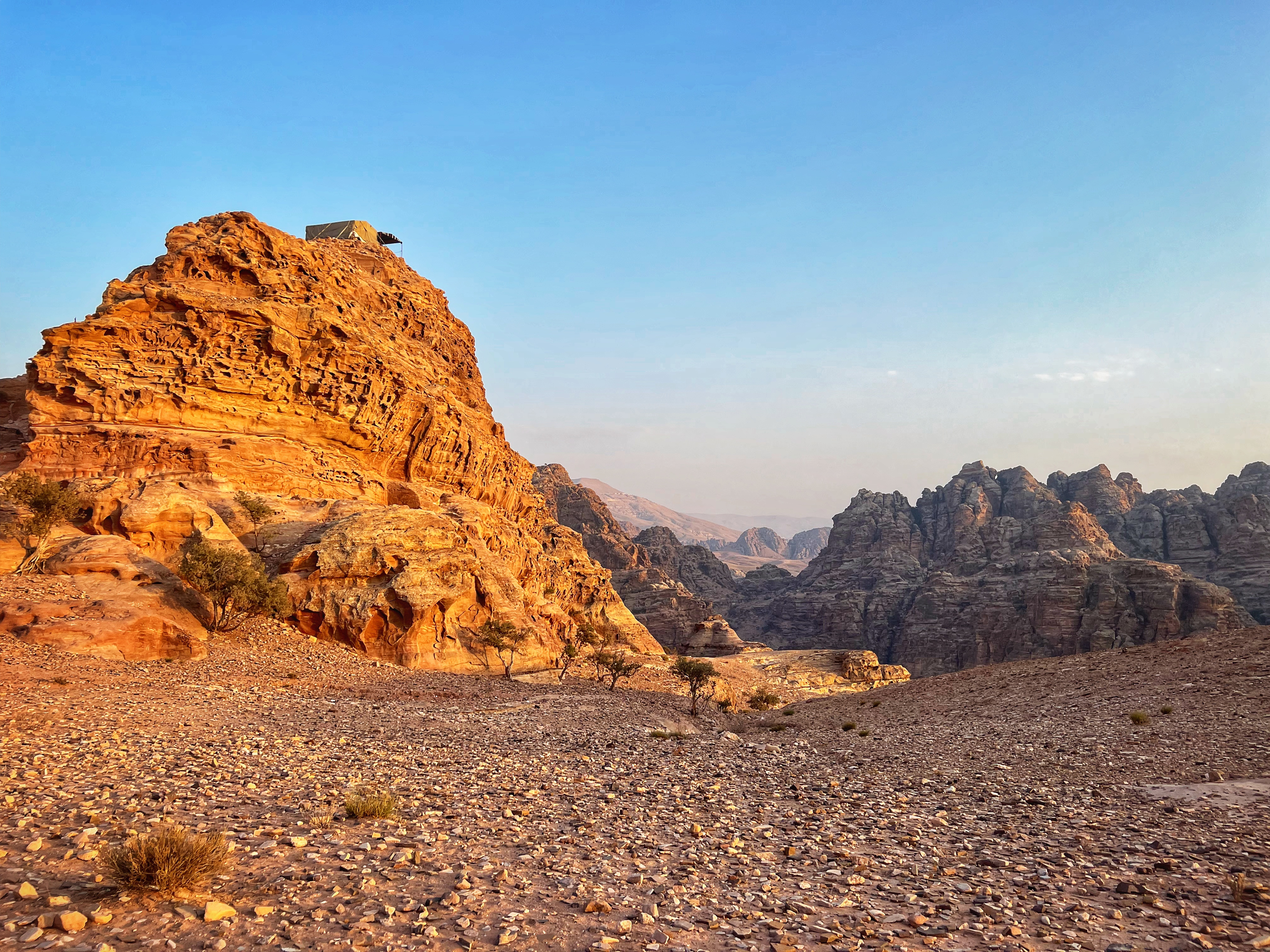
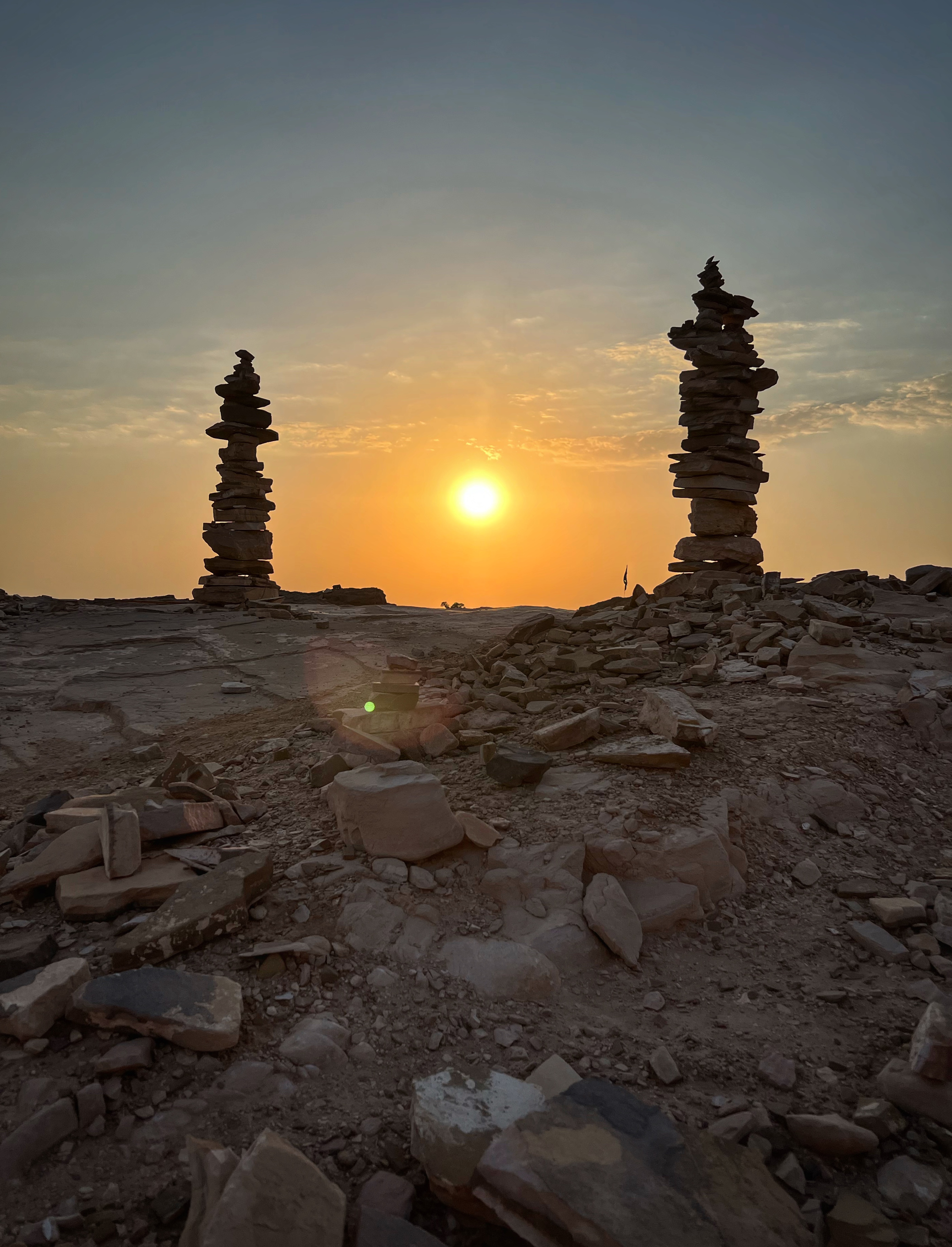
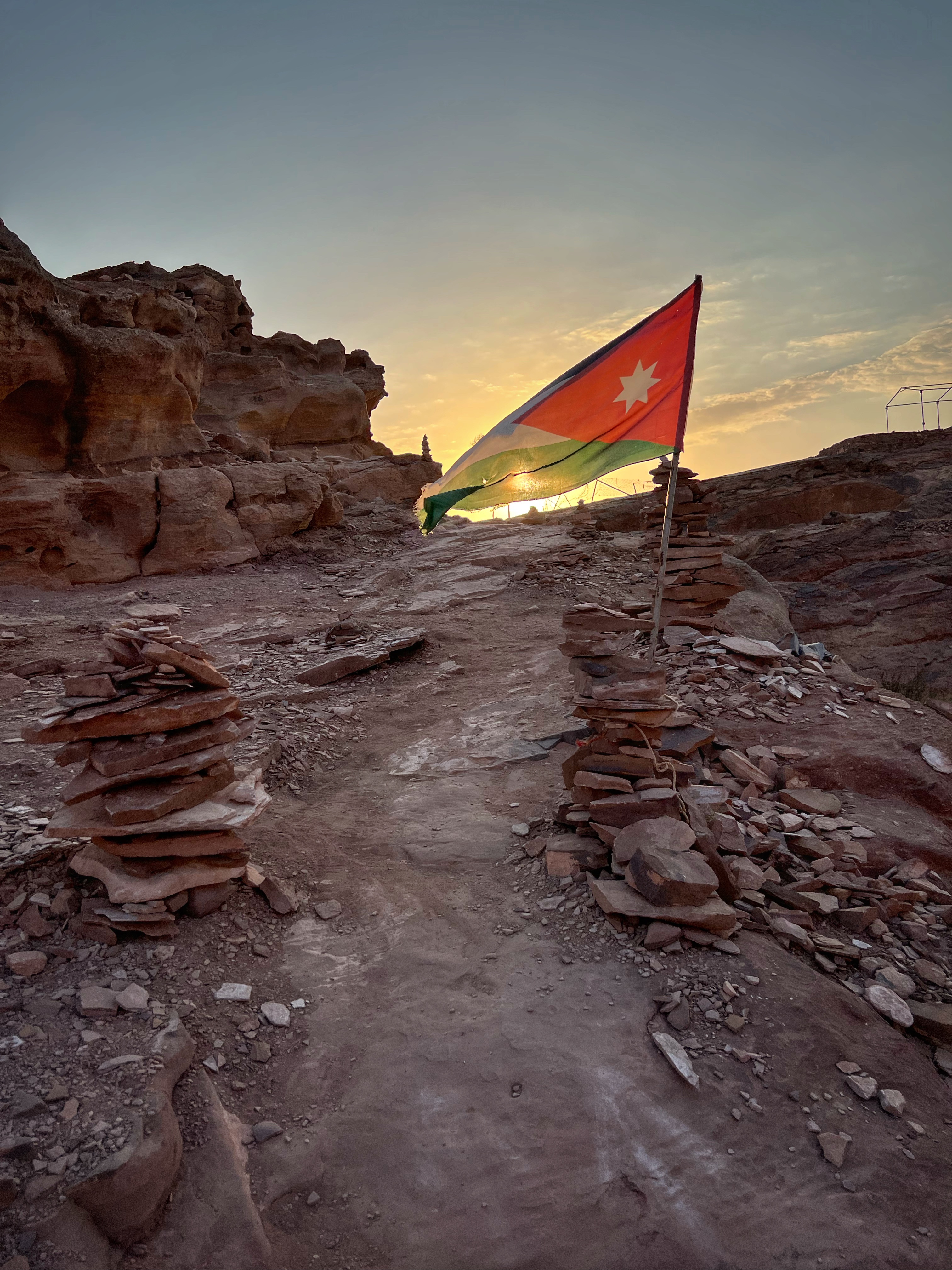
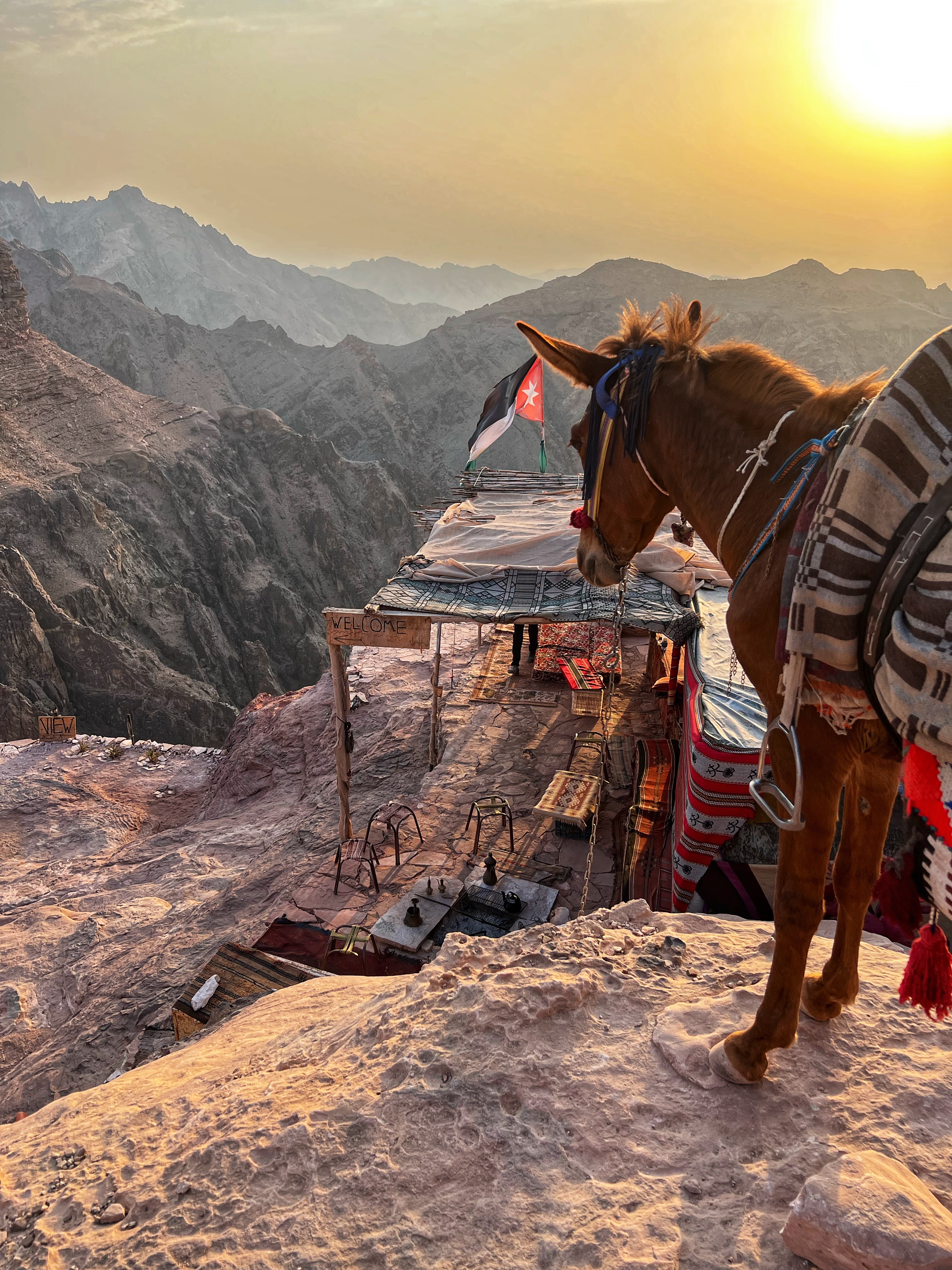
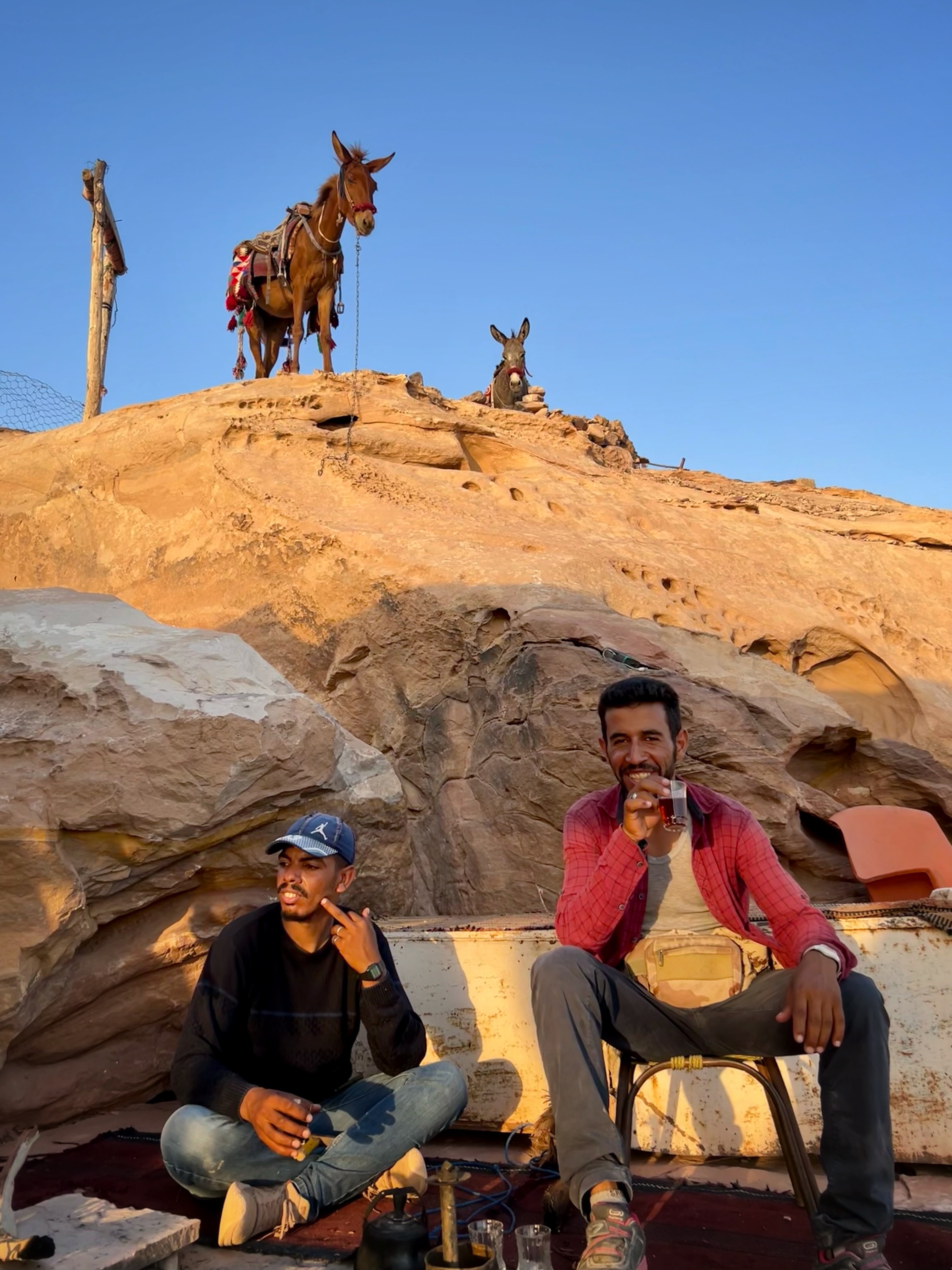
There is a little hut here of course, and our guides made tea as we sat on the “edge of the world” and breathed in the waning daylight. This was definitely the best unexpected surprise moment for me this trip – I had no idea about this incredible sunset spot.



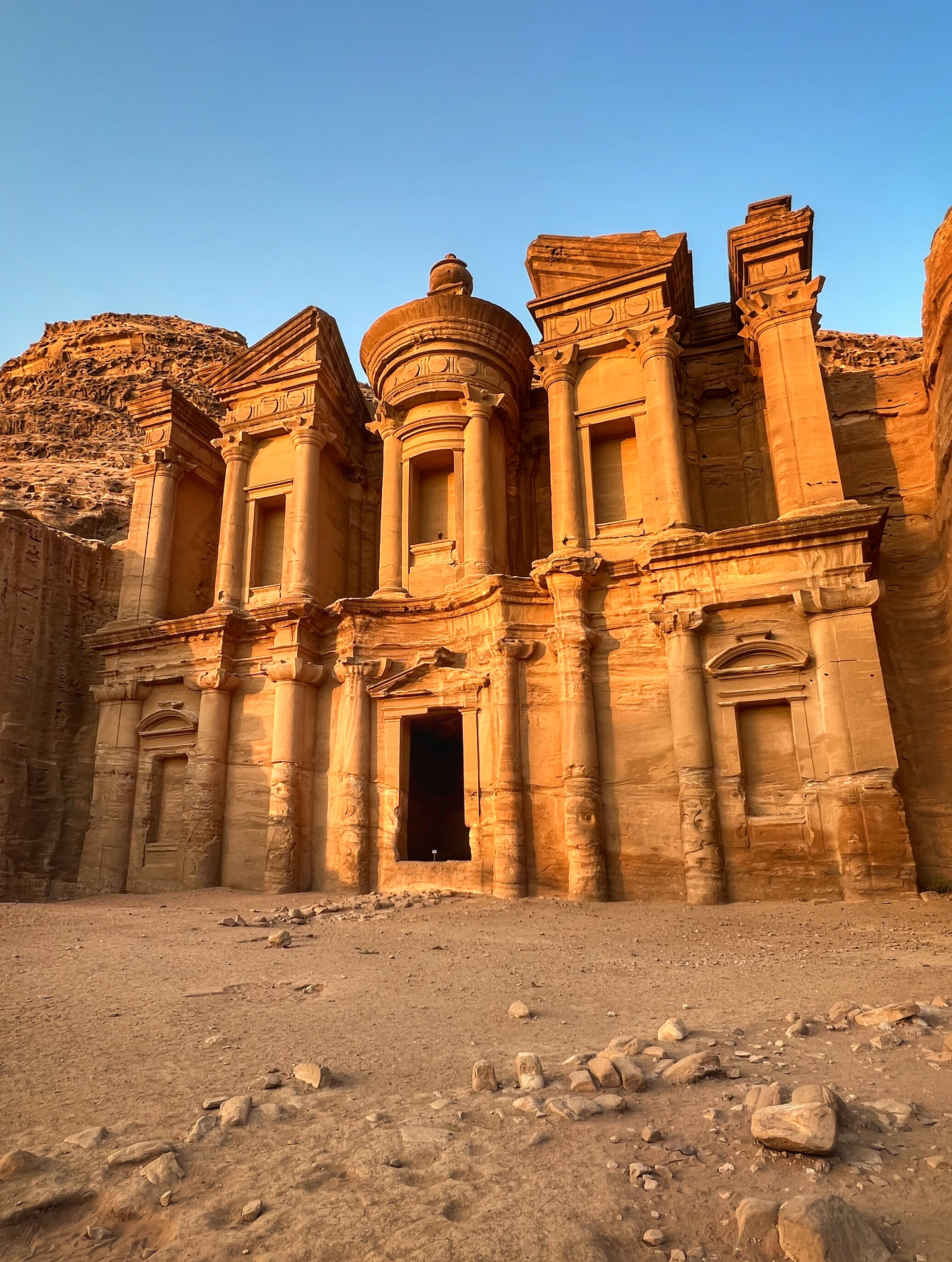
As we left, the light was amazing on the Monastery facade. Keep in mind you’re not allowed to enter the Monastery (or Treasury) and signs clearly state that. We did, however, see a very arrogant American tourist shouting obscenities and brazenly entering them with absolutely no respect for the rules. Do not be like that guy.
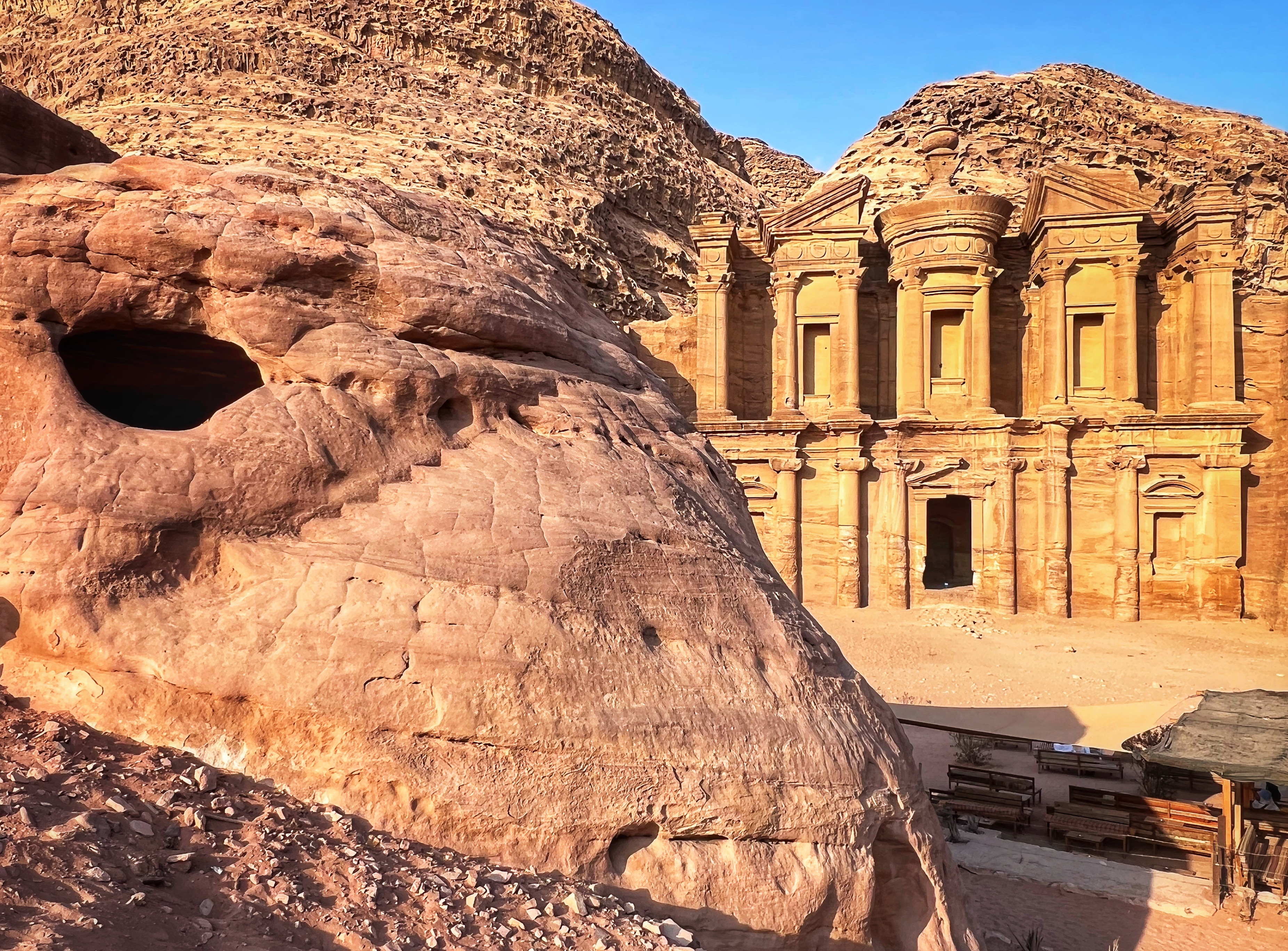
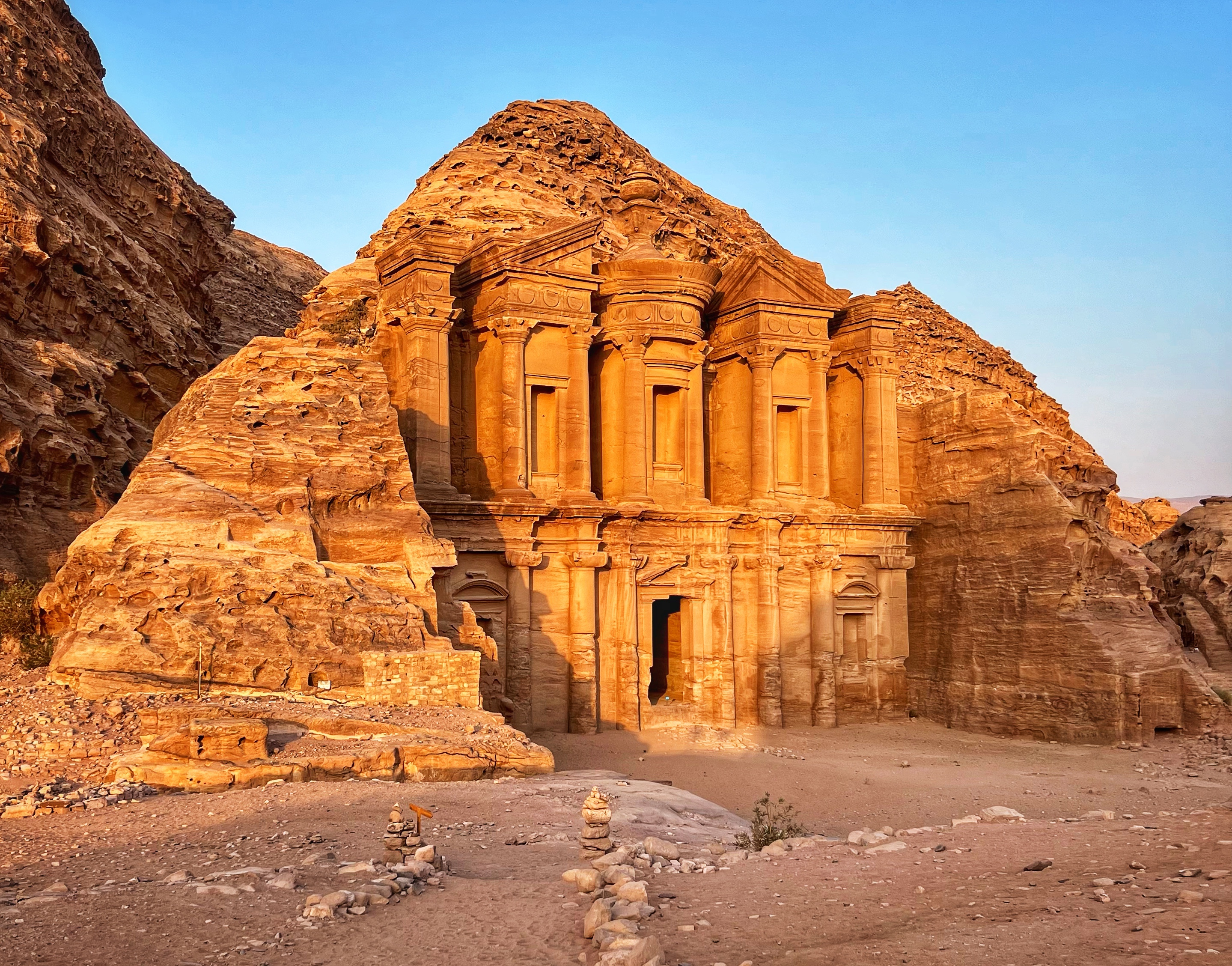
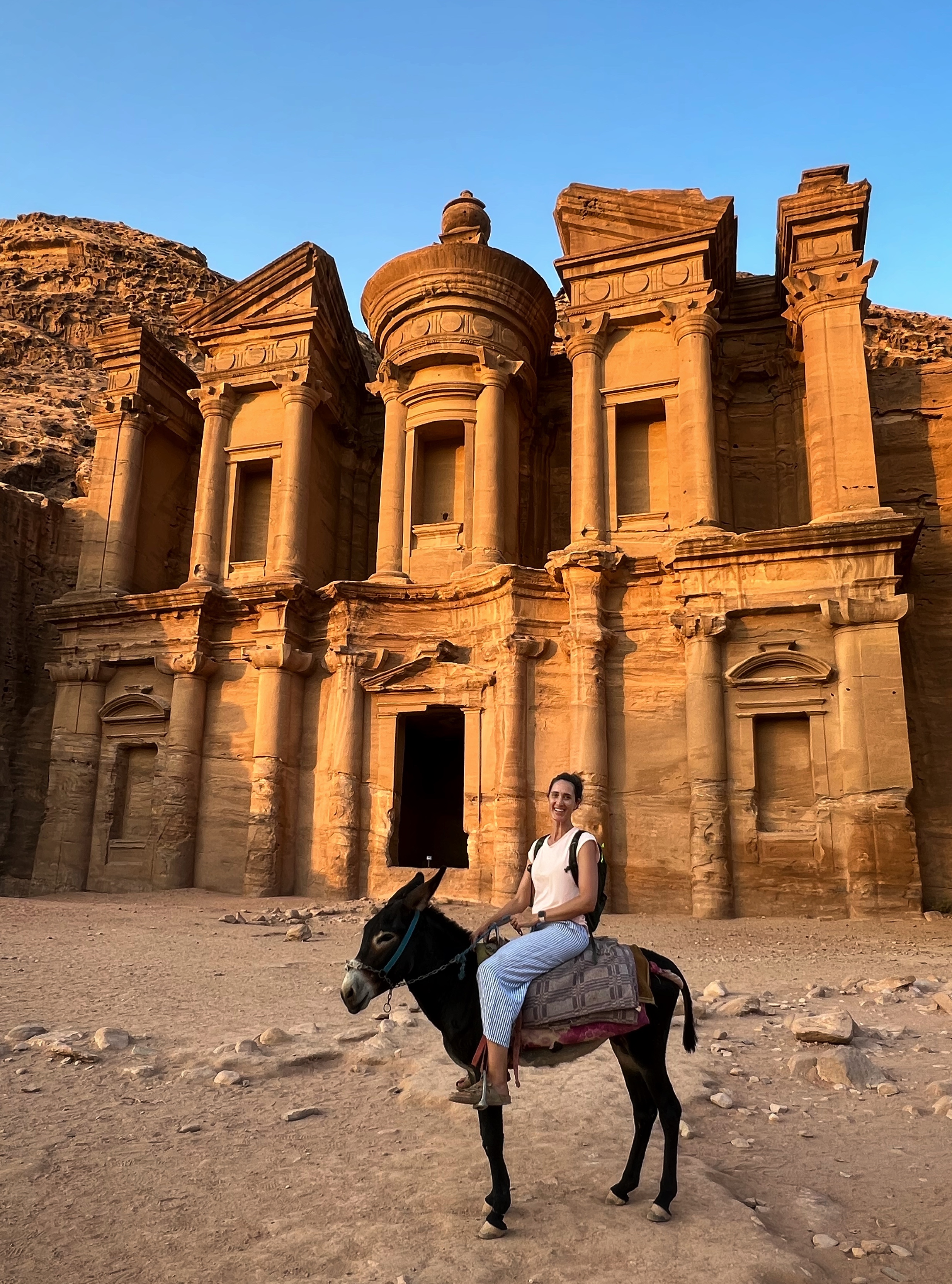
I snapped a quick picture with Susa (my donkey) before dismounting and walking down. The walk down was actually very pleasant and beautiful. These were some of my favorite views at the whole Petra archaeological site:

As you can see from these photos, the path to and from the Monastery is an unforgettable one. I can imagine it would be grueling during the heat of the day, but there are many, many huts and tents along the way for shopping and refreshment if you need a break. Still, I recommend making this trek in the late afternoon or evening to be cooler, avoid crowds, have less solicitations.
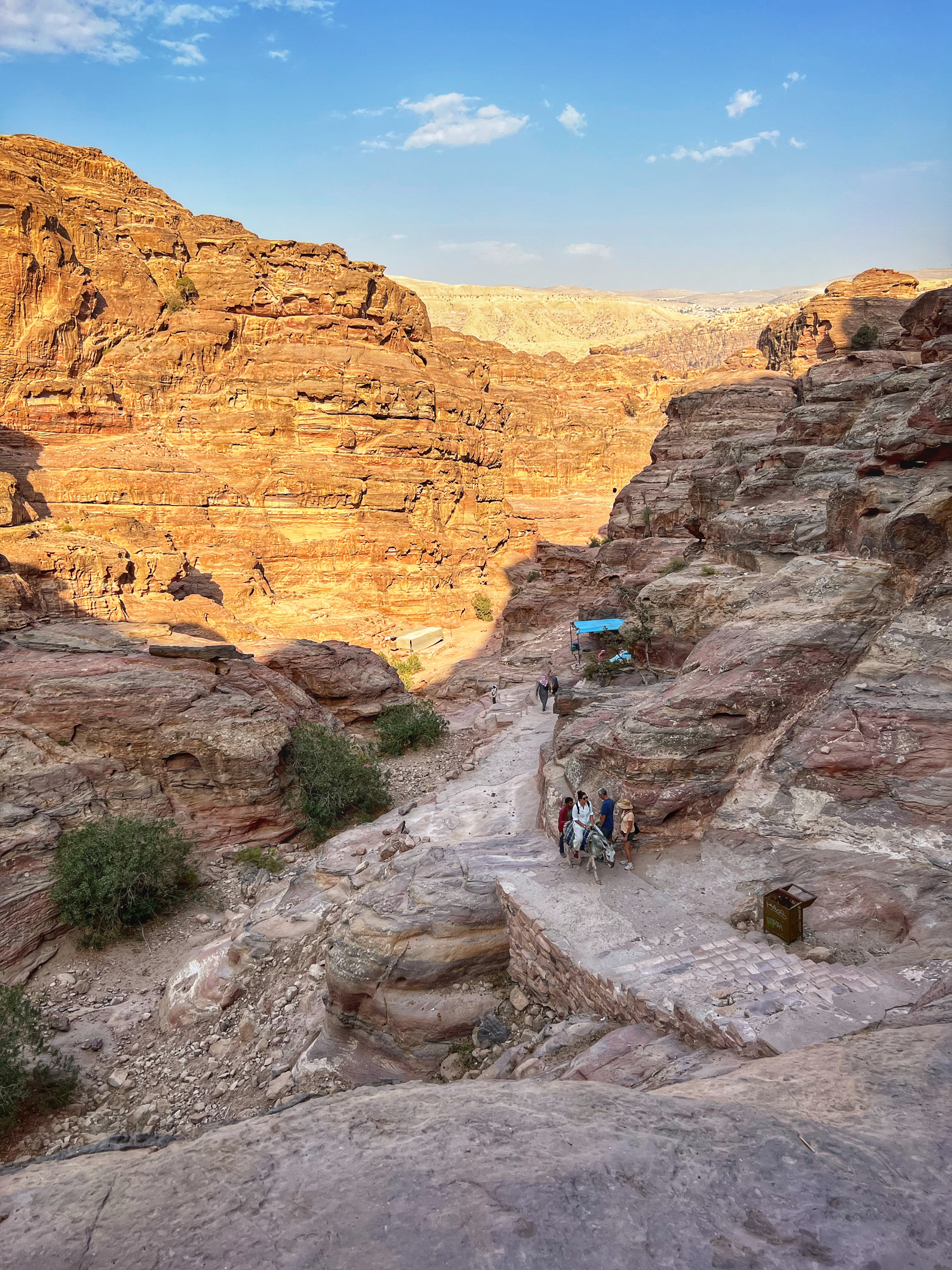
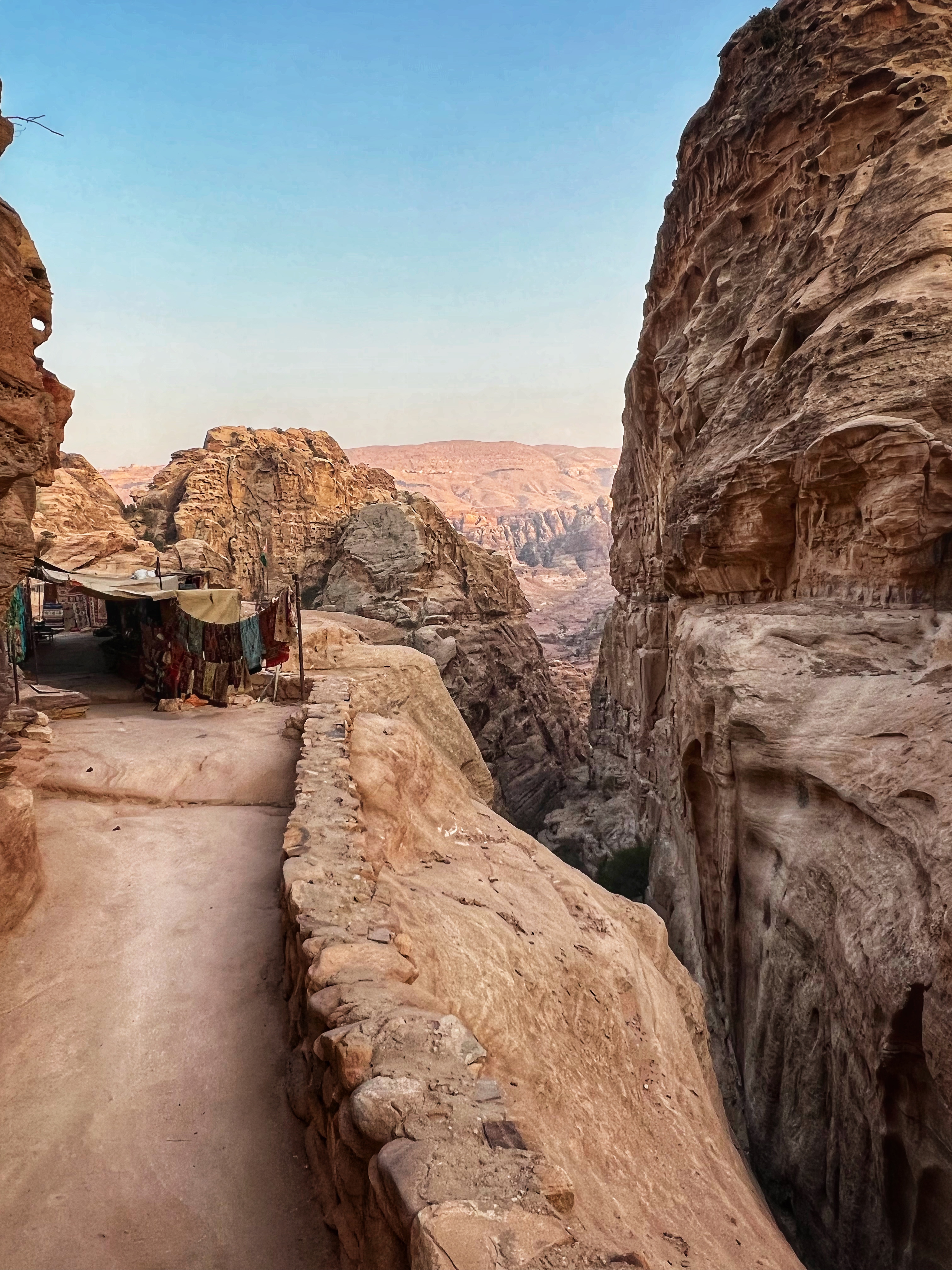
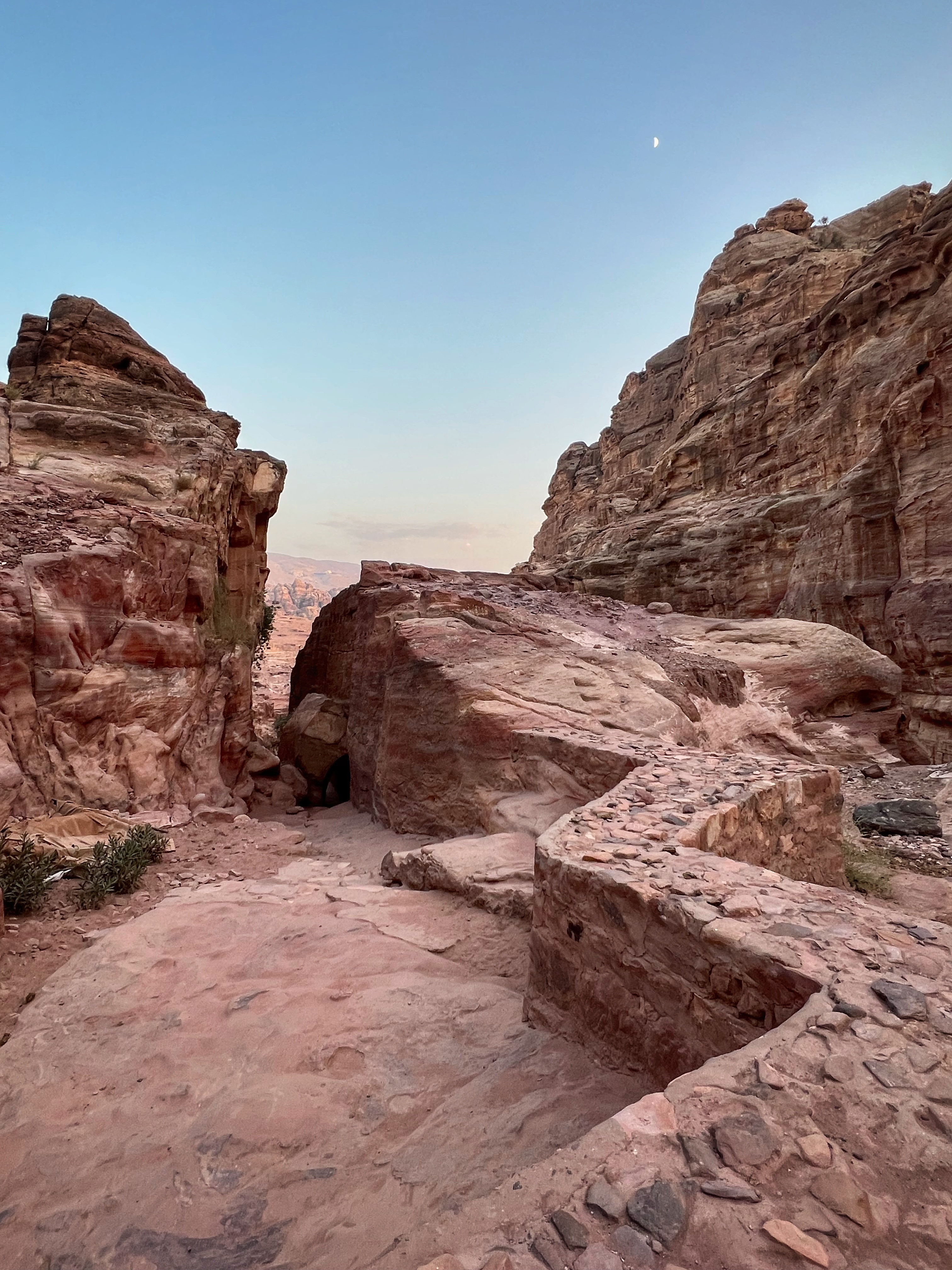
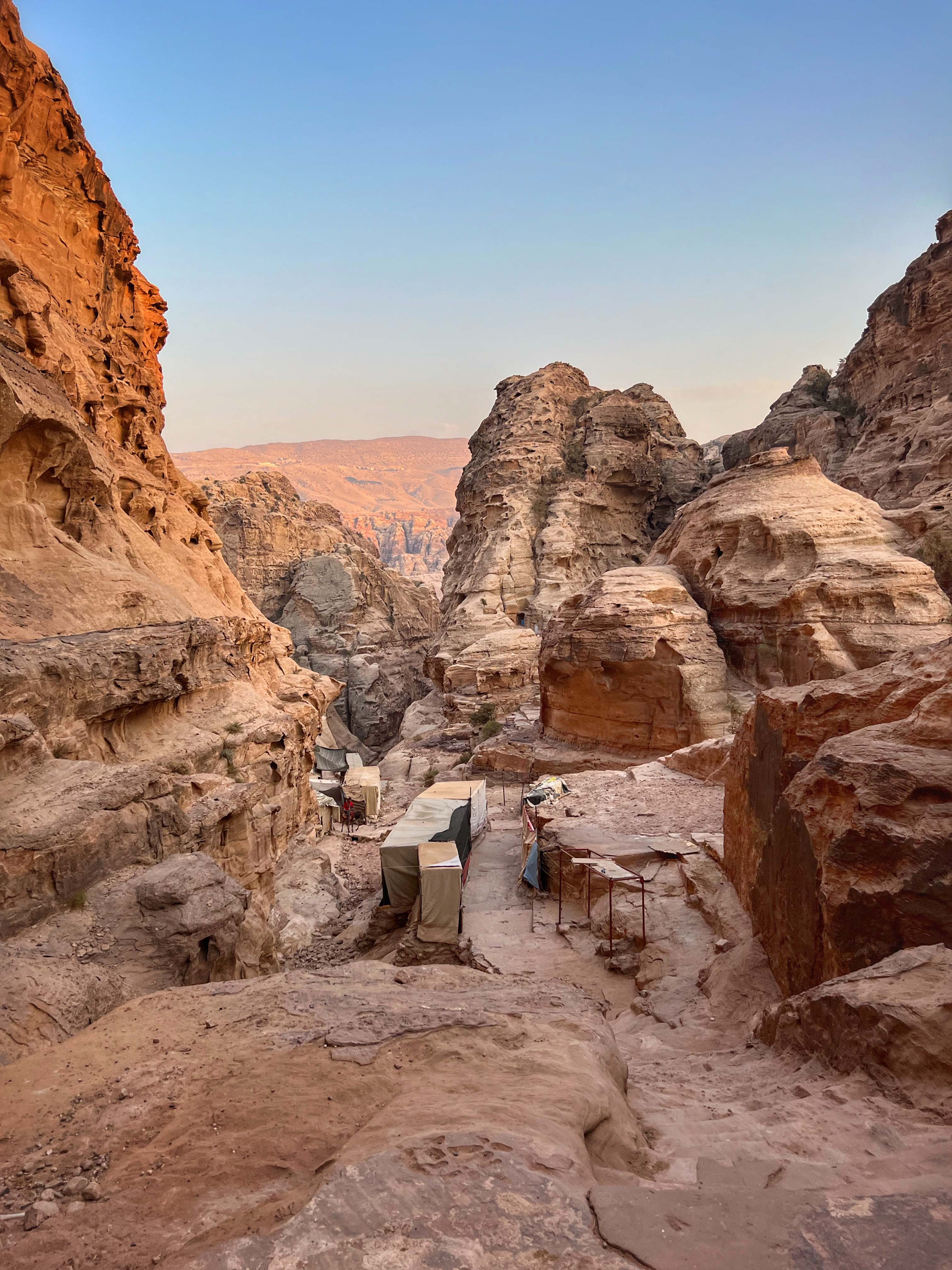


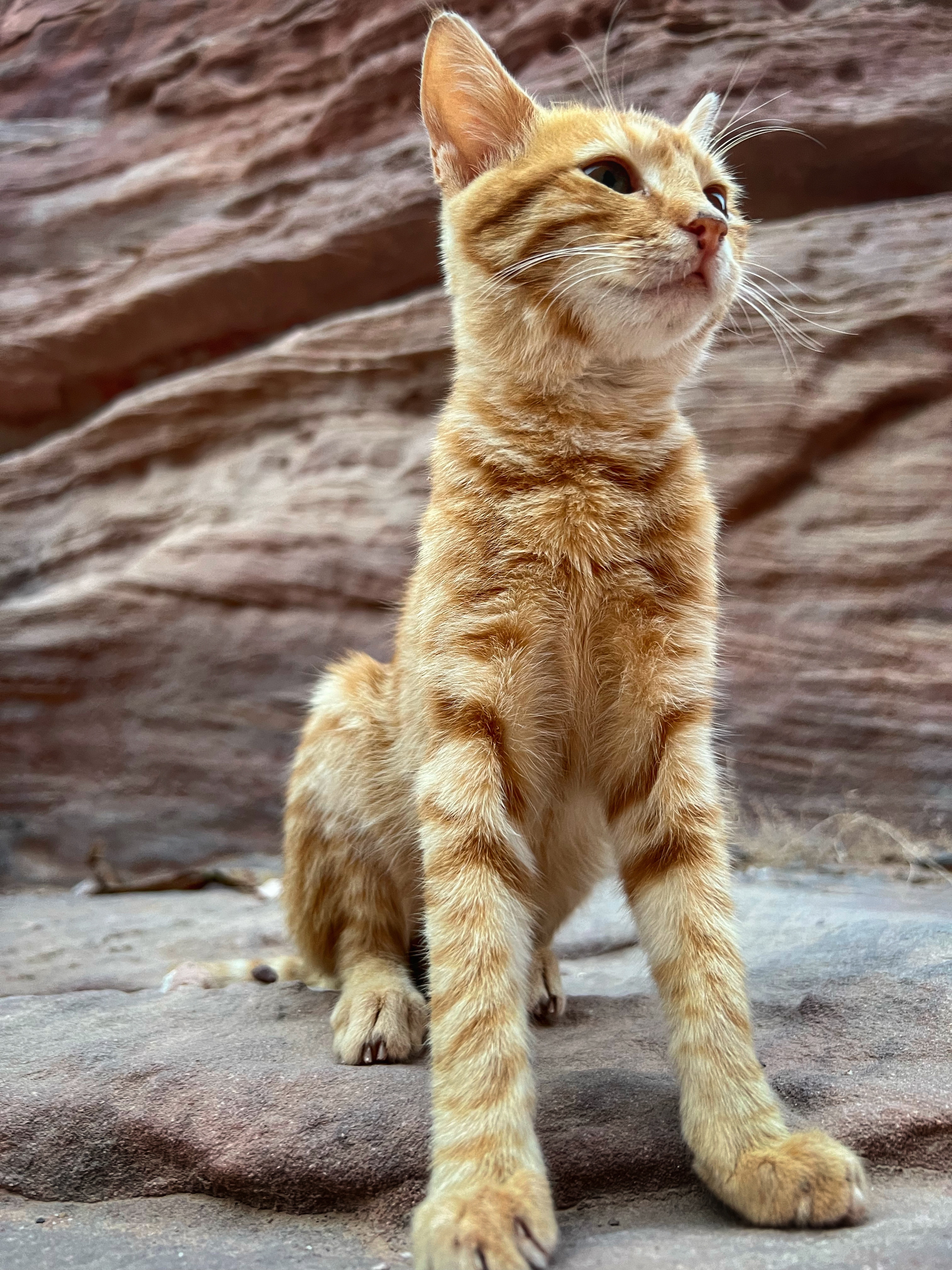
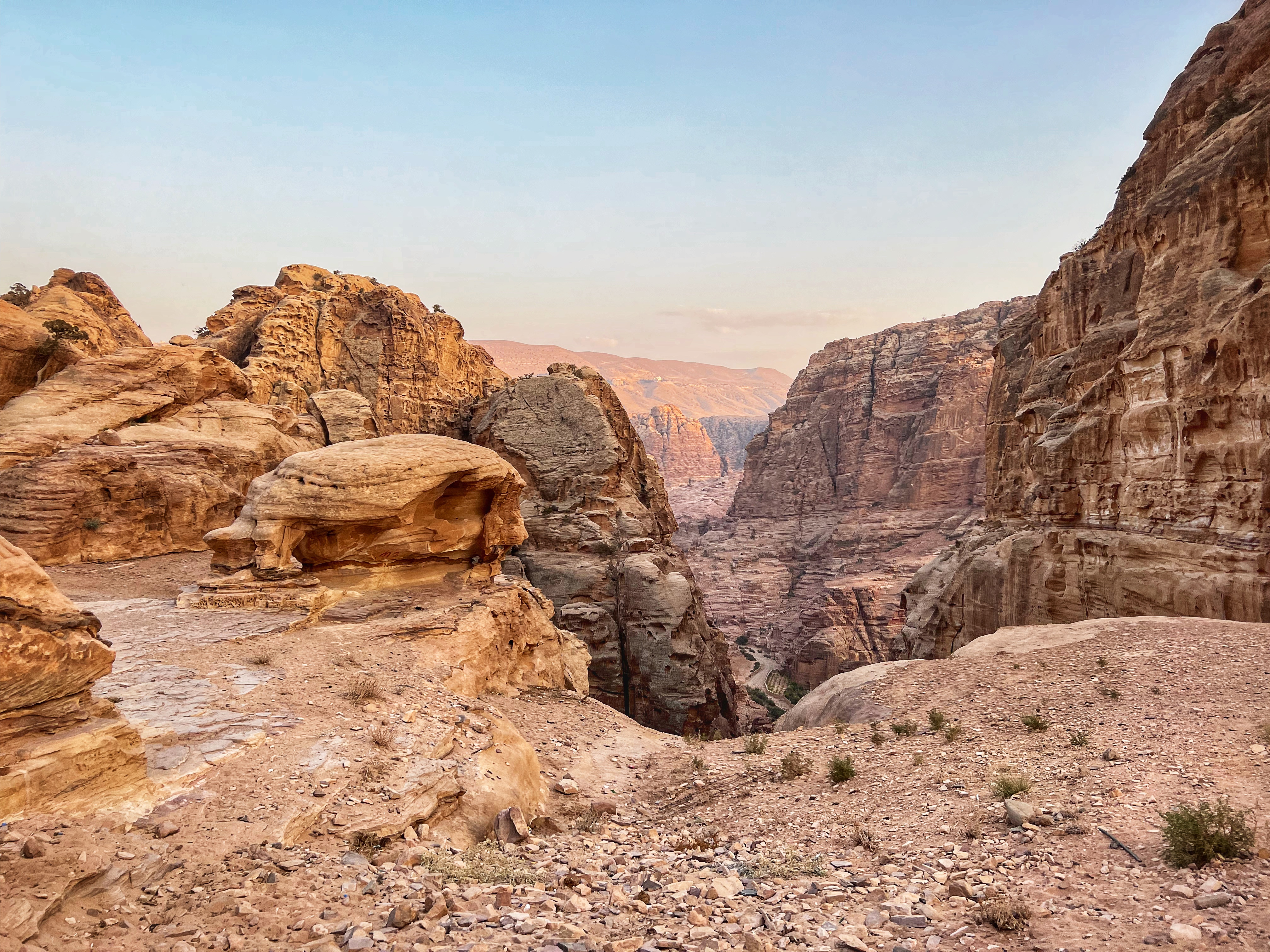

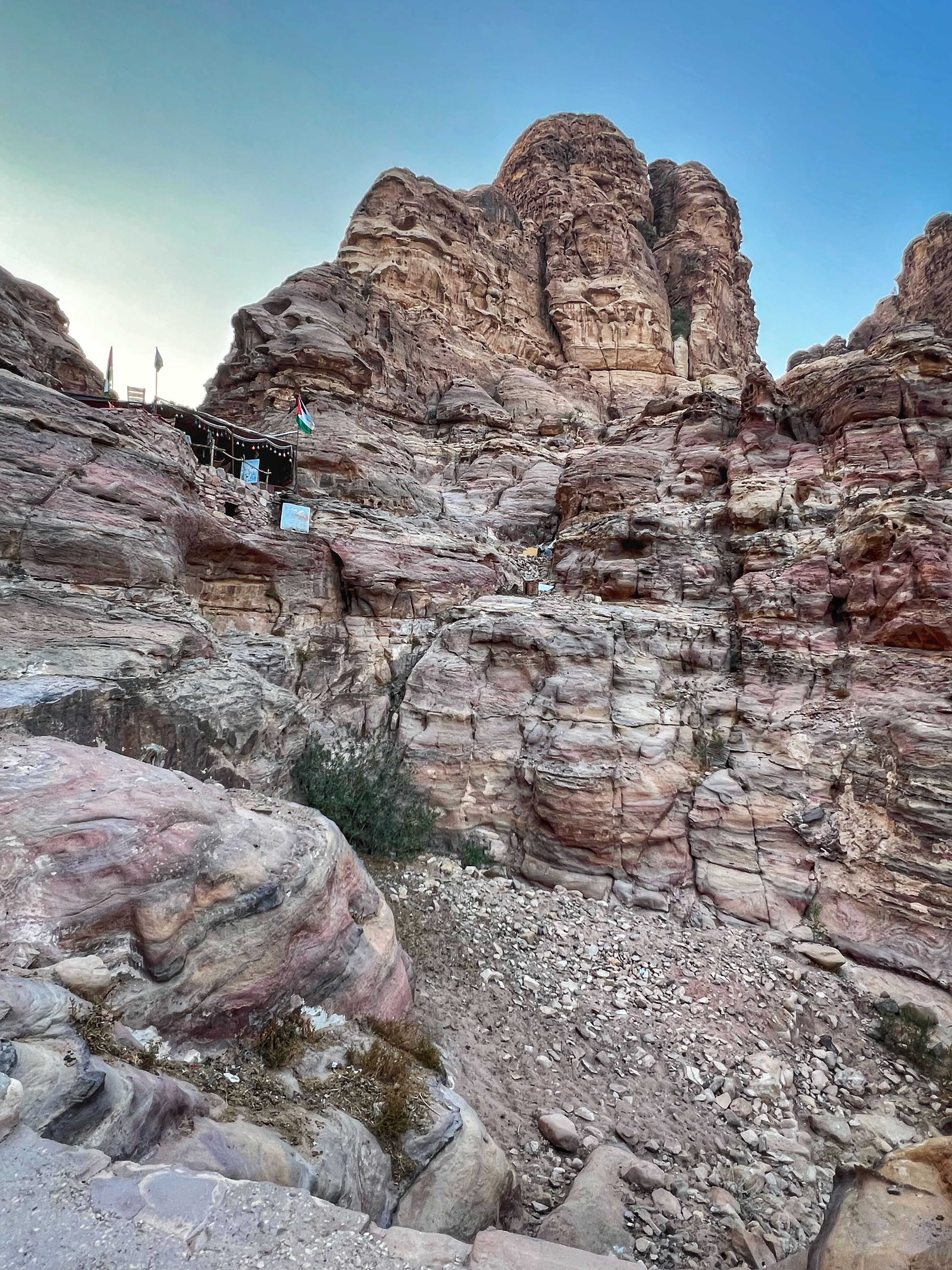
We were given the option to be brought back to the Treasury and walk to the main entrance on our own from there, or go out the back entrance which is a road located behind the Byzantine church. We chose the back entrance so we could see more things, and it was beautiful! But we didn’t realize this meant Kaseb would flag down some of his friends to taxi us back in a truck to to Wadi Musa (aka more tipping) about halfway up the road. HA! It all turned out ok, and was definitely an adventure (the guys invited us to a “beer party” at Little Petra…ha! No thanks, dudes) but we were tired and hungry after a very long day at this Wonder of the World and ready to get back to the hotel.
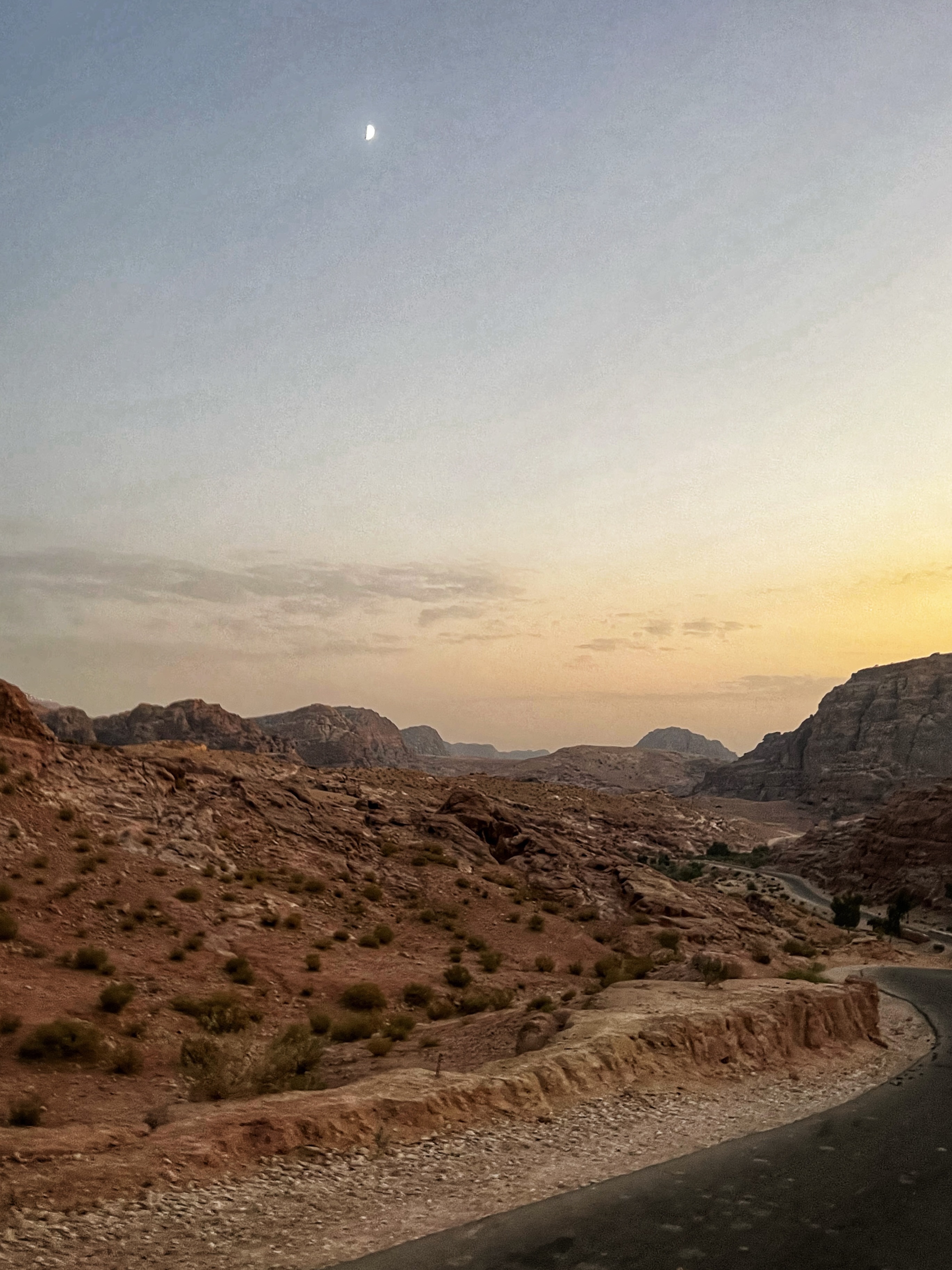
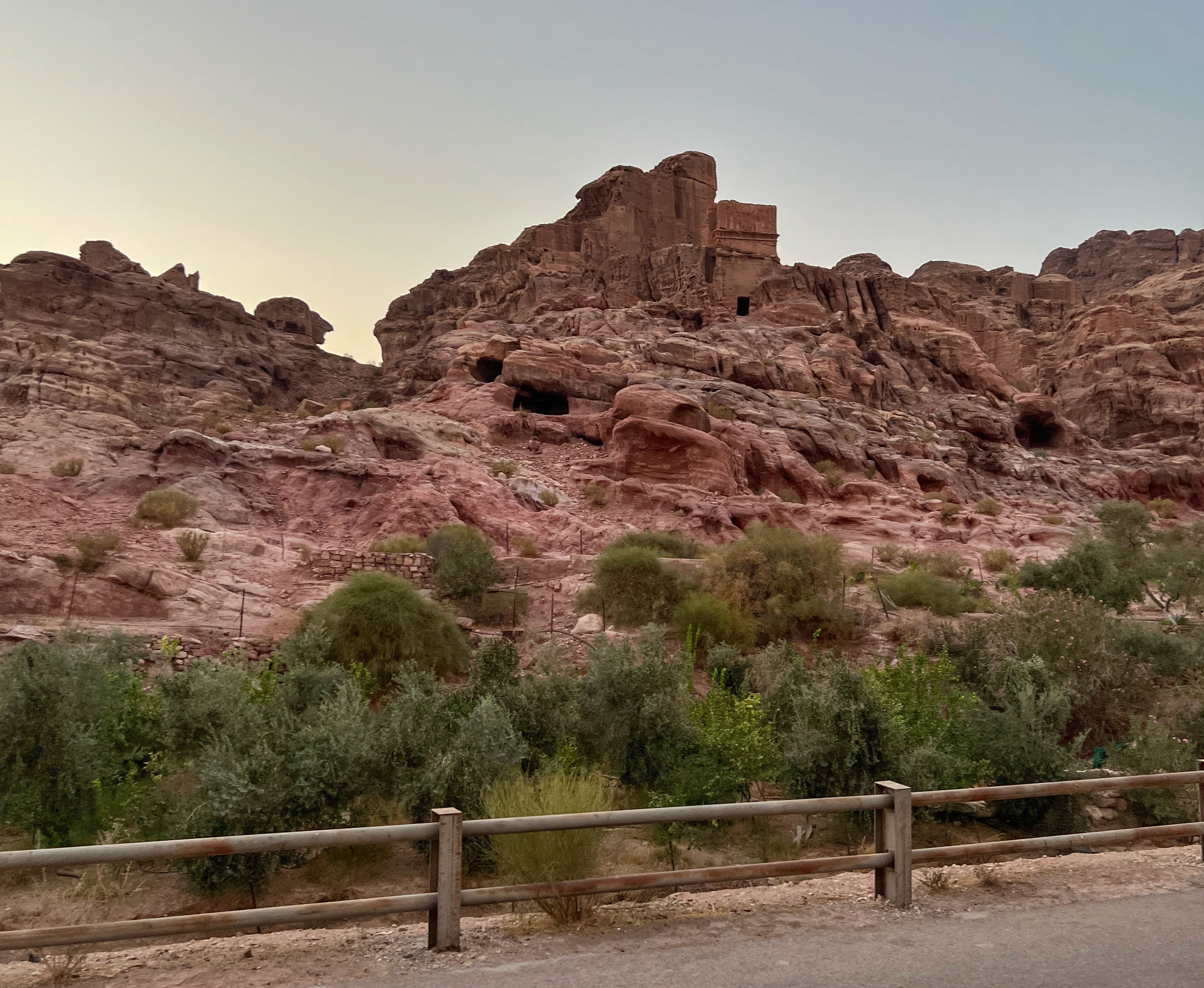
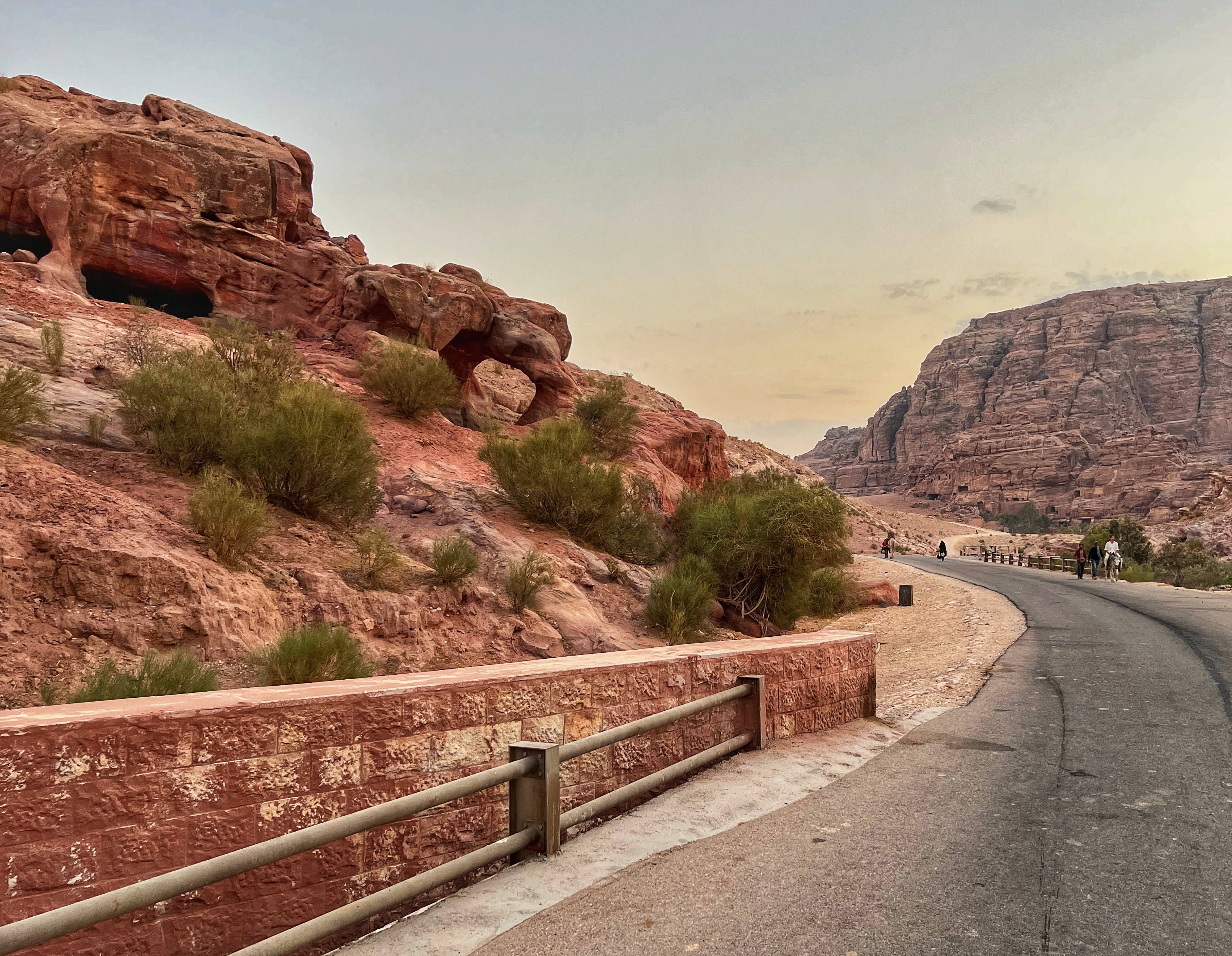
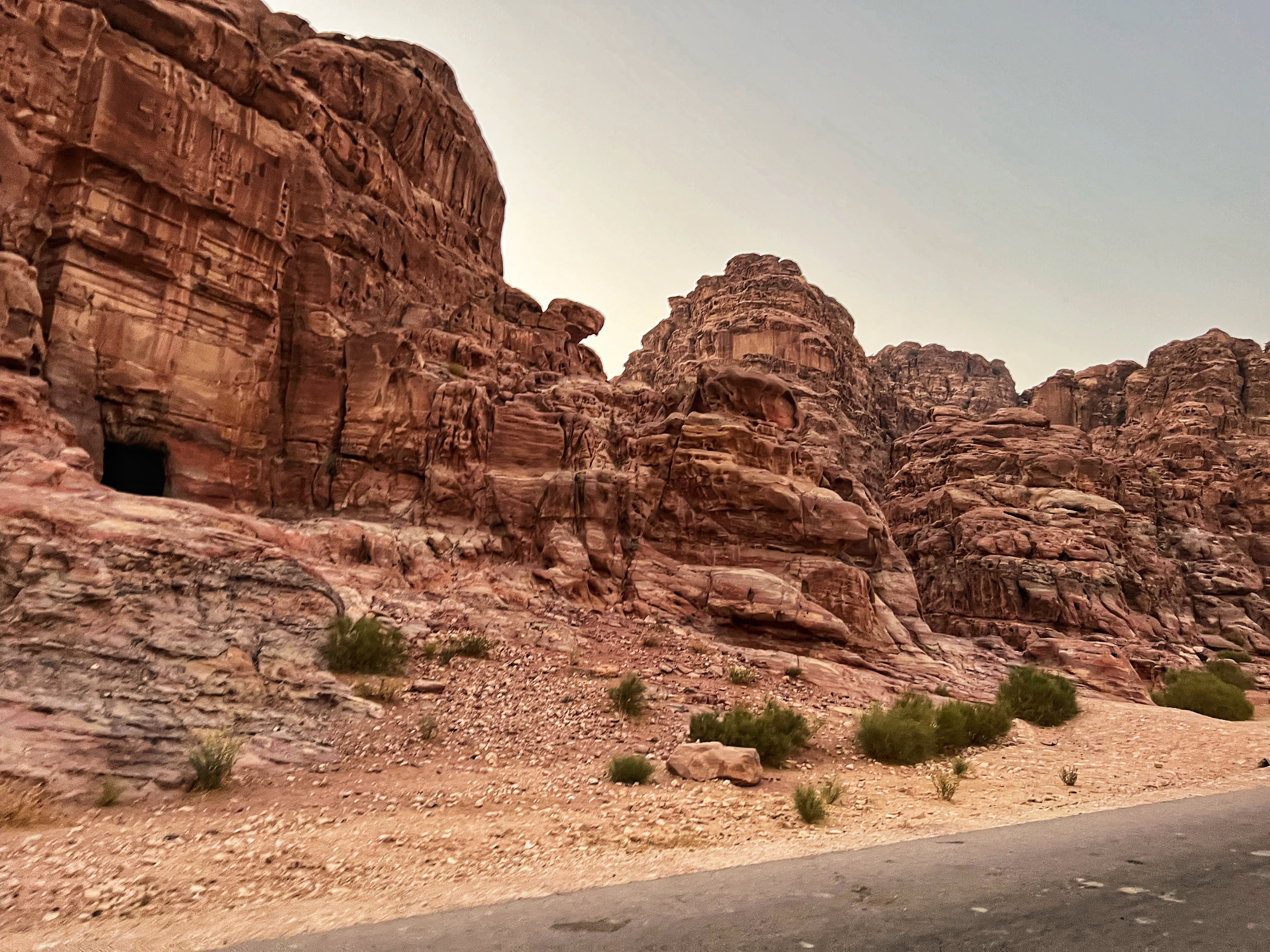
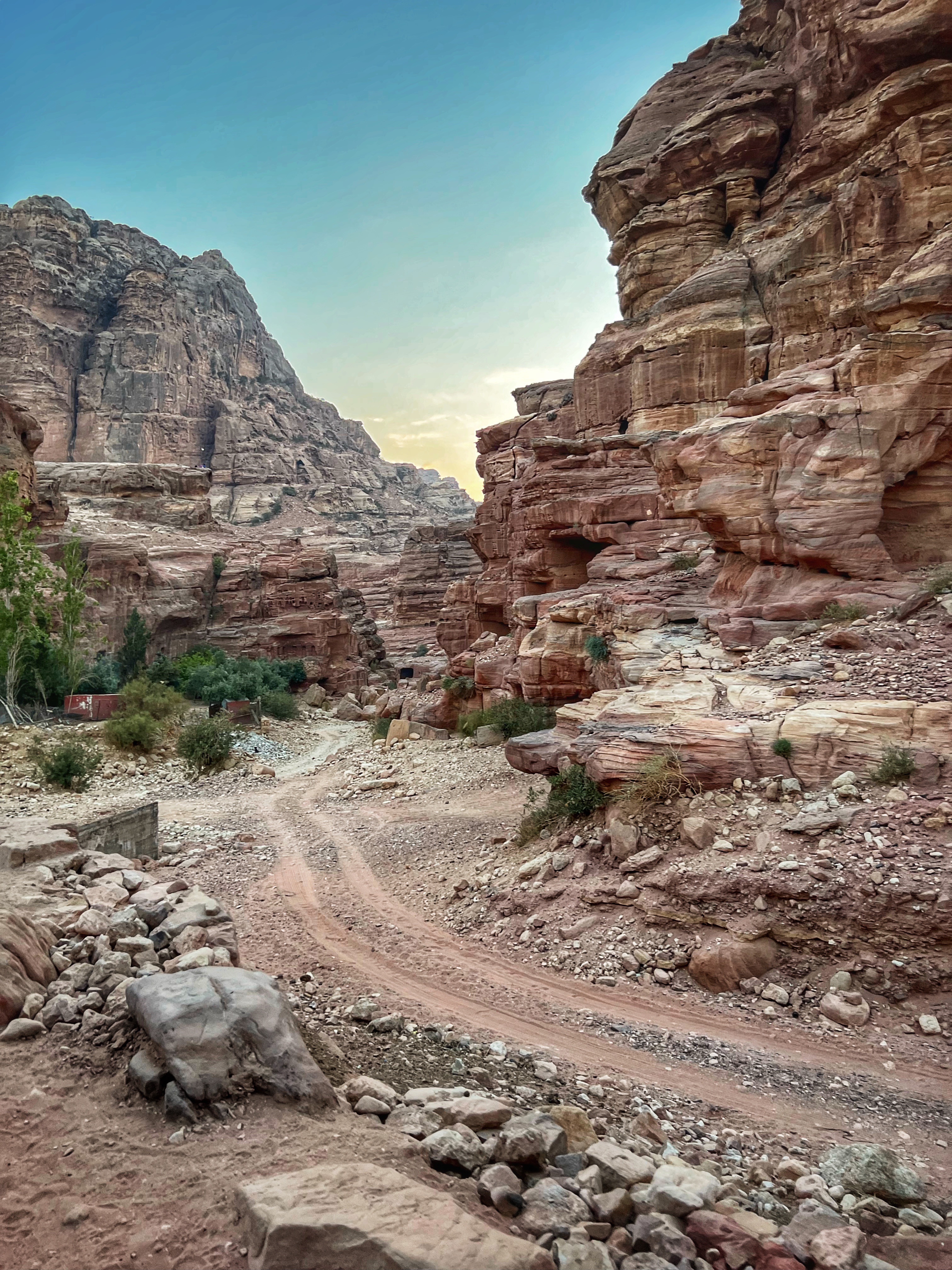

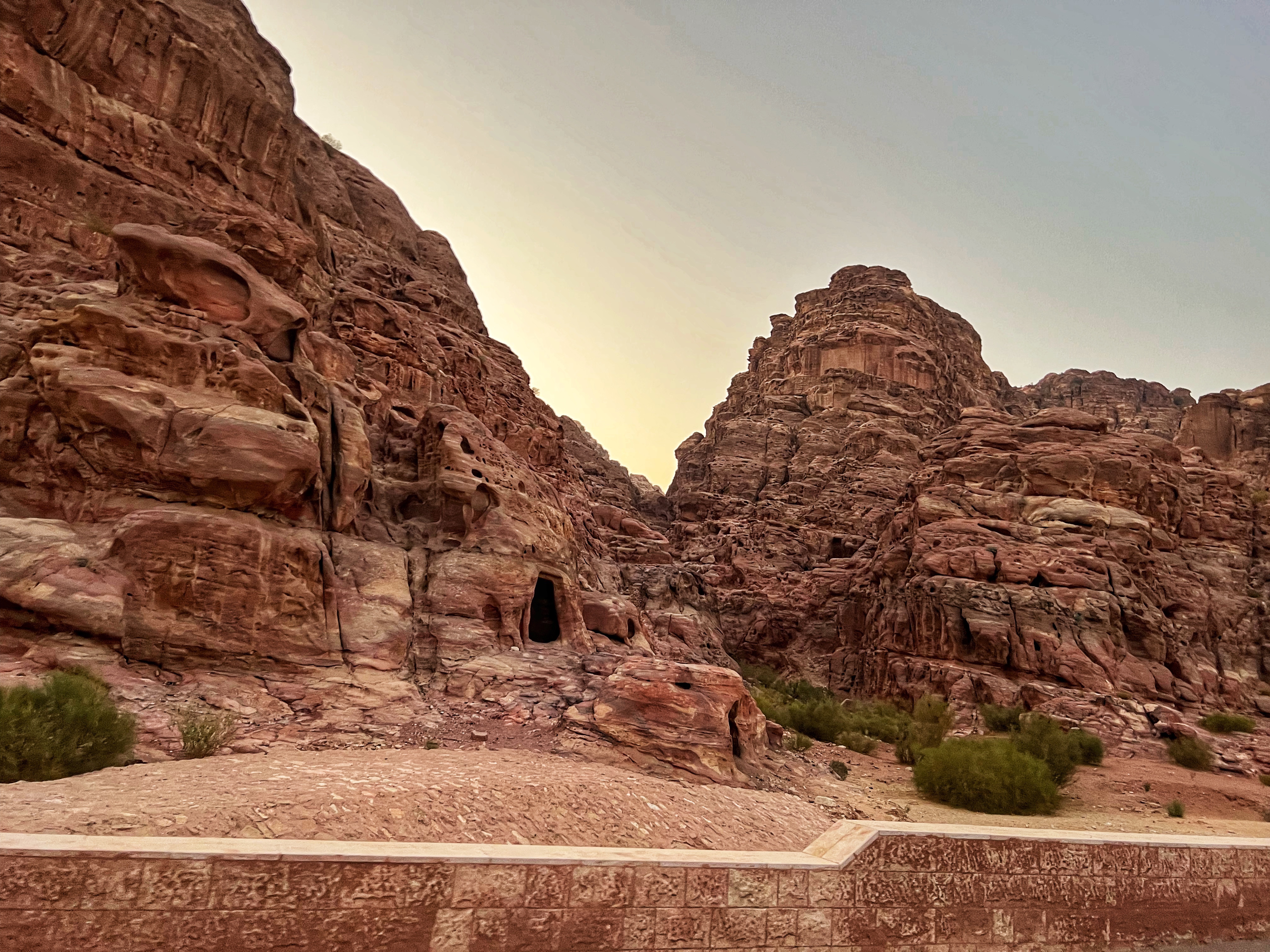
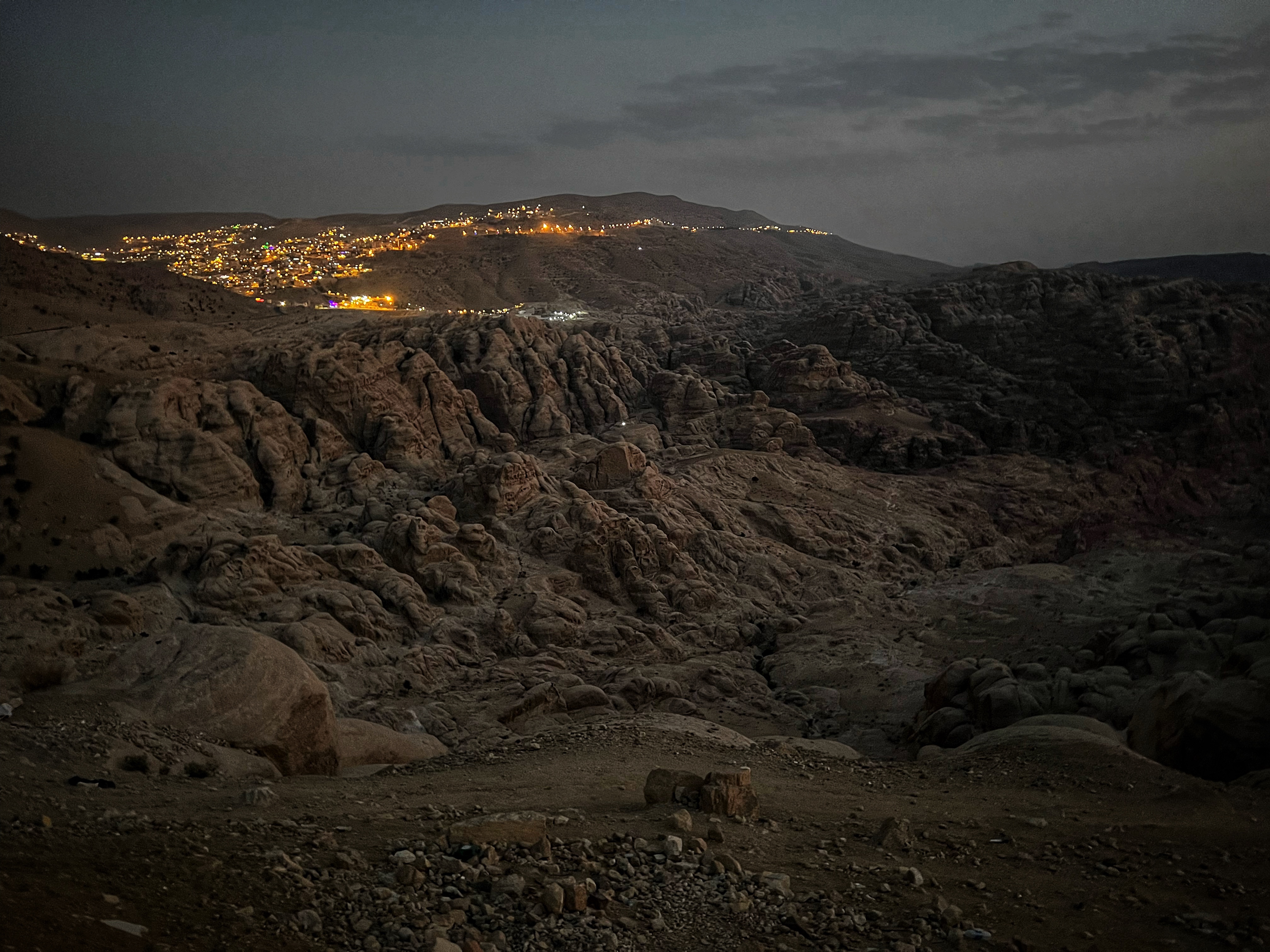
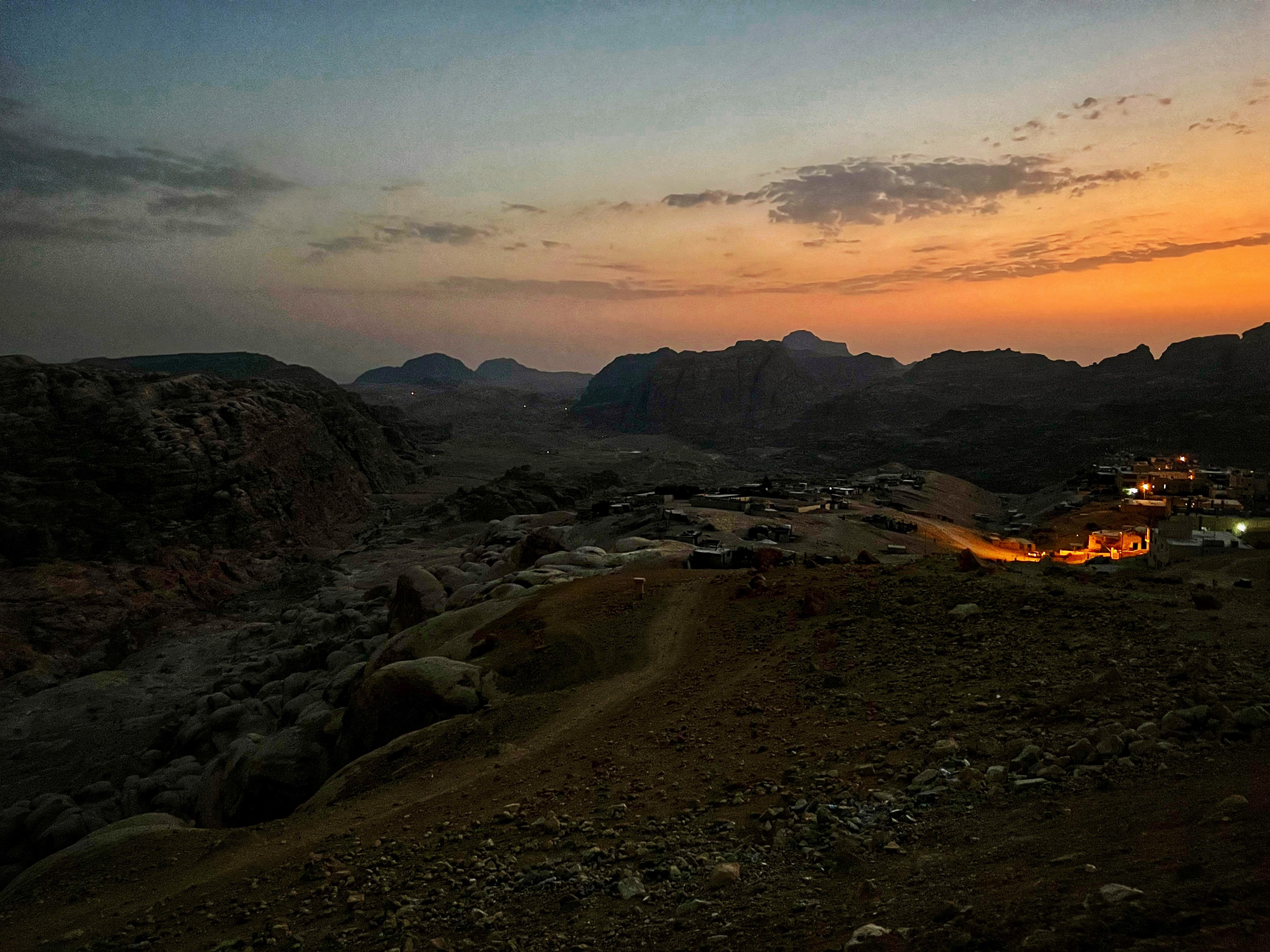
We rounded the bend to Wadi Musa just as the sun was setting and our “taxi” drivers pulled over so we could take in the view (above). They pointed out the lights in the valley, each one was a Bedouin living in a cave. There aren’t many Bedouins still living out there – they estimated about 40. We were dropped off at our hotel and enjoyed another delicious (huge) rooftop buffet dinner at the Petra Moon Hotel.
DAY 6
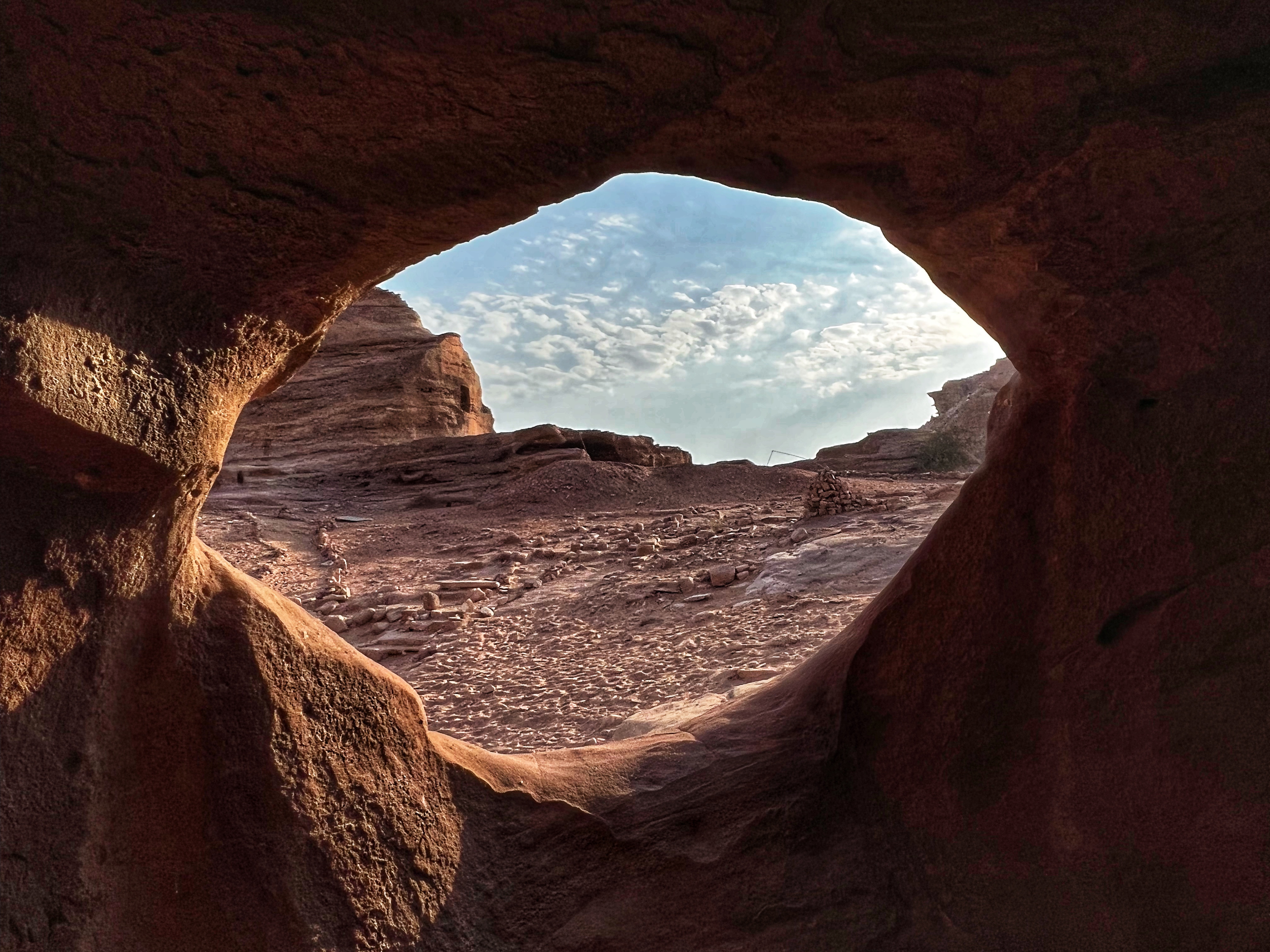
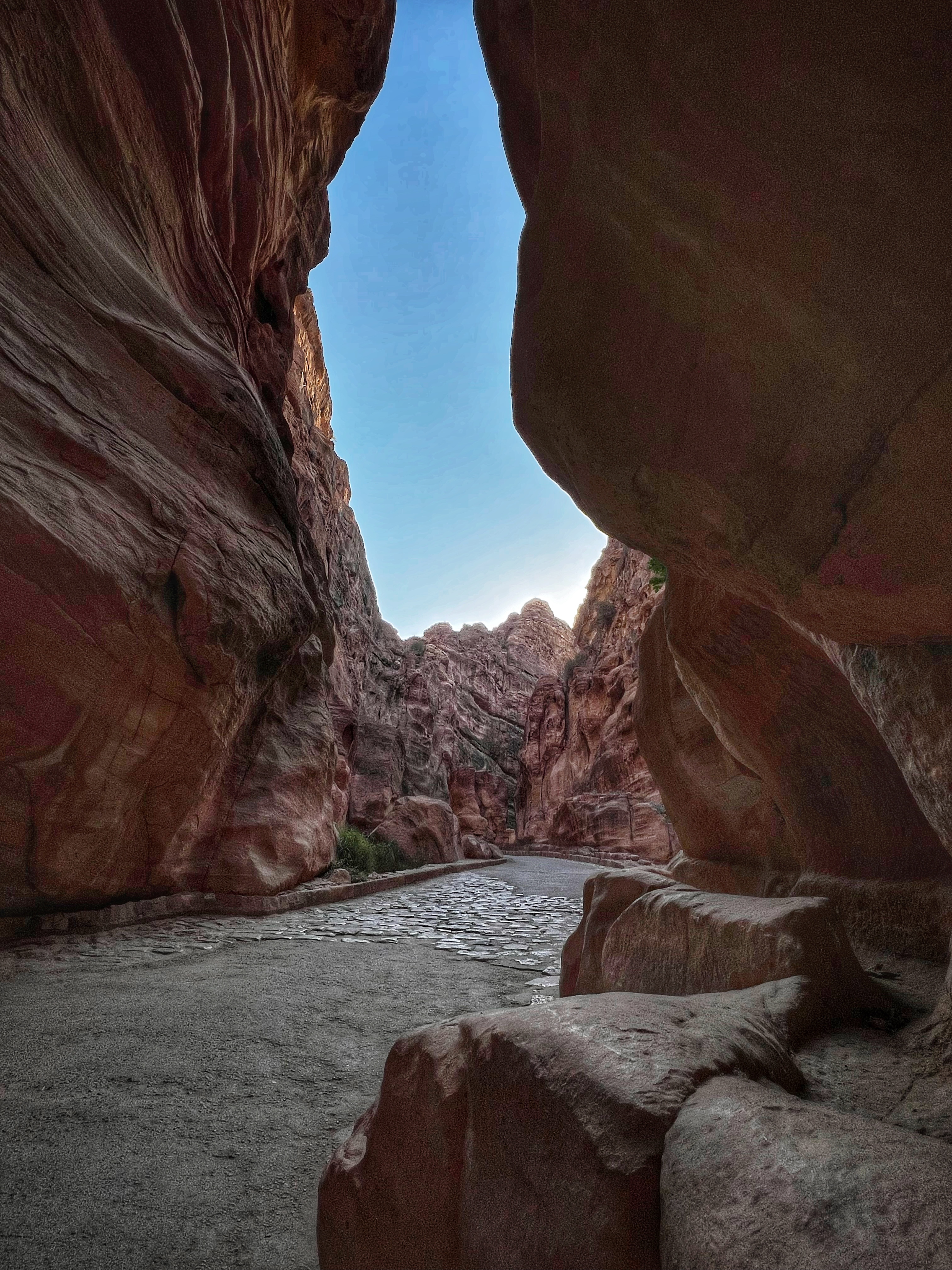
I woke up early to take advantage of my two day Petra pass and walked straight through the Siq to the Treasury. A few locals at the shops and at the Treasury saw me and said “welcome back!” I didn’t recognize them, but it was very charming and observant of them. It took me only about 30 minutes to speed walk from the hotel to the Treasury and I had it practically to myself. Just me and the camels. Before leaving I caved and had a few photos taken on a super tall camel. They’re such amazing creatures. I didn’t venture further – just wanted to see the Treasury in different light. We would’ve loved to see Petra by Night, but there was a marathon happening that week and the Petra by Night dates were arranged only for the marathoners. I have heard mixed things about it, but still would love to experience that someday. I want to note that there is a lot to see on the trail to the Treasury, so be sure to look around you. Don’t miss the caves (see photos below), Djinn Blocks and Obelisk Tomb.




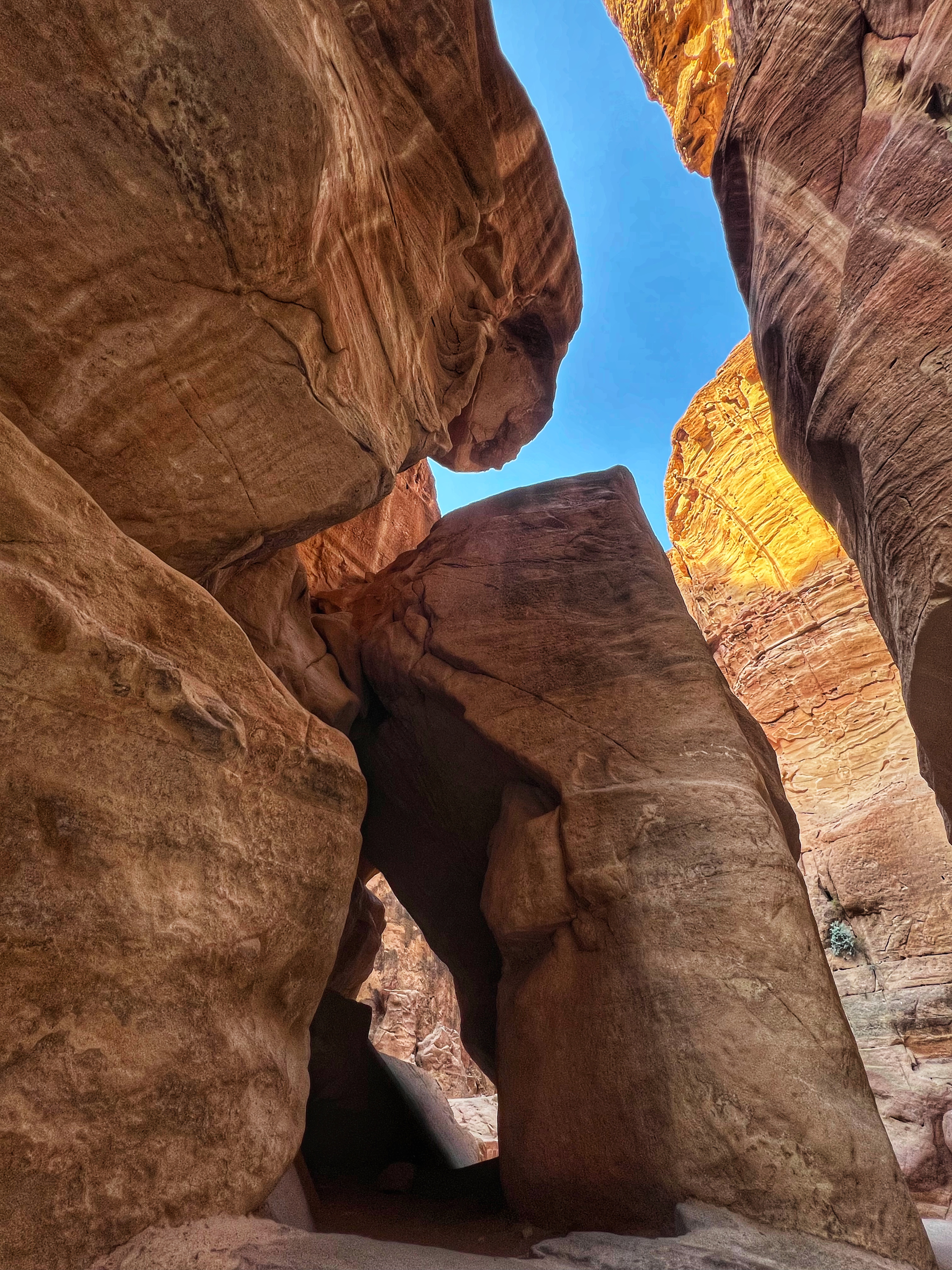

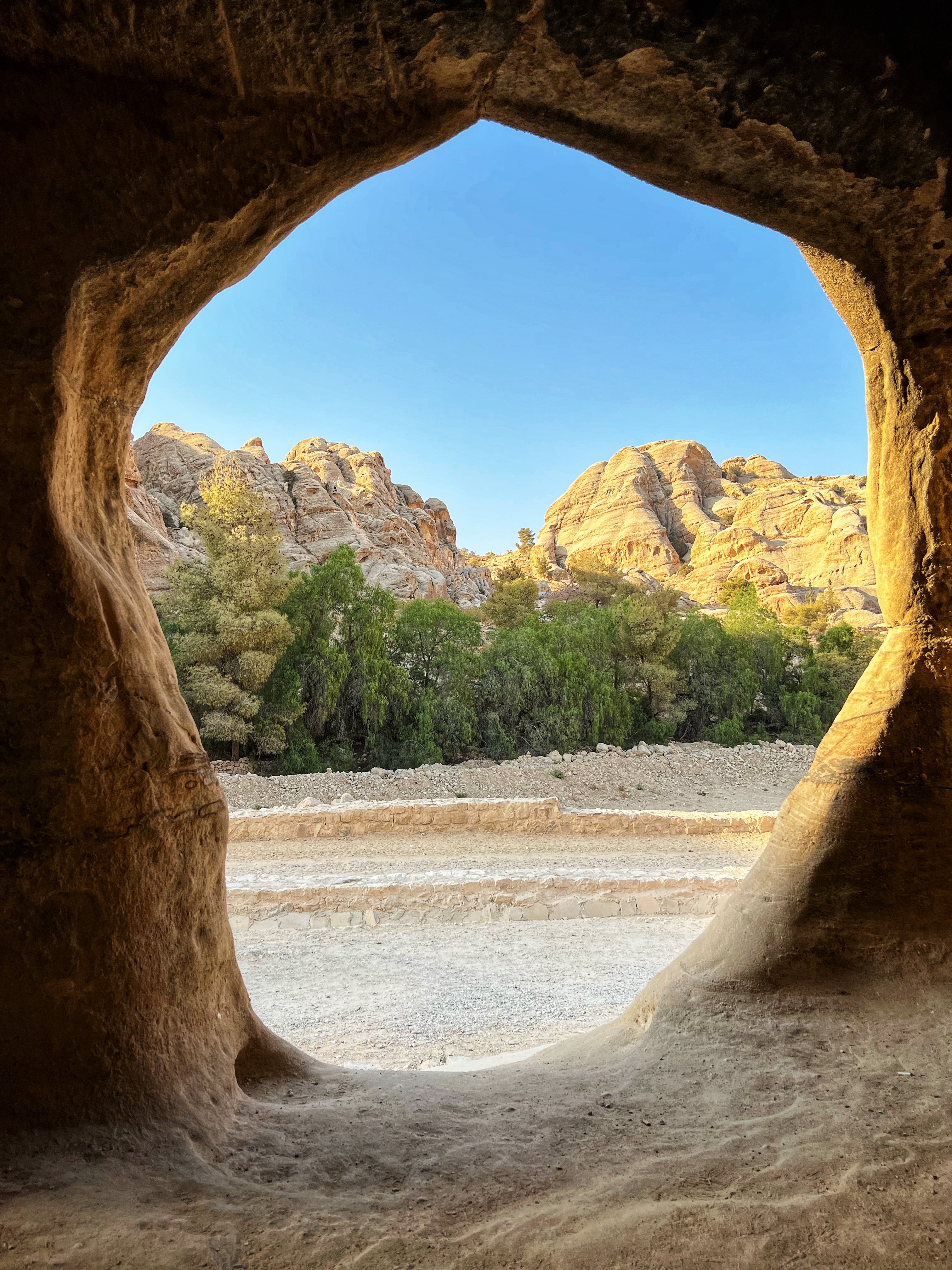

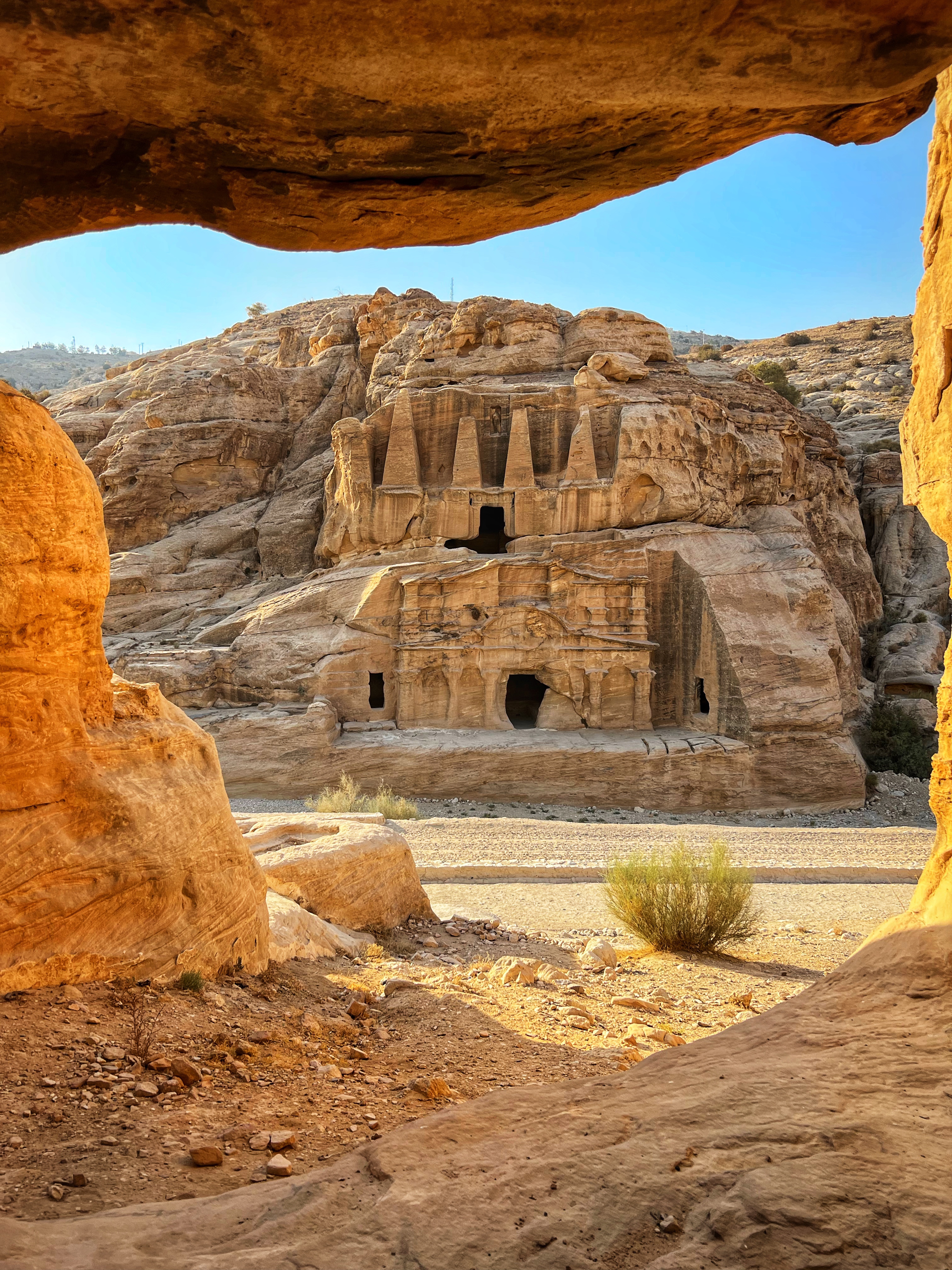
After breakfast at the hotel we checked out and went across the street to the Petra Museum (free entrance). This museum was built thanks to a $7M grant by the Japan International Cooperation Agency – one of the countries who have taken great interest in this historic site. The museum gives visitors an immersive experience of Petra over time. There are many artifacts, models, and interactive displays. We spent almost 2 hours here, but you can spend more or less depending on your schedule. It was mid day and practically empty.

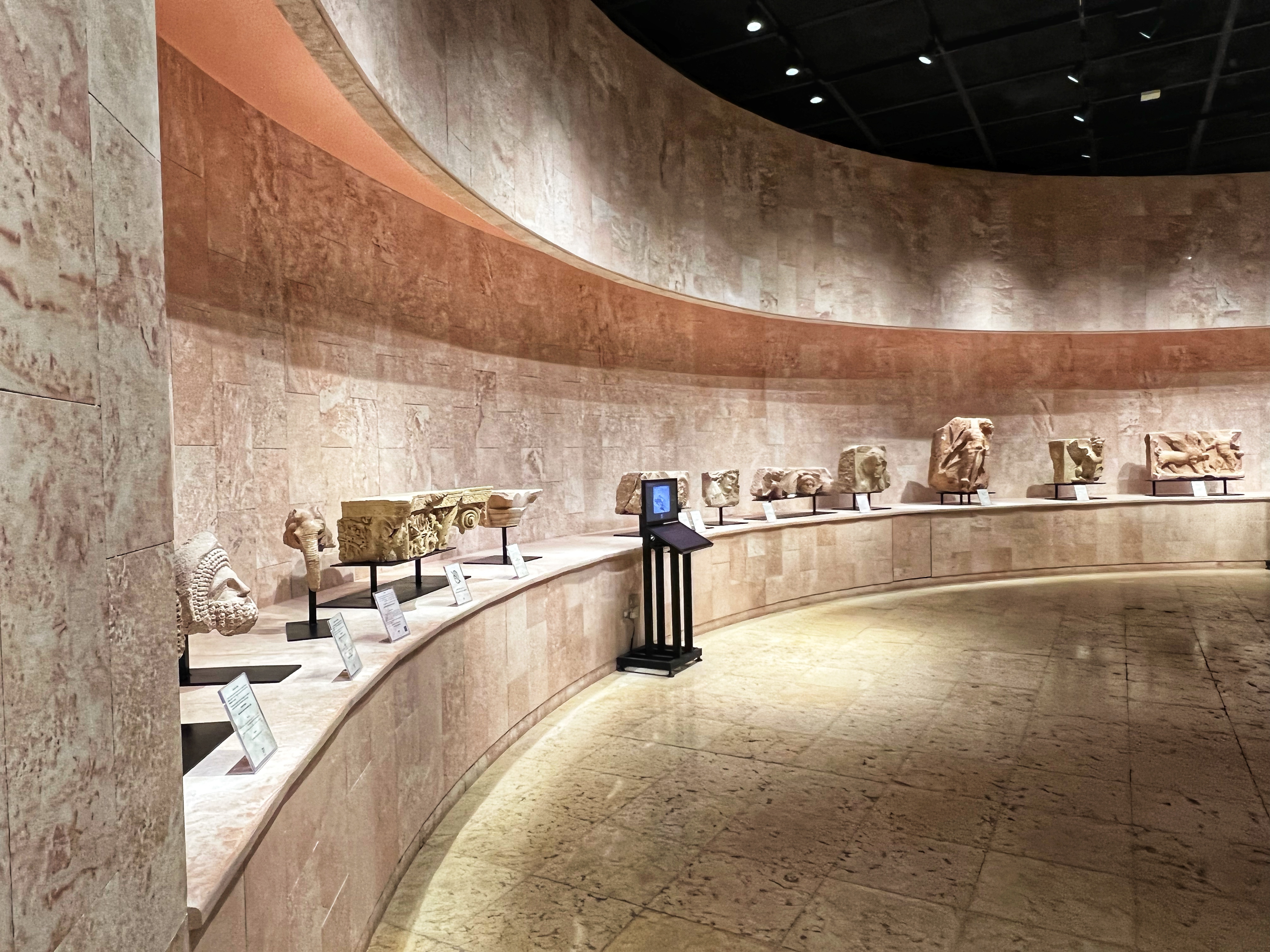

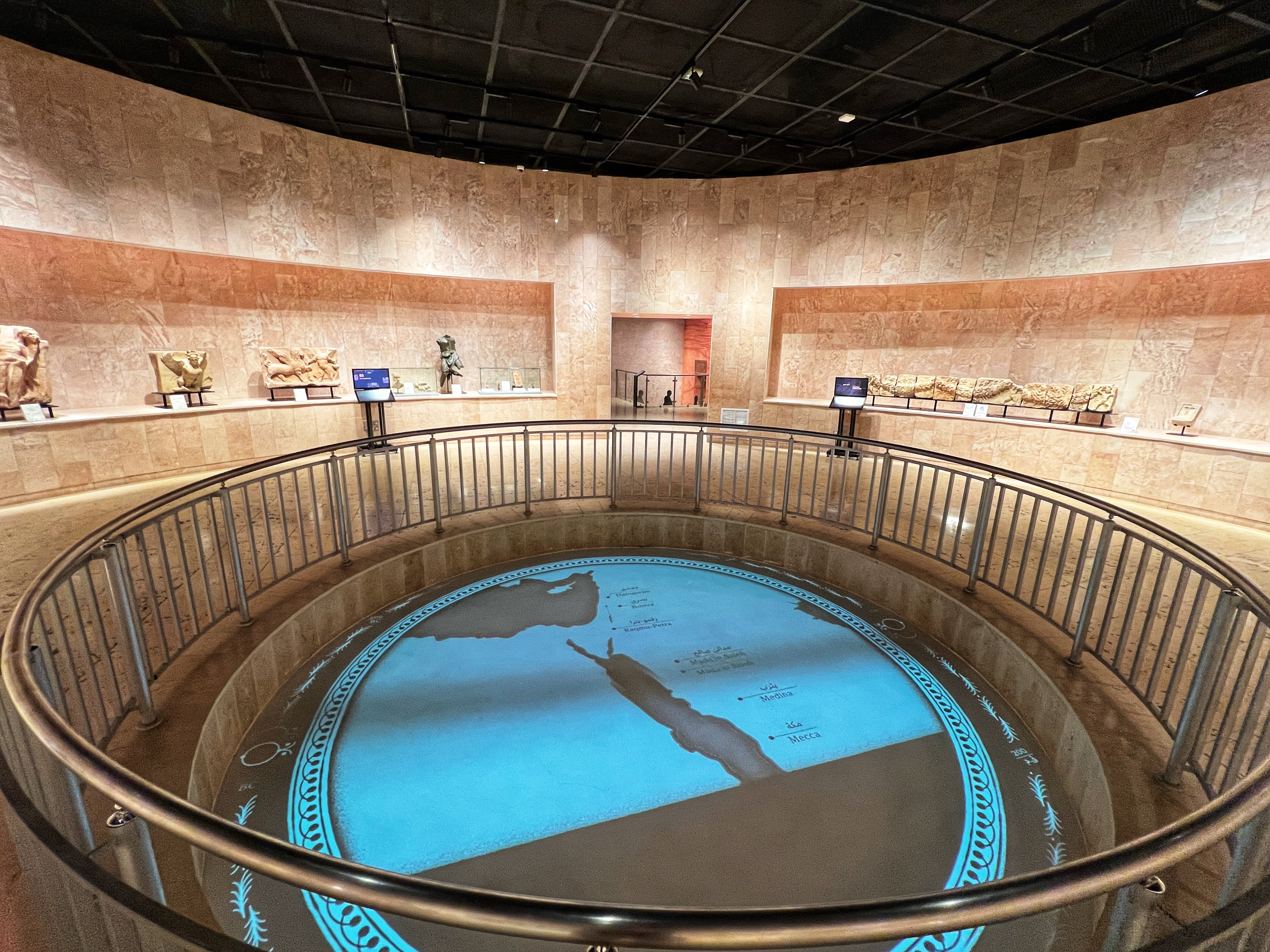

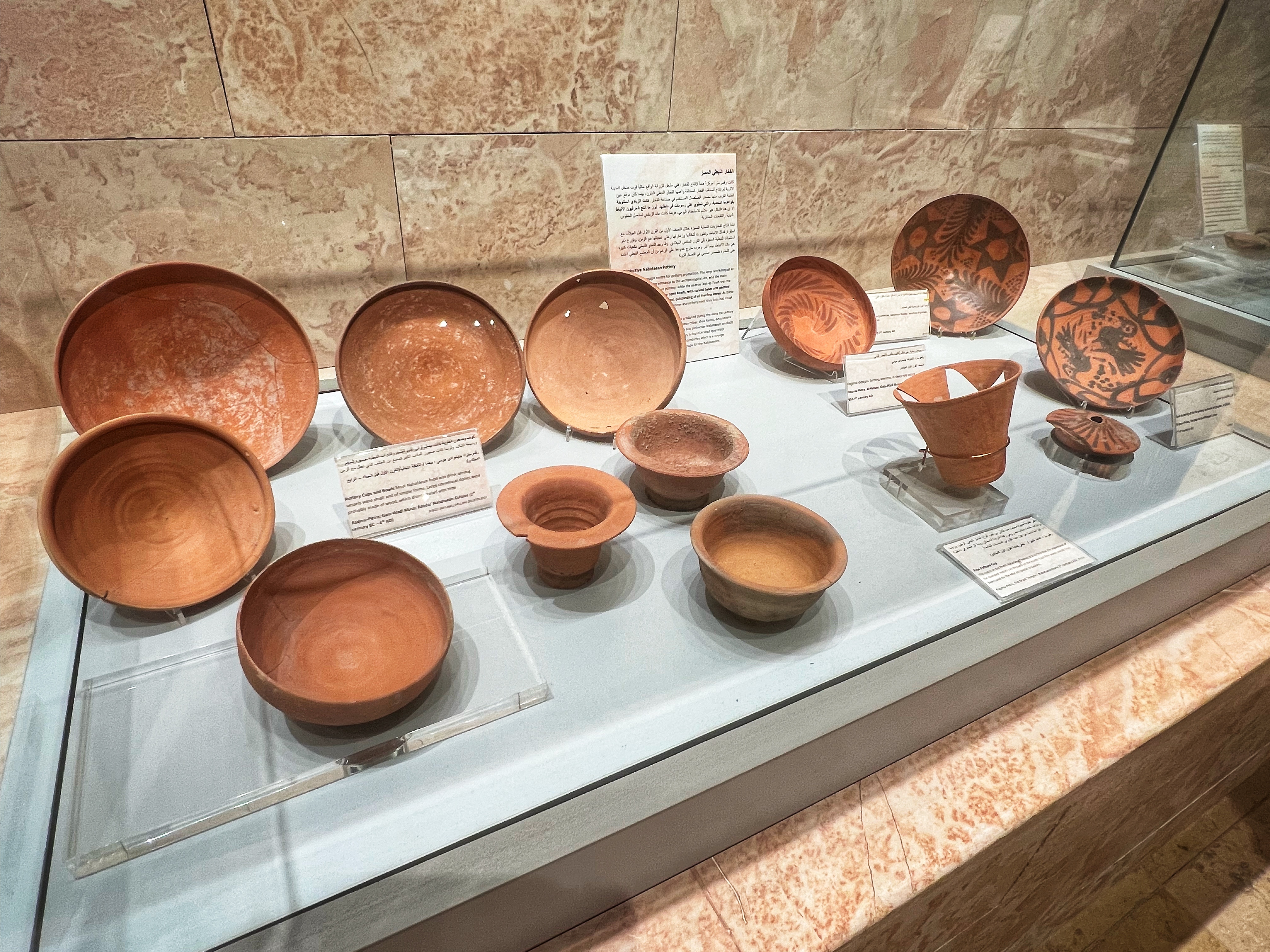


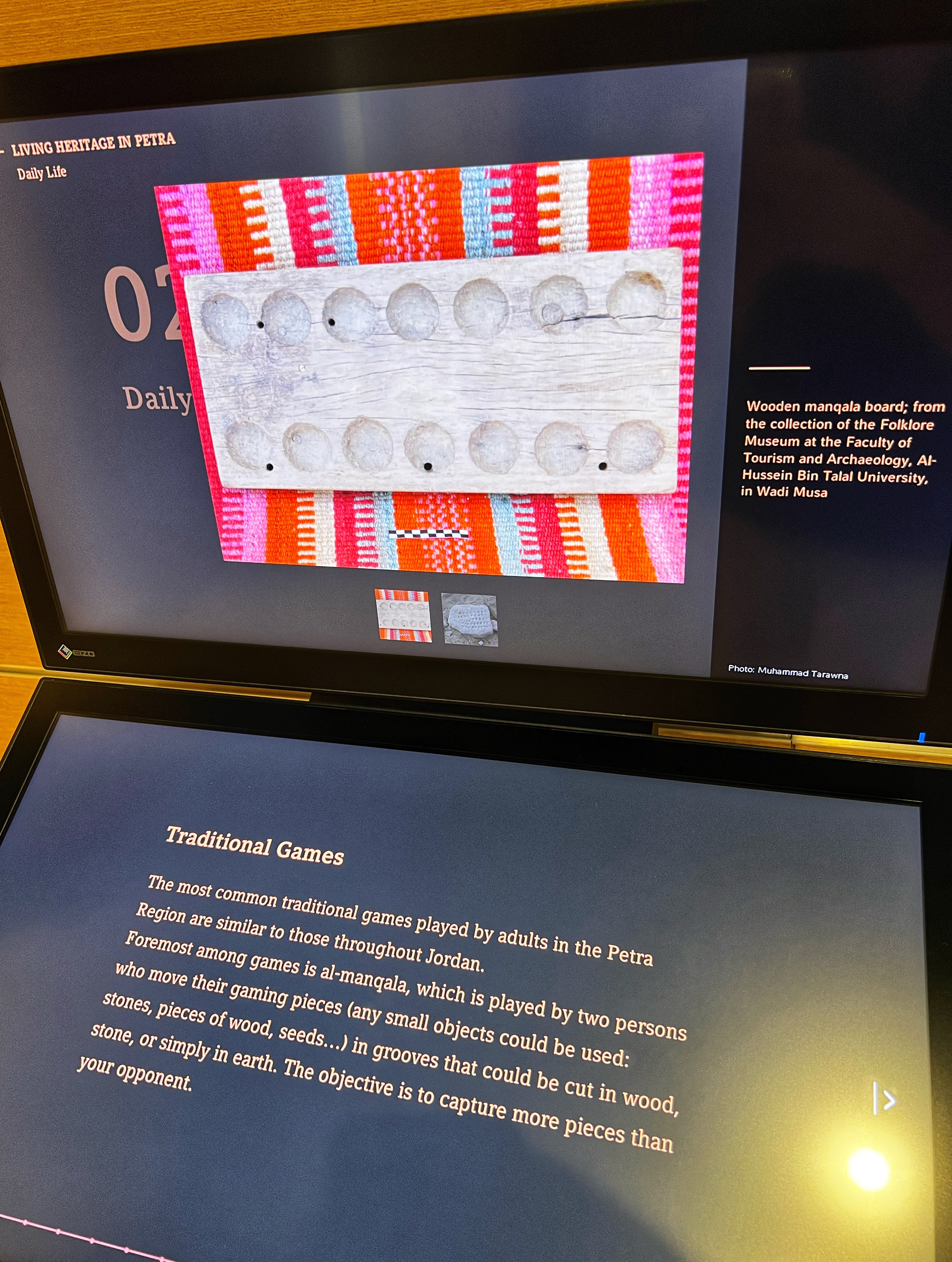
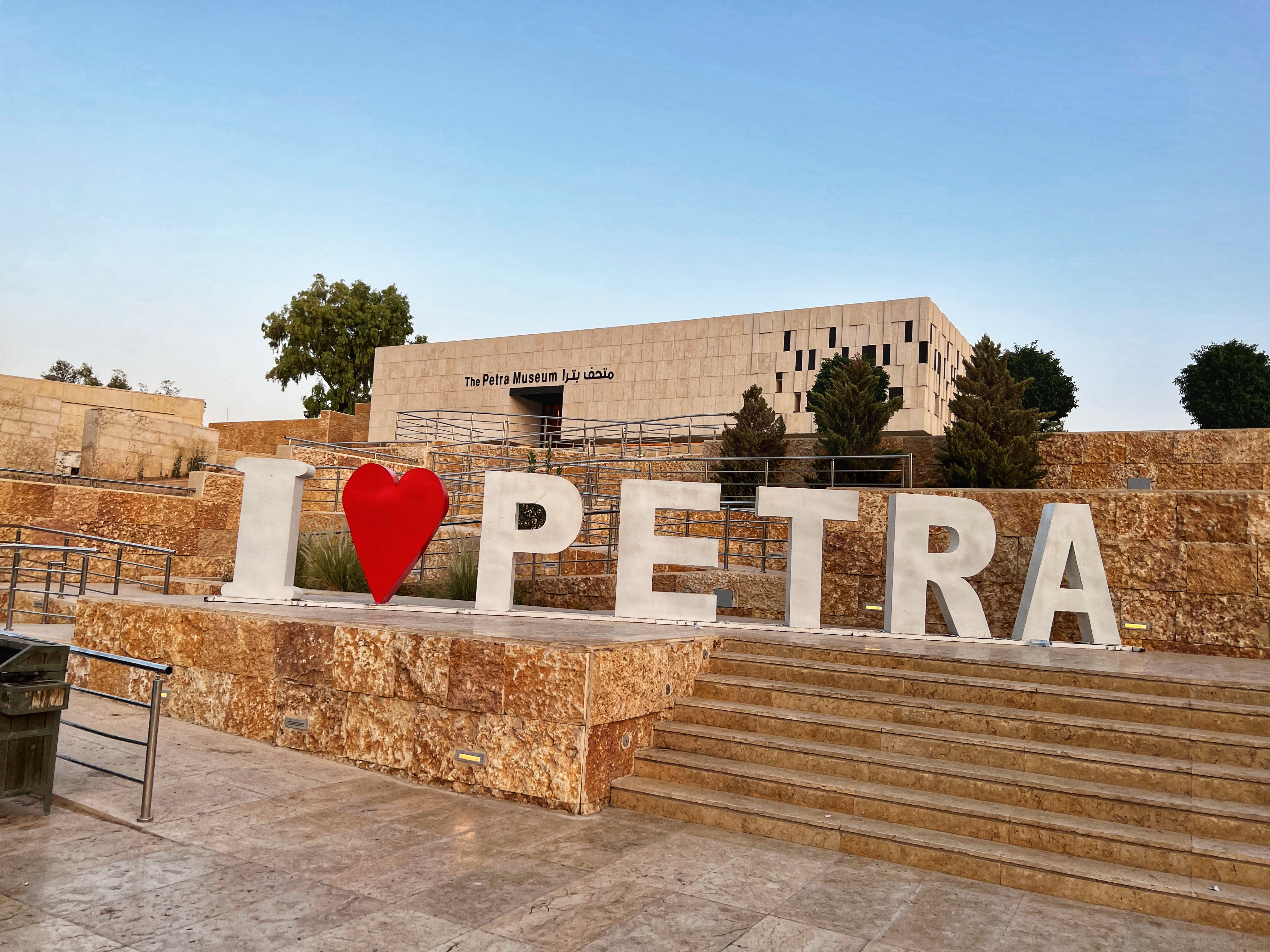
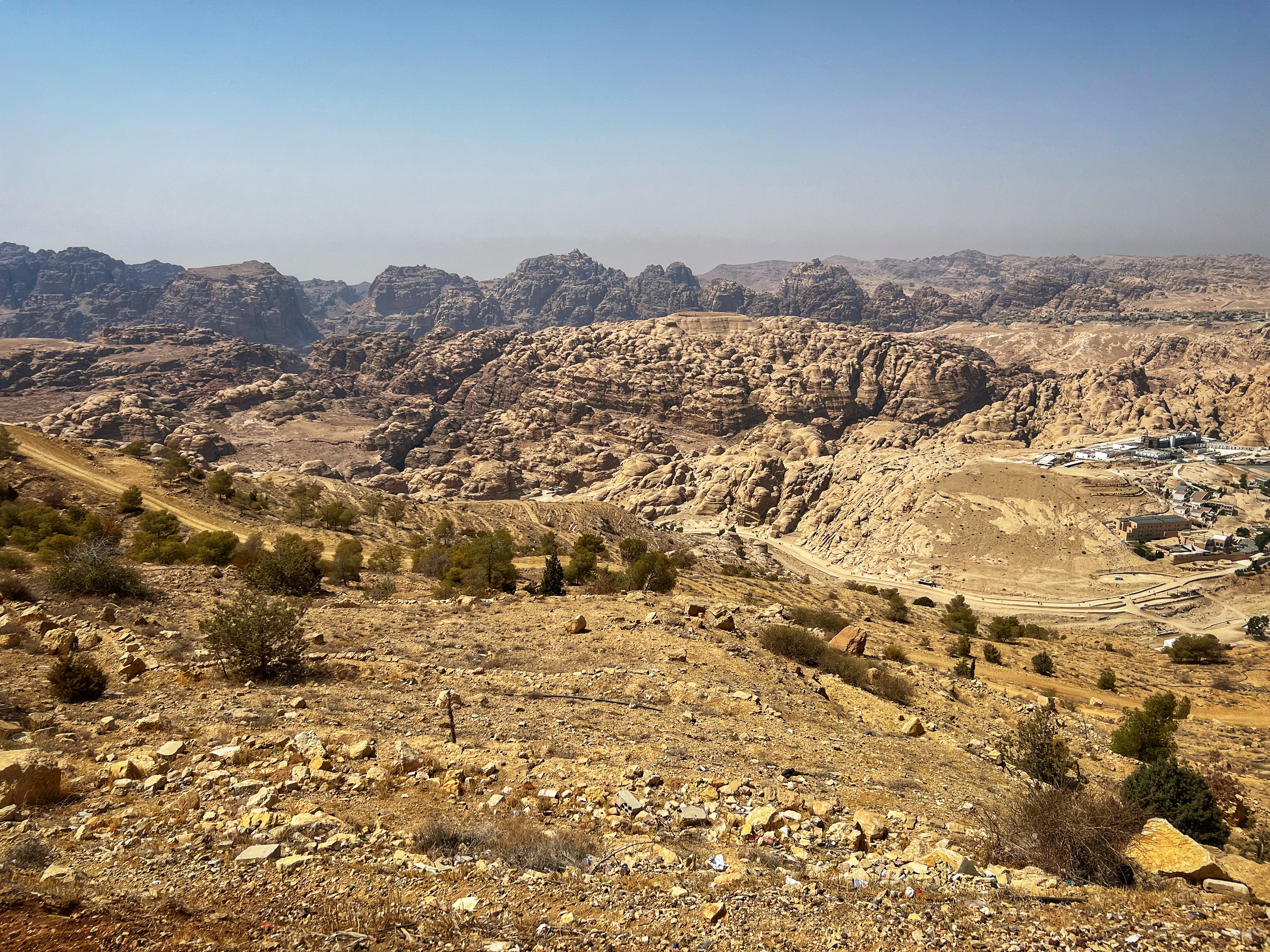
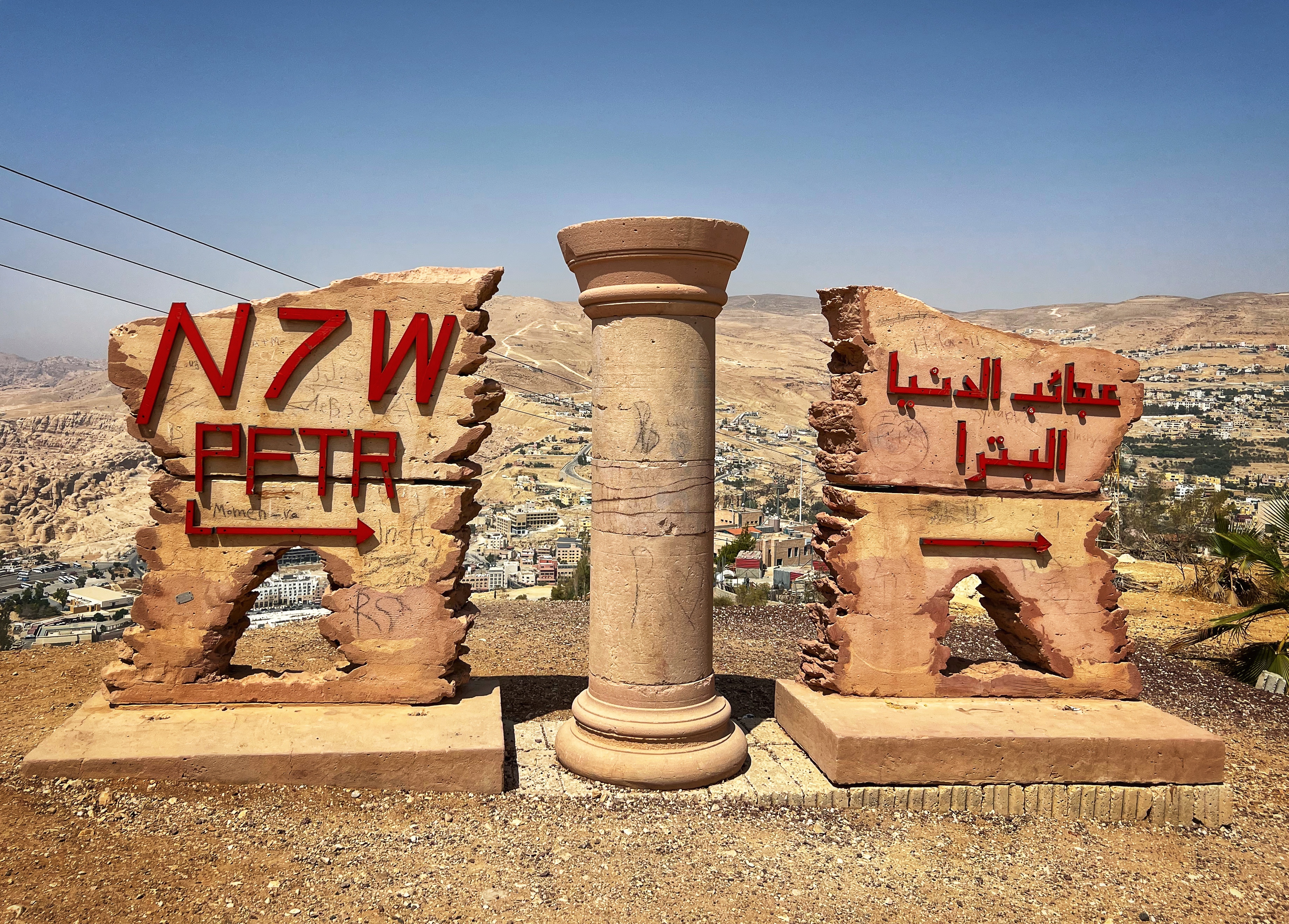
After the museum we hit the road to Wadi Rum! The drive out of Wadi Musa was hilarious because the road is very steep and the car struggled a bit at times climbing the hills. We stopped just before Wadi Musa Park at the ILOVEPETRA sign for a magnificent vista point. From there you can see the entire trail to the Siq, and deep into the Petra valley. It’s incredible!
WADI RUM VILLAGE
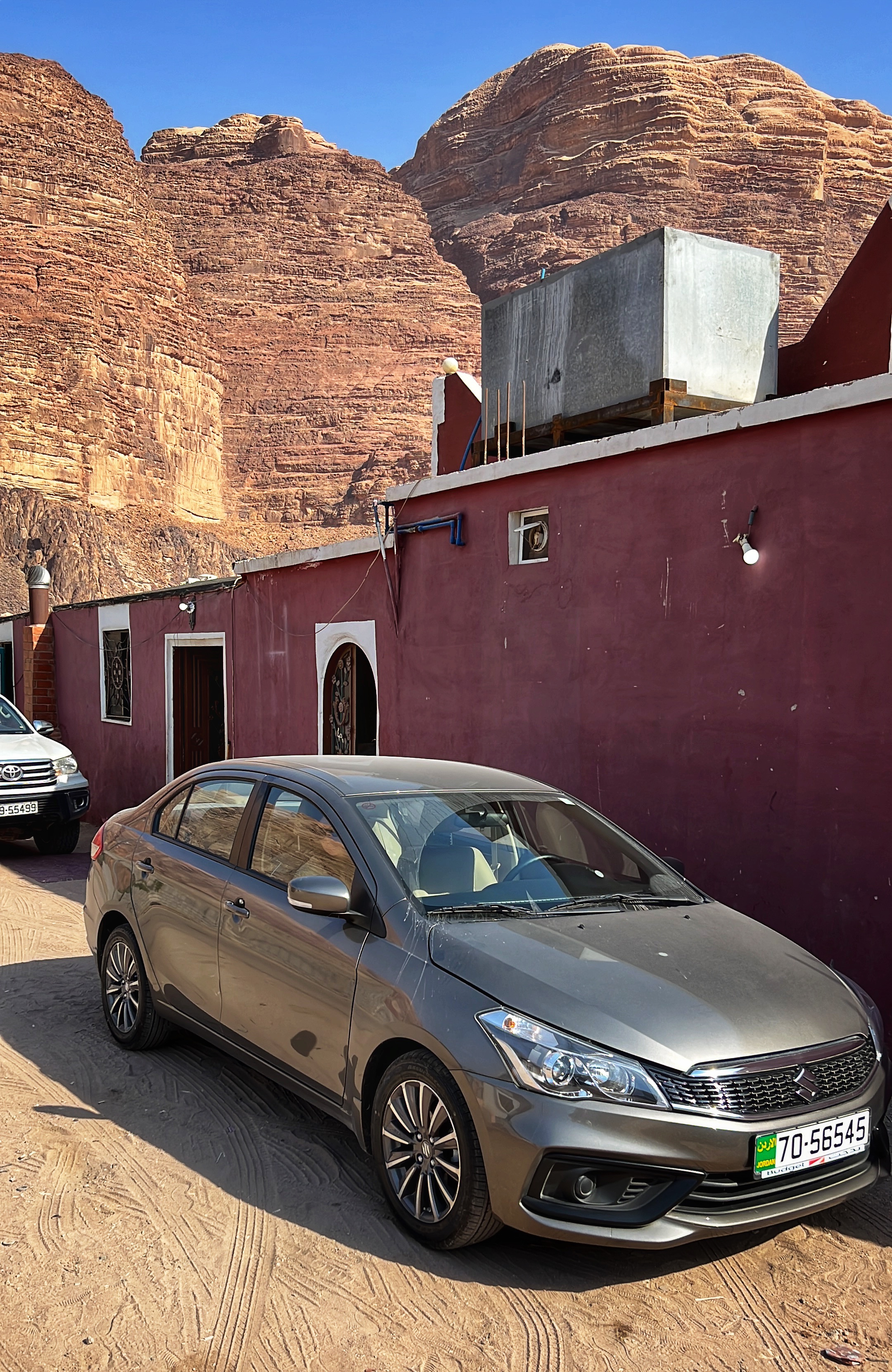
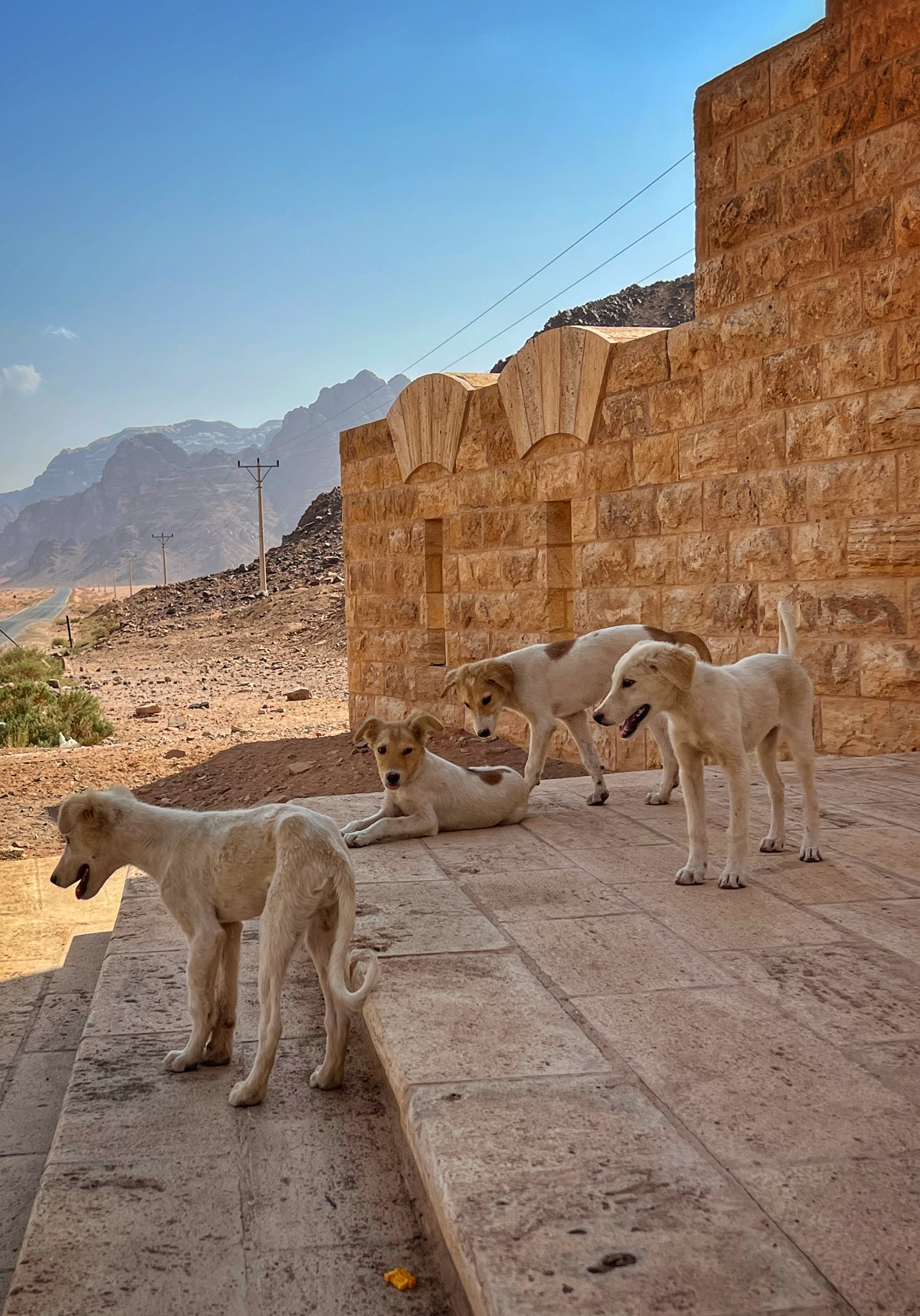
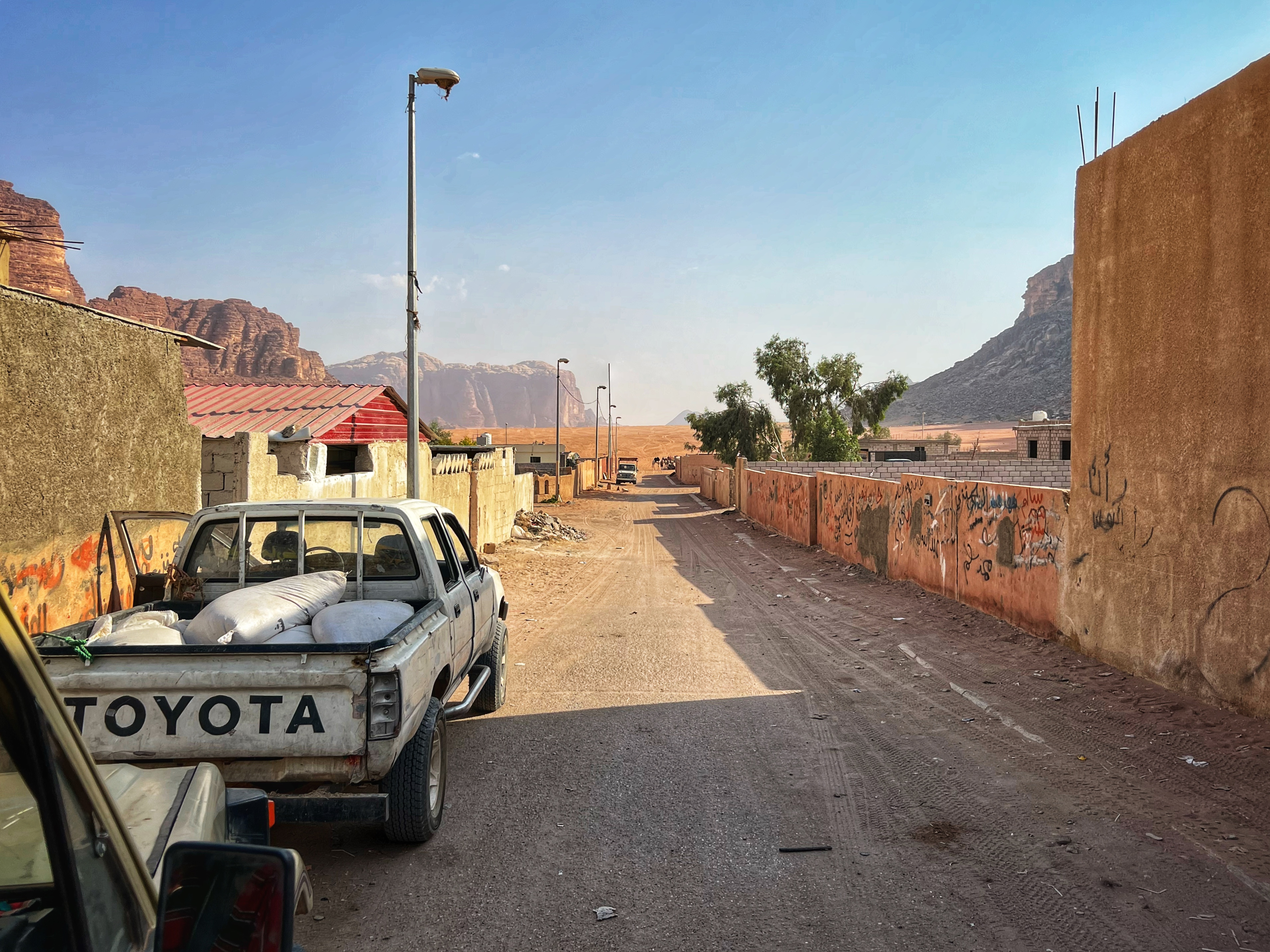
It took us about 2 hours to drive from Wadi Musa to Wadi Rum Village. In that time the roads were very good, but as we approached Wadi Rum there were several checkpoints. One was a quick police checkpoint asking us if we had reservations in Wadi Rum. We didn’t need to show them, just tell them with what company or lodging. Then we came upon another checkpoint that appeared to be an entrance location for Wadi Rum. Here we were instructed to park, then we were taken inside and they added our information to a hand written register. It was easy – we showed our Jordan Pass (and maybe passports?) and everyone (all men) were welcoming and courteous, but it was admittedly confusing. Outside the men said we needed some sort of ticket or pass and we would get it inside; inside the officer said we did not need a pass and we were all set. We left a bit bewildered but were happy to be on our way. We said hi to the welcome puppies (!!), then drove along the beautiful Wadi Rum road until we reached Wadi Rum Village, the whole time communicating with Ghanem, our Wadi Rum Desert Camp tour organizer, via WhatsApp.

WADI RUM tours
We learned a lot on our two days in Wadi Rum desert, but the most important thing was to be open minded and measure your expectations. No matter how prepared you are, it may not end up being what you expect. This is an absolutely incredible desert – the experience was so moving to me – but it would have been helpful to understand how things work before we arrived. Overall our visit was amazing – but there were hiccups. Here is what we learned, and how to prevent hiccups for you.
WHAT WE DID We booked a two night jeep tour with sand boarding, sunrise camel ride and sleep under the stars camping excursion through Wadi Rum Desert Camp at the price of 90JD/pp. This is a bargain! They expect you to pay in cash before you leave, so be sure to bring extra cash for tips (you will want to tip) or additional services – there is no ATM in the village. The website was informative, and Ghanem was responsive to all of my questions. When we arrived it was 4PM we weren’t sure if we were at the right place. Eventually we were greeted by Ghanem’s brother Attila who whisked us into his office and proceeded to upsell us on various adventures. He said we should do a short jeep tour that night and add a hike in the following day before the regularly scheduled jeep tour and sleep under the stars for only 40JD/pp more. He assured us it was the same as we had scheduled, just adding more things, so we agreed. We felt very rushed and he certainly was counting on this; later we realized the managers rely on guests not knowing the lay of the lands and just surrendering to the guides for whatever the experience is.
This is a pretty good business strategy, because the guides are fantastic and make whatever the tour is a memorable one. The problem for us was (and we didn’t know this until the afternoon of the next day), we didn’t end up having the original tour we scheduled at all – instead it was replaced by a hike that took up most of the day. We expected to go sand boarding with a jeep tour after the hike, but that wasn’t part of the schedule and we had no idea until it was too late. Again, what we ended up doing was fantastic – it just wasn’t what Attila promised us. The bottom line is, if a certain experience is important to you, check with all parties involved to make sure the manager and guides are on the same page. We weren’t the only people who had last minute switch-ups to itineraries, and I think they do this to try to clump people together on the same tours so it is easier for them. In the end, we decided to pay only half of the additional cost and had to advocate for ourselves as there was nothing in writing. It all worked out, but I caution people to get things in writing. This was a disappointment and it didn’t need to be. The website is informative, but also purposefully vague and they rely on people’s ignorance. Frankly, that’s probably the best bet anyway – go with no expectations and let them show you a good time. It was just a bummer that we couldn’t go sand boarding when we had been looking forward to it.
There are many tour operators, and I can only speak for ours. I actually recommend our guides as the whole experience was a fun adventure – but just beware of how the operation works and be prepared to field negotiations when you arrive. There are other, fancier places to stay like Bubble Luxotels etc, but everyone who wants to tour the desert needs to book a tour as you can’t do this on your own. No matter, what you are relying on the locals to show you around.
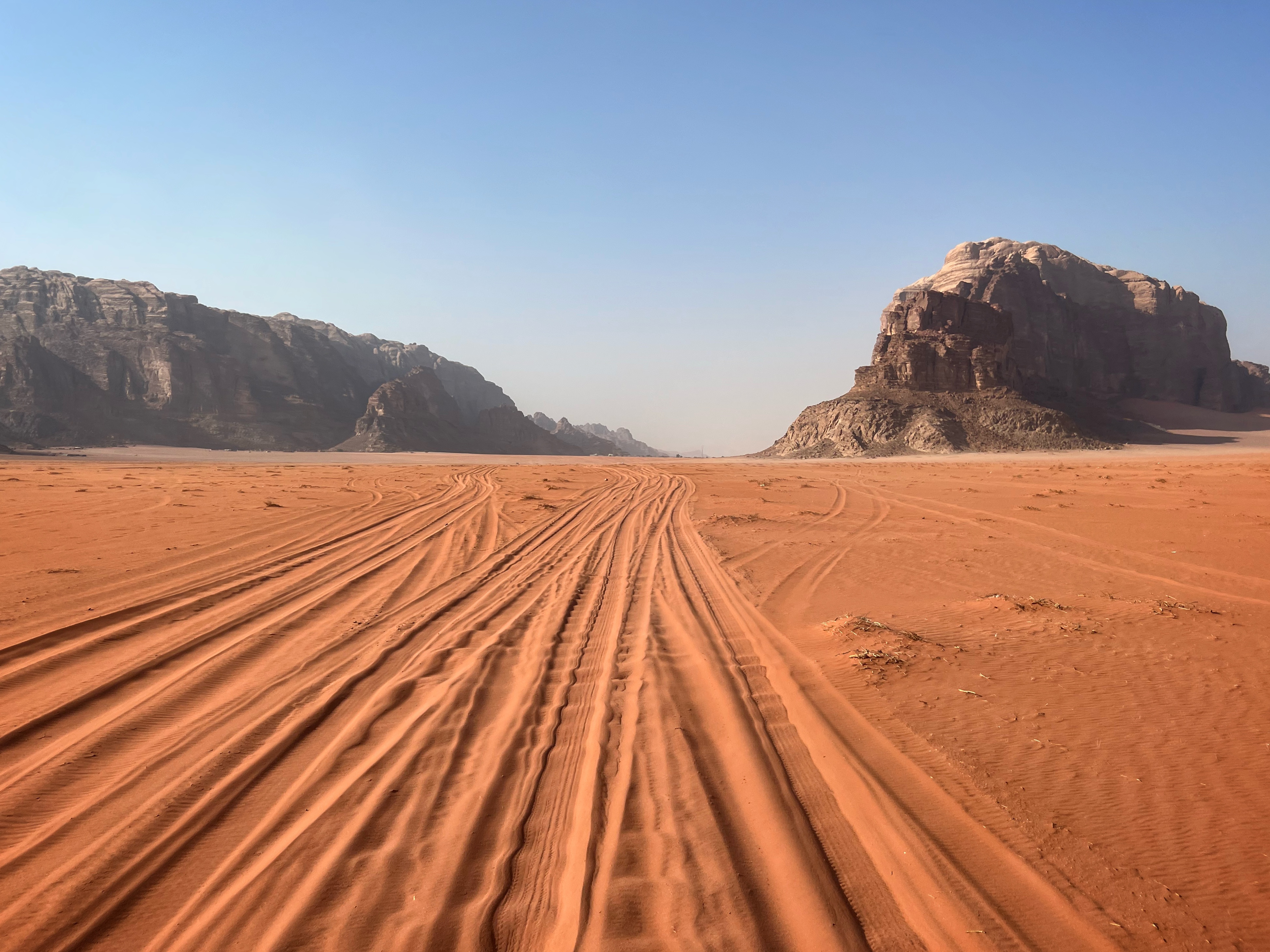
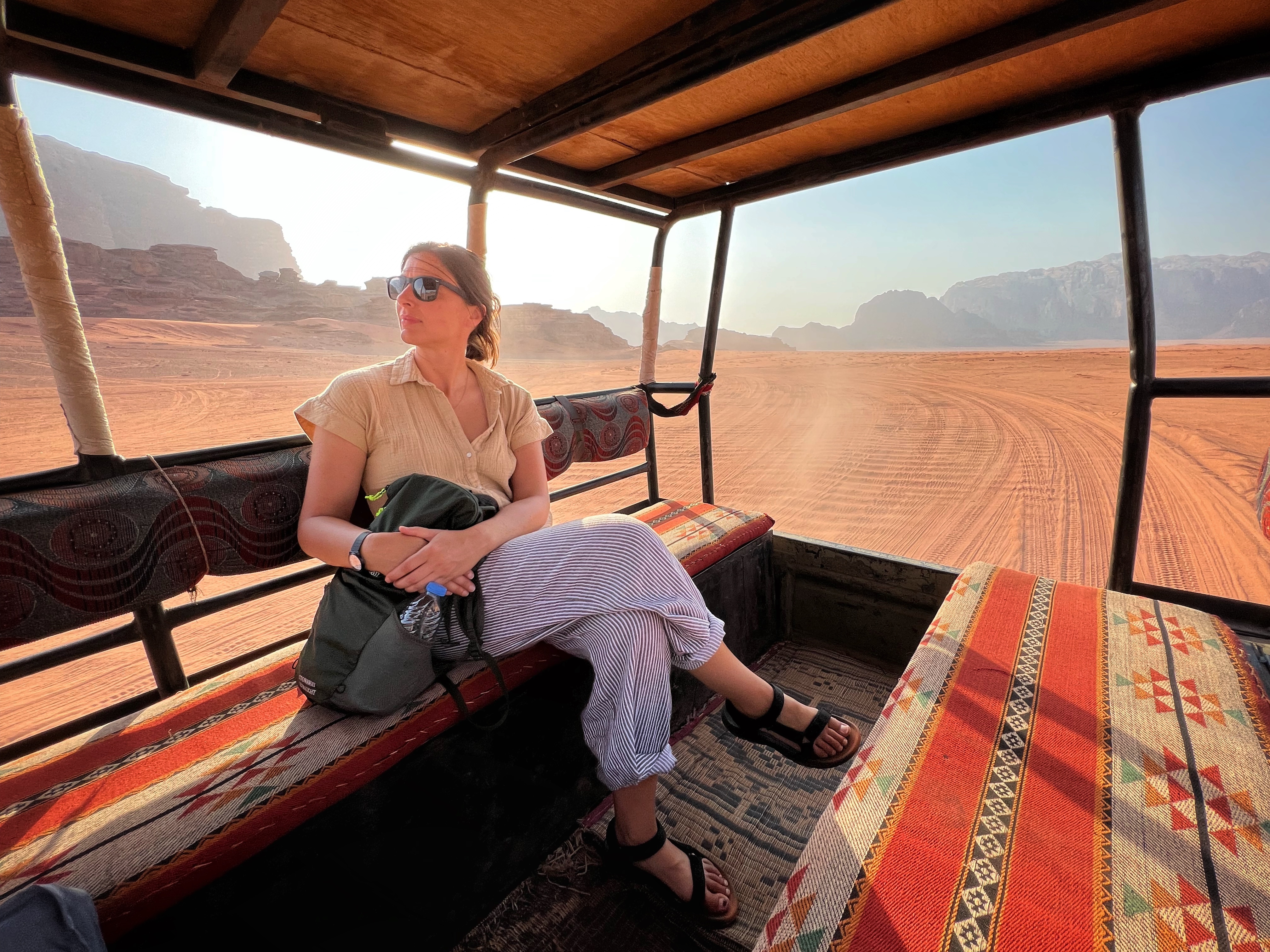
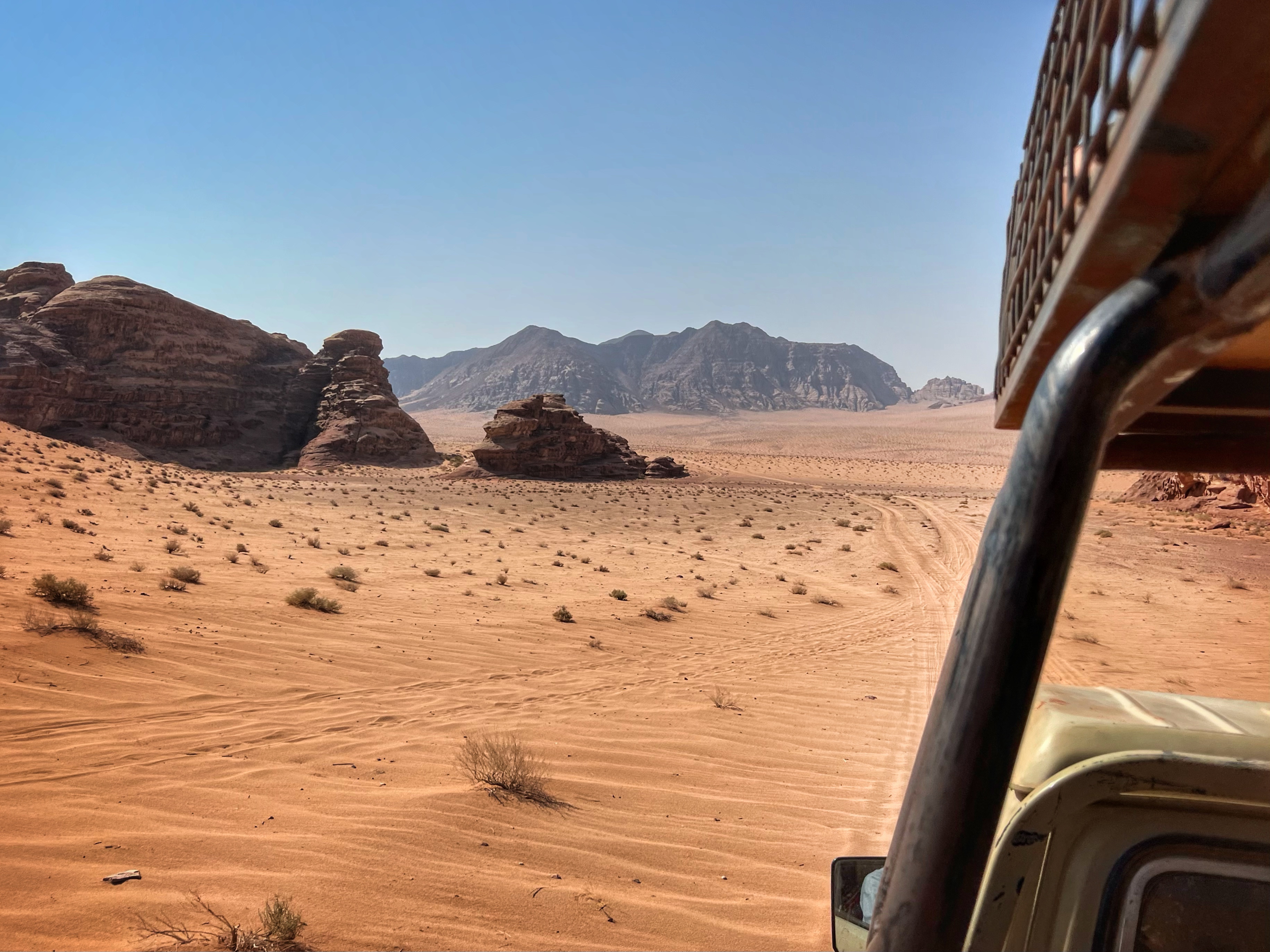
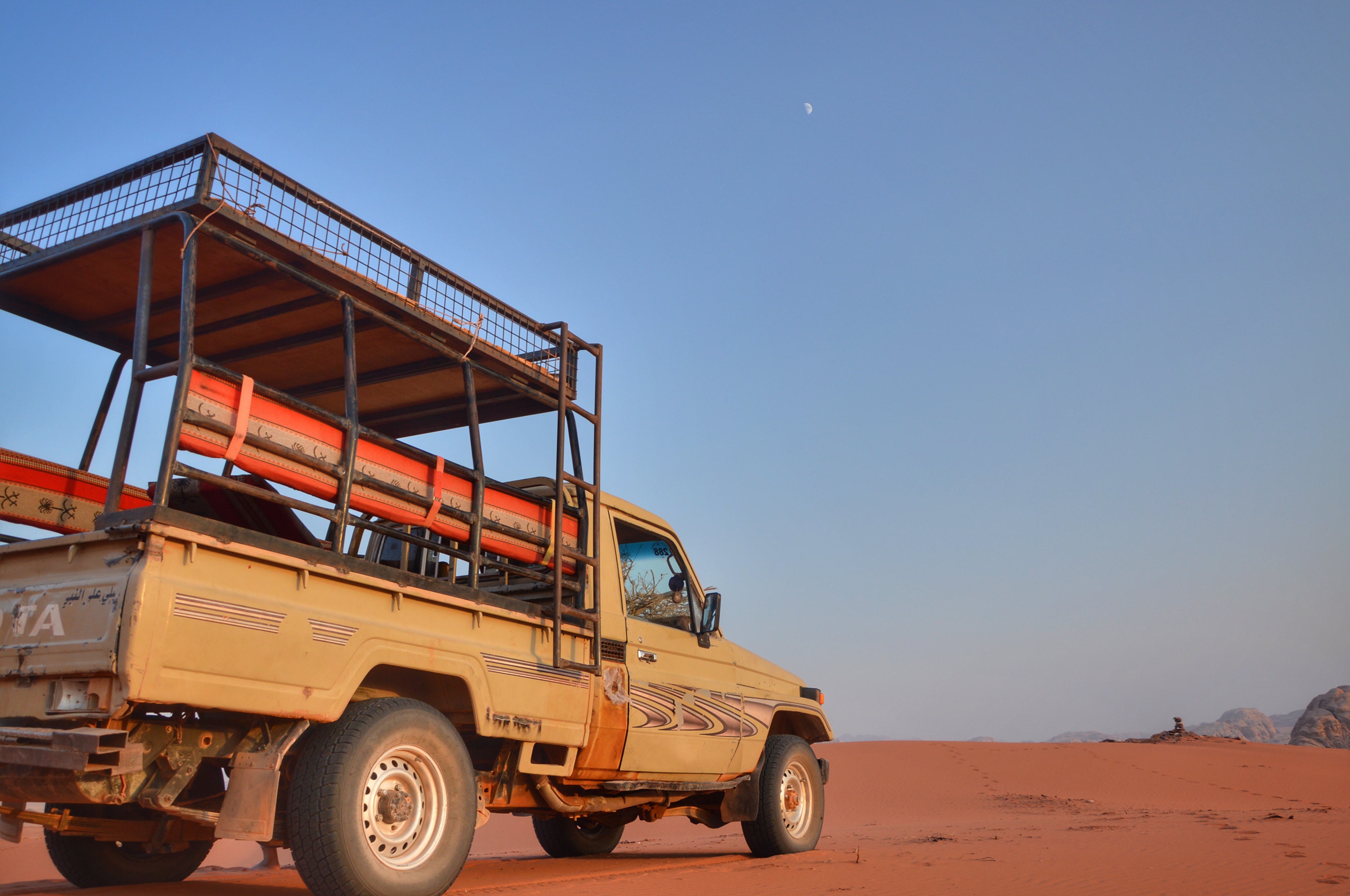
With our itinerary sorted out, we hopped in the back of the jeep (which is actually a truck – they’re all trucks) and headed out into the desert. What a rush to zoom along the sand! I wondered how often people got stuck? HA! We would soon find out…
JEEP TOUR
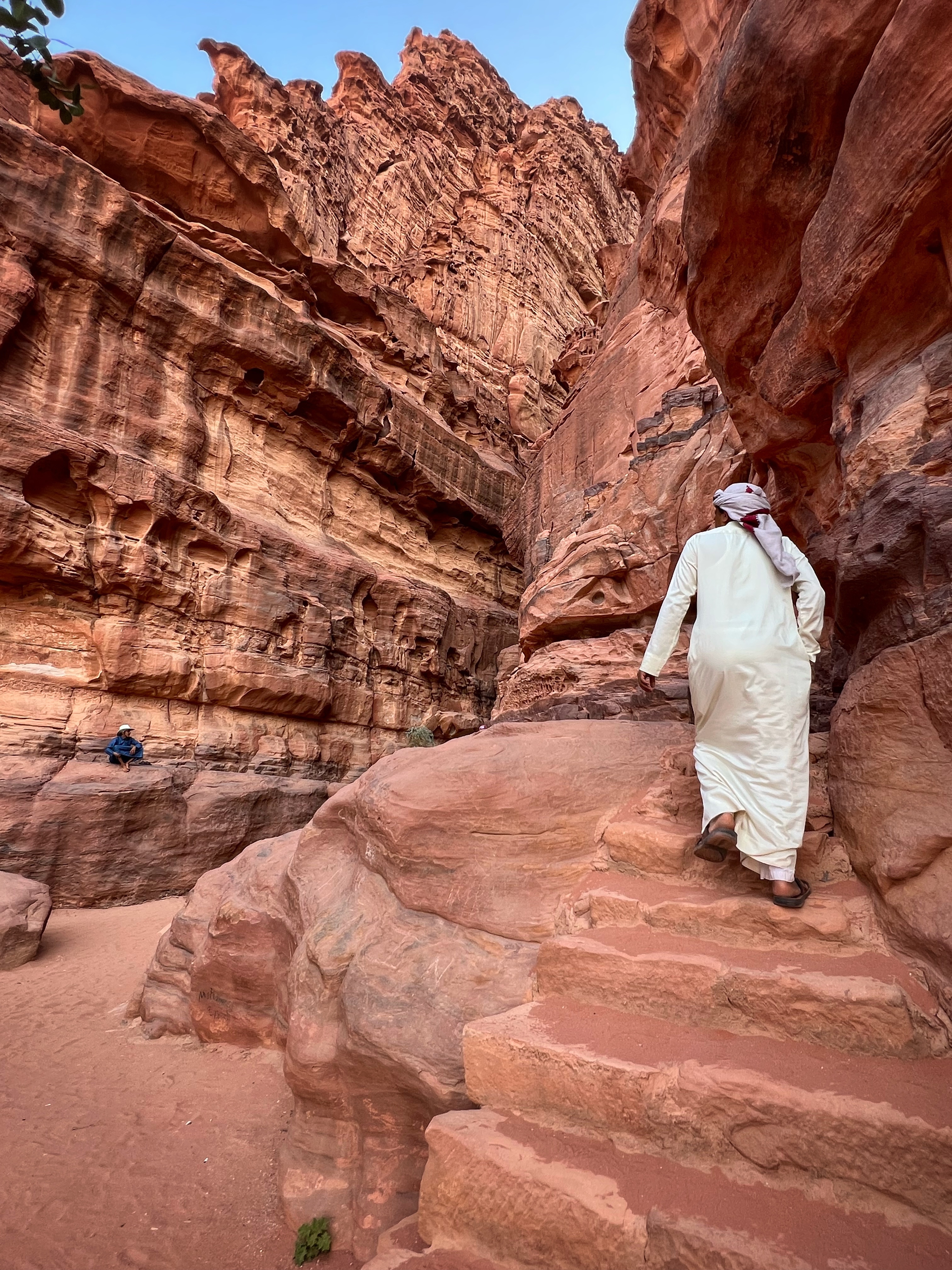
Our first stop was at the Jebel Khazali Canyon where we saw ancient inscriptions. There are three types of rock art in this canyon: South Safaitic, Thamudic or Hismaic inscriptions, Arabic inscriptions in Kufic script, and petroglyphs like the ones seen below (see the little baby feet?). Kamal led us into the siq a little ways, then clicked some photos for us. This is apparently a big part of their jobs as everyone kept asking for our phones to take our pictures!

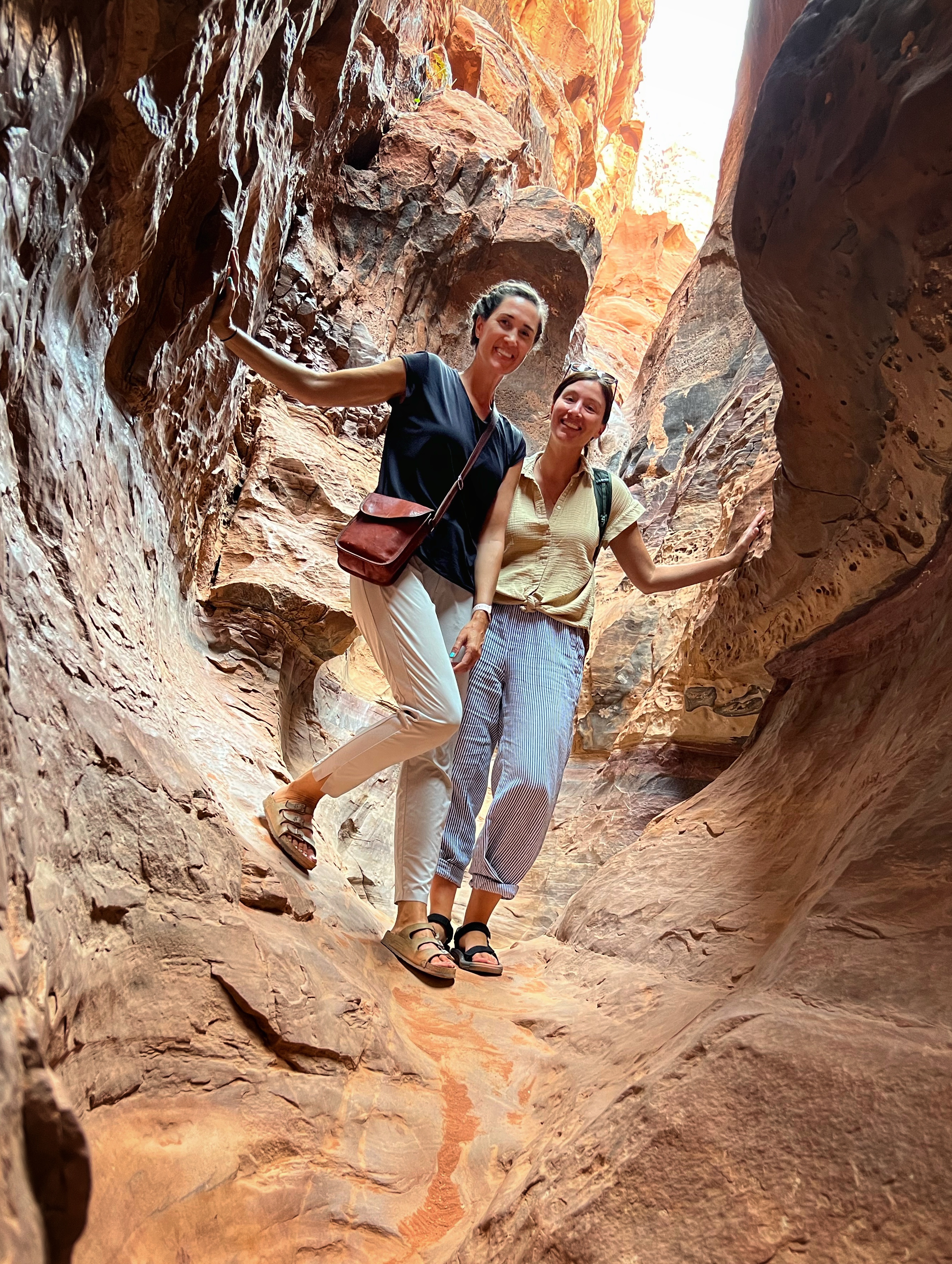

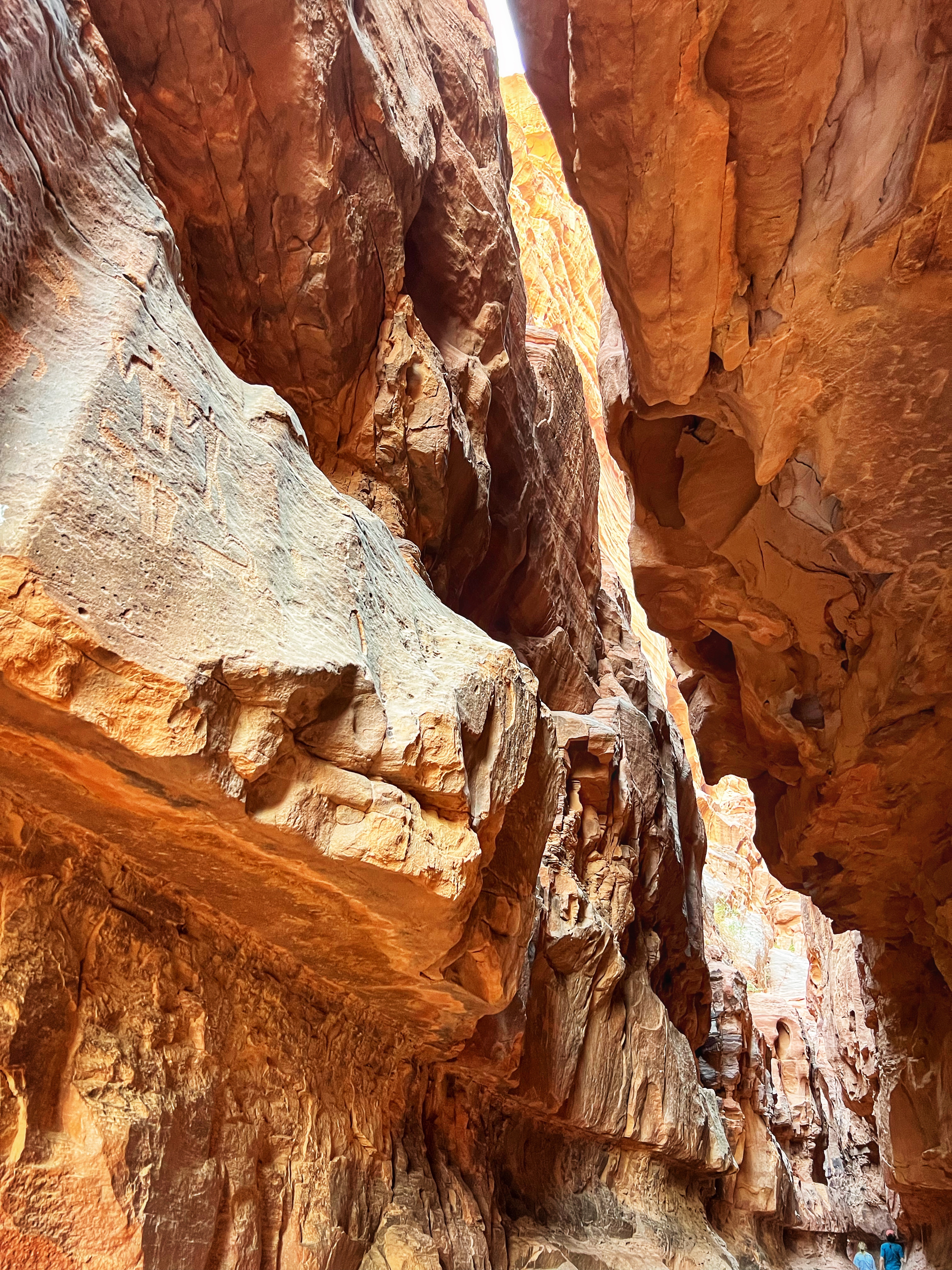
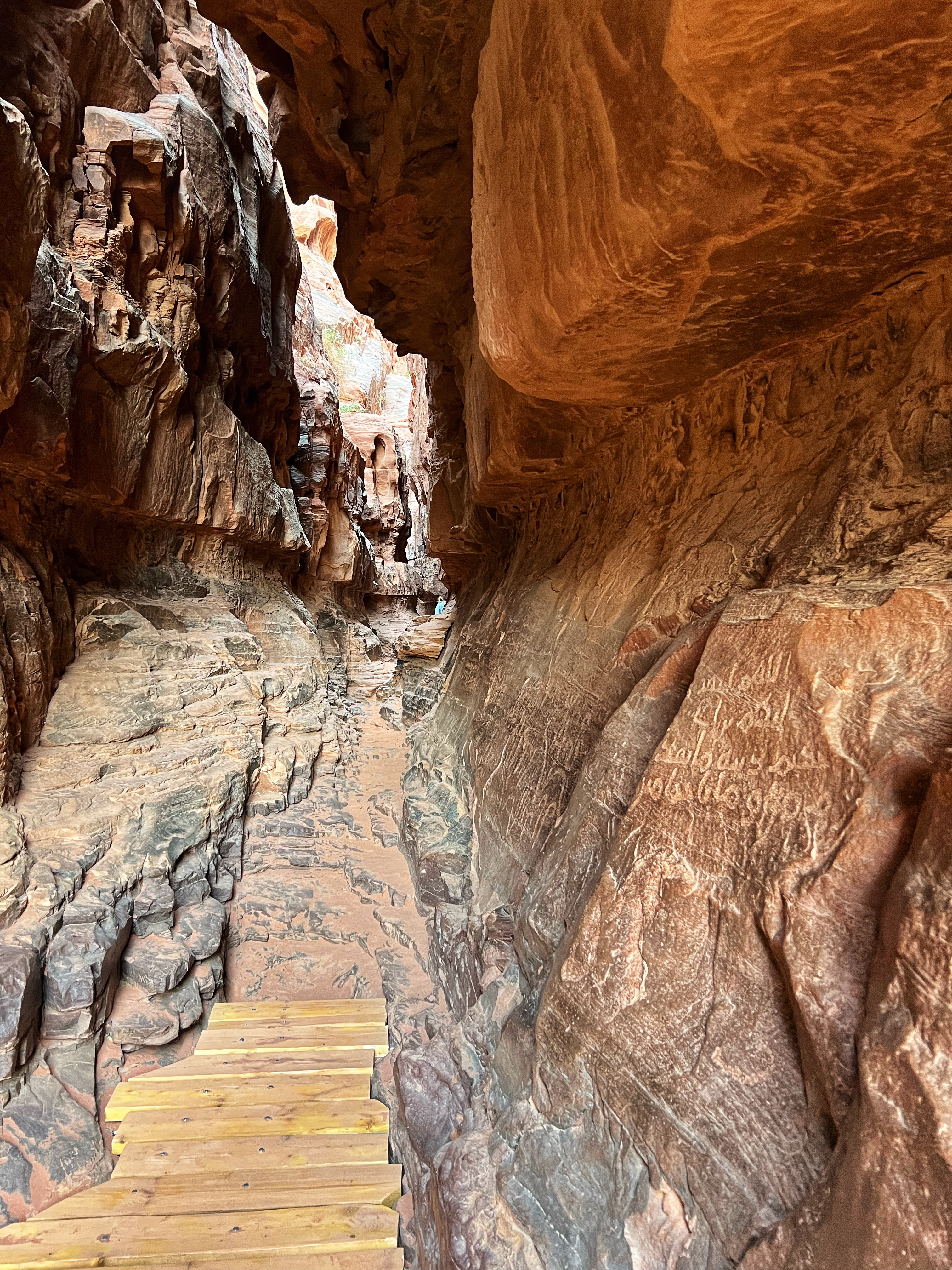
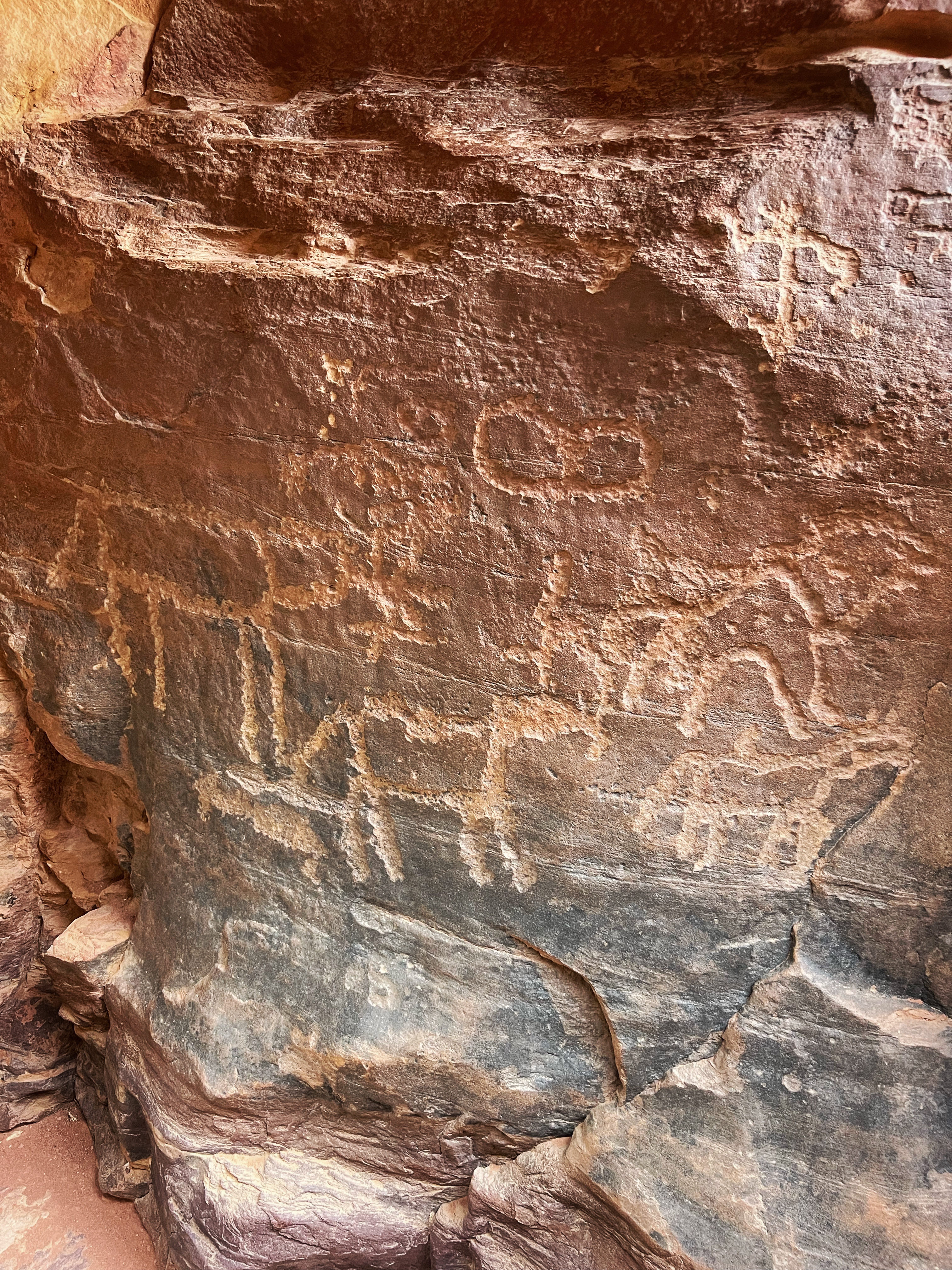
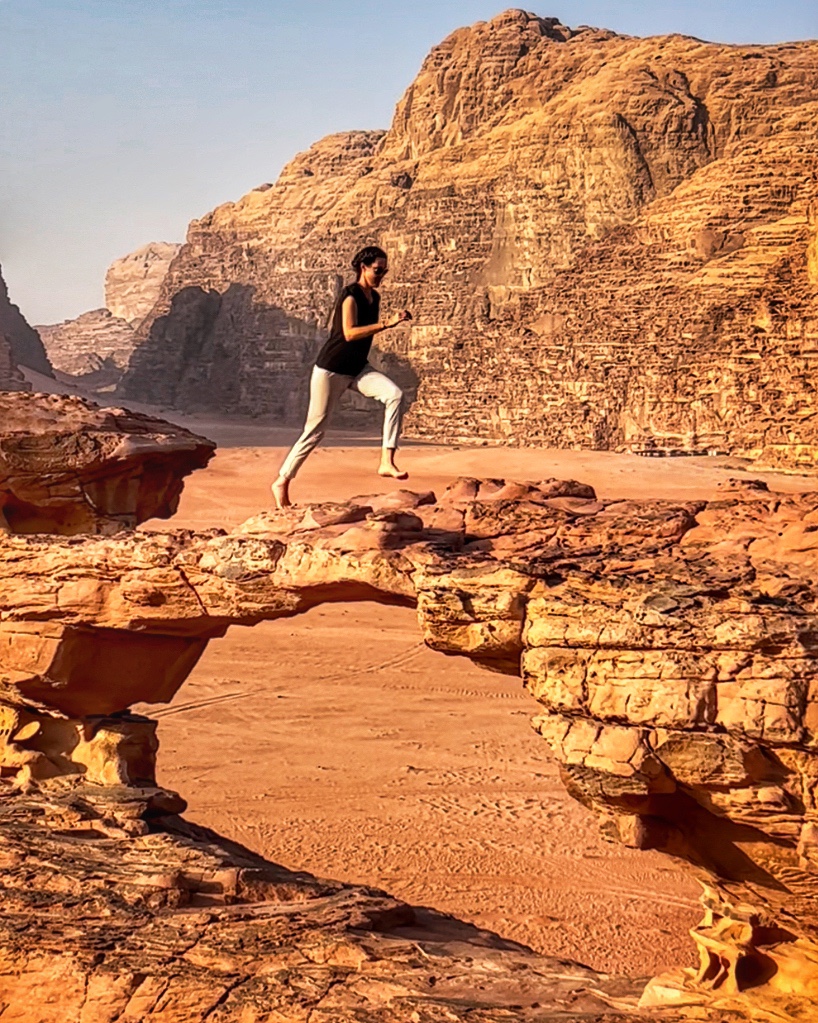
The next stop was at this awesome natural rock bridge. I loved this spot as it was overlooking a perfect section of desert that seemed at once familiar and totally foreign. I heard someone’s drone overhead here – what a cool place for drone photography!
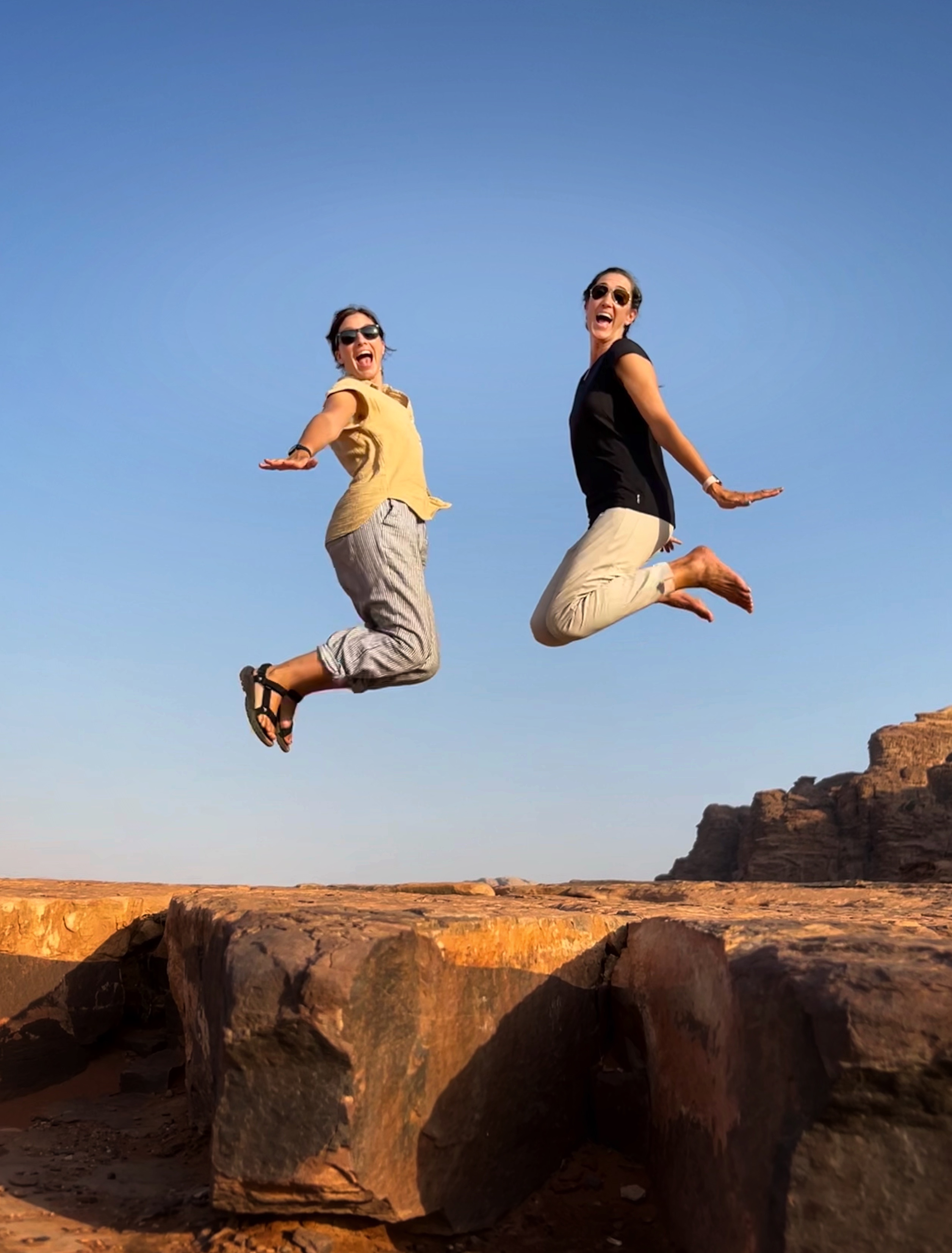
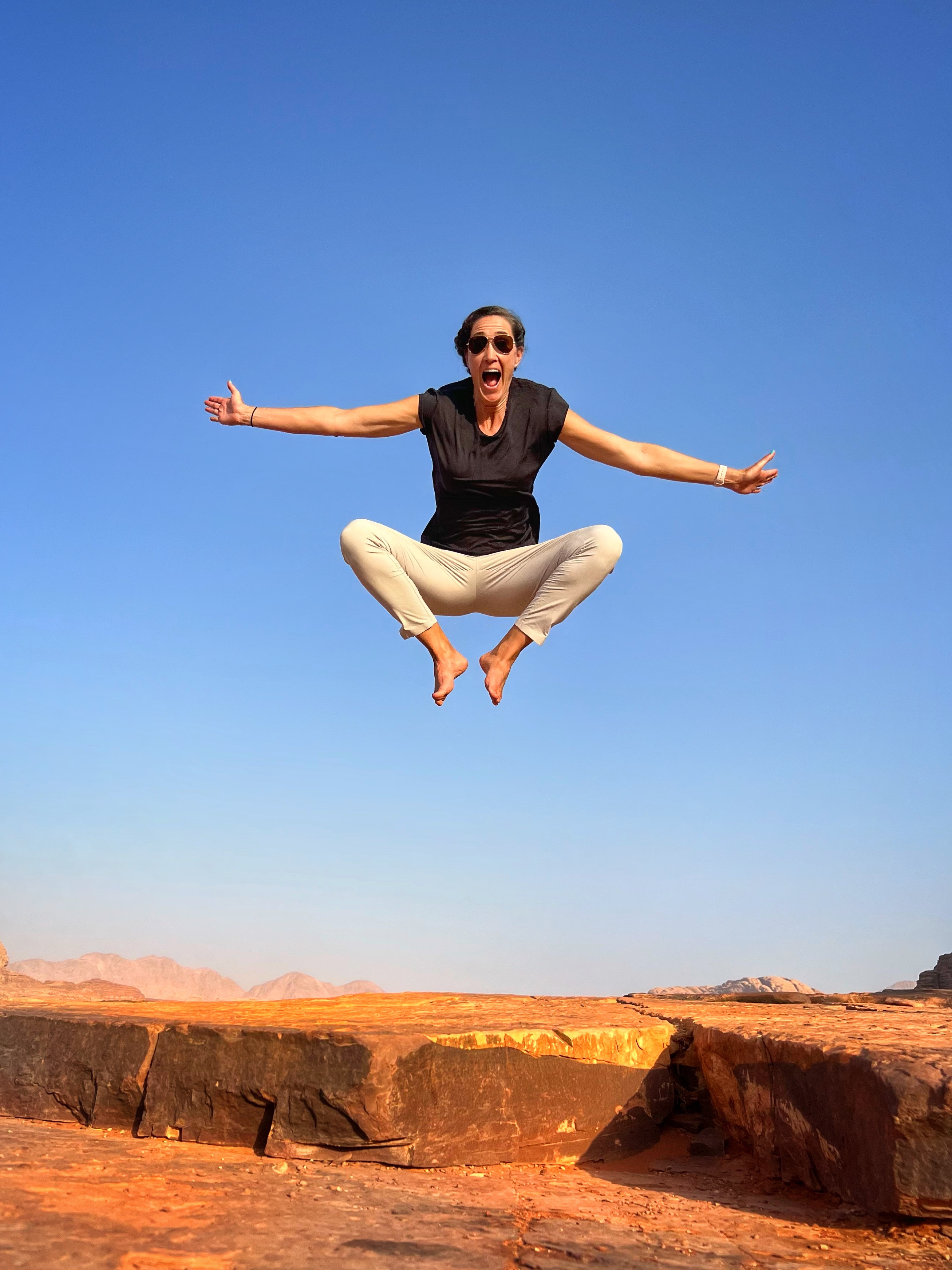
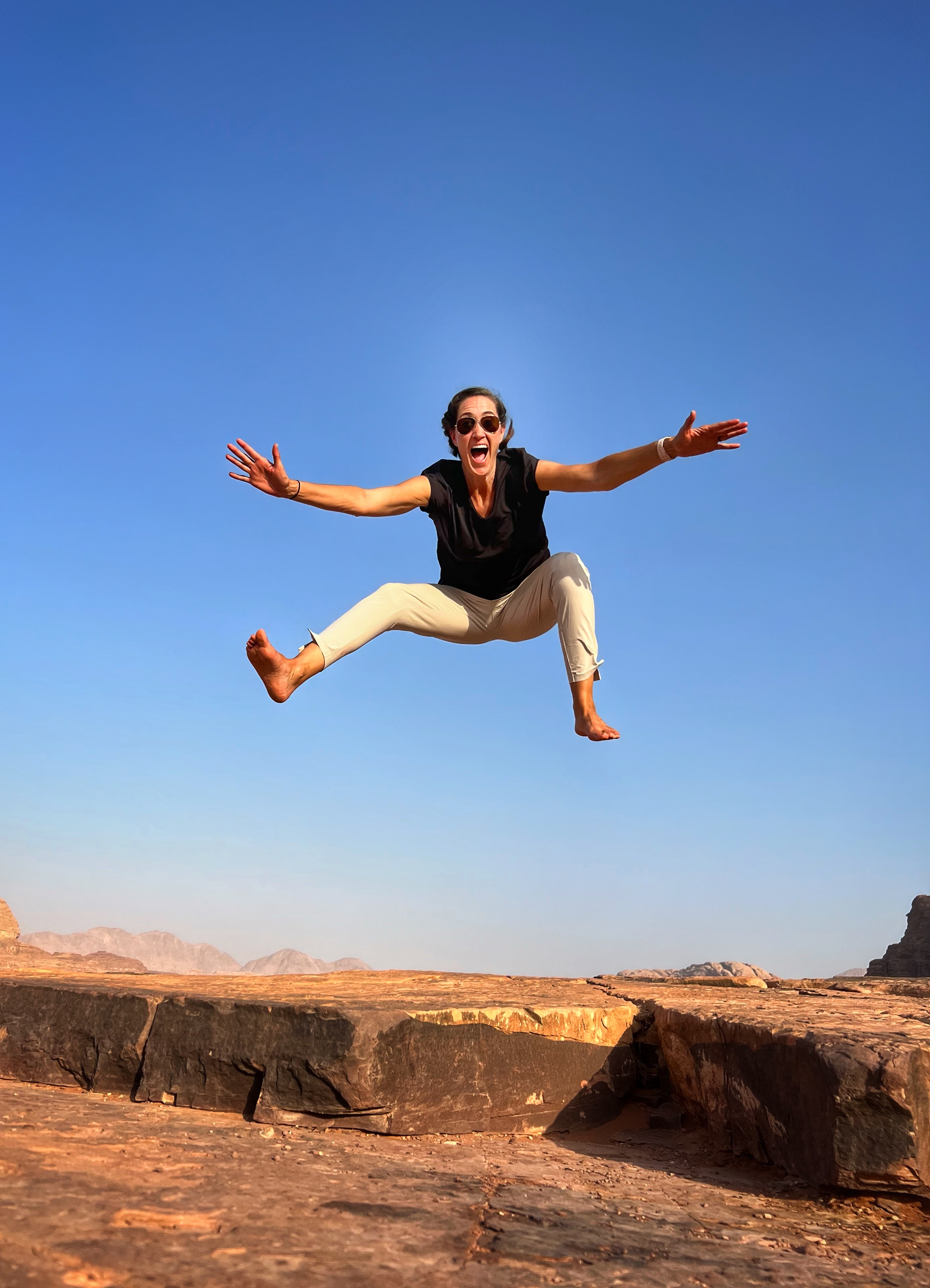
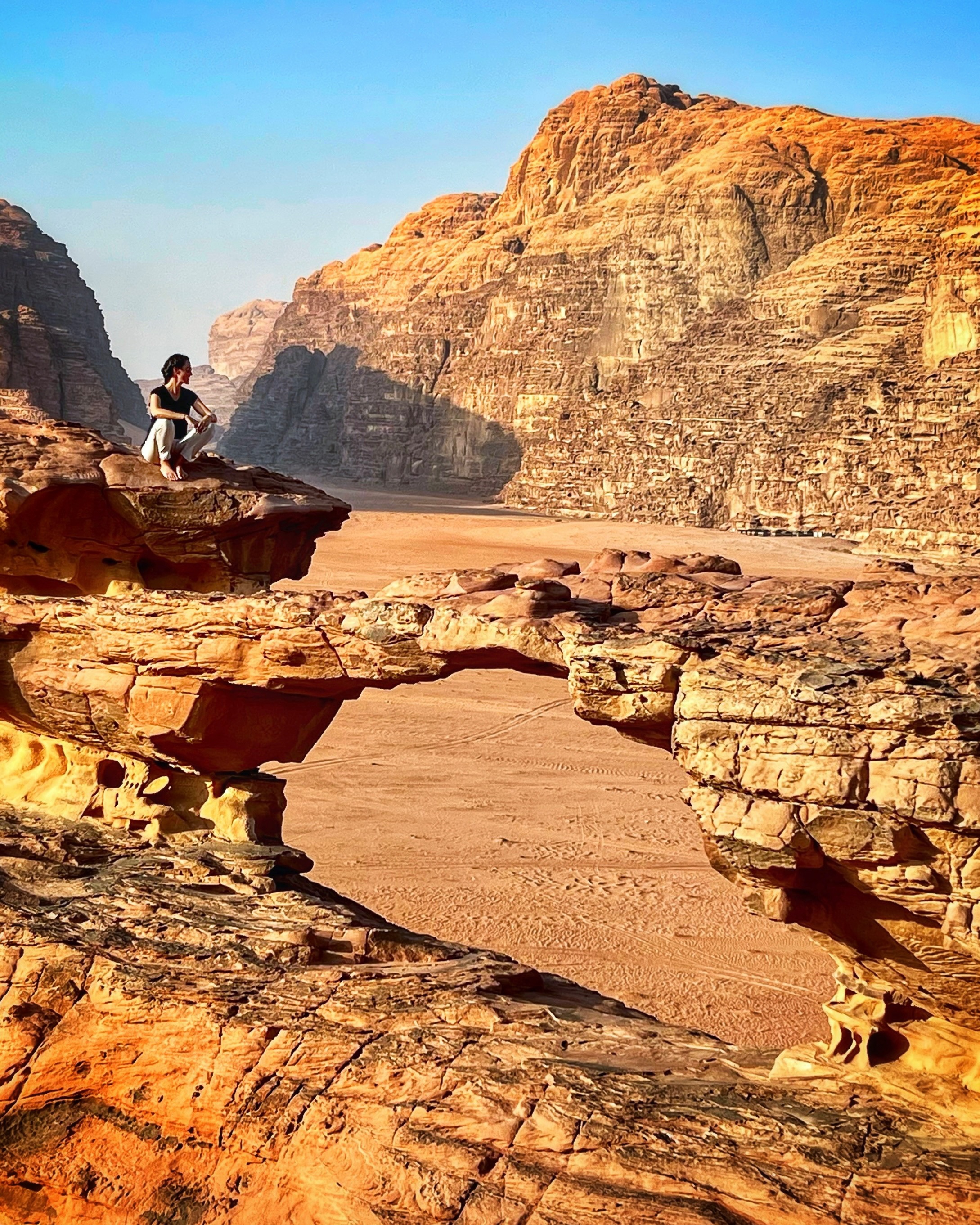

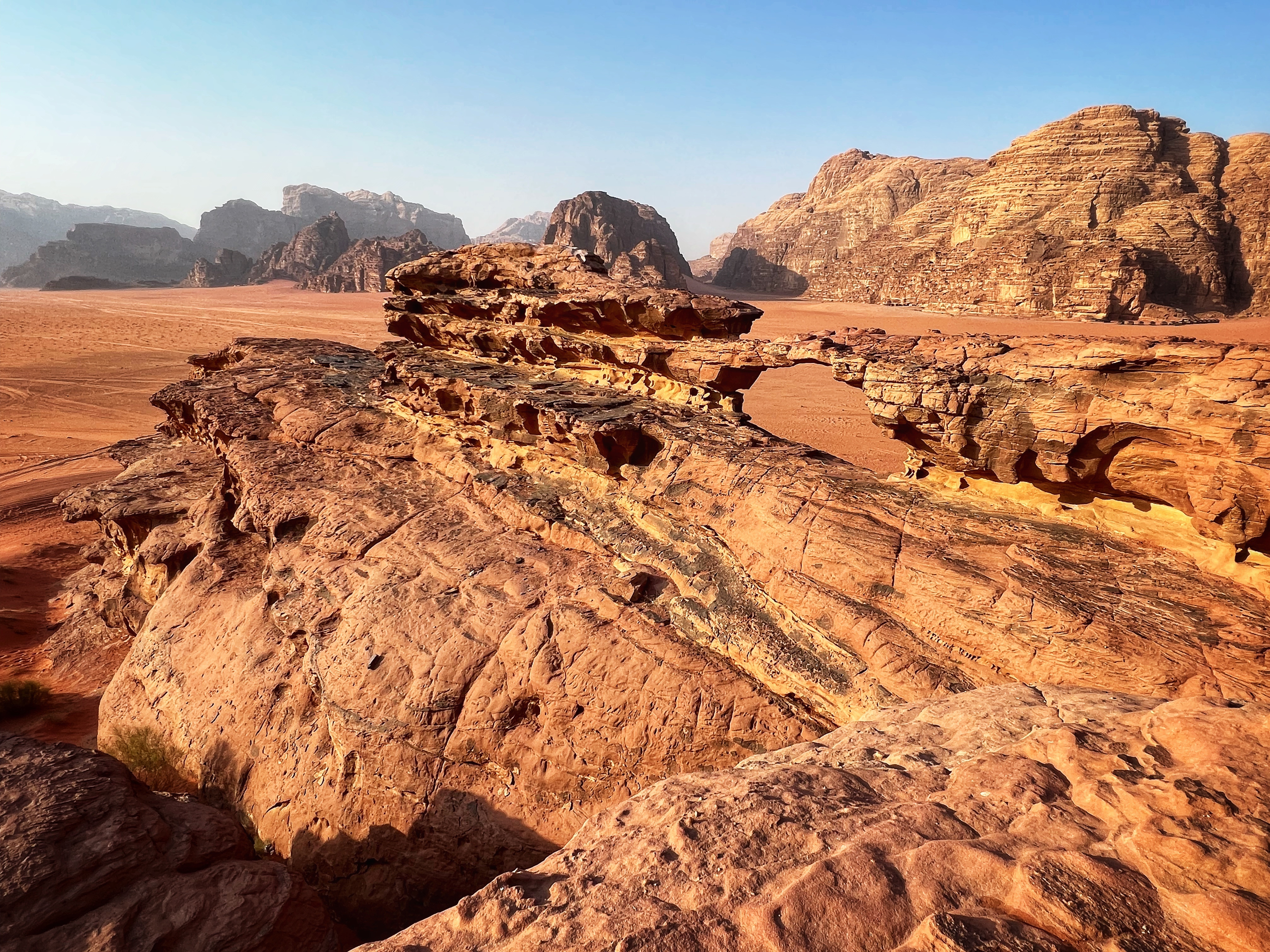
Next, Kamal took us past our eventual camp to a giant red sand dune. There were other tours climbing up the dunes and we thought maybe this was where we would sand board, but no, that wasn’t in the cards for this evening. Instead, poor Kamal got stuck in the sand and it took him about 45 minutes to get free – he had to call for help. Thankfully we were safe, and everything was just fine. I’m sure this kind of thing happens often in the desert. We enjoyed the dunes (Jessie had time to rest her blistered feet) and when Kamal was free we headed off into the desert to watch the sunset.
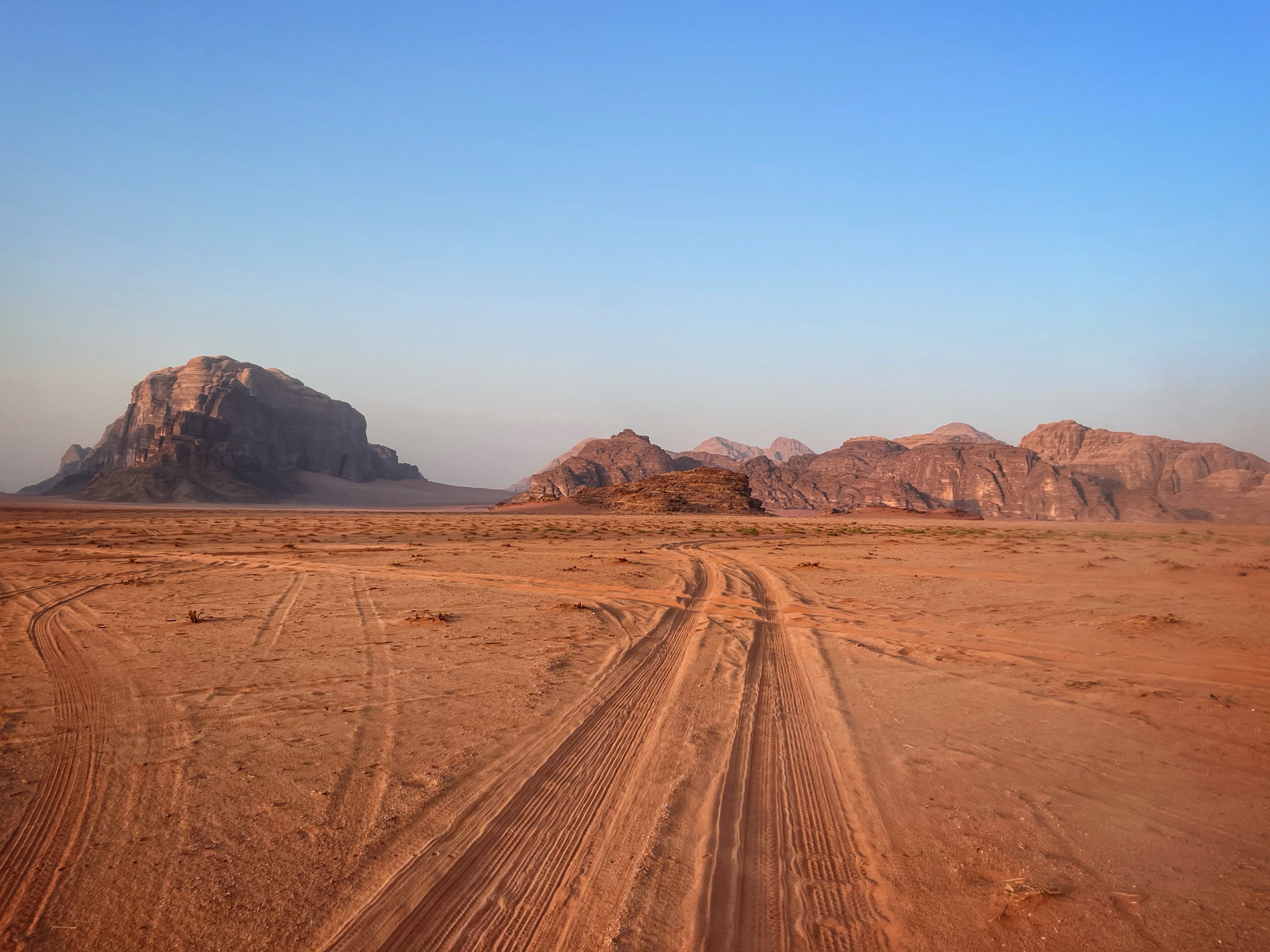
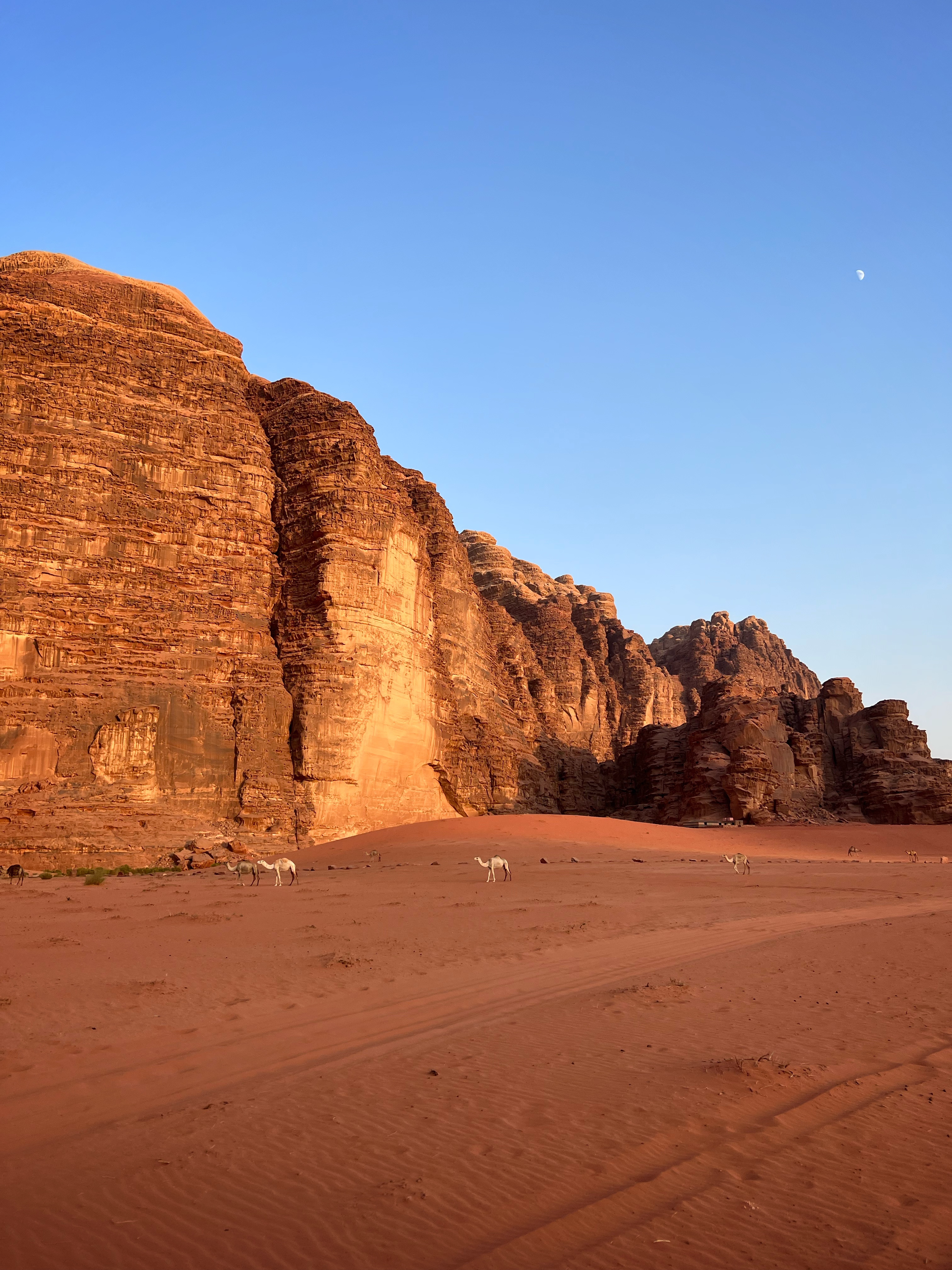
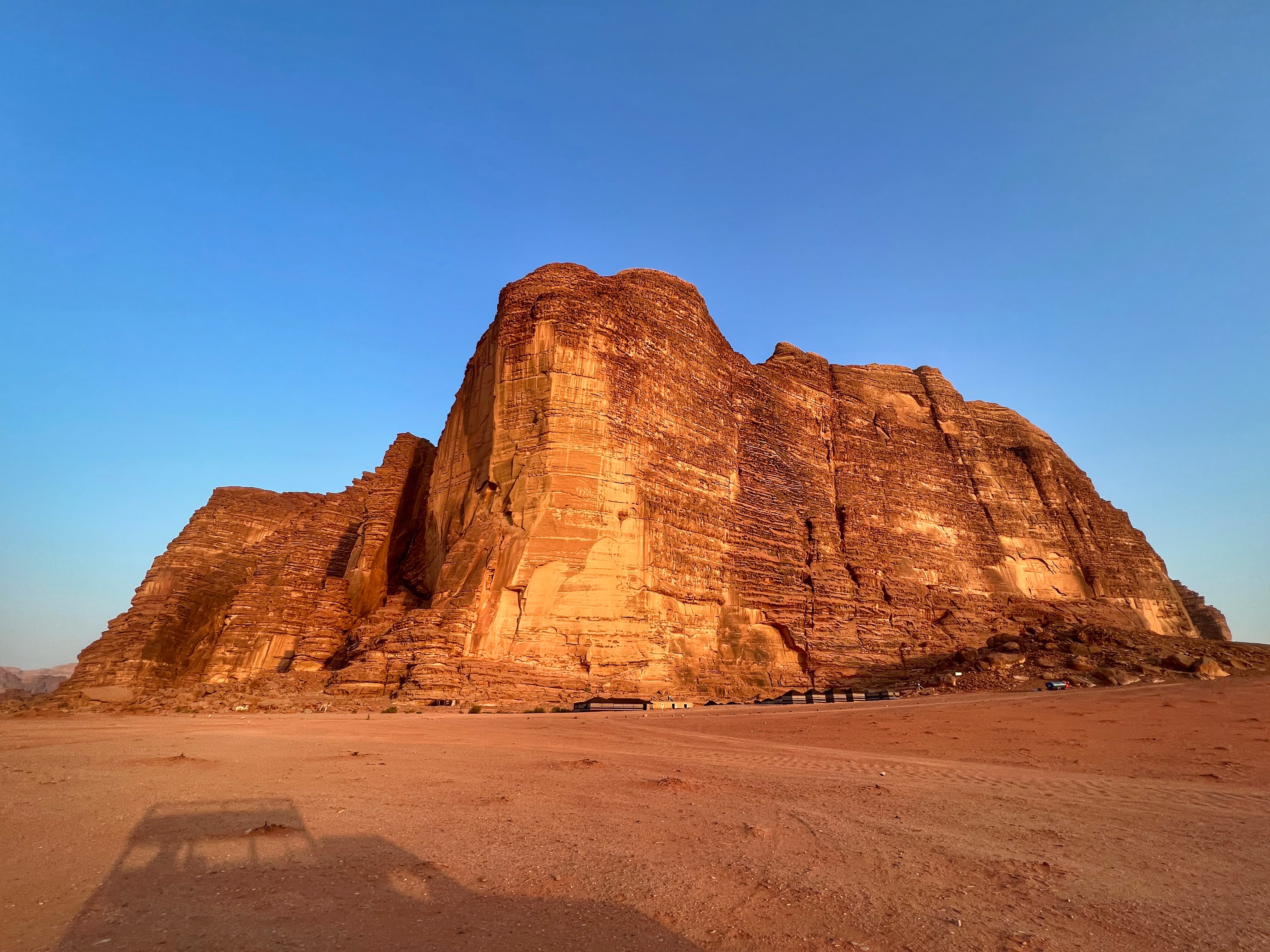
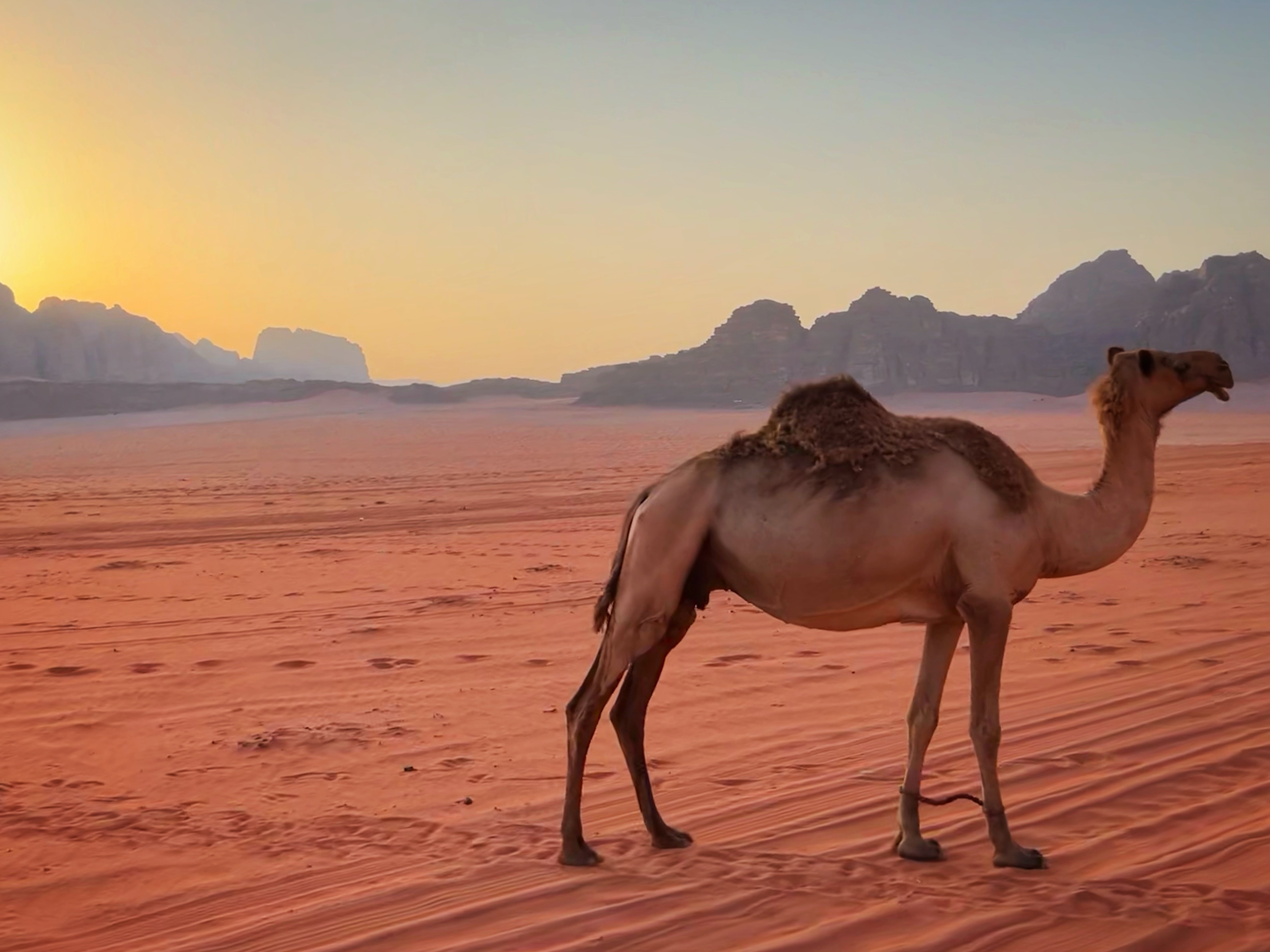
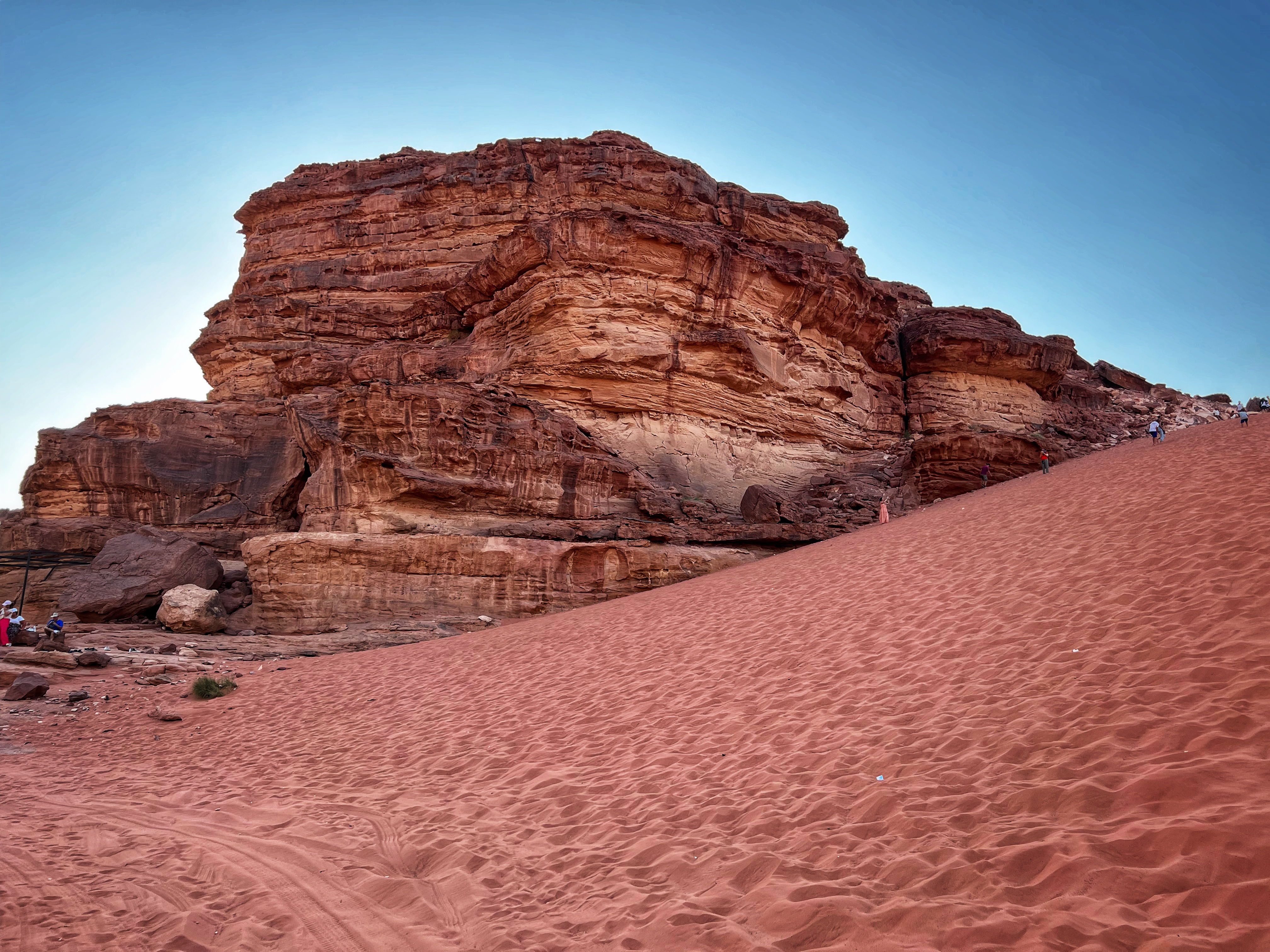
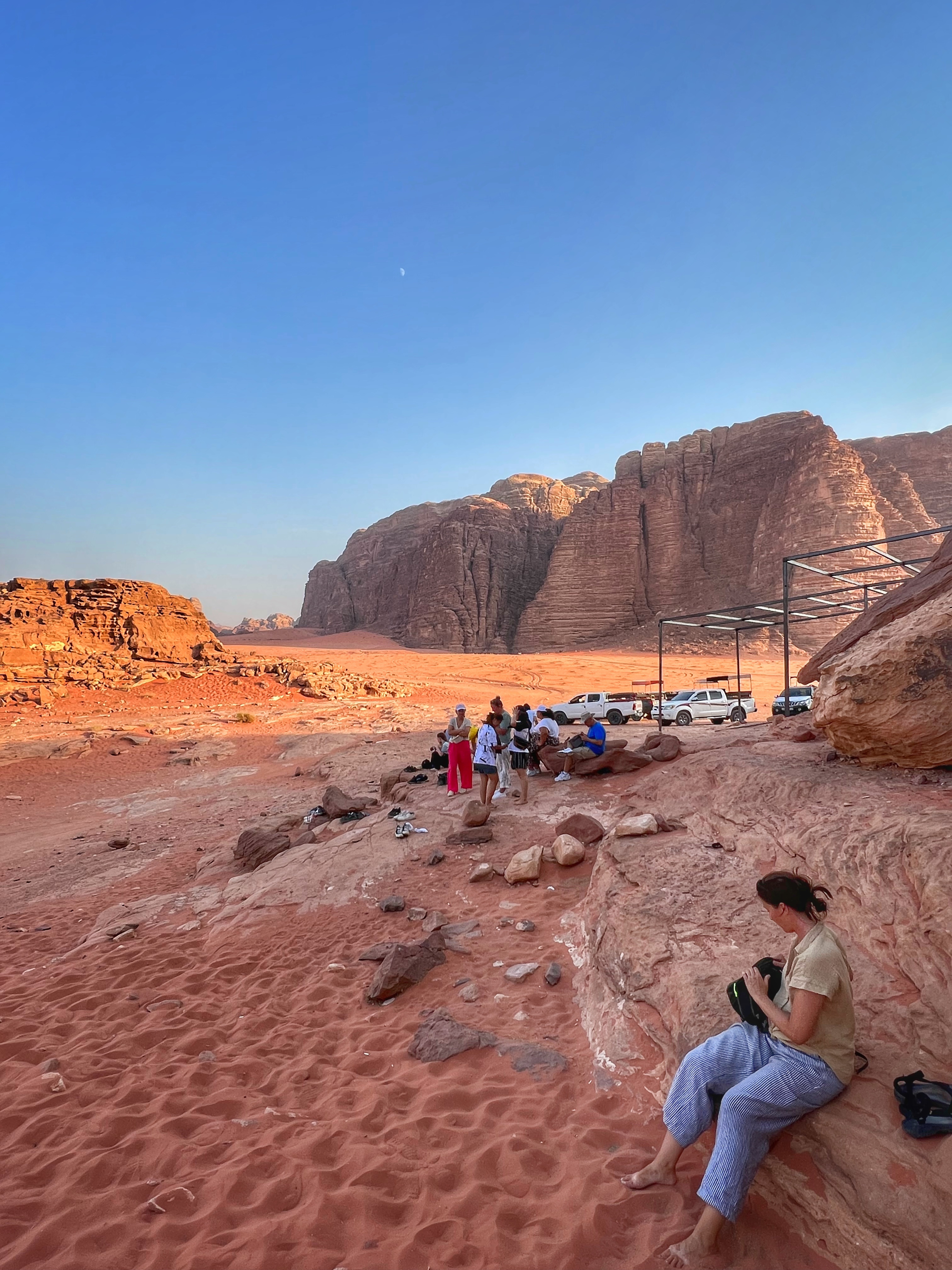
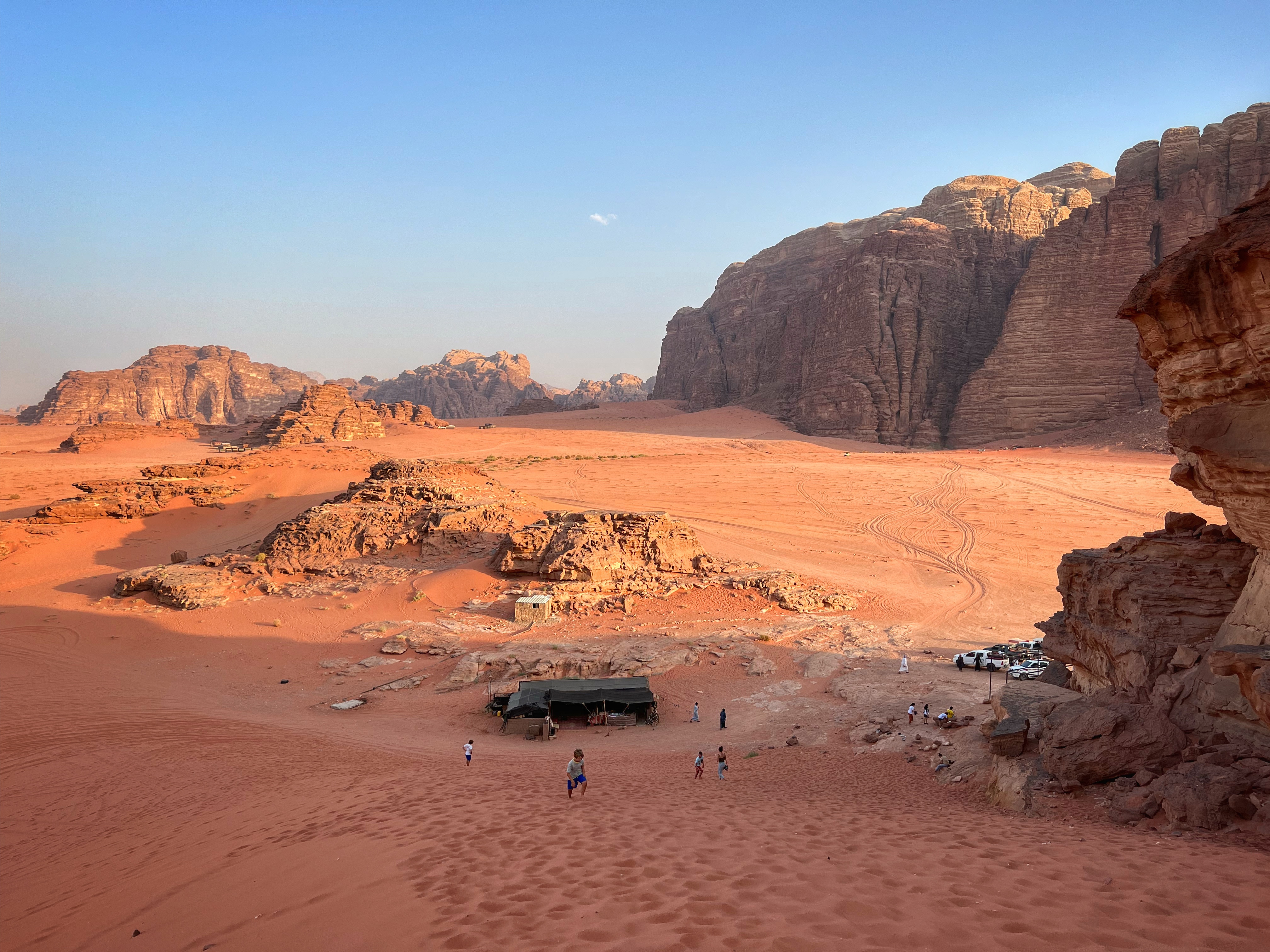
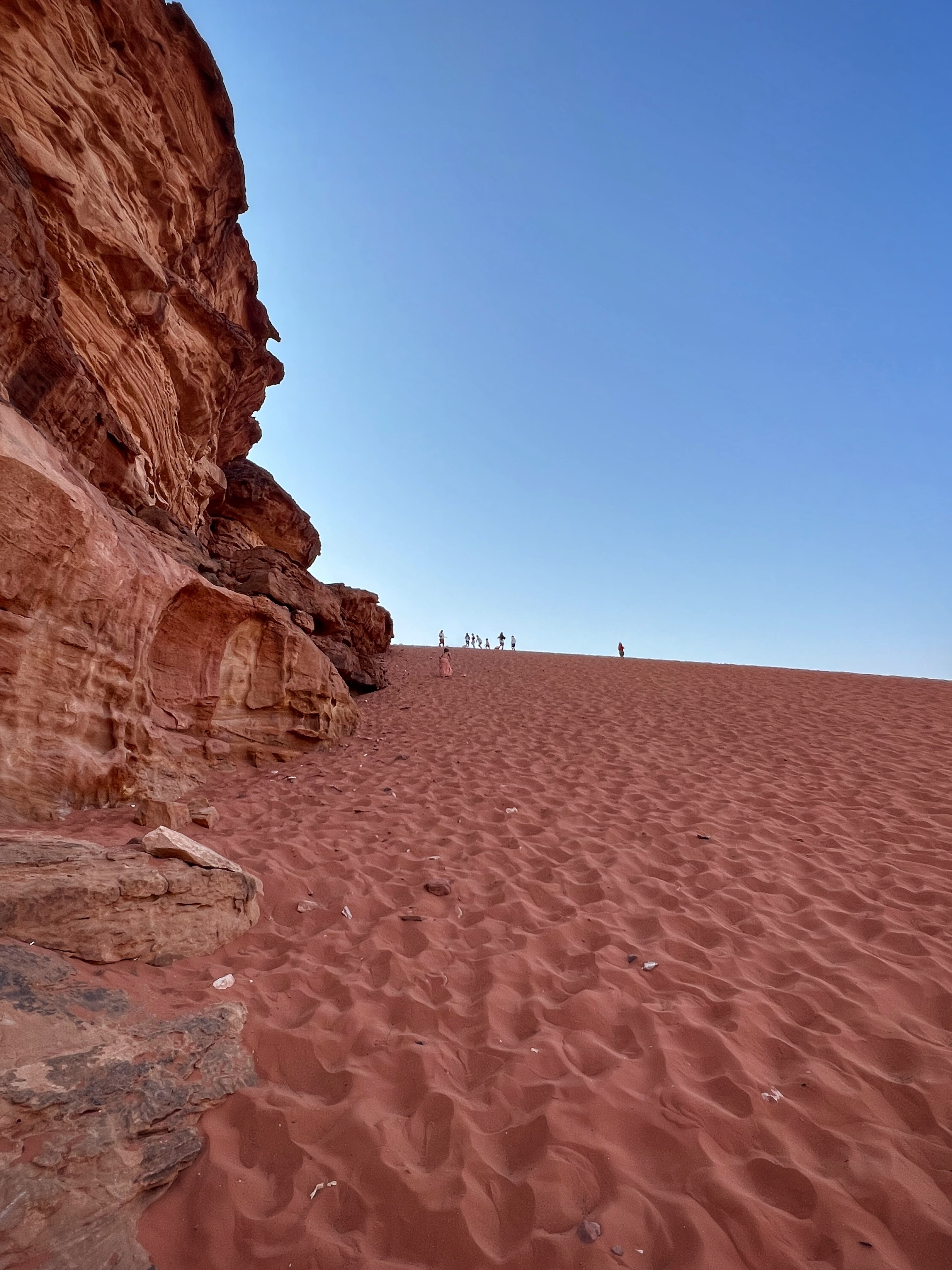
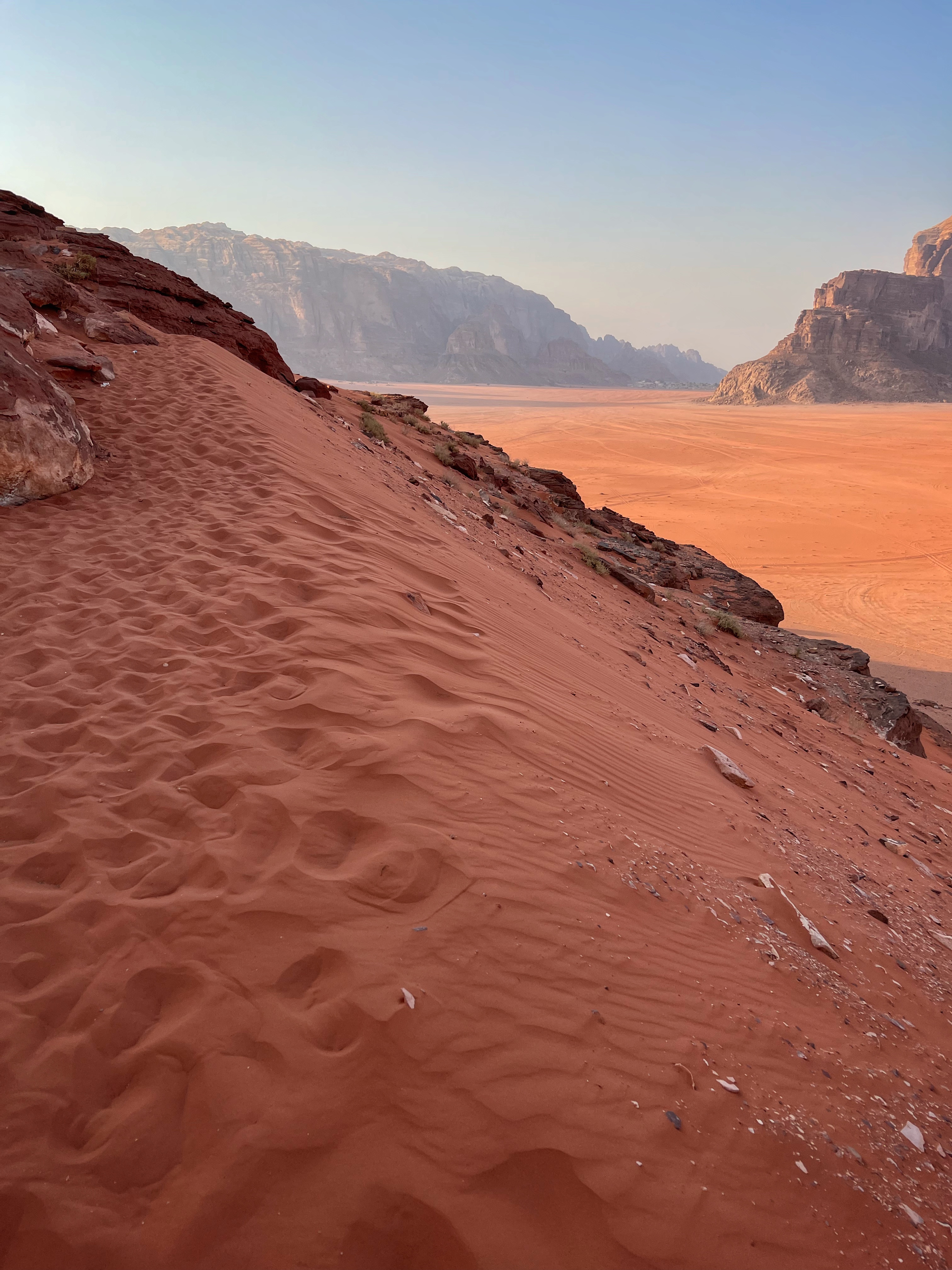
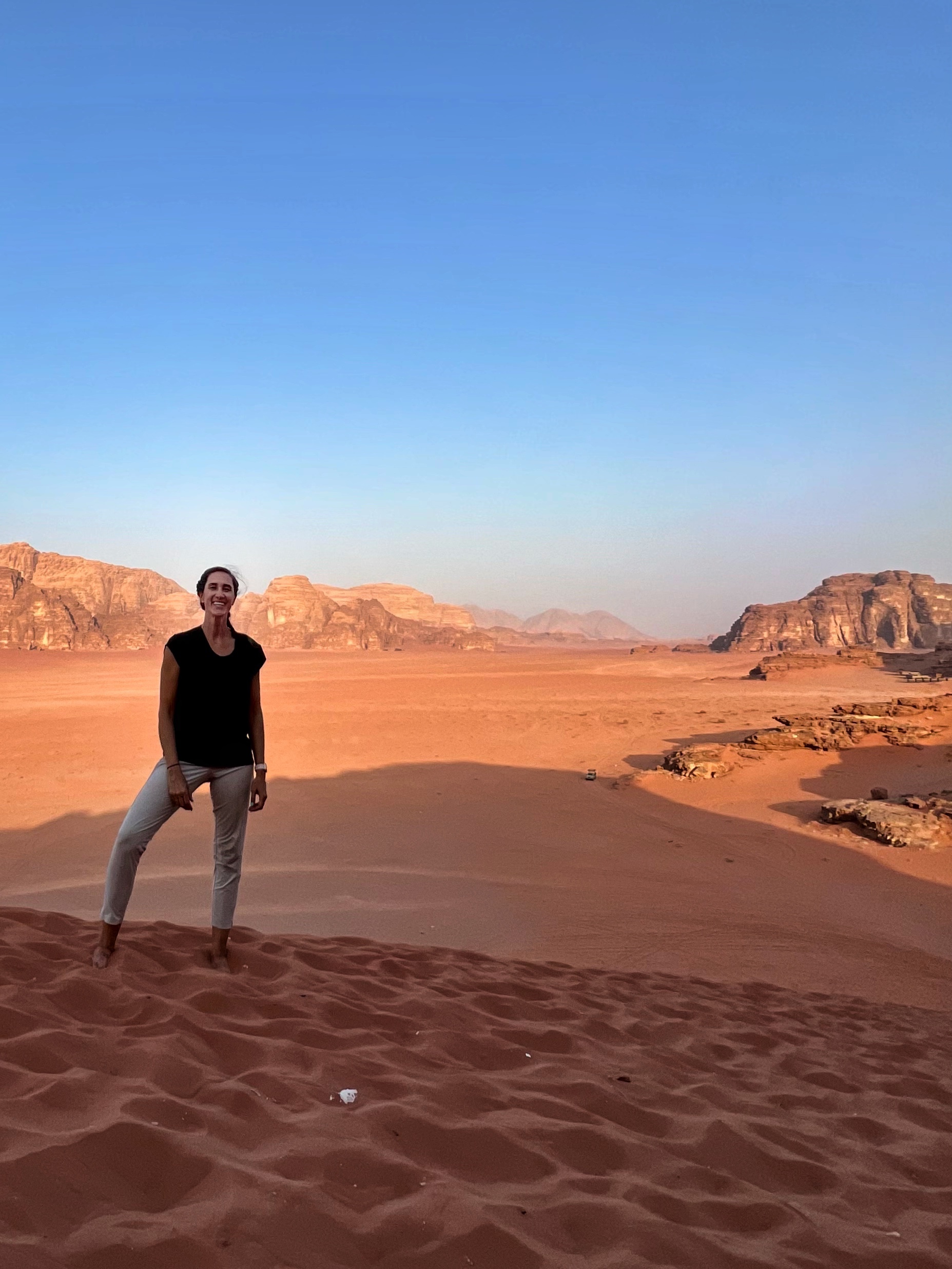
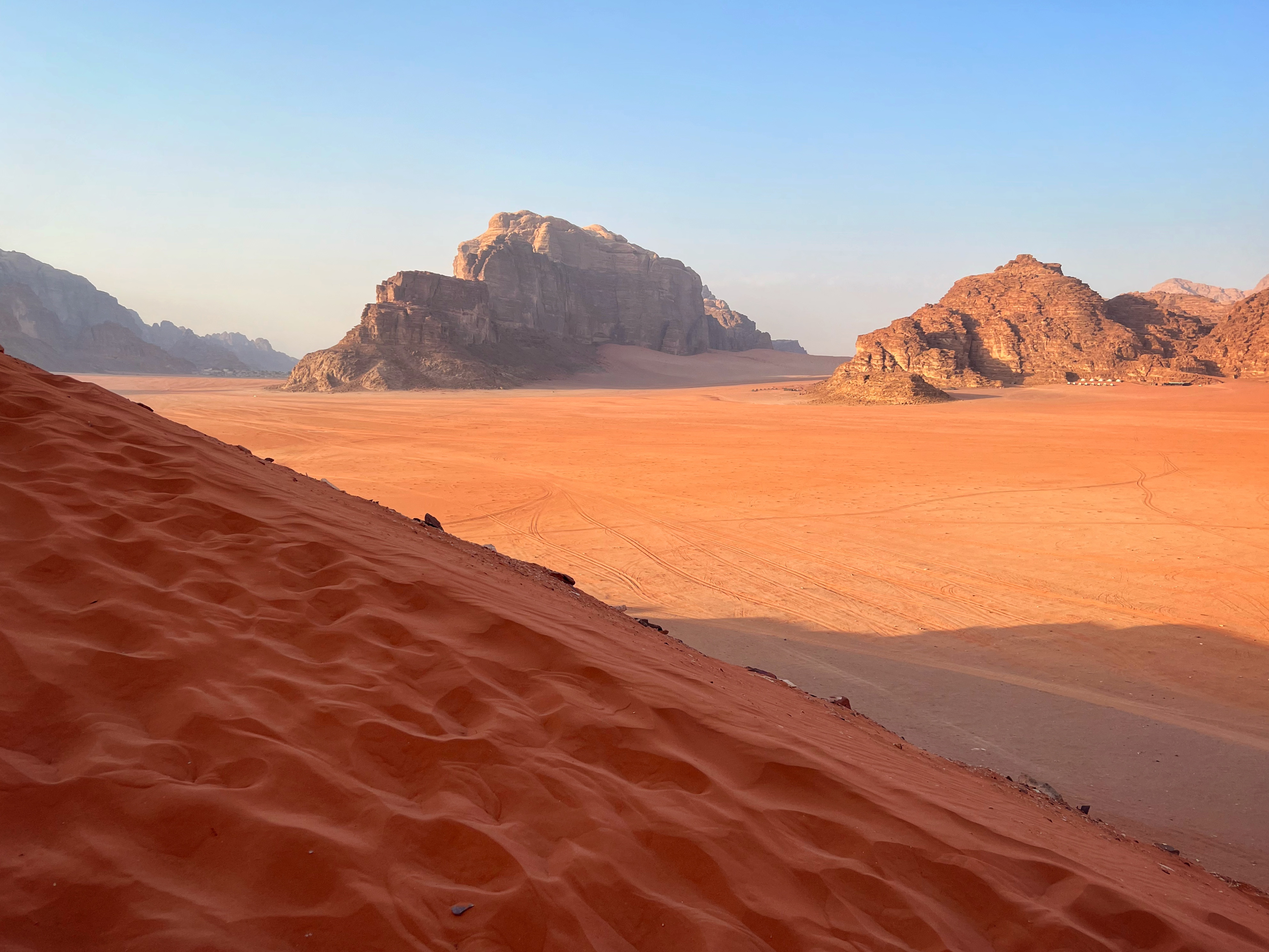
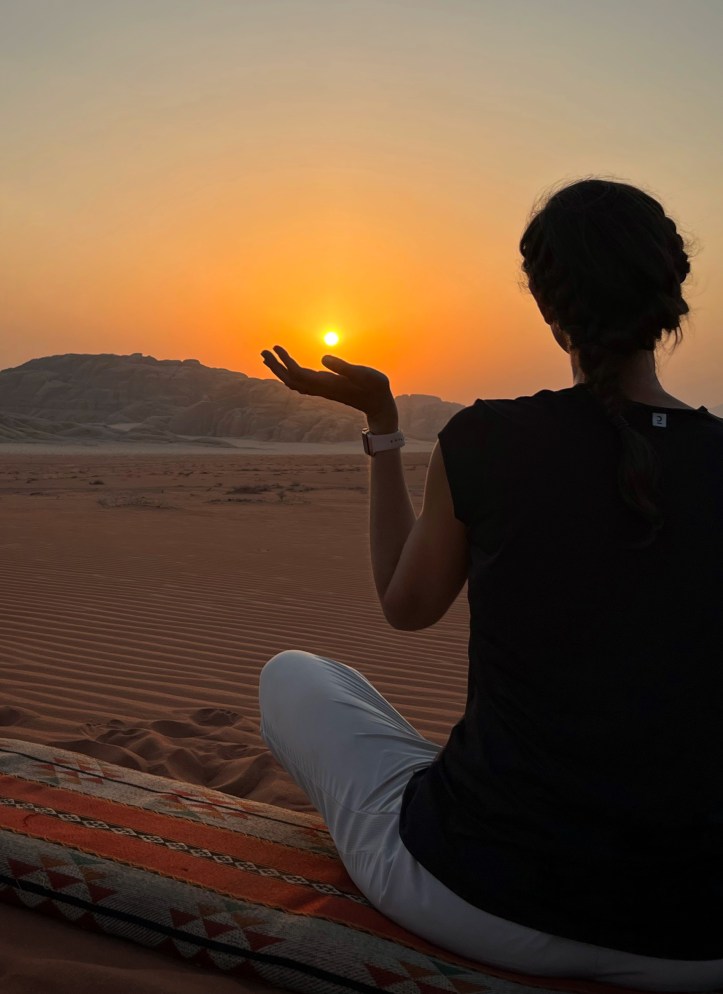
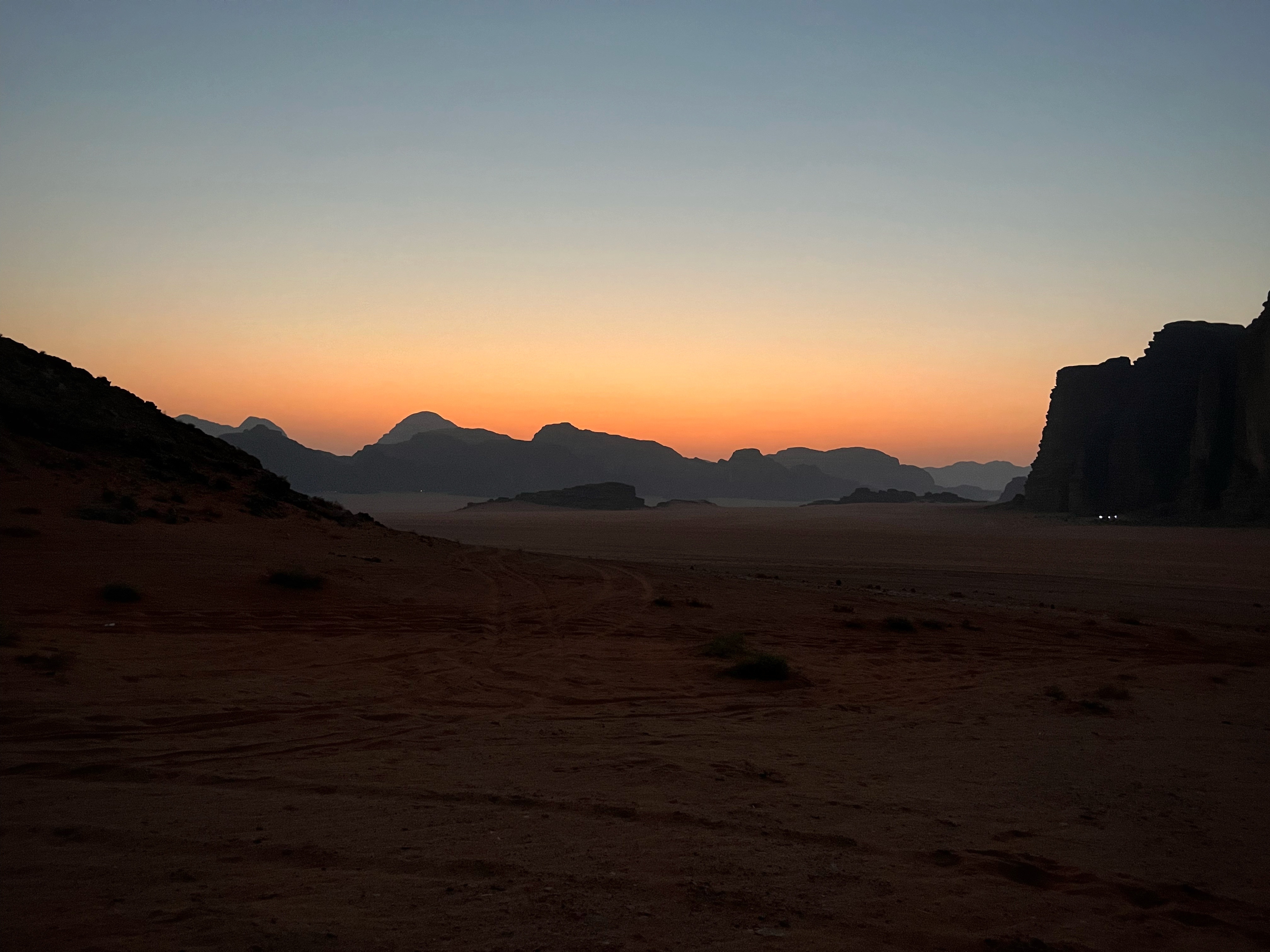
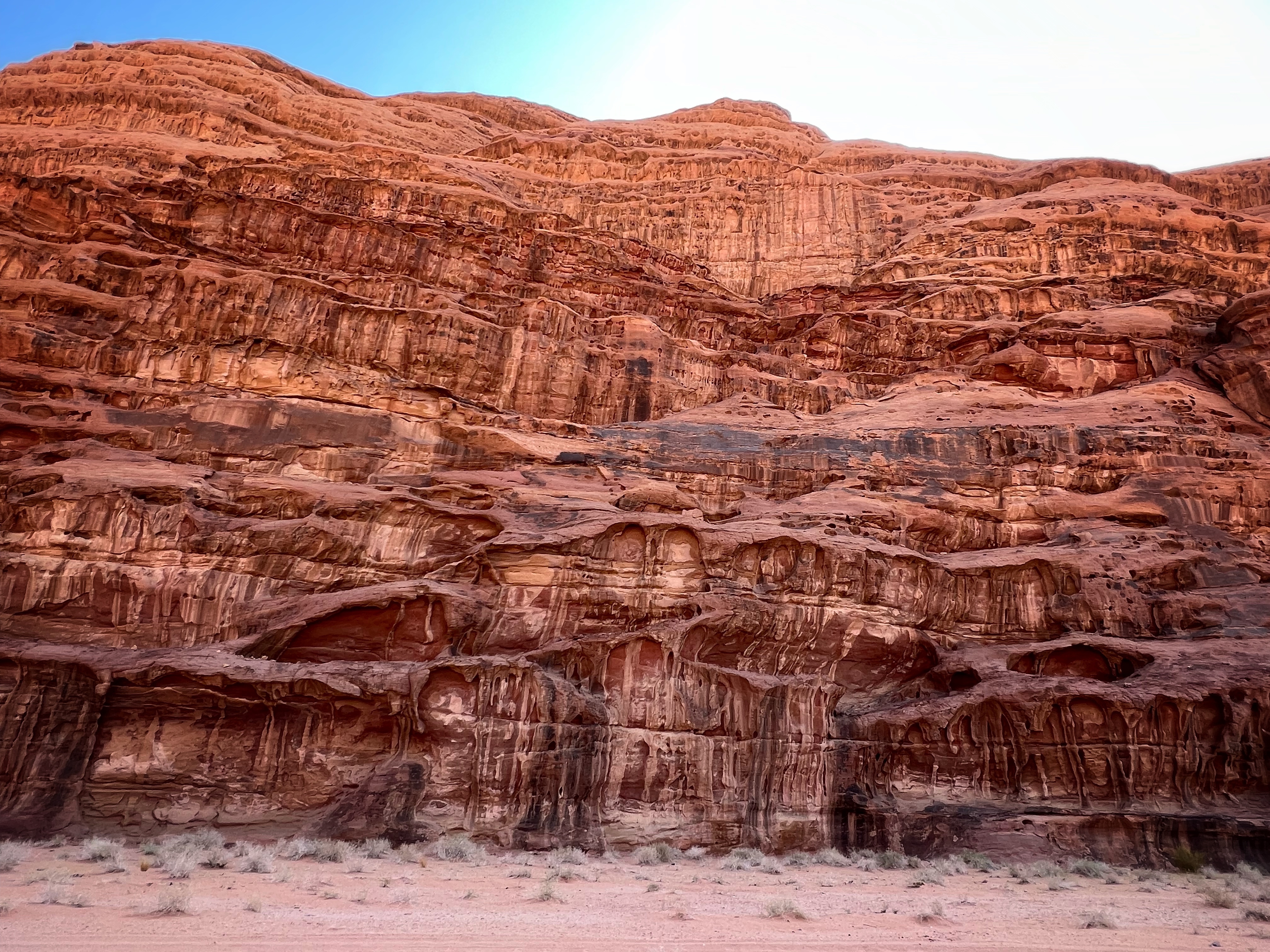
I loved this time of day in the desert. The setting sun lights everything up and the rocks and sand go from tan to red to yellow and orange. It’s a surreal sight indeed. It was also super cool to drive past random camels, just out wandering the desert. There are no wild camels in Wadi Rum, but most outfits let their camels wander during the day. They don’t get too far as their legs have ropes to prevent them from running, but they can do plenty of exploring…
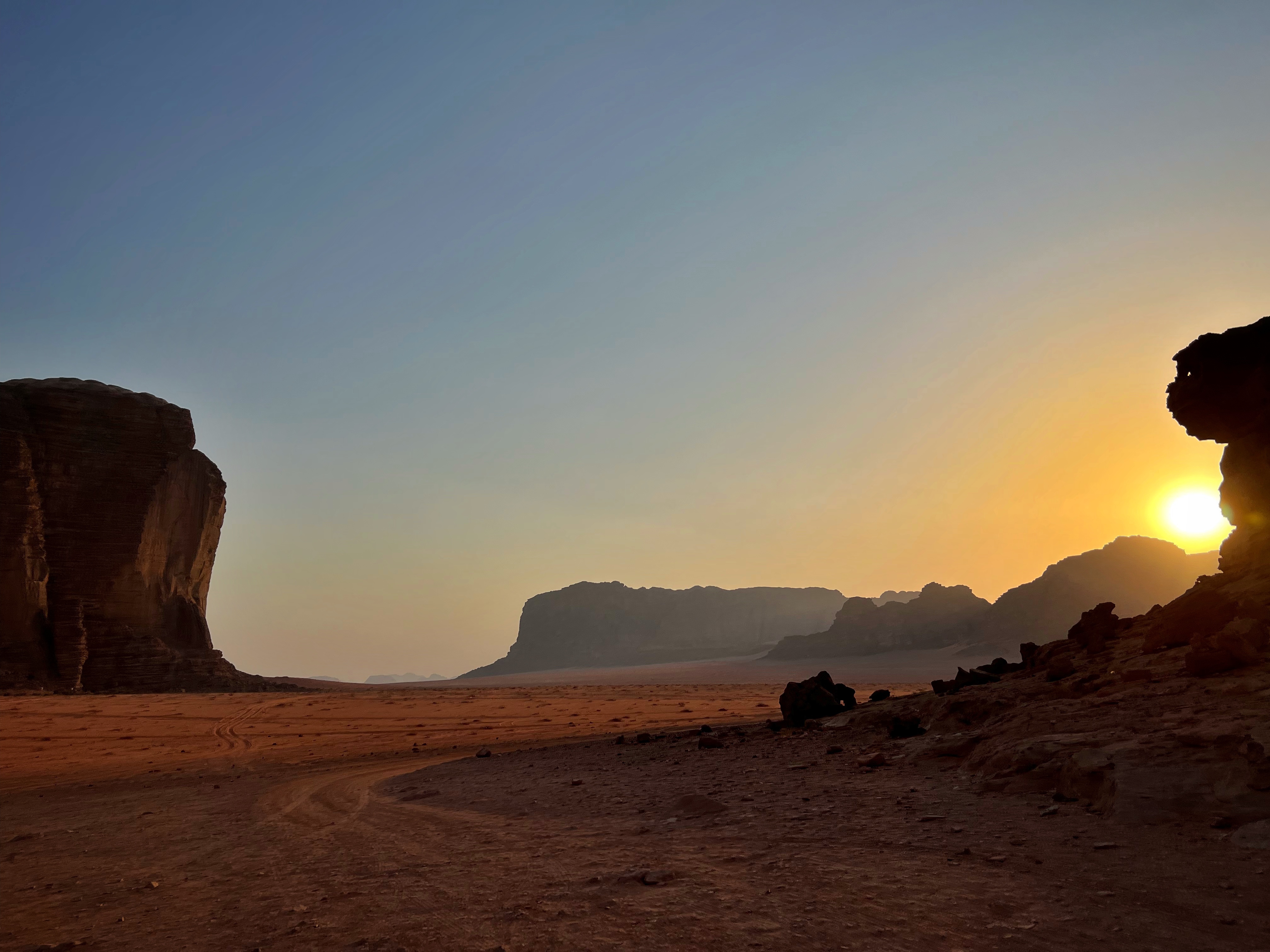
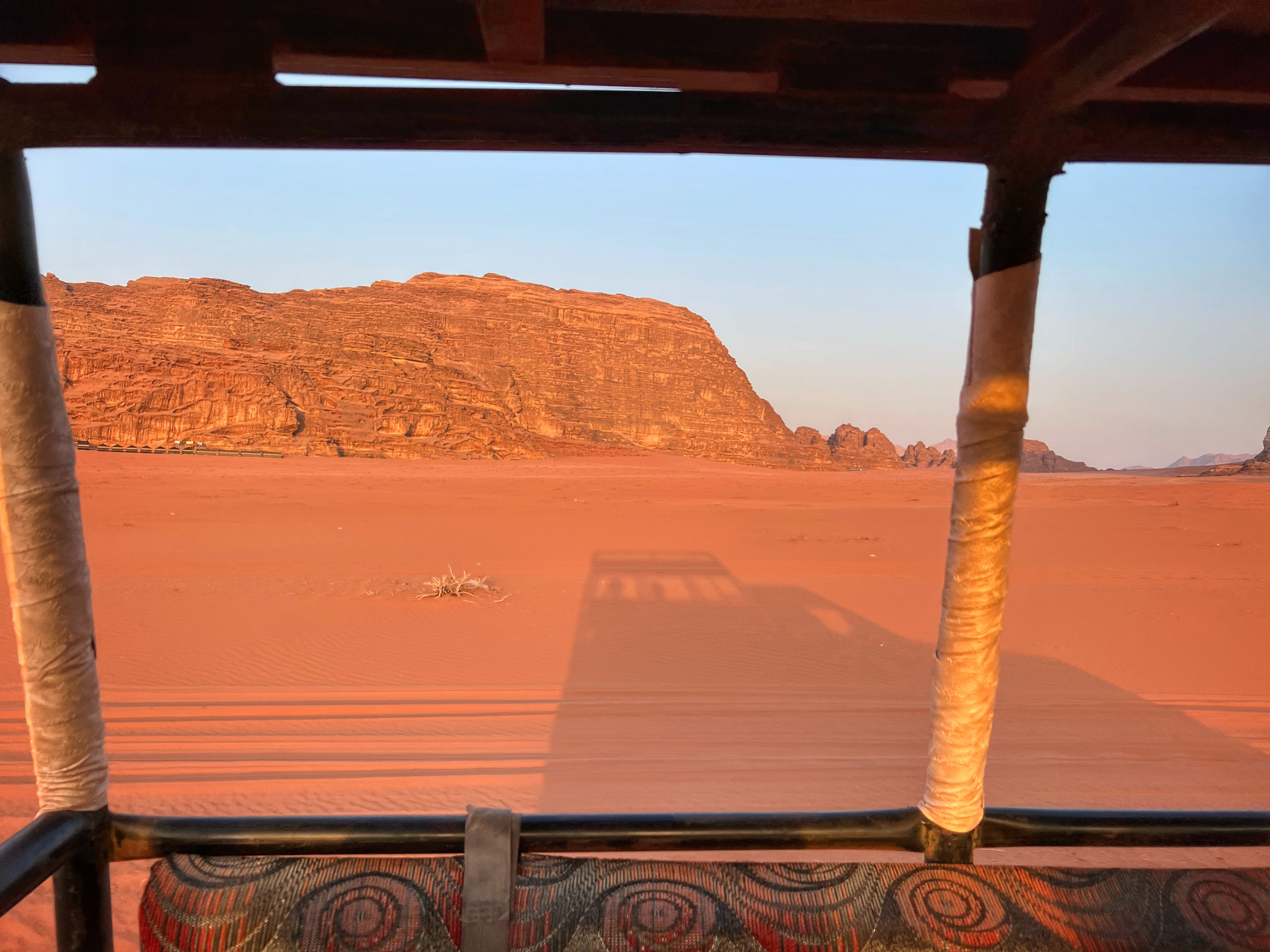

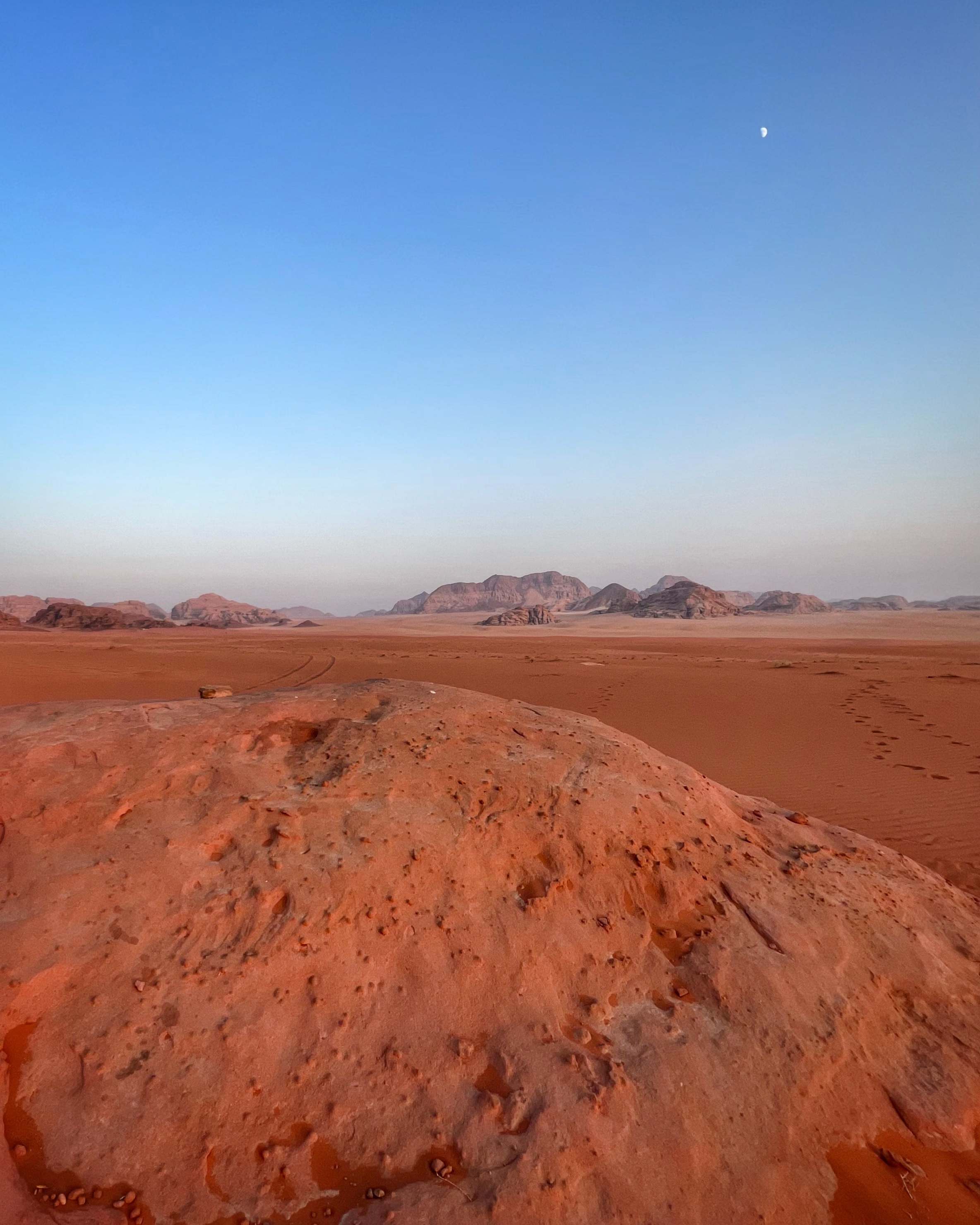
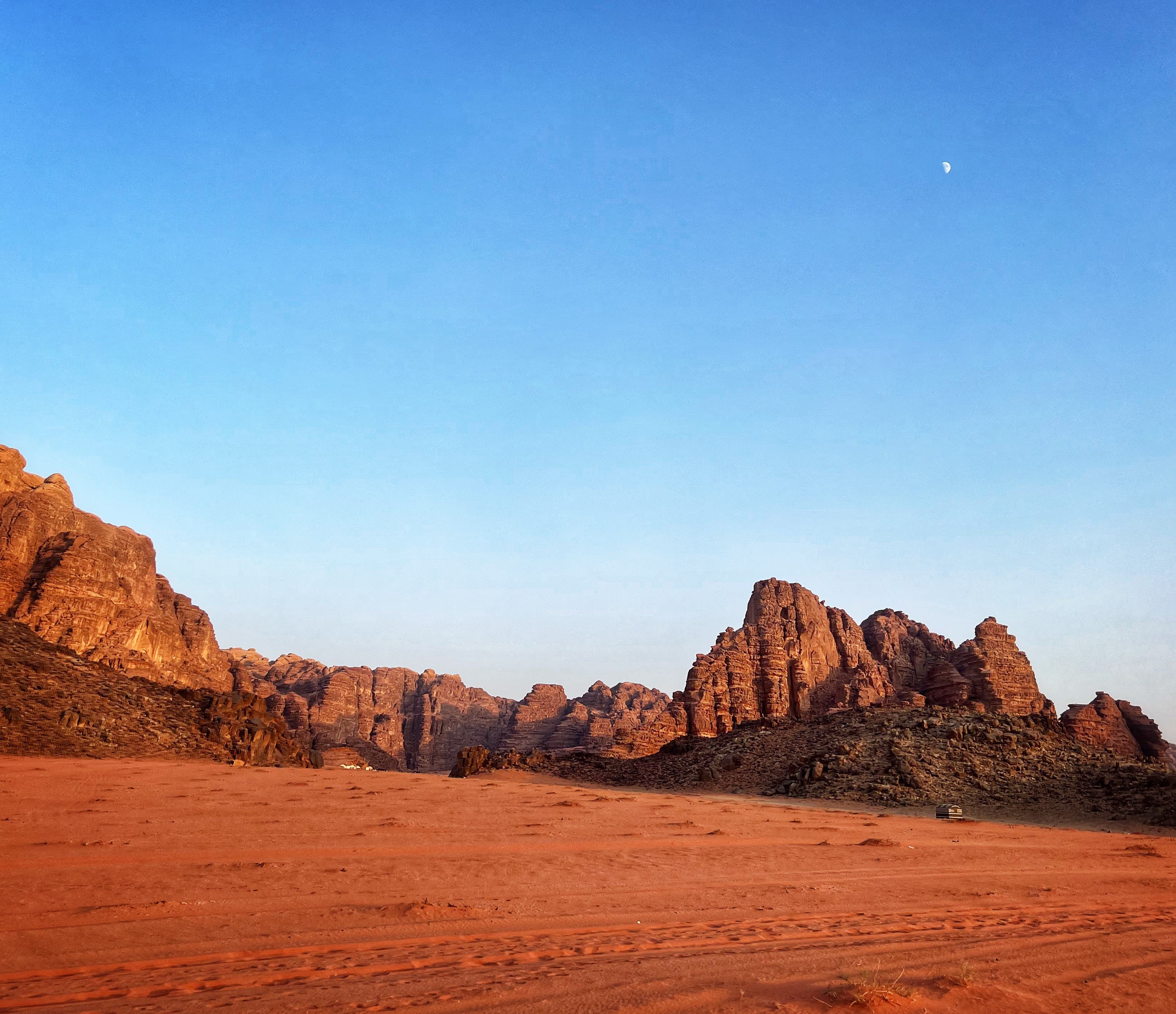
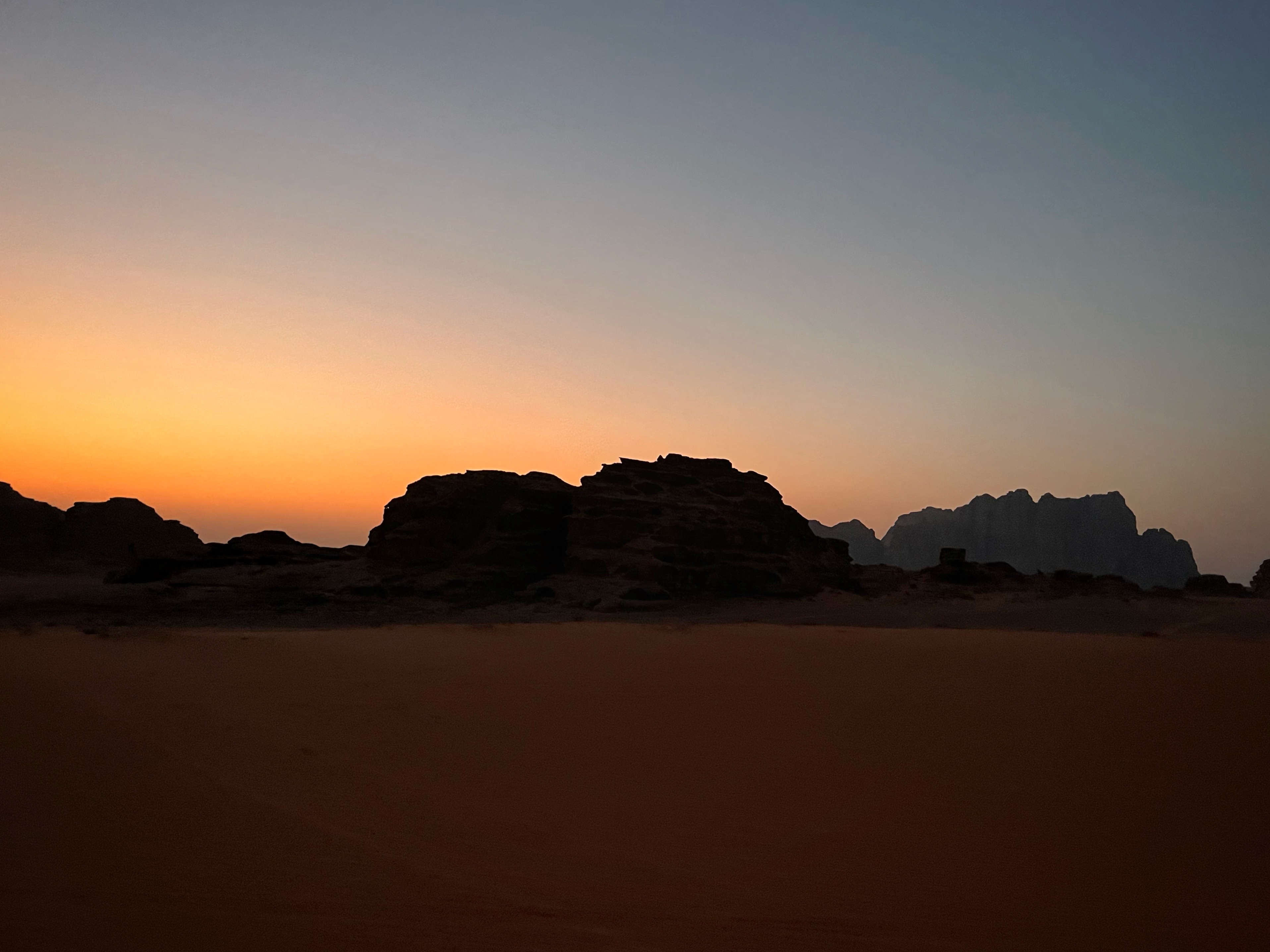
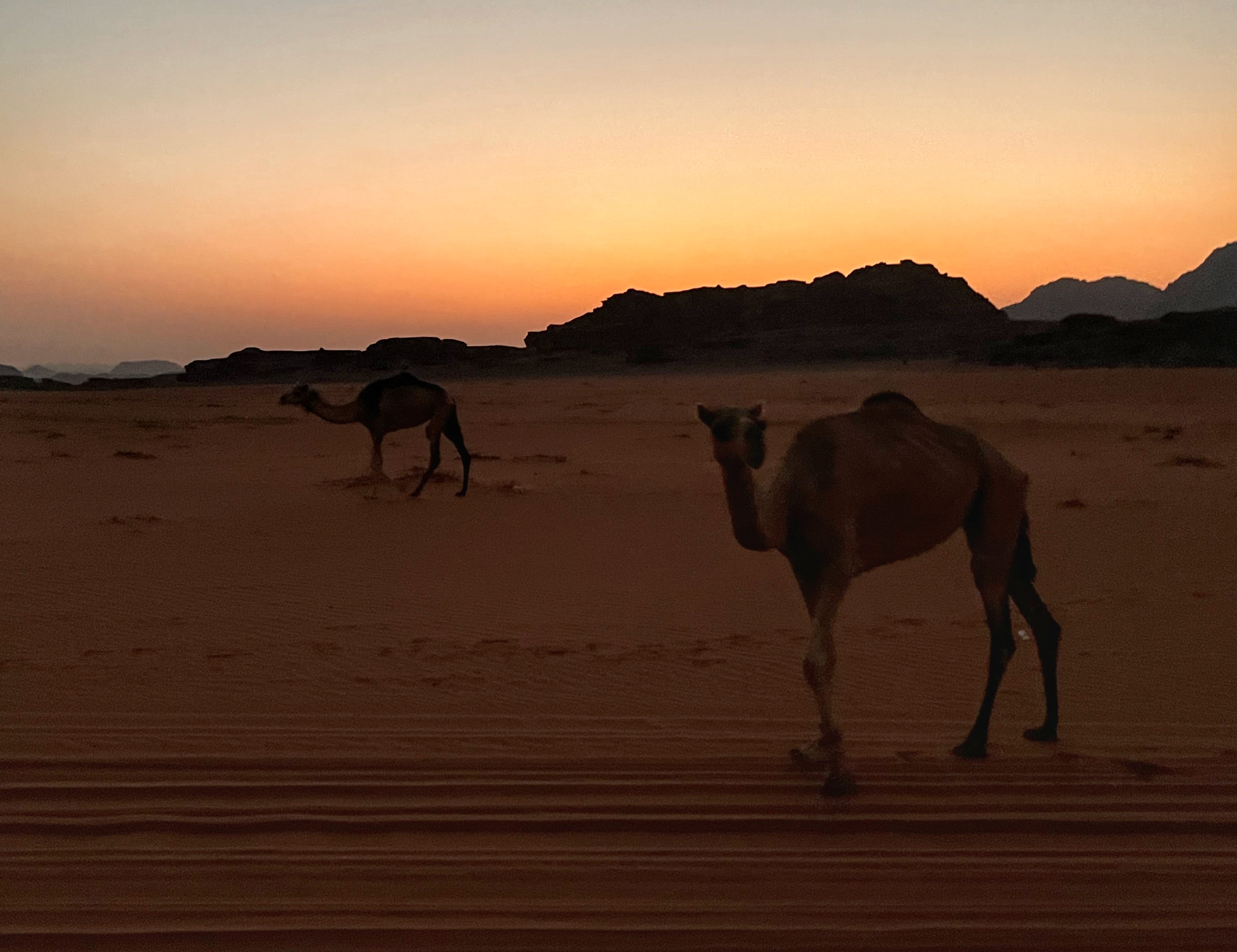
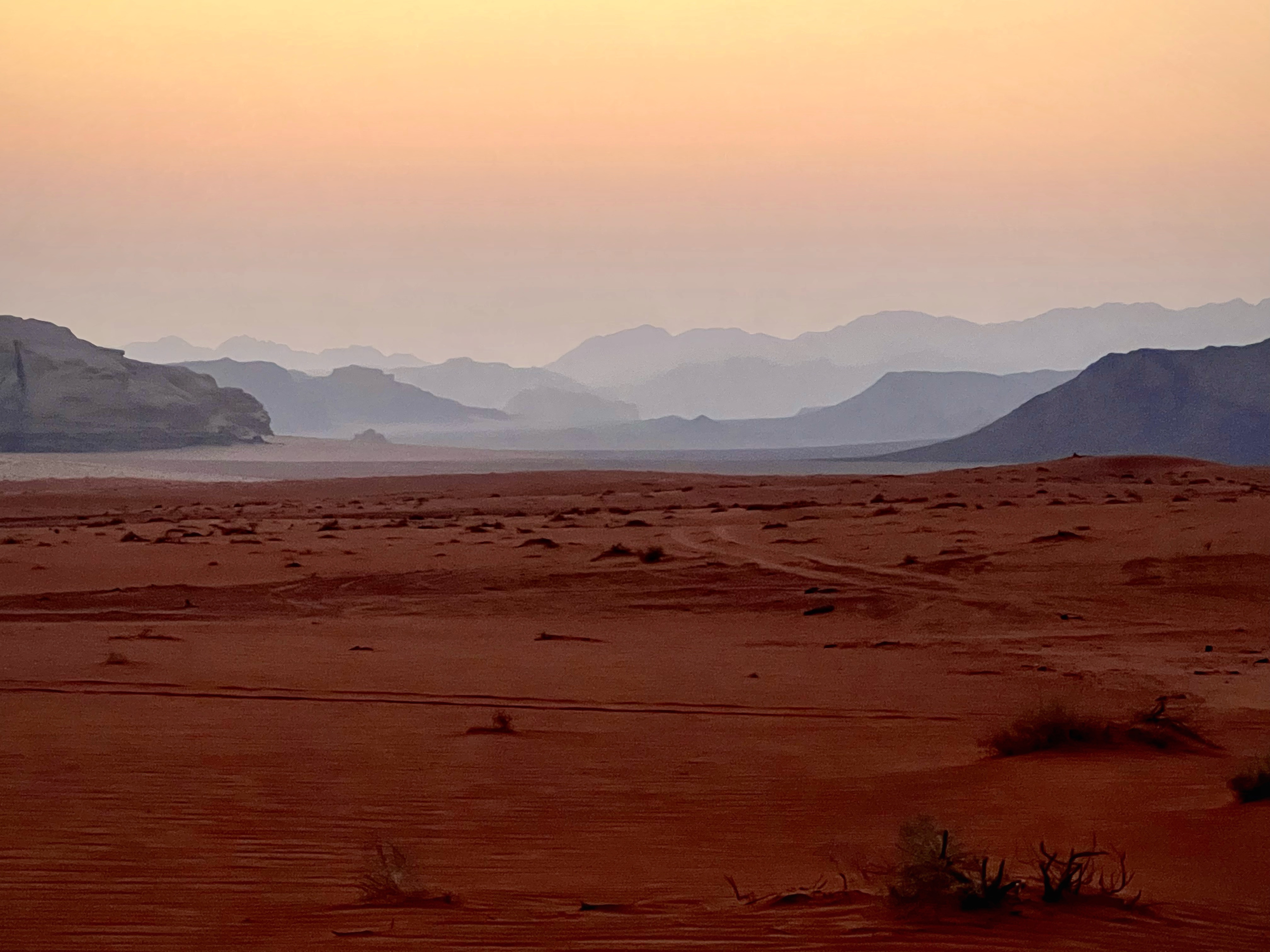
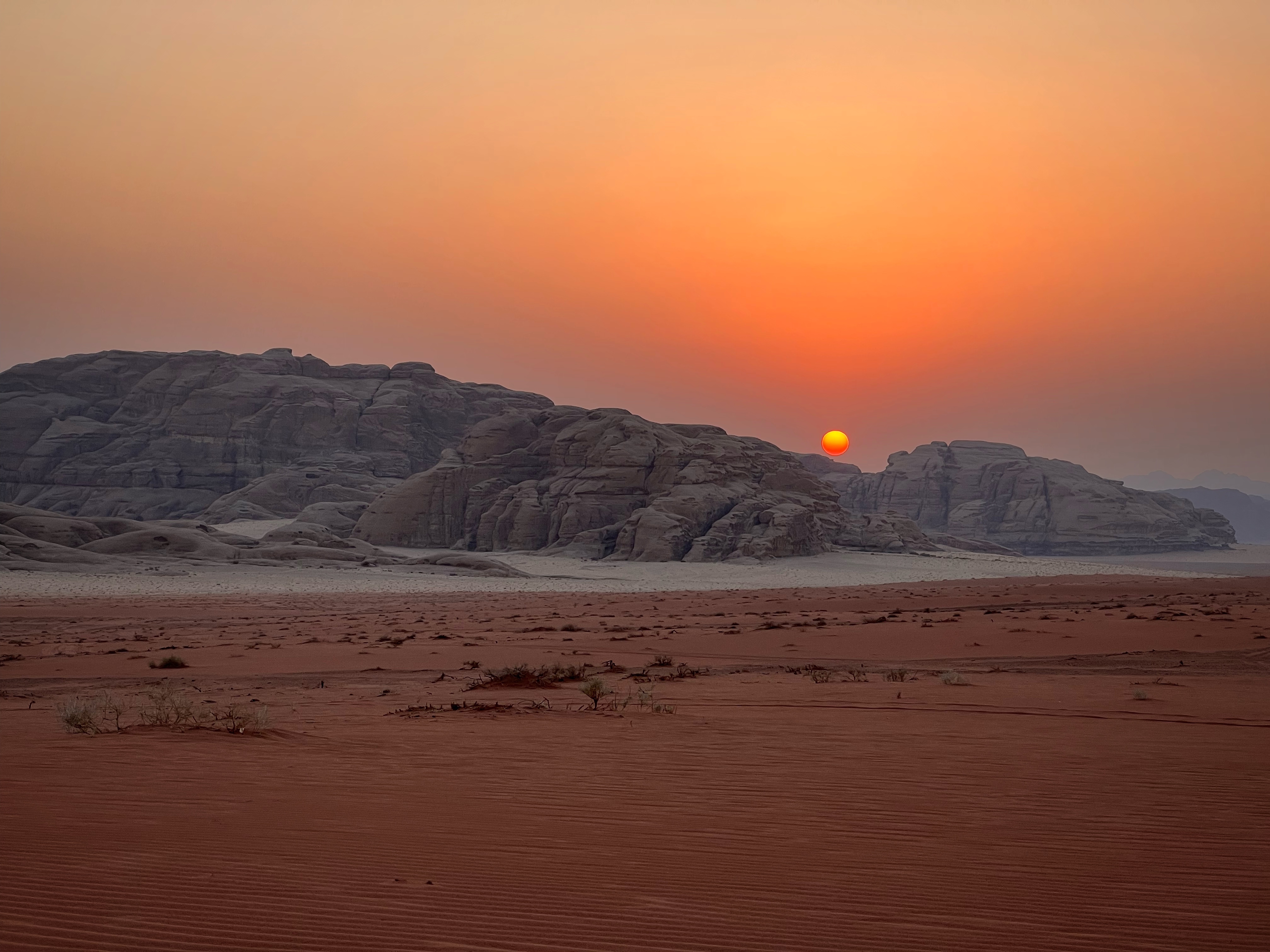
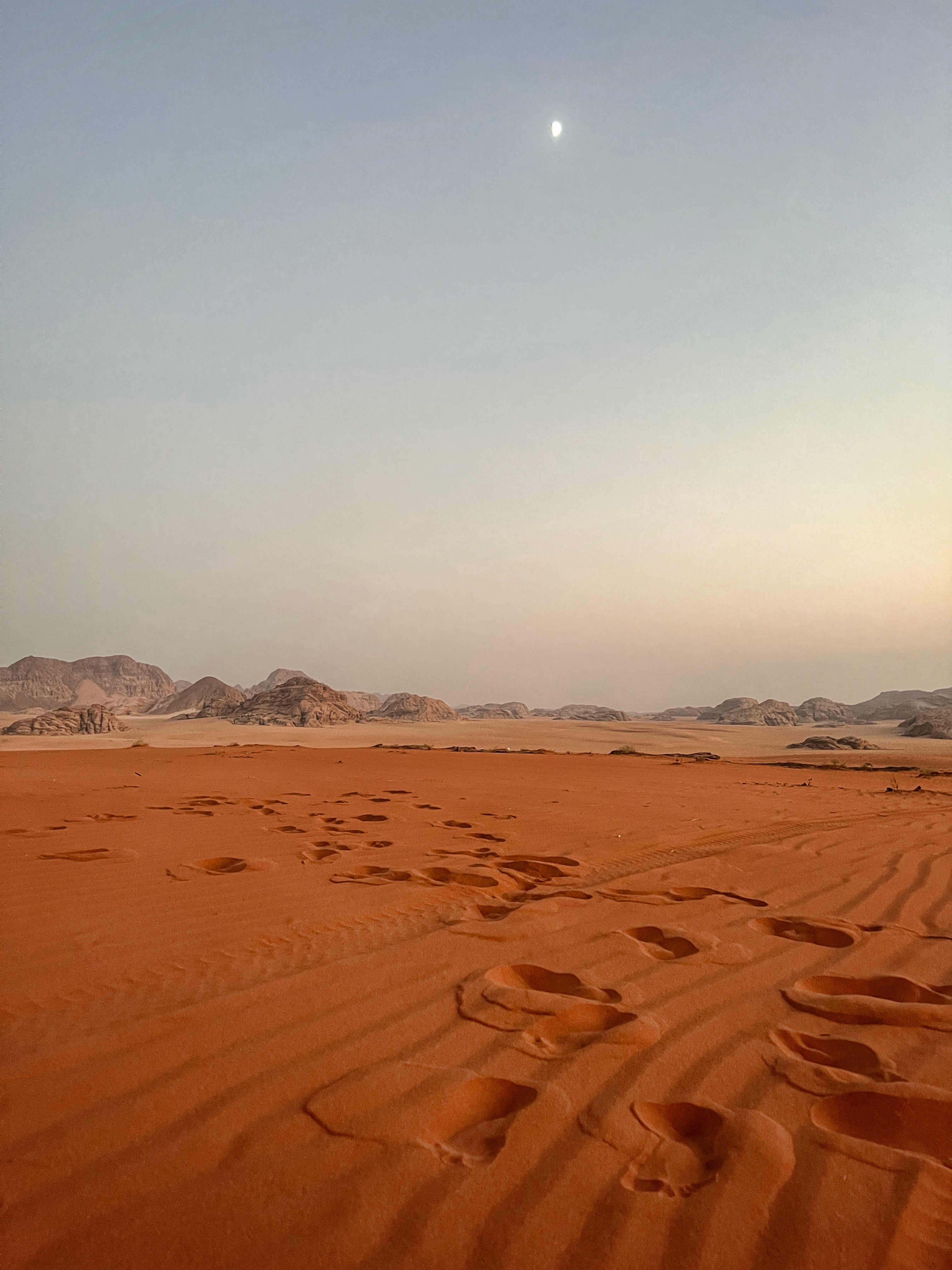
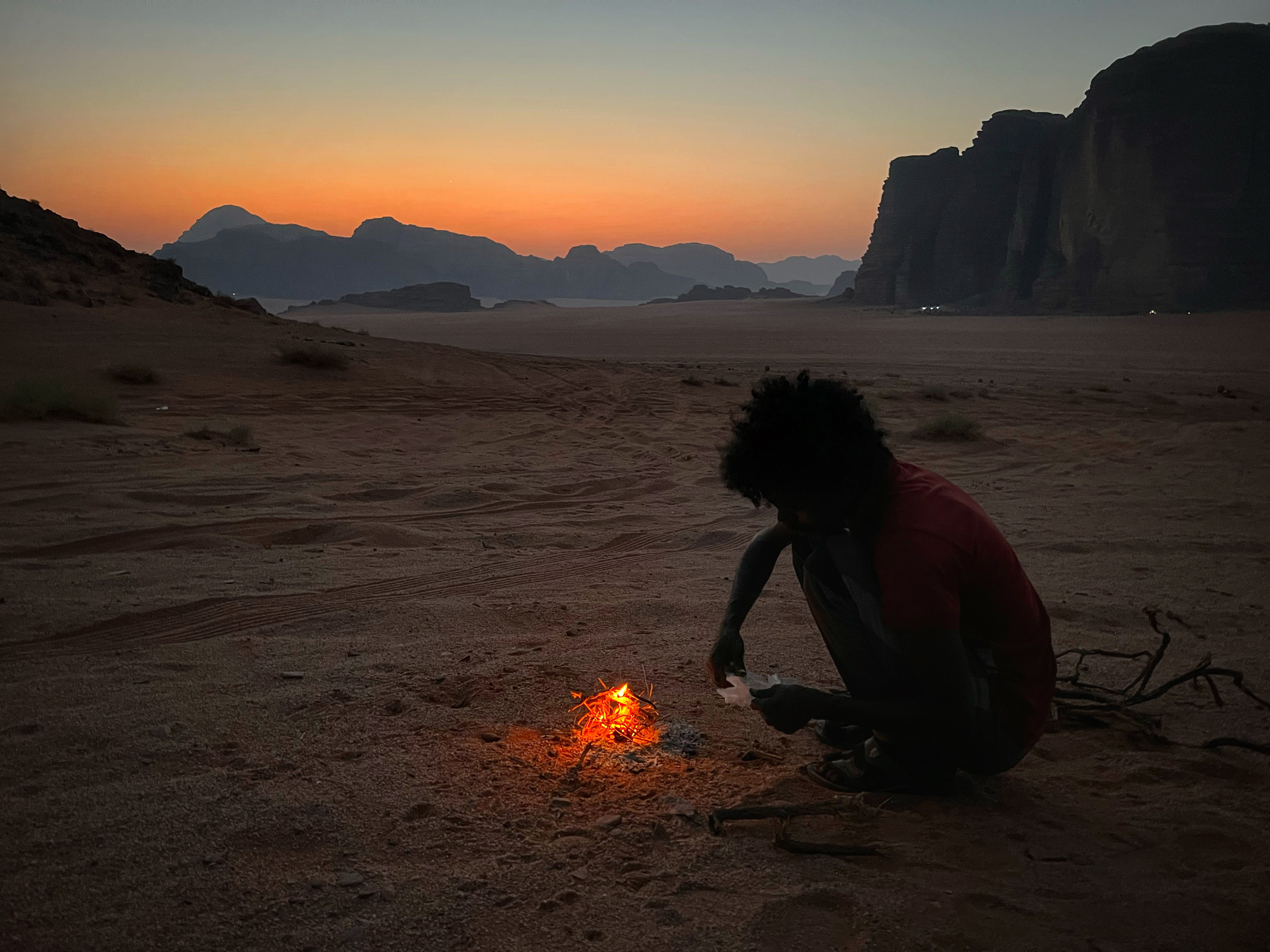
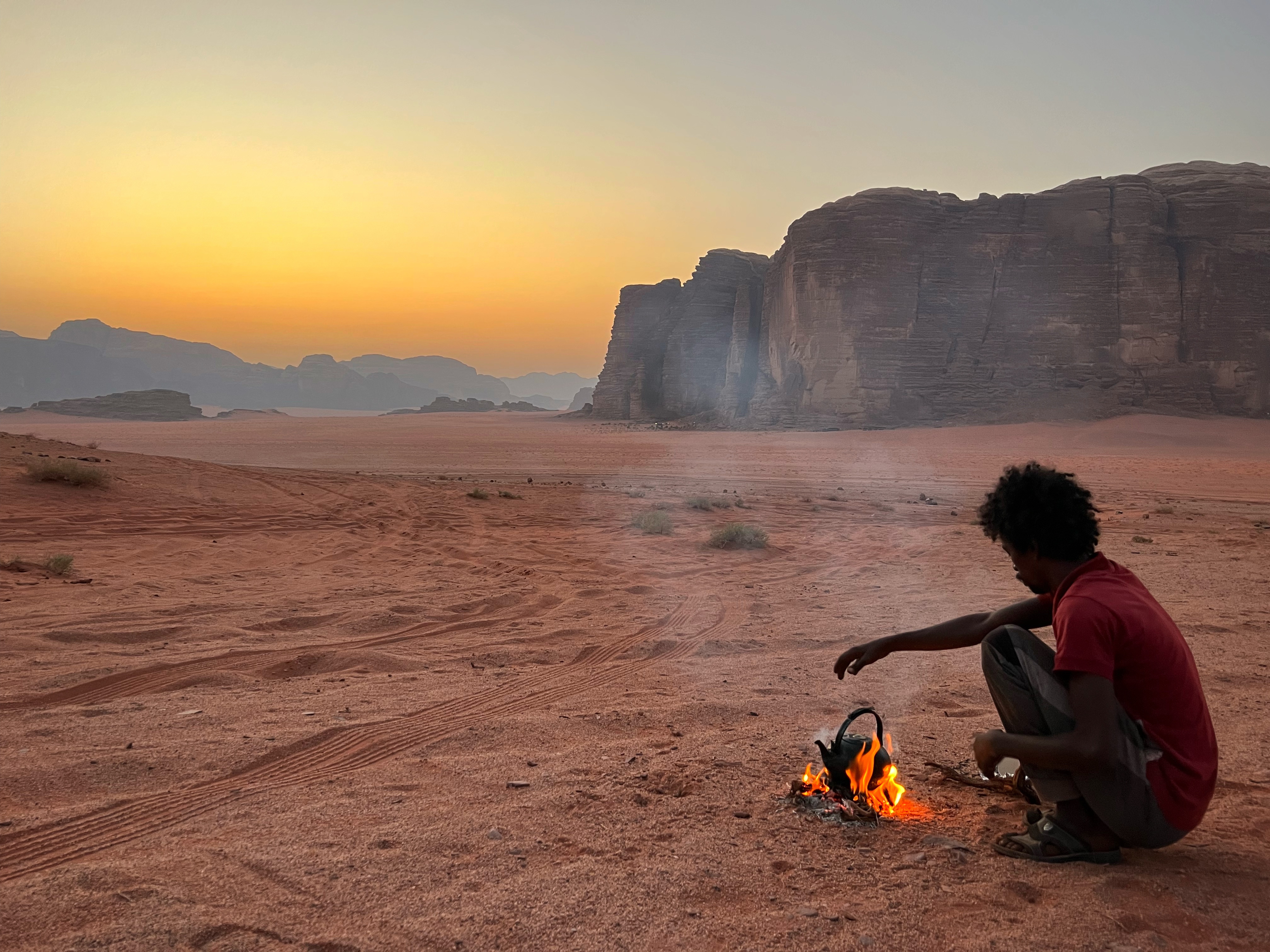
This sunset experience was incredible. Kamal dug a little hole and built a fire in the sand to make us tea as we watched the sun sink to the horizon. He grabbed my camera again and took some photos – and I’m so glad he did because I wasn’t thinking about photos much in this moment. It was overwhelming to me! We noticed bird footprints in the sand as well as a snake imprint and saw a hole nearby where a snake must have been sleeping. Kamal assured us that it was nothing to worry about. He was so great.
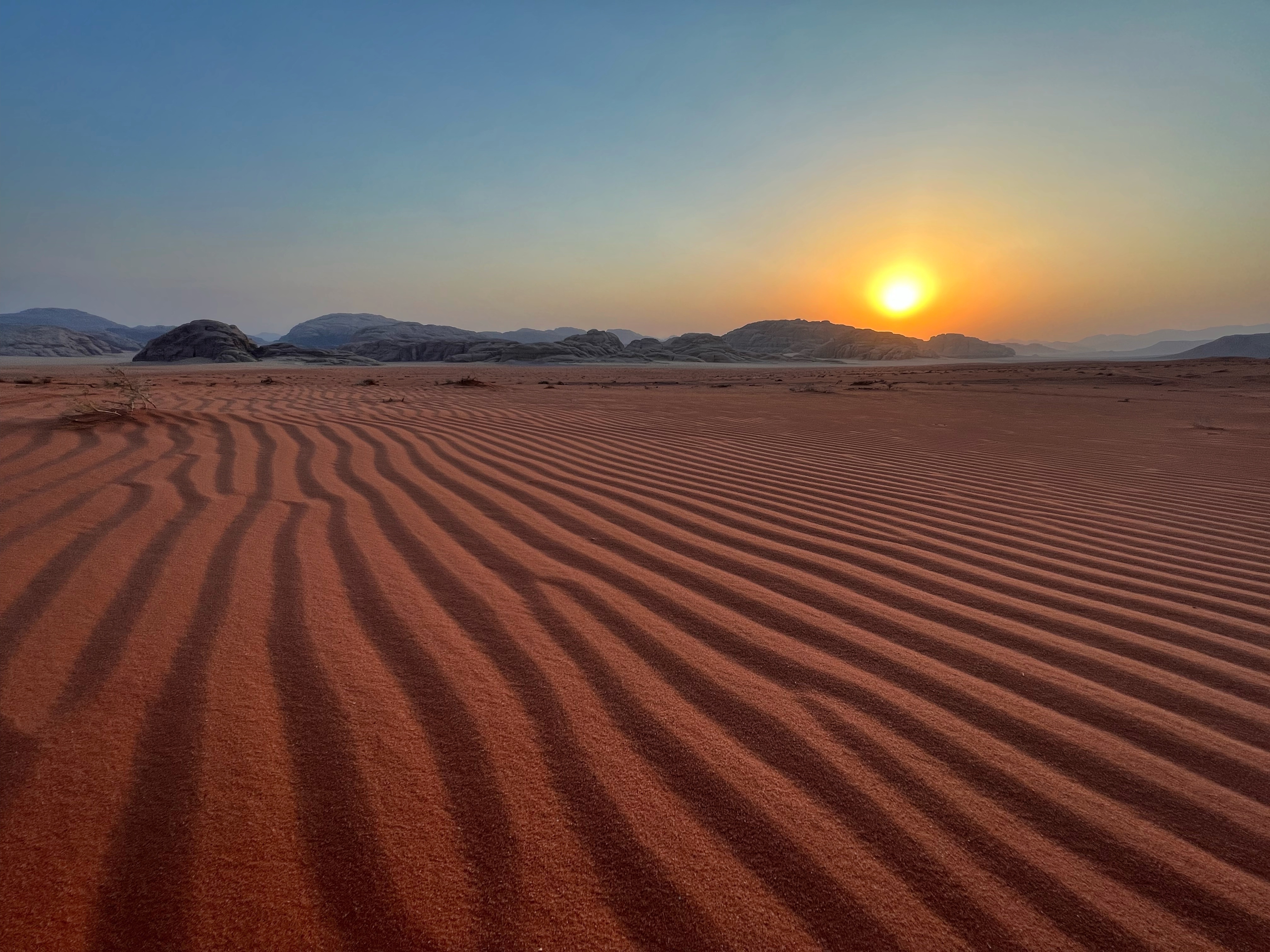
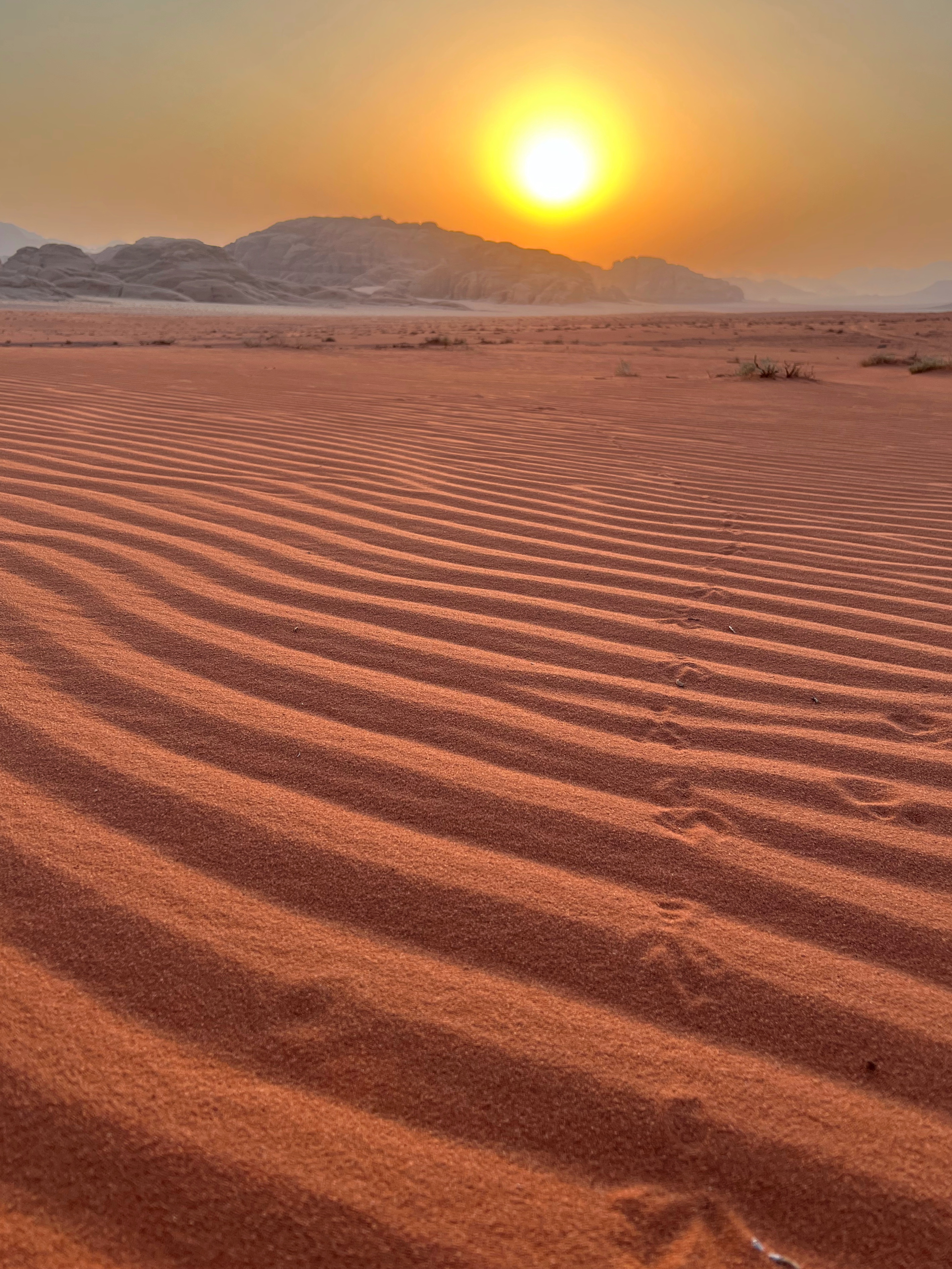
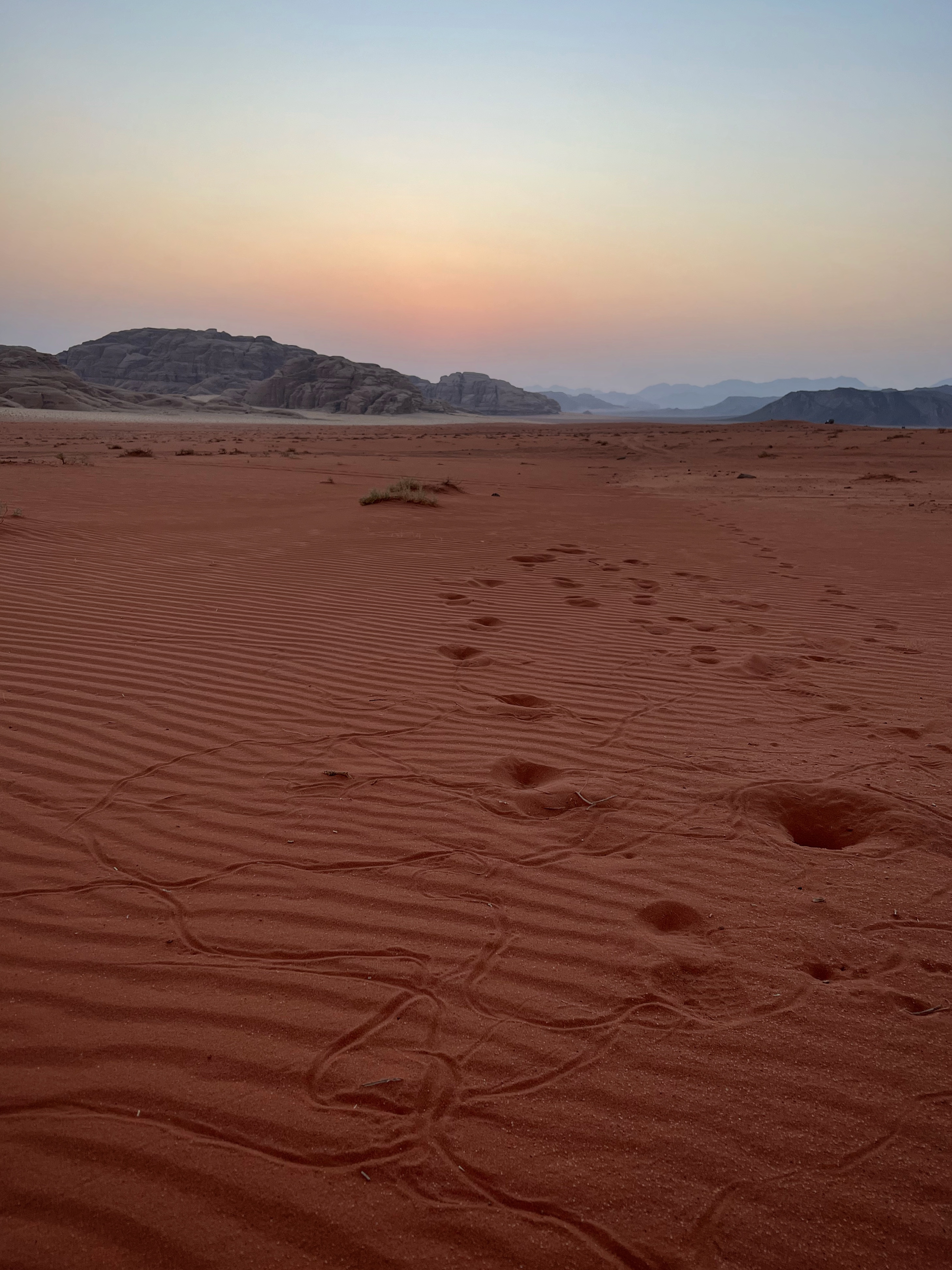
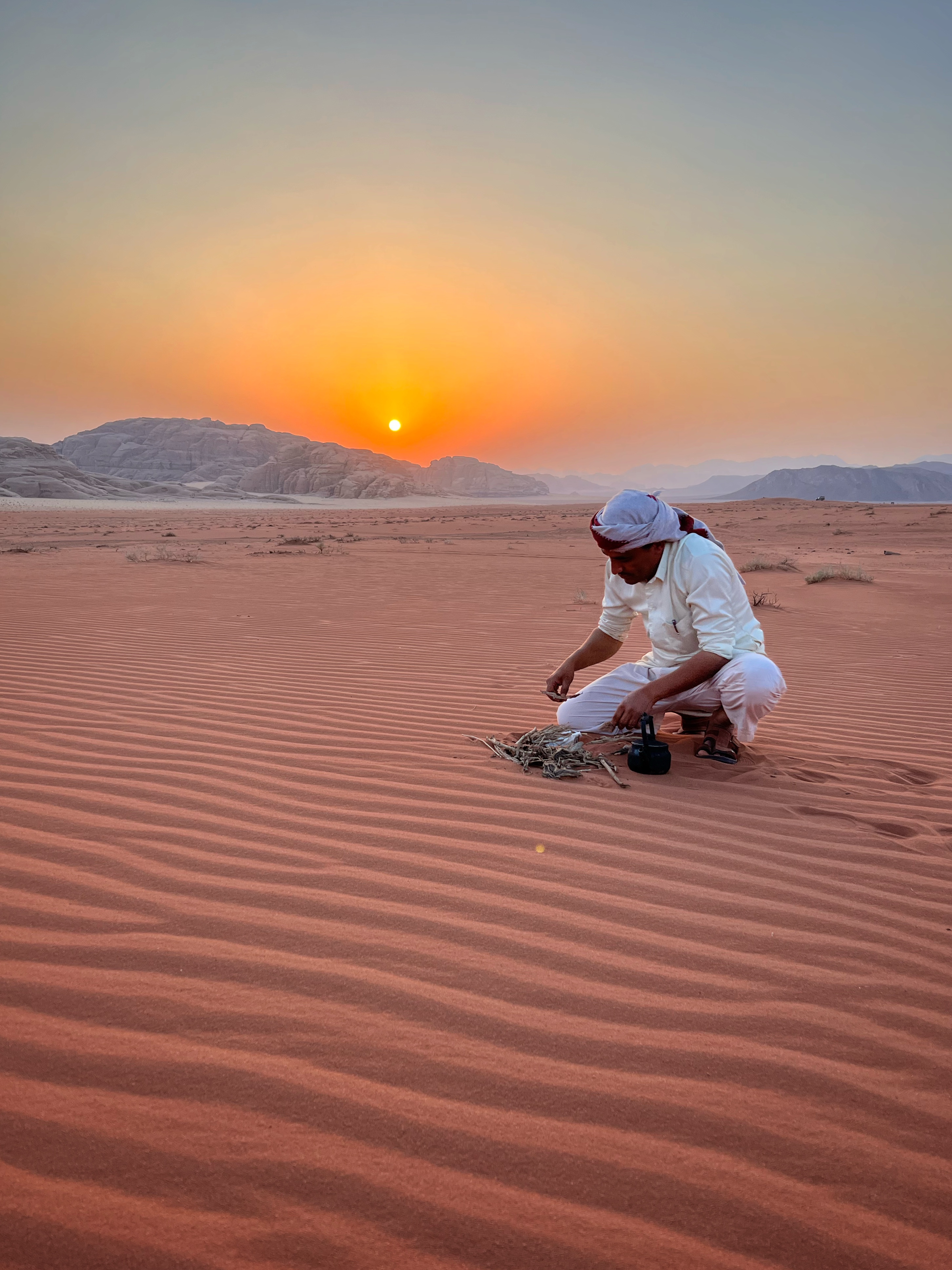
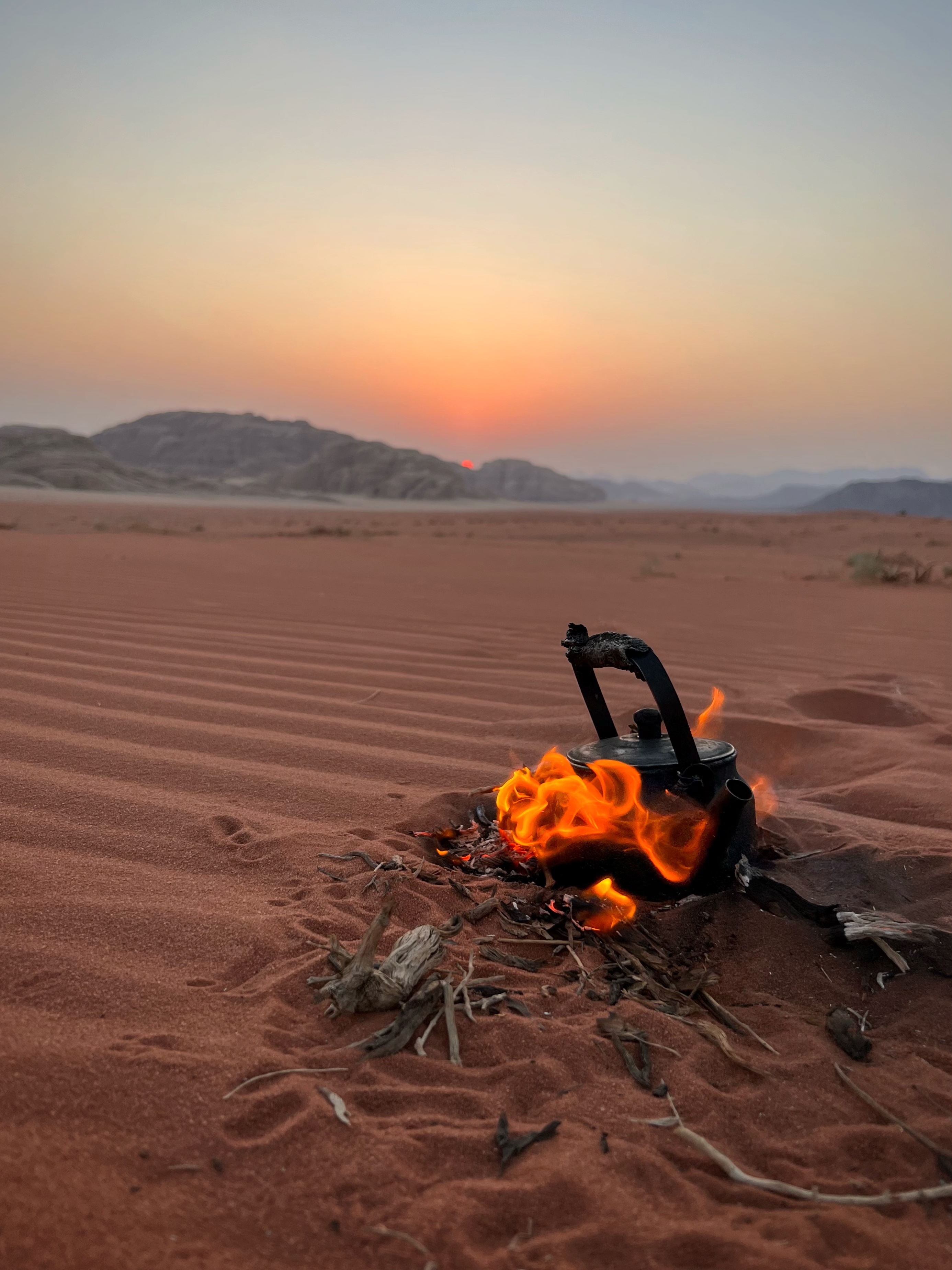
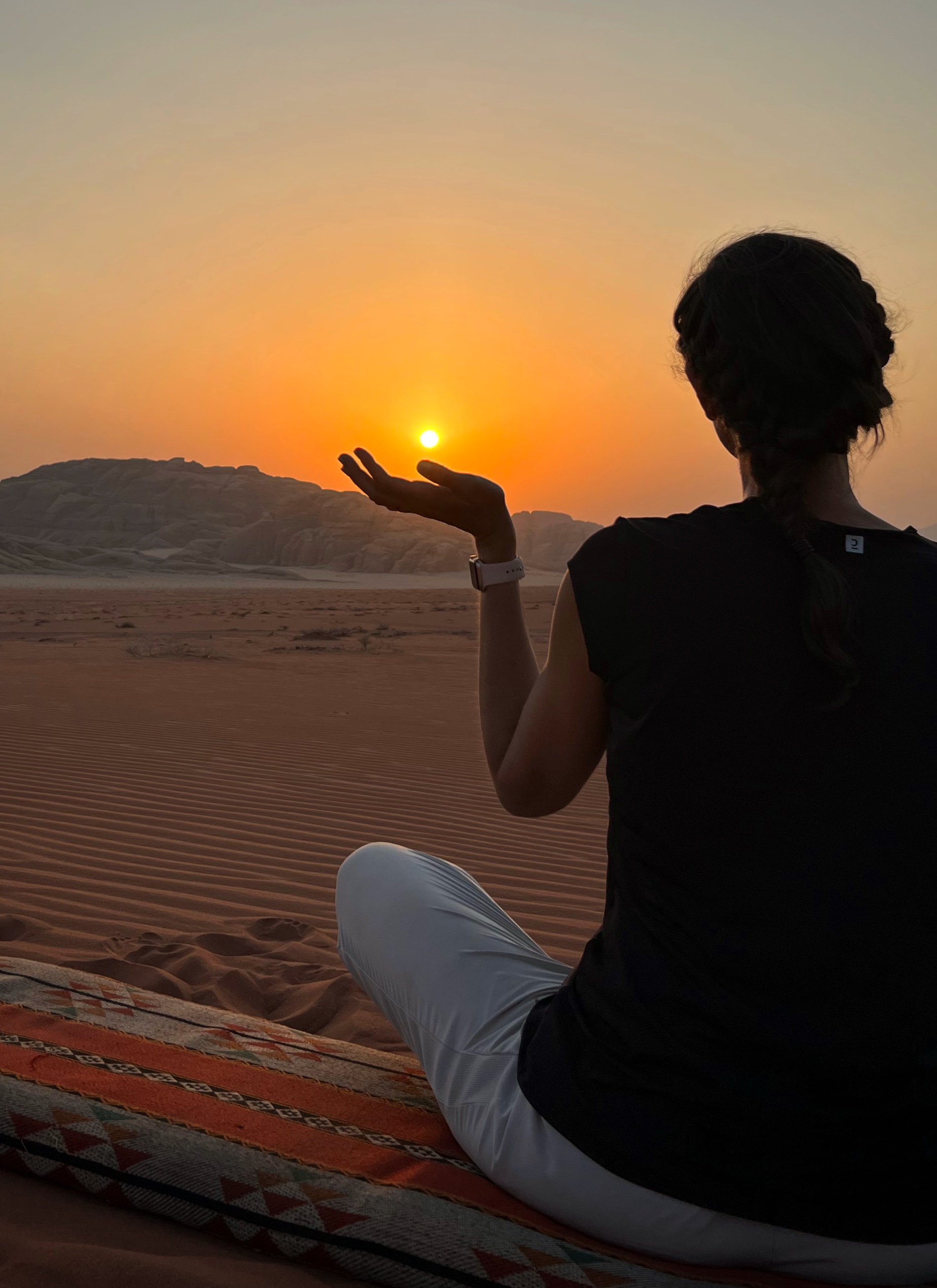

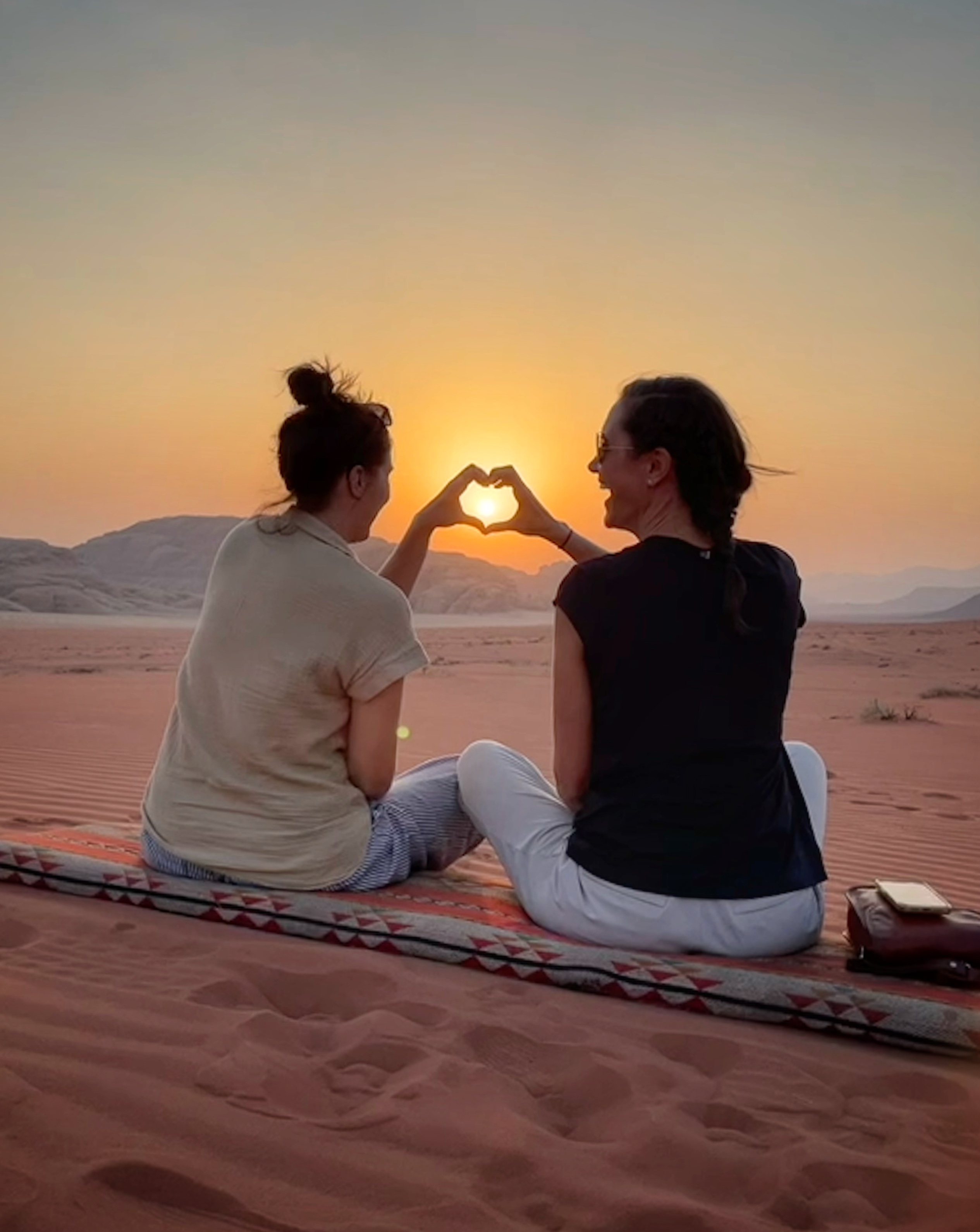
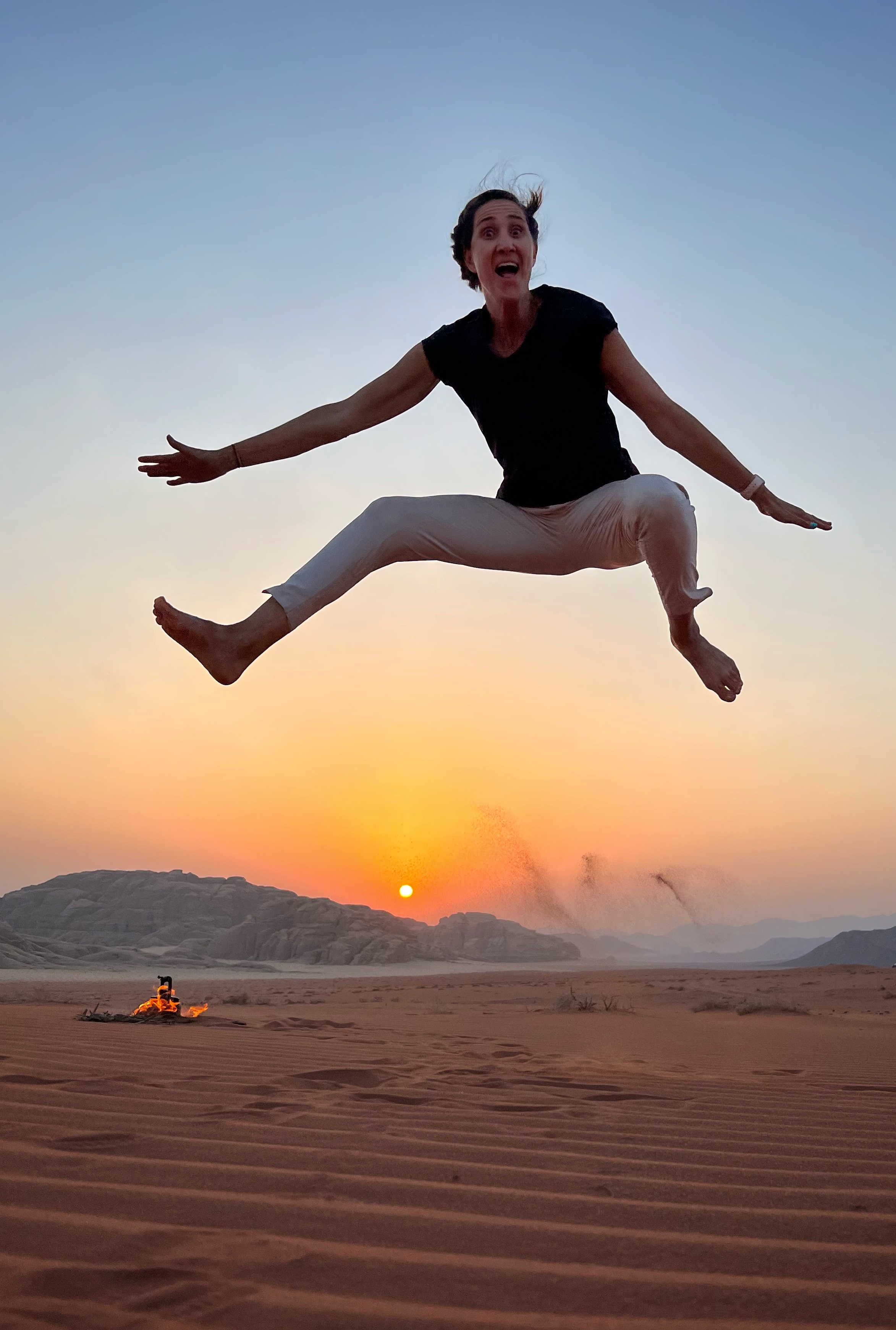
After delicious tea and biscuits and an epic sunset, Kamal took us to our campsite and showed us our hotbox – i mean tent – for the night. These tents are traditional and made with camel hair fabric wrapped around them to keep in the heat and keep out the sand. It was very hot inside even with the door and window open, but by midnight it cooled off enough that I put the blanket over me. It was early September so it is usually quite warm, but everyone said this was the hottest they had seen it – EVER. I guess we did pretty well considering the heat!
We got cleaned up and walked up to the main building where dinner was being served with the other camp guests. It was fun to sit around the campfire and chat, eating delicious food, drinking more tea and listening to music. They offered people sheesha (to smoke) but nobody took them up on it. After dinner we watched our hosts dance around the fire, and then they had all of us dance around the fire, too. It was hilarious. Everyone was a good sport. We hit the hay around 10:15 PM and had to wake up before 5AM for our sunrise camel ride…

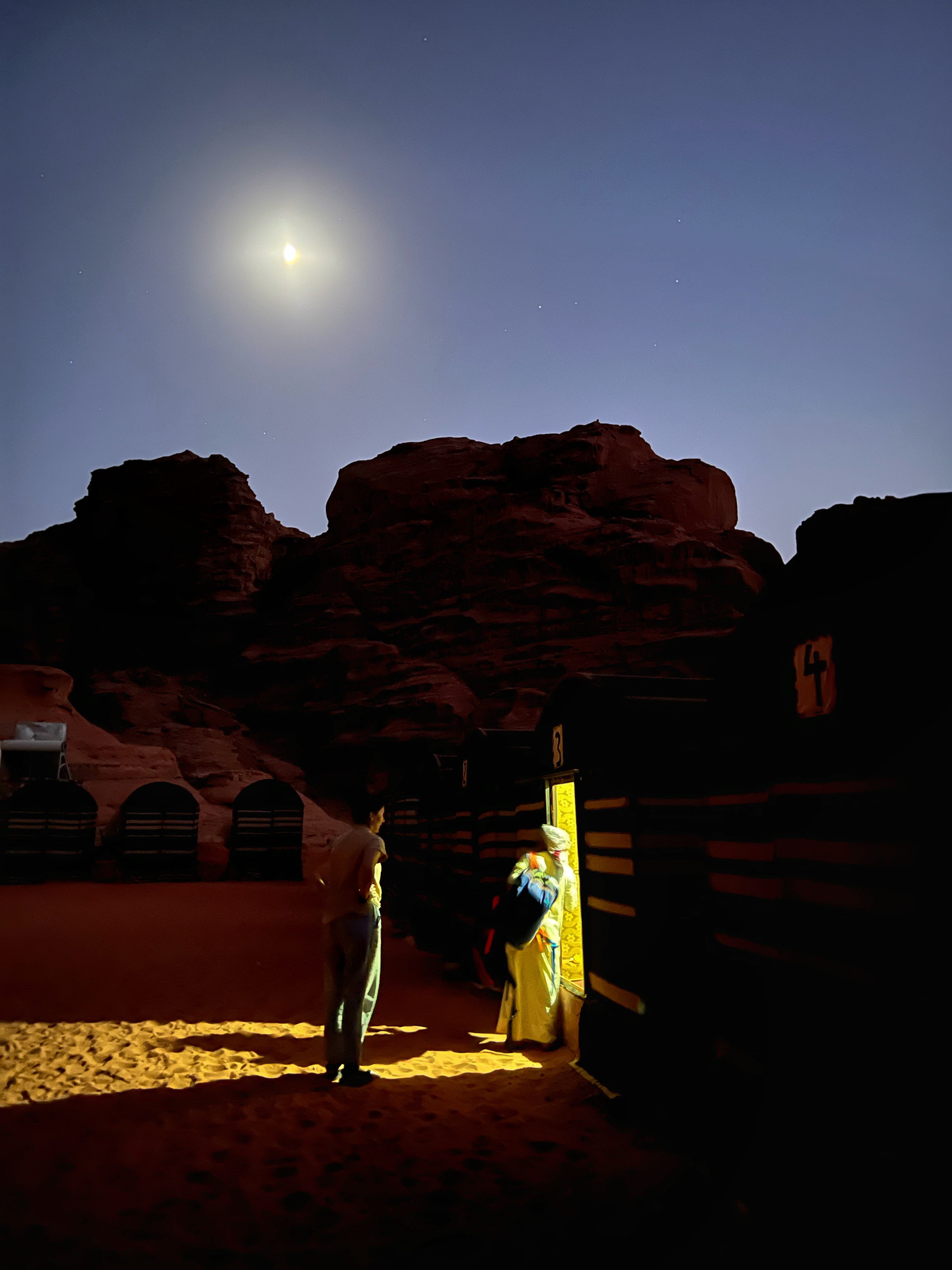
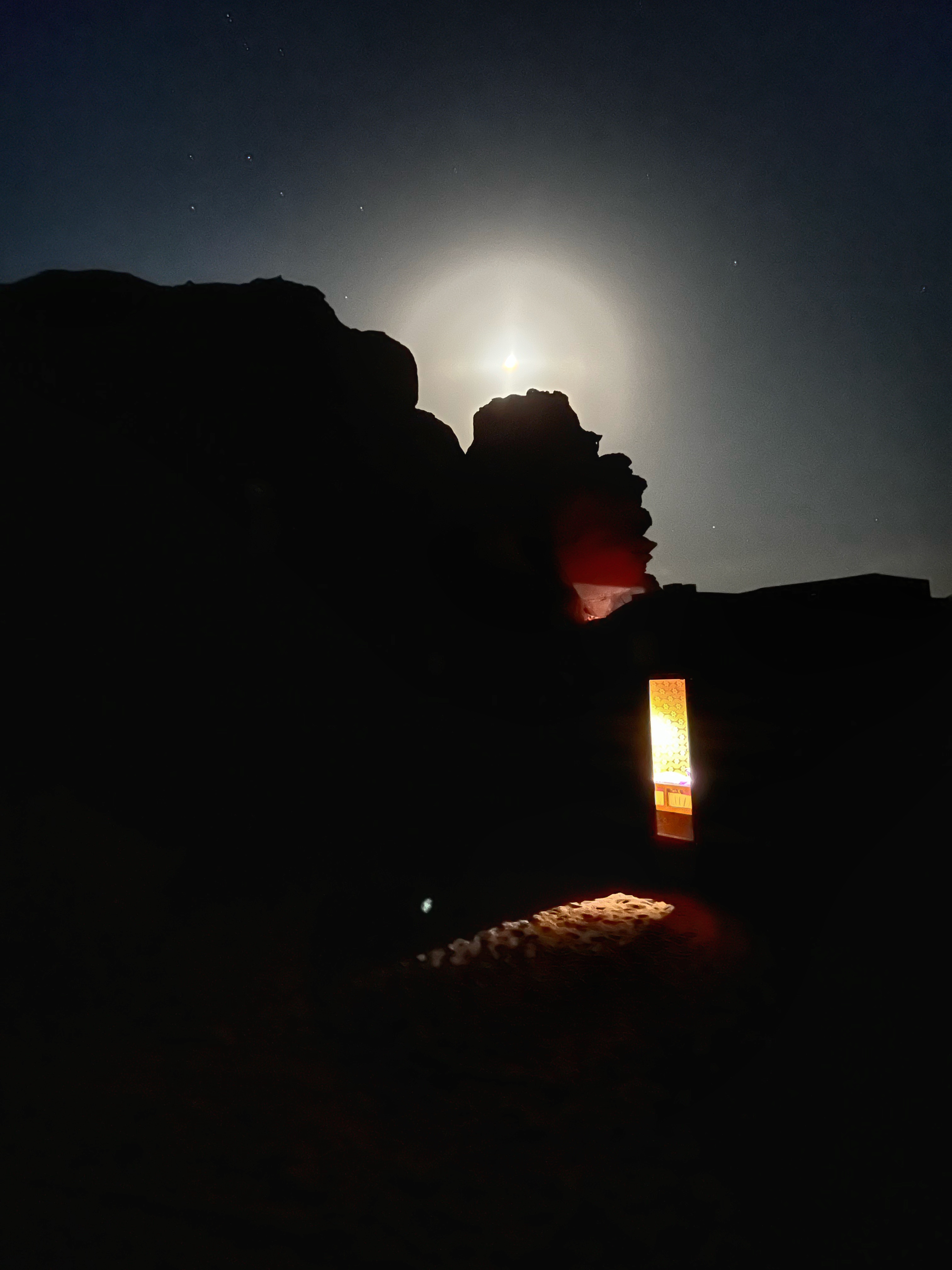


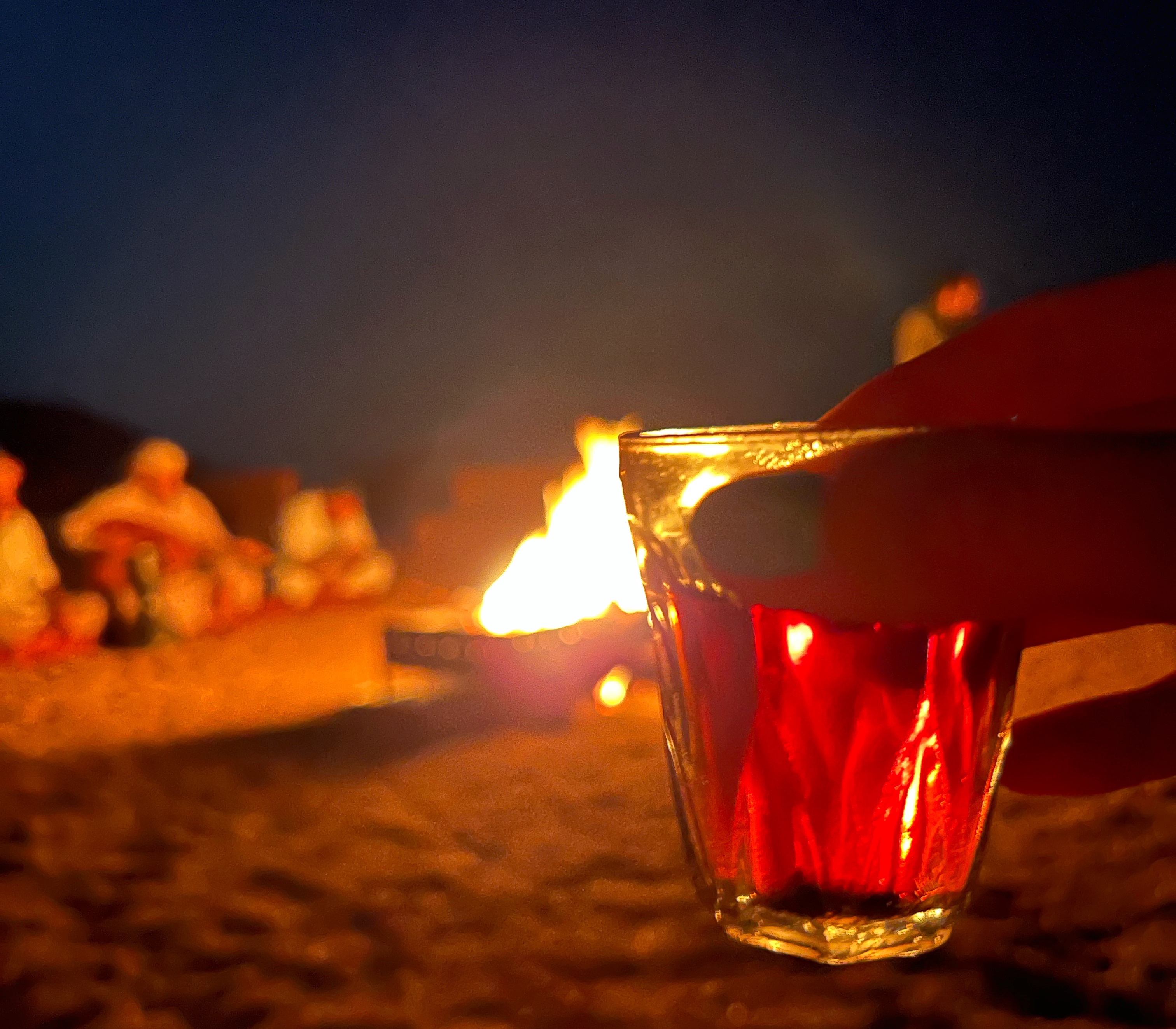
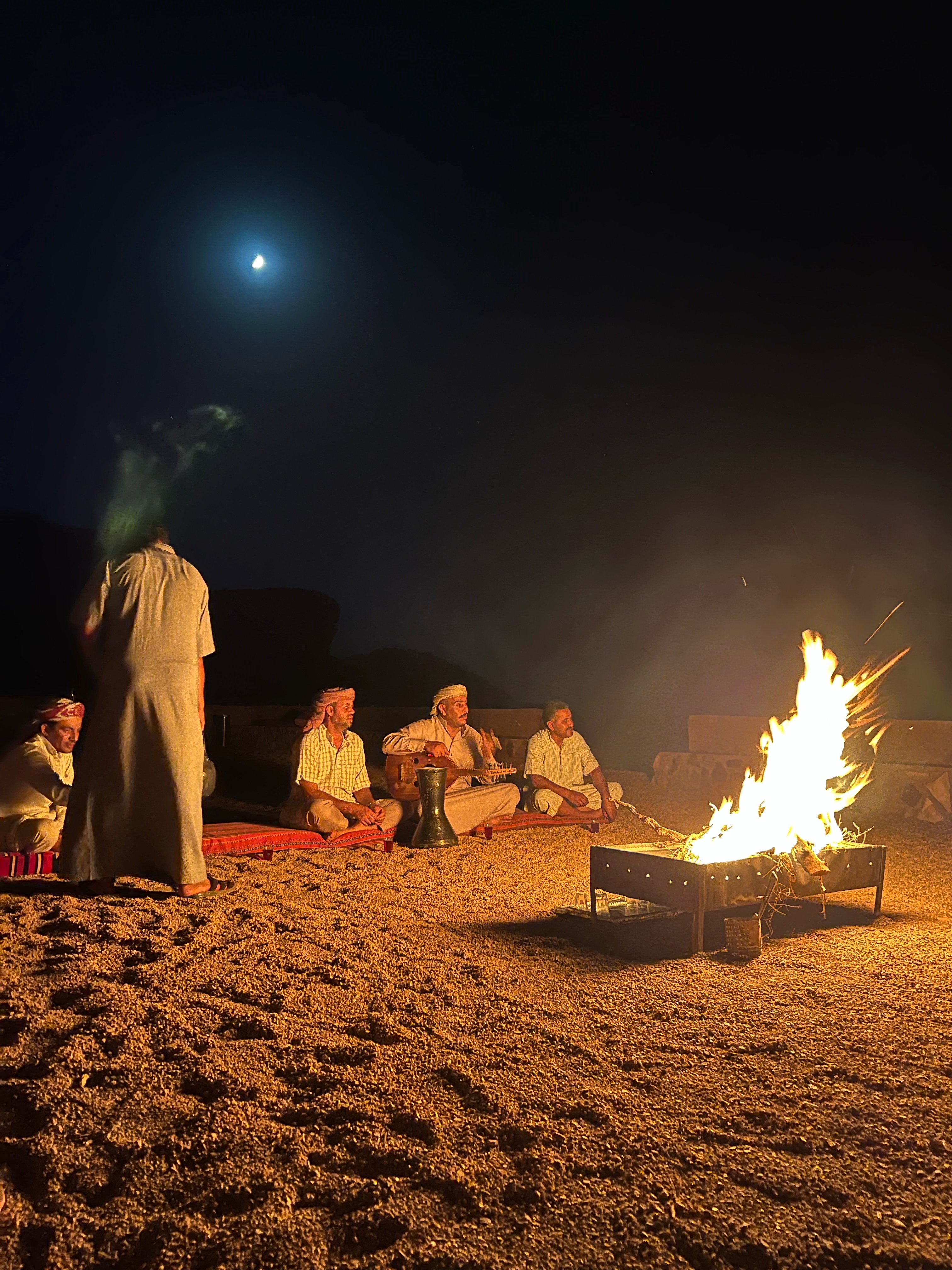
The exact location of our camp on google maps is here at Bedouin Lifestyle Camp. Apparently our tour organizers have a few camps to choose from. This one was great. There were shared bathrooms/showers and the location was beautiful. I loved watching the camels go out to graze in the morning and the food was delicious. Our guides were terrific, too.
DAY 7
SUNRISE CAMEL TOUR
We awoke just before 5 in the pitch dark with stars all around us. The skies in the desert are something else. Sayid (I think that’s his name) from Sudan had camels for us and two other guests all ready to go. We hopped on and rode them about 30 minutes across the desert to the most perfect spot to watch the sunrise. We watched as the sky changed colors and our guide made another little fire and brewed us some tea. It was so quiet and peaceful. As I watched the sun peek over the horizon, I wept. It was so moving to be here in this big wide open desert – I felt swollen with gratitude for the experience for the beauty of it all. It was humbling and inspiring – a spiritual experience for me.
Note: If you’re not comfortable with camels, don’t do this or any other camel tour. However, if you are interested in an experience like this but are hesitant about camels, the sunrise camel tour is the shortest and best option. It’s possible to get a little sore on your inner thighs riding on a camel, so one hour total was enough. There are longer camel excursions available but anything more than 30 minutes at a time would be too long for me. The whole tour took about 2.5 hours from when we left camp to when we returned.
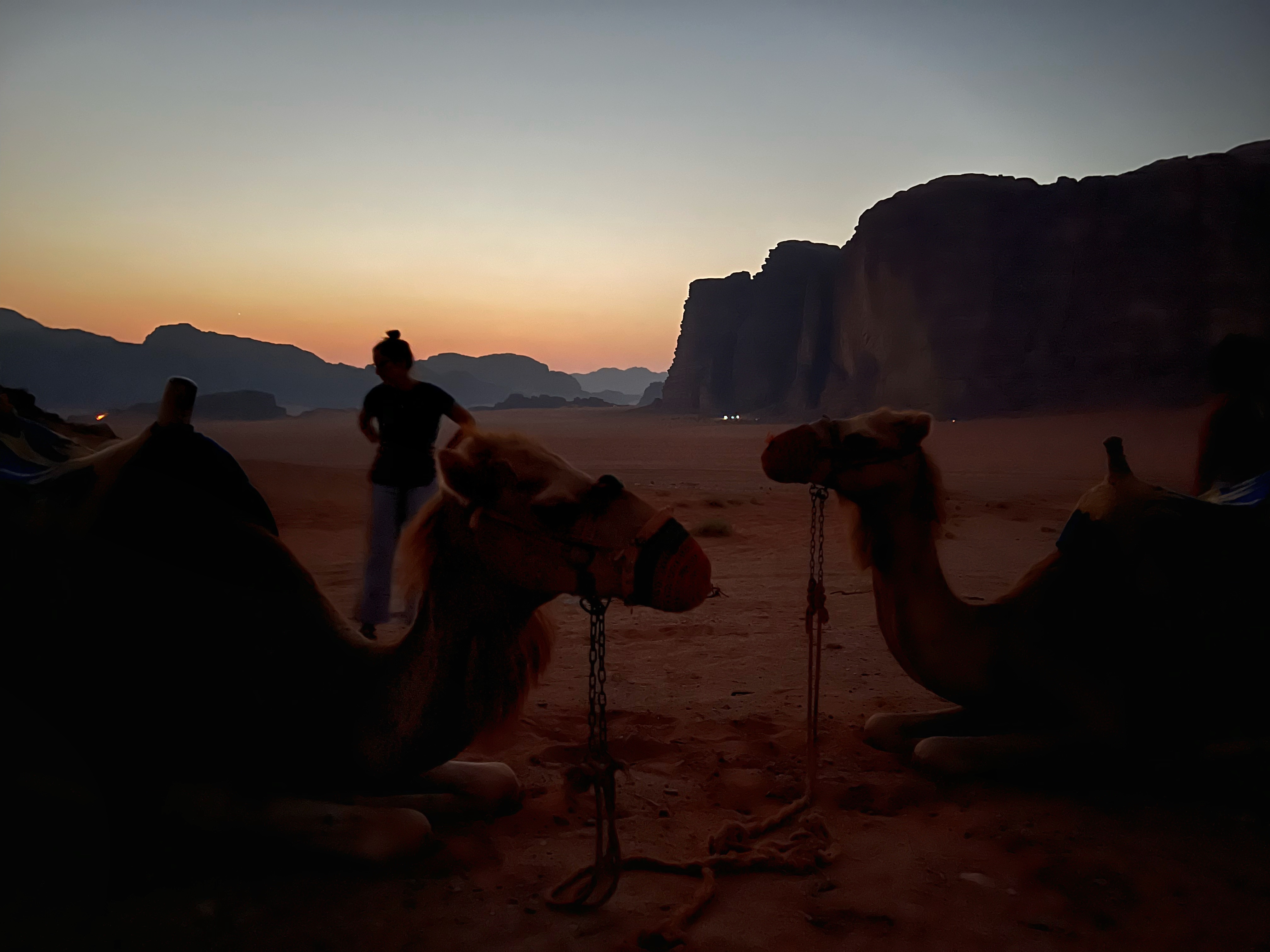




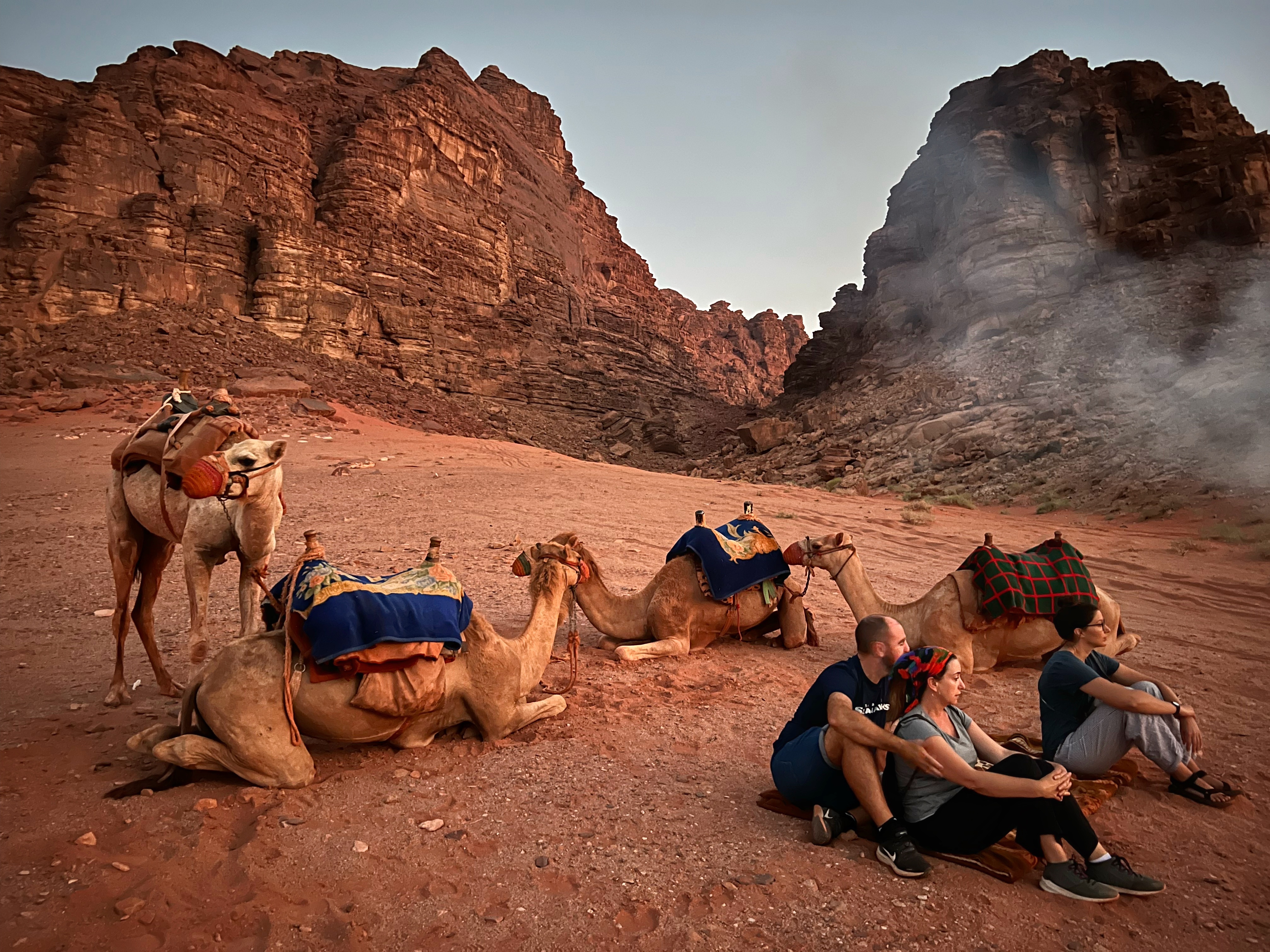

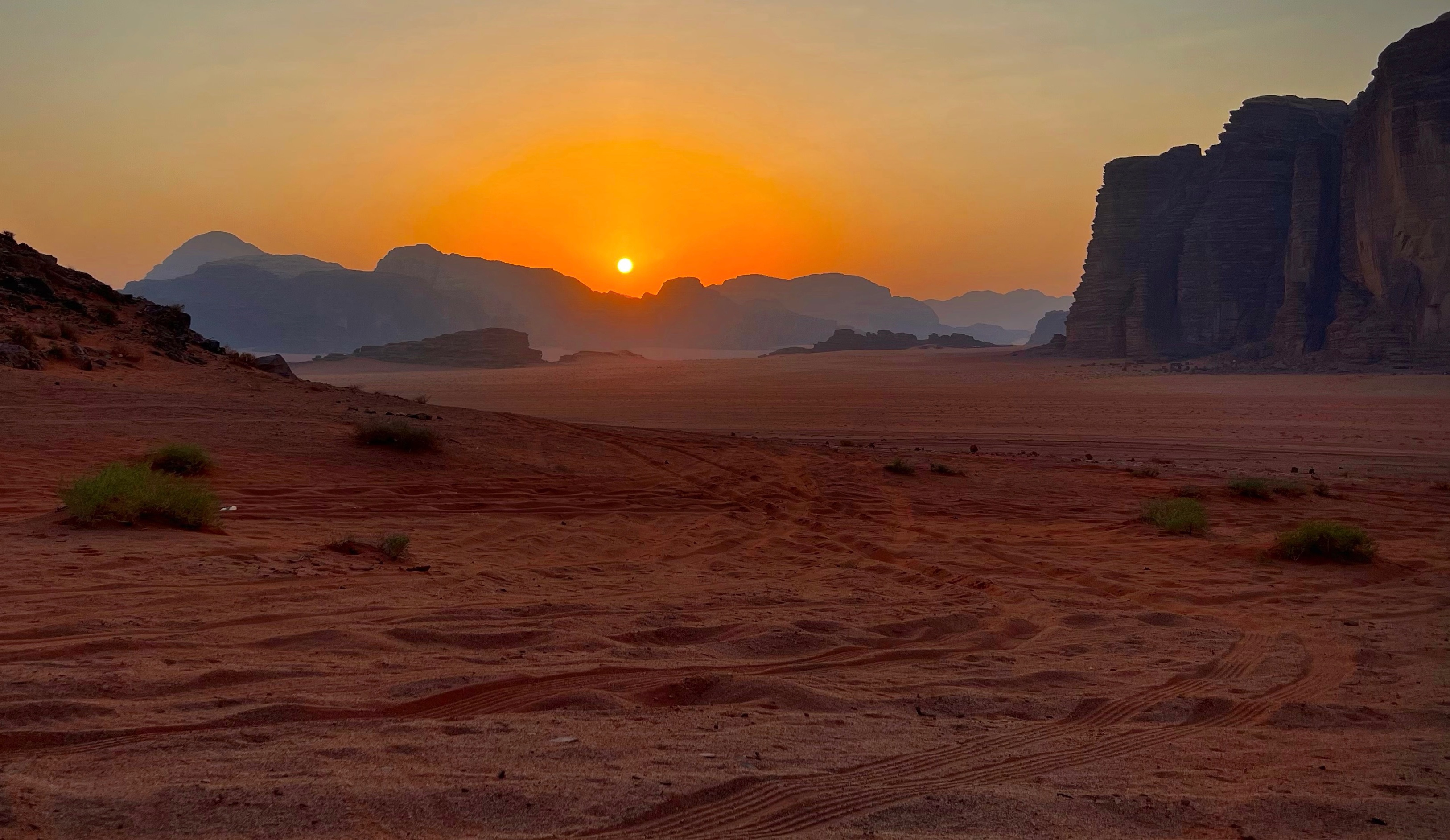
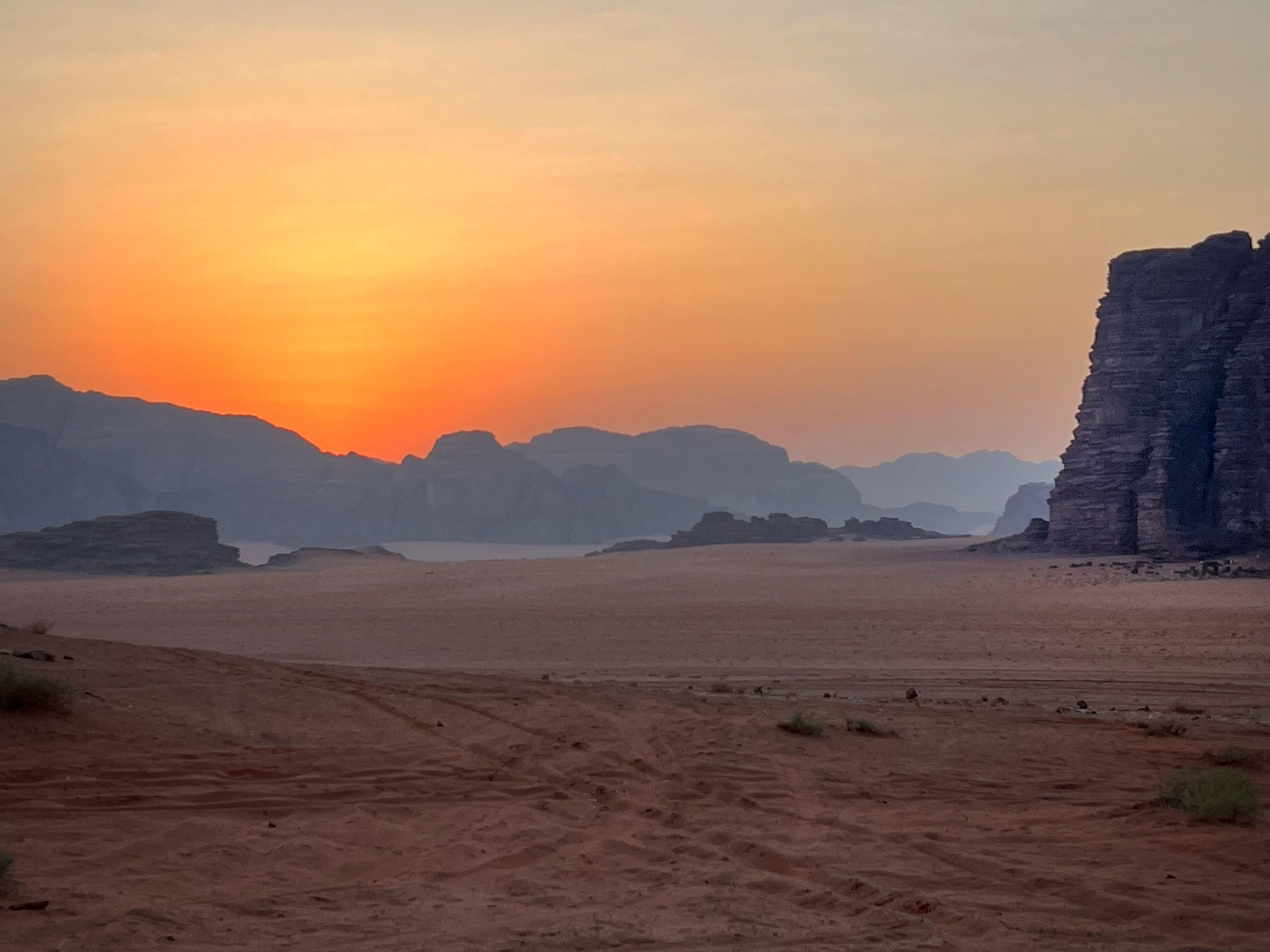
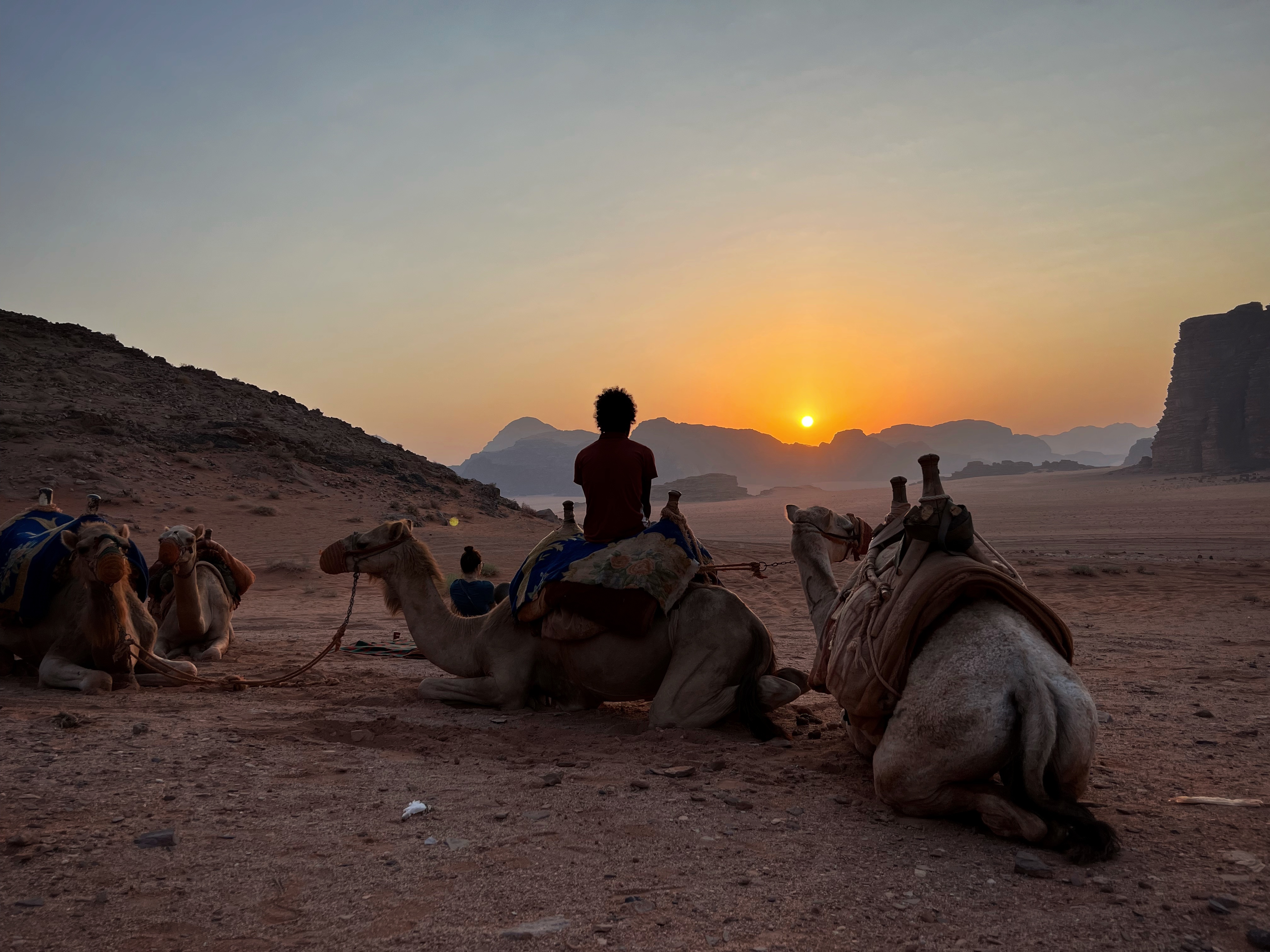

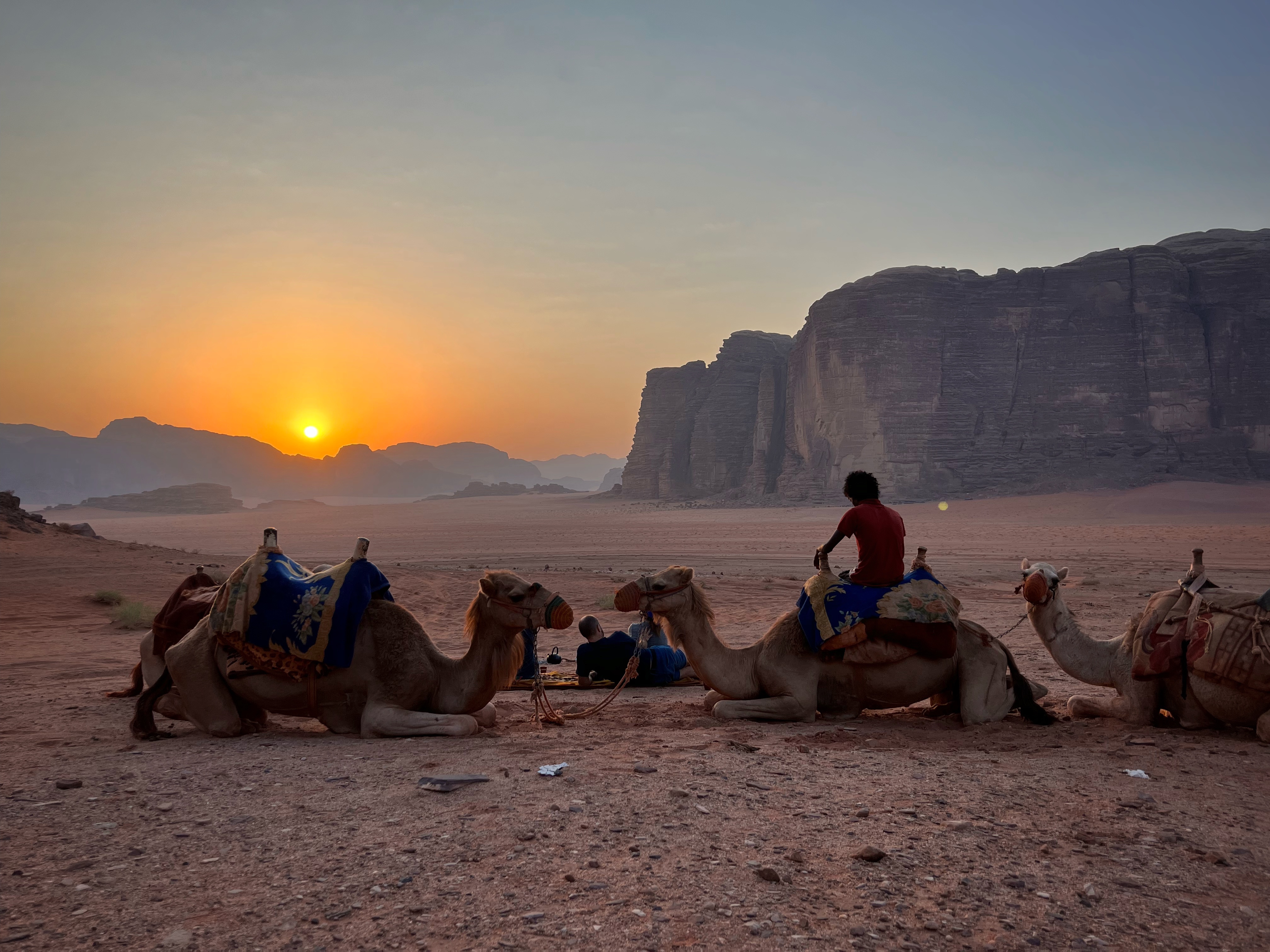
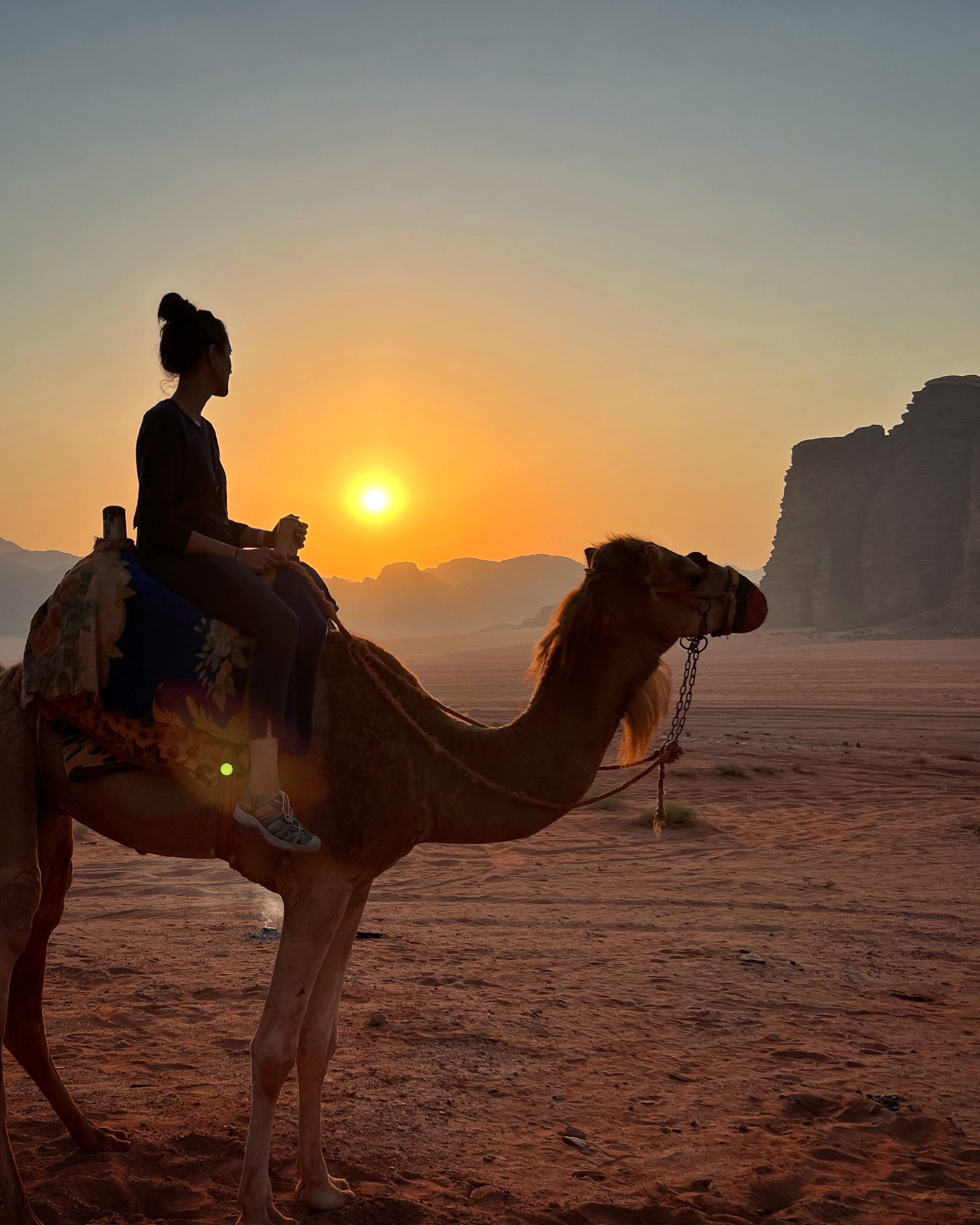

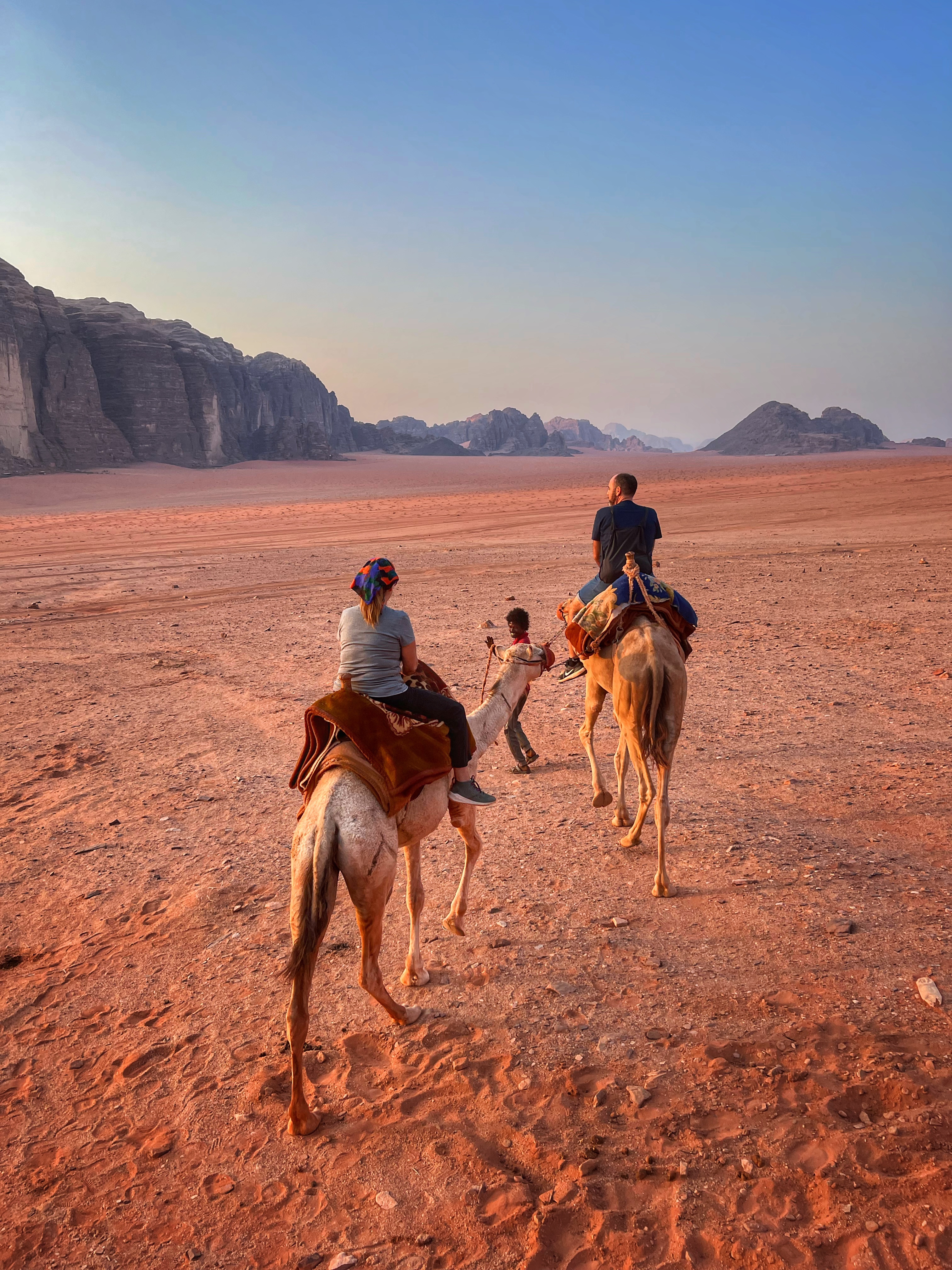
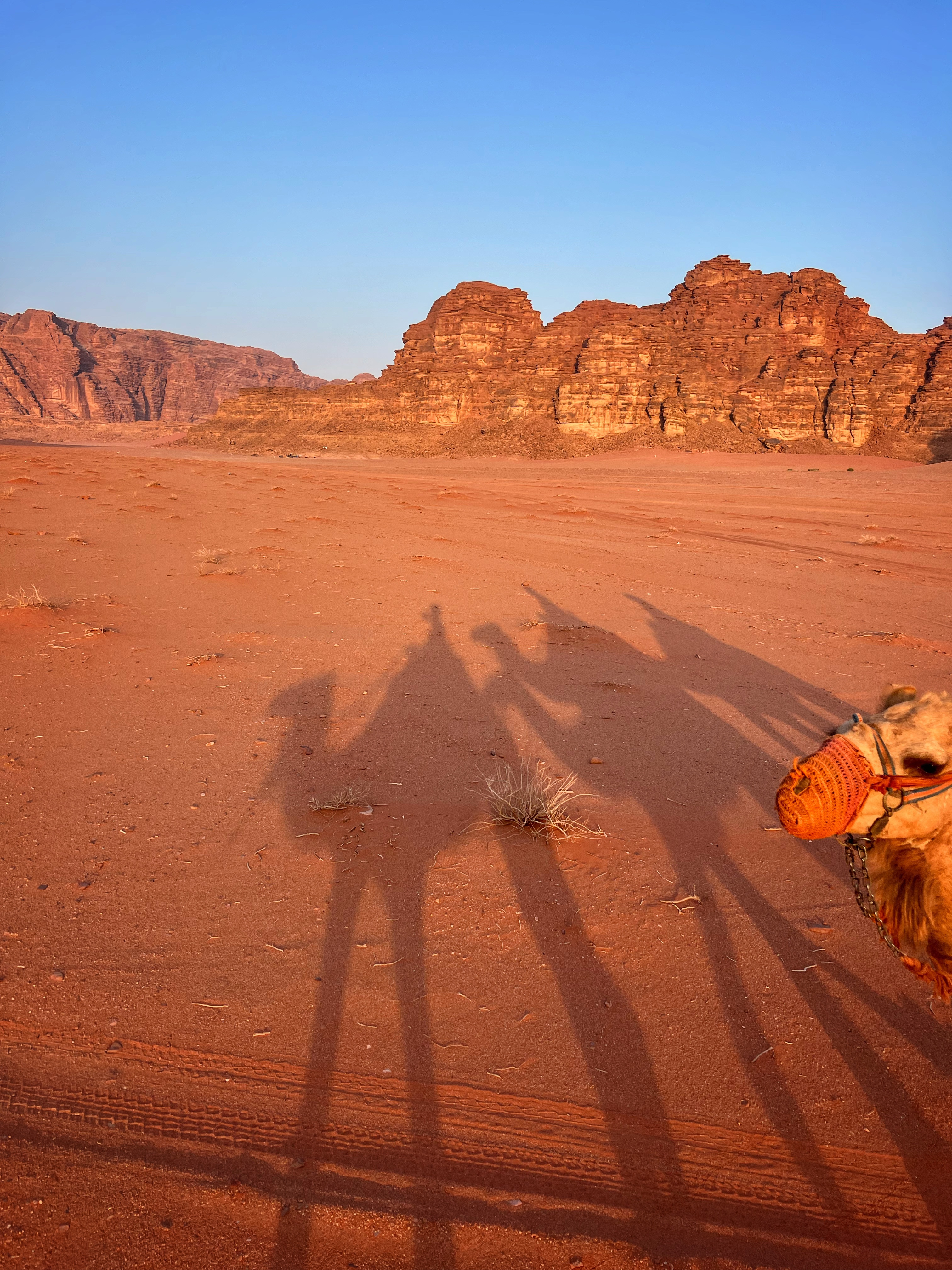
We returned to camp and got ready for breakfast by 8 AM. Some folks were leaving after breakfast, and some were just arriving. I am am morning person but not typically hungry this early in the morning, but it was important to fill up as we weren’t sure when our next meal would be! All meals, water and tea were included in our tour package, and we never felt hungry or thirsty. They took good care of us. This was also our first chance to really see our campsite in the daylight. Isn’t it beautiful?
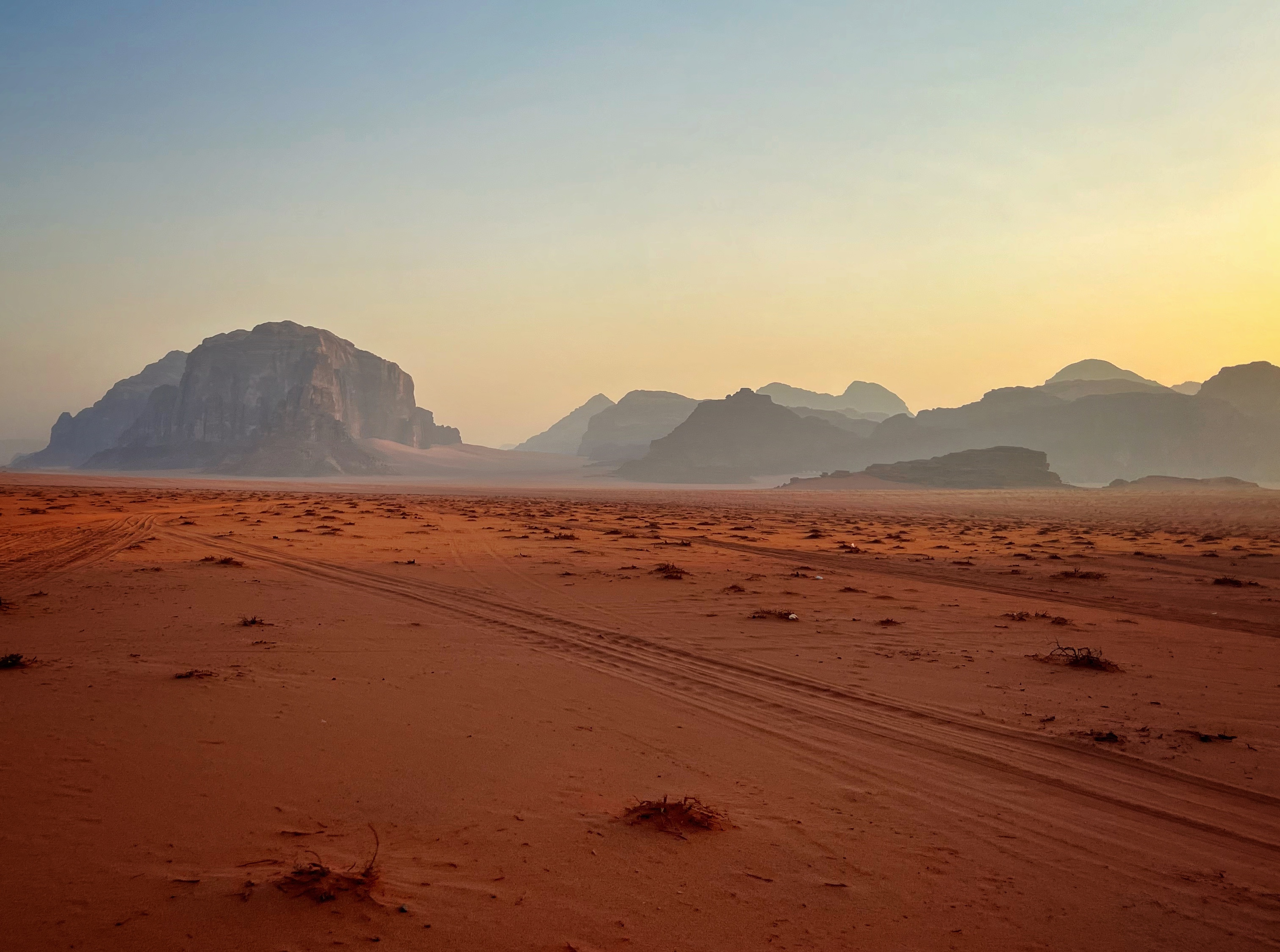
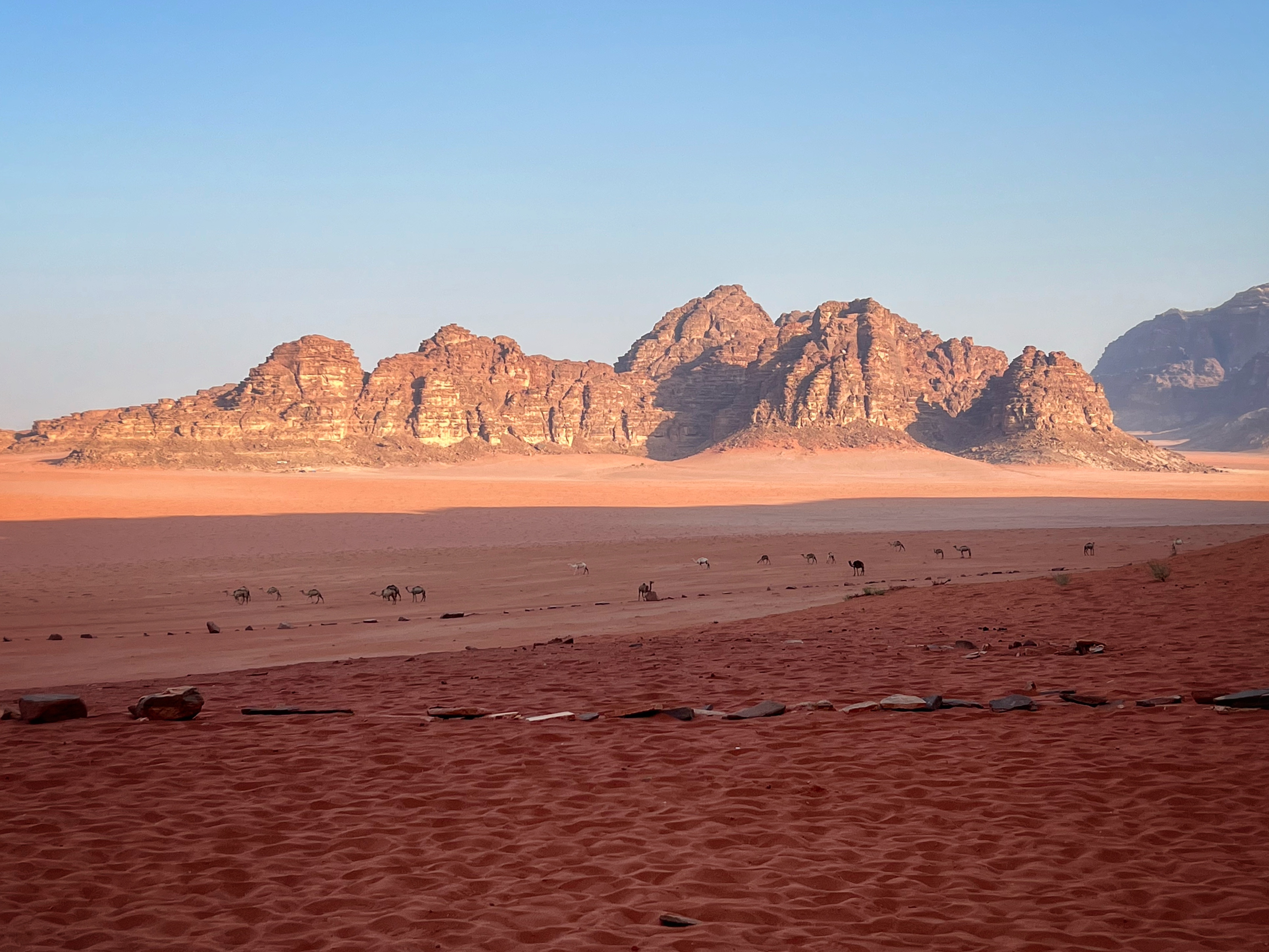
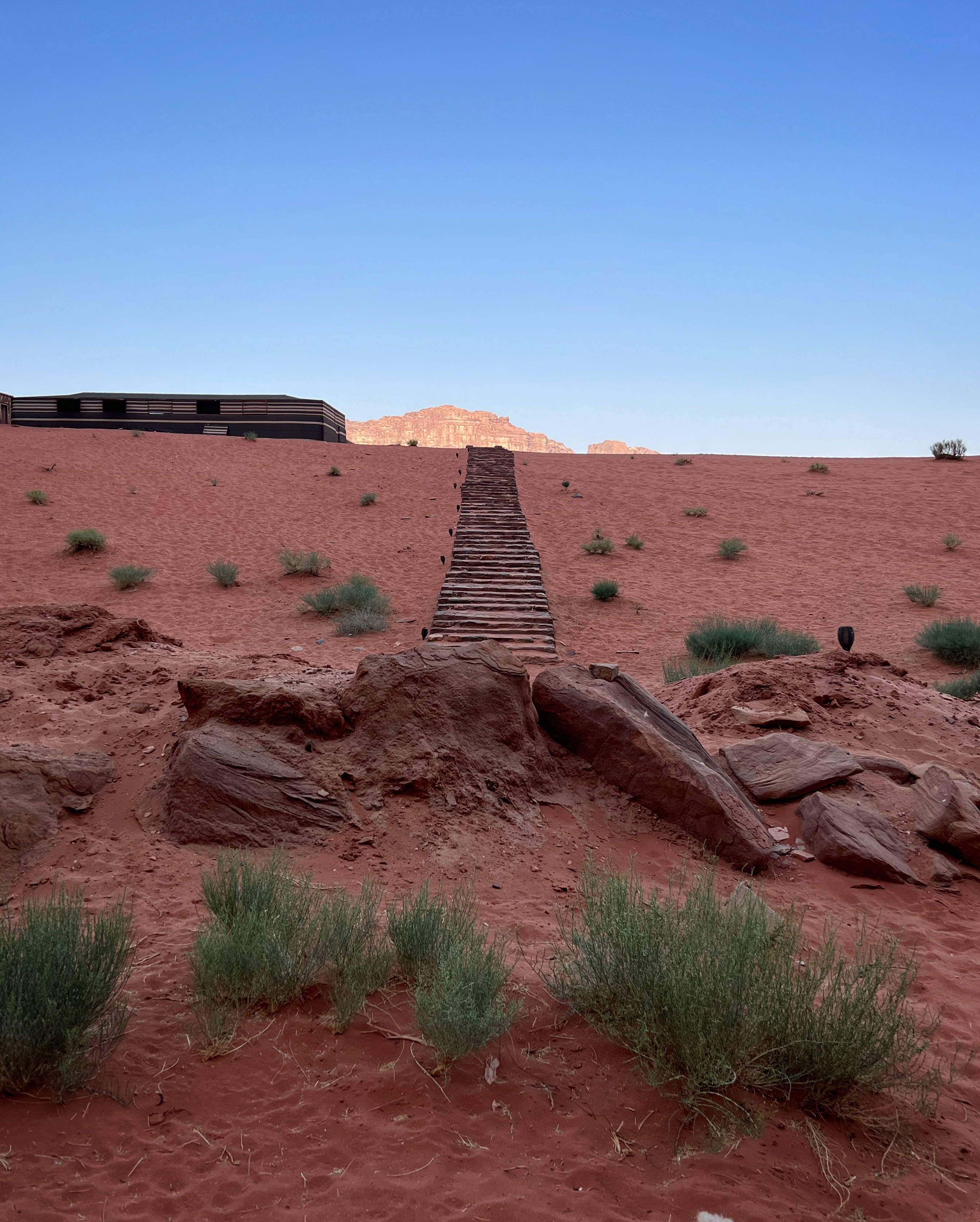
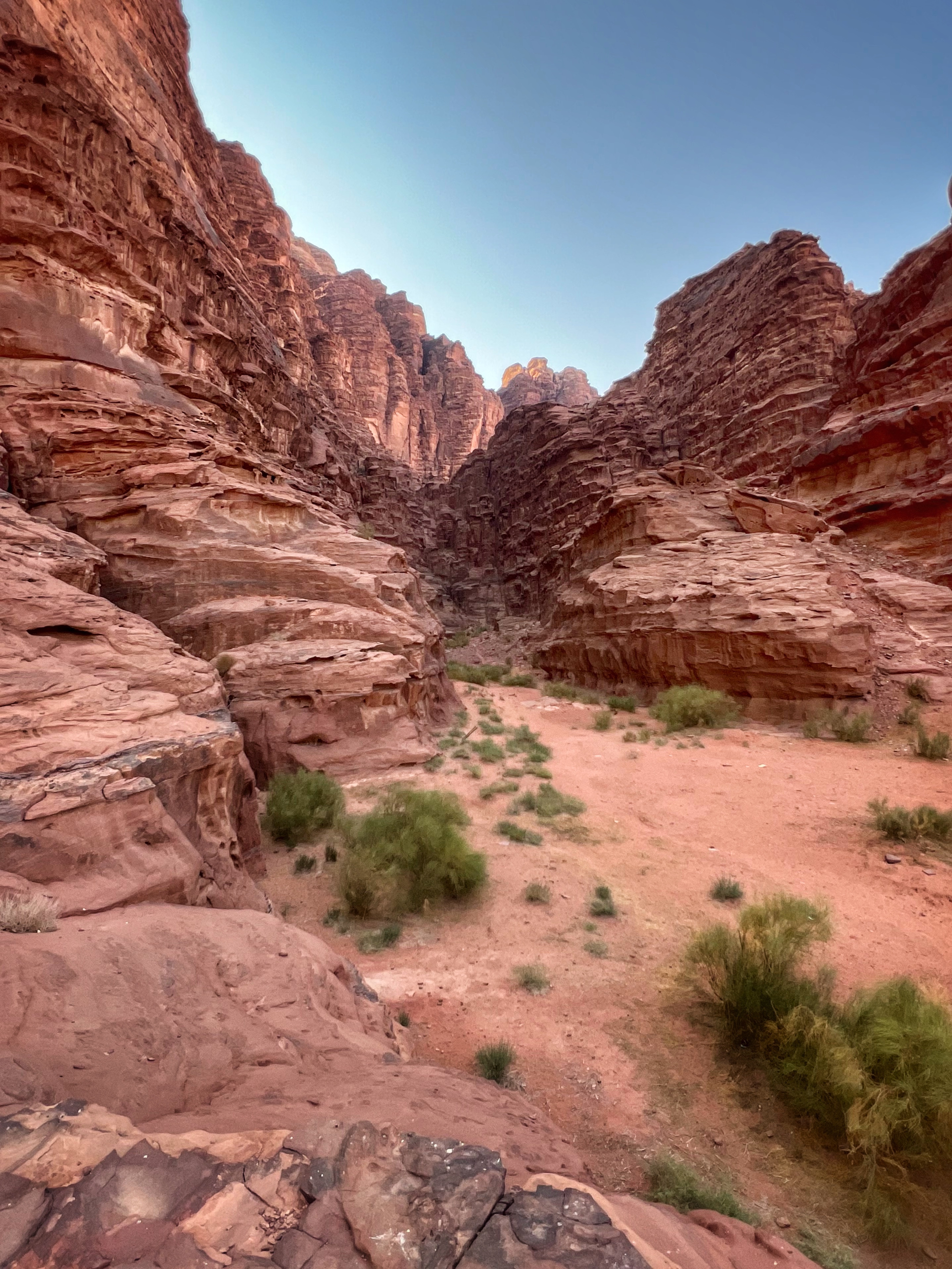
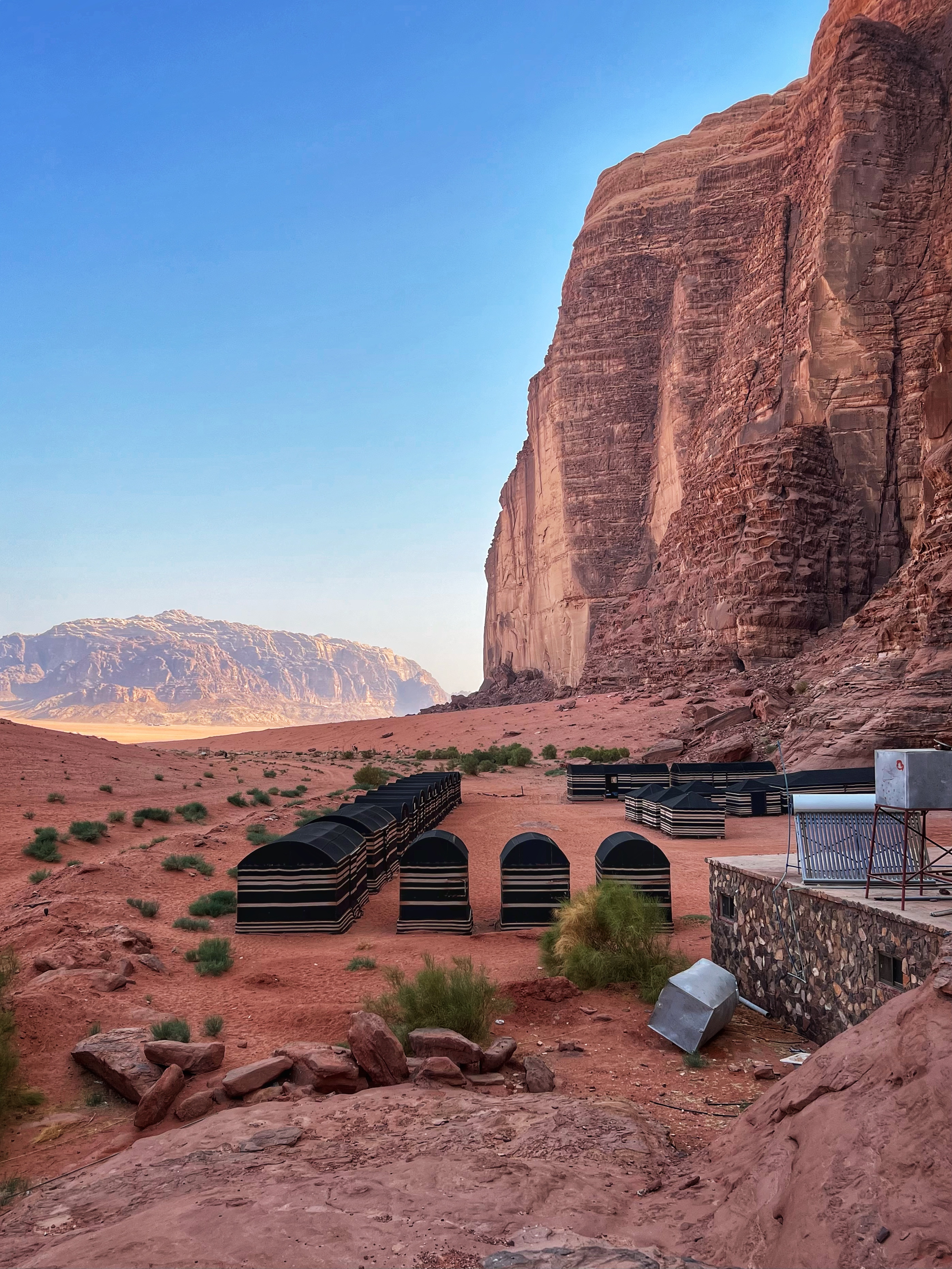


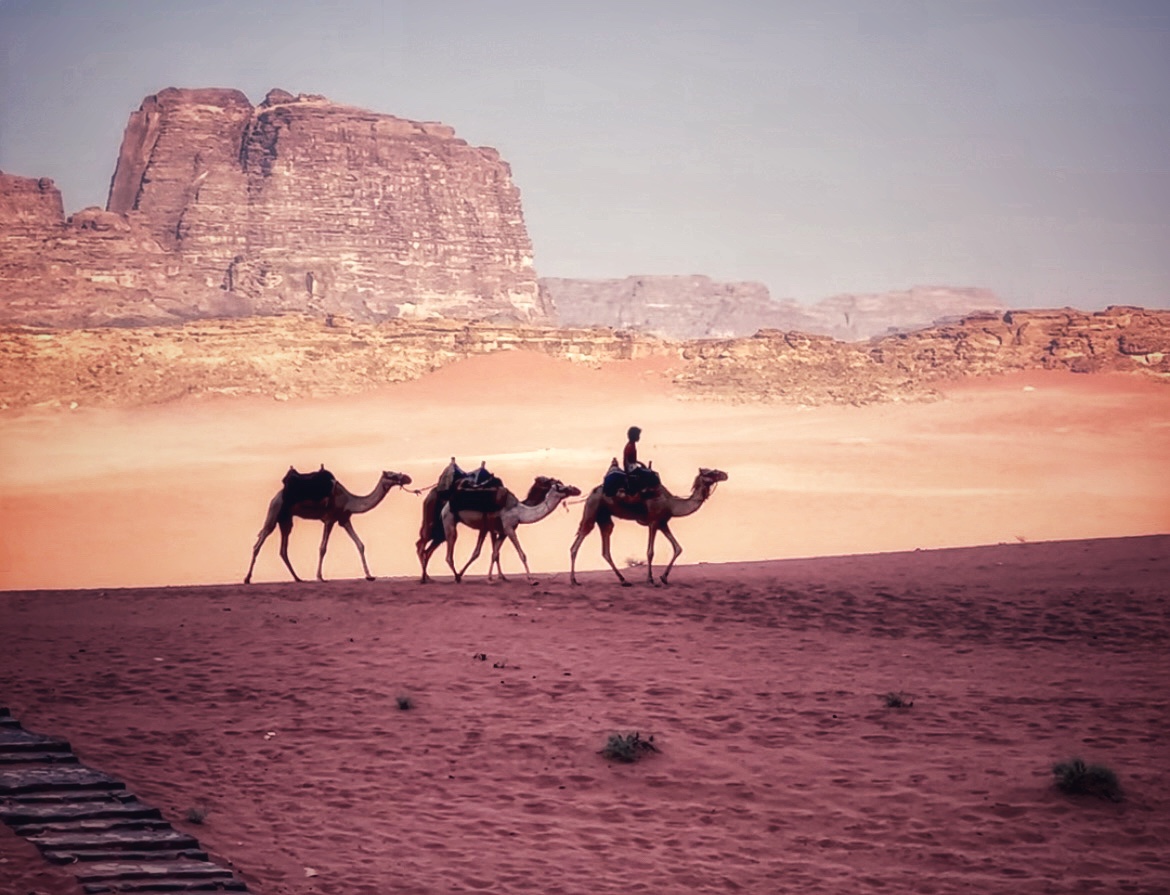
There goes Sayid (above) bringing our camels back to the camel area for a drink. After breakfast we were ready to hop in the truck and head out into the desert. We met our fellow travelers for the day – a couple from Italy, a British gentleman from Hungary, and two couples from France. We also met our fabulous guide Fayez and his sidekick who cooked the meals, Jalil.
UM ADDAMI SCRAMBLE HIKE
We left camp at 9:30 and it took about an hour to reach the starting point for the hike, including one brief moment when we all needed to jump out because the truck got stuck in the sand (#desertproblems). This hike involved a hefty scramble up Um Addami mountain, the highest point in the Wadi Rum Desert. It didn’t seem so high from the bottom, but once we got started we realized we weren’t seeing the whole mountain. It took us about 90 hot minutes to reach the top, and a total of about 2.5 hours to complete the entire hike. There were plenty of
opportunities to rest, and we needed them. From the peak we could look out over Saudi Arabia, and our good humored guide Fayez reminded us not to go down that way unless we wanted to have a special excursion to “sleep one month in a Saudi prison.” He said it as a joke, but was apparently not joking…he told us stories of people he knows who followed their camels over the border, were picked up, and disappeared for a month. No thank you.

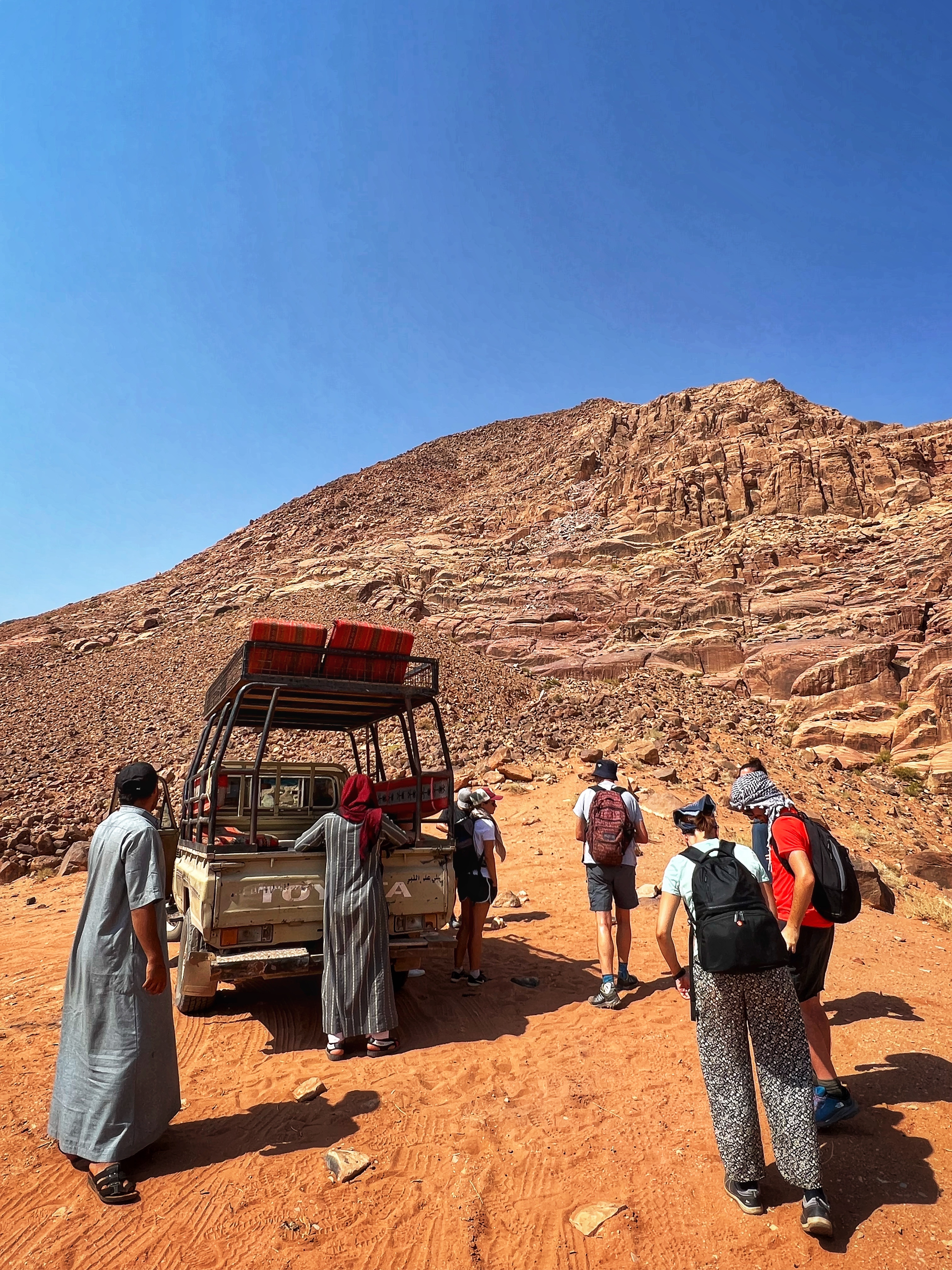

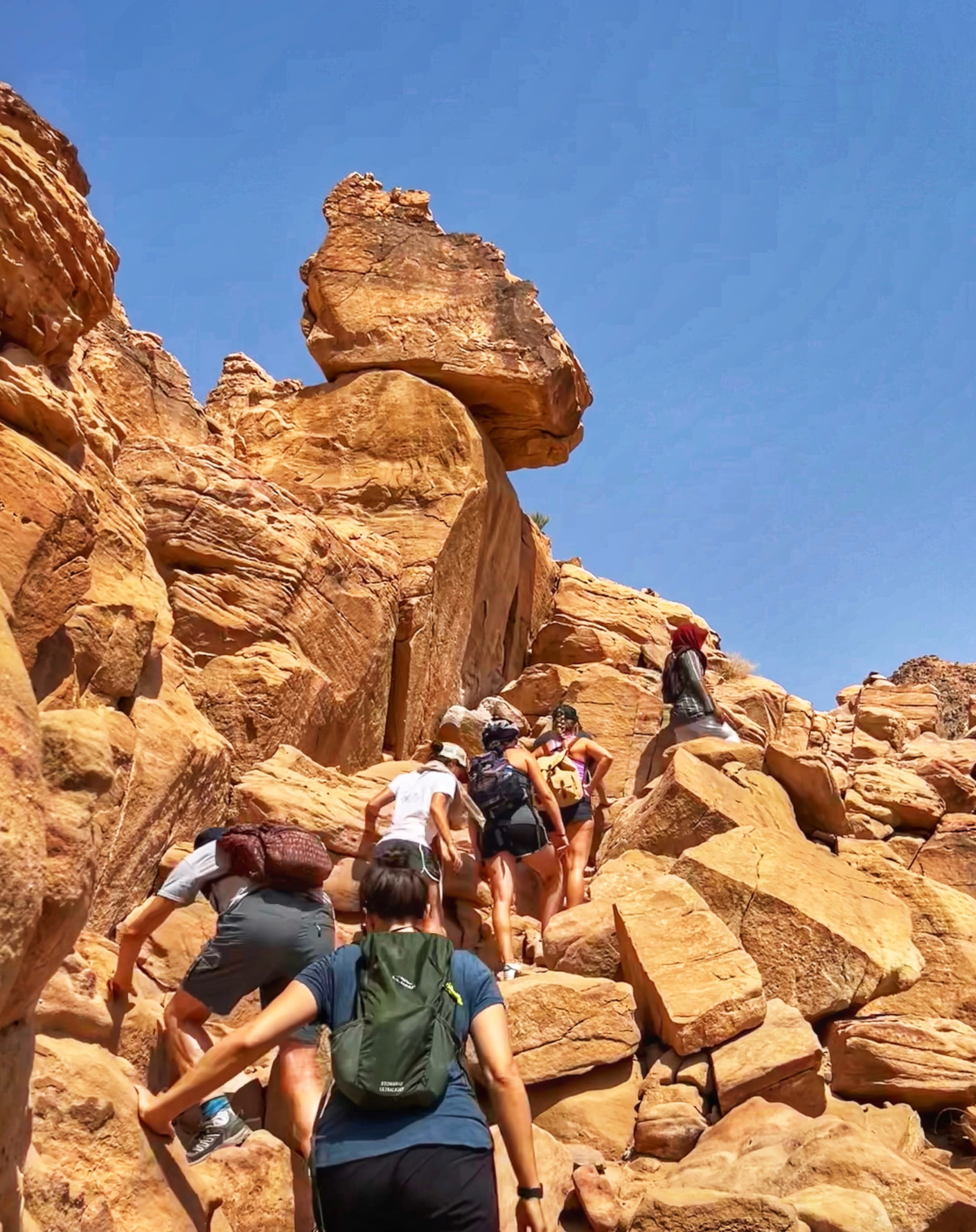
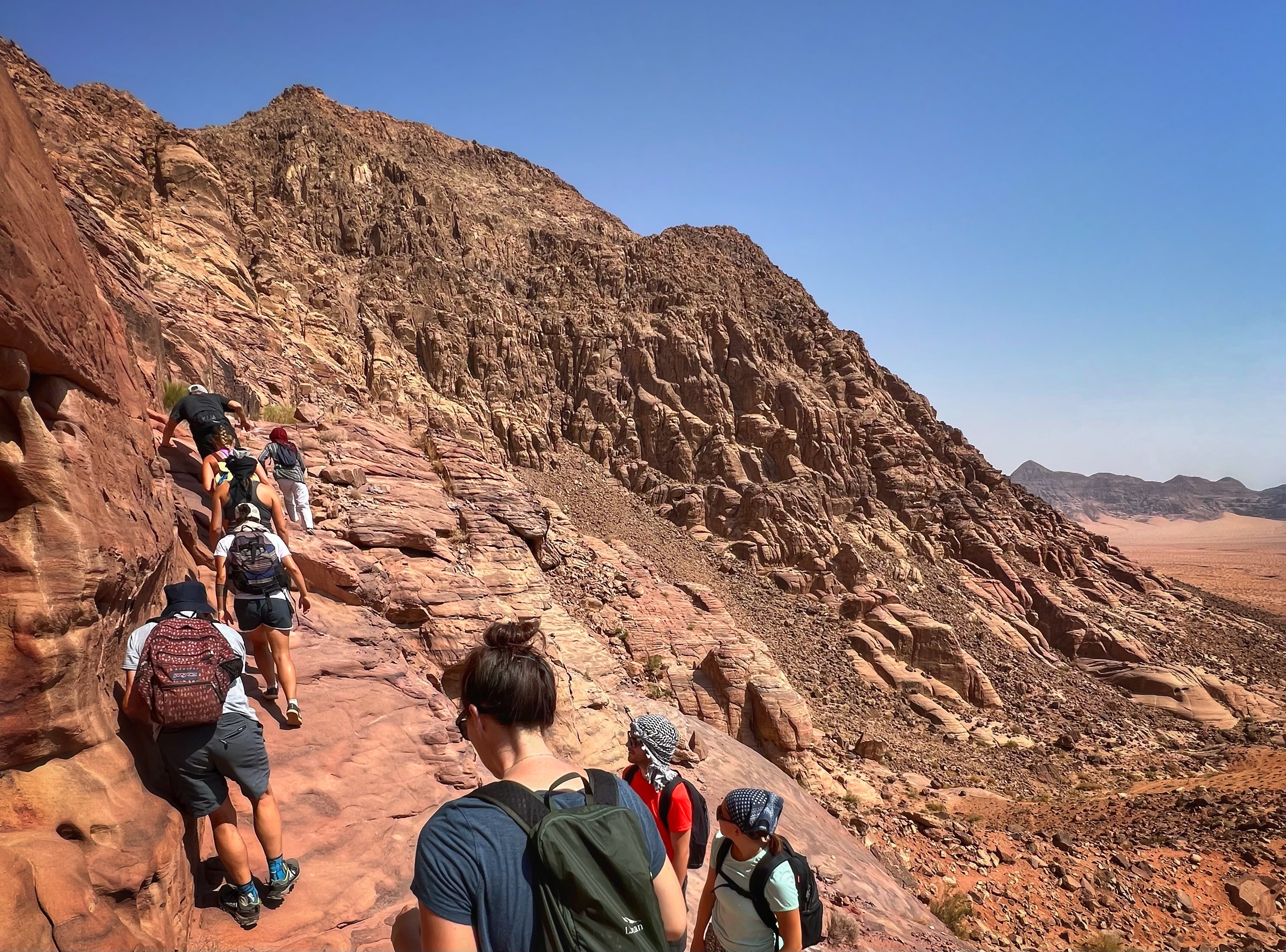
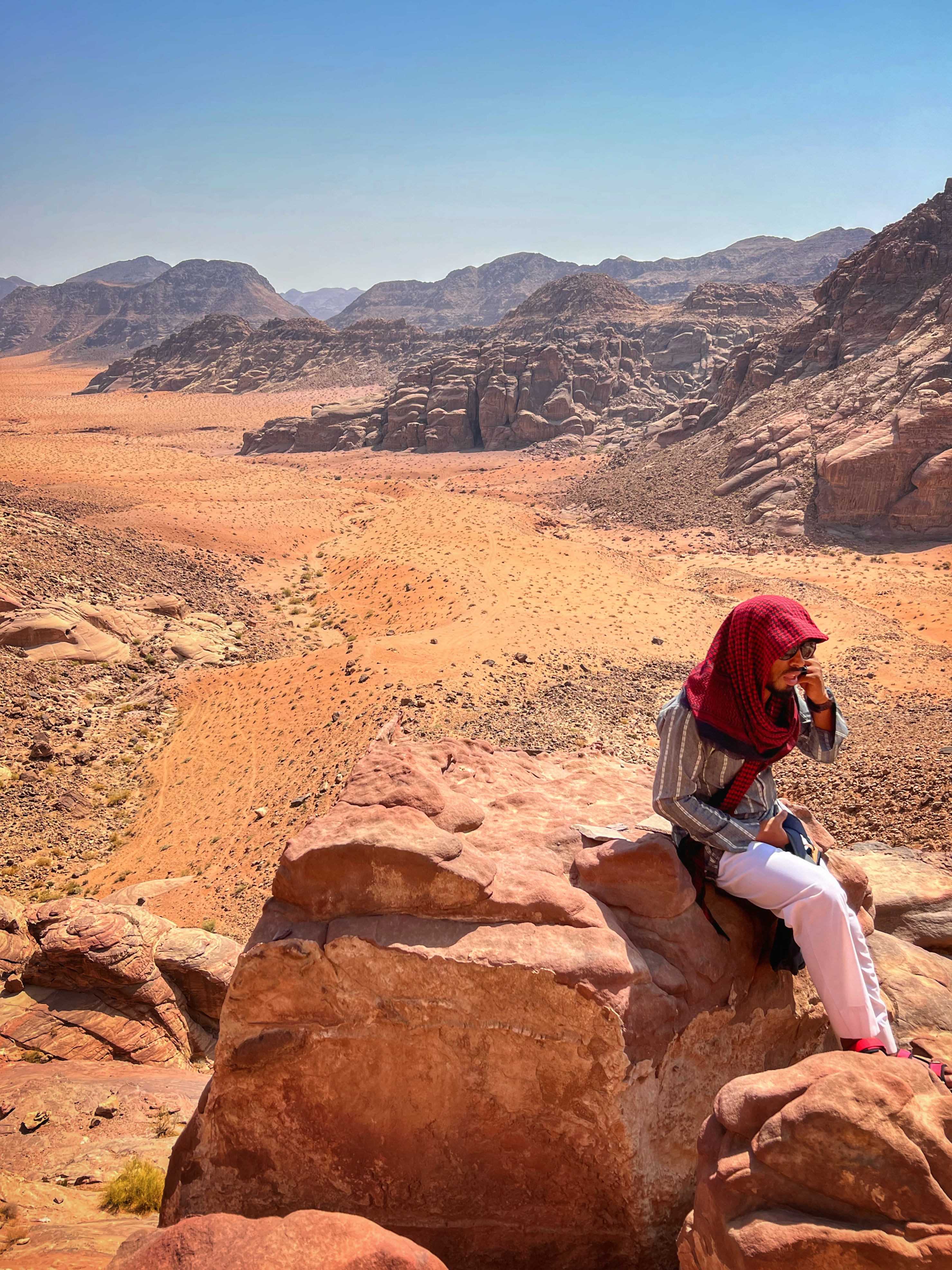
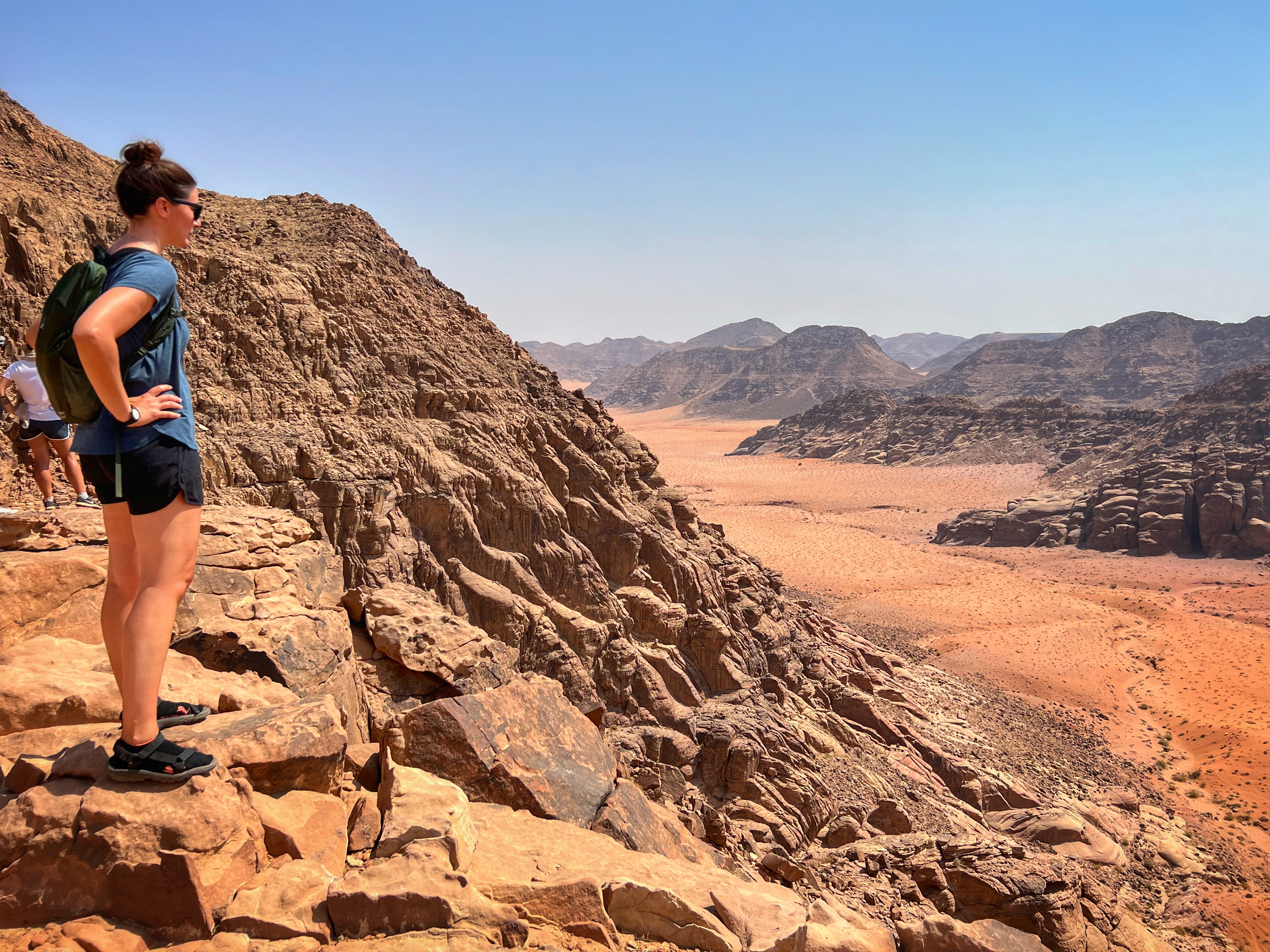
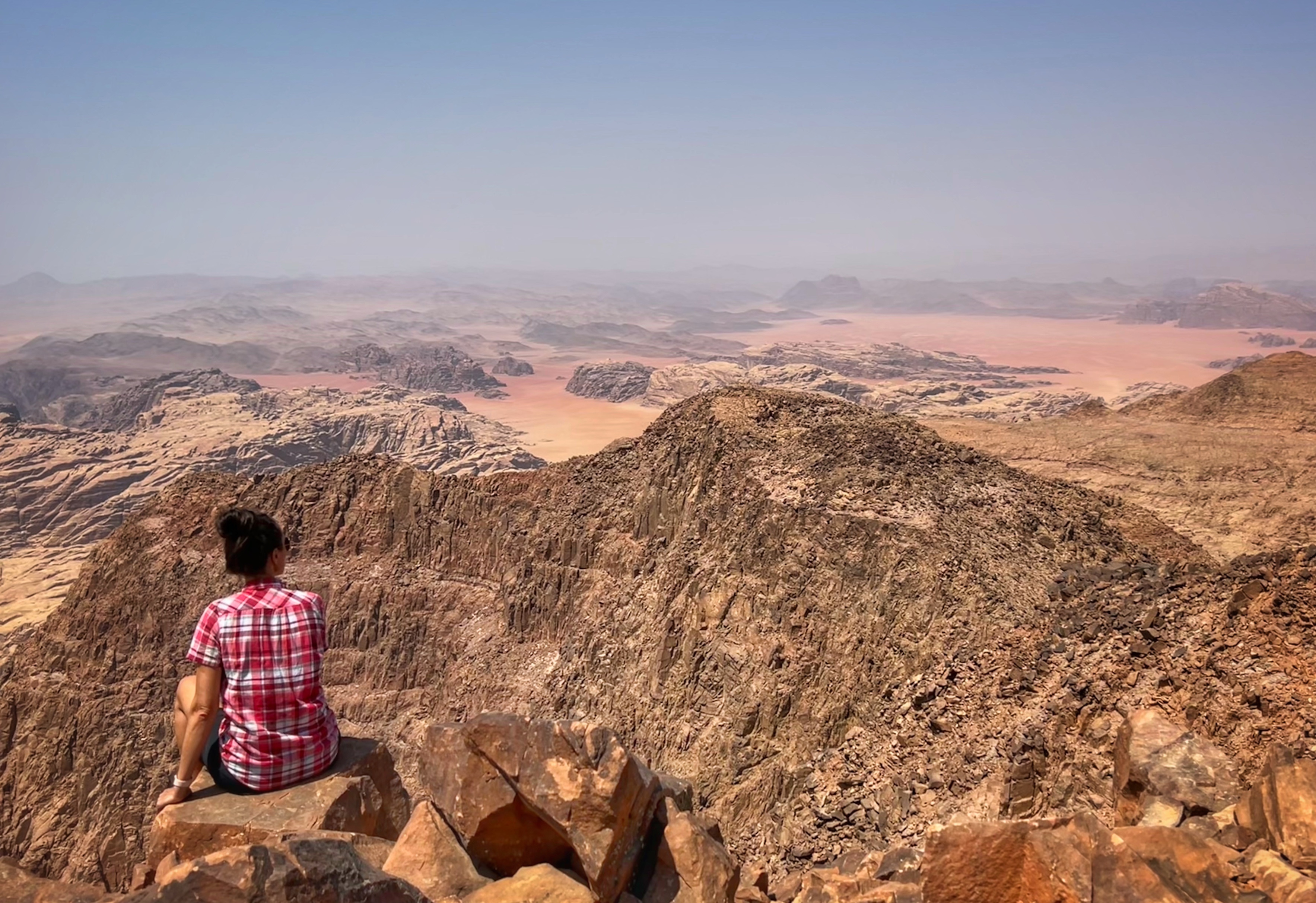
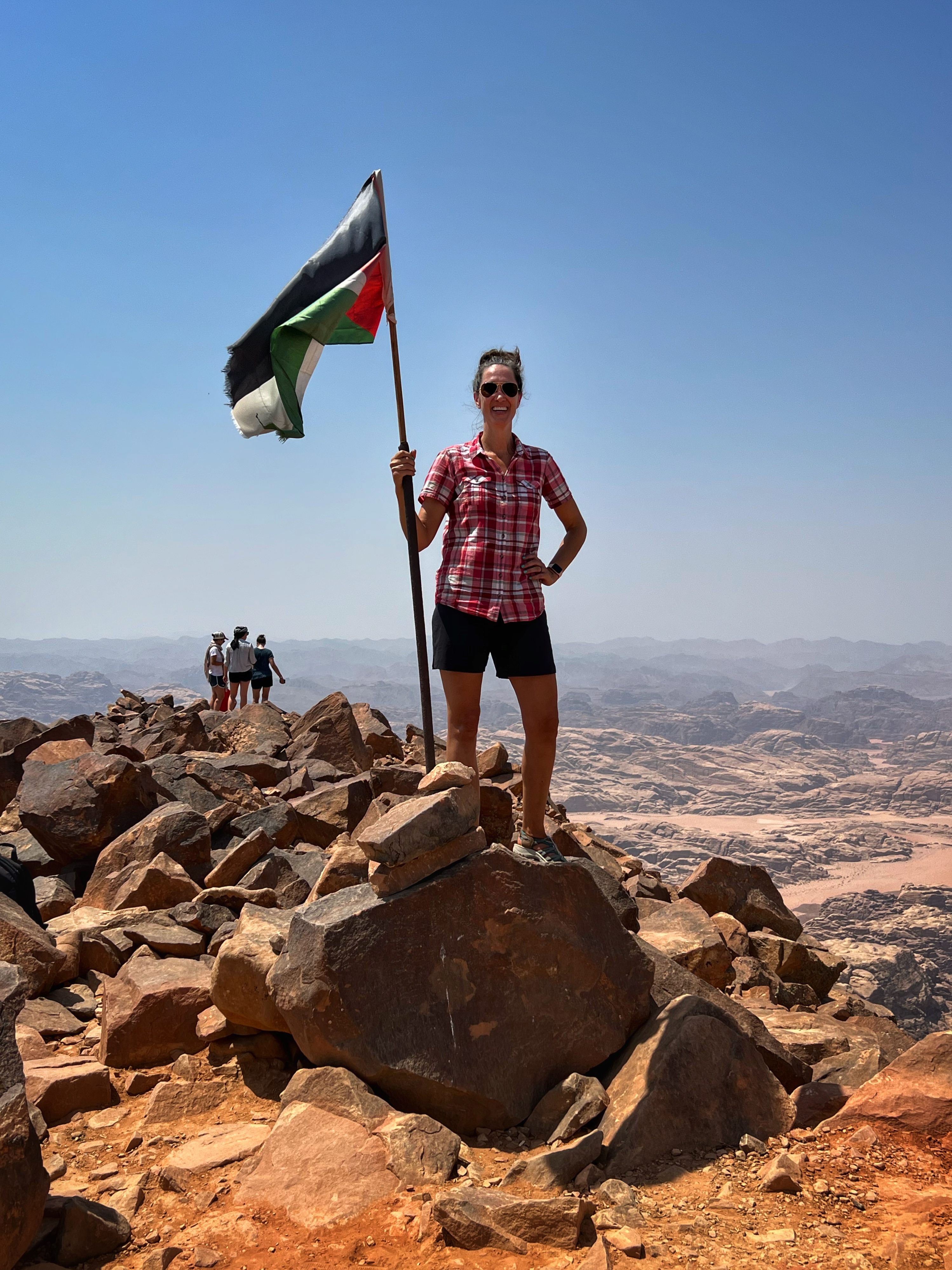
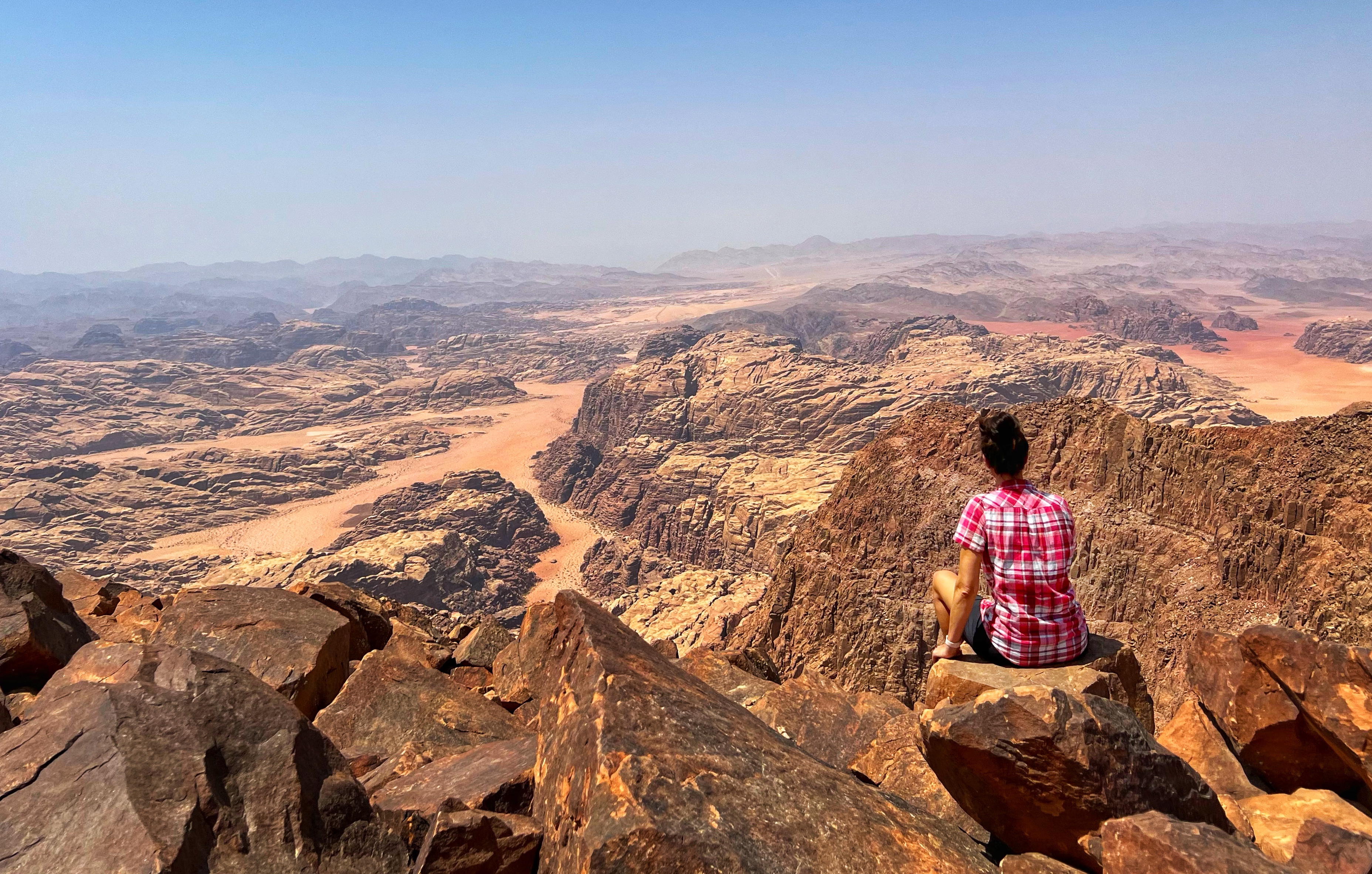
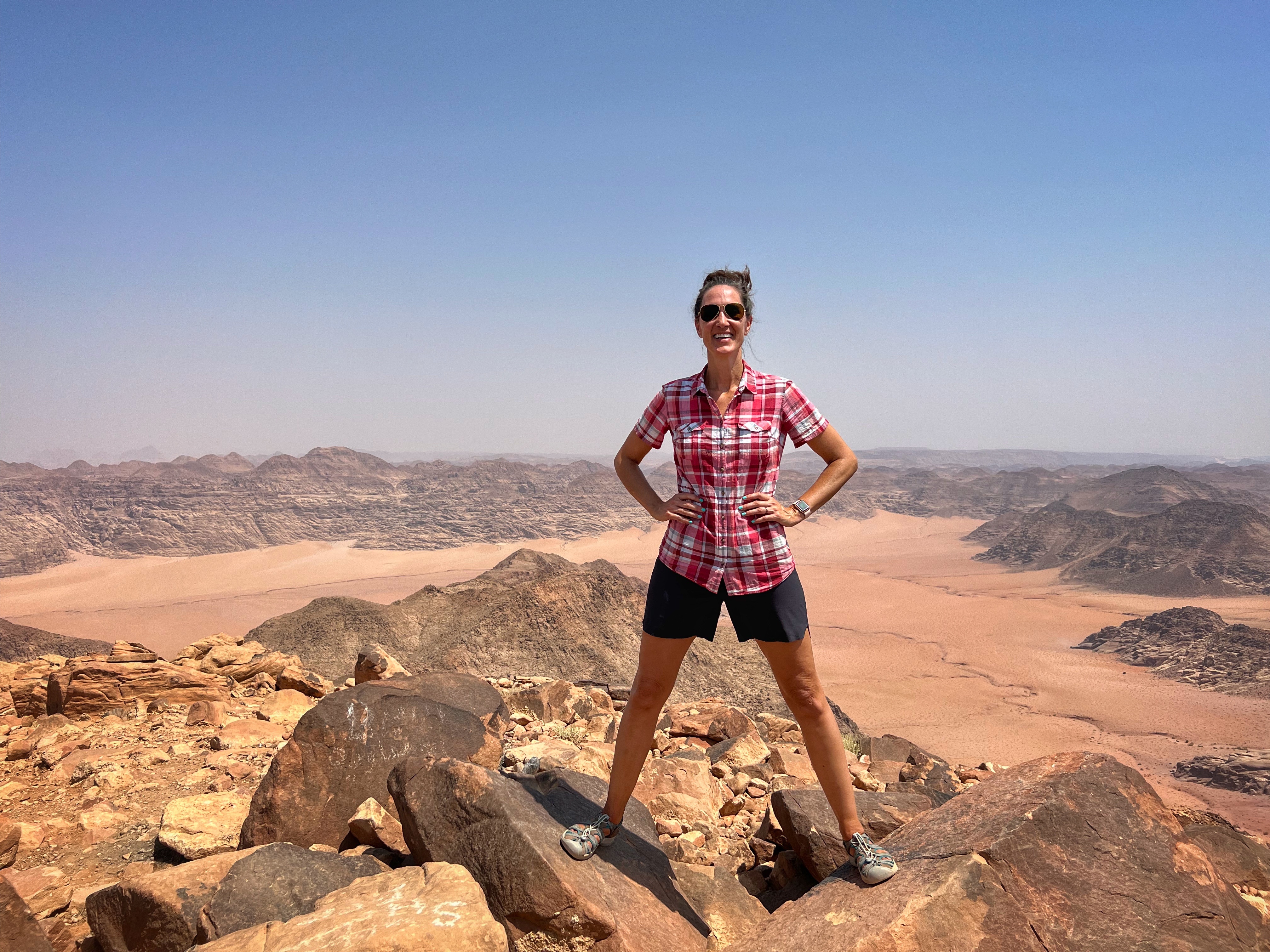

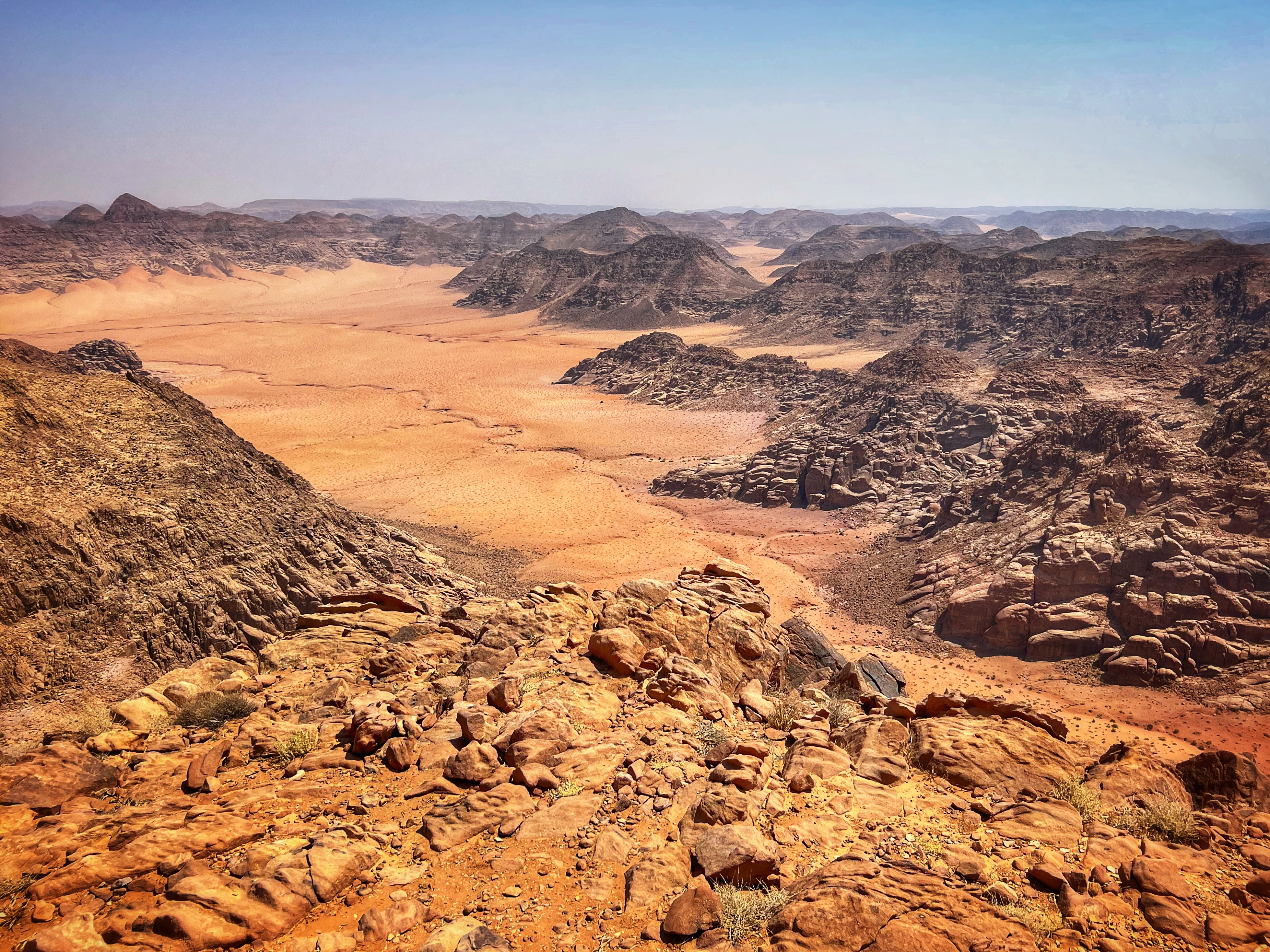
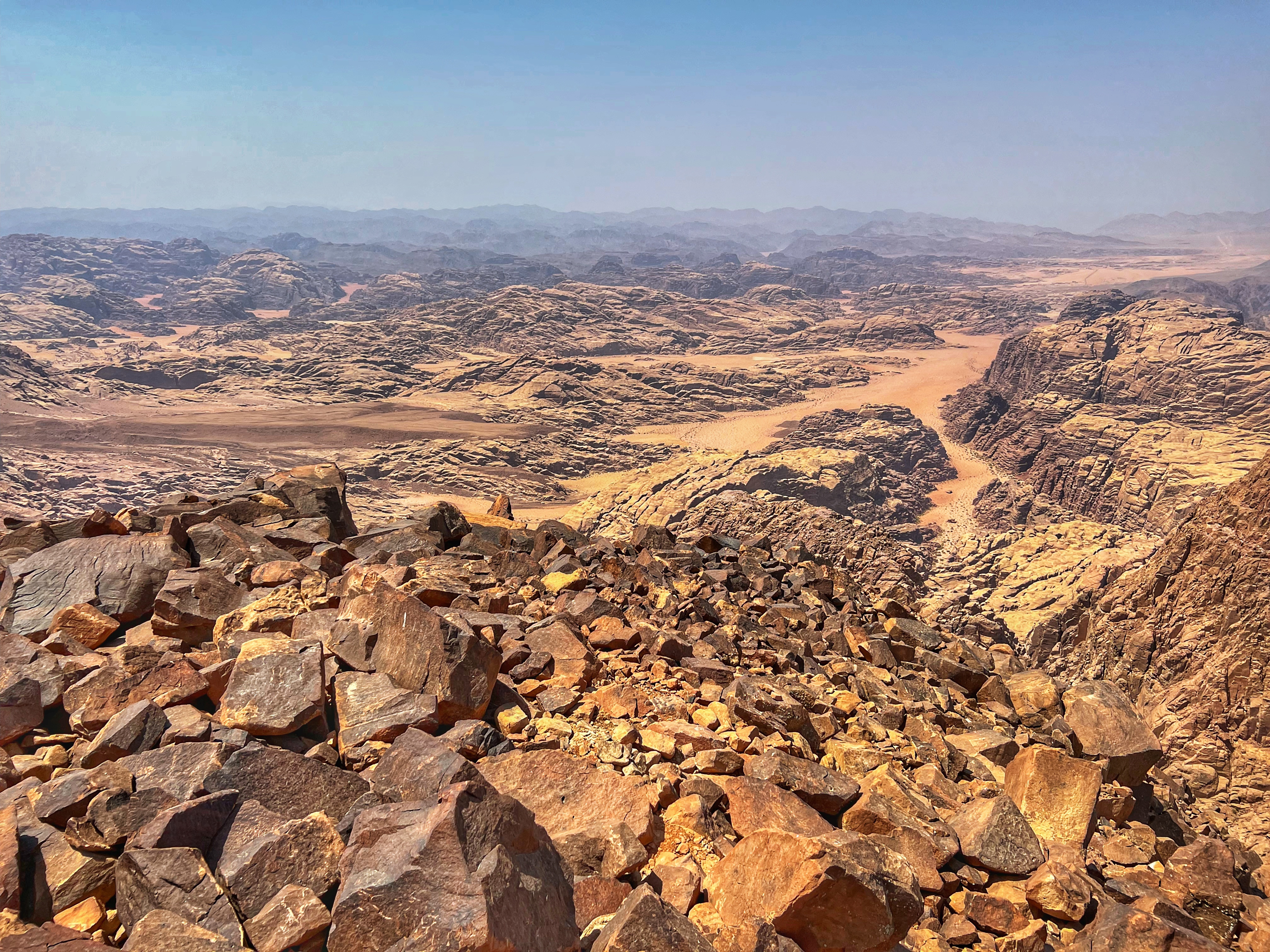

After the hike we walked over to a shady area where Jalil had cooked us a yummy picnic lunch. We were all getting acquainted by that point, and happy to be resting with full bellies. I guess I was too tired to take photos of any of the food the entire time we were in the desert – I just gobbled it right up! There were always vegetables, flatbread, and then usually some kind of flavorful stew, hummus and drinks. There were always plenty of vegetarian options. By this time in the trip we realized our original plans (half day jeep tour and sand boarding) wasn’t going to happen, so we were a little bummed, but we focused on the awesome things we were able to do instead.
At 3PM we jumped back in the truck and went on another 2 hour mini jeep tour to two beautiful spots in a different part of the desert. First was a popular filming location – and we could see why. The sand was especially red in this gorgeous spot!
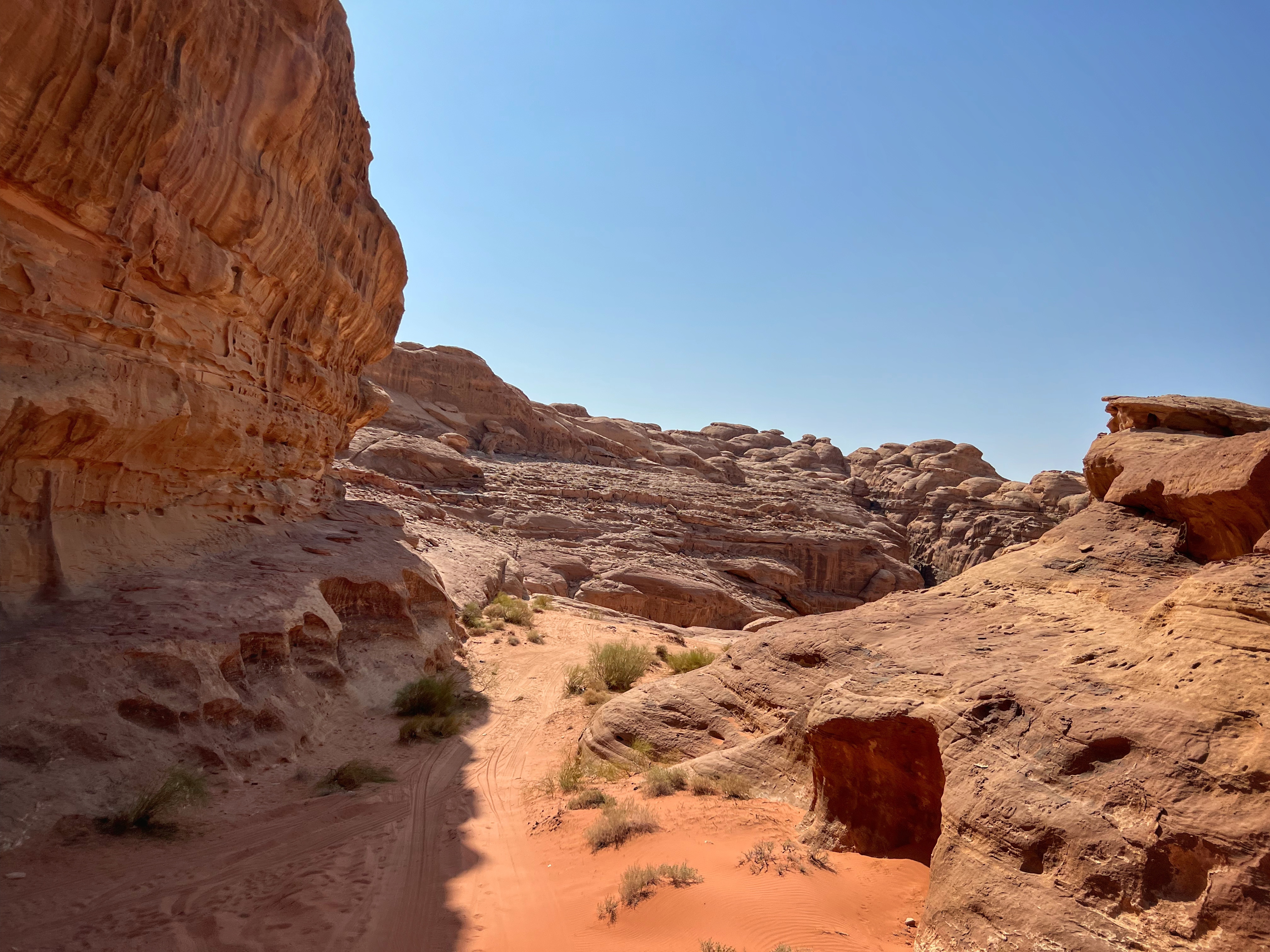
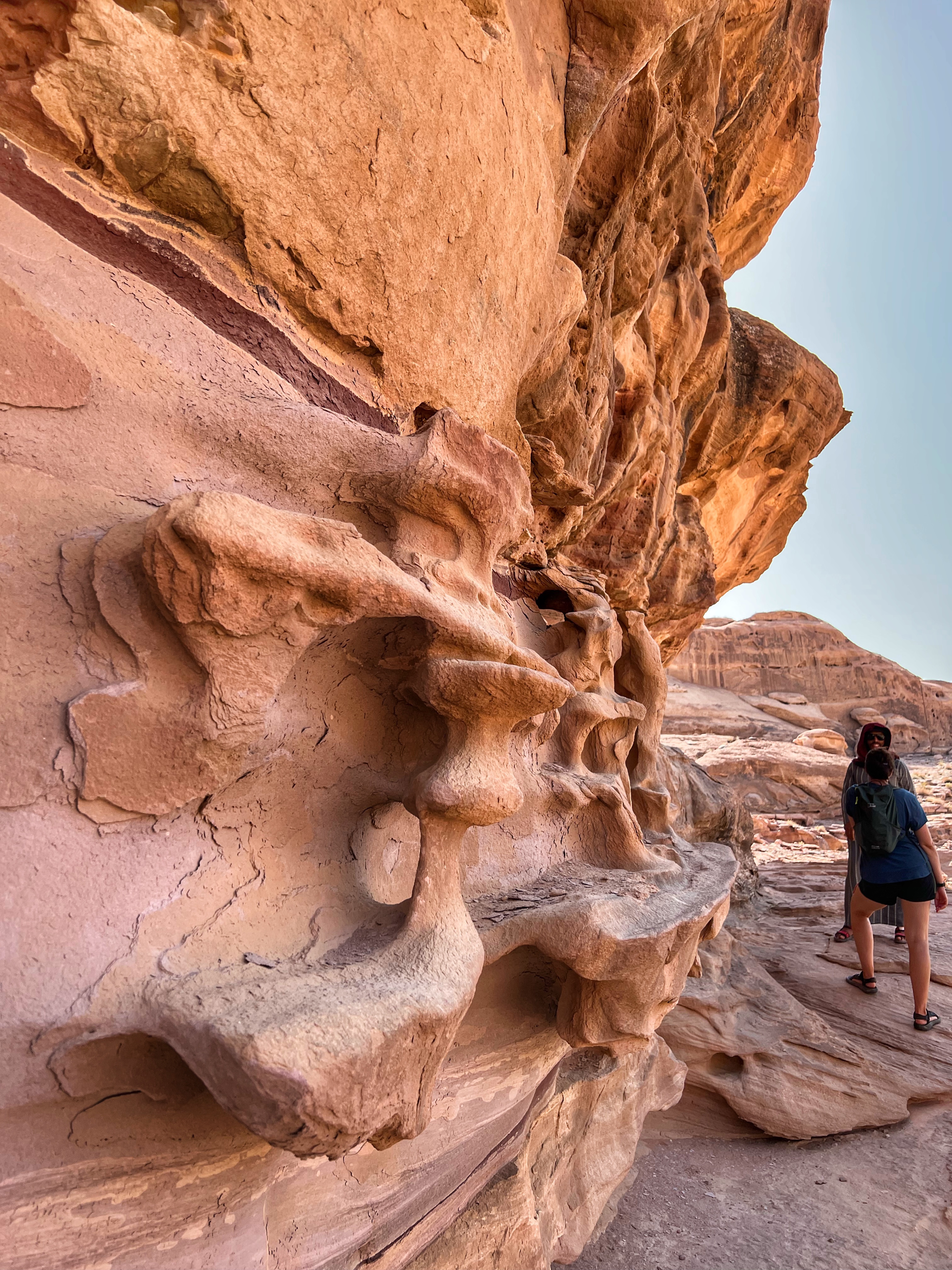
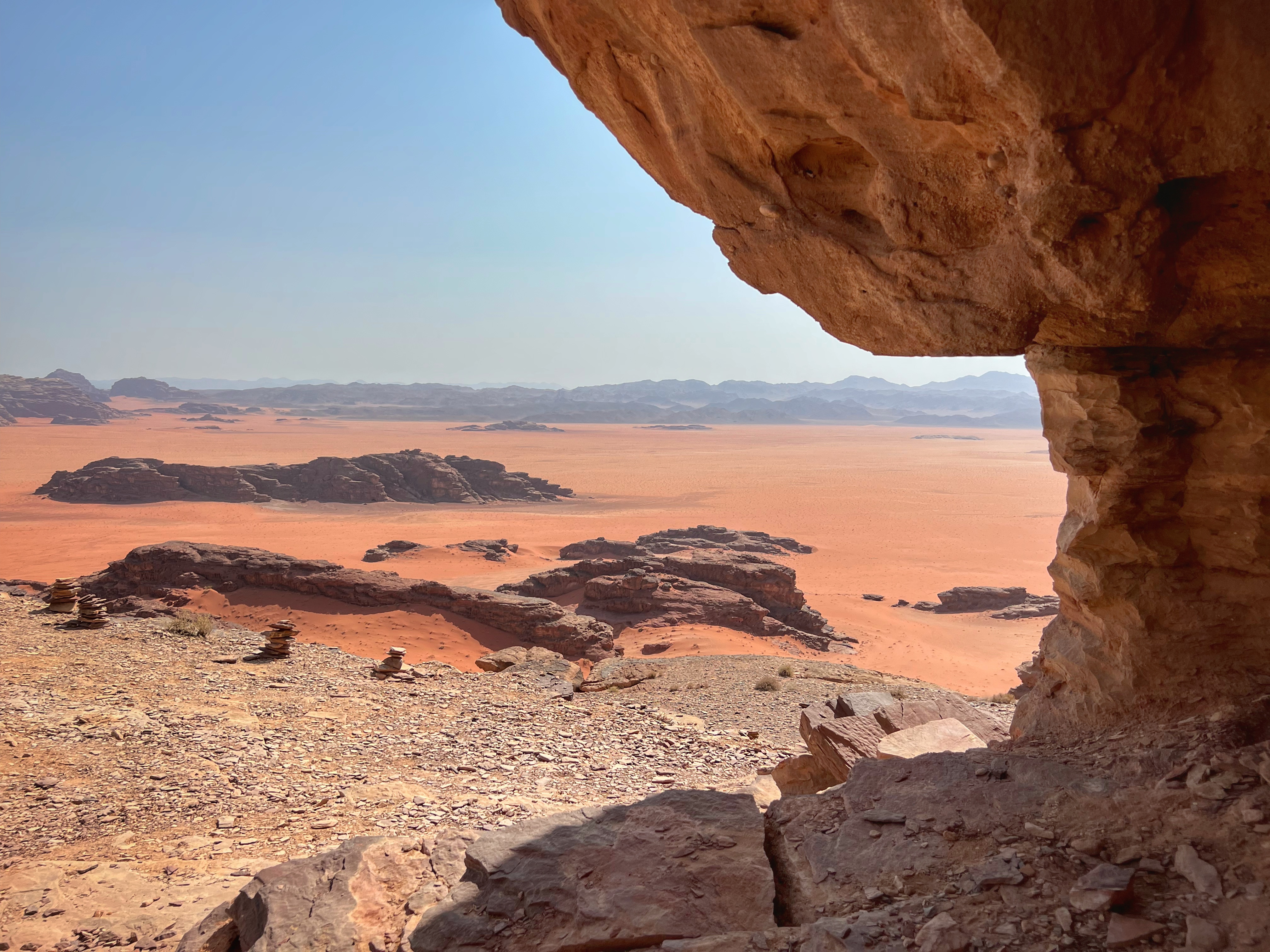
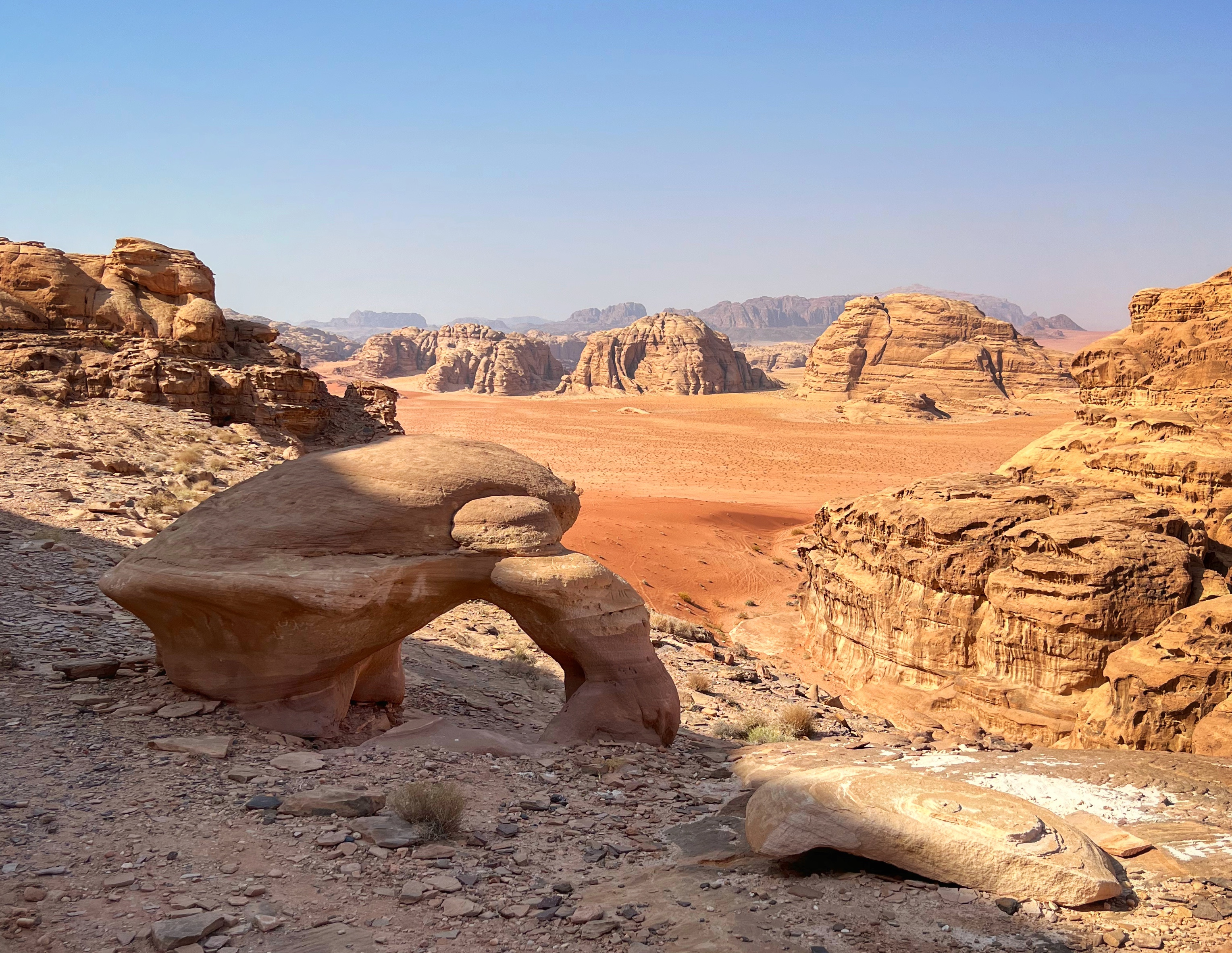
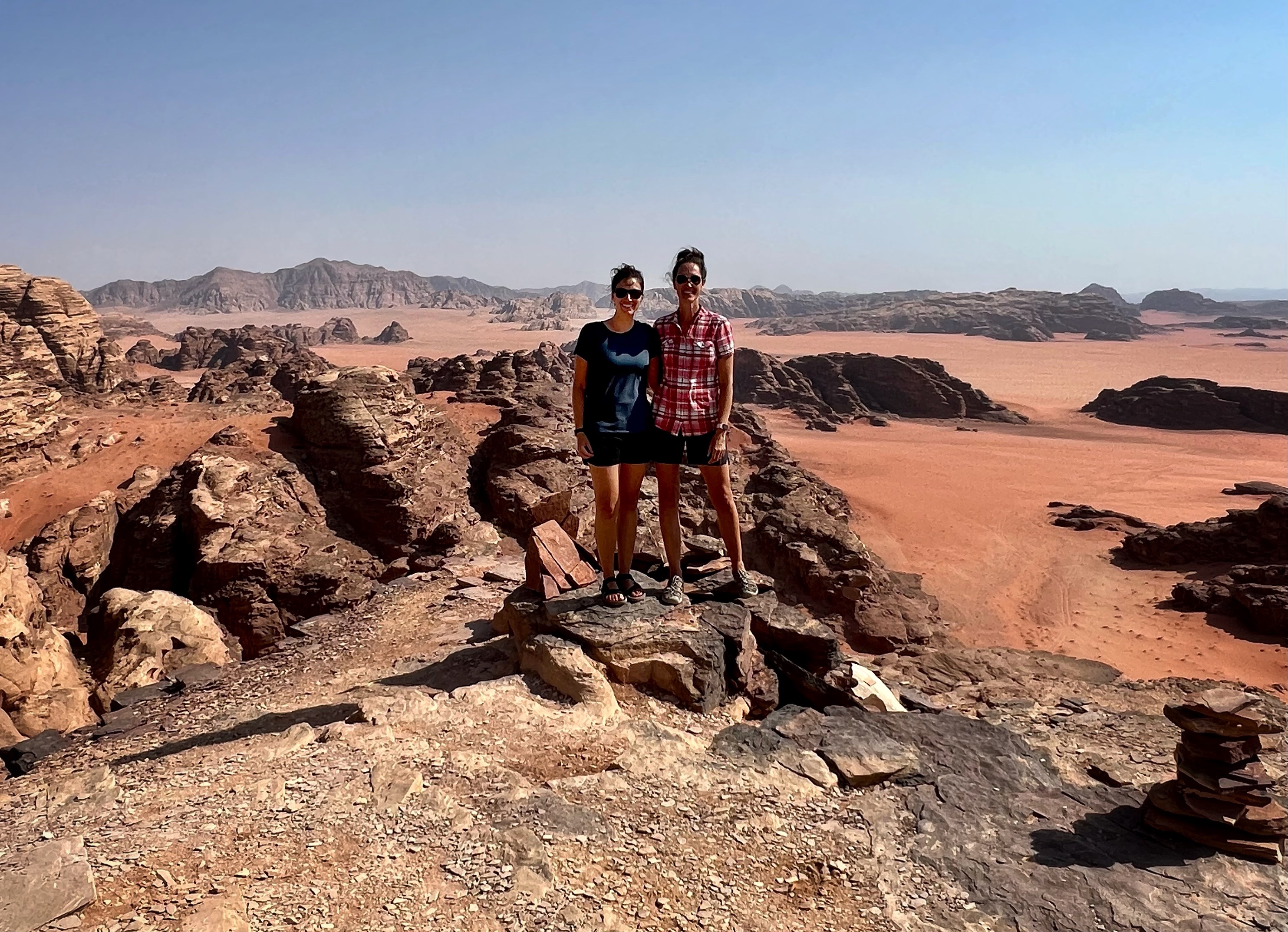
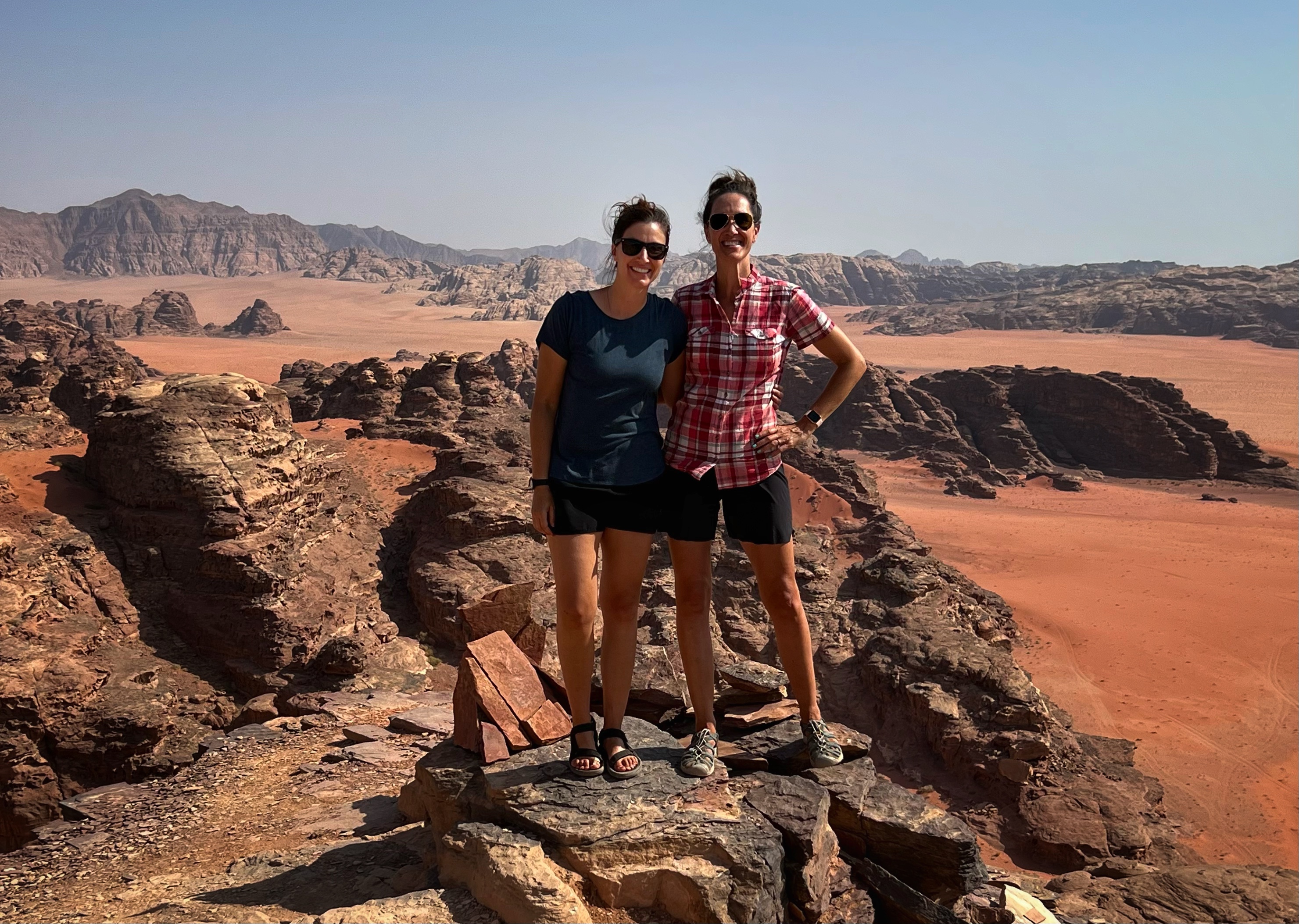
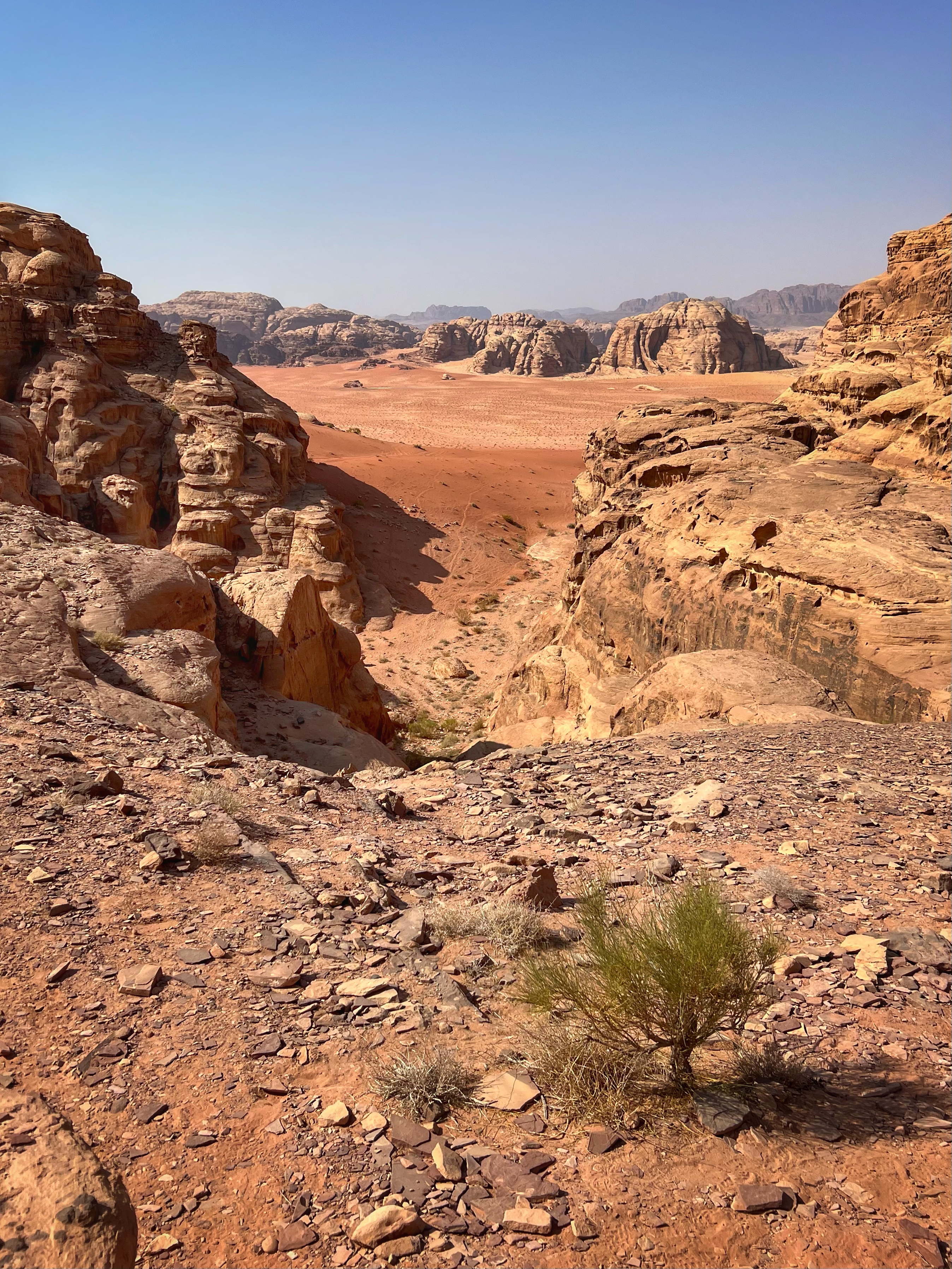

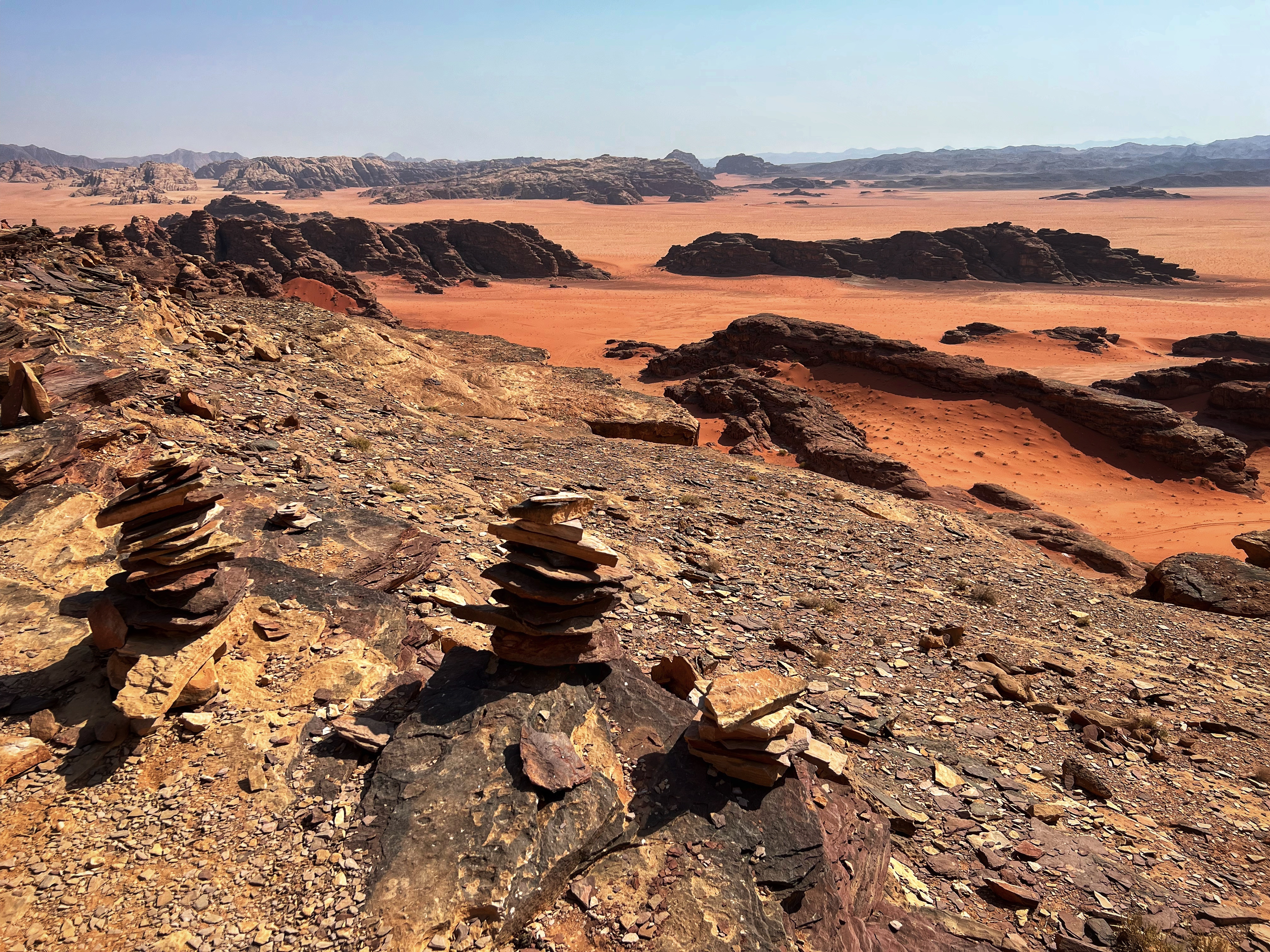
The second location was another natural rock bridge surrounded by sand – a pretty photo op. We also found some sort of skull and jaw bone in the sand. It contributed to the Star Wars vibes!


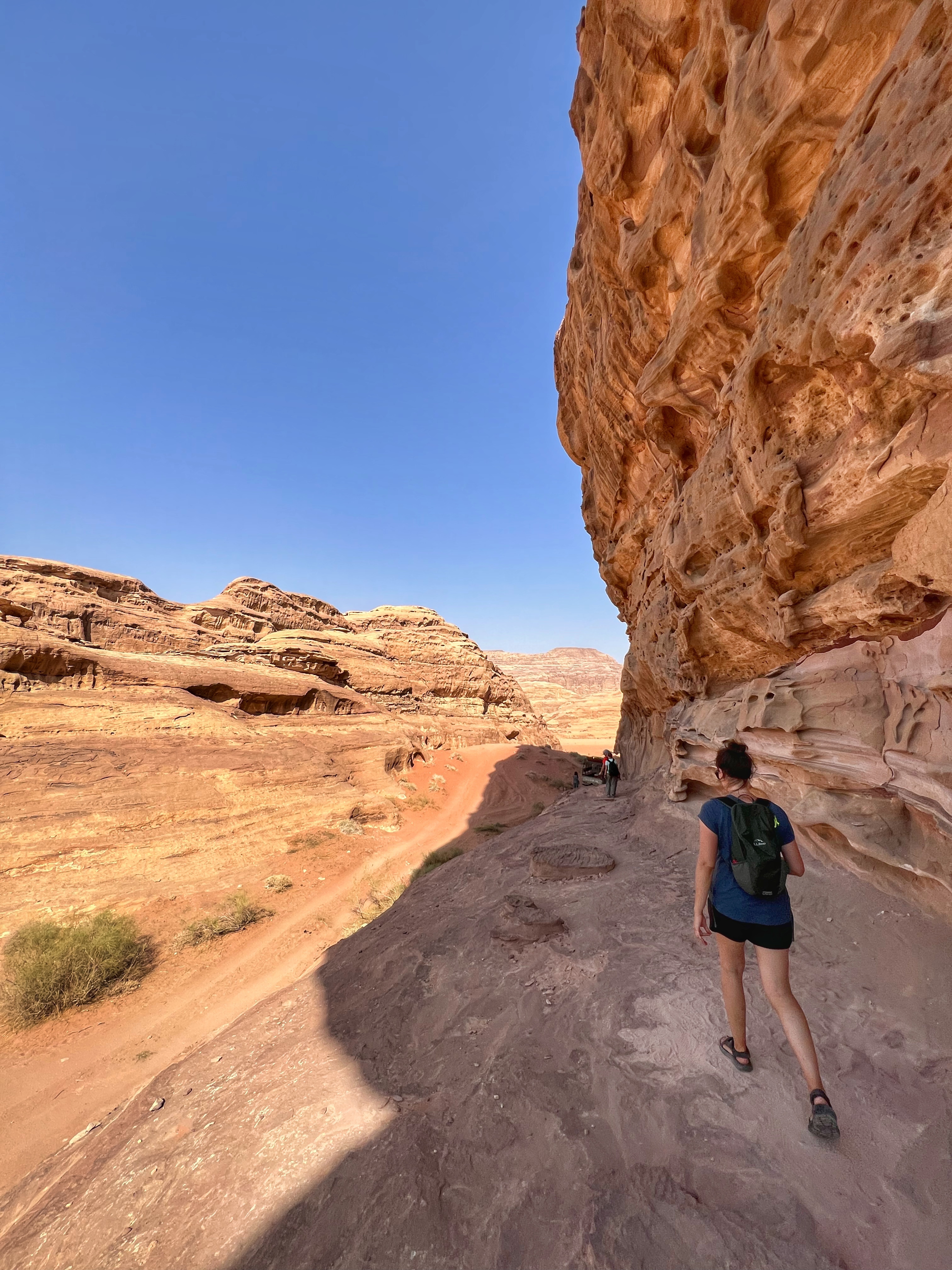

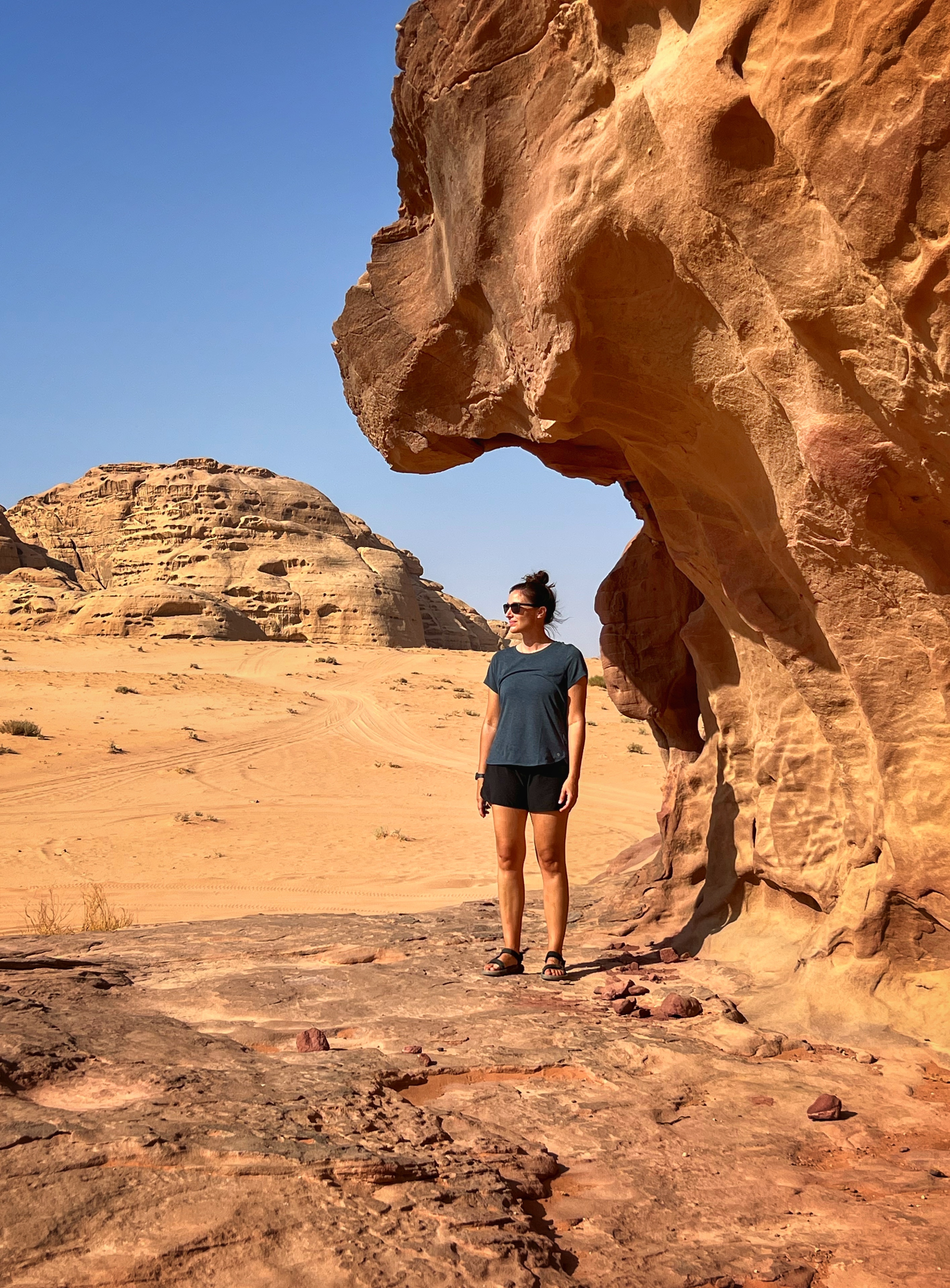

We returned to camp around 5PM and had time to shower and clean up before heading back out into the desert for the sunset, dinner, and sleeping under the stars. We only took with us a few things for the overnight in the desert. It was a minimalist adventure! There really is nothing like a desert sunset. I loved watching it from a new location, this time it was atop a huge rocky outcropping.
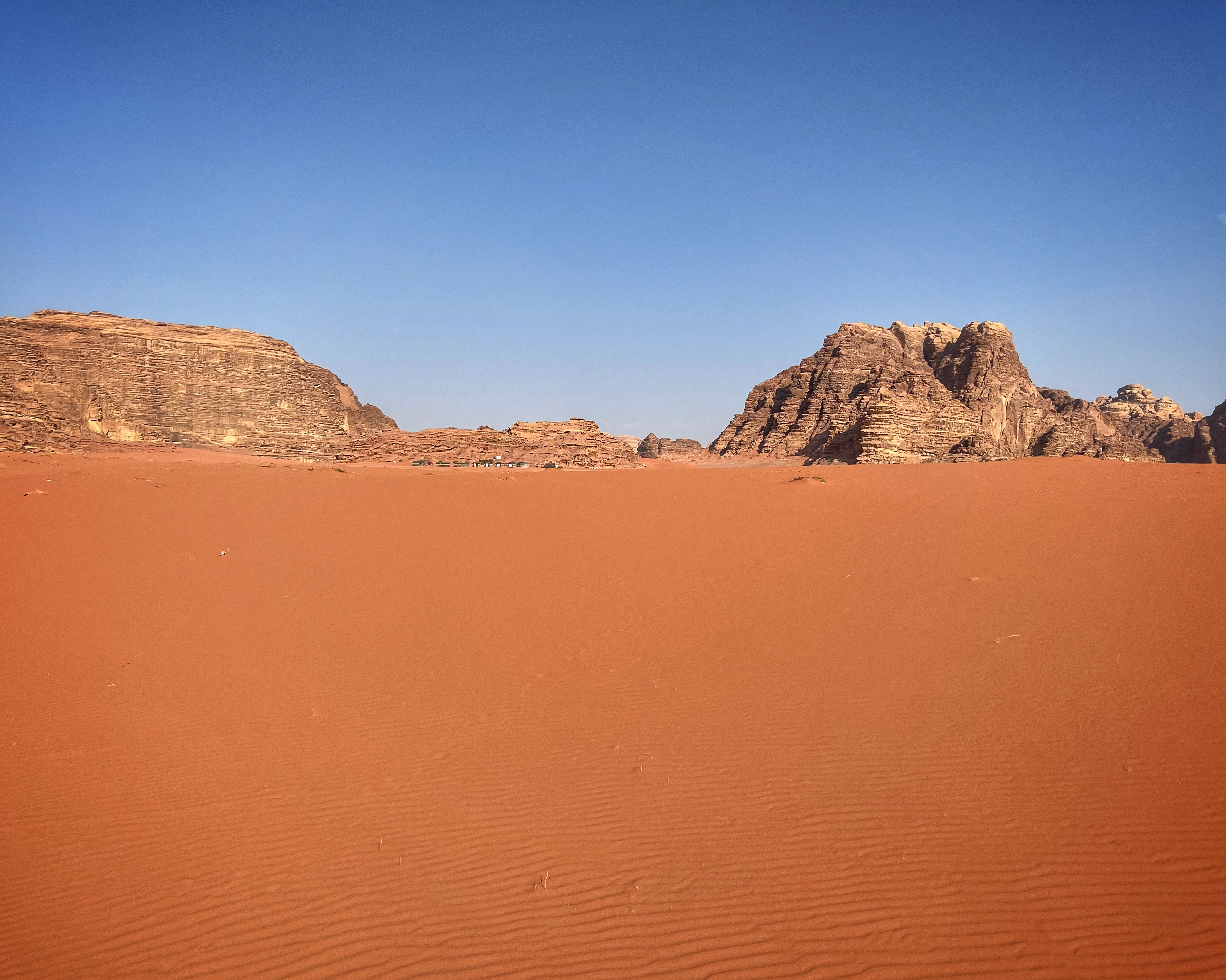
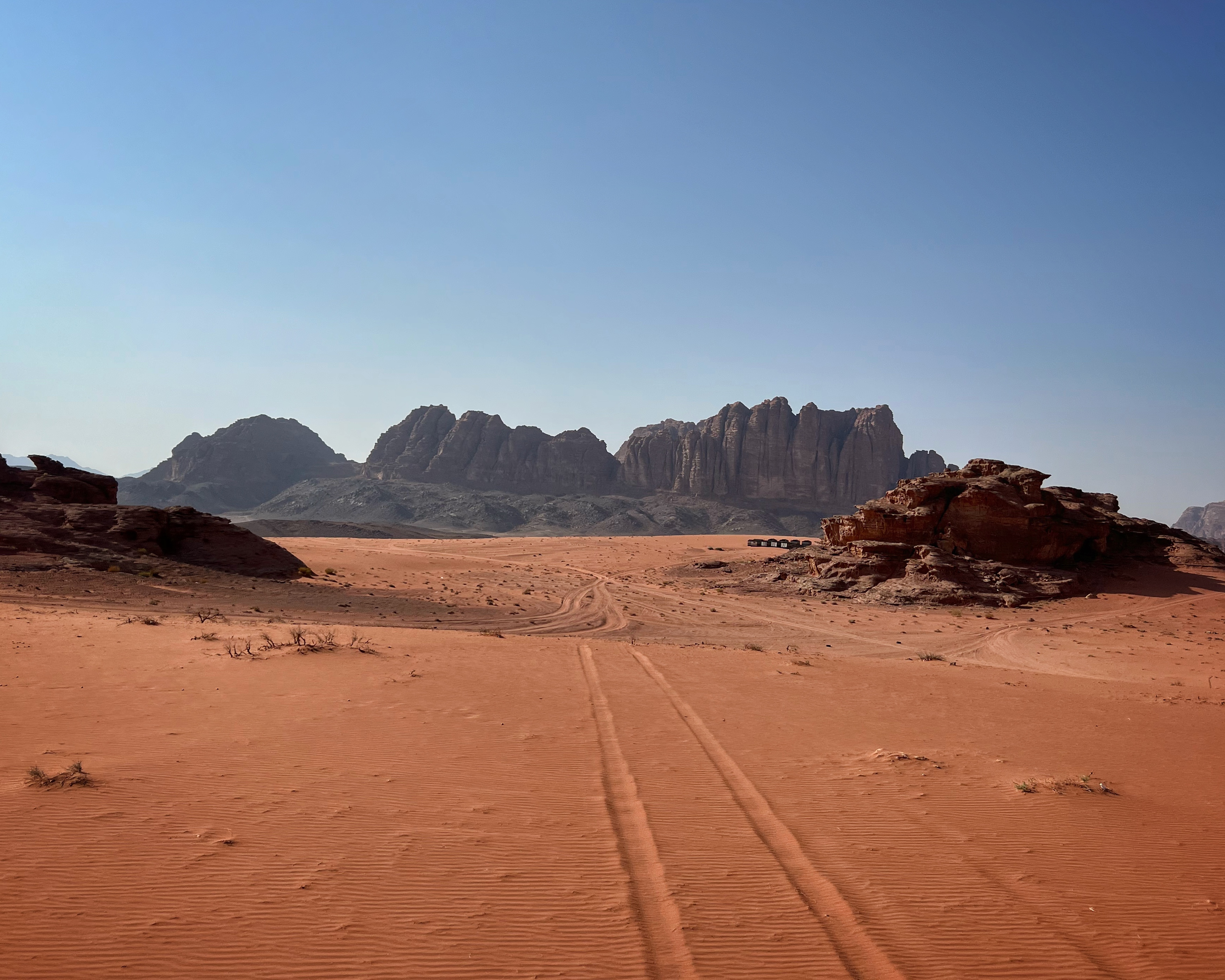
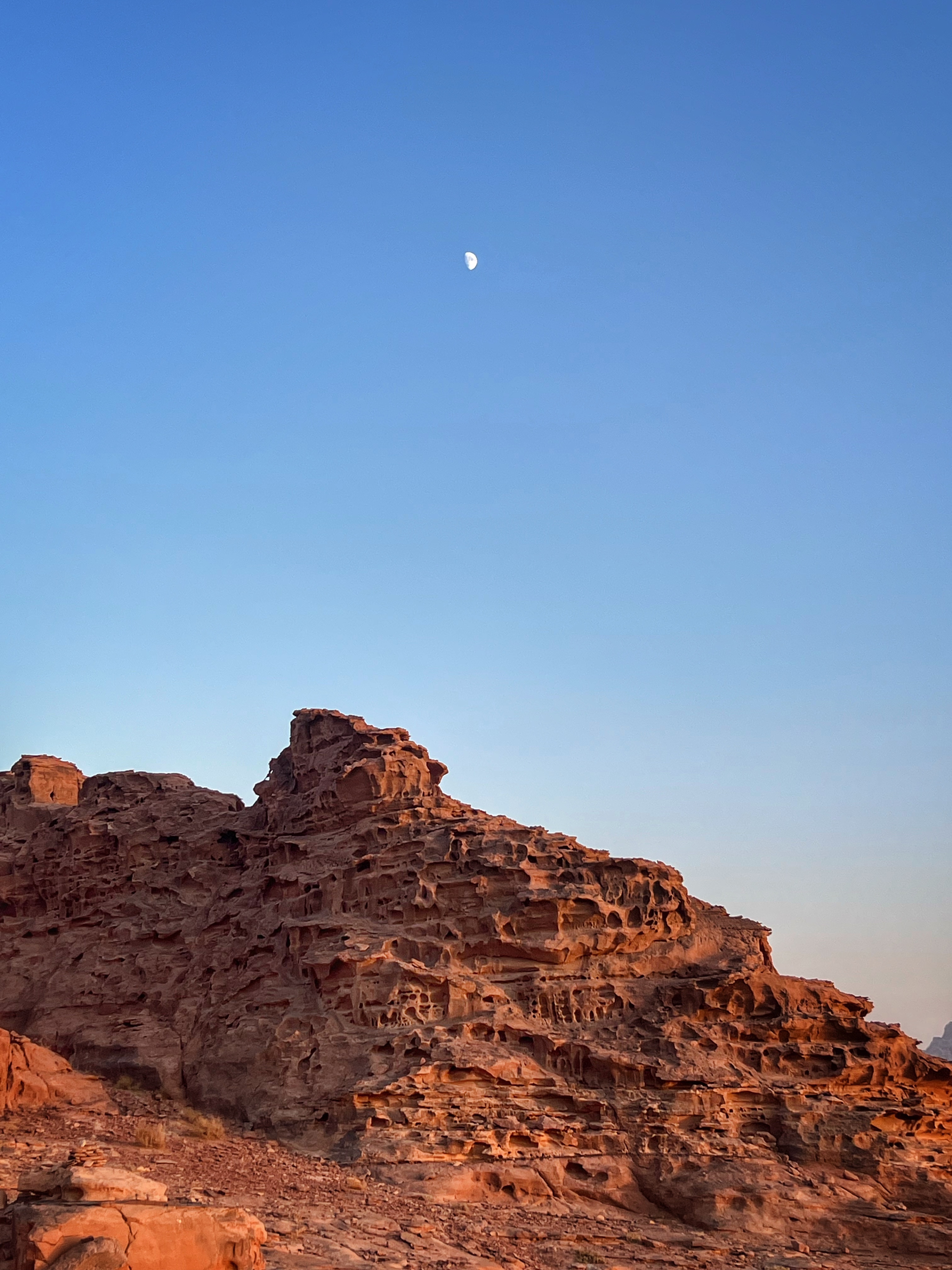


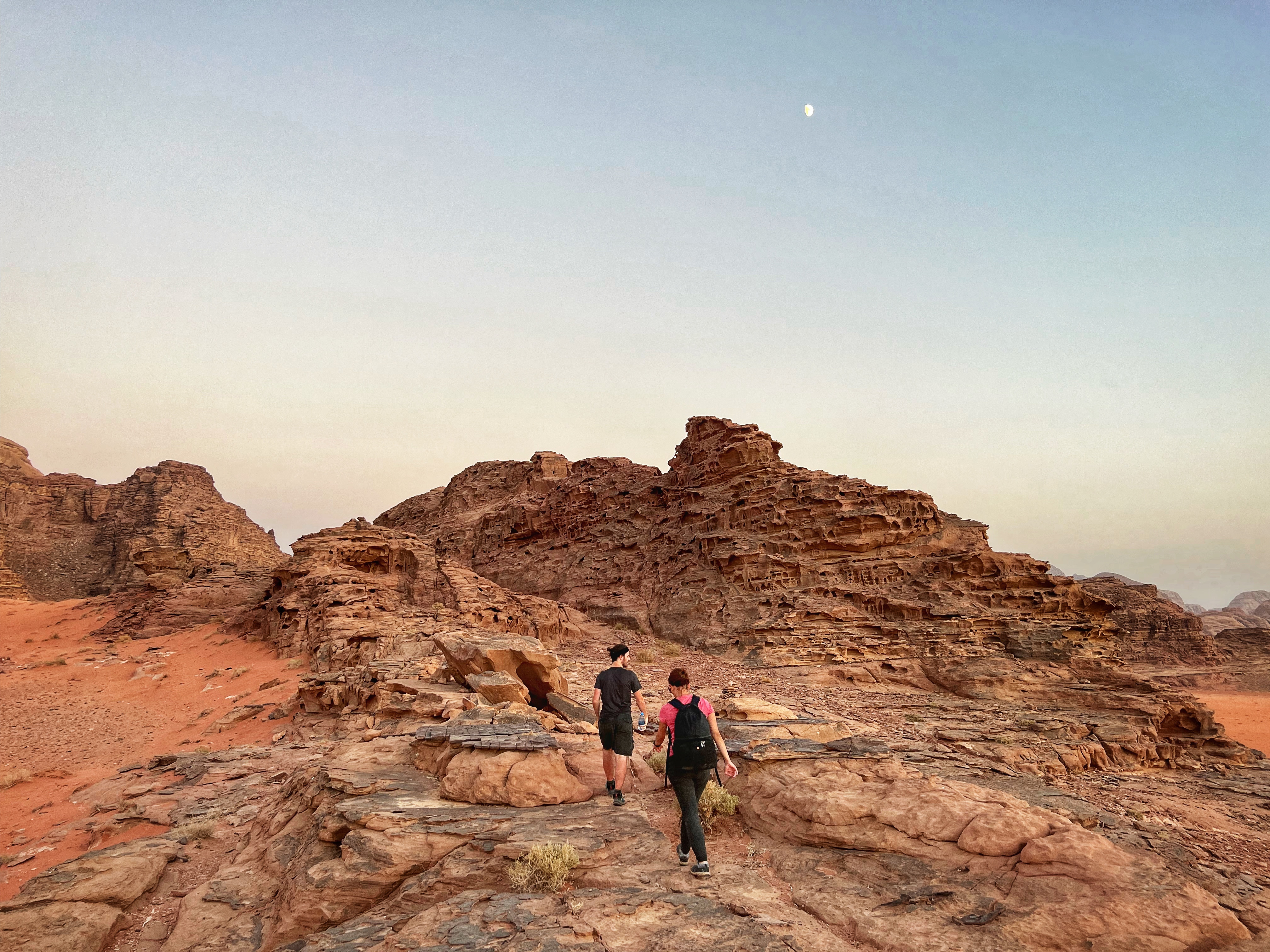
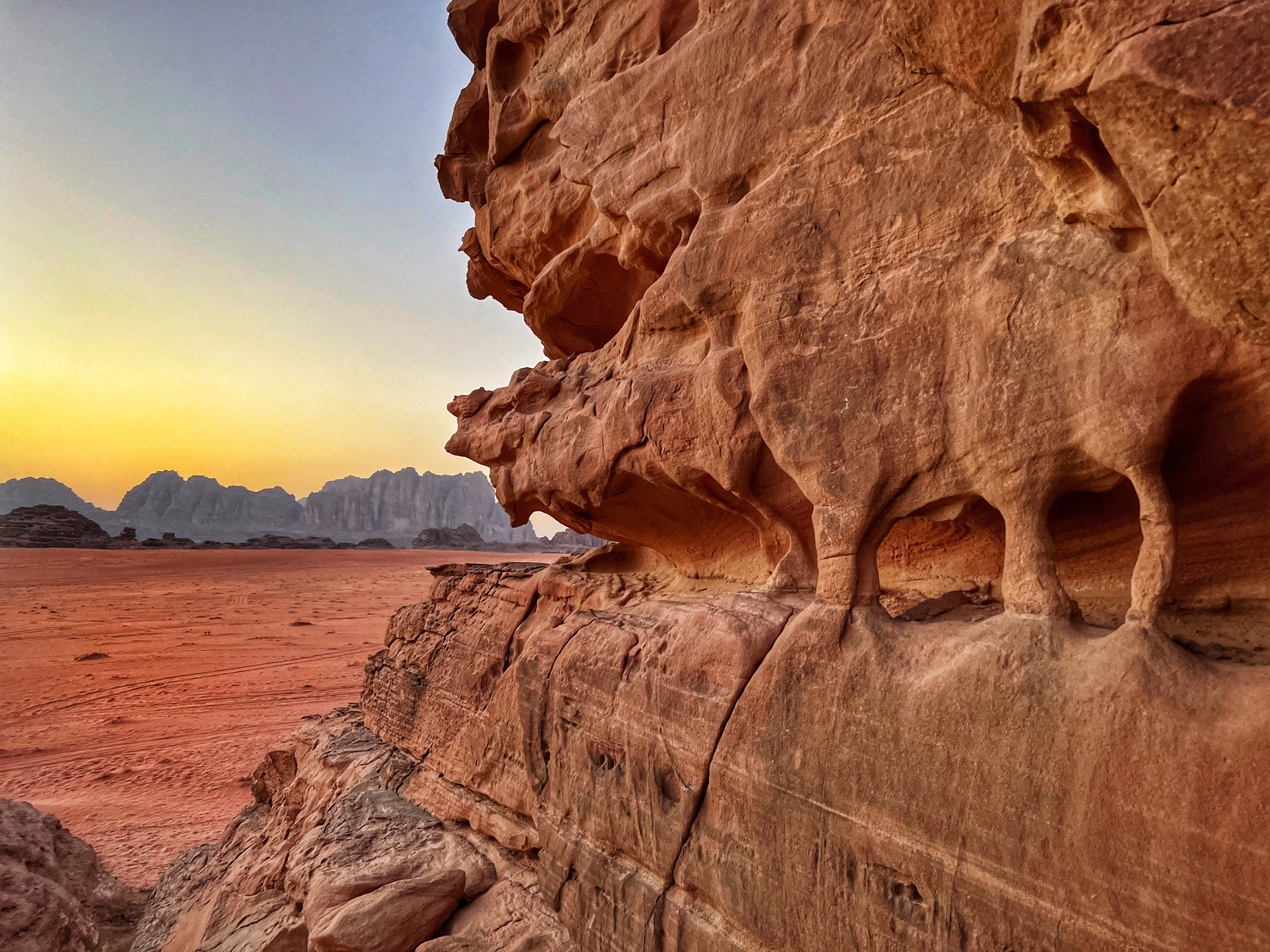


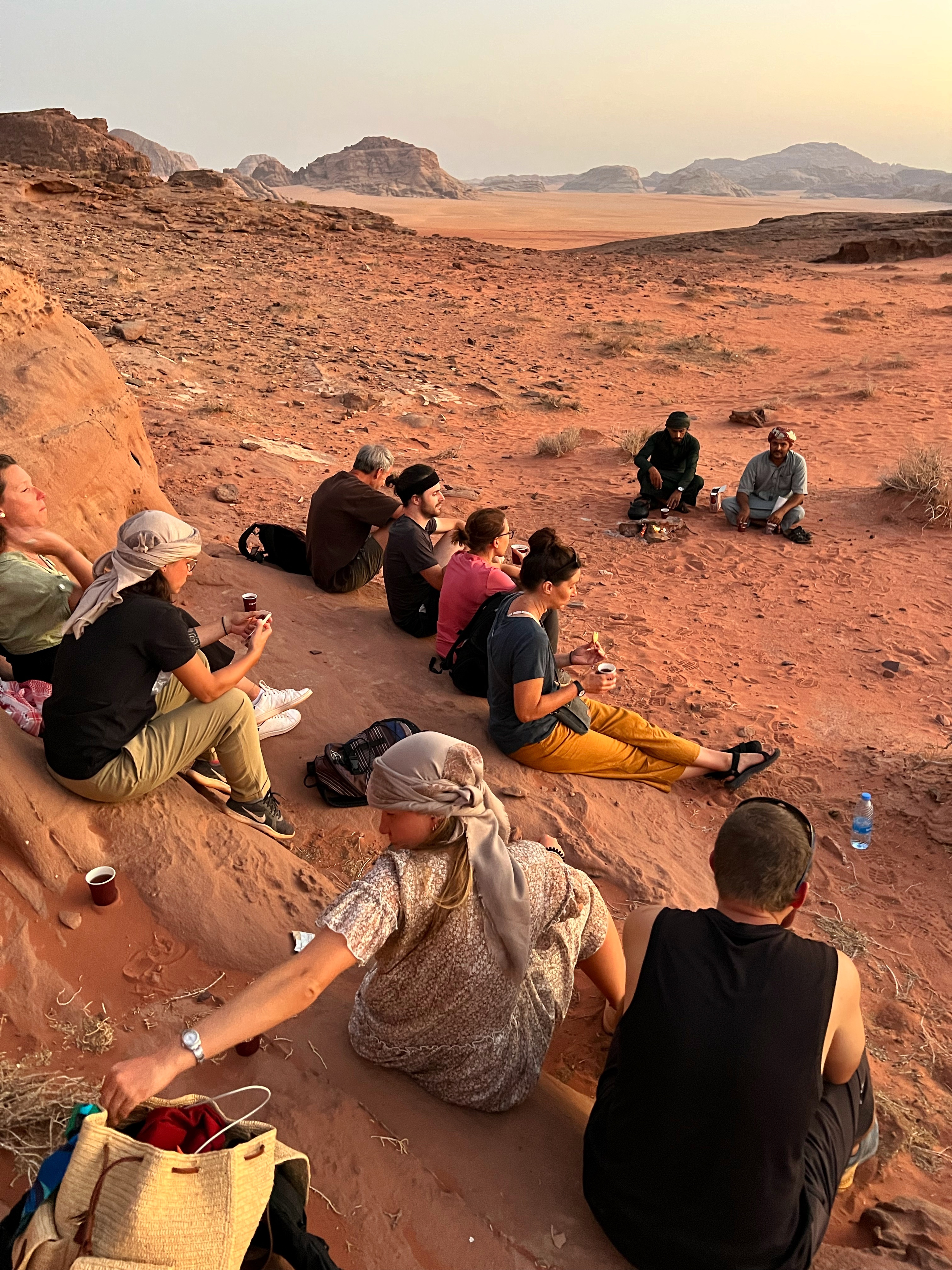
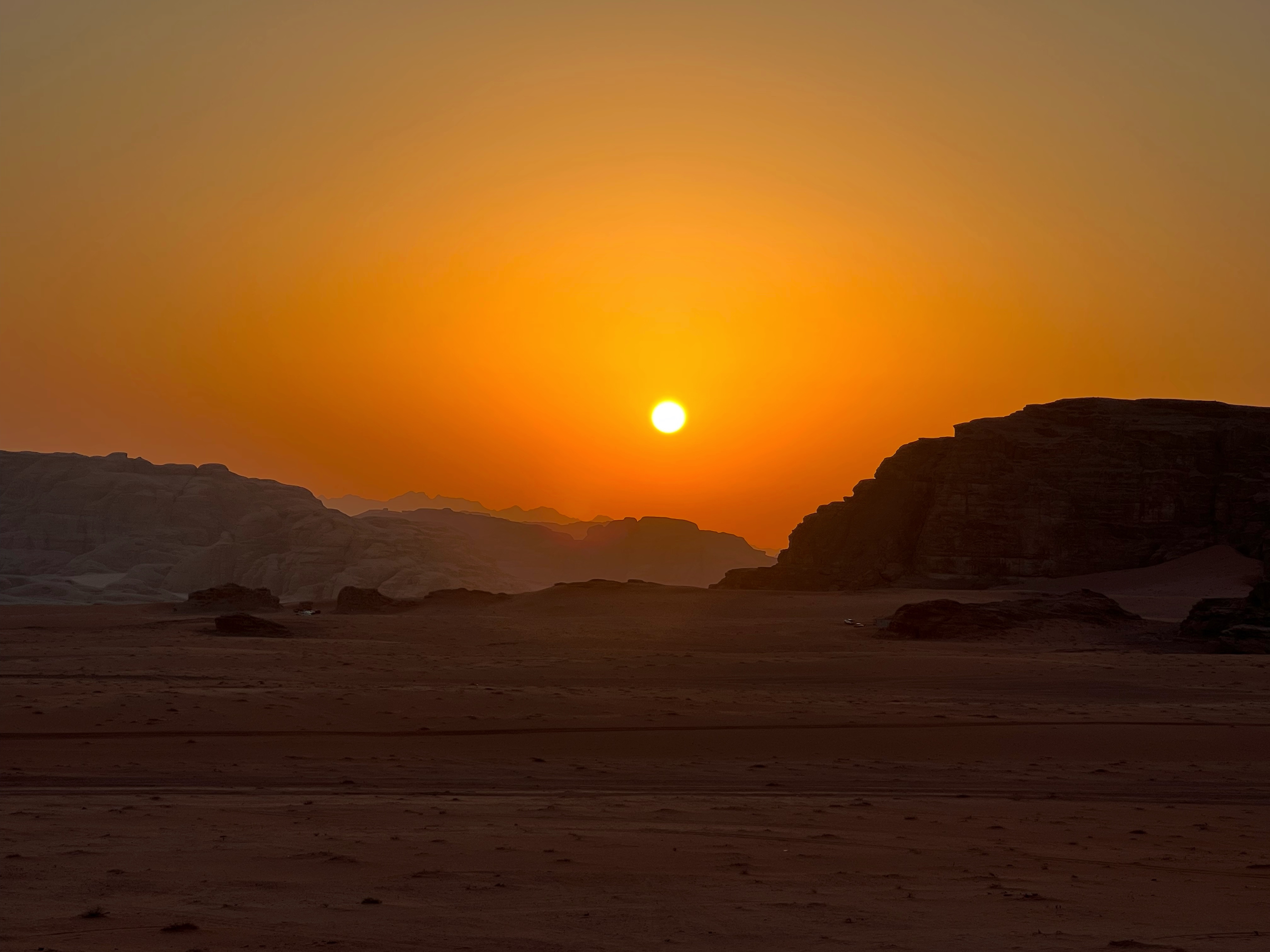
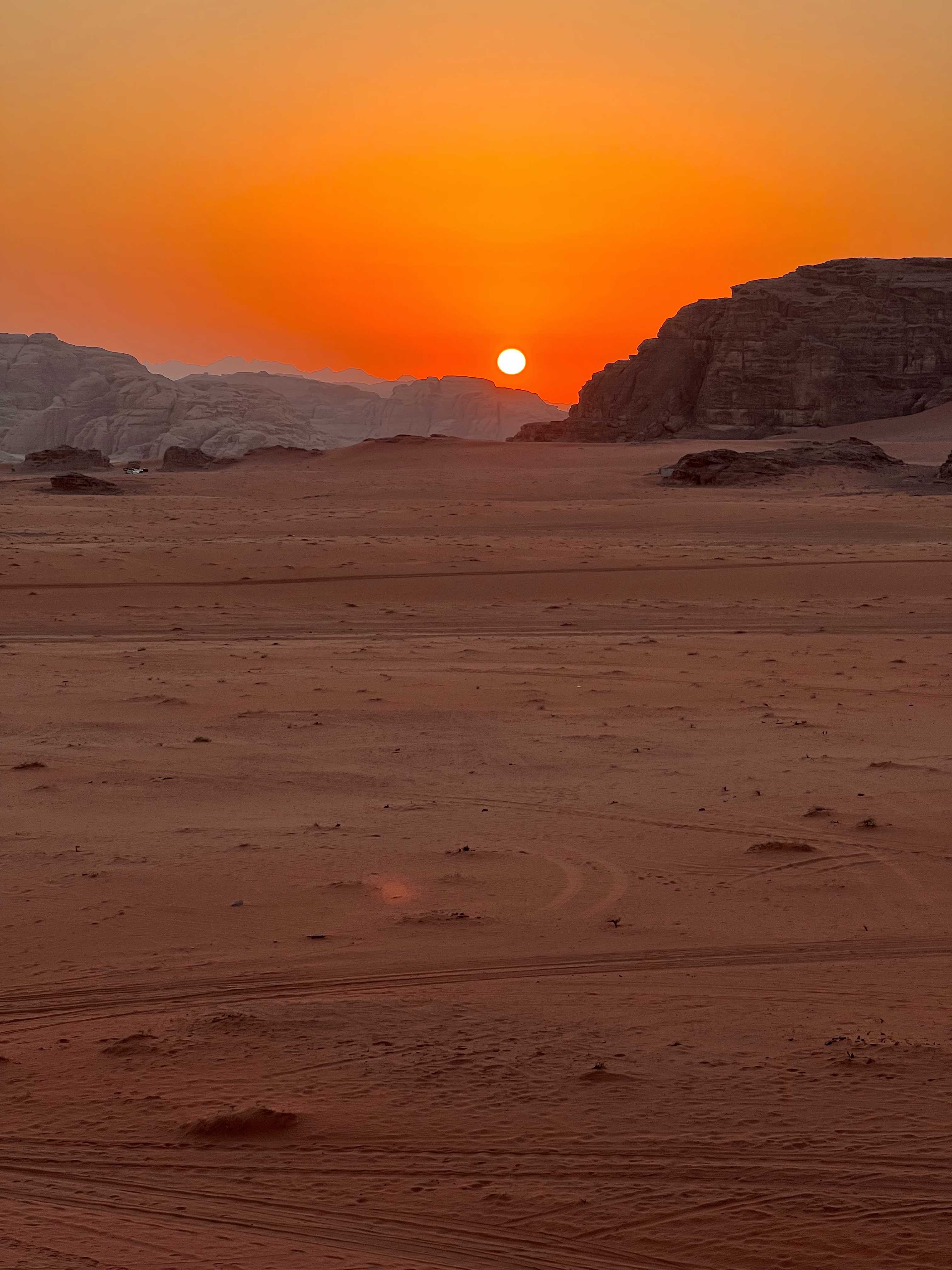
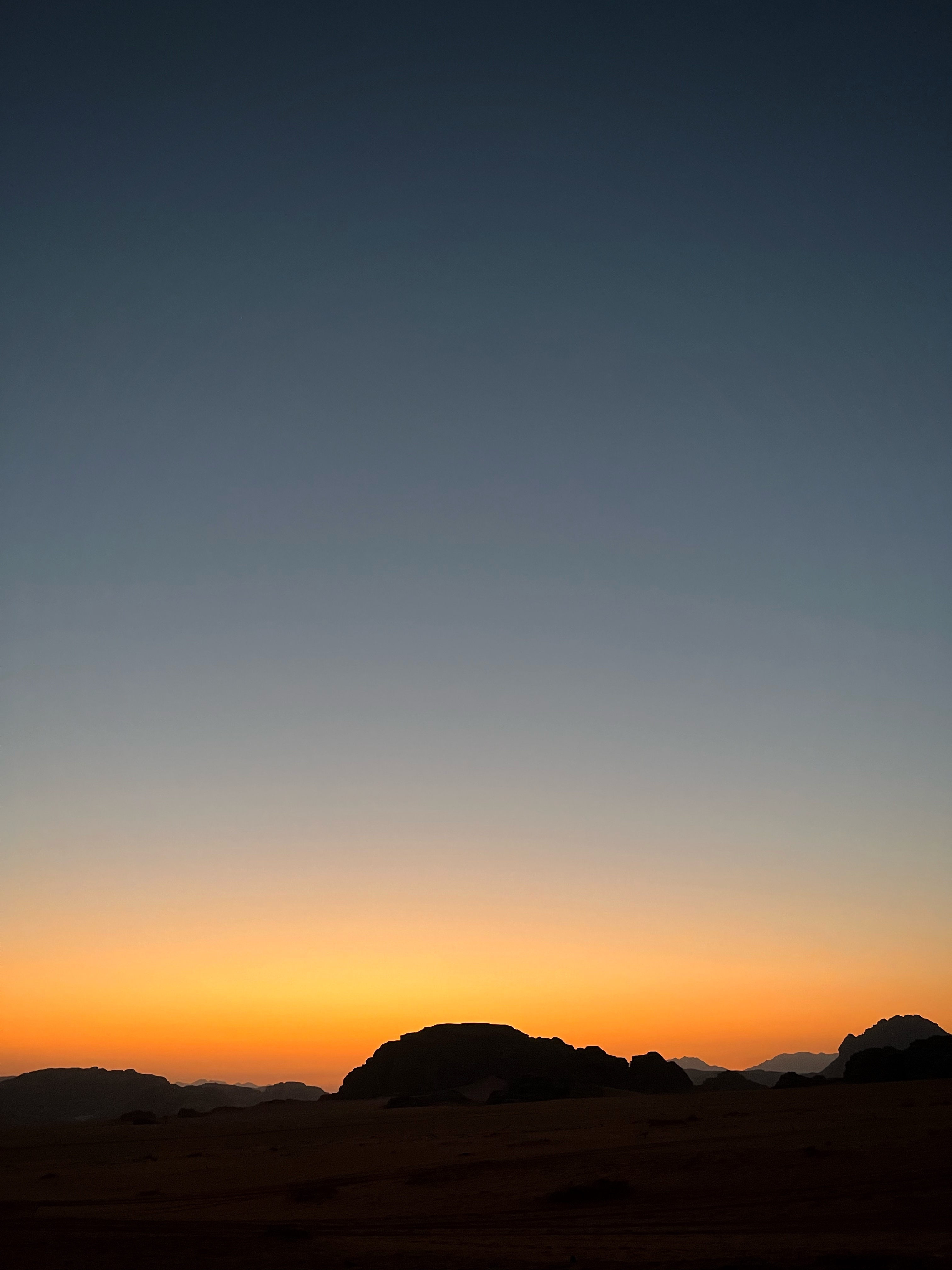

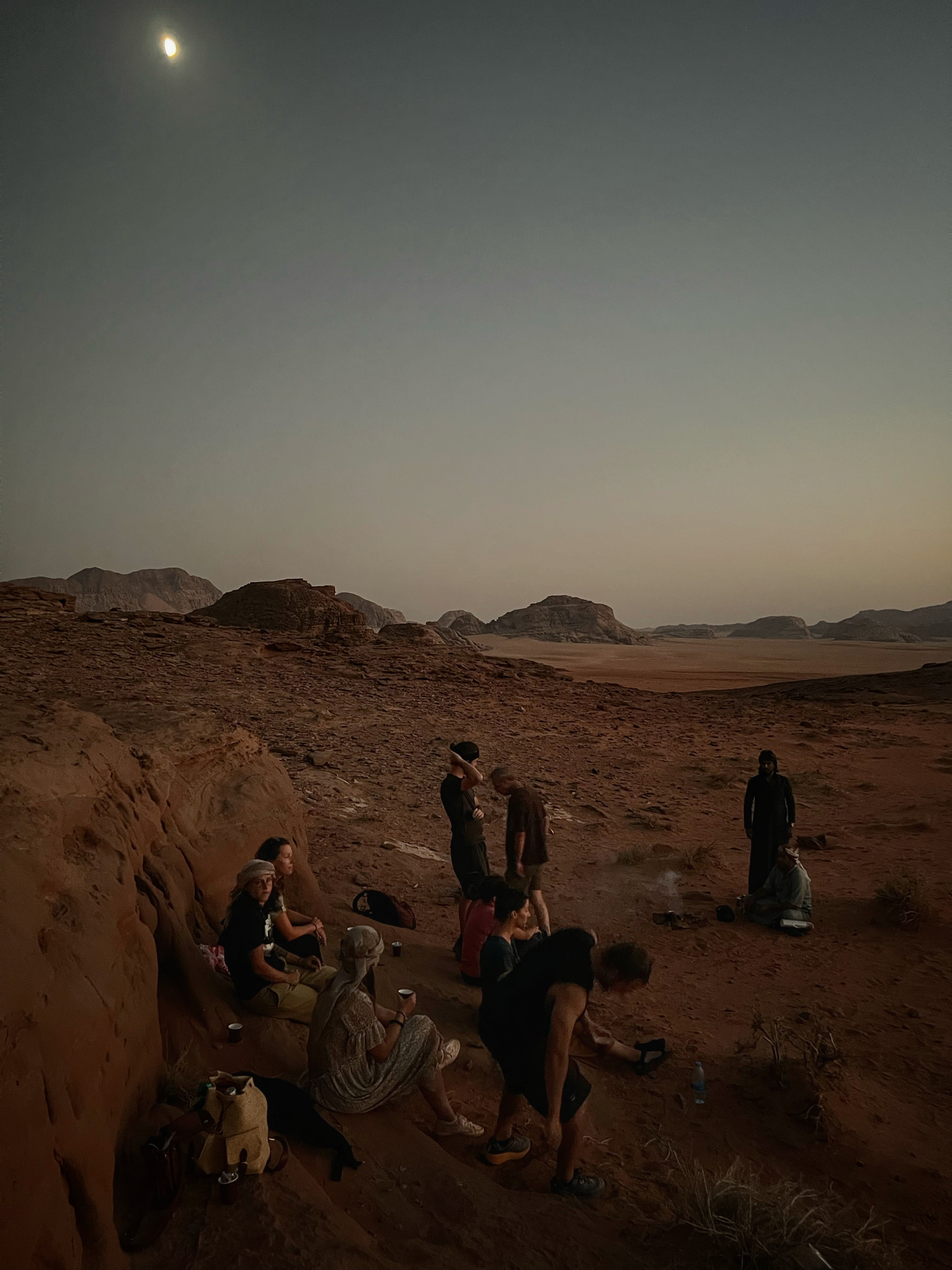
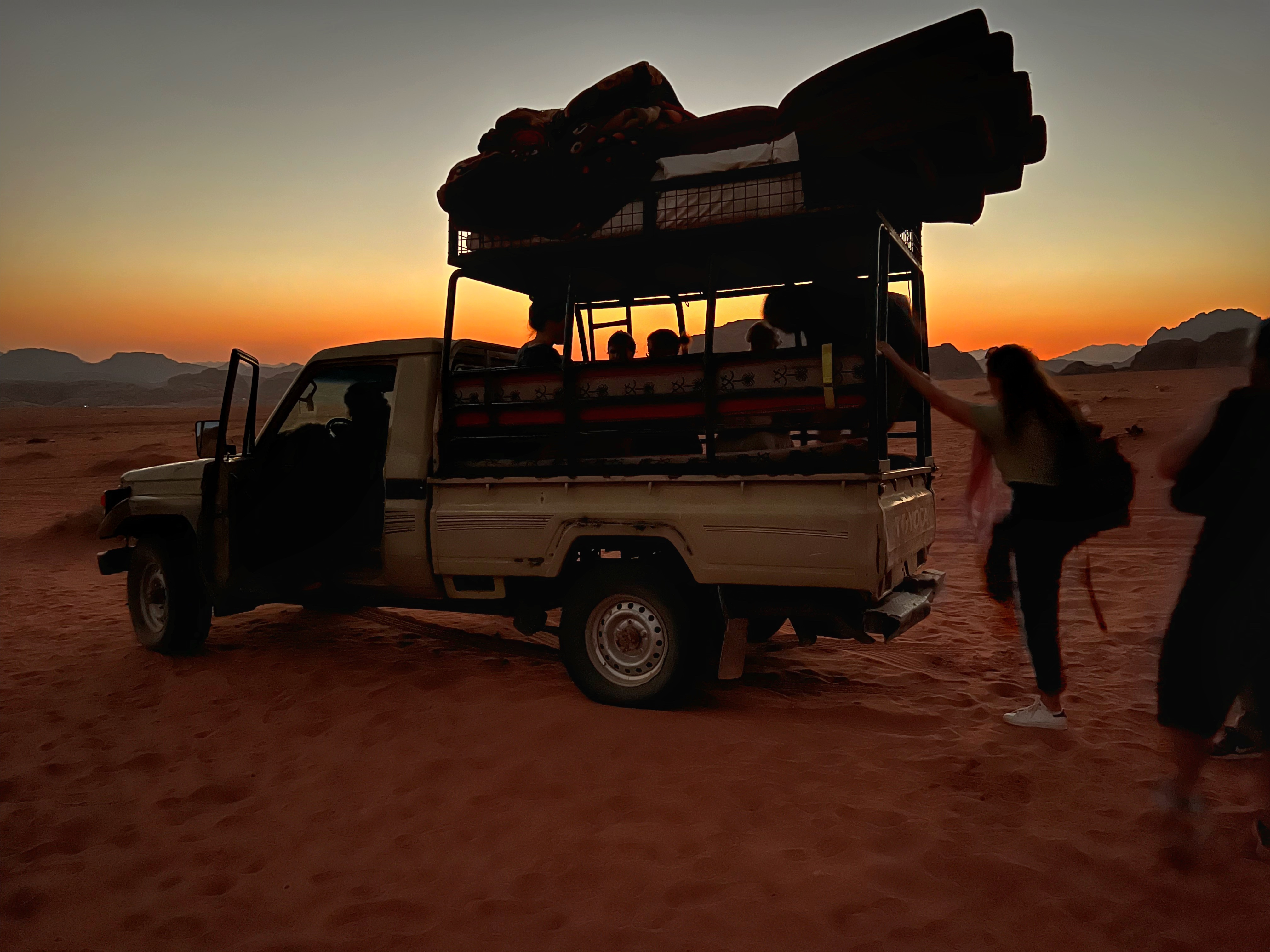
We enjoyed tea again – this time with tiny muffins – and relaxed in the quiet stillness of desert dusk. I can’t tell you how calm the desert made me feel. I loved being disconnected and not worrying about notifications or needs of others. There was no cell service where we were, deep in the desert, and I wouldn’t want it any other way. After sunset, around 7:30, we packed back up into the truck and went a little ways away to our overnight camping spot.
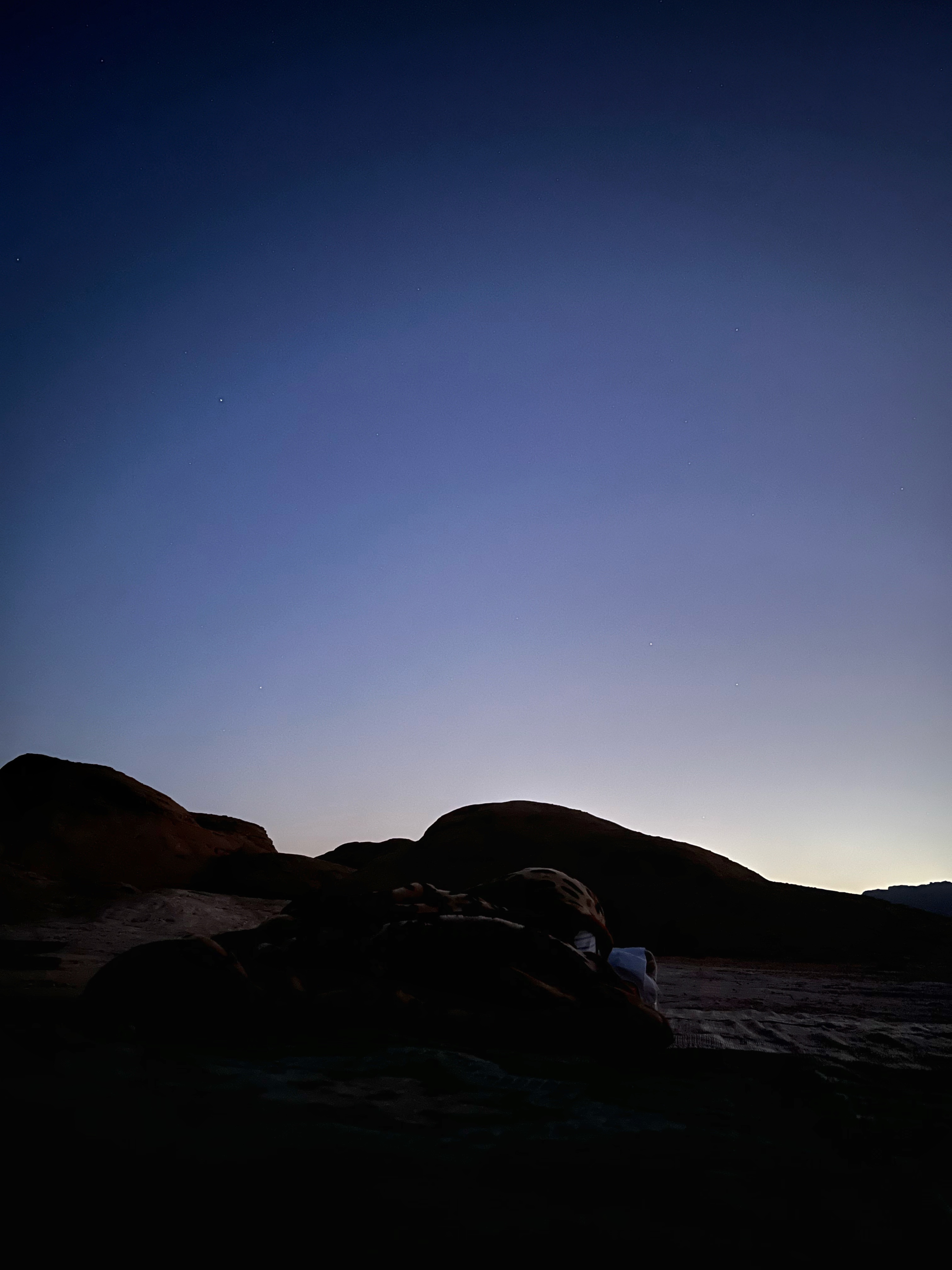
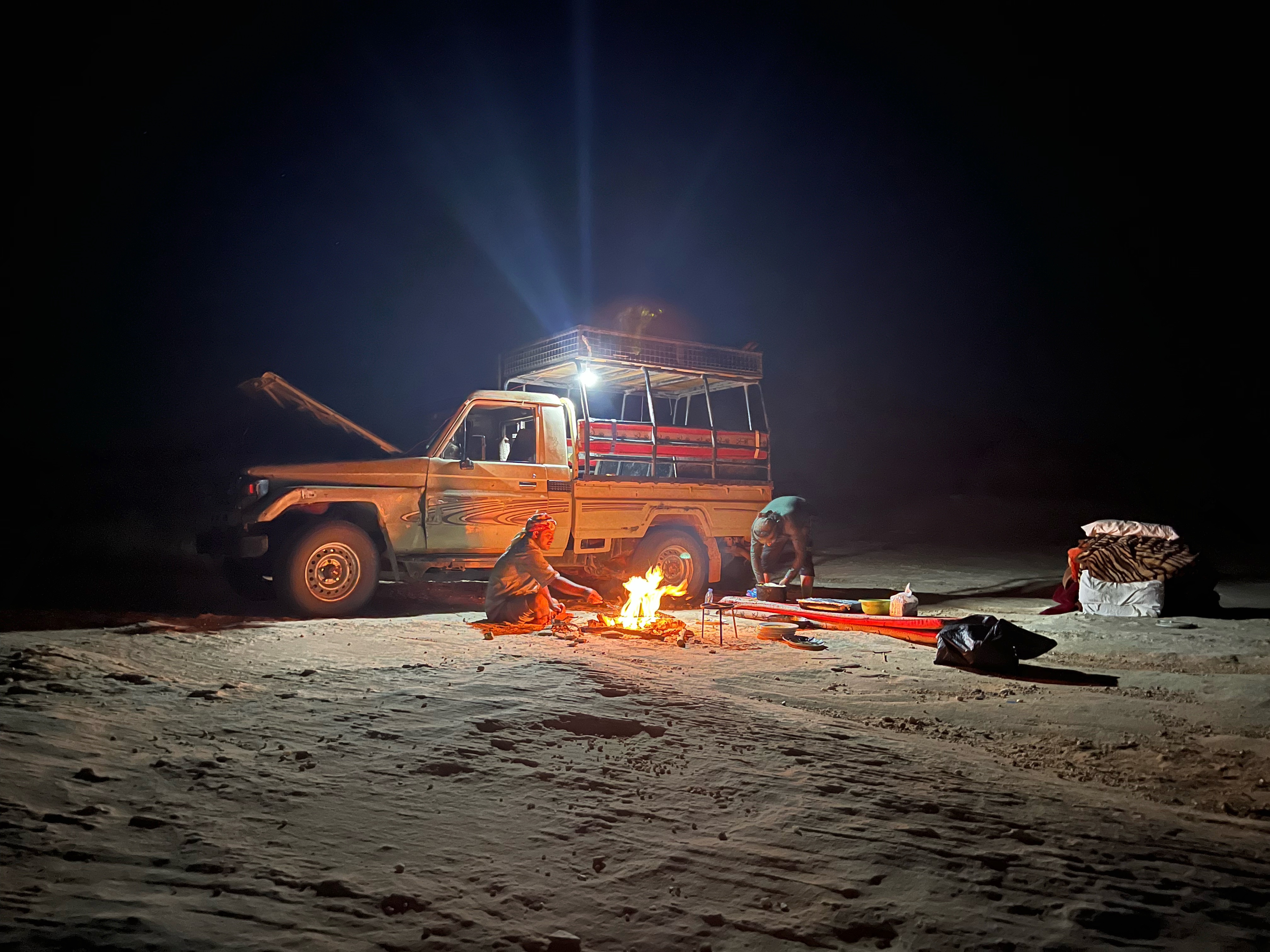


SLEEPING UNDER THE STARS
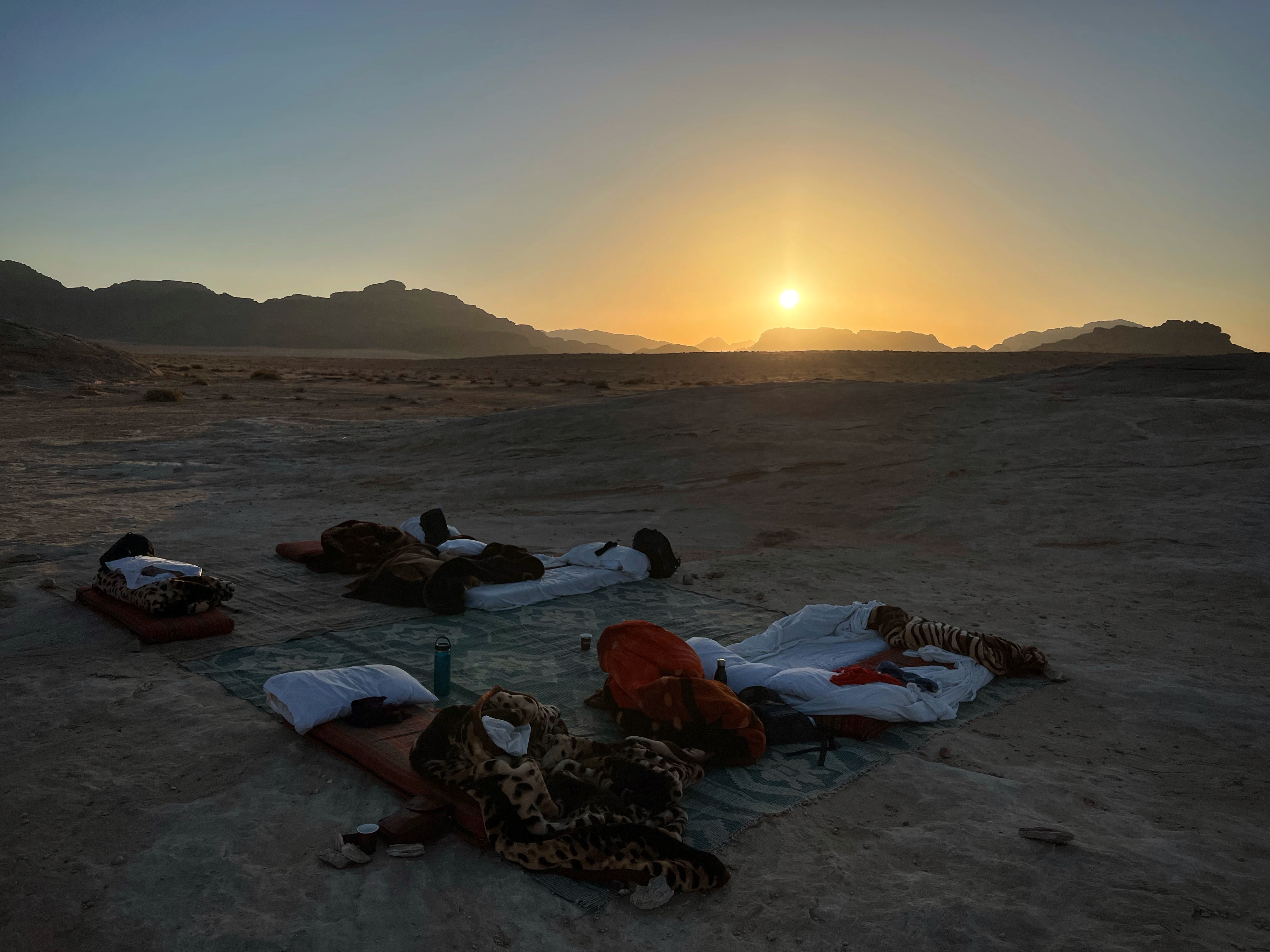
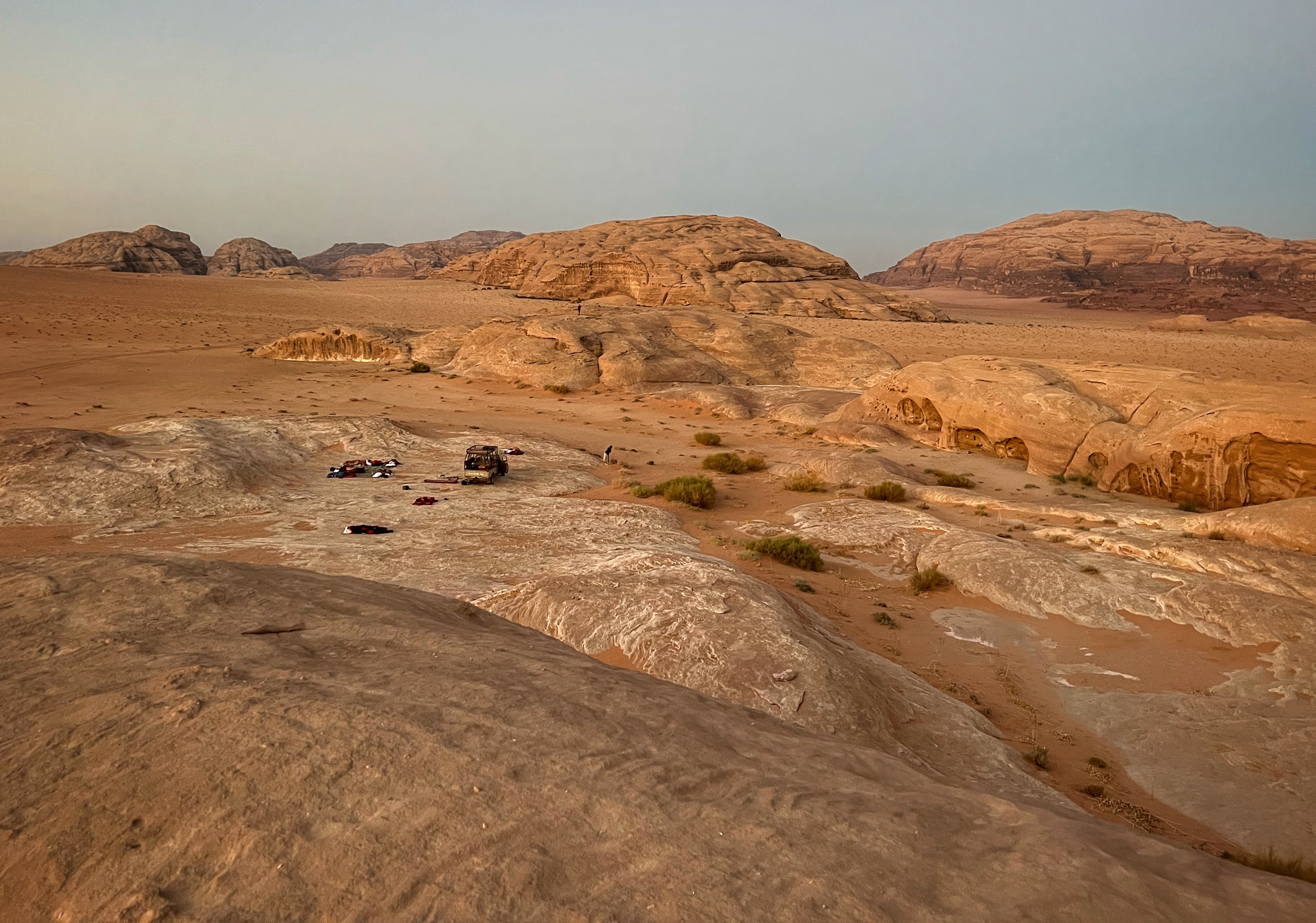
When we arrived at our campsite we unloaded the mats, blankets and pillows and laid everything out on flat rock where we were to sleep, then our hosts cooked. I was very impressed by what Fayez and Jalil were able to make us for dinner in the middle of the desert over a fire: yellow rice, a skillet of spicy vegetables, hummus salad, and bread. Simple and delicious – I devoured it! It was about 9PM when we had dinner, and while we waited, we all lounged on our cushions watching the sky. The conditions were perfect – we were on flat rock so we weren’t getting sandy, the temperature was ideal, there were no bugs, and the sky was crystal clear. At one point the most phenomenal thing happened: at the very same time, Jessie and I witnessed the BIGGEST COMET blaze across the sky with a big, bright fiery tail that lasted several seconds. I was dazzled and yelled “holy!” and right away Jessie said, “I saw it, too!” It was one of those moments you can’t put a price tag on and I will never forget. No one else saw it, so it was our magical shooting star – a stamp on an incredible Jordanian adventure. It is seared into my brain forever.
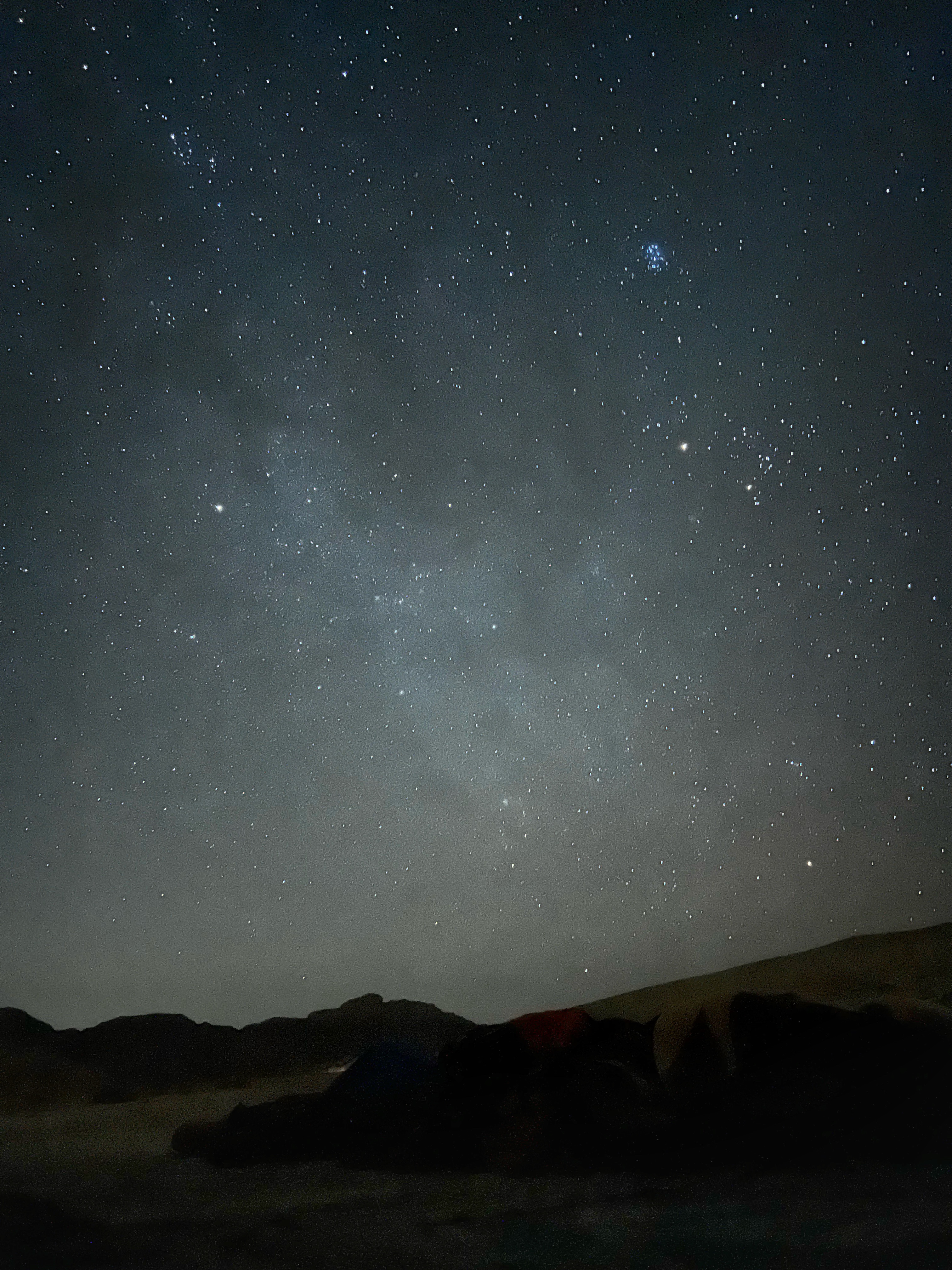
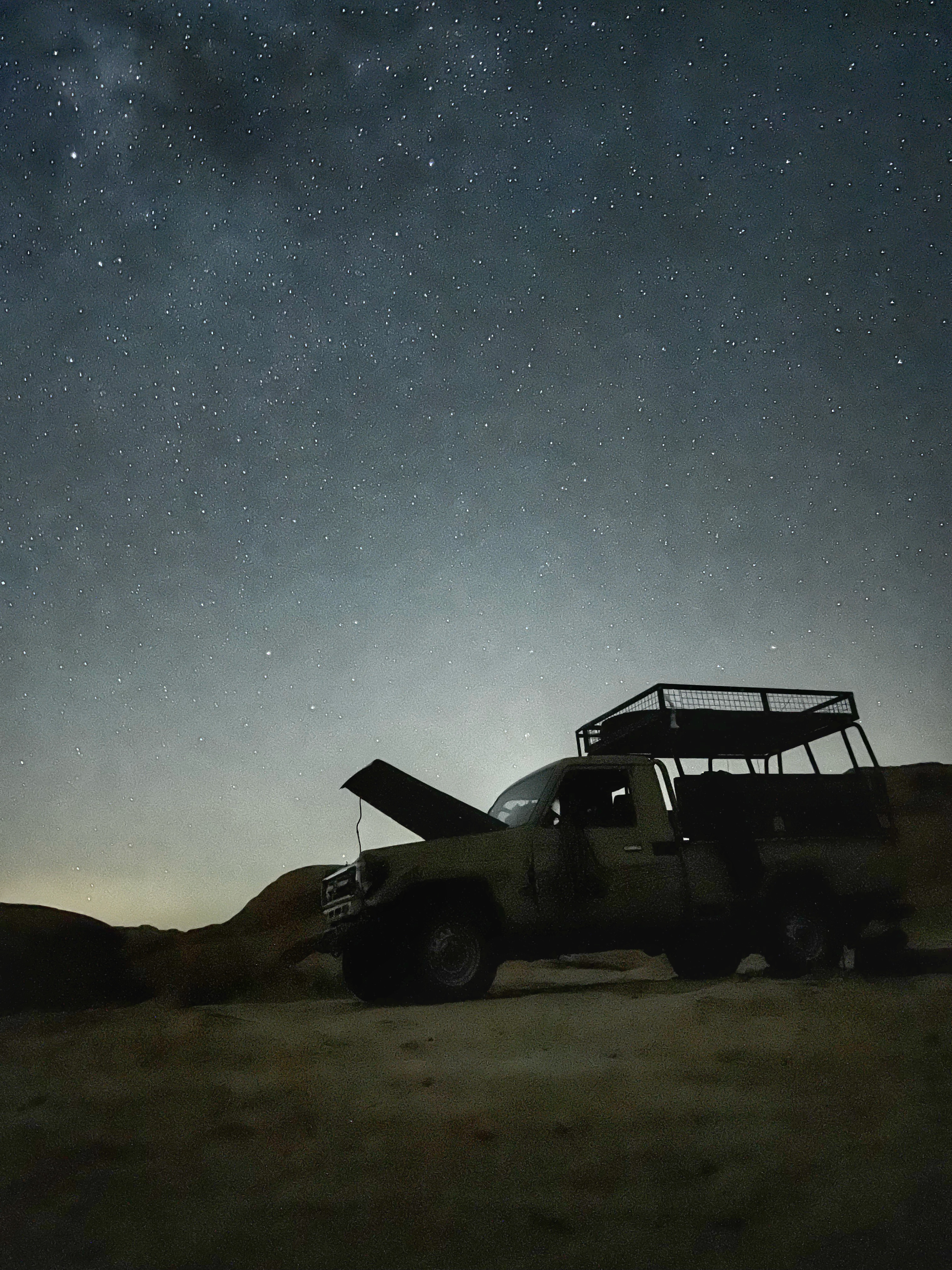
After dinner everyone was exhausted and turned in for the night around 10PM. It was so cozy to cuddle up under the open night sky – something I have never done before because it’s always too buggy in the regions I have gone camping. This was so special. We could see the milky way, satellites, and twinkling stars everywhere. Photos didn’t do it justice. Still, I woke at 2AM and realized the moon had set, so I took a few photos in perfect darkness with my phone and the shutter defaulted to 30 seconds on my iPhone13 and these celestial phone shots turned out half decent:
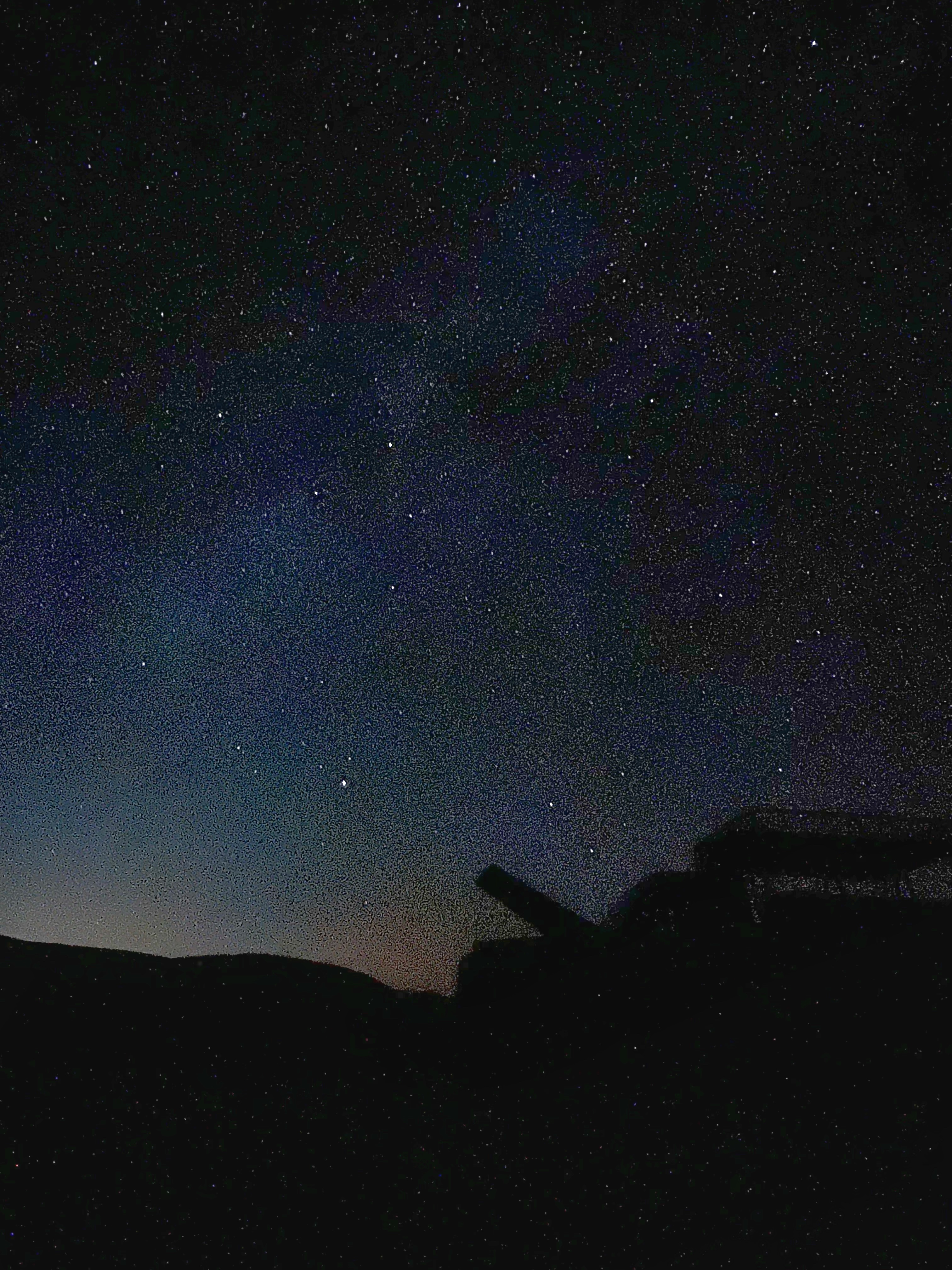
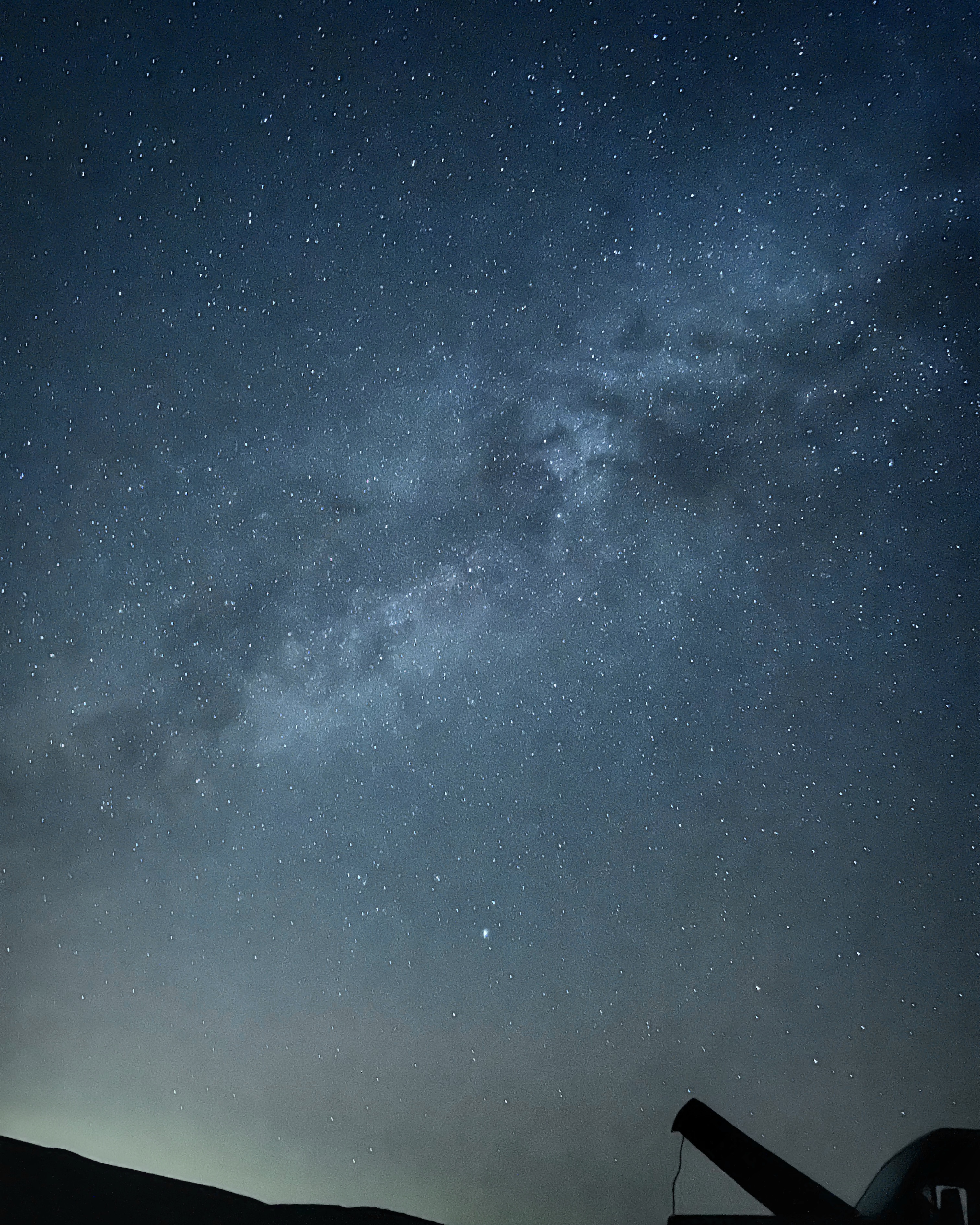
DAY 8
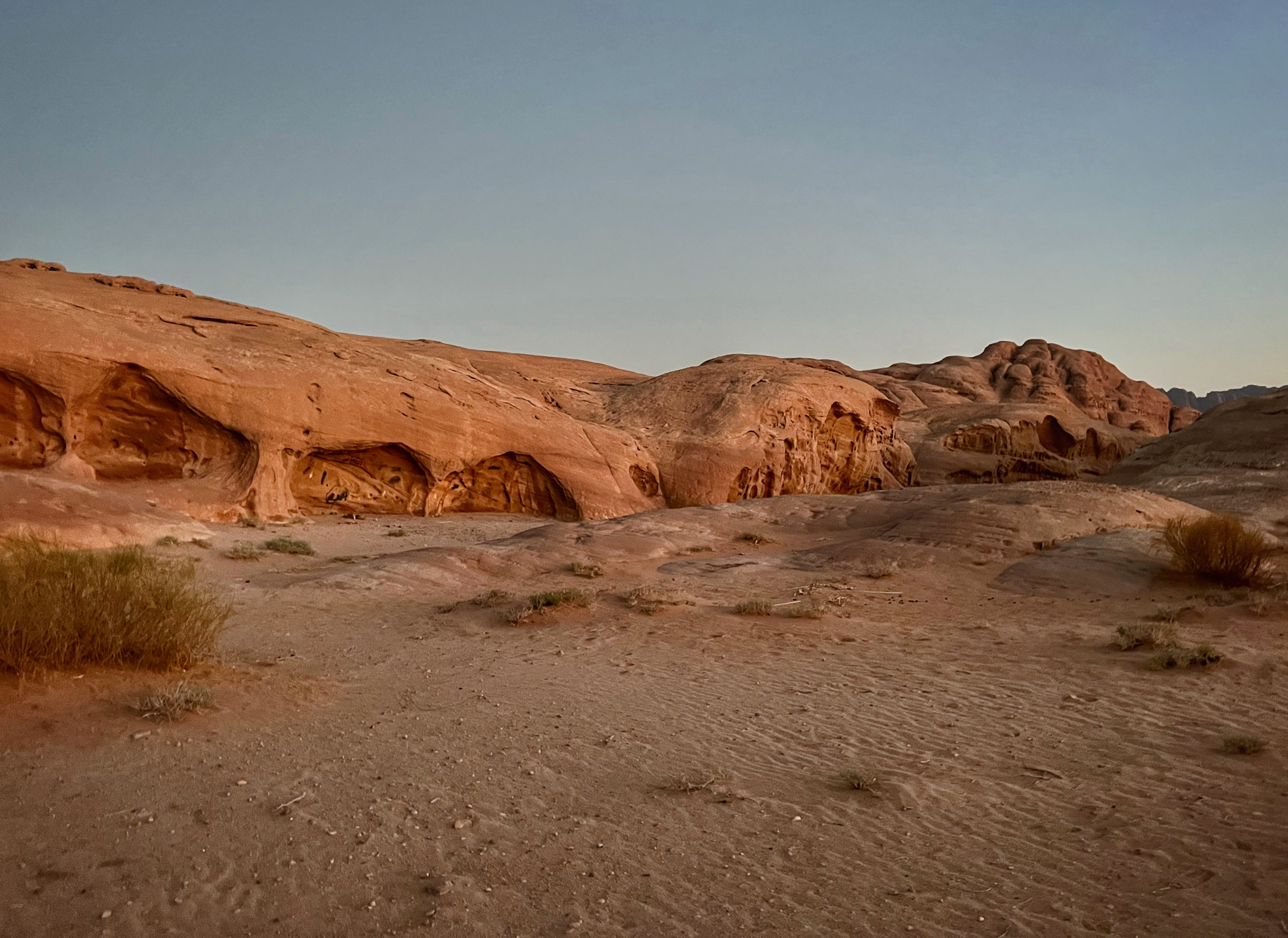
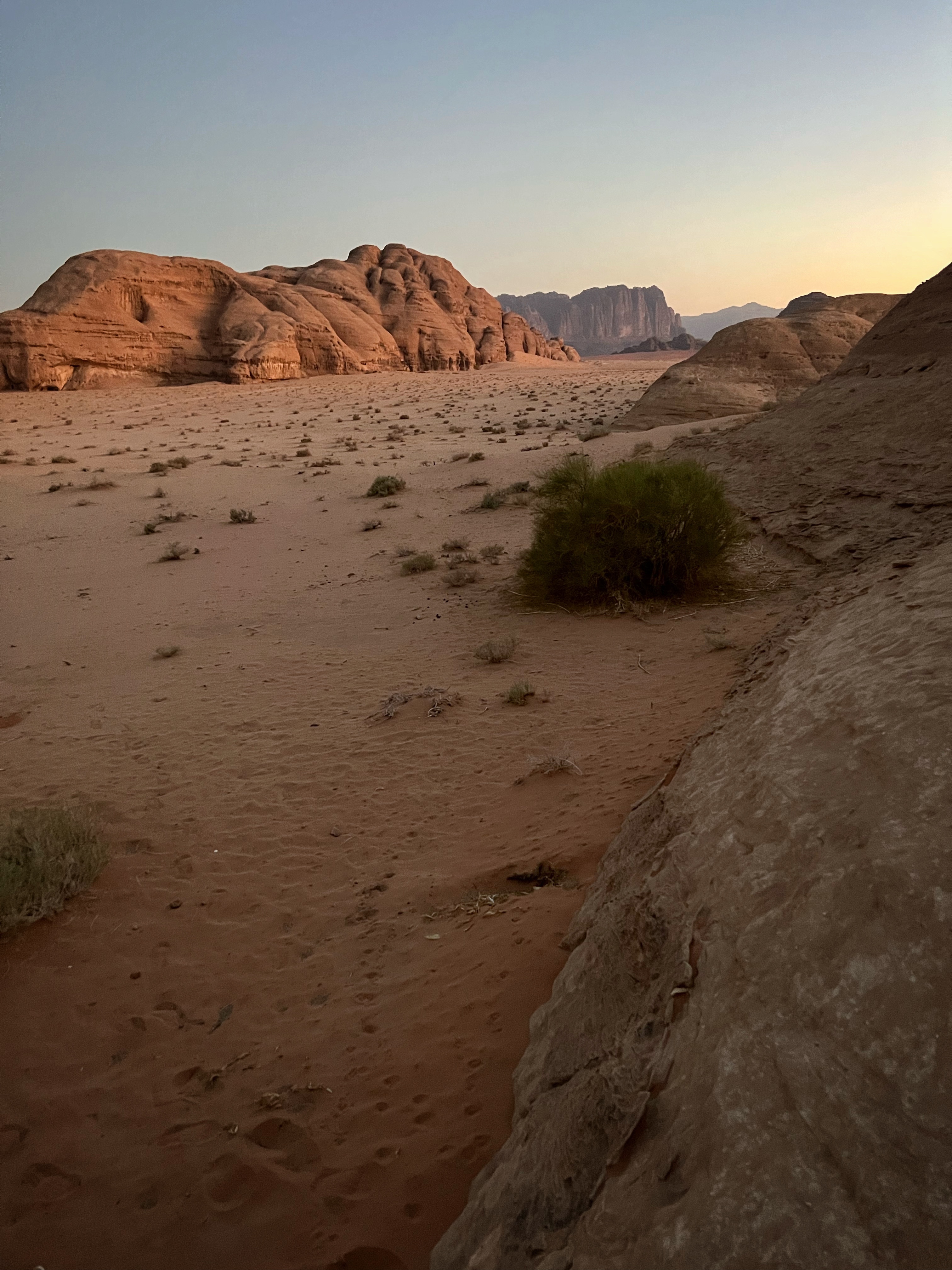
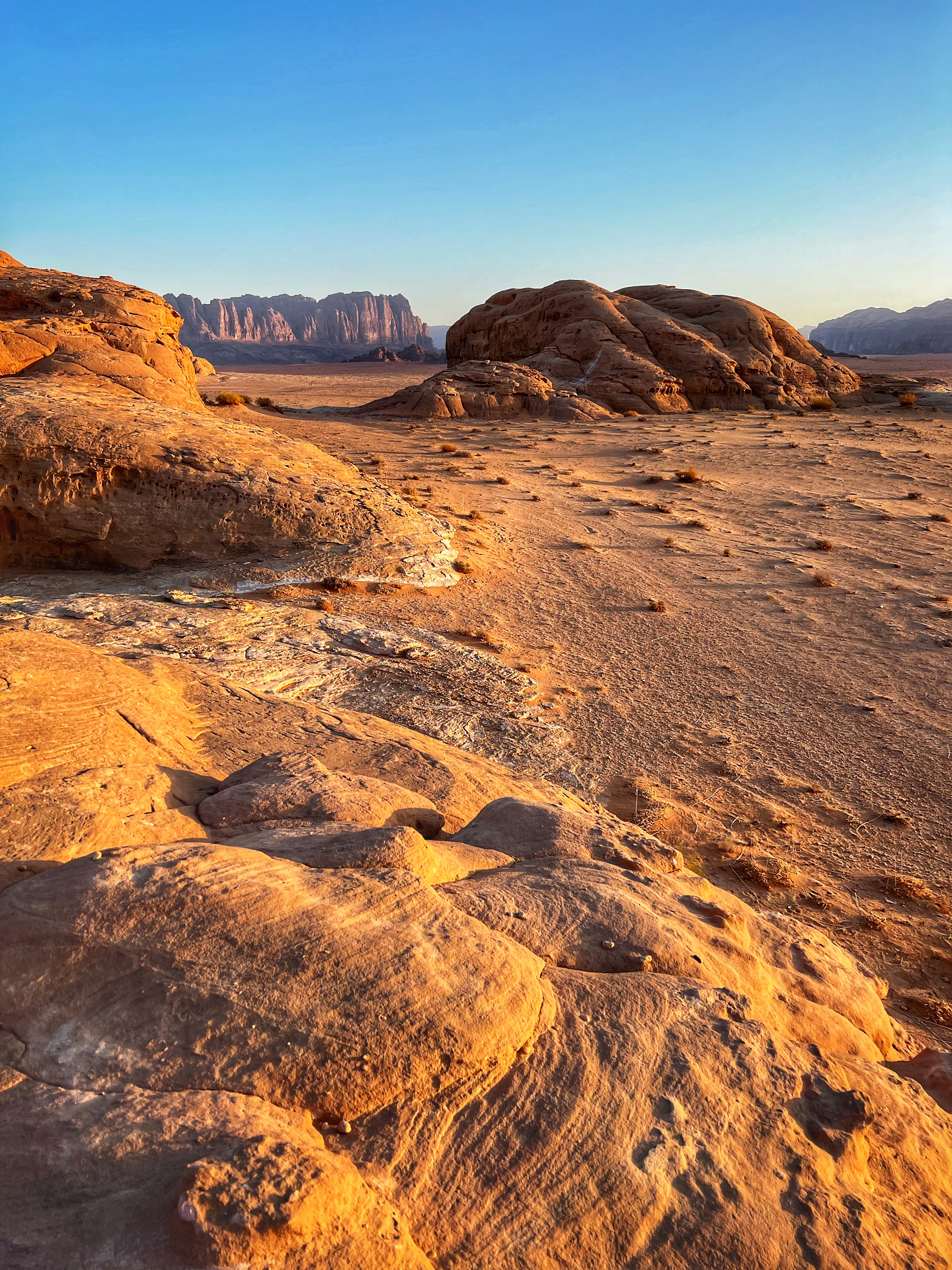
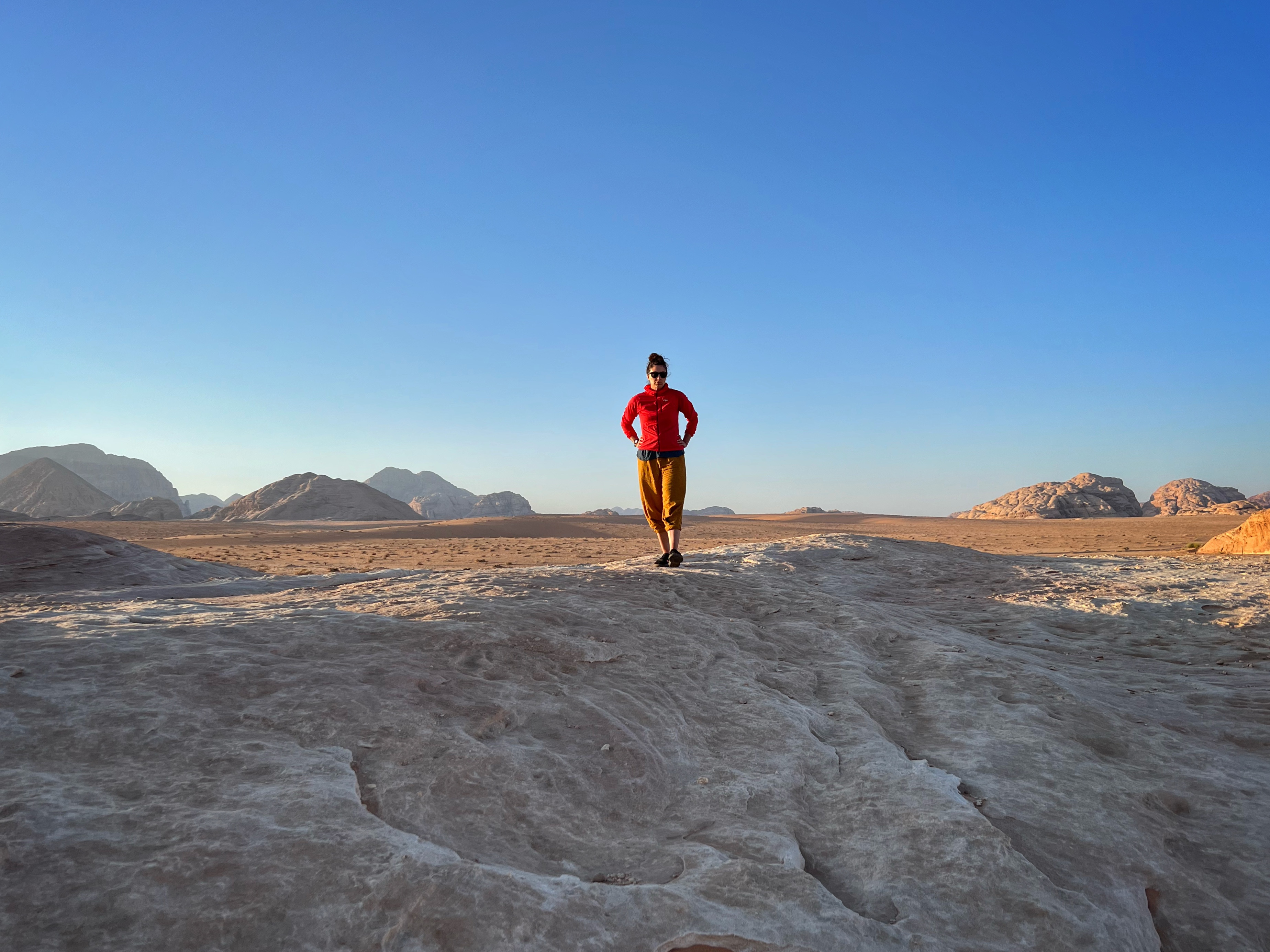
I awoke just before sunrise to relieve myself (note: bring wag bags with you to leave no trace. We received no instructions on this, but it’s a good idea) and find a good spot to watch the sunrise. Dawn and dusk were by far my favorite moments in Wadi Rum, as the light was spectacular and the stillness was incredibly calming. Since we arrived late the night before, we didn’t have a good look around until first light, and boy, was it ever a spectacular place.




After sunrise we packed up our gear quickly and headed back to the campsite to pick up our backpacks and eat breakfast. Jessie and I had a pretty strict NLT departure time so we could make the four hour drive back to Amman, return our rental car, and make our 2:30 PM spa reservations on time. It was cutting it close! We tipped Fayez generously, said goodbye to our new friends, got a ride back to Wadi Rum Village from Kamil, made sure Attila knew we weren’t happy with his false advertising, paid for our tour, picked up our car, and left. The entire ride north we rocked out to Alanis and basked in the Wadi Rum desert energy. We did it! We were done and ready for an afternoon of pampering.
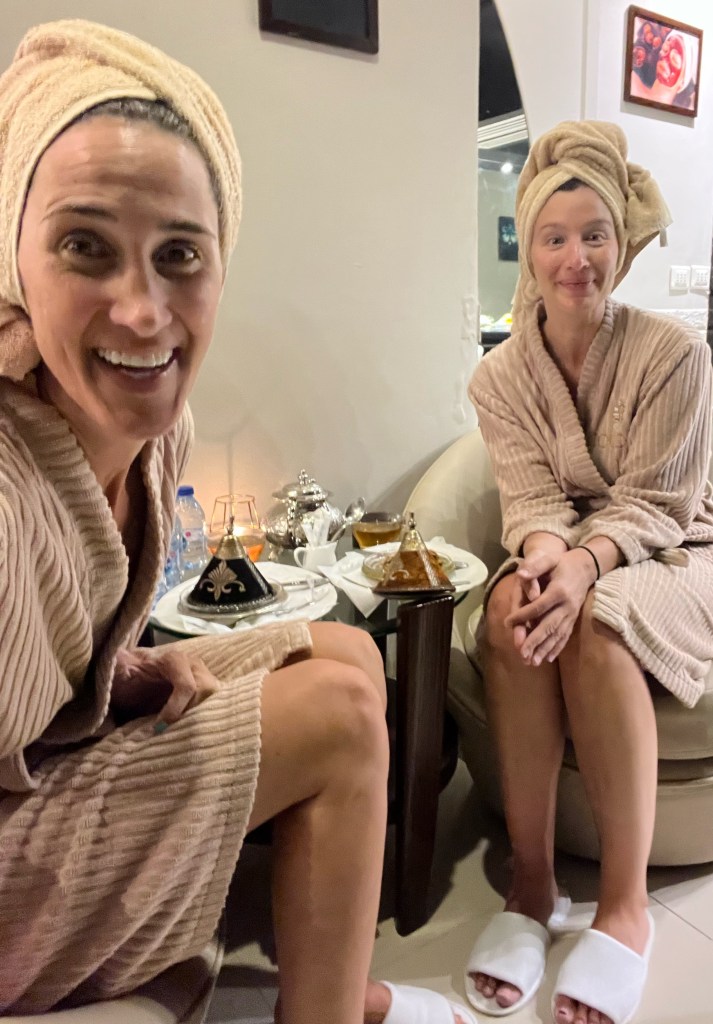
Returning the rental car at Amman airport was a breeze. We grabbed another quick bite at the Starbucks there and caught an Uber (37.5JD/$52) into the city to the Gaia Cocoon spa. It turned out to be in a very posh part of town we hadn’t seen before, with lots of fancy shops and upscale eateries. This salon was NICE. What better way to get totally cleaned up after spending a week hiking through Jordan?
We entered Gaia Cocoon Spa and were greeted with the most warm and generous hosts. They interviewed us for our “Empress Spa Package” (it was supposed to be 3 hours long but was closer to 4…for only 125JD per person!) so they had all of our favorites – the right music, scents, products for our skin types, and even food! We felt so fancy. We were given juice and tea and ushered into our own private spa suite where we got changed and our hostess brought us little treats. Then we had the following treatments and every single thing was the best we had ever had:
Gaia Cocoon
-
- Shower with sauna and fruit drink, steam room and iced spa water drink.
-
- Turkish Hammam including henna body mask, full body rupping (exfoliation), hair mask and bubbly massage.
-
- Full meal of our choice (I’m not sure its supposed to be this way but they were very generous) plus tea, mango smoothies, desert.
-
- Cocoon moisturizing heated full body wrap.
-
- Mini facial.
-
- Full body massage and alignment as needed.
-
- Hair blowout
-
- (Another option listed was rosy water hydrobath with scalp and neck massage but we ran out of time…)
Nearly four hours of pampering – and what a bargain! You can bet we tipped generously! Note: expect to be basically naked in the Hammam experience with your friend… they scrub everywhere.
The only disappointment was going to our apartment afterwards near the airport (another 20JD/$28 taxi ride), climbing in bed, and realizing there were microscopic bugs crawling all over our perfectly clean and exfoliated skin. We had to get up at 3AM to make our flight the next morning, so we really didn’t have another choice – we did the best we could to sleep and felt so bad that we’d need to scrub down extra well as soon as we got home to make sure we didn’t have fleas or bedbugs or whatever the heck we felt in the bed. Thankfully our airport experience was smooth, our flights were great, our at home scrubbing worked, and we had no further reactions. Needless to say, in spite of the location and price, I do not recommend Faraseen Apartments. HA! We went from utter spa bliss to disgust. But in the end, that’s not what I remember…
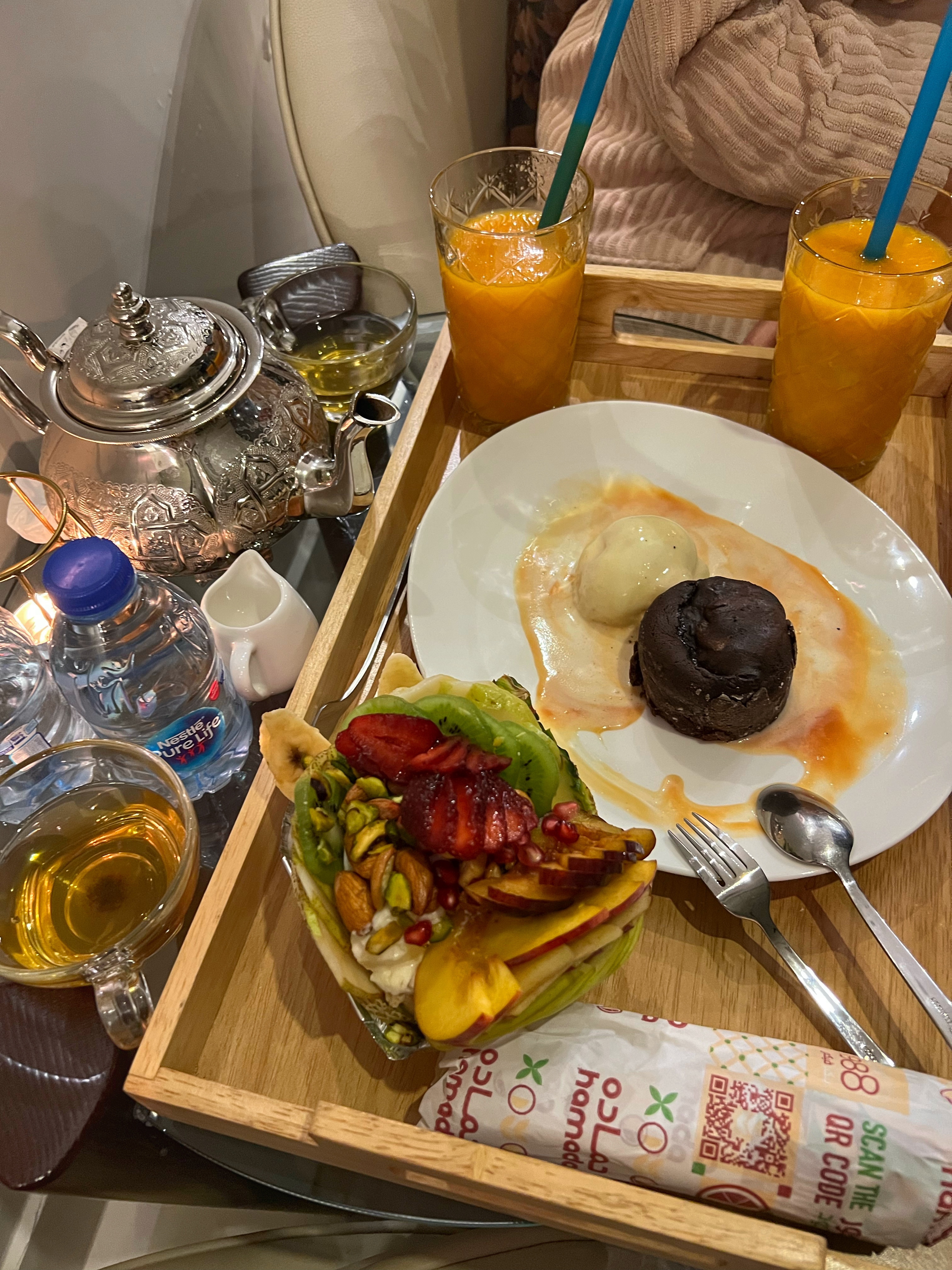
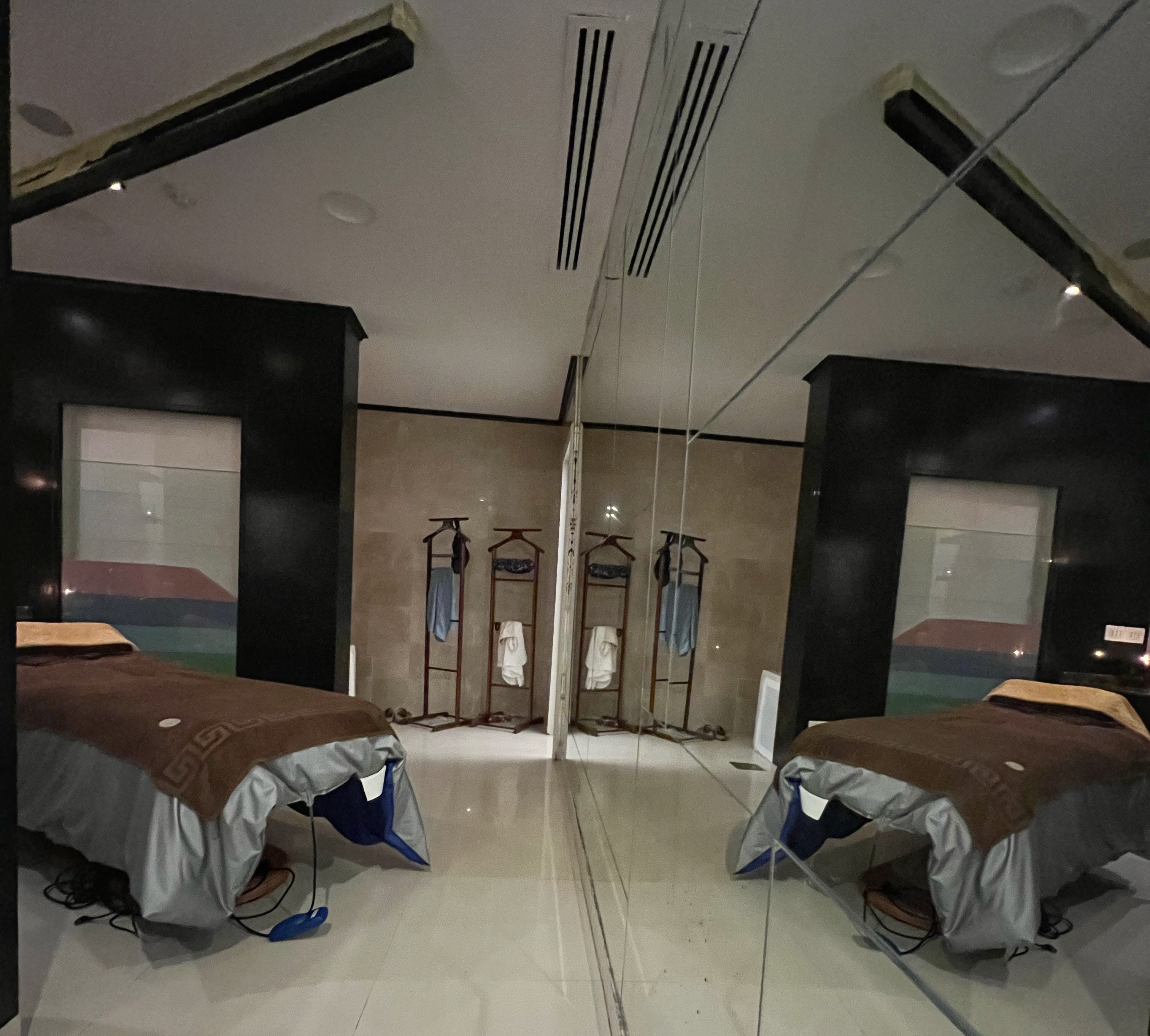
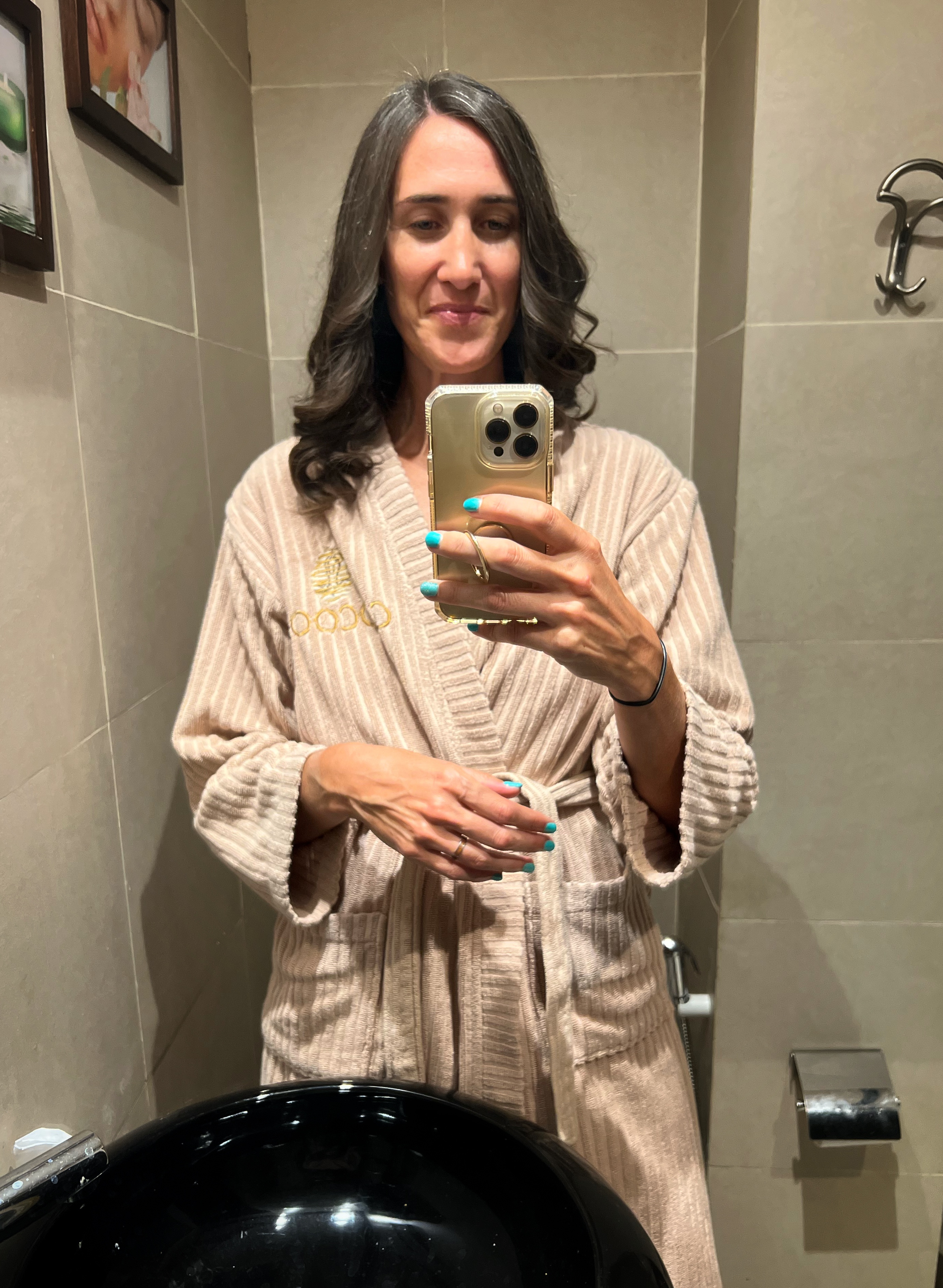
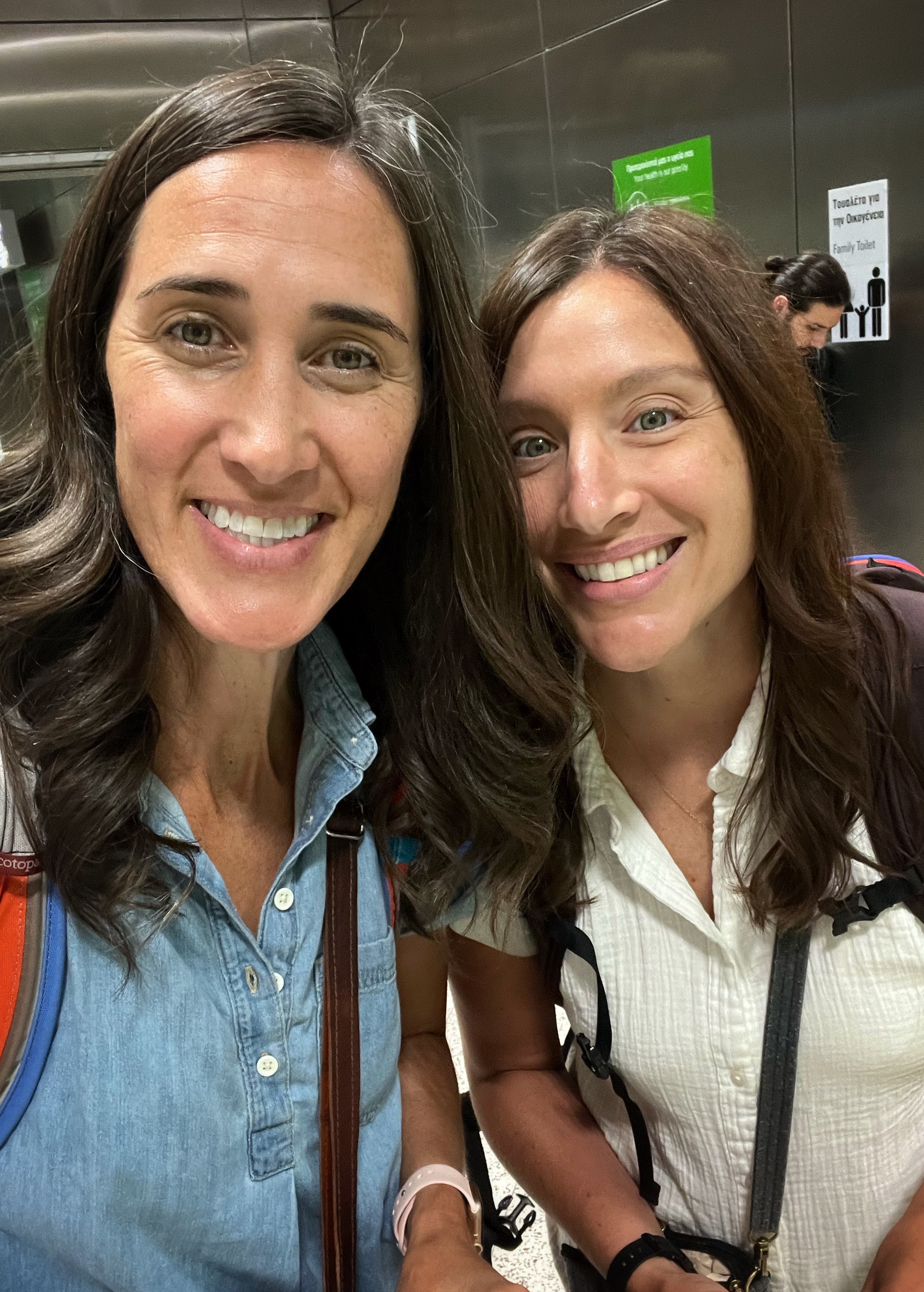
I remember the good stuff.
BUDGET
On trips like this (5-8 days without the family) I aim for a ballpark budget of around $1k. The original budget without tips, taxi and food was spot on, but we ended up spending more than expected in cash thanks mostly to tips. Still, for 8 full, epic days in Jordan I would say this is excellent. The following are my expenses, so things like lodging and transportation were split two ways.
-
- FLIGHT: $267 (two one way flights to get the best deal)
-
- LODGING: $361 (free Hilton resort stay)
-
- TRANSPORT: $147 (rental car) $100 (taxis) $44 (gas)
-
- TOURS: $385 (includes Jordan Explorer Pass)
-
- FOOD: $80 (most meals were included, we snacked mid-day)
-
- TIPPING: $150 (cash, estimate)
-
- SOUVENIRS: varies
TOTAL: $1390
Note: You can spend A LOT more if you choose to stay in Bubble Luxotels for example instead of campsites. What I loved about campsites and our Wadi Rum tours was that it was all inclusive and we felt very connected to the locals. The cost of “tours” above actually includes some food and lodging, and we were quite frugal with things, making sure to fill up on the hotel breakfast buffet so we only needed a little snack during the day to tide us over until dinner. The best advice I have about Jordan is although stores, shops and restaurants take card, expect to use more cash than you think. And that exchange rate is deceiving!
FOR NEXT TIME…
After returning from Jordan and processing the whole experience I can say I wouldn’t change a thing. Next time, however, I look forward to traveling when the temperatures are more moderate so we can hike Wadi Ghuweir, maybe hike the back door from Little Petra to the Monastery, check out Petra at night, and do more tours in Wadi Rum so we can also go sand boarding! If I only had 4 or 5 days to spend in Jordan I would focus mostly on Wadi Rum and Petra, but fitting in that Wadi Mujib Siq trail wet narrows hike is something I would do again in a heartbeat. I miss you already, Jordan!
NOTE: I am committed to providing free, valuable travel info. If this add-free guide is helpful to you and you’d like to show your appreciation, buy me a coffee! Thank you!
 Home Base Bri
[…] Previous Bucketlist: Jordan! Search for: […]
LikeLike